Plans For Powering Trains And Details Of Our Upcoming Consultation
The title of this post, is the same as that of a news item on the East West Rail web site.
This is the sub heading.
We’re pleased to share plans for how we’ll power trains on East West Rail, as well as information and dates of our public consultation on latest proposals for the project.
These are the first two paragraphs.
As part of our latest proposals, which we’ll be sharing for public consultation from 14 November, we’re providing information on our preference for green traction power in the form of discontinuous electrification with hybrid battery-electric trains, after the Chancellor confirmed government support for the project in yesterday’s budget.
As well as reducing carbon emissions, discontinuous electrification would mean overhead lines would only need to be installed along some sections of the route, which would reduce disruption to existing structures and potentially reduce visual impacts in more sensitive locations on the new railway between Bedford and Cambridge. This option would also cost less than full electrification and would need less land for things such as mast foundations.
There is also a short video, which explains discontinuous electrification.
I feel that to use discontinuous electrification and hybrid battery-electric trains is the way to go on this railway between Oxford and Cambridge.
- It is a zero-carbon solution.
- There is electrification at Reading. Didcot, Bletchley, Milton Keynes, Bedford and Cambridge along the route, so grid connections will be already available.
- Sandy, where East West Rail crosses the East Coast Main Line, is fully electrified and must have a grid connection.
- A small article in the November 2024 Edition of Modern Ralways, says that Hitachi are developing a smaller battery for commuter and suburban trains.
- Didcot to Oxford could be electrified and there is already a grid connection at Didcot.
Discontinuous electrification could be used to extend East West Rail to Norwich, Ipswich and Colchester.
These are my detailed observations and thoughts.
Existing Electrification
This OpenRailwayMap shows the electrification between Oxford and Bedford.
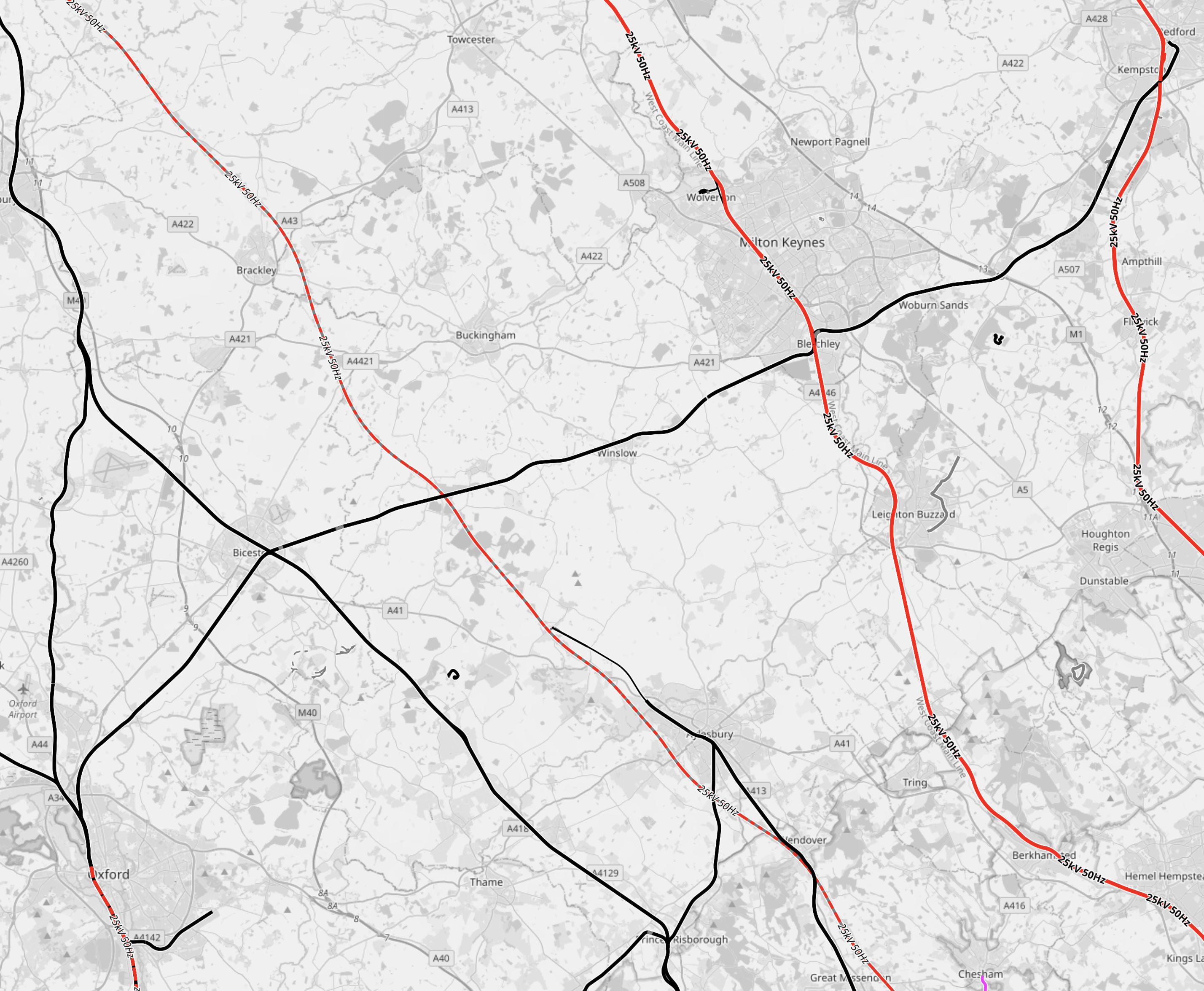
Note.
- Bold red lines are tracks electrified at 25 KVAC.
- Bold black lines are tracks without electrification.
- Oxford is in the South-West corner of the map.
- Bedford is in the North-East corner of the map.
- The bold black line of the Western section of the East West Rail connects the two cities.
- The lines through Oxford are shown as being electrified. The black stub pointing East to the South of Oxford is the Cowley Branch.
The rail lines crossing East West Rail from West to East are as follows.
- Chiltern Main Line – Not Electrified
- High Speed Two – Will Be Electrified
- West Coast Main Line – Electrified
- Midland Main Line – Electrified
I suspect all lines, except for the Chiltern Main Line, will be able to provide a grid connection for East West Rail.
This second OpenRailwayMap shows the electrification between Bedford and Cambridge.
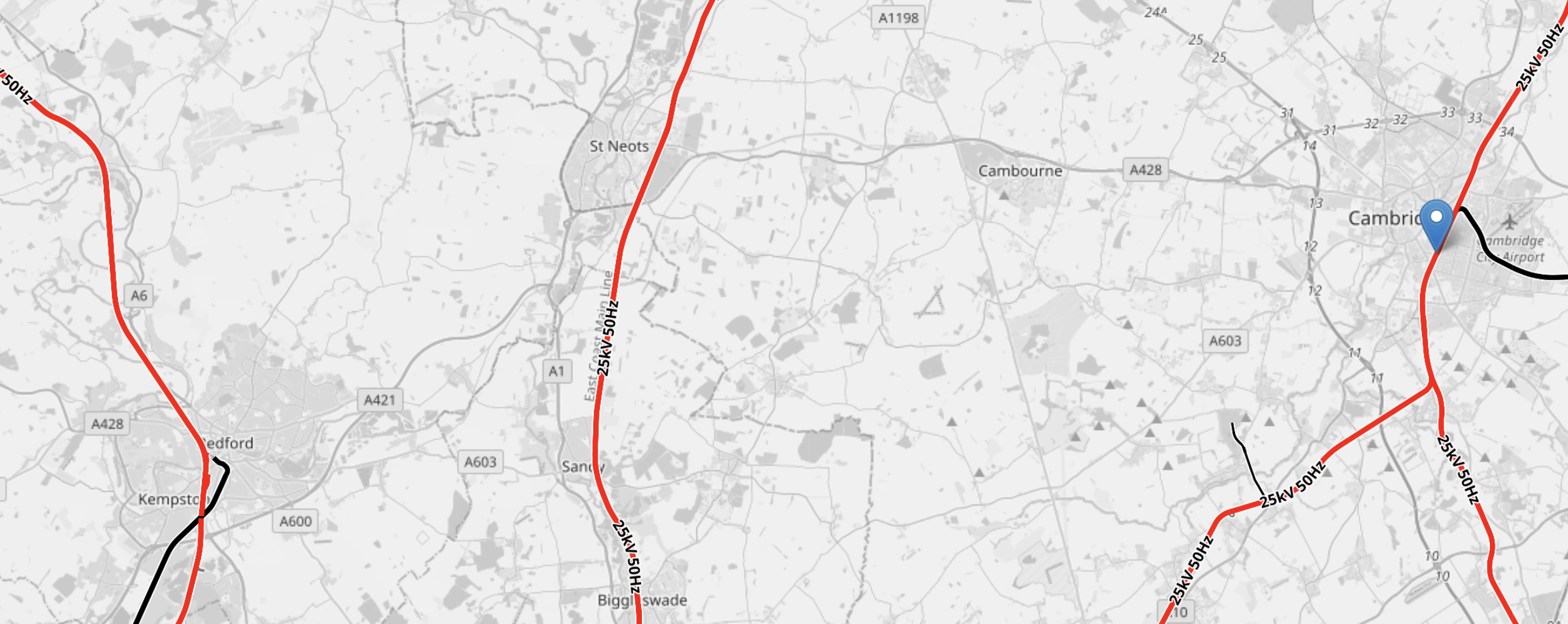
Note.
- Bold red lines are tracks electrified at 25 KVAC.
- Bold black lines are tracks without electrification.
- Bedford is in the South-West corner of the map.
- Cambridge is in the North-East corner of the map.
- The Eastern section of the East West Rail connects the two cities.
- Both maps are to the same scale
The rail lines crossing East West Rail from West to East are as follows.
- Midland Main Line – Electrified
- East Coast Main Line – Electrified
- West Anglia Main Line – Electrified
I suspect all lines will be able to provide a grid connection for East West Rail.
Distances Without Electrification
These sections are not electrified.
- Oxford and Bletchley – 47.2 miles
- Bletchley and Bedford – 16.5 miles
- Bedford and Cambridge – 29.2 miles
- Ely and Norwich – 53.7 miles
- Norwich and Great Yarmouth – 18.4 miles
- Cambridge and Haughley Junction – 41.3 miles
I am assuming that the East West Rail could extend past Cambridge on these two routes.
- Ely, Thetford, Norwich and Great Yarmouth.
- Newmarket, Bury St. Edmunds, Stowmarket, Ipswich, Manningtree and Colchester.
All sections have electrification at both ends, if Didcot Junction and Oxford is electrified, as is expected to happen.
Train Battery Range Needed
The route layout, I have proposed means that if you go for the battery-electric train with the longest battery range you can afford and it can’t handle Ely and Norwich, the existing electrification can be extended to bridge the gap.
Application Of Discontinuous Electrification To Greater Anglia And Chiltern Railways
If discontinuous electrification can be applied to East West Rail, it can surely be applied to Greater Anglia and Chiltern Railways, given the fact that the route networks of all three companies overlap and share tracks.
Greater Anglia already have a fleet of Class 755 trains, which are designed to be converted to battery-electric operation.
With batteries fitted, I believe that these trains could handle most of the current routes they do now.
The other routes would be handled with selective lengths of overhead electrification in terminal stations to charge the trains before return.
Electrification Between Oxford And Bicester Village Stations
Oxford station has two North-facing bay platforms, that are used by Chiltern and other services terminating at the station from the North.
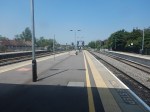
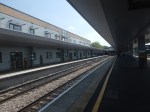
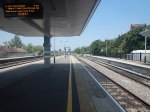
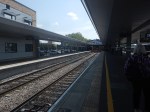
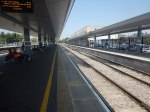
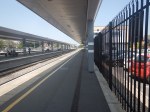
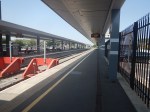
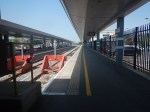
Note.
- Chiltern Railways already run two trains per hour (tph) between these platforms and Marylebone.
- I would assume the platforms will be used by East West Rail services, that terminate at Oxford station.
- If discontinuous electrification is to be used, then these two platforms could be electrified to charge trains before they return.
- East West Rail have not published their proposed services yet, but it could be one tph to both Milton Keynes Central and Bedford stations.
I can see Chiltern buying battery-electric trains to run services between Marylebone and Oxford, and some other routes.
Marylebone and Oxford is 66.7 miles, which is probably two far for even Stadler’s remarkable battery-electric trains, but if say between Oxford and Bicester Village station were to be electrified, would it make it possible to run battery-electric trains between Marylebone and Oxford with charging at both end of the route.
In Chiltern Sets Out New Fleet Ambitions, I talk about Chiltern’s possible new fleet, as proposed by their MD in September 2023.
Improvements To Brimsdown Station
This post on IanVisits is entitled Enfield Council Outlines Possible Rail Station Upgrades.
By reading Enfield Council documents, Ian has found possible station improvements that might happen.
Ian says this about Brimsdown station.
A modest development on the Brimsdown sports ground could contribute towards improvements to access and facilities at the nearby station, supported by some additional housing in clusters around the area.
This Google Map shows the station and the sports ground.
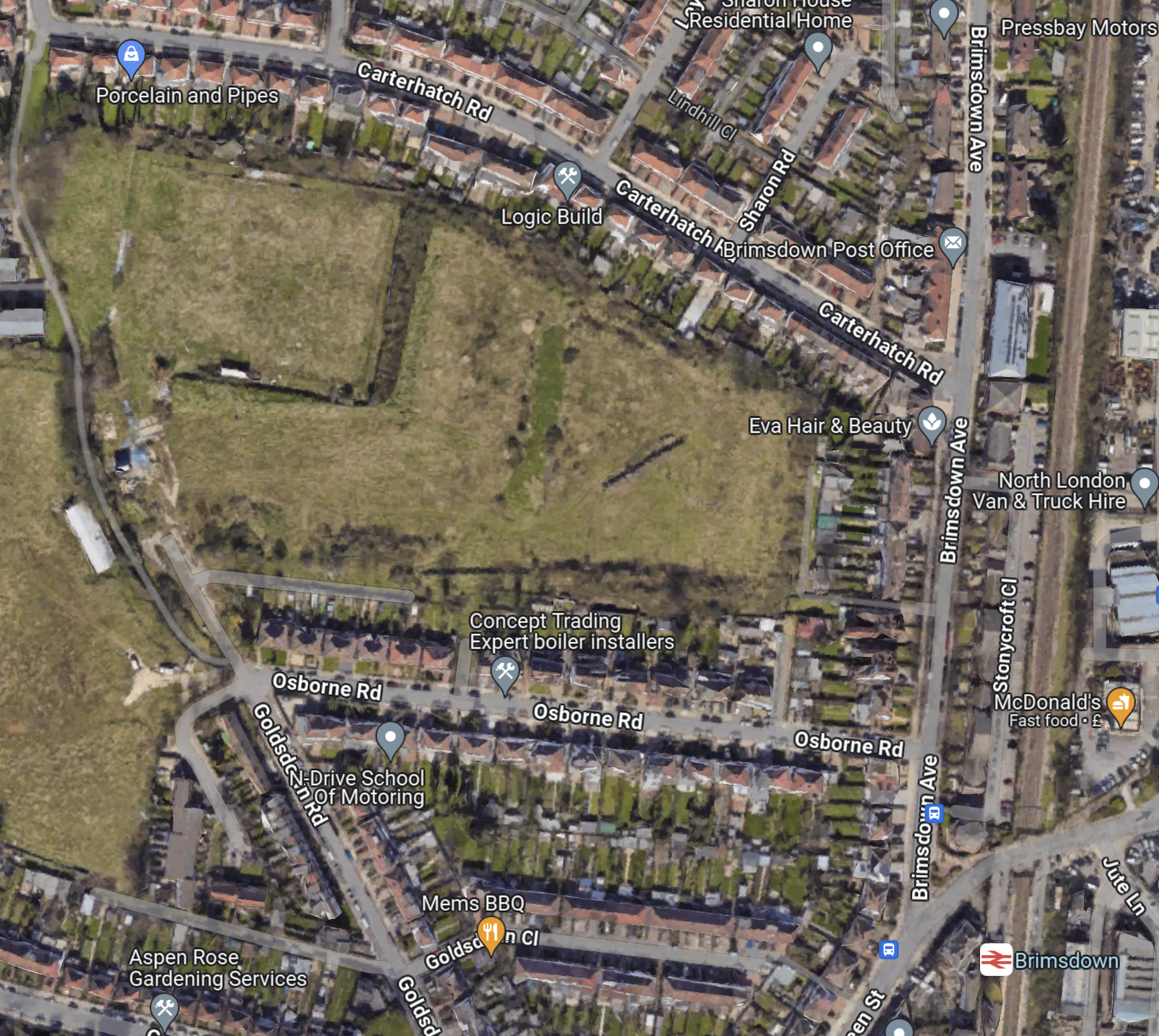
Note.
- The West Anglia Main Line runs North-South at the Eastern edge of the map.
- Brimsdown station is in the South-East corner of the map.
- Brimsdown sports ground is the green space to the North-West of the station.
- From zooming in, it looks like the main sport on the sports ground is fly tipping.
These pictures show the station.
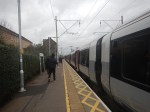
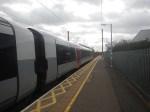
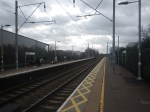
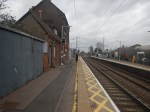
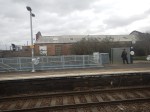

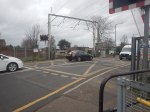
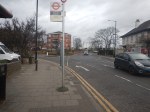
Note.
- I feel today, was probably the first time, I’d caught a train either to or from the station.
- But I must of cycled over the level crossing scores of times going to work at Enfield Rolling Mills.
- After I got my driving licence, I also used to deliver my father’s stationery and other printed goods to the same firm.
Sadly, the firm, where I got my first real taste of industry, that taught me so much is long gone.
London North Eastern Railway Runs Trial Train To Liverpool Street
The title of this post, is the same as that of this article on Rail Advent.
These two paragraphs, describe why this was done.
In an effort to mitigate the effect on passengers during disruption to services, London North Eastern Railway (LNER) ran one of its Azuma trains from Finsbury Park to London Liverpool Street during the early hours of this morning, Friday, 14th July.
The trial run took place to determine the long-term feasibility of diverting services during periods of planned disruption or when significant engineering works were taking place.
There doesn’t seem to have been any problems.
- The route in from Finsbury Park station went through Canonbury, Dalston Kingsland, Hackney Central, Homerton, Hackney Wick, Stratford and Bethnal Green stations, which was a distance of 9.6 miles.
- The route out to Finsbury Park station went through Bethnal Green, Cambridge Heath, London Fields, Dalston Kingsland and Canonbury, what was a distance of 5.8 miles.
Note.
- Two different routes were checked.
- The Class 800 train had five cars.
- Platform 4 at Liverpool Street station was used, which is normally used by London Overground and Cambridge services.
As this comes so soon after the test run to Cleethorpes, that I wrote about in Azuma Test Train Takes To The Tracks As LNER Trials Possible New Route, I wonder if Network Rail and the train operating companies are planning for some worst case scenario, where the two or more of the West Coast Main Line, Midland Main Lone and East Coast Main Line are blocked.
LNER and Network Rail have shown the following.
- Azumas can use Cleethorpes station.
- Azumas can use Liverpool Street station.
We also know that Cleethorpes has a direct TransPennine train service across the North of England to Doncaster, Sheffield, Manchester and Liverpool.
So if say Euston has to be shut for perhaps fourteen days during the construction of High Speed Two, a service between Liverpool Street and Cleethorpes via Colchester, Ipswich, Cambridge, Peterborough and Lincoln could be used to get some passengers to and from the North.
The other big problem is the removal of the problems of the Newark Crossing, which if it results in a long blockade of the East Coast Main Line, might need services to go into an alternative London terminal.
The Powerhouse In The East
Consider.
- The importance of Cambridge to the economy of the UK is growing fast.
- The city suffers from a shortage of commercial premises, housing and staff at all levels.
- I have just looked at the non-passenger traffic on the West Anglia Main Line for all of yesterday and there were just six freight trains through Bishop’s Stortford.
I wonder, if it would be possible to run a Liverpool Street and Cleethorpes service via Cambridge, Ely, Peterborough, Spalding, Sleaford, Lincoln, Market Rasen, Barnetby and Grimsby Town?
- The service avoids the East Coast Main Line, except through Peterborough, where it would use the separate Werrington lines.
- Liverpool Street is in the heart of one of the world’s major financial centres.
- Liverpool Street is on the Elizabeth Line.
- The service could call at Stansted Airport, but a reverse would be needed.
- Peterborough is sometimes promoted in Cambridge as a city, that could be developed, to provide support for Cambridge.
- A reverse would be needed at Lincoln.
- Lincoln is developing as a university city with character.
- Grimsby and Cleethorpes are close to the fast expanding Humberside renewable energy and hydrogen cluster.
The service could be paired with a Liverpool Street and Norwich service, via Ely, Thetford, Attleborough and Wymondham.
The services could alternate every half hour or perhaps leave London as a pair and split and join at Cambridge.
Platform Availability At Kings Cross And Liverpool Street
Consider.
- Digital signalling on the East Coast Main Line will increase the number of possible trains between London and the North.
- LNER have said they want to increase services to the North and have identified a possible service to Cleethorpes.
- Grand Central would like to increase services to Bradford.
- Lumo have started services to Newcastle and Edinburgh from Kings Cross.
- The Elizabeth Line now runs less services into Liverpool Street station.
- The Elizabeth Line connects to Liverpool Street, but doesn’t connect to King’s Cross.
- Liverpool Street is to undergo a major refurbishment, which should increase the overall passenger capacity of the station.
Would it be sensible to move a small number of services from King’s Cross to Liverpool Street?
Surely, the logical service to move to Liverpool Street would be the new Cleethorpes service.
- It would route via Cambridge, Cambridge North, Ely, Peterborough, Spalding, Sleaford, Lincoln, Market Rasen, Barnetby and Grimsby Town.
- It would use the Werrington Lines through Peterborough.
- It would not need a path on the East Coast Main Line.
- The service would provide a much needed direct link between Cambridge and Lincoln via Peterborough.
- The service could also be hourly or two-hourly.
I also believe that a Liverpool Street and Cleethorpes service could be run by a battery-electric Azuma.
- The route is electrified between Liverpool Street and Ely and through Peterborough.
- Ely and Peterborough is 30 miles.
- Peterborough and Lincoln is 56.9 miles.
- Lincoln and Cleethorpes is 47.2 miles.
- There would need to be a charging station or a few miles of electrification at Cleethorpes.
- There may be 134.1 miles of unelectrified track, but there can be a Splash and Dash at Peterborough.
A Stadler Akku would be able to handle this route, so I suspect that a similar-sized battery-electric Azuma should also be able to handle the route.
Extending The Elizabeth Line – Connecting West Anglia Main Line Services To The Central Tunnel
If say it was ever needed to run a train between Cambridge or Stansted stations and the Central Tunnel of the Elizabeth Line, three things must be possible.
Trains Would Have To Be Compatible With The Central Tunnel Of The Elizabeth Line
As any train would have to be compatible with the platform-edge doors in the central tunnel of the Elizabeth Line, the trains would have to be dimensionally identical to the current Class 345 trains.
- Nine cars
- Possibility of lengthening to ten cars.
- 204.73 metres long.
- 6 sets of doors per carriage
- Ability to run under full digital signalling.
I covered this in detail in Extending The Elizabeth Line – High Speed Trains On The Elizabeth Line.
Trains Would Need A 100 mph Capability To Travel On The Fast Lines Of The West Anglia Main Line
They would be designed for a higher speed of at least 100 mph, to enable running on the fast lines.
The faster running would ease scheduling of the trains.
Effectively, the train would be a Class 345 train with more features and considerably more grunt.
Trains Must Be Able To Connect Between The West Anglia Main Line And The Central Tunnel Of The Elizabeth Line At Stratford
This map from cartometro.com shows the track layout at Stratford.
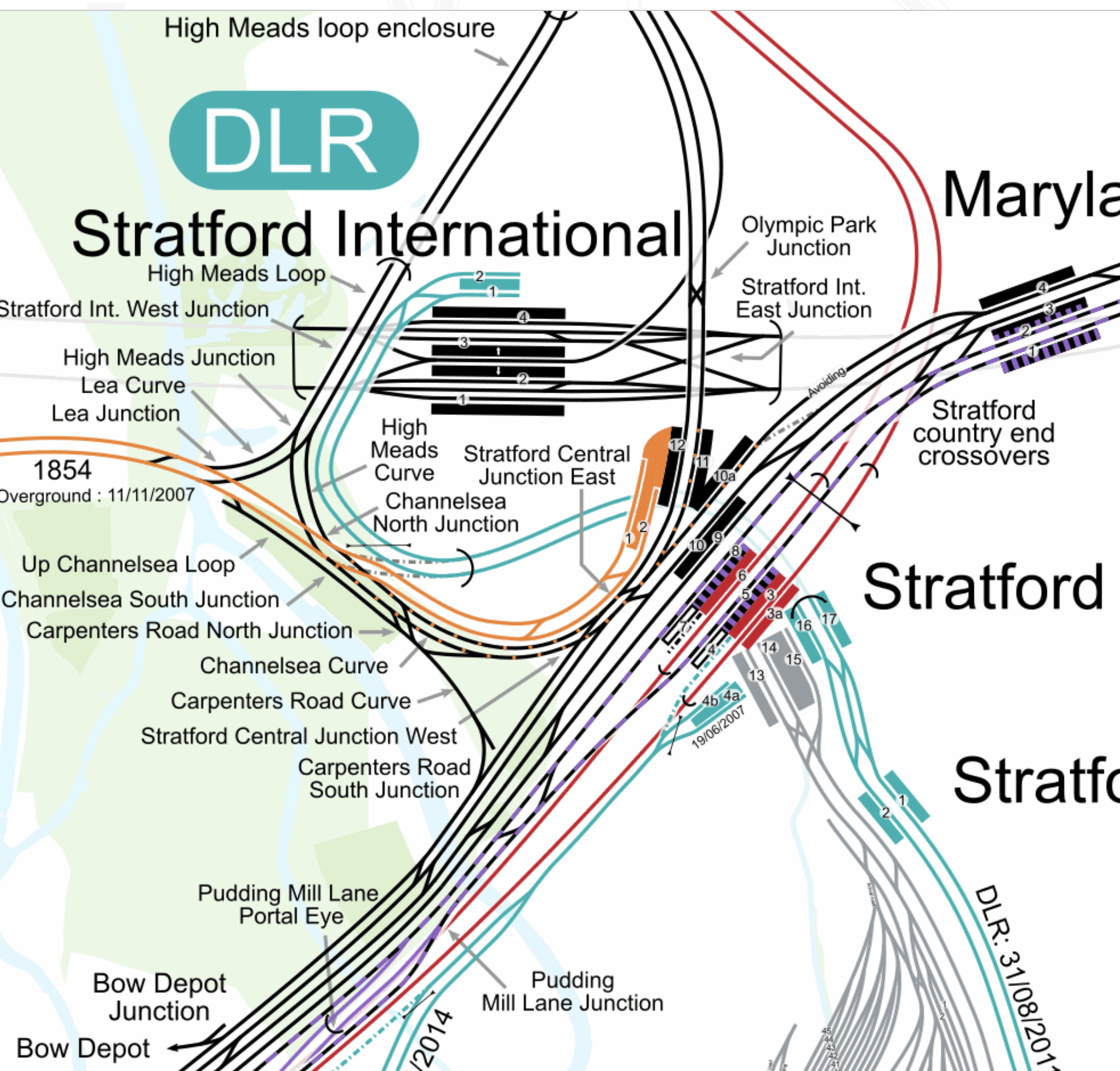
Note.
- The Elizabeth Line is shown in black and purple.
- The Elizabeth Line enters and leaves the Central Tunnel at the Pudding Mill Lane Portal Eye.
- The West Anglia Main Line to and from Stansted and Cambridge goes through Platforms 11 and 12 at Stratford station, before crossing over Stratford International station and going through Olympic Park Junction.
I am fairly sure that the track layout at Stratford does not allow trains to go both ways between West Anglia Main Line and the Elizabeth Line Central Tunnel.
But I suspect with the addition of a couple of extra crossovers, that this could be arranged.
Could An Oxford And Cambridge Service Be Run Via The Lizzie Line?
This article on the BBC is entitled East-West Rail: Part Of £5bn Scheme ‘Appears To Be Unachievable’.
These are the first four paragraphs.
A £5bn rail project “appears to be unachievable” in parts, a government report said.
The East-West Rail scheme will create a link from Oxford to Cambridge, with services being introduced in stages.
Stage two, between Oxford and Bedford, and stage three, between Bedford and Cambridge, have “major issues”, the Infrastructure and Projects Authority said.
A spokesman for East-West Rail said the delivery programme was “under review”.
As someone, who used to live near Cambridge, I have seen the transport routes improve in East Anglia, but not the area’s connections to the rest of the country.
The article describes Stage 2 and 3 of the East West Railway like this.
Stage two involves predominantly upgrading existing infrastructure, between Bletchley and Bedford, to allow services between Oxford and Bedford.
Stage three involves building a new line, between Bedford and Cambridge, to extend the railway and facilitate services from Oxford to Cambridge.
So if the Government feel that the major issues and opposition should lead to cancellation of the scheme to the East of Bedford or even Bletchley, what are the problems and alternatives?
Freight
The Port of Felixstowe is the UK’s busiest container port and it handles 48% of Britain’s containerised trade.
Having lived as a teenager in Felixstowe and in Suffolk for probably half my life, there is only one certainty about the port in my mind. It will get bigger and will generate more rail and road traffic in East Anglia.
- The roads have improved greatly, since the 1960s, when I used to cycle between Ipswich and Felixstowe, along a two-lane single carriageway road.
- The renamed A14 has replaced the A45 and now connects the port to the M1 and the M6.
- Tens of long freight trains every day now connect Felixstowe with the rest of the country.
- The East West Railway will be a very useful link between Felixstowe and South Wales and the West of England.
- Global warming will mean the decarbonisation of heavy freight, with more traffic on an electrified railway.
Felixstowe’s connections to the North and Midlands may have improved greatly, but they will need to be improved a lot more.
The Port of Southampton is the UK’s second busiest container port.
- Most freight trains from Southampton go North via Basingstoke, Reading and Oxford.
- A plan some years ago was for an Electric Spine, that would have connected the Port of Southampton to the Northern cities.
- The Electric Spine would have envisaged electrification of the East West Railway to the West of Bedford and electrified connections with the West Coast Main Line and the Midland Main Line.
- The Midland Main Line is now planned to be fully electrified, under the the Integrated Rail Plan for the North and Midlands.
Southampton, like Felixstowe will be in need of improved transport connections.
In an ideal world, an electrified East West Railway, would improve freight connections between the UK’s two busiest container ports and major cities in the UK.
Problems With Freight
Could this be the major problem East of Bletchley, where the residents living along the route, don’t want to see large numbers of freight trains running close by?
In this document on the East-West Rail Consortium web site, this is said.
Note that doubling of Warren Hill Tunnel at Newmarket and
redoubling between Coldham Lane Junction and Chippenham Junction is included
in the infrastructure requirements. It is assumed that most freight would operate
via Newmarket, with a new north chord at Coldham Lane Junction, rather than
pursuing further doubling of the route via Soham.
Will the residents of Newmarket object to a double-track freight railway through the town? Freight trains and horses are not a good mix.
I do wonder, if freight trains hauled by noisy and unfriendly diesel locomotives are one of the reasons a full Oxford and Cambridge railway is losing its appeal and becoming a vote loser for the Government.
Cambridge Has An Accommodation And Commuting Problem
There is a shortage of accommodation in Cambridge for offices, laboratories, workshop and above all workers.
So it looks to the surrounding towns and cities to provide help.
London and Ely have good links, but the city needs better links to Bedford, Bury St. Edmunds, Haverhill, Ipswich, Norwich, Kings Lynn, Peterborough, Soham, Stansted Airport, Stevenage, Sudbury and Thetford.
Cambridge may be the place in the South East with the largest numbers of commuters from London.
Cambridge Needs A Decent Rail Network
In my view Cambridge needs at least the following services in trains per hour (tph)
- Colchester via Haverhill, Sudbury and Marks Tey – 2 tph
- Ipswich via Newmarket, A14 Parkway, Bury St. Edmunds, Stowmarket and Needham Market – 2 tph
- King’s Lynn via Cambridge North, Ely and Downham Market – 2 tph
- Oxford via Bedford, Milton Keynes/Bletchley and Bicester – 2 tph
- London King’s Cross via Cambridge South – 2 tph
- Norwich via Cambridge North, Ely, Thetford, Attleborough and Wymondham – 2 tph
- Peterborough via Cambridge North, Ely and March – 2 tph
- Stansted Airport via Cambridge South and Audley End – 2 tph
- Stevenage via Royston and Hitchin – 2 tph
- Wisbech via Cambridge North, Ely and March – 2 tph
Note.
- Some services already exist.
- Some of these services duplicate each other to give 4 tph or even 6 tph on certain routes.
- Some services could be back-to-back through Cambridge.
- A 14 Parkway station is a new station proposed by the East West Railway. I wrote about it in detail in Soham Station – 14th December 2021.
- Haverhill would be served by a rebuilt Stour Valley Railway.
- Wisbech would be served by restoring the railway to March.
To complete the network there would be a two tph service between Peterborough and Ipswich, which would go via March, Ely, Soham, A 14 Parkway, Bury St. Edmunds, Stowmarket and Needham Market.
Oxford Could Probably Argue that It Needs A Decent Rail Network Like Cambridge
Oxford would argue this and they have a point.
The East West Railway Is The Odd Line Out
Looking at the rail networks at Cambridge and Oxford, it appears, that with the exception of Cotswold services at Oxford and a few CrossCountry services, it appears that the East West Railway is a bit of an odd line out, as everything else is a local service.
The Effects Of Not Building The Bedford And Cambridge Section Of The East-West Railway
What will it mean, if the Bedford and Cambridge Section of The East-West Railway is not built?
- Cambourne will not get the promised station.
- Bedford and Cambridge journeys will be by bus, train via London or private car.
- Commuting into Cambridge from the West will be difficult.
- Milton Keynes and Cambridge journeys will be by bus, train via London or private car.
- Oxford and Cambridge journeys will be by bus, train via London or private car.
- Train journeys between Cambridge and much of the rest of the UK, will need to go via London.
It would appear that by not building the third section of the East West Railway, a lot of potential passengers will be denied a rail service.
Could Services Be Run Using Existing Infrastructure Through London?
The Elizabeth Line will eventually be able to handle a lot more services than it does at present.
Would Extending The Elizabeth Line To Oxford Be A Good Start?
Consider.
- Oxford has two services to London; Chiltern to Marylebone and Great Western Railway (GWR) to Paddington.
- The GWR service to Paddington stops only at Reading and Slough, has a frequency of two tph and takes under an hour.
- The fastest journey between Oxford and Liverpool Street using a fast GWR train and the Elizabeth Line takes one hour and 20 minutes.
- Only 10.6 miles of the route between Oxford and Paddington is without electrification.
- There is also a two tph stopping shuttle train between Oxford and Didcot Parkway stations and a two tph stopping train between Paddington and Didcot Parkway.
I feel that combining the two Didcot Parkway services and moving them to the Elizabeth Line would be an experiment worth trying.
This would give 2 tph direct to the following stations.
- Bond Street for the West End
- Canary Wharf for finance.
- Farringdon for Cambridge, Gatwick and Brighton.
- Hayes & Harlington for Heathrow.
- Liverpool Street for the City of London, Cambridge and Stansted
- Reading for Wales and the West.
Note.
- No-one would have a worse service than currently, but many passengers would avoid a change on their journey.
- Services could terminate at either Abbey Wood or Shenfield stations.
- Services could be an extension of the two tph to Reading or additional services.
- Between Didcot Parkway and Oxford is shown on OpenRailwayMap, as proposed for electrification.
- There may need to be some new platforms at Didcot Parkway station.
- I estimate that between Oxford and Liverpool Street would take one hour and fifty minutes.
It certainly looks, that it would be possible to replace the current GWR service between Oxford and Paddington, with an all-electric Elizabeth Line service.
The direct stopping service between Oxford and Liverpool Street would be thirty minutes slower, than the current fastest train.
The current fastest train between Liverpool Street and Cambridge takes 71 minutes, so with a change at Liverpool Street Oxford and Cambridge would probably be just over three hours.
Google Maps estimate a driving time of two hours between the two University Cities.
Could The Elizabeth Line Be Extended To Cambridge?
There is no train connection between the Elizabeth Line and the West Anglia Main Line at Liverpool Street station, although the walk for passengers is not that long.
In Extending The Elizabeth Line – Connecting West Anglia Main Line Services To The Central Tunnel, I describe how it could be possible to connect the West Anglia Main Line to the Elizabeth Line at Stratford station.
This connection would allow services from Cambridge, Harlow and Stansted to anywhere on the Elizabeth Line to the West of Stratford.
Oxford and Cambridge and Heathrow and Stansted would be distinct possibilities.
Could A High Speed Limited Stop Service Run Between Oxford And Cambridge?
In Extending The Elizabeth Line – High Speed Trains On The Elizabeth Line, I proposed running faster long-distance trains through the Central Tunnel of the Elizabeth Line.
- They would have to be dimensionally identical to the Class 345 trains to fit the platform edge doors.
- They would have a long-distance interiors.
- In the Central Tunnel, they would behave like 345 trains. with Paddington to Stratford taking 19 minutes.
- But on main lines like the Great Western Main Line, they could rattle along at 125 mph.
If the trains could keep up with Class 802 train performance between Oxford and Paddington and enter the Central Tunnel quickly, these times could be possible.
- Oxford and Paddington – 55 minutes
- Paddington and Stratford – 19 minutes
- Stratford and Tottenham Hale – 14 minutes
- Tottenham Hale and Cambridge – 65 minutes
Just over two-and-a-half hours, without a change of train, sounds fine to me.
What About The Trains From Great Malvern?
The fast services between Paddington and Oxford, run twice an hour, with the service formed of one hourly Paddington and Oxford service and another hourly Paddington and Great Malvern service.
- If Oxford gets electrified soon, this will mean that the Oxford and Paddington service would be all-electric.
- But the Great Malvern service would need to be able to handle 65.5 miles of line without electrification each way.
- The speed limits between Oxford and Great Malvern vary between 70 and 100 mph.
I’m certain that Stadler could design and build a train, with the following characteristics.
- Class 345 dimensions.
- 125 mph performance.
- Ninety miles range on battery power.
The trains would be charged between Paddington and Oxford and by a charger at Great Malvern.
Conclusion
Would an Oxford and Cambridge service through Central London be an alternative to the East-West Railway?
Perhaps not an alternative, but an addition?
A Passing Loop At Ponders End
I can’t write Ponders End without smiling, as my mother was born in that district of Enfield and used to refer to herself in light-hearted moments as a Ponders Plonker.
The West Anglia Main Line, through Ponders End station is a busy line and Enfield Council want to have four trains per hour (tph) serving their new development at Meridian Water.
This page on the CPMS Group web site is entitled The Changing Face Of Rail Investment and it describes the solution to the capacity problem at Ponders End/Meridian Water stations.
This is the introductory paragraph.
Peter George, Meridian Water Programme Director, London Borough of Enfield, and Damien Gent, Managing Director, CPMS Infrastructure, talk about the ground-breaking work undertaken by the London Borough of Enfield to deliver the rail infrastructure needed to increase passenger capacity at the newly built Meridian Water rail station and regenerate brownfield land to make space for up to 13,000 new homes and create over 6,000 new jobs in North-East London.
The Meridian Water project has been split into three phases.
- Phase 1 of the project was the construction of the new Meridian Water rail station.
- Phase 2 was building the rail infrastructure which would support the increased rail traffic.
- Phase 3 was the regeneration of the area, the procurement of new homes and creation of new jobs.
Only Phase 1 has so far been completed with Meridian Water station opening in June 2019.
This paragraph describes the complexity and solution to Phase 2.
The complexity of Phase 2 of the project was very high. The West Anglia mainline is one of the most congested routes into London. Consequently, the team had to find a way to reconcile increased capacity and trains stopping at Meridian Water station with ensuring high speed trains could still pass through the station seamlessly. This was a very challenging task. The solution which received the most support and proved the most viable was to install a new passing loop, approximately 1700 metres of new track at Ponders end, and to create a bi-directional section on the mainline heading towards London, as well as to implement broad changes to the signalling, telecoms and Overhead Line power systems to align with the new track position. This infrastructure solution provides the capacity within the rail network to then consider the timetable changes required to increase the frequency of services calling at Meridian Water.
It does seem that the web page is getting a bit ahead of reality.
But there is also this article on the Enfield Dispatch, which is entitled Boost For Rail Services At Meridian Water.
This is said.
Plans to boost rail services at Enfield Council’s £6billion Meridian Water regeneration scheme have taken a step forward.
The council has agreed a construction deal to create a passing loop at Ponders End Station, which will allow four trains per hour to serve Meridian Water Station, which was opened in June 2019.
The loop will enable fast trains on the West Anglia Main Line to overtake stopping services at Ponders End Station, allowing more trains to stop at Meridian Water, which is presently only served by two trains per hour towards Stratford.
To secure funding the works need to be completed by the end of March 2024.
A Visit To Ponders End Station
I went to Ponders End station this morning.
This Google Map shows the station.
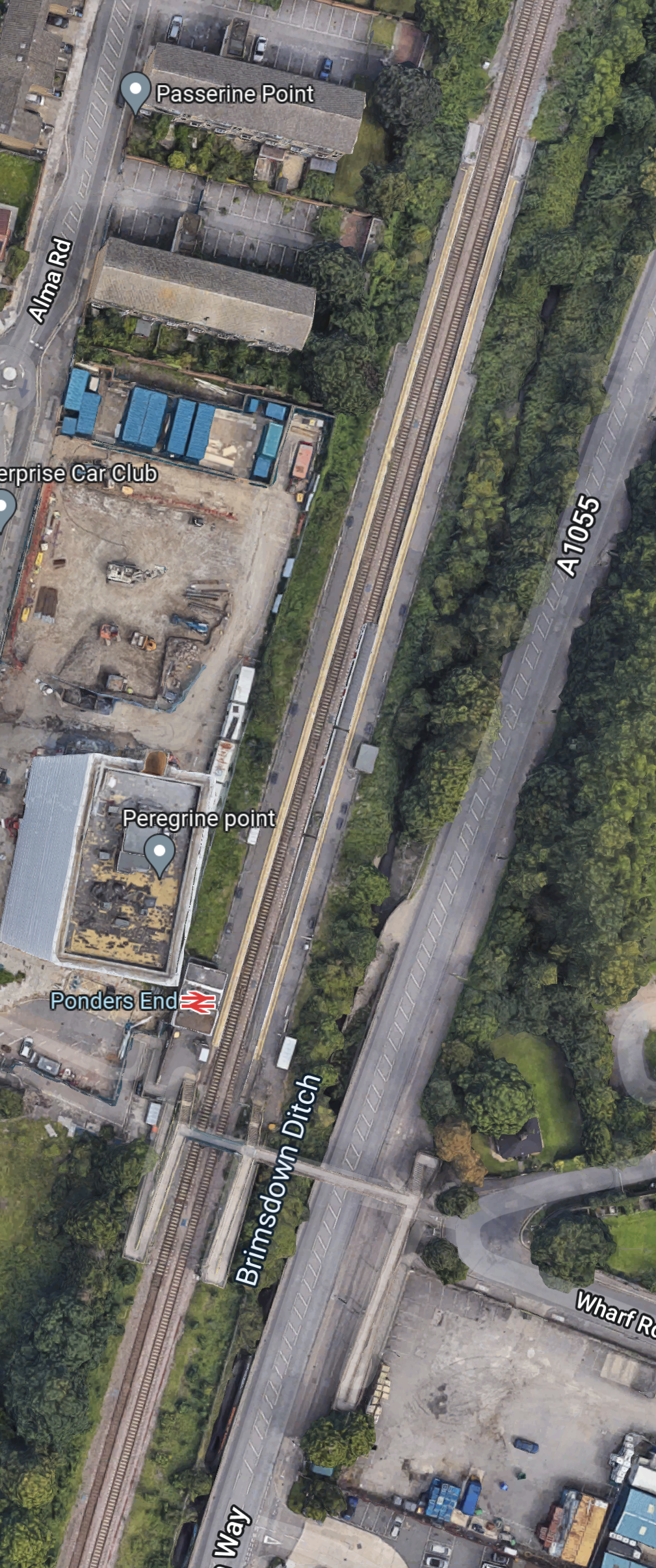
Note.
- The Brimsdown Ditch on the East side of the station.
- The footbridge spanning both the railway and the road.
- The footbridge has ramps for step-free access.
- I suspect that the platforms will take a 240 metre train.
These pictures show the station
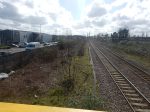
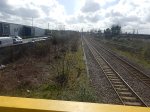
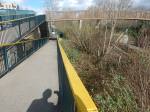
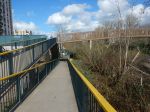


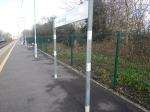
Note.
- The station serves the Lee Valley Regional Park and the Lea Valley Athletics Centre, so it probably needs lifts in an ideal world.
- The bridge seems to be built high enough for a track or even two to pass underneath.
- There seems to be plenty of space between the railway tracks and the A1055 road.
I wonder if a very simple solution is going to be built.
Consider that the distance between the two stations either side of Ponders End station is 3.2 miles or 5150 metres. So if the loop is placed symmetrically around Ponders End station to the East of the station, that would mean that the loop started and finished around 1700 metres from Brimsdown and Meridian Water stations. The Brimsdown Ditch could be put in a culvert, if more space were needed.
A Southbound express after passing through Brimsdown station would then take the loop between the platform and the road at Ponders End station and then cross over to the main line after the station.
I could envisage the Southbound express path through the three stations, being as straight as possible for several hundred metres through Ponders End station, with very gentle curves to connect to the current Southbound track at each end.
To access the Southbound platform at Ponders End, there would be two crossovers from the loop to the track through the station at each end of the station. As the train would be stopping or accelerating away, when it crossed between the passing loop and the station track, it could be done at a much slower speed.
There will be no problem for Southbound represses overtaking a stopping train sitting in Ponders End station. The loop would be very simple and I suspect Network Rail have enough expertise to design it for perhaps 100 mph. The sharpest changes of direction would only be performed by the stopping train at a much slower speed.
But surely, a Northbound train will need to overtake a stopping one.
Could this be done at Meridian Water station by stopping the Northbound stopping train in Platform 3 at the station and allowing the Northbound expresses to overtake through Platform 4?
It would need a couple of crossovers either side of Meridian Water station and bi-directional running through Platform 3 at the station.
Conclusion
How many small rail schemes like this, that unlock housing and job opportunities could be accelerated by better design, management, planning and cooperation between stakeholders.
Are Network Rail Clearing Up The Hall Farm Curve?
I passed the Hall Farm Curve today and took these pictures.





Note.
- The truck appears to be one of Network Rail’s.
- It looks like there’s ongoing work at the other end of the chord, where it joins the West Anglia Main Line.
It’s been in a derelict state for years, so why are they tidying up now?
Stratford Station Secures Funding For Plans Set To Relieve Overcrowding
The title of this post, is the same as that of this article on Rail Technology Magazine.
These are the first two paragraphs.
Reduced congestion at London’s Stratford station is on the table as Network Rail secure a £2m boost from the Department for Transport.
Stratford Station has seen a surge in demand – despite the impact of the pandemic – ever since the 2012 Olympics, and the forecast for this is set to grow even more as the area continues to regenerate.
Something needs to be done as it is he busiest non-terminal station in London, that before the pandemic was handling over 42 million passengers per year.
Nothing specific is said, except that more space will be created for passengers with better wayfinding.
Although the article says that this could be a five year project.
The Current Station
This is an extract from It’s Time To Detopsify Stratford Station, which was a previous look at Stratford station in May this year.
This map from cartometro.com shows the Topsy-like nature of the platforms at Stratford.
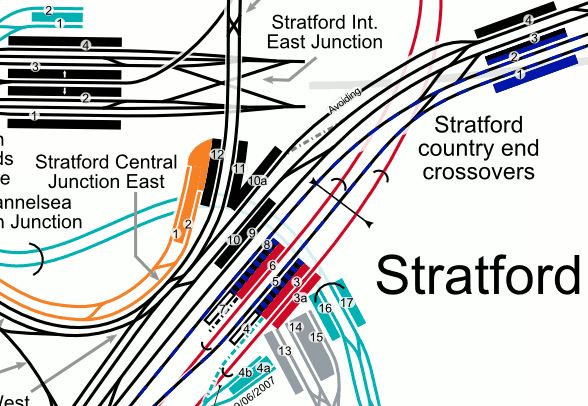
Note.
- The Docklands Light Railway is shown in turquoise.
- The DLR platforms in the North-West corner of the map are those of Stratford International station.
- High Speed One and the four platforms of Stratford International station are shown in black.
- The North London Line of the London Overground is shown in orange.
- The North London Line terminates in Platforms 1 and 2, which have a level link to Platform 12.
- Platform 12 is on the anti-clockwise platform for the High Meads Loop and has step-free access to the subway system underneath the station.
- Platform 11 is on the clockwise platform for the High Meads Loop and has level access to Platform 10a and full step-free access,
- Platform 10a is used by some services to East Anglia.
- Crossrail is shown in blue.
- The Central Line is shown in red.
- The Jubilee Line is shown in silver.
It is not the best passenger-friendly station layout.
What Would I Do?
These are what I would like to see.
Better Information on the Overground Platforms
If I am returning from Stratford after doing some shopping at Eastfield, I will often climb up the stairs or rise in the lift to the two Overground platforms 1 and 2. I will often find two trains there, but there is no indication to say which will be the first train to leave.
Use Of The High Meads Loop
The High Meads Loop is a double-track loop at the Southern end of the branch of the West Anglia Main Line that leads to Stratford.
- It is mainly underneath the Eastfield shopping centre.
- It serves Platforms 11 and 12 in Stratford station.
As the single-track loop of the Wirral Line under Liverpool can handle up to sixteen trains per hour (tph), I believe that the High Meads Loop could be used as the Southern terminus for an improved service to Cambridge, Stansted Airport and up the Lea Valley to Cheshunt, Chingford, Harlow and Hertford East.
The signage from when Stratford had a Stansted Express service is still there and shown in this picture.

This is almost symptomatic of the chaotic nature of the station.
I get the impression from this sign, that one of the original design criteria of the High Meads Loop and the Overground platforms at Stratford for the North London Line was to create an easy route for the whole of North London to Stansted Airport and Cambridge.
Or is it just a symptom of Too Many Cooks Syndrome, where everybody had their own ideas and no-one took charge and designed Stratford station properly?
Let’s hope Network Rail are fully in charge, as this is not a project to interest Sadiq Khan, as it’s not in South London and that area of London won’t benefit.
A Better Connection Between Stratford Station And Southeastern HighSpeed Services
I have just looked up how it is recommended you might travel between Richmond and Faversham.
The timetable recommends a double-change at Clapham Junction and Victoria.
I would take the Overground to Stratford and then change to the Southeastern HighSpeed services.
- This route is a single change.
- The change is step-free.
- The change involves passing the best station stop in the UK; Marks and Spencer’s large store in the Eastfield Shopping Centre, where takeaway food is well placed for passing trade.
But the change is badly signposted and could be a long walk with a heavy case.
There is probably a need for some form of people mover that connects all the platforms at Stratford station to the platforms at Stansted International station.
Conclusion
Sort it!
Essex Councillors Call For Underground Link
The title of this post, is the same as that of this article on Railnews.
This is the first paragraph.
Councillors in Harlow are calling for a new Underground link, saying that they are examining ‘all possibilities for improving and modernising transport connections’.
I’ve tackled this subject before in Does Harlow Need An Improved Train Service?, but this time I’m starting with what is possible and working backwards.
Harlow’s Current Train Service
Currently, these trains serve Harlow Town station.
- Stratford and Bishops Stortford – 2 tph – via Lea Bridge, Tottenham Hale, Waltham Cross, Cheshunt, Broxbourne and Sawbridgeworth
- London Liverpool Street and Cambridge North – 1 tph – via Tottenham Hale, Cheshunt, Broxbourne, Bishop’s Stortford, Audley End, Whittlesford Parkway and Cambridge
- London Liverpool Street and Cambridge North – 1 tph – via Tottenham Hale, Cheshunt, Broxbourne, Roydon, Sawbridgeworth, Bishop’s Stortford, Stansted Mountfitchet, Elsenham, Newport, Audley End, Great Chesterford, Whittlesford Parkway, Shelford and Cambridge
- London Liverpool Street and Stansted Airport – 1 tph – via Tottenham Hale
- London Liverpool Street and Stansted Airport – 1 tph – via Tottenham Hale and Stansted Mountfitchet
In addition these services run through Harlow Town station without stopping.
- London Liverpool Street and Stansted Airport – 2 tph – via Tottenham Hale
Note.
- tph is trains per hour
- The Stansted services are fast services and take 29 minutes between London Liverpool Street and Harlow Town.
- The other services seem to take a few minutes longer.
Summarising the services gives the following.
- Eight tph pass through the station of which six tph stop.
- Cambridge and Cambridge North has a 2 tph service.
- London Liverpool Street has a 4 tph service.
- Stansted Airport has a 2 tph service.
- Stratford has a 2 tph service.
- Tottenham Hale has a 6 tph service.
Each of Greater Anglia’s new Class 720 trains, when working as a ten-car formation can carry well over a thousand passengers.
Harlow Town station has a fairly good service, but it could probably be improved.
What Are Harlow’s Councillors Suggesting
This paragraph in the Railnews article gives the councillors wish list.
Harlow Councillor Michael Hardware is portfolio holder for strategic growth. He said: ‘With Harlow’s close proximity to London our plans include investigating the potential for the extension of the central line to Harlow, lobbying to extend London Transport Zones to Harlow, examining connectivity to Crossrail 2 and promoting four tracking of the main line to Stansted Airport as well as improving existing public transport links in and out of the town.
I’ll look at each proposal in turn.
Extending The Central Line To Harlow
Epping and Harlow are about nine miles apart.
This Google Map shows the two towns and the M11 that runs to the East of both towns.
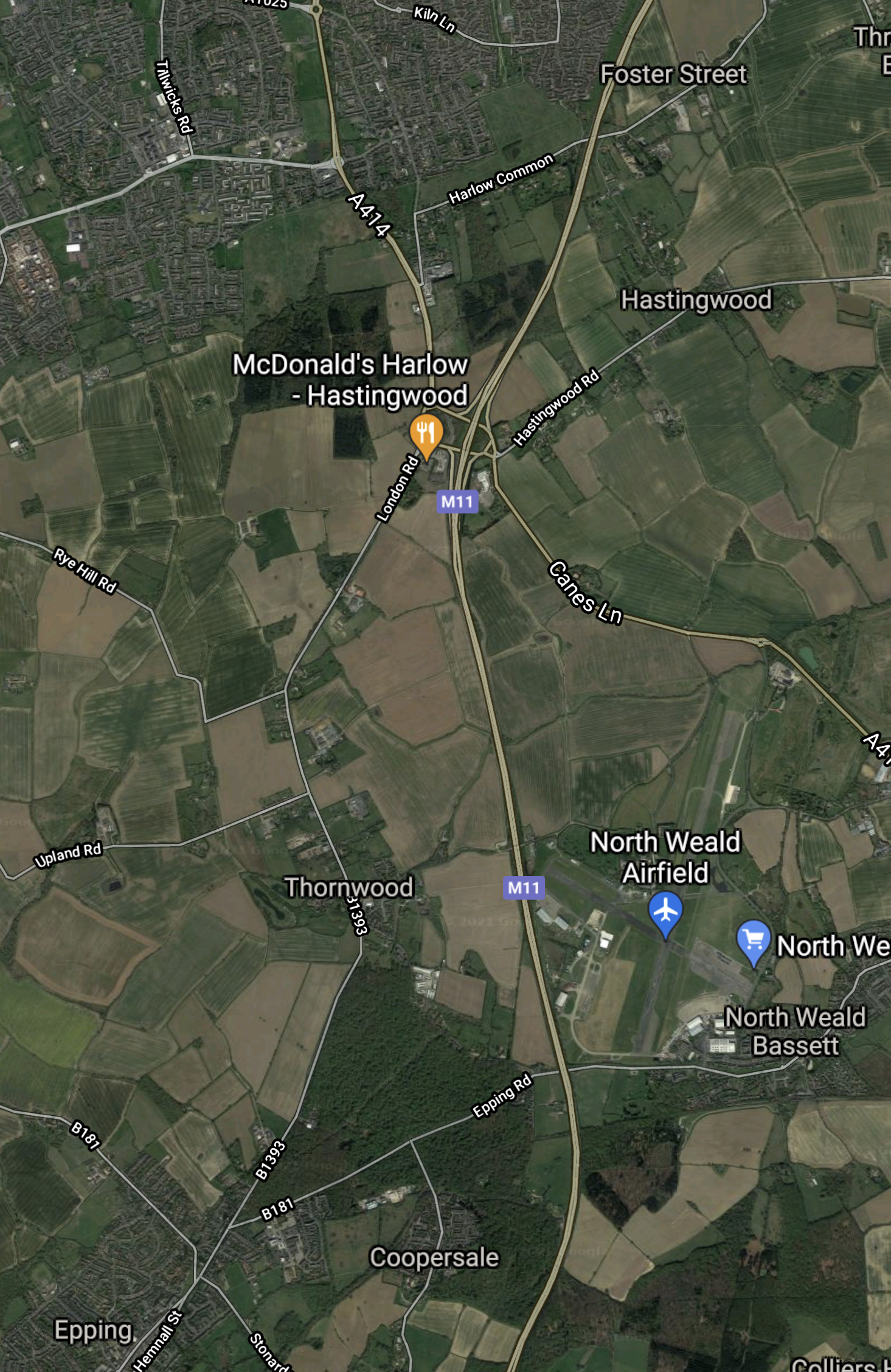
Note.
- Epping is in the South-West corner of the map.
- Harlow, which is a large town of nearly 90,000 residents is at the top of the map.
- The M11 runs North-South across the map to the East of both towns.
- North Weald Airfield lies to the East of the motorway.
Would it be possible to run an extension of the Central Line from Epping to Harlow?
It could run up the West side of the motorway.
- The terminus could be in South-East Harlow close to Junction 7 of the M11.
- Any plans for the development of North Weald Airfield could have a big effect on any plans.
This Google Map shows the location of Epping station with respect to the motorway.
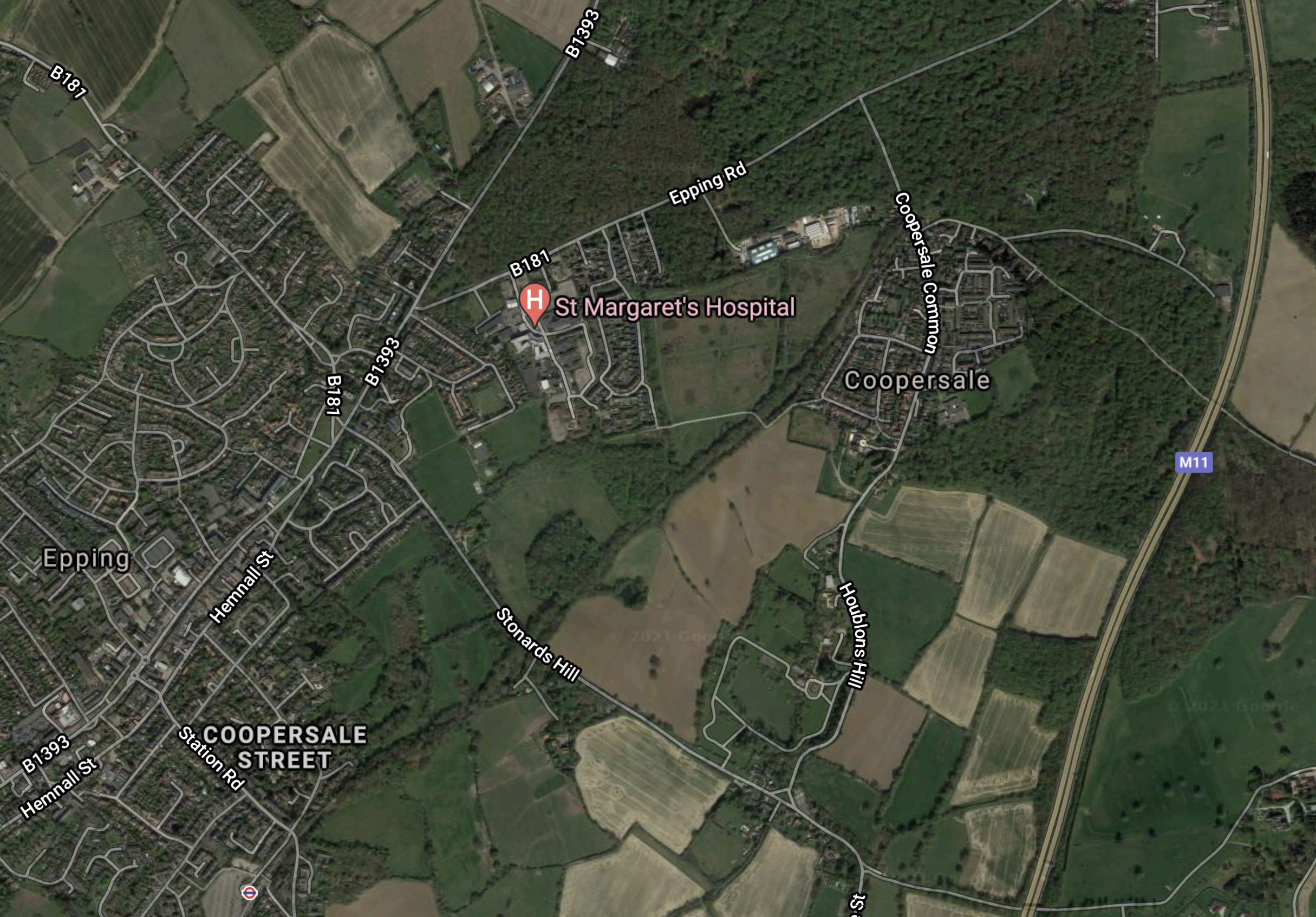
Note Epping station is in the South-West corner of the map.
Running North-East from the station, the dark green scar of the single-track Epping Ongar Railway can be picked out, as it runs between St. Margaret’s Hospital and the village of Coopersale.
This third Google Map shows the railway as it passes under the M11.
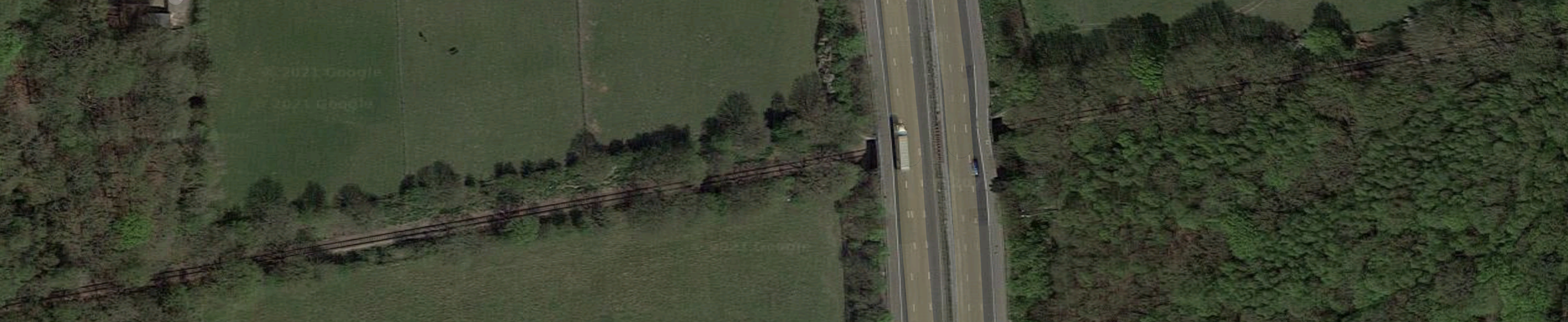
Would it be possible to use the route of this line to connect to a new line alongside the motorway?
This fourth Google Map shows Epping tube station.
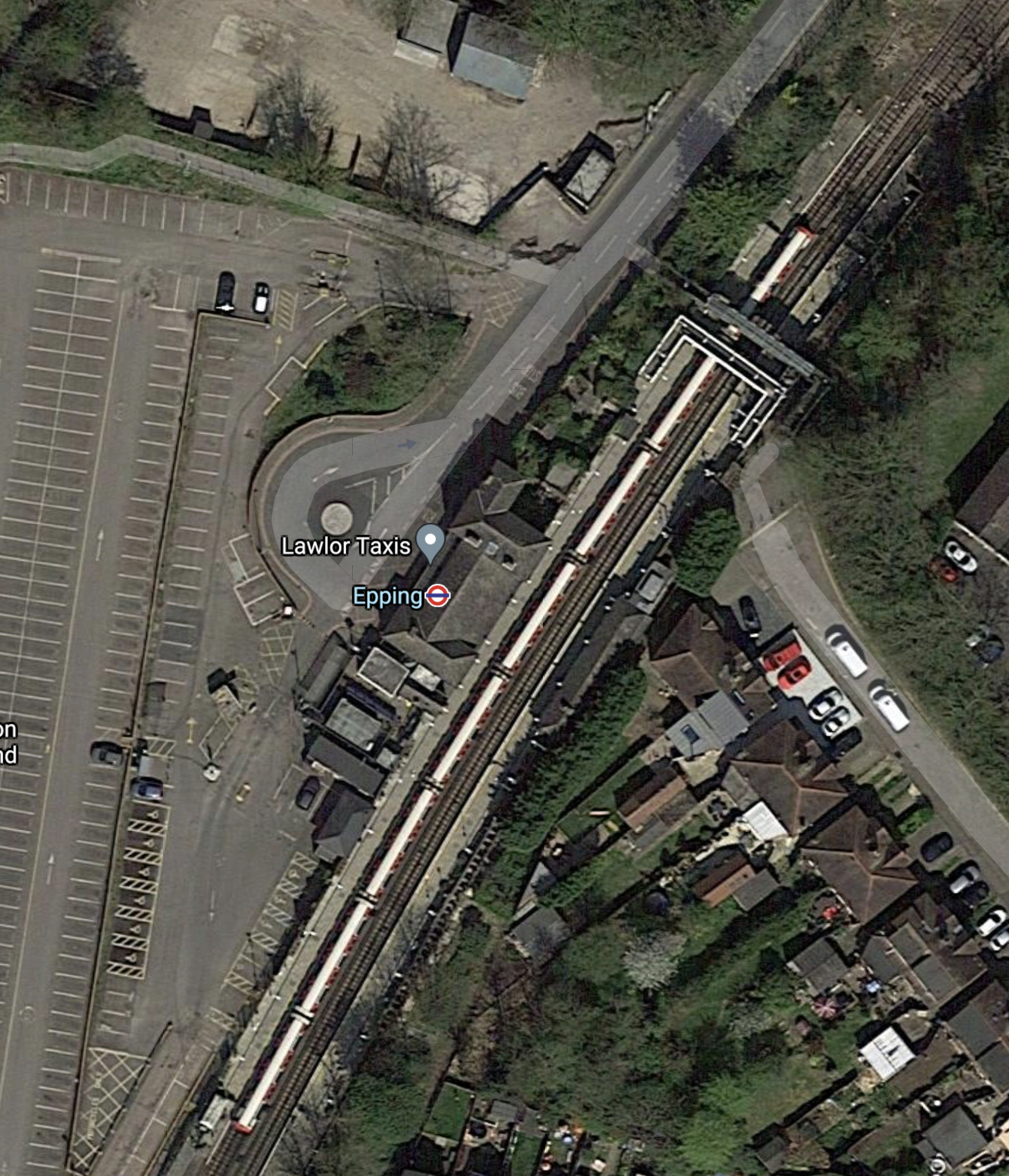
Note.
- The station has two platforms, but is not step-free.
- It has a large car-park.
- Trains take thirty-seven minutes between Epping and Liverpool Street stations.
- Trains have a frequency of nine tph.
This map from cartometro.com shows the track layout at Epping station and the interface with the Epping Ongar Railway.
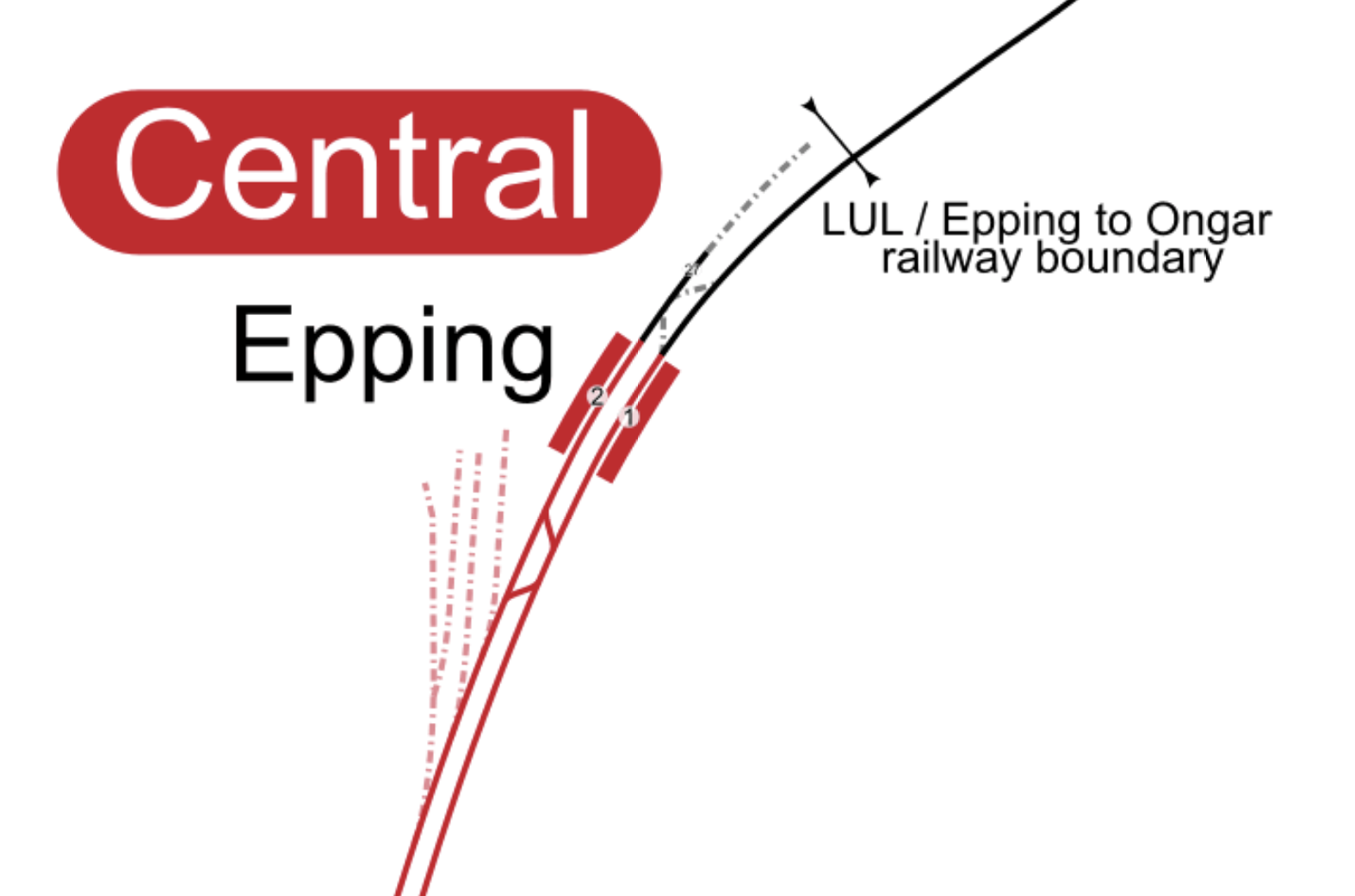
Note.
- The Epping Ongar Railway has always been single track.
- The crossovers to the South of Epping station allow either platform to be used for Central Line services.
- When the Central Line ran to Ongar, it looks like all services used Platform 1 at Epping.
I feel that it might be possible to create an extension to Harlow, by doing something like the following.
- Add a second bi-directional track alongside the Epping Ongar Railway between Epping station and the M11.
- Extend Platform 1 to the North, so that the heritage trains can load and unload passengers at Epping station.
- The Central Line platforms would be unaltered, so could still handle the nine tph they currently handle.
- Trains to and from Harlow would always use Platform 2.
At the M11, the new bi-directional track would turn North and become double-track to Harlow.
- The double-track would allow trains to pass.
- If the rolling stock for the Central Line has been renewed, it might be possible to run the extension on battery power.
- If Harlow had a single platform, it would be possible to run four tph to Harlow.
- The current 2012 Stock trains have a capacity of around a thousand passengers.
- I estimate that trains would take about ten minutes between Epping station and the new Harlow station.
I feel something is possible, but building the line might be easier if new battery-electric trains were available, as this would probably allow the extension to be built without electrification.
On the other hand, it might not have the greatest financial case.
- It could be difficult to add large numbers of passengers to the Central Line.
- At around forty-seven minutes, the Central Line service will be slower than the main line trains, which currently take around a dozen minutes less.
I’ll be interested to see what the professionals say.
Extending London Transport Zones To Harlow
Harlow Town station has ticket barriers, but I don’t think it is part of London’s contactless card zone.
Adding Harlow Town and all stations between Harlow Town and the zone could be very beneficial to passengers and train companies.
Examining Connectivity To Crossrail 2
I think that in the current economic situation this should be discounted.
- It is a very expensive project.
- Building it will cause tremendous disruption on the West Anglia Main Line.
- It is only planned to go as far as Broxbourne station.
But I don’t think politicians from outside London and the South-East would sanction another massive project for London.
I don’t think Crossrail 2 will ever be build in its currently proposed form.
Four Tracking Of The Main Line To Stansted Airport
Consider.
- Currently, the numbers of trains on the West Anglia Main Line is under twelve tph.
- Modern double-track railways with the latest digital in-cab signalling like Thameslink and Crossrail can handle twice this number of trains.
- The West Anglia Main Line will be getting new trains with better acceleration.
Four-tracking is mainly needed to cut times to Cambridge and Stansted Airport, but I suspect that with some clever design and improved signalling, the current double-track can be improved significantly.
Improving Existing Public Transport Links In And Out Of The Town
I think that this could be a fruitful area.
- As I said earlier, Harlow has only 6 tph trains stopping in the station.
- I believe this could be increased to at least 10 tph, if the West Anglia Main Line were to be modernised.
- Extending London Transport Zones To Harlow, which I discussed earlier would surely help.
- Is there enough car parking?
- Are there enough buses to the stations?
- Would a fleet of zero-carbon buses tempt people to use them?
- Would it be possible to run a hydrogen commuter bus service up and down the M11 between say Harlow and Ilford for Crossrail?, as is being done in Dublin, that I wrote about in Three Hydrogen Double Decker Buses Set For Dublin.
Hopefully, Harlow’s councillors would have a few good ideas.
A Few Thoughts On What Is Possible
These are a few of my thoughts on what is possible.
Digital Signalling Could Increase The Number of Trains Per Hour Significantly
Consider.
- Currently, the West Anglia Main Line handles ten tph between Liverpool Street and Bishops Stortford.
- Thameslink handles 24 tph with digital signalling.
- Crossrail will handle 24 tph with digital signalling.
- High Speed Two will handle eighteen tph.
I certainly believe that another four tph could be easily handled through the two Harlow stations, with full digital signalling.
Perhaps a frequency of eight tph, that would match TfL Rail between London Liverpool Street and Shenfield would be ideal.
If it works for Shenfield it should work for Harlow!
Rebuild Cheshunt Station
Cheshunt station with its level crossing is a bottleneck and any increase in the number of trains through the station will need the level crossing to be replaced by a bridge.
But developers are talking of high class housing in the area and removal of the level crossing appears to be in their plans.
New High-Capacity Class 720 Trains
Pairs of five-car Class 720 trains are coming to the West Anglia Main Line and each pair will carry over a thousand passengers.
These will be used on four tph, that call at Harlow Town station.
Turn Trains In The High Meads Loop at Stratford Station
The single-track Wirral Line Loop under Liverpool handles up to sixteen tph.
Network Rail built a double-track loop under the Eastfield Shopping Centre, which calls at Platforms 11 and 12 in Stratford.
If this loop was used to turn trains it could probably handle at least twelve tph on one platform.
Liverpool Street currently handles these trains that go up the West Anglia Main Line or the Lea Valley Lines.
- 6 tph – Greater Anglia
- 6 tph – London Overground
It looks to me that the terminal capacity in London could be as high as 20 tph.
Run More Trains On A Digitally-Signalled Route Through Seven Sisters
Just four tph run on the London Overground route through Seven Sisters station.
Compare that with the East London Line of the London Overground, where sixteen tph run between Dalston Junction and Surrey Quays stations.
The London Overground has ambitions to run four tph to Cheshunt and Enfield Town, as they do to Chingford, but that would only up the frequency through Seven Sisters to eight tph.
The tracks in the area also allow trains from Stratford to use the lines through Seven Sisters stations to go North.
Run West Anglia And Lea Valley Services Together
Currently, Greater Anglia and London Overground seem to do their own things, but surely properly integrated and with the moving of more services to the London Overground, I suspect that everything could be more efficient.
I believe that by using Liverpool Street and Stratford as twin London terminals for Lea Valley services, that upwards of twenty tph can on digitally-signalled West Anglia Main Line and the Lea Valley Lines.
These are the current trains.
- Bishops Stortford – 2 tph
- Cambridge North – 2 tph
- Cheshunt – 2 tph
- Chingford – 4 tph
- Enfield Town – 2 tph
- Hertford East – 2 tph
- Stansted Airport – 4 tph
Note.
- This is a total of eighteen tph
- The pinch point is surely the stretch between Bethnal Green and Clapton stations, which handles 14 tph including a mix of fast expresses and London Overground services.
- On the other hand the route through Seven Sisters is handling just four tph.
- Ten tph run between Tottenham Hale and Cheshunt stations on the West Anglia Main Line.
- Only two tph terminate in Stratford.
If the Cheshunt and Enfield Town services are increased to 4 tph, as is London Overground’s aspirations we get the following.
- Bishops Stortford – 2 tph
- Cambridge North – 2 tph
- Cheshunt – 4 tph
- Chingford – 4 tph
- Enfield Town – 4 tph
- Hertford East – 2 tph
- Stansted Airport – 4 tph
Note.
This is a total of twenty-two tph.
But there is still plenty of spare capacity at Stratford and through Seven Sisters.
If our objective is more trains through Harlow, why not double up the Stratford and Bishops Stortford service.
- Bishops Stortford – 4 tph
- Cambridge North – 2 tph
- Cheshunt – 4 tph
- Chingford – 4 tph
- Enfield Town – 4 tph
- Hertford East – 2 tph
- Stansted Airport – 4 tph
Note.
- This is a total of twenty-four tph.
- Harlow will have eight tph to and from London.
- There will be 8 tph through Seven Sisters.
- There will be twelve tph between Tottenham Hale and Cheshunt stations on the West Anglia Main Line.
- Four tph will terminate at Stratford.
Perhaps to reduce the trains on the West Anglia Main Line, the Hertford East trains could go via Seven Sisters.
But that would mean that stations like Brimsdown and Ponders End would lose a lot of their service.
So why not add extra stops to the Bishops Stortford services?
Conclusion
I believe that by doing the following.
- Adding digital signalling to all lines.
- Turning more trains at Stratford.
- Using the route through Seven Sisters at a much higher frequency.
- Rebuilding Cheshunt station and level crossing.
- Reorganising stops on the West Anglia Main Line.
That it would be possible to create a high-frequency Metro up the Lea Valley.
Except for the digital signalling and Cheshunt station, there is not much work to do on the infrastructure.
Could London Overground Services To Stratford Be Extended To Meridian Water?
My arrival In Platform 11 at Stratford station has got me thinking!
And others too! Judging by the comments I’ve received.
Yesterday, I took a train from Dalston Kingsland station to Stratford station.
- The train was the 0934 from Clapham Junction, which was timed to arrive in Stratford at 1038.
- It arrived in Platform 11 at 1036.
In A London Overground Class 378 Train In Platform 11 At Stratford Station, I show pictures of the train in Platform 11 at Stratford station.
I suspected this was just a one-off occurrence, caused by a malfunction in a train or the signalling, which prevented my train from using the normal Platforms 1 or 2, that services to Stratford would use.
Although, looking at Real Time Trains, the 0938 train this morning, terminated in Platform 11. As it did on Monday and Tuesday this week.
- This train was the only train from Clapham Junction station not to use Platform 2.
- Checking days last week, it appears that this train always terminated in Platform 2.
So why did the service terminate in Platform 11?
Driver training is one possibility, so they can use the Platform 11, if there is a malfunction that stops them using Platform 2.
But is there a clue in the first picture, I took, when I arrived in Stratford?
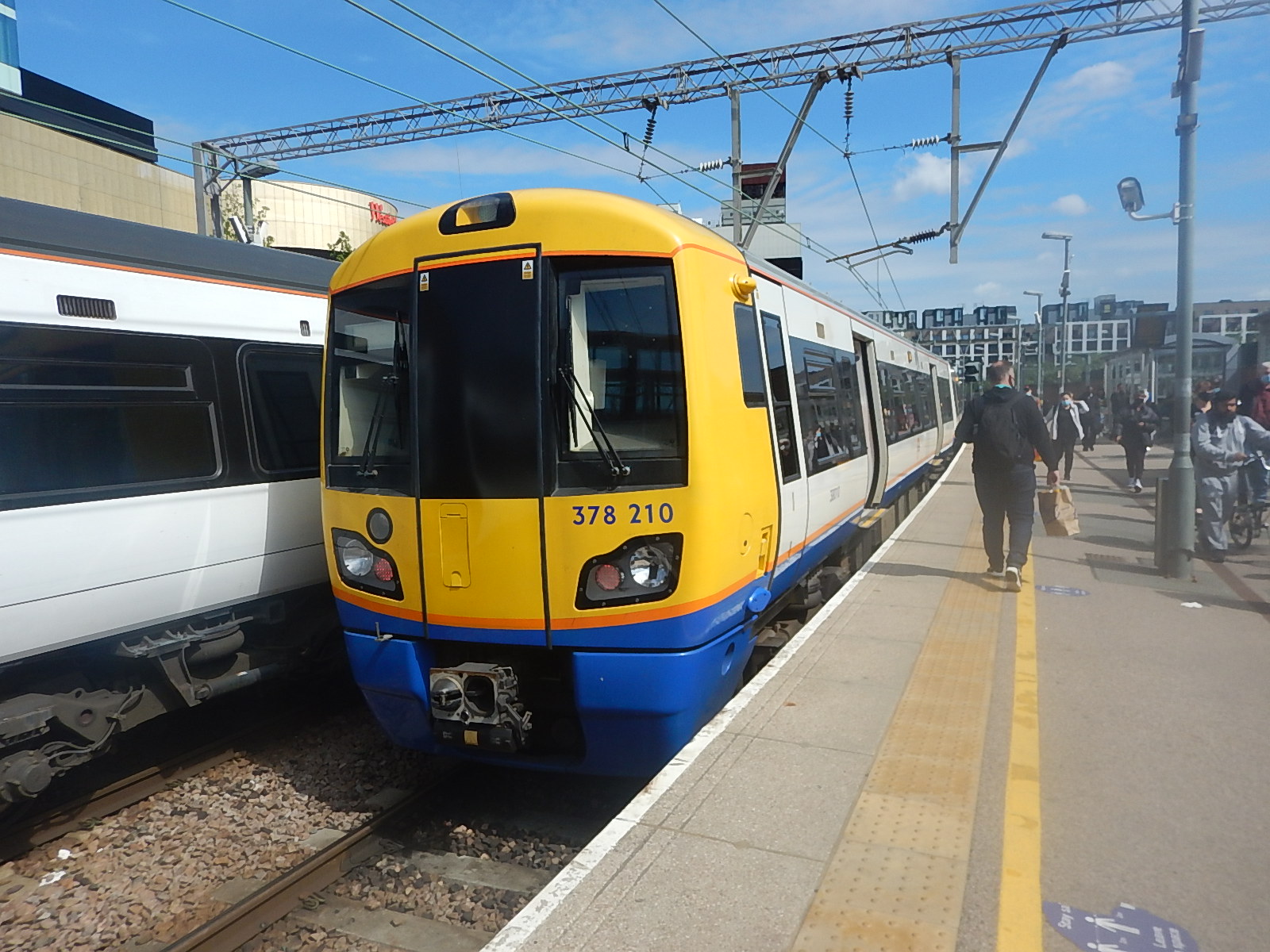
The train in Platform 12 is the 1046 to Meridian Water, which arrived from Bishops Stortford at 1040.
Could it mean that there is to be a reorganisation of platforms at Stratford?
- Platform 12 will be exclusively used by Greater Anglia for their West Anglia Main Line services.
- Platform 11 will be used by London Overground.
In Using Platform 12 At Stratford Station, I described ending up on Platform 12, so I know it is possible, but when it happened information was bad for passengers, who didn’t know here they needed to go to continue on their way.
But why would London Overground need the extra platform?
These are my thoughts.
Do London Overground Need An Extra Platform At Stratford?
Currently London Overground services to Stratford are as follows.
- Four tph – Stratford and Richmond
- Four tph – Stratford and Clapham Junction
Note.
- tph is trains per hour.
- Both Class 378 and Class 710 trains can work the routes to Stratford.
- Eight tph can easily be handled by two platforms.
To handle more trains may need a third platform at Stratford for the London Overground.
Extra Trains Between Stratford And Canonbury
This report from Network Rail is entitled The London Rail Freight Strategy (LRFS).
It says this about creating a third platform at Camden Road station.
This proposal would reinstate a third track and platform on the northern side of Camden Road station, utilising part of the former 4-track formation through the station.
The additional capacity provided would facilitate much greater flexibility in pathing options for trains on this busy central section of the NLL, opening up new options for future service provision and bolstering performance resilience.
Reinstatement of a third platform would enable platform 2 to be used as a central turnback, with platform 3 becoming the eastbound line for through London Overground services and the majority of freight.
Transport for London modelling suggests that the eastern end of the NLL, from Canonbury to Stratford, will see some of the strongest long-term demand growth on the Overground network.
A turnback platform will allow this to be addressed with peak capacity boosting services between Stratford and Camden Road and there would also be the option to operate these through the off-peak, which could offer a means of providing additional passenger capacity where it is most needed.
The availability of an additional platform would also aid performance recovery during perturbation on
the orbital routes.
Note.
- The strongest passenger growth on the North London Line (NLL), will be between Canonbury and Stratford.
- Extra services are proposed between Stratford and Camden Road stations.
- If you travelled between Highbury & Islington and Stratford before the pandemic, the trains only had space for a few extra very small people in the Peak.
I use this section of the North London Line regularly and suspect the route needs at least twelve tph.
Twelve tph into Stratford would probably mean that the London Overground would need a third platform at Stratford.
More Trains Serving Meridian Water
In the Wikipedia entry for Meridian Water station, this is said.
In August 2019, it was announced that funding had been approved for construction of a fourth platform and a new section of track between Tottenham Hale and Meridian Water to enable up to 8 trains per hour to serve the station at peak times.
This must be the earliest upgrade in history, after a new station has opened.
I got the impression, when the station was announced that it would have four tph to Stratford. Currently, there are just two tph.
Two tph between Stratford and Bishops Stortford also pass through without stopping.
If these called at Meridian Water in the Peak, then there would still be four tph to find.
An easy way to create four tph between Stratford and Meridian Water would be to extend four London Overground services from Stratford.
- Services would call at Lea Bridge, Tottenham Hale and Northumberland Park stations.
- Trains would pass through Platform 11 at Stratford.
- Platform 11 at Stratford would be bi-directional.
- The service could be run all day, at a frequency of four tph.
- As these trains have their own track, they won’t delay the Cambridge and Stansted trains on the West Anglia Main Line.
- A cross-London service between Meridian Water and Clapham Junction or Richmond, would be possible.
Note.
- London Overground would be responsible for the bulk of the Meridian Water service.
- London Overground’s four- or five-car trains would probably have sufficient capacity for the service.
- The main new infrastructure needed would be the fourth platform and a new section of track at Meridian Water station.
- Some improvements as specified in the London Rail Freight Strategy will be useful, as they will increase capacity on the North and West London Lines.
- My only worry would be, that can modern signalling handle four tph in both directions through Platform 11 at Stratford station.
What Will Be The Track Layout And Method of Operation?
The current track layout is simple.
A bi-directional third track has been laid between Lea Bridge junction, just to the North of Lea Bridge station and Meridian Water station.
- It is to the East of the double-track West Anglia Main Line.
- There are bi-directional platforms at Tottenham Hale and Northumberland Park stations.
- There is a single terminating Platform 2 at Meridian Water station.
A train going between Stratford and Meridian Water stations does the following.
- Leaves from Platform 11 or 12 at Stratford station.
- Calls in Platform 2 at Lea Bridge station.
- Switches at Lea Bridge junction to the bi-directional third-track.
- Calls in Platform 2 at Tottenham Hale station.
- Calls in Platform 2 at Northumberland Park station.
- Terminates in Platform 2 at Meridian Water station.
A train going between Meridian Water and Stratford stations does the following.
- Leaves from Platform 2 at Meridian Water station
- Calls in Platform 2 at Northumberland Park station.
- Calls in Platform 2 at Tottenham Hale station.
- Switches at Lea Bridge junction to the Up line of the West Anglia Main Line.
- Calls in Platform 1 at Lea Bridge station.
- Terminates in Platform 11 or 12 at Stratford station.
The track layout can probably handle a maximum of two tph.
I suspect the upgrade will build on this layout to allow a frequency of at least four tph.
The following works will be done.
- A fourth track to the East of the bi-directional third track will be built.
- The fourth track will run between Tottenham Hale and Meridian Water stations.
- I suspect the fourth track will split from the third track at a junction to the North of Tottenham Hale station. Could this be called Tottenham Hale North Junction? I will use that name, to make things simple!
- A new Platform 1 will be built in Meridian Water station.
- Trains going North between Tottenham Hale and Meridian Water will use the current bi-directional third track and will be able to terminate in either Platform 1 or 2 at Meridian Water station.
- Trains going South between Meridian Water and Tottenham Hale will use the new fourth track and will be able to start from either Platform 1 or 2 at Meridian Water station.
- I suspect, Northumberland Park station will need a new Platform 1 for Southbound trains. But the station was designed with that in mind.
A train going between Stratford and Meridian Water stations will do the following.
- Leave from Platform 11 or 12 at Stratford station.
- Call in Platform 2 at Lea Bridge station.
- Switch at Lea Bridge junction to the bi-directional third-track.
- Call in Platform 2 at Tottenham Hale station.
- Call in Platform 2 at Northumberland Park station.
- Terminate in Platform 1 or 2 at Meridian Water station.
A train going between Meridian Water and Stratford stations will do the following.
- Leave from Platform 1 or 2 at Meridian Water station.
- Use the new fourth track to come South.
- Call in Platform 1 at Northumberland Park station.
- Continue on the bi-directional third-track at Tottenham Hale North Junction.
- Call in Platform 2 at Tottenham Hale station.
- Switch at Lea Bridge junction to the Up line of the West Anglia Main Line.
- Call in Platform 1 at Lea Bridge station.
- Terminate in Platform 11 or 12 at Stratford station.
The track layout is effectively two double-track sections linked by a bi-directional single track between Lea Bridge Junction and Tottenham Hale North Junction.
- On the double-track sections of the route trains can pass each other, as they are on different tracks.
- Lea Bridge and Tottenham Hale stations are 1.9 miles apart.
- Trains take three or four minutes between Lea Bridge and Tottenham Hale stations. Including the stop at Tottenham Hale on the single track section.
If trains could alternate through the single-track section, this would give a capacity of well over four tph in both directions.
- A train going North would wait in Platform 2 at Lea Bridge station until the previous Southbound train had cleared Lea Bridge junction, before proceeding North.
- A train going South would wait at Tottenham Hale North Junction until the previous Northbound had safely passed, before proceeded South.
I suspect that the trains need full digital signalling with a degree of Automatic Train Control.
But I suspect we could see six tph in both directions.
- This would fit nicely, with London Overground’s ambition of six tph on all routes.
- It could be increased to eight tph in the Peak, by arranging for an appropriate number of Greater Anglia services to and from Liverpool Street at Meridian Water.
I feel that a service that meets all objectives will be possible.
Proposals From The London Rail Freight Strategy That Might Help
These proposals from the London Rail Freight Strategy might help.
- NLL, GOB And WLL Headway Reductions – See Headway Reductions On The Gospel Oak To Barking, North London and West London Lines
- Kensal Green Junction Improvement
- Moving The West London Line AC/DC Switchover To Kensington Olympia
- Stratford Regulating Point Extension
- Camden Road Platform 3 – See Will Camden Road Station Get A Third Platform?
- Clapham Junction Platform 0 – See Will Clapham Junction Station Get A Platform 0?
It does look to me, that the London Rail Freight Strategy was designed with one eye on improving the passenger train service between North-East and South-West London.
Taking The Pressure Off The Victoria Line
Consider.
- If you’re going between Walthamstow and the West End or the major stations of Euston, Kings Cross, St. Pancras and Victoria, you will use the Victoria Line.
- If you live in the new housing, being built at Meridian Water, currently you will be likely to hop to Tottenham Hale station and take the Victoria Line.
Consequently, Northern end of the line can get busy! And not just in the Peak!
But a four tph service between Meridian Water and Stratford, will encourage passengers to go to Stratford to take advantage of the Central and Jubilee Lines and Crossrail.
Hence there will be less passengers, who need to use the Victoria Line.
A Better Interchange Between Camden Road And Camden Town Stations
The essential upgrade of Camden Town station has been put on indefinite hold due to TfL’s financial position.
This is a big mistake.
- Camden Town station gets dangerously full!
- It would allow the splitting of the Northern Line into two independent lines, which would increase capacity of the current system.
- Camden Town station is not step-free but Camden Road station has lifts.
Hopefully, it would result, in a better route between the two stations, rather than the polluted route on a narrow pavement.
I very much believe that the rebuilding of Camden Town station is the most important project to improve London’s Underground and Overground network.
But it won’t get built with the current Mayor, as he’s a South Londoner.
Could A Meridian Water and Clapham Junction Service Be An Affordable Crossrail 2?
Consider.
- Crossrail 2 will link Clapham Junction and Meridian Water via Central London and Dalston.
- A Meridian Water and Clapham Junction service would link the two stations via Shepherd’s Bush, Old Oak Common, West Hampstead, Camden Road, Dalston and Stratford.
Each route has their connectivity advantages.
- Both have good connections to Crossrail, Thameslink and the Bakerloo, Central and Jubilee Lines.
- The London Overground route has good connections to the Victoria Line and High Speed Two at Old Oak Common.
- Crossrail 2 serves important stations in Central London.
A Meridian Water and Clapham Junction service could be a valuable addition to London’s rail infrastructure without too much new expensive infrastructure.
Conclusion
An extension of some London Overground services from Stratford to Meridian Water would be worthwhile.
Implementation of this is made easier by the recommendations of the London Rail Freight Strategy.
I
 The Anonymous Widower