‘New Era’ As German Coalition Prioritises Rail Spending Over Road
The title of this post, is the same as that of this article on Railway Gazette.
This is the first paragraph.
The so-called ‘traffic light coalition’ formed by the Social Democratic, Green and Free Democratic parties as the next federal government has committed to launching a ‘Rapid Capacity Expansion’ to enhance railway infrastructure as part of its wider transport strategy.
Other policies would include.
- A national regular interval timetable as a matter of priority.
- Increasing rail’s share of the freight transport market from the current 19% to 25% by 2030.
- Doubling passenger traffic by the end of the decade.
- Electrify 75 % of the network by 2030.
- Road tolls for trucks would be increased to reflect CO2 emissions.
- New commercial and industrial developments would be mandated to examine the potential for incorporating a rail connection.
- A pressure group, whose name translates as Alliance Pro Rail is in favour.
But will the average German voter in their Audi, BMW, Mercedes or Volkswagen cruising down the autobahn be in favour?
It certainly looks like it will be all change on German railways and roads.
The article is also linked to three in depth articles on the future of German railways published by Railway Gazette in the last few months.
- Comment: Climate Goals To Trump Profits
- German Associations Seek More Competition In Second Rail Reform
- Rail Reopenings To Support Climate-Friendly Transport
It certainly is all change.
Platform Construction Underway At Winslow On New East West Railway
The title of this post, is the same as that as this article on Rail Advent.
This picture from Network Rail shows the Winslow station construction site.
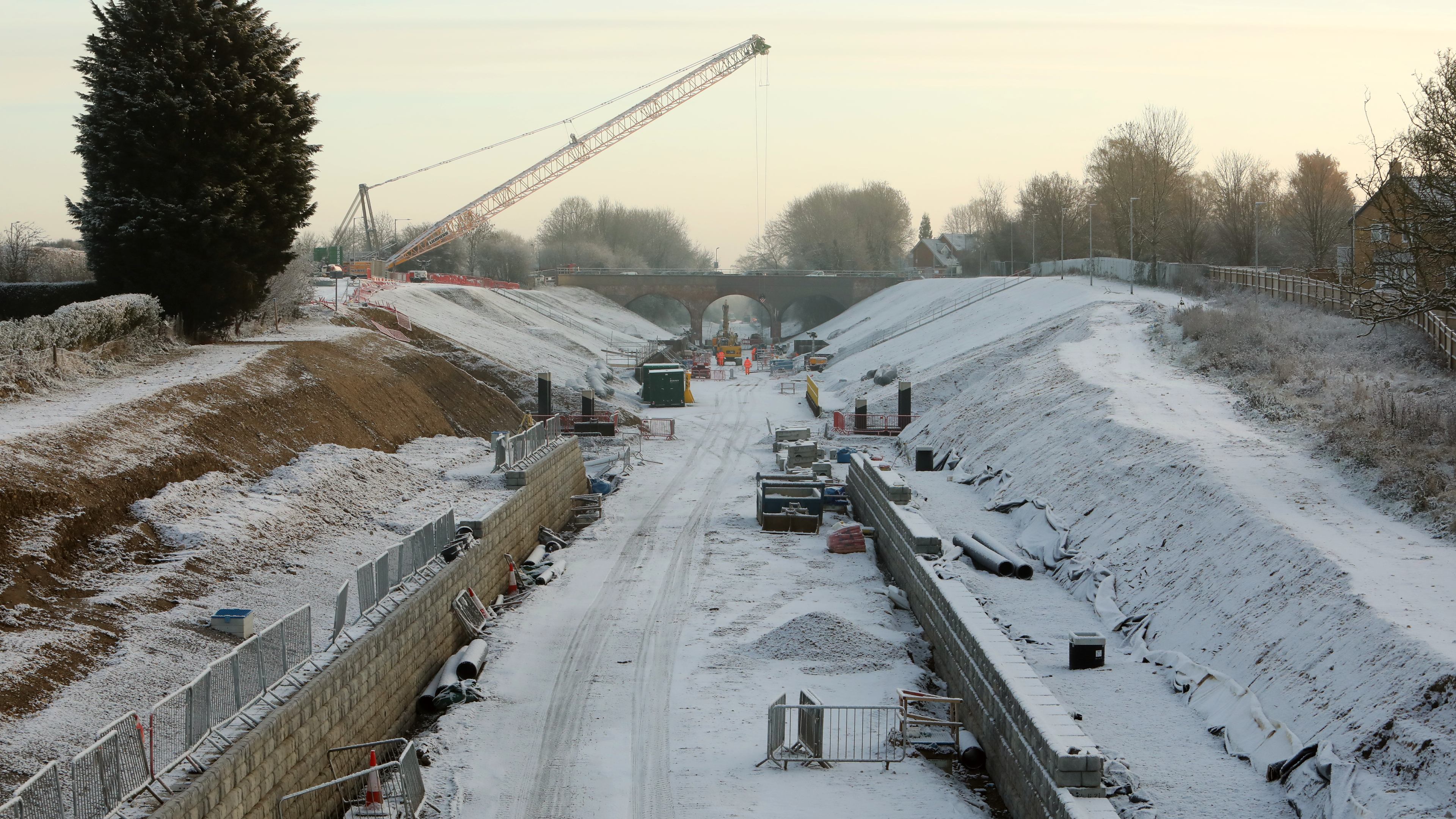
This paragraph from the Rail Advent article describes the operation.
A 250 tonne crawler crane is being used to lift over 500 pre-cast concrete platform units into position within new railway cutting. As there is limited space available on site, a smartphone app has been developed to allow the platform units to be called for delivery in the exact construction sequence. The crane’ ‘lattice boom’ is 62-metres long , which is taller than Nelson’s Column.
That all sounds like good project management to me.
More ICE Sprinters Offer Alternative To Flying
The title of this post, is the same as that of this article on Railway Gazette.
The first two paragraphs, give an overview of the changes being made.
Deutsche Bahn introduced more limited-stop Sprinter ICE services on long-distance inter-city routes with the timetable change on December 12.
Sprinter-branded ICE services now operate on eight domestic routes, while a daily Frankfurt am Main – Paris service calling at Mannheim and Karlsruhe also carries the branding. Intended to appeal to business travellers, many of the Sprinter services are timed to depart early in the morning with return trips in the evening. This ensures a full day at the destination and offers a viable alternative to domestic flights.
It would appears that these services now have trains that are under the acceptable four hours.
- Cologne and Berlin
- Cologne and Munich
- Hamburg and Frankfurt Airport
If Deutsche Bahn are serious about competing with the airlines, they must surely increase the frequency.
In 2018, I travelled between Berlin and Munich in under four hours and wrote about it in From Berlin To Munich In Four Hours By Train.
This is how I started that post.
The length of the East Coast Main Line between London Kings Cross and Edinburgh is 632 kilometres.
Deutsche Bahn have recently completed an upgraded High Speed Line between Berlin and Munich, which has a length of 623 kilometres.
Both lines are not the very fastest of High Speed Lines, but lines where a consistent two hundred kilometres per hour is possible.
The East Coast Main Line was built in Victorian times and services typically take around twenty minutes over four hours, with nine -car InterCity 225 trains running twice an hour.
The Berlin-Munich route was originally built over two centuries ago, but the Germans have spent twenty-five years and many billions of euros punching a new route between Berlin and Nuremberg, through the difficult countryside of Thuringen Forest.
The route may allow the Germans to travel from Berlin to Munich in three hours fifty-five minutes, but at present you can only do it three times a day in a six-car train.
I took the lunchtime train and sat in First Class for a hundred and fourteen euros.
Deutsche Bahn have increased the trains on this route to five trains per day, but compared to London and Edinburgh on LNER, it is too infrequent, expensive with questionable customer service and not enough seats to give the airlines a run for their money.
A quick look on Rail Europe indicates that these routes have fast services at an hourly frequency or better.
- Madrid and Barcelona
- Milan and Rome
- Paris and Bordeaux
- Paris and Cologne
- Paris and Marseilles
- Venice and Naples
German rail services might be getting better, but not fast enough to take on the airlines.
Caterpillar To Launch Demonstration Project Using Hydrogen Fuel Cell Technology For Backup Power At Microsoft Data Center
The title of this post, is the same as that of this press release on the Caterpillar web site.
This is the first two paragraphs.
Caterpillar Inc. today announced a three-year project through a collaboration with Microsoft and Ballard Power Systems to demonstrate a power system incorporating large-format hydrogen fuel cells to produce reliable and sustainable backup power for Microsoft data centers. The project is supported and partially funded by the U.S. Department of Energy (DOE) under the H2@Scale initiative and backed by the National Renewable Energy Lab (NREL).
“At Caterpillar, we focus on supporting our customers with reliable, resilient and economical power solutions while achieving their climate-related goals,” said Jason Kaiser, vice president for Caterpillar’s Electric Power Division. “This hydrogen fuel cell demonstration project enables us to collaborate with industry leaders to take a large step toward commercially viable power solutions that also support our customers in making their operations more sustainable.”
It certainly looks like Caterpillar are turning to the use of hydrogen to keep their existing markets.
This press release explains the cooperation in a paragraph.
Caterpillar experts in advanced power technologies, controls and system integration are working alongside Microsoft experts in data center design and Ballard experts in fuel cell design to demonstrate a 1.5 MW backup power delivery and control system that would meet or exceed the expectations set by current diesel engine systems.
Elsewhere the press release says that Caterpillar aims to be carbon negative by 2030.
Conclusion
We will see lots of systems like this providing reliable and sustainable power systems for entities like airports, city centres, data centres, hospitals, ports, shopping malls and other large users of electricity.
Infection, Mortality And Severity Of Covid-19 In Coeliac Disease – Prof Jonas Ludvigsson
The title of this post is the same as that of this presentation on the Coeliac UK web site.
If you are coeliac and worried about catching the Covids, I suggest you watch the presentation.
The presentation is about eighteen minutes long and this is the last-but-one screen.
Coeliac Disease and Covid-19
- No increased risk of death from Covid-19
- No increased risk of ICU for Covid-19
- No increased risk of any (!) Covid-19
THEN: Coeliac patients with Covid-19, have no increased risk of death compared to other patients with Covid-19.
Conclusion
The professor concludes it is good news and there is no need for coeliac patients to get the jab earlier than other people.
I would also like to add my fourpennyworth!
The professor was only analysing diagnosed coeliacs, who were probably on a long-term gluten-free diet.
My son was an undiagnosed coeliac, who lived the rock and roll lifestyle, generally living on ciggies, high-strength cannabis and Subways. His immune system, probably gave him all the protection of a plastic colander.
He died at just 37 from pancreatic cancer.
Happy Christmas To Everyone!
Let’s hope 2022 is better than 2020 and 2021!
Will We See Class 43 Power Cars Converted To Hydrogen?
To say that the Class 43 power cars of the InterCity 125 trains are iconic is rather an understatement.


Note.
They were built by British Rail in the late 1970s and early 1980s.
- They have an operating speed of 125 mph.
- They are now powered by a modern MTU 16V4000 R41R diesel engine after being re-engined earlier this century.
- They have an electric transmission.
According to Wikipedia, there are over a hundred and twenty in service.
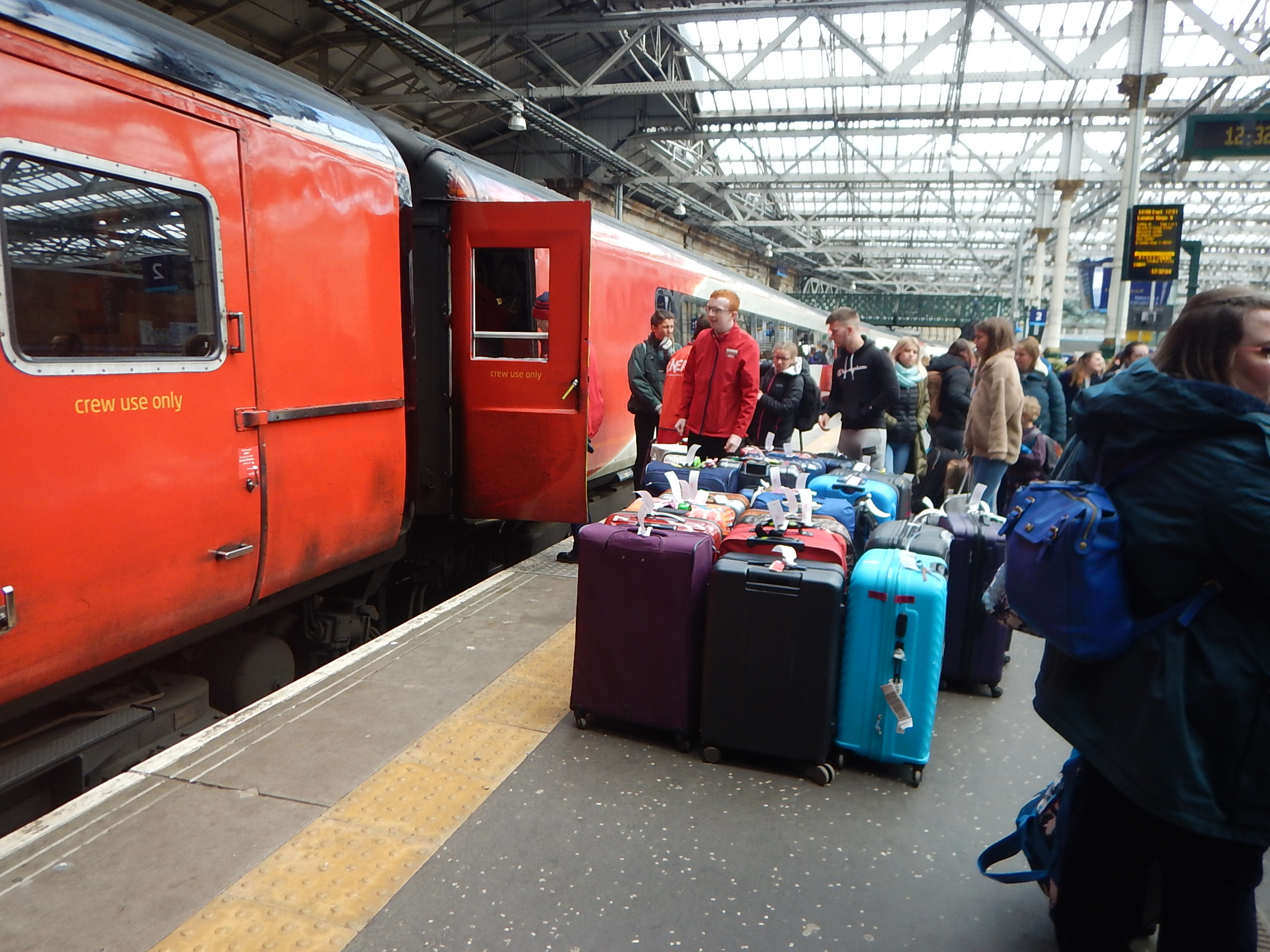
At the back of the power car there is a lot of space, as this picture shows.
This press release from Rolls-Royce is entitled Rolls-Royce Launches mtu Hydrogen Solutions For Power Generation.
These are the introductory bullet points to the press release.
- From 2022 mtu Series 500 and Series 4000 ready for 25% hydrogen
- From 2023 mtu engines and conversion kits available for 100% hydrogen
And what engine is there in a Class 43 power car? – It’s an MTU 16V4000 R41R diesel engine.
Is it an mtu Series 4000 engine?
If it is, there is space in the back of the power car for the hydrogen tank and the diesel engine can be converted to run on hydrogen, Rolls-Royce have everything they need break the speed record for hydrogen-powered trains. After all power cars; 43102 and 43159 hold the diesel-train speed record at 148 mph.
It would be the ultimate Roller.
Rolls-Royce Invests In Methanol Technology For Climate-Friendly Shipping
The title of this post, is the same as this press release from Rolls-Royce.
The press report starts with these bullet points.
- Rolls-Royce Power Systems to set standards in high-speed marine methanol engines
- New engines based on proven mtu technologies
- Methanol and synthetic diesel as key fuels of the future for climate-friendly engine operation
- Fuel cell another option on the way to climate-neutral ship operation
It then says this
Rolls-Royce is focusing on methanol as a fuel for climate-friendly shipping: Rolls-Royce business unit Power Systems is currently working on mtu engines for use with methanol. The new high-speed four-stroke engines, which are based on proven mtu technologies, are planned to be available to customers as soon as possible for use in commercial ships and yachts.
This paragraph gives the reasons, why Rolls-Royce is in favour of methanol.
Methanol offers a number of advantages for Rolls-Royce’s efforts to make shipping more climate-friendly and ultimately climate-neutral: The fuel can be produced in a CO2-neutral manner in the so-called power-to-X process, in which CO2 is captured from the air. The energy density of methanol is high compared to other sustainable fuels and, thanks to its liquid state, it can be easily stored and refuelled at ambient temperatures. Existing infrastructure can continue to be used in many cases. Unlike ammonia, methanol is not highly toxic and is environmentally safe. The combustion of methanol in a pure methanol engine can be climate-neutral with significantly reduced nitrogen oxide emissions, thus eliminating the need for complex SCR exhaust gas aftertreatment. Methanol tanks can be flexibly arranged in the ship and require significantly lower safety measures compared to hydrogen or ammonia. Besides the safety aspects and the lower complexity, the lower investment costs for users are a further upside of the methanol tank system.
Methanol seems to be a convenient and safe fuel, which is easier to incorporate into the marine environment, than hydrogen or ammonia.
Wikipedia says this about methanol’s use in shipping.
Methanol is an alternative fuel for ships that helps the shipping industry meet increasingly strict emissions regulations. It significantly reduces emissions of sulphur oxides (SOx), nitrogen oxides (NOx) and particulate matter. Methanol can be used with high efficiency in marine diesel engines after minor modifications using a small amount of pilot fuel (Dual fuel).
Rolls-Royce certainly seem to be keen to use the fuel. They also seem to have the technology.
Rolls-Royce Makes Duisburg Container Terminal Climate Neutral With MTU Hydrogen Technology
The title of this post, is the same as this press release from Rolls-Royce.
This is the first sentence.
Rolls-Royce will ensure a climate-neutral energy supply at the container terminal currently under construction at the Port of Duisburg, Germany.
There is also this Rolls-Royce graphic, which shows the energy sources.

It would appear batteries, combined heat and power (CHP), grid electricity, hydrogen electrolyser, hydrogen storage and renewable electricity are being brought together to create a climate-neutral energy system.
- As the graphic was named hydrogen technology for ports, I would assume that this is a Rolls-Royce mtu system that will be deployed at more than one port around the world.
- Note the H2 CHPs in the graphic. Could these be applications for Rolls-Royce’s beer keg-sized 2.5 MW electrical generator based on a Super Hercules engine?
- One of Rolls-Royce’s small modular nuclear reactors could be ideal for a large port outside Germany.
This is the last paragraph of the press release.
“Hydrogen technology is no longer a dream of the future, but hydrogen technology will prove itself in everyday use in Duisburg. The parallel use of fuel cell solutions and hydrogen engines shows that we have taken the right path with our technology-open approach to the development of new solutions for the energy supply of the future,” says Andreas Schell, CEO of Rolls-Royce Power Systems.
Rolls-Royce mtu appear to be very serious about the possibilities of hydrogen.
Flirt Akku And Class 755 Train Compared
This article on Focus Transport is entitled 224-kilometre Battery Range For FLIRT Akku – Stadler Sets World Record For Guinness Book Of Records.
These facts about the record run are given.
- The route was from from Berlin to Warnemünde.
- It appears to have been independently verified.
- The distance was 224 kilometres or 139 miles.
- This distance is more than London to Great Yarmouth via Norwich.
- It is reported that the temperature was around zero, which is not very battery-friendly.
No mention was made in the article of the number of passengers on board or the average speed.
Various articles have stated that the Flirt Akku is a three-car train, but I was not sure, if it included a PowerPack car like the Class 755 train.
So I flew my virtual drone over the route and got this picture.

Compare the front end with this picture of a Class 755 train at Lowestoft.
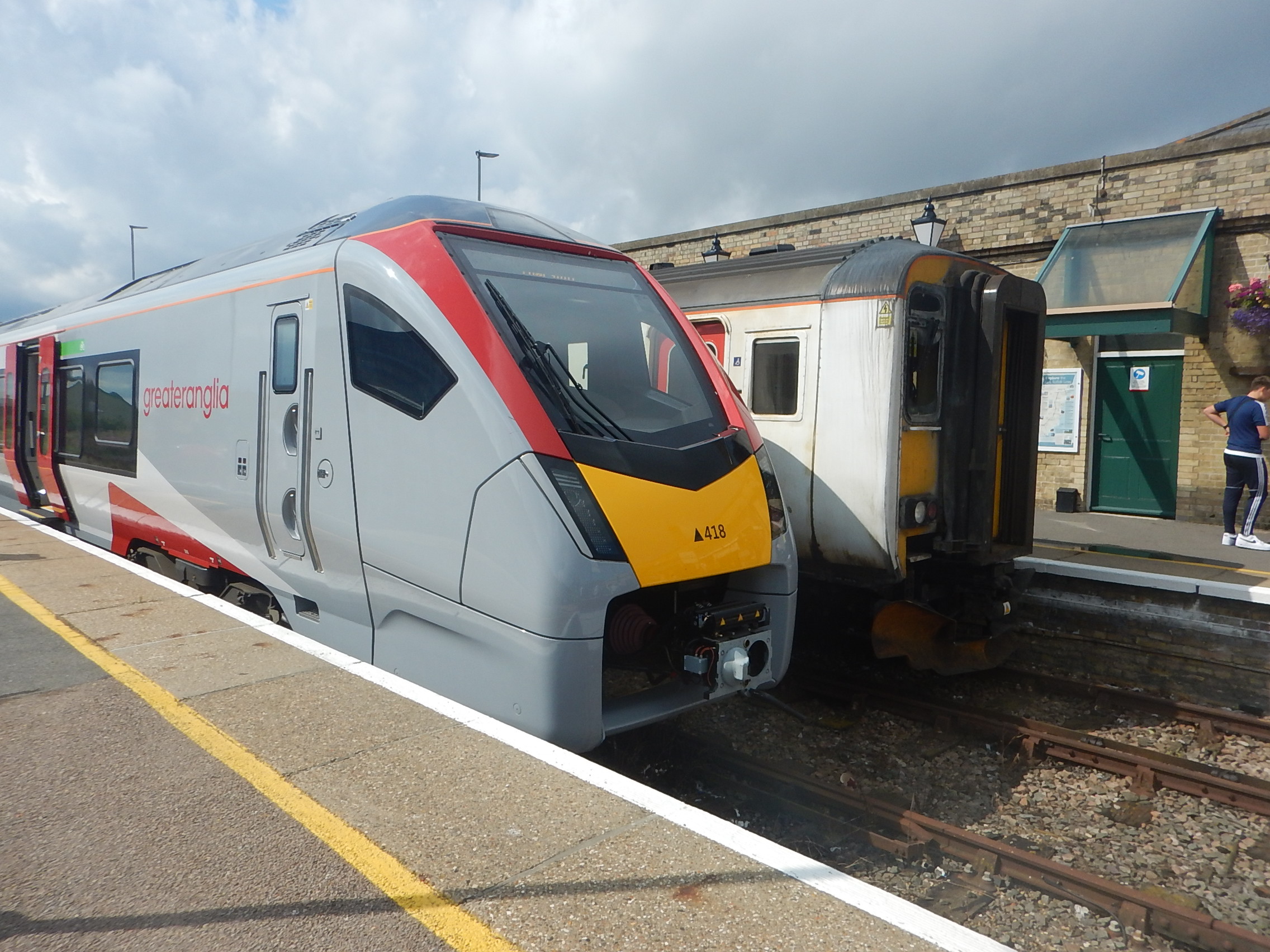
And the side view with this diagram of the trains, that I clipped from Wikipedia.
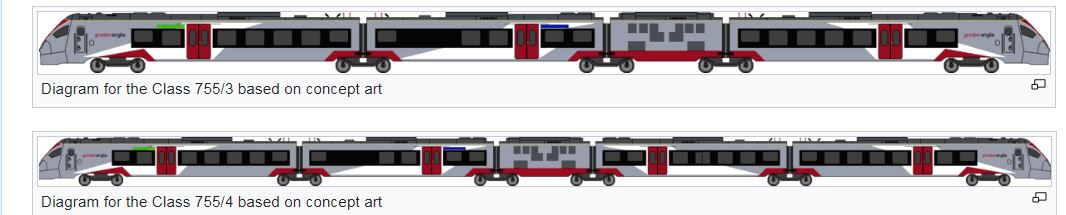
I can come to these conclusions.
- The two front ends are very different, although the basic layout of doors and windows appears the same.
- The Akku seems to have a flatter side.
- The Akku lacks the PowerPack of the British train.
It also looks like the Greater Anglia train has better step-free access between between train and platform. But then you never seem to find good step-free access on German trains.
Some extra information and thoughts .
Testing The Flirt Akku
This article on Railvolution is entitled FLIRT AKKU Research Project Completed.
The article comprehensively described the testing process and gave more details of the train.
- The train was running at 140 kph or 87 mph.
- This speed is available from the catenary or battery.
- Battery charging takes twenty minutes.
- The train seats 154 passengers in a 2 + 2 configuration.
The train appears to be roughly the same size and performance as a three-car Class 755 train.
Range On A Battery-Electric Class 755 Train
The battery range needed on various Greater Anglia routes are as follows.
Ipswich and Cambridge – 41.3 miles
- Ipswich and Felixstowe – 15.6 miles
- Ipswich and Lowestoft – 48.9 miles
- Ipswich and Peterborough – 71.2 miles
- Norwich and Great Yarmouth – 18.3 miles
- Norwich and Lowestoft – 23.5 miles
- Norwich and Sheringham – 30 miles
- Norwich and Stansted Airport – 53.7 miles
- Marks Tey and Sudbury – 11.8 miles
Note.
- Cambridge, Ely, Ipswich, Norwich and Peterborough are stations with full electrification.
- I suspect some services will need charging at the remote station.
It looks like to handle all routes will need a train with a range of around 80 miles or around 129 kilometres.
Conclusion
I don’t think that it would be impossible for Stadler to create a battery-electric Class 755 train with enough range.
 The Anonymous Widower