Abellio’s Plans For The Midland Main Line
This page on the Department for Transport web site is an interactive map of the Abellio’s promises for East Midlands Railway.
These are mentioned for Midland Main Line services to Derby, Nottingham and Sheffield.
From May 2020, Modern Diesel Trains Will Begin To Replace Ageing HSTs.
May 2020 is only a year away. Is that enough time to order and build new or refurbish existing diesel trains.
So how will they obtain new trains?
Timetable Changes Will Enable Faster Journey Times From December 2020
These HST-replacement trains must be faster too!
This article on Rail Magazine is entitled Government Seeks Midland Main Line HST Upgrade Update.
It describes how the current eleven HSTs are being updated with retention tanks and accessible toilets, so they can continue to run after this year.
But as the doors won’t be replaced, this means that eleven trains with between six and eight coaches must be found.
One solution mooted is to use Mark 4 Coaches released from LNER, by new Class 801 trains.
In Midland Mark 4, I talk about a possible solution described by Ian Walmsley in the March 2018 Edition of Modern Railways.
- Two Class 43 power cars would be at each end of a rake of Mark 4 coaches.
- The current 2+8 formation may need to be shortened to 2+7 because of the heavier coaches.
- The coaches meet all the regulations.
- There are plenty of power cars available.
I rode in a Mark 4 coach back from Scotland recently and these will be comfortable trains.
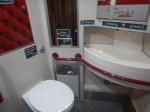
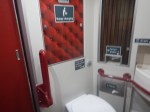
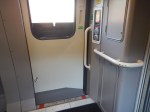
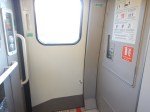
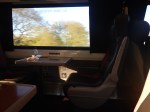
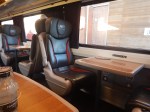
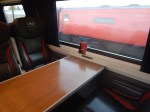
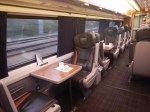
The pictures show First Class, is as good as anything in Europe. The only thing worse, than in Eurostar’s latest Class 374 trains is the space, which is due to our smaller loading gauge.
Not bad for a thirty year old train.
But
- They were designed for a 140 mph maximum speed.
- There are 302 coaches of various types available.
- They meet all current and future accessibility regulations.
- They have push-button automatic doors.
I estimate that a seven-car set of coaches for the Midland Main Line would have a capacity of around 400-420 passengers in two classes.
As there are currently, eleven InterCity 125 trains working the Midland Main Line, I can’t see there being a shortage of carriages.
Earlier And Later Train Service Each Day To East Midlands Parkway Enabling better Airport Connectivity
iIt won’t affect me, but I suspect other travellers will benefit.
Earlier And Later Trains To And From London, With A More Regular Evening Service Between London And Sheffield
I have moaned about this for a long time.
Try going to Derby or Sheffield from London for an evening football match and getting home that day!
Brand-New 125mph trains Will Be Introduced Into Service From April 2022
Fwatures include.
- More reliable service
- Improved comfort
- Passenger information system
- Free on-board Wi-Fi
- At-seat power sockets
- USB points
- Air conditioning
- Tables at all seats
- increased luggage space
- On-board cycle storage
I speculate as to who will build them in Hydrogen Trains To Be Trialled On The Midland Main Line.
Hydrogen Trains To Be Trialled On The Midland Main Line
This article on Railway Gazette is entitled Bimode And Hydrogen Trains As Abellio Wins Next East Midlands Franchise.
Abellio will be taking over the franchise in August this year and although bi-mode trains were certain to be introduced in a couple of years, the trialling of hydrogen-powered trains is a surprise to me and possibly others.
This is all that is said in the article.
Abellio will also trial hydrogen fuel cell trains on the Midland Main Line.
It also says, that the new fleet will not be announced until the orders are finalised.
In this post, I’m assuming that the hydrogen trial will be performed using the main line trains.
Trains for the Midland Main Line will need to have the following properties
- 125 mph on electric power
- 125 mph on diesel power
- Ability to go at up to 140 mph, when idigital n-cab signalling is installed and the track is improved.
- UK gauge
- Ability to run on hydrogen at a future date.
I think there could be three types of train.
- A traditional bi-mode multiple unit, with underfloor engines like the Hitachi Class 800 series, is obviously a possibility.
- An electrical multiple unit, where one driving car is replaced by a bi-mode locomotive with appropriate power.
- Stadler or another manufacturer might opt for a train with a power pack in the middle.
The second option would effectively be a modern InterCity 225.
- South of Kettering, electricity would be used.
- North of Kettering, diesel would be used
- Hydrogen power could replace diesel power at some future date.
- Design could probably make the two cabs and their driving desks identical.
- The locomotive would be interchangeable with a driver car.
Bi-modes would work most services, with electric versions working to Corby at 125 mph.
Which manufacturer has a design for a 125 mph, hydrogen-powered train?
Alstom
Alstom have no 125 mph UK multiple unit and their Class 321 Hydogen train, is certainly not a 125 mph train and probably will still be under development.
Bombardier
In Mathematics Of A Bi-Mode Aventra With Batteries, I compared diesel and hydrogen-power on bi-mode Aventras and felt that hydrogen could be feasible.
In that post, I wrote a section called Diesel Or Hydrogen Power?, where I said this.
Could the better ambience be, because the train doesn’t use noisy and polluting diesel power, but clean hydrogen?
It’s a possibility, especially as Bombardier are Canadian, as are Ballard, who produce hydrogen fuel-cells with output between 100-200 kW.
Ballard’s fuel cells power some of London’s hydrogen buses.
The New Routemaster hybrid bus is powered by a 138 kW Cummins ISBe diesel engine and uses a 75 kWh lithium-ion battery, with the bus being driven by an electric motor.
If you sit in the back of one of these buses, you can sometimes hear the engine stop and start.
In the following calculations, I’m going to assume that the bi-mode |Aventra with batteries has a power source, that can provide up to 200 kW, in a fully-controlled manner
Ballard can do this power output with hydrogen and I’m sure that to do it with a diesel engine and alternator is not the most difficult problem in the world.
So are Bombardier designing the Bi-Mode Aventra With Batteries, so that at a later date it can be changed from diesel to hydrogen power?
All an Aventra needs to run is electricity and the train, the onboard staff and passengers don’t care whether it comes from overhead wires, third-rail, batteries, diesel or hydrogen.
Bombardier also have the technology for my proposed locomotive-based solution, where one driver-car of an Aventra is replaced by what is effectively a locomotive.
If Bombardier have a problem, it is that they have no small diesel train to replace Abellio’s small diesel trains. Could the longer services use the bi-mode Aventras and the shorter ones Aventras with battery power?
CAF
CAF probably have the technology, but there would be a lot of development work to do.
Hitachi
Hitachi have the bi-mode trains in the Class 802 trains, but haven’t as yet disclosed a hydrogen train.
Siemens
They’ve made a few noises, but I can’t see them producing a bi-mode train for 2022.
Stadler
In a few weeks time, I will be having a ride in a Stadler-built Class 755 train, run by Abellio Greater Anglia.
The Class 755 train is a bi-mode 100 mph train, from Stadler’s Flirt family.
Could it be stretched to a 125 mph train?
- Stadler have built 125 mph electric Flirts.
- It is my view, that Stadler have the knowledge to make 125 mph trains work.
- Flirts are available in any reasonable length.
- I’ve read that bi-mode and electric Flirts are very similar for drivers and operators.
These could work the Midland Main Line.
If the mainline version is possible, then Abellio could replace all their smaller diesel trains with appropriate Class 755 trains, just as they will be doing in East Anglia.
Stadler with the launch of the Class 93 locomotive, certainly have the technology for a locomotive-based solution.
East Midlands Railway would be an all-Stadler Flirt fleet.
As to hydrogen, Stadler are supplying hydrogen-powered trains for the Zillertalbahn, as I wrote in Zillertalbahn Orders Stadler Hydrogen-Powered Trains.
Talgo
Talgo could be the joker in the pack. They have the technology to build 125 mph bi-mode trains and are building a factory in Scotland.
My Selection
I think it comes down to a straight choice between Bombardier and Stadler.
It should also be noted, that Abellio has bought large fleets from both manufacturers for their franchises in the UK.
Zero-Carbon Pilots At Six Stations
This promise is stated in the franchise.
Once the electrification reaches Market Harborough in a couple of years, with new bi-mode trains, running on electricity, the following stations will not see any passenger trains, running their diesel engines.
- St. Pancras
- Luton Airport Parkway
- Luton
- Bedford
- Wellingborough
- Kettering
- Corby
- Market Harborough
These are not pilots, as they have been planned to happen, since the go-ahead for the wires to Market Harborough.
Other main line stations include.
- Beeston
- Chesterfield
- Derby
- East Midlands Parkway
- Leicester
- Long Eaaton
- Loughborough
- Nottingham
- Sheffield
Could these stations be ones, where East Midlands Railway will not be emitting any CO2?
For a bi-mode train to be compliant, it must be able to pass through the station using battery power alone.
- As the train decelerates, it charges the onboard batteries, using regernerative braking.
- Battery power is used whilst the train is in the station.
- Battery power is used to take the train out of the station.
Diesel power would only be used well outside of stations.
How would the trains for the secondary routes be emission-friendly?
- For the long Norwich to Derby and Nottingham to Liverpool routes, these would surely be run by shorter versions of the main line trains.
- For Stadler, if secondary routes were to be run using Class 755 trains, the battery option would be added, so that there was no need to run the diesel engines in stations.
- For Bombardier, they may offer battery Aventras or shortened bi-modes for the secondary routes, which could also be emission-free in stations.
- There is also the joker of Porterbrook’s battery-enhaced Class 350 train or BatteryFLEX.
I think that with the right rolling-stock, East Midlands Railway, could be able to avoid running diesel engines in all the stations, where they call.
Why Are Abellio Running A Hydrogen Trial?
This is a question that some might will ask, so I’m adding a few reasons.
A Train Manufacturer Wants To Test A Planned Hydrogen Train
I think that it could be likely, that a train manufacturer wants to trial a hydrogen-powered variant of a high-speed train.
Consider.
- The Midland Main Line is about 160 miles long.
- A lot of the route is quadruple-track.
- It is a 125 mph railway for a proportion of the route.
- It has only a few stops.
- It is reasonably straight with gentle curves.
- Part of the route is electrified.
- It is connected to London at one end.
In my view the Midland Main Line is an ideal test track for bi-mode high speed trains.
A Train Manufacturer Wants To Sell A Fleet Of High Speed Trains
If a train manufacturer said to Abellio, that the fleet of diesel bi-mode trains they are buying could be updated to zero-carbon hydrogen bi-modes in a few years, this could clinch the sale.
Helping with a trial, as Abellio did at Manningtree with Bombardier’s battery Class 379 train in 2015, is probably mutually-beneficial.
The Midland Main Line Will Never Be Fully Electrified
I believe that the Midland Main Line will never be fully-electrified.
- The line North of Derby runs through the Derwent Valley Mills World Heritage Site. Would UNESCO allow electrification?
- I have been told by drivers, that immediately South of Leicester station, there is a section, that would be very difficult to electrify.
- Some secondary routes like Corby to Leicester via Oakham might be left without electrification.
But on the other hand some sections will almost certainly be electrified.
- Around Toton, where High Speed Two crosses the Midland Main Line and the two routes will share East Midlands Hub station.
- Between Clay Cross North Junction and Sheffield, where the route will be shared with the Sheffield Spur of High Speed Two.
- The Erewash Valley Line, if High Speed Two trains use that route to Sheffield.
The Midland Main Line will continue to need bi-mode trains and in 2040, when the Government has said, that diesel will not be used on UK railways,
It is my view, that to run after 2040, there are only two current methods of zero-carbon propulsion; on the sections without overhead electrification battery or hydrogen power.
So we should run trials for both!
Abellio Know About Hydrogen
Abellio is Dutch and after my trip to the Netherlands last week, I wrote The Dutch Plan For Hydrogen, which describes how the Dutch are developing a green hydrogen economy, where the hydrogen is produced by electricity generated from wind power.
So by helping with the trial of hydrogen bi-mode trains on the Midland Main Line, are Abellio increasing their knowledge of the strengths and weaknesses of hydrogen-powered trains.
In Thoughts On Eurostar To North Netherlands And North West Germany, I proposed running bi-mode trains on the partially-electrified route between Amsterdam and Hamburg via Groningen and Bremen, which would be timed to connect to Eurostar’s services between London and Amsterdam. These could use diesel, hydrogen or battery power on the sections without electrification.
If hydrogen or battery power were to be used on the European bi-mode train, It would be possible to go between Sheffield and Hamburg on a zero-carbon basis, if all electric power to the route were to be provided from renewable sources.
Abellio Sees The PR Value In Running Zero-Carbon Trains
In My First Ride In An Alstom Coradia iLint, I talked about running hydrogen-powered trains on a hundred mile lines at 60 mph over the flat German countrside
The Midland Main Line is a real high speed railway, where trains go at up to 125 mph between two major cities, that are one-hundred-and-sixty miles apart.
Powered by hydrogen, this could be one of the world’s great railway journeys.
If hydrogen-power is successful, Abellio’s bottom line would benefit.
Conclusion
This franchise will be a big improvement in terms of carbon emissions.
As I said the choice of trains probably lies between Bombardier and Stadler.
But be prepared for a surprise.
Petts Wood Station To Go Step-Free
This document on the Government web site is entitled Access for All: 73 Stations Set To Benefit From Additional Funding.
Petts Wood station is on the list.
These pictures show the station.
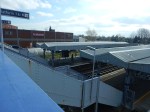


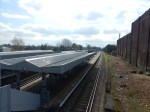

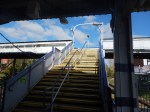


It was built in 1928 and it is of rather an eccentric design. Not only are there steep steps from the two island platforms, but there are steps up to the bridge.
This is a 3D Google Map of the station.
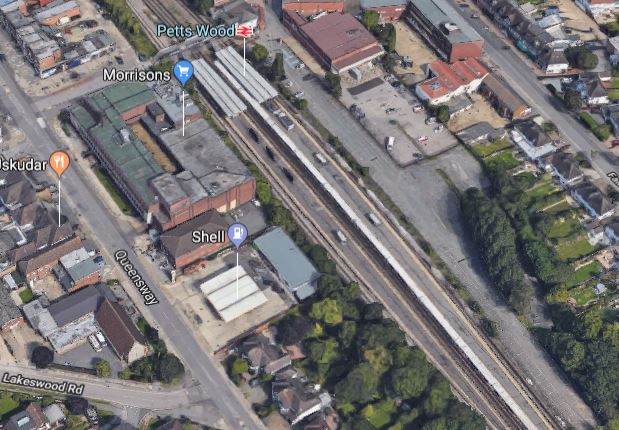
After visiting and looking at the station for the best part of an hour and seeing these images, there appears to be no obvious solution to making this a step-free station.
At many stations needing step-free access, the solution is to build a new modern bridge with step-free access further down the platform. If at Petts Wood station, this were to be done, there is then the problem of connecting the new bridge to the station square and the ticket office.
Morrisons supermarket and the gardens of the houses are in the way.
The only solution is probably to replace the current steel bridge with a new one with lifts at each end and to each platform. But in a station that handles over two million passengers a year that would cause tremendous disruption.
I will watch out for the solution that is applied at this station. It will need to be very innovative.
Northallerton Station To Go Step-Free
This document on the Government web site is entitled Access for All: 73 Stations Set To Benefit From Additional Funding.
Northalleron station is on the list.
This 3D Google Map shows the station.
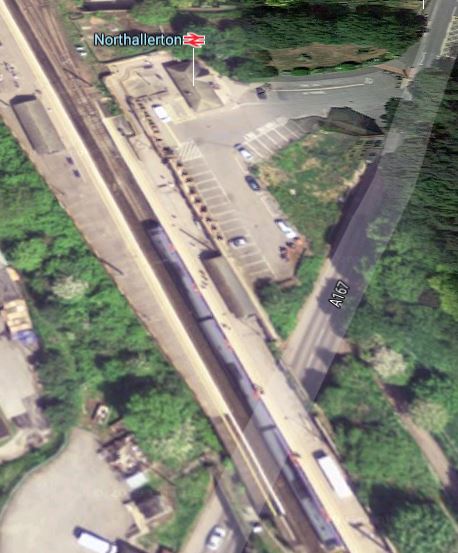
Currently to cross the tracks, there is a subway with a steep ramp.
Installing Step-Free Access
In Winner Announced In The Network Rail Footbridge Design Ideas Competition, I wrote how the competition was won by this bridge.
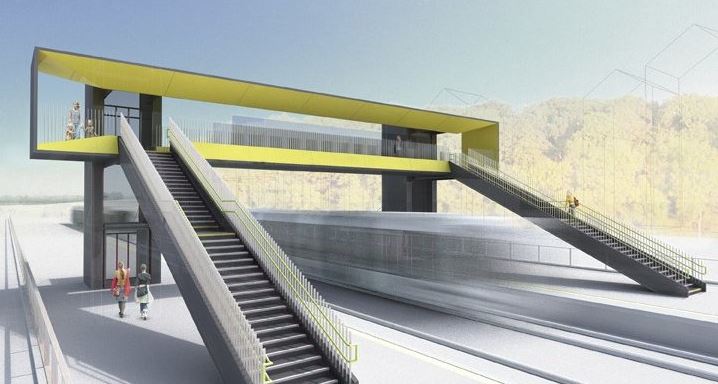
So could a factory-built bridge like this be installed on the wide platforms?
Winner Announced In The Network Rail Footbridge Design Ideas Competition
The title of this post is the same as that of this page on the Network Rail web site.
This image from the page shows the winning design.
Obviously, it has several passenger friendly features.
- Safe steps with double-handrails on both sides and a take-a-break step at halfway.
- Lifts.
- A covered bridge with good views of the station.
But what I like about it are these design and manufacturing features.
- The width and height could be easily adjusted for different locations.
- It could accommodate escalators.
- Three- and four-platform bridges could follow the same theme.
- It could be built in a factory and just lifted in a few pieces onto a prepared site.
- Cost of an installation could be calculated on the back of an engineering envelop or fag-packet.
I also think it is one of those good designs, that will inspire its users and perhaps prompt younger people to take up design or engineering as a career.
A Network Rail Standard Footbridge
If this standard off-the-shelf design or something like it or better was available, how many stations could be given step-free access in the next few years?
As Network Rail sponsored this competition with RIBA, let’s hope they follow through their original initiative.
The footbridge could even have applications outside of the railway industry!
73 Stations Set To Benefit From Additional Funding
This document on the Government web site is entitled Access for All: 73 Stations Set To Benefit From Additional Funding.
This is the first paragraph.
Selected stations will, subject to a feasible design being possible, receive an accessible route into the station, as well as to and between every platform.
It appears that £300million of additional funding will be used to create full step-free access at seventy-three stations.
Stations That Could Benefit From This Standard Bridge
I have visited several of the stations and I feel that a standard bridge approach could benefit these stations.
- Anniesland
- Beaconsfield
- Bridlington
- Catford
- Crowborough
- Croy
- Grays
- Herne Bay
- Northallerton
- St. Erth
- Stowmarket
- Uddingston
I shall add to this list, as I discover more stations, that are suitable.
Crowborough Station To Go Step-Free
This document on the Government web site is entitled Access for All: 73 Stations Set To Benefit From Additional Funding.
Crowborough station is on the list.
This Google Map shows the 3D image of the station.

Note.
- The current bridge is in the North East corner of the map.
- The platforms were lengthened and refurbished in 2016 to accept ten-car trains.
Crowborough would appear to be a typical well-built and managed country station.
Installing Step-Free Access
In Winner Announced In The Network Rail Footbridge Design Ideas Competition, I wrote how the competition was won by this bridge.
I think there are three options for using a factory-built bridge like this at Crowborough station.
- The new bridge replaces the existing bridge.
- A new bridge is placed in a different position and the old one is demolished.
- A new bridge is built in addition to the current bridge.
In my view, if the condition of the old bridge is good enough, the third option is preferable.
Grays Station To Go Step-Free
This document on the Government web site is entitled Access for All: 73 Stations Set To Benefit From Additional Funding.
Grays station is on the list.
These pictures show the station.




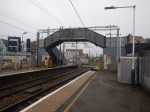
Note.
- The stopping trains from London arrive in a long bay platform 3.
- There are exits on both sides of the tracks.
- There is a subway under the tracks.
- There is a bridge over the tracks outside the station.
- The station only handles four trains per hour in both directions.
This Google Map shows the layout of the station.

Note that the main platforms can take twelve-car trains.
Installing Step-Free Access
According to a station guy, it will not be easy to add lifts to the subway and a step-free bridge will be installed.
- The subway is narrow and two wheelchairs probably couldn’t pass.
- There also appears to be enough space for a bridge.
- The bridge could probably be placed either side of the main station building.
In Winner Announced In The Network Rail Footbridge Design Ideas Competition, I wrote how the competition was won by this bridge.
So could a factory-built bridge like this be installed at Grays station?
Installing such a bridge, would not need the subway to be closed, so overall the station could handle more passengers needing to cross the tracks.
This would not appear to be the most difficult of installations.
Battersea Park Station To Go Step-Free
This document on the Government web site is entitled Access for All: 73 Stations Set To Benefit From Additional Funding.
Battersea Park station is on the list.
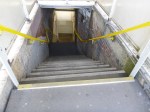
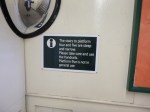
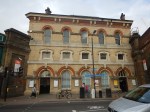
These pictures show the station.


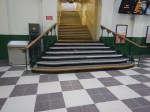


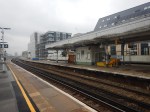


This 3D Google Map shows the station.
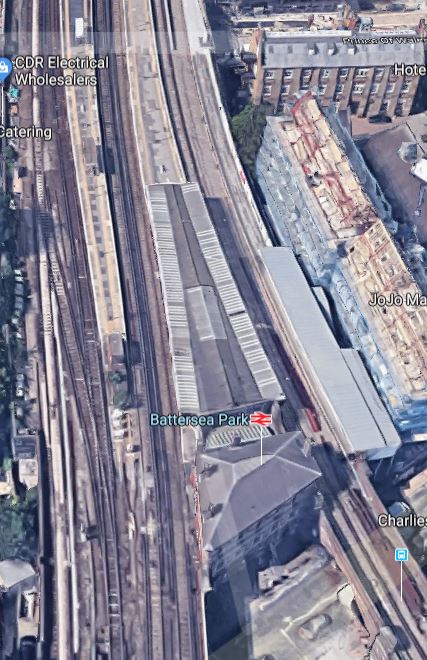
It’s a bit different to the average commuter station.
Installing Step-Free Access
This will be a challenging station to install step-free access.
- The station is Grade II Listed.
- There are four platforms
- Platform 2/3 is reasonably wide, but Platform 4/5 is narrow.
- The station handles ten trains per hour (tph) in both directions.
- In 2017-18, the station handled nearly two million passengers.
- The station will have an out-of-station interchange with the new Battersea Power Station station, when that station opens.
As the pictures show, the entrance hall has been tastefully restored in the last few years.
Surely, only a masochist would work on installing lifts in this station.
St. Mary Cray Station To Go Step-Free
This document on the Government web site is entitled Access for All: 73 Stations Set To Benefit From Additional Funding.
St. Mary Cray station is on the list.
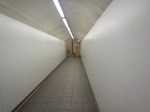
These pictures show the station.
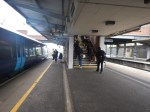
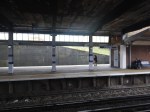


The station was rebuilt in 1959, when disabled people didn’t exist. Or were they locked in institutions?
Installing Step-Free Access
In addition to lifts to each pair of platforms, there is also a need to sort out access to the main entrance to the station.
It could be quite tricky to create a step-free station out of this architectural monstrosity.
The following will help.
- I very much doubt the station is Listed, except in Prince Charles’ Book of Carbuncles.
- The similar Swanley station has been made step-free.
- As it’s only fifty sixty old, the drawings probably exist.
- I doubt there’s an architect, that couldn’t improve this station.
- It’s probably built as strongly as a brick outhouse!
If the installation could be to the standard of Swnley station, I doubt anybody would mind.
 The Anonymous Widower