Highview Power, Enlasa Form JV To Bring Cryogenic Storage To LatAm
The title of this post, is the same as that of this article on Renewables Now.
This is the opening paragraph.
UK’s Highview Power has formed a joint venture (JV) with Chilean backup power supplier Energia Latina SA (Enlasa) to co-develop giga-scale cryogenic energy storage projects in Chile and across Latin America, it was announced on Wednesday.
Highview has designed the CRYOBattery, its proprietary cryogenic energy storage system that uses liquid air as the storage medium and is capable of delivering from 20 MW/100 MWh to more than 200 MW/2 GWh. The company says that its system is comparable to thermal and nuclear in baseload power delivery.
I’ve always liked Highview Power‘s simple idea of storing energy as liquid air.
- The technology is simple.
- No nasty or envionmentally-unfriendly substances are used.
- There must be few countries in the world, who don’t have the expertise to run these plants safely and to the designed performance.
- As the extract says, the systems can store gigawatts of power.
Not bad, when you consider that cryogenic energy storage was invented by a garage inventor in Hertfordshire.
Vivarail’s Plans For Zero-Emission Trains
The title of this post is the same as that of this article on the Modern Railways web site.
This is the introductory subtitle.
Vivarail Chairman Adrian Shooter talks to Modern Railways about the company’s Class 230s and its plans for battery trains.
The article is mainly a video of Mr. Shooter talking in front of various examples of Vivarail trains.
It’s probably easier to watch the video and listen on what is said.
But I have some thoughts on what he said.
Battery Range
Consider.
- Early on in the video he talks about a battery range of forty miles with four battery packs on the train.
- He also talks about switching battery supplier to Hoppecke.
- Later he says that a train with six battery packs in the train, has a hundred mile range.
That is impressive.
The number of battery packs has increased by 50 % and the range has gone up by two-and-a-half times.
If those figures are right and I’ve no reason to disbelieve them, then Hoppecke have done a good job with the batteries.
A very rough calculation indicates their size.
- The current 4 x 100 kWh takes the train 40 miles, which is 10 kWh per mile.
- So to travel a hundred miles will need 1000 kWh.
- Divide by six batteries and you get 167 kWh per battery or a 67 % increase in individual battery capacity.
If these are a new generation of batteries, what would they do for Hitachi’s Regional Battery train, which is proposed to have a range of 56 miles? They could give it a range of around 93 miles.
These ranges of distances would be very useful to manufacturers of battery trains.
Charging Battery Trains Using Vivarail’s Fast Charge System
The video did give a few more details of Vivarail’s Fast Charge system.
I was also able to take this screen capture from the video, which shows the extra rails used to pass charge to the train and the batteries.
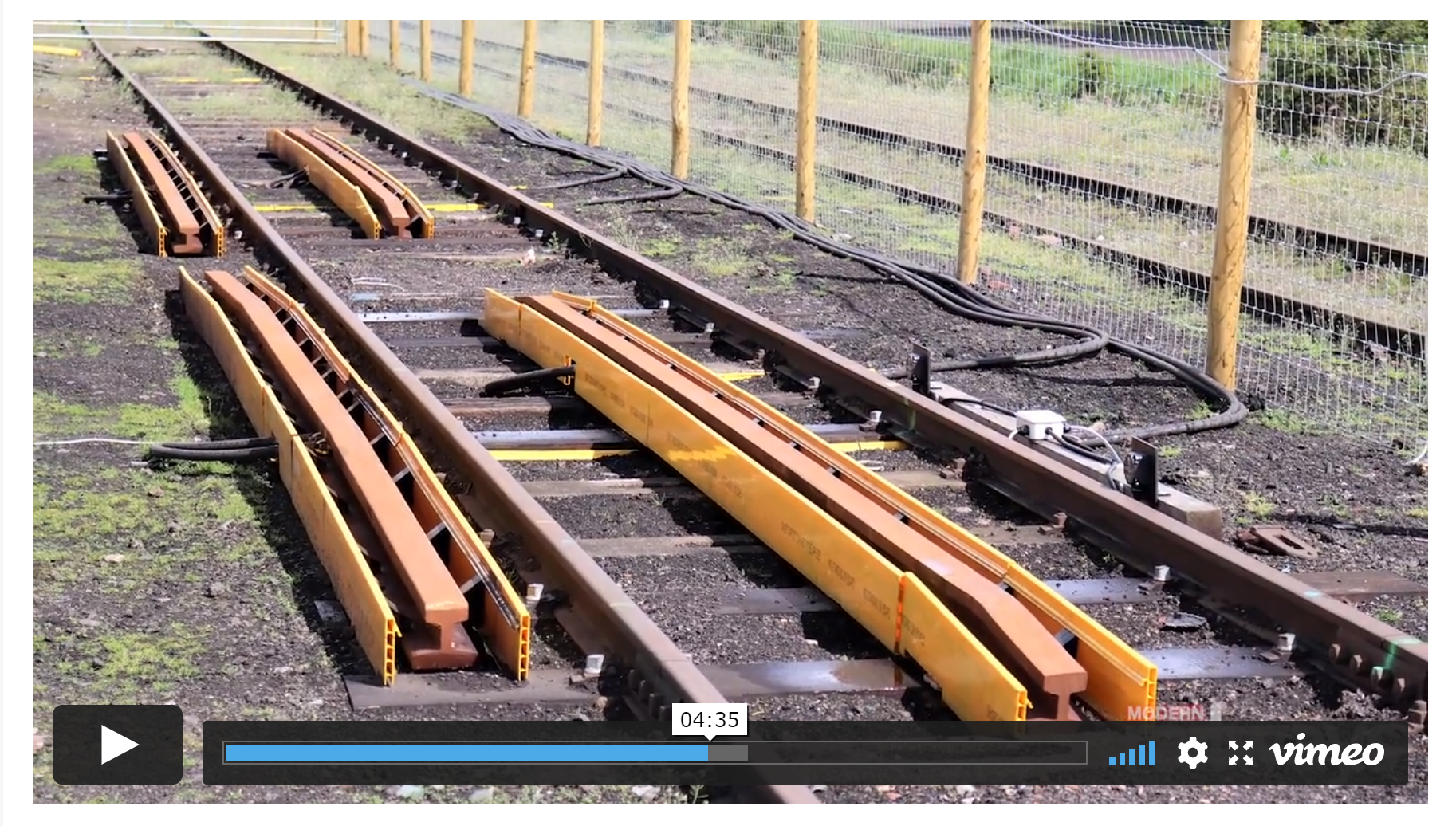
Note.
- The rails are well-shielded. Not that they’re live unless a train is over the top and connected.
- The driver just has to stop the train in the correct place and automation does the rest.
- This image is four minutes and thirty-five seconds into the video.
My only problem with the design is that those thick copper cables used to bring electricity to the train, way be a tempting target for metal thieves.
Vivarail Now Has Permission To Charge Any Train
Mr. Shooter said this about Vivarail’s Fast Charge system.
The system has now been given preliminary approval to be installed as the UK’s standard charging system for any make of train.
I may have got the word’s slightly wrong, but I believe the overall message is correct.
In the November 2020 Edition of Modern Railways, there is a transcript of what Mr. Shooter said.
‘Network Rail has granted interim approval for the fast charge system and wants it to be the UK’s standard battery charging system’ says Mr. Shooter. ‘We believe it could have worldwide implications.’
I hope Mr. Shooter knows some affordable lawyers, as in my experience, those working in IPR are not cheap.
A Prototype Class 230 Train That Can Use 25 KVAC Is Under Construction
Mr. Shooter also announced that a version of the train with a third can in the middle, with a pantograph on the roof and a 35 KVAC transformer is under construction.
This will enable batteries to be charged from existing electrification.
I can already think of a few routes, where this train could be used.
- Bedford and Bletchley – It would replace a diesel-electric Class 230 train.
- Poulton-le-Fylde and Fleetwood
- Oxenholme and Windermere
- Glasgow Central and East Kilbride
- Glasgow Queen Street and Anniesland
- Chester and Crewe – It would replace a battery Class 230 train
- West Ealing and Greenford
- Slough and Windsor Central
- Henley and Twyford
- Maidenhead and Marlow
This could be the standard train in many places.
The November 2020 Edition of Modern Railways, also has more details on this project.
- The centre vehicle is under construction at their factory at Seaham in County Durham.
- Mr. Shooter is quoted as saying. ‘We’ve identified 60 lines on partially electrified tracks’
Vivarail plans to demonstrate the concept on the Northumberland Line to Blyth and Ashington next spring.
West Highland Opportunity
This is a section of the print article, that is not mentioned in the video.
This is the introductory paragraph.
While Mr. Shooter highlights several opportunities south of the border to deploy the 25kV/battery Class 230, he is particularly interested in deployment of Vivarail trains in Scotland.
And this is the last paragraph, describing a possible deployment on the West Highland Line.
Top of the list is the West Highland Line.
Here a 25kV/battery Class 230 would operate under electric power from Glasgow Queen Street to Craigendoran Junction, switching there to battery power. The batteries could be topped up on the way using Vivarail’s fast charge system, with Mr, Shooter suggesting this could take place at Crianlarich, Oban and Fort William. On the West Highland the 60 mph top speed of the Class 230 is not prohibitive as the top speed on the route does not exceed this.
If this sounds familiar, I made a similar proposal in Hitachi Plans To Run ScotRail Class 385 EMUs Beyond The Wires, in a section, which is entitled Electric Trains On The West Highland Line Between Glasgow And Mallaig/Oban. I start with this sentence.
This might be considered as difficult as putting a London bus on the Moon.
But that was done by the Daily Sport newspaper, so perhaps my reasoning is the same as Vivarail’s.
My conclusion of the section was as follows.
What would battery-electric trains to Oban and Mallaig do for tourism in the area?
Hitachi would have one of the most scenic and iconic test tracks in the world!
These statements would surely, apply to a Vivarail train or a battery electric Class 385 train.
Pop-Up Metro
Mr. Shooter shows a battery train, which is going to the United States to trial a concept called a Pop-up Metro.
- In the US, there are hundreds of lightly used freight lines serving towns and cities
- Temporal separation would mean that freight and passenger trains used the lines at different times of the day.
- Battery powered Vivarail trains could provide a Metro service.
He also talked about his US partner and 50 % shareholder in Vivarail, leasing trains for a year, to see if the concept was viable in a given area. He indicated, the cost could be less than a consultant’s report.
Could the Pop-up Metro concept work in the UK?
In these possible Beeching Reversal projects, there could be scope for using the concept.
- Project Wareham – Complete The Link
- Shepton Mallet (Mendip Vale)
- Increased Service Provision Bodmin General-Bodmin Parkway
- Primrose Line
- Cirencester Community Railway
- South Yorkshire Joint Railway
- Upper Wensleydale Railway
- Restoration Of A Daily Train Service On The Keighley & Worth Valley Railway
- The Aston Rowant Extension Of The Chinnor Railway
Note.
- Some of these are on heritage railway infrastructure. Does a Class 230 train count a heritage unit?
- The Aston Rowant Extension is Chiltern territory, so Mr. Shooter could know it well!
- In the Wikipedia entry for the Class 230 train, there is a useful Cost Comparison.
I should say, that I like the concept of a Pop-up Metro.
- The trains have proved they are up to the job.
- A package of one or two trains and a containerised charging system could surely be created.
- Installation of the battery charger in many platforms would not be a major engineering project costing millions.
- On a heritage railway, the enthusiasts could probably do it from their own resources.
But the best point to me, is that a system could probably be leased for a year on a Try-Before-You-Buy basis for less than the cost of a consultant’s report.
Go for it!
Conversion Of Diesel Multiple Units To Battery Electric Multiple Units
This was the bombshell in the tail of the video.
There a lot of diesel multiple units in the UK and Mr. Shooter and Vivarail have developed a plan to convert some of them to battery electric operation.
The trains he is proposing to convert are diesel multiple units, that use a Voith transmission, which I list in How Many Diesel Multiple Units In The UK Have Voith Hydraulic Transmissions?.
Consider.
- There are 815 trains on my list.
- All have a Voith hydraulic transmission, with most having similar type numbers starting with T211.
- Some are 75 mph trundlers and others are full-on 100 mph expresses.
- All have one engine and transmission per car.
They fit into distinct groups.
Sprinters
Sprinters are a group of trains that were produced by British Rail.
The earliest were built in 1984 and all were built in the last century.
- There are 314 trains in total.
- All have a Cummins engine of 213 kW, with one engine per car.
- They have a Voith T211r transmission, which drives two axles per car.
- They have an operating speed of 75 mph.
The trains may be elderly, but like some well-known actresses, they scrub up well with a little TLC.


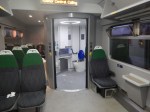
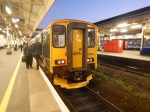
The pictures show an immaculate refurbished Class 150 train, that I travelled on in Devon.
With a battery electric transmission, they would make a superb rural route and branch line train.
Express Sprinters
Express Sprinters are a group of trains that were produced by British Rail.
- The earliest were built in 1990 and all were built in the last century.
- There are 202 trains in total.
- All have a Cummins engine of between 260 and 300 kW, with one engine per car.
- They have a Voith T211r transmission, which drives two axles per car.
- They have an operating speed of 90 mph.
These pictures show a Class 159 train on a visit to the Swanage Railway, where it was shuttling in visitors.

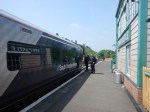
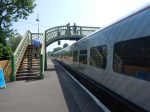
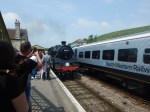
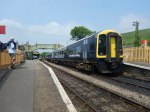
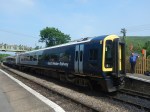
With a battery electric transmission, that gave a range of say 80 miles at 90 mph, they would be low cost competition for Hitachi’s Regional Battery Train on secondary routes.
Scotrail have forty Class 158 trains, which run on the following routes.
- Glasgow Queen Street and Anniesland – 5.5 miles
- Fife Circle Line – 61 miles round trip
- Stonehaven and Inverurie – 66 miles round trip.
- Borders Railway – 70 miles round trip.
- Edinburgh and Arbroath – 76 miles
- Inverness and Kyle of Lochalsh – 82.5 miles
- Inverness and Aberdeen – 108 miles – Inter7City route.
- Inverness and Wick – 174 miles
- Inverness and Edinburgh – 175 miles – Inter7City route.
Note.
- The routes are shown in order of length.
- Anything over a hundred miles would need intermediate charging.
- Some routes would need charging at both ends.
- Glasgow Queen Street and Anniesland would probably not need a Class 158, but is very suitable for a battery electric train.
- The three longest routes from Inverness are probably too long for battery electric power, but two are run by Inter7City trains.
- A battery electric train on the Inverness and Kyle of Lochalsh route, would surely be a tourist asset.
With an eighty mile range, ScotRail could find a battery-equipped Class 158 train very useful.
Networkers
Networkers are a group of trains that were produced by British Rail.
- The earliest were built in 1990 and all were built in the last century.
- There are 96 trains in total.
- All have a Perkins engine of 261 kW, with one engine per car.
- They have a Voith T211r transmission, which drives two axles per car.
- They have an operating speed of 75 or 90 mph.
These pictures show ac selection of Class 165 and Class 166 trains.
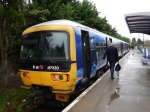
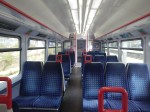
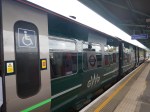
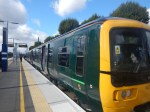
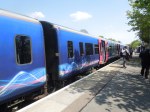
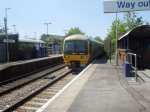

As with the Express Sprinters, with a battery electric transmission, that gave a range of say 80 miles at 90 mph, they would be low cost competition for Hitachi’s Regional Battery Train on secondary routes.
The Networkers are used by Great Western Railway and Chiltern Railways.
- Great Western Railway do run a few long routes with their Networkers, but these routes would probably be too long for battery operation.
- Local routes around Bristol, Exeter and Plymouth and some short branch lines could be possibilities for battery operation.
- Great Western Railway have also leased tri-mode Class 769 trains for the Reading and Gatwick route.
- Chiltern Railways don’t run their Networkers on the longer routes to Birmingham.
- But they do run them on the shorter routes to Aylesbury (39 miles), Aylesbury Vale Parkway (41 miles), Banbury (69 miles), Gerrards Cross (19 miles), High Wycombe (28 miles), Oxford (66 miles) and Stratford-upon-Avon (104 miles).
- Some of these Chiltern routes must surely be possibilities for battery operation. Especially, as all the stations in the list, don’t appear to be the most difficult to add a Fast Charge facility.
With an eighty mile range, battery-equipped Networkers could be very useful.
Turbostars
Turbostars are a group of trains that were produced at Derby.
- The earliest were built in the last few years of the the last century.
- There are 177 trains in total.
- All have an MTU engine of 315 kW, with one engine per car.
- They have a Voith T211 transmission, which drives two axles per car.
- They have an operating speed of 100 mph.
These pictures show a selection of Turbostar trains.

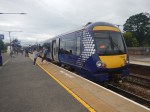
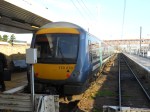
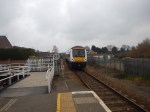
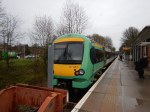
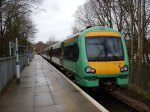
As with the Express Sprinters and the Networkers, with a battery electric transmission, that gave a range of say 80 miles at 100 mph, they would be low cost competition for Hitachi’s Regional Battery Train on secondary routes.
The post; DfT and Arriva CrossCountry Sign Agreement is partly based on this article on Railway News, which has the same name.
This is a paragraph from the original article.
One element of this new contract is a focus on reducing the environmental impact of the operator’s diesel fleet. For instance, Arriva CrossCountry will do a trial of using electrical shore supplies on its Bombardier Turbostar fleet when these trains are in depots for cleaning. Trains are cleaned both in the winter and at night, which means that the interior lighting and heating systems have to be powered. By using electricity to power these systems instead of the trains’ diesel engines, there will be a reduction in both emissions and noise pollution, which is doubly important when the depots are near built-up areas.
If Turbostars were to have their power unit and transmission updated to battery electric, there would be less need to provide shore supplies to where the trains were to be cleaned.
How Would Sprinters, Express Sprinters, Networkers And Turbostars Be Converted To Battery Electric Power?
The layout of the transmission in all these trains is very similar.
That is not surprising, as they are effectively different interpretations of the same theme over four decades.
- A diesel engine provides the power.
- On the back of the diesel engine, a hydraulic transmission is mounted.
- The transmission performs a similar function to an automatic gearbox in a car. Trains like cars perform better in the right gear.
- The transmission is connected to the final drive in one or more of the bogies using a cardan shaft. The propeller shaft in many rear-wheel-drive vehicles, is a cardan shaft.
In the video at about 5 mins 50 seconds, Mr. Shooter outlines how the train will be converted to battery electric drive.
- The diesel engine, hydraulic transmission, radiator, fuel tank and all the other diesel-related gubbins will be removed.
- A 280 kW electric traction motor will be installed, which will be connected to the cardan shaft.
- Batteries will be installed. Possibly, they will fit, where the diesel engine was originally located.
I wouldn’t be surprised if the weight of the battery was similar to that of all the equipment that has been removed, as this would mean the train’s handling wouldn’t change.
- Acceleration will be faster, as it is in electrically-powered road vehicles.
- The traction motor can work in reverse to slow the train and the energy regenerated by braking can be stored in the batteries.
- Mr. Shooter doesn’t say if his battery electric trains use regenerative braking in the video, but it is possible and a common procedure, as it saves energy.
An intelligent control system will control everything according to the driver’s needs and wishes.
This extract from the print edition, gives Mr. Shooter’s advantages of this diesel to battery electric conversion.
‘Unlike cars, trains have a planned duty cycle so you can easily plan for when the batteries should be charged’ says. Mr. Shooter. ‘Our analysis shows the fuel cost would be halved and the maintenance cost would be halved compared to a DMU. And to allay concerns about battery life we would offer to lease batteries on a cost per mile. You get the financial payback within five years, with the greenness free of charge!’ Mr. Shooter reports early work by Vivarail suggests a converted battery train on the Far North line might need fast charge stations at four locations.
Where In The World Is This?
The print edition of the interview poses an interesting question.
Mr. Shooter says the opportunities are significant, and reports Vivarail is in discussions with an overseas customer about a bid for battery trains for a new 500 mile line which would incorporate 12 fast charge points at stations. He also said customers are suggesting the use of solar parks or even tidal power to feed the static batteries at the fast charge stations, rather than power coming from the local supply.
Imagine two large cities about 500 miles apart, with a string of small towns between them.
- The small towns might be on a scenic river or coastline.
- Commuters drive to both cities.
- People from the two cities visit the area to relax.
- There might even be a lightly used freight line or a dismantled railway alignment running between the cities.
- Perhaps, the road network is overloaded and a green alternative is needed.
Given, Vivarail is part-owned, by an American entrepreneur, I would expect, the proposed line is somewhere in North America. But I also think there would be possibilities in Australia, around the coast of the Baltic Sea and India and South East Asia.
Cpnclusion
This is the conclusion of the print article in Modern Railways.
While electrification will be the key component in decarbonising traction emissions, battery technology will have a role to play, and Vivarail is at the forefront of this development.
I wholeheartedly agree.
Nickel Metal Hydride Battery Storage Company Receives €47m Investment From European Investment Bank
The title of this post, is the same as that of this article on Energy Storage News.
This is the introductory paragraph.
Nilar, a Sweden-headquartered producer of nickel metal hydride chemistry batteries aimed to compete with lithium-ion and lead acid, will receive €47 million (US$55.45 million) in funding from the European Investment Bank (EIB).
There certainly seem to be several promising new technologies being developed for energy storage.
Daimler Unveils Electric Bus With 441 kWh Solid-State Battery Pack
The title of this post, is the same as that of this article on electrek.
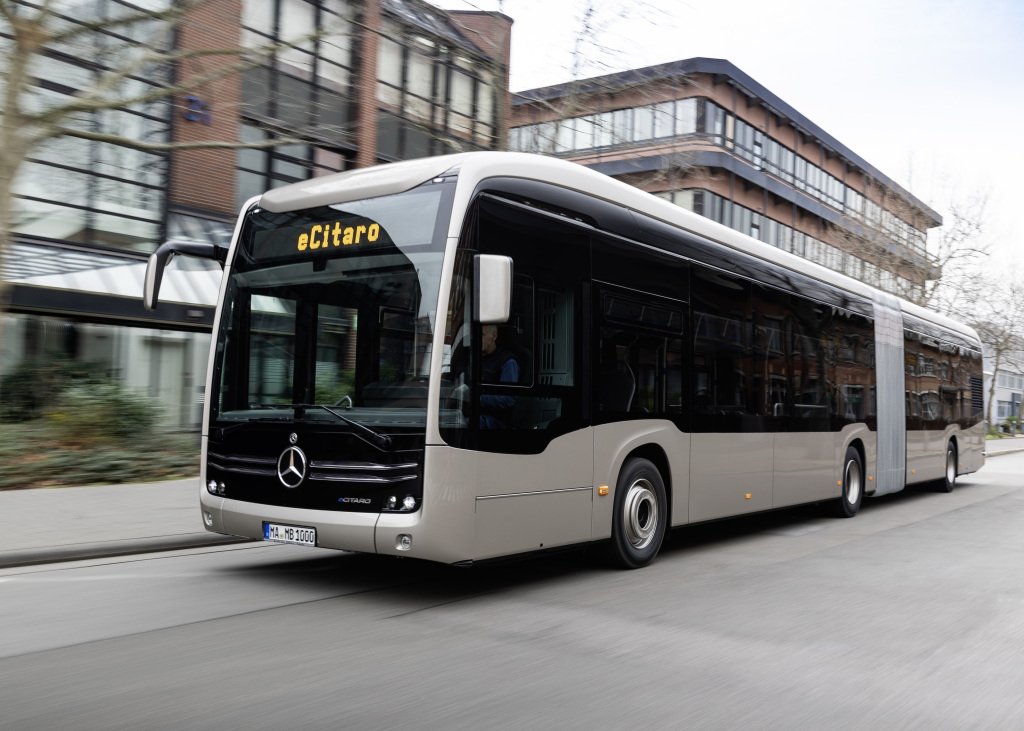
This is the introductory paragraph.
Daimler has unveiled an electric bus equipped with a solid-state battery pack — probably becoming the first planned production EV with a solid-state battery.
What is meant by solid-state battery, is not stated.
But at 441 kWh it is not a small battery!
This article on the Daimler Global Media Site gives these extra details.
In general, vehicles with solid-state batteries as standard were not expected until the middle of this decade. Mercedes-Benz is faster: the new eCitaro G is the first series production city bus in its category anywhere in the world to be equipped with solid-state batteries. They have a very high energy density which is around 25 percent greater than the coming generation of traditional lithium-ion batteries with liquid electrolyte. The result is an impressive energy content of 441 kWh for the new eCitaro G. This battery technology is also free of the chemical element cobalt and therefore especially environmentally friendly in the manufacture of the components.
The long life of the solid-state batteries is particularly striking. Therefore, when purchasing an eCitaro with solid-state batteries, a basic guarantee for the high-voltage battery for up to 10 years or up to 280 MWh energy throughput per battery pack is standard.
They sound impressive.
New-Age Battery Pioneer Zinc8 Ties Up With Indian Transformer-Maker For Global Push
The title of this post, is the same as that of this article on Recharge.
I think, it shows the way the energy storage market is going, where alliances are being formed to exploit the new technologies.
A transformer maker and a battery storage company must be a good match.
Conclusion
I still very much feel that Zinc8, will be a success.
Preliminary Sampling Indicate Significant Lithium Grades In Geothermal Waters At United Downs Project, Cornwall
The title of this post, is the same as that of this article on Think Geoenergy.
This is the introductory paragraph.
Cornish Lithium releases announcement on finding “globally significant” lithium grades in geothermal waters at the United Downs Deep Geothermal Power Project in Cornwall, UK and is now preparing for work on a pilot plant.
The article gives a full explanation.
There is more on this press release on the Cornish Lithium web site.
Siemens To Build One Of Europe’s Largest Energy Storage Systems
The title of this post, is the same as that of this article on Smart Energy International.
This is the introductory paragraph.
Siemens Smart Infrastructure and Fluence have been awarded a contract by the Portuguese energy provider EDA – Electricidade dos Açores to build a battery-based energy storage system on Terceira.
Read the article, as it shows how battery storage and advanced methods of generation, can transform the electricity systems of islands and other remote places.
We will be seeing many systems like this, all over the world.
Lightweight Green Supercapacitors Could Quickly Charge Devices
The title of this post is the same as that of this article on Texas A & M Today.
This is the sub-title.
Texas A&M researchers have designed a new energy storage device that can store a charge up to 900 times greater than state-of-the-art supercapacitors.
It appears what they have developed is plant-based.
They appear to use lignin and potassium permanganate to create the electrodes for a supercapacitor.
It looks to be interesting research.
Energy Storage Takes On Weird New Forms As Sparkling Green Future Takes Shape
The title of this post, is the same as that of this article on CleanTechnica.
The first section is entitled Gravity-Enabled Energy Storage Tested By Scotland’s Gravitricity and explains it well.
It then writes an interesting aside about pairing a Gravitricity system, with an idea from GE, in a section, which is entitled A Wind Power & Energy Storage Twofer, Maybe.
GE were proposing a lattice-style wind-turbine tower, so why not put a Gravitricity system inside?
Hence the maybe in the section title!
I can imagine an office or residential tower with a Gravitricity system built into the lift core in the centre of the building. Top the building with solar panels or wind turbines and you’re going some way towards a building that could be self-sufficient in energy.
Putting two and two together, so they add up to five, is the best way to improve efficiency.
The last section is entitled How To Do Energy Storage Without Any Energy Storage.
As I have never played a computer game, I don’t understand it, but it is based on research at two reputable universities; Delft University of Technology (TU Delft) in the Netherlands and Northwestern University in the US.
Conclusion
We will be seeing weirder and weirder ideas for energy generation and storage in the future.
Generating Clean Energy From The Coal Mines
The title of this post, is the same as that of this article on The Engineer.
This is the introductory paragraph.
With a number of the UK’s abandoned coal mines being repurposed for green energy projects, Jon Excell asks whether the legacy of Britain’s polluting industrial past could hold the key to its low carbon future?
A few points from this must-read article.
- We spend £2.4 billion every year dealing with the water in abandoned mines.
- The huge volumes of mine water – heated by geological processes to temperatures as high as 40˚C – could actually help power the UK’s shift to a zero-carbon economy.
- The Coal Authority now has around thirty different projects.
- there is an estimated 2.2 million GWh of annually renewing zero carbon geothermal energy held within the mines.
- Heat can be extracted using boreholes, heat pumps and heat exchangers.
- The mines can be used to store energy as waste heat.
- I particularly liked the use of a mine shaft as a thermal flask, which is being developed at Shawfair in Scotland.
The article then talks about Gravitricity.
This is an extract.
According to Gravitricity project development manager Chris Yendell, the potential for the technology is huge.
Research carried out for the company by KPMG identified 60,000 vertical shafts of 200m or greater in Germany alone. Indeed, many of these shafts as deep as 1000m. Meanwhile, following discussions with the Coal Authority, the team believes that in the UK there are at least 100 potentially viable deep vertical mineshafts. “Based on that you could look at a future portfolio in the UK of 2.4GWh of capacity, based on a 10MW peak system with a capacity of 24MWh” said Yendell.
The article finishes on an optimistic note, by outlining how in the former mining areas, there is lots of expertise to maintain and run these new green energy systems, that will replace coal’s black hole.
Conclusion
Coal could be the future! But not as we know it!
 The Anonymous Widower