UK To Norway Sub-Sea Green Power Cable Operational
The title of this post is the same as that of this article on the BBC.
This is the first two paragraphs.
The world’s longest under-sea electricity cable, transferring green power between Norway and the UK, has begun operation.
The 450-mile (725km) cable connects Blyth in Northumberland with the Norwegian village of Kvilldal.
The BBC article is based on this press release from National Grid.
The link has been called the North Sea Link (NSL).
These are some thoughts.
What Is The Capacity Of The North Sea Link?
The National Grid press release says this.
[The link] will start with a maximum capacity of 700 megawatts (MW) and gradually increase to the link’s full capacity of 1400MW over a three-month period.
It also says this.
Once at full capacity, NSL will provide enough clean electricity to power 1.4 million homes.
It is more or less equivalent to two or three gas-fired power stations.
What Is The Operating Philosophy Of The North Sea Link?
The National Grid press release says this.
The Norwegian power generation is sourced from hydropower plants connected to large reservoirs, which can respond faster to fluctuations in demand compared to other major generation technologies. However, as the water level in reservoirs is subject to weather conditions, production varies throughout seasons and years.
When wind generation is high and electricity demand low in Britain, NSL will enable renewable power to be exported from the UK, conserving water in Norway’s reservoirs. When demand is high in Britain and there is low wind generation, hydro power can be imported from Norway, helping to ensure secure, affordable and sustainable electricity supplies for UK consumers.
It almost seems to me, that the North Sea Link is part of a massive pumped-storage system, where we can bank some of our wind-generated electricity in Norway and draw it out when we need it.
I would suspect that the rate and direction of electricity transfer is driven by a very sophisticated algorithm, that uses detailed demand and weather forecasting.
As an example, if we are generating a lot of wind power at night, any excess that the Norwegians can accept will be used to fill their reservoirs.
The Blyth Connection
This page on the North Sea Link web site, describes the location of the UK end of the North Sea Link.
These three paragraphs describe the connection.
The convertor station will be located just off Brock Lane in East Sleekburn. The site forms part of the wider Blyth Estuary Renewable Energy Zone and falls within the Cambois Zone of Economic Opportunity.
The converter station will involve construction of a series of buildings within a securely fenced compound. The buildings will be constructed with a steel frame and clad with grey insulated metal panels. Some additional outdoor electrical equipment may also be required, but most of the equipment will be indoors.
Onshore underground cables will be required to connect the subsea cables to the converter station. Underground electricity cables will then connect the converter station to a new 400kV substation at Blyth (located next to the existing substation) which will be owned and operated by National Grid Electricity Transmission PLC.
This Google Map shows the area.

Note.
- The light grey buildings in the North-West corner of the map are labelled as the NSL Converter Station.
- Underground cables appear to have been dug between the converter station and the River Blyth.
- Is the long silver building to the West of the triangular jetty, the 400 KV substation, where connection is made to the grid?
The cables appear to enter the river from the Southern point of the triangular jetty. Is the next stop Norway?
Britishvolt And The North Sea Link
Britishvolt are are building a factory at Blyth and this Google Map shows are to the North and East of the NSL Converter Station.
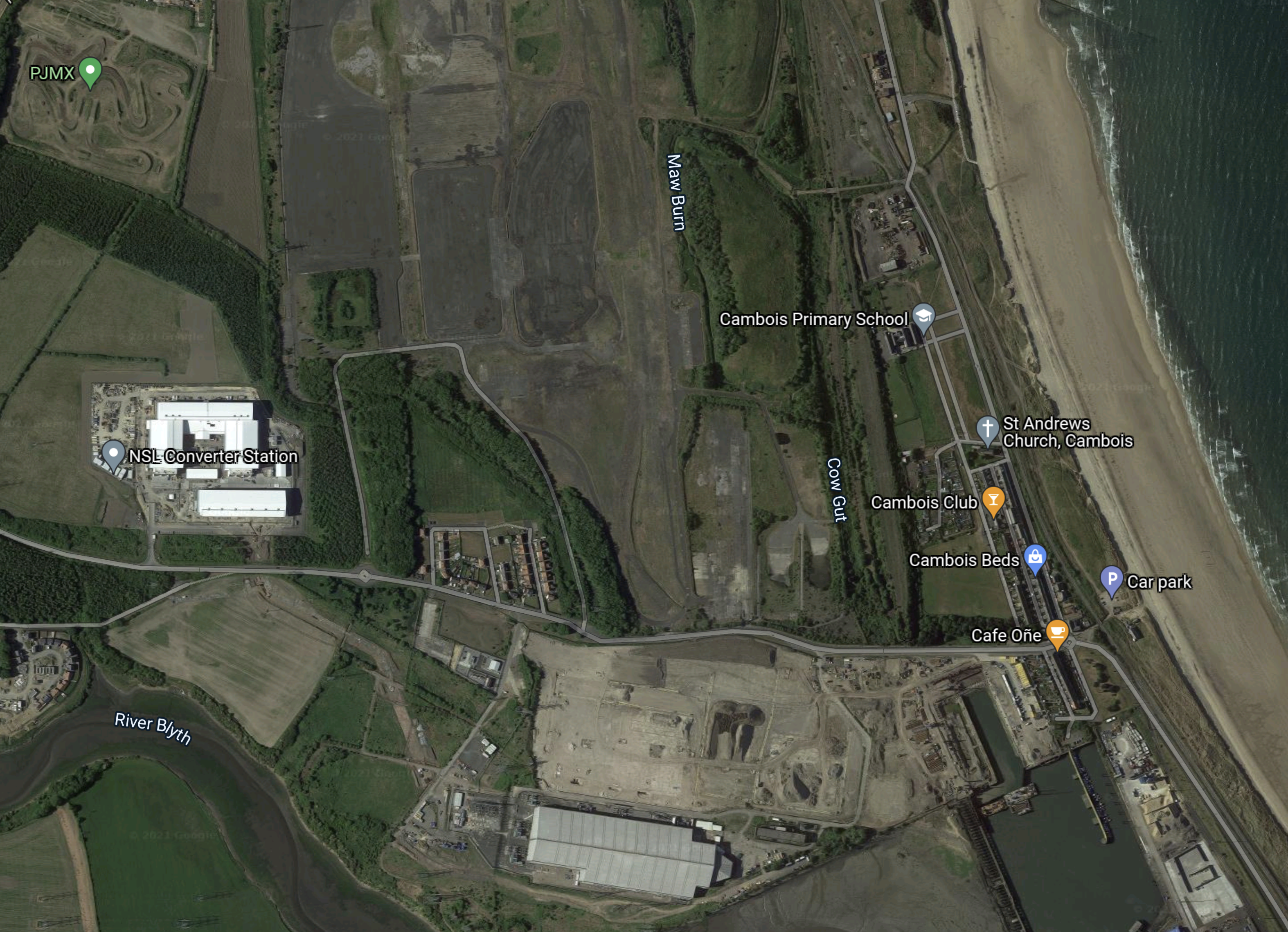
Note the light-coloured buildings of the NSL Converter Station.
I suspect there’s plenty of space to put Britishvolt’s gigafactory between the converter station and the coast.
As the gigafactory will need a lot of electricity and preferably green, I would assume this location gives Britishvolt all they need.
Where Is Kvilldal?
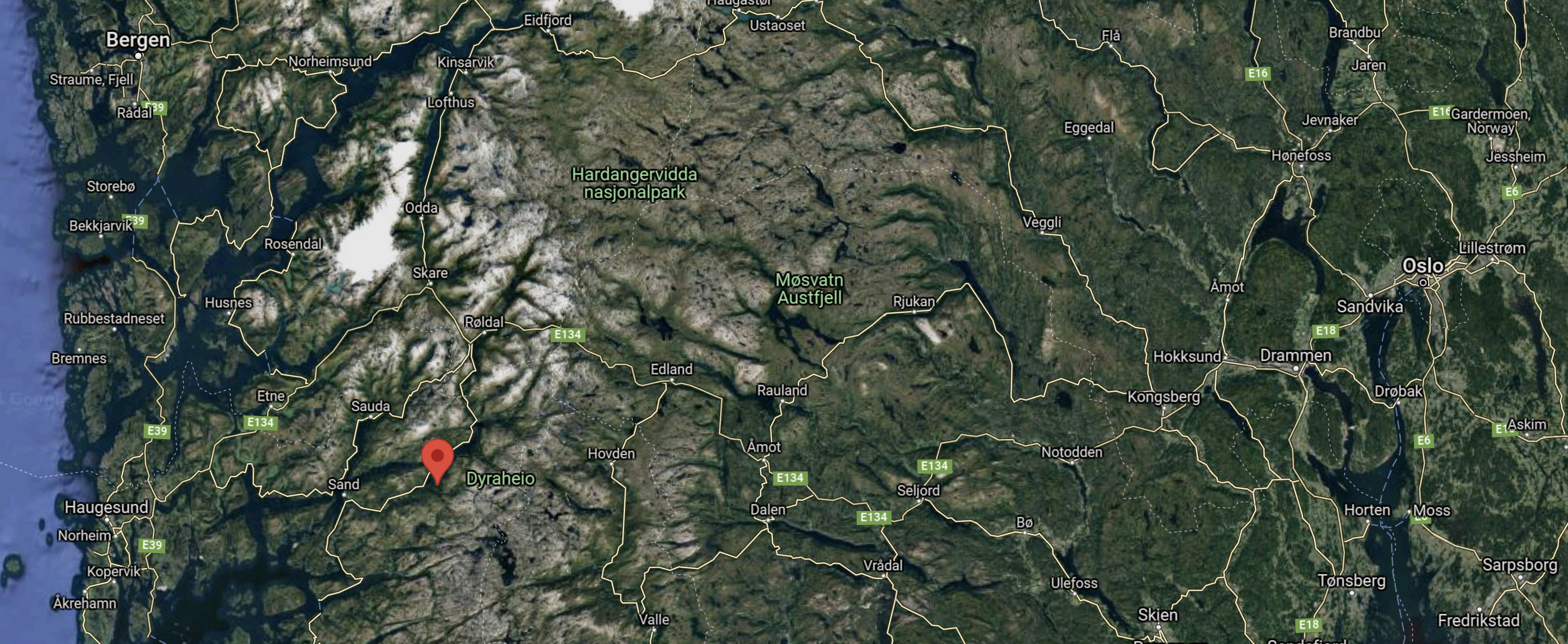
This Google Map shows the area of Norway between Bergen and Oslo.
Note.
- Bergen is in the North-West corner of the map.
- Oslo is at the Eastern edge of the map about a third of the way down.
- Kvilldal is marked by the red arrow.
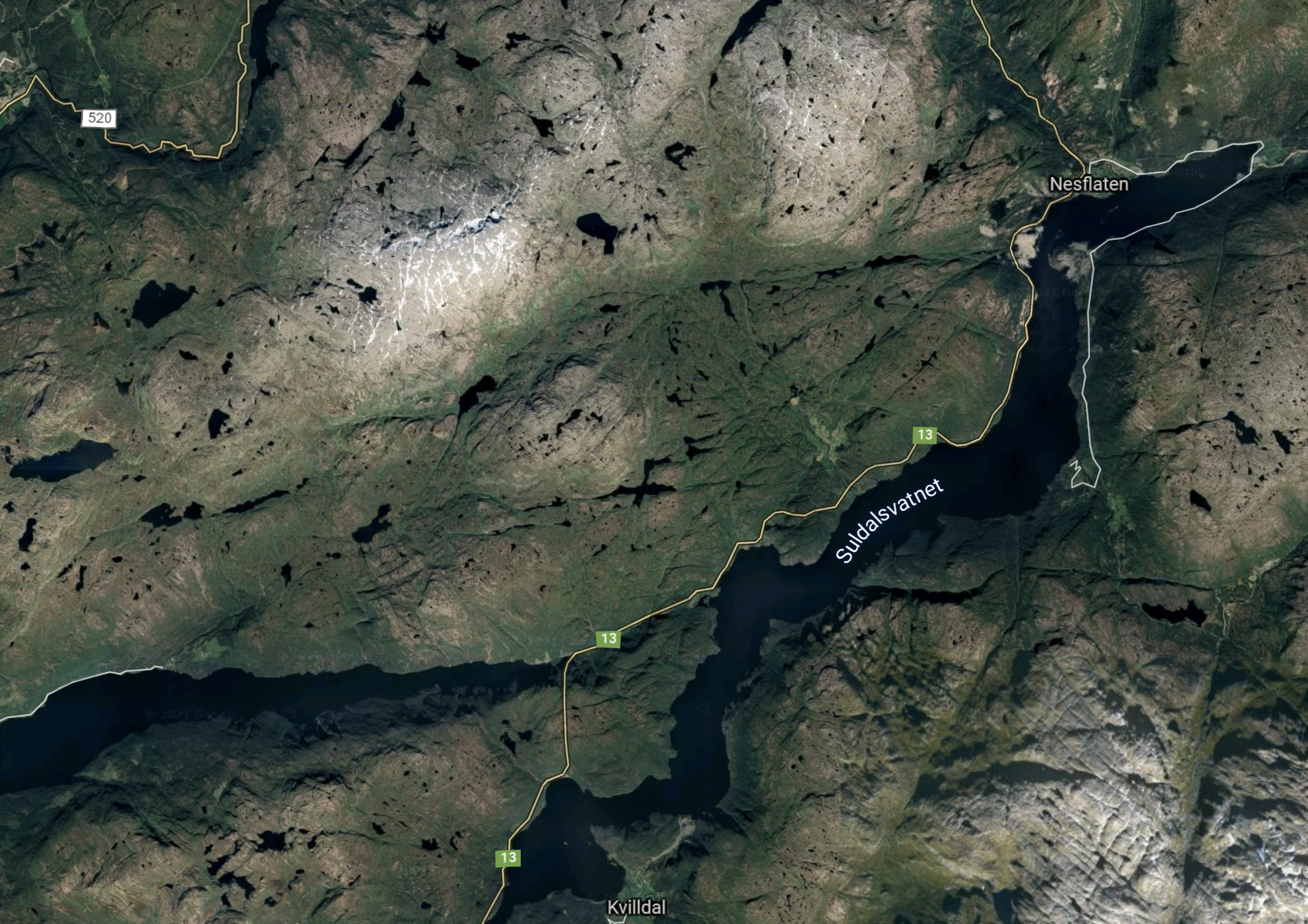
This second Google Map shows the lake to the North of Kvilldal.
Note.
- Suldalsvatnet is the sixth deepest lake in Norway and has a volume of 4.49 cubic kilometres.
- Kvilldal is at the South of the map in the middle.
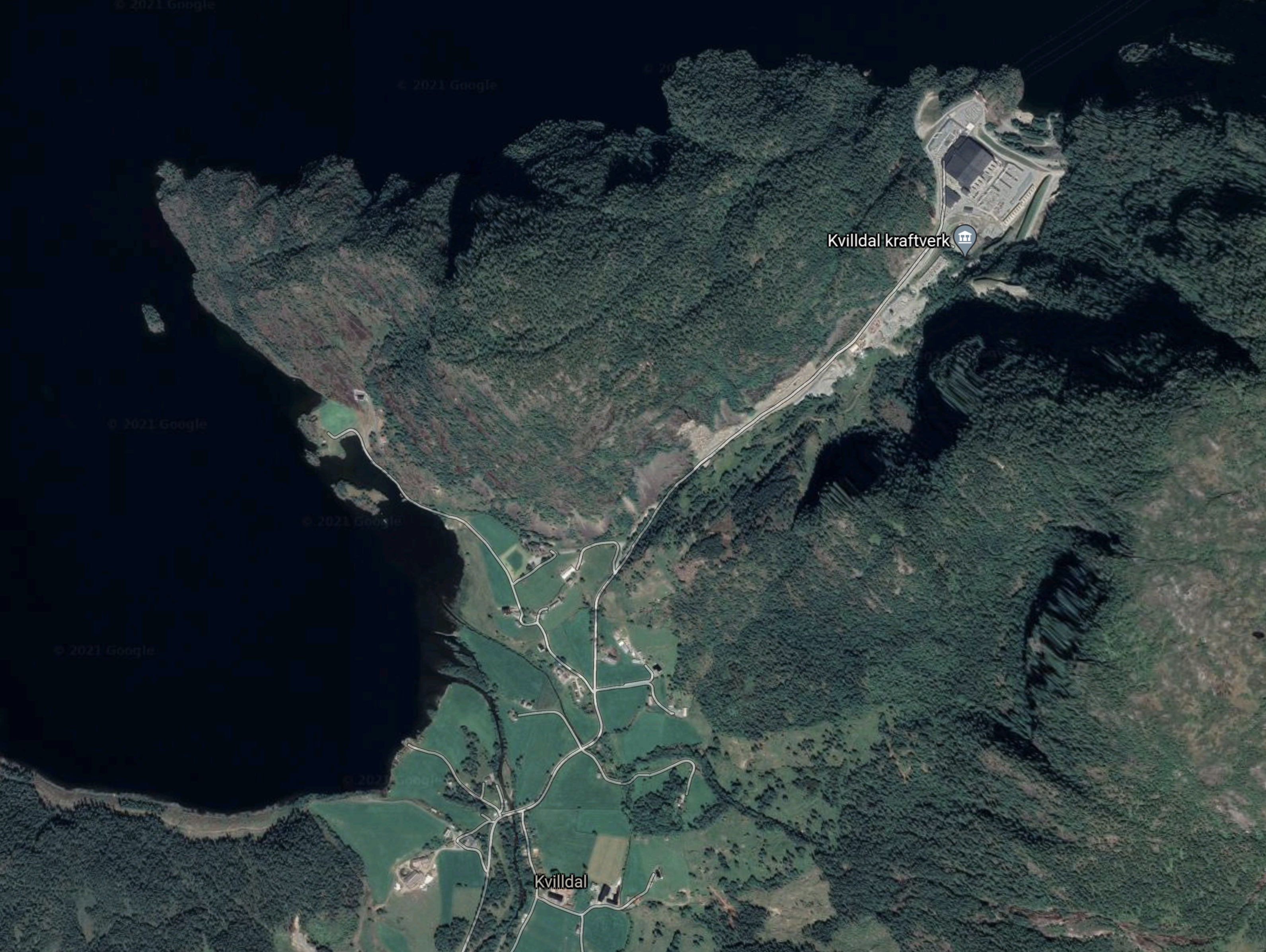
This third Google Map shows Kvilldal.
Note.
- Suldalsvatnet is the dark area across the top of the map.
- The Kvilldal hydro-electric power station on the shore of the lake.
- Kvilldal is to the South-West of the power station.
Kvilldal doesn’t seem to be the biggest and most populous of villages. But they shouldn’t have electricity supply problems.
Kvilldal Power Station And The North Sea Link
The Wikipedia entry for Kvilldal power station gives this information.
The Kvilldal Power Station is a located in the municipality of Suldal. The facility operates at an installed capacity of 1,240 megawatts (1,660,000 hp), making it the largest power station in Norway in terms of capacity. Statnett plans to upgrade the western grid from 300 kV to 420 kV at a cost of 8 billion kr, partly to accommodate the NSN Link cable] from Kvilldal to England.
This power station is almost large enough to power the North Sea Link on its own.
The Kvilldal power station is part of the Ulla-Førre complex of power stations and lakes, which include the artificial Lake Blåsjø.
Lake Blåsjø
Lake Blåsjø would appear to be a lake designed to be the upper reservoir for a pumped-storage scheme.
- The lake can contain 3,105,000,000 cubic metres of water at its fullest.
- The surface is between 930 and 1055 metres above sea level.
- It has a shoreline of about 200 kilometres.
This Google Map shows the Lake.
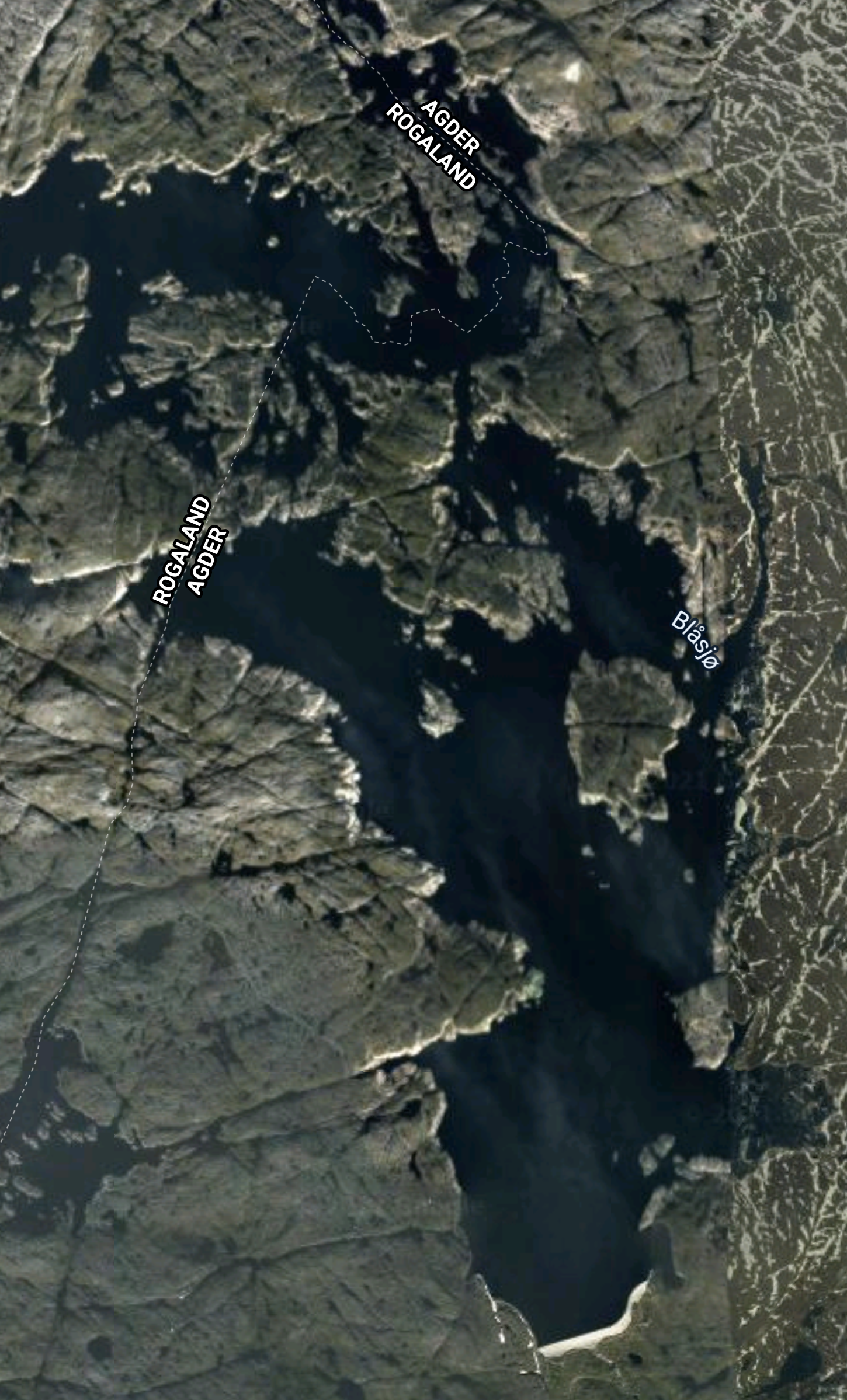
Note the dam at the South end of the lake.
Using Omni’s Potential Energy Calculator, it appears that the lake can hold around 8 TWh of electricity.
A rough calculation indicates that this could supply the UK with 1400 MW for over eight months.
The Wikipedia entry for Saurdal power station gives this information.
The Saurdal Power Station is a hydroelectric and pumped-storage power station located in the municipality of Suldal. The facility operates at an installed capacity of 674 megawatts (904,000 hp) (in 2015). The average energy absorbed by pumps per year is 1,189 GWh (4,280 TJ) (in 2009 to 2012). The average annual production is 1,335 GWh (4,810 TJ) (up to 2012)
This Google Map shows the area between Kvilldal and Lake Blåsjø.
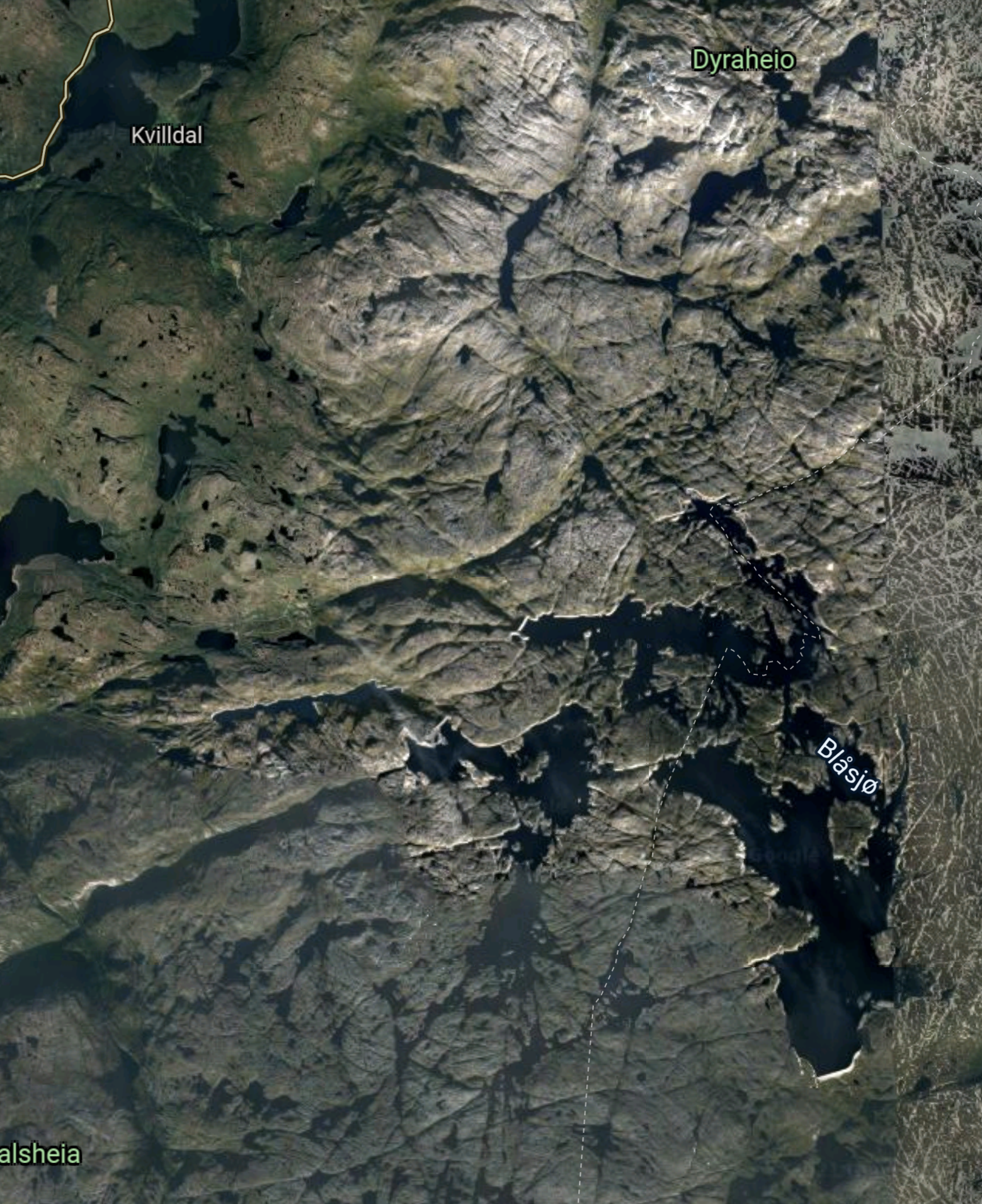
Note
- Kvilldal is in the North West of the map.
- Lake Blåsjø is in South East of the map.
This second Google Map shows the area to the South-East of Kvilldal.
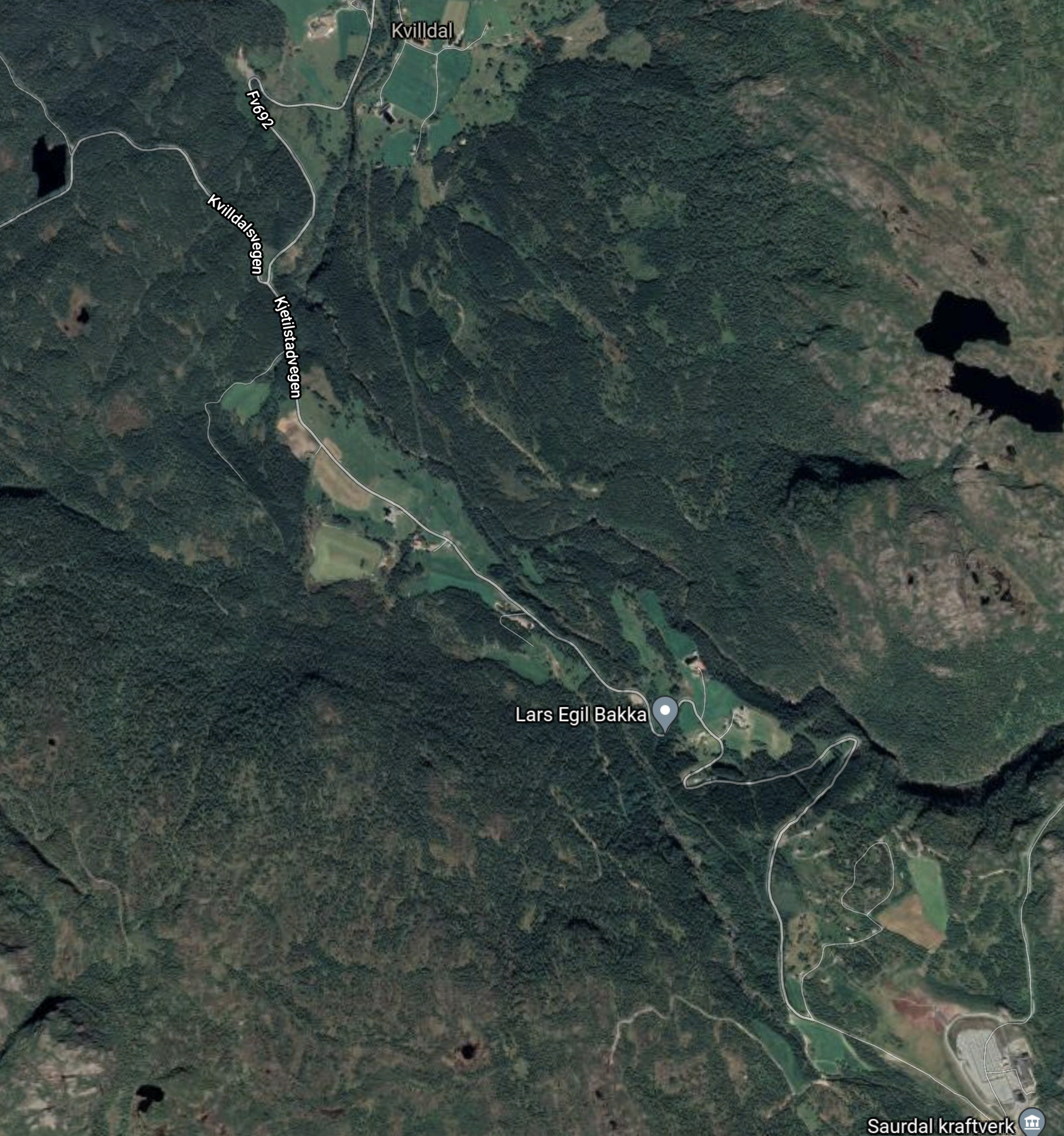
Note.
- Kvilldal is in the North-West of the map.
- The Saurdal power station is tight in the South-East corner of the map.
This third Google Map shows a close-up of Saurdal power station.

Saurdal power station is no ordinary power station.
This page on the Statkraft web site, gives a brief description of the station.
The power plant was commissioned during 1985-1986 and uses water resources and the height of fall from Lake Blåsjø, Norway’s largest reservoir.
The power plant has four generating units, two of which can be reversed to pump water back up into the reservoir instead of producing electricity.
The reversible generating units can thus be used to store surplus energy in Lake Blåsjø.
Is Lake Blåsjø and all the power stations just a giant battery?
Economic Effect
The economic effect of the North Sea Link to both the UK and Norway is laid out in a section called Economic Effect in the Wikipedia entry for the North Sea Link.
Some points from the section.
- According to analysis by the United Kingdom market regulator Ofgem, in the base case scenario the cable would contribute around £490 million to the welfare of the United Kingdom and around £330 million to the welfare of Norway.
- This could reduce the average domestic consumer bill in the United Kingdom by around £2 per year.
- A 2016 study expects the two cables to increase price in South Norway by 2 øre/kWh, less than other factors.
This Economic Effect section also talks of a similar cable between Norway and Germany called NorGer.
It should be noted, that whereas the UK has opportunities for wind farms in areas to the North, South, East and West of the islands, Germany doesn’t have the space in the South to build enough wind power for the area.
There is also talk elsewhere of an interconnector between Scotland and Norway called NorthConnect.
It certainly looks like Norway is positioning itself as Northern Europe’s battery, that will be charged from the country’s extensive hydropower and surplus wind energy from the UK and Germany.
Could The Engineering Be Repeated?
I mentioned NorthConnect earlier.
- The cable will run between Peterhead in Scotland and Samnanger in Norway.
- The HVDC cable will be approximately 665 km long.
- The cable will be the same capacity as the North Sea Link at 1400 MW.
- According to Wikipedia construction started in 2019.
- The cable is planned to be operational in 2022.
- The budget is €1.7 billion.
Note.
- Samnager is close to Bergen.
- NorthConnect is a Scandinavian company.
- The project is supported by the European Union, despite Scotland and Norway not being members.
- National Grid is not involved in the project, although, they will be providing the connection in Scotland.
The project appears to be paused at the moment, awaiting how North Sea Link and NordLink between Norway and Germany are received.
There is an English web site, where this is the mission statement on the home page.
NorthConnect will provide an electrical link between Scotland and Norway, allowing the two nations to exchange power and increase the use of renewable energy.
This sounds very much like North Sea Link 2.
And then there is Icelink.
- This would be a 1000-1200 km link between Iceland and the UK.
- It would have a capacity of 1200 MW.
- National Grid are a shareholder in the venture.
- It would be the longest interconnector in the world.
The project appears to have stalled.
Conclusion
I can see these three interconnectors coming together to help the UK’s electricity generation become carbon-free by 2035.
Results For HS2’s Trial For Alternative Fuels Set To Cut Carbon Released
The title of this post, is the same as that of this article on Rail Technology Magazine.
This paragraph sums up the results.
Although the results demonstrated partial air quality benefits, when compared to red diesel, the trial showed possible carbon reduction opportunities via the sustainable sourcing of alternative fuels.
It looks like, there will be benefits from swapping from red diesel.
Good Energy’s Juliet Davenport Joins Gravitricity
The title of this post, is the same as that of this article on Solar Power Portal.
Taking the title of this article at face value, it is probably good practice for a company like Gravitricity to take on someone like Juliet Davenport, as they move to the next phase of their business.
The article also mentions Gravitricity’s developments in the storage of hydrogen and heat.
This paragraph also mentions a new development.
Gravitricity is now developing plans for a full-scale energy storage project at a recently closed coal mine in mainland Europe, in what will be the start of a pipeline of projects worldwide.
That does seem to be good news.
Note that it is recently closed coal mine. This is surely for the best, as who knows what the state of long-disused mine will be? My project management and engineering knowledge, says that an orderly handover can reduce the cost of the installation.
Could The Morocco-UK Power Project Be Developed Into A Western Europe And Africa Interconnector?
This page on the Xlinks web site, describes the Morocco-UK Power Project, which is proposed to generate solar and wind power in Morocco and deliver it to the UK.
- The plan envisages 10.5 GW of electricity being generated.
- There will be a 5GW/20GWh battery in Morocco.
- They will export 3.6 GW of electricity to the UK for at least twenty hours per day.
- The electricity will be exported to the UK by an Interconnector that skirts to the West of Spain, Portugal and France.
- The interconnector will be 3,800 kilometres long.
I described the project in detail in Moroccan Solar-Plus-Wind To Be Linked To GB In ‘Ground-Breaking’ Xlinks Project.
This Google Map shows Western Europe And North Africa.

Note.
- The light blue of the Continental Shelf
- The darker blue of deeper water.
- The Southern end of the Morocco and the UK interconnector will at Guelmim Oued Noun in the South of Morocco, which is indicated by the red arrow.
- The UK end of the cable will be at Alverdiscott between Barnstaple and Bideford in North Devon.
- Southern Morocco and Algeria look to be mainly in the Sahara Desert.
If we look at the route of the cable, it connects a lot of possible renewable energy sources.
- Morocco – Solar and wind
- Spain – Solar and wind
- Portugal – Solar and wind
- France – Nuclear, tidal and wind
- UK – Nuclear and wind.
Could the UK and Morocco interconnector be developed into a bigger power project?
- Solar and wind power from Algeria could be added.
- Tidal power from a Severn Barrage could be added.
- Connections could be added to Gibraltar, the Irish Republic and Wales.
I believe that there could be a large amount of electricity developed on the Western costs of Europe and Africa.
An interconnector would move it to where it is needed.
Quinbrook To Build The UKs Largest Consented Solar + Battery Storage Project
The title of this post, is the same as that article on Financial Buzz.
This is the first paragraph.
Quinbrook Infrastructure Partners (“Quinbrook”), a specialist global investment manager focused exclusively on renewables, storage and grid support infrastructure investment, today announced that it has acquired a consented 350MW Solar + Battery storage project, located in Kent, UK (“Project Fortress”). Quinbrook expects to commence construction of the project in the first half of 2022.
I have also read about Quinbrook on their web site.
A section on the site is entitled Our Industry Pedigree, where this is said.
Quinbrook is led and managed by a senior team of power industry professionals who have collectively invested over US$ 8.2 billion in energy infrastructure assets since the early 1990’s, representing over 19.5GW of power supply capacity. Our team brings an industrial perspective to investing in low carbon and renewables infrastructure.
Could companies like this be one of the keys to get more renewable power sources delivered?
How Clean Energy And Jobs Can Flow From Morocco to The UK
The title of this post, is the same as that of this article in The Times.
- The article has been written by Simon Morrish, who is the founder and CEO of Xlinks.
- The article is about his plans to build a 10.5 GW solar and wind power complex in Morocco and connect it to the UK, by an undersea power cable running up the coasts of Morocco, Spain, Portugal and France.
- This page on the Xlinks web site gives details of the project.
These are some points from the article.
Relationship With The Exchequer
He makes these points about the projects relationship with the Exchequer.
- The company will be a net contributor.
- The project will not require government subsidy of finance.
- Energy will be delivered under the Contract for Difference (CfD) price of £48/MWh.
- This compares with a CfD price of £92/MWh for Hinckley Point C.
Simon Morrish also claims they will be energised before Hinckley Point C.
That sounds good to me.
Finance
I wonder if at the CfD price quoted in the article, could this mean that this is a project that could be financed in the City of London or from a Sovereign Wealth Fund?
As Simon is confident the project can be completed before Hinckley Point C, I suspect that the finance might be in place, even if it hasn’t been signed off.
The 20GWh/5GW Battery
Simon says this about the battery.
Alongside the consistent output from its solar panels and wind turbines, a 20GWh/5GW battery facility will ensure power generated can be delivered every day, resulting in a dedicated, near-constant source of flexible and predictable renewable energy, designed to complement renewable energy generated in the UK.
In Moroccan Solar-Plus-Wind To Be Linked To GB In ‘Ground-Breaking’ Xlinks Project, I forecast that the battery would be from Highview Power, but given the delivery date before Hinckley Point C, I would suspect that Xlinks have a battery supplier in mind.
Employment Benefits
Simon says this about employment benefits.
Thousands of jobs will be created in Morocco and also at home.
If the project goes ahead, given its size, I don’t think many would disagree with that.
Simon also claims the project will create 1350 permanent jobs by 2024. Sites mentioned include Hunterston, Port Talbot and the North East of England.
Simon’s Conclusion
This is Simon’s conclusion about the project.
I love the idea of clean electricity flowing, all the way from Morocco to the UK. I hope it may inspire other ambitious renewable energy projects too — which, together, will provide clean, secure and stable energy, at affordable prices, for businesses and households to rely on and help to protect this special planet.
If you can, I suggest you read the full article on The Times.
Conclusion
The more I read about this project, the more I tilt towards it being feasble
Engineering is the science of the possible, whereas politics is dreads of the impossible.
Moroccan Solar-Plus-Wind To Be Linked To GB In ‘Ground-Breaking’ Xlinks Project
The title of this post, is the same as that of this article on Current News.
This is the first paragraph.
New solar and wind under development in Morocco is to be linked with Britain, with developer Xlinks also seeking to develop a cable manufacturing industry.
It looks to be a very challenging project.
- The HVDC cable will be 3,800 km long.
- The plan envisages 10.5 GW of electricity being generated.
- There will be a 5GW/20GWh battery in Morocco.
- They will export 3.6 GW of electricity to the UK for at least twenty hours per day.
- The electricity will be exported to the UK by a cable that skirts to the West of Spain, Portugal and France.
- The UK end of the cable will be at Alverdiscott in Devon.
All except the last are pushing current technology to the limit.
There is more information on the Morocco-UK Power Project page on the Xlinks web site.
- The company claims, that it can supply renewable energy, that acts like baseload power.
- When complete, it could supply eight percent of the UK’s energy needs.
These are my thoughts.
The 3,800 km. HVDC Link
This paragraph on the project web page describes the HVDC link.
Four cables, each 3,800km long form the twin 1.8GW HVDC subsea cable systems that will follow the shallow water route from the Moroccan site to a grid location in Great Britain, passing Spain, Portugal, and France.
It appears that would be 15200 kilometres of cable.
The longest HVDC link in the world is 2375 km. It’s overland and it’s in Brazil.
I can’t think otherwise, than that this will be a very challenging part of the project.
This Google map shows the area of Morocco, where the energy will be generated.
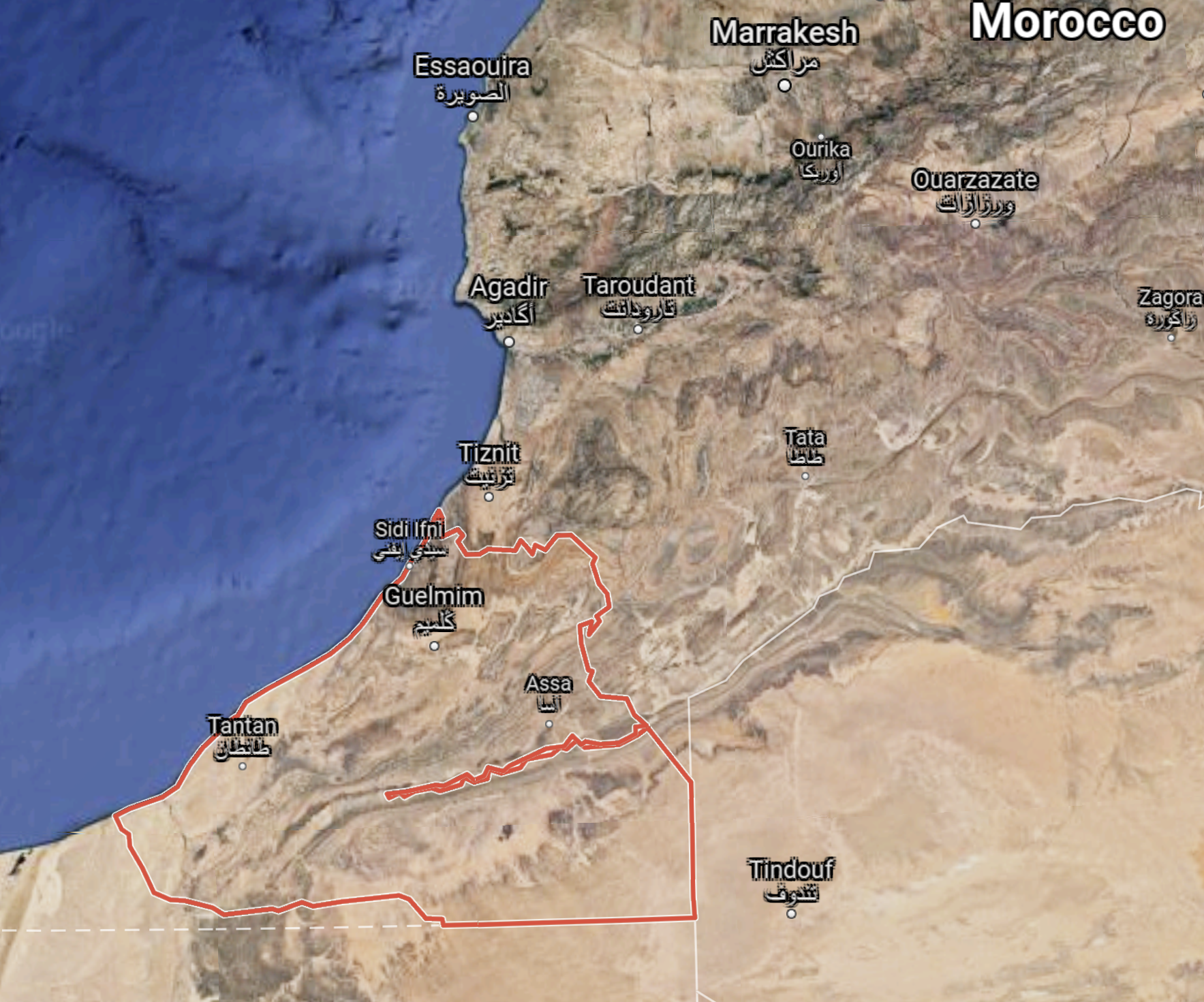
Note.
- Guelmim Oued Noun is outlined in red.
- The Canary Islands are just off the map to the West.
At least the project will be able to have convenient access to the sea.
This second Google Map shows the <Moroccan, Portuguese and Spanish coasts from Guelmim Oued Noun to the Bay of Biscay.

Note.
- The light blue of the Continental Shelf
- The darker blue of deeper water.
- Guelmim Oued Noun is outlined in red.
- The Canary Islands in the Atlantic Ocean to the West of Guelmim Oued Noun.
- Could the cable bring power to Gibraltar?
- There are other large cities on the route in Morocco, Portugal and Spain.
This third Google Map shows the Bay of Biscay.
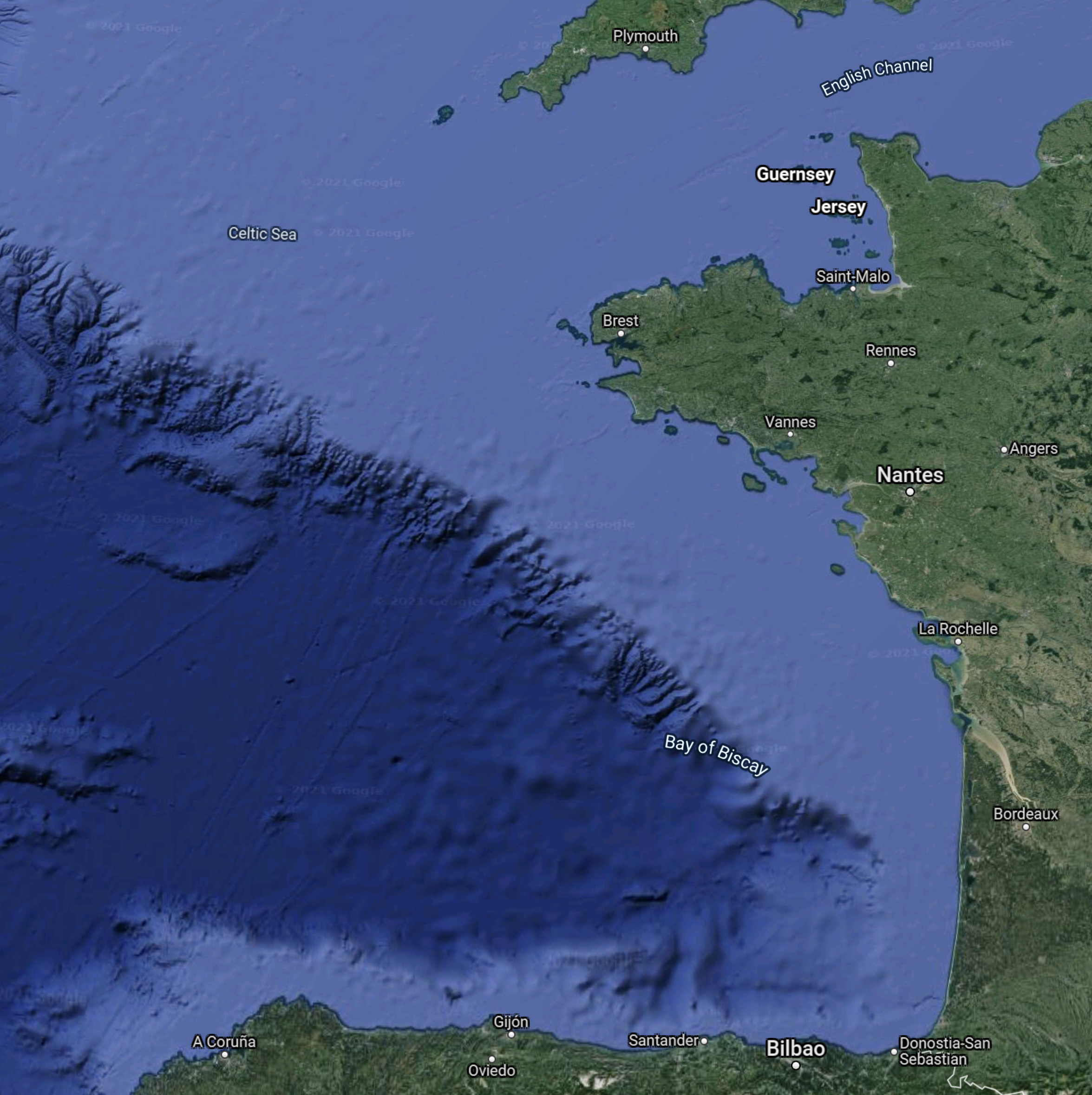
Note.
- The light blue of the Continental Shelf
- The darker blue of deeper water.
- There are a series of islands off the Spanish and French coasts.
- Could these islands be used as stepping stones for the cable?
This fourth Google Map shows the Western Approaches to the UK.
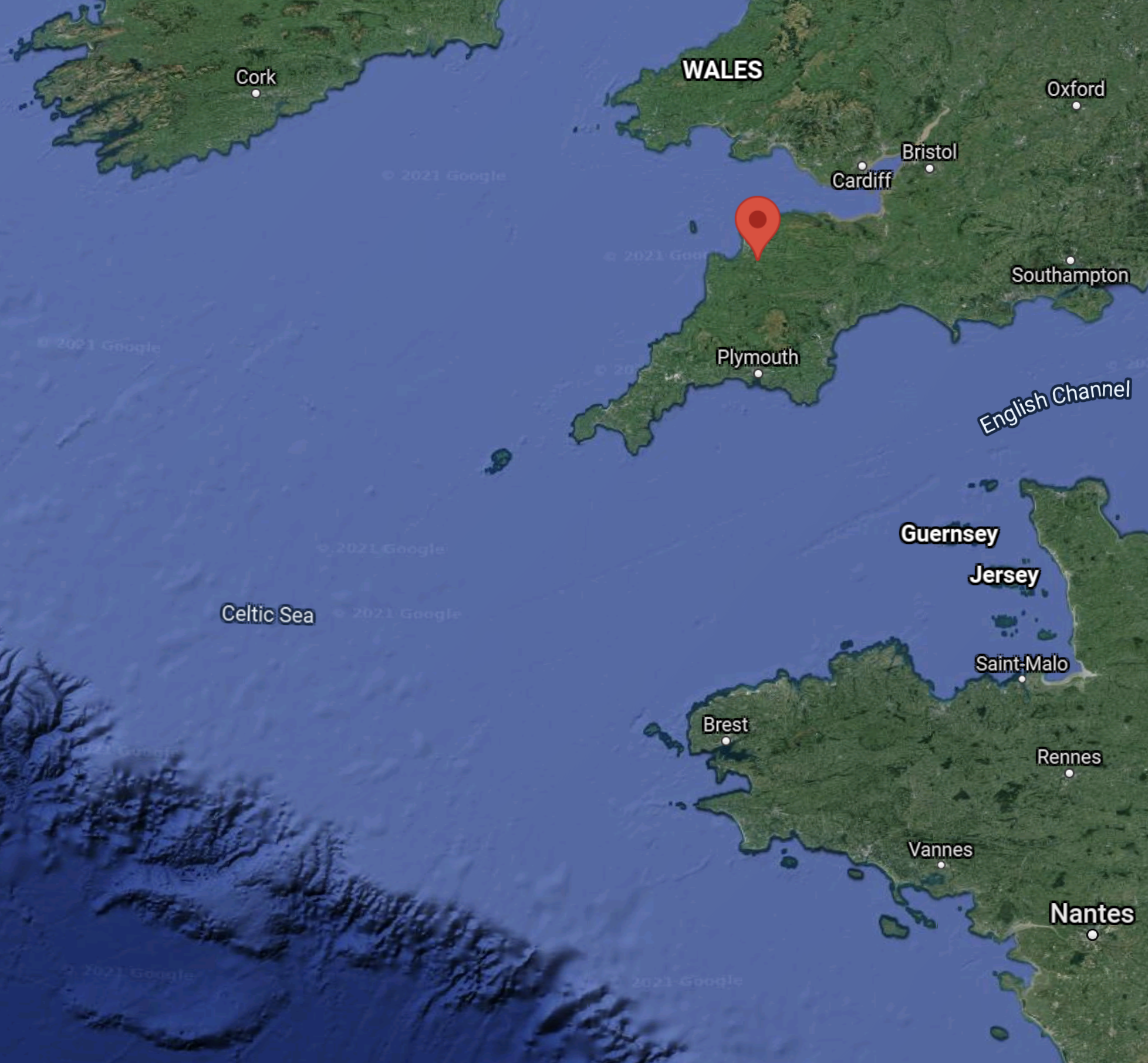
Note that the prominent red arrow indicates Alverdiscott, where cable connects to the UK National Grid.
This fifth Google Map shows Alverdiscott to Lundy Island.
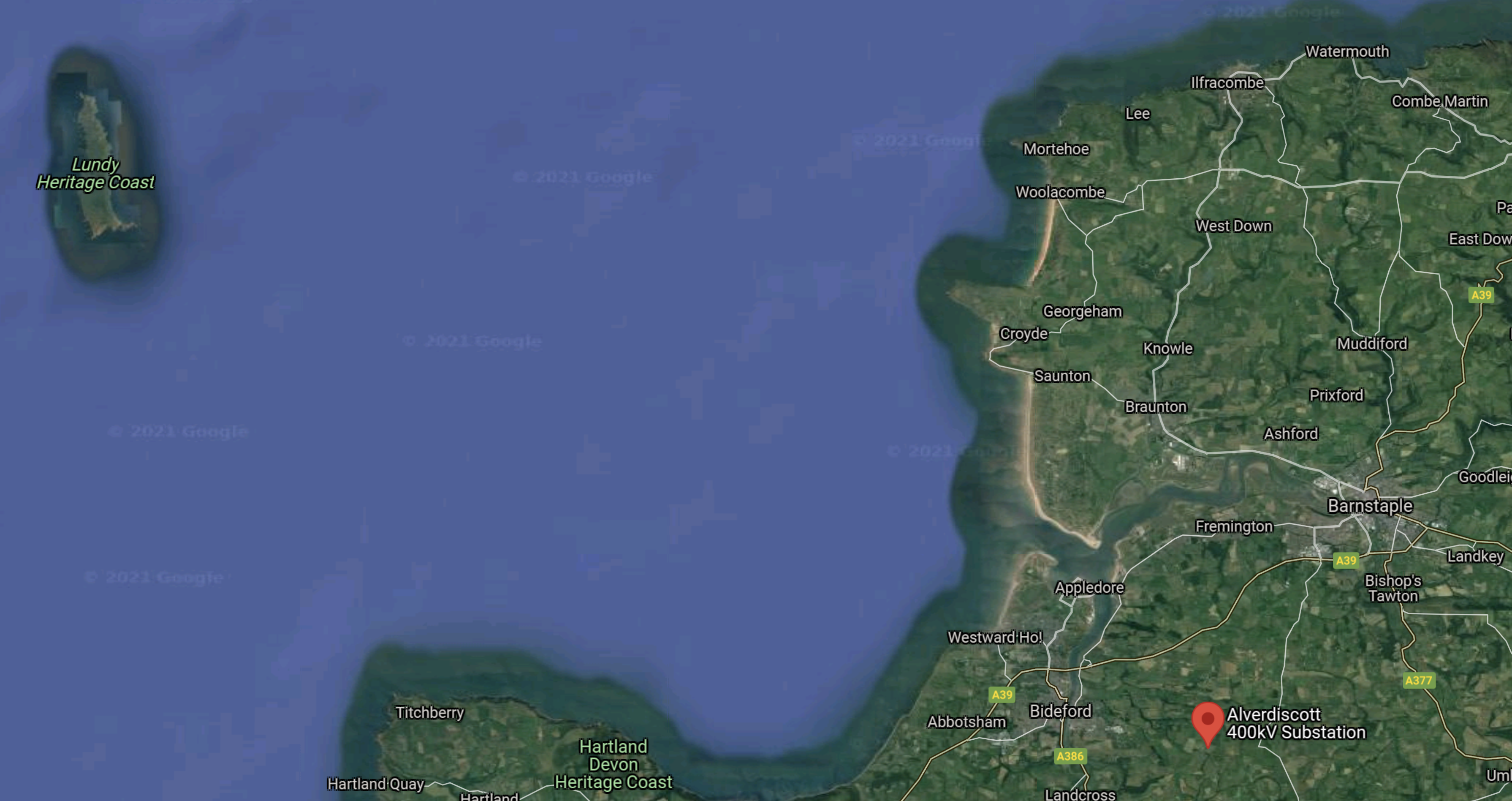
Alverdiscott substation is indicated by the red arrow.
This sixth Google Map shows the Alverdiscott substation in relation to the town of Bideford.
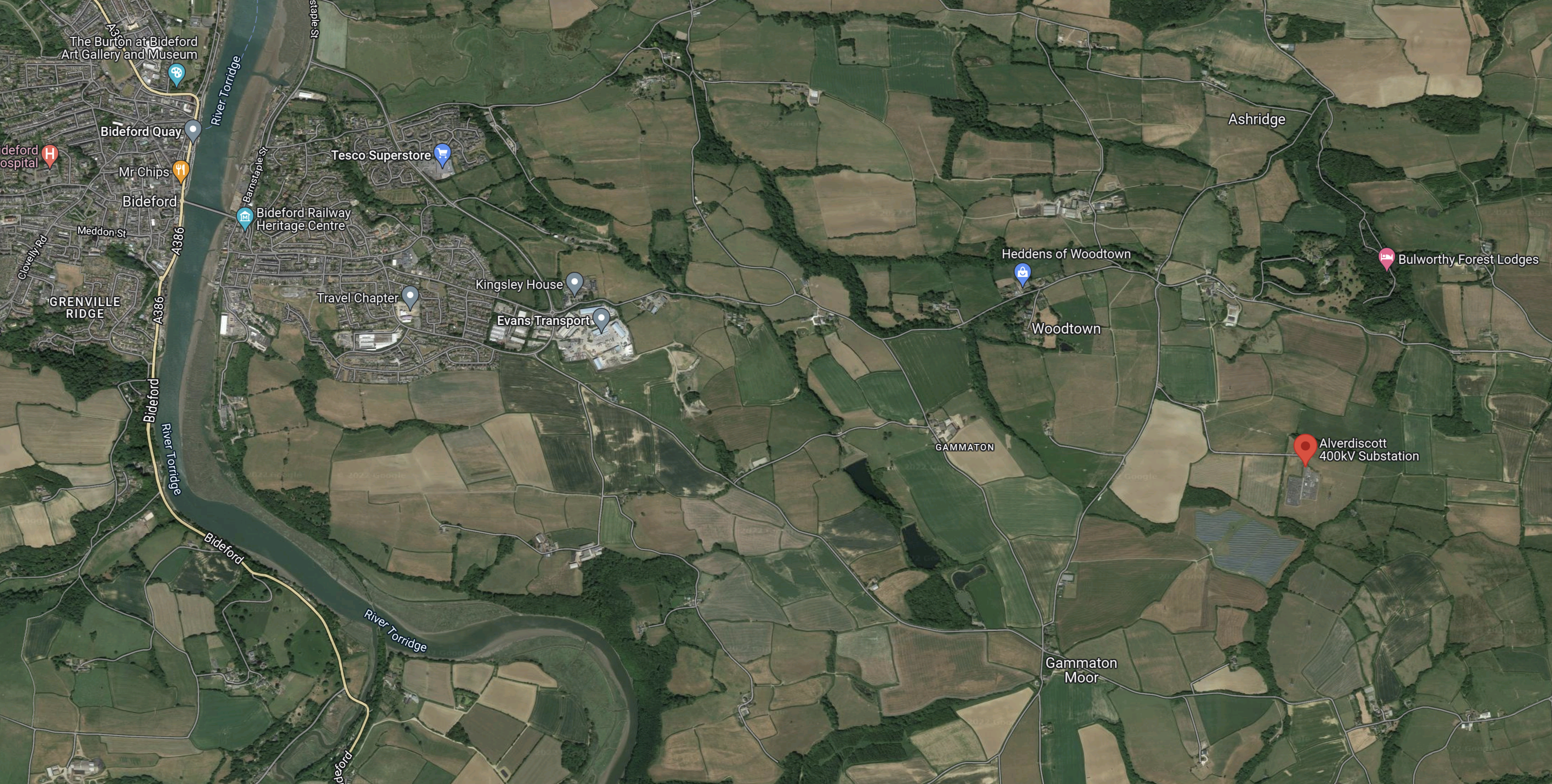
Note.
- Bideford is in the North-West corner of the map.
- The red arrow indicates the Alverdiscott substation.
- The River Torridge runs through the town of Bideford.
Could the river be used to bring the cables from Morocco to the substation?
This seventh Google Map shows the Alverdiscott substation
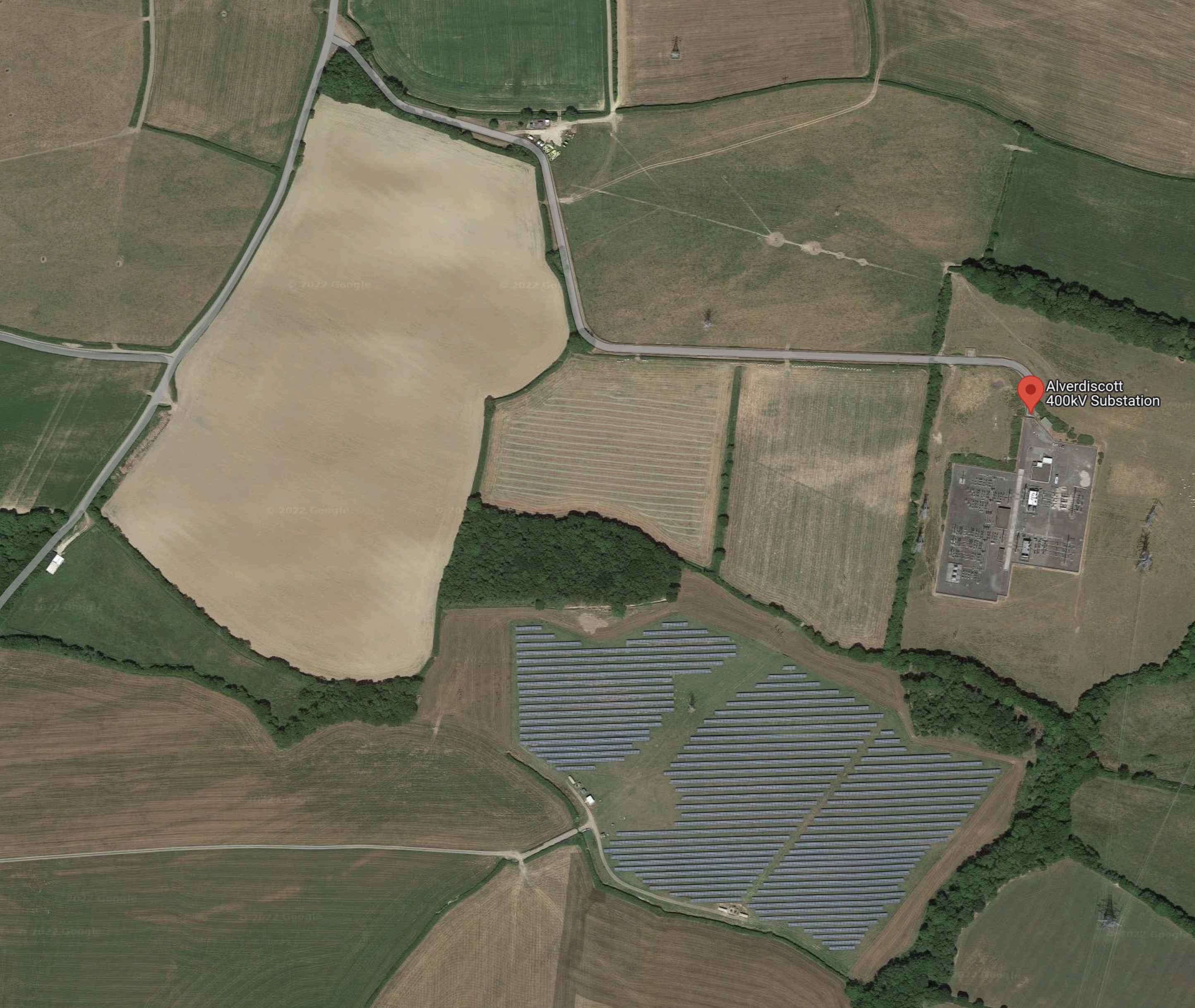
Note the solar farm to the South of the substation.
HVDC Cable
The article also says that they may be building their own cable-manufacturing facility. Does this indicate that there is a shortage of HVDC cable?
Judging by the number of proposed interconnectors proposed for UK waters, it might be a prudent move to improve cable-manufacturing capacity.
10.5 GW Of Zero-Carbon Electricity
This sentence on the project web page describes the power generation.
This “first of a kind” project will generate 10.5GW of zero carbon electricity from the sun and wind to deliver 3.6GW of reliable energy for an average of 20+ hours a day.
It appears that they will be providing a baseload of 3.6 GW to the UK for over twenty hours per day.
Consider.
- Hinckley Point C has an output of 3.2 GW.
- As I write this around midnight, the UK is generating 22.2 GW of electricity.
This paragraph from their web site describes the advantages of Morocco.
Most importantly, Morocco benefits from ideal solar and wind resources, required to develop renewable projects that could guarantee suitable power production throughout the year. It has the third highest Global Horizontal Irradiance (GHI) in North Africa, which is 20% greater than Spain’s GHI and over twice that of the UK. Furthermore, the shortest winter day still offers more than 10 hours of sunlight. This helps in providing production profiles that address the needs of the UK power market, especially during periods of low offshore wind production.
It is not a small power station in the wrong place.
The 5GW/20GWh Battery
That is a massive battery.
The world’s largest lithium-ion battery is Gateway Energy Storage in California. It has a capacity of 250 megawatts for one hour.
The proposed battery in Morocco is eighty times as large.
If I was choosing a battery for this application, I believe the only one that has been demonstrated and might work is Highview Power’s CRYOBattery.
I wrote about Highview’s similar type of application to Morocco in Chile in The Power Of Solar With A Large Battery.
But that installation only will only have storage of half a GWh.
But I believe Highview and their partner; MAN Energy Solutions can do it.
Conclusion
I wish the company well, but I have a feeling that there’s a chance, that this will join the large pile of dead mega-projects.
But I do feel that the solar and wind power station in Morocco will be developed.
And like the project in Chile it will have a large Highview CRYOBattery.
Battersea Power Station From The South
I took these pictures of Battersea Power Station, as I walked back to Battersea Power Station station.





It seems to be coming on!
But will it all end it tears? It’s already bankrupted a couple of companies to get this far!
Could Drax Power Station Solve The Carbon Dioxide Shortage?
Drax Power station is the largest power station in the UK, with a 2.6 GW capacity when burning biomass.
It has also been a regular target of environmental activists complaining of the power station’s carbon dioxide and other emissions.
But could it be an unlikely saviour to replace the carbon dioxide that comes from two fertiliser plants run by the CF Industries, that have been shut down by high gas prices?
I wrote about the shortage in Food Shortages Looming After Factory Closures Hit Production.
Two and a half years ago I wrote Drax Becomes First Wood-Burning Power Plant To Capture Carbon, which was based on an article in the Financial Times.
I said this about the report.
This news has been treated in a more sensationalist way by other news media and sites, but the FT gives it very straight.
Drax power station is running an experiment, that removes a tonne of carbon dioxide a day.
But that is only the start of the process and most of it is released to the atmosphere.
They are currently, looking for profitable and environmentally-friendly ways of disposal, including selling it to beer manufacturers.
Didn’t we have a carbon-dioxide shortage a few months ago?
Now is probably a good time to dig a little deeper into what Drax is doing.
The Wikipedia entry for Drax power station has a section called Carbon Capture And Storage.
This is the last paragraph of the section.
In May 2018, Drax announced a new carbon capture and storage pilot scheme that it would undertake in conjunction with the Leeds-based firm, C-Capture. The focus of this pilot will be on capturing carbon post combustion from the biomass burners as opposed to the coal burners. Drax will invest £400,000 into the project. The company, C-Capture, is a side company of the Department of Chemistry established at the University of Leeds. This would yield about 1-tonne (1.1-ton) of CO2 stored per day from the process, which could be sold on for use in the drinks industry. The pilot scheme was launched in February 2019. The capture of carbon from biomas burners is known as Bio Energy with Carbon Capture and Storage (BECCS).
Who are C-Capture?
Their web site is very informative and this page is called Our Story, which explains the project at Drax.
We designed, built, and installed a pilot plant and have been operating it on site, with real flue gas, since early 2019. The data gathered from this trial is feeding directly into the design process for a full-scale plant, with a target of 10,000 tonnes of CO2 per day captured from one of Drax’s four biomass fired boilers. A recent development has been the installation of equipment to bottle the captured CO2 to allow other organisations to test their own developing technologies with genuine Drax derived CO2.
That looks like a result to me for C-Capture.
This page is called Technology and has a very neat interactive guide to how the technology works.
Conclusion
This company has some very special technology, that has a lot of applications.
It is also significant that Drax and BP have taken a shareholding in C-Capture.
Is Carbon Dioxide Not Totally Bad?
To listen to some environmentalists, there views on carbon dioxide are a bit like a variant of George Orwell’s famous phrase Four legs good, two legs bad from Animal Farm, with carbon dioxide the villain of the piece.
I have just read the Wikipedia entry for carbon dioxide.
For a start, we mustn’t forget how carbon dioxide, water and sunlight is converted by photosynthesis in plants and algae to carbohydrates, with oxygen given off as waste. Animals like us then breathe the oxygen in and breathe carbon dioxide out.
Various web sites give the following information.
- The average human breathes out 2.3 pounds of carbon dioxide per day.
- As of 2020, the world population was 7.8 billion.
This means humans breathe out 17.94 billion pounds of CO2 per day
This equates to 6548.1 billion pounds per year or 2.97 billion tonnes per year.
And I haven’t counted all the other animals like buffalo, cattle, elephants and rhinos, to name just a few large ones.
Wikipedia also lists some of the Applications of carbon dioxide.
- Precursor To Chemicals – Carbon dioxide can be one of the base chemicals used to make other important chemicals like urea and methanol.
- Foods – Carbon dioxide has applications in the food industry.
- Beverages – Carbon dioxide is the fizz in fizzy drinks.
- Winemaking – Carbon dioxide has specialist uses in winemaking.
- Stunning Animals – Carbon dioxide can be used to ‘stun’ animals before slaughter.
- Inert Gas – carbon dioxide has several uses, as it is an inert gas.
- Fire Extinguisher – Carbon dioxide is regularly used in fire extinguishers and fire protection systems.
- Bio Transformation Into Fuel – It has been proposed to convert carbon dioxide from power stations into biodiesel using a route based on algae.
- Refrigerant – Carbon dioxide can be used as a refrigerant. It was used before CFCs were developed and I know of a large Victorian refrigeration system on a farm in Suffolk, used on a store for apples, that still is in regular use that uses carbon dioxide.
- Dry Ice – The solid form of carbon dioxide has lots of applications, where cooling is needed.
Other important applications are under development.
- Agriculture – Carbon dioxide is piped to greenhouses to promote growth of crops. It is also used at higher concentrations to eliminate pests.
- Low Carbon Building Products – Companies like Mineral Carbonation International are developing ways of creating building products from carbon dioxide.
- Synthetic Rubber – Research is ongoing to create replacements for synthetic rubber.
I can only assume, that the demand for gaseous carbon dioxide will increase, as scientists and engineers get more innovative about using the gas.
Solving A Shortage Of Carbon Dioxide
At the present time, there is shortage of carbon dioxide, that I wrote about in Food Shortages Looming After Factory Closures Hit Production.
In the related post, I said this.
Perhaps we should fit carbon capture to a handy gas-fired power station, like SSE are planning to do at Keadby and use this carbon dioxide.
Consider.
- The Keadby complex of gas-fired power stations is close to a lot of depleted gas fields, some of which are in Lincolnshire and some are off-shore.
- Some gas fields are already being used to store natural gas imported from Norway.
- SSE plan to fit the later power stations with carbon capture.
I talk about SSE’s plans in Energy In North-East Lincolnshire.
If SSE were to build four large gas-fired power stations at Keadby, I calculated that they would produce 5.4 million tonnes of carbon dioxide per year.
It could be used or stored in depleted gas fields according to demand.
But the complex at Keadby would not release any carbon emissions.
Could Carbon Capture Be A Nice Little Earner?
If demand for carbon dioxide continues to rise, I could see power companies installing carbon capture on gas-fired power stations to generate an extra income stream.
Incidentally, there are 55 operational gas-fired power stations in the UK, that can generate a total of 30 GW, which are owned by perhaps ten different companies.
Development of carbon capture systems could be helped by Government subsidy.
Conclusion
I have long forgotten all the calculations I did with gases, but I do know that when one molecule of methane combusts it produces two molecules of water and one of carbon dioxide.
So I am fairly convinced that if you took X cubic kilometres of natural gas out of a gas field, after combustion there wouldn’t be anything like as much volume of carbon dioxide to put back, specially if a proportion could be used profitably in other processes.
If we are going to use gas to generate zero-carbon power, we probably need to do it with gas fields under our control either onshore or in the seas around our coasts. This is because the depleted gas fields can be used to store the carbon.
Gas-fired power stations with carbon capture supporting industries that need supplies of carbon dioxide will become a large part of our energy economy.
 The Anonymous Widower