Could A Gravitricity Energy Storage System Be Built Into A Wind Turbine?
On Thursday, I watched the first programme in a BBC series called Powering Britain. This programme was about wind power.
The program had close-up views of the inside of a turbine tower in the Hornsea Wind Farm in the North Sea. The spacious tower enclosed a lift for engineers to access the gubbins on the top.
In the Wikipedia entry for wind turbine, there is a section, with is entitled Most Powerful, Tallest, Largest And With Highest 24-Hour Production, where this is said.
GE Wind Energy’s Haliade-X is the most powerful wind turbine in the world, at 12MW. It also is the tallest, with a hub height of 150 m and a tip height of 260m. It also has the largest rotor of 220 m and largest swept area at 38000 m2. It also holds the record for the highest production in 24 hours.
Two certainties about wind turbines are that they will get larger and more powerful, if the progress over the last few years is continued.
So could a Gravitricity energy storage system be built into the tower of the turbine?
A lot would depend on the structural engineering of the combination and the strength of the tower to support a heavy weight suspended from the top, either inside or even outside like a collar.
To obtain a MWh of storage, with a height of 150 metres, would need a weight of 2,500 tonnes, which would be over three hundred cubic metres of wrought iron.
Gravitricity are talking of 2,500 tonnes in their systems, but I suspect the idea of a wind turbine, with a practical level of storage inside the tower, is not yet an engineering possibility.
Megawatt Charging System Set To Rapidly Reduce Fuelling Time For Commercial EVs
The title of this post, is the same as that of this article on Electric Autonomy Canada.
This is the sub-title.
An international task force says their recent high power “charge-in” event has yielded promising results with successful testing of novel connector prototypes that could overhaul the long-haul industry.
The problem of charging heavy freight trucks is a big market in North America and it seems that the event attracted some big players, like ABB, Daimler and Tesla.
- In the trucking industry, speed and range count for a lot.
- Trucks need to be charged during a driver’s rest break of about thirty minutes.
- In the U.S., transport made up 28 per cent of greenhouse gas emissions.
- Charging lots of trucks on typical state-of-the-art car chargers would probably crash the system.
The Megawatt Charging System aims to solve the problems.
How Would It Work?
This paragraph from the article, outlines the problems.
But how, one may ask, could such a massive electrical draw — as much as 4.5 megawatts — be supported by a grid, especially when the usage scale is not just one truck charging up, once a day, but thousands of 18-wheelers rolling and charging across the country.
The MCS Task Force seem to be suggesting that these systems will work as follows.
- A large battery or energy storage system will be trickle charged.
- The truck will be connected and the electricity will flow into the truck.
- It could all be automated.
It sounds very much like Vivarail’s Fast Charge system, which uses batteries as the intermediate store.
As an Electrical and Control Engineer, I would use a battery with a fast response.
I think I would use a Gravitricity battery. This page on their web site describes their technology.
Gravitricity™ technology has a unique combination of characteristics:
- 50-year design life – with no cycle limit or degradation
- Response time – zero to full power in less than one second
- Efficiency – between 80 and 90 percent
- Versatile – can run slowly at low power or fast at high power
- Simple – easy to construct near networks
- Cost effective – levelised costs well below lithium batteries.
Each unit can be configured to produce between 1 and 20MW peak power, with output duration from 15 minutes to 8 hours.
So, What Exactly Is Long-Duration Energy Storage?
The title of this post is the same as that of this article on Greentech Media.
This is the sub-title.
Everyone’s talking about it, and Californians are buying in. Here’s what you need to know about this emerging grid sector.
It describes what California is doing and the sector, with particular reference to Hydrostor, Form Energy and Highview Power.
The article finishes with a section entitled What’s The Catch?
This is the first two paragraphs.
The obvious barrier to a thriving long-duration storage industry is convincing generally conservative power plant customers that emerging technologies quite unlike anything the grid currently uses are safe bets for decades of operation.
Lab tests can reduce the risk, but nothing beats operational, megawatt-scale installations for proving that something works. That’s why the Form deal with Great River Energy is so crucial, as are early projects by Highview Power and Hydrostor. The big exception to technology risk is pumped hydro, which has been used at scale for decades. Those projects grapple instead with high capital expense and environmental concerns.
The article is a must-read and hopefully, this and more articles like it, will convince conservative energy company owners, regulators and governments, that long duration energy storage is the missing link between renewable power and electricity consumers.
At least, the current UK Government has backed two of the most promising British long duration energy storage companies; Gravitricity and Highview Power.
A Trip To Stansted Airport In A Class 745/1 Train
This lunchtime a friend was passing through Stansted Airport on the way to Glasgow. As we hadn’t seen each other for a couple of years, we had decided to have a coffee at the Airport.
I took these pictures on the trip.
Property Development At Tottenham Hale
There is a lot of development going on around Tottenham Hale station.




There will be a lot more to come.
The New Class 745/1 Train
I travelled in a new Class 745/1 train, which are replacing the Class 379 trains.














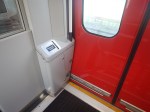




Note.
- The trains have twelve articulated sections.
- The trains are 236.5 metres long.
- Only 11-car Class 390 trains or a pair of five-car Class 80x trains are longer.
- The train has767 seats at a density of 3.24 seats/metre
This picture through the train emphasises the train’s length.

Note.
- There are some light slops, but no steps.
- A coffee and snack trolley would be possible.
- The overhead racks are generously-sized.
- Some seats are higher and you step up into them, as they are over the wheels.
The ride was also excellent.
Class 745/1 Train Performance
I made these observations.
- My train stopped at Tottenham Hale, Harlow Town, Bishops Stortford and Stansted Mountfitchet.
- The train was at 80 mph most of the time on the West Anglia Main Line.
- The maximum speed if a Class 745 train is 100 mph.
- The operating speed of the West Anglia Main Line is given on Wikipedia as 100 mph maximum.
- The train was didn’t exceed 70 mph on the Stansted Branch.
- Between Stansted Airport and Stansted Mountfitchet, the train accelerated to 70 mph and then braked at the right time to stop precisely in the following station.
At all times, I felt the train was running very easily. But then there are 125 mph members of the Flirt family running in Norway.
I can see these trains cutting the current 49 minutes between Liverpool Street and Stansted Airport.
Other times to London’s airports are as follows.
- London Bridge – Gatwick – Thameslink – 48 minutes.
- Victoria – Gatwick – Gatwick Express – 30 minutes.
- Victoria – Gatwick – Southern – 32 minutes.
- Paddington – Heathrow Central – Heathrow Express – 15 minutes
- Paddington – Heathrow Central – Crossrail – 28 minutes
With the exception of Heathrow Express, the new Stansted Express doesn’t stand up too badly.
Rye House Gas-Fired Power Station
One of the landmarks you pass on the West Anglia Main Line is Rye House power station.


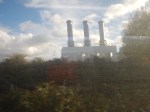
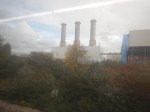
The weather wasn’t good, but the pictures give an impression of the 715 MW gas-fired power station.
This Google Map shows the power station.
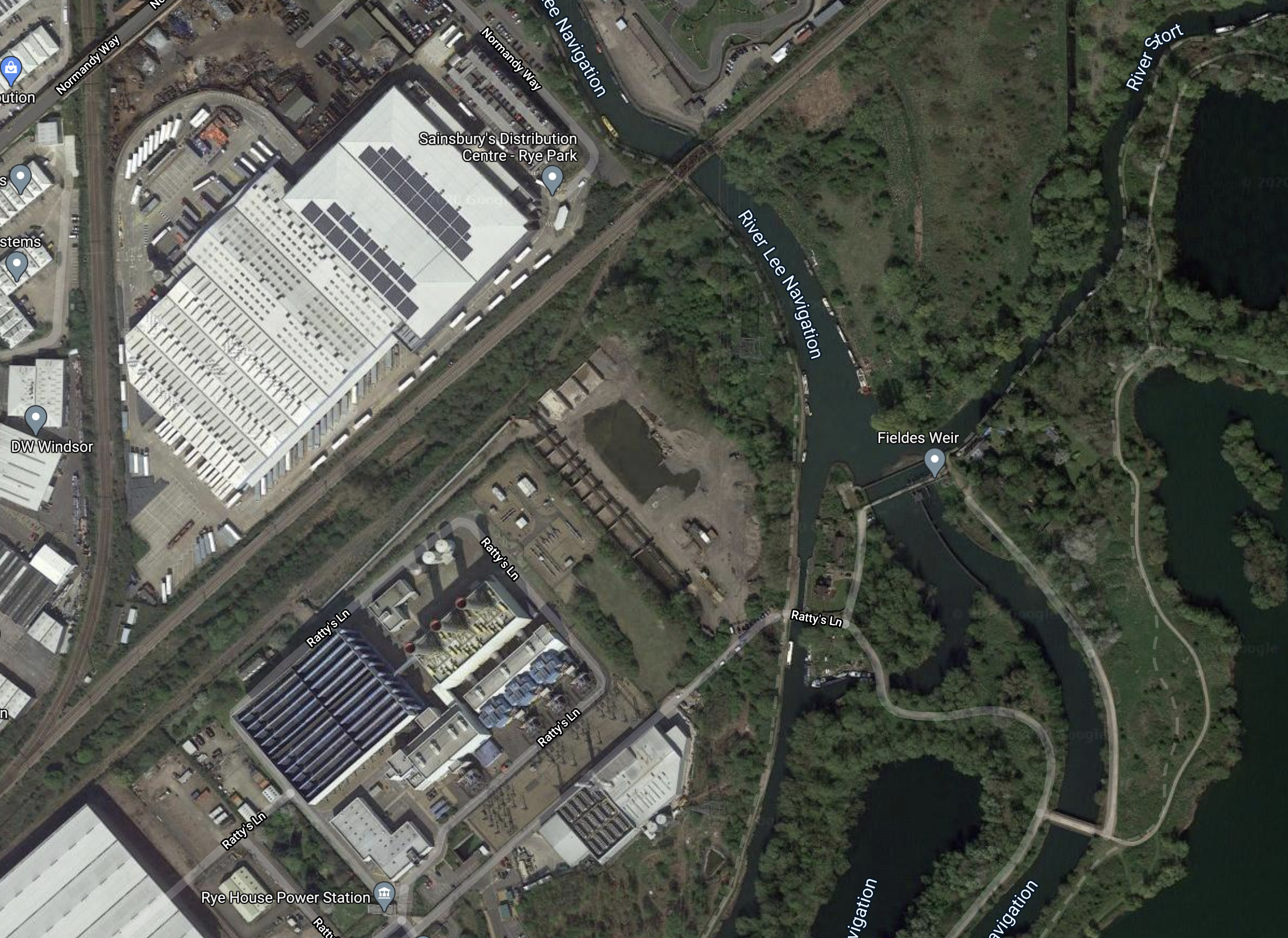
Note.
- The West Anglia Main Line running SW-NE across the map.
- Sainsbury’s distribution centre to the North of the railway.
- The power station to the South of the railway.
- The grid-like structure is an air-cooled condenser.
But where is the station’s carbon capture equipment?
The Lea Valley is London’s greenhouse, as this second Google Map shows.
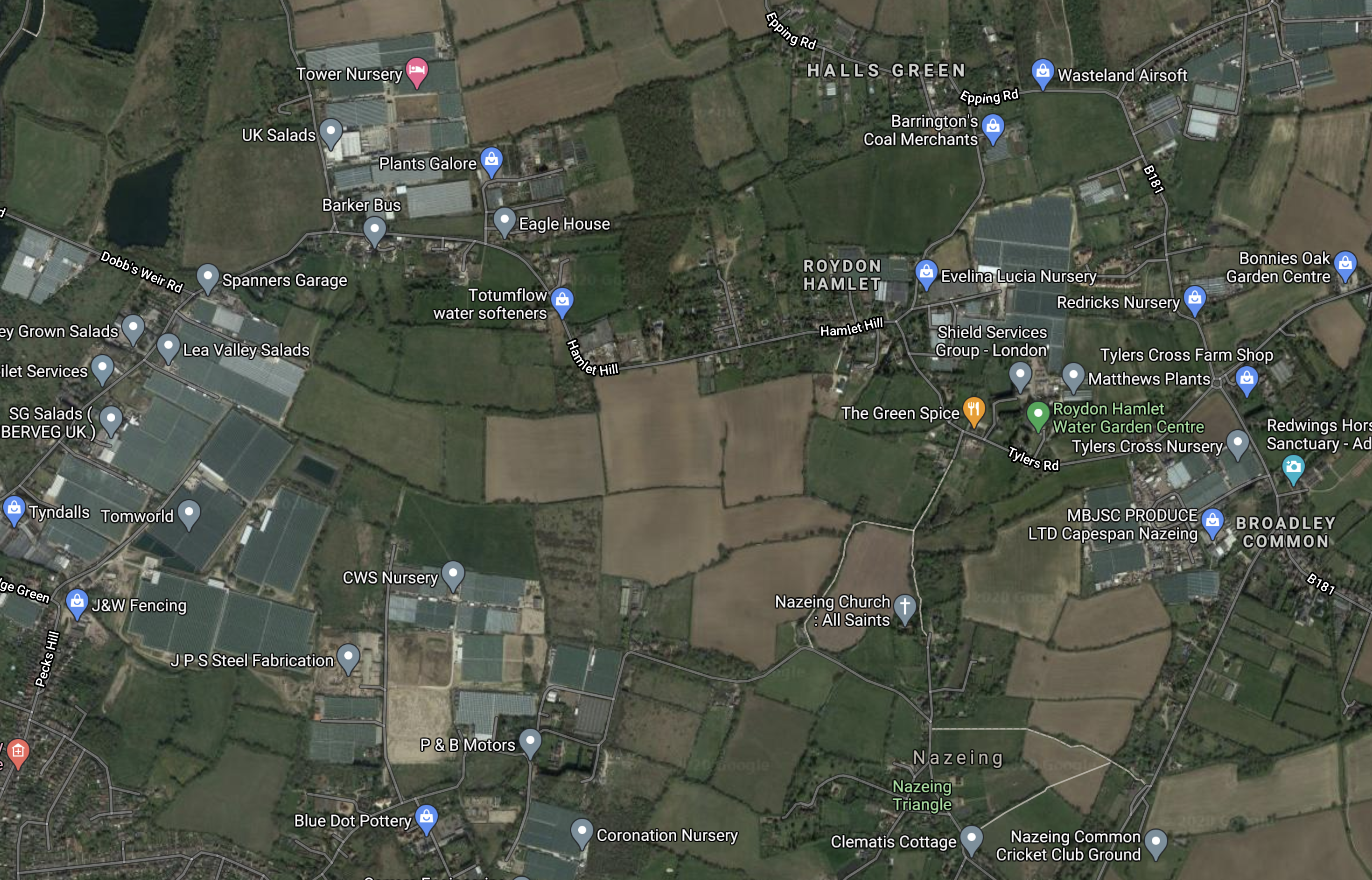
Note all the nurseries and salad producers on the map, which is a mile or so to the South East of the power station.
Drax Group used to pipe carbon dioxide to salad producers from Drax power station, so why aren’t they doing it here?
Changing At Tottenham Hale Station
This set of pictures show my change at Tottenham Hale station, when I returned to London.




Note.
- The step-free entry to the Class 745 train.
- The Stansted Express used Platform 3.
- It was then followed in Platform 3, by a train to Liverpool Street via Hackney Downs station.
- At the same time, a train arrived in Platform 4, which went to Stratford via Lea Bridge station.
- I took the Stratford train to Lea Bridge station.
- The train was a Class 379 train, which has been replaced by the Class 745 train.
It looks like all Stansted Expresses have an interchange to trains to Hackney Downs and Stratford after a few minutes.
This sums up, what travellers can do at Tottenham Hale station, after arriving on a Stansted Express.
- Stay on the Stansted Express for Liverpool Street.
- Wait for the next train to Hackney Downs and Liverpool Street, on the same platform.
- Wait for the train to Stratford, on the other side of the same platform.
- Catch the Victoria Line, as passengers have done for decades.
- There are also lots of buses and taxis.
When Crossrail opens, there will be connections at Stratford and Liverpool Street.
Lea Bridge Station
I took these pictures at Lea Bridge station.








Note, that not all trains on this route are Class 379 trains.
Property Development At Lea Bridge Station
There is a lot of development going on around Lea Bridge station.




As at Tottenham Hale and Stratford, there will probably be more to come.
Lea Bridge Road In Mid Afternoon
As I just mixed a 56 bus home, I walk about half-a-mile to the next bus stop.



It was not a pleasant walk!
Highview Power, Enlasa Form JV To Bring Cryogenic Storage To LatAm
The title of this post, is the same as that of this article on Renewables Now.
This is the opening paragraph.
UK’s Highview Power has formed a joint venture (JV) with Chilean backup power supplier Energia Latina SA (Enlasa) to co-develop giga-scale cryogenic energy storage projects in Chile and across Latin America, it was announced on Wednesday.
Highview has designed the CRYOBattery, its proprietary cryogenic energy storage system that uses liquid air as the storage medium and is capable of delivering from 20 MW/100 MWh to more than 200 MW/2 GWh. The company says that its system is comparable to thermal and nuclear in baseload power delivery.
I’ve always liked Highview Power‘s simple idea of storing energy as liquid air.
- The technology is simple.
- No nasty or envionmentally-unfriendly substances are used.
- There must be few countries in the world, who don’t have the expertise to run these plants safely and to the designed performance.
- As the extract says, the systems can store gigawatts of power.
Not bad, when you consider that cryogenic energy storage was invented by a garage inventor in Hertfordshire.
Foresight, Island GP To Build 700 MW Of Zero-Subsidy Solar In UK
The title of this post, is the same as that of this article on Renewables Now.
This is the two opening paragraphs.
UK infrastructure and private equity investment manager Foresight Group LLC has set up a joint venture (JV) with solar project developer Island Green Power to work together on a UK pipeline of close to 700 MW.
The companies plan to jointly develop five projects in England and Wales, Foresight said on Thursday. The schemes will be implemented without any subsidies.
Surely, what is significant, is that this joint venture, appears to be viable without subsidy.
Who’d have thought that the UK would be able to have this amount of solar power, without government or taxpayer support?
The cost of solar must be dropping like a stone!
Energy Scavenging Nanogenerator Finds Power All Around Us
The title of this post, is the same as that of this article on Phys.org.
These are the opening two paragraphs.
Imagine a mobile phone charger that doesn’t need a wireless or mains power source. Or a pacemaker with inbuilt organic energy sources within the human body.
Australian researchers led by Flinders University are picking up the challenge of “scavenging” invisible power from low-frequency vibrations in the surrounding environment, including wind, air or even contact-separation energy (static electricity).
I’ve known people with pacemakers, including someone with a nuclear-powered one. But surely this would be better, as the power source would be everlasting.
I don’t think I know anyone with one now! Are they less common?
Conclusion
If this can be commercialised, it is a very interesting development.
Energy In North-East Lincolnshire
A few weeks ago, I took a train from Doncaster to Cleethorpes and back.

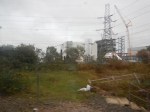
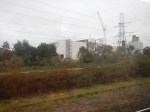
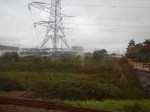
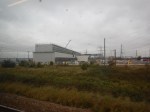
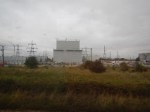
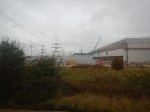
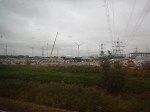

These pictures show the area is all about energy.
Keadby Power Station
Keadby power station is a 734 MW gas-fired power-station, that opened in 1996.
Keadby 2 Power Station
Keadby 2 is described on this page of the sseThermal web site.
These are the three opening paragraphs.
Keadby 2 is a new 840MW gas-fired power station in North Lincolnshire currently being constructed by our EPC contractor Siemens Energy. The project is adjacent to our operational Keadby 1 Power Station.
SSE Thermal has partnered with Siemens Energy to introduce first-of-a-kind, high-efficiency gas-fired generation technology to the UK. When completed, Keadby 2 is expected to become the cleanest and most-efficient gas-fired power station in Europe.
The station will also be capable of being upgraded to further decarbonise its generation through carbon capture or hydrogen technology, as routes to market develop.
Note.
- It will be possible to add Carbon Capture and Storage technology to Keadby 2 to make the plant net-zero carbon.
- Keadby 2 will be able to run on hydrogen.
- Keadby 2 is the under-construction power station in my pictures.
Could this be the prototype gas-fired power station of the future?
Keadby 3 Power Station
Keadby 3 is described on this page of the sseThermal web site.
These are the two opening paragraphs.
SSE Thermal is developing the option for a low-carbon combined cycle gas turbine (CCGT) at our Keadby site in North Lincolnshire, which will be known as Keadby 3.
As part of our commitment to a net zero emissions future, Keadby 3 will only be built with a clear route to decarbonisation, either using hydrogen as a low-carbon fuel, or equipping it with post-combustion carbon capture technology. The project is at the early stages of development and no final investment decision has been made.
Keadby 3 is still in the consultation and planning stage.
This newsletter on the sseThermal web site, gives some useful information about Keadby 3.
These are the first three paragraphs.
We are proposing to build a new gas fired power station at Keadby, North Lincolnshire. The project, known as Keadby 3, will have a generating capacity of up to 910 megawatts (MW) and will provide the essential back up to renewable generation and reliable and flexible energy during the country’s transition to Net Zero.
Keadby 3 will be a highly efficient gas fired power station. It will either use natural gas as the fuel and be fitted with a Carbon Capture Plant (CCP) to remove carbon dioxide (CO2) from the emissions to air from the plant, or it will be fired on primarily hydrogen, with no carbon dioxide emissions to air from its operation. Both options are currently being considered, and government is also currently considering the roles of carbon capture and hydrogen in the power sector nationally.
Keadby 3 will require connections for natural gas and possibly hydrogen fuel, water for use in the process
and for cooling and possibly for a pipeline to export the captured CO2 into a gathering network being provided by others and from there to a permanent geological storage site. An electricity connection to export the generated electricity to the UK transmission system will also be required. The plant would be capable of operating as a dispatchable low-carbon generating station to complement the increasing role of renewables in supplying the UK with electricity
Note.
- The three Keadby gas-fired power stations can generate 2484 MW of electricity in total.
- By comparison, the under-construction Hinckley Point C nuclear power station will be able to generate 3200 MW.
- The addition of a Keadby 4 power station, if it were the same size as Keadby 3, would mean the Keadby cluster of gas-fired power stations had a capacity of 3394 MW and they would be larger than the big nuclear station.
In terms of power output, it is an interesting alternative to a larger nuclear power station.
What About The Carbon?
If you’re burning natural gas, you will produce some carbon dioxide.
Power generation from natural gas creates 0.2 Kg of CO2 per kWh according to this web page.
So a 3000 MW station that produces 3000 MW, will produce 3000 MWh or 3000000 kWh in an hour.
This will create 600,000 Kg or 600 tonnes of carbon dioxide in an hour.
As there are roughly 9000 hours in a year, that is roughly 5.4 million tonnes of carbon dioxide.
This newsletter on the sseThermal web site, gives some information about sseThermal are going to do with the carbon dioxide.
As a low-carbon CCGT, Keadby 3 comprises one high efficiency gas turbine and associated steam turbine and either the infrastructure required to allow the CCGT to fire primarily on hydrogen gas, r inclusion of a post combustion Carbon Capture Plant (CCP) in a scenario where natural gas is used as the fuel. In the latter scenario, this is required in order that CO2 emissions are captured and directed to an offshore geological store through the Humber Low Carbon cluster pipeline network being developed by National Grid Ventures and partners.
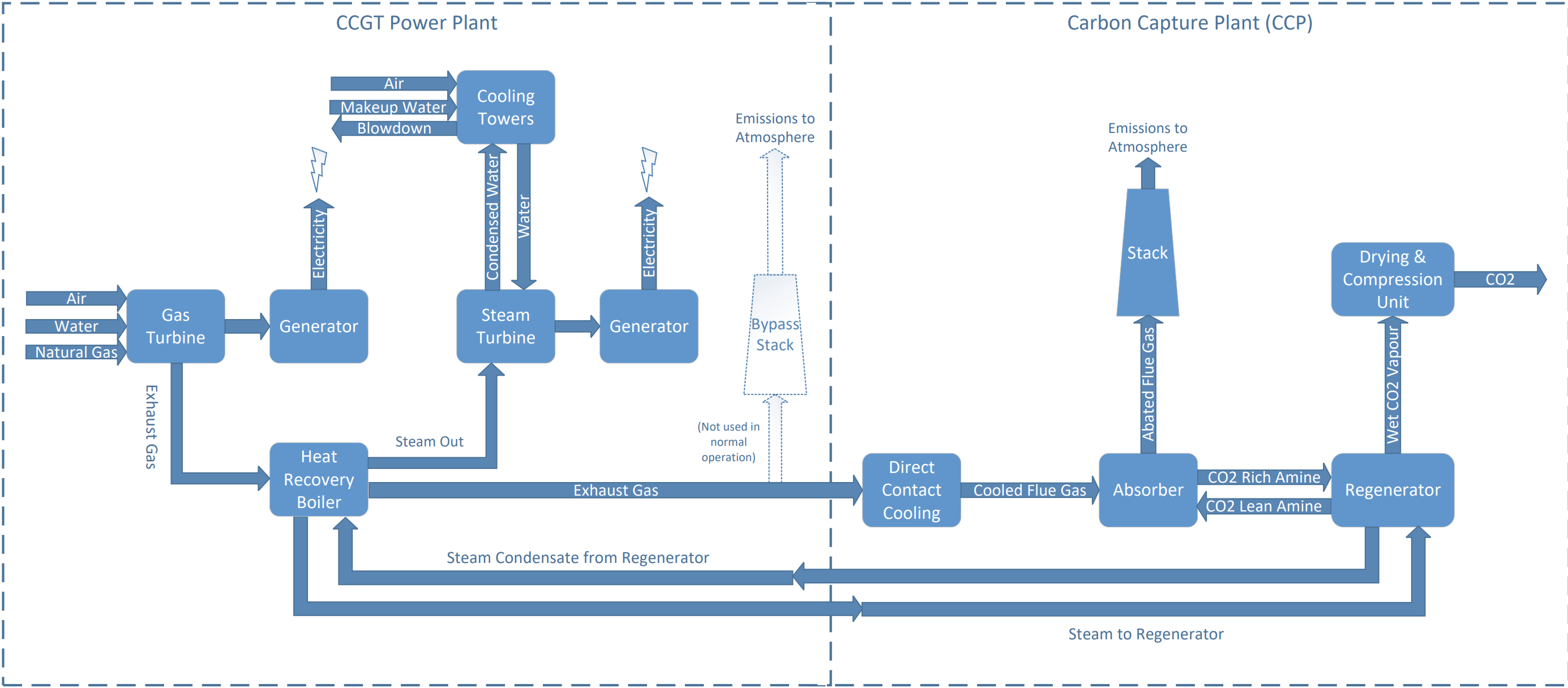
A diagram of these components, and optional components, is shown below.
Note.
- Click on the image to get a larger view.
- The CCGT Power Plant is on the left.
- Most of the power is generated by the gas-turbine.
- Heat is recovered to create steam, which drives a turbine to create more electricity
- The Carbon Capture Plant is on the right.
- Carbon dioxide is extracted from the exhaust.
There are two outputs from the plant; electricity and carbon dioxide.
As the carbon dioxide is in a pipe from the drying and compression unit, it is easy to handle.
The newsletter says this about what will happen to the carbon dioxide.
CO2 emissions are captured and directed to an offshore geological store through the Humber Low Carbon cluster pipeline network being developed by National Grid Ventures and partners.
As there are several worked out gas fields in the area, there are places to store the carbon dioxide.
Storing The Carbon Dioxide
This map shows the Zero Carbon Humber pipeline layout.

Note.
- The orange line is a proposed carbon dioxide pipeline
- The black line alongside it, is a proposed hydrogen pipeline.
- Drax, Keadby and Saltend are power stations.
- Easington gas terminal is connected to around twenty gas fields in the North Sea.
- The terminal imports natural gas from Norway using the Langeled pipeline.
- The Rough field has been converted to gas storage and can hold four days supply of natural gas for the UK.
I can see this network being extended, with some of the depleted gas fields being converted into storage for natural gas, hydrogen or carbon dioxide.
Using The Carbon Dioxide
But I would prefer , that the carbon dioxide were to be put to use. Under Carbon Capture and Utilisation on Wikipedia, a variety of uses are shown.
Surprisingly, they don’t talk about using the carbon dioxide to promote the growing of crops in green houses.
I do think, though, that some clever chemists will find ways to convert the carbon into some form of advanced engineering plastics to replace steel.
Hydrogen-Fuelled Power Stations
Note how on the map the hydrogen pipeline goes through the Keadby cluster of power stations.
- Hydrogen is a zero-carbon fuel.
- It will be produced offshore by wind turbines connected to electrolysers.
- The hydrogen will be brought ashore using the existing gas pipeline network.
- Excess hydrogen could be stored in the worked out gas fields.
I suspect there will be a massive increase in the number of wind turbines in the North Sea to the East of Hull.
Hydrogen Steelmaking
In ten years time, this will surely be the way steel will be made. British Steel at Scunthorpe would surely be an ideal site.
It would also be an ideal site for the HIsarna steelmaking process, which generates much less carbon dioxide and because it is a continuous process, what carbon dioxide is generated is easily captured.
Conclusion
Installations like this will mean that large nuclear power stations built with Chinese money are not needed.
Interview: Hitachi’s Nick Hughes On Driving Innovation In Rail Propulsion
The title of this post is the same as that of this article on The Engineer.
As with the article I discuss in Hydrogen On The Line, it is another well-written and informative article from The Engineer, where those at the sharp end of innovative rail technologies give their views.
This is the introductory paragraph.
As part of a series of articles exploring the propulsion technologies that will shape the future of key transport sectors The Engineer spoke to Hitachi Rail’s Nick Hughes about the innovations that will propel the rail sector into a low carbon future.
The Engineer asked these questions.
- What propulsion innovations will help power the rail sector towards net zero?
- Can you outline some of your organisation’s own key activities in this area?
- What are the key obstacles and challenges to developments in this area?
- What is your vision for the long-term future of propulsion in your sector?
I find the answer to the last question most interesting.
Rail is going to become increasingly digitised and integrated into other sectors involved in smart cities, mobility-as-a-service and flexible green grid. Therefore, Hitachi Rail won’t be able to stay at the forefront of innovation by its self. This is why we are focused on building partnerships with other like-minded, innovative, clean tech companies like Hyperdrive Innovation, Perpetuum and Hitachi group companies such as Hitachi ABB.
Hyperdrive Innovation is going to apply its knowledge and expertise from the automotive sector, to develop a market leading battery for Hitachi trains. Perpetuum predictive analytics improve reliability and availability of existing trains. Meanwhile, Hitachi ABB’s experience of the power sector allows our battery train solution to incorporate charging, storage and grid management. These partnerships creates an entry point into the rail market for our partners, potentially leading to future growth and jobs.
However, it is important to recognise that the established technologies of today – battery trains, discontinuous electrification and high-speed trains – are the technologies will help achieve the 2050 net zero emission target.
I would very much agree with all that is said.
Drax, Velocys Help Launch Coalition For Negative Emissions
The title of this post, is the same as that of this article on Biomass Magazine.
This is the introductory paragraph.
U.K.-based companies Drax Group and Velocys are among 11 organizations that have launched the Coalition for Negative Emissions, which aims to achieve a sustainable and resilient recovery from COVID-19 by developing pioneering projects that can remove carbon dioxide and other pollutants from the atmosphere.
This paragraph details the companies and organisations involved.
In addition to Drax and Velocys, members of the coalition include Carbon Engineering, Carbon Removal Centre, CBI, Carbon Capture and Storage Association, Climeworks, Energy U.K., Heathrow, International Airlines Group, and the U.K. National Farmers Union.
They have sent a letter to the Government, which can be downloaded from the Drax website.
Conclusion
I have an open mind about biomass and products such as aviation biofuel and techniques such as carbon capture.
Keeping the wheels of commerce turning, needs a sustainable way to fly and ideas such as producing aviation biofuel from household and industrial waste, could enable sustainable transport in the short term.
Carbon capture is very difficult in a lot of processes, but I feel that in some, such as a modern gas-turbine powered station, if they are designed in an innovative manner, they an be made to deliver a pure stream of the gas. A pure gas must be easier to handle, than one contaminated with all sorts of unknowns, as you might get from burning some sources of coal.
I am pleased that the National Farmers Union is involved as using pure carbon dioxide, as a growth promoter for greenhouse crops is a proven use for carbon dioxide.
Overall, I am optimistic about the formation of the Coalition for Negative Emissions.
 The Anonymous Widower