New Study Shows How North Sea Offshore Wind Can Yield More While Costing Less
The title of this post, is the same as that of this article on offshoreWIND.biz.
This is the sub-heading.
A less dense development of offshore wind in the German Exclusive Economic Zone (EEZ) of the North Sea, and a relocation of capacities to neighboring countries can both increase the yield from offshore wind and reduce costs, a new study by the Fraunhofer Institute for Wind Energy Systems (Fraunhofer IWES) has shown.
These two paragraphs add more detail.
With Germany’s current expansion target of 70 gigawatts (GW) by 2045 and the planned land use to date, the utilization of offshore wind power will fall far short of its technical potential, the study has shown.
While the North Sea is among the windiest regions worldwide, shading effects would significantly reduce the achievable yield of up to 5,000 full-load hours. Furthermore, the close proximity of wind farms reduces each other’s wind output.
It appears from the text in this must read report, that the Germans might develop as much as 20 GW in neighbouring countries.
In Will A Large Green German Elephant Get Involved In The Clacton By-Election?, I talked about a 2 GW cluster of wind farms being developed by RWE and their partners.
- 1.1 GW – Five Estuaries
- 504 MW – North Falls
- 353 MW – Galloper
Note:
- In total they are around 2 GW.
- The wind farms are around 30 km. offshore.
- RWE are a respected German company, who are one of the UK’s largest electricity generators.
I believe that RWE and their partners could receive a lot of opposition to an overhead power line across Essex to connect these wind farms to the National Grid, and 2 GW would not be a small set of pylons.
Would it be a better value project to bring this energy to Germany, either as green electricity or green hydrogen, than connect it to the UK’s National Grid?
Consider.
- A cable between the three wind farms and the nearest part of Germany would be about 300 miles.
- The longest undersea interconnect is the Viking Line between England and Denmark, which is 475 miles long.
- RWE have been building a big offshore electrolyser in The Netherlands called H2OpZee and I believe that similar technology could be used at Clacton.
- 2 GW of energy would be ten percent of the energy, that Germany needs.
- I’m sure Rachel from Accounts would be happy for any payments for the energy.
It looks to me that energy links between the UK and Germany will only get more numerous and stronger as the years roll by.
North Sea Exclusive Economic Zones
Out of curiosity, I searched for a map and found this on Wikipedia.
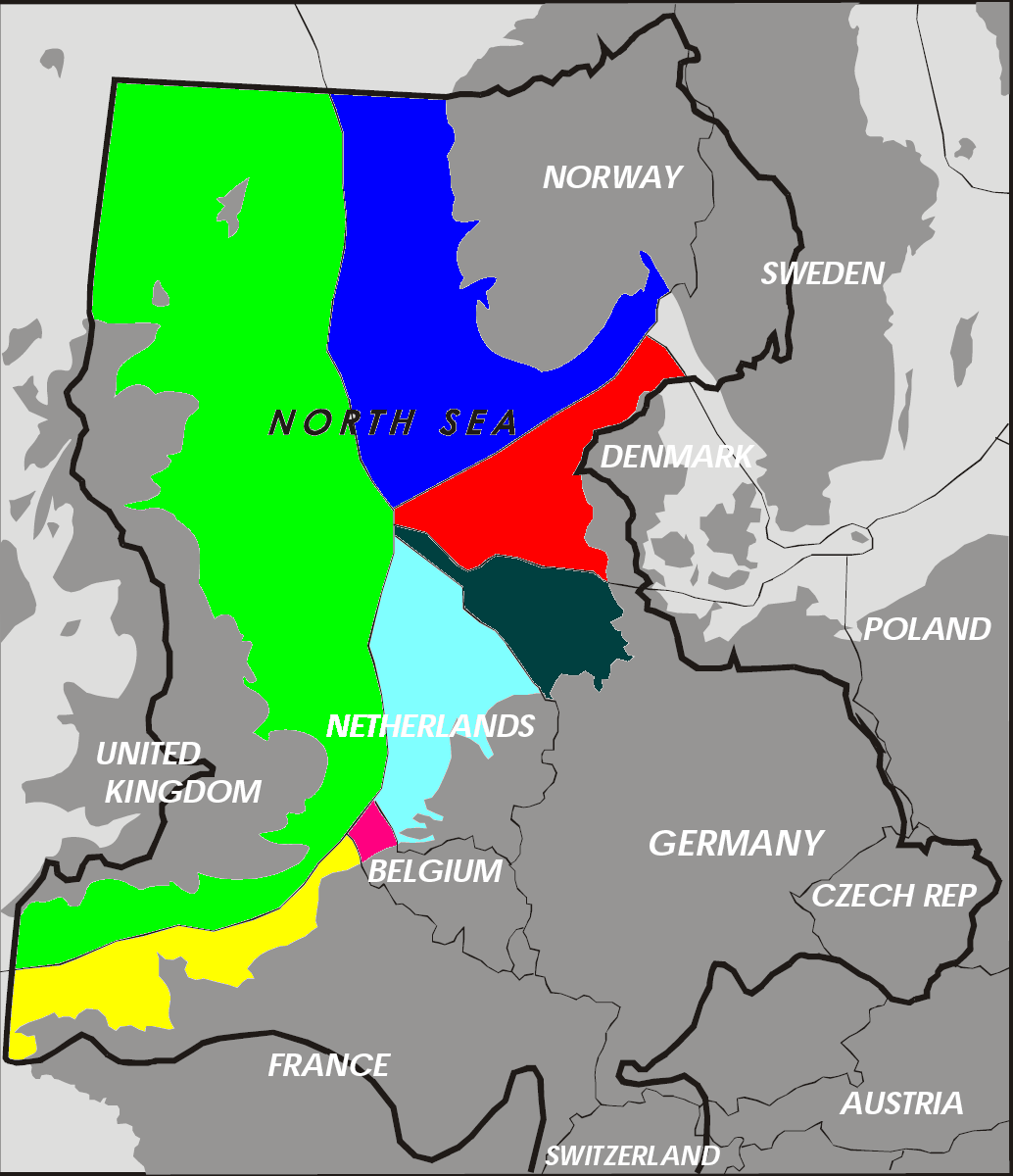
Note.
- Yellow is France.
- Mauve is Belgium, who drew the short straw.
- Light Blue is The Netherlands.
- Black is Germany, who despite their large land area, don’t have as much sea as the UK.
- Red is Denmark.
- Dark Blue is Norway.
- Green is The UK.
Didn’t we do well!
But Belgium and Germany miss out badly, when it comes for virgin sea to fill with wind farms.
Energy Links To Belgium
The UK has developed or is developing two grid links to Belgium.
- Nemo Link – a 1.0 GW interconnector.
- Nautilus – A 1.7 GW offshore hybrid asset.
National Grid is a partner with their Belgian equivalent ; Elia in both.
Energy Links To Germany
Germany is developing.
- NeuConnect – a 1.4 GW interconnector.
- GriffinLink – a hybrid offshore link.
- AquaVentus – In AquaVentus, I outlined this massive German project to bring Hydrogen to Germany from the North Sea.
I believe there will be more links.
Will A Large Green German Elephant Get Involved In The Clacton By-Election?
Before I start I’ll ask a question.
What Does Farage Think Of Offshore Wind Farms?
Google AI gave me this reply.
Nigel Farage opposes offshore wind farms, viewing them as an unreliable energy source and arguing that they cause industrial decline and impose “intolerable costs” on households.
His specific stances include:
Taxation & Subsidies: He has pledged that his Reform UK party would eliminate subsidies for wind projects and impose a windfall levy on existing wind farms that have received subsidies.
Energy Alternatives: Farage advocates for abandoning “net zero dogma” and pushes instead for increased oil and gas drilling in the North Sea, along with the expansion of nuclear energy.
Environmental Impact: He has criticized both onshore and offshore wind infrastructure for “despoiling our landscapes and seascapes”. His opposition aligns with previously documented discussions with US President Donald Trump, who has lobbied him against wind turbines.
RWE Development In The Clacton Constituency
RWE or RWE-led consortia are developing three wind farms in the waters off the constiuency.
- 1.1 GW – Five Estuaries
- 504 MW – North Falls
- 353 MW – Galloper
Note:
- In total they are around 2 GW.
- The wind farms are around 30 km. offshore.
- RWE are a respected German company, who are one of our largest electricity generators.
I believe that RWE and their partners could receive a lot of opposition to an overhead power line across Essex to connect these wind farms to the National Grid, and 2 GW would not be a small set of pylons.
But although RWE are German, they may have a Plan B.
RWE have been building a big offshore electrolyser in The Netherlands called H2OpZee and I believe that similar technology could be used at Clacton.
- The electrolyser would be about 30 km from the shore and look like a typical wind farm substation.
- There would be connections to both the UK and Germany, and green hydrogen would be able to be sent either way.
- As Germany is decarbonising industry using hydrogen, I suspect that most green hydrogen would initially be exported.
- But it could attract businesses that needed a lot of green energy to the Clacton area.
- And Clacton certainly needs jobs.
How would Farage deal with something that would bring prosperity to his constituency, but was against his principles?
Has The Clacton Constituency Anything To Do With The Offshore Wind Industry?
I ask this question as Nigel Farage, who is the sitting MP has called a by-election.
Before I answer, the question in the title, I will ask Google AI if he supports wind farms.
I received this reply.
Nigel Farage does not support offshore wind farms. As the leader of Reform UK, he opposes them and has pledged to eliminate renewable energy subsidies, impose a windfall tax on wind developers, scrap net-zero targets, and prioritize the expansion of North Sea oil and gas extraction.
Put this alongside the answer to the question I put in the title of this post.
Yes, the Clacton constituency is directly connected to the offshore wind industry through both established infrastructure and future energy projects off its coastline.The constituency’s specific ties to the wind sector include:
Gunfleet Sands Offshore Wind Farm: Located just 7 kilometers (about 4 miles) off the coast of Clacton and Holland-on-Sea, this wind farm has been operating since 2010. It features 48 turbines and can be seen directly from the town’s beachfront.
Electrical Connection Points: The Gunfleet Sands Offshore Transmission Owner (OFTO) system connects this wind farm to the UK’s national grid via cables and onshore substations based in the local area.
Five Estuaries Offshore Wind Farm: The Clacton coastline falls within the proposed zone for this massive £1.5 billion project. Jointly developed by SSE Renewables and RWE, the project is projected to power over 400,000 homes, with onshore grid infrastructure and cabling proposed for the North Essex area.
If the right independent candidate stood againt Farage, this could be an interesting contest.
Crown Estate’s Revenue From Existing Offshore Wind Farms 20 Pct Higher, Operating Profit Dips As Round 4 Projects Enter Construction Phase
The title of this post, is the same as that of this article on offshoreWIND.biz.
This is the sub-heading.
The Crown Estate reported a decline in annual operating profit to GBP 1.2 billion (approximately EUR 1.4 billion) from GBP 1.4 billion (approx. EUR 1.6 billion) in the previous year due to lower offshore wind Round 4 option fee income, as the Round 4 projects started entering the construction phase. Excluding the Round 4 option fees, operating profit rose 5 per cent to GBP 370 million (approx. EUR 435 million), while revenue from existing offshore wind farms increased 20 per cent to GBP 117 million (approx. EUR 138 million)
These four paragraphs add more details.
Over the year, the Crown Estate returned GBP 487 million (approx. EUR 573 million) to HM Treasury, bringing total contributions to GBP 5.1 billion (approx. EUR 6 billion) over the past decade, according to its financial report released on 25 June.
Alongside the financial results, the UK seabed manager highlighted that offshore wind capacity in its waters has reached 13 GW, up from 12 GW, with 36 wind farms now operating in its marine portfolio.
The pipeline of offshore wind capacity has increased to 56 GW, with an expanding offshore leasing and development programme as early Round 4 projects enter construction.
In the Offshore Wind Seabed Leasing Round 4, held in 2021, the Crown Estate selected six projects, which signed their Agreements for Lease in 2023, kicking off the three-year period during which the developers were paying annual option fees.
In Offshore Wind In 2030 – Calculated June 2026, I showed that the offshore wind capacity will have increased to 56 GW, sometime in 2031-2032.
How Much Income Will There Be In 2027-2032 from UK Wind Farms?
I asked Google AI the question in the title of this section and received this answer.
UK wind farm industry revenues are forecast to surpass £6 billion annually heading into 2027, driven by expanding capacity and inflation-adjusted contracts. Between 2027 and 2032, overall sector income will scale rapidly as capacity aims to double and up to £5 billion is pumped into the supply chain.
The economic landscape for UK wind generation features the following financial projections and parameters:
Industry Revenue & Growth: The UK wind power generation market is projected to expand at a Compound Annual Growth Rate (CAGR) of over 15% through 2031. The rapid expansion of both onshore and offshore capacity will push total market revenues well into the double-digit billions by 2032.
Contract for Difference (CfD) Revenues: Wind farms are heavily shielded from market volatility by index-linked strike prices. For instance, recent offshore projects have secured delivery rates as low as $37.35 per megawatt-hour (MWh). Conversely, older assets are transitioning out of initial subsidy schemes, moving into merchant wholesale pricing or new contracts by 2027.
Macroeconomic Contribution: Every additional gigawatt (GW) of offshore wind capacity adds an estimated £2 billion to £3 billion to the wider UK economy.
The Crown Estate Earnings: Acting as the UK seabed manager, The Crown Estate generates significant income from offshore wind leasing, having reported operating profits of over £1.2 billion and planning to retain up to 60% of its revenue to reinvest in the energy sector.
Landowner & Community Economics: For utility-scale farms, participating landowners generally earn between 5% and 6% of the annual turnover from wind farms, equating to around £40,000 per year for a single large turbine. Domestic turbines can earn up to £702 annually under the Smart Export Guarantee (SEG), depending on the specific supplier tariff.
I believe that with a similar growth of solar energy, the renewable energy produced in the UK in 2032 will be beyond our wildest dreams.
Centrica Energy Agrees 10 Year Gas Supply Deal With Peyto Exploration & Development Corp
The title of this post is the same as that, as this press release from Centrica.
This is the sub-heading.
Centrica Energy has announced the signing of a long-term natural gas purchase agreement with Peyto Exploration & Development Corp., a leading Canadian natural gas producer.
These three paragraphs add more details.
Under the agreement, Peyto will deliver 50,000 MMBtu of natural gas per day to Centrica Energy over a 10-year period from 2029, equivalent to approximately five LNG cargoes annually.
Deliveries will be made at the NIT “AECO” hub operated by TC Energy in Alberta, Canada. The gas will be priced against the Title Transfer Facility (TTF), the benchmark for European gas markets. This agreement supports Centrica Energy’s strategy of strengthening its LNG portfolio through long-term, LNG-linked gas supply arrangements.
By linking feed gas pricing to European benchmarks and maintaining flexibility across global markets, the deal enhances Centrica Energy’s ability to manage market exposure and optimise its LNG portfolio.
It seems a deal that has been structured to avoid risk.
SSE Energy Solutions Powers Ascot’s Shift To Electrification With One Of UK Sport’s Largest Rooftop Solar Projects
The title of this post, is the same as that of this press release from SSE.
The press release starts with these three bullet points.
- System expected to generate approx. 569,000 kWh of renewable electricity annually, reducing reliance on fossil fuel power
- Installation to supply around 9% of Ascot’s annual electricity needs
- Helps improve energy resilience and cost predictability through on-site generation
These first two paragraphs add more details.
Ascot Racecourse has taken a major step in electrifying its operations with the completion of a large rooftop solar installation, delivered in partnership with SSE Energy Solutions and Ortus Energy. The system, installed across the 480-metre Grandstand roof, includes more than 1,200 solar panels and has a total capacity of 608.04 kWp.
Once fully energised, the project is expected to generate approximately 569,000 kWh of renewable electricity each year. The electricity will be used on site to help power race days, including Royal Ascot, as well as more than 180 non-racing events hosted at the venue annually. By generating electricity at source, Ascot can reduce its reliance on grid electricity generated from fossil fuels and strengthen the resilience of its operations.
The installation will meet around 9% of Ascot’s total annual electricity demand.
I have a few thoughts.
The Scheme Is Delivered Via A Long-Term Power Purchase Agreement
This is the last paragraph of the press release.
Delivered via a long-term power purchase agreement (PPA), the project requires no upfront capital investment from Ascot. SSE Energy Solutions funds the installation, while Ortus Energy designs, installs and operates the system — enabling Ascot to access renewable electricity with long-term price visibility and reduced exposure to volatile fossil fuel markets.
It looks like King Charles III, who owns Ascot racecourse, hasn’t had to put any cash up front.
What Is The Capacity Of Ascot Racecourse?
Google AI said this.
Ascot Racecourse has a maximum race-day capacity of 70,000 guests, which was reduced from 80,000 to manage crowd density and improve the overall customer experience. The venue is divided into several enclosures, each with its own limit to maintain a comfortable environment during premier events like Royal Ascot.
It may be only the third largest horse racing venue in the UK, but it is probably larger than most sports stadiums.
Which Other Stadiums Have Or Plan To Have Solar Panels In The UK?
A quick use of Google AI found these.
- Hampshire Cricket Stadium
- London Stadium
- Principality Stadium
- Queen’s
I suspect this list could grow fairly quickly.
Could SSE Be Using Ascot Racecourse To Sell Solar Roofs?
Consider.
- Ascot racecourse is one of the most prestigious venues in the UK.
- Ascot racecourse has its own dedicated railway station.
- There are twenty-six race days per year.
- Both codes of horse-racing are featured.
- Some meetings are followed by live music.
- I suspect flying drones about the stands to show off the solar panels could be arranged.
- Catering should be top notch.
- Everything for a high-class sales-presentation should be available.
Ascot racecourse could be an ideal venue to sell large solar roofs to owners of sports stadia or other large buildings.
Will The Real Andy Burnham Please Stand Up!
As I wrirw posts in the next couple of weeks, if I find Andy Burnham has said something about the subject, that is worth adding, I will add it.
TerraLithium, BHE Renewables Announce Key Milestones For Geothermal Lithium Project In California
The title of this post, is the same as that of this article on ThinkGeoEnergy.
This is the sub-heading.
TerraLithium and BHE Renewables have announced key milestones towards advancing technology for lithium extraction from geothermal brines in Imperial Valley, California.
This is the important paragraph in the article.
The business model of coupling lithium and critical minerals extraction with geothermal energy production is gaining increasing attention, both in the United States and in countries like Germany, France, and the UK. As demonstrated in the United Downs geothermal power project in Cornwall, lithium extraction provides additional revenue generation that can significantly improve the economics of deep geothermal projects.
So here we have little Cornwall showing Big California how to get power and lithium out of hot rocks.
In Cornish Plant Produces Geothermal Power, I described the progress at the Cornish plant in March.
Has Andy Burnham Ever Said Anything On Geothermal Energy?
Given that there is an election or coronation under way, I just had to ask Google AI, the question in the title of this section.
This is the answer I received.
Yes, Andy Burnham has occasionally engaged with topics involving geothermal energy, particularly in the context of tapping natural underground heat and mine water for green energy
His notable references to the technology include:
Supporting Manchester’s Geothermal Potential: He has voiced support for localized renewable heat projects, such as exploratory borehole plans in Manchester city centre intended to tap into thermal springs for community heating.
I think we can put that down as a favourable view.
This excellent article on the BBC is entitled Plan To Heat Manchester Homes With A Geothermal Spring, is worth a full read.
Andy Burnham and Highview Power
Highview Power are building their first commercial-scale liquid-air battery at Carrington in Greater Manchester.
I typed the title of this post into Google AI, to see if anything enlightening turned up.
This is what I found.
Mayor of Greater Manchester Andy Burnham has strongly championed the development of Highview Power’s pioneering £300m liquid air energy storage (LAES) facility in Carrington, Manchester. Burnham officially broke ground on the project, praising it as a massive boost for local green jobs and grid resilience.
The Carrington Project at a Glance
Location: Trafford Low Carbon Energy Park, Carrington, Greater Manchester
Capacity: 300MWh of storage and 50MW of output. The plant can supply clean power to roughly 480,000 homes.
Jobs: Created over 700 jobs in construction and the supply chain.
Technology: Stores excess energy from renewable sources (like wind and solar) as liquid air. It can hold energy for several weeks to release back into the grid when demand is high.
Andy Burnham’s Stance
Burnham views the Highview Power plant as a cornerstone of his plan to reindustrialize Greater Manchester and establish it as a global center of excellence for clean energy.
Hosting such advanced demonstration technology aligns perfectly with his Good Growth Fund and regional net-zero strategies.
Broader Significance
Backed by Centrica and the National Wealth Fund, the Carrington site is the first in a planned global rollout of large-scale, long-duration energy storage plants. Mayor Burnham officially broke ground on the facility, which remains on track to be fully operational in 2026.
Encomara’s Floating Wind Installation Technology Gets ABS Design Approval
The title of this post, is the same as that of this article on offshoreWIND.biz.
This is the sub-heading.
Encomara’s floating wind installation technology, Squid, has received Product Design Assessment (PDA) certification from the American Bureau of Shipping (ABS)
These three paragraphs add more details.
The PDA follows an Approval in Principle (AiP) granted by ABS in November 2025 and moves the system a step closer to commercial deployment, according to Encomara, as it advances the technology along its qualification pathway towards Technology Readiness Level assessment and market adoption.
The technology is developed by Encomara and manufactured by Aurora Energy Services (AES), which acquired the Aberdeen-based company in 2025.
Squid integrates pre-installed mooring lines and electrical connections into a single subsea unit, enabling floating wind turbines to be connected using a “plug-and-play” approach.
In some ways the project reminds me of a floating oil and gas production platform, on which I did the calculations.
But the Balaena Structures design never sold a platform and the company, which was based in Cambridge, folded.
Encomara have a web site, which is well worth a visit.
Does Floating Wind Power Have A Higher Capacity Factor Than Fixed Foundation Wind Power?
I asked Google AI the question in the above sub-title and received this answer.
Yes. Floating wind power typically achieves higher capacity factors than fixed-foundation wind power.
The main reasons for this performance edge include:
Stronger, More Consistent Winds: Floating platforms allow turbines to be placed much further offshore, where wind speeds are higher, steadier, and less turbulent.
Access to Deeper Waters: Over 80% of deep-water offshore wind resources exist in waters too deep for fixed-bottom structures.
Performance Comparisons: Fixed offshore wind turbines typically see capacity factors ranging between 45% and 60% (depending on the location), whereas floating installations can push past 60%. For instance, the Hywind floating wind farm in Scotland achieved a capacity factor exceeding 65% in its first months of operation.
Despite this higher generation yield, floating wind technology is generally more complex and features higher installation and capital costs than fixed-bottom turbines.
I also believe that some of the floating wind technology, lends itself to advanced production and installation methods.

