Google Starts Building £790m Site In Hertfordshire
The title of this post, is the same as that of this article on the BBC.
This is the sub-heading.
Google has invested $1bn (£790m) to build its first UK data centre
These are the first four paragraphs.
The tech giant said construction had started at a 33-acre site in Waltham Cross, Hertfordshire, and hoped it would be completed by 2025.
Google stressed it was too early to say how many jobs would be created but it would need engineers, project managers, data centre technicians, electricians, catering and security personnel.
The prime minister said it showed the UK had “huge potential for growth”.
The project marked the latest investment by a major US tech firm in Britain, after Microsoft announced it would invest £2.5bn to expand data centres for artificial intelligence (AI) across the UK.
Note.
- By “completed by 2025” do they mean completed before 2025 or completed by the end of 2025. Judging by the time they took to build their London HQ, its the latter.
- Rishi is right about the UK having a huge potential for growth! Especially, if the nihilists of the United States vote in the Big Orange!
- Judging by the total spend of £2.5 billion on data centres and the £790 million for this one, this looks to be the first of three.
But where is this data centre going to be built?
This article on EssexLive is entitled Google To Move Into Waltham Cross With £788m Data Centre To Support ‘AI Innovation’, where this is said.
The new data centre will go on land at Maxwell’s Farm, next to the A10 Great Cambridge Road and around one mile from the M25 junction 25. Debbie Weinstein, Google vice president and managing director in the UK and Ireland, set out the decision in a blog post on Thursday, January 18 – the fourth day of the World Economic Forum’s Davos 2024 in Switzerland.
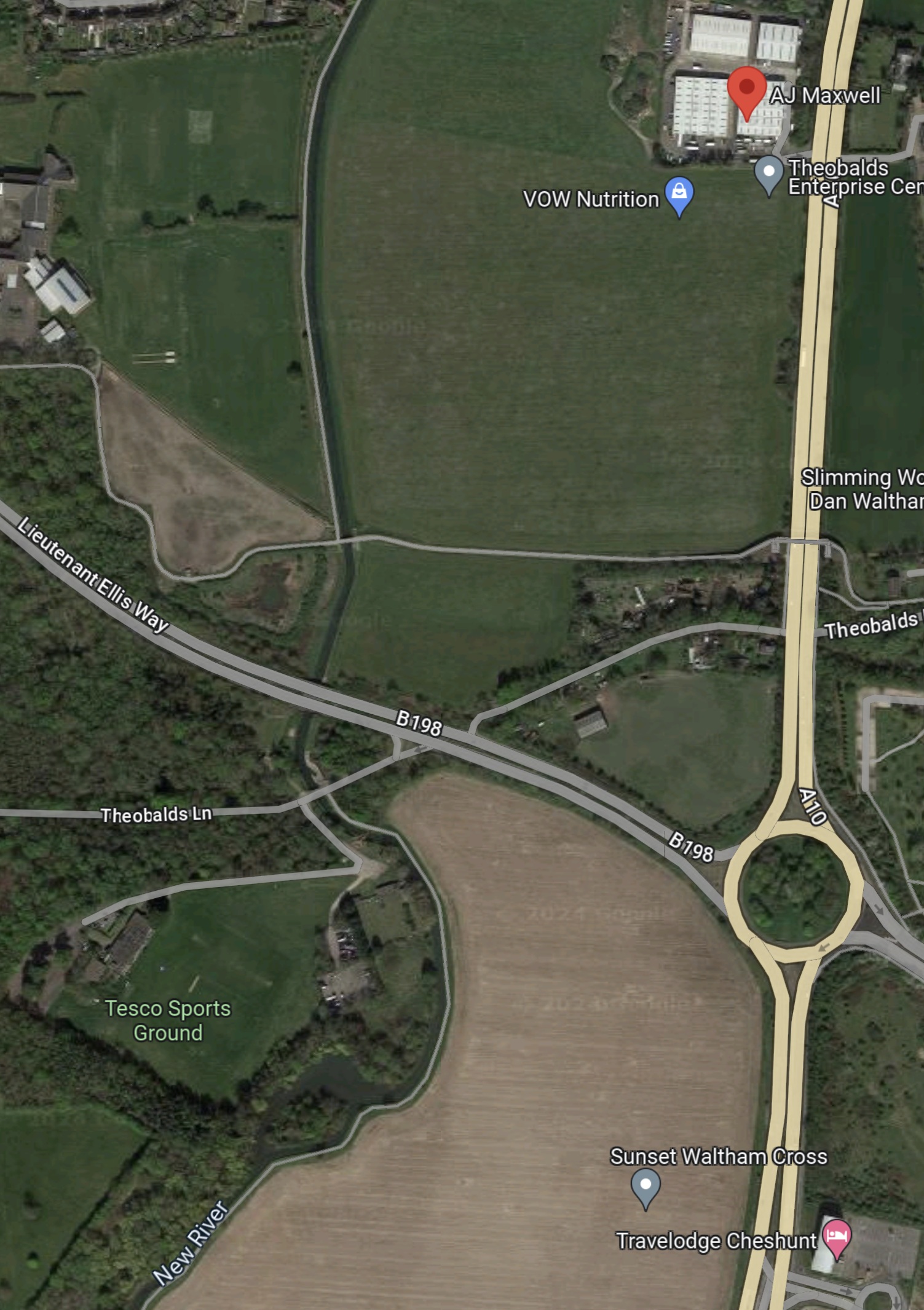
This is a Goggle Map of that area, when I searched for Maxwell’s Farm.
Note.
- The red arrow indicates the result of my search, which Google interpreted as A.J. Maxwell.
- The dual-carriageway road running down the East side of the map is the A10 between London and Cambridge.
- The A10 road joins the M25 at Junction 25.
- The arrow to the South-West of the roundabout indicates the new studios; Sunset Waltham Cross, which is being built.
- At the other side of the studio site, there is a label saying New River and this important piece of London’s water infrastructure can be traced to the top of the map.
- The other dual-carriageway road is the B198 or Lieutenant Ellis Way.
- A quick calculation shows that 33 acres is roughly a 365 metre square.
I would suspect that the data centre will lie somewhere between the A10, the B198 and the New River.
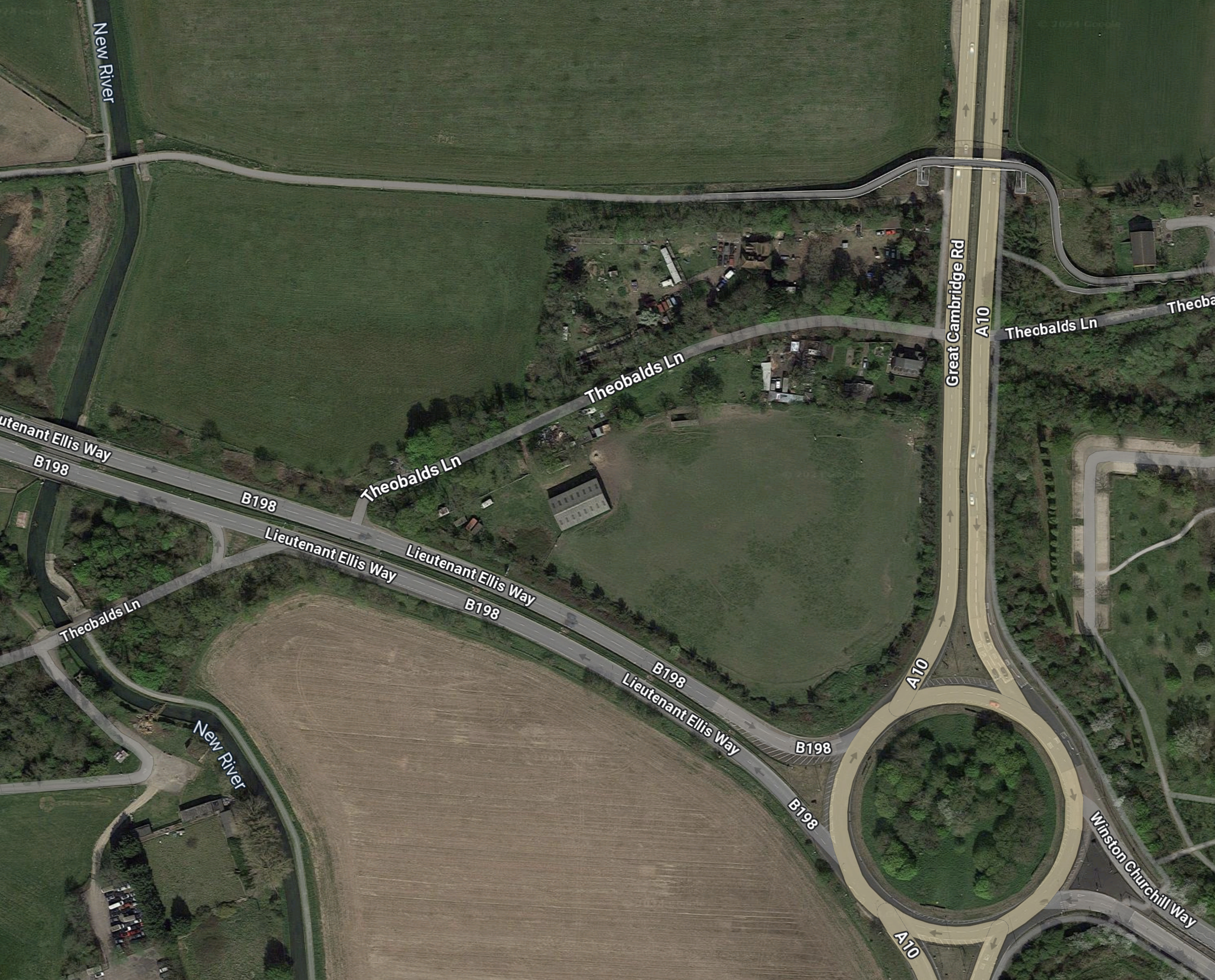
This Google Map shows the South-East corner of the site.
Note.
- There appears to be a lane running East-West, that crosses over both the A10 and the New River.
- Theobalds Lane appears to have some housing and possibly a farm.
- The smaller field by the roundabout appears to have some animals using it as grazing.
- The field between the East-West lane and Theobalds Lane appears to have a good crop of cereal.
The East-West lane would appear to be a possible Southern border of the site.
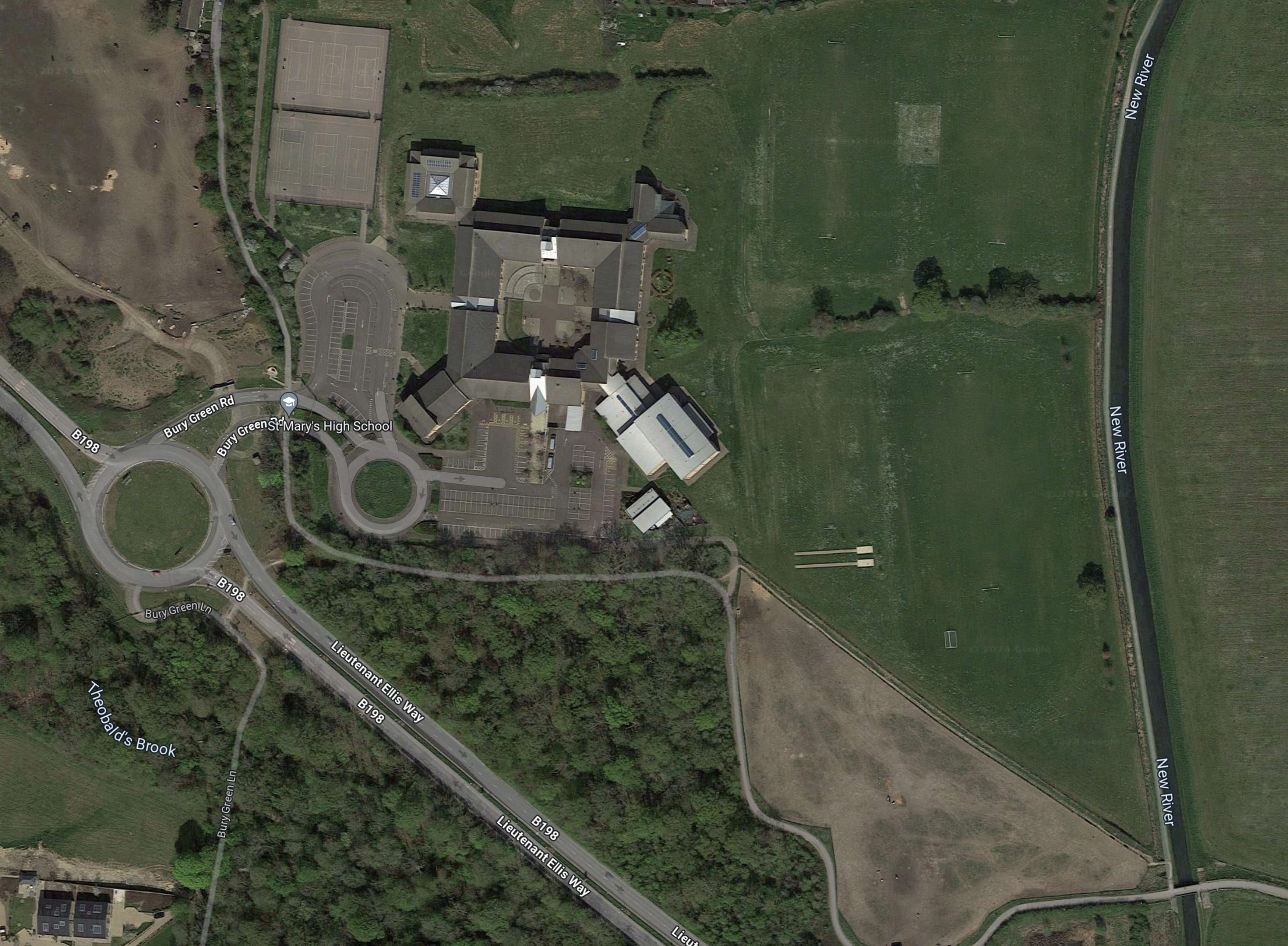
This Google Map shows where the East-West lane goes.
Note.
- The lane leads to Queen Mary’s High School.
- The school also has access from Lieutenant Ellis Way.
- The New River appears to form, the Eastern boundary of the school site.
- There are sports pitches between the New River and the school.
The New River looks to be the Western boundary of the Google site.
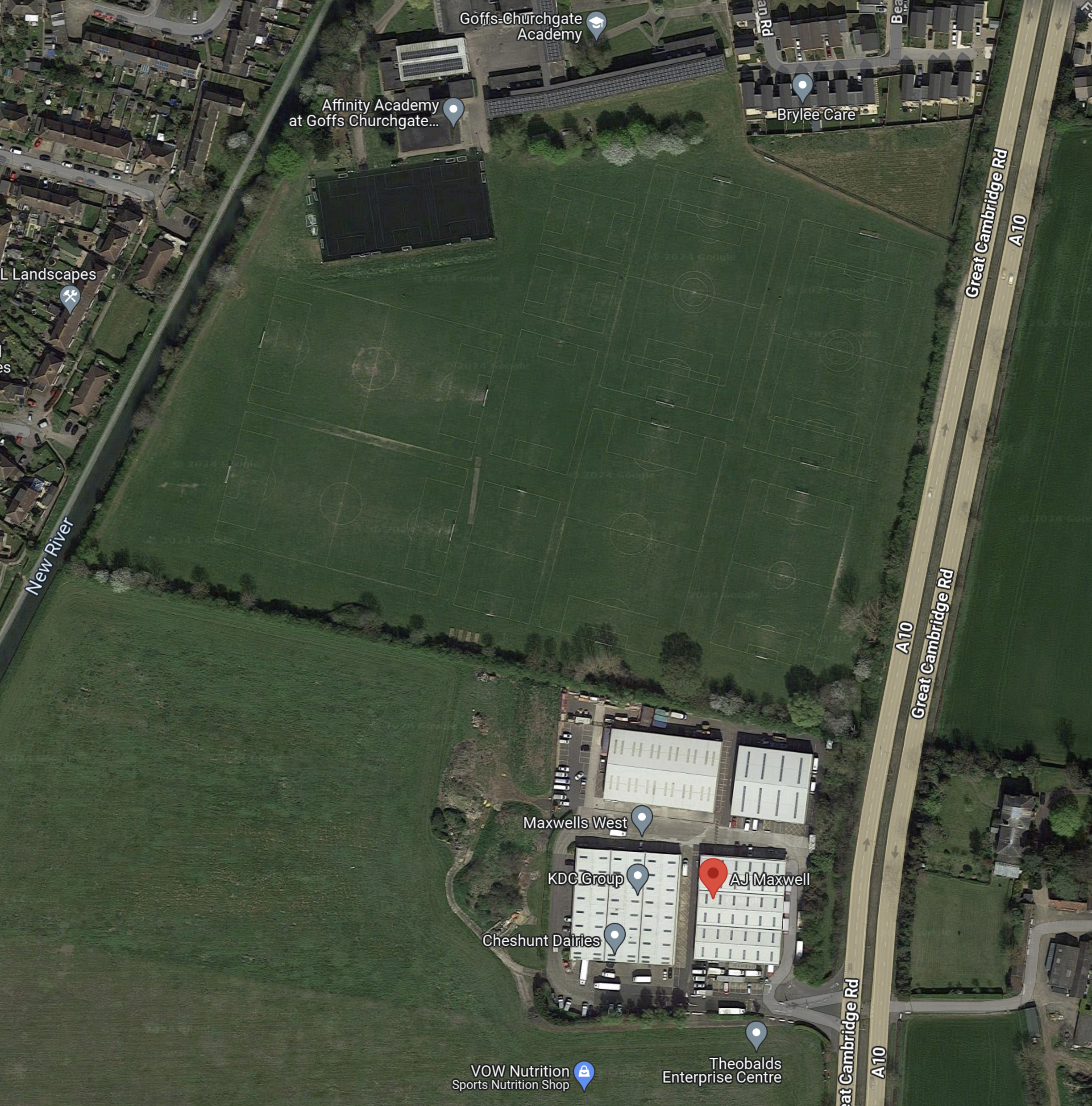
This Google Map shows around the red arrow from the Google search that led me to this area.
Note.
- A.J. Maxwell is identified by the red arrow in the Theobalds Enterprise Centre.
- The New River can be seen at the West of the map.
- A hedge runs roughly East-West to the North of the Enterprise Centre.
- North of the hedge are a number of football pitches, which appear to belong to the Affinity Academy at Goffs Churchgate.
The hedge could be the Northern boundary of the Google site.
This Google Map shows the area between the South of the Enterprise Centre and the East-West lane I picked out earlier.
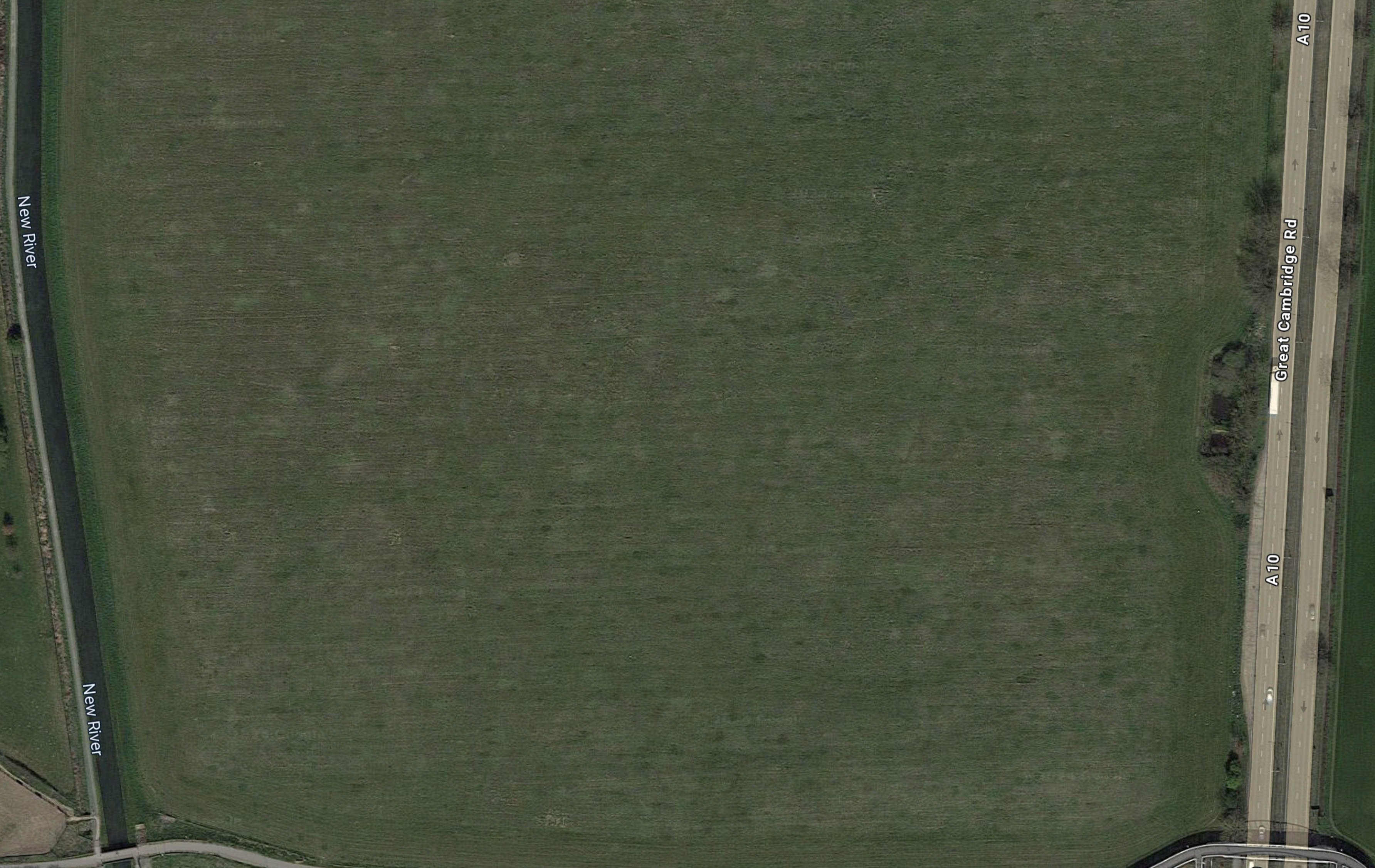
A crude measurement indicates it could be around 33 acres or slightly more.
This picture is used in nearly all the news reports about the Data Centre.

Note.
- Could that be the gentle curve of the New River on the left?
- With the high fence, the New River forms an almost-mediaeval defence against trespassers.
- There looks to be a dual-carriageway road running down the other side of the site, which would be the A10.
- Between the A10 and the site, there appears to be loots of dark areas, which I take to be car parks.
- Are the car-parking spaces in the front of the picture marked for those, who are disabled? There certainly appear to be chargers on some spaces.
I have a few thoughts.
The Relative Locations Of Google’s Data Centre And Sunset Studios?
This Google Map shows the two sites to the West of the A10.

Note.
- St. Mary’s High School is in the North-West corner of the map.
- Cheshunt Football Club is in the North-East corner of the map.
- The dual-carriageway A10 runs North-South on the map.
- I believe that Google’s Waltham Cross Data Centre will be located in the field to the West of the A10, at the top of the map.
- The A10 connects to the M25 at Junction 25, which is in the centre at the bottom of the map.
- In The Location Of Sunset Studios In Broxbourne, Sunset Studios are placed to the North West of the Junction 25 roundabout.
- Just as the A10 forms the Eastern boundary of both sites, the New River forms the Western boundary.
The two sites are close together between the A10 and the New River, separated by the dual-carriageway Lieutenant Ellis Way.
Will Google’s Data Centre Be Storing Data For Sunset Studios?
I’ve never worked in the production of films, but these days with digital electronic cameras, CGI, motion capture and other techniques, producing a film must need huge amounts of data storage.
- So have Sunset Studios outsourced their data storage needs to Google?
- Perhaps too, Sunset Studios found the local authority welcoming and this attitude was recommended to Google.
- Both sites will need local services like electricity, gas, sewage and water.
I suspect that there would be cost savings in construction and operation, if the two sites shared the utilities.
Providing Electricity And Heat For Both Sites
Consider.
- I estimate from information given in the Wikipedia entry for Google Data Centres, that a data centre needs between 10 and 12 MW.
- There is no obvious power source like offshore wind or a nuclear power station nearby.
- There is the 715 MW Rye House gas-fired power station, which is a few miles away.
- In Google Buys Scottish Offshore Wind Power, I talked about how Google had signed a Corporate Power Purchase Agreement to buy 100 MW from the Moray West offshore wind farm.
Google and Sunset Studios would also want an electrical and heat supply that is at least 100 % reliable.
Liverpool University had the same problem on their hundred acre campus in the centre of Liverpool.
- The University decided to build their own 4 MW Combined Heat and Power Unit (CHP), which is described in this data sheet.
- It is fired by natural gas.
- On their web site, Liverpool University state that their CHP can be adapted to different fuel blends. I take this includes zero-carbon fuels like hydrogen and carbon-neutral fuels like biomethane.
But given their location in Waltham Cross close to the Lea Valley, CHP units may have a use for their carbon dioxide.
This Google Map shows between Junction 15 of the M25 and Tomworld.

Note.
- Junction 25 of the M25, where it joins the A10 is in the South-West corner of the map.
- The sites of Google’s Data Centre and Sunset Studios can be picked out with reference to the previous map.
- Tomworld is in the North-East corner of the map.
- So why should Tomworld need a lot of carbon-dioxide?
This Google Map shows Tomworld.
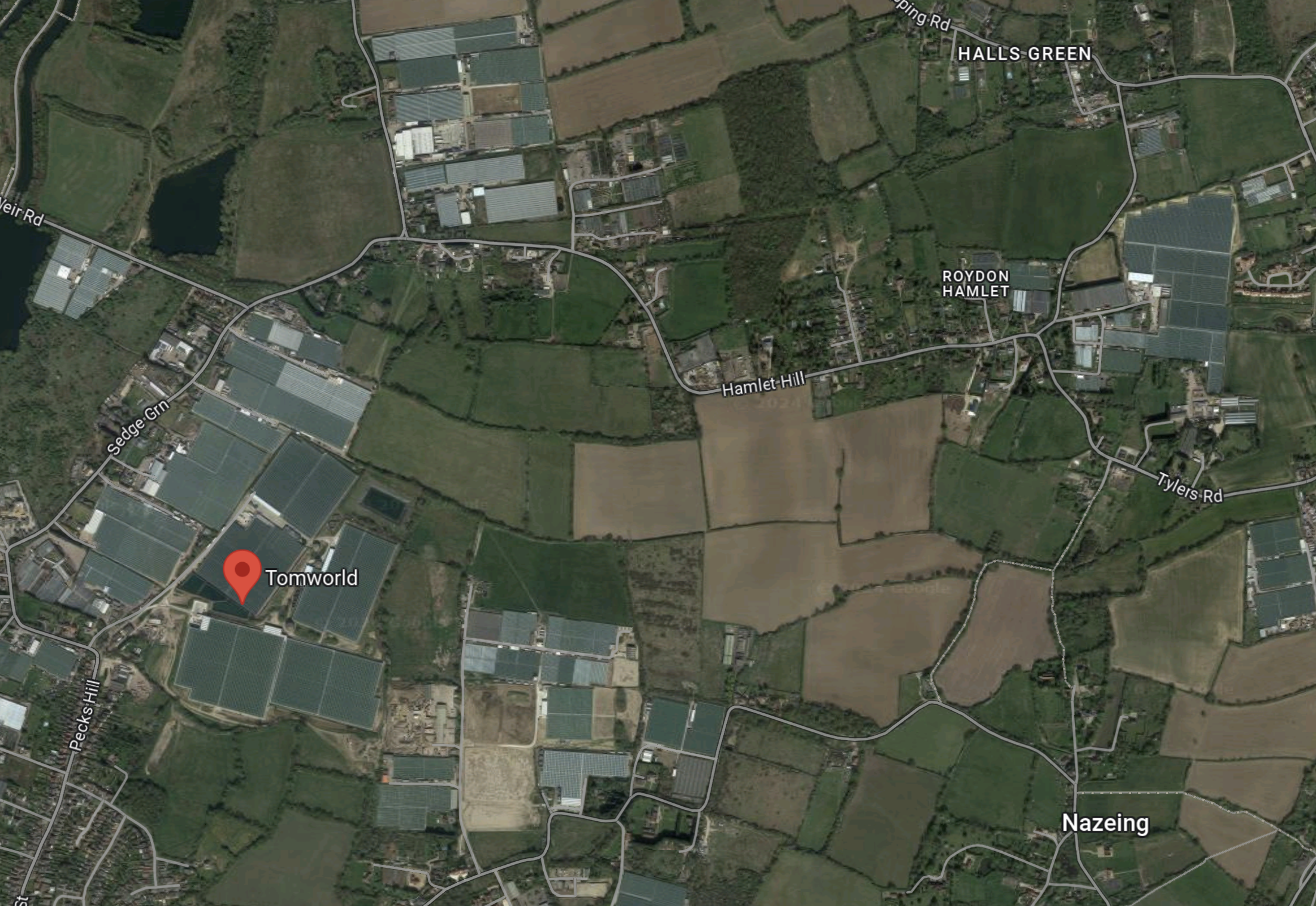
Note.
- This web page indicates what Tomworld do.
- They have 44 acres of glass growing tomatoes, about five miles to the North-East of Google’s Data Centre.
- The map has lots of other greenhouses.
I know of a guy, who has a large greenhouse, that grows tomatoes for the supermarkets.
- He heats the greenhouse with a gas-fired Combined Heat and Power Unit (CHP).
- The electricity produced runs his business.
- Any surplus electricity is fed into the grid.
- The carbon dioxide is fed to the plants in the greenhouse, which helps them grow quality tomatoes.
I just wonder, if carbon dioxide from CHP units at Google’s Data Centre and Sunset Studios could be used by the multitude of greenhouses in the Lea Valley.
Could A Carbon Dioxide Pipeline Be Built Along The M25?
This Google Map shows the Northern section of the M25, South of Waltham Cross.
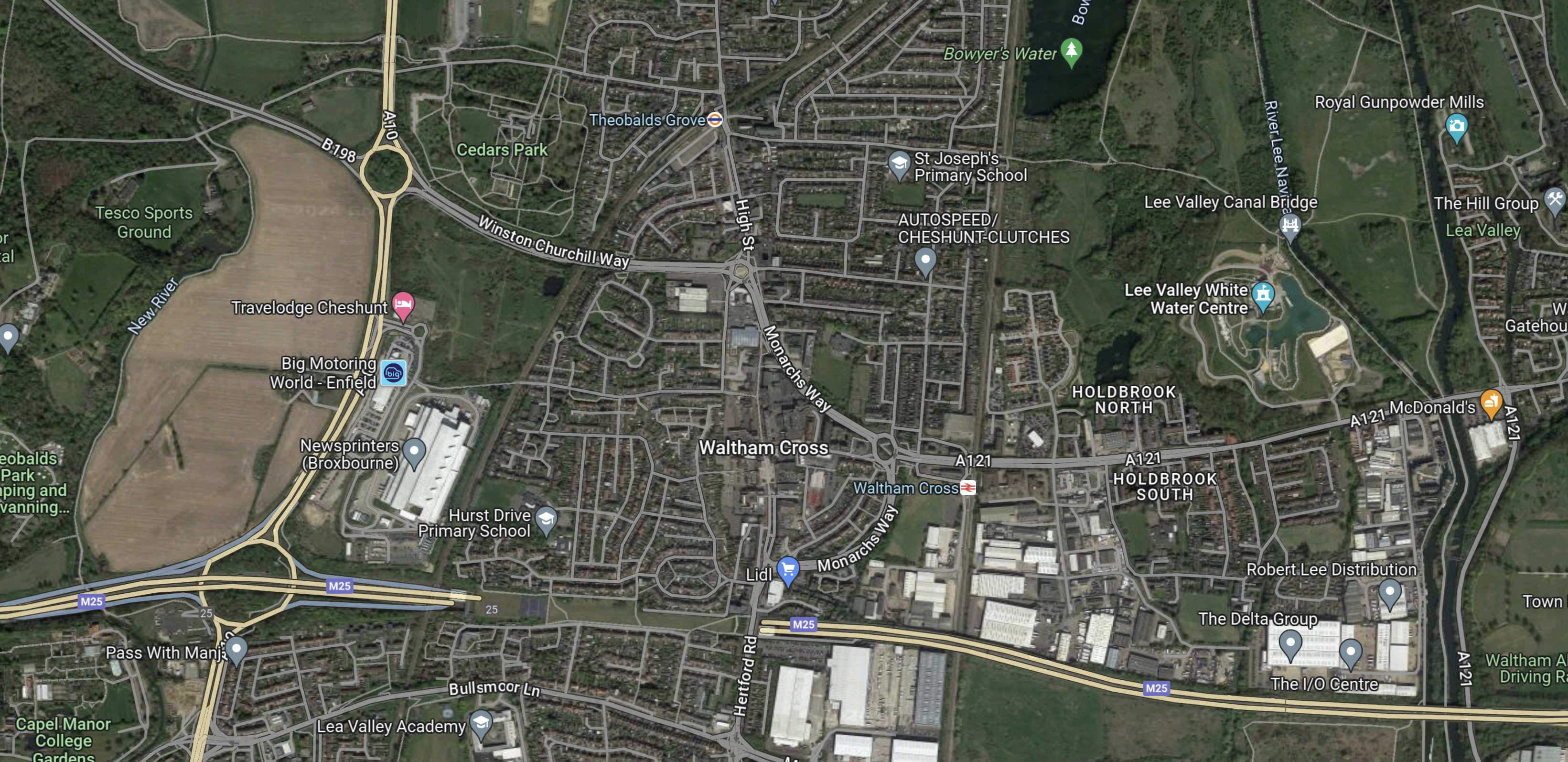
Note.
- The M25 running East-West across the bottom of the map.
- Junction 25 of the M25 in the South-West corner of the map.
- The A10 running North-South at the West of the map.
- Google’s data centre and Sunset Studio are to the West of the A10.
- The River Lee, which has numerous water courses is at the East of the map.
I wonder, if a carbon dioxide pipeline could be built along the M25 to connect the producers to those who could use it?
- It would not be a dangerous pipeline as carbon dioxide is a fire extinguisher.
- It wouldn’t be a huge pipe.
I think it would be possible.
Google’s Commitment To Being Zero-Carbon
This blog post on the Google web site is entitled Our $1 Billion Investment In A New UK Data Centre, has a section, which has a sub-title of 24/7 Carbon-Free Energy By 2030, where this is a paragraph.
Additionally, we’re also exploring new and innovative ways to use the heat generated by data centres, and this new facility will also have provisions for off-site heat recovery. Off-site heat recovery presents an opportunity for energy conservation that benefits the local community, as it allows us to capture the heat generated by the data centre so that it can be used by nearby homes and businesses. The data centre is also set to deploy an air-based cooling system.
If they are using off-site heat recovery, it would be logical to use waste carbon dioxide from CHPs to provide carbon dioxide for the local horticultural businesses.
Will Google Be Building A Vertical Farm Nearby?
In Schneider Electric: Vertical Farming – The Next Yield In Data Centre Sustainability, I noted that some data centres are paired with vertical farms to increase their sustainability.
Could Google be doing that in Waltham Cross?
- They will have a lot of waste heat.
- They will have a fair bit of carbon dioxide, which could be used to help plants grow.
- The local workforce probably contains a lot of experience of market gardening.
I like the idea of pairing a data centre and a vertical farm.
Public Transport Access
Consider.
- Increasingly, the cost of electric vehicles, medical problems and the UK economic situation are causing people to adopt a car-free lifestyle.
- After my stroke, my eyesight deteriorated such, that I am no longer allowed to drive.
- Others may live in one-car families and it may not be their’s to use every day.
- Or your car may just break down on the way to work.
For these and probably lots of other reasons, any large site employing a lot of employees, must have a valid way of getting there by public transport.
The nearest rail station to Google’s Data Centre and Sunset Studios is Theobalds Grove station.
This Google Map shows the roads between the sites and the station.
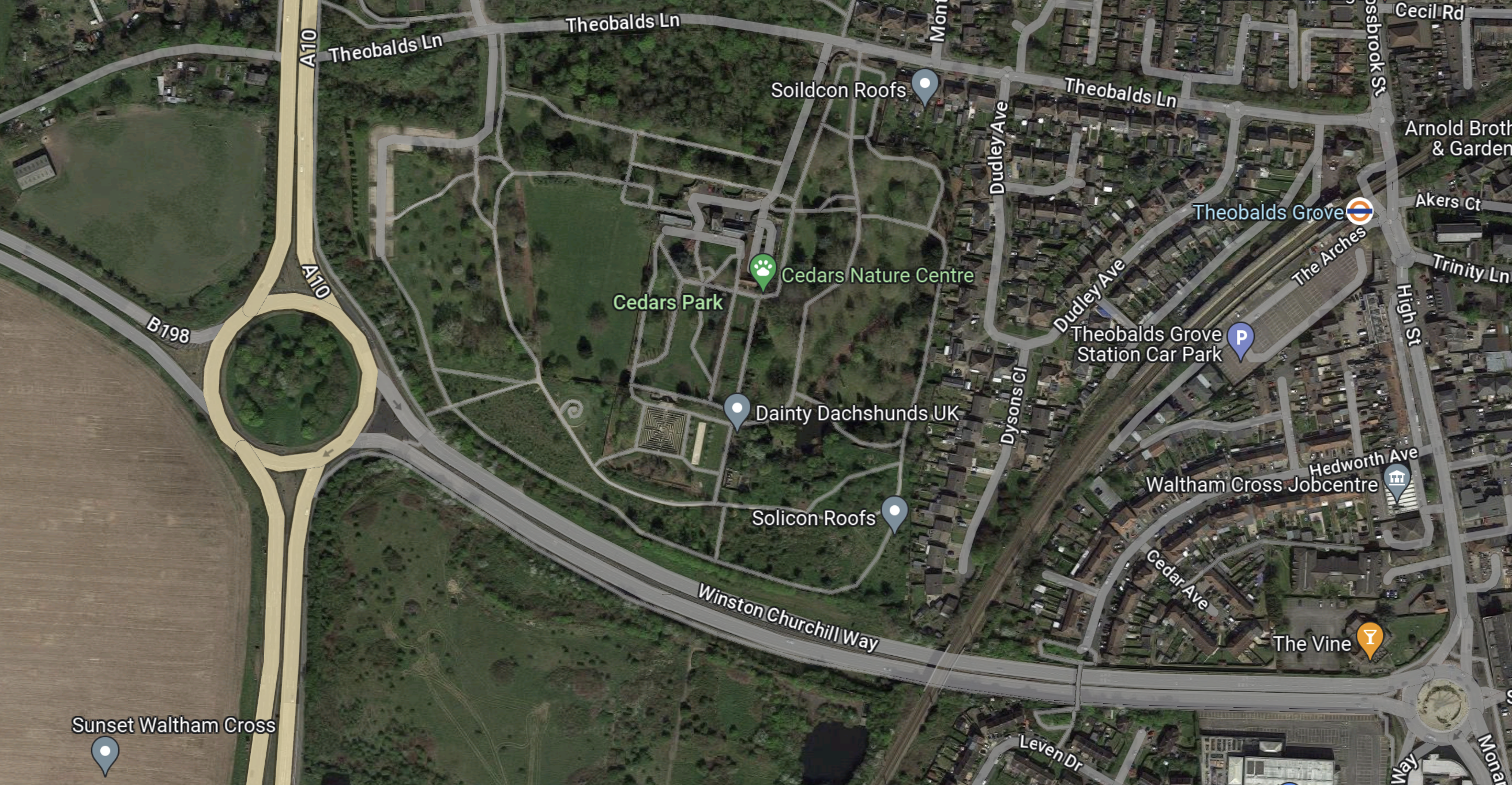
Note.
- The Sunset Waltham Cross label in the South West corner.
- Google’s Data Centre will be just off the map to the West of the A10.
- Theobalds Grove station is marked by the TfL roundel in the North-East corner of the map.
- There would appear to be no bus stops on Winston Churchill Way or the A10.
I walked South from the station to Winston Churchill Way, where I took these pictures.
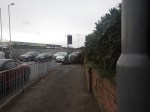

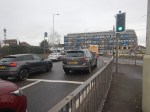

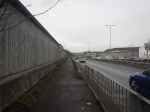
Note.
- At that point, I gave up because of the cold and pollution.
- It was also a Saturday morning about midday.
The route I took is certainly not an alternative route to get to Google’s Data Centre or Sunset Studios.
A Possible Station At Park Plaza North
This article on the BBC is entitled Broxbourne: Two New Stations Planned.
This is the sub-heading.
Two new train stations could be built in Hertfordshire if plans to tighten planning policies are adopted.
This is the first paragraph.
Broxbourne Borough Council said stops at Park Plaza North – between Turkey Street and Theobalds Grove London Overground stations – and Turnford on the London to Bishop’s Stortford route would be subject to a consultation.
Later the BBC say that Park Plaza North station will be South of the A121 Winston Churchill Way near Waltham Cross
This Google Map shows the area South-East of the roundabout, where Winston Churchill Way meets the A10.
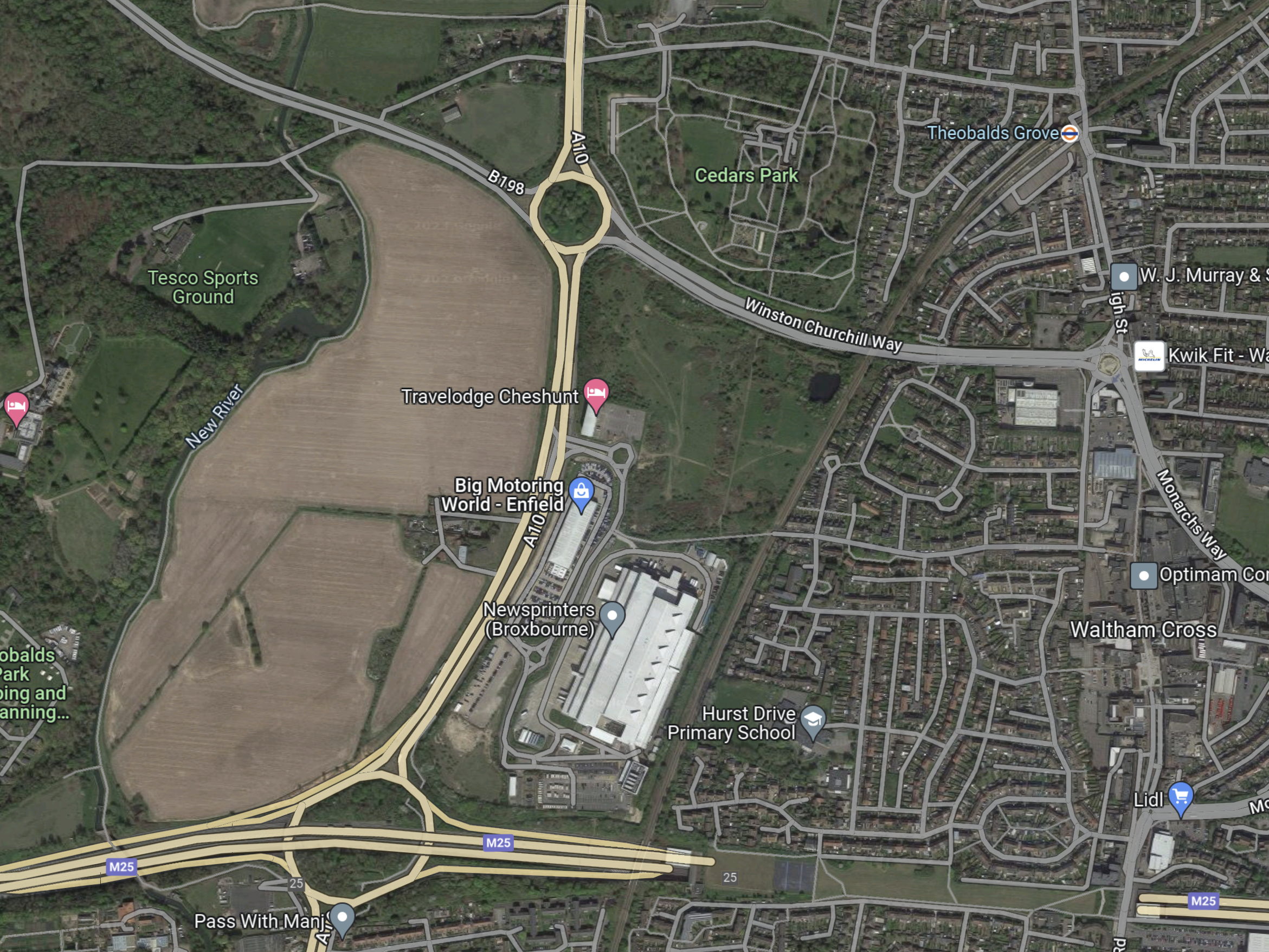
Note.
- The green patch of land to the South-East of the roundabout where Winston Churchill Way meets the A10 appears to be ripe for development.
- Looking at the green patch with a higher resolution, the land is little more than high class scrub beloved of newts.
- The London Overground line to Cheshunt runs down the East side of the site.
- To the North, the London Overground crosses Winston Churchill Way to get to Theobalds Grove station.
- To the South, the London Overground crosses the M25 to get to Turkey Street station.
- There is a lane running East-West along the South edge of the site, which crosses the railway in a level crossing.
This picture clipped from Google StreetView shows the level crossing.
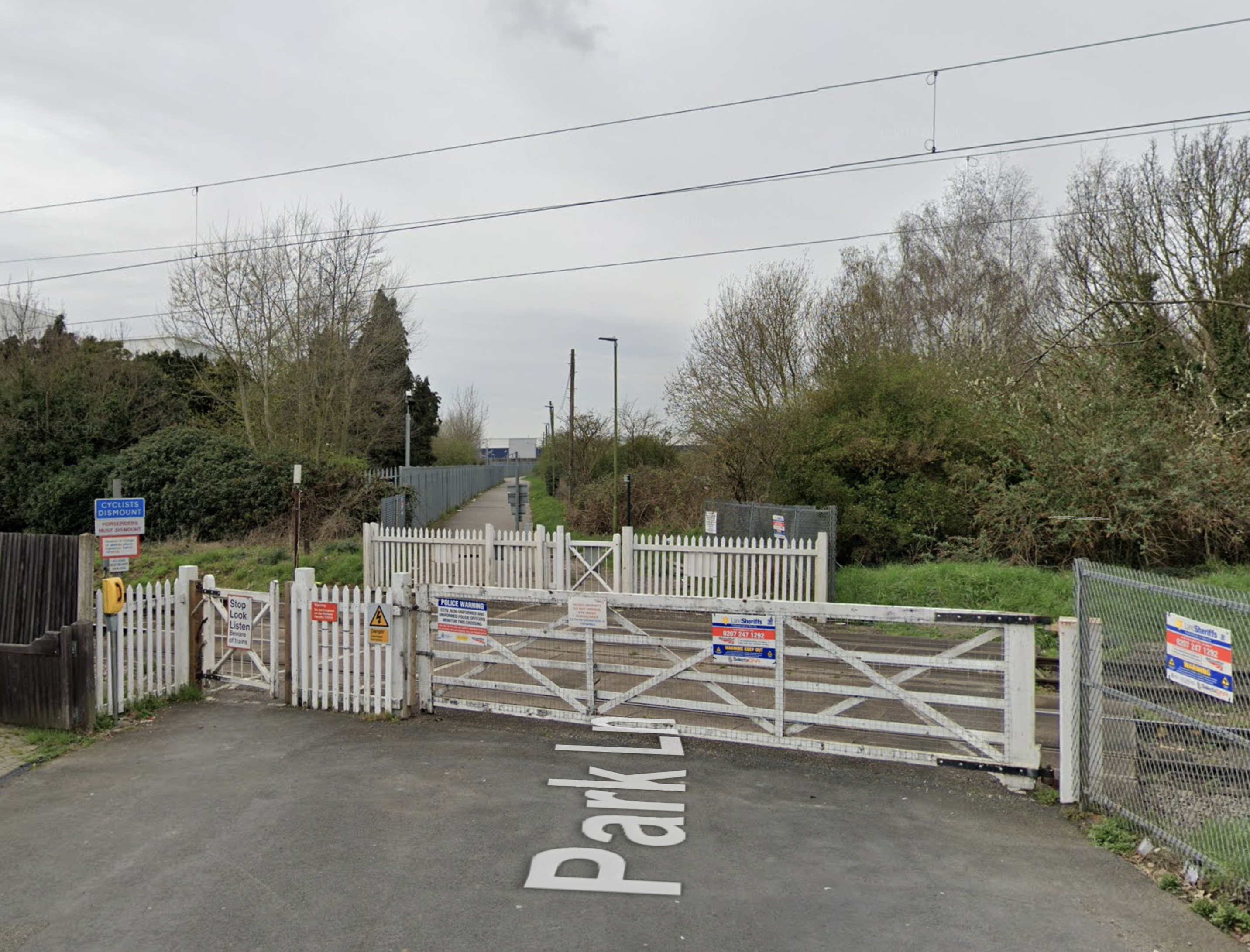
This is certainly one, that drivers dread.
This GoogleMap shows the level crossing and a stretch of the London Overground.
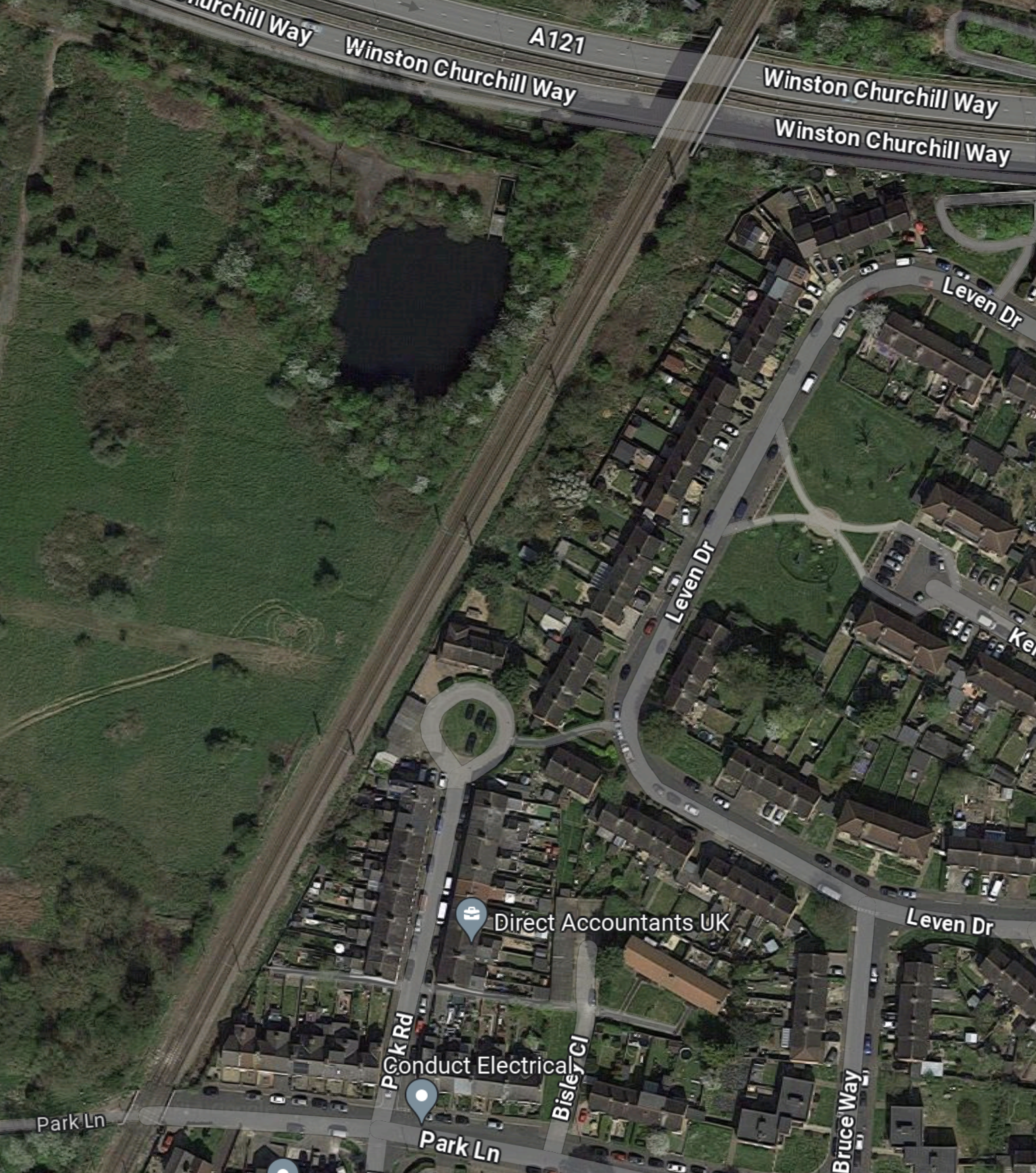
Note.
- The level crossing is in the South-East corner of the map.
- There isn’t much space to put a London-bound platform on the East side of the tracks, South of the Park Road circle.
- There is plenty of space to put a Cheshunt-bound platform on the West side of the tracks.
- North of the Park Road circle, there would appear to be space for two platforms.
It will need a lot of ingenuity to provide a safe and efficient solution to the problems of the level crossing and fitting a station in this limited space.
The first thing I’d do, would be to dig an underpass for pedestrians and cyclists to connect the two halves of Park Lane.
An Excursion To Retford And Worksop
Today’s excursion was designed to be simple.
- Take an LNER train or a Hull Train to Retford station.
- Travel to Worksop station, have a look and take a few pictures.
- Travel back to Retford and take the first train back to London.
- In one if my two visits to Retford, have a look and take a few pictures.
- Talk to passengers and railway staff about what they felt about FirstGroup’s Proposed Sheffield Service, that I wrote about in FirstGroup Applies To Run New London To Sheffield Rail Service.
These were my thoughts and observations.
LNER’s Improved Ticketing
These pictures show the tickets that I bought.




Note.
- I bought my ticket to Retford from the Ticket Office at King’s Cross station.
- The ticket seller gave me a well-designed folder for the tickets.
- I was also able to buy my return ticket between Retford and Worksop on the LNER train to Retford. I’ve tried doing that before and it wasn’t allowed.
Making ticketing easier must be a good thing for passengers, staff and LNER.
£24.75 With A Railcard From King’s Cross to Retford
- The second picture shows my ticket to Retford.
- It cost me just £24,75 with my Senior Railcard.
- I also bought it about half-an-hour before the train left.
- I bought the ticket in the Ticket Office.
- I got a forward-facing window seat with an unrestricted view.
How much would the 145 mile and nearly three-hour journey have cost in a car?
I Missed My Connection At Retford Station
These pictures show my train to Worksop station in Platform 3 at Retford station, as I approached from the South.


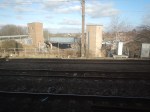
Note.
The Northern Trains’s Class 195 train arriving on Platform 3 on the Sheffield and Lincoln Line.
- I arrived in Platform 2 at Retford station at 12:50
- There were three lifts or sets of stairs to negotiate between Platform 2 and Platform 3.
- It must take at least five minutes between the two platforms.
- One of the lifts was out of order and was being serviced by an engineer.
- There was no way, I could have caught the connection, which left at 12:51.
- At least one other passenger, had to wait the one hour and fifteen minutes I waited for the next train, which arrived at 14:03.
I feel that there needs to be a timetable adjustment here, so that as many passengers as possible avoid the long wait.
Retford Station
At least the long wait allowed me to take a lot of pictures and have a cup of coffee in the Costa Coffee on Platform 1.
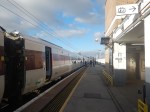
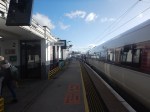
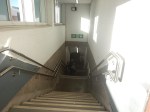
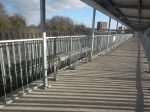
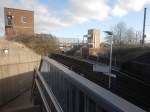
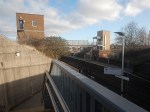

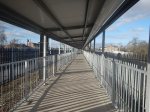
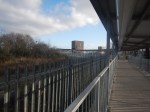

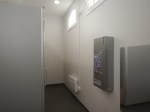
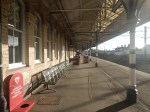
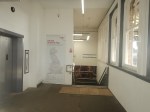

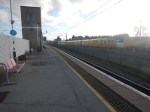
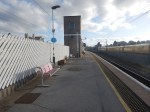
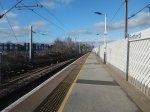
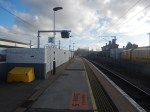
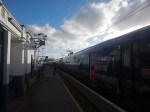
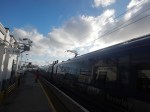
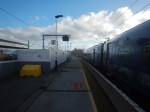
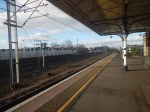
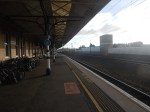
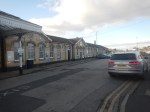
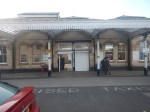
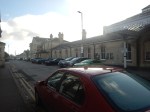
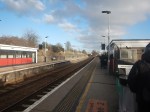
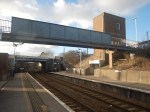
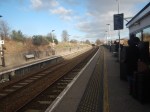
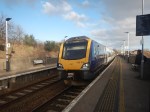
Note.
- The toilets were immaculate.
- The Costa Coffee had friendly and professional staff, but only rudimentary gluten-free options.
- The station is fully step-free with four lifts.
- Platforms 1 and 2 on the East Coast Main Line can take a pair of five-car Class 802 trains, as Hull Train demonstrated.
- The Hull Train in Platform 2 was using the electrification.
- The station is in very good condition.
- The station is Grade II Listed.
This Google Map shows the station.
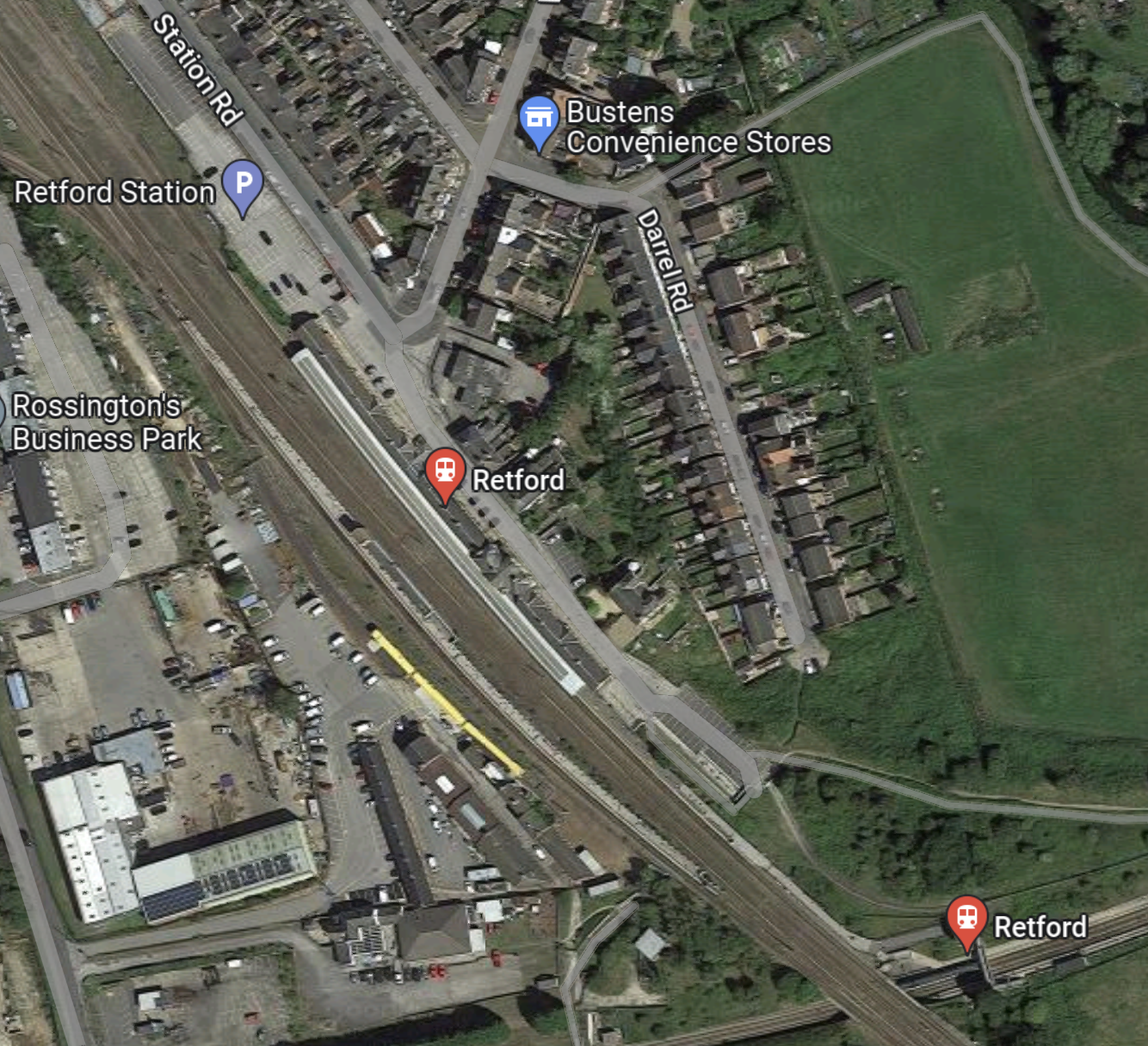
Note.
- The red arrow in the South-East corner are the low-level Platforms 3 and 4.
- The red arrow in the middle marks the low-level Platforms 1 and 2.
- Network Rail’s yellow Mobile Maintenance Train is visible in the siding opposite Platform 2.
- There is space around the platforms.
The station may have development possibilities. Especially, as there are signs of To Let over some of the buildings.
Ambitious Renewable Energy
Retford and Worksop are only eleven minutes away but there were a large wind farm and solar farms between the two stations.
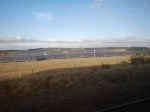
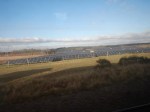

Note.
- I was a bit slow on the uptake and missed the large wind farm.
- The strong sun was reflecting on the windows.
- They weren’t the best of photographs.
I had intended to take more and better pictures on the way back, but circumstances intervened.
This Google Map shows the wind and solar farms.

Note.
- The Sheffield and Lincoln Line going across the map.
- There are solar panels North and South of the railway.
- This is the Walkers Wood Solar Farm, which has a nameplate capacity of 27 MW.
- H M Prison Ranby is at the top of the map.
- The scars of the wind turbines are to the West of Babworth and the crematorium.
- At the moment, I can’t find any reference to the wind farm.
These wind and solar farms are probably a classic place to position a battery.
Prisons And Recycling
Worksop Station
I took these pictures during the time I spent at Worksop station.
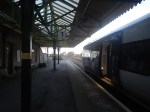
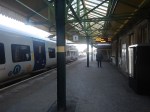
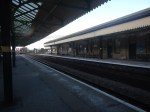
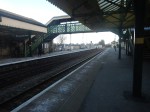




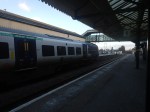
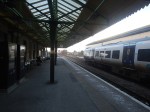
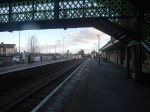
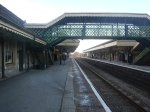
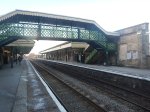



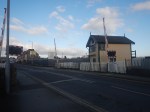
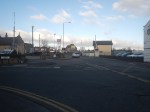

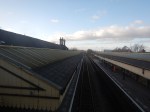

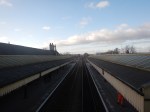

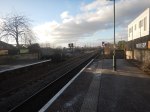
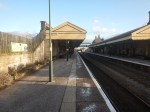
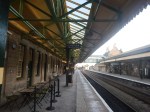
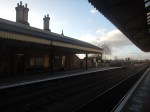
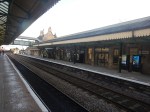
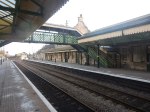
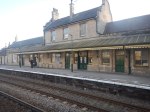

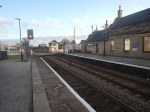
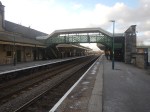

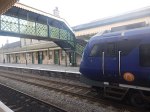
Note.
- The station is not step-free, although you can cross the tracks using the level-crossing.
- The station has a pub and a cafe.
- There are train services to Leeds, Lincoln, Nottingham and Sheffield.
- The station is in very good condition.
- The station is Grade II Listed.
- The platforms are long enough to handle a Class 802 train without any modification.
- Hull Trains could run their Sheffield service to Worksop station without any new infrastructure.
- Lidl are developing a site on the other side of the level crossing.
- There are 100 car parking spaces.
The station may have development possibilities.
Worksop Station Cafe
These pictures show the Worksop station cafe.
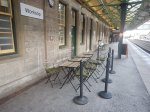


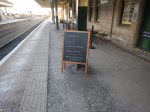
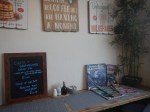


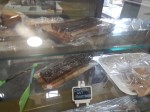
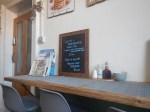
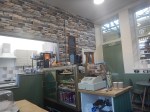
Note.
- It is run by two ladies; Jo and Lyndsey.
- As one is coeliac, there were lots of gluten-free cakes.
- It was cosy and warm on a cold day.
This is definitely one of the better station cafes.
A Double Incident
My journey back to the capital was I suspect untypical.
- I’d arrived at Worksop at 14:14 and finally left at 16:38 on a train for Retford and Lincoln.
- The delay was because someone had been hit by a train between Barnsley and Sheffield, which resulted in cancelled trains.
- When I arrived at Retford at 16:49, there was an LNER train in the platform.
- It was the 15:15 from Leeds and I was told by LNER staff to catch it and get my ticket on the train.
- The train finally left Retford for London 69 minutes late at 17:07.
- We arrived in Peterborough at 19:27, where the train was now 170 minutes late.
- The delay was because someone had been hit by a train at Newark, which results in delays everywhere.
- LNER decided to give up on the train and all passengers were put on other trains.
- I got on the 14:30 from Edinburgh, which arrived in King’s Cross at 20:22, which was 96 minutes late.
Worse things happen at sea.
I am adding this a day after my trip to the North.
This article on the BBC is entitled ‘Major Disruption’ After Person Hit By A Train.
These are the first three paragraphs.
Train services on the East Coast Main Line have been seriously disrupted after a person was hit by a train in North Yorkshire.
Network Rail said the incident happened just before 07:00 GMT between York and Thirsk, with emergency services attending the scene shortly afterwards.
The line was blocked, resulting in delays and cancellations.
Three in two days us three too many.
The Proof Of The Pudding
In A December Treat For £3.70, I talked about buying English strawberries in Marks & Spencer in December.
I said I’d post again, when I ate them.
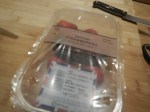
This picture shows the pack on a plate.

And this a close-up of a single strawberry, which cost 37 pence.

I’m afraid the photos don’t do justice to their taste, as they were definitely some of the best strawberries, I’ve ever eaten.
I did buy another two punnets this morning, to see me through the weekend.
Dyson Farming has a web page, which describes how they produce the strawberries.
The page contains an explanatory video, which is well worth a watch.
Will developments like this be the future of farming?
A December Treat For £3.70
T am not a great person for sugary treats. But I do like strawberries and regularly buy a punnet, when they are in season, cut the green off and eat them one after another.
But in my seventy-six years, I’ve never eaten English strawberries in England in December, although I must have eaten strawberries in December in warmer climes, like Australia, Gambia or South Africa
Until today, when I bought this punnet in Marks and Spencer on Moorgate in the City of London.


Note.
- The strawberries are from Dyson Farming in Lincolnshire.
- The strawberries are the fourth item in the bill in the first picture.
- The label says that they are grown by innovative methods for outstanding depth of flavour.
- They look as if they’ve been individually vacuumed.
I’ll post again when I’ve eaten them!
My Alcohol-Free And Gluten-Free Real Ale Has Arrived
I have been drinking Adnams Ghost Ship 0.5% beer for some years now.
It should be noted that as a coeliac, I have to drink gluten-free beer and because I am on Warfarin, I can’t drink much alcohol.
My body has certified the beer as gluten-free, ever since it was released a few years ago.
On Saturday, my first consignment of the new Ghost Ship 0.5% beer arrived, which is properly certified as gluten-free.
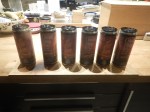
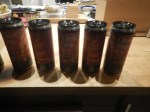
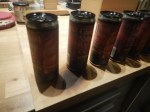


This paragraph from this page on Adnams web site describes what they mean by gluten-free.
Ghost Ship is inspired by tall tales of the ghostly ships that haunted the shores of Walberswick. The seeds of these stories were likely sown by smugglers in a plot to keep the Suffolk coast clear. In contrast, Ghost Ship 0.5%’s creative new look invites you in, flying the flag for low-alcohol beer. It has been painted by a talented local artist with a love of that very same coastline. Adnams invested in a de-alcoholiser specifically to craft Ghost Ship 0.5%. This reverse osmosis plant allows the team to brew and ferment Ghost Ship 0.5% like all our other beers and then, at cold temperatures, remove the alcohol. It leaves all the lovely flavours from a full fermentation in the beer, allowing it to sail away with those original characteristics. Our Ghost Ship 0.5% 330ml cans are validated as gluten free. When producing Ghost Ship 0.5%, we use an enzyme to help with filtration when using our de-alcoholiser. This breaks down gluten-type molecules which helps with the process, reducing gluten content to below 20 parts per million (ppm). Only foods that contain 20ppm or less can be labelled as ‘gluten-free.’
I’ll go along with that!
But then I’ve been drinking Adnams Ghost Ship 0.5% beer for at least five years and I’ve never had a reaction.
Vertical Farming Consortium Secures UK Government Funding To Advance Low-Emission Food Production Using Energy Storage
The title of this post, is the same as that of this article on Renewable Energy Magazine.
This is the sub-heading.
A consortium of four British companies, comprising UK Urban AgriTech (UKUAT), Intelligent Growth Solutions Ltd, RheEnergise and James Hutton Institute has received a grant from the UK Government to advance the development of low-carbon and low-cost food production by co-locating renewable energy with vertical farms.
These paragraphs outline the project.
The V-FAST consortium’s £488,000 project will explore how co-locating RheEnergise’s HD Hydro Energy Storage system with vertical farms can support a low-emission route to growing protein-rich crops in a controlled environment.
Last year, V-FAST – Vertical Farming And Storage Technologies – started investigating sites in Scotland’s Central Belt for the location of Scotland’s next generation of hectare+ scale vertical farms, powered by 100 percent renewables and using RheEnergise’s High-Density Hydro energy storage system. These farms would provide locally produced fresh foods (salads and fruits) to over 60 percent of the Scottish population and help meet the Scottish Government’s ambitions to produce more homegrown fruit and vegetables. These site investigations in Scotland continue.
Now, with the Innovate UK and BBSRC funding as part of the Novel Low Emission Food Production Systems competition, V-FAST will broaden the area for its site feasibility studies to across the UK, using GIS to identify and rate suitable locations for vertical farms that are co-located with renewables and High-Density Hydro energy storage. As part of the project, V-FAST will also undertake crop trials to establish optimal climate recipes in terms of their energy efficiency relative to produce metrics (e.g. protein per kWh or kg of CO2e).
It certainly sounds unusual to pair vertical farming with energy storage, but if it works, why knock it?
RheEnergise’s HD Hydro Energy Storage system is effectively pumped storage hydroelectricity using a fluid with a specific gravity of 2.5.
So instead of needing mountains to store energy, it can use medium-sized hills.
The Wikipedia entry for vertical farming, introduces the concept like this.
Vertical farming is the practice of growing crops in vertically stacked layers. It often incorporates controlled-environment agriculture, which aims to optimize plant growth, and soilless farming techniques such as hydroponics, aquaponics, and aeroponics. Some common choices of structures to house vertical farming systems include buildings, shipping containers, tunnels, and abandoned mine shafts.
As both HD Hydro Energy Storage system and vertical farming seem to need some form of vertical space, can colocation be advantageous in terms of cost?
Wikipedia also says that vertical farms also face large energy demands due to the use of supplementary light like LEDs.
So could V-FAST be an unusal marriage made in heaven of plant science and energy storage?
Heat And The City
As I do on many Saturdays, I took the bus to Moorgate to have a late breakfast and do some food shopping in the Marks & Spencer department store.
To say it was hot would be an understatement and it must have been over thirty, so I retreated into an air-conditioned restaurant for my brunch, with my son and a friend.
I know that area well and although, I’m normally there on a weekday, I’ve never seen so much display of female flesh, with bare shoulders, cleavage and tummies everywhere. At least some were wearing white, which surely was prudent, but others were suffering in black and other darker colours.
After eating, I did my shopping.
I didn’t need much, but I did need some beer. As I’d miscalculated my consumption in the hot weather, it was a priority.
At home, I generally drink Adnams 0.5% alcohol Ghost Ship, which my body attests to be gluten-free. Normally, the store stocks it, but I couldn’t find any, so I asked an assistant, who was restocking the shelves. She said that they didn’t have any, but they did have the Adnams-brewed M & S own-brand, of which I’ve drunk dozens of bottles and my body also attests is gluten-free. So a couple of bottles, went into my shopping basket.
Interestingly, the assistant was rearranging shelves and it appeared, she was moving zero-alcohol bottles from the floor into the refrigerated end of a large display.
Could the heat be creating a high demand for customers needing to drink something to cool down? And many felt that zero-alcohol beer was acceptable in the heat of the City.
On Monday, I went back to take this picture of the display.

Note the Marks & Spencer own label brewed by Adnams in the middle!
And this was the price label for the beer.
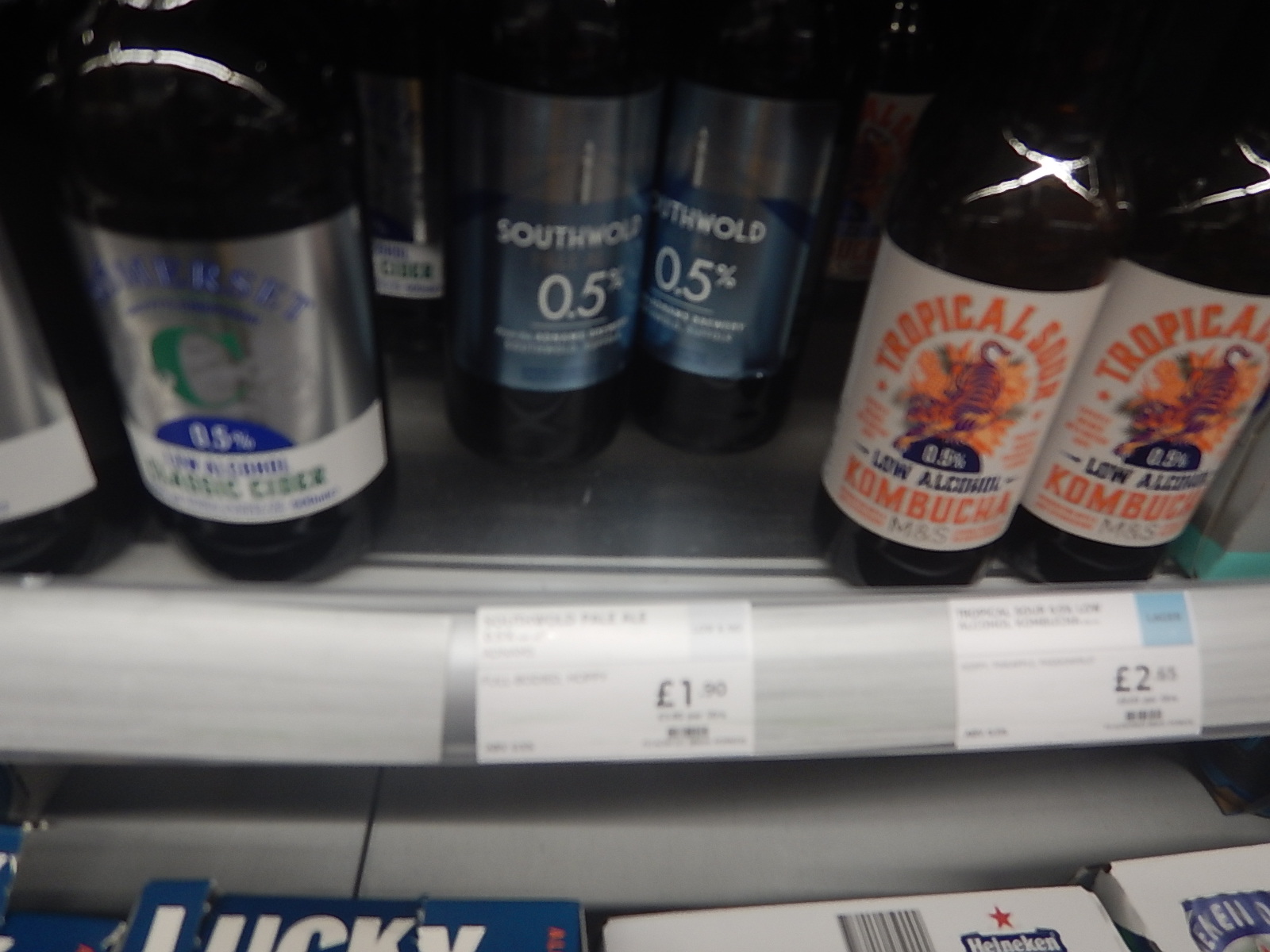
No Alcohol – No Gluten – £1.90 a bottle – What more can a coeliac, who’s on Warfarin after a stroke need?
Gluten-Free Afternoon Tea On Oxford Street
I spitted this sign outside Marks & Spencer on Oxford Street.

I wonder, if this is going to be offered in all the larger stores.
Saved By A Beer?
Last night, I was feeling distinctly unwell. My left foot was itching like mad and I couldn’t walk without hanging onto the furniture.
I decided to take serious action.
- I took off my left sock and plastered it with Body Shop Hemp foot protector, which usually stops the itch.
- I also drunk a bottle of 0.5 %-alcohol Ghost Ship from Adnams.
- The beer went down quickly and cured the unsteadiness.
Twenty minutes later my foot was back to normal.
I really should get hold of this unsteadiness, as I’m sure it’s caused a couple of falls and visits to hospital.
It should be noted that yesterday, I’d been drinking tea all day, as I often do.
Is it just that I get dehydrated very quickly?
A Walk Over Wandsworth Bridge – 25th July 2023
This article on the BBC is entitled Wandsworth Bridge Closes For 10 Weeks Of Repairs.
This is the sub-heading.
A 10-week closure of Wandsworth Bridge for “essential safety repairs” has begun, Wandsworth Council says.
These are the first three paragraphs.
The authority added that the work was needed “to safeguard the long-term future of this key river crossing”.
Transport for London (TfL) has warned passengers that bus services which use Wandsworth Bridge will be diverted or stop short of normal destinations.
It added that the bridge would remain open for pedestrians, while cyclists can cross if they dismount.
So I went to have a look, starting at Wandsworth Town station.
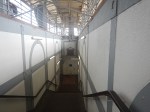
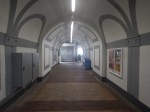
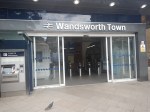
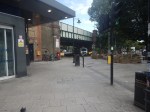
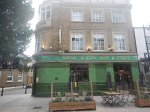
It is a station, that needs a single lift and perhaps a small amount of refurbishment.
I walked from the station and over Wandsworth Bridge and along Wandsworth Bridge Road.
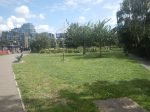
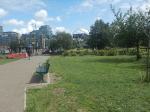

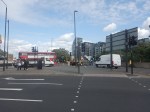
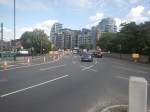
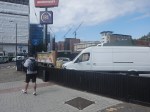
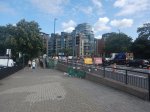


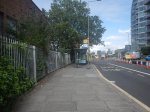

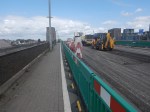
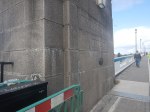
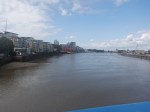
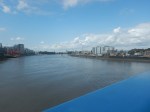
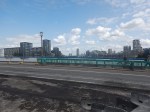
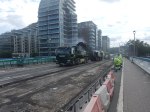
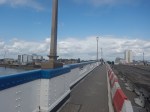
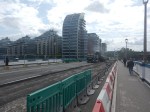

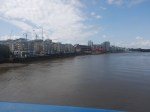
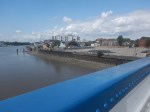
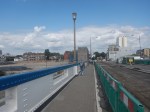
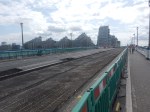
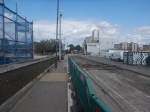
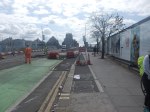
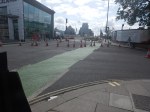
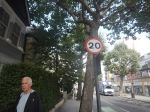
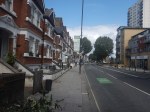

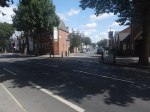



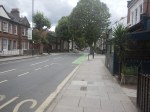
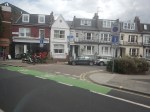
Note.
- There were several restaurants and cafes.
- It was a level walk.
- It looks like the Council was taking the chance to resurface the bridge.
- Along Wandsworth Bridge Road, drivers were not keeping to the 20 mph speed limit.
Some cyclists were still cycling on the bridge.
Il Pagliaccio Restaurant
I had lunch in the Il Pagliaccio Restaurant.
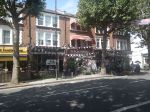



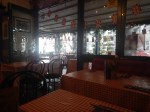
It was a typical friendly Italian restaurant, that served gluten-free food.
 The Anonymous Widower