Australian Mining Billionaire Touts A Green Revolution In U.S. Coal Country — With Skepticism Trailing Close Behind
The title of this post, is the same as this article on Forbes.
It is a definite must-read about Andrew ‘Twiggy’ Forrest, making one of the most difficult hydrogen pitches in the world, to coal miners in West Virginia.
Perhaps we need Mr Forrest to convince the RMT, that their views are wrong and so nineteenth century.
Volvo Trucks Showcases New Zero-Emissions Truck
The title of this post, is the same as that of this press release from Volvo Trucks.
This is the first paragraph.
Imagine a truck that only emits water vapor, produces its own electricity onboard and has a range of up to 1 000 km. It’s possible with fuel cells powered by hydrogen, and Volvo Trucks has started to test vehicles using this new technology.
This picture shows one of the trucks.
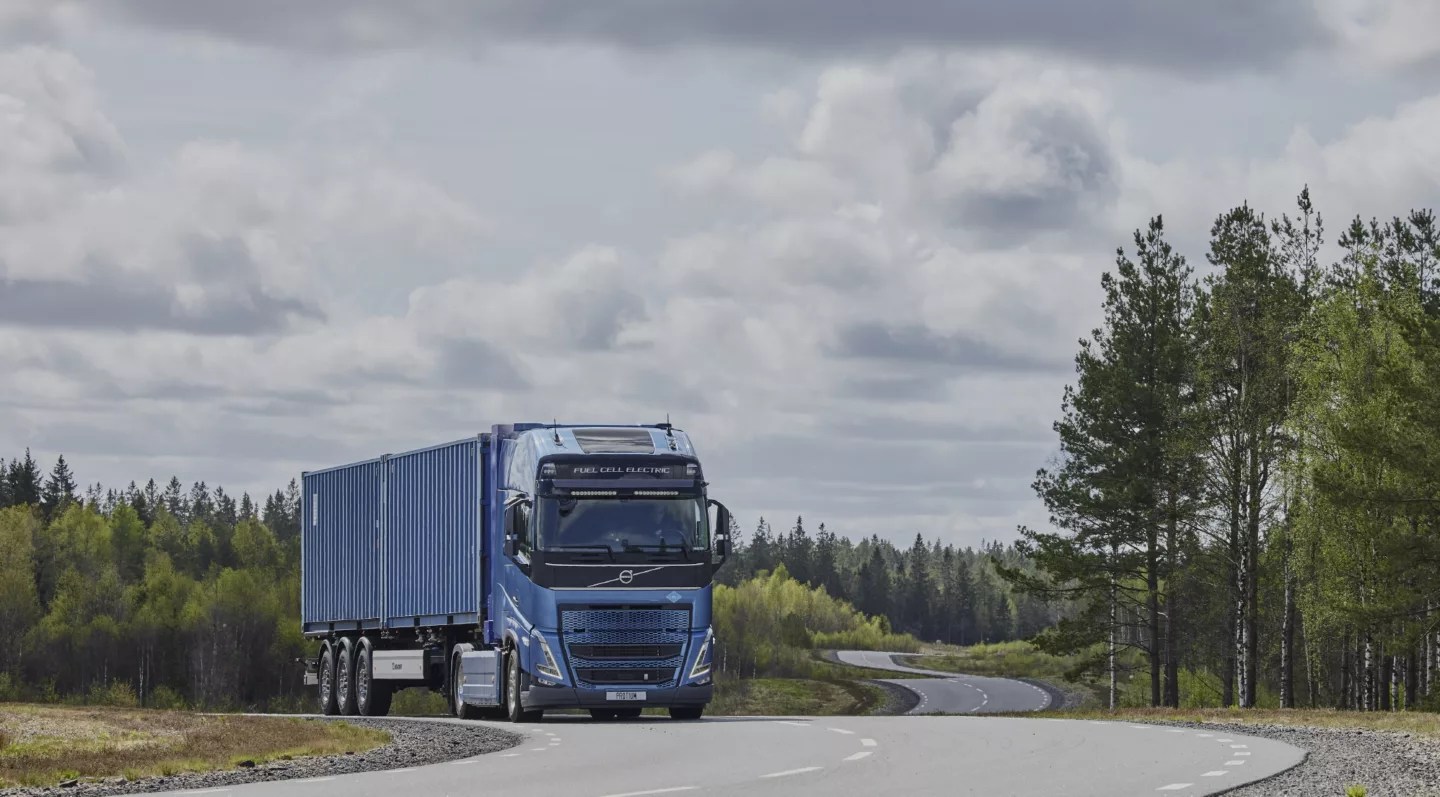
It certainly looks like a normal truck.
From the press release, it looks like Volvo Trucks are taking a conservative approach to designing, developing and launching the truck.
- Early examples will go through an extensive test program.
- It uses two fuel cells can generate up to 300 kW.
- Range is quoted at up to 1000 km.
- Fully refuelling takes 15 minutes.
- Gross weight is up to 65 tonnes.
- It looks to be a straight replacement for a current diesel truck.
Full launch is mentioned as towards the end of the decade, after there are enough hydrogen filling stations.
Conclusion
I may not have driven a large truck like this, but I’ve certainly funded a large number and talked with many experienced operators.
It looks to me that this could be the truck for an operator or company, who wants to offer zero-carbon transport for commercial, environmental, public relations or tax reasons.
Green Hydrogen Magnate Forrest Sanctioned By Russia After Calling Putin A ‘Murderer’
The title of this post, is the same as that of this article on Recharge.
Andrew Forest’s reply or the part that can be printed included.
You’re not worth talking to unless you’ve been sanctioned
I think that to many experts, Forrest’s plans for green hydrogen are one of the biggest threats to Russia’s oil industry.
Nuclear-Enabled Hydrogen – How It Helps To Reach Net Zero
The title of this post, is the same as that of this article on Power Engineering.
These are the first two paragraphs.
Nuclear enabled hydrogen is zero carbon, has low cost energy input, is large scale and offers co-location synergy and energy system connectivity.
With the revival of interest in nuclear energy, interest is growing in the potential for nuclear-enabled hydrogen, otherwise sometimes known as ‘pink’ hydrogen, to meet the anticipated demand for hydrogen at scale.
The article is certainly a must-read.
Topics covered include.
- Co-location of pink hydrogen production with industrial clusters, where heat can also be provided.
- The production of hydrogen on a large scale.
- The use of high temperature electrolysis, using steam from the nuclear plant.
I particularly like the idea of combining a small modular nuclear reactor with high temperature electrolysis to generate hydrogen for local industry like a steelworks or chemical plant.
Vast Australian Renewable Energy Site Powers BP’s Ambitions
The title of this post, is the same as that of this article on The Times.
These are the first two paragraphs.
BP is to lead the development of a $36 billion wind, solar and hydrogen project in Western Australia in its latest foray into green energy.
The oil company has bought a 40.5 per cent stake in the Asian Renewable Energy Hub in the eastern Pilbara region and will become operator of the project, one of the biggest such developments globally.
The Wikipedia entry for the Asian Renewable Energy Hub, starts like this.
The Asian Renewable Energy Hub (AREH) is a proposal to create one of the world’s largest renewable energy plant in the Pilbara region of Western Australia. It was first proposed in 2014, with plans for the project concept changing several times since then. As of November 2020, the project developers Intercontinental Energy, CWP Global, Vestas and Pathway Investments were planning to build a mixture of wind power and solar energy power generators which would generate up to 26 gigawatts of power.
Up to 1,743 wind turbines of 290 metres (950 ft) in height would be accommodated in 668,100 hectares (1,651,000 acres) of land, and 18 arrays of solar panels each generating 600 megawatts would cover 1,418 hectares (3,500 acres). It is to be located in the Shire of East Pilbara, about 30 km (19 mi) inland from 80 Mile Beach, with the nearest settlement on the map being Mandora Station. The total size of the scheme would be about 666,030 ha (1,645,800 acres).
It is a gigantic project and this Google Map of Western Australia shows its location.
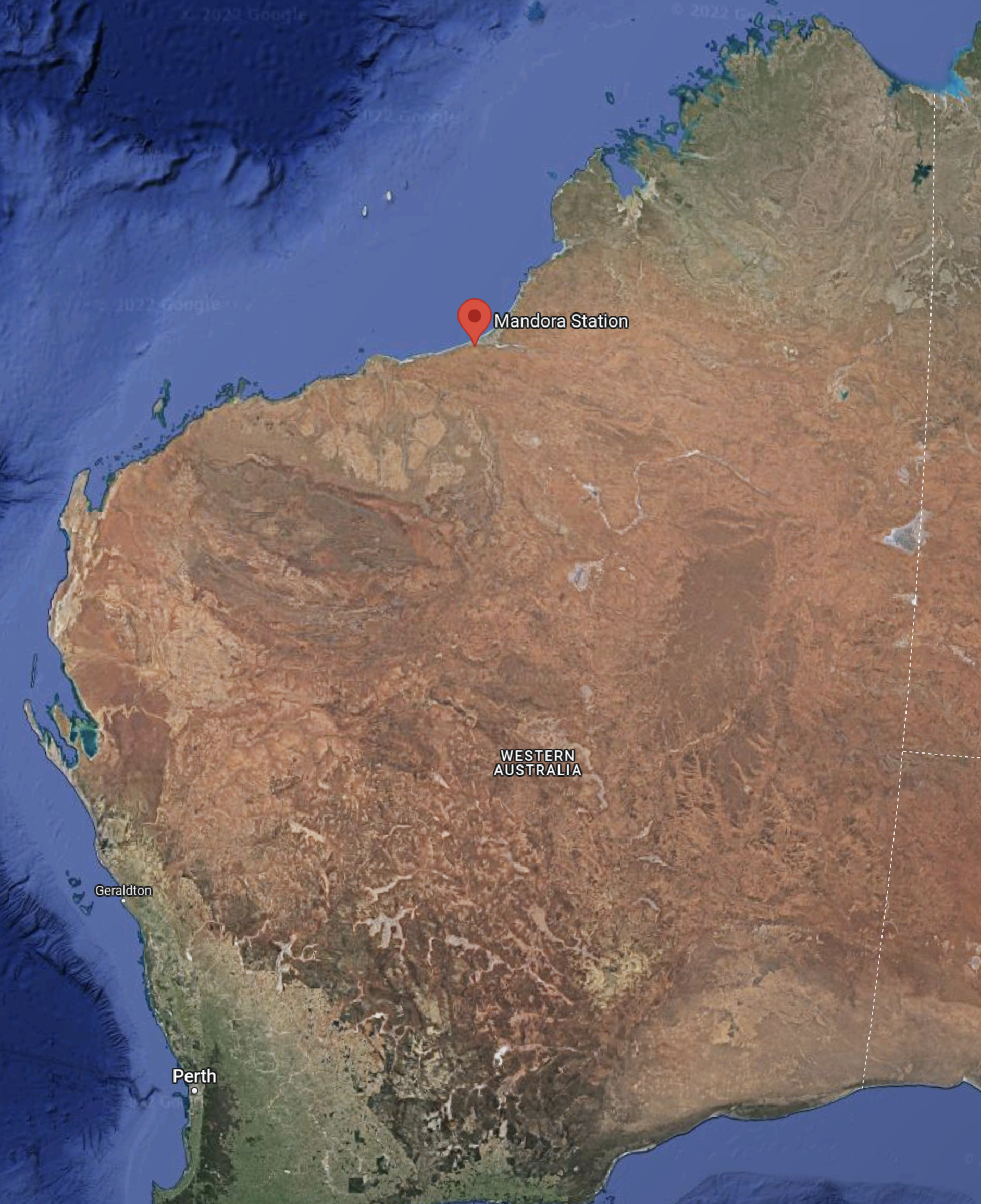
It is no more than a pimple on the huge area of Western Australia.
I have my thoughts about BP getting involved with this project.
The Power Of Research
Around 1970, I spent four years in ICI applying mathematical methods to some of their processes, that were in research or development. I also worked for a time on their hydrogen plants. Some of the projects I heard about, were pretty wacky and some of these appear to have never been commercialised.
When I left ICI, I built a few mathematical models for other research organisations.
So I do wonder, if BP have found something, that will enable the process of making hydrogen from water a lot more efficient. There is an American startup called Bloom Energy, who have teamed up with Westinghouse to use steam from the nuclear reactor to do electrolysis more efficiently at a high temperature.
I wrote about this partnership in Westinghouse And Bloom Energy To Team Up For Pink Hydrogen, where Bloom Energy Vice President of Hydrogen Business Rick Beuttel, is quoted as saying this.
We are proud Westinghouse has turned to Bloom and our solid oxide technology to supercharge the clean hydrogen economy. Solid oxide technology is well suited for nuclear applications, efficiently harnessing steam to further improve the economics of hydrogen production. High temperature electrolysis is already garnering attention and accolades as a cost-effective and viable solution to create low-cost, clean hydrogen, which is critical to meeting aggressive decarbonization goals.
It sounds that by integrating the nuclear power station and the electrolyser, there are cost savings to be made.
Why not use solar power to create steam, which is called solar thermal energy and is used in various hot places in the world and then use high temperature electrolysis?
I suspect that BP are up to something, that is very similar to Fortescue Future Industries in the Australian company’s back yard.
So will they be selling the hydrogen to FFI, so they can market it together all over the world?
This BP deal is one to watch.
Thales Supports Rollout Of UK Digital Railway Programme
The title of this post, is the same as that of this press release from Porterbrook.
The press release starts with these bullet points.
- Thales wins the fitment and supply of European Train Control System (ETCS) onboard units for Class 43 high-speed train retrofit.
- Implementation will benefit passengers and freight operators by delivering additional capacity, improving performance, enhancing safety and reducing the costs of operating the national railway.
Which is followed by this explanation.
As a key player in delivering this digital transformation, Thales has today been awarded the contract for the Class 43 First in Class (FiC) design and fitment project that will use Network Rail’s new measurement train power cars in the Infrastructure Measurement fleet. The FiC project will culminate in a Type approval from the Office of Road and Rail to enable subsequent Class 43 ETCS fleet fitments.
The new Thales onboard system will be integrated as part of the Digital Railway train control system, and will enable rolling stock to operate on ETCS-equipped infrastructure. The onboard equipment is an evolution of Thales’s level 1 ETCS system that has been successfully deployed worldwide.
This could be a smart move.
- Type Approval will mean that the Class 43 power cars of ScotRail’s Inter7Cities, Great Western Railway’s Castles and those of other operators can be retrofitted.
- Will the New Measurement Train also be used to test the digital signalling, as it covers all the tracks in Great Britain in a four-weekly cycle?
- Fitting of these iconic 1970’s designed power cars with the latest modern signalling could be a design exercise, that helps in the fitting of ETCS to other older and unusual locomotives.
I still think, that because of the iconic nature of the InterCity125, that we may see a conversion of Class 43 power cars to more sustainable operation.
- All power cars now have modern MTU diesel engines, which probably could be fuelled by hydrogen.
- The simplest way would be to run them on HVO, as I wrote about in Powered By HVO.
- Some operations like the short format trains in Scotland and South-West England might be more suitable for battery-electric operation.
- Given that there are 167 in operation or in store, it would be a good-sized order for the company converting the power cars.
I also believe that zero-carbon InterCity 125s could be an unusual tourist attraction.
Conclusion
The fitting of digital signalling to Class 43 power cars is a good move, but is it the start of a wider plan to bring these iconic trains up to modern standards.
Westinghouse And Bloom Energy To Team Up For Pink Hydrogen
The title of this post, is the same as that of this article on Hydrogen Fuel News.
This is the introductory paragraph.
Westinghouse Electric Company and Bloom Energy Corporation have announced that they have signed a letter of intent together for the production of pink hydrogen in the commercial nuclear power market.
Note.
- Westinghouse Electric Company is an American builder of nuclear power stations.
- Bloom Energy Corporation make a solid-oxide electrolyser.
- Pink hydrogen is green hydrogen produced using nuclear power.
Figures on the Bloom web site, claim that their electrolysers could be upwards of twelve percent more efficient than PEM electrolysers, as produced by companies like ITM Power.
Bloom Energy Vice President of Hydrogen Business Rick Beuttel, is quoted as saying this.
We are proud Westinghouse has turned to Bloom and our solid oxide technology to supercharge the clean hydrogen economy. Solid oxide technology is well suited for nuclear applications, efficiently harnessing steam to further improve the economics of hydrogen production. High temperature electrolysis is already garnering attention and accolades as a cost-effective and viable solution to create low-cost, clean hydrogen, which is critical to meeting aggressive decarbonization goals.
It sounds that by integrating the nuclear power station and the electrolyser, there are cost savings to be made.
Conclusion
I think this could turn out to be a significant development.
Some countries, like Iceland, Indonesia, New Zealand, Philippines and the United States, who can generate large amounts of electricity and steam from geothermal energy, Bloom’s technology must surely be a way of electrolysing hydrogen.
Namibia Proposes Green Hydrogen Supply To EU To Replace Russian Oil And Gas
The title of this post, is the same as that of this article on H2 Fuel News.
These paragraphs explain the plan.
The African country has considerable wind and sunshine resources available, providing the opportunity to use renewable energy for the production of H2. Namibia is located along the African South Atlantic coastline and is among the world’s driest countries. Its 3,500 hours of sunshine per year mean that solar panels will be able to absorb a tremendous amount of energy, without much unexpected downtime.
That energy will be used for producing yellow H2, a form of green (renewable) H2 made using electrolysers powered by solar electricity. The electrolyser will split seawater, another abundant resource for the country due to its position on the map. As a result, it has the potential to offer the European Union a clean fuel source that can help it to simultaneously combat the energy crisis and the climate crisis.
Note.
- Liquid hydrogen will be shipped to Europe by tanker.
- I don’t think Vlad the Mad will like the plan!
- How many other countries have the resources like Namibia to become hydrogen exporters?
This plan was proposed at the World Economic Forum at Davos.
Will Coire Glas Start A Pumped Storage Boom In Scotland?
This article on Renewables Now is entitled SSE Gets Tenders For Construction Of 1.5-GW Pumped Hydro Scheme.
This is the first paragraph.
SSE Renewables said on Wednesday it has received tenders for the main construction works for the Coire Glas hydro pumped storage project with a capacity of up to 1.5 GW in the Scottish Highlands.
It then lists, the companies who have tendered for the project.
SE Renewables said the ITT has drawn global interest. The tenderers shortlisted for mechanical and electrical plant scope are a partnership between ANDRITZ HYDRO GmbH and Voith Hydro GmbH & Co KG, and GE Hydro France. The parties shortlisted for the civil engineering scope include three consortia and STRABAG UK Ltd. The consortia are made up of Bechtel Ltd, Acciona Construccion SA and Webuild SpA; BAM Nuttall Ltd, Eiffage Genie Civil SA and Marti Tunnel AG; and Dragados SA and BeMo Tunnelling UK Ltd.
It is an impressive list.
The article says that construction is to start in 2024. Other sources say the pumped storage project will have a storage capacity of 30 GWh, which will make it the largest pumped storage plant in the UK.
This press release from SSE Renewables is entitled Tenders Submitted For The Coire Glas Pumped Storage Scheme.
The press release contains this quote from the Project Director for Coire Glas; Ian Innes.
Receiving the tenders on schedule from the six short-listed tenderers is another significant milestone for the Coire Glas project and we are grateful for their continued interest in the project.
We are encouraged by the content of the tenders which now provides the Coire Glas project team with several options on how construction of the project could be undertaken. It is going to take some time to carefully consider and scrutinise the tenders thoroughly and we look forward to working with the tenderers as we endeavour to make our selection decision.
It appears that not only were the tenders received from quality companies, but that they contained options and ideas that could improve the project.
Coire Glas would appear to me to be a project, that is attracting the best companies and they could be putting their best workers on the project.
These are my thoughts.
The Potential For Pumped Storage Schemes In Scotland
There are at least six schemes under development or proposed in Scotland.
- Balliemeanoch – 45 GWh
- Coire Glas – 30 GWh
- Corrievarkie – 14.5 GWh
- Loch Earba – 33 GWh
- Loch Sloy – 14 GWh
- Red John – 2.8 GWh
This page on the Strathclyde University web site, gives these figures for the possible amounts of pumped-storage that can be added to existing hydro schemes.
- Errochty – 16
- Glasgarnock – 23
- Luichart – 38
- Clunie – 40
- Fannich – 70
- Rannoch – 41
- Fasnakyle – 78
- Tummel – 38
- Ben Lawers – 12
- Nant – 48
- Invermoriston – 22
- Invergarry – 41
- Quoich – 27
- Sloy – 20
That is a total of 547 GWh or 653.3 GWh if you include the new storage, I listed above.
Scotland would appear to be land overflowing with large pumped storage possibilities and could provide the modern equivalent of milk and honey.
The Potential For Offshore Wind Power Schemes In Scotland
This is the first two paragraphs of this press release on the Crown Estate Scotland web site.
Crown Estate Scotland has today announced the outcome of its application process for ScotWind Leasing, the first Scottish offshore wind leasing round in over a decade and the first ever since the management of offshore wind rights were devolved to Scotland.
The results coming just months after Glasgow hosted the global COP26 climate conference show the huge opportunity that Scotland has to transform its energy market and move towards a net zero economy.
Some highlights are then listed.
- 17 projects have been selected out of a total of 74 applications.
- A total of just under £700m will be paid by the successful applicants in option fees and passed to the Scottish Government for public spending.
- The area of seabed covered by the 17 projects is just over 7,000km2.
- Initial indications suggest a multi-billion pound supply chain investment in Scotland
- The potential power generated will move Scotland towards net-zero.
This map shows the location of each wind farm.

Note, that the numbers are Scotwind’s lease number in their documents.
Fixed Foundation Wind Farms
These are the six fixed foundation wind farms.
- 1 – BP Alternative Energy Investments – 859 km² – 2.9 GW
- 6 – DEME – 187 km² – 1.0 GW
- 9 – Ocean Winds – 429 km² – 1.0 GW
- 13 – Offshore Wind Power – 657 km² – 2.0 GW
- 16 – Northland Power – 161 km² – 0.8 GW
- 17 – Scottish Power Renewables – 754 km² – 2.0 GW
Adding up these fixed foundation wind farms gives a capacity of 9.7 GW in 3042 km² or about 3.2 MW per km².
Floating Wind Farms
These are the ten floating wind farms.
- 2- SSE Renewables – 859 km² – 2.6 GW
- 3 – Falck Renewables Wind – 280 km² – 1.2 GW
- 4 – Shell – 860 km² – 2.0 GW
- 5 – Vattenfall – 200 km² – 0.8 GW
- 7 – DEME Concessions Wind – 200 km² – 1.0 GW
- 8 – Falck Renewables Wind – 256 km² – 1.0 GW
- 10 – Falck Renewables Wind – 134 km² – 0.5 GW
- 11 – Scottish Power Renewables – 684 km² – 3.0 GW
- 12 – BayWa r.e. UK – 330 km² – 1.0 GW
- 14 – Northland Power – 390 km² – 1.5 GW
Adding up the floating wind farms gives a capacity of 14.6 GW in 4193 km² or about 3.5 MW per km².
Mixed Wind Farms
This is the single wind farm, that has mixed foundations.
15 – Magnora – 103 km² – 0.5 GW
This wind farm appears to be using floating wind turbines.
These wind farms total up to 24.8 GW
I would expect that this is only a phase in the development of Scottish wind power, which will grow substantially over the next decade.
As I write this the UK is generating a total of 26.2 GW of electricity.
Backing Up The Wind Power
This wind power, which could grow up to well over 50 GW in Scotland alone.
But what do you do, when there is no wind?
Energy will need to come from batteries, which in Scotland’s case could be over 500 GWh of pumped storage.
Europe’s Powerhouse
It is not an unreasonable prediction, that we will continue to expand our wind farms to supply Europe with thousands of GWh of electricity and/or millions of tonnes of green hydrogen.
Conclusion
It is likely that we’ll see an upward increase of wind power in Scotland closely matched by a similar increase in pumped storage.
It is no wonder that the world’s largest and most experienced contractors were so keen to get the first big contract in Scotland’s new pumped storage boom.
They know a good thing, when they see it and after their experience with the Scotland’s oil boom in the last century, I doubt they are delaying their return.
Fortescue Future Industries Enters Ethiopia to Produce Green Energy
The title of this post, is the same as that of this article on 2Merkato, which describes itself as Ethiopia’s biggest business portal.
This is the first paragraph.
Ethiopia grants license to Fortescue Future Industries (FFI) for the production of green hydrogen and ammonia. Ahmed Shide, Minister of Finance, noted that the company would increase Ethiopia’s access to green energy.
FFI seems to buying hydrogen from everywhere.
 The Anonymous Widower