New Private Cinema Hidden Under A London Overground Line Where Drinks, Pizza And Nachos Are Brought To Your Seat
The title of this post, is the same as that of this article on MyLondon.
There has been some disquiet over the sale of railway arches by Network Rail to private equity.
Is this an example of what is going to happen?
If so, I like it.
Charco Neurotech: $10m Boost For Firm Helping People With Parkinson’s
The title of this post, is the same as that as this article on The Times.
Parkinson’s is an awful disease and my scientific nose says that the company named in the article; Charco Neurotech may be on to something.
The important markers are all there and if I’d spotted it earlier, I would have put a few pounds into the company.
Who’d have thought that wearing a vibrator on your chest would have a positive effect against a terrible disease.
I wouldn’t be surprised to find the device has uses with other diseases and conditions.
Rolls-Royce Submits SMR Design For UK Assessment
The title of this post, is the same as that of this article on World Nuclear News.
This is the first paragraph.
Rolls-Royce SMR Limited has submitted its 470 MWe small modular reactor (SMR) design for entry to the UK’s Generic Design Assessment (GDA) regulatory process. The review of the SMR design – based on a small pressurised water reactor – will formally begin once the government has assessed the company’s capability and capacity to successfully enter the GDA process.
It’s good to see this project progressing.
The District Nurse Takes Control
As I said earlier my only problem was putting in the drops.
I told my GP yesterday, and saw him send a message to the District Nurses.
Today one of the organisers phoned me and an hour later she turned up and gave me an assessment.
She also put drops in my eyes and came back later to repeat the dose.
She had all the attributes one associates with District Nurses. She was professional, competence and well-turned out. The only difference from the stereotype was that she was probably younger than thirty.
She or one of her colleagues will come back tomorrow and she is trying to source a device that will enable me to do my eyes myself.
It is good to see, that with the pandemic still raging, I can get good care like that from the NHS.
Electrifying Derwent Valley Mills
Under the latest plans the Midland Main Line will be electrified.
One problem is electrifying the line through the World Heritage Site of Derwent Valley Mills.
This Google Map shows the Midland Main Line between Belper and Duffield stations.
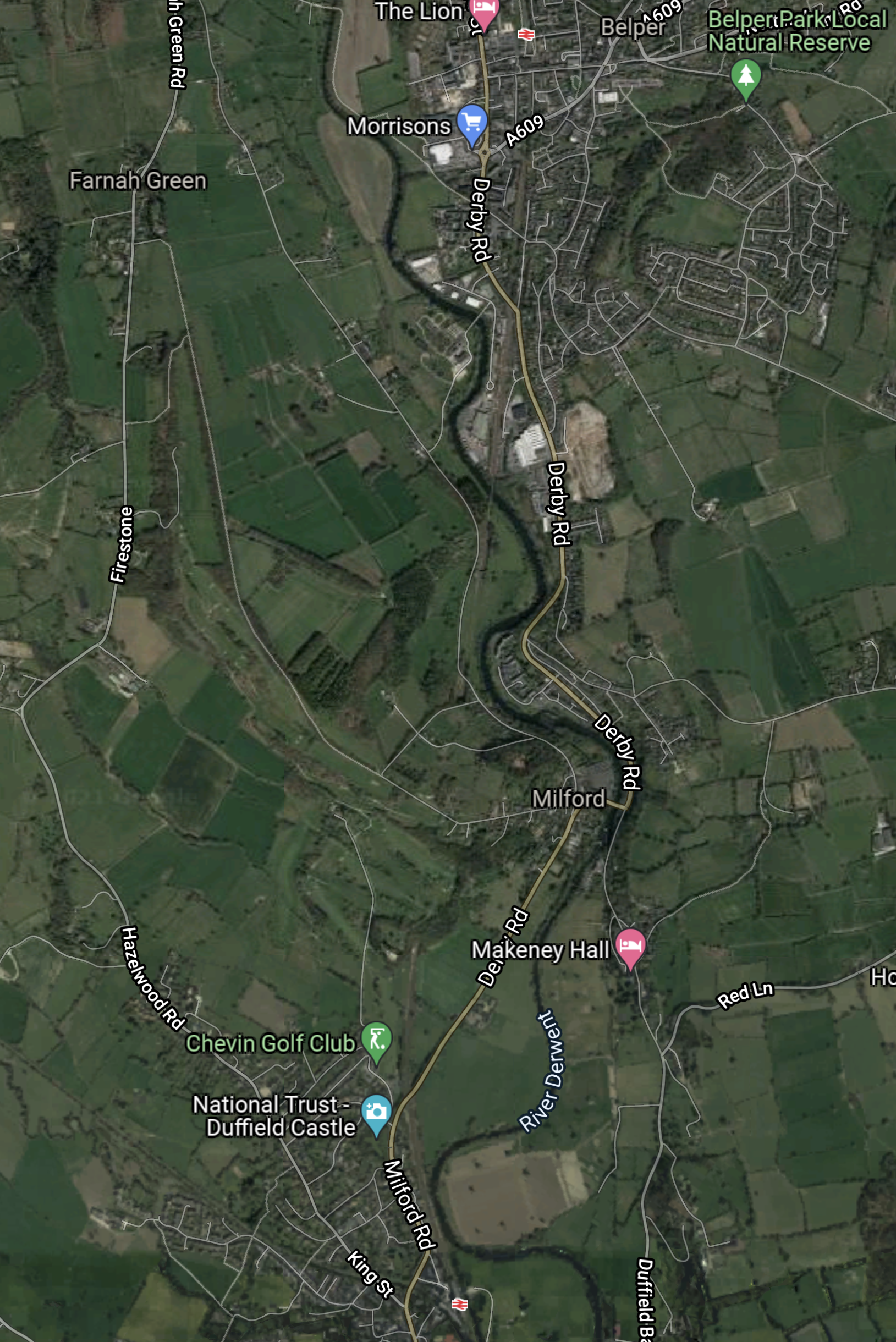
Note.
- Belper with its station is at the North of the map.
- Duffield station is at the South of the map.
In the middle of the map the railway line disappears into Milford Tunnel.
Wikipedia says this about the portals of the tunnel.
Both portals are grade II listed, being part of the Derwent Valley Mills World Heritage Site.
I doubt that the Heritage Taliban would allow the tunnel to be electrified, as they wouldn’t want wires near the tunnels.
But between Belper and Duffield stations is only 4.2 kilometres.
This Hitachi infographic shows their Intercity Battery Hybrid Train, which I described in Hitachi Rail And Angel Trains To Create Intercity Battery Hybrid Train On TransPennine Express.
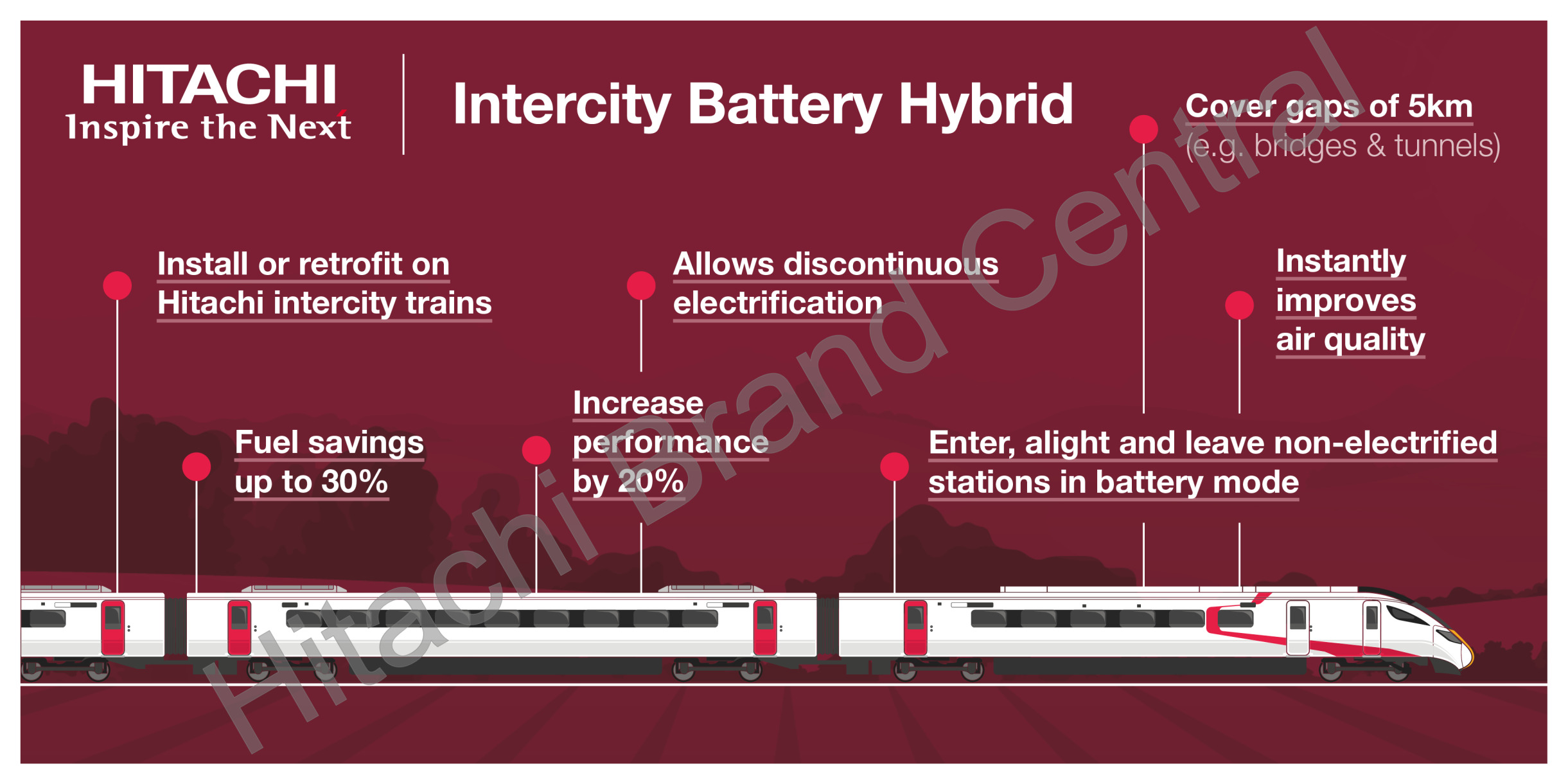
Note that the train can cover gaps of 5 km.
The Class 810 trains, that will be used by East Midlands Railways will have four diesel engines and I’m certain these trains will be able to be retrofitted to be Intercity Battery Hybrid Trains.
The electrification of the line will be discontinuous with no wires between Belper and Duffield stations.
Express trains going between Derby and Sheffield will go through the following procedure.
- Arrive at Duffield station with a full battery, after using the electrification from Derby and the South.
- Drop the pantograph in the area of Duffield station and switch to battery power.
- Proceed through Milford tunnel at an appropriate speed.
- Once under the electrification again at Belper station, they would raise the pantograph and switch to using the electrification.
The problem of electrification of Milford tunnel in the area of the World Heritage Site has been neatly side-stepped.
What Will Be The Fastest Times Possible Between London King’s Cross And Leeds?
According to media reports, it is likely that the Eastern Leg of High Speed Two will be scrapped on kicked into the long grass.
So out of curiosity, what times can be achieved between London King’s Cross and Leeds.
Wikipedia says this about digital signalling on the line.
Increasing maximum speeds on the fast lines between Woolmer Green and Dalton-on-Tees up to 140 mph (225 km/h) in conjunction with the introduction of the Intercity Express Programme, level crossing closures, ETRMS fitments, OLE rewiring and the OLE PSU – est. to cost £1.3 billion (2014). This project is referred to as “L2E4” or London to Edinburgh (in) 4 Hours. L2E4 examined the operation of the IEP at 140 mph on the ECML and the sections of track which can be upgraded to permit this, together with the engineering and operational costs.
Note.
- Woolmer Green is 23.8 miles North of King’s Cross and a short distance to the North of the Digswell Viaduct.
- Dalton-on-Tees is North of Doncaster, where the line to Leeds leaves the East Coast Main Line.
The 186 mile journey to Leeds can be broken down into these sections.
- King’s Cross and Woolmer Green – 23.8 miles – 16 minutes – 89.3 mph
- Woolmer Green and Doncaster – 132.2 miles – 85 minutes – 93.3 mph
- Doncaster and Leeds – 29.9 miles – 32 minutes – 56 mph
In Will Avanti West Coast’s New Trains Be Able To Achieve London Euston and Liverpool Lime Street In Two Hours?, I estimated that each stop in an electric Hitachi Class 802 train takes eight minutes, which includes six minutes accelerating and decelerating and a two minute dwell time in the station.
- Services between London Euston and Leeds typically stop three times, so this means there are four acceleration/deceleration cycles, if you add in the one split between London Kings Cross and Leeds.
- There are also three dwell times of perhaps two minutes in the intermediate stations.
- This would mean that a total of thirty minutes must be added to calculate the journey time.
If the train averaged these speeds over 186 miles, the following times would be achieved.
- 125 mph – 89 minutes
- 130 mph – 86 minutes
- 140 mph – 80 minutes
- 150 mph – 74 minutes
- 160 mph – 70 minutes
Adding in the thirty minutes for stops gives some reasonable timings for between London King’s Cross and Leeds.
There are ways that times could be reduced.
Removal Of Level Crossings
This course of action always brings results, but is hated by the local users.
This article in The Times is entitled HS2 Eastern Leg To Leeds Axed, where there is said.
The government’s long-awaited Integrated Rail Plan also commits to full electrification of the Midland Main Line from London St Pancras to Sheffield, as well as upgrades to the East Coast Main Line. The Times understands this includes removing level crossings, which will help reduce journey times.
Every little helps!
More Running At Higher Speeds
From my figures, it appears that roughly a ten mph increase in average speed reduces journey time by up to six minutes.
So the more running at 140 mph or even faster the better.
It should be noted that the Selby Diversion on the East Coast Main Line was designed by British Rail for 160 mph The Wikipedia entry says this.
The line was the first purpose-built section of high-speed railway in the UK having a design speed of 125 mph; however, research by British Rail in the 1990s indicated that the route geometry would permit up to 160 mph operation, subject to the necessary overhead line equipment and signalling upgrades.
Upgrading the line for higher speeds would be a way of reducing the journey time.
- Curves could be better profiled.
- Full digital signalling with perhaps even some degree of automatic control could be introduced.
- More robust overhead line equipment could be installed.
- Some sections of slab track could be laid.
- Level crossing removal.
I wouldn’t be surprised if one of the new Hitachi trains within a few years could be able to average 140 mph between London King’s Cross and Leeds, with a possible 160 mph average speed in the future.
Faster Acceleration And Deceleration
If the three-minute acceleration and deceleration times can be reduced to two minutes this will save eight minutes on the journey.
Quicker Dwell Times
Why not?
Automatic Train Control Through The Newark Crossing
I proposed this in Could ERTMS And ETCS Solve The Newark Crossing Problem? and I believe it would allow trains on the East Coast Main Line at full speed if they didn’t stop at Newark station.
Automatic Train Control Over The Digswell Viaduct And Through The Welwyn North Station
As at the Newark Crossing, I believe ERTMS and ETCS could increase speeds over the Digswell Viaduct and through Welwyn North station.
High-Speed Two Classic Compatible Trains
These faster trains could bring the time down further, if they were to run the service.
Sample Times
I wouldn’t be surprised to see with full digital signalling and a 125 mph average between London King’s Cross and Leeds.
- 125 mph Base Time – 89 minutes.
- Four Acceleration/Deceleration section at 6 minutes each – 24 minutes.
- Three Dwell Times at 2 minutes each – 6 minutes
This would mean a total time of one hour and 59 minutes.
Uprate that to 140 mph and faster acceleration and deceleration.
- 140 mph Base Time – 80 minutes.
- Four Acceleration/Deceleration section at 4 minutes each – 16 minutes.
- Three Dwell Times at 2 minutes each – 6 minutes
This would mean a total time of one hour and 42 minutes.
Uprate that to 160 mph and faster acceleration and deceleration.
- 160 mph Base Time – 70 minutes.
- Four Acceleration/Deceleration section at 4 minutes each – 16 minutes.
- Three Dwell Times at 2 minutes each – 6 minutes
This would mean a total time of one hour and 32 minutes.
A Non-Stop Service
This would speed up the service.
With a 125 mph average between London King’s Cross and Leeds.
- 125 mph Base Time – 89 minutes.
- One Acceleration/Deceleration section at 6 minutes each – 6 minutes.
This would mean a total time of 95 minutes.
Uprate that to 140 mph and faster acceleration and deceleration.
- 140 mph Base Time – 80 minutes.
- One Acceleration/Deceleration section at 4 minutes each – 4 minutes.
This would mean a total time of 84 minutes.
Uprate that to 160 mph and faster acceleration and deceleration.
- 160 mph Base Time – 70 minutes.
- One Acceleration/Deceleration section at 4 minutes each – 4 minutes.
This would mean a total time of 74 minutes.
These compare with a proposed time of one hour and 21 minutes on the original plan to High Speed Two.
Conclusion
It looks like a non-stop service between London and Leeds running at 140 mph, with perhaps some sections at perhaps a bit faster, could be able to match the High Speed Two times.
Mayor Warns TfL Services May Be Cut Due To A Funding Gap
The title of this post, is the same as that of this article on the BBC.
This is the first two paragraphs.
The Mayor of London has warned tube and bus services may be axed due to a £1.9 billion funding gap.
Sadiq Khan claims bus services could be cut by a fifth and tube services by almost 10%.
If these cuts should happen, I would seriously have to think about moving out of London.
I knew that his bribe of a Fare Freeze would end in tears for someone, but not for everyone.
Bosch Investing £800 million For UK Hydrogen Car Infrastructure Development
The title of this post, is the same as that of this article on Hydrogen Fuel News.
Hopefully, this will make purchase of a hydrogen-powered vehicle a possibility for more people around the UK.
Railway Restored: Regular Trains To Run On Dartmoor Line For First Time In 50 Years
The title of this post is the same as that of this press release from Network Rail.
These are the three main points of the press release.
- First passenger train on the first Restoring Your Railway reopening will run on Wednesday 17 November, ahead of public services resuming on Saturday 20 November
- Restored in just nine months, and delivered £10m under budget, transforming a mothballed former freight railway to regular services.
- Reopening is the first of the Government’s Restoring Your Railway schemes to return to service, fulfilling a manifesto commitment.
This Network Rail picture shows the first train.
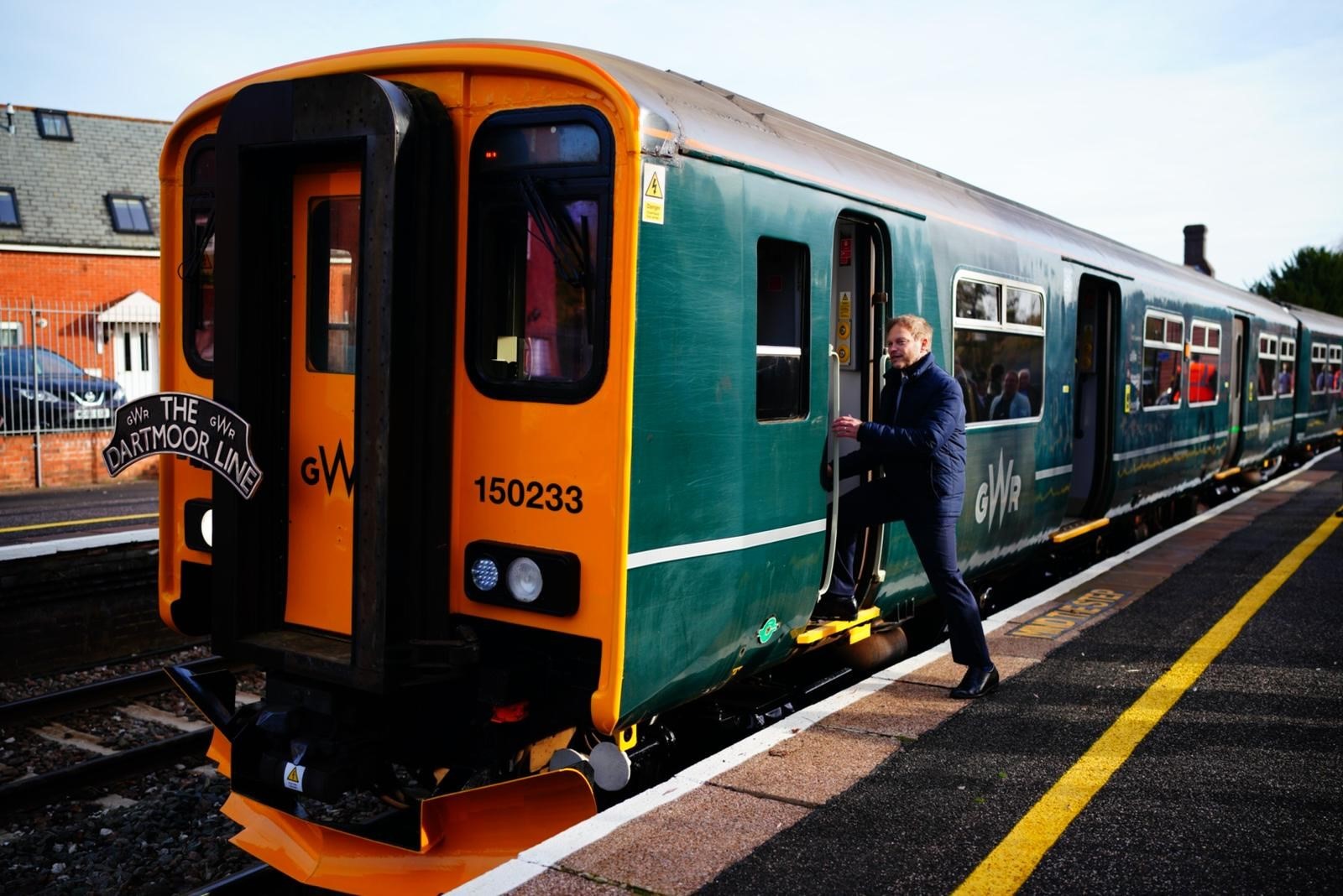
It’s good to see, GWR made a name plate.
Network Rail have set themselves a good precedent to open the line in nine months and £10 million under budget.
Let’s hope they repeat this performance on other reopened lines.

