Trains Needed For The East West Railway
This is a simple calculation, that I need to write East West Railway Company To Start Second Phase Of Rolling Stock Procurement.
I shall first calculate the length of the proposed services on the East West Railway.
The Distance Between Oxford and Bedford Stations
Looking at various legs I get the following distances.
- Oxford and Bicester Village stations – 11.7 miles from Real Time Trains.
- Bicester Village and Bletchley – 18.6 miles from Google Maps, using a large screen and a ruler.
- Bletchley and Bedford – 16.5 miles from the Wikipedia entry for the Marston Vale Line.
These distances give a total distance of 46.8 miles
The Distance Between Oxford and Milton Keynes Central Stations
Looking at various legs I get the following distances.
- Oxford and Bicester Village stations – 11.7 miles from Real Time Trains.
- Bicester Village and Bletchley – 18.6 miles from Google Maps, using a large screen and a ruler.
- Bletchley and Milton Keynes Central – 3.1 miles from Real Time Trains.
These distances give a total distance of 33.4 miles
The Distance Between Aylesbury and Milton Keynes Central Stations
Looking at various legs I get the following distances.
- Aylesbury and Aylesbury Vale Parkway – 2.3 miles from Real Time Trains.
- Aylesbury Vale Parkway and Bletchley – 20.5 miles from Google Maps, using a large screen and a ruler.
- Bletchley and Milton Keynes Central – 3.1 miles from Real Time Trains.
These distances give a total distance of 25.9 miles
Journey Timings
This page on the Bedford Borough Council web site, gives a timing of sixty minutes between Bedford and Oxford.
Looking at routes between Cambridge, Ipswich and Norwich, this sixty minute timing is not unreasonable, when compared to Norwich and Ipswich, which is 46.2 miles and takes about 45 minutes on a railway with an operating speed of 100 mph.
The only thing I would say, is that if it were possible to run a train between Bedford and Oxford in an hour including the turnback time, this would give advantages.
- The round trip would be two hours.
- It would be easy to organise a clock-face timetable, that left at the same time each hour from both terminal stations and all the intermediate stations.
I will assume that a two hour round trip is feasible.
Using this speed, I can estimate journey times for the other services.
- Oxford and Milton Keynes Central Stations – 43 minutes
- Aylesbury and Milton Keynes Central Stations – 33 miles
Comfortable two hour round trips would be possible.
Number Of Trains Needed
As each service could be a two hour round trip, they would need just two trains for an hourly service and four trains for a two trains per hour (tph) service.
The services, their frequencies and the number of required would be as follows.
- Oxford and Bedford – one tph – two trains
- Oxford and Milton Keynes Central Stations – two tph – four trains
- Aylesbury and Milton Keynes Central Stations – one tph – two trains
Note.
- That is a total of eight trains.
- If a three hour round trip is needed for Oxford and Bedford, then an extra train will be needed.
It is slightly surprising, that the interim fleet is between twelve and fourteen trains according to this article on Railnews, which is entitled East West Rail Takes Next Step Towards New Trains.
M&G To Invest £150m In UK Battery Start-Up Zenobe
The title of this post, is the same as that of this article on the Financial Times.
Good to see M & G getting involved in funding batteries.
High Speed Two And Scotland
In this post, I will only look at services and capacity.
I will leave the economics to others with the appropriate data.
Current Anglo-Scottish Services
Currently, these services run between England and Edinburgh Waverley and Glasgow Central stations.
- 1 train per hour (tph) – Avanti West Coast – London Euston and Glasgow Central via Warrington Bank Quay, Wigan North Western, Preston, Lancaster, Carlisle.
- 1 train per two hours (tp2h) – Avanti West Coast – London Euston and Glasgow Central via Milton Keynes Central, Coventry, Birmingham International, Birmingham New Street, Sandwell and Dudley, Wolverhampton, Crewe, Warrington Bank Quay, Wigan North Western, Preston, Lancaster, Carlisle.
- 1 tp2h – CrossCountry – South-West England and Edinburgh Waverley via Bristol Temple Meads, Birmingham New Street, Derby, Chesterfield, Sheffield, Wakefield Westgate, Leeds, York and Newcastle.
- 1 tp2h – CrossCountry – South-West England and Glasgow Central via Bristol Temple Meads, Birmingham New Street, Derby, Chesterfield, Sheffield, Wakefield Westgate, Leeds, York, Newcastle and Edinburgh Waverley.
- 1 tph – LNER – London Kings Cross and Edinburgh Waverley via York, Darlington, Newcastle and Berwick-upon-Tweed
- 1 tph – LNER – London Kings Cross and Edinburgh Waverley via Peterborough, Newark North Gate, Doncaster, York, Northallerton, Darlington, Durham and Newcastle
- 1 tph – TransPennine Express – Liverpool Lime Street and Edinburgh Waverley via Newton-le-Willows, Manchester Victoria, Huddersfield, Leeds, York, Darlington, Durham, Newcastle and Morpeth
- 1 tp2h – TransPennine Express – Manchester Airport and Edinburgh Waverley via Manchester Piccadilly, Manchester Oxford Road, Bolton, Preston, Lancaster and Carlisle.
- 3 trains per day (tpd) – TransPennine Express – Liverpool Lime Street and Glasgow Central via St. Helen’s Central, Wigan North Western, Preston, Lancaster and Carlisle.
- 1 tp2h – TransPennine Express – Manchester Airport and Glasgow Central via Manchester Piccadilly, Manchester Oxford Road, Bolton, Preston, Lancaster and Carlisle.
Note.
- I’ve not included service extensions to Aberdeen and Inverness.
- I’ve cut out a few smaller stations
- Some services call at both Edinburgh and Glasgow.
- Because of signalling and track improvements it is likely that London Kings Cross and Edinburgh timings will come down to four hours.
The services can be roughly summarised as follows.
- Birmingham and Edinburgh – 0.5 tph
- Birmingham and Glasgow – 1 tph
- London and Edinburgh – 2 tph
- London and Glasgow – 1.5 tph
- Leeds and Edinburgh – 1.5 tph
- Leeds and Glasgow – 0.5 tph
- Liverpool and Edinburgh – 1 tph
- Liverpool and Glasgow – 3 tpd
- Manchester and Edinburgh – 1.5 tph
- Manchester and Glasgow – 0.5 tph
- Manchester Airport and Edinburgh – 0.5 tph
- Manchester Airport and Glasgow – 0.5 tph
Note.
- I have ignored the five tpd London Kings Cross and Edinburgh service, that starts next year, which will be run by East Coast Trains.
- 0.5 tph is equivalent to one tp2h.
It looks a fairly well-balanced and comprehensive service.
High Speed Two Anglo-Scottish Services
According to a table in the June 2020 Edition of Modern Railways, these High Speed Two services will run between England and Edinburgh Waverley and Glasgow Central.
- 1 tph – London Euston and Edinburgh Waverley via Old Oak Common, Preston, Carlisle and Edinburgh Haymarket
- 1 tph – London Euston and Edinburgh Waverley via Old Oak Common, Birmingham Interchange, Preston, Carlisle and Edinburgh Haymarket
- 1 tph – London Euston and Glasgow Central via Old Oak Common, Preston and Carlisle
- 1 tph – London Euston and Glasgow Central via Old Oak Common, Birmingham Interchange, Preston and Carlisle
- 1 tp2h – Birmingham Curzon Street and Edinburgh Waverley via Warrington Bank Quay, Wigan North Western, Preston, Lancaster, Oxenholme or Penrith, Carlisle and Edinburgh Haymarket.
- 1 tp2h – Birmingham Curzon Street and Glasgow Central via Warrington Bank Quay, Wigan North Western, Preston, Lancaster, Oxenholme or Penrith, Carlisle, Lockerbie and Motherwell.
Note.
- All trains will be High Speed Two’s 200 metre long Classic-Compatible trains.
- The four one tph services will run as two pairs of trains and split and join at Carlisle.
The services can be roughly summarised as follows.
- Birmingham and Edinburgh – 1.5 tph
- Birmingham and Glasgow – 1.5 tph
- London and Edinburgh – 2 tph
- London and Glasgow – 2 tph
Note.
- Passengers between Liverpool or Manchester and Scotland will have to change at Preston.
- There is no connection between the Eastern Leg of High Speed Two and Edinburgh.
- London and Edinburgh Waverley will take three hours and forty minutes, which saves twenty minutes on the likely four hours on the East Coast Main Line.
- London and Glasgow Central will take three hours and forty minutes, which saves fifty minutes on the current time.
High Speed Two certainly provides good services between London, Birmingham and Scotland, but it leaves out travelling between the cities of the North and North of the Border.
High Speed Two Classic-Conventional Trains
In Thoughts On Class 807 Trains And High Speed Two’s Classic-Compatible Trains, I discussed a design of Classic-Compatible High Speed Two train based on the recently-ordered Class 807 trains for Avanti West Coast.
Except for the required speeds, the specifications of the trains are similar and this was my conclusion.
I wouldn’t be surprised that Hitachi’s offering for more trains on the West Coast Main Line and the Classic-Compatible trains for High Speed Two are very similar to the Class 807 trains.
-
- The Classic-Compatible trains for High Speed Two could be eight-car trains with twenty-five metre cars.
- The replacements for the eleven-car Class 390 trains could be nine-car trains with twenty-six metre cars.
Both would be based on the Class 807 train.
A common design would surely ease operation of the combined West Coast Partnership.
TransPennine Express Between Liverpool Lime Street And Edinburgh
Will this TransPennine Express service still be the primary connection between the North of England and Edinburgh?
- It has a frequency of one tph.
- It takes about four hours and fifty minutes.
- It connects Liverpool, Manchester, Huddersfield, Leeds, York, Darlington, Durham and Newcastle to the Scottish capital.
- According to Real Time Trains, it runs as far as York on diesel and then using the electrification.
Current plans envisage Northern Powerhouse Rail will create an electrified route across the Pennines.
This report on the Transport for the North web site, is entitled At A Glance – Northern Powerhouse Rail.
It gives these times and frequencies for the various legs of the route.
- Liverpool and Manchester via Manchester Airport – 26 minutes – 6 tph
- Manchester and Leeds – 25 minutes – 6 tph
- Leeds and Newcastle – 58 minutes – 4 tph
- Newcastle and Edinburgh – 90 minutes
This totals to three hours and nineteen minutes.
Note.
- The Newcastle and Edinburgh time is that currently achievable today by Class 801 trains.
- Liverpool and Manchester city centres have a six tph high speed service via Manchester Airport.
- Manchester and Edinburgh will be under three hours.
- Leeds and Edinburgh will be under two-and-a-half hours.
- The Manchester and Manchester Airport leg could be shared with High Speed Two.
Most of this will be achievable with the current TransPennine Express Class 802 trains, which are capable of 140 mph.
In addition, I think that it is likely that the East Coast Main Line will be upgraded between York and Newcastle for High Speed Two.
Liverpool Lime Street and Edinburgh will unlikely be to High Speed Two standards, but it could match the standards of the East Coast Main Line.
Improvements To The East Coast Main Line Between Newcastle and Edinburgh
Consider
- There have been reports that the power supply on the route is not very robust and Class 800 and Class 802 trains have to use diesel power.
- The route is fairly straight and could probably be partially-upgraded for 140 mph running with appropriate signalling.
- The route carries about five tph in both directions. Modern digital signalling could probably double this frequency.
- The Scottish Government has suggested adding new stations at East Linton and Reston.
- Edinburgh and Newcastle are 124.5 miles apart and trains typically take ninety minutes.
In addition, High Speed Two might like to extend some or all of their three Newcastle services to Edinburgh.
- 1 tph – Birmingham Curzon Street and Newcastle via East Midlands Hub, York, Darlington and Durham
- 1 tph – London Euston and Newcastle via Old Oak Common and York
- 1 tph – London Euston and Newcastle via Old Oak Common, York and Darlington.
High Speed Two will run between London Euston and Newcastle in two hours and seventeen minutes.
I think it could be possible, that an upgraded Newcastle and Edinburgh route could be covered in seventy minutes by either one of High Speed Two’s Classic Compatible trains or a Class 80x train.
This could mean these timings.
- Under four hours for classic services between London Kings Cross and Edinburgh.
- Around three hours for classic services between Liverpool and Edinburgh.
- Under three-and-a-half hours for High Speed Two services between London Euston and Edinburgh.
This shows the importance of improving the East Coast Main Line to the North of Newcastle.
Improvements To The West Coast Main Line Between Carlisle and Glasgow/Edinburgh
If the frequency and speed of trains on the East Coast Main Line can be increased, what can be done on the West Coast Main Line?
Consider.
- High Speed Two are showing Carlisle and Glasgow Central as a one hour and nineteen minute journey. Avanti West Coast do the journey in one hour and eleven minutes.
- High Speed Two are showing Carlisle and Edinburgh as a one hour and eleven minute journey. Avanti West Coast do the journey in one hour and fifteen minutes.
- Could the route be fully upgraded for 140 mph running with appropriate signalling?
- In a typical hour, there are two Avanti West Coast trains and one TransPennine Express passing along all or part of the West Coast Main Line North of Carlisle.
- The route carries a total of about four tph in both directions. Modern digital signalling could probably increase this frequency.
- Hitachi and Avanti West Coast seem to be saying that their new Class 807 trains have similar performance to the Class 390 trains, but without using tilting technology.
There doesn’t appear to be the scope for such dramatic improvement in the West, as in the East, but I can still see a succession of 140 mph trains running between Carlisle and Glasgow or Edinburgh in no more than an hour and eleven minutes.
These passenger services could be running North of Carlisle, when High Speed Two is fully open.
- 2 tph – High Speed Two – London Euston and Edinburgh – High Speed Two Classic-Compatible train
- 2 tph – High Speed Two – London Euston and Glasgow Central – High Speed Two Classic-Compatible train
- 0.5 tph – High Speed Two – Birmingham Curzon Street and Edinburgh – High Speed Two Classic-Compatible train
- 0.5 tph – High Speed Two – Birmingham Curzon Street and Glasgow Central – High Speed Two Classic-Compatible train
- 0.5 tph – TransPennine Express – Manchester Airport and Edinburgh – Class 397 train
- 0.5 tph – TransPennine Express – Manchester Airport and Glasgow Central – Class 397 train
- 3 tpd – TransPennine Express – Liverpool and Glasgow Central – Class 397 train
Note.
- I am assuming that Avanti West Coast’s services will be replaced by the High Speed Two services.
- As the TransPennine Express services share a path, it would appear that six tph will be running between Carlisle and Edinburgh or Glasgow.
There would appear to be space for more trains on the West Coast Main Line, to the North of Carlisle.
A Few Random Thoughts
These are a few random thoughts and ideas.
Avanti West Coast And High Speed Two Classic-Compatible Trains
Avanti West Coast will have these fleets of high-speed trains.
- 11-car Class 390 electric trains, which are 265.3 metres long
- 9-car Class 390 electric trains, which are 217.5 metres long.
- 7-car Class 807 electric trains, which will be 182 metres long
- 5-car Class 805 bi-mode trains, which will be 130 metres long
- High Speed Two Classic-Compatible trains, which will be 200 metres long
- Full-size High Speed Two trains, which will be 400 metres long.
It would appear that there could be some fleet simplification.
All Passenger Trains Between Newcastle Or Carlisle and Glasgow Central Or Edinburgh Should Be Capable Of Operating At 140 mph
Both the East and West Coast Main Lines between Carlisle and Newcastle in England and Edinburgh and Glasgow in Scotland are not far off being capable of running trains at 140 mph. Modern digital in-cab signalling and some track works will be needed.
Once 140 mph running is achieved, then all trains will need to be capable of making use of the speed, to maximise the capacity of the routes.
Freight Trains Between Newcastle Or Carlisle and Glasgow Central Or Edinburgh Should Be Capable Of Operating As Fast As Possible
Freight trains will need to be hauled by electric locomotives, at as high a speed as possible, to avoid slowing the express passenger trains.
More well-positioned freight loops may be needed.
Will TransPennine’s Manchester And Scotland Service Transfer To High Speed Two?
I think, that this is highly likely.
- The service would be run by High Speed Two Classic-Compatible trains.
- Depending on track layout, the Liverpool and Scotland service on the West Coast Main Line could be upgraded to the High Speed Two Classic-Compatible trains or discontinued.
This would mean, that all passenger trains on the West Coast Main Line North of Lancaster would be High Speed Two Classic-Compatible trains.
- 2 tph – High Speed Two – London Euston and Edinburgh – High Speed Two Classic-Compatible train
- 2 tph – High Speed Two – London Euston and Glasgow Central – High Speed Two Classic-Compatible train
- 0.5 tph – High Speed Two – Birmingham Curzon Street and Edinburgh – High Speed Two Classic-Compatible train
- 0.5 tph – High Speed Two – Birmingham Curzon Street and Glasgow Central – High Speed Two Classic-Compatible train
- 0.5 tph – High Speed Two – Manchester Airport and Edinburgh – High Speed Two Classic-Compatible train
- 0.5 tph – High Speed Two – Manchester Airport and Glasgow Central – High Speed Two Classic-Compatible train
- 3 tpd – High Speed Two – Liverpool and Glasgow Central – High Speed Two Classic-Compatible train
This must mean that if the operating speed on the West Coast Main Line were to be increased, all passenger services could take advantage, which would surely improve timings.
What About CrossCountry?
CrossCountry run a single hourly service between Plymouth and Edinburgh.
- The route goes via Bristol Temple Meads, Birmingham New Street, Derby, Chesterfield, Sheffield, Wakefield Westgate, Leeds, York, Newcastle.
- Some services are extended to Glasgow Central and Aberdeen.
Currently, this service is run by a diesel train, which surely will need to be replaced with a zero-carbon train.
Consider.
- Scotland is keen to electrify or allow electric trains to run between Edinburgh and Aberdeen.
- High Speed Two will provide an electrified route between Birmingham and York via East Midlands Hub for Derby, Chesterfield, Sheffield and Leeds.
- The likes of Hitachi and Adrian Shooter of Vivarail are very bullish about battery electric trains.
- Great Western Railway, Hitachi and Network Rail have probably hired Baldrick for a cunning plan to run battery electric trains between Bristol and Penzance.
Could it be possible for Hitachi or another manufacturer to design a High Speed Two Classic-Compatible train, with a battery capability?
A train with this specification, could be ideal for the Plymouth and Edinburgh service.
It might also be useful for these CrossCountry services.
- Southampton and Newcastle
- Bournemouth and Manchester Piccadilly
- Exeter St. Davids/Bristol and Manchester Piccadilly
- Cardiff Central and Nottingham
- Birmingham and Nottingham
- Birmingham and Stansted Airport
Note.
- All could run on High Speed Two fpr part of the route.
- Birmingham and Nottingham has already been proposed for running using High Speed Two Classic-Compatible train, by Midlands Engine Rail, as I wrote about in Classic-Compatible High Speed Two Trains At East Midlands Hub Station.
- I proposed a Birmingham and Cambridge service using High Speed Two Classic-Compatible trains in A Trip To Grantham Station – 4th November 2020.
High Speed Two could have a big positive effect on CrossCountry services.
Future Anglo-Scottish Services After High Speed Two Opens Fully
It is possible, that when High Speed Two fully opens, these services will run between England and Edinburgh Waverley and Glasgow Central stations.
- 1 tp2h – CrossCountry – South-West England and Edinburgh Waverley via Bristol Temple Meads, Birmingham New Street, Derby, Chesterfield, Sheffield, Wakefield Westgate, Leeds, York and Newcastle.
- 1 tp2h – CrossCountry – South-West England and Glasgow Central via Bristol Temple Meads, Birmingham New Street, Derby, Chesterfield, Sheffield, Wakefield Westgate, Leeds, York, Newcastle and Edinburgh Waverley.
- 1 tph – LNER – London Kings Cross and Edinburgh Waverley via York, Darlington, Newcastle and Berwick-upon-Tweed
- 1 tph – LNER – London Kings Cross and Edinburgh Waverley via Peterborough, Newark North Gate, Doncaster, York, Northallerton, Darlington, Durham and Newcastle
- 1 tph – High Speed Two – London Euston and Edinburgh Waverley via Old Oak Common, Preston, Carlisle and Edinburgh Haymarket
- 1 tph – High Speed Two – London Euston and Edinburgh Waverley via Old Oak Common, Birmingham Interchange, Preston, Carlisle and Edinburgh Haymarket
- 1 tph – High Speed Two – London Euston and Glasgow Central via Old Oak Common, Preston and Carlisle
- 1 tph – High Speed Two – London Euston and Glasgow Central via Old Oak Common, Birmingham Interchange, Preston and Carlisle
- 1 tp2h – High Speed Two – Birmingham Curzon Street and Edinburgh Waverley via Warrington Bank Quay, Wigan North Western, Preston, Lancaster, Oxenholme or Penrith, Carlisle and Edinburgh Haymarket.
- 1 tp2h – High Speed Two – Birmingham Curzon Street and Glasgow Central via Warrington Bank Quay, Wigan North Western, Preston, Lancaster, Oxenholme or Penrith, Carlisle, Lockerbie and Motherwell.
- 1 tph – TransPennine Express – Liverpool Lime Street and Edinburgh Waverley via Newton-le-Willows, Manchester Victoria, Huddersfield, Leeds, York, Darlington, Durham, Newcastle and Morpeth
- 1 tp2h – High Speed Two – Manchester Airport and Edinburgh Waverley via Manchester Piccadilly, Manchester Oxford Road, Bolton, Preston, Lancaster and Carlisle.
- 3 trains per day (tpd) – High Speed Two – Liverpool Lime Street and Glasgow Central via St. Helen’s Central, Wigan North Western, Preston, Lancaster and Carlisle.
- 1 tp2h – High Speed Two – Manchester Airport and Glasgow Central via Manchester Piccadilly, Manchester Oxford Road, Bolton, Preston, Lancaster and Carlisle.
Note.
- I have assumed that the Liverpool/Manchester services to Scotland via the West Coast Main Line have transferred to High Speed Two.
- All trains would be run by High Speed Two Classic-Compatible trains.
The services can be roughly summarised as follows.
- Birmingham and Edinburgh – 1.5 tph (0.5 tph)
- Birmingham and Glasgow – 1.5 tph (1 tph)
- London and Edinburgh – 4 tph (2 tph)
- London and Glasgow – 2 tph (1.5 tph)
- Leeds and Edinburgh – 1.5 tph (1.5 tph)
- Leeds and Glasgow – 0.5 tph (0.5 tph)
- Liverpool and Edinburgh – 1 tph (1 tph)
- Liverpool and Glasgow – 3 tpd (3 tpd)
- Manchester and Edinburgh – 1.5 tph (1.5 tph)
- Manchester and Glasgow – 0.5 tph (0.5 tph)
- Manchester Airport and Edinburgh – 0.5 tph (0.5 tph)
- Manchester Airport and Glasgow – 0.5 tph (0.5 tph)
Note.
- My estimates for the number of trains in the future, are probably best described as minimum figures.
- The figures in brackets are the current frequencies.
- Currently, there are eleven express trains between England and Scotland and after High Speed Two is fully open there could be at least fifteen express trains.
I have a few final thoughts.
Capacity Between England And Scotland
Capacity of the current and future Anglo-Scottish trains is as follows.
- High Speed Two Classic-Compatible train – 500-600
- Eleven-car Class 390 train – 589
- Nine-car Class 800 train – 611
It appears that the all the longer trains have roughly the same capacity.
As there are now eleven Anglo-Scottish long trains and these will be increased to fifteen, that indicates an minimum 36 % increase in capacity.
Will High Speed Two And Northern Powerhouse Rail Share A Route Across The Pennines?
Northern Powerhouse Rail have talked about extending High Speed Two services from Manchester to Huddersfield, Leeds, Hull, York and Newcastle.
I wrote about this in Changes Signalled For HS2 Route In North.
I like this plan for the following reasons.
It gives more places like Huddersfield and Hull access to High Speed Two.
It increases frequencies across the North.
But most importantly, as infrastructure is shared, it saves a lot of money.
It also opens up possibilities for services.
- The Liverpool and Edinburgh service could be run on the High Speed Two route across the Pennines and up the East Coast Main Line.
- London and Manchester services could be extends to Leeds, York, Newcastle and Scotland.
If Northern Powerhouse Rail were to be cleared for High Speed Two’s Full-Size trains, it opens up the possibility of running them further North.
Conclusion
High Speed Two will increase Anglo-Scottish capacity by more than a third.
Will INEOS And Rolls-Royce Get Together Over Hydrogen Production?
It has been a busy week for press releases.
8th November 2020 – Rolls-Royce signs MoU With Exelon For Compact Nuclear Power Stations
9th November 2020 – Rolls-Royce signs MoU with CEZ For Compact Nuclear Power Stations
9th November 2020 – INEOS Launches A New Clean Hydrogen Business To Accelerate The Drive To Net Zero Carbon Emissions
Does the timing of these three press releases indicate that there is possible co-operation between the INEOS and Rolls-Royce?
These are my thoughts.
Electricity Needs Of Integrated Chemical Plants
Integrated chemical plants, like those run by INEOS need a lot of electricity.
When I worked for ICI Plastics in the early 1970s, one of the big projects at Wilton works was the updating of the Wilton power station.
- Fifty years later it is still producing electricity.
- It is fired by a variety of fuels including coal, oil, gas and biomass.
- It even burned 110,000 tonnes of cow fat (tallow) from the carcasses of animals slaughtered during the BSE Crisis of 1996.
- It produces 227 MW of electricity.
- It also produces around 4,000,000 tonnes of steam per year for the plants on the complex.
- Wilton 10 is a 2007 addition to the station, that burns 300,000 tonnes of a combination of sustainable wood, sawmill waste and otherwise unusable wood offcuts a year.
- Wilton 11 is a 2016 addition to the station, that burns domestic waste, which arrives by train from Merseyside.
ICI was proud of its power station at Wilton and there were regular rumours about the strange, but legal fuels, that ended up in the boilers.
Integrated chemical plants like those on Teesside can be voracious consumers of electricity and steam.
I can envisage companies like INEOS boosting their electricity and steam capacity, by purchasing one of Rolls-Royce’s small modular reactors.
A Look At Teesside
If you look at the maps of the mouth of the Tees, you have the Hartlepool nuclear power station on the North side of the river.
- It was commissioned in 1983.
- It can generate 320 MW of electricity.
- It is expected to close in 2024.
This Google Map shows the mouth of the Tees.
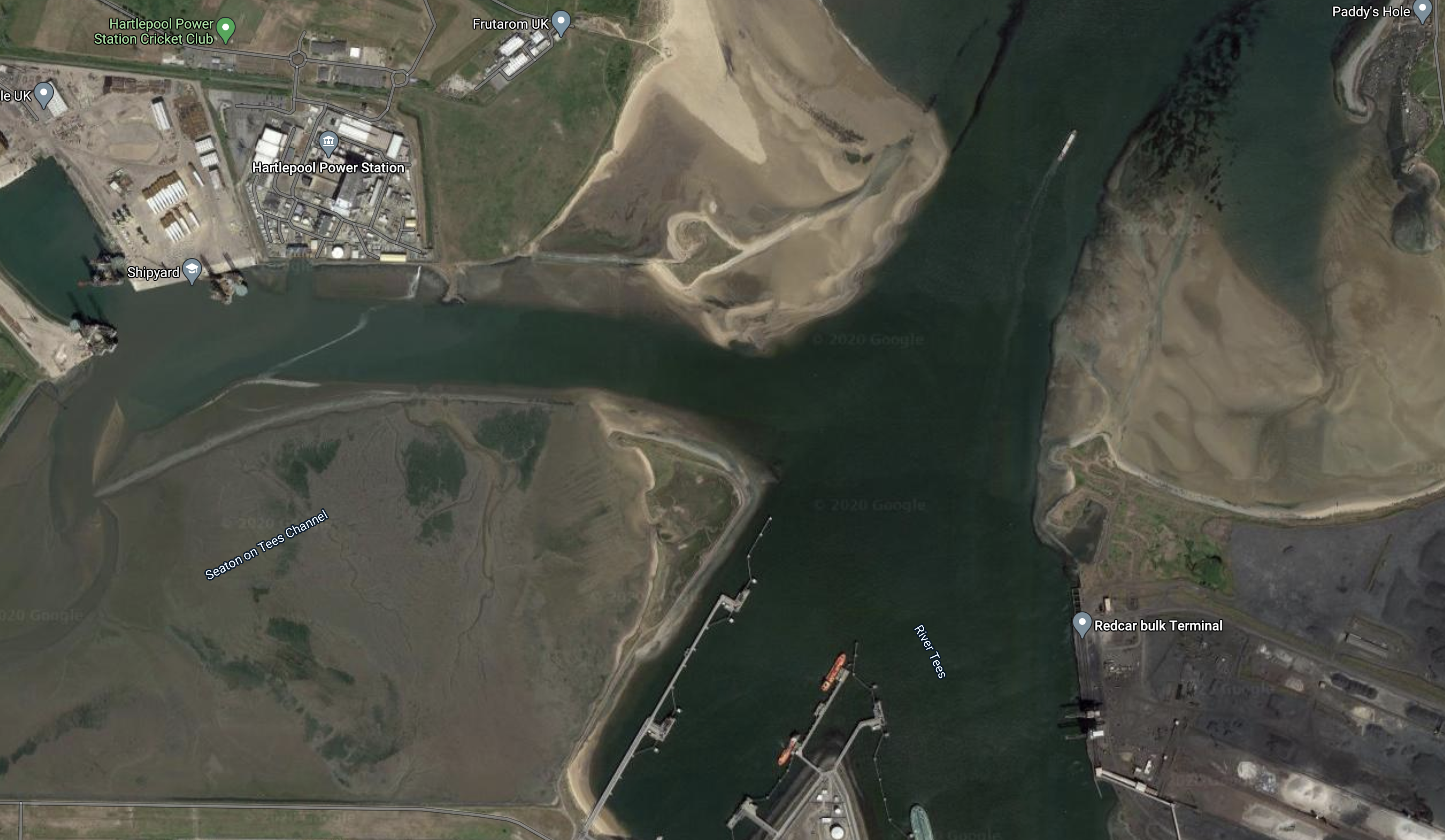
Note.
- Hartlepool power station is in the North-West corner of the map.
- The Hartlepool site is probably about forty acres.
- Wilton power station is on the South side of the Tees in the Wilton International site.
I can see, when Hartlepool power station closes, that more power will be needed on Teesside to feed the various industries in the area.
Some will come from offshore wind, but could a fleet of perhaps four of Rolls-Royce’s small modular reactors be built on a decommissioned Hartlepool power station site to replace the output of the current station?
If built in a planned sequence to correspond to the expected need, there are savings to be made because each unit can be commissioned, when they are completed and used to generate cash flow.
I can even see INEOS building a large electrolyser in the area, that is powered either by wind or nuclear power, according to what power is available and the various costs.
An Integrated Small Modular Nuclear Reactor And Electrolyser
Some countries don’t have good resources to exploit for renewable power.
Will a small modular nuclear reactor, be pared with a large electrolyser to produce hydrogen for feedstock for chemical plants and fuel for transport?
How Much Hydrogen Would A Small Modular Nuclear Reactor Produce?
Consider.
- One of Rolls-Royce’s small modular nuclear reactors has a power output of 440 MW.
- It takes 23 MWh of electricity to create ten tonnes of hydrogen.
This would create 4,600 tonnes of hydrogen in a day.
That is a lot of zero-carbon chemical feedstock to make fertiliser, plastics, pharmaceuticals and other chemicals and fuel for heavy transport.
Conclusion
I will be very surprised if INEOS were not talking to Rolls-Royce about using small modular nuclear reactors to generate the enormous quantities of electrical power and steam, needed to produce chemicals and fulfil their ambition to be a world leader in the supply of hydrogen.
Stonehenge A303 Tunnel Plan Approved By Transport Secretary
The title of this post, is the same as that of this article on the BBC.
This is the introductory paragraph.
A controversial plan to dig a £2.4bn road tunnel near Stonehenge has been approved by the Transport Secretary.
As a non-driver, who would prefer to travel to the South West by train, I have no definite opinion on the proposed scheme.
However, I do hope that the design has taken full account of the effects of the Covid-19 pandemic.
- Will more decide to holiday at home?
- Will more buy holiday homes in Cornwall and Devon?
- Will the road attract more traffic, as most do?
I do feel though, that it will be some years before construction starts, as if ever there was a project, that will be a pot of gold lawyers, then this is it!
Holy Grail Of Energy Storage Receives Two Grants
The title of this post, is the same as that of this article on Off Grid Energy Independence.
This is the introductory paragraph.
RheEnergise is one of only a select handful of businesses to have been awarded grants under both the Sustainable Innovation Fund & the Small Business Research Initiative.
So what have RheEnergise developed?
The home page of their web site, is surprisingly detailed, unlike those of some other companies with new ideas, and not just energy storage companies!
This is the first paragraph on their home page.
RheEnergise is bringing innovation to pumped hydro storage. We call our new solution High-Density Hydro ™.
I think that is a good start, as although pumped hydro storage is well proven and the UK has the 1,728 MW Dinorwig Power Station, which has a storage capacity of 9.1 GWh, building new large pumped storage systems is fraught with difficulties and the technology has seen only modest innovation in the last few decades.
The next paragraph on their home page describes their innovation.
HD Hydro ™ uses our proprietary HD Fluid R-19 ™, which has 2.5x the density of water. R-19 gives RheEnergise projects 2.5x the power and 2.5x the energy when compared to water.
This means that for the same size of pumped hydro storage power station, you get 2.5 times the amount of energy storage.
Alongside a diagram of the system, the advantages of their systems is stated.
Projects can be installed on hills 2.5x lower than a project using water and still achieve the same power – for example, there are so many more hills at 150m than at 375m.
2.5x smaller, by volume, meaning dramatically lower construction costs, faster build times, easier reinstatement and easier landscaping – projects can be entirely hidden.
A very simple innovation has greatly increased the possibilities of pumped hydro storage.
The home page also gives a typical capacity.
RheEnergise projects provide 10MW to 50MW power and 2 to 10 hours of storage capacity.
These systems are in the same range as those of Highview Power, who are building a 50 MW system, with a five hour capacity at Carrington near Manchester, that I wrote about in Highview Power Breaks Ground on 250MWh CRYOBattery Long Duration Energy Storage Facility.
Both have the advantage, that they are easily scalable.
With RheEnergise’s HD Hydro ™, the size of the upper reservoir would need to be increased and with Highview Power’s CRYOBattery, more tanks for the liquid air would need to be added.
The Technology
I certainly agree with the principle behind ReEnergise, both mathematically and practically.
My interest scientifically, is what is the fluid they use?
- Pure water has a specific gravity of one and everything else is measured with respect to this.
- So aluminium, which has a specific gravity of 2.7, is 2.7 times as heavy as water.
- Many of us will be familiar with mercury, which is a metal, that is liquid at room temperature.
- Mercury has a specific gravity of 13.56.
It puzzles me, how someone has created a liquid, almost as heavy as aluminium, that can be pumped and handled like water, as it would need to be, to make a pumped storage system work.
INEOS Launches A New Clean Hydrogen Business To Accelerate The Drive To Net Zero Carbon Emissions
The title of this post, is the same as that of this press release from inovyn, which is an INEOS company.
The press release starts with these points.
- The targets set out by the UN and National Governments around the world requires concrete action. INEOS is aiming not only to contribute by decarbonising energy for its existing operations, but also by providing hydrogen that will help other businesses and sectors to do the same.
- The new business will be based in the UK and will invest in ‘first intent’ Clean Hydrogen production across Europe.
- The production of hydrogen based on electrolysis, powered by zero carbon electricity, will provide flexibility and storage capacity for heat and power, chemicals and transport markets.
- The European Union Hydrogen Strategy, which outlines an infrastructure roadmap for widespread utilisation of hydrogen, across Europe by 2030, present new opportunities for the business.
- Geir Tuft CEO INOVYN said, “INEOS is uniquely placed to play a leading role in developing these new opportunities, driven by emerging demand for affordable, low-carbon energy sources, combined with our existing capabilities in operating large-scale electrolysis.”
With revenue in 2019 of $85 billion in 2019, INEOS has the financial resources to make their ambitions come true.
These are my thoughts on statements in the press release.
Geir Tuft’s Statement
Geir Tuft is reported in the press release as saying.
INEOS is uniquely placed to play a leading role in developing these new opportunities, driven by emerging demand for affordable, low-carbon energy sources, combined with our existing capabilities in operating large-scale electrolysis.
This is the first paragraph of the Wikipedia entry for electrolysis.
In chemistry and manufacturing, electrolysis is a technique that uses direct electric current (DC) to drive an otherwise non-spontaneous chemical reaction. Electrolysis is commercially important as a stage in the separation of elements from naturally occurring sources such as ores using an electrolytic cell. The voltage that is needed for electrolysis to occur is called the decomposition potential.
From my experience of working in ICI’s hydrogen plant at Runcorn in the 1970s and my knowledge of the technology and companies involved in the production of hydrogen, there are two standard routes to produce hydrogen by electrolysis.
- Water can be electrolysed as in the classic school physics experiment to produce hydrogen and oxygen.
- Brine can be electrolysed to produce hydrogen, chlorine, sodium metal and sodium hydroxide.
I worked as an instrument engineer in a plant, where brine was electrolysed using the Caster-Kellner process. As the process uses mercury, it is a process that is not without problems. There is a History section in the Wikipedia entry for the Castner-Kellner process, from where this was extracted.
The mercury cell process continues in use to this day. Current-day mercury cell plant operations are criticized for environmental release of mercury leading in some cases to severe mercury poisoning as occurred in Japan Minamata_disease. Due to these concerns, mercury cell plants are being phased out, and a sustained effort is being made to reduce mercury emissions from existing plants.
My work in the plant, involved developing instruments to measure the mercury in the air inside the plant. I was also developing other instruments and programming a Ferranti Argus 500 computer.
Because of the death of her father, C wasn’t happy in Liverpool and when the chance came of a transfer to ICI Plastics at Welwyn Garden City, I took it.
In his statement Geir Tuft says this.
Combined with our existing capabilities in operating large-scale electrolysis.
Large-scale electrolysis was certainly handled professionally in 1970 and I’m certain that INEOS, which now owns the Runcorn plant, handles the hydrogen just as well, if not better with the help of modern technology.
Hydrogen As A By-Product
In some ways, fifty years ago, the hydrogen was considered a by-product and to some a nuisance, as I don’t think, there was much of a mass market for the gas.
I used to see it being taken away in specialist trailers, but there didn’t seem to be a major use.
300,000 Tonnes Of Clean Hydrogen
This paragraph of the press release, outlines the structure of the business.
INEOS has today launched a new business to develop and build Clean Hydrogen capacity across Europe, in support of the drive towards a zero-carbon future. INEOS currently produces 300,000 tonnes of hydrogen a year mainly as a co-product from its chemical manufacturing operations.
Note that co-product is used, but I suspect in many places they have too much of it, so new markets are welcome.
I have used a figure of 23 MWh, as being needed to obtain ten tonnes of hydrogen, but I can’t find where I obtained it. If it is correct then INEOS will need 690 GWh of electricity.
INEOS, Electrolysis And Hydrogen
This paragraph of the press release, outlines the relationship between INEOS, electrolysis and hydrogen
Through its subsidiary INOVYN, INEOS is Europe’s largest existing operator of electrolysis, the critical technology which uses renewable energy to produce hydrogen for power generation, transportation and industrial use. Its experience in storage and handling of hydrogen combined with its established know-how in electrolysis technology, puts INEOS in a unique position to drive progress towards a carbon-free future based on hydrogen.
All they need is the renewable energy, to add to their expertise in turning it into hydrogen.
INEOS’s Vision
This paragraph of the press release, outlines INEOS vision for hydrogen.
INEOS is already involved in several projects to develop demand for hydrogen, replacing existing carbon-based sources of energy, feedstocks and fuel. It expects to develop further partnerships with leading organisations involved in the development of new applications. INEOS will also work closely with European Governments to ensure the necessary infrastructure is put in place to facilitate hydrogen’s major role in the new Green Economy.
It is certainly a comprehensive vision.
The Conclusion Of The Press Release
Wouter Bleukx, Business Unit Manager Hydrogen has said this.
Hydrogen is an important part of a climate neutral economy that has been discussed for decades. Finally, a hydrogen-fuelled economy is within reach as transportation in the UK, Germany, France and other countries begins to run on this carbon free technology. With extensive experience in electrolysis, INEOS is uniquely placed to support these new opportunities, driven by emerging demand for affordable zero-carbon energy sources.
You can’t say the company lacks ambition.
Conclusion
This looks to me to be ambition and disruptive innovation on a grand scale.
But it is a plan that can only get bigger and more far reaching.
If the company succeeds, I believe, it will bring hydrogen for all.
H2U Eyre Peninsula Gateway Hydrogen Project Begins Largest Green Ammonia Plant
The title of this post, is the same as that of this article on Hydrogen Fuel News.
- South Australia will be creating the largest green ammonia plant in the world.
- It will make 40,000 tonnes of green ammonia every year.
- The plant will be powered totally by renewable energy.
- At its heart will be a 75 MW hydrogen electrolyser.
This paragraph sums up the main objective of the plant.
According to Dr. Attilio Pigneri, H2U CEO, the project will play an important role in the ongoing development of the emerging green hydrogen and green ammonia markets.
It appears a lot of the green ammonia will be exported to Japan.
What Is Green Ammonia?
It is just ammonia produced by renewable energy. This is the first paragraph of the Wikipedia entry for ammonia.
Ammonia is a compound of nitrogen and hydrogen with the formula NH3. A stable binary hydride, and the simplest pnictogen hydride, ammonia is a colourless gas with a characteristic pungent smell. It is a common nitrogenous waste, particularly among aquatic organisms, and it contributes significantly to the nutritional needs of terrestrial organisms by serving as a precursor to food and fertilizers. Ammonia, either directly or indirectly, is also a building block for the synthesis of many pharmaceutical products and is used in many commercial cleaning products. It is mainly collected by downward displacement of both air and water.
It is a very useful chemical compound and it is now being developed as a zero-carbon fuel, as I wrote in The Foul-Smelling Fuel That Could Power Big Ships.
It can also be used as a refrigerant.
One of the most amazing pieces of engineering, I ever saw was a very old barn, where a farmer stored vast tonnages of apples. It was kept cool, by a refrigeration plant certainly built before the Second World War or possibly even the First, which used ammonia as the refrigerant.
Now that’s what I call engineering!
Fed Up Council Threatens Injunction Against Network Rail Over Closure Of Milton Keynes Railway Crossing
The title of this post, is the same as that of this article on the Milton Keynes Citizen.
This looks like the ultimate level crossing argument between a council and Network Rail.
In some ways it’s all a bit ironic, as Network Rail’s headquarters is in Milton Keynes.
This Google Map shows the disputed crossing in Woburn Sands.
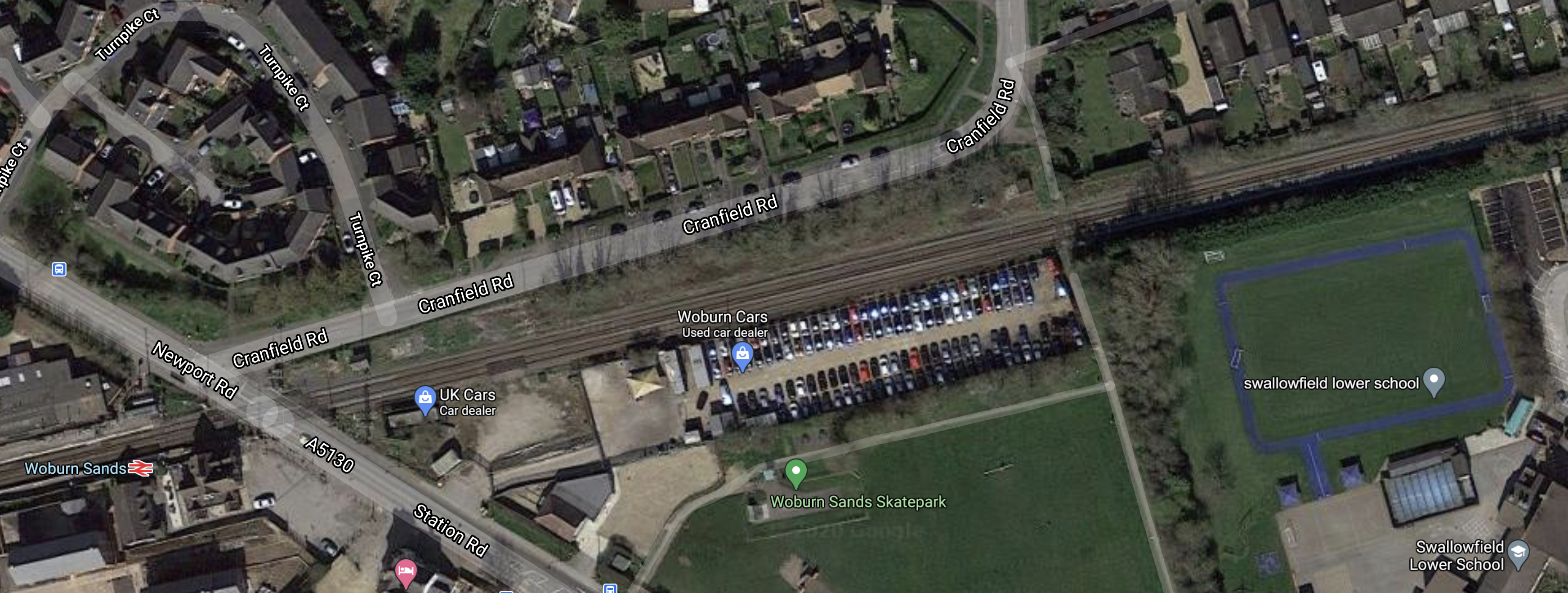
Note.
- The railway is the Marston Vale Line.
- Woburn Sands station and a level crossing is at the Western edge of the map.
- Swallowfield Lower School is at the Eastern edge of the map.
- Cranfield Road runs along the Northern side of the railway.
The row is all about the closure of the foot crossing, that links Cranfield Road and the school.
I live on a road to a primary school. At school times, there is heavy traffic on the pavement, with a lot of younger children in buggies and others with scooters.
- A lot of the younger children are probably not going to school, but are too young to be left at home, by themselves.
- I also see a couple of children in wheel-chairs.
I suspect the traffic to Swallowfield Lower school will be similar.
- A bridge over the railway with steps would not be an adequate solution.
- A bridge with lifts would be expensive.
- A bridge with ramps would probably be difficult to fit in the restricted site.
- A shallow subway with a ramp either side would probably be the only acceptable and affordable solution.
This picture shows such a subway at Enfield Lock station.
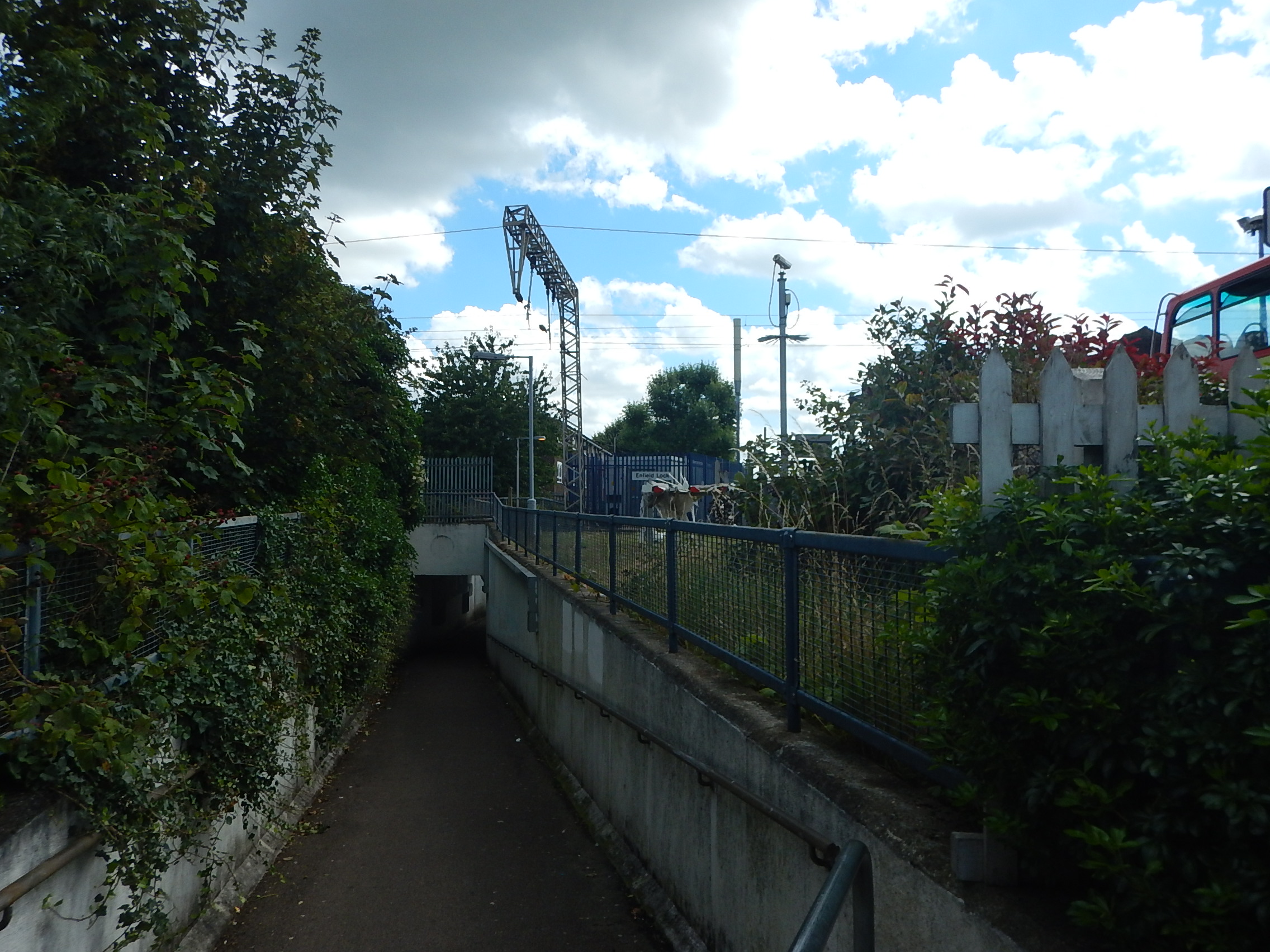
Could one like this, be dug under the railway at Woburn Sands?
 The Anonymous Widower