Redhill To Ashford International Via Tonbridge
I did this trip to find out what the current service was like after writing Gatwick Rail Service Could Link Far Reaches Of The South East.
The journey can be broken into sections.
Changing At Redhill Station
I arrived at Redhill station and took these pictures as I changed to the train for Tonbridge station.
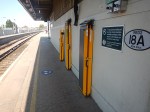

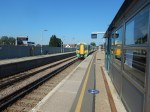
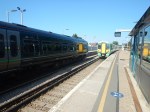
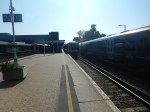
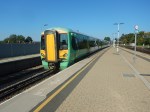

The three services are in Redhill station at approximately the same time.
- The Southern service to and from Tonbridge used Platform 1a.
- The GWR service from Reading to Gatwick used Platform 1.
- The GWR service from Gatwick to Reading used Platform 0.
I think if you’re nippy on the stairs, travellers wanting to go between Reading and Ashford or vice-versa could manage the train, but a direct through service would be preferred by some travellers.
Between Redhill And Tonbridge Stations
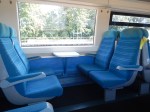
I took these pictures as the train ran between Redhill and Tonbridge.












Note.
- The train was a smart three-car Class 377 train.
- It is a route with a quiet calm along the Downs.
- There are new housing and commercial developments along the route.
Some of the stations could do with improvement, which should probably include step-free access, as at Redhill and Tonbridge stations.
Changing At Tonbridge Station
These pictures show Tonbridge station.


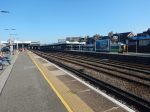

Note.
- The station is step-free with lifts.
- I had to use the bridge to get from one side of the station to the other to catch my next train.
- There seemed to be several passengers, who continued their journey from Tonbridge.
After a wait of nearly thirty minutes I was on my way to Ashford International station.
Thoughts On The Service
These are my thoughts on the service.
Battery Electric Trains
Having seen this service in operation, I feel that this must be one of the most suitable services for battery electric trains in the UK.
In Gatwick Rail Service Could Link Far Reaches Of The South East, I broke the route down into electrified and non-electrified sections.
- Ashford and Tonbridge – Electrified – 26.5 miles – 38 minutes
- Tonbridge and Redhill – Electrified – 20 miles – 35 minutes
- Redhill and Gatwick – Electrified – 7 miles – 8 minutes
- Gatwick and Redhill – Electrified – 7 miles – 8 minutes
- Redhill and Reigate – Electrified – 2 miles – 4 minutes
- Reigate and Shalford Junction – Not Electrified – 17 miles – 20 minutes
- Shalford Junction and North Camp – Electrified – 9 miles – 11 minutes
- North Camp and Wokingham – Not Electrified – 11 miles – 14 minutes
- Wokingham and Reading – Electrified – 7 miles and 9 minutes
Note.
- Ashford, Tonbridge, Redhill, Gatwick, Guildford, Wokingham and Reading are all fully-electrified main line stations.
- Most of the route and the two ends are electrified.
- All electrification is 750 VDC third rail.
- All sections without electrification are less than twenty miles.
- The route is more than 75 % electrified.
There are several trains, which have been fitted with batteries, plans to fit them with batteries exist or would be suitable to be fitted with batteries.
- Class 379 trains – Have already been fitted with batteries for experimental purposes.
- Class 387 trains – Similar to Class 379 trains.
- Class 377 trains – Similar to Class 379 trains.
- Class 350 trains – Being converted to battery operation by Porterbrook
- Class 450 trains – Similar to Class 350 trains.
All trains have similar specifications.
- Four cars.
- 100 mph operating speed.
- All are modern trains.
- They either have third-rail shoes or can be fitted with them.
In addition, no infrastructure changes would be needed.
I also feel, that the same class of train could be used on these services in the South-East.
- Oxted and Uckfield
- Ashford International and Hastings
Why not use one class of battery electric trains for all these routes?
The Three Reverses
The full service between Reading and Ashford International stations will require three reverses at Gatwick and Redhill (twice).
Having seen the current system in operation at Redhill station, I feel the following operation would work, using a version of London Underground’s stepping-up.
From Reading to Ashford International the following sequence would apply.
- The train from Reading would stop in Platform 1 at Redhill, as they do now.
- A second driver would step-up into the rear cab and take control of the train.
- The original or first driver, who’d driven the train from Reading would stay in the cab.
- The second driver would drive the train to Gatwick.
- When, the train is ready to leave, the first driver takes control from his cab.
- The second driver, who’d driven the train from Redhill would stay in the cab.
- The first driver would drive the train back to Platform 0 at Redhill, as they do now.
- When, the train is ready to leave, the second driver takes control from his cab.
- The first driver would step down and probably have a break, before he is needed to drive another train.
- The second driver would drive the train to Ashford International.
Trains going the other way would do a similar sequence in reverse.
Other than the battery system, the trains may need a communication and safety system between the two cabs.
Hydrogen Trains
Consider these points about using a hydrogen-powered train between Reading and Ashford International.
- The maximum distance without electrification is just 20 miles.
- The route is over 75 % electrified.
- Hydrogen fuelling and supply systems would need to be provided.
- Hydrogen trains would require changes to maintenance.
In my view, using a hydrogen-powered train would be like using a sledgehammer to crack a nut.
Gatwick Connect
Could the service be considered to be a Gatwick Connect service?
The full Reading and Ashford International service would call at these major locations
- In the West – Reading, Winnersh, Wokingham, Crowthorne, Farnborough, Guildford, Dorking and Reigate
- In the East – Ashford International, Paddock Wood and Tonbridge.
Both the Eastern and Western legs also call at Redhill.
Could the service be extended in the West?
The obvious destination would be Heathrow.
Once the future of Heathrow is sorted, there will probably be some form of Southern or South-Western access into Heathrow.
Could this service connect Gatwick and Heathrow?
- Perhaps there would be a reverse at Reading!
- Or it might use one of numerous schemes put forward to access Heathrow from the West.
In any case, as Reading is one of the best-connected stations in England, passengers will use this connectivity to get to Gatwick.
Could the service be extended in the East?
Like Reading, Ashford International is a well-connected station.
It would be possible to extend the service to perhaps Canterbury or Dover?
There must also be the possibility of running a service to Maidstone West or Strood in the East!
Conclusion
There could be a lot of possibilities for this route.
I also feel, that it is one of the best routes to be run by battery trains in the UK. These trains could also be the same, as those working Oxted-Uckfield and Ashford International-Hastings.
There would be no need for any new infrastructure, as there is electrification at both ends of the route.
Blues On The Right, Whites On The Left
I just thought, that this arrangement of Minis in Winchester, needed to be snapped.




Why the formation?
Fun With COVID-19
I find the term COVID-19 rather bland and you may have noticed that on this blog, I am tending to call it the Covids.
I feel, that the Covids has a certain edge to it. A superhero might kick someone in the Covids.
It also offers possibilities for creating a long name based on the letters.
How about Chinese Orrible Vaccine Impossible Death Syndrome?
I’m sure someone can do much better than that!
Plans For North Kensington Crossrail Station Back On Track
The title of this post is the same as that of this article on London News Online.
The first two paragraphs say it all.
Proposals for north Kensington to get its own station on the long-delayed Crossrail project have been put back on track.
Kensington and Chelsea council has confirmed it is in talks with Network Rail on producing a feasibility study that could lead to the “Kensal Portobello Station” being built.
According to Wikipedia, if this station is built it will be called Ladbroke Grove station. Wikipedia says this about its location.
In March 2017, it was announced TfL was considering a Crossrail station in Kensal on site of a former gasworks and would be between Old Oak Common and Paddington.
The article says this about the precise location and plans for the area.
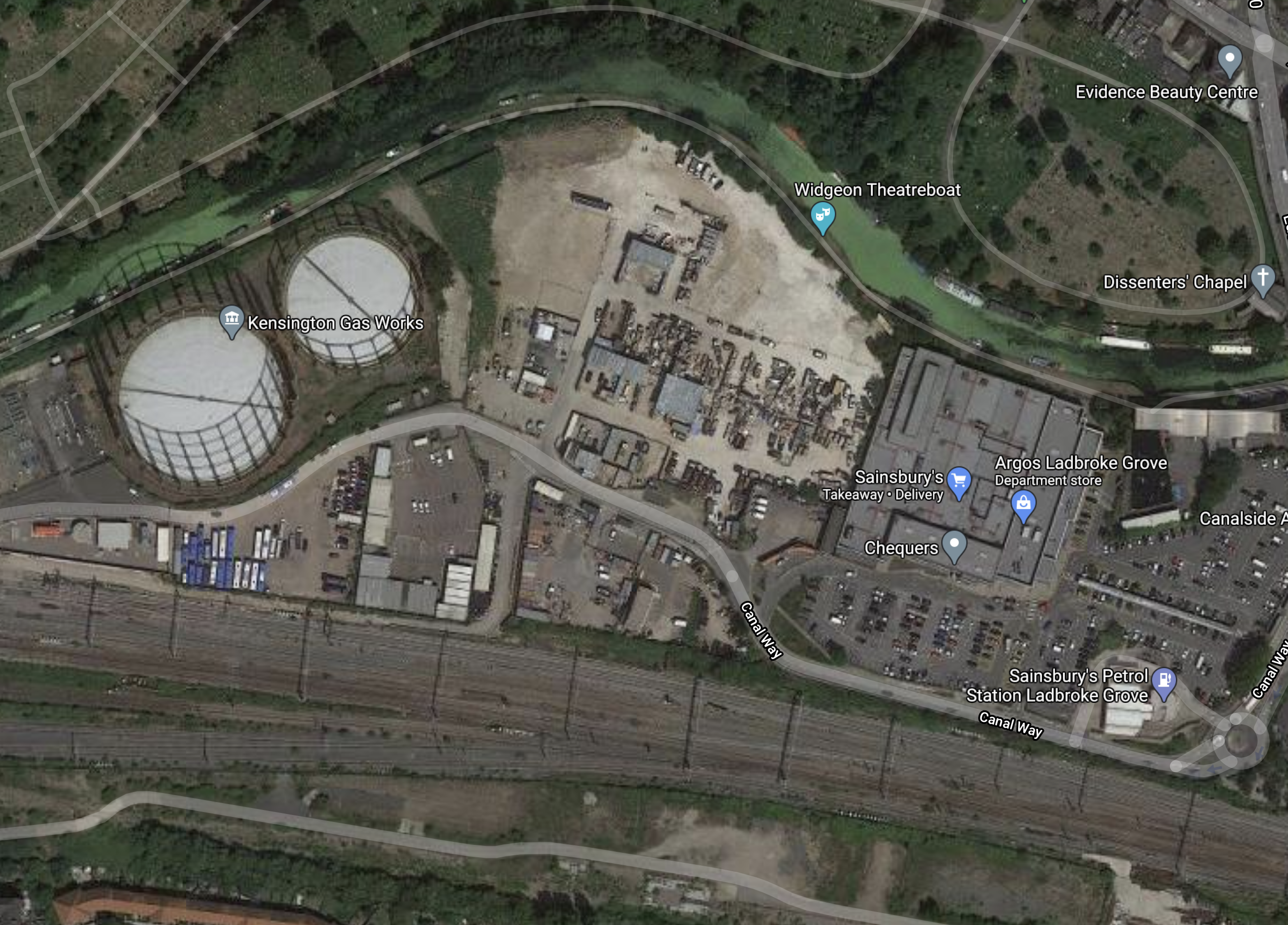
Canal Way, near the Kensington Gas Works and a Sainsbury’s superstore, is being eyed up as a location for the station.
Meanwhile, the council’s 2019 Local Plan refers to the area as the ‘Kensal Canalside Opportunity Area’, and says 3,500 homes could eventually be built there.
This is a Google Map of the area.
Note.
- The Grand Union Canal curving East-West in the top half of the map.
- There looks to be a substantial amount of green algae in the canal.
- The Great Western Main Line passing East-West in the bottom half of the map.
- Kensington Gas Works, a cleared site and a Sainsbury’s superstore, lie between the canal and the railway.
- Canal Way threads itself through to the North of the railway.
Crossrail uses the Northern pair of tracks closest to Canal Way.
Access To The Kensal Canalside Opportunity Area
Consider.
- Canal Way doesn’t appear to have easy access at the Western end of the site.
- Canal Way connects at the Eastern end to a roundabout on Ladbroke Grove.
- How many vehicle journeys are 3,500 homes going to generate?
- I have walked along the towpath of the Grand Union Canal.
I would feel that a Crossrail station to serve the development would improve access by a substantial amount.
This Google Map shows Canal Way and the railway.
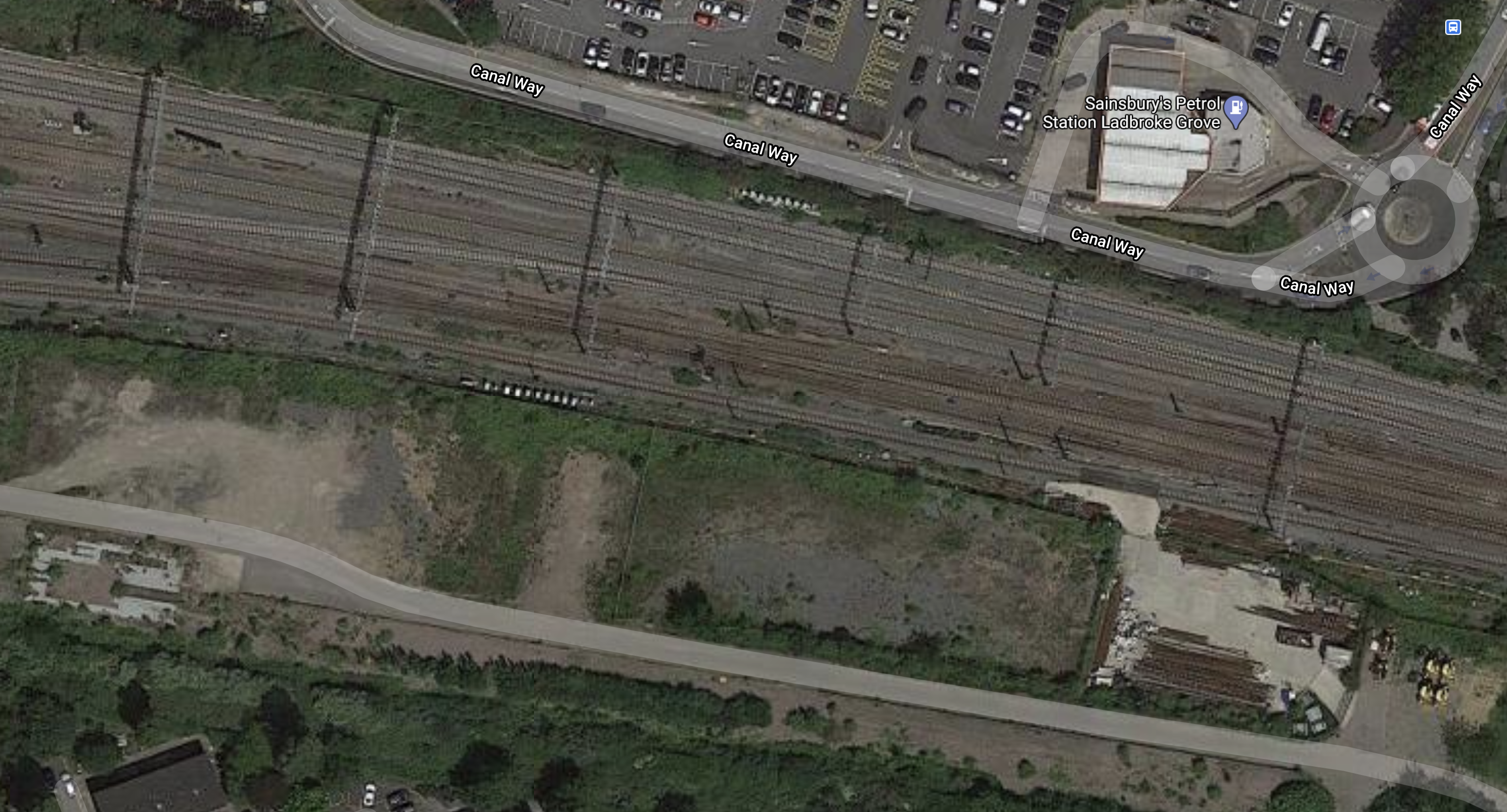
Note.
- The Southern part of Sainsbury’s car park is at the top of the map.
- It would appear that there is space for a station.
- There appears to be a development site on the other side of the railway. Would a foot-bridge over the railway be a good idea?
The station would probably be served by between six and ten trains per hour.
Exploring The North Side Of The Railway
These pictures were taken on the North Side of the Railway, as I walked up Ladbroke Grove and into the Sainsbury’s site.





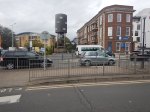
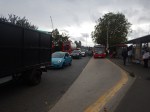
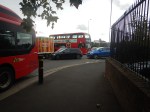







Is the traffic congestion always this bad?
Ladbroke Grove Station Site From The Railway
I took these pictures from a Crossrail train, running towards Paddington.


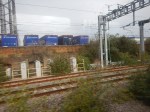
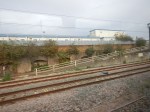

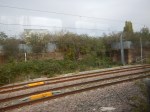





There would appear to be space for a station.
Conclusion
Because of the number of homes proposed for the site and the limited access, I feel that a station at this location is essential. Especially, as cars and buses seemed to be taking fifteen minutes to enter and exit the site.
I also think, there needs to be a pedestrian bridge over the railway to separate the pedestrians from the traffic.
Memories Of Althorpe
On The way to Cleethorpes, I passed through Althorpe station.
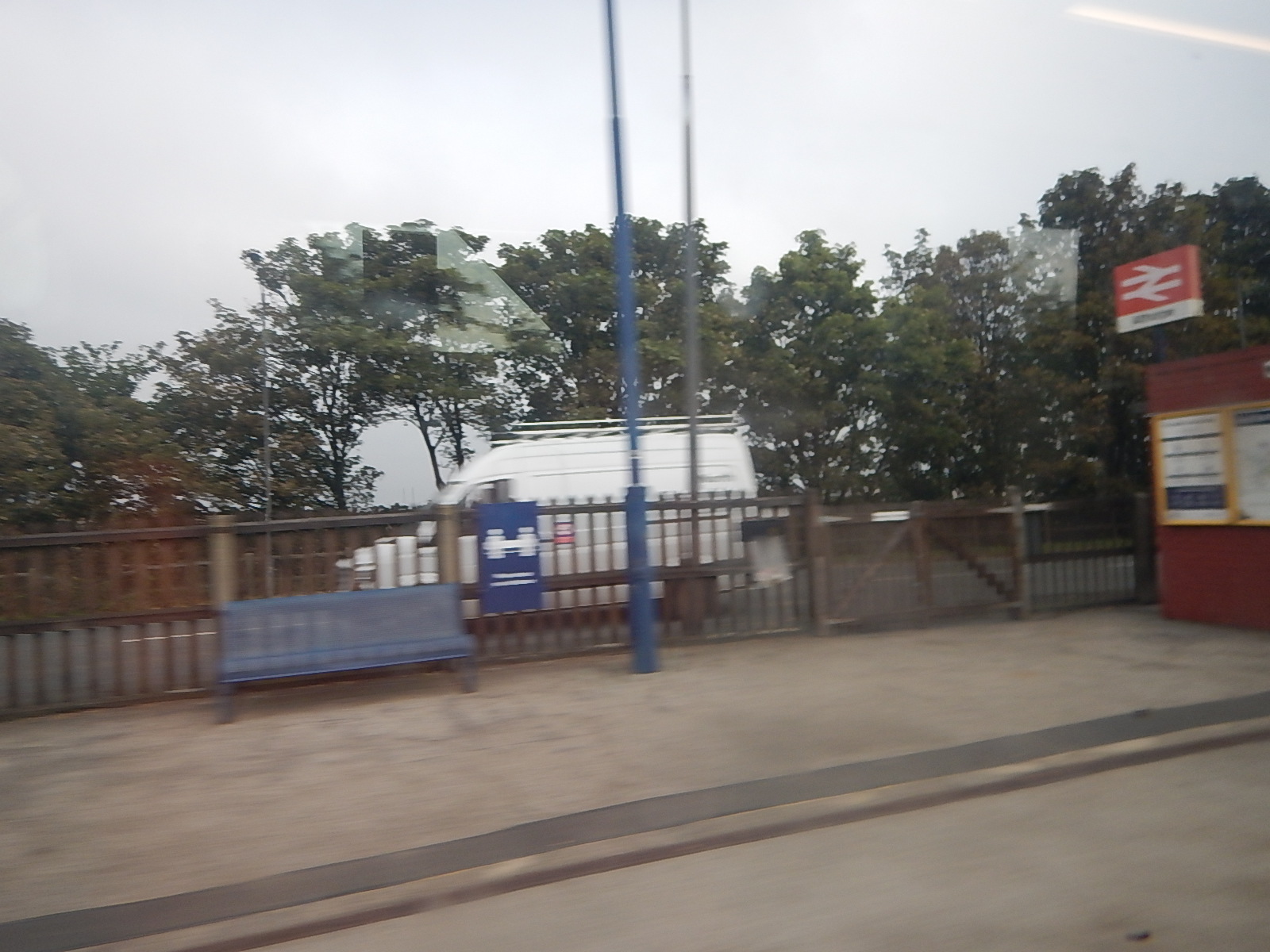
This Google Map shows the area.
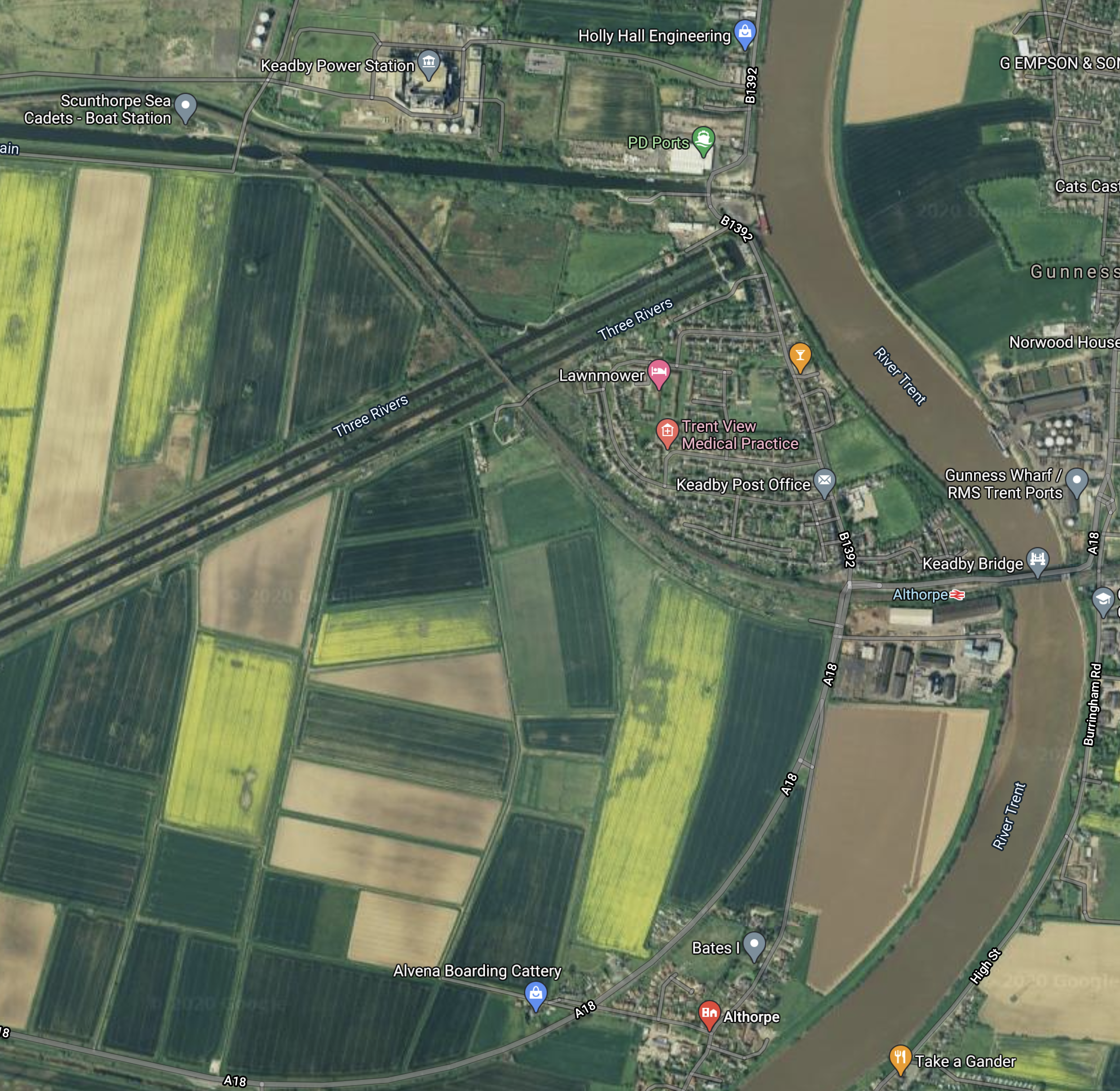
Note.
- The River Trent flowing South to North.
- Keadby power station at the top of the map.
- Althorpe station close to the bridge over the river.
- The village of Althorpe is at the South of the map by the river.
C and myself had friends, who farmed much of the land in the curve of river, South of the railway.
These are a few tales, some might enjoy.
Althorpe And Princess Diana’s Grave
I was once told, that regularly tourists would appear looking for the last resting place of Princess Diana.
Sat-navs may be a wonderful gadget for some, but they do lead those with a certain lack of common sense on wild goose chases.
C And The Tug-Boats
C once spent a night in their farmhouse, which was by the River Trent.
She didn’t sleep well, as tug-boats pulling barges were constantly going past and sounding their sirens. The river was actually above the house, due to the embankments to stop flooding.
Princess Anne And The Centrefold
Our friends’ daughter was a very good rider in eventing and used to supplement her variable income in the sport with modelling. At one point, I used her for some promotional shots for one of my companies.
Some years ago, she was competing at an event in Yorkshire. Coincidentally, this was just after she had appeared as the centrefold in a well-known men’s magazine.
The event was a bit of a nightmare for her, as paparazzi were following her with open copies of the magazine.
At one point, it all got a bit much, so she decided to sneak back to the calm of her horsebox, by a circuitous route.
As she walked back, she encountered Princess Anne, who was also competing and using the same route to avoid the paparazzi.
They talked about the pressures of the paparazzi, who were being a nuisance, with the Princess saying, she approved of my friends’ daughter’s modelling and hoped it continued, as it had taken the pressure off herself.
Flixborough
My friends’ farm was not far from Flixborough, which is infamous for the Flixborough Disaster in 1974, when a chemical plant exploded and killed 28 people and seriously injured a further 36.
My friends also lost several thousand pigs because of the explosion.
Wikipedia says this about the cause of the explosion.
The disaster involved (and may well have been caused by) a hasty modification. There was no on-site senior manager with mechanical engineering expertise (virtually all the plant management had chemical engineering qualifications); mechanical engineering issues with the modification were overlooked by the managers who approved it, nor was the severity of the potential consequences of its failure appreciated.
At the time, I had just left ICI and I was still in contact with my former colleagues.
One told me, that he had met a Senior ICI Engineer, who had been involved with the enquiry into the disaster.
The plant had been a copy of a Dutch plant, that had been built to metric units, which were converted to Imperial to build the Flixborough plant.
As ICI had used metric units since the mid-1950s, there was considerable alarm in the mind of the Senior Engineer, that when the hasty modification was made, someone got mixed up.
Would the Flixborough disaster have happened, if the plant had been built as a copy of the Dutch plant using metric units?
The Mathematics Of A Hydrogen-Powered Freight Locomotive
If we are going to decarbonise the railways in the UK and in many countries of the world, there is a need to replace diesel locomotives with a zero-carbon alternative.
In looking at Airbus’s proposal for hydrogen powered aircraft in ZEROe – Towards The World’s First Zero-Emission Commercial Aircraft, it opened my eyes to the possibilities of powering freight locomotives using gas-turbine engines running on liquid hydrogen.
A Hydrogen-Powered Equivalent Of A Class 68 Locomotive
The Class 68 Locomotive is a modern diesel locomotive used on UK railways.
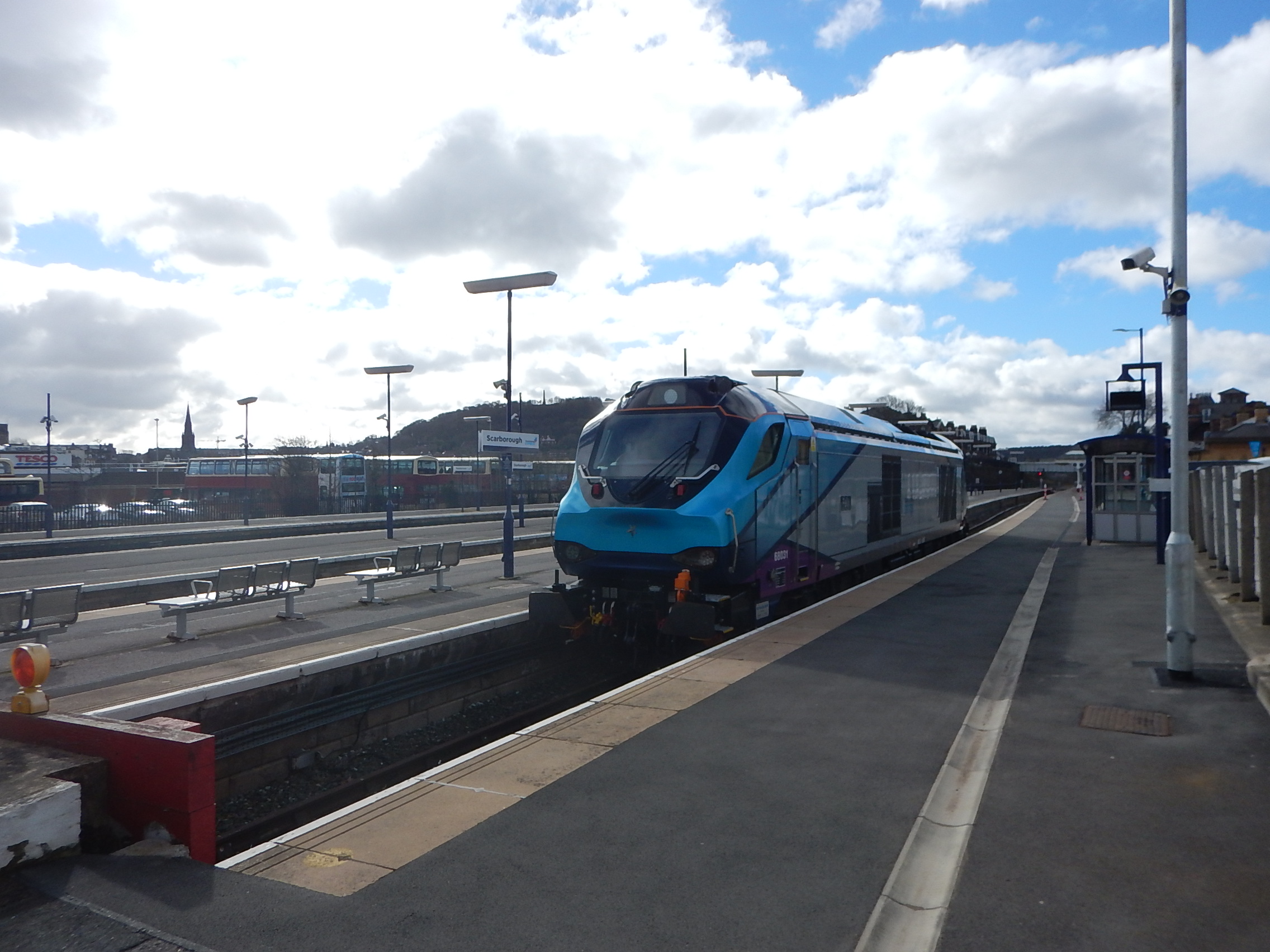
This is a brief specification
- It can pull both passenger and freight trains.
- It has an operating speed of 100 mph.
- The diesel engine is rated at 2.8 MW
- It has an electric transmission.
- It has a 5,000 litre diesel tank.
- It weighs 85 tonnes.
- It is 20.5 metres long.
There are thirty-four of these locomotives in service, where some haul passenger trains for Chiltern Railways and TransPennine Express.
Rolls-Royce’s Staggering Development
Staggering is not my word, but that of Paul Stein, who is Rolls-Royce’s Chief Technology Officer.
He used the word in a press release, which I discuss in Our Sustainability Journey.
To electrify aviation, Rolls-Royce has developed a 2.5 MW generator, based on a small gas-turbine engine, which Paul Stein describes like this.
Amongst the many great achievements from E-Fan X has been the generator – about the same size as a beer keg – but producing a staggering 2.5 MW. That’s enough power to supply 2,500 homes and fully represents the pioneering spirit on this project.
This generator is designed for flight and the data sheet for the gas-turbine engine is available on the Internet.
- It has a weight of under a couple of tonnes compared to the thirteen tonnes of the diesel engine and generator in a Class 68 locomotive.
- It is almost as powerful as the diesel.
- It looks to be as frugal, if not more so!
- Rolls-Royce haven’t said if this gas-turbine can run on aviation biofuel, but as many of Rolls-Royce’s large engines can, I would be very surprised if it couldn’t!
Rolls-Royce’s German subsidiary; MTU is a large producer of rail and maritime diesel engines, so the company has the expertise to customise the generator for rail applications.
Could this generator be modified to run on liquid hydrogen and used to power a Class 68-sized locomotive?
- The size of the generator must be an advantage.
- Most gas-turbine engines can be modified to run on natural gas and hydrogen.
- Its power output is electricity.
- There’s probably space to fit two engines in a Class 68 locomotive.
In addition, a battery could be added to the transmission to enable regenerative braking to battery, which would increase the efficiency of the locomotive.
Storing Enough Hydrogen
I believe that the hydrogen-powered locomotive should carry as much energy as a Class 68 locomotive.
- A Class 68 locomotive has a capacity of 5,000 litres of diesel fuel.
- This will have a mass of 4.19 tonnes.
- Each kilogram of diesel can produce 47 Mega Joules of energy.
- This means that full fuel tanks contain 196,695 Mega Joules of energy.
- Each litre of liquid hydrogen can produce 10.273 Mega Joules of energy
This means that to carry the same amount of energy will need 19,147 litres or 19.15 cubic metres of liquid hydrogen.
- This could be contained in a cylindrical tank with a diameter of 2 metres and a length of 6 metres.
- It would also weigh 1.38 tonnes.
The E-Fan-X aircraft project must have worked out how to store, similar amounts of liquid hydrogen.
Note that I used this Energy And Fuel Data Sheet from Birmingham University.
Running On Electrification
As the locomotive would have an electric transmission, there is no reason, why it could not run using both 25 KVAC overhead and 750 VDC third-rail electrification.
This would enable the locomotive to haul trains efficiently on partially electrified routes like between Felixstowe and Leeds.
Hydrogen-Powered Reciprocating Engines
When it comes to diesel engines to power railway locomotives and big trucks, there are few companies bigger than Cummins, which in 2018, turned over nearly 24 billion dollars.
- A large proportion of this revenue could be at risk, if governments around the world, get serious about decarbonisation.
- Cummins have not let the worst just happen and in 2019, they acquired Hydrogenics, who are a hydrogen power company, that they now own in an 81/19 partnership with Air Liquide.
- Could all this expertise and Cummins research combine to produce powerful hydrogen-powered reciprocating engines?
- Other companies, like ABC and ULEMCo are going this route, to modify existing diesel engines to run on hydrogen or a mixture of hydrogen and diesel.
I believe it is very likely, that Cummins or another company comes up with a solution to decarbonise rail locomotives, based on a conversion of an existing diesel engine.
Refuelling Hydrogen-Powered Rail Locomotives
One of problems with hydrogen-powered trucks and cars, is that there is no nationwide refuelling network providing hydrogen. But railway locomotives and trains usually return to depots at the end of the day for servicing and can be fuelled there.
Conclusion
I feel that there are several routes to a hydrogen-powered railway locomotive and all the components could be fitted into the body of a diesel locomotive the size of a Class 68 locomotive.
Consider.
- Decarbonising railway locomotives and ships could be a large market.
- It offers the opportunities of substantial carbon reductions.
- The small size of the Rolls-Royce 2.5 MW generator must offer advantages.
- Some current diesel-electric locomotives might be convertible to hydrogen power.
I very much feel that companies like Rolls-Royce and Cummins (and Caterpillar!), will move in and attempt to claim this lucrative worldwide market.
Environmentally-Friendly InterCity 125 Trains
InterCity 125 trains are not the most environmentally-friendly of beasts.
- They do not meet the modern emission regulations.
- They still emit a lot of carbon dioxide.
- They is also a deadline of 2040, when UK railways will be net-carbon-free.
There might also be individuals and groups, who feel that these elderly trains with so much history, should be replaced by modern zero-carbon trains.
- Would the same groups accept electrification with all the wires?
- Would the train operating companies, accept battery power with long waits for charging?
- Would hydrogen be viable on the numerous branch lines in Devon and Cornwall, with some difficult access to depots by road. Especially, if the hydrogen had to be brought from say Bristol or Southampton!
But various engineering solutions are emerging.
Biodiesel
This is probably the simplest solution and I suspect most modern engines can run on biodiesel with simple modifications. InterCity 125s have modern engines from German firm and Rolls-Royce subsidiary; MTU, so they probably have a solution in their tool-box.
Computerisation
I have never built a computer control system for anything, but I did work with the first engineers in the world, who computerised a chemical plant.
They always emphasised, if you could nudge the plant into the best area of operation, you’d have a much more efficient plant, that produced more product from the same amount of feedstock.
At about the same time, aircraft engine manufacturers were developing FADEC or Full Authority Digital Engine Control, which effectively let the engine’s control system take over the engine and do what the pilot had requested. The pilot can take back control, but if FADEC fails, the engine is dead.
But judging by the numbers of jet aircraft, that have engine failures, this scenario can’t be very common, as otherwise the tabloids would be screaming as they did recently over the 737 MAX.
Now, I don’t know whether the MTU 16V4000 R41R engines fitted to the InterCity 125, have an intelligent FADEC to improve their performance or whether they are of an older design.
If you worry about FADEC, when you fly, then read or note these points.
- Read the FADEC’s Wikipedia entry.
- Your car is likely to be heavily computerised.
- If you took a modern train or bus to the airport, that certainly will have been heavily computerised.
You could be more likely to meet someone with COVID-19 on a flight, than suffer an air-crash, depending on where you travel.
Rolls-Royce’s Staggering Development
Staggering is not my word, but that of Paul Stein, who is Rolls-Royce’s Chief Technology Officer.
He used the word in a press release, which I discuss in Our Sustainability Journey.
To electrify aviation, Rolls-Royce has developed a 2.5 MW generator, based on a small gas-turbine engine, which Paul Stein describes like this.
Amongst the many great achievements from E-Fan X has been the generator – about the same size as a beer keg – but producing a staggering 2.5 MW. That’s enough power to supply 2,500 homes and fully represents the pioneering spirit on this project.
This generator is designed for flight and the data sheet for the gas-turbine engine is available on the Internet.
- It has a weight of under a couple of tonnes compared to the thirteen tonnes of the diesel engine and generator in a Class 68 locomotive.
- It is also more powerful than the diesel.
- It looks to be as frugal, if not more so!
- Rolls-Royce haven’t said if this gas-turbine can run on aviation biofuel, but as many of Rolls-Royce’s large engines can, I would be very surprised if it couldn’t!
Rolls-Royce’s German subsidiary is a large producer of rail and maritime diesel engines, so the company has the expertise to customise the generator for rail applications.
Conclusion
I think it is possible, that the Class 43 power-cars can be re-engined to make them carbon-neutral.
What Size Of Hydrogen Tank Will Be Needed On A ZEROe Turbofan?
I believe that Airbus’s proposed ZEROe Turbofan is designed for the same market segment as a A 320 neo.
- This aircraft has a fuel capacity of 26,730 litres of kerosene.
- This will have a mass of 21.38 tonnes.
- Each kilogram of kerosene can produce 46 Mega Joules of energy
- This means that full fuel tanks contain 983, 480 Mega Joules of energy.
- Each litre of liquid hydrogen can produce 10.273 Mega Joules of energy
This means that to carry the same amount of energy will need a 95,734.5 litres or 95.7 cubic metres of liquid hydrogen.
- This could be contained in a cylindrical tank with a diameter of 4 metres and a length of 7.6 metres.
- It would also weigh 6.93 tonnes.
As the range of the A 320 neo is given as 6,300 kilometres and that of the ZEROe Turbofan, as just 3,700 kilometres. the tank could probably be shorter.
Note that I used this Energy And Fuel Data Sheet from Birmingham University.
Conclusion
Carrying as much energy as an A 320 neo will be difficult.
- Range will be reduced.
- A new more efficient airframe will be necessary.
- As volume is probably more of a problem than weight, the fuselage might be lengthened by a few metres.
Designing the hydrogen system will be challenging, but I would be surprised if it were an insurmountable problem.
 The Anonymous Widower