Pancreatic Cancer Deaths Around The World
This data is from a web site called World Life Expectancy.
My son died at just 37 and if I can save one person’s family, from the same anguish, that I have suffered, it would have been worth it.
The data is World Health Organisation data from 2018, and the figures shown are as follows.
- Age adjusted death rate per 100,000 of the population
- World ranking
- Rating in the country of pancreatic cancer amongst all deaths.
The country name links to the data.
- Argentina – 7.78 – 31 – 16
- Armenia – 10.34 – 3 – 15
- Australia – 6.25 – 50 – 13
- Austria – 9.13 – 10 – 12
- Bangladesh – 0.77 – 176 – >50
- Barbados – 7.99 – 22 – 22
- Belgium – 7.34 – 38 – 12
- Bulgaria – 7.91 – 25 – 15
- Cambodia – 1.79 – 139 – 48
- Canada – 6.40 – 47 – 13
- China – 4.07 – 85 – 22
- Cote d’Ivoire – 3.81 – 88 – 48
- Croatia – 8.05 – 18 – 15
- Cyprus – 6.50 – 45 – 15
- Czech Republic – 9.89 – 5 – 14
- Denmark – 8.51 – 16 – 12
- Estonia – 9.26 – 6 – 15
- Ethiopia – 1.16 – 165 – >50
- Finland – 8.78 – 11 – 11
- France – 7.92 – 24 – 10
- Germany – 8.68 – 14 – 13
- Greece – 7.36 – 37 – 10
- Haiti – 2.99 – 107 – 42
- Hungary – 11.35 – 1 – 13
- Iceland – 9.21 – 7 – 10
- India – 1.63 – 146 – >50
- Iran – 2.28 – 128 – 27
- Iraq – 1.39 – 99 – 37
- Ireland – 6.83 – 40 – 14
- Israel – 9.18 – 8 – 12
- Italy – 7.41 – 36 – 10
- Japan – 8.74 – 12 – 10
- Laos – 1.15 – 167 – >50
- Latvia – 6.72 – 13 – 14
- Lithuania – 8.21 – 19 – 15
- Luxembourg – 8.15 – 20 – 12
- Malta – 10.01 – 4 – 11
- Netherlands – 8.38 – 17 – 11
- New Zealand – 5.69 – 53 – 15
- Niger – 1.77 – 142 – 50
- Nigeria – 2.30 – 120 – >50
- Norway – 7.78 – 30 – 11
- Pakistan – 0.51 – 182 – >50
- Russia – 7.86 – 29 – 20
- Slovakia – 9.17 – 9 – 14
- Slovenia – 8.55 – 15 – 12
- South Africa – 4.89 – 71 – 33
- South Korea – 6.75 – 42 – 15
- Spain – 6.32 – 49 – 11
- Sweden – 8.15 – 21 – 12
- Switzerland – 7.49 – 34 – 11
- United Kingdom – 6.55 – 44 – 14
- United States – 7.96 – 23 – 17
- Uruquay – 10.72 – 2 – 15
- Vietnam – 0.75 – 178 – 50
These are a few of my thoughts.
The Top Ten Countries
These are the top ten countries.
- Hungary
- Uruguay
- Armemia
- Malta
- Czech Republic
- Estonia
- Iceland
- Israel
- Slovakia
- Austria
The full list is on the World Life Expectancy web site.
From the top ten, it looks to me, that pancreatic cancer seems to be common in the old Austro-Hungarian Empire.
I also think there could be a Jewish connection.
In the history of Jews in the Austro-Hungarian Empire on Wikipedia, this is an extract, that talks about Jews around 1900.
In that period, the majority of Jews in Austria-Hungary lived in small towns (shtetls) in Galicia and rural areas in Hungary and Bohemia; however, they had large communities and even local majorities in the downtown districts of Vienna, Budapest and Prague. Of the pre-World War I military forces of the major European powers, the Austro-Hungarian army was almost alone in its regular promotion of Jews to positions of command. While the Jewish population of the lands of the Dual Monarchy was about five percent, Jews made up nearly eighteen percent of the reserve officer corps. Thanks to the modernity of the constitution and to the benevolence of emperor Franz Joseph, the Austrian Jews came to regard the era of Austria-Hungary as a golden era of their history.
That doesn’t sound like they were suffering large amounts of anti-semitism, as they had for a long time in the Baltic States and East Prussia, where my ancestor emigrated to England around 1800.
I need some help here from a Jewish historian.
But the statistics and geography are indicating to me, that Jews from the Austro-Hungarian Empire could have chosen to emigate through the Balkans to Palestine, when they saw the way the tide was turning after World War One.
I know a bit about life in Palestine in the 1930s, because at one period of my life, my next-door neighbour was a retired British Officer, who was stationed in the country. He was actually in the King David Hotel, when it was blown up. Charles is long-dead now, but I wished I’d recorded his memories, as in today’s Middle East climate, they would be an unusual insight.
But why Iceland, Malta and Uruguay?
Ireland And The United Kingdom
As could be expected, Ireland and the United Kingdom are fairly close together in the table; at 40 and 44 respectively.
- Just men and the positions are 49 and 51.
- Just women and it’s 37 and 42.
In the tables, Canada and Australia are just below the United Kingdom, with New Zealand a few places further down.
Cambodia, Laos And Vietnam
To a coeliac like me, Cambodia is interesting, as they are reckoned to have the most gluten-free cuisine in the world.
But these three countries, are all in the bottom third of the table, along with some other major countries, whose food has a lot of rice; Bangladesh, India, Myanmar, Pakistan and Thailand.
I know gluten affects my health, but if your diet contains little gluten, does that lower, your chance of getting pancreatic cancer?
Net Zero: Alternatives To Hydrogen
The title of this post, is the same as that of this article on The Chemical Engineer.
This is the introductory sub-title.
An alternative view for how the UK can achieve net zero for housing and other users, without the wholesale use of hydrogen.
I agree with a lot of what the author says.
- Better insulated houses with heat pumps, battery and thermal storage, and renewable energy.
- The production of green hydrogen for use as a chemical feedstock.
- Biofuels could be promising for heavy haulage, ships and trains.
I do think though, that he ignores, what I think will be a big market for hydrogen – the powering of vehicles like buses, trucks and freight trains in urban areas.
In fact, I believe that the hauling of freight trains, is a classic use for a battery electric locomotive, with a hydrogen-powered range extender.
Read the article!
Edinburgh Waverley Masterplan
The title of this post, is the same as that of this page on the Network Rail web site.
This is the sub-title.
Creating A Vision For The Future Of Waverley Station.
Edinburgh Waverley station has improved it, in the near forty years, I’ve used it, but future growth in traffic will mean more capacity and further improvements will be needed.
The page on the Network Rail web site links to a pdf file, which lays out current thinking, which will go forward for consultation and creation of the final design.
If this results in stations as good as London Bridge and Kings Cross in London, Edinburgh will have the gateway station, that it needs.
Long Train Runnin’
I went to Heathrow today, in a nine car Class 345 train.

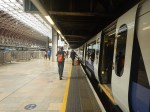

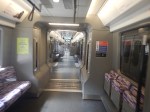


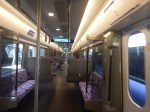
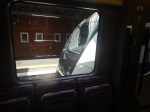
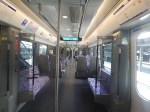
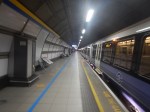
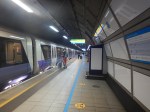

Note.
- This service is the replacement for Heathrow Connect.
- My trains left from and returned to Platform 11 in Paddington station. But although perhaps eighty percent of Heathrow Terminal 5 services appear to use this platform, not all do!
At least something is at last going right for Crossrail!
Replacement Of South Western Railway’s Class 158/159 Trains
South Western Railway use Class 158 and Class 159 trains on the following routes.
- London Waterloo and Salisbury (and Yeovil Pen Mill)
- London Waterloo and Exeter St Davids
- Romsey and Salisbury
- Salisbury and Bristol Temple Meads
The two types of train are very similar, with the Class 159 trains being converted from Class 158 trains.
- There are ten two-car Class 158 trains in service with South Western Railway. which have a capacity of around 140 seats
- There are thirty three-car Class 159 trains in service with South Western Railway, which have a capacity of 196 seats
- Each car has a diesel engine driving two axles through a hydraulic transmission.
- Both trains have an operating speed of 90 mph.
- The trains are all around thirty years old.
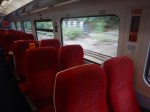
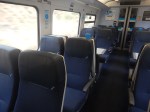
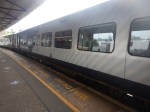
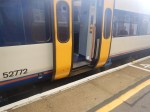
I took these pictures on my trip to Basingstoke station on Friday, when I rode in nine-car formation of three Class 159 trains both ways.

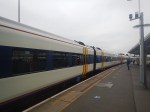


Note.
- For much of the route between Clapham Junction and Basingstoke, the trains were doing just a few mph short of ninety on the 100 mph route.
- The interiors are fairly spacious and I got a table seat both ways.
As diesel multiple units go, there are worse ones in service in the UK. And I don’t mean Pacers.
Replacement Possibilities
Ideally, these trains should be replaced with zero-carbon trains.
As most of the routes, on which the trains run are not-electrified, there must either be a lot of new third-rail electrification or battery electric trains must be used.
These are my thoughts for the various trains.
Two-Car Class 158 Train
These trains have the following specification.
- Length – 46 metres
- Seats – 140
- Operating Speed – 90 mph
In Converting Class 456 Trains Into Two-Car Battery Electric Trains, I stated that these Class 456 battery electric trains would have the following specification.
- Seats – 113
- Range on Battery Power – 30-40 miles
- Operating Speed – 75 mph
I also felt that as the trains would receive a new AC traction system, that the operating speed could be increased to perhaps 90 mph.
I wouldn’t be surprised to find, that a professional conversion capitalising on Alstom’s work to create the Class 600 hydrogen train, could turn a Class 456 train into a battery electric replacement for a two-car Class 158 train.
Three-Car Class 159 Train
These trains have the following specification.
- Length – 69 metres
- Seats – 196
- Operating Speed – 90 mph
Could these be replaced with a three-car Class 456 battery electric train, lengthened by the addition of a Trailer Car from a Class 321 train, that has been converted to a Class 600 hydrogen train?
As most Class 159 trains probably work in longer formations, this could be a possibility, to replace units working alone.
Two Three-Car Class 159 Trains Working As A Six-Car Formation
These trains have the following specification.
- Length – 138 metres
- Seats – 392
- Operating Speed – 90 mph
This formation would be impossible for Class 456 battery electric trains, so it must be a case for calling up the heavy brigade, in the shape of Hitachi’s Regional Battery Train, which is described in this Hitachi infographic.

A five-car version of this train could have the following specification.
- Length – 130 metres
- Seats – 326
- Range on battery power – 56 miles
- Operating Speed – 100 mph
- It would probably be able to work with both 25 KVAC overhead and 750 VDC third-rail electrification.
Note.
- More seats could probably be fitted if needed.
- Platforms where the trains would work can already accept nine-car Class 159 trains, which are 207 metres long.
- The trains would charge the batteries using the electrification between London Waterloo and Basingstoke.
- Fast Charge facilities would also be needed at some intermediate and terminal stations like Bristol Temple Meads, Exeter St. Davids, Salisbury, Westbury and Yeovil Junction.
- These trains would be ten mph faster than the Class 159 trains and this may enable the saving of a few minutes between London Waterloo and Basingstoke stations.
A six-car version would be possible, if more capacity is needed.
Three Three-Car Class 159 Trains Working As A Nine-Car Formation
These trains have the following specification.
- Length – 207 metres
- Seats – 588
- Operating Speed – 90 mph
An eight-car version of Hitachi’s Regional Battery Train could have the following specification.
- Length – 208 metres
- Seats – 522
- Range on battery power – 56 miles
- Operating Speed – 100 mph
- It would probably be able to work with both 25 KVAC overhead and 750 VDC third-rail electrification.
Note.
- More seats could probably be fitted if needed.
- Platforms where the trains would work can already accept nine-car Class 159 trains, which are 207 metres long.
- The trains would charge the batteries using the electrification between London Waterloo and Basingstoke.
- Fast Charge facilities would also be needed at some intermediate and terminal stations like Bristol Temple Meads, Exeter St. Davids, Salisbury, Westbury and Yeovil Junction.
- These trains would be ten mph faster than the Class 159 trains and this may enable the saving of a few minutes between London Waterloo and Basingstoke stations.
A nine-car version would be possible, if more capacity is needed.
More Capacity Between London Waterloo And Basingstoke
London Waterloo and Basingstoke was very busy before COVID-19 and it needed more capacity.
- All the express passenger trains are capable of 100 mph, with the exception of the diesel Class 158 and Class 159 trains, which can only do 90 mph.
- If these diesel trains were to be replaced by Hitachi’s Regional Battery Trains, these trains will be able to do 100 mph on battery power.
This speed increase will enable faster journey times and increase capacity.
- But between London Waterloo and Basingstoke, they will be using the third-rail electrification.
- Class 800 and Class 801 trains, which are cousins of the Regional Battery Train are currently able to do 125 mph between London Paddington and Swindon and London Kings Cross and Doncaster.
- London and Doncaster is being upgraded to 140 mph running.
So will we see 125 mph running between London Waterloo and Basingstoke? I will be very surprised if we didn’t, before 2030.
Charging The Batteries
Much of the charging of batteries will be performed whilst running on electrified lines.
But as I indicated there will need to be Fast Charge facilities at intermediate and terminal stations.
The Need For A Universal Fast Charge Facility For All Battery Electric Trains
If you look at Salisbury for example, the facility would need to be able handle all types of battery electric trains. So the Government, Network Rail and the Office of Road and Rail must come up with a universal design of charging facility that can be used by all battery electric trains.
Standard UK electrification, which can be either 25 KVAC overhead or 750 VDC third-rail, can obviously be used, as all battery electric trains will be designed to be able to charge the batteries, whilst running on electrified lines.
But a Universal Fast Charge system is surely needed, that can charge every battery electric train running on the UK rail network.
Splash-and-Dash At Yeovil Junction Station
But I believe that trains like Hitachi’s Regional Battery Train, when working long routes like Salisbury and Exeter will need the equivalent of Formula One’s Splash-and-Dash, where a fast pit-stop enabled cars to complete the race in the most economic manner.
If you look at timings between Salisbury and Exeter on Real Time Trains, you find the following.
- Salisbury and Exeter is 88.5 miles
- Salisbury and Yeovil Junction is 39 miles
- Yeovil Junction and Exeter St. Davids is 50 miles
- Trains seem to be timed to wait between 8-14 minutes at Yeovil Junction station.
- At several times during the day the Westbound and Eastbound services pass at Yeovil Junction station.
I would assume the wait and the passing, are so that trains can safely navigate the sections of single-track line, that are a legacy of British Rail’s policy of saving money, that affectively ruined the efficiency of sections of the network.
It would appear that a well-designed Universal Fast Charge facility at Yeovil Junction station could enable battery electric trains to run between Salisbury and Exeter St Davids stations, without any adjustment to the existing timetable.
This Google Map shows Yeovil Junction station.
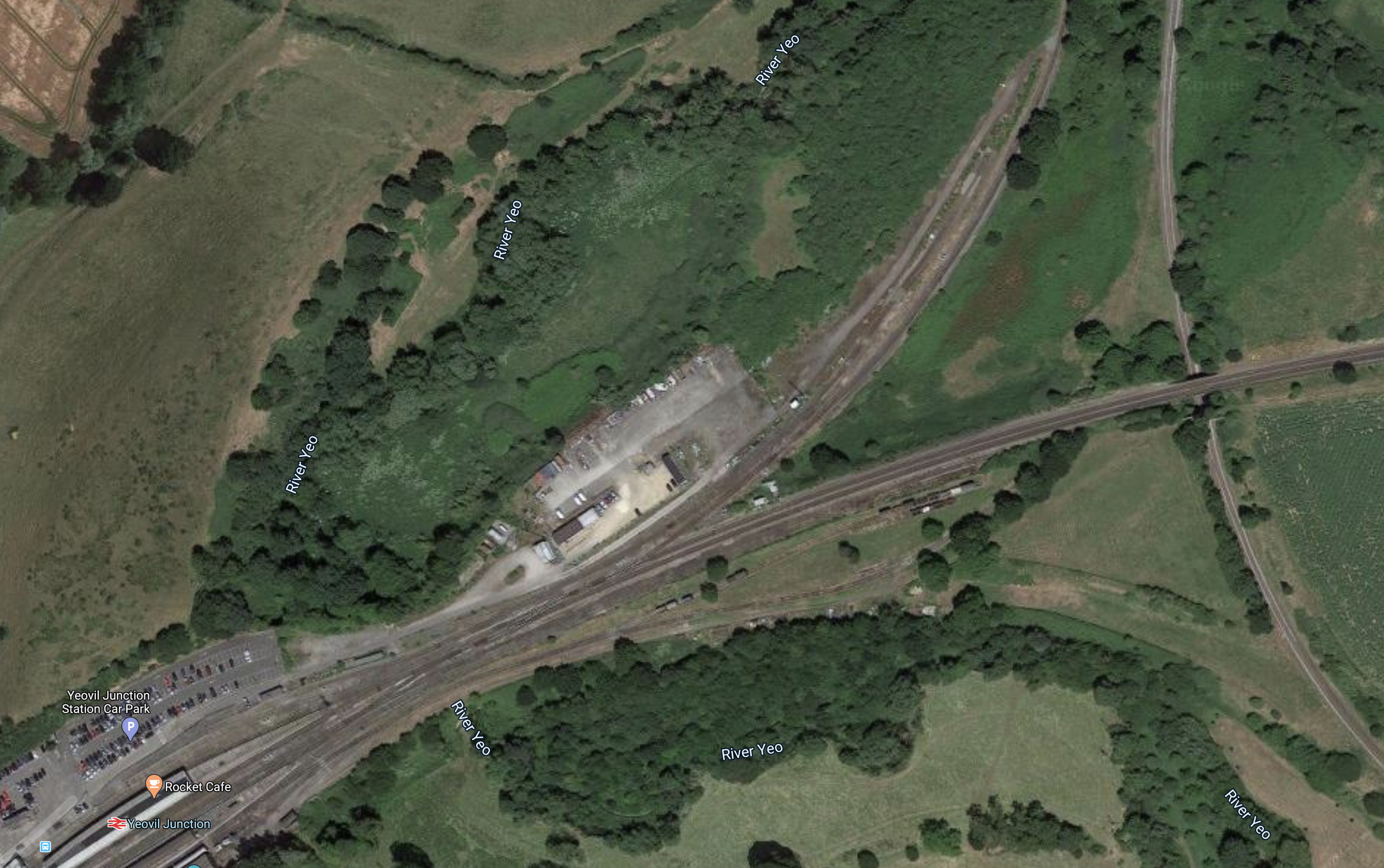
Note.
- Yeovil Junction station is in the South West corner of the map.
- The West of England Main Line passes East-West through the station.
- The station has two platforms.
- The two lines running North to Yeovil Pen Mill and Westbury stations.
- The line running between the North side and the South-East corner of the map is the Heart of Wessex Line, between Yeovil Pen Mill in the North and Weymouth in the South.
- Most links between the West of England Main Line and the Heart of Wessex Line have been removed.
The station doesn’t appear short of space.
Great Western Railway’s Gloucester And Weymouth Service
If a link between Yeovil Junction station and the Heart of Wessex Line towards Weymouth, this would enable Great Western Railway’s Gloucester and Weymouth service to call at both Yeovil stations, with a reverse at Yeovil Junction.
It would surely, improve the train service for the town of Yeovil.
If in the future, it was desired to run the Gloucester and Weymouth service using a battery electric train, Yeovil Junction station could be used to charge the train’s batteries.
Vivarail’s Fast Charge System
Vivarail’s Fast Charge system has been patented and demonstrated and this could be used with both the battery electric Class 456 train and Hitachi’s Regional Battery Train.
So it could be used as an initial design for a Universal Fast Charge system.
Conclusion
A mix of these battery electric trains could probably replace the Class 158 and 159 trains.
- Two-car Class 456 train
- Three-car Class 456 train
- Five-car Hitachi Regional Battery Train
- Eight-car Hitachi Regional Battery Train
Note.
- Universal Fast Charge facilities would also be needed at some intermediate and terminal stations like Bristol Temple Meads, Exeter St. Davids, Romsey, Salisbury, Westbury and Yeovil Junction.
- Services between London Waterloo and Basingstoke could be faster.
These rebuilt and new trains would fully decarbonise South Western Railway.
CrossCountry’s Bournemouth And Manchester Piccadilly Service
Whilst I was at Basingstoke station yesterday one of CrossCountry‘s services between Bournemouth and Manchester Piccadilly came through, so I took these pictures.


It was a long formation of Class 220 trains.
Could This Service Be Replaced By Hitachi Regional Battery Trains?
This Hitachi infographic gives the specification of the Hitachi Regional Battery Train.
I feel that in most condition, the range on battery power can be up to 56 miles.
I can break the Bournemouth and Manchester Piccadilly route into a series of legs.
- Bournemouth and Basingstoke – 60 miles – 750 VDC third-rail electrification
- Basingstoke and Reading – 15.5 miles – No electrification
- Reading and Didcot North Junction – 18 miles – 25 KVAC overhead electrification
- Didcot North Junction and Oxford – 10 miles – No electrification
- Oxford and Banbury – 22 miles – No electrification
- Banbury and Leamington Spa – 20 miles – No electrification
- Leamington Spa and Coventry – 10 miles – No electrification
- Coventry and Manchester Piccadilly – 101 miles – 25 KVAC overhead electrification
Note.
- 63 % of the route is electrified.
- The short 15.5 mile gap in the electrification between Basingstoke and Reading should be an easy route for running on battery power.
- But the 62 mile gap between Didcot North Junction and Coventry might well be too far.
The train would also need to be able to work with both types of UK electrification.
If some way could be found to bridge the 62 mile gap reliably, Hitachi’s Regional Battery Trains could work CrossCountry’s service between Bournemouth and Manchester Piccadilly.
Bridging The Gap
These methods could possibly be used to bridge the gap.
A Larger Battery On The Train
If you look at images of MTU’s Hybrid PowerPack, they appear to show a basic engine module with extra battery modules connected to it.
Will Hitachi and their battery-partner; Hyperdrive Innovation use a similar approach, where extra batteries can be plugged in as required?
This modular approach must offer advantages.
- Battery size can be tailored to routes.
- Batteries can be changed quickly.
The train’s software would know what batteries were fitted and could manage them efficiently.
I wouldn’t be surprised to see Hitachi’s Regional Battery Train able to handle a gap only six miles longer than the specification.
Battery And Train Development
As Hitachi’s Regional Battery Train develops, the following should happen.
- Useable battery capacity will increase.
- The train will use less electricity.
- Actions like regenerative braking will improve and recover more electricity.
- Driving and train operating strategies will improve.
These and other factors will improve the range of the train on batteries.
A Charging Station At Banbury Station
If some form of Fast Charge system were to be installed at Banbury station, this would enable a train stopping at Banbury to take on enough power to reliably reach Oxford or Coventry depending, on their final destination.
This method may add a few minutes to the trip, but it should work well.
Electrification Of A Section Of The Chiltern Main Line
This could be an elegant solution.
I have just flown my helicopter between Bicester North and Warwick Parkway stations and these are my observations.
- The Chiltern Main Line appears to be fairly straight and has received a top class Network Rail makeover in the last couple of decades.
- There are a couple of tunnels, but most of the bridges are new.
- Network Rail have done a lot of work on this route to create a hundred mph main line.
- It might be possible to increase the operating speed, by a few mph.
- The signalling also appears modern.
My untrained eye, says that it won’t be too challenging to electrify between say Bicester North station or Aynho Junction in the South and Leamington Spa or Warwick Parkway stations in the North. I would think, that the degree of difficulty would be about the same, as the recently electrified section of the Midland Main Line between Bedford and Corby stations.
The thirty-eight miles of electrification between Bicester North and Warwick Parkway stations would mean.
- The electrification is only eight-and-a-half miles longer than Bedford and Corby.
- There could be journey time savings.
- As all trains stop at two stations out of Banbury, Leamington Spa, Warwick and Warwick Parkway, all pantograph actions could be performed in stations, if that was thought to be preferable.
- Trains would be able to leave the electrification with full batteries.
- The electrification may enable some freight trains to be hauled between Didcot and Coventry or Birmingham using battery electric locomotives.
Distances of relevance from the ends of the electrification include.
- London Marylebone and Bicester North stations – 55 miles
- London Marylebone and Aynho junction – 64 miles
- Didcot North and Aynho junctions – 28 miles
- Leamington Spa and Coventry stations – 10 miles
- Leamington Spa and Birmingham Snow Hill stations – 23 miles
- Leamington Spa and Stratford-upon-Avon stations – 15 miles
- Warwick Parkway and Birmingham New Street stations – 20 miles
- Warwick Parkway and Birmingham Snow Hill stations – 20 miles
- Warwick Parkway and Kidderminster – 40 miles
- Warwick Parkway and Stratford-upon-Avon stations – 12 miles
These figures mean that the following services would be possible using Hitachi’s Regional Battery Train.
- Chiltern Railways – London Marylebone and Birmingham Moor Street
- Chiltern Railways – London Marylebone and Birmingham Snow Hill
- Chiltern Railways – London Marylebone and Kidderminster
- Chiltern Railways – London Marylebone and Stratford-upon-Avon
- CrossCountry – Bournemouth and Manchester Piccadilly
- CrossCountry – Southampton Central and Newcastle
- Midlands Connect – Oxford and Birmingham More Street – See Birmingham Airport Connectivity.
Other services like Leicester and Oxford via Coventry may also be possible.
As I see it, the great advantage of this electrification on the Chiltern Main Line is that is decarbonises two routes with the same thirty-eight miles of electrification.
Conclusion
CrossCountry’s Bournemouth And Manchester Piccadilly service could be run very efficiently with Hitachi’s proposed Regional Battery Train.
My preferred method to cross the electrification gap between Didcot North junction and Coventry station would be to electrify a section of the Chiltern Main Line.
- The electrification would be less than forty miles.
- I doubt it would be a challenging project.
- It would also allow Hitachi’s proposed trains to work Chiltern Main Line routes between London Marylebone and Birmingham.
I am fairly certain, that all passenger services through Banbury would be fully electric.
Beeching Reversal – Unlocking Capacity And Services Through Bramley (Hants)
This is one of the Beeching Reversal projects that the Government and Network Rail are proposing to reverse some of the Beeching cuts.
Bramley Station
Bramley (Hants) station is on the Reading-Basingstoke Line, which is 15.5 miles long.
- The line is double-track.
- Bramley station is the nearest one to Basingstoke station.
- The two stations are about five miles apart.
- The basic local service is two trains per hour (tph), with trains taking a few minutes under half-an-hour.
- The speed limit is listed in Wikipedia at 75 mph and my Class 165 train was travelling at about 60 mph on both journeys between Basingstoke and Bramley stations.
This Google Map shows Bramley station.
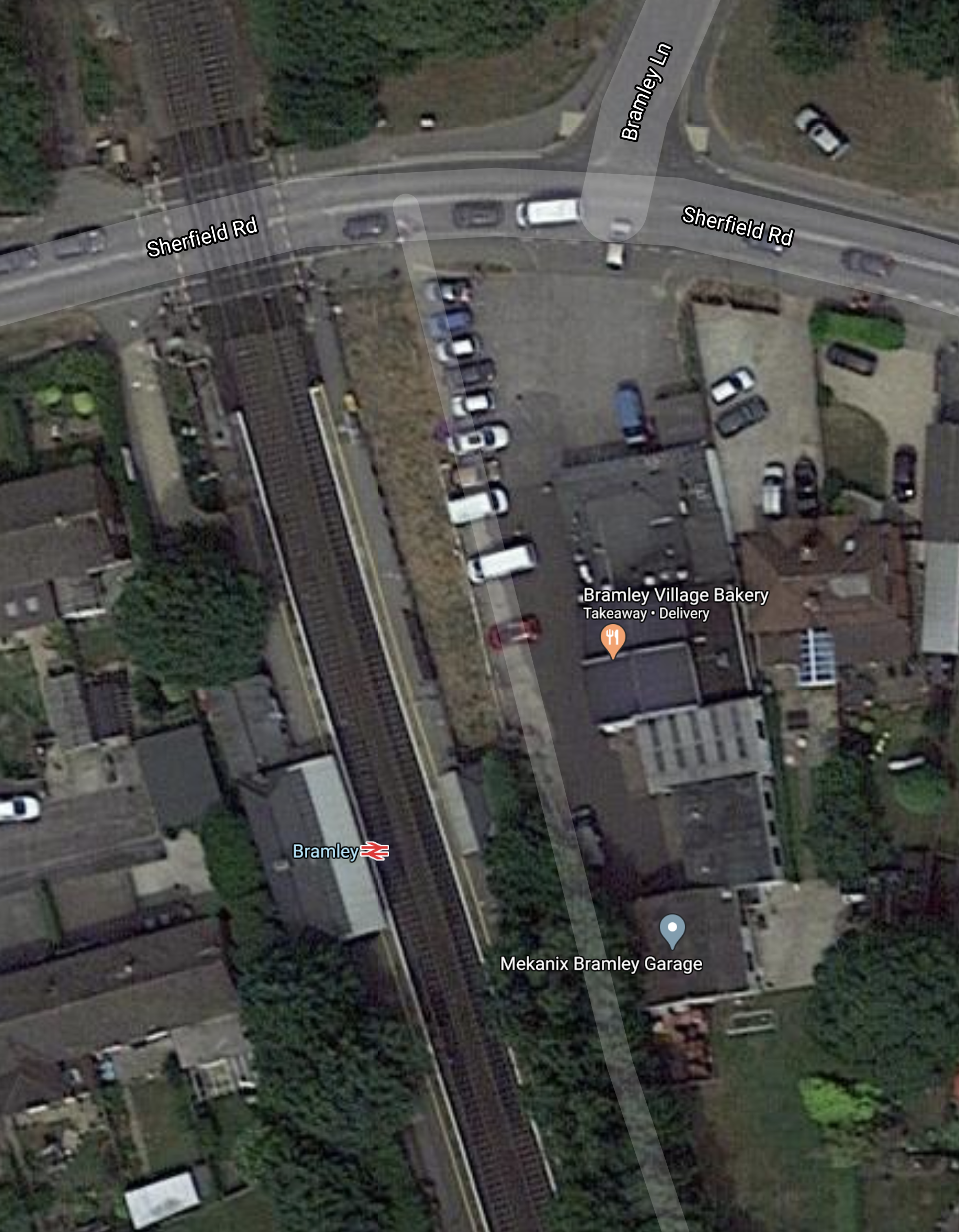
Note the level crossing, just to the North of the station.
These are some pictures, that I took, whilst I spent about thirty minutes at Bramley station.





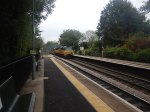
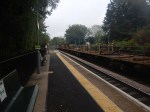

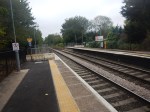


Note
- In the thirty minutes, I was at the station, two long freight trains and three passenger trains came through.
- The level crossing barriers were going up and down like a whore’s drawers.
- Each level crossing closure resulted in long queues at the barriers.
It reminded me how bad the level crossing at Brimsdown station used to be in the Peak in 1966, when I crossed it twice every day to go to and from work at Enfield Rolling Mills. At least I was on two wheels and it gave me a break from pedalling!
There is more on the problems of the level crossing on this article on the Bramley Parish Council web site, which is entitled Living With Our Level Crossing.
Current Future Plans For the Reading-Basingstoke Line
The Wikipedia entry for the Reading-Basingstoke Line has a Future section, where this is said.
The railway is listed with Network Rail as part of route 13, the Great Western main line, and was due to be electrified with 25 kV overhead wiring by 2017 as part of the modernisation of the main line.[8] In July 2007, plans were agreed to build a station in Reading south of Southcote Junction in the Green Park business park, serving the southern suburbs of Reading and also the Madejski Stadium. Construction of Reading Green Park railway station was expected to be completed in 2010; the plans were suspended in 2011, but were reinstated in 2013. It is now set to open by the end of 2020[9], with electrification along the line at a later date.
It is my view, that the new Reading Green Park station will probably mean that four tph between Reading and Basingstoke stations will be needed. especially if a second new station were to be built at Chineham.
But four tph would probably be impossible, without improving the traffic of both rail and road through Bramley.
Solving The Level Crossing Problem
Ideally, the level crossing should be closed and the road diverted or put on a bridge,
If you look at a wider map of the area, building a by-pass to enable road traffic to avoid the crossing will be difficult if not impossible.
But this is not an untypical problem on rail networks and not just in the UK.
I suspect that with precise train control using digital ERTMS signalling, trains and level crossing closures can be timed to improve traffic on both road and rail.
Consider.
- If trains crossed on the level crossing and they were under precise control, this would reduce the number of level crossing closures per hour.
- If the line speed was higher and the trains ran faster, this should ease timetabling, as there could be more train paths per hour.
- Faster accelerating electric trains would save time too, by shortening station dwell times.
- A third track might be laid in places.
- The signalling could possibly drive the train or tell the driver exactly what speed to travel, so trains passed on the crossing or in the station.
As Network Rail and their contractors roll-out ERTMS, they’ll discover better and more intelligent ways to deploy the system.
Electric Trains Would Help
Electric trains accelerate faster and if they use regenerative braking to batteries, this cuts station dwell times.
But powering them by electrification would mean the connecting lines between the Reading and Basingstoke Lines and the nearest electrified lines would also have to be electrified. This would make the scheme excessively expensive.
But Battery Electric Trains Could Be Better!
I believe that battery electric trains, would be a more-than-viable alternative.
- You still get the performance advantages of electric trains.
- With charging at just one end of the route, a battery electric train could run a round trip on battery power.
The big advantage, would be that the only new electrification infrastructure needed would be to charge the trains.
Charging Battery Electric Trains At Reading Station
Reading is a fully electrified station and the shuttle trains to and from Basingstoke station, appear to use Platform 2.
This Google Map shows electrification gantries over Platforms 1, 2 and 3 at Reading station.
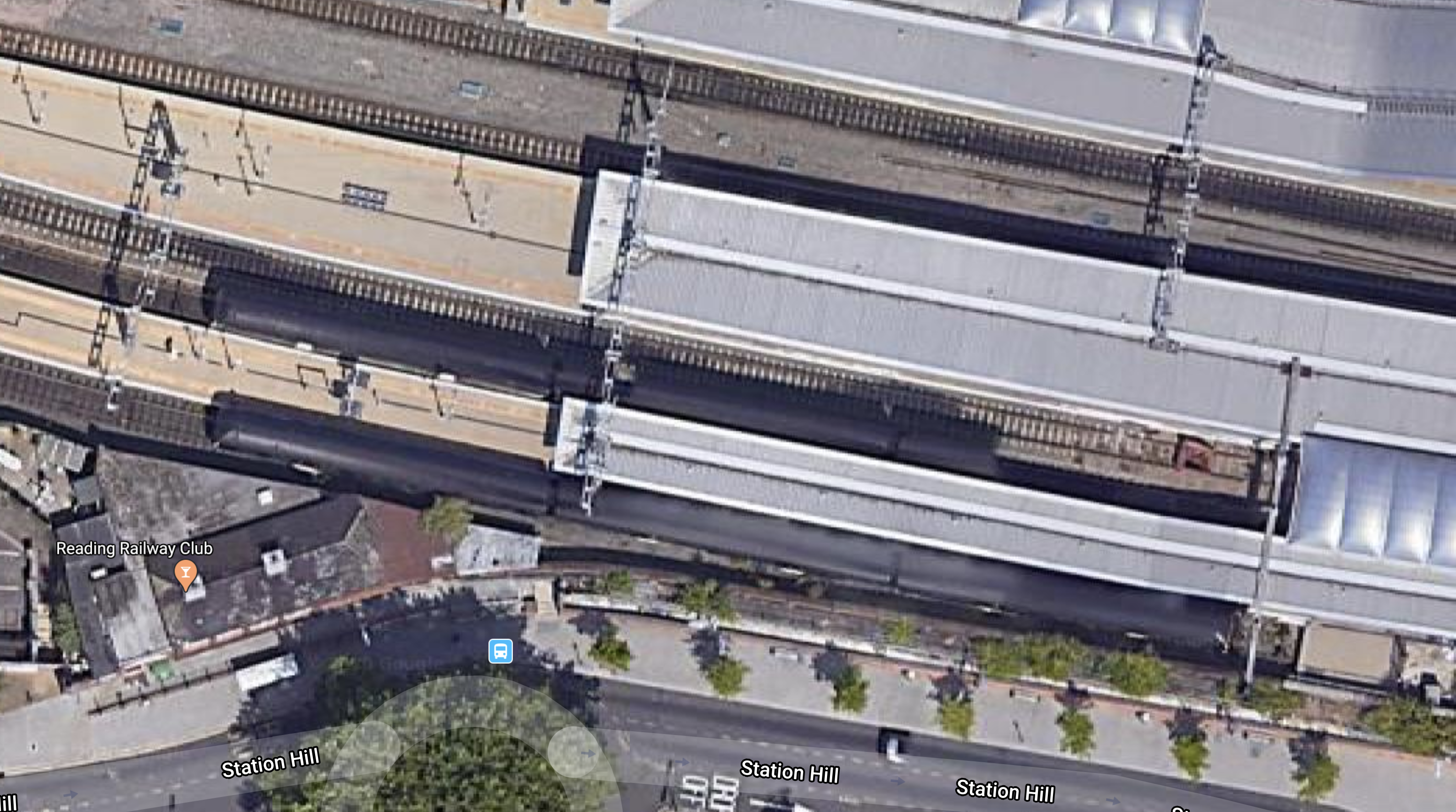
Note.
- The route between Reading station and Southcote junction, where the Basingstoke and Newbury routes divide, may be under two miles, but it is fully electrified.
- Trains take three minutes to travel between Reading station and Southcote junction.
- Trains wait for up to twenty minutes in the platform at Reading station.
It would appear that trains get enough time at Reading to fully charge the batteries.
Charging Battery Electric Trains At Basingstoke Station
The shuttle trains between Reading and Basingstoke stations, appear to use Platform 5 in Basingstoke station.
This Google Map shows Platform 5 at Basingstoke station.
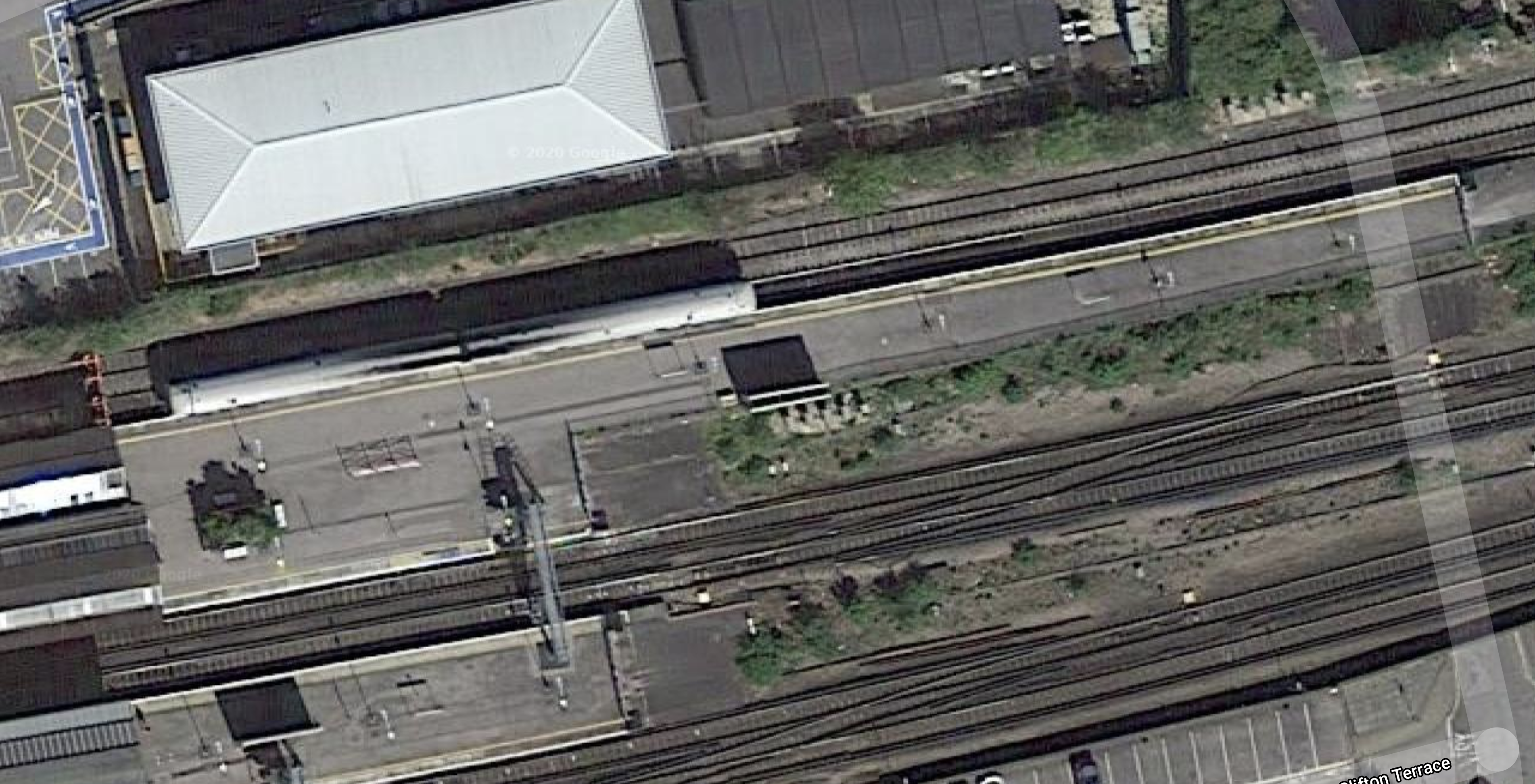
Platform 5 is towards the top of the map and contains a two-car train.
These pictures show the platform.



Note.
- There would appear to be space on the North side of Platform 5 to install another platform, if one should be needed.
- It appears from the Google Map, that Platform 5 could take a four-car train.
- The platform is wide and spacious for passengers.
- I suspect a Fast Charge system of some sort could be installed in this platform.
As at Reading, trains can take around twenty minutes to turn back at Basingstoke, which would be ideal for a battery charge.
What Trains Could Work The Shuttle?
After South Western Railway‘s interim Managing Director; Mark Hopwood’s comments, that led me to write Converting Class 456 Trains Into Two-Car Battery Electric Trains, these trains must be a possibility.
I also think, that as both South Western Railway and Great Western Railway are both First Group companies, there won’t be too much argument about who supplies the trains for the shuttle.
CrossCountry Trains Between Reading And Basingstoke
CrossCountry will need to replace their Class 220 trains with electric or bi-mode trains soon, to meet the dates for decarbonisation.
The prime candidate must be a dual-voltage version of Hitachi’s Regional Battery Train, which could easily work the 15.5 miles between Reading and Basingstoke on battery power, after charging up on the electrification at both ends.
The trains could also be easily fitted with the ERTMS signalling equipment that will be required to go smoothly along the line.
Freight Trains Between Reading And Basingstoke
We might see this section of the UK rail network, electrified for freight, but as it would require lots of connecting electrification, I think it is more likely that freight locomotives will be powered by an alternative fuel like hydrogen or bio-diesel. This would cut electrification needs, but still reduce carbon emissions.
Freight locomotives are already being fitted with the required ERTMS signalling equipment.
Conclusion
I am absolutely sure, that there’s a technological solution in there, that can increase the number of trains through Bramley.
But diverting the road traffic and clossing the level crossing would appear to be difficult.
Coulsdon South Station Has Gone Step-Free
Coulsdon South station went step-free a couple of months ago, so I went to take a look.
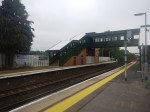
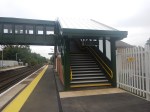
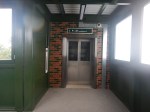


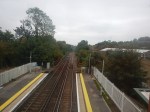
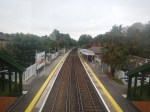
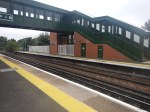
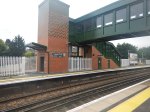


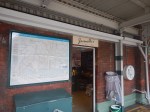
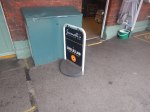
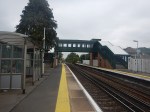
These are my thoughts.
The Bridge
Mechanically, the bridge is typical of many in the UK, but someone has taken care over the design, by the use of well-chosen colours and bricks.
The Café
We need more station cafes like Jaconelli’s Espresso Bar.
- Full range of proper coffee and other drinks.
- Cakes and snacks.
- Gluten-free options.
- Wude selection of alternative milks
- Knowledgeable and friendly staff.
I suspect it is also owner-managed, as most cafes of this type would be in Italy.
It’s one of the best cafes of its type, that I’ve found in a long time.
The Old Bridge
According to one of the guys in the café the old bridge needed replacing.
But leaving it intact, gives the young, fit or agile a second route across the tracks.
Local Walks And Attractions
There are walks nearby in the Surrey Hills and on the London Loop.
I was also told, that you can get a bus to the Lavender Fields.
Zone Six Station On Thameslink
The station is in Zone Six, which puts it in Freedom Pass territory.
It also has two Thameslink and two Southern trains per hour, so it is easily reached.
Car Parking And A Taxi Service
This Google Map shows the station.
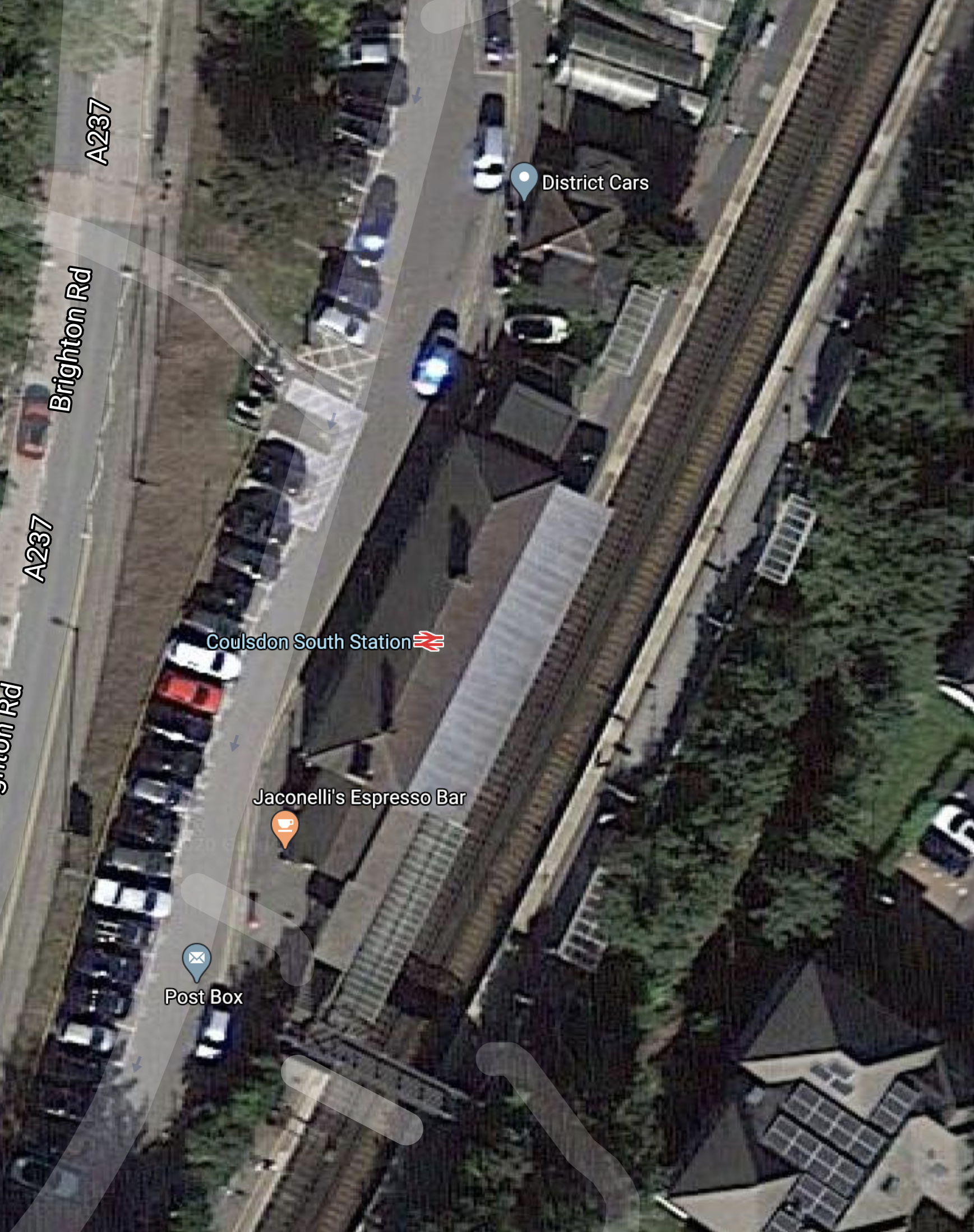
Note the car parking and a taxi service, which is called District Cars.
Conclusion
Coulsdon South is now a very well-equipped station and it must be an ideal place to meet a friend, family member or work colleague to either have a chat or a serious discussion.
Surely, with more people continuing to work from home, the need for meetings between those in the office and those at home will grow! Zoom etc. can only do so much and the cpncept doesn’t suit everybody!
So perhaps we’ll see more community-managed meeting rooms, like the one I described in The Newly-Decorated White Horse Room In Westbury Is Open For Bookings.
Solar To Hydrogen Efficiency Record Broken By Australian National University Researchers
The title of this post, is the same as that of this article on Hydrogen Fuel News.
The traditional route to produce green hydrogen from solar panels, is to create electricity and then use electrolysis to create the hydrogen.
This process goes direct and an improvement in efficiency of 17.6 %.
Rolls-Royce Commences Series Production Of Hybrid-Ready MTU PowerPacks For Irish Rail
The title of this post, is the same as that of this article on CleanTechnica.
This is the introductory paragraph.
Rolls-Royce is to supply its very first series production MTU PowerPacks which are prepared for future use as hybrid traction units: Iarnród Éireann Irish Rail, the national railway operator of the Republic of Ireland, has ordered 41 of these MTU Hybrid-ready PowerPacks. Fitted with MTU 6H 1800 R86 engines, the PowerPacks comply with the EU Stage V emissions directives and each delivers 375 kW from the diesel engine as well as 150 kW from the electrical machine.
Later the aim would be to add batteries to the PowerPacks to make the trains fully hybrid.
I do think Rolls-Royce MTU might have a game-changer here.
- You take a modern fleet of diesel multiple units like a British Class 170 trains or an Irish Class 22000 trains,
- For starters you replace the old diesel engine, with a modern one that meets all the latest environmental regulations.
- It surely helps both sales and engineering, when the old diesel engine was supplied by MTU.
- Later you fit appropriately sized batteries to the PowerPack to create full hybrids with regenerative braking.
In Iarnród Éireann Orders Stage V MTU PowerPacks, I said this about fuel consumption and emissions.
The aim is to achieve a reduction of over thirty percent in both fuel consumption and carbon dioxide emissions.
I would suspect that with savings like that, the case for conversion might be an easy sell.
 The Anonymous Widower