What Will Happen To The Eighty-Seven Class 350 Trains
At the current time, West Midlands Trains have a fleet of eighty-seven Class 350 trains.
- The trains are being replaced by new Class 730 trains.
- They are of different specifications.
- The interiors vary, but there are a lot of tables.
- All are four-car sets.
- They are 110 mph trains.
- Thirty of the trains are dual-voltage.
- Fifty are owned by Angel Trains.
- Thirty-seven are owned by Porterbrook, who have looked at converting the trains to battery-electric operation.
- They are a bit of a dog’s breakfast, although they are excellent trains.
- The future of the trains is rather uncertain and even Porterbrook’s plans have gone rather quiet.
So perhaps a big dog ought to round up all these trains and turn them into something more useful.
Consider.
- All the trains were built in this century by Siemens in Germany.
- Siemens service the Class 350 trains at Kings Heath Depot in Northampton.
- Siemens have recently opened a factory in Goole to make new trains for the London Underground.
- Siemens are developing the Mireo Plus B, which is a battery-electric multiple unit in Germany.
Siemens must have the knowledge and experience to turn these trains into a quality fleet of battery-electric trains.
- Thirty would be dual-voltage and fifty-seven would be 25 KVAC overhead only.
- All would be 110 mph trains.
- I doubt there would be many places on the UK rail network, where they couldn’t run.
All appear to be in excellent condition, as these pictures show.
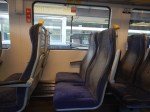


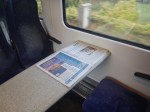
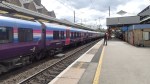
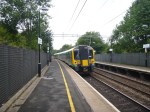
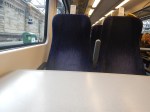
I very much feel, that these fleets could be converted into a quality fleet of very useful battery-electric trains.
Charging The Batteries
Most of the charging would be done from existing electrification, but as all trains have pantographs, they could use specially-erected short lengths of 25 KVAC overhead wires or charging systems like the Furrer + Frey Voltap system.
Possible Routes
I will start with the dual-voltage trains.
- Uckfield Branch, where a charger would be needed at Uckfield station.
- Marshlink Line
- Basingstoke and Exeter, where chargers would be needed at Salisbury and Exeter and possibly Yeovil Junction.
I feel with 25 KVAC overhead applications, we will soon run out of trains.
Battery Trains Ordered For Hermann-Hesse-Bahn
The title of this post, is the same as that, of this article on Railway Gazette.
This article is yet another endorsement of battery-electric trains.
There is more about the history of the Hermann-Hesse-Bahn in Wikipedia entry for the Black Forest Railway.
Could the Germans be using a battery-electric railway to bring in the tourists?
Battery Train Fast Charging Station Tested
The title of this post, is the same as that of this article on Railway Gazette.
This is the first paragraph.
A prototype Voltap rapid charging station for battery trains has been tested under real-world conditions for the first time.
The Voltap system is from Furrer + Frey and this is the data sheet on their web site, which is entitled Voltap Charging Station For Battery Trains.
Looking at the pictures in the article, the system seems to consist of two components.
- An overhead conductor rail suspended from pantries on the platform.
- A container that contains all the power supplies and control systems.
It certainly looks to be a simple system to install and operate.
- Charging would appear to take place through the pantograph, with no cables to handle.
- It is claimed to be able to charge a train in an extremely short time.
- The system is designed for areas, where the electricity network is perhaps a bit weaker.
- It is available in 15 KVAC and 25 KVAC.
- The system is future-proofed.
I can see these being suitable for several stations in the UK.
Norfolk And Suffolk
As an example, it looks like all the branch lines in Norfolk and Suffolk could be made suitable for battery-electric trains with Voltap systems at Cromer, Felixstowe, Lowestoft, Sheringham, Sudbury and Yarmouth.
Note.
- The Class 755 trains would be converted to battery-electric trains.
- Some stations would need more than one platform to have a charger.
- There may be other chargers to ensure that services like Norwich and Stansted Airport could be run electrically.
These pictures show Class 755 trains in various East Anglian stations.
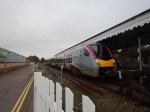

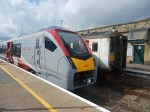
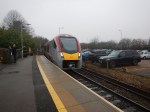
Felixstowe and some other stations may need a slightly different installation due to the narrow platforms, but I’m sure Furrer + Frey have installations for all platforms.
I think Great British Railways are going to need a lot of these chargers and the battery-electric trains to go with them.
The Uckfield Branch
The Uckfield Branch probably needs to have some form of charging at Uckfield station.

The picture shows the single long platform at Uckfield station.
Consider.
- Trains to work the branch will need to be able to use third-rail electrification between London Bridge station and Hurst Green junction.
- Hurst Green junction to Uckfield station and back is probably too far for a battery-electric train, so charging will be needed at Uckfield station.
- Third-rail charging could be used, but I suspect that Health and Safety will say no!
But using a dual-voltage train and a Voltap system at Uckfield station would probably be ideal.
Middlesbrough
From December the 13th, LNER will be running a new daily service between Middlesbrough and London, which I described in LNER’s Middlesbrough And London Service Starts On December 13th.
The route is fully electrified except for between Middlesbrough and Longlands Junction, where it joins the electrification of the East Coast Main Line, which is a distance of twenty-two miles.
Hitachi are developing a battery-train, which they call the Hitachi Intercity Tri-Mode Battery Train, which is described in this Hitachi infographic.

Note.
- LNER’s current Class 800 trains will probably be able to be converted to this train.
- Normally, these trains have three diesel generators.
- A range on battery power of upwards of forty miles would be expected.
If the range on battery-power can be stretched to perhaps sixty miles, this train should be capable of serving Middlesbrough without the need for any extra charging at the terminus.
I have just looked at the planned path of the first train on December 13th.
- The train comes from Heaton depot in Newcastle via Sunderland and Hartlepool.
- It passes through Middlesbrough station.
- It then reverses amongst the chemical and steel works to the East, before returning to Middlesbrough station.
Once back at Middlesbrough station, it waits for eight minutes before leaving for London.
It looks to me to be a safe route, to make sure that the train leaves on time. It also only occupies the platform at Middlesbrough station for less than ten minutes.
But it would also be possible to find space amongst the chemical and steel works to find space for a well-designed reversing siding with refuelling for the diesel-electric trains or a Voltap charging system for a battery-electric train.
Lincoln
I have been looking at the pattern of LNER’s London and Lincoln service today.
- There have been six trains per day (tpd) in both directions.
- Trains going North take up to seven minutes to unload passengers at Lincoln station before moving on to Lincoln Terrace C. H. S., which I would assume is a convenient reversing siding.
- Trains going South wait up to thirty-forty minutes at Lincoln station after arriving from Lincoln Terrace C. H. S., before leaving for Kings Cross.
It looks to me, that if London and Lincoln were to be run by a Hitachi Intercity Tri-Mode Battery Train, that the timings would be ideal for charging the batteries on the train in either the reversing siding or the station.
But surely, the charging system in the station would allow extension of the service to Grimsby and Cleethorpes, which has been stated as being part of LNER’s plans.
This picture shows Lincoln station.

I suspect that Swiss ingenuity could fit a Voltap charging system in the station.
These are a few distances from Lincoln station.
- Cleethorpes – 47.2 miles
- Doncaster – 35.4 miles
- Newark North Gate – 16.6 miles
- Peterborough – 56.9 miles
How many of these destinations could be reached by a battery-electric train, that had been fully-charged at Lincoln station.
Vivarail To Unveil 80mph Super-Class 230 At COP26
The title of this post, is the same as that as of this article on Rail Magazine.
This is the first paragraph.
Vivarail intends to show off a new design of battery-powered zero-emission Class 230 unit at next month’s COP26 climate change conference in Glasgow.
Features of the train include.
- 80 mph operating speed, as opposed to 60 mph of the mph of the current Class 230 train and 45 mph of the original London Underground D78 Stock.
- Two driver cars and a trailer car in between.
- Ten minutes to fully charge the batteries.
- The two driver cars have three battery packs.
I doubt the designers of the train at Metro-Cammell, envisaged this future development.
Level Crossing Trouble On The Northumberland Line
There is an article on Chronicle Live, which is entitled Exodus Fears Over Northumberland Line Underpass Plans For Ashington.
There is also this sub-heading.
Opponents of a planned underpass in Ashington as part of work on the Northumberland Line rail project are being urged to have their say.
So what are some people protesting about?
This page on the ABC Railway Guide is entitled Hospital Crossing Level Crossing and gives details of the level crossing, that Network Rail want to replace with an underpass.
- The crossing is a public footpath crossing with whistleboards.
- Individual and collective risk rating is high.
- It is used by 110 pedestrians and cyclists per day.
- There don’t seem to have been many recent incidents.
I know of a similar crossing in a similar town to Ashington, where there have been several deaths and suicides.
As the Northumberland Line is likely to have a half-hourly service, which will mean four trains per hour (tph) over the crossing, I doubt any Health and Safety professional would sign off the Northumberland Line without separation of the trains from pedestrians and cyclists.
Admittedly, the main complaint of the residents is noise and drunken pedestrians, but aren’t the latter most likely to be run over by a train.
There is also suggestions that the crossing be moved further to the North.
This Google Map shows the crossing.
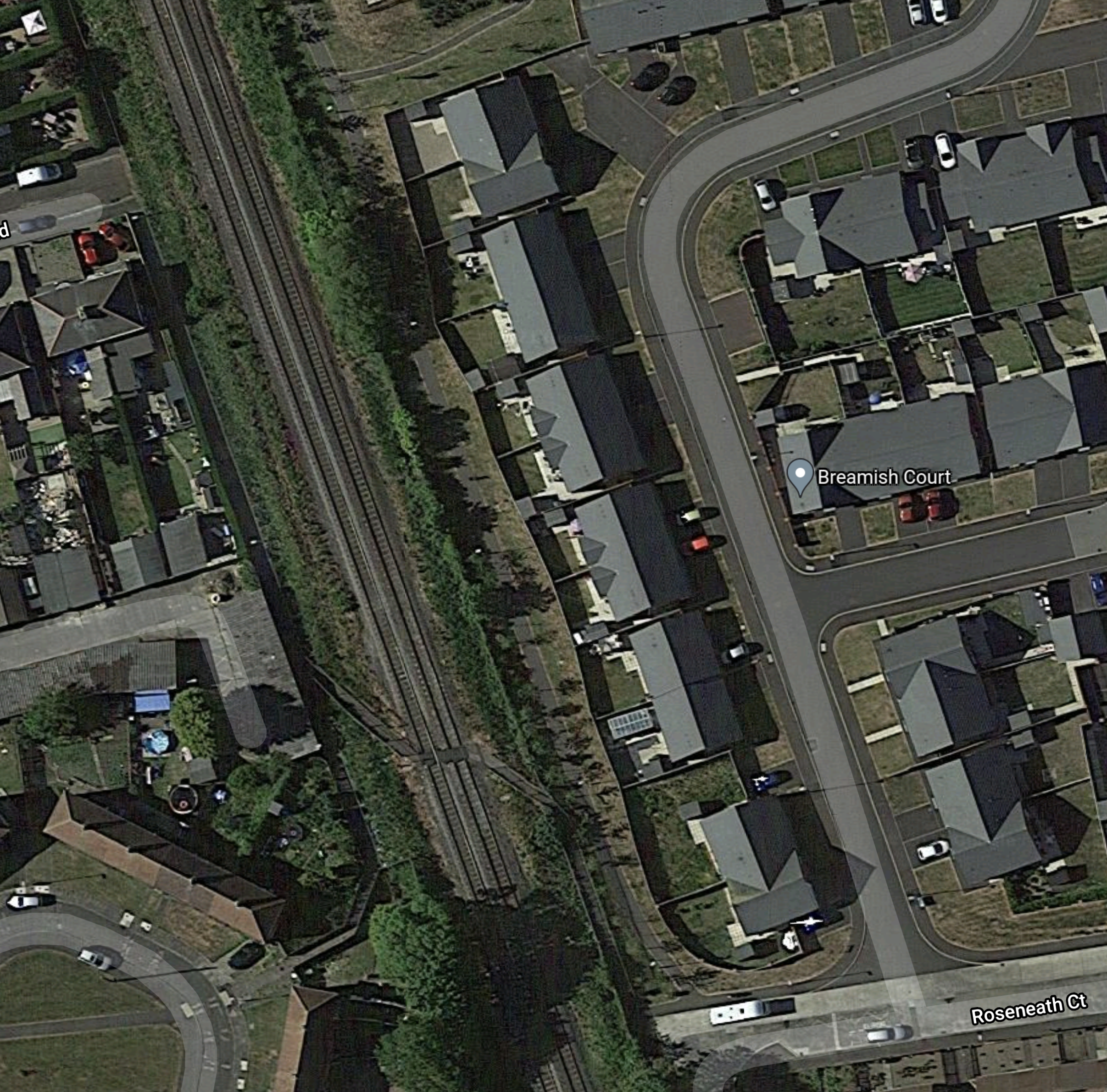
Note how the crossing zig-zags across the railway.
This second Google Map shows a 3D visualisation from the East.
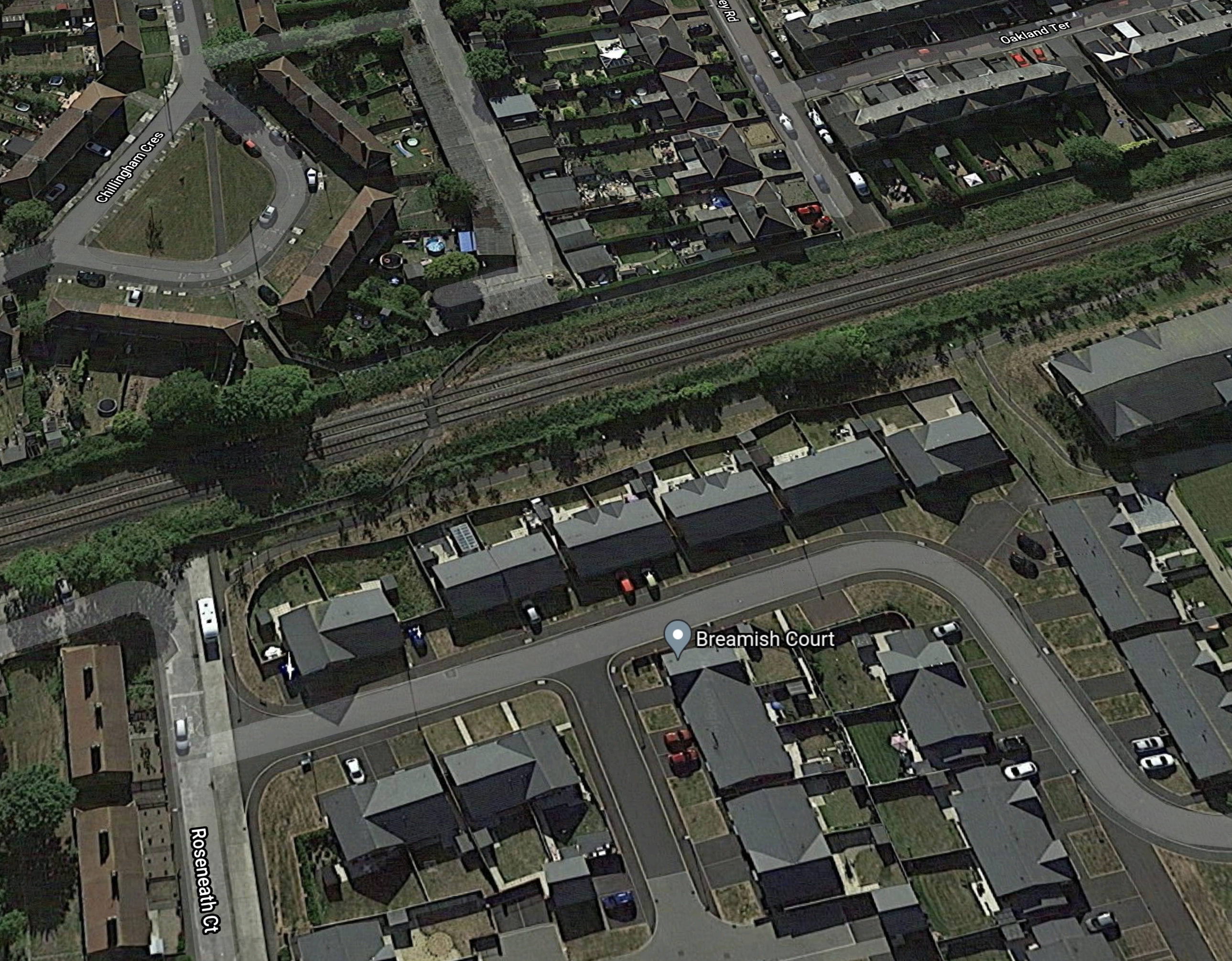
The proposed underpass would appear to connect Roseneath Court in the bottom-left and Darnley Road in the top-right.
- It does appear that the current route goes behind houses on both sides of the railway.
- I would suspect that underpasses could be built in line with both Roseneath Court and Darnley Road.
- But either route would mean that the noisy and the drunks would walk further in a parallel direction to the railway and would create more disturbance.
This level crossing argument will run and run, as many do.
The Effect Of Battery-Electric Trains
I think it is likely that services on this line could be run by battery-electric trains.
These trains could be new trains from CAF, Hitachi or Vivarail or modern electrical multiple units, that have been upgraded with batteries.
- They would be capable of 100 mph or more on the East Coast Main Line.
- They would run on battery power at an appropriate speed of perhaps 80 mph on the Northumberland Line, which is not planned to be electrified.
- I suspect the passenger trains will cruise up and down the Northumberland Line faster than the current freigtht trains.
- On battery power with no overhead wires, they will be very quiet trains.
Paradoxically, these new trains, although much better for passengers, could be more dangerous for the users of level crossings because of their faster speed and lower noise.
Pop Up Metro Aims To Provide Affordable Passenger Operation
The title of this post, is the same as that of this article on Trains News Wire.
It describes entrepreneur Henry Posner’s Railroad Development Corporation‘s concept of a Pop-Up Metro and how it is being demonstrated in Rockhill, Pennsylvania, where it is being demonstrated at the Rockhill Trolley Museum.
Routes suggested in the article include.
Not all these routes are fully electrified.
There is some interesting ideas in the concept.
The female project manager is also quoted as saying
I found that if you just say yes to Henry, something interesting happens!
Little did I think, that these days, I’d see that said in a serious article.
Let’s hope that represents the can-do approach behind the design, but staying within the rules of safety.
Network Rail And Vivarail Bring The Next-Generation Battery Train To COP26
The title of this post, is the same as that of this article on Network Rail.
These are the first two paragraphs.
Network Rail and Vivarail today announced that Vivarail’s next-generation battery train will be launched at COP26 and will run daily services throughout the international climate change conference.
This zero-emission train uses new batteries, developed by Vivarail, to combine maximum range with the ability to recharge quickly. The result is a train that can travel for up to 80 miles on battery power and recharge in only 10 minutes using Vivarail’s patented Fast Charge system.
That is an excellent range coupled with a fast turnround time.
How will other companies like CAF, Hitachi and Stadler respond?
If all battery-electric trains can reach this range, I don’t think we’ll need hydrogen for multiple units, but we will probably need it for freight and other locomotives.
LNER’s Middlesbrough And London Service Starts On December 13th
Tucked at the bottom of the article entitled LNER Tickets For Christmas Getaway in Edition 939 of Rail Magazine, there is this paragraph separated from the article by a sole bullet point.
LNER has confirmed that from December 13 it will run a new weekday service between London King’s Cross and Middlesbrough.
It has already made an appearance on Real Time Trains and I can find the following details.
- There will be one train per day (tpd)
- Intermediate stops will be at Thornaby and York.
- The Middlesbrough and London service will leave Middlesbrough from Platform 1 at 07:08 and arrive in King’s Cross at 10:22.
- The London and Middlesbrough service will leave King’s Cross at 15:25 and arrive in Middlesbrough in Platform 2 at 18:18.
These are my thoughts.
Trains Per Day
One train per day, is obviously an introductory service and like services to Harrogate and Lincoln, the number of services will ramp up to perhaps four or five tpd, if the demand is there and the paths and trains are available.
Journey Times
Consider
- The Southbound journey takes three hours and fourteen minutes with a time of two hours and nine minutes between York and King’s Cross
- The Northbound journey takes two hours and fifty-three minutes with a time of one hour and fifty-six minutes between King’s Cross and York.
- Some services between King’s Cross and York are as fast as one hour and forty-eight minutes.
- Middlesbrough and York seems to take around 52-58 minutes.
- These Middlesbrough and York timings are consistent with TransPennine Express.
- Digital signalling could offer savings in journey time between York and London.
I think it is very likely as the timetable improves, that timings between Middlesbrough and London could be around two hours and forty minutes.
Electrification
The route is fully electrified except for between Middlesbrough and Longlands Junction, where it joins the electrification of the East Coast Main Line, which is a distance of twenty-two miles.
Hitachi are developing a battery-train, which they call the Hitachi Intercity Tri-Mode Battery Train, which is described in this Hitachi infographic.
Note.
- LNER’s current Class 800 trains will probably be able to be converted to this train.
- A range on battery power of upwards of forty miles would be expected.
If the range on battery-power can be stretched to perhaps sixty miles, this train should be capable of serving Middlesbrough without the need for any extra charging at the terminus.
I am sure Hitachi would like to see their battery-electric trains running between King’s Cross and Middlesbrough, as it would be an ideal route on which to show the trains to prospective customers, given that their factory is at Newton Aycliffe.
Conclusion
This could be good demonstration battery-electric service for Hitachi and LNER.
Lumo: Why Won’t The New Train Service Stop At Yorkshire Stations?
The title of this post, is the same as that of this article on the Yorkshire Post.
This is the first article, I’ve found about Lumo, that has a negative headline.
The reason is probably very simple, in that most Lumo services are planned to stop at only at Newcastle and Morpeth, with two services having an extra stop Stevenage.
They are intending to run the service in as short a time as possible between London King’s Cross and Edinburgh.
As each stop has a time penalty, not stopping in Yorkshire will give potential to go cut the journey time.
But the positive message that comes from the writer of the Yorkshire Post article is that Yorkshire likes the concept.
This paragraph is their take on the service.
The goal is to encourage a more environmentally friendly mode of transportation and affordable travel. Lumo will provide low-carbon emissions, affordable long-distance travel for more than one million passengers every year.
Perhaps they would like their own Yorkshire flyer.
The obvious way for this to happen would be for the Open Access operator; Grand Central to convert themselves into a train operator like Lumo.
- The ten diesel Class 180 trains would be replaced by new electric trains.
- The trains would need a 140 mph capability under digital signalling to fit in with the plans of Network Rail, LNER and Lumo to create a top-class high-speed high-capacity East Coast Main Line.
- The trains would need a battery capability as Grand Central’s routes are not fully electrified.
- They could copy Lumo’s green marketing philosophy, ticketing and catering offering.
As to the trains, I’m sure that Hitachi could offer a version of their Intercity Tri-Mode Battery Train, the specification of which is shown in this Hitachi infographic.
The trains would need a range of fifty miles on battery-power.
Charging facilities wold be needed at Bradford Interchange and Sunderland stations, as neither has suitable 25 KVAC overhead electrification.
Conclusion
The conversion of Grand Central to work on the Lumo model is possible and as the trains will need to be changed to zero-carbon ones soon to meet decarbonisation objectives, I would suspect that at least that will happen.
Battery-Electric Trains And The TransPennine Upgrade
In Is There Going To Be Full Electrification Between Leeds And Huddersfield?, I showed this map of the TransPennine Upgrade between Huddersfield and Westtown near Dewsbury.
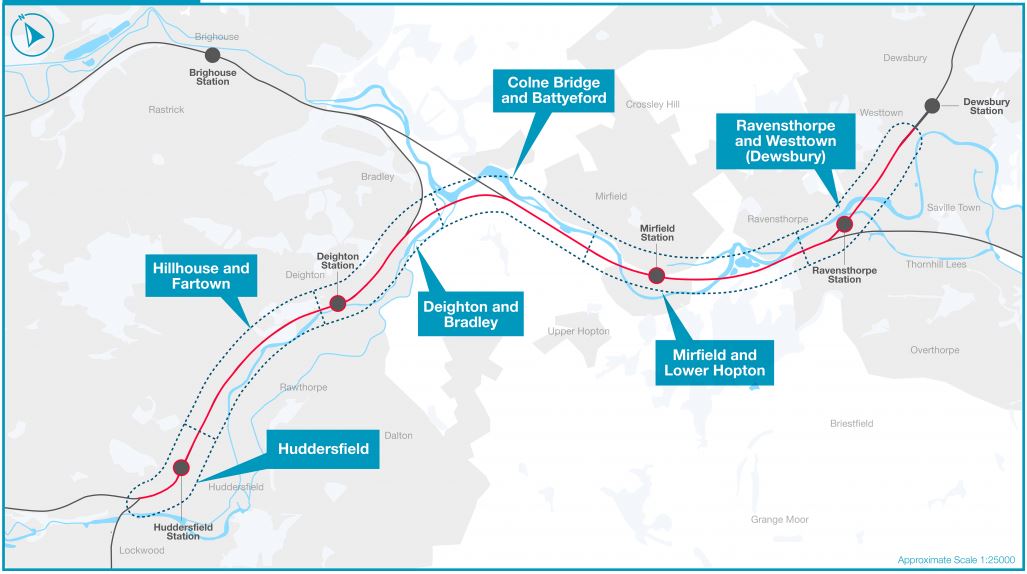
Note.
- There will be electrification between Dewsbury and Huddersfield.
- Tracks will be doubled from two to four.
- Ravensthorpe, Mirfield, Deighton and Huddersfield stations will be electrified and probably upgraded.
- Dewsbury and Huddersfield stations are eight miles apart.
This page on the Network Rail website gives more information.
Click on Huddersfield and Westtown (Dewsbury) and you get this information.
On 31 March 2021, we submitted a Transport and Works Act Order (TWAO) application to the Secretary of State for Transport for the Huddersfield to Westtown (Dewsbury) scheme.
Throughout this eight-mile section of the route, we’re proposing to double the number of tracks from two-to-four, electrify from Huddersfield to Dewsbury and make big improvements to the four stations in this section – Huddersfield, Deighton, Mirfield and Ravensthorpe; where we also need to separate the lines going to/from Leeds from the lines going to/from Wakefield, with either a bridge or a tunnel.
It is a much larger scheme than the one between Bolton and Wigan, which I wrote about in Bolton-Wigan £78m Rail Electrification Project Announced.
- Huddersfield-Westtown is eight miles, whereas Bolton-Wigan is 6.5 miles.
- Both involve upgrading four stations.
- Both involve full electrification.
- Huddersfield-Westtown involves doubling the number of tracks, whereas Bolton-Wigan needs little work to the track.
- Huddersfield-Westtown will need a bridge or a tunnel, whereas Bolton-Wigan might need minor work to a couple of flat junctions.
- Huddersfield station is Grade 1 Listed, whereas Wigan Wallgate station has some good features.
- The Huddersfield-Westtown scheme is costed at £2.9 billion, whereas Bolton-Wigan is just £78 million.
The Huddersfield-Westtown scheme is thirty-seven times larger in terms of money.
What Passenger Services Use The Route Between Huddersfield And Dewsbury?
These services use the route, all or in part.
- Northern Trains – Wigan Wallgate and Leeds via Manchester Victoria, Hebden Bridge, Brighouse, Mirfield, Ravensthorpe and Dewsbury – 1 tph
- Northern Trains – Huddersfield and Castleford via Deighton, Mirfield and Wakefield Kirkgate – 1 tph
- TransPennine Express – Liverpool Lime Street and Scarborough via Manchester Victoria, Stalybridge, Huddersfield and Leeds – 1 tph
- TransPennine Express – Manchester Airport and Redcar Central via Manchester Victoria, Stalybridge, Huddersfield, Dewsbury and Leeds – 1 tph
- TransPennine Express – Liverpool Lime Street and Edinburgh via Manchester Victoria, Huddersfield and Leeds – 1 tph
- TransPennine Express – Manchester Airport and Newcastle via Manchester Victoria, Huddersfield, Dewsbury and Leeds – 1 tph
- TransPennine Express – Manchester Piccadilly and Hull via Stalybridge, Huddersfield and Leeds – 1 tph
- TransPennine Express – Huddersfield and Leeds via Deighton, Mirfield, Ravensthorpe and Dewsbury – 1 tph
Note.
- All trains are one train per hour (tph)
- Three tph run non-stop between Huddersfield and Leeds.
- Two tph stop at Deighton station, Mirfield and Ravensthorpe.
After completion of the Huddersfield and Westtown upgrade, there will be electrification at the following places.
- West of Manchester Victoria station
- Between Huddersfield and Westtown
- Between Leeds and York – Currently being electrified between York and Church Fenton.
And these routes will not be electrified.
- Dewsbury and Leeds – 9.2 miles
- Leeds and Hull – 51.5 miles
- Mirfield and Castleford – 16 miles
- Manchester Piccadilly and Stalybridge – Could be electrified – 7.5 miles
- Manchester Victoria and Heaton Lodge Junction via Hebden Bridge – 47.4 miles
- Manchester Victoria and Stalybridge – Could be electrified – 7.7 miles
- Redcar Central and Northallerton – 28.1 miles
- Stalybridge and Huddersfield – 18 miles
- York and Scarborough – 42.1 miles
Note that all routes except Mirfield and Castleford and Leeds and Hull have electrification at both ends.
Which Routes Between Huddersfield And Westtown Could Be Handled By Battery-Electric Trains?
I will assume that operators will have a battery-electric train capable of running 56 miles on batter ypower. This distance comes from Hitachi’s specification for the Hitachi Regional Battery Train, which is shown in this Hitachi infographic.

These are the routes and my answers.
Northern Trains – Wigan Wallgate and Leeds
The longest section without electrification is Manchester Victoria and Heaton Lodge Junction via Hebden Bridge, which is 47.4 miles.
I am sure this route is possible with battery-electric trains.
Northern Trains – Huddersfield and Castleford
The longest section without electrification is Mirfield and Castleford, which is 16 miles.
But it must be handled on both an out and back basis. So the train will cover 32 miles on battery power.
I am sure this route is possible with battery-electric trains.
TransPennine Express – Liverpool Lime Street and Scarborough
The longest section without electrification to the West of Leeds, is Manchester Victoria and Huddersfield, which is 25.7 miles.
At the Eastern end, as York and Scarborough is 42.1 miles without electrification, there would need to be some electrification or a charging system at Scarborough station.
I am sure this route is possible with battery-electric trains.
TransPennine Express – Manchester Airport and Redcar Central
The longest section without electrification to the West of Leeds,is Manchester Victoria and Huddersfield, which is 25.7 miles.
At the Eastern end, as Northallerton and Redcar Central is 28.1 miles without electrification, there may need to be some electrification or a charging system at Redcar Central station.
I am sure this route is possible with battery-electric trains.
TransPennine Express – Liverpool Lime Street and Edinburgh
The longest section without electrification is Manchester Victoria and Huddersfield, which is 25.7 miles.
Leeds and Edinburgh is fully electrified.
I am sure this route is possible with battery-electric trains.
TransPennine Express – Manchester Airport and Newcastle
The longest section without electrification is Manchester Victoria and Huddersfield, which is 25.7 miles.
Leeds and Newcastle is fully electrified.
I am sure this route is possible with battery-electric trains.
TransPennine Express – Manchester Piccadilly and Hull
The longest section without electrification to the West of Leeds, is Manchester Victoria and Huddersfield, which is 25.5 miles.
At the Eastern end, as Leeds and Hull is 51.5 miles, there would need to be some electrification or a charging system at Hull station.
I am sure this route is possible with battery-electric trains.
TransPennine Express – Huddersfield and Leeds
The longest section without electrification is Dewsbury and Leeds, which is 9.2 miles.
I am sure this route is possible with battery-electric trains.
Handling The Eastern Ends
At Hull, Redcar Central and Scarborough stations, there will need to be some means to recharge the trains, so they can get back to the electrification on the East Coast Main Line.
There could either be a short length of 25 KVAC overhead electrification or a special-purpose charging station.
There would need to be an allowance in the turnback, of perhaps 10-15 minutes to make sure trains started back with full batteries.
Will Huddersfield And Westtown Be Long Enough To Charge A Battery-Electric Train?
I have looked at train times between Huddersfield And Westtown and typically trains take around 11-12 minutes to go between Huddersfield and Dewsbury stations.
That should probably be enough, especially, as the trains will probably be using regenerative braking to batteries at any station stops.
Conclusion
I am absolutely certain that by completing the TransPennine Upgrade with full electrification between Huddersfield and Westtown, that all passenger services through the section could be run by battery-electric trains with a range of ninety kilometres or fifty-six miles.
There would probably need to be some electrification or a charging system at Hull, Redcar Central and Scarborough stations.
A Thought On Short Sections Of Electrification
As with the Bolton-Wigan scheme to the West of the Pennines, a length of electrified track that is less than ten miles, allows several services to be run by battery-electric trains and decarbonised.
How many other sections of less than ten miles of electrification can transform train services and reduce the use of diesel around the UK, by the introduction of fleets of battery-electric trains?

