Midlands Rail Hub Looks To The Future With Preferred Alliance Partners
The title of this post, is the same as that of this press release from Network Rail.
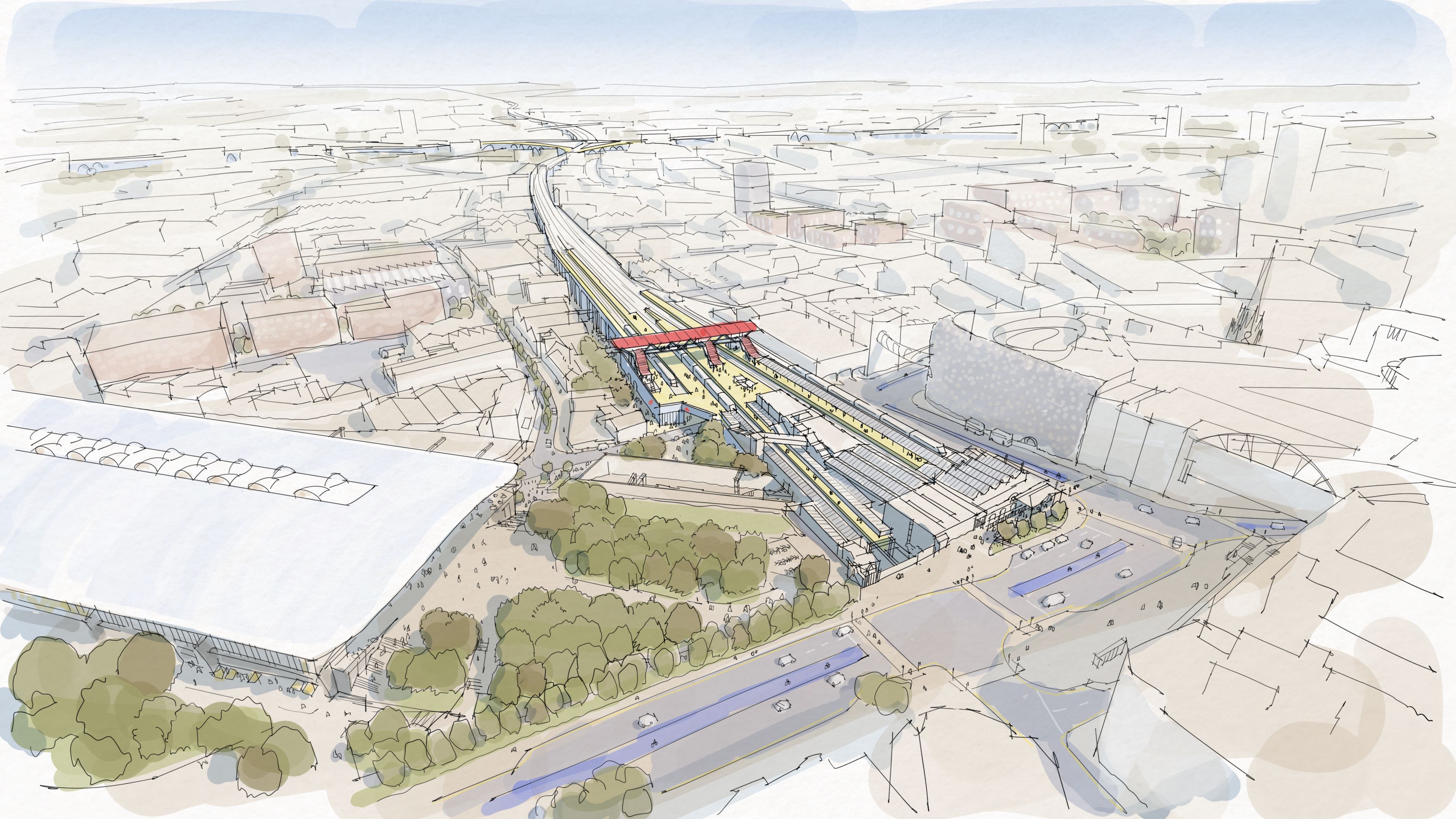
The press release has a spectacular picture, which I’m showing here.
Note.
- High Speed Two’s Curzon Street station is on the left.
- Birmingham Moor Street station is in the centre.
- There appears to be parkland between the two stations.
- Is that the West Midlands Metro running across in front of Moor Street station?
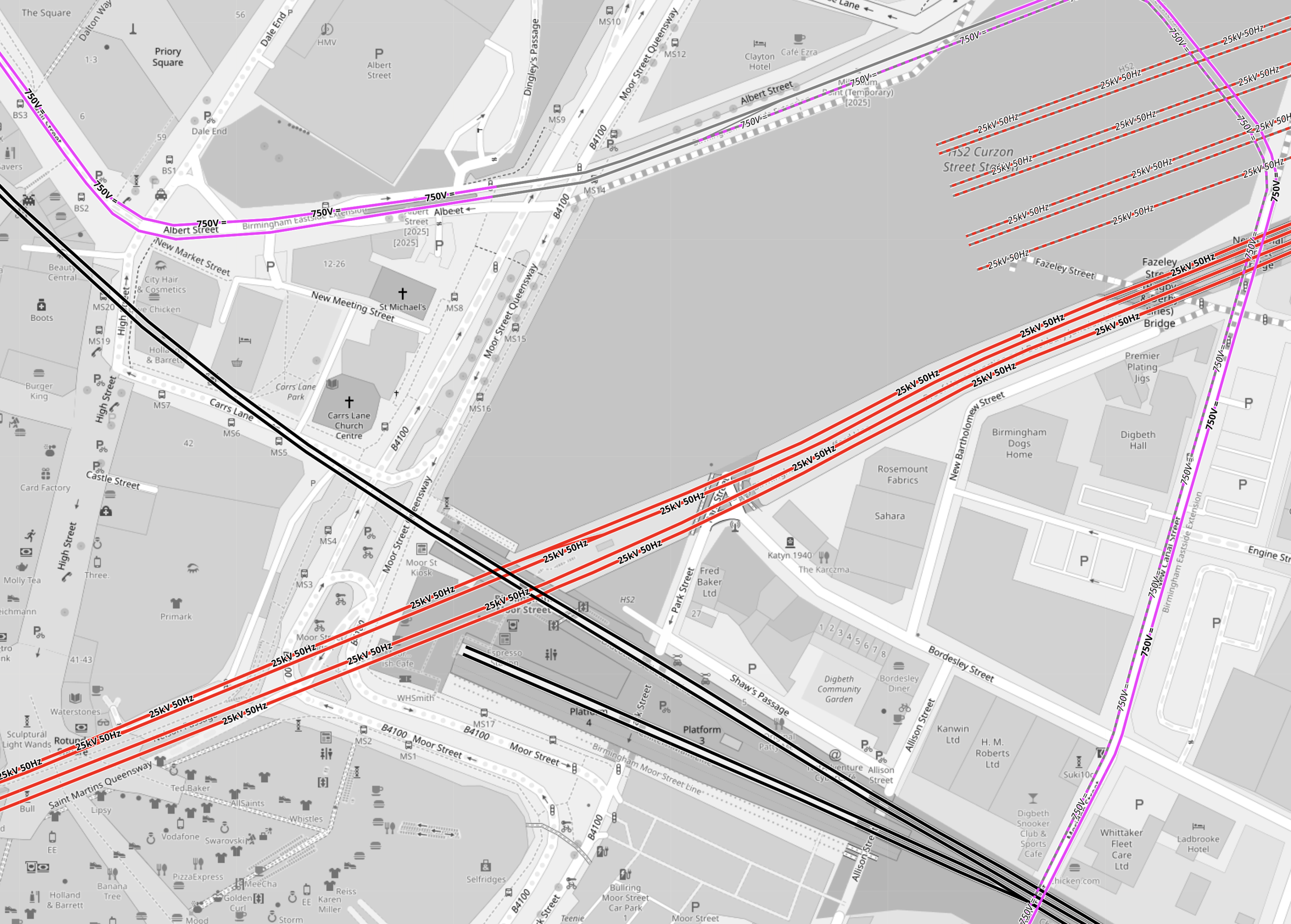
This OpenRailwayMap shows the railway lines in the area.
Note.
- Electrified tracks are shown in red.
- Tracks without electrification are shown in black.
- West Midlands Metro tracks are shown in mauve.
- The red tracks going diagonally across the map are the four electrified tracks going into Birmingham New Street station.
- Birmingham New Street station is off the map to the West.
- To the North of the tracks going into Birmingham New Street station, there are the seven platforms of High Speed Two’s Curzon Street station.
- The four platforms without electrification are shown South of the tracks into Birmingham New Street station.
- Two platforms at Birmingham Moor Street station are through platforms, that pass under Birmingham City Centre to Birmingham Snow Hill station.
- The other two platforms at Birmingham Moor Street station are bay platforms.
- The West Midlands Metro appears to take a loop around the stations.
But when you get into the words of the press release, there are a lot of vegetables and very little meat.
- The Midlands Rail Hub could cost around £1.75bn if delivered in full.
- The government’s recent spending review committed to progress the next stage of Midlands Rail Hub.
- Alongside this, planning is underway to begin to deliver two smaller but significant upgrades to benefit passengers as quickly as possible.
- The Alliance partners will be VolkerRail, Laing O’Rourke, AtkinsRéalis, Siemens Mobility, and Network Rail.
These four paragraphs indicate the work, that could be done.
The biggest change will be connecting the Chiltern main line, which runs into Moor Street, with the Camp Hill lines which run towards the South West and East Midlands via two new chords in Bordesley, near Birmingham city centre.
The transformation of the network will include running more train services on key routes through Birmingham and significantly improving connections for the millions of people who use the railway every day.
Work will be prioritised to explore how smaller, but vital, pieces of work which will provide passengers and communities with quicker benefits, including new journey options and more trains can be delivered as soon as possible.
They include reopening platform 4 at Snow Hill station so additional Chiltern Railways services can run directly between Birmingham’s business district and London Marylebone, and redeveloping Kings Norton station and the lines through it so extra Cross City trains can be added and new Midlands Rail Hub-enabled services can call there.
Three projects are specifically mentioned.
- The new chords in Bordesley.
- The reopening of platform 4 at Snow Hill station.
- The redeveloping of Kings Norton station.
I shall now look at each in detail.
The New Chords At Bordesley
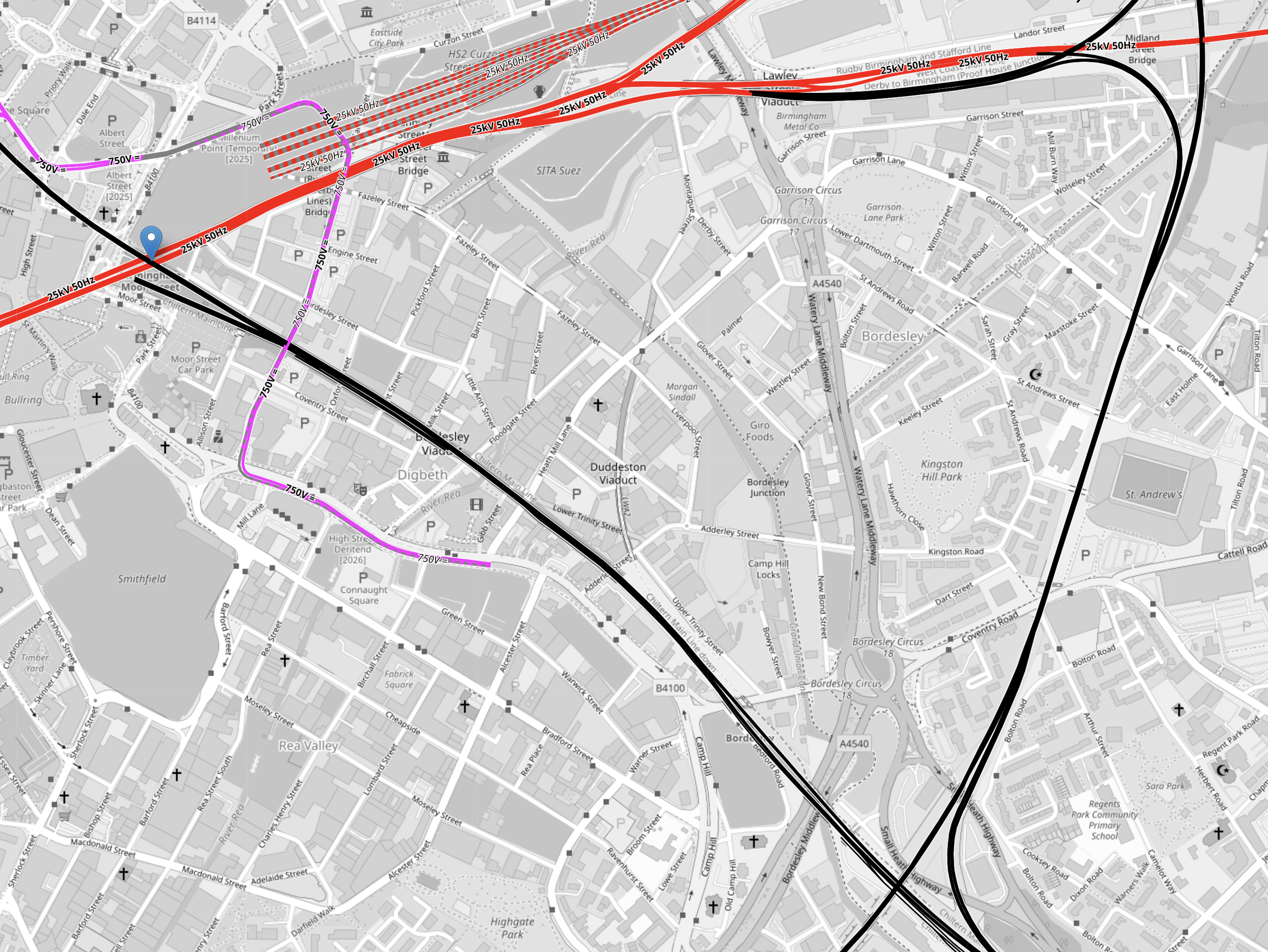
This OpenRailwayMap shows the tracks going into and around Birmingham Moor Street station.
Note.
- Electrified tracks are shown in red.
- Tracks without electrification are shown in black.
- West Midlands Metro tracks are shown in mauve.
- The red tracks going diagonally across the map are the four electrified tracks going into Birmingham New Street station.
- Birmingham New Street station is off the map to the West.
- To the North of the tracks going into Birmingham New Street station, there are the seven platforms of High Speed Two’s Curzon Street station.
- The black track running NW-SE is the Chiltern Main Line between London Marylebone and Birmingham Moor Street stations.
- Birmingham Moor Street station is indicated by the blue arrow in the North-West corner of the map.
- The black track running NE-SW is the Camp Hill Line, that allows services to cross Birmingham.
Two new chords will be built where the Chiltern Main and the Camp Hill Lines cross, to allow services on the Camp Hill Line to call at Birmingham Moor Street station.
Consider.
- The press release described these chords as the biggest change.
- The chords will probably not be fully used, until the new stations are built on the Camp Hill Line.
- There may be need for extra platforms at Birmingham Moor Street station to accommodate any new services.
For these reasons, I suspect that these chords could well be the project that is pushed back to a later date.
The Reopening Of Platform 4 At Snow Hill Station
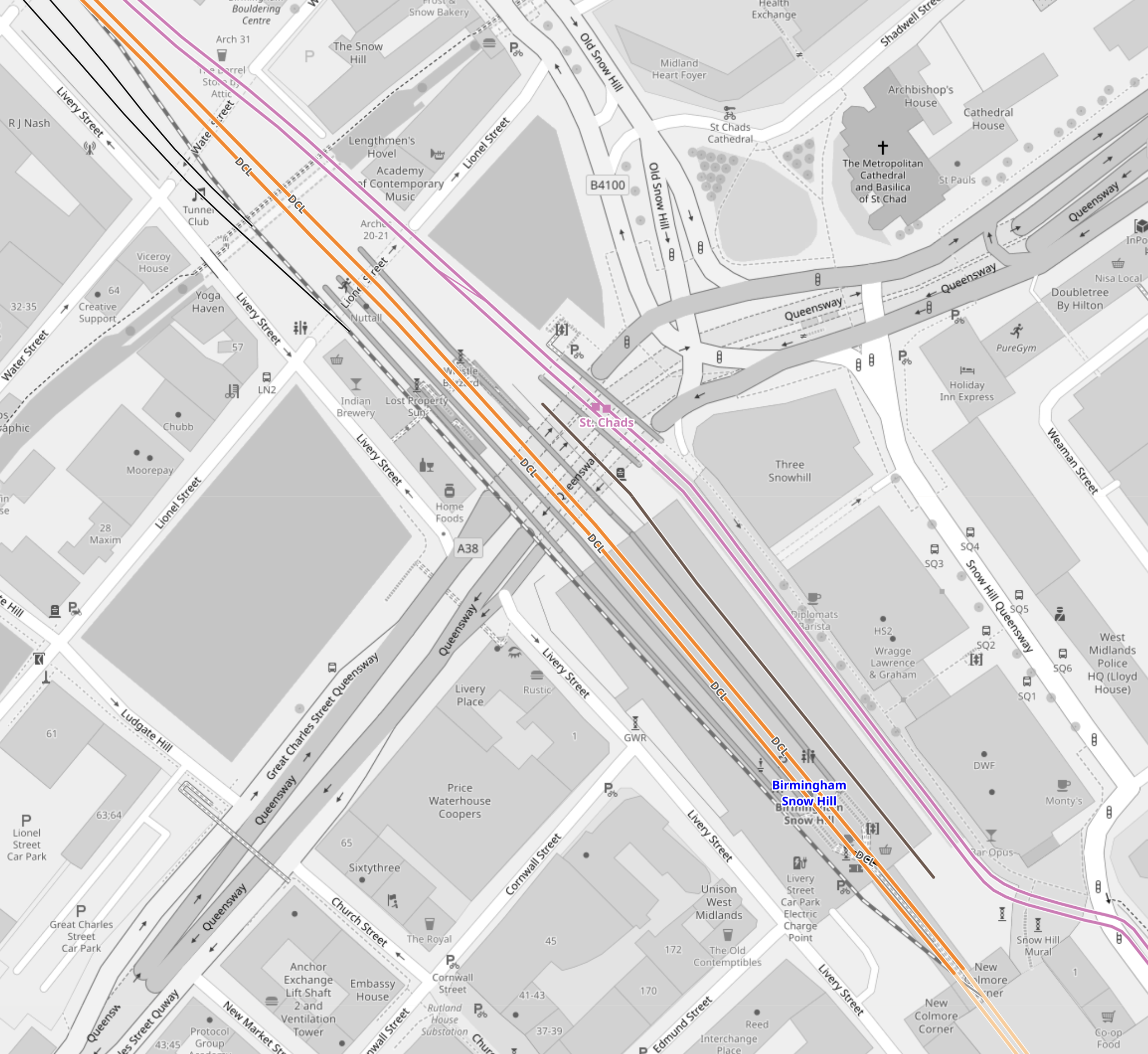
This OpenRailwayMap shows the track layout at Birmingham Snow Hill station.
Note.
- The two lilac tracks are the West Midlands Metro.
- The two orange tracks are the two through tracks between Birmingham Moor Street and Stourbridge Junction stations.
- Platform 3 is the Southbound track to Birmingham Moor Street on the right.
- Platform 2 is the Northbound track to Stourbridge Junction on the left
- Platform 1 is a loop on left.
- Platforms 1, 2 and 3 are all bi-directional.
- The closed Platform 4 is on the right and is shown by the black track.
I would expect that this reopening could be fairly straightforward and may also have worthwhile benefits.
- Would an extra platform, allow all Chiltern services to serve both Birmingham Moor Street and Birmingham Show Hill stations?
- Chiltern would probably find it easy to extend services from Birmingham to the North-West of the city.
- In this century, services have run as far as Wrexham from Marylebone.
- If all Chiltern services terminated at Birmingham Show Hill station would this have operational and/or marketing advantages?
- If all Chiltern services terminated at Birmingham Show Hill station would this, make it easier for some passengers to get a train to London and the South?
- If all Chiltern services terminated at Birmingham Show Hill station would this release a platform at Birmingham Moor Street station for other services?
These are a few pictures of Birmingham Snow Hill station.
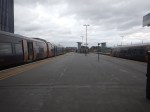
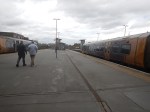
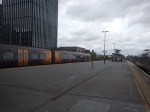
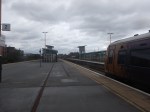

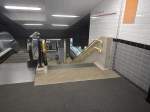
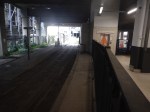
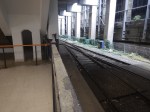
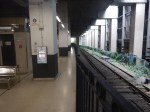
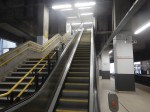

Platform 4 at Birmingham Snow Hill station could be a Build One Platform-Get One Free At Another Station situation!
The Redeveloping Of Kings Norton Station
This will probably be needed for running services on the Camp Hill Line, so why not get some of the work done early, so the rebuilding doesn’t effect existing services?
This OpenRailwayMap shows the Eastern end of Kings Norton station
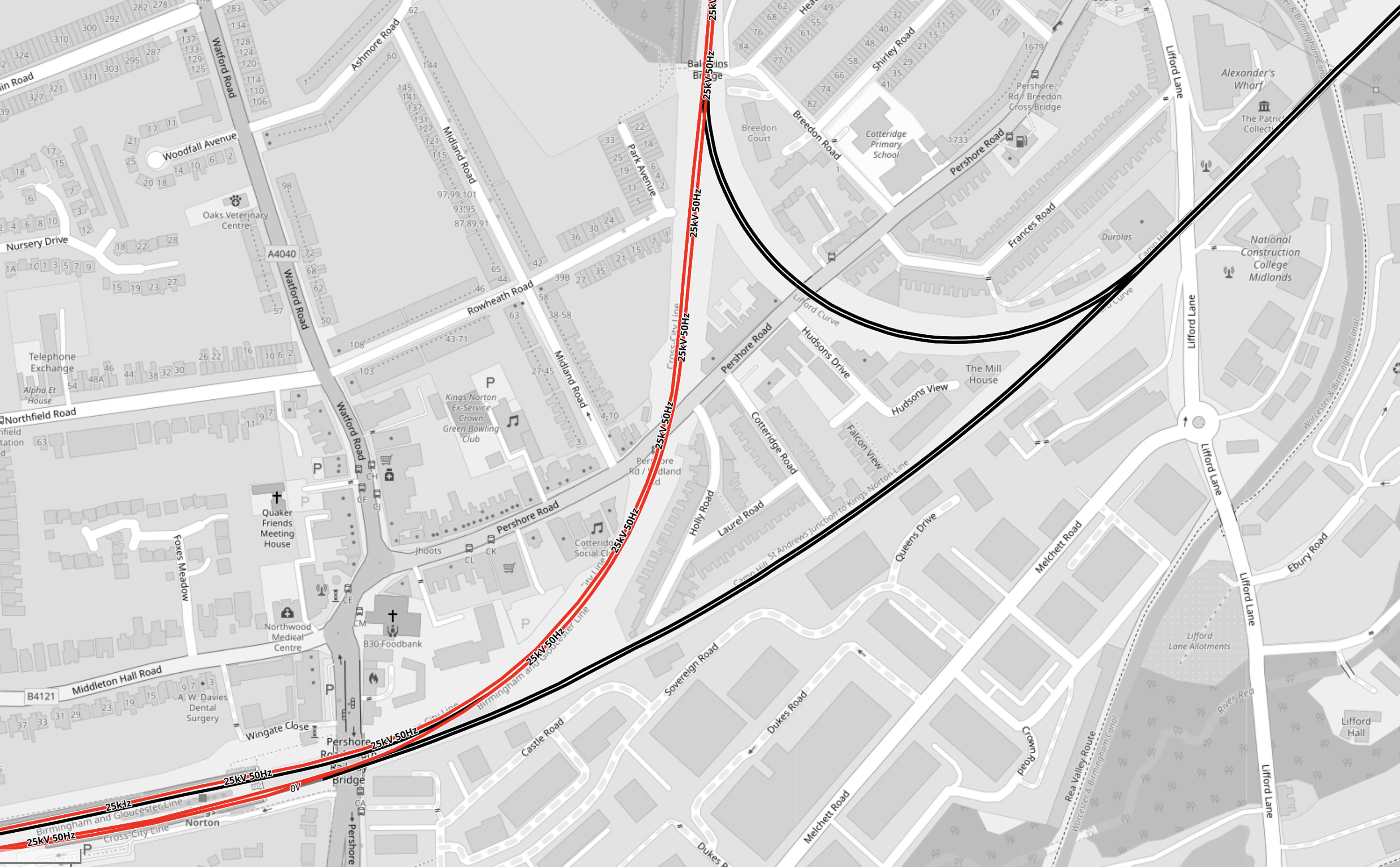
Note.
- Electrified tracks are shown in red.
- Tracks without electrification are shown in black.
- The station has four platforms, but some are unused.
- Two platforms are on an island, with a single platform on either side.
This OpenRailwayMap shows the Western end of Kings Norton station.
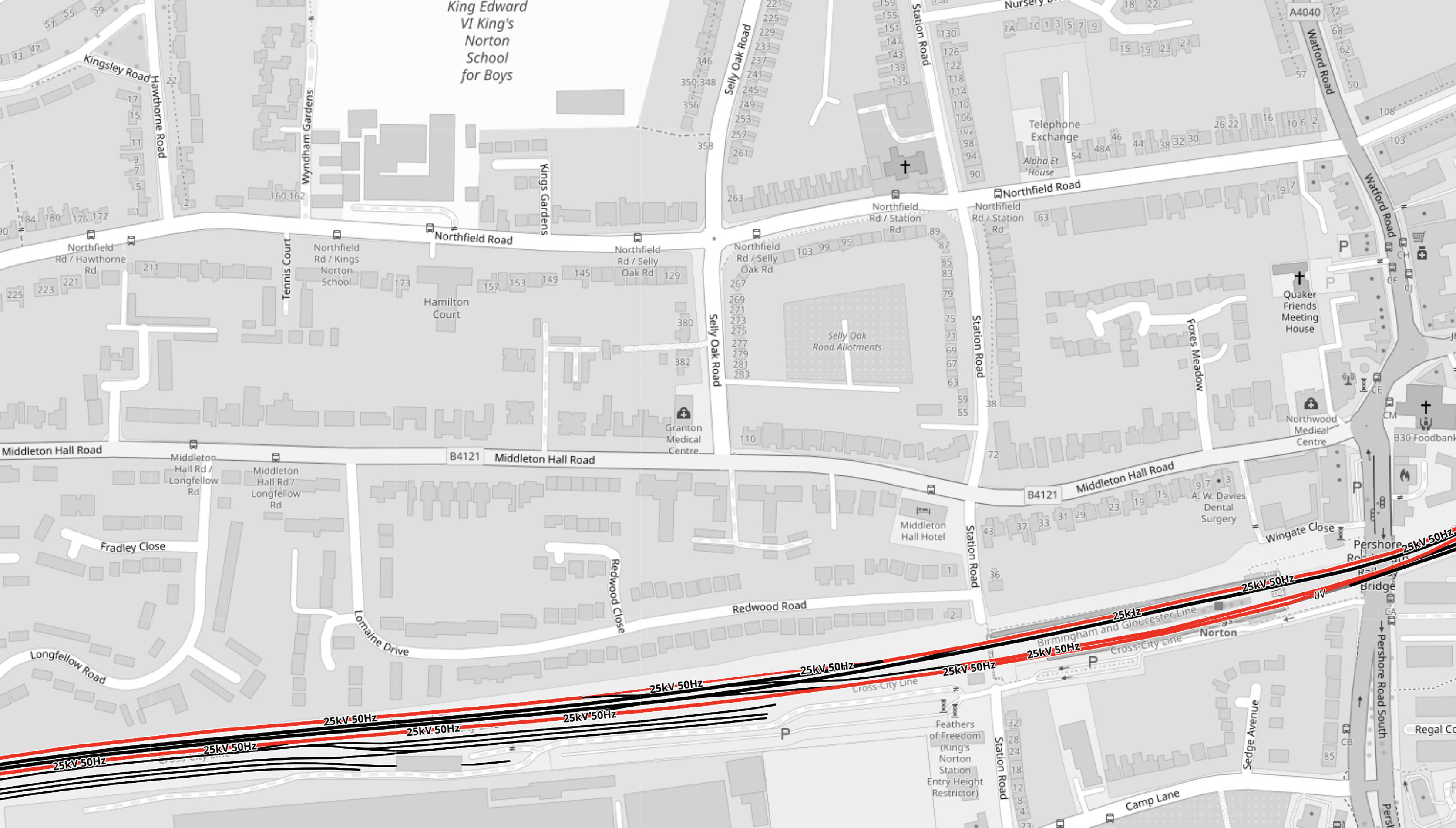
The notes to the previous map apply.
These two paragraphs from the Wikipedia entry for Kings Norton station, describe the station.
With the development of both bus and tram services, the need for such a large facility reduced from the 1930s onwards. The result is that today although all four platforms remain in place, only the outer two are in passenger use, with the middle island platforms now derelict.
Refurbished as part of the Cross-City line in 1978, it retained some of its original features following refurbishment, unlike the other ‘cross city line’ stations. The original station building survived, leased out for commercial purposes, until it was demolished in February 2006 for safety reasons. An extension car park provides a Park and Ride facility.
Disabled-access doesn’t seem to be the best either.
These pictures show the station.
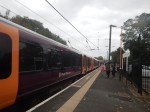
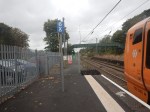
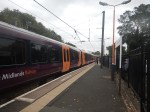
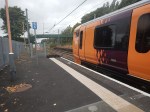
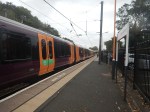
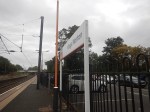
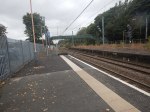
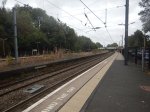
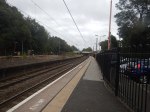
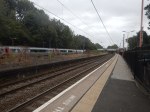
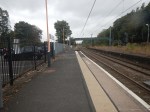
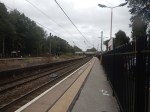
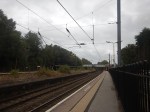
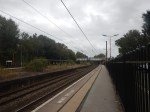
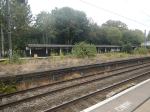
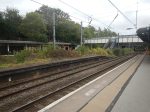
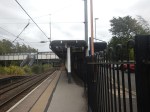
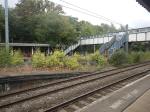
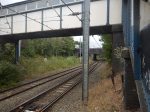
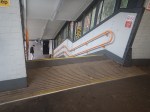
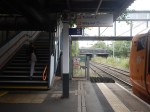
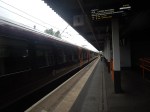
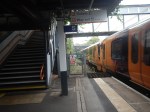
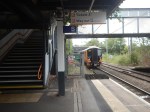
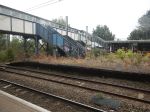
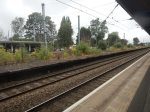
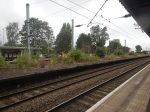
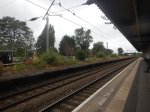
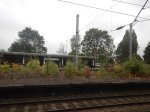
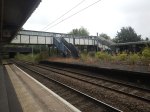
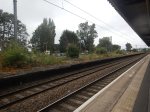
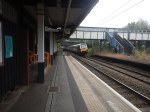
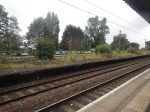
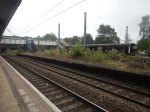
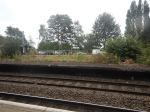
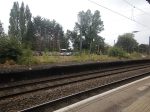
Note.
- As I guessed, there is no disabled-access.
- But there are Braille markings on the handrails down to the platforms.
- Two CrossCountry trains are seen going through the station.
- The local Class 730 trains, lights and information screens appeared to be new.
- Three platforms are electrified, but the fourth is not.
- The electrification structure could probably be used to electrify the fourth platform.
- Only the two outside platforms ; 1 and 4 are in use, with the central island platforms ; 2 and 3 left derelict.
- There is car parking and possibly space for more.
- The two active platforms are 150 metres long and the six-car Class 730 trainstrains appear to be 144 metres long.
- The Class 220 trains, that are run by CrossCountry Trains appear to be 93 metres long.
It was one of the scruffiest stations, that I’ve ever seen.
These are my thoughts on the station.
Handling The Camp Hill Line
Refurbishing Kings Norton Station
I don’t feel, that this will be the most horrendous of jobs, as it is very much a job, where all the rubbish and wild forest is removed and new platforms and a bridge are built.
Nigel Farage Speech: Persistent Offenders Would Face Life Sentences
The title of this post, is the same as that of this article in The Times.
This is the sub-heading.
The Reform UK leader pledged more prison spaces, deportation of criminals and zero-tolerance policing as part of a six-week Lawless Britain campaign drive.
These three paragraphs give more detail about what criminals can expect and how much it will cost.
Every shoplifter would be prosecuted and stop and search powers used to “saturation point” under Nigel Farage’s pledge to make Reform UK the “toughest party on law and order this country has ever seen”.
He said that a Reform government would crack down on prolific offending by imposing life sentences on those who commit three or more offences.
The Reform leader set out plans to spend £17.4 billion to cut crime by half in the first five years if the party wins the next general election — an annual cost of £3.5 billion.
At least hanging and flogging aren’t mentioned. But he does suggest sending one of our worst child murderers to El Salvador and that Britain would leave the European Convention on Human Rights.
This paragraph says how he will pay for this law and order policy.
Farage said Reform would pay for the £17.4 billion law and order crackdown by ditching HS2 and net zero policies — money which has also been pledged for other policies.
I have just done a little calculation about how much offshore wind power should be commissioned by January 2029, which will likely be before the expected 2029 General Election.
- In October 2023, there was 15,581 MW of operational offshore wind.
- Currently there are 10,842 MW under construction, that should be commissioned by January 2029.
- There is also 2,860 MW of smaller wind farms, which have yet to be started that should be commissioned by January 2029.
- That all totals up to 29, 285 MW or 29.3 GW.
- Another 12 GW of offshore wind is scheduled to be commissioned in 2029 and 2030.
Currently, as I write this we are generating 29.3 GW from all sources.
I asked Google AI how much solar energy we will have in January 2029 and got this answer.
In January 2029, the UK is projected to have a significant amount of solar energy capacity, with the government aiming for 45-47 GW of total solar power by 2030.
Let’s assume the sun only shine half the time and say 20 GW on average.
We’ll also have 4.4 GW from Hinckley Point C and Sizewell B, as all other nuclear will have been switched off.
I asked Google AI how much energy storage we’ll have by January 2029 and got this answer.
In January 2029, the UK is projected to have around 120 GWh of battery energy storage capacity, according to a European report. This is part of a broader goal to reach 400 GWh by 2029 for the EU-27, with the UK contributing significantly to this total.
If there’s say another Great Storm, the dozens of interconnectors between the UK and Europe should keep us all going.
It looks to me that by January 2029, we’ll be substantially on the way to being powered by renewables.
Most of the net zero money will have been spent and we’ll be almost at net zero.
Phase One of High Speed Two has a target date of 2030, and I suspect that the engineers working on the project will get trains running between Old Oak Common and Birmingham Curzon Street stations before the General Election, just because if NF’s going to cancel the project, they might as well do their best to get him to lose the election.
So at best he might get a year’s savings from stopping High Speed Two, but an unfinished High Speed Two, will be a joke on NF and make him look a complete laughing stock!
Darlington Station – 26th June 2025
I visited Darlington station, three times on my trip.
These pictures are in chronological order.
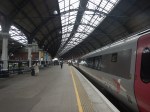
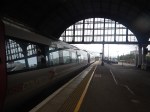
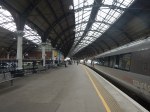
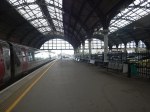
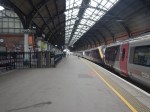
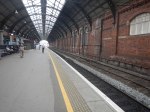
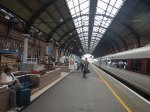

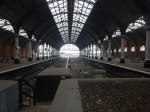
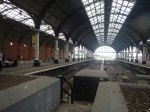
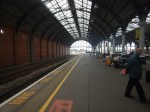
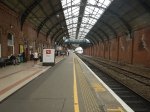
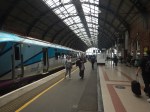
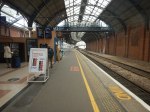
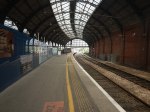
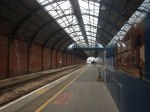
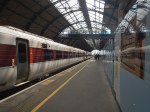
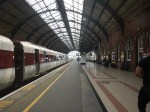
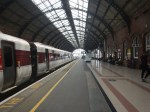

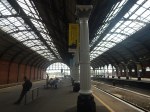
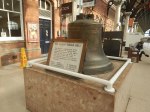
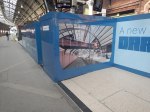

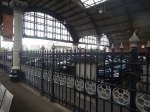
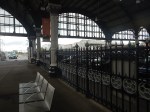
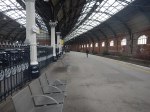
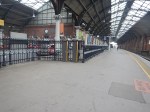
Note.
- The station is being given a major upgrade, so it can handle more trains.
- The station has a large number of top-quality Victorian features.
- The station is Grade II* Listed.
- Inside the enormous train-shed are two long platforms, that handle most of the trains and two South-facing bay platforms.
- Two new platforms, which are numbered 5 & 6, and possibly a double-track avoiding line are being added outside the train-shed on the East side.
- In images with a comment saying Note Platform 5, the new long electrified Platform 5 can be seen.
- Platform 5 appears to be already electrified at its Southern end.
These three OpenRailwayMaps shows the future layout.
The first OpenRailwayMap shows the junction, where the branch to Newton Aycliffe, Shildon and Bishop Auckland connects.
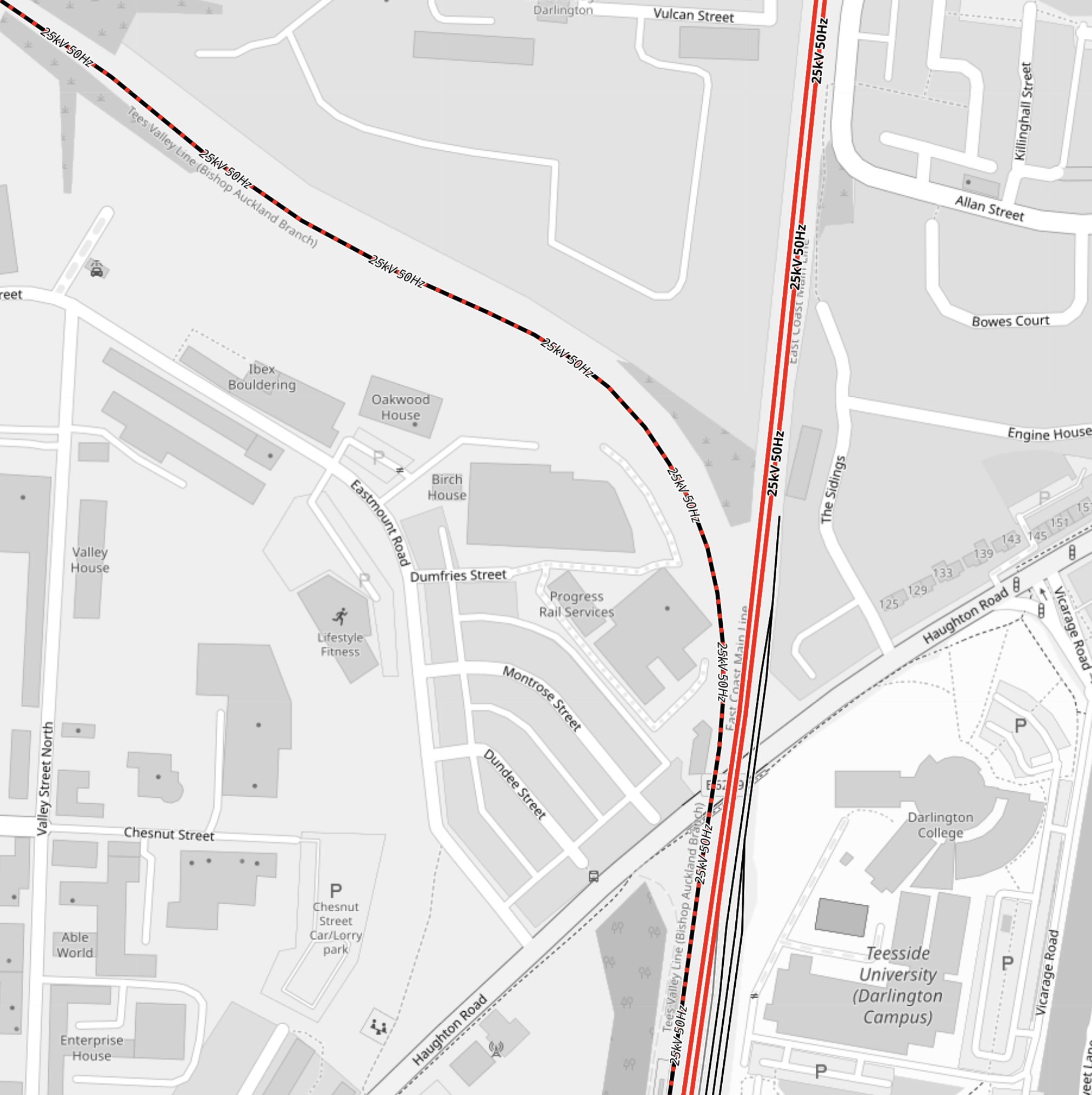
Note.
- The red tracks are electrified and indicate the East Coast Main Line.
- The track curving off to the North-West is the Bishop Auckland Branch.
- The black tracks are not-electrified.
- The Bishop Auckland Branch is shown dotted black and red, as it will be electrified, so that Hitachi can get their new trains to the East Coast Main Line.
- The two tracks of the East Coast Main Line are very straight and the map shows them to have a 125 mph operating speed.
The second OpenRailwayMap, shows the lines immediately to the South of Darlington station.
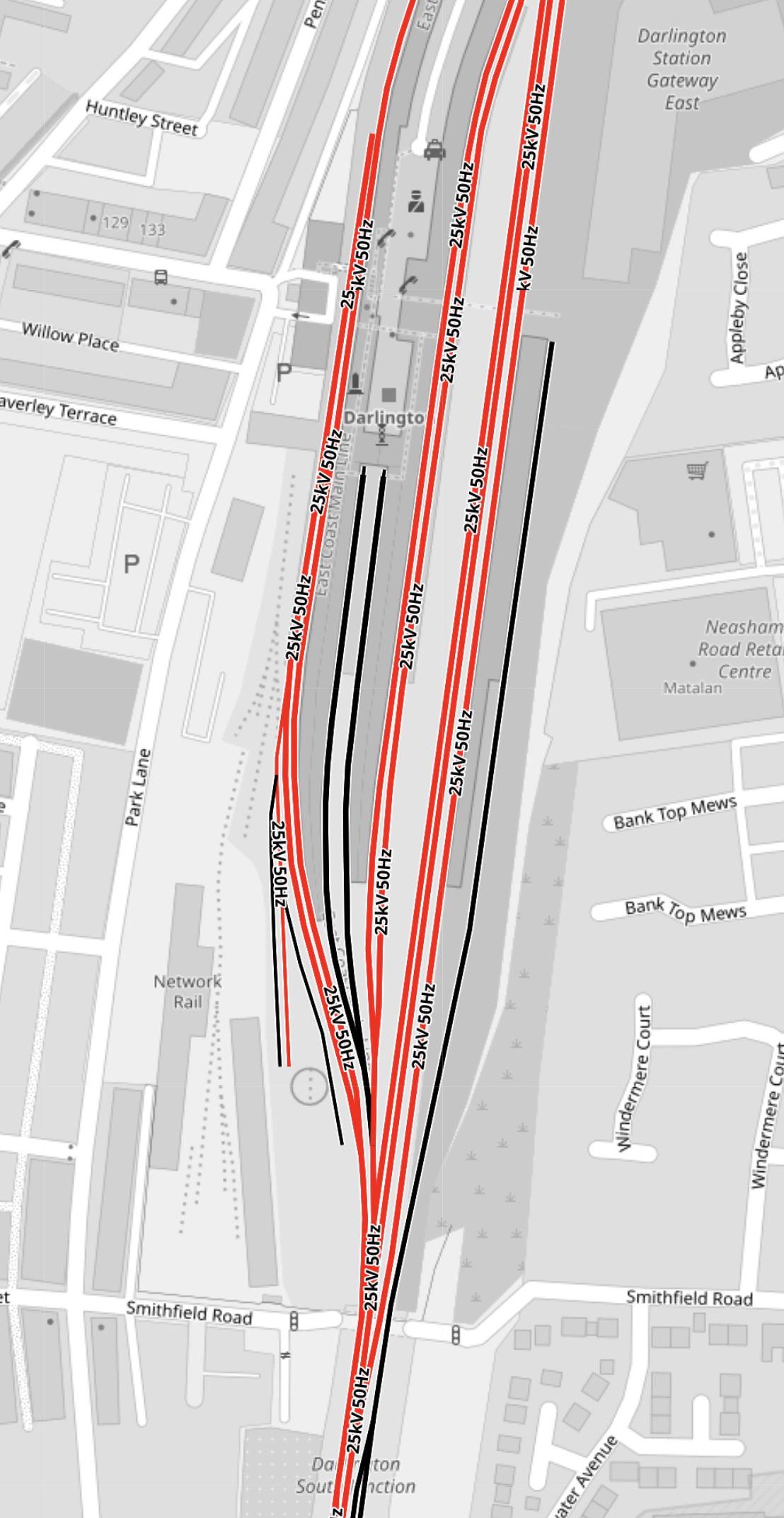
Note.
- The red tracks are electrified.
- The black tracks are not electrified.
- Tracks are number 4, 3, 2 and 1 from the West.
- The Southern ends of Platforms 1 and 4, and Platforms 2 and 3, which are inside the current train-shed appear to be virtually unchanged.
- Platform 1 is electrified and will probably still cater for Southbound trains.
- Platforms 2 and 3 are bay platforms without electrification for trains terminating at Darlington.
- Platform 4 is electrified and will probably still cater for Northbound trains.
- There is an electrified avoiding line to the East of Platform 1.
- The brick wall of the current train shed is in the white space to the East of Platform 1.
- Outside the current train shed are two electrified 125 mph lines, an electrified through platform and a South-facing bay platform without electrification.
- The new electrified platform looks very long. Could it be long enough to handle a pair of High Speed Two Classic-Compatible trains? I suspect though it is long enough to handle the splitting and joining of a pair of five-car Hitachi Class 80x trains.
- The new bay platform looks longer that the current bay platforms 2 & 3. Is it long enough to handle a five-car Hitachi Class 80x train?
- It does appear from the track layout, that the new electrified platform is connected to the East Coast Main Line, the Saltburn branch and stabling sidings to the North of the station.
- The new bay platform appears to be connected to the Saltburn branch.
The two new platforms also appear to be adjacent to an area of the station, which is labelled Darlington Station Gateway East. I would assume, that this proximity will be used to make the station easy for changing trains.
The third OpenRailwayMap shows the section of the station between the two previous maps.
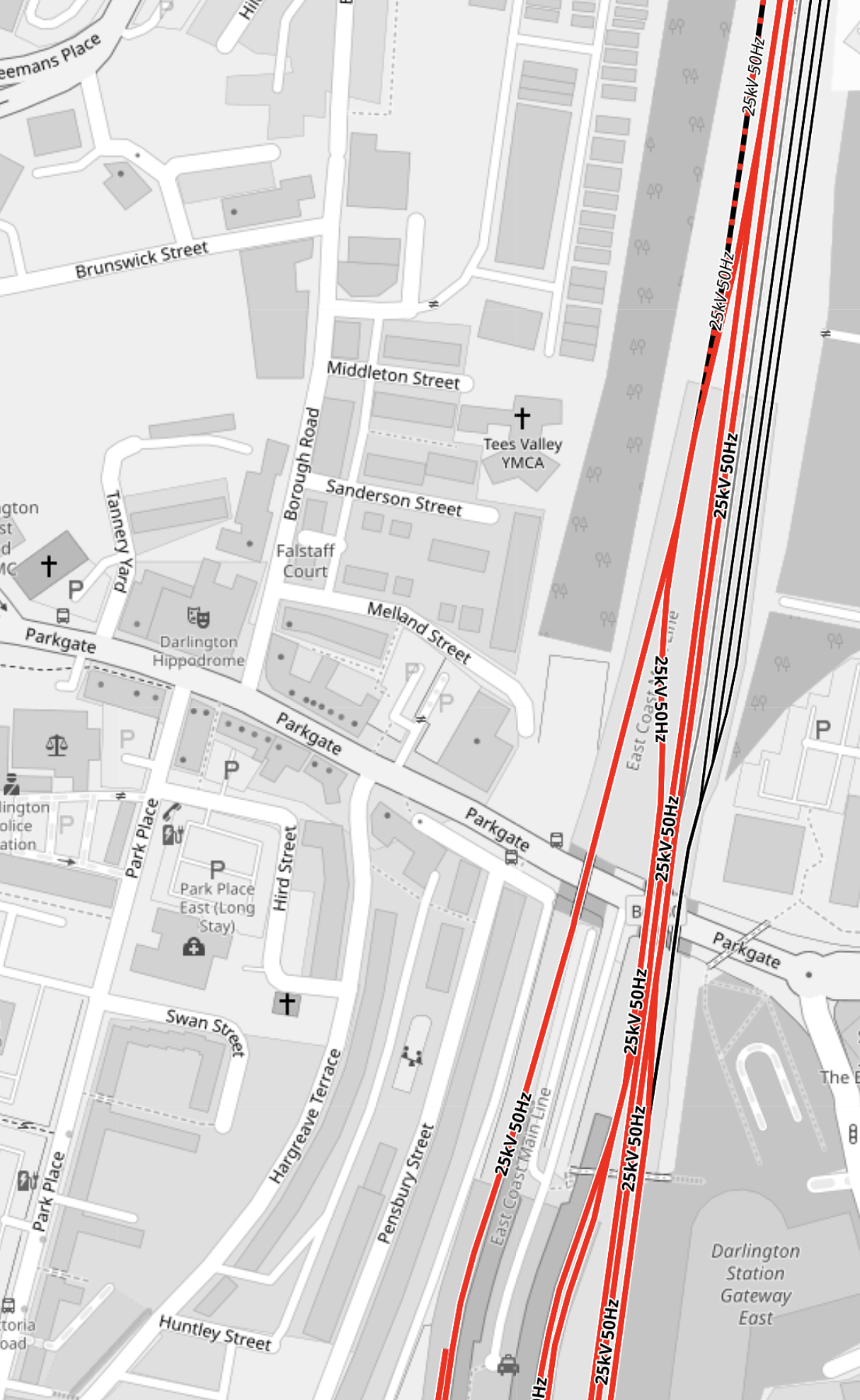
Note.
- The red tracks are electrified.
- The black tracks are not-electrified.
- The Darlington end of the Bishop Auckland Branch is shown dotted black and red, as it will be electrified, so that Hitachi can get their trains to and from the East Coast Main Line.
- Both Platforms 1 and 4 appear to connect to the East Coast Main Line, so high speed services can operate as they do now, by taking a diversion through the current Darlington station.
- To the East of the East Coast Main Line, there appear to be some very useful stabling sidings.
I have some general thoughts about Darlington station.
Will Trains Not Stopping At Darlington Station Use The New 125 mph Lines Through the Station?
It does appear that the two 125 mph lines through the new part of the station are very straight.
- They are shown as 125 mph, but could be faster.
- It should be remembered that according to Wikipedia, British Rail built the Selby Diversion for 160 mph in 1983.
- Between Durham and York stations is 66.2 miles of mainly 125 mph railway.
I believe that cutting out the need for trains to slow to go through Darlington station could save several minutes.
Will Trains Stopping At Darlington Station Use The Current Platforms 1 And 4 As They Do Now?
The track layout would seem to allow this and those changing to another train, would not have to walk a long way.
Can Trains Stopping At Darlington Station Use The New Eastern Platforms?
I have examined the second and third maps in detail and it looks as if the track layout will allow trains on the East Coast Main Line in both directions to stop at the long electrified platform.
The shorter bay platform appears to be only connected to the Tees Valley Line to Middlesbrough and Saltburn.
How Long Are The New Eastern Platforms?
Estimating against the scale on the map, I reckon these are the likely lengths.
- Long electrified platform – 400 metres – Appears to be numbered 5
- Bay platform – 200 metres – Appears to be numbered 6.
These are very useful lengths.
An Aerial View Of The New Platforms
This image from Tees Valley Combined Authority shows the Northern ends of the new platforms and the new footbridge.
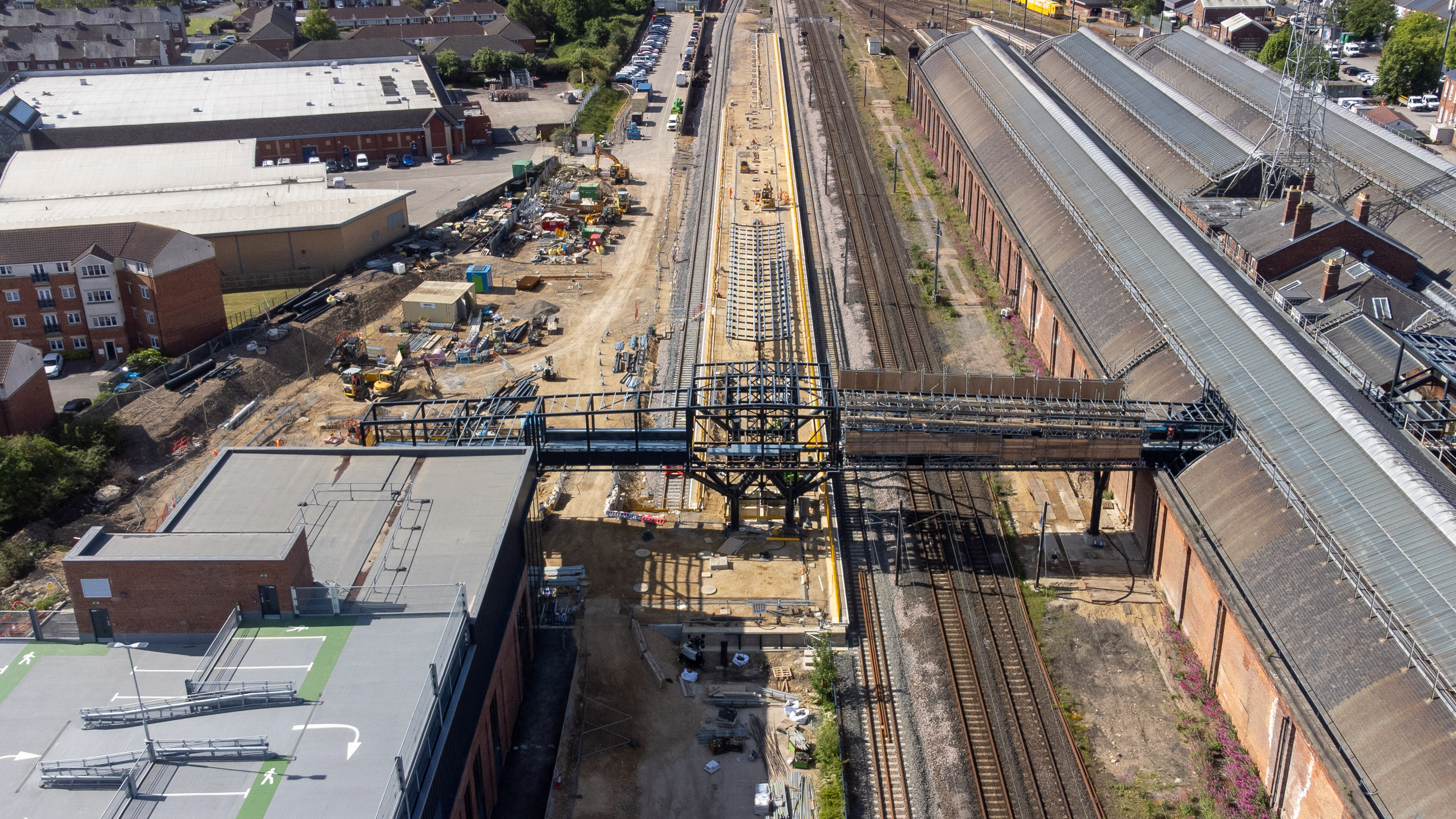
Note.
- The original four-platform Victorian station is on the right, which is the Western side.
- The East wall of the Victorian train shed can be clearly seen.
- The two absolutely straight 125 mph lines, that allow trains to bypass the original station are closest to the wall.
- The long electrified platform, which appears to be numbered 5, also appears to be absolutely straight.
- The unelectrified bay platform, which appears to be numbered 6, is to the left.
- Platforms 5 and 6 would seem to be separated by a wide island platform, which would make interchange easy.
This page on the Network Rail web site, gives more information.
Car Parking At Darlington Station
This image from Tees Valley Combined Authority shows the Northern end of the station.
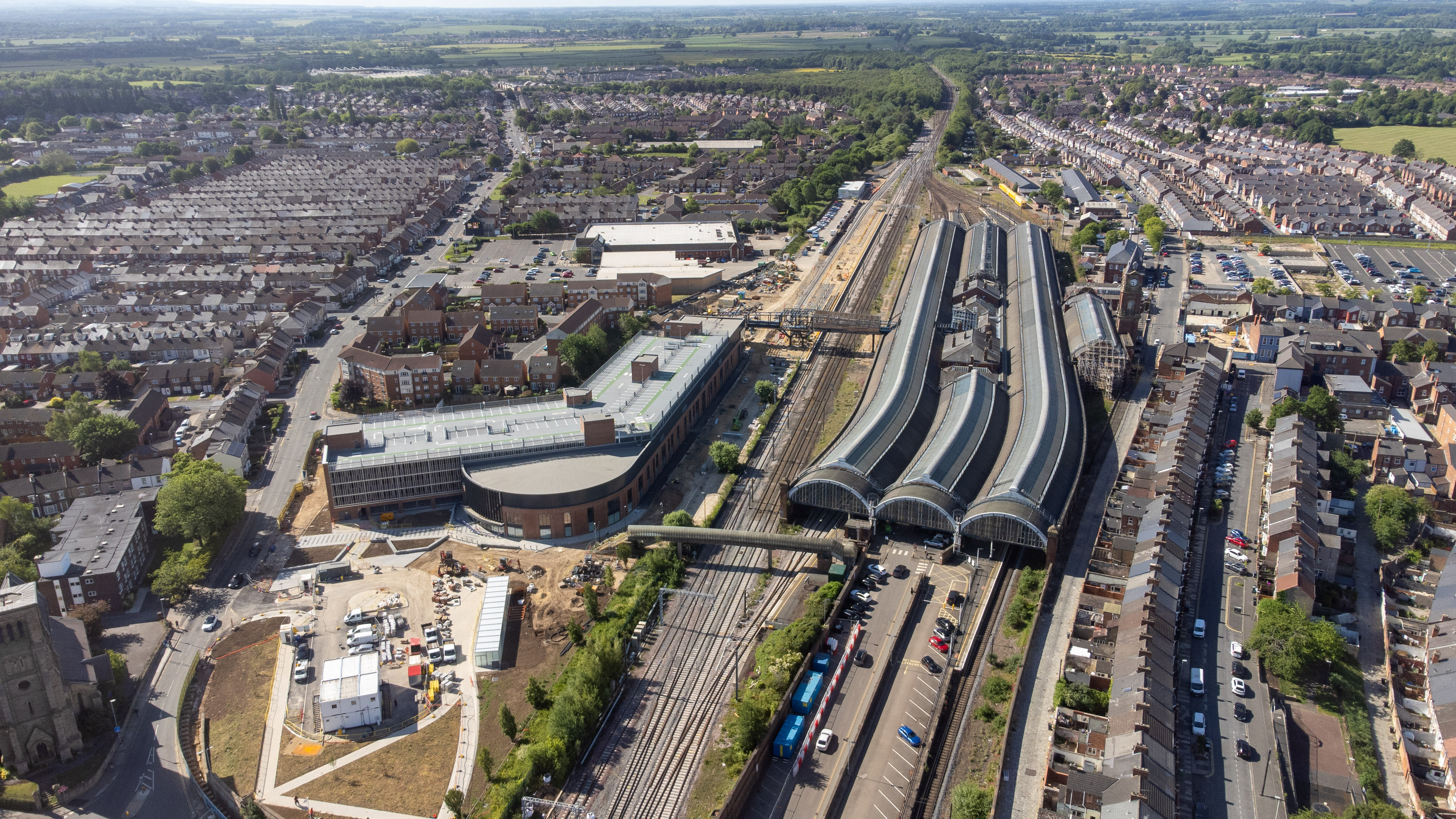
Note.
- The three sections of the Victorian station.
- The two new platforms ; 5 and 6 at the top of the image.
- The two 125 mph lines bypassing the Victorian station.
- There are two new footbridges connecting the Victorian station to the land on the other side of the 125 mph lines.
To the left of the station, there appears to be a massive multi-story car-park.
I asked Google about the new car park at Darlington station and got this reply.
The new multi-story car park at Darlington Station will have a capacity of more than 650 vehicles. This is part of a larger £140 million redevelopment of the station, which also includes new platforms and an eastern concourse. The car park will include accessible parking bays and electric car charging points.
This image from Tees Valley Combined Authority shows the car parking from the South.
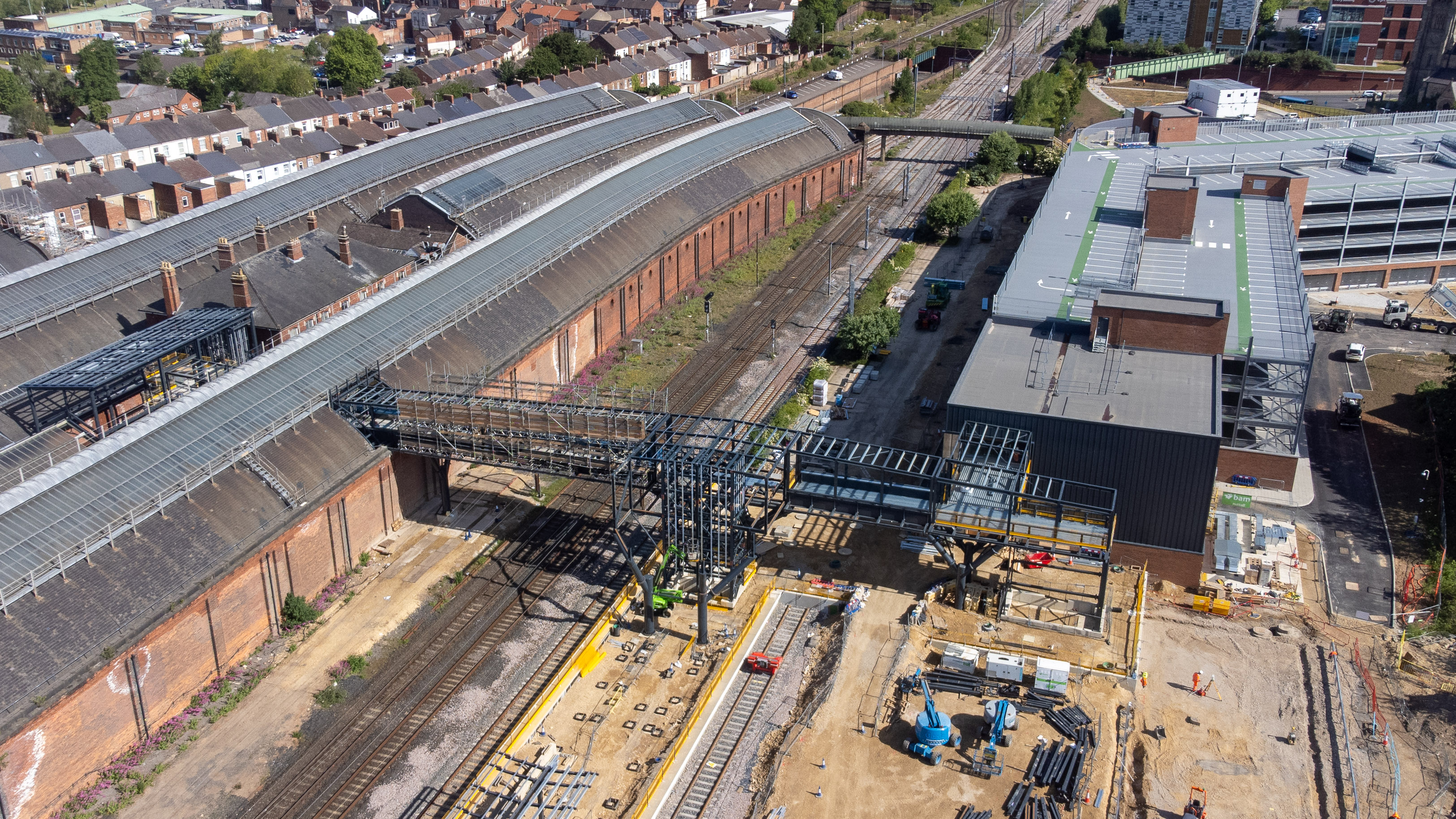
Note.
- The building appears to be a five-story car park.
- There appears to be a very easy connection between the car park and the bridge to the station.
- From the roof layout, there appears to be several lifts.
- It looks like there will be a large area between the platforms and the car park, where travellers can meet and socialise.
- The bay platform 6 already has a pair of red buffer stops.
Railways may have come to Darlington two hundred years ago and it looks like they are getting the car parking at the station ready for at least the next two hundred.
Further Electrification
If as I expect, the UK embraces battery electric technology for local and regional trains, I can see the three South-facing bay-platforms being electrified, so they could charge he battery-electric trains.
This picture shows that bars have been placed across Platforms 2 and 3, that could be used to support the electrification.
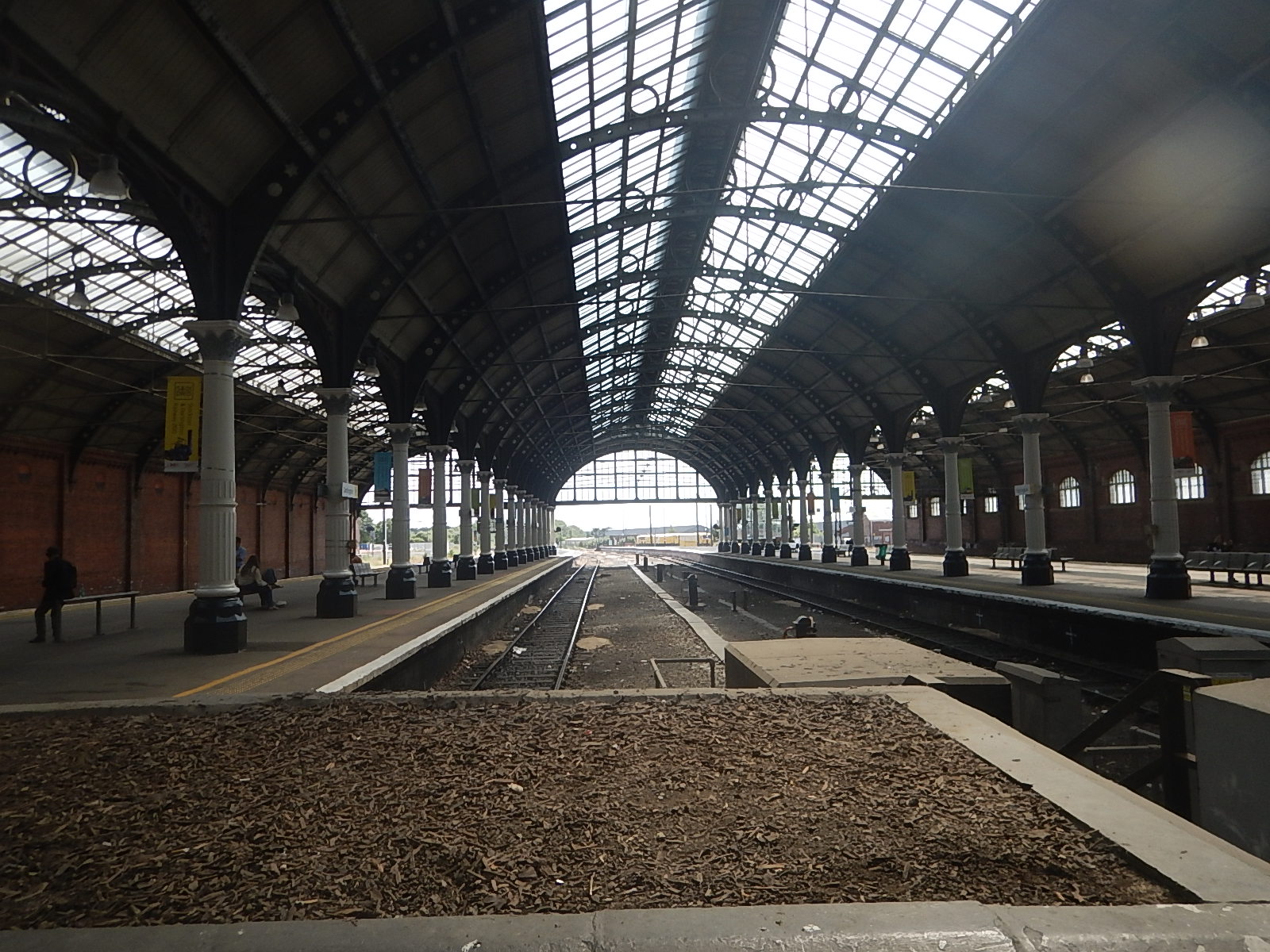
This method has been used in Victorian stations in the UK before. I show some installations and discuss electrifying Victorian stations in Could Hull Station Be Electrified?.
Darlington Station And High Speed Two
This graphic shows the original service pattern for High Speed Two.
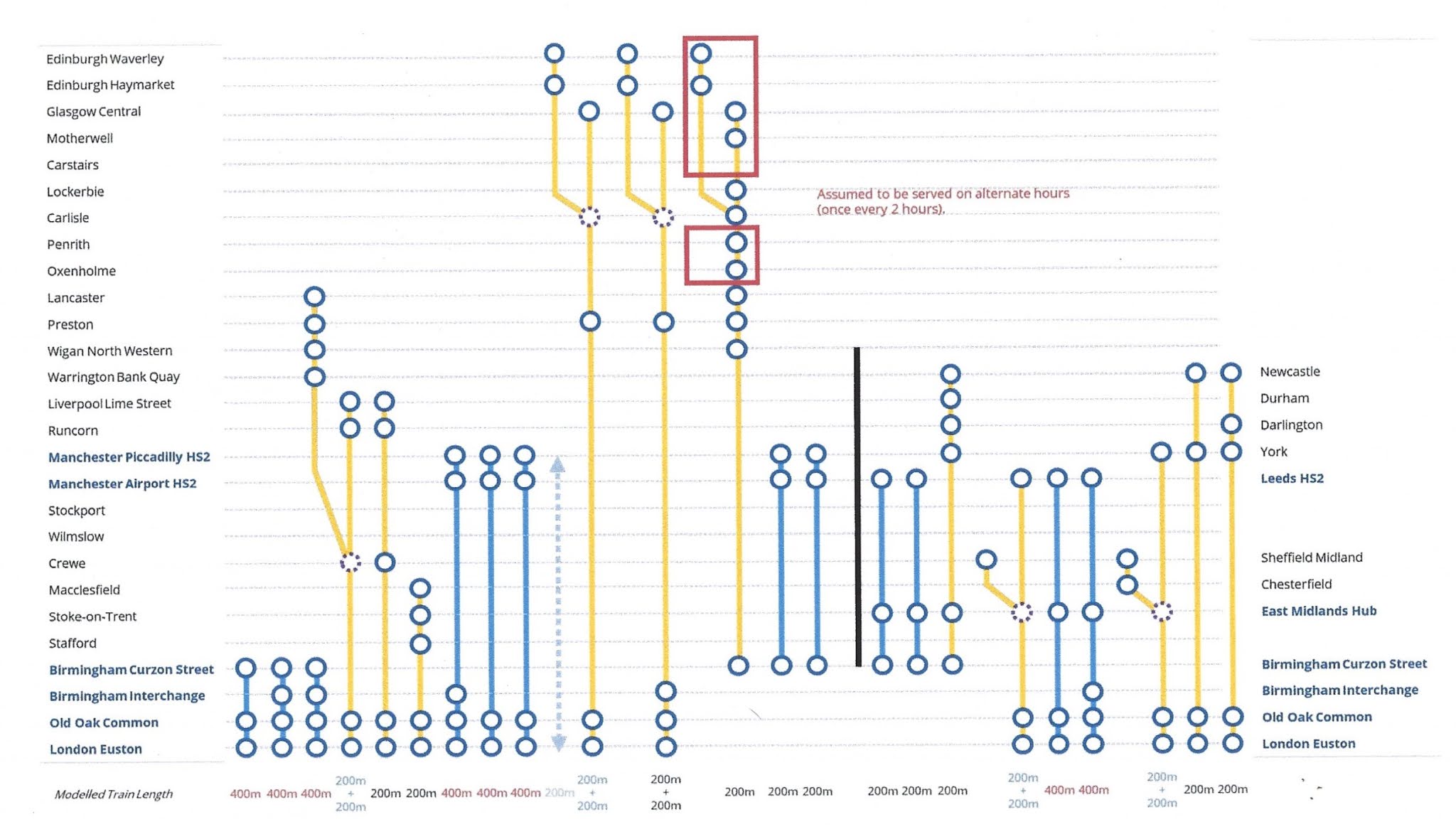
Note.
- There are seventeen paths terminating in the South at Euston station.
- Six of these paths go to Leeds, Newcastle or York.
- As the Eastern leg has been abandoned, that means there will be no High Speed Two trains to Leeds HS2, York, Darlington, Durham and Newcastle via the East Coast Main Line.
Darlington was to be served by these hourly services.
- Train 17 – Birmingham Curzon Street and Newcastle via East Midlands Hub, York, Darlington and Durham.
- Train 23 – London and Newcastle via York and Darlington.
Both trains would have been a single 200 metre long High Speed Two Classic-Compatible train.
Joining And Splitting Trains At Darlington
As Platform 5 looks like it would be a 400 metre long platform, it would look like it would be possible to handle a pair of High Speed Two Classic-Compatible trains.
But these trains will not now be serving Darlington in the near future, as the Eastern leg of High Speed Two has been cancelled.
A pair of nine-car Class 801 trains would be 467.4 metres long and might be able to fit into Platform 5.
But a pair of seven-car trains would certainly fit into a 400 metre Platform 5.
In Do Class 800/801/802 Trains Use Batteries For Regenerative Braking?, I found this snippet in an Hitachi document.
To simplify the rearrangement and management of train configurations, functions are provided for identifying the train (Class 800/801), for automatically determining the cars in the trainset and its total length, and for coupling and uncoupling up to 12 cars in
normal and 24 cars in rescue or emergency mode.
So I suspect with software updates two nine-car trains could run together.
Suppose LNER wanted to attack the airlines on the London and Scottish route.
- Two seven- or nine-car Class 800 or 801 trains would leave Edinburgh working as a pair.
- First stop would be Platform 5 in Darlington.
- The trains would split in Darlington.
- One train would go to King’s Cross stopping at perhaps Doncaster and Peterborough.
- The other train would go to St. Pancras stopping at perhaps Leeds, Sheffield, Nottingham and Bedford.
Note.
- A seven-car Azuma would be under 200 metres long.
- Seven-car trains would fit in St. Pancras.
- LNER have run an Azuma train into St. Pancras.
- The train would interchange with East-West Rail at Bedford.
- Travellers to and from East Anglia would change at Peterborough.
Large areas of England would have a fast route to and from Scotland.
Could High Speed Two Serve Blackpool North?
Consider.
- Blackpool North station is electrified and will have an electrified route to London Euston HS2 and Birmingham Curzon Street stations, when High Speed Two opens.
- Yesterday, both 11-car and 9-car Class 390 trains, which are longer than single High Speed Two classic-compatible trains, used Blackpool North station.
- Blackpool is noted for fresh air and fun.
- Blackpool needs leveling-up. Surely High Speed Two will help with this?
- Blackpool has a unique Modern and Ancient tramway to bring residents and visitors to High Speed Two.
I am fairly sure, that single High Speed Two class-compatible trains could use Blackpool North station.
But could another High Speed Two service have a path between London and Preston to serve Blackpool?
Because of the cancellation of Phase 2 of High Speed 2, there are spare paths on High Speed Two between London and the West Midlands.
If the core section of High Speed Two is extended Northwards to Crewe, as advocated by Dyan Perry of the High Speed Rail Group, that I wrote about in The Future Of HS2 Could Lie In Its Original Vision, this would create extra paths to Crewe.
It looks to me, that the tricky part of the route is between Crewe and Preston.
This diagram shows High Speed Two services, as they were originally envisaged before Phase 2 was discontinued.
Note.
- Trains to the left of the vertical black line are Phase 1 and those to the right are Phase 2.
- Full-Size trains are shown in blue.
- Classic-Compatible trains are shown in yellow.
- Blue circles are shown, where trains stop.
- The dotted circles are where trains split and join.
- In the red boxes routes alternate every hour.
Click on the diagram to enlarge it.
Note that if Phase 1 were to be completed to Crewe, there would be five full-size and five classic-compatible trains using the West Midlands and Crewe section of the High Speed Two route, of which five trains would terminate at Manchester Piccadilly HS2 station and two classic-compatible trains would terminate at Liverpool Lime Street.
So just three Scottish trains and one to Lancaster would go North of Warrington Bank Quay station, which would be an average of one train every fifteen minutes.
High Speed Two will be fully digitally signalled and I’m sure that trains could run as flights of two or more trains, a couple of minutes apart.
This would mean that a London and Blackpool North service could run say two minutes behind one of the London and Scotland services to Preston
- Between London and the West Midlands, there would be twelve trains per hour (tph).
- Between the West Midlands and Crewe, there would be also be twelve tph.
- Between Crewe and Preston, there would be five tph.
I believe it would be possible for High Speed Two to run a London and Blackpool North service, provided that the London Euston to Crewe core of High Speed Two is completed soon after Phase 1 is completed.
It should also be noted, that I believe the second Scottish service from London could also have a flight with another service. So could Barrow or Blackburn have a High Speed Two service from London?
250,000 Seats A Day On The WCML?
The title of this post, is the same as that of this article on Rail Engineer.
These are the first three paragraphs.
In the Parliamentary debate on the cancellation of HS2 phase 2, Transport Minister Mark Harper claimed that what remains of HS2 will deliver “a massive increase in capacity to the West Coast Main Line (WCML)” by providing 250,000 seats a day. This figure was subsequently repeated by the Prime Minister and Rail Minister who advised that it applies “across the primary long-distance operator on the West Coast.”
Yet without HS2 phase 2a, there is to be no WCML capacity increase north of Lichfield. Furthermore, with no HS2 station in Manchester it will not be possible to run the planned two-unit 400-metre HS2 trains to the city. Instead, there can only be single 200-metre unit HS2 trains which are shorter than the current 265-metre Pendolino trains.
Furthermore, 250,000 seats a day is equivalent to running 17 x 605-seat Pendolinos an hour, 24 hours a day. This is clearly not credible.
Note.
- The writer’s assumptions about Manchester are correct.
- Liverpool Lime Street is already is already HS2-ready for trains between Crewe and London, after the recent upgrade.
- Liverpool Lime Street will certainly be able to take two London trains per hour (tph), which can only be single 200-metre unit HS2 trains.
- Liverpool Lime Street may be able to take a third London train per hour.
These are my thoughts.
Current Services
Current services include.
- Avanti West Coast – London Euston and Blackpool North via Birmingham New Street – 2 trains per day (tpd)
- Avanti West Coast – London Euston and Glasgow Central via Birmingham New Street – 5 tpd
- Avanti West Coast – London Euston and Edinburgh Waverley via Birmingham New Street – 7 tpd
- Avanti West Coast – London Euston and Birmingham New Street – 1 tph
- Avanti West Coast – London Euston and Holyhead – 10 tpd
- Avanti West Coast – London Euston and Liverpool Lime Street – 1 tph – Increasing to 2 tph.
- Avanti West Coast – London Euston and Manchester Piccadilly via Stoke-on-Trent, Macclesfield and Stockport – 1 tph
- Avanti West Coast – London Euston and Manchester Piccadilly via Stoke-on-Trent and Stockport – 1 tph
- Avanti West Coast – London Euston and Manchester Piccadilly via Crewe, Wilmslow and Stockport – 1 tph
- Avanti West Coast – London Euston and Glasgow Central – 1 tph.
- West Midlands Trains – London and Birmingham New Street – 2 tph
- West Midlands Trains – London and Crewe – 1 tph
- West Midlands Trains – Birmingham New Street and Liverpool Lime Street – 1 tph
It looks like there are eight Avanti West Coast tph and two West Midlands Trains tph between Stafford and Crewe.
High Speed Two Services
This diagram shows High Speed Two services, as they were originally envisaged before Phase 2 was discontinued.
Note.
- Trains to the left of the vertical black line are Phase 1 and those to the right are Phase 2.
- Full-Size trains are shown in blue.
- Classic-Compatible trains are shown in yellow.
- The dotted circles are where trains split and join.
- In the red boxes routes alternate every hour.
- Was Lancaster chosen as it’s close to the new Eden Project Morecambe?
Click on the diagram to enlarge it.
The Author’s Assumption
The author has made these assumptions.
- Current West Coast Main Line capacity North of Lichfield; Avanti West Coast – 8 tph, West Midlands – 1 tph and freight trains – 4 tph
- HS2 offers no extra capacity North of Lichfield.
- Max capacity ; Old Oak Common – 8 tph and London Euston – 10 tph.
- 400-metre long trains North of Birmingham ; Min – 1 tph to Edinburgh/Glasgow
- 400-metre long trains North of Birmingham ; Max – plus 3 tph to Liverpool/Manchester
- Trains operate a maximum of 14 hours per day.
I would add.
- All pairs of 200-metre long trains split and join at Crewe.
- Birmingham Curzon Street has seven platforms.
- Lancaster and Macclesfield have long bay platforms, that can handle 200-metre trains
- Liverpool Lime Street and Manchester Piccadilly have two platforms, that can handle 200-metre trains.
- I suspect
- Liverpool Lime Street and Manchester Piccadilly could both handle four 200-metre trains tph hour – Three for London and one for Birmingham.
There is a surprising amount of capacity in the North.
The Author’s Minimum Plan For HS1 – Phase 1
I think his minimum plan is as follows.
- Old Oak Common and Birmingham Curzon Street – 400-metre long trains – 3 tph
- Old Oak Common and Liverpool Lime Street/Lancaster – 400-metre long trains – 1 tph – Splits at Crewe.
- Old Oak Common and Liverpool Lime Street – 200-metre long trains – 1 tph
- Old Oak Common and Macclesfield via Stafford and Stoke-on-Trent – 200-metre long trains – 1 tph
- Old Oak Common and Manchester Piccadilly – 200-metre long trains – 2 tph
- Old Oak Common and Edinburgh Waverley/Glasgow Central – 400-metre long trains – 1 tph – Splits at Crewe.
Note.
- 400-metre long trains are a pair of 200-metre long trains, that can split and join.
- This fulfils all the requirements of the original HS2 timetable for Phase 1.
- The total is nine tph and Old Oak Common can only handle 8 tph.
- Perhaps, the Liverpool Lime Street service could be a Liverpool Lime Street/Manchester Piccadilly service, that splits at Crewe?
I think it could work with London having the following services.
- Birmingham Curzon Street – 400-metre long trains – 3 tph
- Birmingham International – 400-metre long trains – 4 tph
- Carlisle – 200-metre long trains – 1 tph
- Crewe – 400-metre long trains – 3 tph
- Edinburgh Waverley – 200-metre long trains – 1 tph
- Glasgow Central – 200-metre long trains – 1 tph
- Lancaster – 200 metre long trains – 1 tph
- Liverpool Lime Street – 200-metre long trains – 2 tph
- Macclesfield – 200-metre long trains – 1 tph
- Manchester Piccadilly – 200-metre long trains – 2/3 tph
- Preston – 200-metre long trains – 2 tph
- Stafford – 200-metre long trains – 1 tph
- Stoke-on-Trent – 200-metre long trains – 1 tph
- Warrington Bank Quay – 200-metre long trains – 1 tph
- Wigan North Western – 200-metre long trains – 1 tph
Services care as good or better than the current services.
The Author’s Maximum Plan For HS1 – Phase 1
I think his maximum plan is as follows.
- London Euston and Birmingham Curzon Street – 400-metre long trains – 3 tph
- London Euston and Liverpool Lime Street/Lancaster – 400-metre long trains – 1 tph – Splits at Crewe.
- London Euston and Liverpool Lime Street/Manchester Piccadilly – 400-metre long trains – 1 tph – Splits at Crewe.
- London Euston and Macclesfield via Stafford and Stoke-on-Trent – 200-metre long trains – 1 tph
- London Euston and Manchester Piccadilly – 200-metre long trains – 2 tph
- London Euston and Edinburgh Waverley/Glasgow Central – 400-metre long trains – 1 tph – Splits at Crewe.
Note.
- 400-metre long trains are a pair of 200-metre long trains, that can split and join.
- This fulfils all the requirements of the original HS2 timetable for Phase 1.
- That is nine tph and London Euston can handle 10 tph.
- Perhaps, a tenth train could serve Edinburgh Waverley/Glasgow Central with a split at Crewe.
It should work.
Could High Speed Birmingham Curzon Street and Liverpool Lime Street And Manchester Piccadilly Services Be Provided With A Reverse At Birmingham Curzon Street?
A train would take this route.
- A 400 metre long train would leave London and go to Birmingham Curzon Street.
- At Birmingham Curzon Street the train would reverse and travel to Crewe.
- At Crewe the train would split with separate trains going to Liverpool Lime Street and Manchester Piccadilly.
Note.
- Automation could be used extensively to do the joining and splitting.
- The train would have an onboard team of drivers, so all joins, reverses and splits are performed as fast as possible.
- A local service could be paired with each train, so that intermediate stations on the Liverpool and Manchester branches had excellent connections to Birmingham and the South.
Suppose the maximum plan is now as follows.
- London Euston and Liverpool Lime Street/Manchester Piccadilly via Birmingham Curzon Street – 400 metre long trains – 3 tph – Reverses at Birmingham Curzon Street – Splits at Crewe.
- London Euston and Birmingham Curzon Street – 400 metre long trains – 1 tph
- London Euston and Lancaster – 200 metre long trains – 1 tph
- London Euston and Liverpool Lime Street – 200 metre long trains – 1 tph
- London Euston and Macclesfield via Stafford and Stoke-on-Trent – 200 metre long trains – 1 tph
- London Euston and Manchester Piccadilly – 200 metre long trains – 1 tph
- London Euston and Edinburgh Waverley/Glasgow Central – 400 metre long trains – 2 tph – Splits at Crewe.
Note.
- Birmingham Curzon Street, Liverpool Lime Street and Manchester Piccadilly would all get four tph to and from London.
- Birmingham Curzon Street, Liverpool Lime Street and Manchester Piccadilly would all get one tph to and from London, that could be non-stop and didn’t join, reverse or split.
- Birmingham Curzon Street and Liverpool Lime Street would have a three tph service.
- Birmingham Curzon Street and Manchester Piccadilly would have a three tph service.
- Lancaster, Edinburgh Waverley, Glasgow Central and other stations would get the originally-promised service to and from London.
- That is ten tph to and from London Euston and the station can handle that number of trains.
It should work.
Could High Speed Birmingham Curzon Street and Edinburgh Waverley and Glasgow Central Services Be Provided With A Reverse At Birmingham Curzon Street?
In the previous section, I showed how, three tph between London Euston and Liverpool Lime Street/Manchester Piccadilly could be provided with a reverse at Birmingham Curzon Street.
So could the fourth train between London and Birmingham Curzon Street take this route?
- A 400 metre long train would leave London and go to Birmingham Curzon Street.
- At Birmingham Curzon Street the train would reverse and travel to Crewe, or another station, where the split can be performed.
- The train would split with separate trains going to Edinburgh Waverley and Glasgow Central.
Note.
- They would use the current paths used by Avanti West Coast Birmingham and Scotland services along the West Coast Main Line.
- This would give a third train to both Edinburgh Waverley and Glasgow Central.
It certainly appears that by using a reverse at Birmingham Curzon Street, more capacity can be created on the West Coast Main Line/HS2 route.
Could High Speed Two Serve North Wales?
It finally looks like the North Wales Coast Lines will finally be electrified.
- Would this allow a 200 metre long train to run all the way to Holyhead for the boats to Ireland?
- There could be a join and split at Crewe with another train.
- Chester would also be served by HS2.
It would create a zero-carbon route to Ireland.
What Would Be The Daily Number Of Passengers Carried?
The maximum plan could now be as follows.
- London Euston and Liverpool Lime Street/Manchester Piccadilly via Birmingham Curzon Street – 400 metre long trains – 3 tph – Splits at Crewe.
- London Euston and Edinburgh Waverley/Glasgow Central via Birmingham Curzon Street – 400 metre long trains – 1 tph – Splits at Crewe.
- London Euston and Liverpool Lime Street/Lancaster – 400 metre long trains – 1 tph – Splits at Crewe.
- London Euston and Macclesfield via Stafford and Stoke-on-Trent – 200 metre long trains – 1 tph
- London Euston and Manchester Piccadilly/Holyhead – 400 metre long trains – 1 tph – Splits at Crewe.
- London Euston and Edinburgh Waverley/Glasgow Central – 400 metre long trains – 2 tph – Splits at Crewe.
Note.
- There are eight 400 metre long trains and one 200 metre long trains in both directions.
- A 200 metre long train hold 550 passengers.
- There are seventeen 200 metre long tph in both directions.
- Trains operate a maximum of 14 hours per day.
The number of passengers per day is 261,800.
Could Open Access Operators Use High Speed Two?
In Mayors Propose New Staffordshire To Manchester Rail Line, I suggested the Grand Union Trains might like to run their service between London Euston and Stirling via High Speed Two.
But would this be a feasible idea?
These are my thoughts.
What Is An Open Access Operator?
The Wikipedia entry for Open-Access Operator, provide this answer.
In rail transport, an open-access operator is an operator that takes full commercial risk, running on infrastructure owned by a third party and buying paths on a chosen route and, in countries where rail services run under franchises, are not subject to franchising.
It then lists fifty-four operators in fifteen countries.
As the companies, who provide the services take full commercial risk and don’t get a subsidy from the taxpayer, I don’t see why, that providing, the operator can get the paths, they should be allowed to operate.
If they fail, then that’s the operator’s problem.
Are Any Paths Available On High Speed Two?
These are High Speed Two services as originally planned.
Since the Eastern Leg was cancelled, the following has happened.
- There are only eleven trains per hour (tph) between London Euston and Birmingham Interchange.
- There are only ten tph between Birmingham and Crewe.
- There is one tph between Birmingham and Macclesfield via Stafford and Stoke-on-Trent.
Note.
The Trent Valley Line section between Stafford and Crewe is 24.3 miles.
The Trent Valley Line between Handsacre Junction and Crewe is nearly all four tracks.
Currently, this section carries these fast trains.
- Avanti West Coast – 1 tph – London Euston to Blackpool North, Edinburgh or Glasgow via Birmingham New Street.
- Avanti West Coast – 1 tph – London Euston to North Wales
- Avanti West Coast – 1 tph – London Euston to Liverpool Lime Street
- Avanti West Coast – 2 tph – London Euston to Manchester Piccadilly
- Avanti West Coast – 1 tph – London Euston to Scotland
- West Midlands Trains – 1 tph – London Euston to Crewe.
- West Midlands Trains – 1 tph – Stafford to Crewe.
- West Midlands Trains – 1 tph – Birmingham New Street to Liverpool Lime Street.
This totals nine tph and will be 10 tph, when a second London Euston to Liverpool Lime Street is added.
When High Speed Two opens between London Euston and Birmingham Curzon and Handsacre Junction, trains between London Euston and Liverpool, Manchester, the North and Scotland will switch to the Trent Valley Line at Handsacre Junction.
The Trent Valley Line section between Stafford and Crewe will carry these fast trains.
- Avanti West Coast – 1 tph – London Euston to North Wales
- High Speed Two – 2 tph – London Euston to Liverpool Lime Street
- High Speed Two – 3 tph – London Euston to Manchester Piccadilly
- High Speed Two – 2 tph – London Euston to Scotland
- High Speed Two – 1 tph – Birmingham Curzon Street to Scotland
- High Speed Two – 2 tph – Birmingham Curzon Street to Manchester Piccadilly
- West Midlands Trains – 1 tph – London Euston to Crewe.
- West Midlands Trains – 1 tph – Stafford to Crewe.
- West Midlands Trains – 1 tph – Birmingham New Street to Liverpool Lime Street
Note.
- This totals to ten tph for High Speed Two, 1 tph for Avanti West Coast and the tph for West Midlands Trains.
- There is no service to Blackpool.
- It looks to me that the London Euston to North Wales should, as soon as the North Wales Coast Line is electrified become a High Speed Two service.
- Should the Birmingham New Street to Liverpool Lime Street service be replaced with a High Speed Two from Birmingham Curzon Street to Liverpool Lime Street?
There is plenty of paths South of Handsacre Junction on High Speed Two to accommodate a few services to Blackpool and an open access operator like Grand Union Trains, who have been given permission to run a service to Stirling.
Conclusion
My rough calculation says that open access services could be fitted in on the latest variant of High Speed Two.
In Mayors Propose New Staffordshire To Manchester Rail Line, the two Andies; Burnham and Street proposed that the Handsacre Junction and Manchester Airport section of High Speed Two should be built.
If this should happen, then it would open up several possibilities for open access services for the North.
Mayors Propose New Staffordshire To Manchester Rail Line
The title of this post, is the same as that of this article on Greater Birmingham Chambers of Commerce.
These five paragraphs introduce the article.
The mayors of the West Midlands and Greater Manchester have set out proposals for a new railway line between Staffordshire and Manchester Airport in a bid to improve connections to the north.
Work commission by West Midlands mayor Andy Street and Greater Manchester mayor Andy Burnham has concluded the new line is the preferred option to tackle congestion on the West Coast Mainline, following the government’s decision to curtail HS2 beyond Birmingham.
A private sector group – chaired by infrastructure expert Sir David Higgins – had been looking at three potential options to improve connectivity between Birmingham and Manchester.
The options included undertaking significant engineering upgrades to the West Coast Main Line, building bypasses at the pinch points on the line and building a new railway between Handsacre and Manchester Airport.
The group, convened by the mayors, is led by global engineering firm Arup with input from over 60 partners from six other firms – Arcadis, Addleshaw Goddard, EY, Dragados, Mace and Skanska.
This paragraph gives the conclusion.
The group has provisionally concluded that a new line – running approximately 70 miles between HS2 at Handsacre and Northern Powerhouse Rail at High Legh – is likely to offer the best combination of costs and benefits.
It looks to me, that this professional approach has led to a sensible answer.
I will now look at the route.
This Open Railway Map shows the tracks to the South of Handsacre.
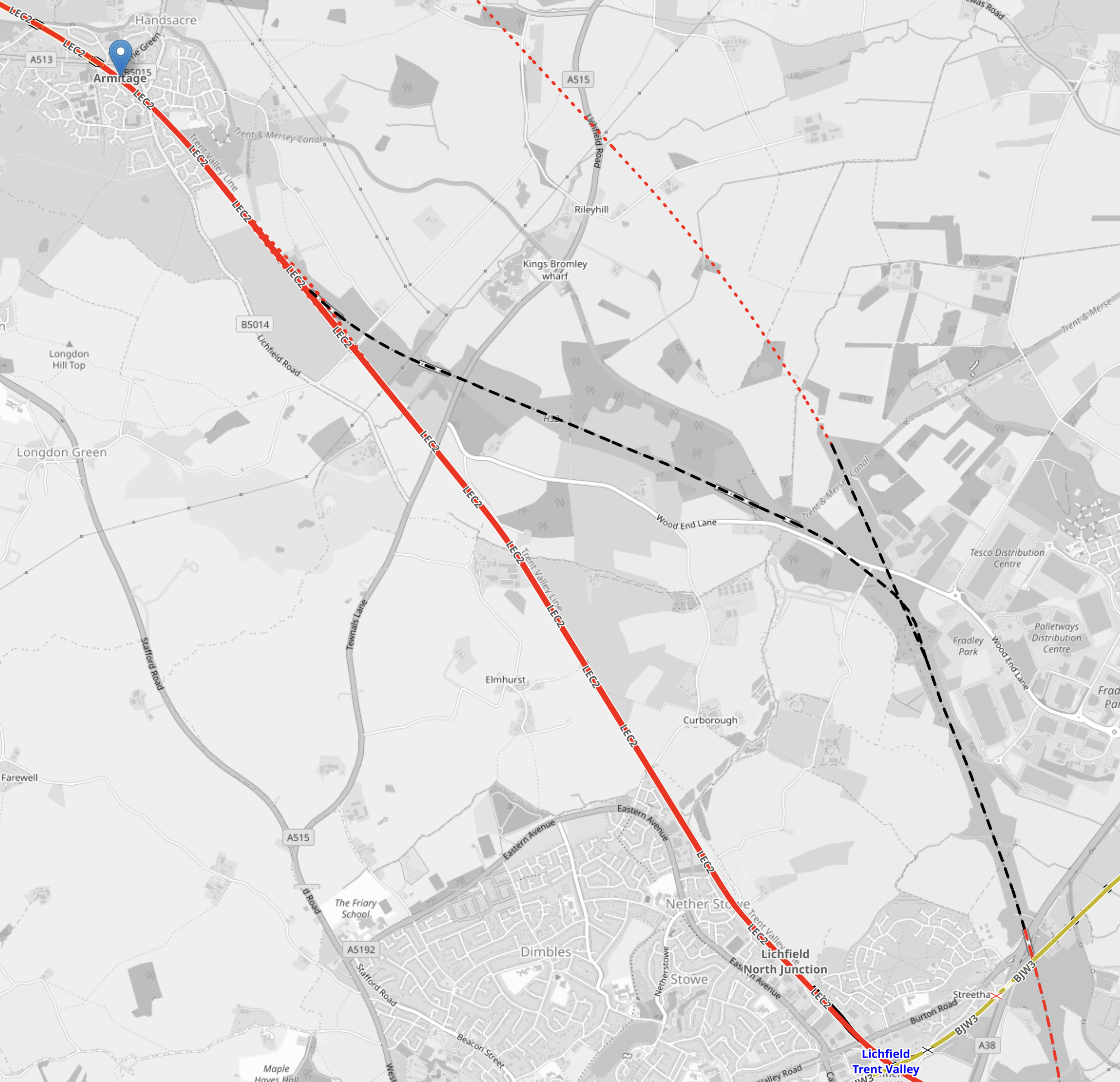
Note.
- The blue arrow in the North-West corner of the map, indicates the location of the former Armitage station, which had the village of Handsacre to its North-East.
- The red line through Armitage station is the Trent Valley Line.
- Lichfield Trent Valley station is at the bottom of the map.
- The line drawn with large dashes from the South-East corner of the map is the proposed line of High Speed Two. Red indicates under construction and black indicates proposed.
High Speed Two splits into two.
One branch goes North-West to join the Trent Valley Line, whilst the other just stops after about a kilometre.
- All trains for Liverpool, Manchester, North Wales, The North and Scotland will take the Trent Valley Line, when High Speed Two opens.
- Trains for Stoke-on-Trent, Macclesfield and some to Manchester will leave the Trent Valley Line at Colwich Junction.
- All other trains, will take the same route as now and proceed to Crewe via Stafford.
The red dotted line leading from the cancelled branch of High Speed Two shows where the original fast line to Crewe was planned to go.
This Open Railway Map shows the tracks around Crewe.
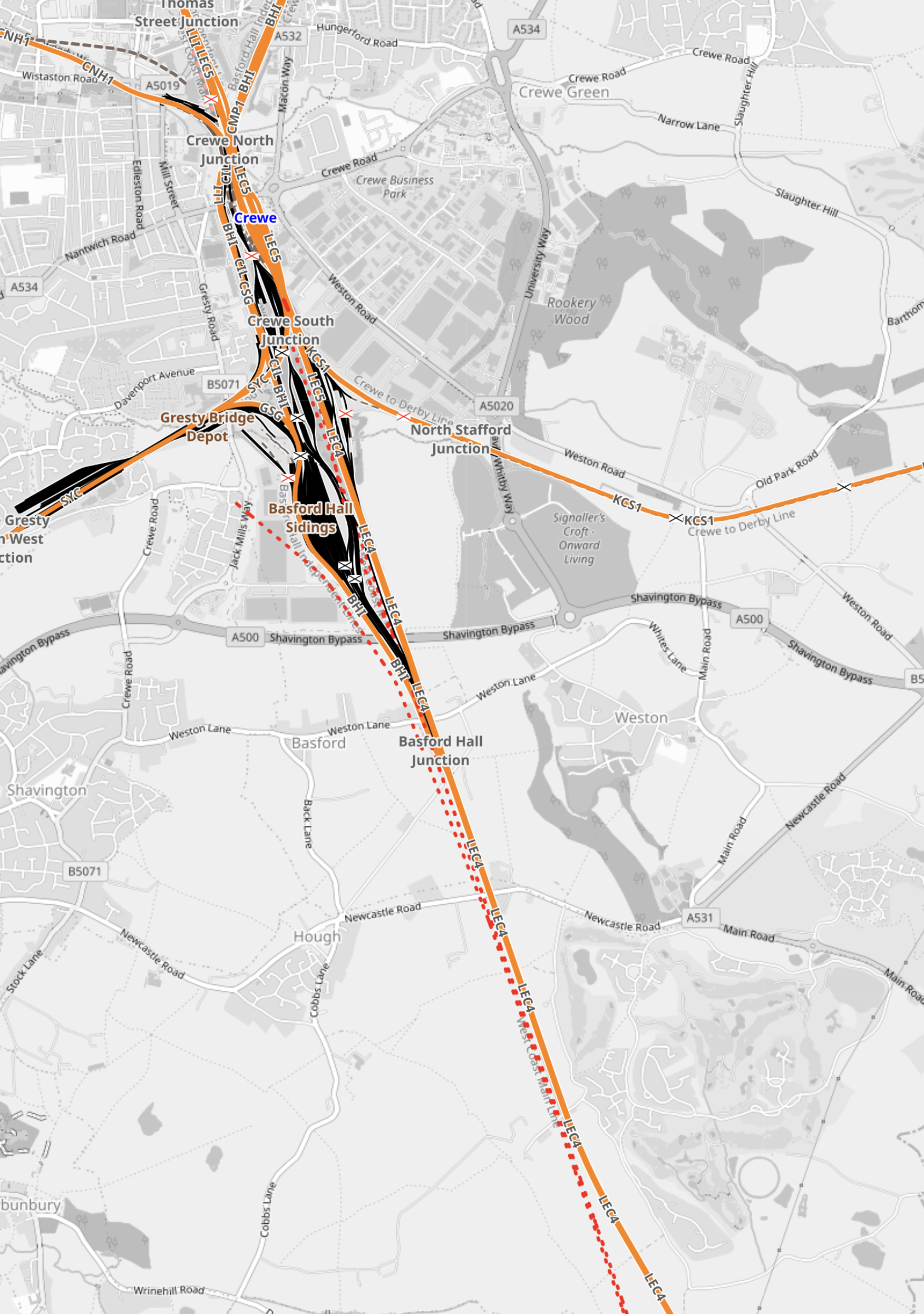
Note.
- Crewe is the important junction station towards the North-West corner of the map.
- The orange line going South is the West Coast Main Line to The South and London.
- The red dotted line running along the West side of the West Coast Main Line was the proposed route of High Speed Two from Birmingham, London and the South.
This Open Railway Map shows the originally proposed direct route of High Speed Two between Crewe and Handsacre.
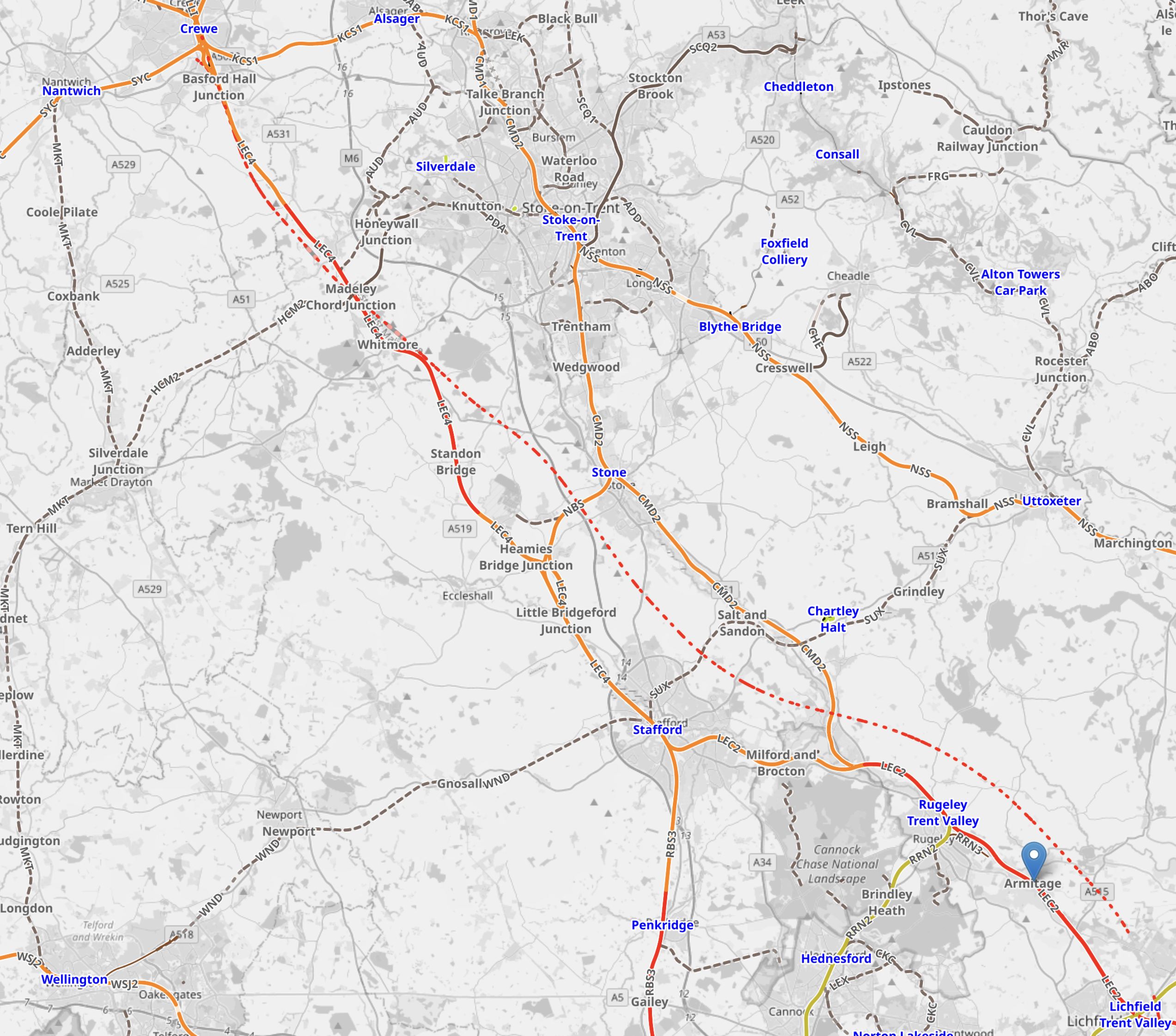
Note.
- Crewe is in the North-West corner of the map.
- The blue arrow in the South-East corner of the map, indicates the location of the former Armitage station, which had the village of Handsacre to its North-East.
- The dotted red line was the originally proposed route of High Speed Two.
I feel that this route between Handsacre and Crewe has advantages if it were to be chosen as part of a route between Handsacre and Northern Powerhouse Rail, as recommended by the Mayors and their consultants.
- The route seems to stay well clear of large conurbations.
- A lot of the design work has been at least started and major problems will be known.
- Crewe is the only station on the route, which will need to be upgraded.
- Services to Liverpool, Manchester, North Wales, The North and Scotland will be speeded up.
- With Crewe, Liverpool and North Wales, times could be as High Speed Two promised in the first place.
I feel that building the Handsacre and Crewe section, as originally envisaged, will score high in a benefit/cost analysis
This OpenRailwayMap shows the originally proposed route of High Speed Two between Crewe and Manchester Airport.
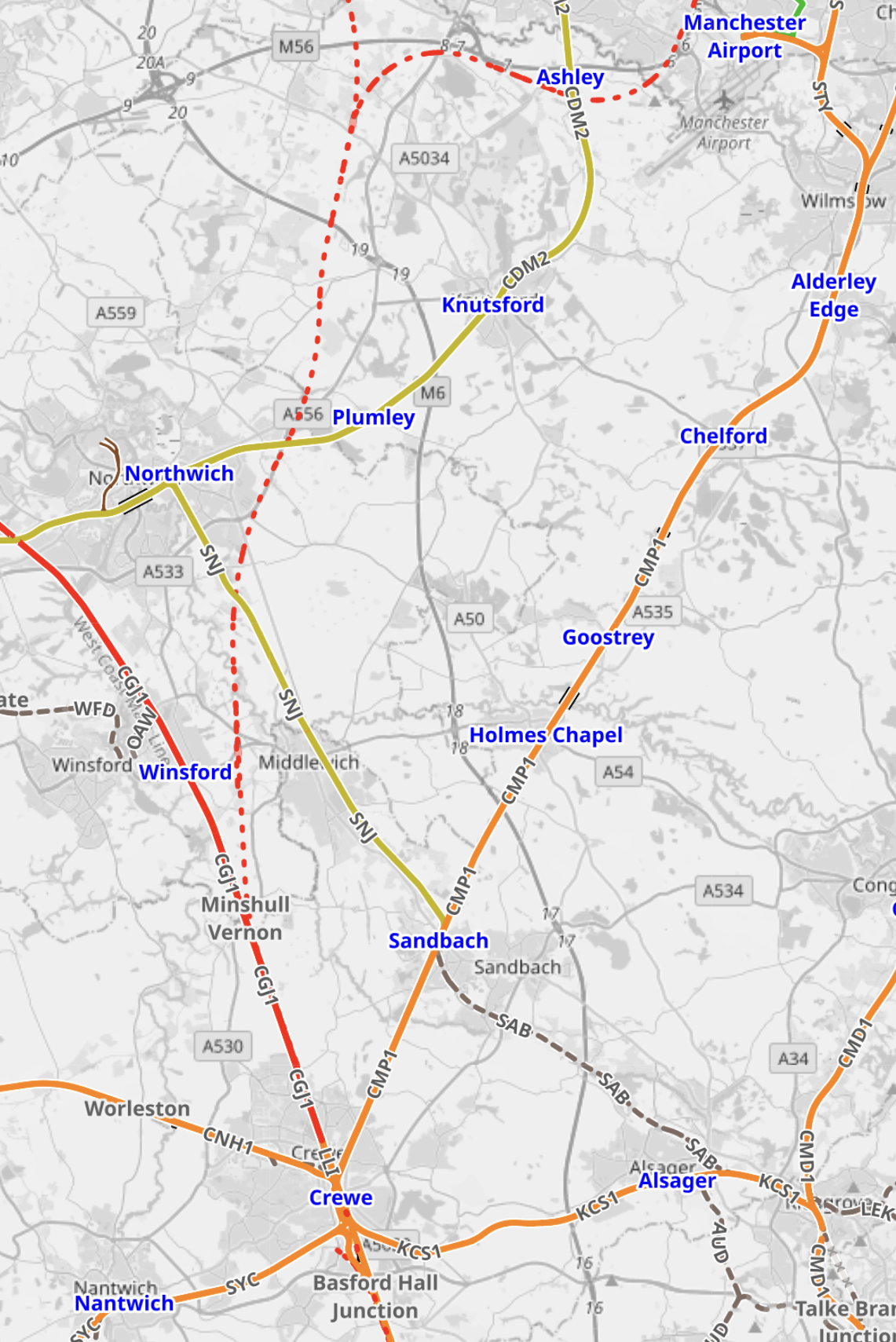
Note.
- Crewe is towards the South-West corner of the map.
- Manchester Airport is in the North-East corner of the map.
- The red line going North from Crewe is the West Coast Main Line.
- The dotted red line was the originally proposed route of High Speed Two, between the West Coast Main Line and Manchester Airport.
Northern Powerhouse Rail will go West from Manchester Airport towards Warrington and Liverpool and will join with High Speed Two at a junction at High Legh.
Northern Powerhouse Rail is currently being planned, but surely, if High Speed Two and Northern Powerhouse Rail share a line from High Legh to Manchester Airport and Manchester Piccadilly, this will be a more affordable project.
Services To Crewe
In Could The High Speed Two Link Between Lichfield And Crewe Still Be Built?, which I wrote after much of High Speed Two was chopped in 2023, I said this.
Currently, Avanti West Coast trains take around one hour and thirty minutes between London and Crewe.
The Wikipedia entry for High Speed Two gives these times between London and Crewe.
- Fastest time before High Speed Two – one hour and thirty minutes.
- Time after Phase 2a of High Speed Two opens – fifty-six minutes.
Note.
- That is a time saving of thirty-four minutes.
- High Speed Two Trains will use the direct line between Lichfield and Crewe.
- High Speed Two will also add eighteen tph to the capacity between London and Crewe.
This would seem to mean that any trains going to or through Crewe will be thirty-four minutes faster, if they use High Speed Two between London and Crewe.
If the Handsacre and Crewe direct line is built, it looks like London and Crewe will be the full High Speed Two time of 56 minutes.
Services To Liverpool
Consider.
- Liverpool Lime Street was originally planned to get two trains per hour (tph) to and from London using High Speed Two.
- The approaches into Liverpool were improved a few years ago.
- No more improvements are planned between Crewe and Liverpool Lime Street stations.
- Between Crewe and Liverpool Lime Street stations currently takes 38 minutes.
- There could be time savings on the 16.3 miles between Crewe and Weaver Junction, which currently takes 21 minutes.
It looks like a time of one hour and 34 minutes could be possible, with under one hour and 30 minutes not being impossible.
Services To Manchester
Consider.
- Manchester was originally planned to get three tph to and from London using High Speed Two.
- No improvements are planned between Crewe and the Manchester stations.
- Between Crewe and Manchester Piccadilly stations currently takes 34 minutes.
It looks like a time of one hour and 30 minutes could be possible.
But there is still the option of building a new line between Crewe and Northern Powerhouse Rail at High Legh.
I showed this OpenRailwayMap earlier and it shows the originally proposed route of High Speed Two between Crewe and Manchester Airport.
Note.
- Crewe is towards the South-West corner of the map.
- Manchester Airport is in the North-East corner of the map.
- The red line going North from Crewe is the West Coast Main Line.
- The dotted red line was the originally proposed route of High Speed Two, between the West Coast Main Line and Manchester Airport.
Northern Powerhouse Rail is currently being planned. and will go West from Manchester Airport towards Warrington and Liverpool and will be built first.
A junction at High Legh will be built to link the West Coast Main Line to Northern Powerhouse Rail.
Services To North Wales
Why Not? With the cancellation of the Eastern Leg of High Speed Two, there must be a path available for North Wales.
Consider.
- The North Wales Main Line has been promised electrification.
- As Holyhead and Crewe is only 105.5 miles, it could even be in battery high speed train range in a few years.
- All times to and from Crewe are assumed to be as Avanti West Coast achieve now.
- As Crewe and Chester currently takes 23 minutes, London and Chester would take 1 hour and 19 minutes.
- As Crewe and Llandudno Junction currently takes 1 hour and 22 minutes, London and Llandudno Junction would take 2 hours and 18 minutes.
- As Crewe and Holyhead currently takes 2 hours and 7 minutes, London and Holyhead would take 3 hours and 3 minutes.
Could this open up a fast zero-carbon route between London and Dublin?
Services To Blackpool, Lancaster, Preston, Warrington And Wigan
Why Not, Blackpool? With the cancellation of the Eastern Leg of High Speed Two, there must be an extra path available, if it is needed.
Cpnsider.
- All routes are electrified.
- All times to and from Crewe are assumed to be as Avanti West Coast achieve now.
- As Crewe and Blackpool currently takes 1 hour and 20 minutes, London and Blackpool would take 2 hour and 16 minutes.
- As Crewe and Lancaster currently takes 60 minutes, London and Lancaster would take 1 hour and 56 minutes.
- As Crewe and Preston currently takes 40 minutes, London and Preston would take 1 hour and 36 minutes.
- As Crewe and Warrington Bank Quay currently takes 22 minutes, London and Warrington Bank Quay would take 1 hour and 18 minutes.
- As Crewe and Wigan North Western currently takes 33 minutes, London and Wigan North Western would take 1 hour and 29 minutes.
Note.
- Lancaster in under two hours will help the Eden Project Morecambe.
- For some areas of the North West, it might be more convenient to change at Crewe, Warrington Bank Quay, Wigan North Western or Preston.
Improvements to track and signalling could probably bring benefits.
Services To Carlisle And Central Scotland
Cpnsider.
- All routes are electrified.
- All times to and from Crewe are assumed to be as Avanti West Coast achieve now.
- As Crewe and Carlisle currently takes 1 hour and 55 minutes, London and Carlisle would take 2 hours and 51 minutes.
- As Crewe and Lockerbie currently takes 2 hours and 6 minutes, London and Lockerbie would take 3 hours and 1 minute.
- As Crewe and Motherwell currently takes 2 hours and 45 minutes, London and Motherwell would take 3 hours and 41 minutes.
- As Crewe and Edinburgh currently takes 3 hours and 9 minutes, London and Edinburgh would take 4 hours and 5 minutes.
- As Crewe and Glasgow Central currently takes 3 hours and 3 minutes, London and Glasgow Central would take 3 hours and 59 minutes.
Note.
- Just under four hours to Glasgow Central would please the Marketing Department.
- Selective splitting and joining could increase the number of destinations.
Improvements to track and signalling could probably bring benefits.
Services To Stirling
In ORR: Open Access Services Given Green Light Between London And Stirling, I wrote about Grand Union Trains’s new open access service to Stirling.
There has been good feedback on this service, so perhaps one of the spare paths on High Speed Two could be allocated to Open Access Operators, so that more of the country could have a high speed service to London Euston and Birmingham Curzon Street stations.
In the related post, I showed that London Euston and Stirling takes forty five minutes longer than a London Euston and Motherwell service.
This would mean that a London Euston and Stirling service via High Speed Two would take four hours and 26 minutes.
Services Between Birmingham Curzon Street and the North West
Under the plans for High Speed Two, the following services would have run North from Birmingham Curzon Street.
- One tph to Edinburgh or Motherwell and Glasgow via Wigan North Western, Preston, Lancaster, Oxenholme, Penrith, Carlisle, Lockerbie and Carstairs.
- Two tph to Manchester Airport and Manchester Piccadilly.
But there are now spare paths South of Crewe, so Could a one tph Birmingham Curzon Street and Liverpool Lime Street service be squeezed in?
Could The Line Be Privately Financed?
I suspect that building the section between Handsacre and Crewe could be financed in perhaps a similar way, to the Chiltern improvements or the M6 Toll Road were financed.
- The Handsacre and Crewe section is just a simple stretch of rail, with a number of trains passing along it.
- The number of trains passing through, is likely to increase.
- Every train passing through would pay a track charge, just as they do to Network Rail.
- Those with lots of money to lend, like simple projects like wind farms or road tunnels, but think very hard about anything complicated like nuclear power stations or High Speed Two’s station at Euston.
Certainly, my late and very good friend, David, who dealt with the finance of some of London’s largest projects and was on the top table of London’s bankers, would have found a way. It might though have been unorthodox.
But then David was a rogue. But a rogue on the side of the angels.
Conclusion
I have come to these conclusions.
- Building the direct route between Handsacre and Crewe could be good value as it improves all routes that will pass through Crewe.
- Combining High Speed Two and Northern Powerhouse Rail could substantially cut the costs of both routes to the centre of Manchester.
- London and Crewe times should be 56 minutes.
- London and Liverpool Lime Street times could be under one hour and thirty minutes.
- London and Manchester Piccadilly times could start at one hour and thirty minutes and reduce when Northern Powerhouse Rail is built and linked to the West Coast Main Line.
- London and Holyhead could be just over three hours and could open up a fast zero-carbon route between London and Dublin.
- London and Lancaster in under two hours could help the Eden Project Morecambe.
It’s certainly not a bad plan and it should be looked at in more detail.
Could High Speed Two Finish At Lichfield?
I wrote this post before Rishi Sunak made his speech.
I went to Manchester and Liverpool yesterday by train.
I took the 10:33 from Euston and this a summary of my journey.
- The train left Euston half a minute early.
- It arrived at Stafford (133.5 miles) at 11:50 and left at 11:52.
- It arrived at Crewe (158.0 miles) at 12:08 and left at 12.10.
- It arrived at Wilmslow (176.9 miles) at 12:25 and left at 12:27.
- It arrived at Stockport (183.0 miles) at 12:35 and left at 12:37.
- It arrived in Manchester Piccadilly (188.9 miles) at 12:46.
- It was two minutes late into Manchester and more or less on time at the other stops.
Note.
- The route was via the Trent Valley Line and the train passed through Nuneaton, Tamworth, Lichfield Trent Valley, Colwich and Stafford.
- Euston and Manchester had been timetabled at two hours and eleven minutes.
- This is an average speed of 86.5 mph.
- The Wikipedia entry for High Speed Two gives the fastest time before High Speed Two opens as one hour and fifty-four minutes.
- This will be an average speed of 99.4 mph.
Coming home, I took the 18:48 from Liverpool Lime Street and this a summary of my journey.
- The train left Liverpool on time.
- It arrived at Runcorn (13.2 miles) at 18:58 and left at 19:02.
- It arrived at Crewe (35.8 miles) at 19:26 and left at 19:28.
- It arrived at Milton Keynes (143.8 miles) at 20:27 and left at 20:29.
- It arrived in Euston (183.6 miles) at 21:00.
- It was five minutes late into Crewe and two minutes early at Euston.
Note.
- The route was via the Trent Valley Line and the train passed through Stafford, Colwich, Lichfield Trent Valley, Tamworth and Nuneaton.
- Liverpool and Euston had been timetabled at two hours and twenty minutes.
- This is an average speed of 78.7 mph.
- The Wikipedia entry for High Speed Two gives the fastest time before High Speed Two opens as two hours and three minutes.
- This will be an average speed of 89.6 mph.
This map clipped from the High Speed Two web site, shows the junction North of Lichfield, where High Speed Two connects to the Trent Valley Line through Stafford.

Note.
- High Speed Two runs North-South across the map.
- After the Junction by Fradley South, High Speed Two to Crewe and the North, is the branch to the East.
- The other branch connects to the Trent Valley Line at Handsacre junction.
- Trent Valley Line can be picked out North of Lichfield, where it passes through Lichfield Trent Valley station.
The Trent Valley Line is no Victorian double-track slow-speed bottleneck.
- The route between Rugby and Crewe is generally three or four tracks, with only one short stretch of double track, through Shugborough tunnel.
- The speed limit is generally 110 mph, with 90 mph at Shugborough.
- I wouldn’t be surprised to see Avanti West Coast’s Class 390 and Class 807 trains could be running at up to 140 mph on the route, if digital signalling were to be installed.
- This speed would probably be attained by High Speed Two trains.
London Euston and Stafford would only have under twenty miles of slower line and that could be 140 mph, so High Speed Two times on the route could be very fast.
This second map clipped from the High Speed Two web site, shows between High Speed Two’s two Birmingham stations and Lichfield.
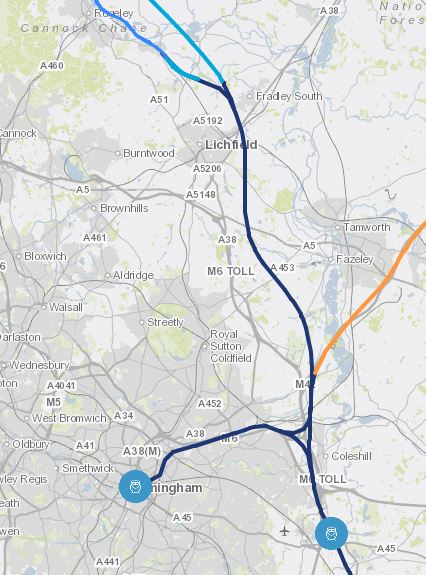
Note.
- High Speed Two Phases 1 and 2a are shown in blue.
- High Speed Two Phase 2b is shown in orange.
- At the top of the map, can be seen the junction, where High Speed Two to the North splits, that was shown in the previous map.
- The large blue dot in the West at the bottom of the map, is Birmingham Curzon Street station.
- The other large blue dot is Birmingham International station.
- The three sections of High Speed Two to London, Birmingham Curzon Street and the North meet at a triangular junction between the two Birmingham stations.
- High Speed Two to the East Midlands, branches off to the East North of the triangular junction.
This third map clipped from the High Speed Two web site, shows between Lichfield and Crewe.
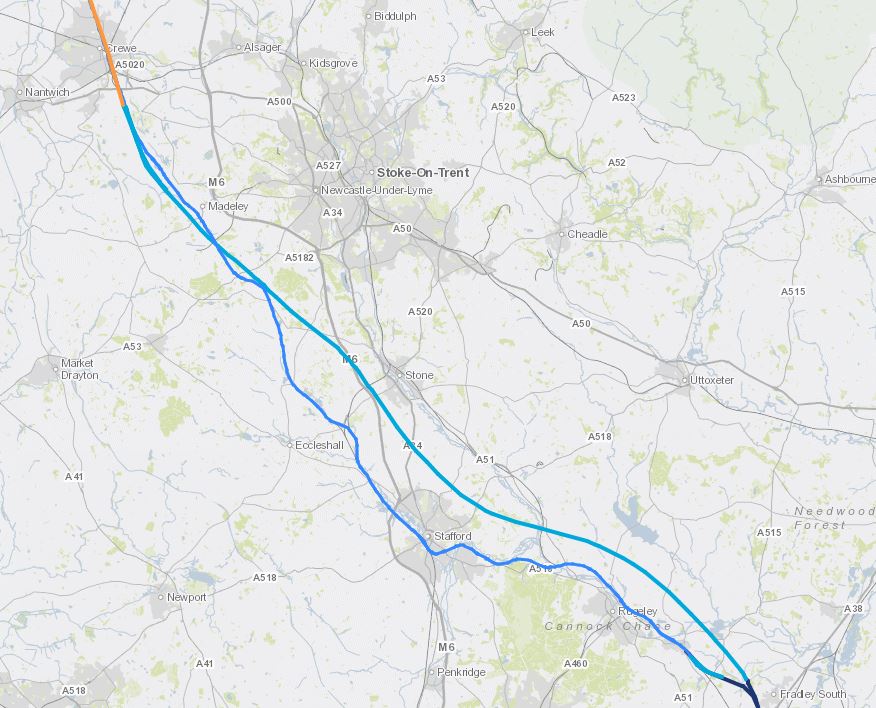
Note.
- High Speed Two Phase 2a is shown in blue.
- High Speed Two Phase 2b is shown in orange.
- Crewe is in the North-West corner of the map, where at the South end of the orange section.
- The junction at Lichfield is in the South-East corner of the map.
- The lighter blue route to the East, between the Lichfield junction and Crewe is the new tracks of High Speed Two.
- The darker blue route to the West, between the Lichfield junction and Crewe is the existing route of the Trent Valley Line and the West Coast Main Line.
- The Trent Valley Line joins the West Coast Main Line at Stafford.
These are a few thoughts and questions.
How Will Trains Go Between Birmingham Curzon Street And London?
Trains will use the triangular junction shown in the second map to go between the two Birmingham stations and then head South,
How Will Trains Go Between Birmingham Curzon Street And The North?
Trains will use the triangular junction shown in the second map to turn North and then take one of the two routes to the North; High Speed Two or Trent Valley Line/West Coast Main Line.
How Will Trains Go Between Birmingham Curzon Street And The North If High Speed Two Between Birmingham And The North Is Scrapped?
If High Speed Two is scrapped from the Northern point of the triangular junction to the North, there will be no way that trains could go North from Birmingham Curzon Street.
- The overcrowded Birmingham New Street station will still be the link to the North of England and Scotland for Birmingham.
- How would trains connect to the future branch to East Midlands Parkway, which connects just North of the triangular junction?
I suspect that a short stub will be built North of the triangular junction to connect to the Trent Valley Line, which is currently, the main route of trains between London and the North through the West Midlands, for trains that don’t go through Birmingham.
Trains Between London And Stafford
Currently, Avanti West Coast trains take around one hour and seventeen minutes between London and Stafford.
The Wikipedia entry for High Speed Two gives these times between London and Stafford.
- Fastest time before High Speed Two – one hour and seventeen minutes.
- Time after Phase 2a of High Speed Two opens – fifty-five minutes.
Note.
That is a time saving of twenty-two minutes.
High Speed Two Trains will use the link between the junction at Lichfield and the Trent Valley Line.
How Many Avanti West Coast Services Use The Trent Valley Line?
These trains use the Trent Valley Line.
- London and Holyhead – 8 tpd
- London and Liverpool Lime Street – 1 tph, which is planned to increase to 2 tph
- London and Manchester Piccadilly – 2 tph
- London and Blackpool North – 1 tpd
- London and Glasgow – 1 tph
Note.
- tpd is trains per day
- tph is trains per hour
This is roughly six tph.
Would It Be Possible To Finish High Speed Two At The Lichfield Junction And Connect It To The Trent Valley Line?
This is a repeat of the first map.
Note.
- High Speed Two runs North-South across the map.
- After the Junction by Fradley South, High Speed Two to Crewe and the North, is the branch to the East.
- The other branch connects to the Trent Valley Line at Handsacre junction.
- Trent Valley Line can be picked out North of Lichfield, where it passes through Lichfield Trent Valley station.
If the Eastern branch North from the junction were to be scrapped, all trains between London and North would go via Stafford.
As all these tracks are planned and must be at an advanced stage, that is ready for construction, I feel the route would be feasible.
It would have these benefits.
- Birmingham Curzon Street services and the North-West of England and the West of Scotland would be possible.
- Services between London and Stafford will be twenty-two minutes faster, than they are now.
- Time savings will also apply to services from London to Liverpool, Macclesfield, Manchester, Stoke-on-Trent and all stations between Crewe and Glasgow.
The capacity of the Trent Valley Line would be the limiting factor.
Time Savings Between Crewe And Preston
According to the Wikipedia entry for High Speed Two, after Phase 2a of High Speed Two opens, these will be the fastest times to Crewe and Preston.
- Crewe – 0:56
- Preston 1:18
Note.
- The fastest Preston service runs non-stop between Euston and Preston.
- Crewe and Preston are 51 miles apart.
A time of 22 minutes between Crewe and Preston, means the average speed is 139 mph.
Does this mean that High Speed Two will improve between Crewe and Preston to allow 140 mph non-stop running?
But 22 minutes is certainly an improvement on the current time between Crewe and Preston for Scottish trains of 40 minutes.
Time Savings Between Crewe And Liverpool
The upgrading of the line between might save another couple of minutes between Crewe and Weaver junction.
What Times Would Be Possible Via High Speed Two And The Trent Valley Line?
These times are based on the following.
- The twenty-two minute saving to Stafford, as all High Speed Two services to the North-West of England and the West of Scotland will go via Phase 1 of High Speed Two and Stafford.
- A saving of eighteen minutes will be applied to Scottish services because of savings between Crewe and Preston.
This would give these times in hours:minutes.
- Blackpool – 2:10
- Carlisle – 2:35
- Chester – 1:28
- Crewe – 1:08
- Glasgow – 3:50
- Holyhead – 3:10
- Lancaster – 2:03
- Liverpool Lime Street – 1:41
- Llandudno Junction – 2:24
- Macclesfield – 1:30
- Manchester Piccadilly via Crewe – 1:52
- Oxenholme – 1:54
- Preston – 1:46
- Runcorn 1:31
- Stafford – 0:55
- Stockport – 1:35
- Stoke-on-Trent – 1:10
- Warrington – 1:22
- Wigan 1:33
- Wilmslow – 1:25
I have calculated extra services to Blackpool and North Wales.
Adding The Lichfield And Crewe Section
Consider.
- My calculations indicate that London and Crewe will take 1:08.
- The Wikipedia entry for High Speed Two, after Phase 2a of High Speed Two opens, gives the fastest time to Crewe as 0:56.
This indicates that adding the section of High Speed Two between Lichfield and Crewe will save a further twelve minutes.
Conclusion
I strongly believe that an upgraded Trent Valley Line linked to a shortened High Speed Two at Lichfield could improve journey times between London, Birmingham and the North.
There are certainly savings to be made.
See Also
Ozzy Puts The Bull Into New Street Station
I went to Birmingham New Street station today to see Ozzy, the Birmingham Bull in his new home.























I don’t think we’ve seen such a camera frenzy in the UK, since the days of Princess Diana.
In The Birmingham Bull – 5th August 2022, there are pictures of the Bull a year ago. Ozzy has changed, but a year ago, he wasn’t intended to be permanent.
This picture is from last year.
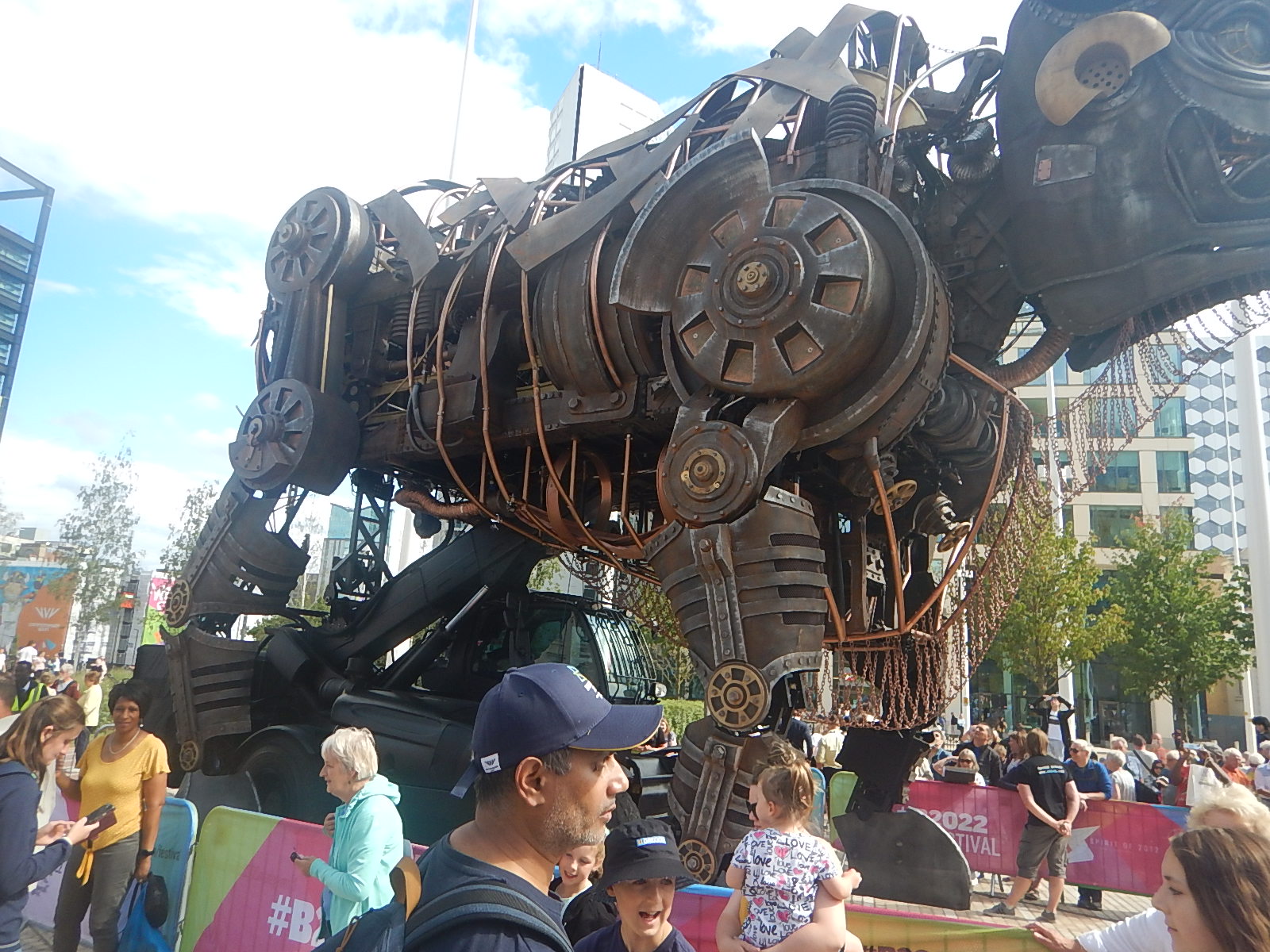
There are differences. Note the loader underneath to give the artwork movement.
A year ago, I said this in the post.
This wonderful work of engineering art, is far too good and is now too well-loved to be scrapped.
As it needs to go inside, why not bring it inside High Speed Two’s new Curzon Street station, to greet passengers visiting Birmingham?
Ozzy has found a new permanent home in Birmingham New Street station, but I wouldn’t rule out a move to Curzon Street station, for several decades.
West Midlands Metro – Eastside Extension – 26th July 2023
These pictures show the current state of the Eastside Extension of the West Midlands Metro.









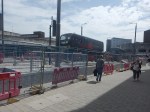
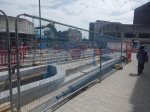




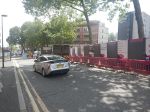
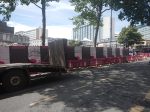

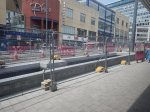
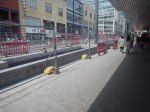
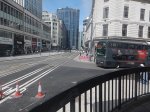



Note.
There is a triangular junction, where the lines split to the South of the Bull Street tram stop.
The Eastside Extension will run past Curzon Street station and then on to somewhere around Digbeth Coach station.
There is a triangular junction, where the lines split to the South of the Bull Street tram stop.
 The Anonymous Widower