Electric Freight: A Solution To The WCML Capacity Conundrum
The title of this post is the same as that of this article on Rail Engineer.
These two paragraphs introduce the article.
Network Rail considers the West Coast Main Line (WCML) to be the busiest mixed traffic railway in Europe. It carries 125mph passenger trains from London to the West Midlands, North West, and Scotland and is used by 90% of intermodal UK rail freight which has a maximum speed of 75mph. Traffic on the line has been steadily increasing. In 1994 there were seven daily passenger trains from Glasgow to London. Now there are 26.
In 2006 Network Rail commissioned an in-depth study to find the best way of providing additional capacity as, with increasing traffic, the WCML between London and the North West was forecast to be full by 2020. The study found that the provision of a new high-speed line was the best solution and was the basis for the development of the HS2 project. The 2006 study correctly forecast that the WCML will by now be at full capacity south of Crewe, yet following the curtailment of HS2 two years ago there are no proposals to address the capacity issue between Rugby and Crewe that was identified 20 years ago.
David Shirres, puts forward a solution that involves electric freight locomotives and faster freight wagons.
I can add some knowledge of what British Rail were doing in the 1970s to solve the problem of freight on the West Coast Main Line all those years ago.
This picture shows a PACE 231R.
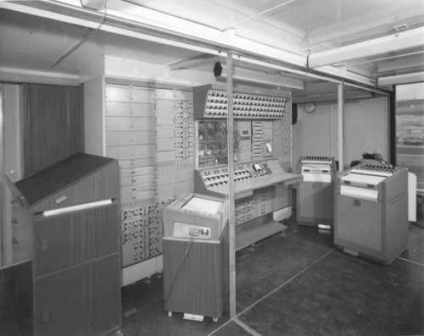
In the early 1970s, I was lucky enough to work with one of these amazing machines. They were probably one of the most powerful analogue computers ever built, that could solve a hundred simultaneous differential equations at once using thermionic valve circuitry. Their most famous application was at NASA, where two of these machines formed the analogue half of the moon-landing simulator.
There were a handful of these powerful beasts in the UK at ICI Plastics, where I worked, British Motor Corporation, Cambridge University and British Rail Research at Derby.
At the time, British Rail were trying to run freight trains faster and the four-wheel freight wagons of the time were derailing with an unwanted regularity. So the problem was given to British Rail Research and the problem was put on the PACE 231R. The problem was solved and the lessons learned were applied to the Mark 3 Coach and the InterCity 125.
After privatisation, the research went to the National Railway Museum and out of curiosity a few years ago, I tried to look at it, but was told it was commercially sensitive to Bombardier. It is my belief, that if this research were to be continued at one of our best universities, that faster freight bogies could be developed, that would help to create the extra freight paths needed on the WCML.
Huddersfield Station – 30th September 2025
This press release on the Network Rail Media Centre is entitled Huddersfield Station Set To Reopen Next Week With New Temporary Layout.
As it is now next week, I went to have a look at the progress today.
I made a mistake and got on a Grand Central Train, which meant, I had to change at York.
Speeding past Drax power station on the Selby Diversion, I took these pictures.

We were only in a 125 mph diesel, so we couldn’t take advantage of the 160 mph running, that the East Coast Main Line’s new signalling might allow on this section. The Wikipedia entry for the Selby Diversion, says this about the possible speeds.
The line was the first purpose-built section of high-speed railway in the UK having a design speed of 125 mph; however, research by British Rail in the 1990s indicated that the route geometry would permit up to 160 mph operation, subject to the necessary overhead line equipment and signalling upgrades. The new line also avoided the speed restriction over the swing bridge at Selby. The former ECML route, the NER’s 1871 York and Doncaster branch line, was closed from Selby northwards.
As the Selby Diversion opened in 1983, I wouldn’t be surprised that the calculations were performed on British Rail Research’s Pace 231-R, which was similar to the one I used at ICI and the pair, that NASA used calculate how to land Apollo on the moon.
When I eventually got to Huddersfield, I took these pictures.
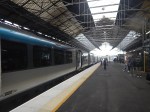
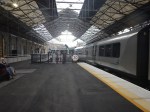
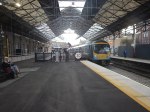
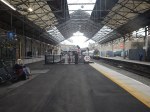
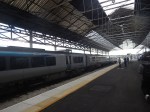
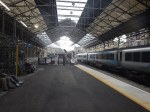






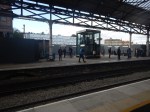
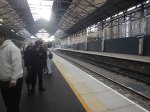
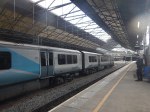
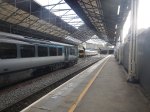
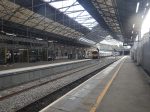
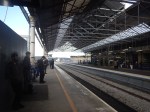
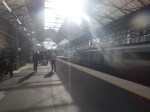
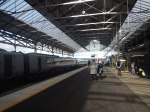
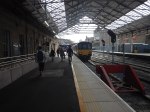
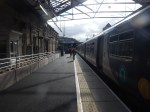
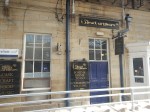
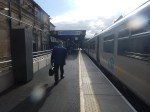
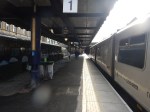
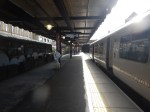
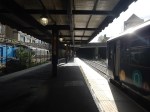
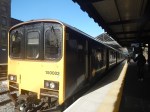
Note.
- In I’ve Just Glimpsed The Future Of Train Travel Across The North Of England And I Like It, there are pictures of Huddersfield station, that were taken on the 21st August, soon after the work started.
- In Huddersfield Station – 15th December 2023, there are pictures of Huddersfield before the work started.
- Much of the work seems to have been done at the Western end of the station to lengthen the platform on the Penistone Line to Sheffield.
- Platform 2 for the Penistone Line has also been renumbered Platform 1.
Work still to be carried out at Huddersfield station, includes refurbishing the roof, installing the electrification and adding a couple of new platforms.
These are my thoughts.
Which Platforms Will Be Electrified?
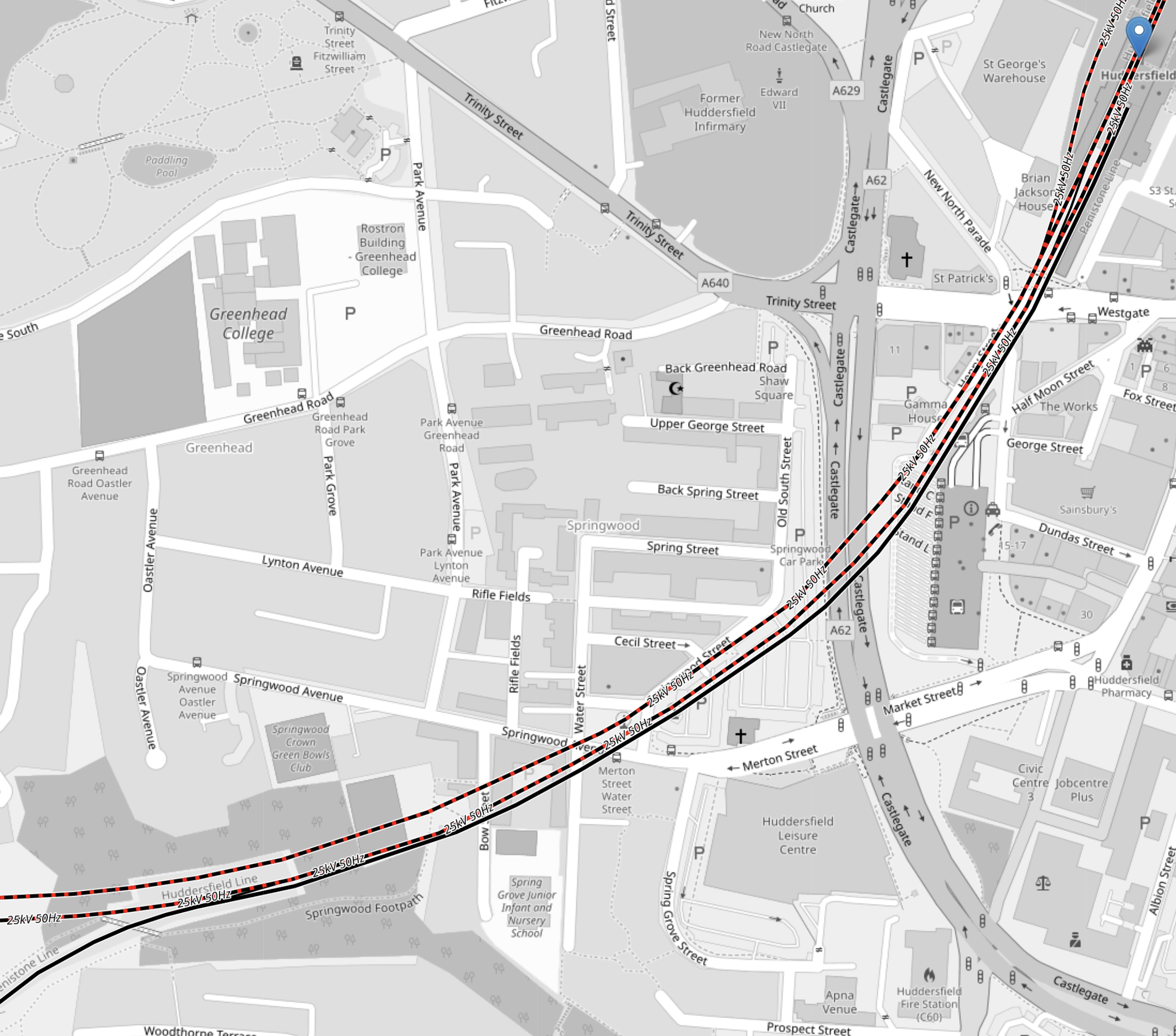
This OpenRailwayMap shows the proposed electrification in Huddersfield station.
Note.
- The blue arrow in the North-East corner of the map indicates Huddersfield atation.
- The two red-and-black tracks going diagonally across the map are the Hudderfield Line.
- The red-and-black colour, indicates that the two tracks will be electrified.
- South of these two tracks, the Penistone Line sneaks into Platform 1 at Huddersfield station.
- The Penistone Line goes to Sheffield in a South-Westerly direction.
- There appears to be a crossover, so that trains from the Penistone Line can use both Platforms 1 and 2 in Huddersfield station.
- The OpenRailwayMap appears to show planned electrification between Stalybridge and Leeds stations.
- To the East of Leeds planned electrification is shown as far as Micklefield and Church Fenton stations.
Once installed, this electrification will create a complete electrified route across the Pennines from Liverpool Lime Street in the West to the East Coast Main Line in the East.
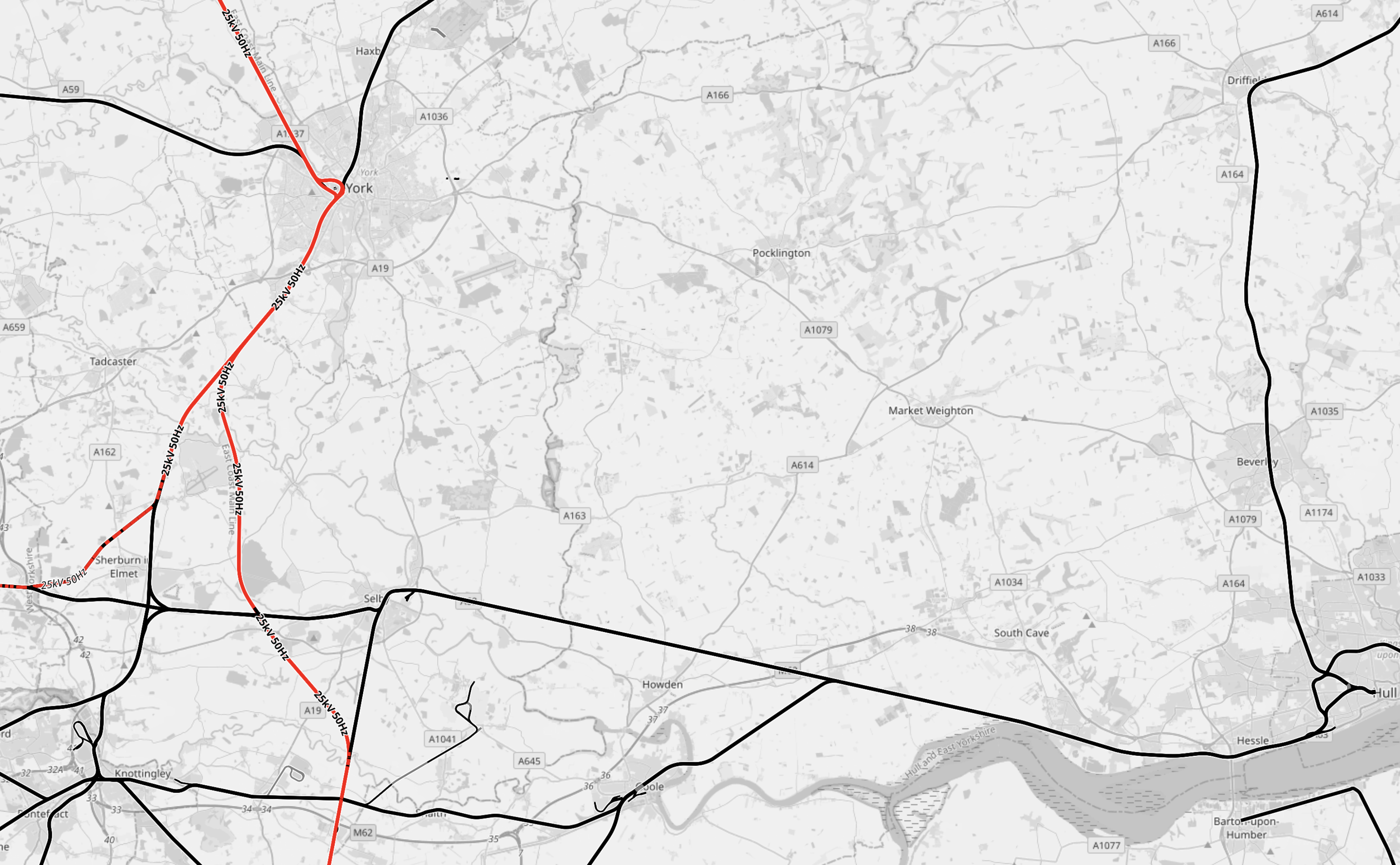
This OpenRailwayMap shows the planned electrification between Micklefield and Hull stations.
Note.
- Red tracks are electrified.
- Black tracks are not electrified.
- York is in the North-West corner of the map, with the electrified East Coast Main Line going through the station North-South.
- South of York, the East Coast Main Line now splits.
- The Western branch includes an electrified line to Micklefield station, Neville Hill depot and Leeds station.
- The Eastern Branch is the Selby Diversion, which is an electrified 160 mph line, that avoids the Selby coalfield.
- Running West-East across the map is the unlectrified Micklefield and Hull Line, which goes via Selby.
- Hull is in the South-East corner of the map.
- Hull is 42 miles from Micklefield and 36.1 miles from the Temple Hirst junction on the Selby Diversion, so it is within range of battery-electric trains, with charging at Hull station.
- Hitachi’s battery-electric Class 802 trains, used by Hull Trains and TransPennine Express, which are currently on test, should certainly be able to serve Hull.
Hull can become an electrified station, without the expense and disruption of full electrification.
How Long Is Platform 1 At Huddersfield Station?
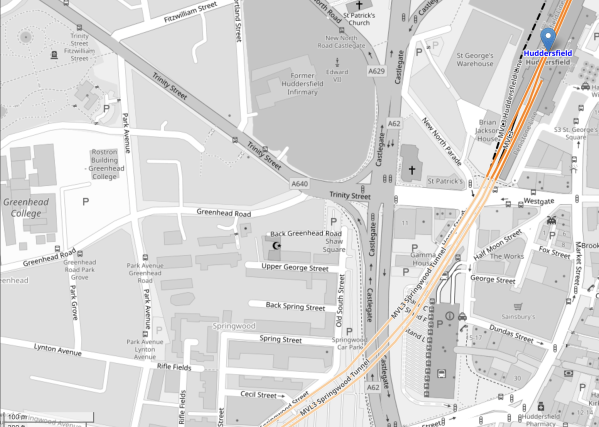
This OpenRailwayMap shows the new Platform 1 at Huddersfield station.
Note.
The blue arrow indicates Huddersfield station.
- The three darker orange lines indicate the two through platforms 2 and 3, and the reconfigured bay platform 1.
- There is a cross-over between platforms 1 and 2, which connects Platform 2 to the Penistone Line.
- In the South-West corner of the map is a hundred metre scale.
- Using the scale, I estimate that the length of the bay platform 1 is around 120 metres.
- In the last two rows of pictures in the gallery of this post, a three car Class 150 train is shown in Platform 1.
- A three car Class 150 train is approximately sixty metres long.
Looking at the pictures, I wouldn’t be surprised if the new platform has been designed to take two three-car Class 150 trains. It would certainly take a pair of two-car Class 150 trains.
Other trains and their lengths that might use the platform include.
- Class 170 – three-car – 70.85 metres
- Class 195 – two-car – 48.05 metres
- Class 195 – three-car – 71.40 metres
- Class 195 – 2 x two-car – 96.10 metres
- Class 810 – five-car – 120 metres
The Class 810 uses 24 metre cars, so that a pair of trains, will fit in St. Pancras. But with perhaps selective door opening could a single Class 810 train run a St. Pancras and Huddersfield service, perhaps with a split and join at Sheffield.
Electrification Across The Pennines
The TransPennine Route will be electrified between Liverpool Lime Street and Micklefield stations, once the current works between Huddersfield and Leeds are complete.
Sections without electrification include.
- Bradford Interchange and Doncaster – 52.1 miles
- Cleethorpes and Doncaster – 52.1 miles
- Harrogate and Leeds – 18.3 miles
- Hazel Grove and Doncaster – 52.6 miles
- Hull and Micklefield – 42 miles
- Hull and Temple Hirst junction – 36.1 miles
- Saltburn and Northallerton – 28.1 miles
- Sunderland and Northallerton – 46.8 miles
- Scarborough and York – 42.1 miles
I expect that Hitachi trains with batteries or CAF’s tri-mode trains will be able to handle these routes in a low-carbon manner.
Electrification Between Stalybridge And Huddersfield
This section is shown as being electrified on OpenRailwayMap.
But as it is only 18 miles and includes the Standedge Tunnels will the route use battery-electric trains?
London And Edinburgh By Lumo Using the Joint Line Diversion
This press release on the First Group web site is entitled FirstGroup Applies To Run Rochdale To London Rail Service With New British-Built Trains.
These are the first two paragraphs.
FirstGroup plc, the leading private sector transport operator, has submitted the first phase of an application for a new open access rail service between Rochdale and London to the Office of Rail and Road (ORR), restoring this direct link for the first time in almost a quarter of a century.
FirstGroup plans to expand its open access rail operations as part of its successful Lumo business, building on Lumo’s existing service which has transformed long-distance connectivity between London and Edinburgh and helped support a growth in passenger numbers for all operators on the East Coast Mainline. All of the trains on this new route will be electric and battery powered, and the service will be operated by brand new trains built in the UK.
Note.
- This service will be run under the Lumo brand.
- Battery-electric trains will be used.
- Stops will include Manchester Victoria, Eccles, Newton-le-Willows and Warrington Bank Quay.
- Only 15 km. of the route, between Miles Platting and Rochdale is not electrified.
Allowing for out and back trips between Platting and Rochdale, a sensible reserve and I suspect a battery-electric train with a range of 40-50 kilometres, would allow the train to be able to do a round trip to Rochdale from London Euston.
Hitachi have now published this page on their web site, which is entitled Intercity Battery Trains.
These are the first two paragraphs.
A quick and easy application of battery technology is to install it on existing or future Hitachi intercity trains. Hitachi Rail’s modular design means this can be done without the need to re-engineer or rebuild the train and return them to service as quickly as possible for passengers.
Replacing one diesel engine with just one battery reduces emissions by more than 20% and offers cost savings of 20-30%. Our intercity battery powered trains can cover 70km on non-electrified routes, operating at intercity speeds at the same or increased performance.
It would appear that Hitachi’s standard Intercity Battery Train will have a range of 70 km.
- A 70 km. range would be more than enough to handle Lumo’s Euston and Rochdale service.
- Lumo’s Class 803 trains don’t have a diesel generator to replace.
- One car does have a smaller battery for emergency hotel power, should the electrification fail.
As an Electrical Engineer, I wouldn’t be surprised to find out that the traction batteries of Hitachi’s standard Intercity Battery Train and the emergency batteries of Lumo’s Class 803 trains are of a similar design. The batteries could even be interchangeable, which would enable both Lumo’s routes to Scotland and Rochdale to use identical Class 803 trains.
Lumo’s Class 803 trains would have this specification.
- All-electric.
- Emergency battery to provide back-up hotel power.
- A range on battery of 70 km or 43 miles away from electrification.
The off-electrification range could be very useful in getting round incidents or overhead wiring problems.
An extended range of 70 km. would allow the following destinations to have all-electric services from London.
- Beverley #
- Bristol Temple Meads #
- Cheltenham #
- Chester
- Harrogate
- Huddersfield
- Hull
- Lincoln
- Middlesbrough
- Swansea #
Destinations marked with a hash (#), would need charging at the final destination.
A more detailed analysis will probably show other possible routes.
It looks to me, that Hitachi have got the specification of their Intercity Battery Train about right.
Bridging The Joint Line Diversion
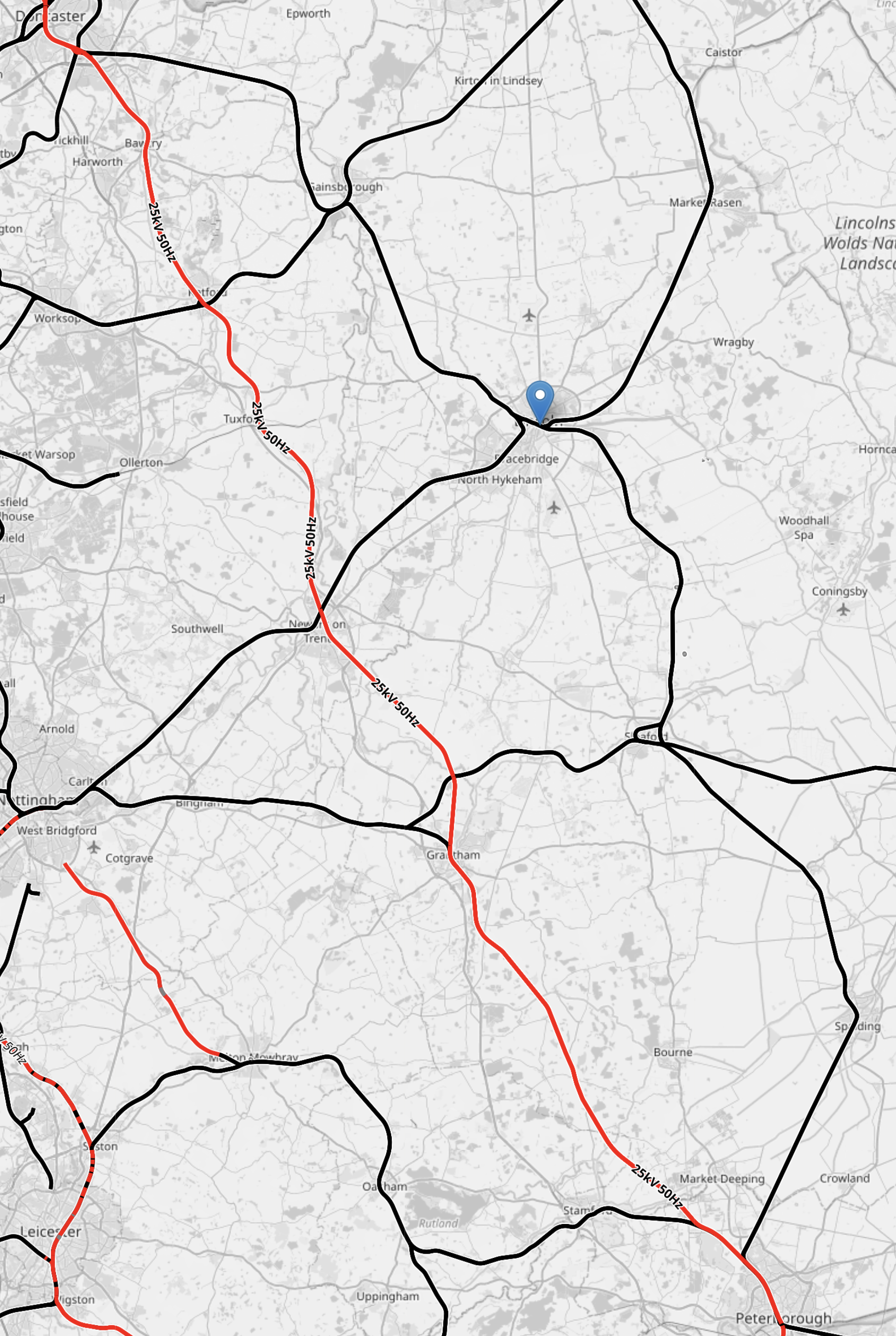
This OpenRailwayMap shows the Great Northern and Great Eastern Joint Line (GNGE) or Joint Line.
Note.
- Doncaster is in the North-West corner of the map.
- Peterborough is in the South-East corner of the map.
- The red line connecting them is the East Coast Main Line.
- Lincoln station is marked by the blue arrow.
Great Northern and Great Eastern Joint Line (GNGE) is described like this by its Wikipedia entry.
The Great Northern and Great Eastern Joint Railway, colloquially referred to as “the Joint Line” was a railway line connecting Doncaster and Lincoln with March and Huntingdon in the eastern counties of England. It was owned jointly by the Great Northern Railway (GNR) and the Great Eastern Railway (GER).
Over the last decades of the Twentieth Century, the Joint Line declined and British Rail did their worst to simplify the route.
But in the 2010s, Network Rail developed the route into a by-pass for the East Coast Main Line between Werrington and Black Carr junctions via Lincoln.
- Trains are routed via Spalding, Sleaford, Lincoln, Saxilby and Gainsborough.
- There is no electrification.
- The route can handle two freight trains per hour.
- The route can handle 9 ft. 6 in containers.
- There is a passenger service between Doncaster and Peterborough via Lincoln.
- Self-powered trains like InterCity125s, Class 800 trains and Class 802 trains can use their diesel power to use the diversion.
- All-electric trains, like LNER’s Class 801 trains and Lumo’s Class 803 trains have no self-power, so can’t use the diversion.
- Black Carr junction and Lincoln is 35 miles.
- Werrington junction and Lincoln is 51.7 miles.
The January 2024 Edition of Modern Railways says that the diversion is approximately 90 miles or 145 kilometers.
It would appear that there are two simple solutions.
- Electrify a section through Lincoln, so that Lincoln is within 70 kilometres of the electrification at both Werrington and Black Carr junctions.
- Fit bigger batteries to the trains.
A combination of both solutions might be possible.
A First Trip To Headbolt Lane Station – 13th October 2023
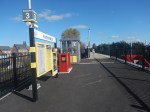
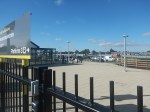
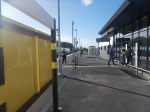
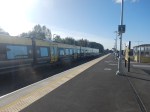
Headbolt Lane station opened a week ago and I went to take a look today, where I took these pictures.

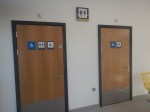
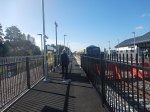
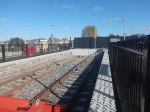

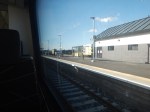
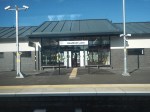





Note.
- It is a three-platform station, with two platforms pointing towards Liverpool and one towards Wigan Wallgate station.
- Changing trains is about a fifty metre walk.
- The toilets are trans-ready. But the toilets at Peterborough station, that I wrote about in A Pair Of Toilets At Peterborough Station were too.
I have a few thoughts.
Could There Be Through Running Between Headbolt Lane and Wigan Wallgate Stations?
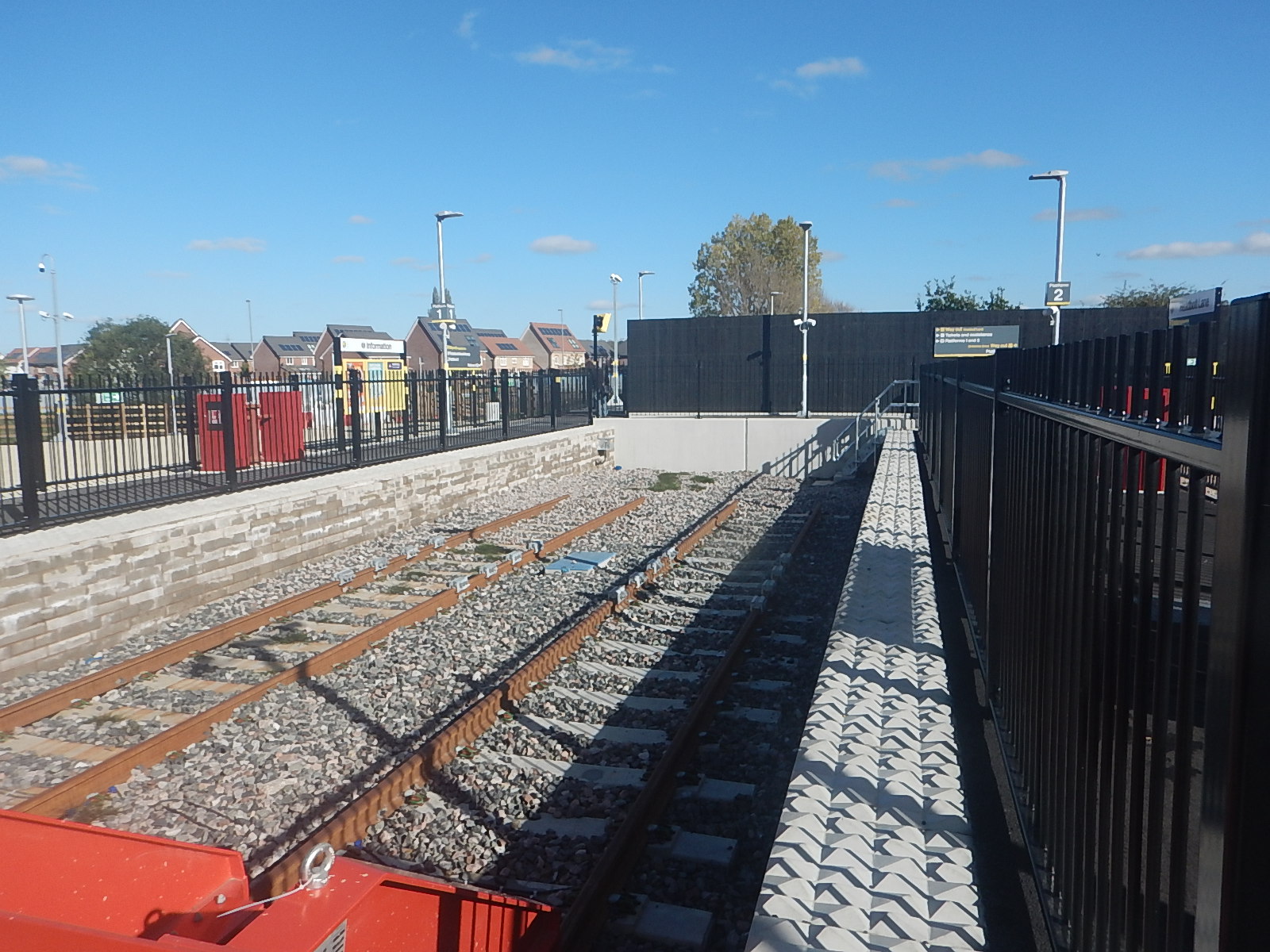
This picture shows the walkway between Platform 2 on the South side of the tracks and Platforms 1 and 3 on the North side.
Note.
- Platform 1 is the platform on the left and Platform 2 is on the right.
- Platform 3 is in line with Platform 1 behind the fence at the far end of Platforms 1 and 2.
- The tracks don’t go straight through.
- There are two concrete blocks forming the walkway between platforms.
I suspect the answer is no at the moment.
But I wouldn’t be surprised to find, that the blocks have been designed to be lifted out and there is space to put a footbridge over the tracks, so that if in the future, through running were to be required, it is possible.
How Would A Station To Skelmersdale Be Connected?
In New Express Bus Improves Links Between Skelmersdale And Liverpool, I talked about a new express bus service between Kirkby and Skelmersdale.
This page on Bus Times gives details of the service.
The 319 Trainlink service will surely give useful information on possible passenger numbers.
In Would A Lower Cost Rail Link To Skelmersdale Be Possible?, I looked at options for the rail line.
Wigan’s Comprehensive Local Connections
Wigan North Western and Wigan Wallgate station have services to all these stations.
- Accrington
- Appley Bridge
- Ashton-under-Lyne
- Atherton
- Bescar Lane
- Blackburn
- Blackpool North
- Bolton
- Broad Green
- Bryn
- Burnley Manchester Road
- Burscough Bridge
- Clifton
- Daisy Hill
- Deansgate
- Eccleston Park
- Edge Hill
- Euxton Balshaw Lane
- Farnworth
- Garswood
- Gathurst
- Hag Fold
- Headbolt Lane
- Hindley
- Hoscar
- Huyton
- Ince
- Kearsley
- Leyland
- Littleborough
- Manchester Oxford Road
- Manchester Victoria
- Meols Cop
- Moorside
- Moses Gate
- New Lane
- Orrell
- Parbold
- Pemberton
- Poulton-le-Fylde
- Prescot
- Rainford
- Toby
- Rochdale
- Rose Grove
- Salford Central
- Salford Crescent
- Smithy Bridge
- Southport
- Stalybridge
- St Helens Central
- Swinton
- Todmorden
- Thatto Heath
- Upholland
- Walkden
- Wavertree Technology Park
- Westhoughton
Fifty-eight stations is certainly comprehensively connected.
The Connection To High Speed Two At Wigan North Western
This map from OpenRailwayMap shows the two Wigan stations; North Western and Wallgate.
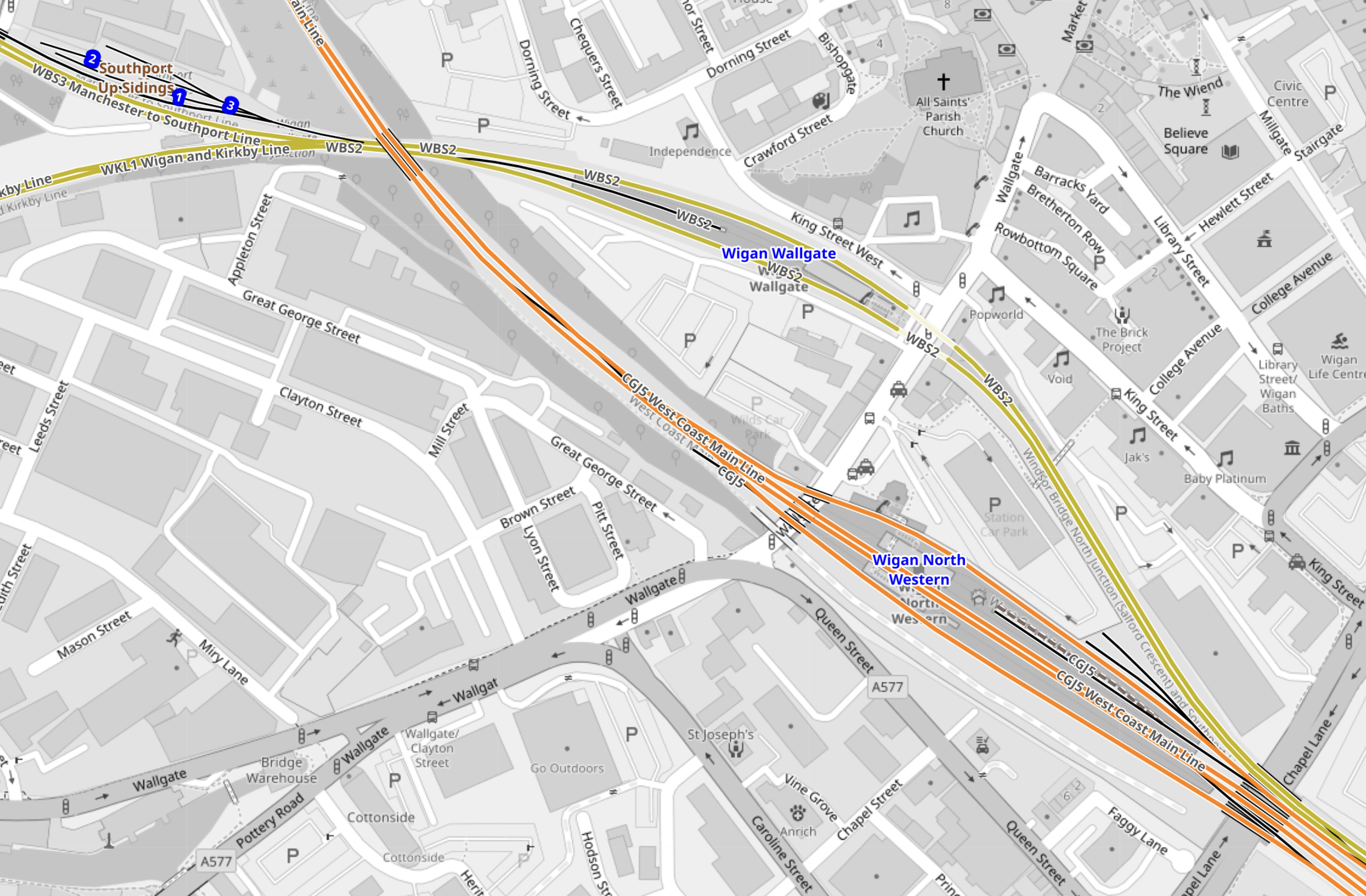
Note.
- The orange tracks are the West Coast Main Line, which in the future, will carry High Speed Two services to and from Preston, Lancaster, Carlisle and Scotland.
- The yellow tracks are the local lines between Manchester in the East and Kirkby and Southport in the West.
- The local lines split after they pass under the West Coast Main Line, with the North-Western branch going to Southport and the Western branch going to Headbolt Lane, Kirkby and Liverpool.
- Wigan North Western is on the West Coast Main Line.
- Wigan Wallgate is on the local lines.
The stations are close enough to be converted into a superb combined station, where local passengers can join high speed services.
This picture shows the platforms of Wigan North Western station.
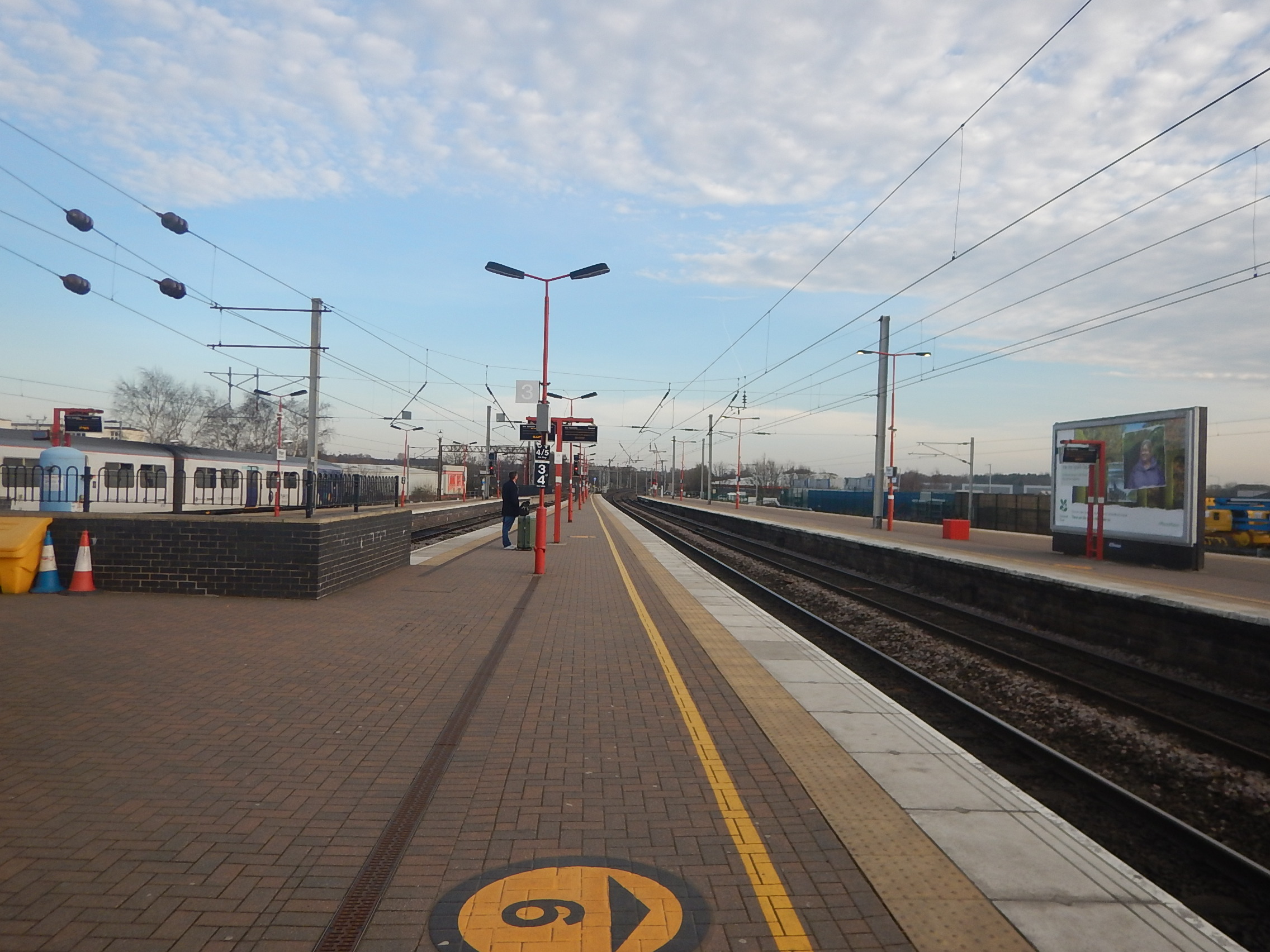
Wigan North Western station can’t be far off being able to accept pairs of High Speed Two Classic Compatible trains, that will be 400 metres long.
This graphic shows High Speed Two services after Phase 2b is completed.
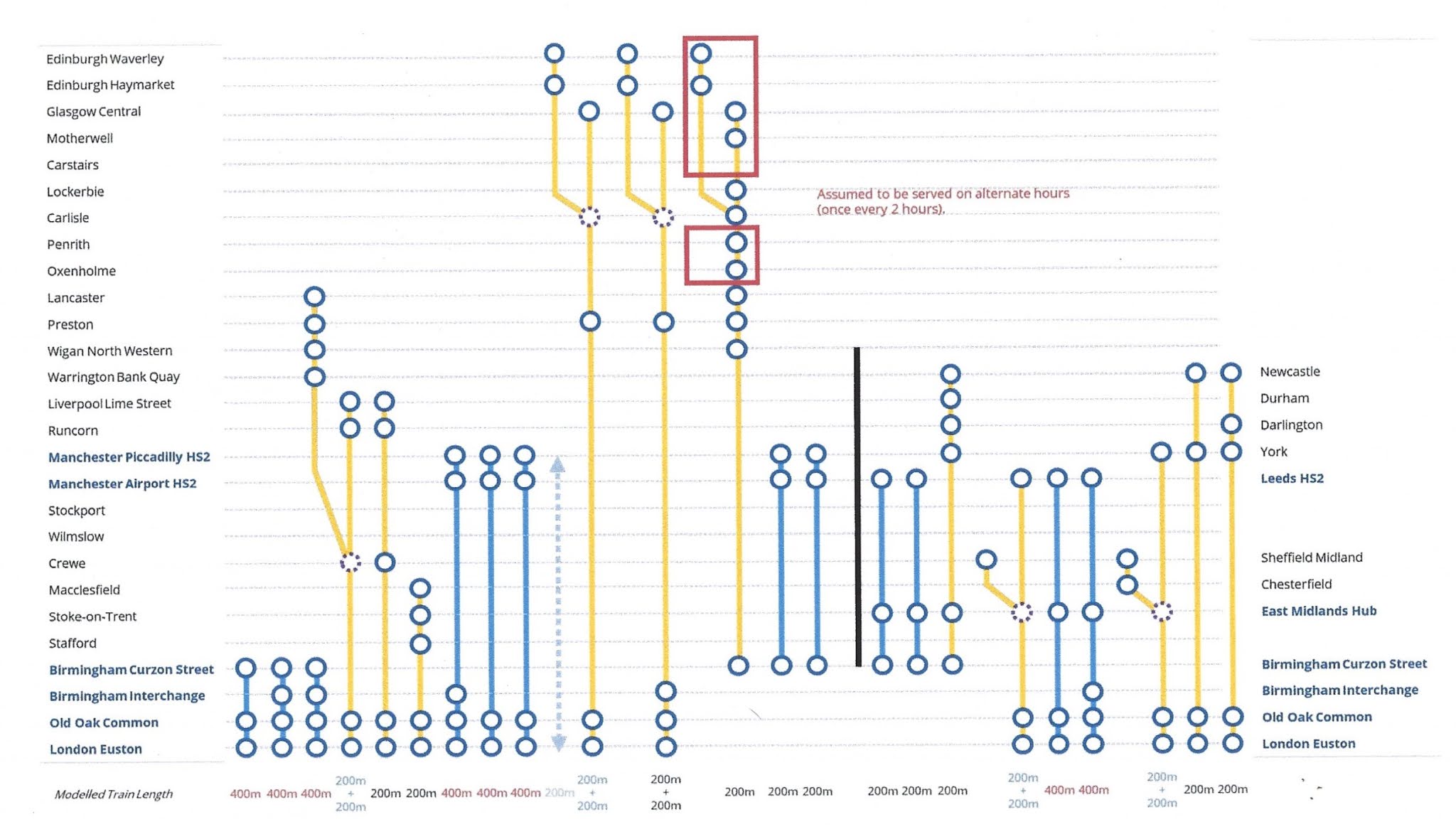
Only two High Speed Two services stop at Wigan North Western.
- The London and Lancaster service, which splits and joins with a London and Liverpool service at Crewe.
- The Birmingham and Scotland service.
As Wigan North Western has comprehensive local connections to the Northern areas of Liverpool and Manchester, it surely needs more services.
North West To Benefit From £19.8 billion Transport Investment
This is the title of this government document, which has this sub-heading.
Multibillion-pound plan to link major cities in the North via bus, rail and new and improved roads.
It says this about Greater Manchester and Liverpool City Region.
- Greater Manchester will also receive around £1.5 billion from the CRSTS2 budget and around £900 million additional funding – funded from HS2 – which is an unprecedented investment in local transport networks. That is more than double their allocation under the previous programme
- Liverpool City Region will also receive c.£1 billion from the CRSTS2 budget, plus a further £600 million on top – funded from HS2. That is more than double their allocation under the last round
Some of that amount of money could go a long way to improve Liverpool and Manchester connections through Wigan and create a link to High Speed Two.
TransPennine Services Between Liverpool/Manchester And Scotland
Currently, the following services run between Liverpool and Manchester, and Scotland.
- Manchester Airport and Glasgow Central – 1 tp2h – via Manchester Piccadilly, Manchester Oxford Road, Preston, Lancaster, Oxenholme Lake District, Penrith North Lakes, Carlisle, Lockerbie and Motherwell
- Manchester Airport and Edinburgh Waverley – 1 tp2h – via Manchester Piccadilly, Manchester Oxford Road, Preston, Lancaster, Oxenholme Lake District and Haymarket Penrith North Lakes, Carlisle and Lockerbie and Haymarket
- Liverpool Lime Street and Glasgow Central – 2 tpd – via St Helens Central, Wigan North Western, Preston, Lancaster, Oxenholme Lake District, Carlisle, Lockerbie and Motherwell
Note.
- tp2h is trains per two hours.
- tpd is trains per day.
- Only the Liverpool services go through Wigan.
- North of Preston all trains will use the same route.
- All three services are run by Class 397 trains.
- When High Speed Two Classic-Compatible trains start running to Glasgow and Edinburgh, they will use the same route North of Preston.
Point 5 surely means that High Speed Two’s trains will be limited to the same speed as the current Class 397 trains, which is 125 mph. Although, this might be increased to up to 140 mph, by the use of in-cab digital signalling.
Consider.
- Edinburgh to Preston is 191.4 miles.
- The current TransPennine express service from Edinburgh to Preston is scheduled for two hours and 34 minutes, with five stops, at an average speed of 74.6 mph.
- The Wikipedia entry for High Speed Two says that the London-Edinburgh service from Edinburgh to Preston is scheduled for two hours and 30 minutes, with two stops and a split/join at Carlisle, at an average speed of 76.6 mph.
- The Wikipedia entry for High Speed Two says that the Birmingham-Edinburgh service from Edinburgh to Preston is scheduled for two hours and 24 minutes, with four stops, at an average speed of 79.8 mph.
Note.
- The first timing is based on a Class 397 train and the others will be High Speed Two Classic Compatible trains.
- The times would appear to be vaguely in line with each other.
- The removal of the split/join could explain why the Birmingham service is six minutes faster.
The following would appear to be true.
- Both the Class 397 and High Speed Two Classic Compatible trains can run at similar speeds North of Preston.
- The High Speed Two Classic Compatible train may have faster acceleration and deceleration, which could save a few minutes.
- Nothing substantial has been done to improve the tracks between Edinburgh and Preston.
- As the current times are run without digital signalling and the Class 397 train, is within ten minutes of that, I would be very surprised if digital signalling will be installed before High Speed Two services reach Edinburgh.
I also suspect that if digital signalling and a few other improvements were made to the North of Preston, a few extra minutes could be saved.
The Future Of TransPennine Services Between Liverpool/Manchester And Scotland
Will the TransPennine services between Liverpool/Manchester and Scotland continue after High Speed Two services start running to North of the border?
Consider.
- I have never seen any plans from High Speed Two for services between Liverpool/Manchester and Scotland.
- If the TransPennine services, aren’t kept, travelling between Liverpool/Manchester and Scotland will need a change at Wigan North Western or Preston.
- The TransPennine services will probably need only a single train per hour (tph) on the West Coast Main Line to the North of Preston.
I can see them continuing. But possibly in a different form.
In 1967, I went from Glasgow to Manchester on a train.
- The Glasgow and Edinburgh trains joined at Carstairs.
- They then split again at Preston.
- One half went to Manchester and the other half went to Liverpool.
I remember that the train was late, because of late arrival of the Edinburgh train at Carstairs.
I needed to take a taxi. But I wrote my first complaint letter and got a cheque from British Rail.
Could similar joining and splitting be used again, as it uses only one train path between Preston and Scotland?
Would it also be better, if the service were to be under the Management of High Speed Two?
There are several possibilities, but I feel the TransPennine services will continue.
The Much-Loved Railway Food Carrier Bag
Coming back from Liverpool yesterday on Avanti West Coast, I treated myself to a coffee and a Nakd bar.
I took this picture after I’d cleared away and put all the rubbish in the bag.

These bags seem to be unique to British trains and I’ve never seen one in use on the many foreign trains, I’ve used all over the world.
Yesterday, the train was a Pendolino and I had no trouble carrying my coffee back to my seat, whilst the train tilted.
Were these bags invented by British Rail?
I can never understand, why they are not used by takeaways, as they are ideal for carrying food and drinks without spilling anything and they are much easier to carry and are ideal for collecting up the rubbish to put in a litter bin.
This Hydrogen Bus Will Take You And Your Car To Your Holiday Destination – Topgear
The title of this post, is the same as that of this article on Hydrogen Central.
The article details an interesting concept called Symone, from the French.
Looking at it, I suspect British Rail’s Motorail service was more efficient, as it had a larger capacity.
A Long Journey Home
A friend had booked between London and Edinburgh today on the 13:00 LNER train from King’s Cross. She was also travelling with her miniature Schnauzer.
.We had arranged to meet at Marylebone, so I could help them across London to King’s Cross and have a much-needed hot chocolate in King’s Cross before they caught the train North and I went to a meeting organised by my cardiologist.
I had checked out King’s Cross earlier and there was trouble with srveral delayed and cancelled trains.
It wasn’t strikes or bad management from LNER and the problem is explained in this article from the Yorkshire Evening Post, which is entitled Trains From Leeds To London Cancelled Or Delayed After Thieves Steal Signalling Cables From Railway Tracks.
In the end we made the train in time and also had time to have a hot chocolate in LEON, whilst we sat out the back with the dog.
We were texting each other most of the afternoon and with assistance from Real Time Trains, the journey went as follows.
- The train left King’s Cross at 13:08, which was eight minutes late.
- By Peterborough, the train was running seventeen minutes late.
- The driver kept this delay until Retford, where he lost another eighty minutes.
- The train was now running 97 minutes late and this grew by four more minutes by Newcastle.
- My friend reported that they stopped at Newcastle, as they had no driver.
- In the end, LNER found a driver or a way for the current driver to continue to Edinburgh and the train left Newcastle after a thirty minute stop.
- The train was now two hours and ten minutes late.
- Eventually, it pulled into Edinburgh, two hours and five minutes late, after the driver had picked up a few minutes on the approach to Edinburgh.
Note.
- The incoming train that formed this service arrived in King’s Cross from Edinburgh seventy two minutes late, mainly because of the cable theft. It should have arrived and returned to Edinburgh an hour earlier. But it arrived conveniently to form the 13:00 to Scotland.
- As the train presentation team turned the train in nineteen minutes instead of twenty-one, they saved a couple of minutes.
- I suspect the delay at Retford was getting through the area without any signalling.
- Had the driver run out of hours by Newcastle, as he had been in the cab for four-and-a-half hours?
- Normally, four-and-a-half hours would have enabled the driver to have driven to Edinburgh.
These are my thoughts.
Cable Theft
In the days of British Rail, I did some work for British Rail using my software called Daisy, which led to a report entitled Failure Reporting And Analysis On British Rail, which was written by J. S. Firth CEng, MIEE, MIRSE, who worked for SigTech, which was a Business Unit of the British Railways Board.
If anybody who has a legitimate reason to read the report, I still have the complimentary copy sent to me by Mr. Firth and would be happy to provide a copy.
I did flag up a project called Unauthorised Cable Removal And Fault Triage, as one of the winners in the First Of A Kind 2022 competition organised by the Dept of BEIS.
If there is anything I can do to help, let me know.
Problems In France
A friend in France told me that there is a problem with stealing overhead electrification cables in France.
This article on RFI is entitled Copper Wire Thieves Force France’s High-Speed TGV To Go Slow.
There are several similar stories on French and other European web sites.
Signalling Using Radio
The East Coast Main Line is being signalled using modern ERTMS digital signalling, where drivers read the signals on an in-cab display, which is connected by radio to the signalling system.
This extract from Wikipedia describes the first project.
In June 2020 it was reported that the UK government would provide £350 million to fund the UK’s first digital signalling system on a long-distance rail route. The signalling is to be fitted on a 100-mile (161 km) section of the East Coast Main Line between Kings Cross, London, and Lincolnshire, which will allow trains to run closer together and increase service frequency, speed and reliability. No date for when the new technology, already in use on the Thameslink lines at London Bridge and some London Underground lines, has been given.
If the cables are removed will this reduce crime?
LNER Delay Repay
My friend will be entitled for a full refund of her single ticket.
This page on the LNER web site gives full details.
Note.
- You have 28 days to claim.
- If you have a return ticket, you may be entitled to something for that leg of the journey.
I would add, that you should always keep all your tickets, in case the return journey goes belly-up.
Does Anybody Have Good Contacts At Network Rail?
In the 1980s, I did some business with British Rail, as it then was.
I provided my Daisy software and they used it to analyse signal failures.
It led to a guy called J S Firth, writing a paper called Failure Recording And Analysis On British Rail.
He had the courtesy to send me a copy of the paper, which mentions SigTech, which appears to have been a business unit of the British Railways Board.
All my dealings with Firth and his colleagues were in person at an office block in front of Marylebone station, which is now a posh hotel.
And then, a few months ago, someone contacted me from Network Rail.
Apparently, his father had worked on the signal failure project with me and he was now working in Milton Keynes for Network Rail on a similar project.
He asked if I had a copy of the paper.
At the time, I didn’t, but today I had a small sort out and found a copy.
Unfortunately, I have now lost the piece of paper on which I wrote the guy’s details.
Does anybody have any ideas, how I can find the guy, who contacted me?
What Is Possible On The East Coast Main Line?
In the Wikipedia entry for the Class 91 locomotive, there is an amazing story.
This picture shows one of these locomotives at Kings Cross.
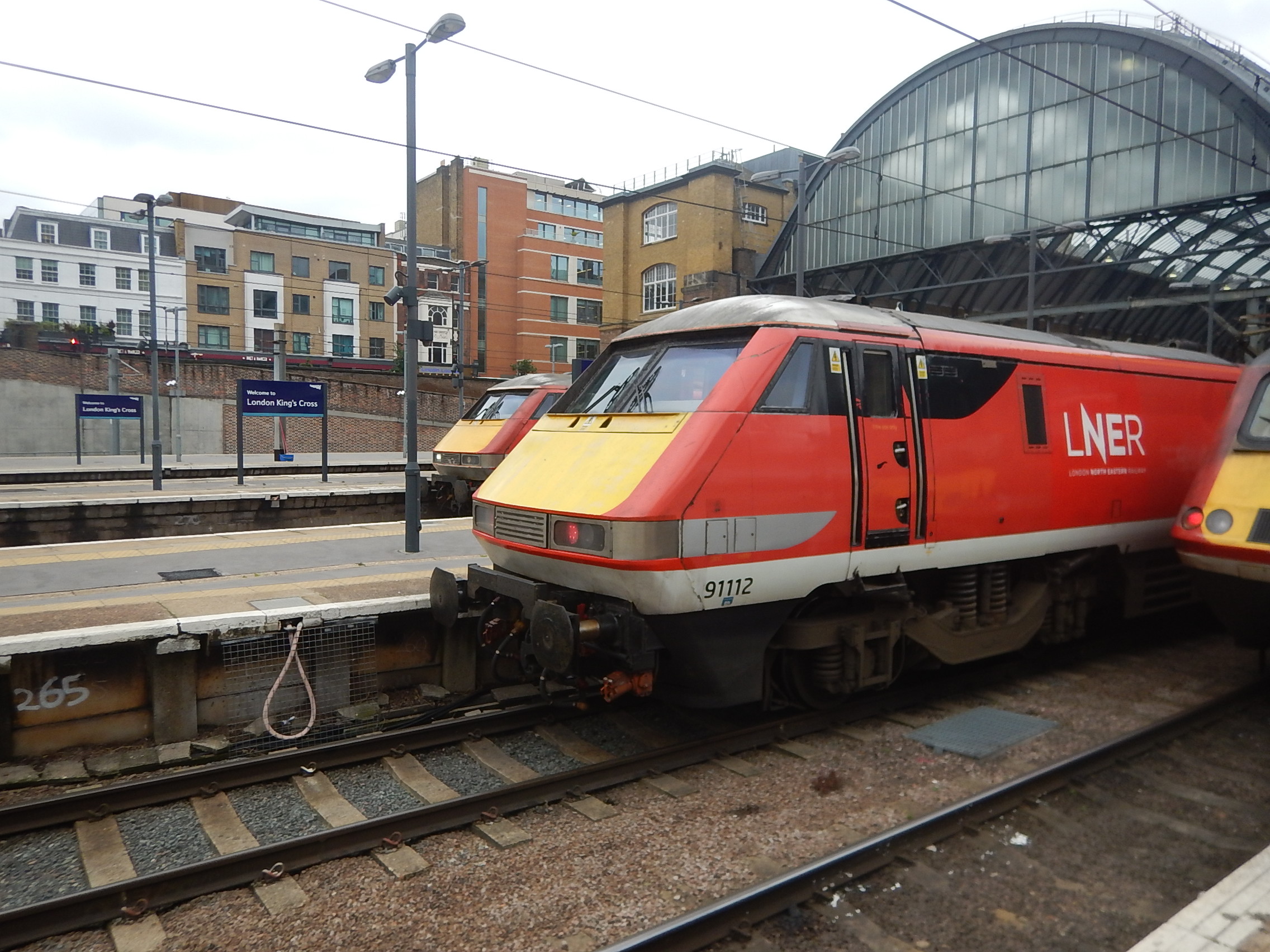
Note.
- They have a design speed of 140 mph.
- They have a power output of 4.8 MW.
- They were built around 1990 by British Rail at Crewe.
They were designed to run services between London King’s Cross and Edinburgh as fast as possible, as the motive power of the InterCity 225 trains.
This section in the Wikipedia entry for the Class 91 locomotive is entitled Speed Record. This is the first paragraph.
A Class 91, 91010 (now 91110), holds the British locomotive speed record at 161.7 mph (260.2 km/h), set on 17 September 1989, just south of Little Bytham on a test run down Stoke Bank with the DVT leading. Although Class 370s, Class 373s and Class 374s have run faster, all are EMUs which means that the Electra is officially the fastest locomotive in Britain. Another loco (91031, now 91131), hauling five Mk4s and a DVT on a test run, ran between London King’s Cross and Edinburgh Waverley in 3 hours, 29 minutes and 30 seconds on 26 September 1991. This is still the current record. The set covered the route in an average speed of 112.5 mph (181.1 km/h) and reached the full 140 mph (225 km/h) several times during the run.
Note.
- For the British locomotive speed record, locomotive was actually pushing the train and going backwards, as the driving van trailer (DVT) was leading.
- How many speed records of any sort, where the direction isn’t part of the record, have been set going backwards?
- I feel that this record could stand for many years, as it is not very likely anybody will build another 140 mph locomotive in the foreseeable future. Unless a maverick idea for a high speed freight locomotive is proposed.
I have a few general thoughts on the record run between Kings Cross and Edinburgh in three-and-a-half hours.
- I would assume that as in normal operation of these trains, the Class 91 locomotive was leading on the run to the North.
- For various reasons, they would surely have had at least two of British Rail’s most experienced drivers in the cab.
- At that time, 125 mph InterCity 125 trains had been the workhorse of East Coast Main Line for well over ten years, so British Rail wouldn’t have been short of experienced high speed drivers.
- It was a Thursday, so they must have been running amongst normal traffic.
- On Monday, a typical run between Kings Cross and Edinburgh is timetabled to take four hours and twenty minutes.
- High Speed Two are predicting a time of three hours and forty-eight minutes between Euston and Edinburgh via High Speed Two and the West Coast Main Line.
The more you look at it, a sub-three-and-and-a-half hour time, by 1980s-technology on a less-than-perfect railway was truly remarkable.
So how did they do it?
Superb Timetabling
In Norwich-In-Ninety Is A Lot More Than Passengers Think!, I talk about how Network Rail and Greater Anglia created a fast service between Liverpool Street and Norwich.
I suspect that British Rail put their best timetablers on the project, so that the test train could speed through unhindered.
Just as they did for Norwich-in-Ninety and probably will be doing to the East Coast Main Line to increase services and decrease journey times.
A Good As ERTMS Signalling
Obviously in 1991, there was no modern digital in-cab signalling and I don’t know the standard of communication between the drivers and the signallers.
On the tricky sections like Digswell Viaduct, through Hitchin and the Newark Crossing were other trains stopped well clear of any difficult area, as modern digital signalling can anticipate and take action?
I would expect the test train got a signalling service as good as any modern train, even if parts of it like driver to signaller communication may have been a bit experimental.
There may even have been a back-up driver in the cab with the latest mobile phone.
It must have been about 1991, when I did a pre-arranged airways join in my Cessna 340 on the ground at Ipswich Airport before take-off on a direct flight to Rome. Air Traffic Control had suggested it to avoid an intermediate stop at say Southend.
The technology was arriving and did it help the drivers on that memorable run North ensure a safe and fast passage of the train?
It would be interesting to know, what other equipment was being tested by this test train.
A Possible Plan
I suspect that the plan in 1991 was to use a plan not unlike one that would be used by Lewis Hamilton, or in those days Stirling Moss to win a race.
Drive a steady race not taking any chances and where the track allows speed up.
So did British Rail drive a steady 125 mph sticking to the standard timetable between Kings Cross and Edinburgh?
Then as the Wikipedia extract indicated, at several times during the journey did they increase the speed of the train to 140 mph.
And the rest as they say was an historic time of 3 hours, 29 minutes and 30 seconds. Call it three-and-a-half-hours.
This represented a start-to-stop average speed of 112.5 mph over the 393 miles of the East Coast Main Line.
Can The Current Trains Achieve Three-And-A-Half-Hours Be Possible Today?
Consider.
- The best four hours and twenty minutes timings of the Class 801 trains, represents an average speed of 90.7 mph.
- The Class 801 trains and the InterCity 225 trains have similar performance.
- There have been improvements to the route like the Hitchin Flyover.
- Full ERTMS in-cab signalling is being installed South of Doncaster.
- I believe ERTMS and ETC could solve the Newark Crossing problem! See Could ERTMS And ETCS Solve The Newark Crossing Problem?
- I am a trained Control Engineer and I believe if ERTMS and ETC can solve the Newark Crossing problem, I suspect they can solve the Digswell Viaduct problem.
- The Werrington Dive Under is being built.
- The approaches to Kings Cross are being remodelled.
I can’t quite say easy-peasy. but I’m fairly certain the Kings Cross and Edinburgh record is under serious threat.
- A massive power supply upgrade to the North of Doncaster is continuing. See this page on the Network Rail web site.
- ERTMS and ETC probably needs to be installed all the way between Kings Cross and Edinburgh.
- There may be a need to minimise the number of slower passenger trains on the East Coast Main Line.
- The Northumberland Line and the Leamside Line may be needed to take some trains from the East Coast Main Line.
Recent Developments Concerning the Hitachi Trains
There have been several developments since the Hitachi Class 800 and Class 801 trains were ordered.
- Serious engineers and commentators like Roger Ford of Modern Railways have criticised the lugging of heavy diesel engines around the country.
- Network Rail have upgraded the power supply South of Doncaster and have recently started to upgrade it between Doncaster and Edinburgh. Will this extensive upgrade cut the need to use the diesel power-packs?
- Hitachi and their operators must have collected extensive in-service statistics about the detailed performance of the trains and the use of the diesel power-packs.
- Hitachi have signed an agreement with Hyperdrive Innovation of Sunderland to produce battery-packs for the trains and two new versions of the trains have been announced; a Regional Battery Train and an Intercity Tri-Mode Battery Train.
- East Coast Trains have ordered five five-car Class 803 trains, each of which will have a small battery for emergency use and no diesel power-packs.
- Avanti West Coast have ordered ten seven-car Class 807 trains, each of which have no battery or diesel power-packs.
And these are just the ones we know about.
The Class 807 Trains And Liverpool
I find Avanti West Coast’s Class 807 trains the most interesting development.
- They have been partly financed by Rock Rail, who seem to organise train finance, so that the train operator, the train manufacturer all get the best value, by finding good technical solutions.
- I believe that these trains have been designed so they can run between Euston and Liverpool Lime Street stations in under two hours.
- Does the absence of battery or diesel power-packs save weight and improve performance?
- Euston and Liverpool Lime Street in two hours would be an average of only 96.8 mph.
- If the Class 807 trains could achieve the same start-stop average of 112.5 mph achieved by the InterCity 225 test run between Kings Cross and Edinburgh, that would mean a Euston and Liverpool Lime Street time of one hour and forty-three minutes.
- Does Thunderbird provision on the West Coast Main Line for the Class 390 trains mean that the Class 807 trains don’t need emergency power?
- Have diesel power-packs been rarely used in emergency by the Hitachi trains?
I believe the mathematics show that excellent sub-two hour times between Euston and Liverpool Lime Street are possible by Avanti West Coast’s new Class 807 trains.
The Class 803 Trains And Edinburgh
East Coast Trains ordered their Class 803 trains in March 2019, nine months before Avanti West Coast ordered their Class 807 trains.
In Trains Ordered For 2021 Launch Of ‘High-Quality, Low Fare’ London – Edinburgh Service, I outlined brief details of the trains and the proposed service.
- FirstGroup is targeting the two-thirds of passengers, who fly between London and Edinburgh.
- They are also targeting business passengers, as the first train arrives in Edinburgh at 10:00.
- The trains are five-cars.
- The trains are one class with onboard catering, air-conditioning, power sockets and free wi-fi.
- Stops will be five trains per day with stops at Stevenage, Newcastle and Morpeth.
- The trains will take around four hours.
- The service will start in Autumn 2021.
I also thought it would be a successful service
As I know Edinburgh, Liverpool and London well, I believe there are similarities between the Euston-Liverpool Lime Street and Kings Cross-Edinburgh routes.
- Both routes are between two cities known all over the world.
- Both routes are fully-electrified.
- Both routes have the potential to attract passengers from other transport modes.
The two services could even be run at similar speeds.
- Euston-Liverpool Lime Street in two hours will be at 96.8 mph
- Kings Cross-Edinburgh in four hours will be at 98.3 mph.
Does this explain the similar lightweight trains?
Could Lightweight Trains Help LNER?
There is one important factor, I haven’t talked about in detail in this post. Batteries and diesel power-packs on the Hitachi trains.
I have only mentioned them in the following circumstances.
- When trains are not fitted with battery and/or diesel power-packs.
- When battery developments are being undertaken.
Let’s consider the LNER fleet.
- LNER has thirteen nine-car Class 800 trains, each of which has five diesel power-packs
- LNER has ten five-car Class 800 trains, each of which has three diesel power-packs
- LNER has thirty nine-car Class 801 trains, each of which has one diesel power-pack
- LNER has twelve five-car Class 801 trains, each of which has one diesel power-pack
There are sixty-five trains, 497 coaches and 137 diesel power-packs.
And look at their destinations.
- Aberdeen – No Electrification from Edinburgh
- Alnmouth – Fully Electrified
- Berwick-upon-Tweed – Fully Electrified
- Bradford Forster Square – Fully Electrified
- Darlington – Fully Electrified
- Doncaster – Fully Electrified
- Durham – Fully Electrified
- Edinburgh – Fully Electrified
- Glasgow – Fully Electrified
- Grantham – Fully Electrified
- Harrogate – No Electrification from Leeds – Possible Battery Destination
- Huddersfield – No Electrification from Leeds – Possible Battery Destination – Probable Electrification
- Hull – No Electrification from Temple Hirst Junction – Possible Battery Destination
- Inverness – No Electrification from Stirling
- Leeds – Fully Electrified
- Lincoln – No Electrification from Newark North Gate – Possible Battery Destination
- Middlesbrough – No Electrification from Northallerton – Possible Battery Destination
- Newcastle – Fully Electrified
- Newark North Gate – Fully Electrified
- Northallerton – Fully Electrified
- Peterborough – Fully Electrified
- Skipton – Fully Electrified
- Retford – Fully Electrified
- Stevenage – Fully Electrified
- Stirling – Fully Electrified
- Sunderland – No Electrification from Northallerton – Possible Battery Destination
- Wakefield Westgate – Fully Electrified
- York – Fully Electrified
The destinations can be summarised as followed.
- Not Electrified – 2
- Possible Battery Destination – 6
- Fully Electrified – 20
This gives a total of 28.
Could the trains be matched better to the destinations?
- Some routes like Edinburgh, Glasgow, Newcastle and Stirling could possibly be beneficially handled by lightweight trains without any diesel or battery power-packs.
- Only Aberdeen and Inverness can’t be reached by all-electric or battery-electric trains.
- In LNER Seeks 10 More Bi-Modes, I proposed a hydrogen-electric flagship train, that would use hydrogen North of the existing electrification.
There certainly appear to be possibilities.
Example Journey Times To Edinburgh
This table shows the various time for particular start-stop average speeds between Kings Cross and Edinburgh.
- 80 mph – 4:54
- 85 mph – 4:37
- 90 mph – 4:12
- 98.2 mph – 4:00
- 100 mph – 3:56
- 110 mph – 3:34
- 120 mph – 3:16
- 125 mph – 3:08
Note.
- Times are given in h:mm.
- A few mph increase in average speed reduces journey time by a considerable amount.
The figures certainly show the value of high speed trains and of removing bottlenecks, as average speed is so important.
Decarbonisation Of LNER
LNER Seeks 10 More Bi-Modes was based on an article in the December 2020 Edition of Modern Railways, with the same title. These are the first two paragraphs of the article.
LNER has launched the procurement of at least 10 new trains to supplement its Azuma fleet on East Coast main line services.
In a Prior Information Notice published on 27 October, the operator states it is seeking trains capable of operating under 25kW overhead power with ‘significant self-power capability’ for operation away from overhead wires. ‘On-board Energy Storage for traction will be specified as a mandatory requirement to reduce, and wherever practical eliminate, diesel usage where it would otherwise be necessary, although LNER anticipates some degree of diesel traction may be required to meet some self-power requirements. Suppliers tendering are asked to detail their experience of designing and manufacturing a fleet of multi-mode trains with a range of traction options including battery-electric, diesel-electric, hydrogen-electric, battery-diesel, dual fuel and tri-mode.
From this, LNER would appear to be serious about decarbonisation and from the destination list I published earlier, most services South of the Scottish Central Belt can be decarbonised by replacing diesel-power packs with battery power-packs.
That last bit, sounds like a call for innovation to provide a solution to the difficult routes to Aberdeen and Inverness. It also looks as if it has been carefully worded not to rule anybody out.
This press release from Hitachi is entitled Hitachi And Eversholt Rail To Develop GWR Intercity Battery Hybrid Train – Offering Fuel Savings Of More Than 20%.
It announces the Hitachi Intercity Tri-mode Battery Train, which is described in this Hitachi infographic.

As the Hitachi press release is dated the 15th of December 2020, which is after the publication of the magazine, it strikes me that LNER and Hitachi had been talking.
At no point have Hitachi stated what the range of the train is on battery power.
To serve the North of Scotland these gaps must be bridged.
- Aberdeen and Edinburgh Haymarket – 130 miles
- Inverness and Stirling – 146 miles
It should also be noted that distances in Scotland are such, that if these gaps could be bridged by battery technology, then probably all of the North of Scotland’s railways could be decarbonised. As Hitachi are the major supplier of Scotland’s local and regional electric trains, was the original Prior Information Notice, written to make sure Hitachi responded?
LNER run nine-car Class 800 trains on the two long routes to Aberdeen and Inverness.
- These trains have five diesel power-packs under coaches 2,3, 5, 7 and 8.
- As five-car Class 800 trains have diesel power-packs under coaches 2, 3 and 4, does this mean that Hitachi can fit diesel power-packs under all cars except for the driver cars?
- As the diesel and battery power-packs appear to be interchangeable, does this mean that Hitachi could theoretically build some very unusual trains?
- Hitachi’s trains can be up to twelve-cars in normal mode and twenty-four cars in rescue mode.
- LNER would probably prefer an all Azuma fleet, even if a few trains were a bit longer.
Imagine a ten-car train with two driver and eight intermediate cars, with all of the intermediate cars having maximum-size battery-packs.
Supposing, one or two of the battery power-packs were to be replaced with a diesel power-pack.
There are a lot of possibilities and I suspect LNER, Hitachi and Hyperdrive Innovation are working on a train capable of running to and from the North of Scotland.
Conclusion
I started by asking what is possible on The East Coast Main Line?
As the time of three-and-a-half hours was achieved by a short-formation InterCity 225 train in 1991 before Covids, Hitchin, Kings Cross Remodelling, Power Upgrades, Werrington and lots of other work, I believe that some journeys between Kings Cross and Edinburgh could be around this time within perhaps five years.
To some, that might seem an extraordinary claim, but when you consider that the InterCity 225 train in 1991 did it with only a few sections of 140 mph running, I very much think it is a certainly at some point.
As to the ultimate time, earlier I showed that an average of 120 mph between King’s Cross and Edinburgh gives a time of 3:16 minutes.
Surely, an increase of fourteen minutes in thirty years is possible?
Wigan North Western Station Set For Platform Extension Work
The title of this post. is the same as that of this article on Rail Advent.
This is the first three paragraphs.
Wigan North Western is set to undergo a multi-million-pound platform extension to provide passengers between Manchester and Leeds with longer trains.
The work is part of the Great North Rail Project and will see Platform 3 made longer to allow four-carriage trains to call at the station.
Northern can then provide extra capacity for passengers and move trains in and out of its new £46m depot at Ince-in-Makerfield.
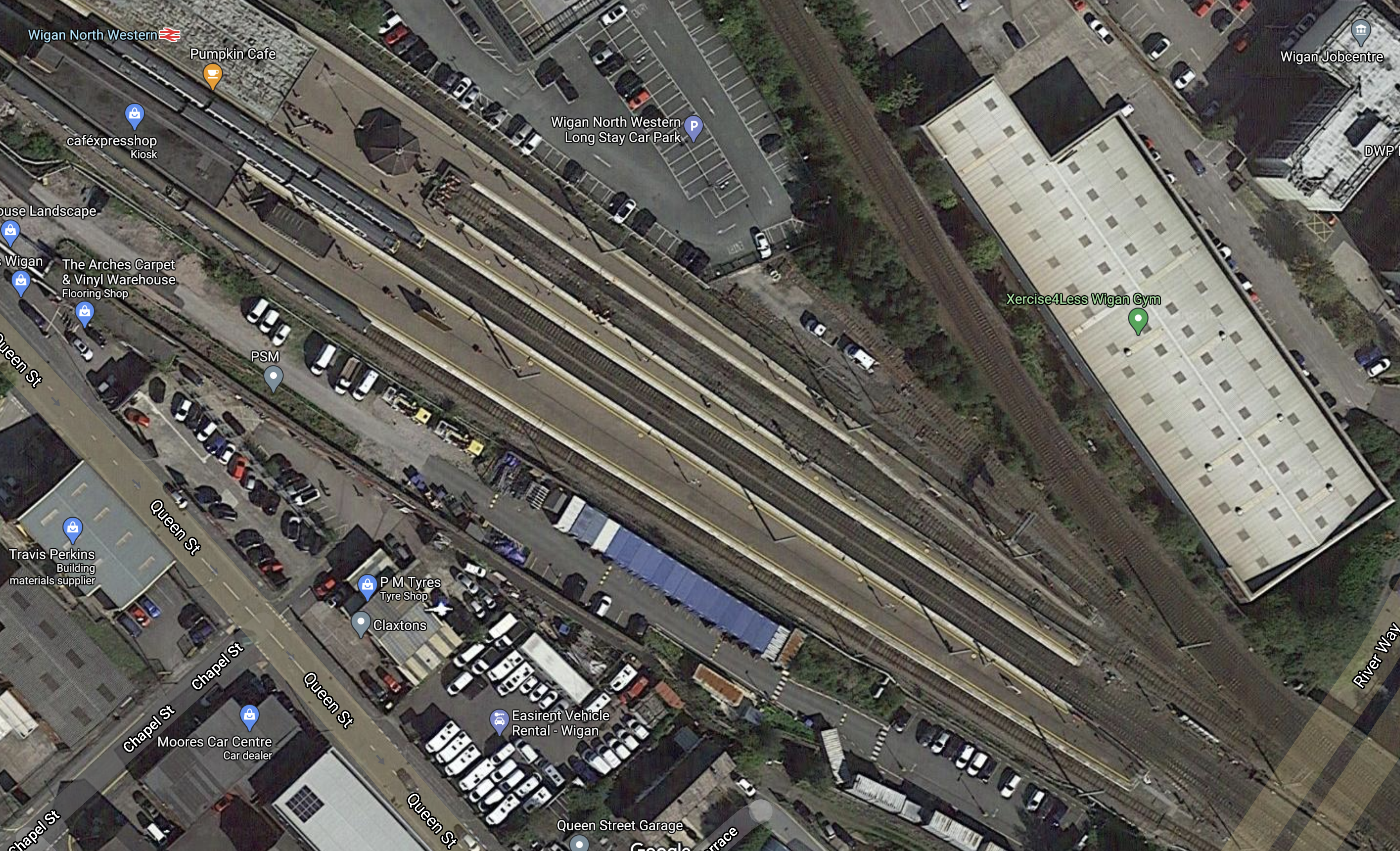
This Google Map shows Wigan North Western station.
Note.
- The six platforms are numbered 1-6 from North-East to South-West.
- Platforms 1, 2 and 3 are used for trains that start at the station and go to the Alderley Edge, Leeds, Manchester Piccadilly, Manchester Victoria and Stalybridge.
- Platform 1 is quite long and regularly handles two trains at the same time.
- Platforms 2 and 3 could probably be longer.
- Platforms 1, 2 and 3 appear to have their own private access track direct to Wigan Springs Branch TMD to the South, where multiple units can be serviced and washed.
- The access track sneaks down the East side of the West Coast Main Line, so that trains don’t block the track, when transferring to and from the depot.
- The double-track going North between the station and the large building leads to Wigan Wallgate station.
This picture shows the Platforms 1, 2 and 3 at the station.
If you look at the train movements early in the morning, trains come out of the depot and start their first diagram from one of the three platforms on the left.
Lengthening Platform 3 will make this easier and more efficient.
Wigan North Western Station, West Coast Main Line And High Speed Two
Wigan North Western station is currently served by the following Avanti West Coast services on the West Coast Main Line.
- London Euston and Glasgow Central – Hourly
- London Euston and Glasgow Central or Edinburgh via Birmingham New Street – Hourly
- London Euston and Blackpool – Four trains per day
TransPennine Express also run four trains per day between Liverpool Lime Street and Glasgow Central.
The station is also planned to get two hourly High Speed Two services, which should be delivered in Phase 2a of the project.
- London Euston and Lancaster via Old Oak Common, Crewe, Warrington Bank Quay and Preston.
- Birmingham Curzon Street and Edinburgh or Glasgow via Preston, Lancaster, Carlisle and some other stations, depending on the Scottish destination.
It certainly looks like Wigan North Western station is being updated to have a comprehensive network of local electric services to give a large number of stations, good access to current West Coast Main Line and future High Speed Two services.
High Speed Two Through Lancashire Stations
The direct London and Scotland services are proposed to be as follows.
- They will run at a frequency of two trains per hour (tph)
- They will be formed of two classic-compatible 200 metre long trains.
- They will split and join at Carlisle, to give both Edinburgh and Glasgow a two tph service from London.
- One tph will stop at Old Oak Common, Preston and Carlisle in England.
- The second train will also stop at Birmingham Interchange in England.
Adding the services together, it would appear that the following services will run through Lancashire.
- One tph – London Euston and Lancaster – One 200 metre train
- Two tph – London Euston and Scotland – Two 200 metre trains.
- One tph – Birmingham and Scotland – One 200 metre train
This totals up to four tph.
I will now look, at the High Speed Two traffic through the various stations.
Warrington Bank Quay
I know Warrington Bank Quay is in Cheshire, these days, but High Speed Two trains will pass through.
Current plans include a by-pass round Warrington will be built for Phase 2b.
- Before by-pass four tph will pass through Warrington Bank Quay, with one stopping.
- After by-pass only one stopping train will pass.
If the High Speed Two service replaces the current Avanti West Coast service to Scotland, any problems at the station should be easy to solve.
Preston
Preston would appear to have three tph from High Speed Two passing through, with all stopping.
Phase 2b will add another tph.
Lancaster
Lancaster would appear to have two tph from High Speed Two passing through, with none stopping.
In addition, one service from Euston will terminate.
Phase 2b will add another tph, that passes thrugh.
Conclusion
It looks to me, that this relatively small project will be worthwhile.
How many other projects of this size need being added to the network urgently? I can think of possibly three within a dozen miles of my house, of which at least one is down to Beeching and/or British Rail’s cost cutting of the 1960s or 1970s.
 The Anonymous Widower