You Don’t Get Many Eleven Coach Trains
Apart from some Class 390 trains and perhaps a few others, that were built that way, eleven coach trains are fairly unusual in the UK.
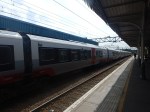
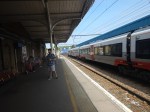
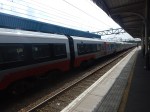
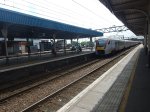
So I was surprised to see this image of the 10:00 train from Liverpool Street to Norwich.

Note.
- I wrote about travelling in a pair of four-car Class 755 trains in A Pair Of Class 755 Trains At Liverpool Street Station.
- The normal trains on this route are twelve-car Class 745 trains, so they should fit all the stations.
- Both trains are 100 mph trains and Liverpool Street and Norwich is fully electrified, so this service will be zero-carbon.
It would appear that somebody is up to something.
Stowmarket Station – 14th March 2025
tThe one and only time, that I’ve used Stowmarket station, was when I’d taken my Lotus in for a service near Diss and I was getting back to Newmarket, with a change at the station.
So as I was going to Stowmarket station, I felt with the judicious use of a East Anglian Ranger ticket, I could combine the trips to Stowmarket and Saxmundham stations.
I also wanted to look at the progress on the new footbridge that I wrote about in Stowmarket Station To Go Step-Free.
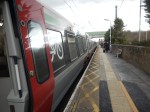
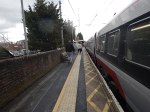
I took these pictures.
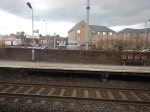
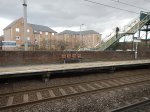
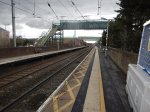
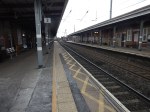
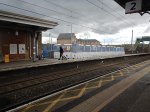
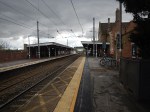
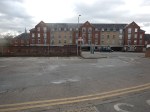
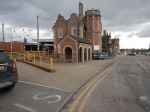

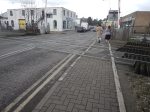
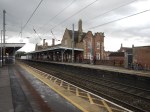
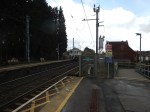
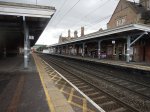
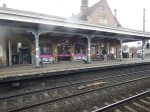
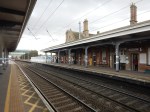

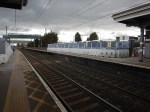

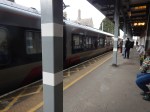

Note.
- I arrived on the Norwich-bound platform, crossed the tracks by the level crossing and then left from the Ipswich-bound platform.
- The station has a cafe.
- The footbridge in the pictures is a temporary one to ease construction.
- The station buildings are Grade II Listed.
There doesn’t appear to have been much progress on the new footbridge.
I do have some other thoughts.
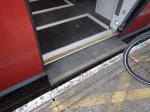
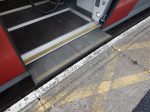
Greater Anglia’s Stadler Trains Are Step-Free Between Train And Platform
The first two and last pictures in the gallery show this feature.
I arrived on a Class 745 train and left on a Class 755 and both train classes have gap fillers, that do their job automatically.
We need more of this technology to protect the elderly, those with restricted movement and the just untrained stupid.
Housing By The Station
It appears that two blocks of flats have been built on railway land or the station car park.
The bridge also appears to give the owners and residents access across the railway.
Is this thoughtful holistic design or just a bribe to get planning permission?
Who Will Use The Footbridge?
Two main lines effectively cross at Stowmarket.
- The Great Eastern Main Line between Ipswich and Norwich goes through Needham Market, Stowmarket and Diss.
- The Ipswich and Ely Line between Ipswich and Cambridge goes through Needham Market, Stowmarket, Elmswell, Thurston, Bury St. Edmunds, Kennett, Newmarket and Dullingham.
So, if you need to go between say Newmarket and Diss, you would change trains at Stowmarket. Hopefully, the bridge will encourage train travel.
New Housing In East Anglia
On the main railway lines between Cambridge, Ipswich and Norwich, there used to be a lot more stations.
- There are eight closed stations between Stowmarket and Cambridge.
- There are three closed stations between Stowmarket and Ely .
- There are two closed stations between Stowmarket and Ipswich.
- There are eight closed stations between Stowmarket and Norwich.
Note.
- A new Soham station was built between Stowmarket and Ely. Passenger numbers are rising with each year.
- I have double-counted Higham and Saxham and Risby stations on both the Ely and Cambridge routes.
- But that still leaves nineteen stations, that might be good sites to build new houses.
- The East-West Railway intend to build a new A14 Parkway station to link the A14 road to the Ipswich and Ely Line.
- When housing is taken into account, some stations will give a better return on investment.
Could the new footbridge at Stowmarket be part of a wide ranging plan to build more housing in towns and villages along the railways of East Anglia?
Was The Old Footbridge Too Low?
This picture was taken of the old bridge.
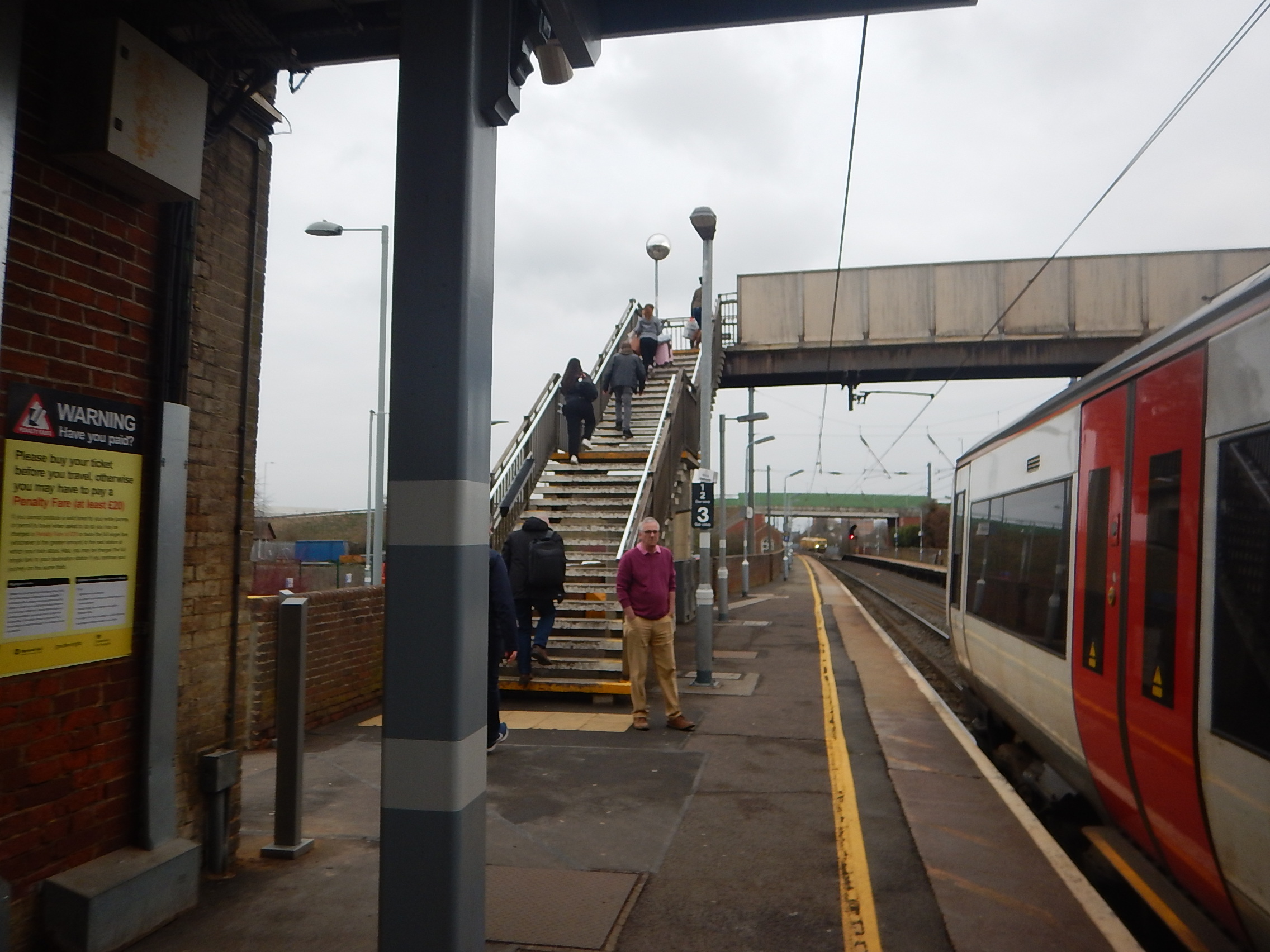
Was the bridge too low for some container trains?
UK Investment Summit Latest: Starmer Announces £1.1bn Expansion Of Stansted Airport
The title of this post, is the same as that of this article on The Times.
The Times has this sub-heading about Stansted
Analysis: Stansted Deal Prioritises Growth Over Climate
There are four paragraphs of analysis.
Over the weekend, Sir Keir Starmer made clear that his commitments to boost workers’ rights would not get in the way of his desire to bring in cash from the owners of P&O. As ministers now trumpet a deal to upgrade Stansted airport, it seems that growth and jobs also trump concerns about emissions.
Louise Haigh, the transport secretary who prompted the row with DP World by calling P&O a “rogue operator”, praised the Stansted deal as a “clear signal that Britain is open for business”. She argued that Stansted could be upgraded “while also meeting our existing environment obligations”, with the airport promising a new solar farm to generate electricity. But environmentalists will be dismayed by the prospect of more plane journeys and associated emissions.
The deal also raises fresh questions about a third runway at Heathrow after years of dithering under the Conservatives. No 10 has previously said it is “not opposed” to expansion if it can meet tests on emissions, climate change, noise pollution — and growth.
Starmer has said he will not duck decisions because they are “too difficult”. A decision on Heathrow offers a very clear test of that promise.
Is Hydrogen The Reason For The Choice Of Stansted?
I wonder if the choice of Stansted for expansion is down to the likelihood, that East Anglia will be a big centre for the generation of zero-carbon green and pink hydrogen, with gigawatts of offshore wind farms for the green and nuclear at Sizewell for the pink.
Aircraft of the future will surely need hydrogen for flying to their destinations.
Already, the massive construction of Sizewell C is going to be performed using zero-construction methods involving electricity and hydrogen, as far as is possible.
Large construction at Stansted Airport could be done in a similar manner, using perhaps a hydrogen pipeline between Sizewell and Stansted running along the A 14. This would probably be built anyway, so that East Anglia’s large numbers of heavy trucks could be converted to hydrogen.
Already the hydrogen buses to bring workers to the Sizewell C site have been ordered from Wrightbus in Ballymena.
Airbus, are planning to have their hydrogen-powered Boeing 737/A 320-size airliner in service by the mid-2030s. From visualisations released by Airbus, the Zeroe hydrogen Turbofan looks very much like a redesigned version of the current A320 neo, with two hydrogen turbofans (hopefully with RR on the side!) Converting an existing proven airliner, only means that the new parts need to be certified, so this would bring the plane into service quicker.
Airbus’s infographic shows the Zeroe hydrogen Turbofan will seat up to 200 passengers and have a range of 2,000 nautical miles or 3,700 km.

Discover the three zero-emission concept aircraft known as ZEROe in this infographic. These turbofan, turboprop, and blended-wing-body configurations are all hydrogen hybrid aircraft.
A typical A 320 neo will fly 165 passengers up to 3,500 nautical miles or 6.500 km.
A few distances from Stansted include.
- Athens – 2,400 km.
- Berlin – 905 km.
- Cairo – 3514 km.
- Copenhagen 913 km.
- Dublin – 470 km.
- Edinburgh – 509 km.
- Gander 3,800 km
- Geneva – 760 km.
- Glasgow – 540 km.
- Istanbul – 2480 km.
- Madrid – 1300 km.
- Milan – 960 km.
- Munich – 909 km.
- Palma de Mallorca – 1,400 km.
- Reykjavík – 1870 km.
- Rome – 1,442 km.
- Stockholm – 1,400 km.
- Tel-Aviv – 3,564 km.
- Tenerife North – 2944 km.
- Tenerife South – 2999 km.
- Warsaw 1,412 km.
These distances would mean, a lot of current European destinations could be reached, if the plane were filled at both airports, but a surprising number of popular places could be reached by only refuelling at Stansted.
It also appears to me, that with refuelling in Iceland and perhaps a stopover, in that delightful and different country, zero-carbon flights across the Atlantic would be possible.
If a hydrogen-powered aircraft has the 3,700 km. range that Airbus are promising, it will be an aircraft with a lot of possibilities!
Short Flights
- Amsterdam – 541 km.
- Cardiff – 253 km.
- Exeter – 284 km.
- Jersey – 344 km.
- Liverpool – 264 km.
- Newcastle – 373 km.
- Newquay – 399 km.
- Ronaldsway – 408 km.
- Southampton – 151 km.
Some of these flights would be competing with trains.
Flights Around The British Isles
One of the longest flights around the British Isles would be between Stansted and Sumburgh Airport in the Shetland Isles.
But this is only 894 kilometres, so a return trip would be possible.
I also feel that arranging hydrogen refuelling on Shetland will not be a difficult task, as the islands are likely to have copious supplies of green hydrogen.
Flights From Stansted To Europe
Applying a ten percent reserve probably means a safe one-way range of around 1,700 km.
This would mean that.
- Amsterdam – 541 km.
- Berlin – 905 km.
- Copenhagen – 913 km.
- Madrid – 1300 km.
- Milan – 960 km.
- Munich – 909 km.
- Palma de Mallorca – 1,400 km.
- Rome – 1,442 km.
- Stockholm – 1,400 km.
- Warsaw 1,412 km.
Should all be in range. of an out-and-back flight, after fully fuelling the plane at Stansted Airport.
Others like.
- Athens – 2,400 km.
- Bucharest – 2070 km.
- Cairo – 3514 km.
- Istanbul – 2480 km.
- Lisbon – 1630 km.
- Malta – 2107 km.
- Marrakech – 2350. km.
- Sofia – 2010 km.
- Tel-Aviv – 3,564 km.
- Tenerife North – 2944 km.
- Tenerife South – 2999 km.
Could be handled by refuelling at the destination.
Hopping Across The Atlantic
Consider.
- My great aunt Beatrice used to fly the Atlantic in the 1950s, although it was usually a succession of small hops between Heathrow Shannon and Gander Airports. I think she regularly used ships like the Queen Mary and Elizabeth, as she found them less stressful.
- Icelandair offer short stopovers in Reykjavik and I suspect they will offer this with hydrogen-fuelled aircraft.
- British Airways used to offer a London City Airport to New York flight via Shannon using an Airbus A 318.
I would certainly be interested to hop across from Stansted to New York in a hydrogen-powered aircraft, and I suspect others would do it for the environmental brownie points.
Legs could be.
- Stansted and Reykjavík – 1870 km.
- Reykjavík and Gander – 2568 km
- Gander and New York – 1767 km.
A stop could possibly be squeezed in at Boston.
It could be an interesting way to cross the Atlantic.
Hydrogen Production In East Anglia
I said earlier that East Anglia could produce a lot of zero-carbon green and prink hydrogen from wind and nuclear and this would be used for the following.
- Aviation out of Stansted and Southend Airports.
- Shipping out of the Port of Felixstowe, London Gateway and other smaller ports.
- Providing energy for heavy transport in East Anglia.
- Providing energy for Freeport East at Felixstowe and Harwich.
- Refuelling passing shipping.
- Supplying off-grid energy to rural properties and businesses in the East of England, which I wrote about in Developing A Rural Hydrogen Network.
Any spare hydrogen could always be sold to the Germans.
Decarbonisation Of The Railways In East Anglia
Undoubtedly, some hydrogen will be used to decarbonise some parts of East Anglia’s railways.
Many passenger trains are electrified, but some rural and cross-country services still use diesel. However, the Class 745 trains, that were built by Stadler for these services could be converted to hydrogen or battery-electric.
Similarly, locomotives that haul the freight trains out of the ports of East Anglia will be replaced with hydrogen or battery-electric locomotives.
I am fairly certain, that by 2040, all railways in East Anglia will be zero-carbon.
The East-West Rail Link
It is not known yet, whether the current government will continue to build the East West Rail Link, but it could be invaluable in connecting Stansted Airport to the West of England.
Connecting Stansted Airport To The North Of England and Scotland By Rail
If Stansted is developed as a zero-carbon airport, based on the new hydrogen-powered aircraft, travellers between say the North of England and Scotland, will surely want to travel to Stansted in a carbon-free manner.
So would it be sensible to run rail electric services between the North and Stansted?
Conclusion
Stansted could develop into the UK’s zero-carbon airport.
Was Baldrick An Essex Man?
I have been looking at Network Rail’s page for Beaulieu Park station.
This is the heading.
Network Rail and Essex County Council are working together to develop proposals for the first railway station to be built on the Great Eastern main line for over 100 years.
These two paragraphs outline the project and where the finance is being obtained.
The new station is part of a wider regeneration of the Beaulieu Park estate in Chelmsford with new road infrastructure and up to 14,000 homes.
Essex County Council, in partnership with Chelmsford City Council, successfully secured £218m of funding from the Government’s Housing and Infrastructure (HIF) fund together with £34m contributions from the South East Local Enterprise Partnership and the developers of Beaulieu, Countryside and L&Q.
These features of Beaulieu Park station are listed on the page.
- Three platforms with a central loop line and new tracks to enable stopping services to call at the station while allowing fast trains to pass through unimpeded
- Step free access to all platforms via 2 lifts
- Accessible toilets, baby change facilities, waiting area and space for retail/catering
- Ticketing facilities, with ticket vending machines and a gate line
- Pedestrian and cycle access routes to the station
- 500 spaces for cycle parking and storage
- A bus interchange including bus stands for local services
- Pick up and drop off area with dedicated taxi bays
- Parking for over 700 cars, 5% of which to be designated Blue Badge bays, and motorcycle spaces, as well as dedicated parking for station staff, emergency services, and a dedicated space for service access.
Note.
- How many other parkway stations, other than Ebbsfleet International station have 700 parking spaces?
- The parking at Whittlesford Parkway can only hold 377 vehicles.
- How many other parkway stations have an overtaking loop for faster trains?
Beaulieu Park is not your average parkway station!
I have a few thoughts.
Which Of The Current Services Will Call?
The Network Rail page says this about services.
It will provide additional access to the railway with regular connections to the capital (only 40 minutes from London Liverpool Street station) and other destinations in the east of England. New tracks will enable stopping services to call at the station while allowing fast trains to pass through unimpeded.
Note.
- Trains between London and Hatfield Peverel station typically take under forty minutes.
- Two fast trains per hour (tph) between Liverpool Street and Norwich via Colchester, Ipswich and Stowmarket pass through.
- Only one of the fast trains stops at Chelmsford.
- Four stopping tph, one to each of Braintree, Clacton-on-Sea, Colchester Town and Ipswich pass through.
If all the stopping trains stopped, Beaulieu Park would have the following services.
- Braintree – 1 tph
- Chelmsford – 4 tph
- Clacton-on-Sea – 1 tph
- Colchester – 3 tph
- Colchester Town – 1 tph
- Hatfield Peverel – 1 tph
- Ingatestone – 2 tph
- Ipswich – 1 tph
- Kelvedon – 2 tph
- London Liverpool Street – 4 tph
- Marks Tey – 2 tph
- Romford – 1 tph
- Shenfield – 3 tph
- Stratford – 4 tph
- Witham – 4 tph
All trains are new Class 720 electric trains.
I also feel, that Network Rail could be being cunning.
Suppose, the Liverpool Street and Norwich express, that doesn’t stop at Chelmsford, stopped instead at Beaulieu Park.
- This would give an hourly express service between Beaulieu Park and Norwich, which stopped at Colchester, Manningtree, Ipswich, Stowmarket and Diss.
- It would also enable two tph between Beaulieu Park and Ipswich.
The 700 parking spaces at Beaulieu Park now start to make sense.
- Both Ipswich and Norwich stations are within walking distance of the town centres and the football grounds.
- Ipswich station has a shuttle bus service to the town centre and the hospital.
- Both stations have several local train services.
Beaulieu Park station appears to have been designed as a Park-and-Ride station for the Great Eastern Main Line and all its branches.
Services To And From Lowestoft
In Making Sense Of The New East Anglia Franchise, I looked in detail at Greater Anglia’s promises.
In a section, which is entitled London – Lowestoft – Yarmouth Services, I said this.
There are going to be four direct services between London and Lowestoft each day. This probably initially means two trains to London in the morning peak and two trains back in the evening one.
When, I first moved back to Suffolk in the 1970s, I regularly caught a diesel-hauled train from Wickham Market to London for the day.
This is all motherhood and apple pie for those in Lowestoft wanting to go to London, but I suspect it isn’t the easiest service for a train operator to schedule efficiently and make money.
Would a train operator really want to start a full train at Lowestoft at say six in the morning and then have it wait around all day in London before returning in the evening?
The service hasn’t started.
Services To And From Cambridge Or Peterborough
At some time in the last decade, one of the predecessors of Greater Anglia, used to run a service to Peterborough via Colchester and Ipswich, so that travellers in Essex could catch trains to the North.
Given too that Cambridge has an employment problem, if a service was run, it might attract passengers.
The Class 755 trains Could Serve Bury St. Edmunds, Cambridge, Lowestoft, Newmarket, Peterborough And Yarmouth
Consider.
- A pair of Class 755 trains would leave Liverpool Street.
- They would use electric power to run to Ipswich.
- The trains would run in one of the paths of the current hourly Ipswich service.
- Like their all electric siblings; the Class 745 trains, they would probably run most of the journey at near 100 mph.
- At Ipswich the trains would split.
- One train would go to on to Lowestoft and Yarmouth and the other would go to Cambridge and Peterborough.
If passenger numbers felt it was a good idea, I’m certain, it could be timetabled.
The Chelmsford Avoiding Line
In Will The Chelmsford Avoiding Line Be Rebuilt?, I described the avoiding line, that used to be between the two tracks at Chelmsford station.
It probably saved a few minutes, by allowing fast expresses to pass stopping trains.
Effectively, a new avoiding line is being built at Beaulieu Park, a few miles from the original position at Chelmsford.
So will the fast expresses save a few minutes?
Could The Elizabeth Line Run To Beaulieu Park?
Consider
- The end sections of the Elizabeth Line seem to be busy, as I wrote in Very Busy Lizzie.
- The City of Chelmsford is between Shenfield and Beaulieu Park.
- Paddington and Reading is 35.9 miles.
- Liverpool Street and Hatfield Peverel is 35.9 miles.
So Beaulieu Park is actually closer to London than Reading.
Perhaps, at some time in a few years, passenger traffic between Beaulieu Park and Shenfield will be such, that the Elizabeth Line will be extended to Beaulieu Park.
The ideal service from Beaulieu Park would surely be two tph to Heathrow, as getting to Heathrow from East Anglia by train needs a change at Liverpool Street.
The only drawback is that to work effectively on the Great Eastern Main Line, a sub-variant of the Class 345 trains will be needed with a 100 mph operating speed. I wrote about these trains in Extending The Elizabeth Line – High Speed Trains On The Elizabeth Line.
But they may have the advantage of being able to take the fast lines between Shenfield and Stratford.
Conclusion
Beaulieu Park may just look like any other station to serve a housing development.
But it’s a lot more than that!
- It’s a Park-and-Ride for the whole Great Eastern Main Line and London.
- It should speed up expresses between London and Colchester, Ipswich or Norwich.
- It should improve local connectivity.
- It could take a lot of traffic off the nearby A12.
- It could give the City of Chelmsford its own local metro.
- It could give Heathrow a direct link to much of Essex.
- How much carbon will be saved by passengers?
We need many more well thought out Park-and-Ride stations.
Diss Station – 19th May 2022
I went to Diss station for the first time today on a train, although I have caught a train from the station a couple of times.
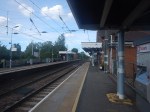

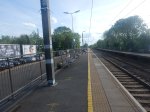

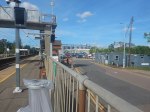
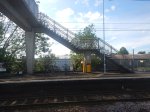
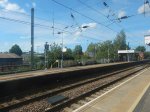
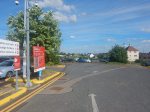
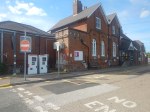


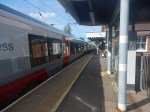
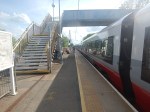
These are my thoughts.
Long Platforms
Consider.
- The platforms are long enough to take two full-length twelve-car Class 745 trains, which are nearly 240 metres long.
- I suspect the platforms can also accept a pair of five-car Class 720 trains, which would be 244 metres long.
If this is true at all Inter-City stations, this must mean that Greater Anglia can still run a full service, if they are short of Class 745 trains.
Car Parking
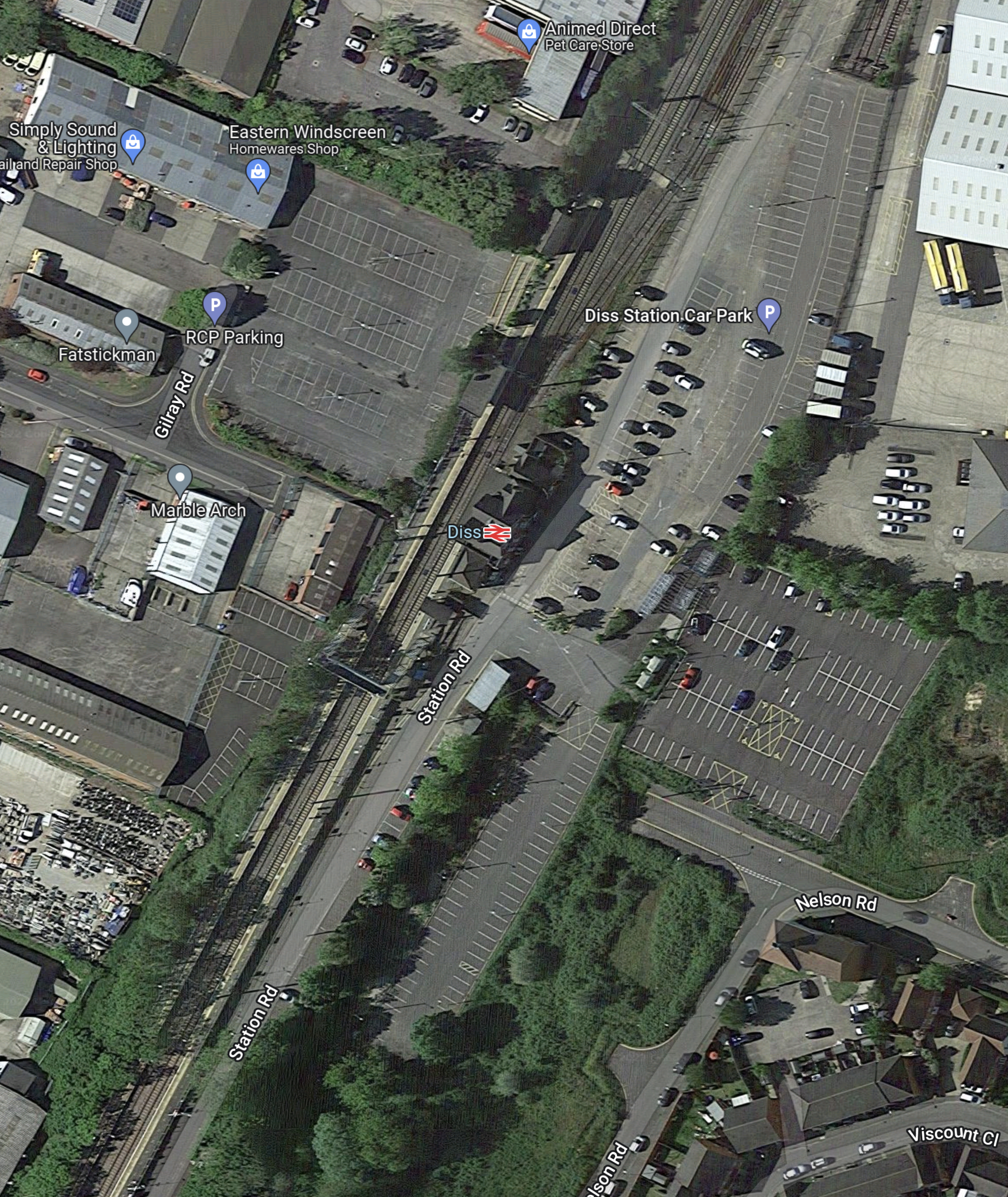
This Google Map shows the extensive car parking at Diss station.
Note.
- There are two tracks and two platforms, with the London-bound platform on the Eastern side.
- There is parking on both sides of the tracks.
- According to the National Rail web site, there appears to be 316 parking bays on the London-bound side.
- A sign in the tenth picture shows a £2.50 All-Day parking deal on the Norwich-bound platform.
- The Internet shows a lot of competitively-priced parking around the station.
Commuters to London, Ipswich or Norwich will have to cross the line in the morning or evening and there are no lifts to make that easy.
A Step-Free Bridge At Diss
Network Rail had a competition a few years ago in conjunction with RIBA to design a stylish, affordable and easy-to-install footbridge and this was the winner.
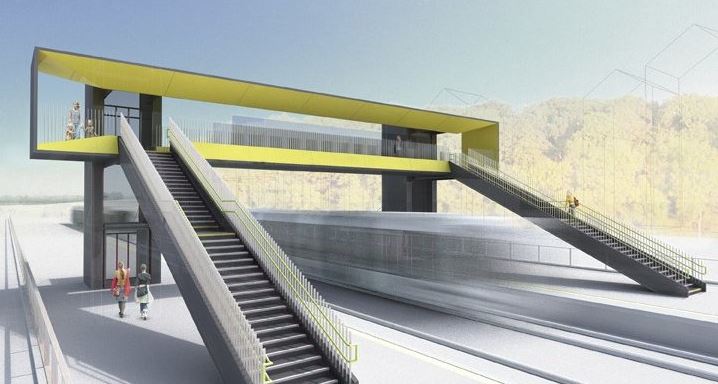
This design is also under development.
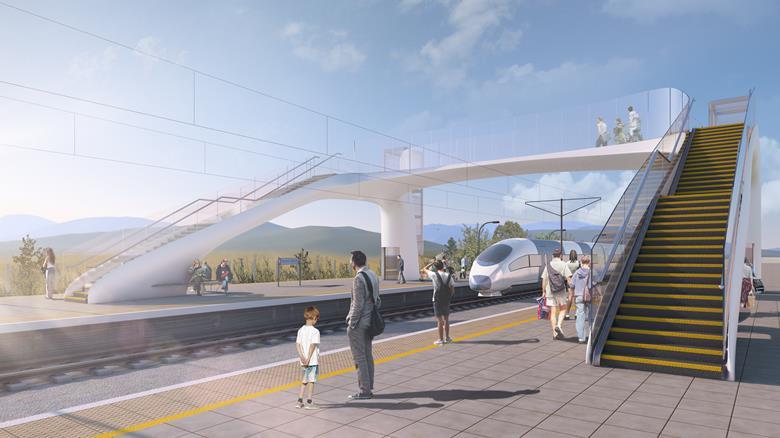
I think one of these bridges could possibly be installed at Diss station at the Northern end of the station.
- Both bridges would appear to have small footprints.
- They are designed to clear 25 KVAC overhead electrification.
- Both bridges appear to be able to be built to a flexible width. I suspect this might allow one end of the bridge could be in a car park and the other on the opposite platform.
- Both are fully step-free.
- The composite bridge might be better because of a lower weight.
- The first bridge appears to be enclosed, so would work better in Manchester.
- I suspect that both could be installed after creating an appropriately-sized concrete base on either side of the tracks, by lifting in the bridge by means of a rail-mounted crane.
It is now over three years since the first design won the Network Rail/RIBA competition. That is just too long to get a prototype bridge built and installed.
Toilets
The toilets at the station were of an excellent standard. But this is getting increasingly common these days.
Carbon Emissions Cut With The New Trains In East Anglia
The title of this post, is the same as that of this article on Rail Advent.
The article explains the various ways Greater Anglia’s new trains cut carbon emissions.
The picture shows a PowerPack car of a Class 755 train.

The article indicates that these cars are more intelligent than I thought.
- Regenerative braking can be used to power the trains systems.
- The trains have a coast mode to cut emissions.
- The article also confirms, that with time some diesel engines will be replaced with batteries.
It will be interesting to see how much carbon emissions are saved, when the trains have batteries and software developments are complete.
The picture sh
Level Boarding As A Policy
In his Informed Sources column in the August 2021 Edition of Modern Railways, Roger Ford says this.
GBR might, for example, set level boarding as a long-term policy.
By GBR, Roger means Great British Railways.
If vibrant Liverpool and sleepy East Anglia can do it, then surely all trains can be this way.
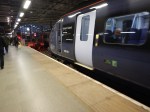
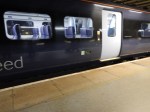
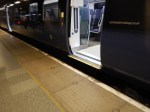
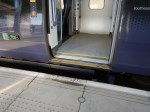
The pictures show the particularly bad example of a Class 395 train.
It is very surprising to me, that these trains didn’t have level boarding as many of the platforms they serve were new when the trains were introduced.
I blame the Treasury!
But this is what can be done.
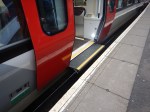

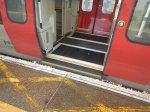
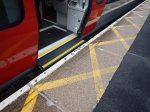
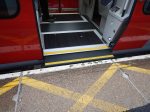
The pictures show Greater Anglia’s Class 745 and Class 755 trains.
As I’m not getting any younger, I would like to see Roger’s suggestion made the standard.
An Airport Train For A Pandemic?
These pictures show one of Greater Anglia‘s new Class 745 trains on a Stansted Express service at Hackney Downs station, on the way to Liverpool Street station.
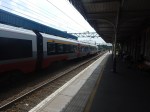
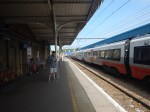
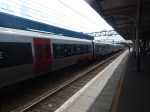
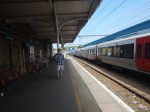
Stansted Express services do not usually use Platform 3, but it would appear that the service had started from Bishops Stortford.
The Future Of Stansted Express Trains
The previous Stansted Express trains; the more-than-adequate Class 379 trains are still waiting for a future, after being replaced.
Now because of the pandemic, the excellent Class 745 trains are running virtually empty.
Perhaps, it’s not a lucky route for trains.
Does Harlow Need An Improved Train Service?
I ask this question, because I am increasingly seeing articles like this one on My London, which is entitled The Large Town Just Outside London Desperate For A London Underground Station.
The town is Harlow.
This Google Map shows the West Anglia Main Line, as it runs through the North of the town.
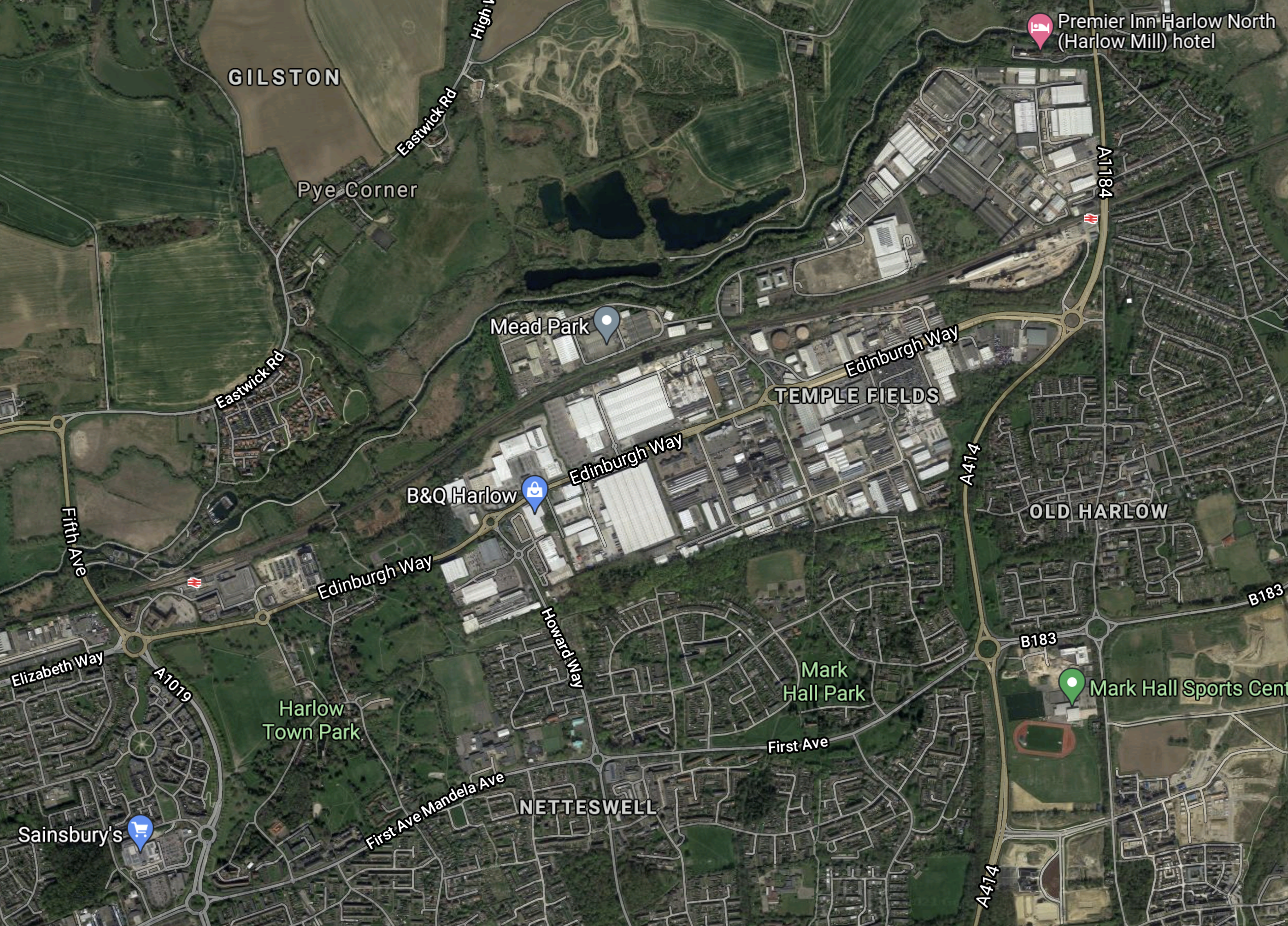
Note.
- Harlow Town station towards the South West of the map.
- Harlow Mill station towards the North East of the map.
- The West Anglia Main Line running between the two stations.
On the face of it the town seems well-served by the trains.
Harlow Town Station
This Google Map shows Harlow Town station to a larger scale.
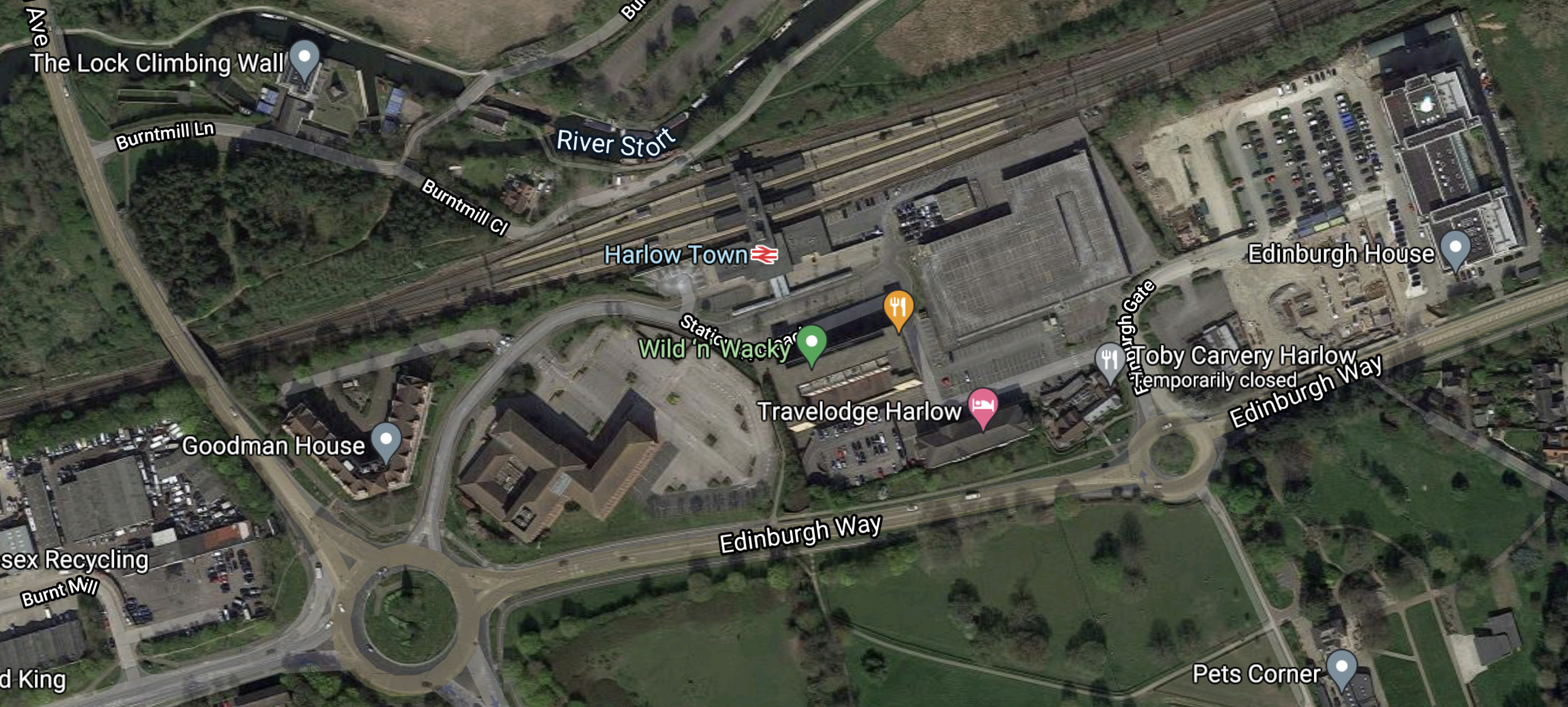
Note.
- The station has four platforms.
- The station has full step-free access.
- The station has 697 parking spaces with 18 fully accessible spaces.
The station was built in the 1950s and is a Grade II Listed building.
Train services at the station are as follows.
- Stratford and Bishops Stortford – 2 tph – via Lea Bridge, Tottenham Hale, Waltham Cross, Cheshunt, Broxbourne and Sawbridgeworth
- London Liverpool Street and Cambridge North – 1 tph – via Tottenham Hale, Cheshunt, Broxbourne, Bishop’s Stortford, Audley End, Whittlesford Parkway and Cambridge
- London Liverpool Street and Cambridge North – 1 tph – via Tottenham Hale, Cheshunt, Broxbourne, Roydon, Sawbridgeworth, Bishop’s Stortford, Stansted Mountfitchet, Elsenham, Newport, Audley End, Great Chesterford, Whittlesford Parkway, Shelford and Cambridge
- London Liverpool Street and Stansted Airport – 1 tph – via Tottenham Hale
- London Liverpool Street and Stansted Airport – 1 tph – via Tottenham Hale and Stansted Mountfitchet
Note.
- tph is trains per hour
- The Stansted services are fast services and take 29 minutes between London Liverpool Street and Harlow Town.
- The other services seem to take a few minutes longer.
- London Liverpool Street or Stratford and Tottenham Hale both get six tph.
- Bishop’s Stortford gets a four tph service from Harlow Town.
- The two Cambridge stations only get two tph.
Harlow Town station has a fairly good service, but it could probably be improved.
Harlow Mill Station
This Google Map shows Harlow Mill station to a larger scale.
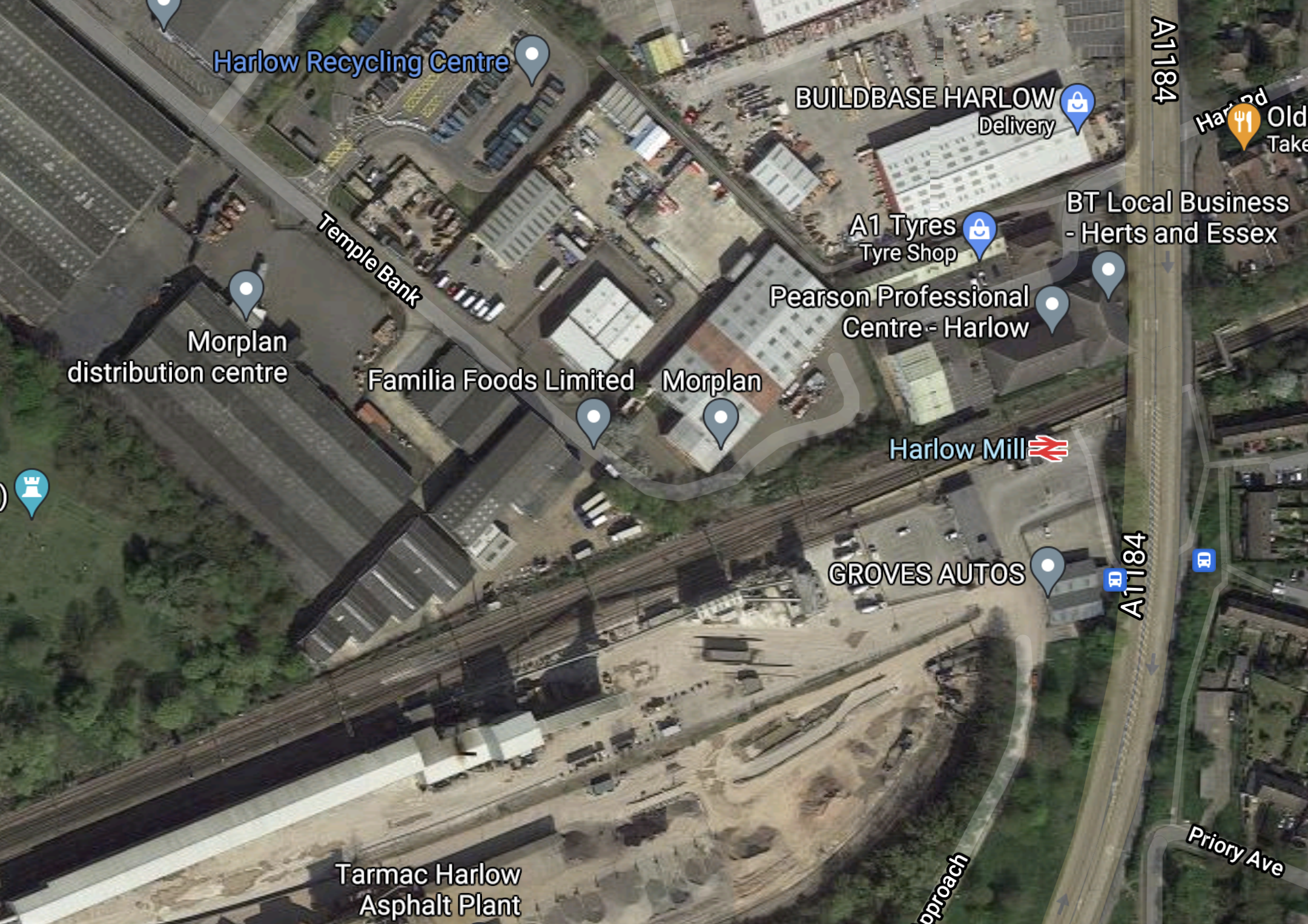
Note.
- The station has two platforms.
- The station has step-free access to the London-bound platform only.
- The station has 29 parking spaces with 1 fully accessible space.
The station was built in the 1840s and gets about 13 % of the passengers compared to Harlow Town station.
Train services at the station are as follows.
- Stratford and Bishops Stortford – 1 tph – via Lea Bridge, Tottenham Hale, Waltham Cross, Cheshunt, Broxbourne and Sawbridgeworth
- London Liverpool Street and Cambridge North – 1 tph – via Tottenham Hale, Cheshunt, Broxbourne, Roydon, Sawbridgeworth, Bishop’s Stortford, Stansted Mountfitchet, Elsenham, Newport, Audley End, Great Chesterford, Whittlesford Parkway, Shelford and Cambridge
Note.
- tph is trains per hour
- London Liverpool Street or Stratford and Tottenham Hale both get only two tph.
- Bishop’s Stortford gets two tph service from Harlow Mill.
- The two Cambridge stations only get one tph.
Unless you lived or worked nearby, I doubt you would be likely to use Harlow Mill station.
Recent And Planned Improvements
These improvements are planned and it is very unlikely they won’t happen.
Class 710 Trains
London Overground now runs new four-car Class 710 trains between London Liverpool Street and Cheshunt.
- Each has 189 seats and can accept 489 standing passengers.
- Busy services to Cheshunt will probably are pair of trains.
- There are four tph between Cheshunt and London.
- Will the trains shave a few minutes from journey times?
This massive increase in capacity and train quality must attract some passengers to change to and from the London Overground at Cheshunt.
Class 720 Trains
Greater Anglia has 133 new five-car Class 720 trains on order.
- Each has 540 seats and can accept 145 standing passengers.
- They are 100 mph trains.
- Busy services through Harlow will probably be a pair of these trains.
These new trains will be a massive increase in capacity and should attract more passengers to the route.
Class 745 Trains
Greater Anglia has recently introduced ten new twelve-car Class 745 trains on Stansted Express services.
- Each has 767 seats.
- They are 100 mph trains.
- They run a two tph service between Harlow Town and London Liverpool Street station and Stansted Airport.
These new trains should attract more passengers to the route.
Crossrail
Services through Harlow will connect to Crossrail at both London Liverpool Street and Stratford.
Will this mean that some passengers will switch from the Victoria Line to Crossrail for their onward journeys?
- Crossrail will have more capacity than the Victoria Line.
- Bond Street, Canary Wharf, Heathrow, Paddington and West London will be easier by Crossrail.
- Victoria and Waterloo will probably be easier by the Victoria Line.
- London Liverpool Street station’s new connection to the Northern Line will give easier access to parts of South London.
- London Liverpool Street station will have much improved step-free connections to all London Underground lines.
Crossrail will certainly change the way many people travel between Harlow and London.
Four Lines Modernisation
This page on the Transport for London web site explains the Four Lines Modernisation. This is the first paragraph.
We’re transforming the Circle, District, Hammersmith & City and Metropolitan lines. When the work is done we’ll be able to run trains more frequently and reliably to make journeys faster and more comfortable.
The project should increase Peak Hour capacity by 33 %.
This will benefit those who change trains at London Liverpool Street between the West Anglia Main Line and the Circle and Metropolitan Lines.
Possible Improvements
These are possible improvements that may happen.
Crossrail 2
It is unlikely, that a start will be made on Crossrail 2 in the near future.
Victoria Line Improvements
The Victoria Line will continue to do, what it has done reliability for over fifty years.
But there could be improvements.
- Walthamstow Central station will have an additional step-free entrance.
- Highbury and Islington station will become a full step-free station.
- Oxford Circus station will be expanded and become a full step-free station.
I also suspect that engineers will find a way to increase the frequency to forty tph.
Four Tracks On The West Anglia Main Line
There are two reasons for four-tracking sections of the West Anglia Main Line.
- To separate Crossrail 2 trains from fast expresses to Stansted and Cambridge.
- To speed up services to and from Stansted Airport.
However four-tracking the route between Tottenham Hale and Broxbourne stations would probably be very beneficial.
- Stansted Airport and Cambridge services could be speeded up.
- Extra services could be run on the West Anglia Main Line.
- It could make it easier to extend the Overground from Cheshunt.
Four-tracking will be needed for Crossrail 2, so there is surely the possibility, that it could be done earlier to bring benefits to those living along the Lea Valley.
ERTMS Signalling On The West Anglia Main Line
ERTMS Signalling could speed up services and increase their number on the West Anglia Main Line.
It might also enable four-tracking, which would be very disruptive to both train services and road traffic to be delayed.
Station Improvements On The West Anglia Main Line
The stations between London Liverpool Street and Cambridge are a poor bunch with only Tottenham Hale, Northumberland Park, Meridian Water, Waltham Cross, Broxbourne, Harlow Town, Bishop’s Stortford and Audley End having full step-free access.
Some of the other stations need refurbishment and step-free access.
As step-free access will be needed for Crossrail 2, why not setup a rolling program of station improvements.
Level Crossings On The West Anglia Main Line
There are four level crossings on the route to the South of Broxbourne, including three at Cheshunt, Enfield Lock and Brimsdown stations.
They all need to be removed for safety reasons.
New Trains And Capacity
The new trains being rolled out by Greater Anglia and the London Overground will certainly have effects on the services on the West Anglia Main Line.
- The better performance could speed up services by a few minutes.
- The capacity increase on the new trains should be welcome.
- The trains will be of better quality than those they replace.
I also wonder, if the better quality of the trains and their facilities will surely attract more passengers. I suspect the train companies hope so!
Extending The London Overground
This map from cartometro.com shows Cheshunt station and Cheshunt Junction just to the South.
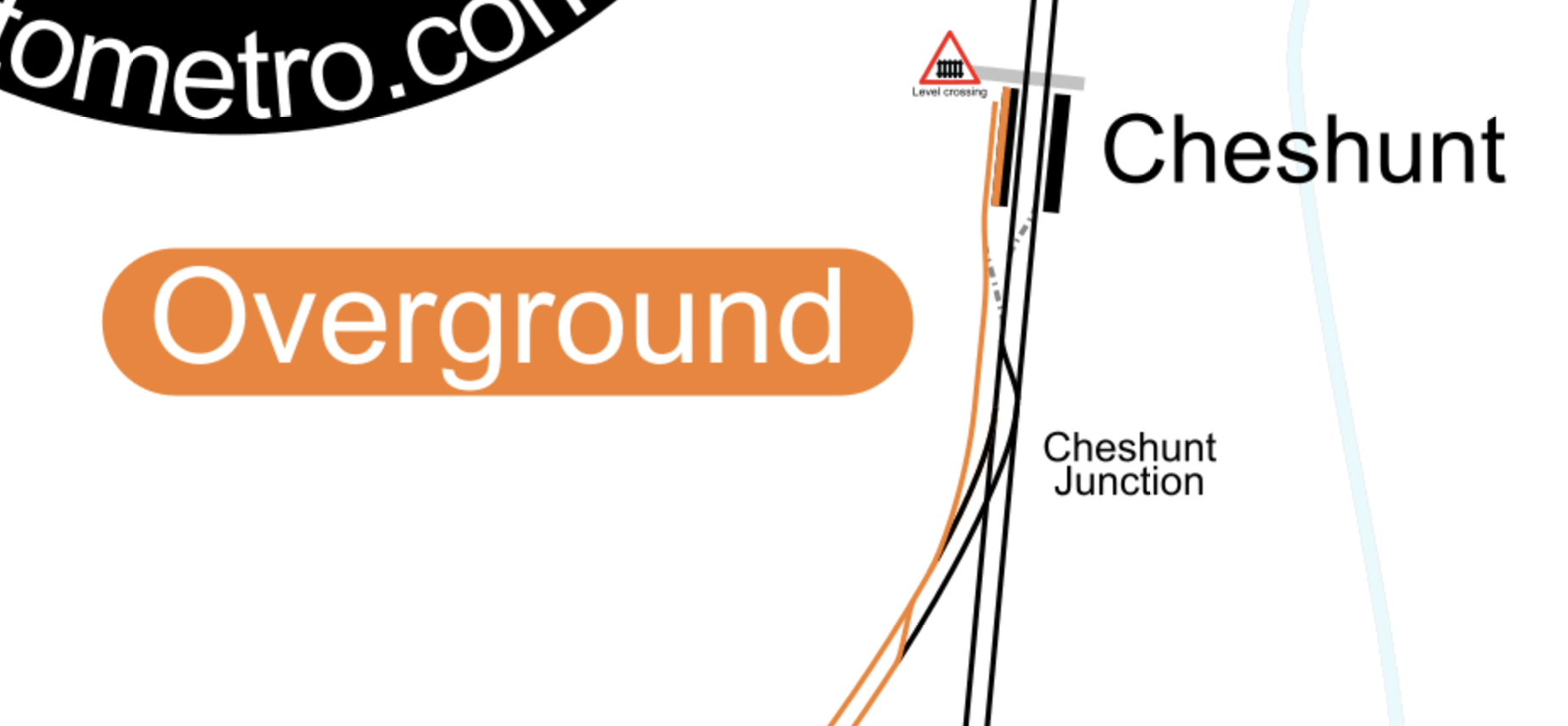
Note.
- The two platforms on the West Anglia Main Line and the single bay platform for the London Overground.
- The level crossing to the North of Cheshunt station.
- The comprehensive Cheshunt Junction which trains to go between the Southbury Loop and the West Anglia Main Line.
Cheshunt Junction is occasionally used by Greater Anglia trains to access the Southbury Loop.
It certainly seems to me, that the Overground could connect to the West Anglia Main Line.
- All trains from London going to the North of Cheshunt could use Platform 2.
- All trains to London coming from the North of Cheshunt could use Platform 1.
- The bay Platform 3 would still be available to turn local trains on the Southbury Loop.
- An extra crossover could probably be inserted to allow trains from London on the West Anglia Main Line to use Platform 3.
London Overground trains could run to a terminal further North.
Trains Between Cheshunt And London
It is worth looking at the number of trains between Cheshunt and London.
- Greater Anglia -2 tph – London Liverpool Street and Hertford East via West Anglia Main Line
- Greater Anglia – 2 tph – Stratford and Bishop’s Stortford via West Anglia Main Line
- Greater Anglia – 2 tph – London Liverpool Street and Cambridge North via West Anglia Main Line
- Greater Anglia – 4 tph – London Liverpool Street and Stansted Airport via West Anglia Main Line
- London Overground – 4 tph – London Liverpool Street and Cheshunt via the Southbury Loop
This means that the West Anglia Main Line has 10 tph and the Southbury Loop has 4 tph.
This suggests possibilities.
- Move some services from the West Anglia Main Line to the Southbury Loop.
- Extend some or all of the London Overground trains to the North of Cheshunt.
- Stations like Bishop’s Stortford, Broxbourne, Harlow, Hertford East and Ware could get extra services to London.
- The new services would connect to extra stations without changing trains.
Very little new infrastructure would be required.
Bishop’s Stortford Station As A London Overground Destination
Bishop’s Stortford station has these trains to and from London.
- Greater Anglia – 2 tph – Stratford and Bishop’s Stortford
- Greater Anglia – 2 tph – London Liverpool Street and Cambridge North
- Greater Anglia – 2 tph – London Liverpool Street and Stansted Airport
Consider.
- Bishop’s Stortford station could probably easily handle up to an extra two tph.
- London Overground’s Class 710 trains only have an operating speed of only 75 mph.
- The trains may need a speed upgrade to serve Bishop’s Stortford, as their speed could slow the Cambridge and Stansted Airport expresses.
If the London Overground services ran to Bishop’s Stortford station, all the smaller stations South of Bishop’s Stortford, could travel to and from Stansted Airport with a single change.
Bishop’s Stortford station may be a possibility, as a destination of two tph on the London Overground route to London.
Broxbourne Station As A London Overground Destination
Broxbourne station has these trains to and from London.
- Greater Anglia -2 tph – London Liverpool Street and Hertford East
- Greater Anglia – 2 tph – Stratford and Bishop’s Stortford
- Greater Anglia – 2 tph – London Liverpool Street and Cambridge North
Consider.
- Broxbourne station could probably easily handle up to an extra two tph.
- As Broxbourne is only 3.2 miles and six minutes to the North of Cheshunt, the 75 mph speed of the London Overground’s Class 710 trains may not be a problem.
Broxbourne station may be a possibility, as a destination of up to two tph on the London Overground route to London.
Harlow Town Station As A London Overground Destination
Harlow Town station has these trains to and from London.
- Greater Anglia – 2 tph – Stratford and Bishop’s Stortford
- Greater Anglia – 2 tph – London Liverpool Street and Cambridge North
- Greater Anglia – 2 tph – London Liverpool Street and Stansted Airport
Consider.
- Harlow Town station could probably easilyhandle up to an extra four tph.
- If one is needed there would appear to be space for a turnback facility or an extra platform.
- As Harlow Town is only 5.4 miles and eight minutes to the North of Cheshunt, the 75 mph speed of the London Overground’s Class 710 trains may not be a problem.
If the London Overground services ran to Harlow Town station, all the smaller stations South of Harlow Town, could travel to and from Stansted Airport with a single change.
Harlow Town station may be a possibility, as a destination of up to four tph on the London Overground route to London.
Hertford East Station As A London Overground Destination
Hertford East station has these trains to and from London.
- Greater Anglia -2 tph – London Liverpool Street and Hertford East
- There is an extra tph in the Peak.
Consider.
- Hertford East station has platforms long enough for eight-car trains and may need modification to accommodate a pair of Greater Anglia’s Class 720 trains.
- Ware station would need to be remodelled to increase frequency above three tph.
- As the route from Broxbourne is on a branch line, the 75 mph speed of the London Overground’s Class 710 trains may not be a problem.
Hertford East station may be a possibility, as a destination of up to two tph on the London Overground route to London.
Conclusion
I think the best two destinations of the London Overground service to the North of Cheshunt would be Harlow and Hertford East.
- Trains could terminate at Harlow Town station to connect with Stansted Express and Cambridge trains.
- It appears that the slightly shorter Class 710 trains may have advantages when using the short platforms at Hertford East station.
Perhaps each destination should receive two tph.
- Harlow Town would be connected to the Overground.
- Passengers using stations between Hackney Downs and Cheshunt on the Southbury Loop would change at Harlow Town to and from Cambridge and Stansted Airport.
- But the biggest benefit would be that two paths on the West Anglia Main Line would be released, as the two tph to Hertford East would be using the Southbury Loop.
I feel there are possibilities to increase the number of trains on the West Anglia Main Line without adding expensive extra tracks.
A Trip To Stansted Airport In A Class 745/1 Train
This lunchtime a friend was passing through Stansted Airport on the way to Glasgow. As we hadn’t seen each other for a couple of years, we had decided to have a coffee at the Airport.
I took these pictures on the trip.
Property Development At Tottenham Hale
There is a lot of development going on around Tottenham Hale station.

There will be a lot more to come.
The New Class 745/1 Train
I travelled in a new Class 745/1 train, which are replacing the Class 379 trains.
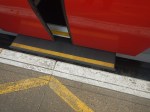
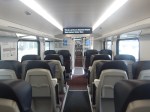
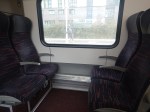
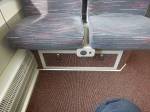

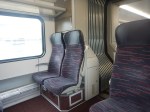
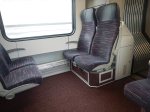
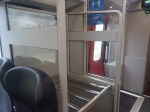
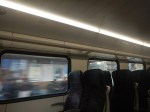
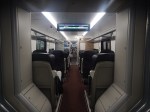
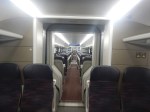

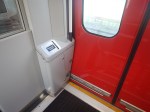
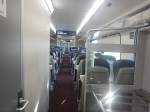
Note.
- The trains have twelve articulated sections.
- The trains are 236.5 metres long.
- Only 11-car Class 390 trains or a pair of five-car Class 80x trains are longer.
- The train has767 seats at a density of 3.24 seats/metre
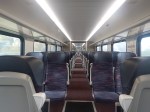
This picture through the train emphasises the train’s length.
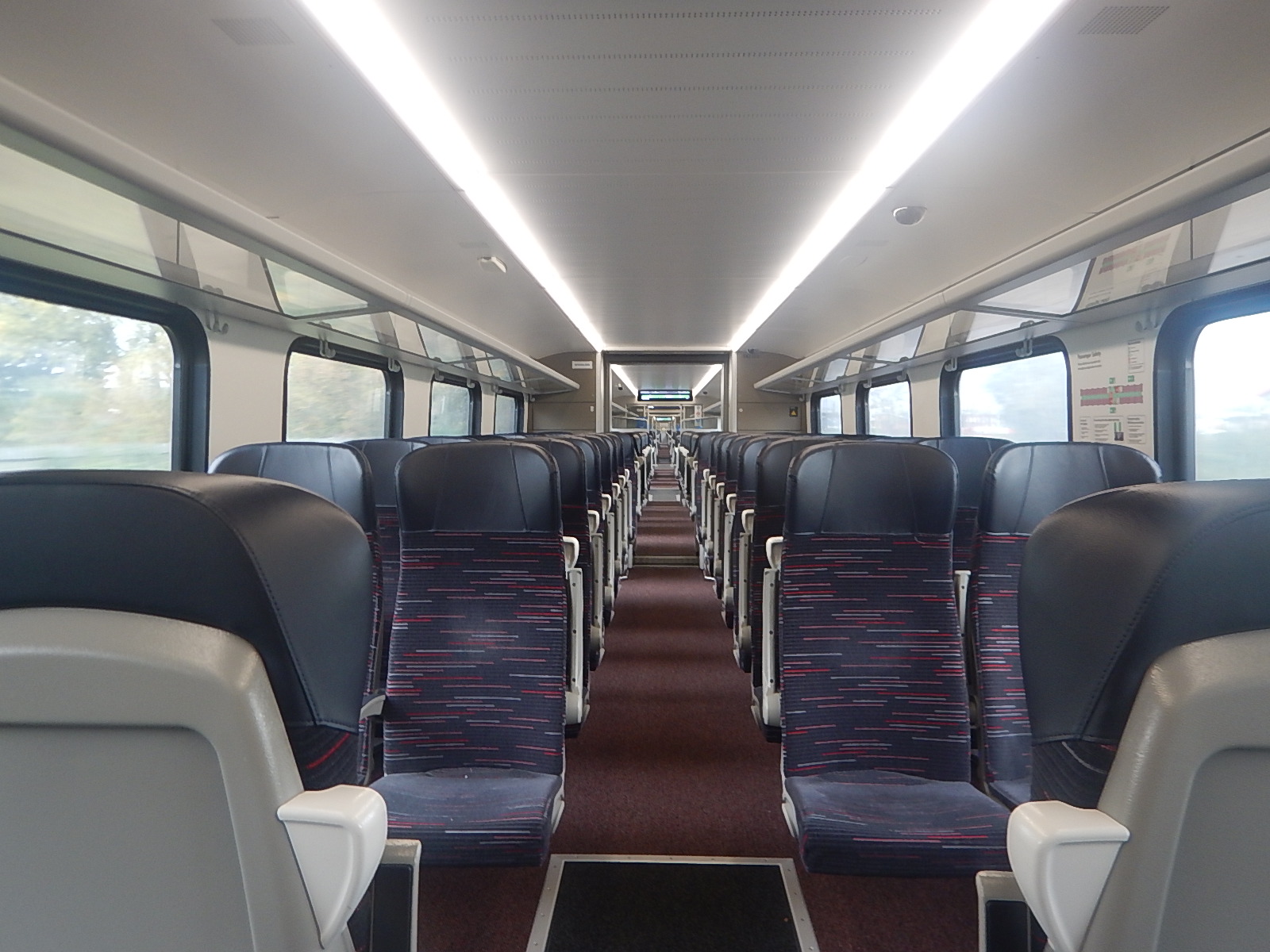
Note.
- There are some light slops, but no steps.
- A coffee and snack trolley would be possible.
- The overhead racks are generously-sized.
- Some seats are higher and you step up into them, as they are over the wheels.
The ride was also excellent.
Class 745/1 Train Performance
I made these observations.
- My train stopped at Tottenham Hale, Harlow Town, Bishops Stortford and Stansted Mountfitchet.
- The train was at 80 mph most of the time on the West Anglia Main Line.
- The maximum speed if a Class 745 train is 100 mph.
- The operating speed of the West Anglia Main Line is given on Wikipedia as 100 mph maximum.
- The train was didn’t exceed 70 mph on the Stansted Branch.
- Between Stansted Airport and Stansted Mountfitchet, the train accelerated to 70 mph and then braked at the right time to stop precisely in the following station.
At all times, I felt the train was running very easily. But then there are 125 mph members of the Flirt family running in Norway.
I can see these trains cutting the current 49 minutes between Liverpool Street and Stansted Airport.
Other times to London’s airports are as follows.
- London Bridge – Gatwick – Thameslink – 48 minutes.
- Victoria – Gatwick – Gatwick Express – 30 minutes.
- Victoria – Gatwick – Southern – 32 minutes.
- Paddington – Heathrow Central – Heathrow Express – 15 minutes
- Paddington – Heathrow Central – Crossrail – 28 minutes
With the exception of Heathrow Express, the new Stansted Express doesn’t stand up too badly.
Rye House Gas-Fired Power Station
One of the landmarks you pass on the West Anglia Main Line is Rye House power station.


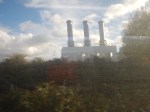

The weather wasn’t good, but the pictures give an impression of the 715 MW gas-fired power station.
This Google Map shows the power station.
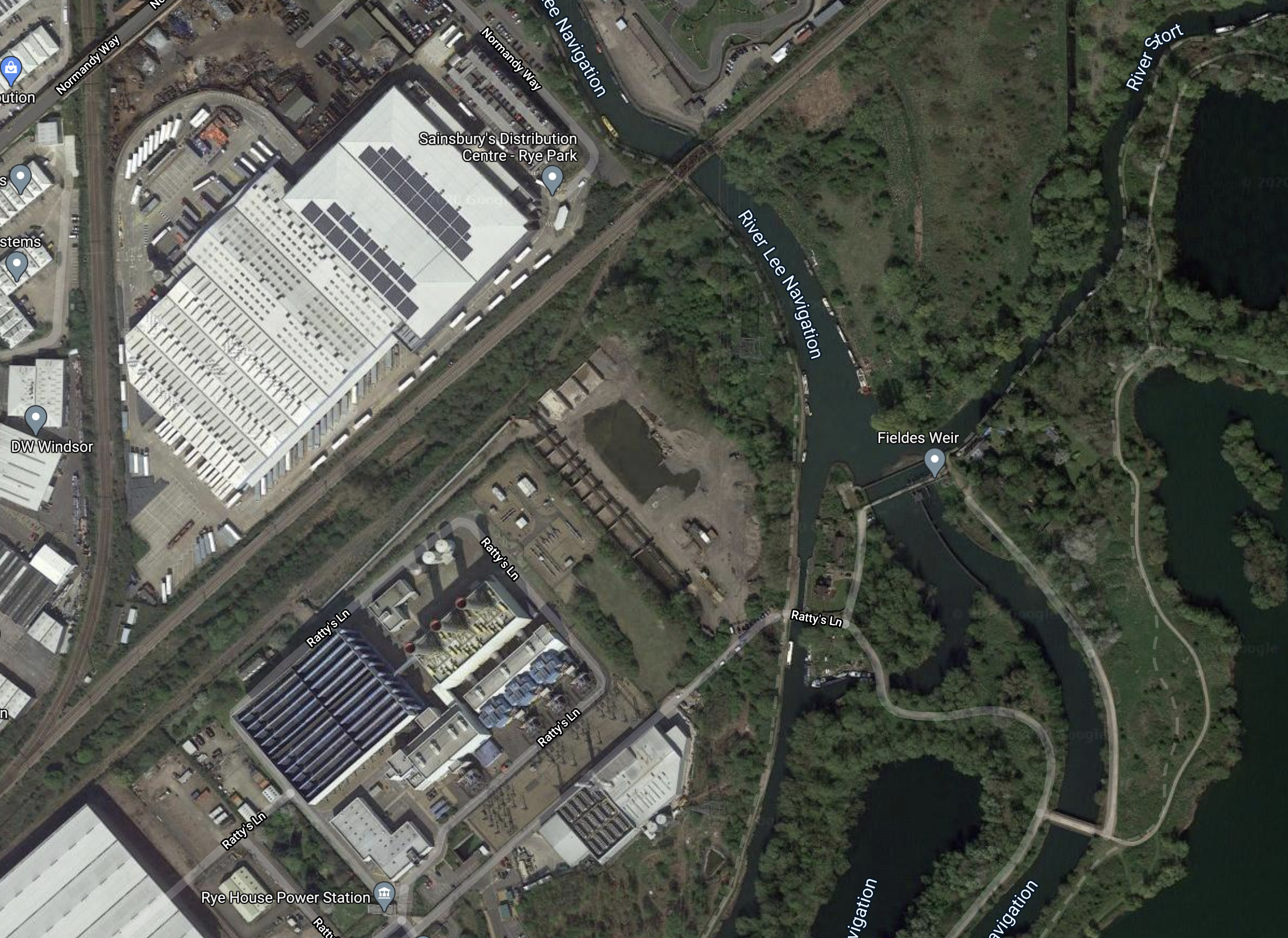
Note.
- The West Anglia Main Line running SW-NE across the map.
- Sainsbury’s distribution centre to the North of the railway.
- The power station to the South of the railway.
- The grid-like structure is an air-cooled condenser.
But where is the station’s carbon capture equipment?
The Lea Valley is London’s greenhouse, as this second Google Map shows.
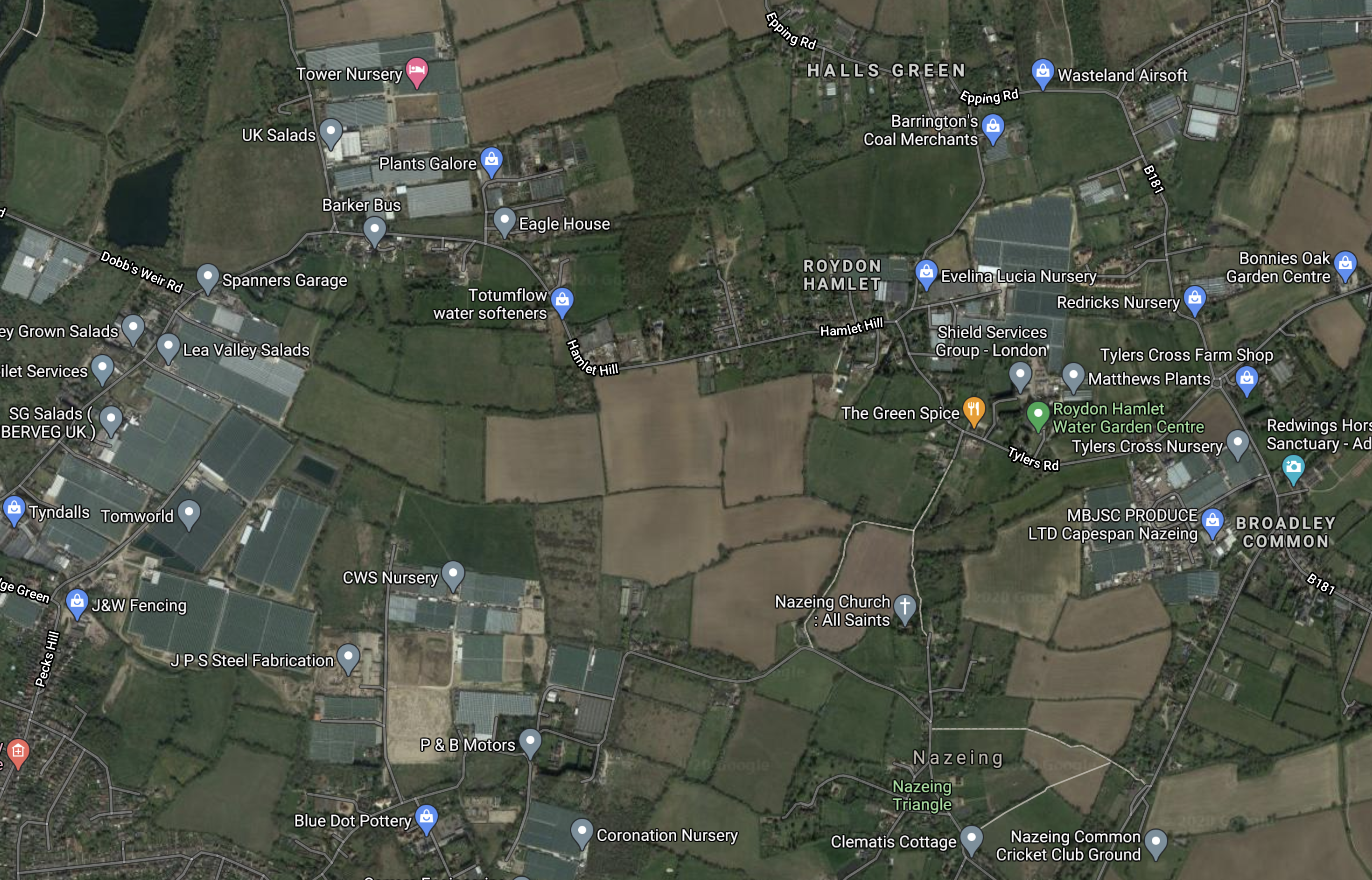
Note all the nurseries and salad producers on the map, which is a mile or so to the South East of the power station.
Drax Group used to pipe carbon dioxide to salad producers from Drax power station, so why aren’t they doing it here?
Changing At Tottenham Hale Station
This set of pictures show my change at Tottenham Hale station, when I returned to London.
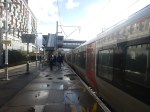
Note.
- The step-free entry to the Class 745 train.
- The Stansted Express used Platform 3.
- It was then followed in Platform 3, by a train to Liverpool Street via Hackney Downs station.
- At the same time, a train arrived in Platform 4, which went to Stratford via Lea Bridge station.
- I took the Stratford train to Lea Bridge station.
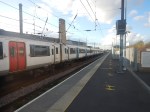
- The train was a Class 379 train, which has been replaced by the Class 745 train.
It looks like all Stansted Expresses have an interchange to trains to Hackney Downs and Stratford after a few minutes.
This sums up, what travellers can do at Tottenham Hale station, after arriving on a Stansted Express.
- Stay on the Stansted Express for Liverpool Street.
- Wait for the next train to Hackney Downs and Liverpool Street, on the same platform.
- Wait for the train to Stratford, on the other side of the same platform.
- Catch the Victoria Line, as passengers have done for decades.
- There are also lots of buses and taxis.
When Crossrail opens, there will be connections at Stratford and Liverpool Street.
Lea Bridge Station
I took these pictures at Lea Bridge station.
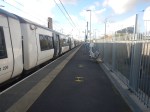
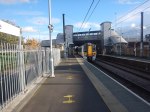
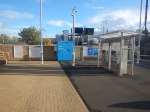
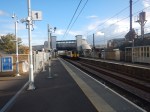
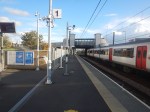
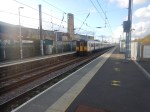
Note, that not all trains on this route are Class 379 trains.
Property Development At Lea Bridge Station
There is a lot of development going on around Lea Bridge station.




As at Tottenham Hale and Stratford, there will probably be more to come.
Lea Bridge Road In Mid Afternoon
As I just mixed a 56 bus home, I walk about half-a-mile to the next bus stop.
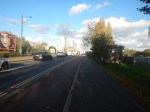

It was not a pleasant walk!
 The Anonymous Widower