When Will Energy Storage Funds Take The Leap To New Technology?
This article on the Motley Fool is entitled 3 UK Dividend Shares To Buy Yielding 6%.
This is a paragraph from the article.
The first company on my list is the Gore Street Energy Storage Fund (LSE: GSF). With a dividend yield of just over 6%, at the time of writing, I think this company looks incredibly attractive as an income investment. It is also an excellent way for me to build exposure to the green energy industry.
Just as everybody has a fridge in their house to stop food being wasted, electricity networks with a lot of intermittent resources like wind and solar, needs a device to store electricity, so that it isn’t wasted.
Gore Street Energy Storage Fund is being very safe and conservative at the current time, often using batteries from one of Elon Musk’s companies.
You can’t fault that, but they are only barely making a dent in the amount of batteries that will be needed.
If we are generating tens of GW of wind energy, then we need batteries at the GWh level, whereas at the moment a typical battery in Gore Street’s portfolio has only an output of a few megawatts. They don’t state the capacity in MWh.
There is this statement on their web site, about the technology they use.
Although the projects comprising the Seed Portfolio utilise lithium-ion batteries and much of the pipeline of investments identified by the Company are also expected to utilise lithium-ion batteries, the Company is generally agnostic about which technology it utilises in its energy storage projects. The Company does not presently see any energy storage technology which is a viable alternative to lithium-ion batteries. However, there are a number of technologies which are being researched which if successfully commercialised, could prove over time more favourable and the Company will closely monitor such developing technologies.
They say they are agnostic about technology and are looking around, but they are sticking with lithium-ion technology.
That technology works, is safe and gives a good return.
But they are at least thinking about moving to new technology.
In the rail industry, it is common for rail leasing companies to get together with train manufacturers or remanufacturers to develop new trains.
As an example, Eversholt Rail and Alstom formed a partnership to develop a hydrogen-powered train for the UK, which I wrote about in Alstom And Eversholt Rail Sign An Agreement For The UK’s First Ever Brand-New Hydrogen Train Fleet.
Worldwide, there are probably upwards of a dozen very promising energy storage technologies, so I am very surprised that energy storage funds, like Gore Street and Gresham House have not announced any development deals.
Conclusion
Energy storage funds could benefit from using some of the financing methods used by rolling stock leasing companies.
Alstom Hydrogen Aventras And The Uckfield Branch
In Alstom And Eversholt Rail Sign An Agreement For The UK’s First Ever Brand-New Hydrogen Train Fleet, I give my thoughts on Alstom’s new hydrogen train, which I have called the Alstom Hydrogen Aventra.
One possible route for the trains could be the Uckfield Branch, which has an hourly service from London Bridge via East Croydon and Oxted stations?
- The route is forty-six miles long, with the Northernmost twenty-one miles electrified with 750 VDC third-rail electrification.
- On each trip, the train would need to run for fifty miles without electrification.
- There are seven stops on the route.
- The platforms on the Uckfield Branch can handle a 240 metre train.
- Trains take around three hours for the round trip.
- Each train probably does around five round trips per day.
So would Alstom Hydrogen Aventras be able to work the route?
- The length of a three-car Alstom Hydrogen Aventra is probably around 72 metres.
- Three Alstom Hydrogen Aventras working together would be 216 metres.
- Aventras can be configured to work on 750 VDC third rail electrification.
- The capacity of a nine-car formation of Alstom Hydrogen Aventra would be similar to that of a ten-car Electrostar, which has shorter cars.
Three Alstom Hydrogen Aventra trains working together could seem to be a possible solution for the route.
These are my thoughts.
The Required Range
If each train has to do five round trips, with each needing fifty miles on hydrogen, the trains would need a range in excess of 250 miles, whilst running on hydrogen.
Refuelling With Hydrogen
This would probably be done at a depot setup to service the hydrogen trains, where they would be stabled at night.
I doubt that London Bridge or Uckfield stations would be suitable places to refuel
The Number Of Trains
In Battery Electrostars And The Uckfield Branch, I estimated that three ten- or twelve-car trains would be needed to run an hourly service. Running half-hourly would need six trains.
As each nine-car train would need three Alstom Hydrogen Aventras, an hourly service would need a total of nine and a half-hourly service would need eighteen individual trains.
I suspect that this would not be a cost effective way of using the trains, as a lot of trains would need to refuelled every day.
Conclusion
I am not saying that Alstom Hydrogen Aventras couldn’t work the Uckfield Branch, but I’m sure there are are better ways to decarbonise the route.
Alstom And Eversholt Rail Sign An Agreement For The UK’s First Ever Brand-New Hydrogen Train Fleet
The title of this post, is the same as that of this press release from Alstom.
This is the first two paragraphs.
Alstom, Britain’s leading train manufacturer and maintenance provider, and Eversholt Rail, leading British train owner and financier, have today announced a Memorandum of Understanding aimed at delivering the UK’s first ever brand-new hydrogen train fleet.
The two companies have agreed to work together, sharing technical and commercial information necessary for Alstom to design, build, commission and support a fleet of ten three-car hydrogen multiple units (HMUs). These will be built by Alstom in Britain. The new HMU fleet will be based on the latest evolution of the Alstom Aventra platform and the intention is that final contracts for the fleet will be signed in early 2022.
This is an Alstom visualisation of the train.
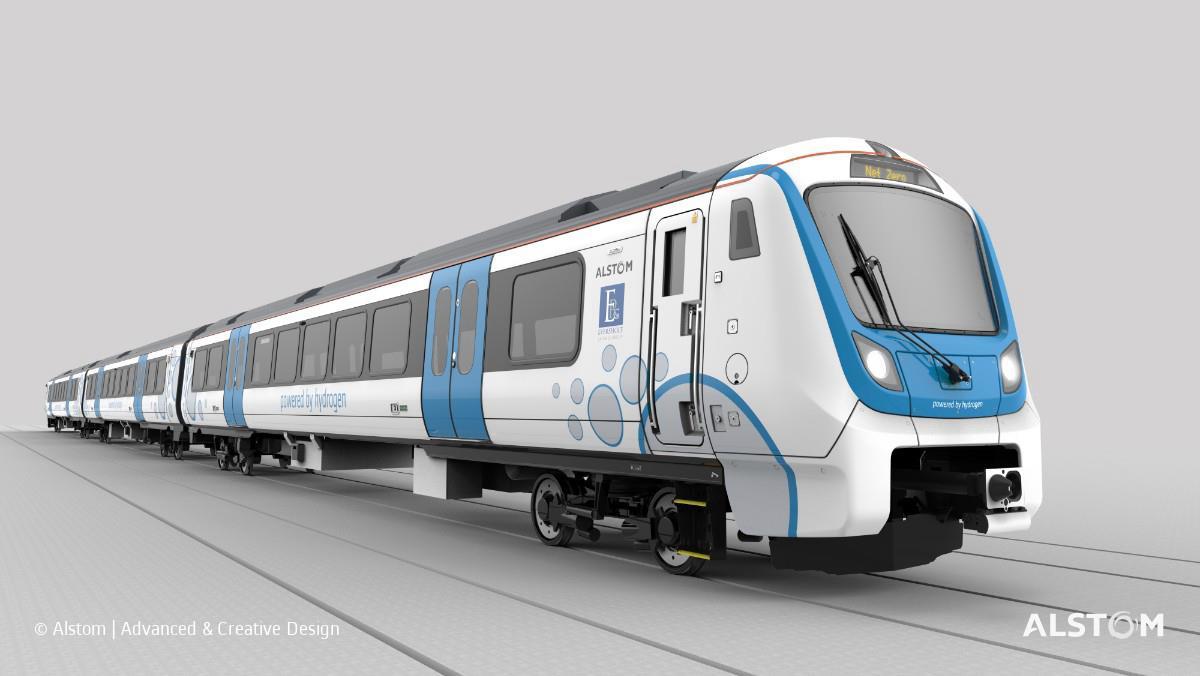
The first thing I notice is that the train doesn’t have the same aerodynamic nose as this current Class 710 train, which is one of the London Overground’s Aventras.
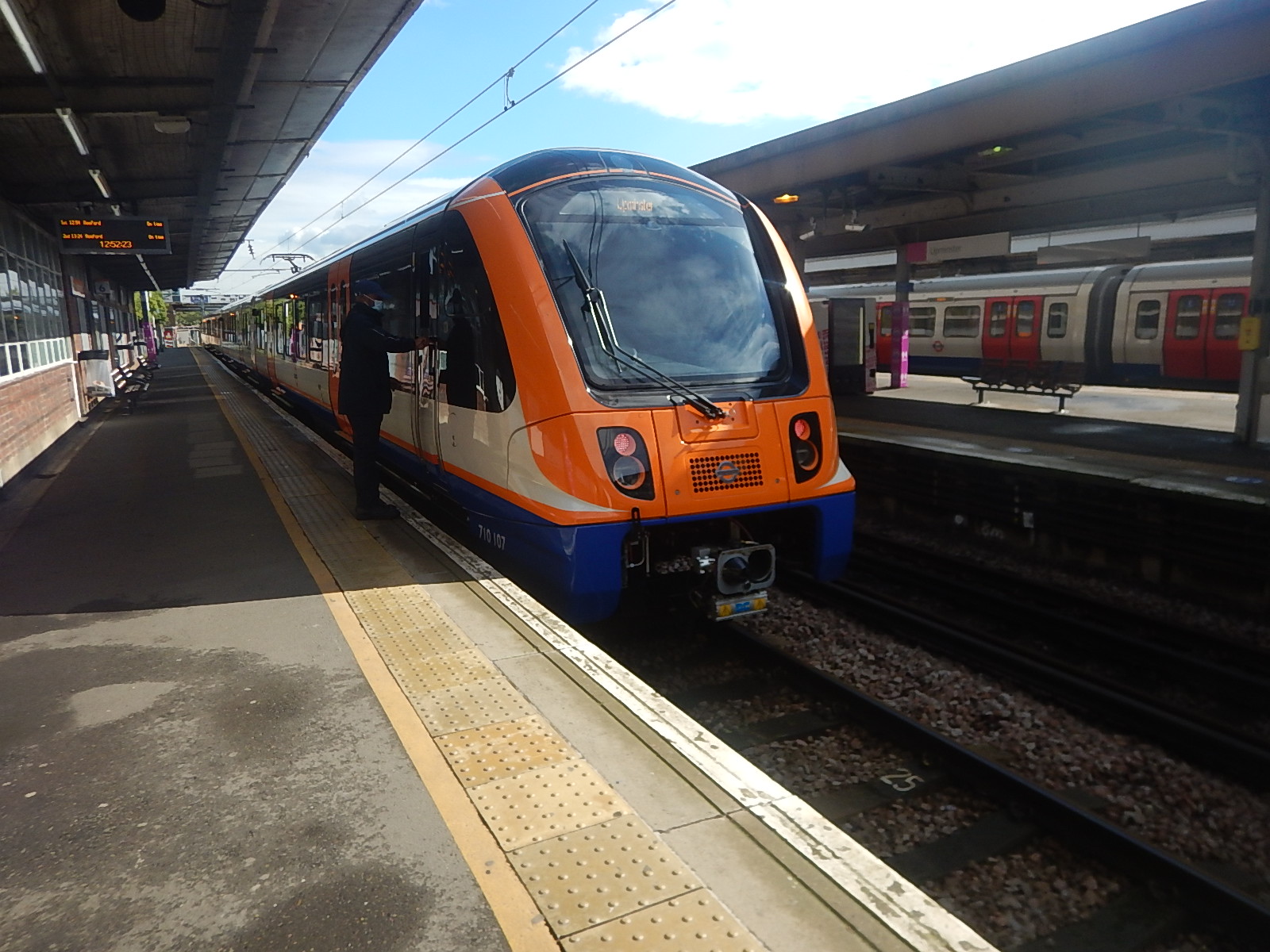
Note how the lights, coupler position and the front-end structure are all different.
These are my further thoughts on the design.
The Aventra’s Traction System
In this article in Global Rail News from 2011, which is entitled Bombardier’s AVENTRA – A new era in train performance, gives some details of the Aventra’s electrical systems. This is said.
AVENTRA can run on both 25kV AC and 750V DC power – the high-efficiency transformers being another area where a heavier component was chosen because, in the long term, it’s cheaper to run. Pairs of cars will run off a common power bus with a converter on one car powering both. The other car can be fitted with power storage devices such as super-capacitors or Lithium-ion batteries if required. The intention is that every car will be powered although trailer cars will be available.
Unlike today’s commuter trains, AVENTRA will also shut down fully at night. It will be ‘woken up’ by remote control before the driver arrives for the first shift
This was published over ten years ago, so I suspect Bombardier (or now Alstom) have refined the concept.
Bombardier have not announced that any of their trains have energy storage, but I have my suspicions, that both the Class 345 and Class 710 Aventra trains use super-capacitors or lithium-ion batteries, as part of their traction system design.
- I was told by a Bombardier driver-trainer that the Class 345 trains have an emergency power supply. When I said “Batteries?”, He gave a knowing smile.
- From the feel of riding on Class 710 trains, as a Control Engineer, I suspect there is a battery or supercapacitor in the drive system to give a smoother ride.
I also feel that the Aventra has been designed, so that it can accept power from a large variety of sources, which charge the battery, that ultimately drives the train.
The Formation Of A Three-Car Aventra
The only three-car Aventra is the Class 730/0 train.
I have not seen one of one of these trains in the metal and the formation can’t be found on the Internet. But Wikipedia does show the pantograph on the middle car.
In The Formation Of A Class 710 Train, I said this.
Here is the formation of the train.
DMS+PMS(W)+MS1+DMS
The plates on the individual cars are as follows.
DMS – Driving Motored Standard
-
- Weight – 43.5 tonnes
- Length – 21.45 metres
- Width 2.78 metres
- Seats – 43
The two DMS cars would appear to be identical.
PMS  -Pantograph Motored Standard
-
- Weight – 38.5 tonnes
- Length – 19.99 metres
- Width 2.78 metres
- Seats – 51
The signifies a wheelchair space.
MS1 – Motored Standard
-
- Weight – 32.3 tonnes
- Length – 19.99 metres
- Width 2.78 metres
- Seats – 52
It is similar in size to the PMS car, but has an extra seat.
So could the formation of a three-car Aventra be?
DMS+PMS(W)+DMS
I have just removed the MS1 car.
This would mean that a three-car Aventra has the following dimensions and capacity.
- Weight – 125.5 tonnes
- Length – 62.89 metres
- Seats – 137
There will probably be a difference between these figures and those of a three-car Class 730 train, as those trains have end-gangways.
Could All The Hydrogen Gubbins Fit Underneath The Train?
These pictures show the space underneath a Class 710 train.
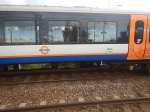
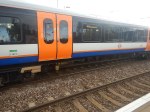
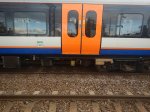
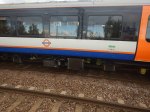
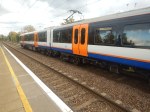
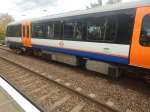
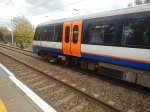
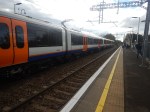
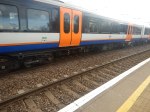
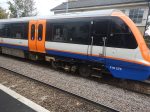
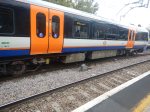
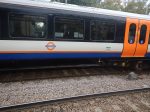

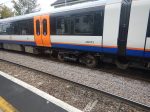
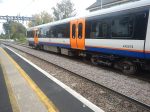
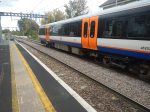
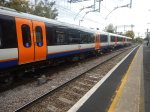
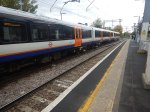
If you also look at Alstom’s visualisation of their Hydrogen Aventra on this post, there would appear to be lots of space under the train.
It should also be noted that Birmingham University’s engineers have managed to put all of the hydrogen gubbins underneath the floor of Porterbrook’s Class 799 train.
Looking at my pictures, you can see the following.
- The two DMS (Driving Motored Standard) cars have large boxes underneath
- The MS1(Motored Standard) car is fairly clear underneath. But this will probably not be there in a three-car train.
- The PMS (Pantograph Motored Standard) car has some space underneath.
If more space needs to be created, I suspect that the cars can be lengthened, between the bogies. The Class 710 trains have twenty metre intermediate cars, whereas some versions have twenty-four metre cars.
I believe that Aventras have been designed, so that various power sources could be installed under the floor.
When the Aventra was designed, over ten years ago, these could have included.
- A diesel generator and all the fuel tanks and cooling systems.
- A battery or other energy storage system.
Since then two other suitable power sources have been developed.
- Rolls-Royce, Honeywell and others have developed small and powerful gas-turbine generators.
- Ballard Power Systems and others have developed hydrogen fuel cell generators.
If you look at the proportions of the Alstom hydrogen train and the pictures of Class 710 trains, I feel that the Alstom train could have the longer twenty-four metre cars.
It may be a tight fit compared to creating the Alstom Coradia iLint hydrogen train, but I would feel it is possible to install a fuel cell or cells, the required cooling and the hydrogen tanks, having seen cutaway drawings of hydrogen-powered double-deck buses on the Wrightbus web site.
Interestingly, the Alstom press release doesn’t mention fuel cells, so could the train be powered by a small gas turbine?
I think it is unlikely, but it is technically feasible.
Does The Alstom Hydrogen Aventra Have Longer Cars?
I have been looking at pictures of Aventras on Wikipedia and in my own archive.
It appears that only Aventras with twenty-four metre carriages have five windows between the pair of double-doors in the intermediate carriages.
This picture shows the PMS car from a Class 710 train.
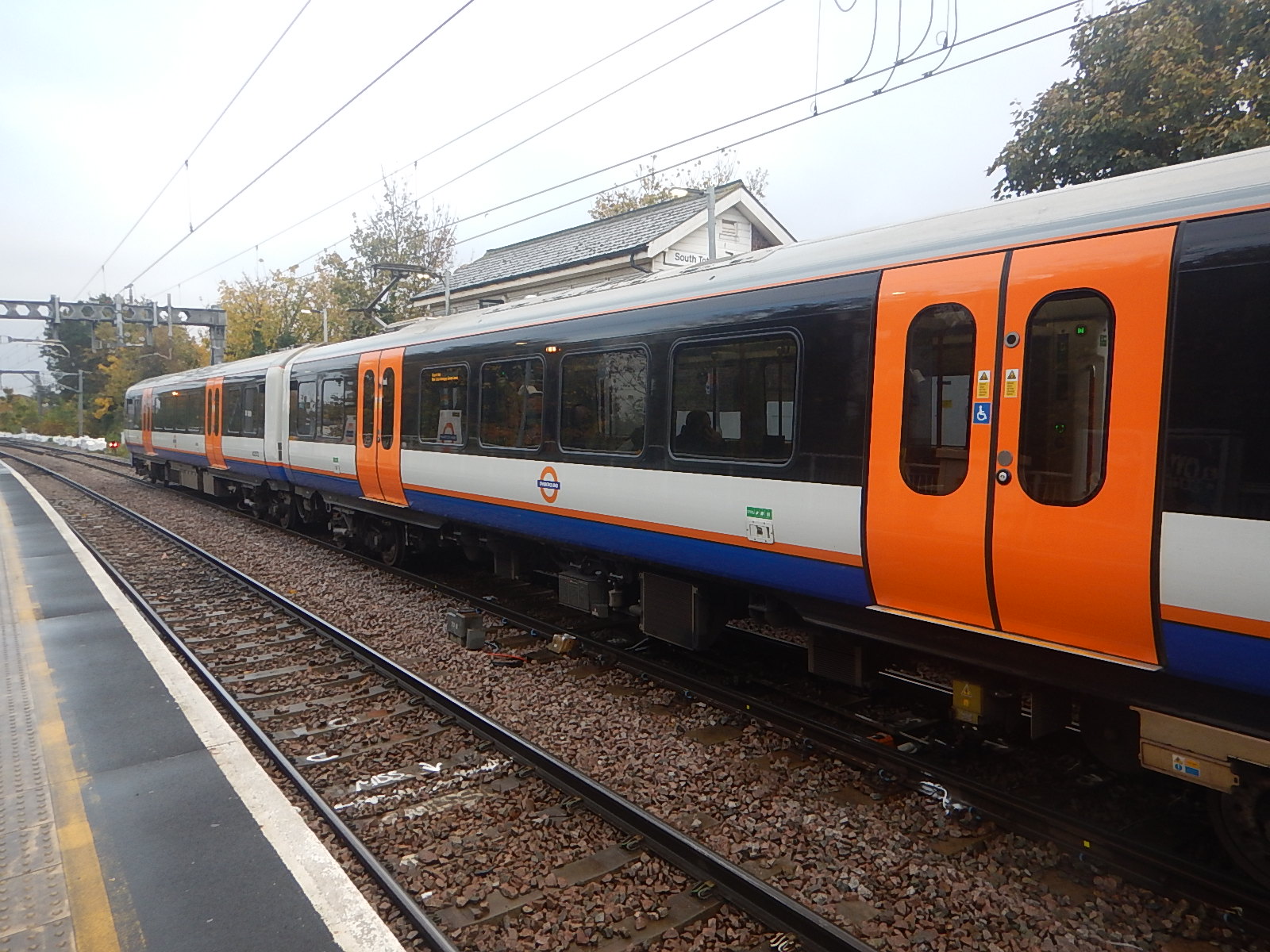
The PMS car is to the right and has four windows between the doors.
This is the side view of one of Greater Anglia’s Class 720 trains.
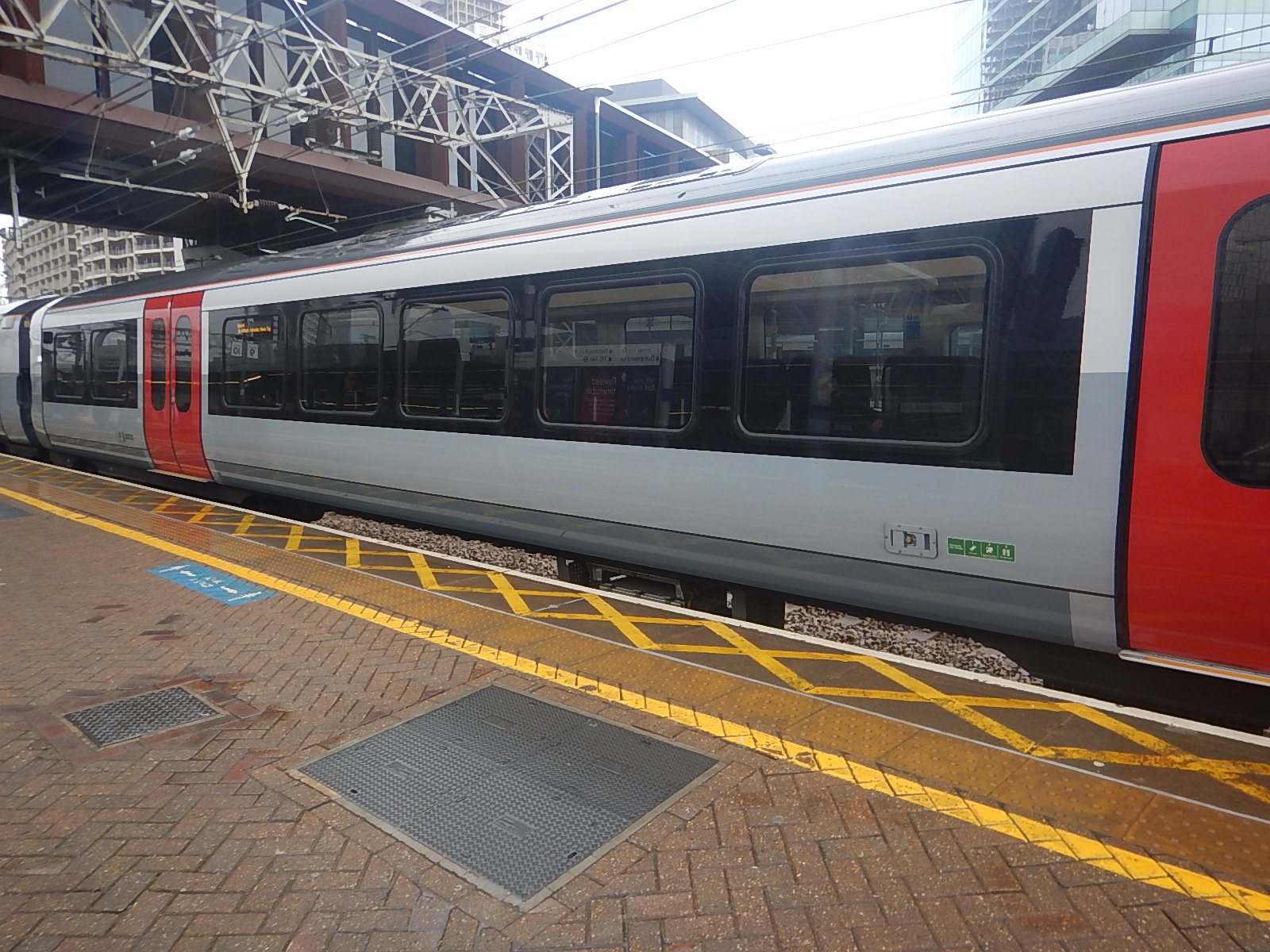
It has twenty-four metre intermediate cars and five windows.
It looks to me that the Alstom Hydrogen Aventra will have twenty-four metre cars.
This will give an extra four x 2.78 metres space under the train compared to a Class 710 train.
It would also appear that the Aventras with twenty-four metre cars also have an extra window in the driving cars, between the doors.
Does the four metre stretch make it possible to position tubular hydrogen tanks across the train to store a practical amount of hydrogen?
Is The Alstom Hydrogen Train Based On A Three-Car Class 730/0 Train?
I have just found this video of a three-car Class 730/0 under test.
And guess what! It has five windows between the doors.
But then it is a train with twenty-four metre cars.
It looks to me, that Alstom have looked at the current Aventra range and decided that the three-car Class 730/0 could be the one to convert into a useful train powered by hydrogen.
So if it is a Class 730/0 train with hydrogen gubbins under the floor, what other characteristics would carry over.
- I suspect Aventras are agnostic about power and so long as they get the right quantity of volts, amps and watts, the train will roll along happily.
- But it means that the train can probably use 25 KVAC overhead electrification, 750 VDC third-rail electrification, hydrogen or battery power.
- I wouldn’t be surprised if if could use 15 KVAC and 3KVDC overhead electrification for operation in other countries, with perhaps a change of power electronics or transformer.
- The interior layout of the trains can probably be the same as that of the Class 730/0 trains.
- The Class 730/0 trains have an operating speed of 90 mph and this could be good enough for hydrogen.
This could be a very capable train, that could find a lot of applications.
Could The Proposed Alstom Hydrogen Aventra Be Considered To Be A Class 730/0 Train With A Hydrogen Extender?
It appears that the only difference between the two trains is that the proposed Alstom Hydrogen Aventra has a hydrogen propulsion system, that can be used when the electrification runs out.
The hydrogen fuel cell will convert hydrogen into electricity, which will either be used immediately or stored in a battery on the train.
The Class 730/0 trains have already been ordered to run services on Birmingham’s electrified Cross-City Line.
There are plans to expand the line in the future and I do wonder if the proposed Alstom Hydrogen Aventras could be the ideal trains for extending the network.
How Does The Alstom Hydrogen Aventra Compare With The Class 600 Breeze Train?
The Class 600 train, which is based on the British Rail-era Class 321 train seems to have gone cold.
If it was a boxing match, it would have been stopped after the fourth round, if not before.
This Alstom visualisation shows the Class 600 train, which is also known as the Breeze.
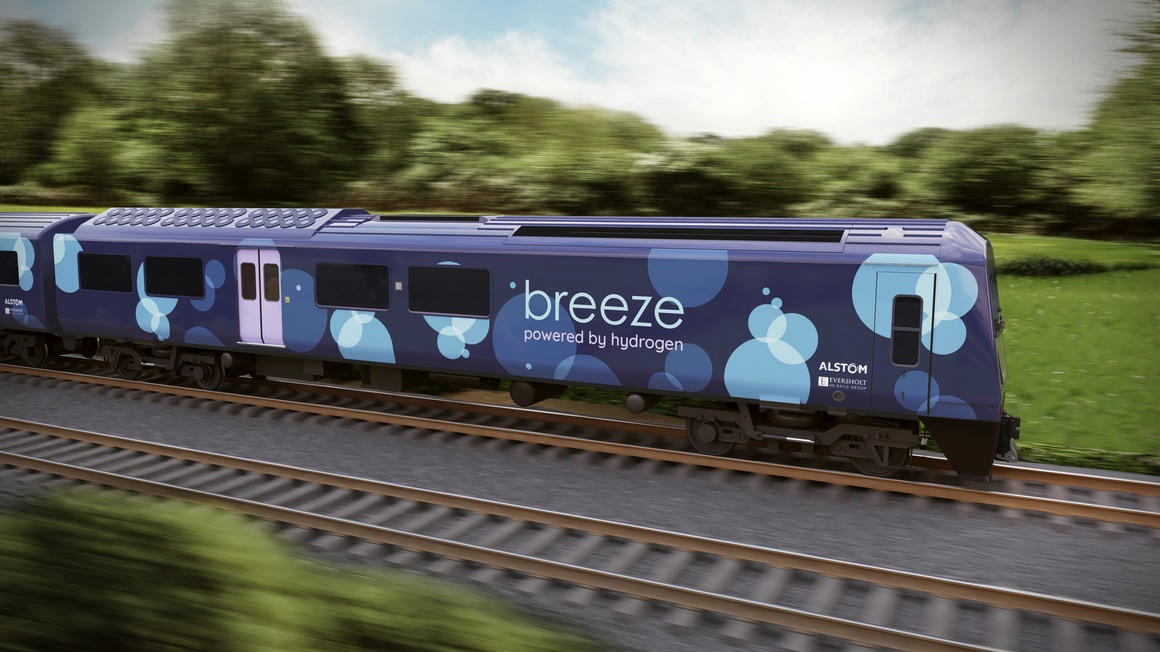
I have a feeling that Alstom have done their marketing and everybody has said that the Class 600 train wouldn’t stand up to a modern train.
- When you consider that each end of the train is a hydrogen tank, I wonder if possible passenger and driver reaction has not been overwhelmingly positive.
- The project was announced in January 2021 and in the intervening time, hydrogen technology has improved at a fast pace.
- There could even be a battery-electric version of the proposed Alstom Hydrogen Aventra.
- The modern train could possibly be lengthened to a four or five car train.
It does strike me, that if Alstom are going to succeed with hydrogen trains, that to carry on with the Class 600 train without an order into the future is not a good idea.
How Does The Alstom Hydrogen Aventra Compare With The Alstom Coradia iLint?
The Alstom Coradia iLint is the world’s first hydrogen train.

It is successfully in service in Germany.
These are some characteristics of the Coradia iLint from the Internet.
- Seats – 180
- Length – 54.27 metres
- Width – 2.75 metres
- Height – 4.31 metres
- Operating Speed – 87 mph
- Range – 370-500 miles
- Electrification Use – No
The same figures for the Alstom Hydrogen Aventra are as follows.
- Seats – 164
- Length – 72 metres
- Width – 2.78 metres
- Height – 3.76 metres
- Operating Speed – 90 mph
- Range – Unknown
- Electrification Use – Unknown, but I would expect it is possible.
Note.
- I have taken figures for the Alstom Hydrogen Aventra from the Class 730/0 train and other Aventras.
- The number of seats is my best estimate from using the seat density of a Class 710 train in a 24 metre long car.
- The width and height seem to be standard for most Aventras.
- Alstom have said nothing about the range on hydrogen.
- I am surprised that the Aventra is the wider train.
But what surprises me most, is how similar the two specifications are. Had the designer of the original Lint hoped to sell some in the UK?
What Is The Range Of The Alstom Hydrogen Aventra?
When they launched the Breeze, Alstom were talking about a range of a thousand kilometres or just over 620 miles.
I have talked to someone, who manages a large bus fleet and they feel with a hydrogen bus, you need a long range, as you might have to position the bus before it does a full day’s work.
Would similar positioning mean a hydrogen train needs a long range?
I suspect it would in some applications, but if the train could use electrification, as I suspect the Alstom Hydrogen Aventra can, this must help with positioning and reduce the range needed and the amount of hydrogen used.
Would Alstom aim to make the range similar to the Coradia iLint? It’s probably a fair assumption.
Could the Alstom Hydrogen Aventra Be Extended To Four Or Five Cars?
I don’t see why not, as Aventras are designed to be lengthened or shortened, by just adding or removing cars, just like their predecessors the Electrostars were.
I can certainly see routes, where a longer Alstom Hydrogen Aventra could be needed and if Alstom have also decided that such a train could be needed, they will surely have investigated how to lengthen the train.
Applications In The UK
These are links to a few thoughts on applications of the trains in the UK.
- Alstom Hydrogen Aventras And Extension Of The Birmingham Cross-City Line
- Alstom Hydrogen Aventras And The Reopened Northumberland Line
- Alstom Hydrogen Aventras And Great Western Branch Lines Between Paddington And Oxford
- Alstom Hydrogen Aventras And The Uckfield Branch
There are probably a lot more and I will add to this list.
Applications Elsewhere
If the Coradia iLint has problems, they are these.
- It can’t use overhead electrification, where it exists
- It has a noisy mechanical transmission, as it is a converted diesel multiple unit design.
The Alstom Hydrogen Aventra can probably be modified to use electrification of any flavour and I can’t see why the train would be more noisy that say a Class 710 train.
I suspect Alstom will be putting the train forward for partially-electrified networks in countries other than the UK.
Conclusion
This modern hydrogen train from Alstom is what is needed.
It might also gain an initial order for Birmingham’s Cross-City Line, as it is a hydrogen version of the line’s Class 730/0 trains.
But having a hydrogen and an electric version, that are identical except for the hydrogen extender, could mean that the trains would be ideal for a partially-electrified network.
There could even be a compatible battery-electric version.
All trains would be identical to the passenger and probably the driver too. This would mean that mixed fleets could be run by an operator, with hydrogen or battery versions used on lines without electrification as appropriate.
Prototype Revolution Very Light Rail Vehicle Ready For Testing
The title of this post, is the same as that of this article on Rail Business UK.
It is very much a complete article, which gives full information on the current status of the Revolution VLR very light rail prototype railcar.
- The railcar is an eighteen metre long bi-directional vehicle.
- It has capacity for 56 seated passengers and 40 standees. This is more than a double-deck bus load.
- It has a Cummins diesel-electric power-train.
- Maximum speed is 65 mph.
- There is regenerative braking to a battery, which can be used for traction in built-up areas.
I must admit that I am surprised that Revolution VLR is not fully zero-carbon, but as this is a prototype, that is probably a sensible move, as it will be able to test the concept and show the railcar to potential customers.
However, as Cummins are a member of the consortium and they are now embracing hydrogen as an alternative fuel, a zero-carbon hydrogen power-train may be under development, that would be suitable for the Revolution VLR.
When the Revolution VLR consortium was in its early stages I wrote Very Light Rail Research On Track, based on a Railway Gazette article with the same title.
That earlier article did talk about a problem.
However, the drawback of a lightweight vehicle is that its lower crashworthiness could make it unsuitable for mixed traffic lines.
But the consortium felt that the limitation could be overcome by better traffic management and digital signalling.
Mixed traffic running was also flagged up as a problem by the tram-trains running in Sheffield, but touch wood, they seem to be working well!
Hopefully extensive testing of this prototype will identify any limitations of the concept.
Stonehenge Tunnel Campaigners Win Court Battle
The title of this post, is the same as that of this article on the BBC.
This is the first part of the BBC article.
Campaigners have won a court battle to prevent the “scandalous” construction of a road tunnel near Stonehenge.
The £1.7bn Highways England project aimed to reduce A303 congestion but campaigners said it would detrimentally affect the world heritage site.
The government approved plans in 2020 for a two-mile (3.2km) tunnel to be created near the Wiltshire monument.
Mr Justice Holgate’s ruling means the order granted by transport secretary Grant Shapps has been quashed.
I obtained my driving licence in 1964 and since then the A303 past Stonehenge has been a worsening bottleneck.
I suspect that unreleased papers from successive governments since the 1960s would show that most Ministers of Transport hoped the problem of Stonehenge would be solved by the next Government of a different colour, which would hopefully lose them the next election.
If you read the whole of the BBC article you’ll see a large map from Highways England.
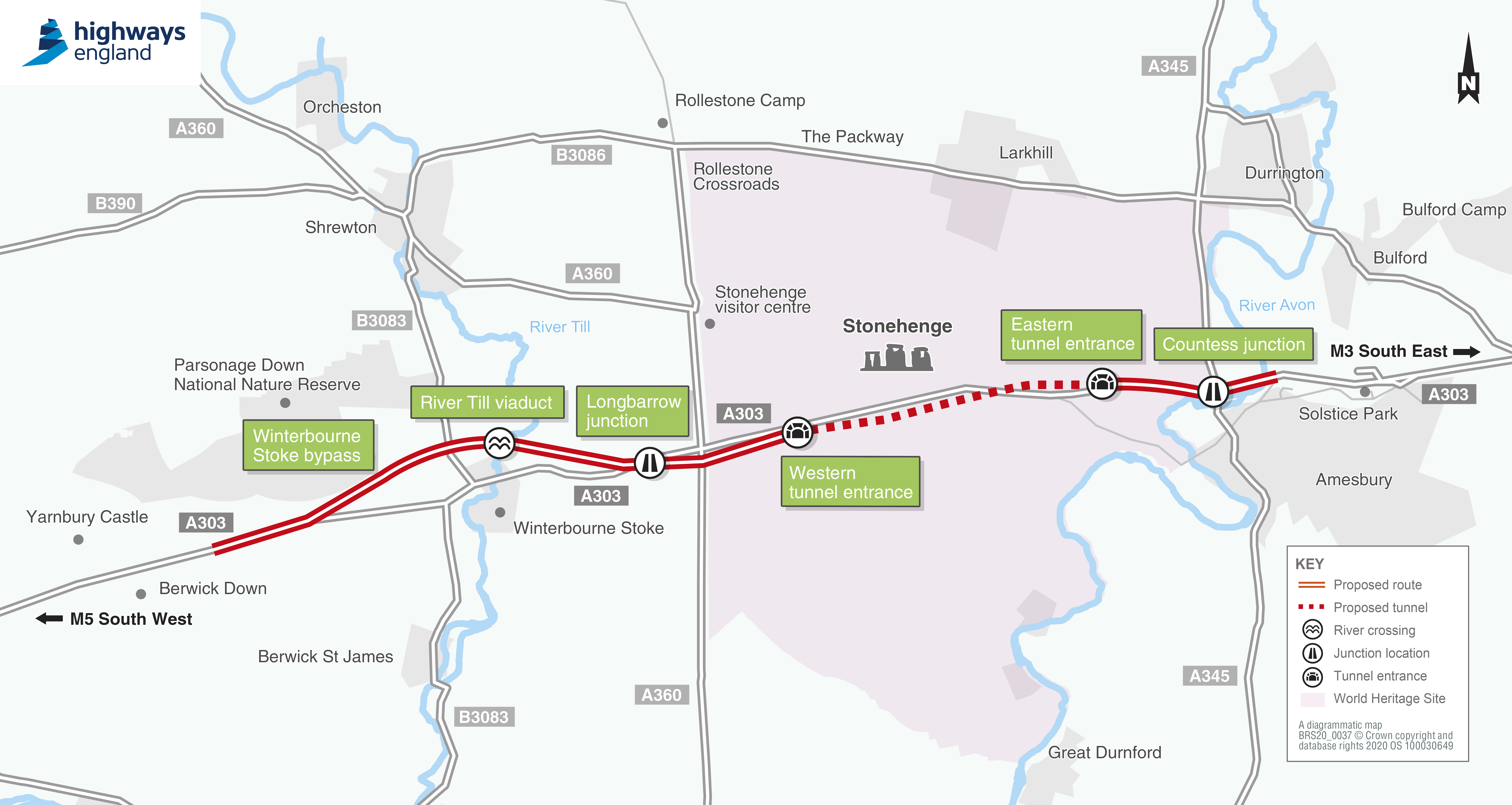
Note.
- The proposed tunnel is shown as a dotted red line to the South of Stonehenge, more or less following the line of the current A303.
- The Amesbury by-pass already exists in the East.
- A new Winterbourne Stoke by-pass will be built in the West.
Some feel that a longer tunnel might be the solution.
But it would probably need to start to the West of Winterbourne Stoke and be at least three times longer than the proposed tunnel.
So this short stretch of road would then probably cost around £5billion.
Can We Reduce The Traffic On This Road?
There are several ways that traffic might be reduced.
Universal Road Pricing
Every vehicle would be fitted with a meter, which charged drivers depending on the following.
- The type of vehicle.
- The congestion on the road.
- The speed, at which the vehicle is travelling.
It might work, but any government introducing universal road pricing would lose the next General Election by a landslide.
Tolls On Parts Of The A303
Again it might work and push drivers to find other routes.
Improve Other Routes Like The M4
As capacity is increased on other routes, drivers could be lured away from the busy section of the A303 around Stonehenge.
Improve Rail Services Between Paddington And West Of Exeter
I know because of friends, who regularly go to Devon and \Cornwall for both weekends and longer holidays, that many people go to the far-South West by car and most will use the A303 route to and from London.
These services are run by Great Western Railway and the destinations in the South West are not as comprehensive as they could be.
- GWR’s Class 802 trains can split and join efficiently, which could mean they could serve more destinations with the same number of trains.
- GWR seem to be in favour of developing more direct services between London and Bodmin, Okehampton and other places.
- GWR are adding stations to their network in the South-West.
But most importantly, GWR, Hitachi and the Eversholt Rail Group are developing the Hitachi Intercity Tri-Mode Battery Train, which will lower carbon-emissions on the route. This Hitachi infographic describes the train.

These trains could attract numbers of car drivers to use the train, rather than drive.
Improve The Night Riviera Between Paddington And Penzance
Most other sleeper trains in Europe have renewed their fleet.
An improvement in the rolling stock could encourage more people to travel this way.
Improve Rail Services Between Waterloo And Exeter
The rail line between Waterloo and Exeter via Basingstoke and Salisbury runs within a dozen miles of Stonehenge.
- The rolling stock is thirty-year-old British Rail diesel trains.
- It is not electrified to the West of Basingstoke.
- There are portions of single-track railway.
The Waterloo and Exeter line could be improved.
- Remove some sections of single track.
- Upgrade the operating speed to up to 100 mph in places.
- Use a version of the latest Hitachi Intercity Tri-Mode Battery Train
- Add some new stations.
I believe the quality, frequency and journey times of the service could all be improved.
Would this second fast route from the South-West encourage more to take the train?
Stonehenge And Wilton Junction Station
Stonehenge may be the problem, but it can also be part of the solution.
In The Proposal For Stonehenge And Wilton Junction Station, I write about an innovative proposal, that uses a car park at a new station to create a Park-And-Ride for both Stonehenge and Salisbury.
This could bring more visitors to Stonehenge without their cars.
Conclusion
None of these proposals will take vast amounts of pressure from the A303. But every little helps.
Some like the decarbonisation of rail services will have to be done anyway.
Whisky Galore!
The Levenmouth Rail Link has carried freight in the past.
Mainly in the past, it was coal to the now-demolished Methil power station.
But it has been known to carry whisky for Diageo.
This Google map shows the area.
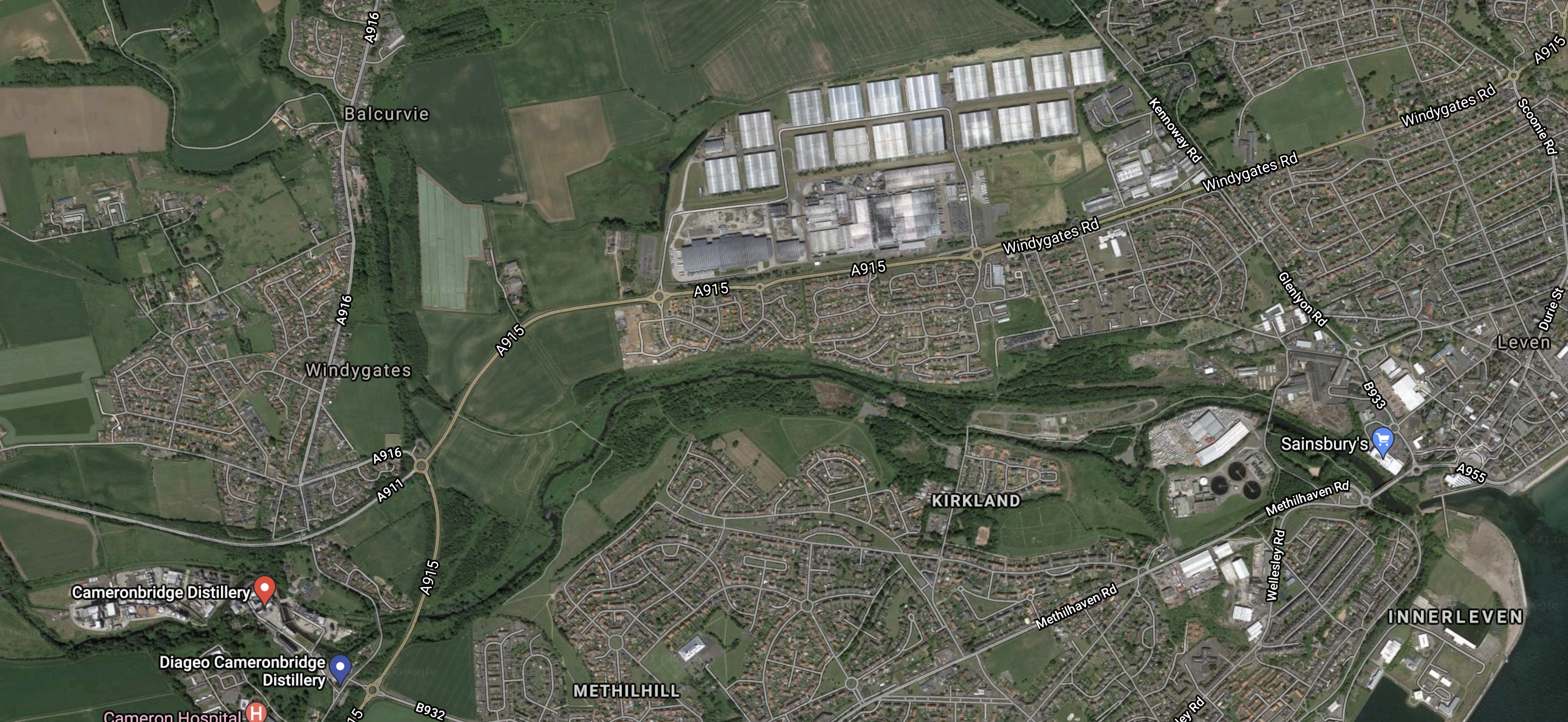
Note.
- The blue dot marking Sainsbury’s by the bew Leven station, by the mouth of the River Leven.
- The railway follows the river with Cameron Bridge station to the East of the A915 and the two Camero Bridge distilleries.
- The silver warehouses at the North side of the map are labelled Diageo Global Supply.
I wonder, if a siding can be provided for the distribution of products stored in the warehouses?
Companies are looking to lower their carbon-footprint and I wouldn’t be surprised, if Diageo were looking at rail distribution.
Modern Rail Freight Distribution
Companies are converting redundant electric multiple units into fast parcel delivery trains to replace diesel trucks.
- Typically, four-car trains are used.
- Trains have a 100 mph capability and can be 240 metres in length.
- Eversholt Rail Group are proposing adding battery power. This would be ideal to reach Cameron Bridge over the Forth Bridge.
These trains would be ideal for the delivery of Scotch Whisky.
They might even be capable of exporting product through the Channel Tunnel.
I don’t think the capacity of the Levenmouth Rail Link would be a problem, as it is a double-track railway, that can probably handle over four trains per hour and there is plenty of capacity for a number of freight trains.
Conclusion
I think freight will play a use in the future of the Levenmouth Rail Link.
Related Posts
The New Leven Station On The Levenmouth Rail Link
The New Cameron Bridge Station On The Levenmouth Rail Link
H2 Green, Eversholt Rail To Jointly Develop Hydrogen Supply Solutions In The UK
The title of this post, is the same as that of this article on H2 View.
Their co-operation will be for the rail industry and based on green hydrogen, produced by electrolysis.
- H2 Green is a Scottish company, that were recently taken over by Getech,
- Eversholt Rail Group is a rolling stock leasing company, who are also backing hydrogen trains, that will be manufactured by Alstom.
This could be the kick up the backside, that hydrogen trains need in the UK.
Is This The Shape Of Freight To Come?
This article on Rail Advent is entitled Eversholt Rail Unveils First Swift Express Freight Train In Doncaster.
It is a full report on the first of a new breed of freight trains based on redundant 100 mph electric multiple units.
Three Rail Problems
The rail industry, its financiers and customers have a lot of problems, they’d like to solve, but these three seem to be coming together to create a whole new industry.
Rolling Stock Leasing Companies Have A Surplus Of Redundant Rolling Stock
Most of the released rolling stock has been made redundant because of the arrival of new trains.
- Some trains and locomotives, like Greater Anglia’s Class 379 trains and Class 90 locomotives will probably be passed on to other operators.
- Some trains like Greater Anglia’s Class 315 trains and Govia Thameslink Railway‘s Class 313 trains and Merseyrail‘s Class 507 trains and Class 508 trains will probably only be fit for scrapping.
- Climate change ambitions will probably finish off anything which is elderly and diesel-powered.
What will be left will be a an assortment, which will contain a lot of trains with these characteristics.
- Four cars
- Can run in formations of 4, 8 and 12 cars
- Electrically-powered.
- Some trains are even dual voltage.
- 100 mph operating speed.
- Good reliability.
- Easy maintenance and modification if needed.
Many were even built over thirty years ago by British Rail Engineering Ltd.
As someone, who used to part-own a company that leased trucks to operators, I know that to maximise cash-flow and ultimately profits, you don’t want them sitting in a yard or a siding.
Conversion to zero carbon is one option.
- Porterbrook have said they will convert the Class 350 trains, that they own to battery-electric operation.
- Porterbrook have also converted some Class 319 trains to electro-diesel Class 769 trains.
- Porterbrook have also converted a Class 319 train to hydrogen operation.
- Eversholt Rail Group and Alstom are converting Class 321 trains to hydrogen operation.
I also believe that the redundant Class 379 trains will also be converted to battery-electric operation.
But there will still be a substantial number of quality trains, that need a second life.
The Growth Of Parcel Freight
Parcel freight traffic driven by on-line shopping, has boomed in the pandemic.
This type of traffic often originates from outside of the UK and enters the country at places like London Gateway or East Midlands Airport.
Much of it is currently distributed to large cities by truck, which in this day and age is not a green option, or even an option at all.
Rail Operations Group have leased ten Class 769 trains and 9 Class 319 trains with the intention of running parcel services under the Orion brand. I wrote about this proposal in A Freight Shuttle For Liverpool Street Station Planned.
Road Congestion
Road congestion is getting worse and there is bir much point in having product stuck on the motorway, when it can be running along at a 100 mph on an electrified rail line.
The Need For Just-In-Time Deliveries
Many factories these days work on the Just-In-Time principle, with product delivered just as its needed.
As an example Toyota build their cars at Burnaston near Derby, but the engines are built in North Wales. I suspect that they go across the country by truck.
Looking at maps, the engine plant could be rail connected and I feel one could be arranged at Burnaston.
Do they keep a good stock of engines at Burnaston?
I can see several situations like this needing a regular company train.
Fast Food
Because of Brexit we will need to be growing more of our own food.
Traditionally, the Class 43 power cars of InterCity 125 trains carried flowers and fish up from Cornwall.
So will we see rail provide an alternative.
Conclusion
Put these problems together and you can see a fair number of four-car electric multiple units being converted to short 100 mph electric freight trains.
Eversholt Rail Group‘s Swift Express Freight Train is very much a demonstrator for their ideas and it has some expected and unexpected features.
Based On A Class 321 train
The train is based on a four-car Class 321 train.

I rode one recently and I timed it at over 90 mph on the way to Southend.
Trolley Cages
Pictures in the Rail Advent article show a stripped-bare interior with a steel floor, with another picture showing three supermarket trolley cages arranged across the train.
One estimate in the article says that each coach can handle over fifty of these cages and up to nine-and-a-half tonnes of cargo.
Four Seats And A Toilet
Eversholt feel that some of the trains could be used in a Travelling Post Office mode and there may be a need for sorting en route, so two first-class seats, two second-class seats and a toilet are provided.
This train would enable an Anglo-Scottish parcel service.
- It might stop several times en route.
- At each stop parcels would be rolled out and in, perhaps with the help of a Harrington Hump.
- The on-train staff would sort the incoming parcels and put them in the required trolley for offloading.
I don’t think though, they’ll be delivering postal orders.
A Last Mile Capability
The article also disclosed that Eversholt were thinking of fitting a Last-Mile capability to the Swift Express Freight Train.
Batteries were mentioned and they would obviously work.
But one development recently is Porterbrook’s HydroFlex train, which has converted a Class 319 train to hydrogen power.
- The conversion was done by Birmingham University.
- It appears that all the hydrogen gubbins is underneath the floor, so cargo capacity would not be reduced.
I suspect underfloor hydrogen power could be very viable in an express freight train.
Fleet Size
The article talks of a fleet size of twenty and also says that the first train has been leased to an unnamed parcel distributor in the UK.
Swift Express Freight Demonstrator To Be Tested
The title of this post, is the same as that of this article on Railway Gazette.
This is the first paragraph.
Leasing company Eversholt Rail and Ricardo have teamed up to develop an electric multiple-unit intended to demonstrate a cost-effective and low carbon way of transporting parcels.
Other points include.
- A Class 321 train will be converted.
- The trains have a top speed of 100 mph.
- Each vehicle will handle up to twelve tonnes of freight.
Eversholt are talking to possible operators.
Conclusion
There are various train leasing companies and operators looking at similar concepts.
I’m sure one will create a viable model.
Will Hitachi Announce A High Speed Metro Train?
As the UK high speed rail network increases, we are seeing more services and proposed services, where local services are sharing tracks, where trains will be running at 125 mph or even more.
London Kings Cross And Cambridge/Kings Lynn
This Great Northern service is run by Class 387 trains.
- Services run between London Kings Cross and King’s Lynn or Cambridge
- The Class 387 trains have a maximum operating speed of 110 mph.
- The route is fully electrified.
- The trains generally use the fast lines on the East Coast Main Line, South of Hitchin.
- Most trains on the fast lines on the East Coast Main Line are travelling at 125 mph.
When in the future full digital in-cab ERTMS signalling is implemented on the East Coast Main Line, speeds of up to 140 mph should be possible in some sections between London Kings Cross and Hitchin.
The Digswell Viaduct Problem
I also believe that digital signalling may be able to provide a solution to the twin-track bottleneck over the Digswell Viaduct.
Consider.
- Airliners have been flown automatically and safely from airport to airport for perhaps four decades.
- The Victoria Line in London, has been running automatically and safely at over twenty trains per hour (tph) for five decades. It is now running at over 30 tph.
- I worked with engineers developing a high-frequency sequence control system for a complicated chemical plant in 1970.
We also can’t deny that computers are getting better and more capable.
For these reasons, I believe there could be an ERTMS-based solution to the problem of the Digswell Viaduct, which could be something like this.
- All trains running on the two track section over the Digswell Viaduct and through Welwyn North station would be under computer control between Welwyn Garden City and Knebworth stations.
- Fast trains would be slowed as appropriate to create spaces to allow the slow trains to pass through the section.
- The train drivers would be monitoring the computer control, just as they do on the Victoria Line.
Much more complicated automated systems have been created in various applications.
The nearest rail application in the UK, is probably the application of digital signalling to London Underground’s Circle, District, Hammersmith & City and Metropolitan Lines.
This is known at the Four Lines Modernisation and it will be completed by 2023 and increase capacity by up to twenty-seven percent.
I don’t think it unreasonable to see the following maximum numbers of services running over the Digswell Viaduct by 2030 in both directions in every hour.
- Sixteen fast trains
- Four slow trains
That is one train every three minutes.
Currently, it appears to be about ten fast and two slow.
As someone, who doesn’t like to be on a platform, when a fast train goes through, I believe that some form of advanced safety measures should be installed at Welwyn North station.
It would appear that trains between London Kings Cross and King’s Lynn need to have this specification.
- Ability to run at 125 mph on the East Coast Main Line
- Ability to run at 140 mph on the East Coast Main Line, under control of full digital in-cab ERTMS signalling.
This speed increase could reduce the journey time between London Kings Cross and Cambridge to just over half-an-hour with London Kings Cross and King’s Lynn under ninety minutes.
The only new infrastructure needed would be improvements to the Fen Line to King’s Lynn to allow two tph, which I think is needed.
Speed improvements between Hitchin and Cambridge could also benefit timings.
London Kings Cross And Cambridge/Norwich
I believe there is a need for a high speed service between London Kings Cross and Norwich via Cambridge.
- The Class 755 trains, that are capable of 100 mph take 82 minutes, between Cambridge and Norwich.
- The electrification gap between Ely and Norwich is 54 miles.
- Norwich station and South of Ely is fully electrified.
- Greater Anglia’s Norwich and Cambridge service has been very successful.
With the growth of Cambridge and its incessant need for more space, housing and workers, a high speed train between London Kings Cross and Norwich via Cambridge could tick a lot of boxes.
- If hourly, it would double the frequency between Cambridge and Norwich until East-West Rail is completed.
- All stations between Ely and Norwich get a direct London service.
- Cambridge would have better links for commuting to the city.
- Norwich would provide the quality premises, that Cambridge is finding hard to develop.
- London Kings Cross and Cambridge would be just over half an hour apart.
- If the current London Kings Cross and Ely service were to be extended to Norwich, no extra paths on the East Coast Main Line would be needed.
- Trains could even split and join at Cambridge or Ely to give all stations a two tph service to London Kings Cross.
- No new infrastructure would be required.
The Cambridge Cruiser would become the Cambridge High Speed Cruiser.
London Paddington And Bedwyn
This Great Western Railway service is run by Class 802 trains.
- Services run between London Paddington and Bedwyn.
- Services use the Great Western Main Line at speeds of up to 125 mph.
- In the future if full digital in-cab ERTMS signalling is implemented, speeds of up to 140 mph could be possible on some sections between London Paddington and Reading.
- The 13.3 miles between Newbury and Bedwyn is not electrified.
As the service would need to be able to run both ways between Newbury and Bedwyn, a capability to run upwards of perhaps thirty miles without electrification is needed. Currently, diesel power is used, but battery power would be better.
London Paddington And Oxford
This Great Western Railway service is run by Class 802 trains.
- Services run between London Paddington and Oxford.
- Services use the Great Western Main Line at speeds of up to 125 mph.
- In the future if full digital in-cab ERTMS signalling is implemented, speeds of up to 140 mph could be possible on some sections between London Paddington and Didcot Parkway.
- The 10.3 miles between Didcot Parkway and Oxford is not electrified.
As the service would need to be able to run both ways between Didcot Parkway and Oxford, a capability to run upwards of perhaps thirty miles without electrification is needed. Currently, diesel power is used, but battery power would be better.
Local And Regional Trains On Existing 125 mph Lines
In The UK, in addition to High Speed One and High Speed Two, we have the following lines, where speeds of 125 mph are possible.
- East Coast Main Line
- Great Western Main Line
- Midland Main Line
- West Coast Main Line
Note.
- Long stretches of these routes allow speeds of up to 125 mph.
- Full digital in-cab ERTMS signalling is being installed on the East Coast Main Line to allow running up to 140 mph.
- Some of these routes have four tracks, with pairs of slow and fast lines, but there are sections with only two tracks.
It is likely, that by the end of the decade large sections of these four 125 mph lines will have been upgraded, to allow faster running.
If you have Hitachi and other trains thundering along at 140 mph, you don’t want dawdlers, at 100 mph or less, on the same tracks.
These are a few examples of slow trains, that use two-track sections of 125 nph lines.
- East Midlands Railway – 1 tph – Leicester and Lincoln – Uses Midland Main Line
- East Midlands Railway – 1 tph – Liverpool and Norwich – Uses Midland Main Line
- East Midlands Railway – 2 tph – St. Pancras and Corby – Uses Midland Main Line
- Great Western Railway – 1 tph – Cardiff and Portsmouth Harbour – Uses Great Western Main Line
- Great Western Railway – 1 tph – Cardiff and Taunton – Uses Great Western Main Line
- Northern – 1 tph – Manchester Airport and Cumbria – Uses West Coast Main Line
- Northern – 1 tph – Newcastle and Morpeth – Uses East Coast Main Line
- West Midlands Trains – Some services use West Coast Main Line.
Conflicts can probably be avoided by judicious train planning in some cases, but in some cases trains capable of 125 mph will be needed.
Southeastern Highspeed Services
Class 395 trains have been running Southeastern Highspeed local services since 2009.
- Services run between London St. Pancras and Kent.
- Services use Speed One at speeds of up to 140 mph.
- These services are planned to be extended to Hastings and possibly Eastbourne.
The extension would need the ability to run on the Marshlink Line, which is an electrification gap of 25.4 miles, between Ashford and Ore.
Thameslink
Thameslink is a tricky problem.
These services run on the double-track section of the East Coast Main Line over the Digswell Viaduct.
- 2 tph – Cambridge and Brighton – Fast train stopping at Hitchin, Stevenage and Finsbury Park.
- 2 tph – Cambridge and Kings Cross – Slow train stopping at Hitchin, Stevenage, Knebworth, Welwyn North, Welwyn Garden City, Hatfield, Potters Bar and Finsbury Park
- 2 tph – Peterborough and Horsham – Fast train stopping at Hitchin, Stevenage and Finsbury Park.
Note.
- These services are run by Class 700 trains, that are only capable of 100 mph.
- The fast services take the fast lines South of the Digswell Viaduct.
- South of Finsbury Park, both fast services cross over to access the Canal Tunnel for St, Pancras station.
- I am fairly certain, that I have been on InterCity 125 trains running in excess of 100 mph in places between Finsbury Park and Stevenage.
It would appear that the slow Thameslink trains are slowing express services South of Stevenage.
As I indicated earlier, I think it is likely that the Kings Cross and King’s Lynn services will use 125 mph trains for various reasons, like London and Cambridge in under half an hour.
But if 125 mph trains are better for King’s Lynn services, then they would surely improve Thameslink and increase capacity between London and Stevenage.
Looking at average speeds and timings on the 25 miles between Stevenage and Finsbury Park gives the following.
- 100 mph – 15 minutes
- 110 mph – 14 minutes
- 125 mph – 12 minutes
- 140 mph – 11 minutes
The figures don’t appear to indicate large savings, but when you take into account that the four tph running the Thameslink services to Peterborough and Cambridge stop at Finsbury Park and Stevenage and have to get up to speed, I feel that the 100 mph Class 700 trains are a hindrance to more and faster trains on the Southern section of the East Coast Main Line.
It should be noted, that faster trains on these Thameslink services would probably have better acceleration and and would be able to execute faster stops at stations.
There is a similar less serious problem on the Midland Main Line branch of Thameslink, in that some Thameslink services use the fast lines.
A couple of years ago, I had a very interesting chat with a group of East Midlands Railway drivers. They felt that the 100 mph Thameslink and the 125 mph Class 222 trains were not a good mix.
The Midland Main Line services are also becoming more complicated, with the new EMR Electric services between St. Pancras and Corby, which will be run by 110 mph Class 360 trains.
Hitachi’s Three Trains With Batteries
Hitachi have so far announced three battery-electric trains. Two are based on battery packs being developed and built by Hyperdrive Innovation.
Hyperdrive Innovation
Looking at the Hyperdrive Innovation web site, I like what I see.
Hyperdrive Innovation provided the battery packs for JCB’s first electric excavator.
Note that JCB give a five-year warranty on the Hyperdrive batteries.
Hyperdrive have also been involved in the design of battery packs for aircraft push-back tractors.
The battery capacity for one of these is given as 172 kWh and it is able to supply 34 kW.
I was very surprised that Hitachi didn’t go back to Japan for their batteries, but after reading Hyperdrive’s web site about the JCB and Textron applications, there would appear to be good reasons to use Hyperdrive.
- Hyperdrive have experience of large lithium ion batteries.
- Hyperdrive have a design, develop and manufacture model.
- They seem to able to develop solutions quickly and successfully.
- Battery packs for the UK and Europe are made in Sunderland.
- Hyperdrive are co-operating with Nissan, Warwick Manufacturing Group and Newcastle University.
- They appear from the web site to be experts in the field of battery management, which is important in prolonging battery life.
- Hyperdrive have a Taiwanese partner, who manufactures their battery packs for Taiwan and China.
- I have done calculations based on the datasheet for their batteries and Hyperdrive’s energy density is up with the best
I suspect, that Hitachi also like the idea of a local supplier, as it could be helpful in the negotiation of innovative applications. Face-to-face discussions are easier, when you’re only thirty miles apart.
Hitachi Regional Battery Train
The first train to be announced was the Hitachi Regional Battery Train, which is described in this Hitachi infographic.

Note.
- It is only a 100 mph train.
- The batteries are to be designed and manufactured by Hyperdrive Innovation.
- It has a range of 56 miles on battery power.
- Any of Hitachi’s A Train family like Class 800, 802 or 385 train can be converted to a Regional Battery Train.
No orders have been announced yet.
But it would surely be very suitable for routes like.
- London Paddington And Bedwyn
- London Paddington And Oxford
It would also be very suitable for extensions to electrified suburban routes like.
- London Bridge and Uckfield
- London Waterloo and Salisbury
- Manchester Airport and Windermere.
- Newcastle and Carlisle
It would also be a very sound choice to extend electrified routes in Scotland, which are currently run by Class 385 trains.
Hitachi InterCity Tri-Mode Battery Train
The second train to be announced was the Hitachi InterCity Tri-Mode Battery Train, which is described in this Hitachi infographic.
Note.
- Only one engine is replaced by a battery.
- The batteries are to be designed and manufactured by Hyperdrive Innovation.
- Typically a five-car Class 800 or 802 train has three diesel engines and a nine-car train has five.
- These trains would obviously be capable of 125 mph on electrified main lines and 140 mph on lines fully equipped with digital in-cab ERTMS signalling.
Nothing is said about battery range away from electrification.
Routes currently run from London with a section without electrification at the other end include.
- London Kings Cross And Harrogate – 18.3 miles
- London Kings Cross And Hull – 36 miles
- London Kings Cross And Lincoln – 16.5 miles
- London Paddington And Bedwyn – 13.3 miles
- London Paddington And Oxford – 10.3 miles
In the March 2021 Edition of Modern Railways, LNER are quoted as having aspirations to extend the Lincoln service to Cleethorpes.
- With all energy developments in North Lincolnshire, this is probably a good idea.
- Services could also call at Market Rasen and Grimsby.
- Two trains per day, would probably be a minimum frequency.
But the trains would need to be able to run around 64 miles each way without electrification. Very large batteries and/or charging at Cleethorpes will be needed.
Class 803 Trains For East Coast Trains
East Coast Trains have ordered a fleet of five Class 803 trains.
- These trains appear to be built for speed and fast acceleration.
- They have no diesel engines, which must save weight and servicing costs.
- But they will be fitted with batteries for emergency power to maintain onboard train services in the event of overhead line failure.
- They are planned to enter service in October 2021.
Given that Hyperdrive Innovation are developing traction batteries for the other two Hitachi battery trains, I would not be the least bit surprised if Hyperdrive were designing and building the batteries for the Class 803 trains.
- Hyperdrive batteries are modular, so for a smaller battery you would use less modules.
- If all coaches are wired for a diesel engine, then they can accept any power module like a battery or hydrogen pack, without expensive redesign.
- I suspect too, that the battery packs for the Class 803 trains could be tested on an LNER Class 801 train.
LNER might also decide to replace the diesel engines on their Class 801 trains with an emergency battery pack, if it were more energy efficient and had a lighter weight.
Thoughts On The Design Of The Hyperdrive innovation Battery Packs
Consider.
- Hitachi trains have a sophisticated computer system, which on start-up can determine the configuration of the train or whether it is more than one train running as a longer formation or even being hauled by a locomotive.
- To convert a bi-mode Class 800 train to an all-electric Class 801 the diesel engines are removed. I suspect that the computer is also adjusted, but train formation may well be totally automatic and independent of the driver.
- Hyperdrive Innovation’s battery seem to be based on a modular system, where typical modules have a capacity of 5 kWh, weighs 32 Kg and has a volume of 0.022 cu metres.
- The wet mass of an MTU 16V 1600 R80L diesel engine commonly fitted to AT-300 trains of different types is 6750 Kg or nearly seven tonnes.
- The diesel engine has a physical size of 1.5 x 1.25 x 0.845 metres, which is a volume of 1.6 cubic metres.
- In How Much Power Is Needed To Run A Train At 125 mph?, I calculated that a five-car Class 801 electric train, needed 3.42 kWh per vehicle-mile to maintain 125 mph.
- It is likely, than any design of battery pack, will handle the regenerative braking.
To my mind, the ideal solution would be a plug compatible battery pack, that the train’s computer thought was a diesel engine.
But then I have form in the area of plug-compatible electronics.
At the age of sixteen, for a vacation job, I worked in the Electronics Laboratory at Enfield Rolling Mills.
It was the early sixties and one of their tasks was at the time replacing electronic valve-based automation systems with new transistor-based systems.
The new equipment had to be compatible to that which it replaced, but as some were installed in dozens of places around the works, they had to be able to be plug-compatible, so that they could be quickly changed. Occasionally, the new ones suffered infant-mortality and the old equipment could just be plugged back in, if there wasn’t a spare of the new equipment.
So will Hyperdrive Innovation’s battery-packs have the same characteristics as the diesel engines that they replace?
- Same instantaneous and continuous power output.
- Both would fit the same mountings under the train.
- Same control and electrical power connections.
- Compatibility with the trains control computer.
I think they will as it will give several advantages.
- The changeover between diesel engine and battery pack could be designed as a simple overnight operation.
- Operators can mix-and-match the number of diesel engines and battery-packs to a given route.
- As the lithium-ion cells making up the battery pack improve, battery capacity and performance can be increased.
- If the computer, is well-programmed, it could reduce diesel usage and carbon-emissions.
- Driver conversion from a standard train to one equipped with batteries, would surely be simplified.
As with the diesel engines, all battery packs could be substantially the same across all of Hitachi’s Class 80x trains.
What Size Of Battery Would Be Possible?
If Hyperdrive are producing a battery pack with the same volume as the diesel engine it replaced, I estimate that the battery would have a capacity defined by.
5 * 1.6 / 0.022 = 364 kWh
In an article in the October 2017 Edition of Modern Railways, which is entitled Celling England By The Pound, Ian Walmsley says this in relation to trains running on the Uckfield Branch, which is not very challenging.
A modern EMU needs between 3 and 5 kWh per vehicle mile for this sort of service.
As a figure of 3.42 kWh per vehicle-mile to maintain 125 mph, applies to a Class 801 train, I suspect that a figure of 3 kWh or less could apply to a five-car Class 800 train trundling at around 80-100 mph to Bedwyn, Cleethorpes or Oxford.
- A one-battery five-car train would have a range of 24.3 miles
- A two-battery five-car train would have a range of 48.6 miles
- A three-battery five-car train would have a range of 72.9 miles
Note.
- Reducing the consumption to 2.5 kWh per vehicle-mile would give a range of 87.3 miles.
- Reducing the consumption to 2 kWh per vehicle-mile would give a range of 109.2 miles.
- Hitachi will be working to reduce the electricity consumption of the trains.
- There will also be losses at each station stop, as regenerative braking is not 100 % efficient.
But it does appear to me, that distances of the order of 60-70 miles would be possible on a lot of routes.
Bedwyn, Harrogate, Lincoln and Oxford may be possible without charging before the return trip.
Cleethorpes and Hull would need a battery charge before return.
A Specification For A High Speed Metro Train
I have called the proposed train a High Speed Metro Train, as it would run at up to 140 mph on an existing high speed line and then run a full or limited stopping service to the final destination.
These are a few thoughts.
Electrification
In some cases like London Kings Cross and King’s Lynn, the route is already electrified and batteries would only be needed for the following.
- Handling regenerative braking.
- Emergency power in case of overhead line failure.
- Train movements in depots.
But if the overhead wires on a branch line. are in need of replacement, why not remove them and use battery power? It might be the most affordable and least disruptive option to update the power supply on a route.
The trains would have to be able to run on both types of electrification in the UK.
- 25 KVAC overhead.
- 750 VDC third rail.
This dual-voltage capability would enable the extension of Southeastern Highspeed services.
Operating Speed
The trains must obviously be capable of running at the maximum operating speed on the routes they travel.
- 125 mph on high speed lines, where this speed is possible.
- 140 mph on high speed lines equipped with full digital in-cab ERTMS signalling, where this speed is possible.
The performance on battery power must be matched with the routes.
Hitachi have said, that their Regional Battery trains can run at up to 100 mph, which would probably be sufficient for most secondary routes in the UK and in line with modern diesel and electric multiple units.
Full Digital In-cab ERTMS Signalling
This will be essential and is already fitted to some of Hitachi’s trains.
Regenerative Braking To Batteries
Hitachi’s battery electric trains will probably use regenerative braking to the batteries, as it is much more energy efficient.
It also means that when stopping at a station perhaps as much as 70-80% of the train’s kinetic energy can be captured in the batteries and used to accelerate the train.
In Kinetic Energy Of A Five-Car Class 801 Train, I showed that at 125 mph the energy of a full five-car train is just over 100 kWh, so batteries would not need to be unduly large.
Acceleration
This graph from Eversholt Rail, shows the acceleration and deceleration of a five-car Class 802 electric train.
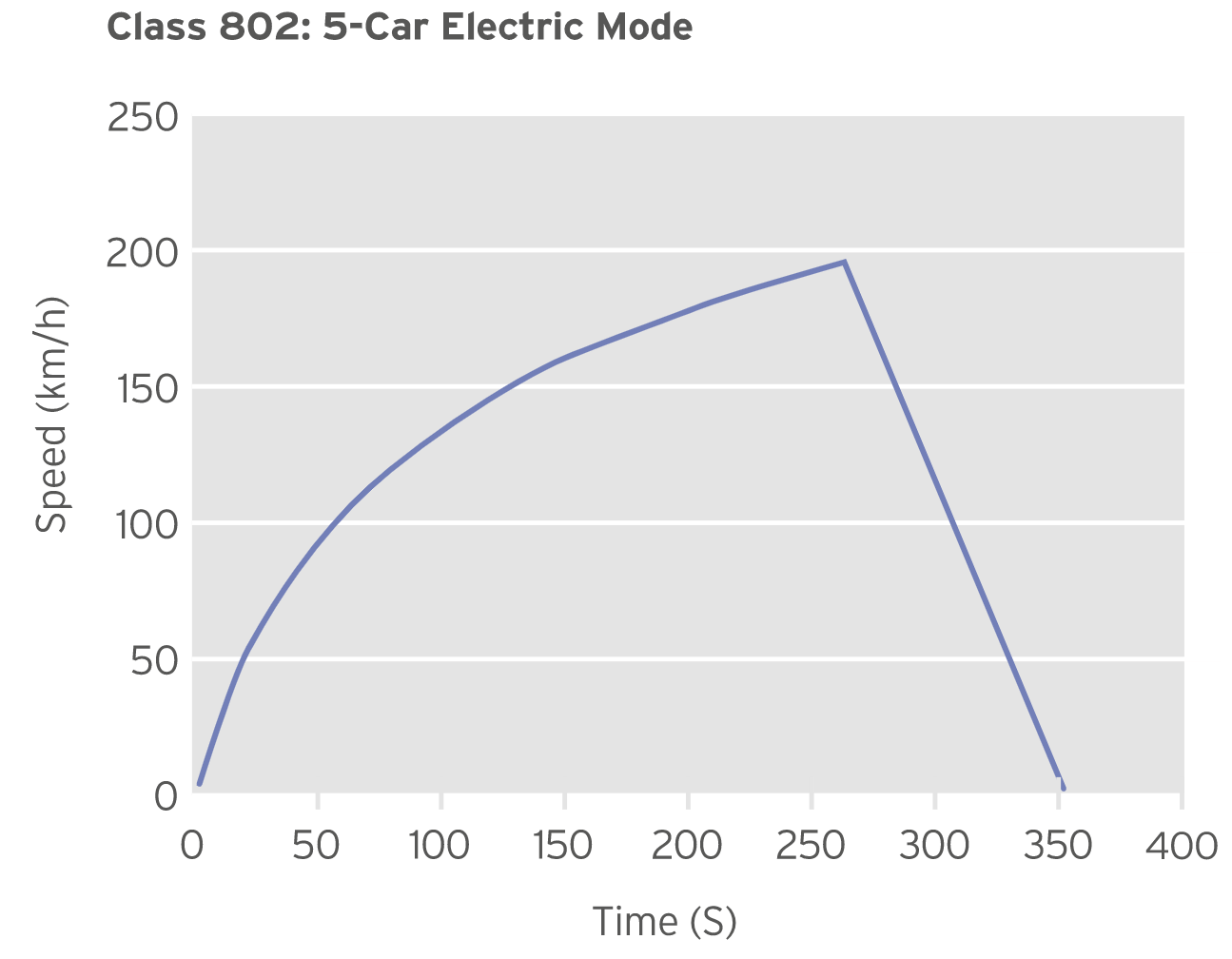
As batteries are just a different source of electric power, I would think, that with respect to acceleration and deceleration, that the performance of a battery-electric version will be similar.
Although, it will only achieve 160 kph instead of the 200 kph of the electric train.
I estimate from this graph, that a battery-electric train would take around 220 seconds from starting to decelerate for a station to being back at 160 kph. If the train was stopped for around eighty seconds, a station stop would add five minutes to the journey time.
London Kings Cross And Cleethorpes
As an example consider a service between London Kings Cross and Cleethorpes.
- The section without electrification between Newark and Cleethorpes is 64 miles.
- There appear to be ambitions to increase the operating speed to 90 mph.
- Local trains seem to travel at around 45 mph including stops.
- A fast service between London Kings Cross and Cleethorpes would probably stop at Lincoln Central, Market Rasen and Grimsby Town.
- In addition, local services stop at Collingham, Hykeham, Barnetby and Habrough.
- London Kings Cross and Newark takes one hour and twenty minutes.
- London Kings Cross and Cleethorpes takes three hours and fifteen minutes with a change at Doncaster.
I can now calculate a time between Kings Cross and Cleethorpes.
- If a battery-electric train can average 70 mph between Newark and Cleethorpes, it would take 55 minutes.
- Add five minutes for each of the three stops at Lincoln Central, Market Rasen and Grimsby Town
- Add in the eighty minutes between London Kings Cross and Newark and that would be two-and-a-half hours.
That would be very marketing friendly and a very good start.
Note.
- An average speed of 80 mph would save seven minutes.
- An average speed of 90 mph would save twelve minutes.
- I suspect that the current bi-modes would be slower by a few minutes as their acceleration is not as potent of that of an electric train.
I have a feeling London Kings Cross and Cleethorpes via Lincoln Central, Market Rasen and Grimsby Town, could be a very important service for LNER.
Interiors
I can see a new lightweight and more energy efficient interior being developed for these trains.
In addition some of the routes, where they could be used are popular with cyclists and the current Hitachi trains are not the best for bicycles.
Battery Charging
Range On Batteries
I have left this to last, as it depends on so many factors, including the route and the quality of the driving or the Automatic Train Control
Earlier, I estimated that a five-car train with all three diesel engines replaced by batteries, when trundling around Lincolnshire, Oxfordshire or Wiltshire could have range of up to 100 miles.
That sort of distance would be very useful and would include.
- Ely and Norwich
- Newark and Cleethorpes
- Salisbury and Exeter
It might even allow a round trip between the East Coast Main Line and Hull.
The Ultimate Battery Train
This press release from Hitachi is entitled Hitachi And Eversholt Rail To Develop GWR Intercity Battery Hybrid Train – Offering Fuel Savings Of More Than 20%.
This is a paragraph.
The projected improvements in battery technology – particularly in power output and charge – create opportunities to replace incrementally more diesel engines on long distance trains. With the ambition to create a fully electric-battery intercity train – that can travel the full journey between London and Penzance – by the late 2040s, in line with the UK’s 2050 net zero emissions target.
Consider.
- Three batteries would on my calculations give a hundred mile range.
- Would a train with no diesel engines mean that fuel tanks, radiators and other gubbins could be removed and more or large batteries could be added.
- Could smaller batteries be added to the two driving cars?
- By 2030, let alone 2040, battery energy density will have increased.
I suspect that one way or another these trains could have a range on battery power of between 130 and 140 miles.
This would certainly be handy in Scotland for the two routes to the North.
- Haymarket and Aberdeen, which is 130 miles without electrification.
- Stirling and Inverness, which is 111 miles without electrification, if the current wires are extended from Stirling to Perth, which is being considered by the Scottish Government.
The various sections of the London Paddington to Penzance route are as follows.
- Paddington and Newbury – 53 miles – electrified
- Newbury and Taunton – 90 miles – not electrified
- Taunton and Exeter – 31 miles – not electrified
- Exeter and Plymouth – 52 miles – not electrified
- Plymouth and Penzance – 79 miles – not electrified
The total length of the section without electrification between Penzance and Newbury is a distance of 252 miles.
This means that the train will need a battery charge en route.
I think there are three possibilities.
- Trains can take up to seven minutes for a stop at Plymouth. As London and Plymouth trains will need to recharge at Plymouth before returning to London, Plymouth station could be fitted with comprehensive recharge facilities for all trains passing through. Perhaps the ideal solution would be to electrify all lines and platforms at Plymouth.
- Between Taunton and Exeter, the rail line runs alongside the M5 motorway. This would surely be an ideal section to electrify, as it would enable battery electric trains to run between Exeter and both Newbury and Bristol.
- As some trains terminate at Exeter, there would probably need to be charging facilities there.
I believe that the date of the late 2040s is being overly pessimistic.
I suspect that by 2040 we’ll be seeing trains between London and Aberdeen, Inverness and Penzance doing the trips without a drop of diesel.
But Hitachi are making a promise of London and Penzance by zero-carbon trains, by the late-2040s, because they know they can keep it.
And Passengers and the Government won’t mind the trains being early!
Conclusion
This could be a very useful train to add to Hitachi’s product line.
 The Anonymous Widower