Cunning Electrification On The North London Line
I took a trip on the North London Line from Highbury & Islington station to Richmond station.
I took various pictures on the way.
25 KVAC Overhead Electrification
East of Acton Central station, typical 25 KVAC overhead electrification is used.
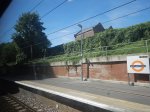
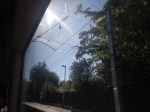



It may need to be beefed up, if more large electric locomotives haul freight trains along the North London Line.
Gunnersbury Station
Gunnersbury station is a two-platform station with London Underground four-rail electrification.

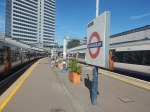

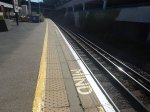


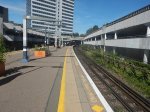




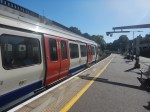
It can be used by London Underground S-Stock and London Overground Class 378 trains.
It must help that both trains were built by Bombardier in Derby.
Kew Gardens Station
Kew Gardens station is a two-platform station with London Underground four-rail electrification.
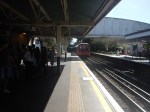

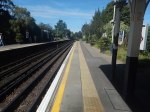

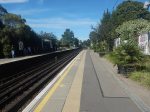

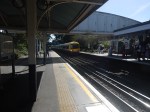

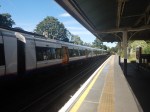
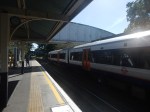
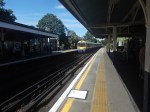
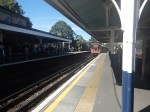
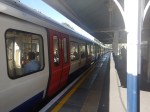
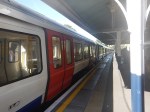
As with Gunnersbury station, both types of train can use both platforms.
Richmond Station
Richmond station is both a through and terminal station.

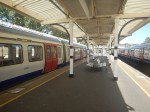
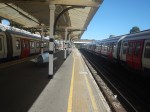

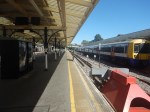
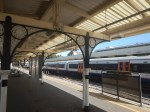

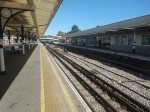
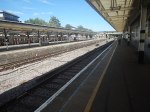
Note.
- Platforms 1 and 2 are through platforms for South Western main line services.
- Platforms 3 to 7 are for terminating London Underground and Overground services.
- Platforms 1 to 3 have traditional third-rail electrification.
- Platforms 4 to 7 have London Underground four-rail electrification.
- If needed, it may be possible to add another platform between platforms 3 and 4.
It looks like a lot of flexibility has been built in.
I have a few general thoughts.
Getting The Voltages Right
London Underground’s system used to use 630 VDC for its four-rail system, whereas Network Rail’s system uses 750 VDC.
I wouldn’t be surprised to find out that both trains use quality power electronics that can work on a range of voltages. This would enable London Underground to up their voltage to the same 750 VDC as used by Network Rail.
In Chiltern Sets Out New Fleet Ambitions, I talked about how Chiltern Railways could use London Underground’s four-rail electrification between Harrow-on-the-Hill and Amersham stations to charge the batteries.
As an electrical engineer, I don’t think this is outrageous.
Nestlé And Tesco Launch Double-Stacked Rail Freight Trial
The title of this post, is the same as that of this article on Logistics Manager.
This is the sub-heading.
Nestlé UK and Ireland has successfully completed its first delivery to supermarket chain Tesco using a ‘first-of-its-kind’ rail container, as part of a new rail freight trial.
These are the first three paragraphs.
The container features a roof-raising mechanism allowing products to be “double-stacked from floor to ceiling operating at full capacity before the roof is lowered for transit”. The appeal of this is its capability to store potentially twice as much freight in one journey, reducing costs and emissions.
This is part of Nestlé’s plans to increase freight capacity on trains as a means of reducing the negative impact that the company’s logistics operations have on the environment. It is hoped that the trial will allow the process to be refined over time, providing further opportunities for Nestlé to expand the volume of goods that can be transported via rail in a single shipment.
This focus is integral to Nestlé’s strategy to reduce its reliance on the consumption of diesel in its road transport network. According to a 2021 report from the Rail Delivery Group, rail freight produces, on average, 76% fewer emissions than road transport. This, it claims, equates to a reduction of around 1.4 million tonnes of CO₂ nationally each year.
Note.
- This article would appear to be a follow-on to Nestlé Unveils New Double-Stacking Rail Logistics Plan To Reduce Carbon Footprint, which I wrote in June 2022.
- In From 2025, Nestlé Waters France Will Use The First Hydrogen-Powered Freight Train Through An Innovative Solution Developed by Alstom and ENGIE, I talk about how Nestlé are experimenting with hydrogen-powered locomotives.
Nestlé certainly seem to be working on reducing the carbon dioxide produced by their logistic operations.
Electrification Between Newbury And East Somerset Junction
In the August 2023 Edition of Modern Railways, there is an article, which is entitled GWR Seeks Opportunities To Grow.
This is the sub-heading.
Managing Director Mark Hopwood tells Philip Sherratt there is plenty of potential to increase rail’s economic contribution.
This is two paragraphs.
The desire to provide electrification to support aggregates traffic from the Mendip quarries could also benefit GWR , says Mr. Hopwood. ‘Having an electric loco would massively help with pathing heavy freight trains through the Thames Valley. If you could electrify from Newbury to East Somerset Junction, a big chunk of the Berks and Hants route would be wired.
Then you can ask how much further you could get on battery power on an IET without running out of juice.’
I have some thoughts.
Where Is East Somerset Junction?
This OpenRailwayMap shows East Somerset junction.
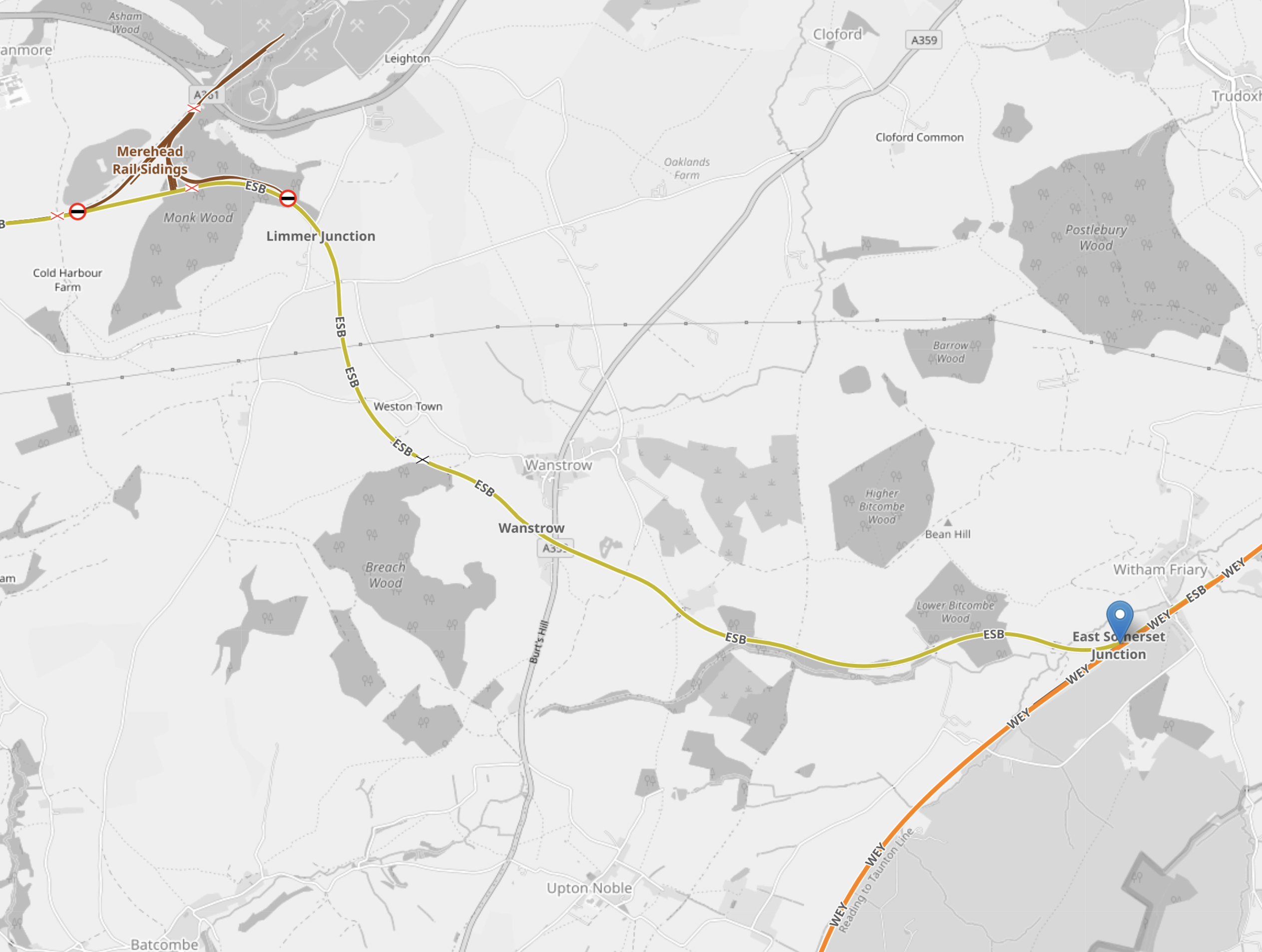
Note.
- The East Somerset junction is marked with the blue arrow.
- East Somerset junction is 5.2 miles North of Bruton station and 5.4 miles South of Frome station on the Reading and Taunton Line.
As the map shows there is a branch to Merehead Rail Sidings, which is shown in yellow.
This Google Map shows Merehead Rail Sidings.
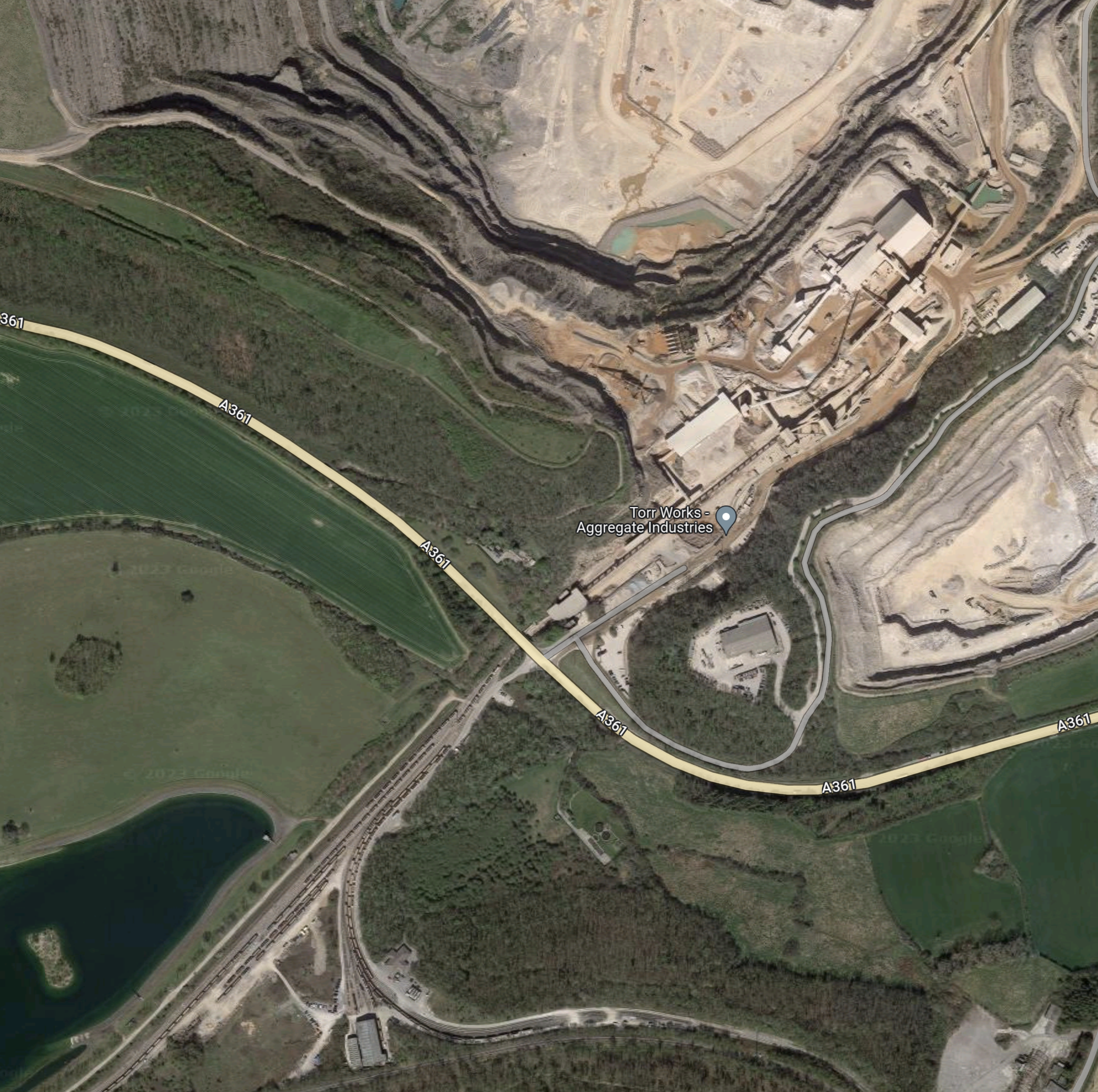
Note.
- It looks like there is a massive quarry to the North of the A361 road, which curves across the map.
- It is labelled Torr Works – Aggregate Industries.
- Torr Works has a Wikipedia entry.
- The rail sidings are South of the A361.
- Zooming in on the map, shows that the railway between East Somerset junction and Merehead is single-track and only a few miles long.
Distances from East Somerset junction are as follows.
- Dorchester junction – 41.2 miles
- Newbury – 53.4 miles
- Taunton – 37.2 miles
- Weymouth – 47.8 miles
Note that it is electrified with 750 VDC third-rail between Weymouth and Dorchester junction.
Range of Battery-Electric Trains
Consider.
- A Bombardier engineer told me eight years ago, that the battery-electric Class 379 train had a range of sixty miles.
- Stadler’s FLIRT Akku has a Guinness world record of 139 miles on one battery charge. See this page on the Stadler web site.
- Even Stadler’s Class 777 trains for Merseyrail have a range of 84 miles on battery power. See New Merseyrail Train Runs 135 km On Battery.
It does appear that five-car battery-electric trains will have ranges in excess of a hundred miles.
I believe that because Hitachi’s battery makers have a good record, they will probably be very ambitious and will want that Guinness record, that Hitachi’s Class 802 trains will have a battery range not far short of the 139 miles of the Stadler FLIRT Akku.
I will be very surprised if Hitachi’s battery-electric version of a Class 802 train, doesn’t have range of at least 125 miles.
But say if they could do say 140 miles, the battery-electric Class 802 train could cover every long-distance route in the UK, which would attract orders for trains to run on the following routes.
- Cardiff and Swansea
- Crewe and Holyhead
- Edinburgh and Aberdeen
- Edinburgh and Inverness
- Crewe and Holyhead
- London Waterloo and Exeter St. Davids
A substantial reward to the battery makers, would probably not be out of order.
Aggregate Trains From The Mendips
Consider.
- Mining and quarrying companies are under pressure from governments, shareholders and environmentalists to reduce their carbon footprints.
- Many are replacing diesel-powered mining excavators and trucks, with electric or hydrogen versions.
- In addition, those companies delivering building products to the construction industry are under pressure to provide low-carbon products.
- Using rail with electric traction to deliver products to market would cut carbon emissions and might even help sales.
These Mendip quarries appear to be connected to the Reading and Taunton Line.
- Torr Works – Connects 5.4 miles to the South of Frome.
- Whatley Quarry – Connects close to Frome.
There may be others.
But these rail-connected quarries, connect at or North of East Somerset junction, to where Mark Hopwood is proposing electrification.
Zero-carbon rail traction could even be possible, by electrifying the short single-track branch lines. or by using hydrogen-electric hybrid locomotives.
GWR’s London And South-West Services
These services use the Reading and Taunton Line to join the Bristol and Exeter Line at Taunton, before going on to Exeter, Plymouth and other destinations in the South-West of England.
These are distances from East Somerset Junction.
- Exeter – 67 miles
- Paignton 95.2 miles
- Penzance – 198.5 miles
- Plymouth – 119.0 miles
- Taunton – 37.2 miles
Note.
- Exeter, Paignton, Penzance and Plymouth stations would need short lengths of electrification to charge terminating trains or top-up passing trains.
- In Thoughts About Electrification Through Devon And Cornwall, I showed that the average stop time at Plymouth station was eight minutes, which could be enough for the rail equivalent of a Formula One splash and dash.
- A 125 mile battery range, not only enables London and Penzance, but also Cardiff and Swansea, and Edinburgh and Aberdeen, when the extra electrification is completed.
Could my estimate of a 125 mile battery range, be Hitachi’s objective for their battery-electric trains?
The Ultimate Battery-Electric Class 802 Train
Hitachi have been totally silent on how the fitting of batteries to Class 802 trains is going.
But Mark Hopwood is more forthcoming in the GWR Seeks Opportunities To Grow article. where this is said.
Meanwhile, GWR had announced plans with Eversholt Rail to trial the replacement of a diesel generator unit with batteries on a Class 802 IET. However, Mr. Hopwood says this would not be useful for GWR and so the trial is not proceeding; instead, a TransPennine Express Class 802 will be the subject of a battery trial.
It sounds to me that another solution is being developed to get trains to run on electric power between London and the South-West.
- I think we can rule out full electrification on the grounds of cost, disruption, time and the Nimbys and objectors will have a field day.
- Newbury and Penzance is a distance of 251.9 miles, which would surely need a lot of batteries.
Mark Hopwood’s idea to electrify the 53.4 miles between Newbury And East Somerset junction, is starting to look like a good compromise.
GWR’s Bristol/Gloucester And Weymouth Services
These stopping trains are run by diesel trains and take the following route between Bristol Temple Meads and Weymouth stations.
- Keynsham
- Oldfield Park
- Bath Spa
- Freshford
- Avoncliff
- Bradford-on-Avon
- Trowbridge
- Westbury
- Frome
- East Somerset junction
- Bruton
- Castle Cary
- Yeovil Pen Mill
- Thornford
- Yetminster
- Chetnole
- Maiden Newton
- Dorchester West
- Dorchester junction
- Upwey
Note.
- I would assume that there is enough electrification at Bristol Temple Meads and towards Gloucester to charge the trains.
- Trains would leave Bristol Temple Meads with a full battery.
- The eighteen stops mean that an electric train with regenerative braking will be more efficient.
- Bristol Temple Meads and Westbury is not electrified.
- Westbury and East Somerset junction will be electrified with 25 KVAC overhead electrification under Mark Hopwood’s proposal.
- Trains take sixteen minutes between Westbury and East Somerset junction.
- East Somerset junction and Dorchester junction is not electrified.
- Dorchester junction and Weymouth is electrified with 750 VDC third-rail electrification.
- Trains take ten minutes between Dorchester junction and Weymouth.
Distances of the various legs are as follows.
- Bristol Temple Meads and Westbury – 28.3 miles – Not Electrified
- Westbury and East Somerset junction – 11.4 miles – Electrified
- East Somerset junction and Dorchester junction – 41.4 miles – Not Electrified
- Dorchester junction and Weymouth – 6.6 miles – Electrified
The two sections without electrification, should be well within range of a dual-voltage battery-electric train, that has been designed for the route.
GWR’s Cardiff Central And Portsmouth Harbour Service
These stopping trains are run by diesel trains and take the following route between Bristol Temple Meads and Portsmouth Harbour stations.
- Keynsham
- Oldfield Park
- Bath Spa
- Freshford
- Avoncliff
- Bradford-on-Avon
- Trowbridge
- Westbury
- Warminster
- Salisbury
- Romsey
- Redbridge
- Southampton Central
- Fareham
- Cosham
- Fratton
- Portsmouth & Southsea
Note.
- I would assume that there is enough electrification at Bristol Temple Meads and towards Cardiff Central to charge the trains.
- Trains would leave Bristol Temple Meads with a full battery.
- The seventeen stops mean that an electric train with regenerative braking will be more efficient.
- Bristol Temple Meads and Westbury is not electrified.
- Westbury station will be electrified with 25 KVAC overhead electrification under Mark Hopwood’s proposal.
- Trains would leave Westbury with a full battery.
- Westbury and Redbridge is not electrified.
- Redbridge and Portsmouth Harbour is electrified with 750 VDC third-rail electrification.
Distances of the various legs are as follows.
- Bristol Temple Meads and Westbury – 28.3 miles – Not Electrified
- Westbury and Redbridge – 46.4 miles – Not Electrified
- Redbridge and Portsmouth Harbour – 28.5 miles – Electrified
The two sections without electrification, should be well within range of a dual-voltage battery-electric train, that has been designed for the route.
GWR’s Bristol Temple Meads And Salisbury Services
These stopping trains are run by diesel trains and take the following route between Bristol Temple Meads And Salisbury stations.
- Keynsham
- Oldfield Park
- Bath Spa
- Freshford
- Avoncliff
- Bradford-on-Avon
- Trowbridge
- Dilton Marsh
- Warminster
Note.
- I would assume that there is enough electrification at Bristol Temple Meads to charge the trains.
- Trains would leave Bristol Temple Meads with a full battery.
- An electric train with regenerative braking will be more efficient.
- Bristol Temple Meads and Westbury is not electrified.
- Westbury station will be electrified with 25 KVAC overhead electrification under Mark Hopwood’s proposal.
- Trains would leave Westbury with a full battery.
- Westbury and Salisbury is not electrified.
Distances of the various legs are as follows.
- Bristol Temple Meads and Westbury – 28.3 miles – Not Electrified
- Westbury and Salisbury – 24.4 miles – Not Electrified
The two sections without electrification, should be well within range of a battery-electric train, that has been designed for the route.
GWR’s Swindon And Westbury Services
These stopping trains are run by diesel trains and take the following route between Swindon and Westbury stations.
- Chippenham
- Melksham
- Trowbridge
Note.
- This is the Transwilts service.
- I would assume that there is enough electrification at Swindon to charge the trains.
- Trains would leave Swindon with a full battery.
- An electric train with regenerative braking will be more efficient.
- Chippenham and Westbury is not electrified.
- Westbury station will be electrified with 25 KVAC overhead electrification under Mark Hopwood’s proposal.
- Trains would leave Westbury with a full battery.
Distances of the various legs are as follows.
- Swindon and Chippenham – 16.9 miles – Electrified
- Chippenham and Westbury – 15.8 miles – Not Electrified
The section without electrification, should be well within range of a battery-electric train, that has been designed for the route.
What Can Be Done If The Electrification Is Not Long Enough?
Some of these routes battery-electric routes may need more electrification to work efficiently.
Despite some routes having both 25 KVAC overhead and 750 VDC third-rail electrification, any extension of the electrification would be overhead, as new third-rail electrification is effectively banned.
Conclusion
It looks like Mark Hopgood proposal is an excellent idea to enable the decarbonisation of GWR services in Wiltshire and Somerset.
- Express services would be run by battery-electric Class 802 trains.
- Local services would be run by battery-electric trains with perhaps three cars.
Some of the local trains would need to be dual-voltage to use both forms of electrification.
Freight Trains Through Lincoln Station
I must have spent nearly ninety minutes in total at Lincoln station yesterday and in that time, at least four long freight trains went through.
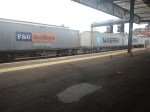
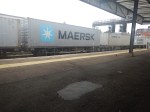
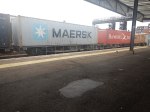
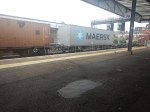

The reason is that Lincoln station lies on the Great Northern and Great Eastern Joint Line, which is a major freight diversion between Doncaster and Peterborough.
- It appears to me, that more freight trains are now using this route since the opening of the Werrington Dive Under.
- All were hauled by a noisy and polluting diesel Class 66 locomotive.
- Some were hauling as many as forty containers.
Articles like this one on Lincolnshire Live, which is entitled Who Had The Crazy idea to Let Trains Run Right Through Lincoln City Centre?, which contains this paragraph.
Then, you’re left with a decision over whether you take your own life in your hands by scuttling over the crossing as fast as you can before being trapped by the barriers, climbing the stairs of one of the two footbridges, or simply waiting at the barrier for the trains to pass (and God help you if it’s one of those freight trains with a seemingly endless amount of carriages).
New footbridges have been installed over the railway, as I wrote about in The Footbridges Over The Railway At Lincoln. But is that enough?
Diesel locomotives are not the most friendly of neighbours and the sooner we start to replace them with quieter locomotives the better.
Lincoln is not the only place, that is plagued by Class 66 locomotives.
- Near me, the North London and Gospel Oak to Barking Lines are regularly used by freight trains hauled by diesel locomotives, despite being electrified.
- Diesel locomotives regularly use the Castlefield Corridor through Manchester.
There must be other places, which suffer from these beasts.
Battery Wagons To Lower Mining Railway Emissions
The title of this post, is the same as that of this article on Railway Gazette.
These two paragraphs introduce the concept of the wagons.
Intramotev is to supply three ReVolt battery wagons to enable regenerative braking on a industrial railway.
The battery and automation technology company said this would be the first deployment of self-propelled battery-electric wagons in a traditional freight train, with regenerative braking and battery technology used to reduce locomotive diesel consumption and thus costs and emissions.
It may seem an unusual concept, but it’s one of those ideas, where if the maths and the costs stack up, it will work.
Intramotev’s web site gives more details on their Product & Technology page, where this is said.
Combining the low energy usage of steel wheels on steel rails with the efficiency of electric drivetrains to create the most energy-efficiency overland transport.
This article on electrek is entitled A Company Is Developing Self-Propelled, Battery-Electric Railcars You Can Control With Your Phone has two paragraphs, which describe their two current products.
In a few short years, the company has been able to develop unique freight solutions using software and battery-electric propulsion technology. This includes the TugVolt battery electric railcar (seen above and below), which can decouple from the consist (the group of railcars as a whole) and operate independently for first and last mile legs.
The company has also developed a ReVolt railcar that can be positioned to stay within the train’s consist and capture energy using regenerative braking to reduce diesel consumption from the line’s locomotive.
As a Control Engineer, I feel strongly, that this technology would work very well in the UK.
East-West Rail: Bedford’s Mayoral Candidates Split On Rail Project
The title of this post, is the same as that of this article on the BBC.
This is the first sentence.
Part of the route of the controversial East-West Rail project will not be decided before we know the winner of Bedford’s mayoral elections.
Unfortunately, the four candidates for Mayor all seem to have different ideas for East-West Railway through the town.
I have a few thoughts and observations.
Thameslink
Thameslink has the following connections to the East West Railway.
- Four tph at Bedford.
- Three tph at Cambridge.
Note.
- tph is trains per hour.
- All Bedford trains terminate at Bedford.
- The half-hourly Luton Airport Express between London St. Pancras and Corby stops at Luton Airport Parkway, Luton, Bedford, Wellingborough and Kettering.
- Cambridge trains may extend to Cambridge North station.
- Cambridge has additional through services between London King’s Cross and Ely and/or King’s Lynn.
Both Bedford and Cambridge will be busy stations.
Extra Tracks At Bedford
Bedford station has four tracks; two which are generally used by Thameslink services and two main lines used by through trains.
- The fast lines must accommodate the following trains.
- East Midlands Railway – 6 tph in both directions. Two tph stop in Bedford station.
- Freight Trains – 2 tph in both directions.
- East West Railway – 2 tph in both directions. All trains will stop in Bedford station.
It strikes me, that the station may need at least one and possibly two extra tracks.
If there are extra tracks, there will need to be some demolition of houses.
Freight Trains
In Roaming Around East Anglia – Newmarket Station, I wrote this about the plans of the East West Rail Consortium in the area.
In this document on the East-West Rail Consortium web site, this is said.
Note that doubling of Warren Hill Tunnel at Newmarket and
redoubling between Coldham Lane Junction and Chippenham Junction is included
in the infrastructure requirements. It is assumed that most freight would operate
via Newmarket, with a new north chord at Coldham Lane Junction, rather than
pursuing further doubling of the route via Soham.
So would it be possible to create a double-track railway through Newmarket station?
In the related post, I came to this conclusion.
Newmarket can benefit from East West Rail, but the two parties must agree objectives that don’t cause problems for the other.
But I do think, that Newmarket will not welcome the building of a double-track railway through the town.
I do wonder, if the East West Rail Consortium plan to run freight trains between Felixstowe and South Wales and the West of England through Bedford and Oxford.
Four freight tph, through Bedford would certainly need extra tracks and the demolition of houses in the centre of Bedford.
Electrification
Two of the candidates for Bedford’s mayor, think that the line needs to be electrified.
As the route is full or partially-electrified at Didcot, Bletchley, Bedford and Cambridge, I believe that battery-electric trains could handle the route.
But then there are no plans to purchase any passenger trains of this type.
Freight trains would still need to be diesel hauled, unless more progress is made fairly quickly in the development of hydrogen-powered freight locomotives.
The Cambridge Effect
Cambridge is one of the most important cities in the world, because of its strength in innovation in high technology industries.
But Cambridge is bursting at the seams and needs more space for laboratories, advanced manufacturing and housing.
A fully-developed double-track and electrified East West Railway would open up Bletchley, Milton Keynes, Bedford, Newmarket, Bury St. Edmunds and Ipswich to act as satellites to help Cambridge build a shared and successful future.
The Felixstowe Effect
If Cambridge will stimulate the growth of passenger traffic, then Felixstowe will promote the growth of East-West freight traffic.
Conclusion
It may not be initially built that way, but probably by 2040, the East West Railway will be a fully-electrified double-track railway between Didcot and Felixstowe.
Extra tracks will also be needed through Bedford. This will mean demolition of houses.
The Ultimate Bi-Mode
This picture shows, what could be an experiment by Freightliner at Shenfield.
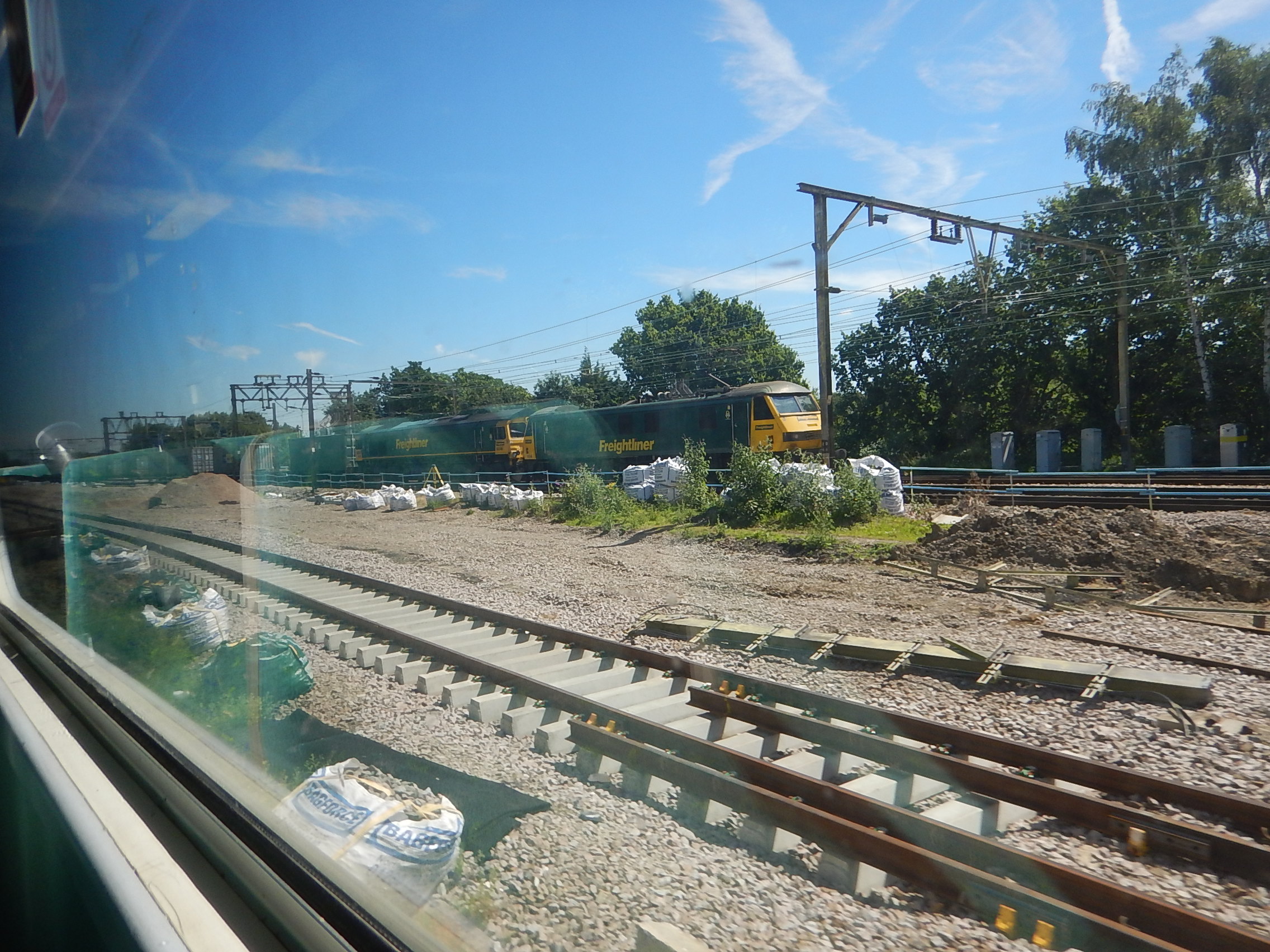
Unfortunately, I didn’t have a chance to ask the driver, if the Class 66 locomotive was running dead-in-train or helping the Class 90 locomotive with a very heavy load.
The picture shows, that the electric and diesel locomotives can work together, at the front of a train.
Note.
- The Class 66 locomotive has a power of 1,850 kW and the Class 90 locomotive has 3,730 kW.
- Did the Class 66 locomotive pull the train out of Felixstowe?
Since I took this picture, I’ve never seen a similar pairing again.
DHL Express Determinedly On Course To Achieve Net-Zero Emissions
The title if this post is the same as that of this article on The Lodestar.
This was the introductory paragraph.
DHL Express chief executive John Pearson came out with all guns firing when detailing the firm’s efforts to hit net-zero by 2050, during a press junket this week.
The rest of the article is basically in three sections.
The Use Of Sustainable Aviation Fuel (SAF)
Summed up by three sentences.
“When it comes to sustainable aviation fuel (SAF), we know this is expensive, but we have also put a big chunk of change into this,” he said.
By the end of the year, we want 2% of flights fuelled by SAF.
DHL has bought 15% of all globally available SAF
DHL seem to have a comprehensive policy on the use of SAF.
This reinforces my view that SAF will be important.
Alternative Approaches
This paragraph sums up some of the more alternative approaches DHL are looking at.
SAF use forms only one part of the migration to net-zero: fleet renewal; decarbonising ground handling; a fuel optimisation programme; and the use of electric aircraft, following the successful September trial over Seattle of the Alice e-cargo plane, are all critical.
I suspect there are other alternative approaches.
Fleet Renewal
The last two paragraphs talk about fleet renewal.
Fleet renewal comes after a particularly pronounced moment of growth for the company: it added 10 widebody and 70 small- and medium-body planes during the pandemic.
Described by Boeing as one of the most “fuel-efficient” aircraft on the market, thanks to its twin-engine design, the 777 freighter forms a central part of DHL Express’ renewal plans, said Mr Pearson, adding that 28 were on order.
With 28 777 freighters on order, DHL will need a lot of SAF.
A Last Thought
Given the size of DHL’s fleet, which in their Wikipedia entry is given as 197, seventy-three of which are narrow bodies, I am surprised that no dedicated zero-carbon small or medium-sized cargo aircraft, except for the Alice is under development.
Perhaps, in areas like Europe, this niche is being taken by rail or perhaps by Airbus’s proposed hydrogen-powered ZEROe Turbofan.
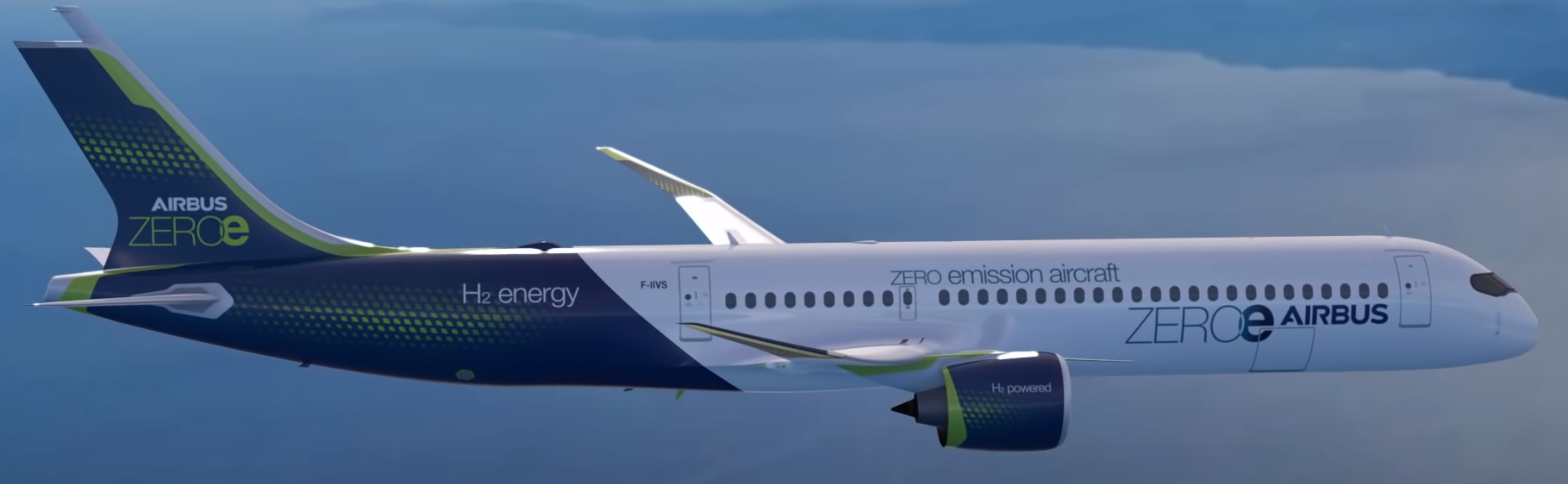
I wrote in detail about this hydrogen-powered aircraft in Could An A320 neo Be Rebuilt As A ZEROe Turbofan?.
Airbus say that the passenger version of the ZEROe Turbofan could handle up to 200 passengers, despite having a large hydrogen tank in the rear fuselage.
The cargo capacity of a ZEROe Turbofan would probably be a bit smaller than say the latest Airbus A321 or Boeing 737, but if the hydrogen-powered aircraft was built to accept a stretch, I wouldn’t be surprised to find it was a viable aircraft for DHL, with a fuselage stretch!
It would surely help passengers of future hydrogen-powered aircraft, overcome their fear of an aircraft fueled by hydrogen.
The ZEROe Turbofan is quoted as having a range in excess of two thousand nautical miles, so it would have Europe and North America fairly well covered.
I also wouldn’t rule out use of Airbus’s proposed hydrogen-powered ZEROe Turboprop for flying cargo.
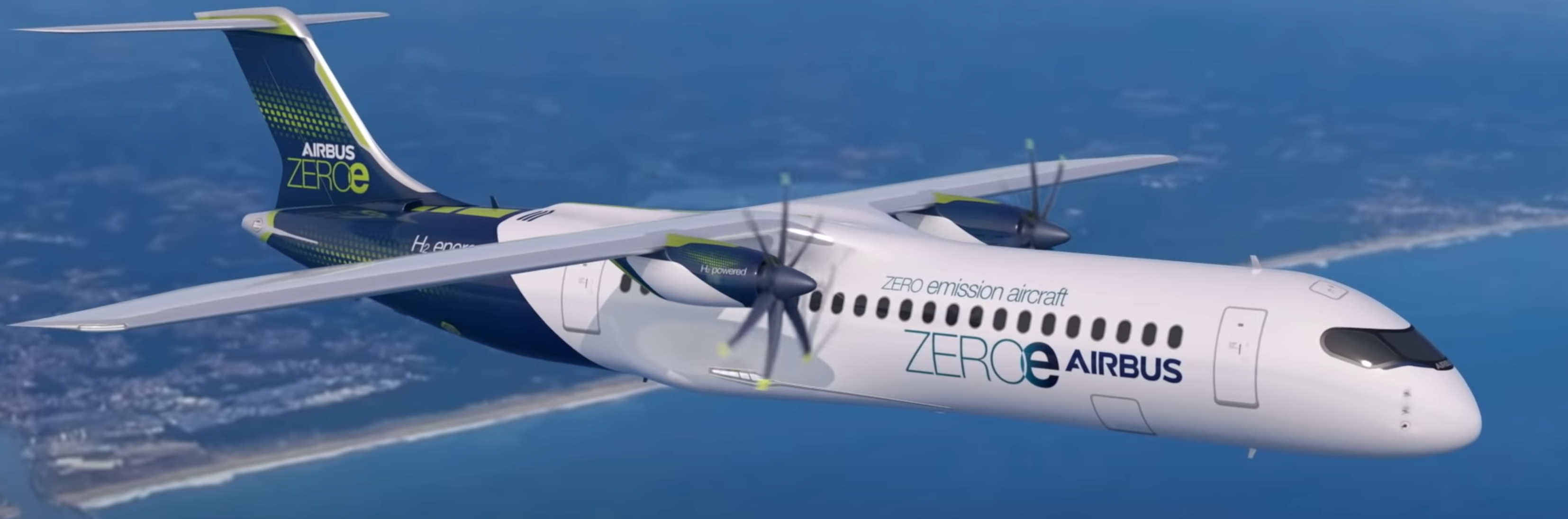
It would have a smaller capacity than the ZEROe Turbofan.
- It would have a useful range of over a thousand nautical miles.
- I feel that both ZEROe aircraft have the same fuselage cross-section, which could ease cargo handling, by using the same equipment for both aircraft.
- I also feel that both ZEROe aircraft will have the same cockpit, which should reduce crew costs.
I feel that smaller cargo aircraft will play a large part in the development of hydrogen-powered aircraft.
If the plans of some companies and individuals work out, hydrogen might be a better alternative financially to SAF.
Universal Hydrogen And Railway Locomotives
On the product page of the Universal Hydrogen web site, there is a section, which is entitled Other Transportation Applications, where this is said.
Our lightweight, aviation-grade modular hydrogen capsules can be used in a wide range of transportation applications where weight, safety, and speed of refueling are important. We are working with partners in automotive, heavy equipment, maritime, and railroad domains. If you have an application that can benefit from our global modular green hydrogen distribution network, please get in touch!
I believe that the railway locomotive of the future will be hydrogen-electric. And so do some of the UK’s rail freight companies, judging, by some of their press releases.
- It would have an electric transmission. like most locomotives today, such as the UK’s Class 66, Class 68, Class 70, Class 88, Class 93 and the upcoming Class 99 locomotives.
- It will be able to use 25 KVAC overhead electrification, where it exists.
- Hydrogen-power will be used, where there is no electrification.
The lowest-carbon of the locomotives, that I listed, will probably be the Class 99 locomotive.
- Thirty have been ordered by GB Railfreight, from Swiss company; Stadler.
- The locomotives will be built at Valencia in Spain.
- It will have up to 6 MW, when running using electrification.
- It will have up to 1.6 MW, when running using a Cummins diesel, with a rating of 2,150 hp.
- Because a proportion of UK freight routes are electrified, it is likely that these locomotives will substantially reduce carbon emissions for many locomotive-hauled operations.
It should be noted that Cummins are heavily into hydrogen and their philosophy seems to embrace families of engines, which are identical below the cylinder head gasket, but with appropriate cylinder heads and fuel systems, they can run on diesel, natural gas or hydrogen.
I wouldn’t be surprised to find out that the Class 99 locomotive will have a diesel engine, that has a hydrogen-powered sibling under development at Cummins.
With perhaps a power on hydrogen of about 2.5 MW, these zero-carbon locomotives would be able to handle upwards of ninety percent of all heavy freight trains in the UK.
These are further thoughts.
Alternatives To Cummins Hydrogen Internal Combustion Engines
There are two main alternatives, in addition to similar engines from companies like Caterpillar, JCB, Rolls-Royce mtu and others.
- Fuel cells
- Gas-turbine engines.
Note.
- Universal Hydrogen and others have fuel cells, that can probably deliver 2.5 MW.
- Universal Hydrogen use Plug Power fuel cells.
- Rolls-Royce have developed a 2.5 MW electrical generator, based on the engine in a Super Hercules, that is about the size of a typical beer-keg. I wrote about this generator in What Does 2.5 MW Look Like?.
Cummins may be in the pole position with Stadler, but there are interesting ideas out there!
Cummins have also indicated, they will build hydrogen internal combustion engines at Darlington in the UK.
Would One Of Universal Hydrogen’s Hydrogen Capsules Fit In A Railway Locomotive?
These are various widths.
- Class 66 locomotive – 2.63 metres.
- ATR72 airliner – 2.57 metres.
- DHC Dash-8 airliner – 2.52 metres
- Class 43 power car – 2.74 metres
I suspect that even if it was a bit smaller a hydrogen capsule could be made for a UK locomotive.
How Big Is The Market?
The UK has around five hundred diesel railway locomotives.
Birmingham Plays The Green Card
This article in The Times today is entitled Birmingham Airport Set For Hydrogen Take-Off.
These two paragraphs introduce the article.
Birmingham Airport aims to become the first in Britain to operate commercial zero-emission hydrogen-fuelled flights — and by as early as 2025.
The ambitious goal follows the signing of a partnership with the British start-up ZeroAvia whose first trial flight of a 19-seater passenger aircraft powered by hydrogen fuel cells took place last month.
Other points from the article include.
- ZeroAvia is also working with Rotterdam Airport.
- Initially, it is likely that the hydrogen-powered aircraft will be used for cargo.
- The government wants all UK domestic flights to be zero-carbon by 2040.
- Birmingham wants to be zero-carbon by 2033.
- ZeroAvia has received upwards of £20 million of matched-taxpayer funding.
- It has some big backers and well-known airlines, who have placed orders.
These are my thoughts.
ZeroAvia’s Airliners
This paragraph from The Times article describes their first two aircraft.
ZeroAvia is retrofitting turboprops, 19-seater Dornier and in future 80-seater De Havilland Canada Dash 8-400s, with tanks of hydrogen which is converted by fuel cell stacks to energy taken to electric motors that power the propellers. The only emission is water. It is talking to potential new-entrant airframe makers to build all-new hydrogen aircraft of the future.
Note.
- The Dornier 228 is a 19-seater airliner of which over three hundred have been built.
- The de Havilland Canada Dash 8-400 is an 80-seater airliner of which over six hundred have been ordered and over 1200 of all marques of Dash 8s have been built.
Both are workhorses of the smaller airlines all over the world.
As the paragraph from The Times indicates the power system is not conventional, but then most of this new breed of small electric/hydrogen/hybrid airliners have electric propulsion. I suspect that there’s been a marked improvement in the design and efficiency of electric motors.
Electric propulsion should have a substantial noise advantage over turboprops.
ZeroAvia are also retrofitting their two chosen airliners.
This offers advantages in the certifying of the airliners. Providing the changes made to the airframe are not significant, the various certifying authorities in the UK, US and EU will allow previous certification to be carried over.
This means that ZeroAvia only have to thoroughly test and certify the powerplant and its integration into the aircraft.
One of their competitors, the Eviation Alice is a completely new airframe with battery-electric power, so I suspect this aircraft will take longer to certify.
I think ZeroAvia have used this shorter certification time to aim to get their airliners in service first.
Those that don’t win, don’t get the same fame.
Hydrogen At Birmingham Airport
Hydrogen will be needed at Birmingham Airport to refuel ZeroAvia’s airliners.
But will hydrogen also be used on the airside to power some of the heavy vehicles you see on airports.
Look at this page on the Hawaii Technology Development Corporation, which shows a Hydrogen Fuel Cell U-30 Aircraft Tow Tractor. The specification indicates, that it can tow a C-17 or a Boeing 747.
I wouldn’t be surprised to see Birmingham Airport build their own electrolyser nearby both to supply hydrogen-powered aircraft and decarbonise the airside.
To And From Birmingham Airport
Consider.
- Birmingham Airport is connected to Birmingham International station by a free AirRail Link.
- Birmingham International station has an impressive number of services, many of which are electric.
- There will be a people mover to connect to Birmingham Interchange for High Speed Two.
- Birmingham Interchange will have five trains per hour (tph) to and from London, taking under forty minutes.
- There are plans to extend the West Midlands Metro to the airport, with journeys taking thirty minutes from the City Centre.
- Birmingham Airport is at the centre of the UK’s motorway network.
Most public transport to Birmingham Airport will be zero-carbon and the percentage that is will increase.
A Green Air Bridge To Ireland
Currently the fastest services between London and Birmingham International station take a few minutes over the hour.
But after High Speed Two opens, the service will improve.
- High Speed Two will take under forty minutes.
- There will be five tph.
- High Speed Two will connect to the Elizabeth Line and the London Overground at Old Oak Common station.
- Euston station will have better connectivity to the Underground.
This diagram shows High Speed Two services.
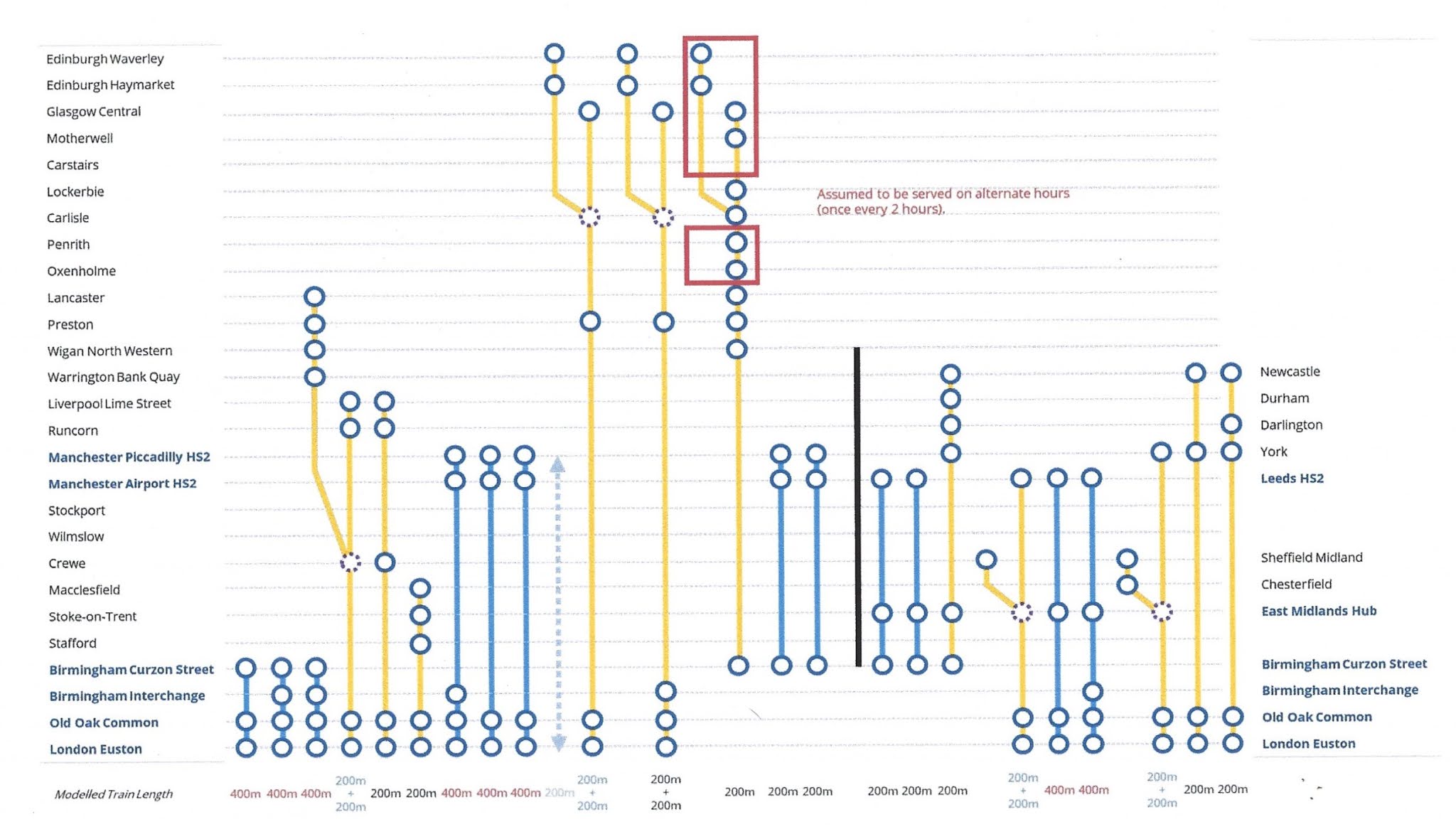
Consider.
- Birmingham Interchange has good connections in the North.
- I can see that Birmingham Airport could start to attract lots of passengers going between the islands of Great Britain and Ireland.
- And don’t forget Cardiff, Swansea, Exeter, Isle of Man and New Quay.
- Could Birmingham-Dublin and Birmingham-Belfast be run as frequent shuttles?
- Will there be AirRail tickets between Euston and Belfast and Dublin?
I also wonder if zero-carbon travel will attract passengers?
Zero-Carbon Air Cargo At Birmingham Airport
This article on Railway Gazette is entitled Varamis Rail Launches Regular Express Light Freight Service.
These three paragraphs outline the service from Varamis Rail.
Varamis Rail has launched a 160 km/h express freight service between Glasgow and Birmingham International using a converted electric multiple-unit.
The service is targeted at express parcels and third-party delivery companies seeking next day delivery of consumer goods.
Consignments arriving at the Glasgow hub by 17.30 from Monday to Friday can reach Birmingham at 23.00, with northbound freight arriving at the Birmingham site by 23.00 reaching Glasgow at 05.30 the next morning.
I think this service would interface well with cargo planes operating overnight from Birmingham Airport.
It seems to me, that Spokes at Speke could be reborn at Birmingham.
Conclusion
Birmingham Airport seems to be positioning itself to take advantage of aviation’s new breed of planes.
 The Anonymous Widower