Direct London Trains ‘Could Start In 2026’
The title of this post, is the same as that of this article on the BBC.
This is the sub-heading.
A new train company is hoping its proposals for new daily services from Shropshire to London Euston could begin towards the end of 2026.
Wrexham, Shropshire and Midlands Railway (WSMR), which is led by international rail firm Alstom, submitted a new bid at the end of last year to provide four daily trains.
These two paragraphs add detail to the story.
The county has not had a direct train link to the capital since Avanti West Coast stopped its single daily service in 2024 because of low passenger numbers.
The move has been welcomed by regular commuter Charlotte Foster, who lives on the Welsh border. She said a direct service would save her the stress of missing a connection or catching a train elsewhere.
These are my thoughts on this proposal.
I wonder If Alstom Will Be Using This route To Trial Hydrogen-Powered Trains?
Consider.
- The route was a failure for Virgin Trains.
- Perhaps the curiosity value of hydrogen-trains will generate sufficient traffic.
- Hydrogen-electric trains will be very quiet. Those in Germany are hydrogen-electro-mechanical and very noisy.
- The trains will be based on the proven Aventra platform.
- I reported on Alstom’s hydrogen trains for the UK in Alstom Plans To Operate Its Own Passenger Train Service In The UK For The First Time.
- Perhaps Alstom feel that an extended test will convince passengers that the trains are a good idea.
- An extended test would give proper costings for Great British Railways and prospective open access operators.
The map downloaded from the BBC article shows the route.
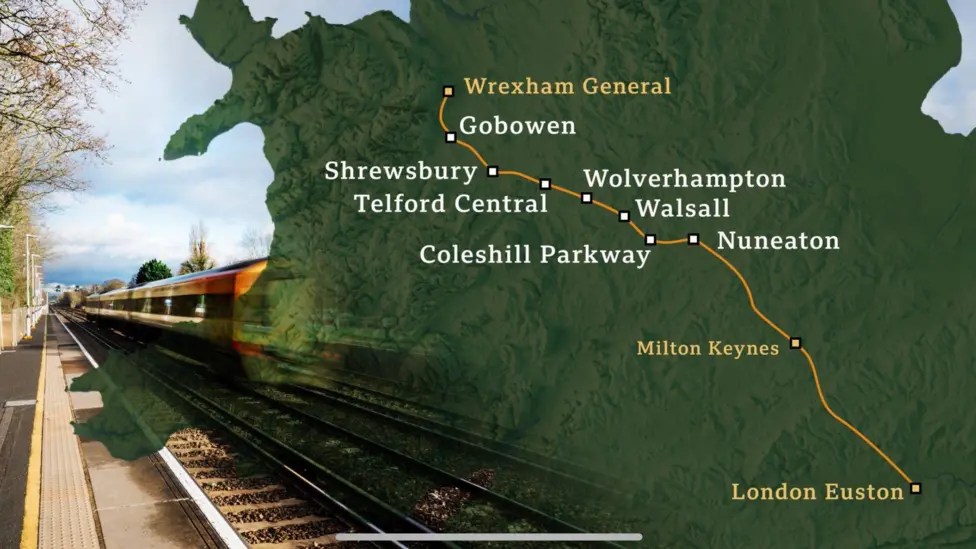
Note.
- There are eight intermediate stops.
- Euston and Wolverhampton is 124.9 miles and fully electrified.
- Wolverhampton and Wrexham General is 59.9 miles and is not electrified.
- The section of the route without electrification at 120 miles return might need some new electrification for battery-electric trains, but from their experience in Germany, I suspect that Alstom, will know how to cover the route using hydrogen-hybrid trains, which would use the existing electrification between Euston and Wolverhampton.
This picture shows a visualisation of a possible Alston hydrogen train, which would probably be built in Derby on an Aventra platform.
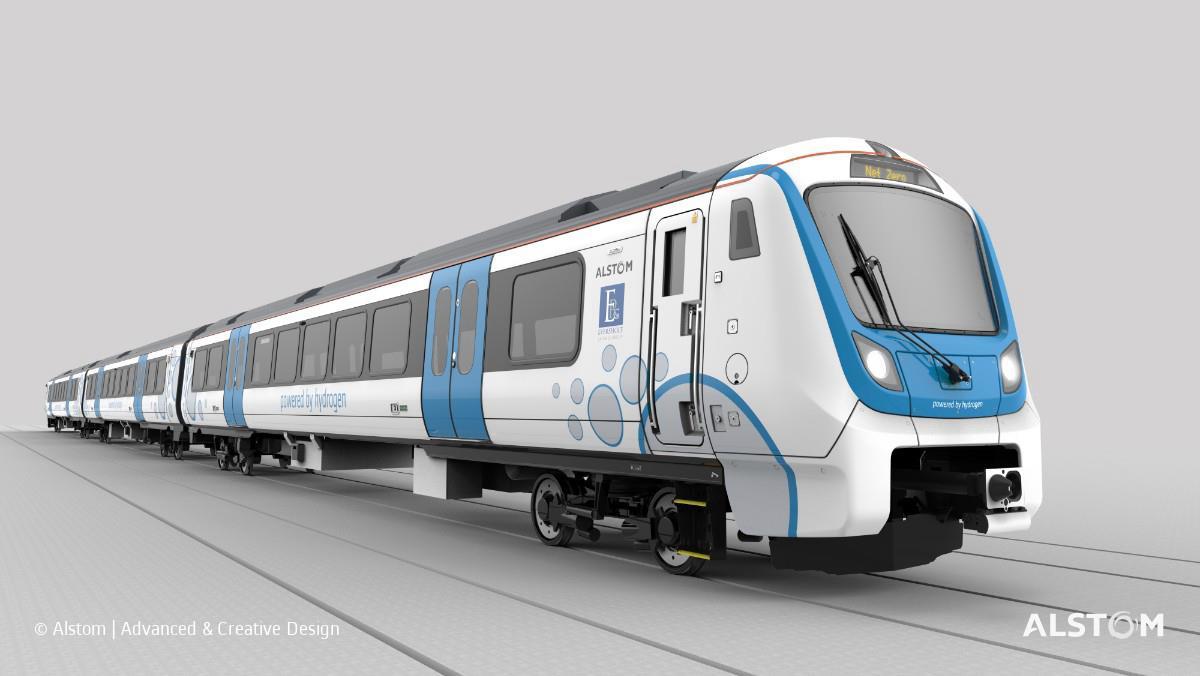
Note.
- It could be up to five-cars long.
- I suspect Alstom could give the train a 125 mph cruising speed, so it could mix it with all the express trains between Euston and Wolverhampton.
- The trains would have a very long range on hydrogen.
- Hydrogen trains could certainly handle a round trip between Wolverhampton and Holyhead on a single fuelling.
- Hydrogen fuelling is likely to be setup at Cemex at Wrexham and the Port of Holyhead.
I think it could be an ideal trial route for hydrogen trains.
But also it could bring growth to the towns and cities between Wolverhampton and Holyhead.
Would Alstom’s Hydrogen-Hybrid Trains Be Suitable For Other Routes?
Most Certainly!
In the first place, the route could be extended to Holyhead, which would surely bring growth to the towns and cities between Wolverhampton and Holyhead.
This would create a zero-carbon route between London and the Island of Ireland.
But around the UK, there would be other routes.
I can envisage these routes being run by hydrogen-hybrid trains.
- London Waterloo and Exeter – Third-rail operation
- London Bridge and Uckfield – Third-rail operation
- London Bridge and Hoo – Third-rail operation
- East Coastway and Marshlink Lines – Third-rail operation
- Scotland – Replacement of Inter7City trains and filling in the gaps in electrification.
Note.
- Some areas already have or have plans for hydrogen supply networks.
- With the exception of supplying hydrogen, very little infrastructure would be needed.
- Hydrogen trains should be fairly quiet.
- Hydrogen trains don’t create much disruption, when they are installed.
Aventras have been fairly well received and can be between three and nine cars.
Rail Operator Crosses Line For First Time In Years
The title of this post, is the same as that of this article on the BBC.
This is the sub-heading.
An operator’s first passenger train has crossed a historical and scenic route for the first time in more than a decade.
These three paragraphs give more details about the reason for the trip.
Avanti West Coast’s 07:54 GMT from Wigan was the first to run on the Settle to Carlisle route earlier.
The 73-mile line is renowned for its picturesque views across the Yorkshire Dales and the North Pennines via the Ribblehead viaduct.
The route is usually only used by Northern trains operating between Leeds and Carlisle, but Avanti is using it as a diversion while work to replace the Clifton Bridge take place over the M6 near Penrith.
I’ve only ridden the Route once and that was on a day in 2014, when the weather wasn’t at its best.
Afterwards I wrote Long Live The Settle And Carlisle, so the trip couldn’t have been that bad!
These paragraphs give the reason for and details of the diversion.
The Settle to Carlisle line does not have overhead power lines, meaning Avanti is using bi-mode Class 805 Evero trains which operate on diesel.
Several timetable changes have been made during the engineering works, with disruption expected until 15 January.
Until 5 January, the railway will also be blocked south of Preston, meaning on these days the diverted services are running between Wigan North Western and Carlisle.
But if Great British Railways could get their act together and convert a sufficient number of their Hitachi diesel bi-modes to battery-electric bi-modes and do some testing and a few calculations, the problem would be solved.
In 2021, I wrote Through Settle And Carlisle Service Under Consideration, after Modern Railways wrote an article of the same name.
Could Lumo Run A Lincoln And Glasgow Service Via Doncaster, Leeds And Settle?
In South Yorkshire Now Has Better North-South Connections, I calculated that Doncaster station now has 173 express trains per day, that stop at the station.
So why not add five or six express trains per day to Doncaster, Lincoln, Leeds, Settle, Carlisle and Glasgow?
And why not ask Lumo to run it, as they’d know how to run such a service?
Historic Church Tower Suspended On Stilts To Make Way For London Skyscraper
The title of this post, is the same as that of this article in The Times.
This is the sub-heading.
The remaining part of the 700-year-old All Hallows Staining, off Fenchurch Street, will be the centrepiece of the public square below Axa’s £1 billion office
These three paragraphs add more details.
A700-year-old church tower is being suspended on 45ft stilts while developers clear the ground beneath to make way for the City of London’s newest skyscraper.
The tower, which is all that remains of All Hallows Staining close to Fenchurch Street station, is being preserved and will be the centrepiece of the public square at the base of 50 Fenchurch Street — the £1 billion office tower being built by the investment arm of Axa, the French insurer.
More than 125,000 tonnes of earth has been cleared from underneath and around the church — which survived the Great Fire of London in 1666 — into which the foundations will be laid and a basement level built.
The Wikipedia entry for All Hallows Staining, starts with this paragraph.
All Hallows Staining was a Church of England church located at the junction of Mark Lane and Dunster Court in the north-eastern corner of Langbourn ward in the City of London, England, close to Fenchurch Street railway station. All that remains of the church is the tower, built around AD 1320 as part of the second church on the site. Use of the grounds around the church is the subject of the Allhallows Staining Church Act 2010 (c. v).
Note.
- The Wikipedia entry gives a lot of history and other details about the tower.
- It was named “Staining”, which means stone, to distinguish it from the other churches of All Hallows in the City of London, which were wooden.
- The old church survived the Great Fire of London in 1666 but collapsed five years later in 1671.
- The church appears to have been cheaply rebuilt in 1674.
- In 1870 the parish of All Hallows Staining was combined with that of St Olave Hart Street and All Hallows was demolished, leaving only the tower.
- All Hallows Staining seems to have survived World War Two, but St Olave Hart Street suffered serious damage.
- Between 1948 and 1954, when the restored St Olave’s was reopened, a prefabricated church stood on the site of All Hallows Staining. The tower of All Hallows Staining was used as the chancel of the temporary church.
- The remains of All Hallows Staining were designated a Grade I listed building on 4 January 1950.
The tower of All Hallows Staining seems to have a very strong survival instinct.
This web page gives more details of Fifty Fenchurch Street,
This morning, I went to take some pictures of the tower and the construction site.




















Note.
- I walked around the site from the forecourt of Fenchurch Street station.
- The last three pictures were taken from the top deck of a Westbound 25 bus.
- There appears to be no accessible bar or roof-top from which you can look down on the site.
So for the present time, the 25 bus seems to give the best views.
This afternoon, I took a train to Fenchurch Street station and looked at the Eastern and Northern sides of the site.















Note.
- The first picture was taken through the upper windows of the front of Fenchurch Street station.
- I think I might have got a better view out of the window of Fenchurch Street station, if Great Socialist Railways had cleaned the windows.
- In pictures three to nine, the “Walkie-Talkie” towers over All Hallows Staining.
- Some pictures were better than those I took in the morning, as the truck had moved.
- The last picture shows the sign for the Garden at 120.
The area isn’t short of geometric shapes to photograph.
How Will The East Coast Main Line Timetable Change Affect Sheffield?
This article in the October 2025 Edition of Modern Railways is entitled Industry Gears Up For December ECML Timetable Change.
This is the first paragraph.
Major changes are planned to trains along the East Coast main line from 14 December as the long-heralded timetable takes effect.
In this post, I will see how the changes detailed in the article in Modern Railways will affect Sheffield and Doncaster.
Aberdeen-Edinburgh
This is said about Aberdeen and Edinburgh services.
Monday-Saturday services will not change between Aberdeen and Edinburgh, with all intermediate stations served at similar times.
The LNER service to and from King’s Cross will call additionally at Doncaster, Newark Northgate and Peterborough; the last LNER Monday-Friday departure from Aberdeen will terminate at Doncaster instead of Leeds, and the first LNER Monday-Saturday train to Aberdeen will start from King’s Cross at 05:48 instead of Leeds.
Note.
- An hourly fast train between Edinburgh and King’s Cross will have a journey time of 4 hours and 10 minutes, which is a saving of at least 12 minutes.
- There is an Aberdeen-Manchester air service, but no Edinburgh-Manchester or Leeds-Scotland air services.
- In Could London And Central Scotland Air Passengers Be Persuaded To Use The Trains?, I speculated about how air passengers could be tempted to use the trains between London and Central Scotland.
- It looks to me, that LNER are strengthening their services between Doncaster and Scotland.
- Will that 05:48 King’s Cross departure for Aberdeen, enable a working day in Aberdeen and return?
Is LNER’s aim to get travellers to use the trains between Doncaster and Scotland, as an alternative to driving or trains from Leeds?
Alnmouth and Berwick
This is said about Alnmouth services.
Quicker LNER journey times are promised to stations South of York, with King’s Cross-Alnmouth journey times up to 15 minutes quicker.
More TPE trains will run between Newcastle, Morpeth, Alnmouth, Berwick, Reston, Dunbar, East Linton and Edinburgh Waverley.
The number of trains calling at Durham on weekdays will fall from 18 to 13 Southbound and from 15 to 10 Northbound.
This is said about Berwick services.
LNER trains will call every two hours during the middle of the day, and the number of weekday trains to King’s Cross falls from 15 to 11 Southbound with a 13 to nine fall Northbound. More TPE trains will call.
Note.
- Lumo serves Newcastle, Morpeth and Edinburgh.
- Reston and East Linton are new stations.
- The stations between Newcastle and Edinburgh need adequate parking to attract commuters.
It looks to me, that LNER are timing the trains to attract day trips along the East Coast Main Line.
Bradford Forster Square/Interchange
This is said about Bradford Forster Square services.
The number of weekday trains will remain as per May 2025, but on Sundays, the number of trains serving Forster Square increases from two to six each way on a two-hourly interval. LNER stopping patterns change, with fewer trains calling at Peterborough and none at Grantham or Retford.
Trains currently stop at Peterborough, Doncaster, Wakefield Westgate, Leeds and Shipley, but surely a more regular six trains per day (tpd) is preferable.
This is said about Bradford Interchange services.
At Interchange, Grand Central Trains will run at different times to the May 2025 timetable, with King’s Cross journeys up to 20 minutes quicker. One GC each way will call at Peterborough, while some will stop at Pontefract Monkhill on Sundays for the first time.
Note.
- Trains currently stop at Peterborough, Doncaster, Pontefract Monkhill, Wakefield Kirkgate, Mirfield, Brighouse, Halifax and Low Moor
- Is the twenty minutes time saving due to the new digital signalling to the South of Doncaster?
- Is this another open access operator being allowed to do what they do best?
This looks to be a very useful service, which serves several stations, with no other service to London.
Doncaster
This is said about Doncaster services.
Additional trains calling at destinations including Birmingham New Street, Sheffield, York, Newark and Berwick-upon-Tweed. LNER Aberdeen/Inverness trains will call at Doncaster. EMR trains will be retimed at Doncaster to provide better connections with LNER’s revised timetables, but journeys from Doncaster to Sleaford and Spalding will require a change at Lincoln. This change has been made to “enable improved connections” at Peterborough, Sleaford, Lincoln and Doncaster. The number of trains calling at Stevenage falls from 24 to 19 Southbound and 24 to 21 Northbound, with Grantham stops dropping by seven trains to 28 Southbound and 4 to 29 Northbound.
If CrossCountry Trains were to switch their trains to Hitachi InterCity Battery trains, I believe that a version of these trains could handle routes like Plymouth and Aberdeen.
- This would speed up services.
- Trains would run close together and thus increase capacity.
- Services could even be faster.
So expect a replacement order for CrossCountry Trains diesel multiple units soon.
Glasgow
LNER gave up serving Glasgow Central from King’s Cross in the December 2024 timetable change.
In Lumo Will Extend Its King’s Cross And Edinburgh Service To Glasgow, I talked about Lumo extending their King’s Cross and Edinburgh service to Glasgow Central station.
Hull
This is said about Hull services.
On Mondays-Fridays, Hull Trains will provide an extra train from London.
The LNER Monday-Friday Hull-Doncaster train will be withdrawn;
Northern will operate a 20:25 departure to Doncaster; calling at Brough and Selby.
Note.
- It looks like Great British Railways have surrendered Hull and Beverley to Hull Trains.
- Hull Trains are converting their Class 802 trains to battery-electric power.
- It is likely that Hull Trains upgraded trains will be able to use the Great Northern and Great Eastern Joint Line via Lincoln on battery power.
The new timetable appears to be ready for the future of Hull Trains.
Leeds
This is said about Leeds services.
LNER services will depart to King’s Cross at xx.10 and xx.40.
Northern will introduce an extra mostly hourly service between Leeds and Sheffield calling at Wakefield Westgate. They will depart about 30 minutes earlier or later than the CrossCountry service.
Note.
- I would expect the two King’s Cross and Leeds services which would both stop at Doncaster and Wakefield Westgate would set the timings between Doncaster and Leeds.
- Currently, of the four trains that run to and from Leeds every two hours, two are planned to terminate at Leeds, one at Harrogate and one at Bradford Forster Square.
- There is also a daily service between King’s Cross and Skipton via Leeds.
- I can envisage another service between King’s Cross and Ilkley via Leeds, Kirkstall Forge, Guiseley, Burley-in-Wharfedale and Ben Rhydding.
- I can envisage another service between King’s Cross and Huddersfield, via Leeds, White Rose, Morley, Batley, Dewsbury, Ravensthorpe, Mirfield and Deighton.
- I can envisage another service between King’s Cross and Hebden Bridge, via Leeds, White Rose, Morley, Batley, Dewsbury, Ravensthorpe, Mirfield, Sowerby Bridge, Mytholmroyd and Brighouse.
- An alternative to Hebden Bridge would be Rochdale, which already has four platforms and is on the Manchester Metrolink
- It appears that Bradford Forster Square, Harrogate, Huddersfield, Leeds and Skipton stations can turn nine or ten-car trains and Ilkley can turn five-car trains.
- I also believe that one of Hitachi’s InterCity Battery trains could use battery power to take the spectacular Settle and Carlisle Line to Carlisle or even Glasgow Central.
- If needed pairs of five-car trains could split and join at Leeds, with one train waiting at Leeds and the other train going on to another destination.
- The CrossCountry and Northern Trains services on the Sheffield and Leeds route via Doncaster and Wakefield Westgate would probably need to be modern battery-electric trains to maximise the capacity on the route.
There certainly seem to be opportunities to give a number of stations in Yorkshire an all-electric service to King’s Cross with a two-hourly frequency, in a time of a few minutes over two hours.
Lincoln
This is said about Lincoln services.
One more LNER train from King’s Cross will run, with the first train arriving earlier and the last train later. There will no longer be an LNER train serving Stevenage with passengers having to change at Newark Northgate or Peterborough. An improved service will run to and from Nottingham, with an increase from one to two trains per hour on Mondays-Saturdays. An hourly service will run to Crewe, and a new Matlock-Nottingham-Lincoln-Cleethorpes service will run. EMR will cease all bar morning peak direct trains to/from Leicester. Newark Northgate-Lincoln trains will be reduced from five to four on Mondays-Fridays, eight to four on Saturdays and ten to eight on Sundays.
Note.
- Travellers between Lincoln/Nottingham and the North/Scotland will have two trains per hour to Newark Northgate, where there will be two tph to the North/Scotland.
- The hourly Crewe service will give access to Liverpool Manchester and the West Coast Main Line.
- Will there still be a Liverpool and Norwich service or will this be replaced by East-West Rail?
There seems to be a big sort out to EMR services.
Newcastle
This is said about Newcastle services.
The number of trains serving King’s Cross increases from 35 to 53 Southbound on weekdays and from 36 to 52 Northbound. One train every hour will run non-stop to York. More TPE trains will run Northbound (see Alnmouth and Berwick), while Northern is retiming services on the Northumberland Line in anticipation of Northumberland Park and Bedlington stations opening in early 2026. A semi-fast hourly service between Newcastle and Middlesbrough will run on Mondays-Saturdays and there will be an hourly stopping service between them.
Note.
- There will be a big increase in services between King’s Cross and Newcastle.
- Is the aim to persuade travellers to use trains rather than airlines?
- LNER also runs one train per day (tpd) between King’s Cross and Middlesbrough.
- Grand Central Trains will be running at a frequency of six tpd between King’s Cross and Sunderland via Thirsk, Northallerton, Eaglescliffe, Hartlepool and Seaham.
Hull appears to have been left to Hull Trains and Glasgow to Lumo, and Sunderland appears to be left for Grand Central Trains.
Conclusions
I am coming to some conclusions about services on the East Coast Main Line, with respect to Sheffield.
Doncaster Is A Well-Equipped Station
Doncaster is the nearest station to Sheffield on the East Coast Main Line.
- Over the last few years, Doncaster station has been improved.
- It has a subway with a more than adequate number of lifts.
- The station has nearly 600 parking spaces.
- There is a taxi rank.
- There is no Marks & Spencer’s food store, which is important for a coeliac like me.
- There are thirty bus stands close to Doncaster station.
- Doncaster station is well-equipped with cafes, a pub and coffee stalls.
- All trains to Aberdeen, Bradford Forster Square, Bradford Interchange, Edinburgh, Hull, King’s Cross, Leeds, Sheffield and Wakefield seem to stop at the station.
- There are several local trains per hour.
- Changing trains is not a strenuous exercise.
Doncaster is one of the UK’s better regional stations.
Doncaster Needs A Connection To The Sheffield Supertram
One of the first things, I do when I arrive in a strange town or city is look for the local public transport network.
In 2019, Sheffield published an ambitious plan for their tram network, which I wrote about in Sheffield Region Transport Plan 2019 – Doncaster Sheffield Airport.
The post contained this map, of Sheffield’s plans for the trams.
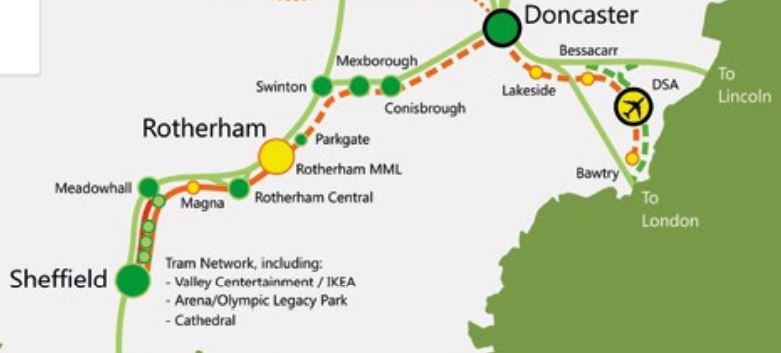
Doncaster and Doncaster Sheffield Airport are connected to the current end of the tram-train route at Rotherham Parkgate.
This OpenRailwayMap shows the rail lines between Rotherham Parkgate and Doncaster.
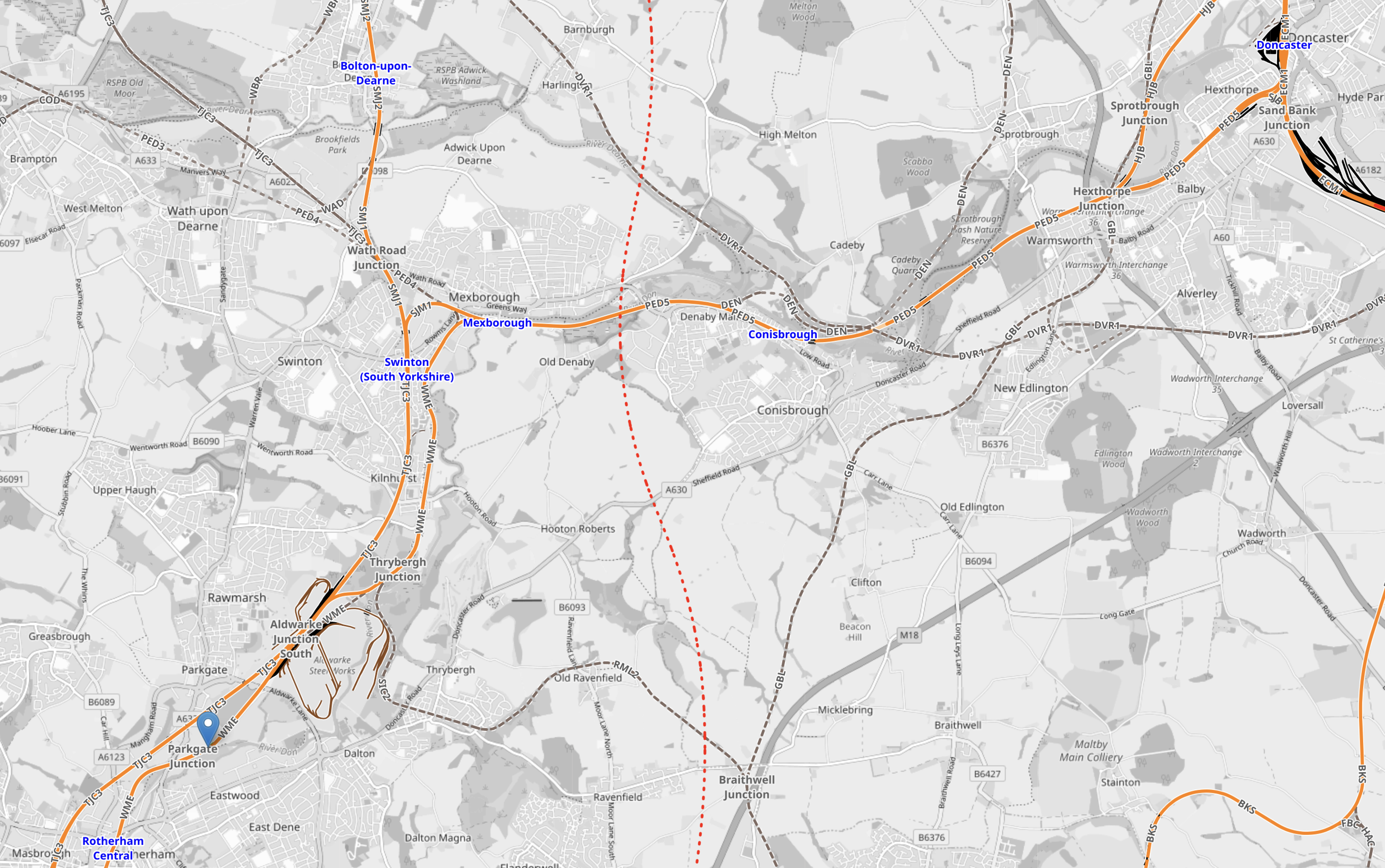
Note.
- Doncaster station is in the North-East corner of the map.
- Rotherham Central station is in the South-West corner of the map.
- The blue arrow in the South-West corner indicates Rotherham Parkgate tram stop.
- Swinton, Mexborough and Conisbrough stations can be picked out.
- The dotted red line running North-South across the map is the route of the ill-fated Eastern Leg of High Speed Two.
It is a simple application of tram-train technology to connect Doncaster station and Doncaster Sheffield Airport to the Sheffield Supertram.
With all the comings and goings on the East Coast Main Line at Doncaster station, I believe that the tram-train connection to Sheffield and Rotherham is essential.
The Cities Of Bradford, Doncaster, Leeds, Sheffield and Wakefield Can Have a High-Frequency Rail Connection
Consider.
- Four stations are all step-free with a bridge or subway served by lifts.
- Bradford Forster Square station has level access to the platforms from the street.
- The rail lines between the five stations are electrified, with the exception of Sheffield and Doncaster.
- Services between the cities are run by CrossCountry Trains, Grand Central Trains, Hull Trains, LNER and Northern Trains.
- Most maximum speeds are not unduly slow.
Consequently the five cities can have a high-frequency rail connection in excess of four tph.
Could this be the basis of a Five-Cities Metro?
Open Access Services
There are six open access services running on the East Coast Main Line.
- Grand Central Trains – King’s Cross-Bradford Interchange via Peterborough, Doncaster, Pontefract Monkhill, Wakefield Kirkgate, Mirfield, Brighouse, Halifax and Low Moor – 4 tpd
- Grand Central Trains – King’s Cross-Sunderland via Peterborough, York, Thirsk, Northallerton, Eaglescliffe and Hartlepool – 6 tpd
- Hull Trains – King’s Cross-Hull via Stevenage, Grantham, Retford, Doncaster, Selby, Howden, Brough – 4 tpd
- Hull Trains – King’s Cross-Beverley via Stevenage, Grantham, Retford, Doncaster, Selby, Howden, Brough, Hull and Cottingham – 2 tpd
- Lumo – King’s Cross-Edinbugh via Stevenage, Newcastle and Morpeth – 5 tpd
- Lumo – King’s Cross-Glasgow Queen Street via Stevenage, Newcastle, Morpeth, Edinburgh and Falkirk High – 2 tpd
Note.
- tpd is trains per day.
- All seem to serve an exclusive area, except Lumo.
- In a couple of years, all could be using Hitachi trains.
- I suspect some services will swap their diesel generators for batteries.
Battery-power would allow some services to be zero-carbon, even when using the GNGE diversion.
A Taste Of The Future
On Friday, I went to Chester and took a train home from Crewe to Euston.
It was a new Hitachi Class 805, that sped me to London, with just a stop at Milton Keynes.
This picture shows the train arriving at Crewe.
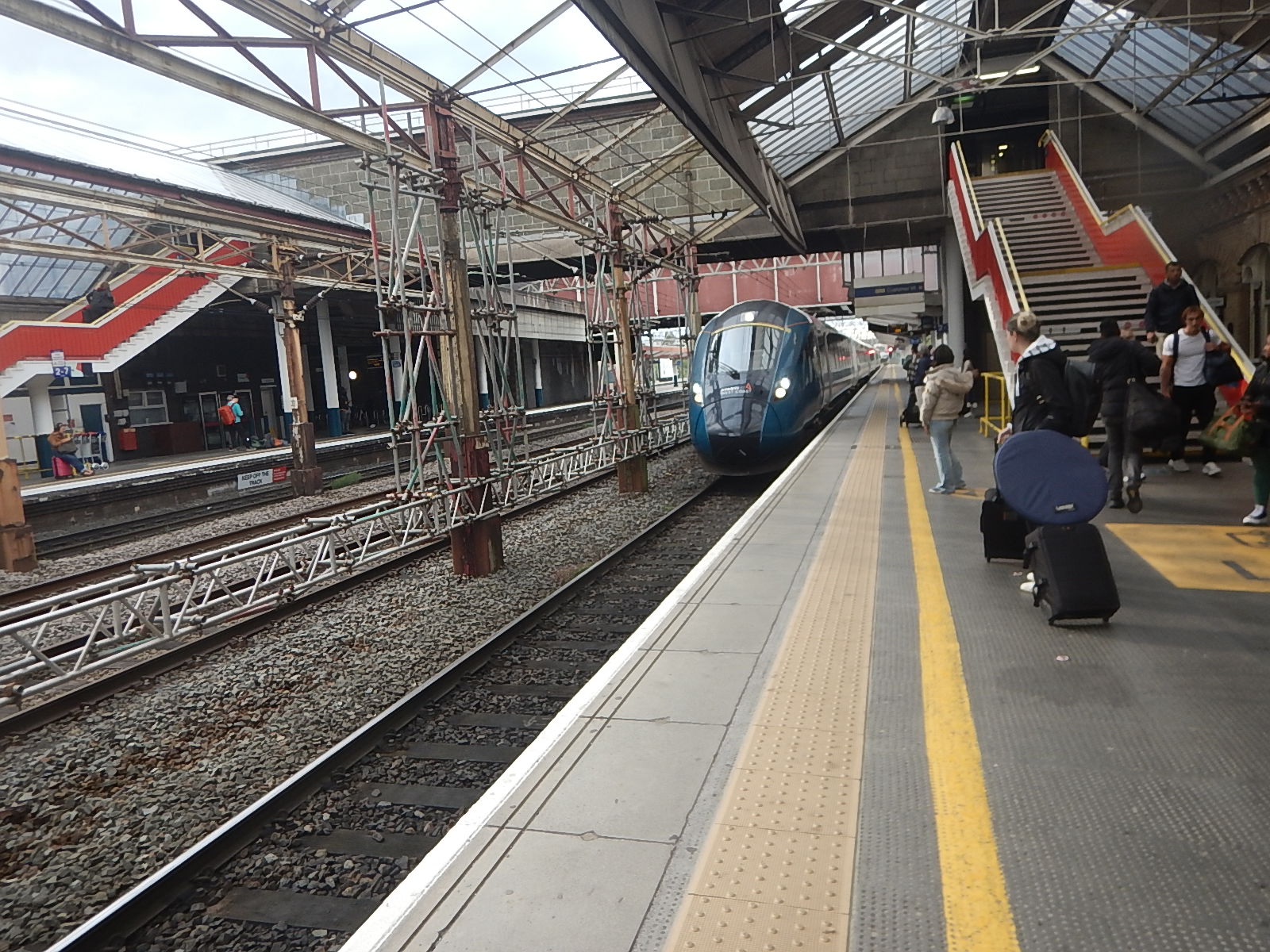
Note.
- High Speed Two it is not, but it went most of the way to Euston at 125 mph in an hour and 50 minutes.
- High Speed Two will take 56 minutes, although that is not cast in stone and steel yet.
- Crewe is one of the towns and cities, that will benefit most from High Speed Two.
But whether High Speed Two is delivered or or not, Crewe’s train service should improve in Spring 2026, as the first Lumo service on the West Coast Main Line service will be starting.
I describe the service in Lumo To Expand Scotland’s Rail Network With New London-Stirling Rail Route From Spring 2026.
This paragraph from the linked post, describes the route.
Lumo’s new route will link London Euston directly to Stirling, also calling at Milton Keynes, Nuneaton, Crewe, Preston, Carlisle, Lockerbie, Motherwell, Whifflet (serving Coatbridge), Greenfaulds (serving Cumbernauld) and Larbert.
It is fully-electrified and can support 125 mph running most, if not all, of the way.
It will certainly give knowledgeable travellers options on how they travel on the West Coast Main Line.
Lumo are also proposing another open access service on the West Coast Main Line to Rochdale, which will increase travel options.
My only worry is that Heidi Alexander will cancel it, on the grounds that open access services abstract the revenue of Great British Railways.
But then after announcing the service in a reception in Holyrood, she surely couldn’t cancel it now.
On the other hand, it could be that this Labour Government has discovered that open access trains are a more affordable way of developing rail services to and from London and over longer distances.
Consider.
- Recently, Lumo has proposed open access services from London to Carmarthen, Paignton, Rochdale and Stirling.
- Recently, Arriva has proposed open access services from London to Cleethorpes, Grimsby and Scunthorpe and between Newcastle and Brighton.
- Recently, Alsthom has proposed open access services from London to Shewsbury and Wrexham.
Not one of these services will cost the government a lot of money, but Network Rail will pick up access charges.
So has Heidi Alexander seen sense and feels that it is better to allow more open access services?
Could Any Other Open Access Services Be Opened On The West Coast Main Line?
London Euston and Rochdale is planned by Lumo and I wrote about it in FirstGroup’s Lumo Seeks To Launch Rochdale – London Open Access Service.
This sentence from the linked post, gives the route.
The trains would call at Warrington Bank Quay, Newton-le-Willows, Eccles and Manchester Victoria.
Other possibilities would surely be Blackpool and Barrow-in-Furness, but Blackpool gets a three trains per day (tpd) service from Euston and frequent trains from Preston.
Barrow-in-Furness could be a very useful destination.
With increased defence spending, the shipyards will be busy.
It could be another gateway to the Lake District.
Services could be extended to Sellafield, Whitehaven and Workington.
This OpenRailwayMap shows the Cumbrian Coast Line between the West Coast Main Line and Barrow-in-Furness.
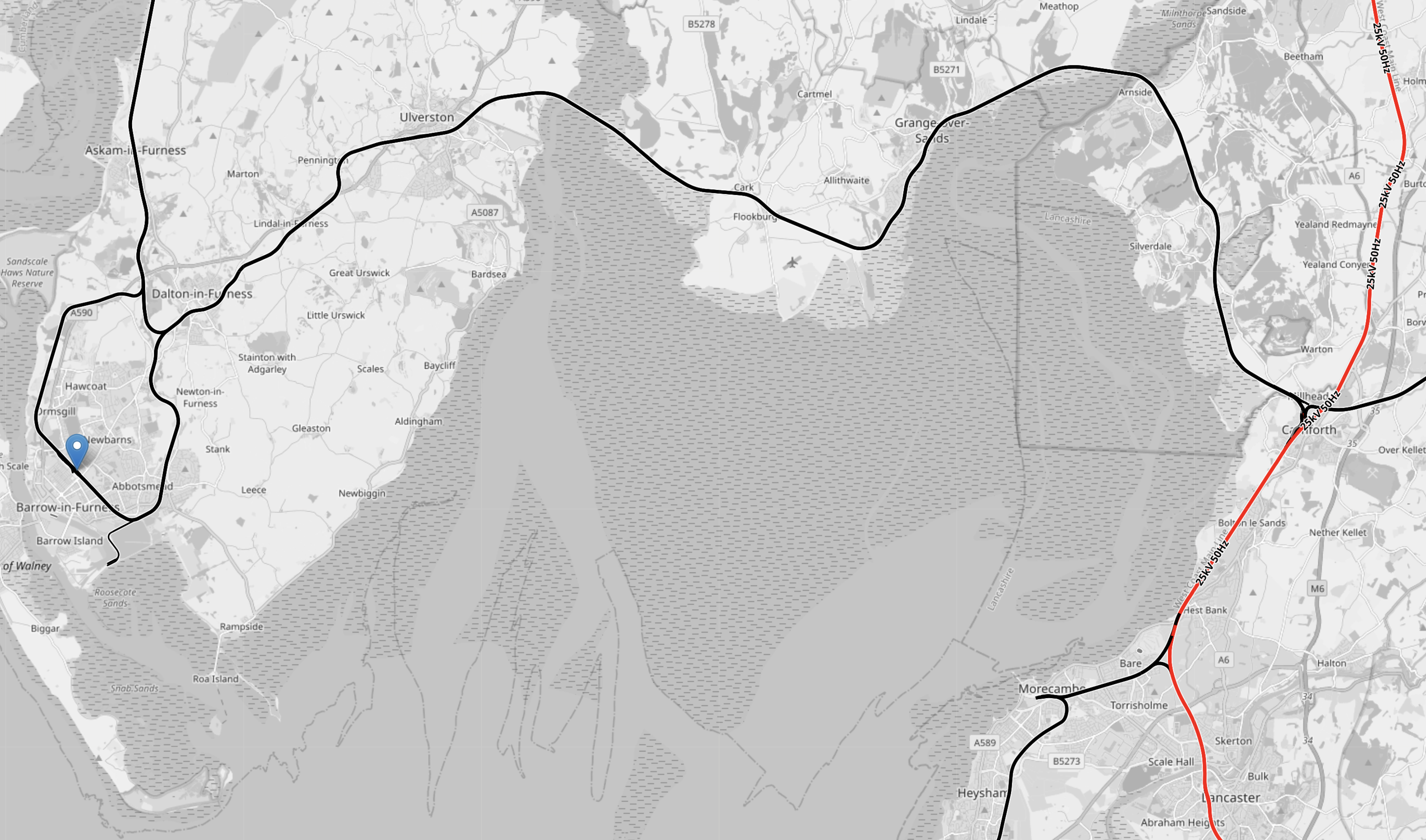
Note.
- The red tracks on the Eastern side of the map is the electrified West Coast Main Line.
- At the bottom of the map on the West Coast Main Line is Lancaster, with its station.
- The black track going West from Lancaster is the Morecambe and Heysham branch.
- The black track going West across the top of the map is the Cumbrian Coast Line.
- Barrow-in-Furness station is indicated by the blue arrow.
- The length of track without electrification on the route is less than thirty miles.
One of Lumo’s battery-electric trains would easily handle a London Euston and Barrow-in-Furness route.
Conclusion
There is obviously scope for new railway routes in the UK and some will be suitable for open access operators.
Perhaps, we need the Office of Road and Rail to be more proactive in deciding, when a route is to be served and then select an operator.
It would need to be an unbiased apolitical process, to stop an incumbent political party running trains to marginal seats, they hoped to win.
A New Era For Train Travel – FlixTrain Has Ordered 65 New European High-Speed Trains
The title of this post, is the same as that of this press release from Flix.
These four bullet points act as sub-headings.
- FlixTrain has ordered 65 new European high-speed trains, produced by Spanish train manufacturer Talgo, with locomotives supplied by Siemens
- The contract volume amounts up to EUR 2.4 bn, including certain maintenance services
- Flix sees enormous market potential for FlixTrain in Germany and Europe
- CEO André Schwämmlein: “We will start a new era of train travel”
These three paragraphs add more details.
FlixTrain, a subsidiary of the global travel–tech company Flix SE, today announced that it has ordered 65 new European high-speed trains. Talgo will provide the respective trainsets and certain maintenance services, while Siemens will provide the locomotives. The contract volume amounts up to EUR 2.4 bn, of which more than EUR 1 bn is already firmly committed.
With this strategic move, FlixTrain is responding to the growing demand for fast and affordable rail travel. The company intends to use the new high-speed trains to leverage the enormous market potential in Germany and Europe. The high-speed rail market in Germany is expected to grow by 45% by 2030, compared to 2021 volume. Across Europe, the market potential is even greater – around EUR 27 bn in 2023 with an expected annual growth of 4 – 5%.¹ In 2024 alone, FlixTrain expanded its offering by 40%, and recorded significant passenger growth, building on the strong results of 2023.
“We are pursuing a long-term strategy with FlixTrain and we will significantly expand our services in the coming years,” says André Schwämmlein, CEO and co-founder of Flix. “With the tremendous expansion of our train fleet, we will start a new era of train travel in Germany and Europe.” FlixTrain’s overall goal is to bring more people to sustainable travel by train: “We plan not only to increase our market share, but also to significantly grow the market itself”.
It looks like they’re creating a Lumo in Germany.
I have some thoughts.
The Politics
The press release says this about the German government’s view.
On the political side, the newly formed German government has acknowledged the immense potential of long-distance rail by committing to long-term investments in rail infrastructure and a reform of the track access system in Germany. These plans could unlock more private investment in Germany’s rail sector, fostering innovation for a broader range of services. Ultimately, this would lead to more competition and a better offer for customers.
I don’t think, they would be allowed to set up in the UK, as they take revenue from Great British Railways.
I can also see FlixTrain appealing to a future Reform UK government.
Passenger Service
The press release says this.
At the same time, FlixTrain works closely with the European Commission to foster European train travel and to provide a better overall offer for passengers.
I can see FlixTrain providing a better value service in Europe, than that provided in the UK by Great British Railways.
FlixTrain Is A European Product
The press release says this.
Currently, thanks to a comprehensive cooperation with regional transport, around 650 destinations are bookable via FlixTrain; 50 cities are directly connected to the vast FlixTrain network. Together with around 300 FlixBus stops in Germany alone, Flix provides a unique intermodal long-distance travel offer of international bus services and high-speed train connections. The new trains are intended to drive expansion in Germany and other European countries. “We see FlixTrain as a European product. Starting from our home market, we also want to make the service available in other countries” adds Schwämmlein.
I regularly see Flixbuses in London on their way to where?
Conclusion
If FlixTrain is allowed to setup in the UK, Great British Railways is finished for long distance services.
So of course, it won’t be allowed to setup in the UK or even come through the Channel Tunnel.
FirstGroup Makes Last-Minute Open Access Plea
The title of this post, is the same as that of this article on Railnews.
The article is definitely worth a full read.
A little bit of competition never hurt anybody, unless they weren’t very good.
I have already decided to give Great Socialist Railways a miss, unless I have a desperate need.
Changing Trains At Newcastle Station
In the last few weeks, I have changed trains at Newcastle station between the East Coast Main and the Northumberland Line four times.
I took these pictures on Sunday, when I changed twice.

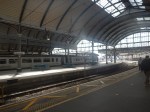
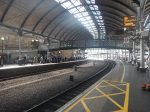
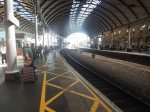
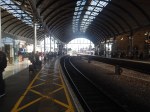
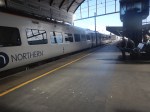

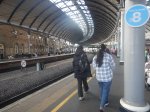

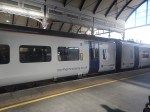
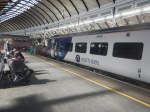
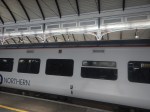
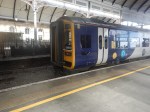
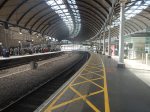
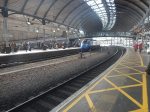
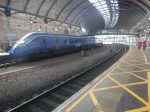
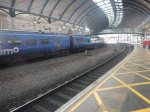
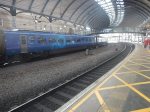
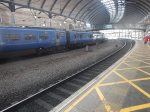
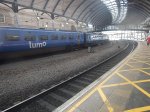
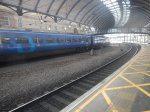
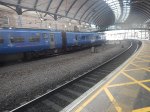
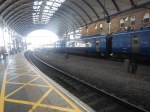
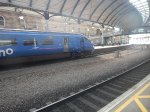
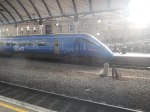
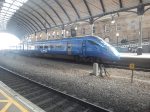
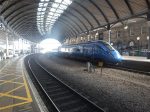


Note.
- On my two train changes yesterday, I needed to buy a ticket for the next leg of my journey and I had to walk miles to the ticket office.
- The walk was rather straining on my dodgy knees.
- There are no signs to the ticket office and I only found it due to a helful human.
- In the morning, I missed my connection and had to wait an hour for the next train.
- A lot of these pictures show diesel multiple units, that were working the Northumberland Line to Ashington in Platform 1, surrounded by happy passengers.
- Platform 1 appears to be able to take at least a pair of Class 158 two-car diesel multiple units.
- Platform 1 appears to be electrified with 25 KVAC overhead wires, even if the Northumberland Line isn’t electrified.
- The staff seem extremely pleased with the success of the Northumberland Line.
The staff were very helpful, but it was all very much organised chaos.
But from what I saw yesterday, it appears that something powerful is stirring along the Northumberland Line.
Perhaps what the BBC predicted in Northumberland Line: Railway ‘Could Create Economic Powerhouse’ is starting to happen?
This was the sub-heading of the BBC article.
An “east coast economic powerhouse” stretching from Edinburgh to Leeds could be created if the Northumberland Line rail scheme goes ahead, a public inquiry has been told.
I’m well aware that one busy weekend doesn’t make a powerhouse.
But Northumberland Council must get ready for the next phases of the project.
Larger Zero-Carbon Trains
In Alstom Hydrogen Aventras And The Reopened Northumberland Line, I suggested that Alstom hydrogen trains might be suitable for the Northumberland Line, but these trains have not been seen in the flesh, so they can probably be discounted.
But this is a picture I took yesterday of Platform 1 at Newcastle station.
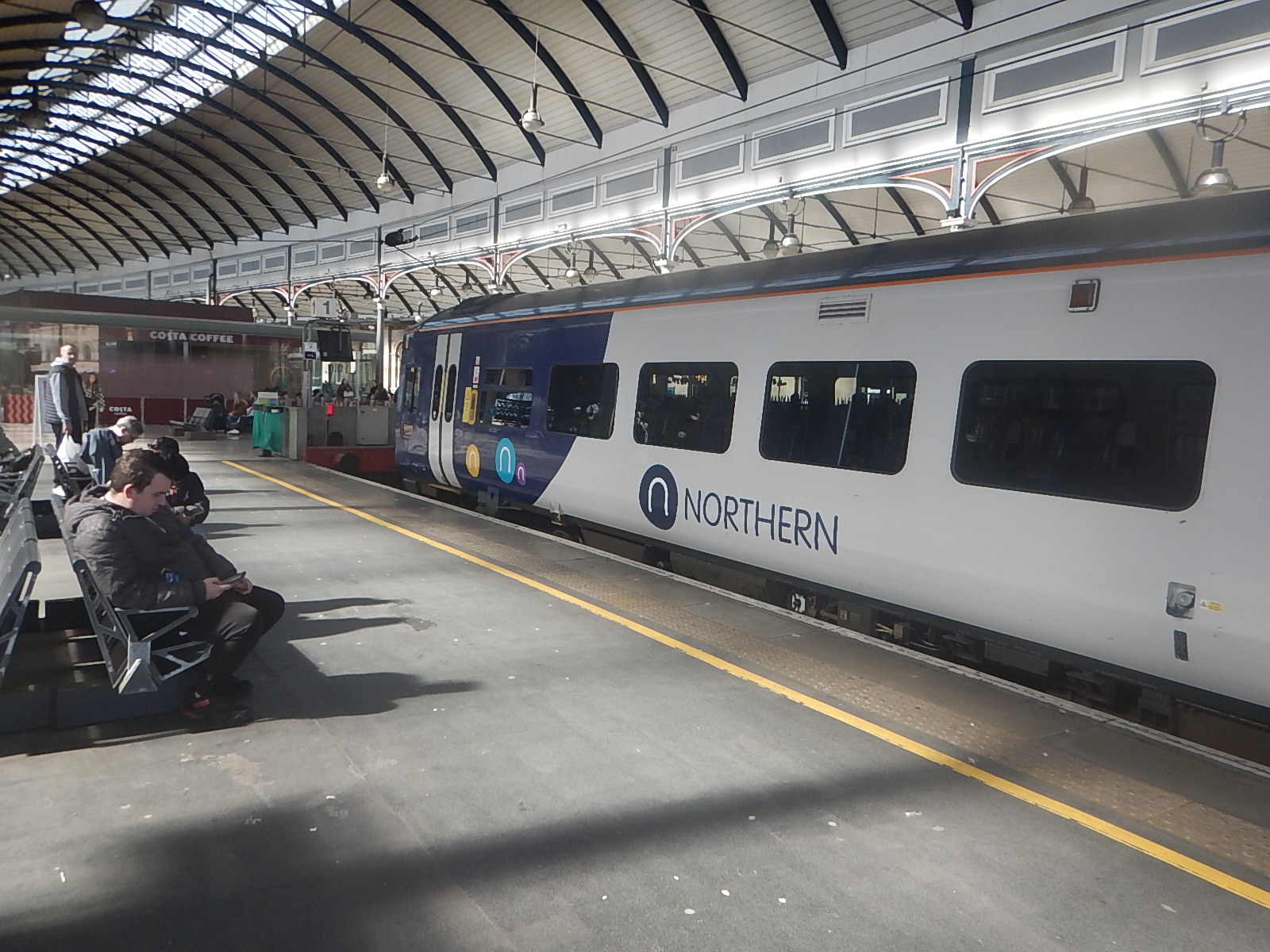
Note.
- The wires of the electrification above the Class 158 diesel multiple unit.
- An out and back trip between Newcastle and Ashington is probably less than fifty miles.
In the Wikipedia entry for Merseyrail’s Stadler Class 777 trains, this is said.
In December 2022, a maximum test range of 135 km (84 miles) was achieved, which was “much longer than we expected”.
It would appear that a small fleet of perhaps three trains, that were fitted with pantographs for charging could work the Northumberland Line, without the need for substantial additions to the infrastructure.
In the Wikipedia entry for the new Tyne and Wear Metro’s Stadler Class 555 trains, this is said.
The new trains will be five cars long in fixed formations, with a Jacobs bogie between the inner cars. One centre car will be fitted with a Brecknell Willis pantograph to draw the power from the 1,500 V DC overhead lines. They will also be fitted with regenerative braking technology for greater energy efficiency, and a battery energy storage system that will allow the trains to remain powered and reach the nearest station if the overhead lines fail. This offers the potential to be used on routes that are not fitted with overhead lines that may be added to the network in the future.
As the Class 777 and Class 555 trains appear to be cousins, perhaps those innovative Swiss engineers at Stadler can come up with a 25 KVAC battery-electric Class 555 train, that could charge its batteries in Platform 1 at Newcastle station and then use battery power to get to Ashington and back.
With perhaps a couple of short lengths of 25 KVAC overhead electrification, I feel Stadler could create a battery-electric Class 555 train, that could handle.
- Newcastle and Ashington and on to Newbiggin, as I wrote about in Onward To Newbiggin-by-the-Sea For The Northumberland Line?.
- Newcastle and Carlisle
- Carlisle and Morpeth via Newcastle
- Hexham and Nunthorpe via Newcastle
How many other branches from electrified main lines in the UK, could be handled by such a train?
How about these routes for starters.
- Darlington and Bishop Auckland
- Darlington and Saltburn
- Preston and Blackpool South.
- Skipton and Preston via Colne.
- Lancaster and Morecambe
- Leeds Metro
- Llandudno Junction and Blaenau Ffestiniog
- Middlesbrough and Whitby.
- Sheffield and Huddersfield
- Sheffield and Leeds
- Sheeffield and Manchester Piccaduilly
Sheffield and York
The Class 555 trains would also have other advantages.
- In the Newcastle area, I’m sure the Tyne and Wear Metro could probably service them.
- They have the Stadler steps for easy access.
- Most Stadler trains, tram-trains and trams are good at climbing hills.
Great British Railways could do a lot worse, than buying a reasonable number of Class 555 battery-electric trains.
Thousands Of Jobs To Be Axed In Great Rail Shake-Up
The title of this post, is the same as that of this article in The Times.
This is the sub-heading.
Most of the cuts are expected to be in back-office roles where staff are not members of the most active transport trade unions
Welcome to the Summer of Discontent.
 The Anonymous Widower