Speeding Down To Bristol By Train
On Wednesday, I went to Bristol to take a few photographs.
I took these pictures, where the electrification ran out at Chippenham station.
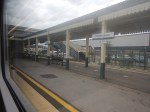
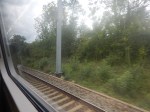
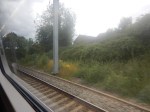
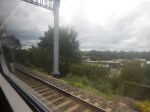
There is some half-hearted erection of electrification going on between Chippenham station and Box Tunnel, but despite the fact, that the iconic tunnel is ready for wires, construction work seemed noticeable by its absence.
Line Speed Observations
I had my personal dynamometer car connected for much of the journey.
- Between Southall and Slough we were at times running at only a few miles short of 130 mph. Are Great Western Railway starting to wind up the speed.
- Most of the journey, when well clear of stations, we were at around 125 mph until Chippenham station.
- At Chippenham, it was noticeable that the diesel engine under my seat kicked in.
- Onwards from Chippenham, we were at around 100 mph on diesel.
I suspect that London and Bristol services could be improved and/or speeded up.
- Timings could be reduced between London Paddington and Reading by running at faster speeds under digital ERTMS signalling. The train certainly felt comfortable at 128 mph.
- Any increase in electrification past Chippenham station will increase the the reach of a Class 800 train with a battery capability on a mile-for-mile basis.
- Trains should be able to increase speed towards 125 mph for some of the twelve miles between Chippenham and Bath Spa stations.
- As trains would not be swapping between diesel and electricity in Chippenham station, would panning up and down happen automatically further West?
- It might be possible to fit in a third London Paddington and Bristol service, that doesn’t stop at Chippenham station.
None of these improvements would need the line through Bath Spa station to be electrified.
Beeching Reversal – New Station For Langport And Somerton Area
This is one of the Beeching Reversal projects that the Government and Network Rail are proposing to reverse some of the Beeching cuts.
This Google Map shows the Langport and Somerton area.
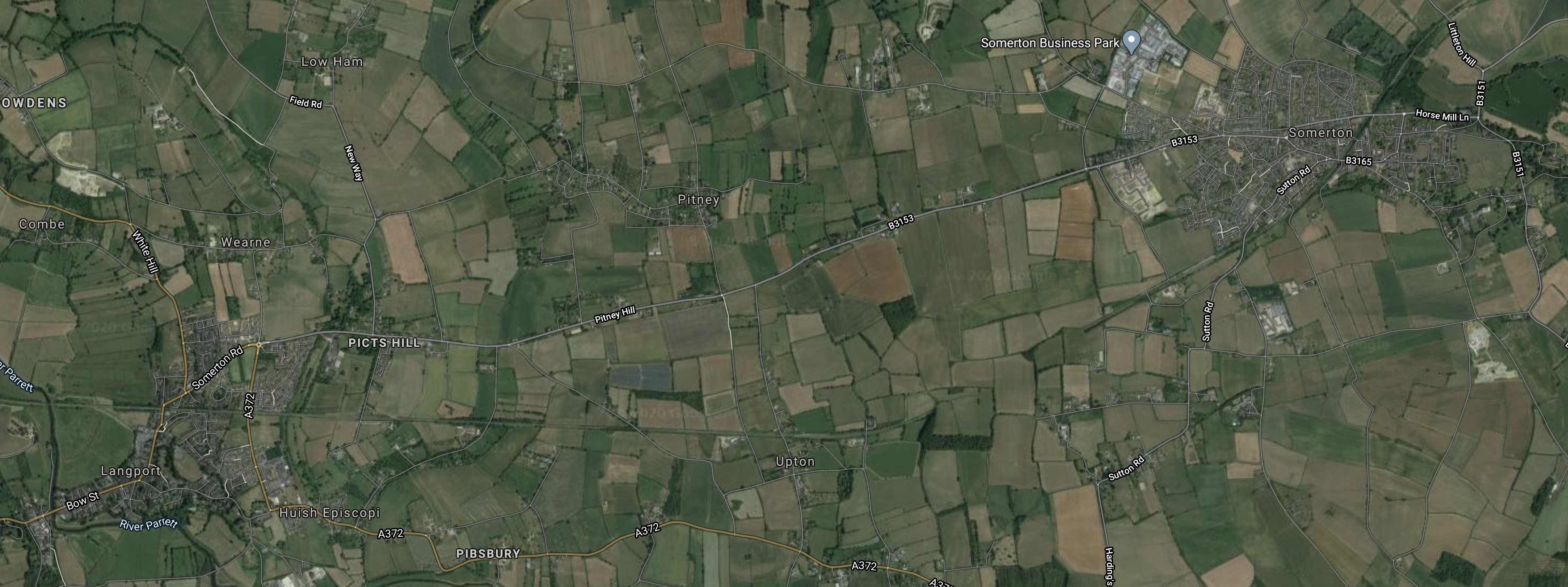
Note.
- This map is probably best clicked to see in a large size.
- Langport is in the South-West corner of the map.
- Somerton is in the North-East corner of the map.
- The Reading-Taunton Line goes through both villages, although both stations are now closed.
- Somerton station was in a cutting in the middle of the village.
The station’s location is shown in this second Google Map.
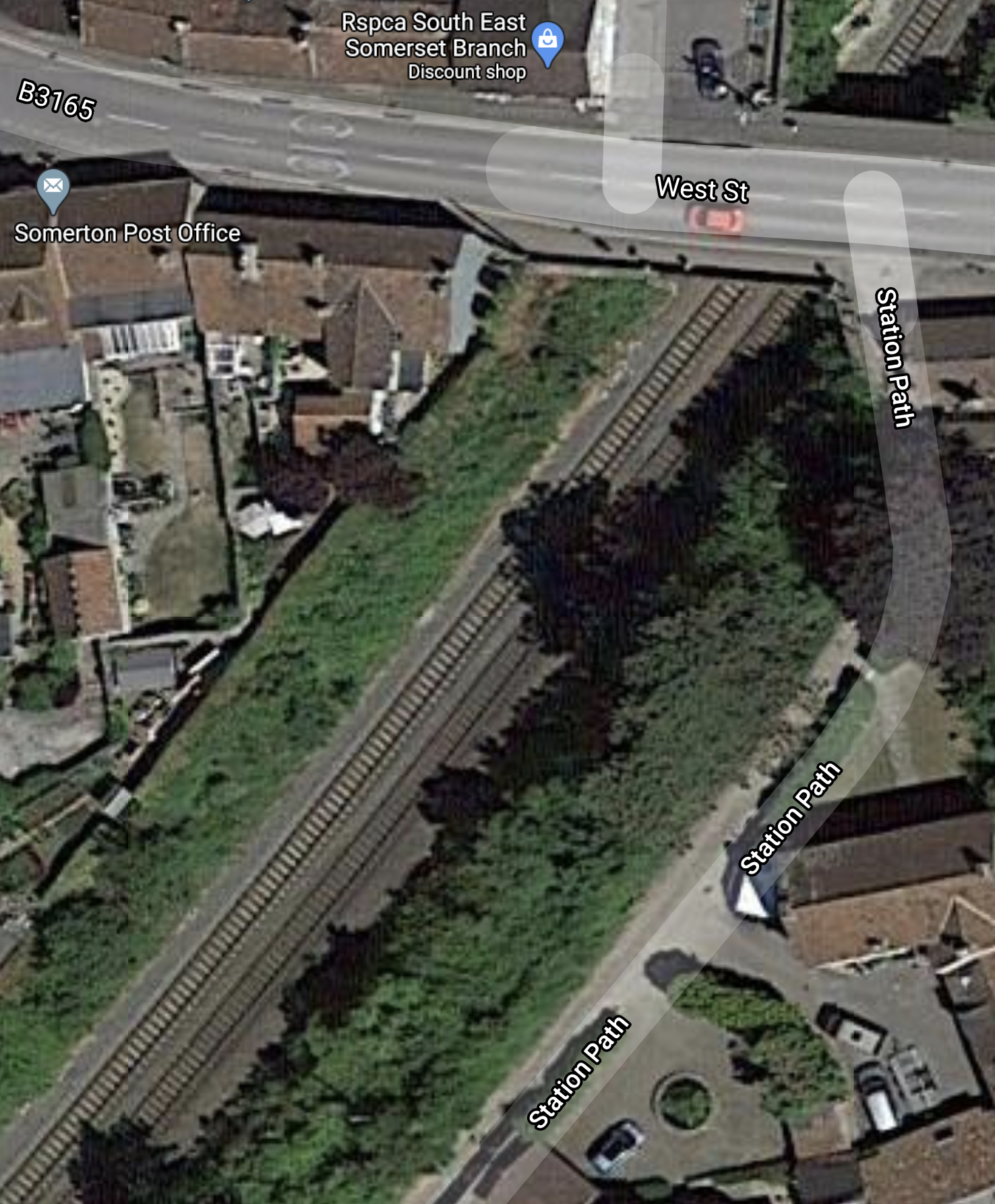
According to the Wikipedia entry for Somerton station, this seems to be the plan.
A May 2018 transport strategy suggested that a station should be opened to serve the Somerton and Langport area.
Judging from the map, there should be space for a two-platform station.
Services Though Somerton Station
Currently, there are three Great Western Railway (GWR) services on this route.
- London Paddington and Exeter St. Davids via Reading, Newbury, Pewsey, Westbury, Castle Cary, Taunton and Tiverton Parkway.
- London Paddington and Plymouth via Reading, Taunton, Tiverton Parkway, Exeter St Davids, Newton Abbot and Totnes.
- London Paddington and Penzance via Reading, Taunton, Tiverton Parkway, Exeter St Davids, Newton Abbot, Totnes, Plymouth, Liskeard, Bodmin Parkway, Lostwithiel, Par, St Austell, Truro, Redruth, Camborne and St Erth.
All services have a frequency of one train per two hours (tp2h)
The frequency of trains between Reading and Taunton on the 24th July was around each hour as follows.
- 7 – 4/1
- 8 – 4/1
- 9 – 5/2
- 10 4/0
- 11 6/2
- 12 5/2
- 13 – 5/1
- 14 – 5/2
- 15 – 4/1
- 16 – 3/0
- 17 – 7/2
- 18 – 3/0
- 19 – 3/0
- 20 – 3/0
- 21 – 3/1
- 22 – 0/0
- 23 – 0/0
- 24 – 1/1
Note.
- The first figure is the total number of trains per hour (tph).
- The second figure is the total number of freight tph.
There is under two tph in both directions and under one freight tph.
As the Reading-Taunton Line is a 110 mph route, my scheduling experience, says that with 125 mph Class 800 trains running all the passenger services, there should be some space for a few more services on the route.
So could this mean a fourth service between London Paddington and the South West?
- The new service could call at the new Somerton station.
- It could terminate at Exeter St. Davids. Penzance, Plymouth or a new destination of Taunton station.
- The Beeching Reversal project of Transforming The Newquay Line, would enable termination at Newquay station.
- The Beeching Reversal project of Increased Service Provision Bodmin General-Bodmin Parkway, would enable termination at Bodmin General station.
- The Restoring Your Railway Fund project of Reopening Of Wellington and Cullompton Stations, will need calling trains at the two stations.
- The Restoring Your Railway Fund project of Reinstatement Of Rail Access To Devizes Via A New Station At Lydeway will also need callers.
Are we seeing the emergence of a stopping service, between London Paddington and Exeter St. Davids?
Hitachi’s Proposed Class 800 Trains With Batteries
Hitachi’s proposed train is described in this infographic.

Note the phrase – Allows Discontinuous Electrification; at the top of the infographic.
Suppose the train ran these legs.
- Newbury – Westbury – 42 miles
- Westbury – Taunton – 48 miles
- Taunton – Exeter St. Davids – 30 miles
- Exeter St. Davids – Plymouth – 52 miles
All would be under the 55 mile limit for battery range.
Conclusion
It looks like GWR are building up to increase services between London Paddington and Exeter St Davids.
Could Hitachi’s Class 800 Trains Work The Cornish Main Line On Battery Power?
The distance between Plymouth and Penzance stations along the Cornish Main Line is just seventy-nine miles and thirty-eight chains. I’ll call it 79.5 miles.
Hitachi’s proposed train is described in this infographic.
The range on battery power of 90 km or 56 miles, will not be quite enough to get all the way between Plymouth and Penzance!
But note the phrase – Allows Discontinuous Electrification; at the top of the infographic.
Will Electrification Be Needed?
Obviously or the train could perhaps wait at Truro for ten minutes to charge the batteries.
But how customer-unfriendly and disruptive to good operating practice is that?
Could Bigger Batteries Be Fitted?
This obviously is a possibility, but surely an operator would prefer all of their trains to have the same battery range and updating them all for a longer distance might not be an economic proposition.
Could Intelligent Discontinuous Third-Rail Electrification Be Used?
Third-rail electrification, is hated by the Health & Safety Taliban, as it occasionally kills people trespassing or falling on the railway. But in the UK, we have around 1,500 miles of third-rail electrified line, that generally operates to a high level of safety.
Can my modern successors make third-rail electrification absolutely safe in new installations?
Third-Rail And Discontinuous Electrification Installations!
To connect to overhead electrification, the driver or an automatic system on the train, must raise the pantograph. It doesn’t often go wrong, but when it does, it can bring down the wires. This section on panotograph weaknesses from Wikipedia give more details.
With third-rail, the connection and disconnection is automatic, with far less to go wrong.
These pictures show a gap in the third-rail electrification at the Blackfriars station, which was rebuilt in 2012, so it must meet all modern regulations.
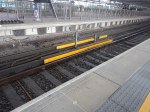
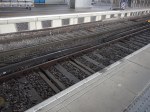
Note the gap in the third-rail, which carries the current.
- The third-rail shoes on the train disconnect and connect automatically, as the train passes through.
- The only rails with voltage are between the tracks for safety.
- The high-tech shields appear to be real tree wood painted yellow.
As an Electrical Engineer, I actually suspect, that this gap in the conductor rail, is to isolate the North and South London electricity supplies from each other,, so that a catastrophic failure on one side doesn’t affect both halves of Thameslink.
Third-Rail Electrification In Stations
Most rail passengers in the UK, understand third-rail electrification, if they’ve ever used trains in the South of London or Merseyside.
Electrifying stations using third-rail equipment could enable battery trains to go further.
- Stopping trains could top-up their batteries.
- Passing trains, that were low on power could make a pit-stop.
- All trains would connect automatically to the third-rail, when in the station.
The safety level would be raised by making sure that the third-rail was electrically-dead unless a train was over the top.
I am by training a Control Engineer and one of my first jobs in a dangerous factory as a fifteen-year-old, was designing and building safety systems, that cut power to guillotines, when the operator put their hands somewhere they shouldn’t! I remember endlessly testing the system with an old broom, which survived unscathed.
I believe that only switching on the electrification, when a train completes the circuit, is a fairly simple operation for modern control switchgear. I can imagine an intelligent switch constantly monitoring the resistance and only switching on power, when the resistance in the circuit looks like a train.
Third-Rail Electrification In Discrete Locations
Overhead electrification can receive complaints in scenic locations, but third-rail electrification can be invisible in tunnels and over bridges and viaducts.
The Cornish Main Line has four tunnels, two bridges, which include the Royal Albert Bridge, and no less than thirty-two viaducts.
How many of these could be used to hide electrification?
- Any electrified sections could be intelligently controlled to increase safety.
- Power for the electrification could come from local renewable sources, using techniques like Riding Sunbeams.
I can see engineers developing several techniques for discrete electrification.
Third-Rail And Charging Battery Trains
I like the Vivarail’s Fast Charge concept of using third-rail equipment to charge battery trains.
This press release from the company describes how they charge their battery electric Class 230 trains.
- The system is patented.
- The system uses a trickle-charged battery pack, by the side of the track to supply the power.
- The first system worked with the London Underground 3rd and 4th rail electrification standard.
As the length of rails needed to be added at charging points is about a metre, installing a charging facility in a station, will not be the largest of projects.
Under How Does It Work?, the press release says this.
The concept is simple – at the terminus 4 short sections of 3rd and 4th rail are installed and connected to the electronic control unit and the battery bank. Whilst the train is in service the battery bank trickle charges itself from the national grid – the benefit of this is that there is a continuous low-level draw such as an EMU would use rather than a one-off huge demand for power.
The train pulls into the station as normal and the shoe-gear connects with the sections of charging rail. The driver need do nothing other than stop in the correct place as per normal and the rail is not live until the train is in place.
That’s it!
As an electrical engineer, I’m certain the concept could be adapted to charge the batteries of a conventional third-rail train.
Vivarail’s press release says this about modification to the trains.
The train’s shoe-gear is made of ceramic carbon so it is able to withstand the heat generated during the fast charge process.
That wouldn’t be a major problem to solve.
Hitachi And Third Rail
The picture shows a Hitachi Class 395 train at Gillingham station.

The silver-coloured third-rail equipment is clearly visible, under the javelin logo.
These trains are cousins of all the new Hitachi trains in the UK, so I suspect fitting third-rail equipment to Class 80x trains, is just a matter of finding the appropriate documents on the computer and raiding the parts bin.
I suspect, as Hitachi will probably be building some more trains for Southeastern to start the Highspeed service between London St. Pancras and Hastings, that Hitachi are already working on the design of a third-rail high-speed train with batteries.
I doubt that Hitachi have any fears about fitting third-rail gear to their trains, as an optional extra.
Electrifying Between Plymouth And Penzance
Obviously, Plymouth and Penzance stations would have charging facilities, but now many would the trains handle the 79.5 miles in between?
There are three possibilities.
Limited-Third Rail Electrification
As I indicated earlier short lengths of intelligent third-rail electrification could be added at various places on the route.
A full battery would take the train fifty-six miles and as the Cornish Main Line is nearly eighty miles long, I suspect that the train would need almost a full charge halfway along the route.
- Hitachi claim in the infographic, that a full-charge takes 10-15 minutes, when the train is static, so I will assume the largest figure of this range, as charging on the move might not be as efficient, with everything happening at 90 mph.
- So I will assume a fifteen minute charge time.
- Typically, a Class 80x takes two hours between Penzance and Plymouth, which is an average speed of just 40 mph.
- In fifteen minutes, the train will go ten miles. So a rough estimate would say ten miles should be electrified.
As electrification in stations would allow trains to have a bigger sup, a scientifically-correct simulation would show the best philosophy.
The London Paddington and Penzance services call at the following stations, that are West of Plymouth.
Liskeard, Saltash, St. Germans, Bodmin Parkway, Lostwithiel, Par, St Austell, Truro, Redruth, Camborne, Hayle and St Erth
Note.
- Some smaller stations do get skipped.
- According to Real Time Trains, stops seem to take 1-2 minutes.
- Trains are usually nine- or ten-cars, but I feel that the proposed improvements between Bodmin General and Bodmin Parkway stations, that I wrote about in Increased Service Provision Bodmin General-Bodmin Parkway, may result in a large reorganisation of services between London and Cornwall.
Could it be that electrifying the major stations with third-rail electrification would enable enough power to be taken on board by a train running between London Paddington and Penzance, so that the journey could be completed?
Vivarail Fast Chargers
Vivarail’s Fast Chargers could be fitted at all or selected stations and trains could take a sip as and when they need.
A charger would also be needed at any Cornish terminal station, that would have services from battery electric trains.
A Mixture Of Third-Rail Electrification And Vivarail Fast Chargers
Both technologies are interchangeable and can be used with compatible battery electric trains.
I would expect an accurate mathematical model will indicate the best layout of electrification and Fast Chargers.
Beeching Reversal – Increased Service Provision Bodmin General-Bodmin Parkway
This is one of the Beeching Reversal projects that the Government and Network Rail are proposing to reverse some of the Beeching cuts.
This Google Map shows the relationship of the two Bodmin General and Bodmin Parkway stations.
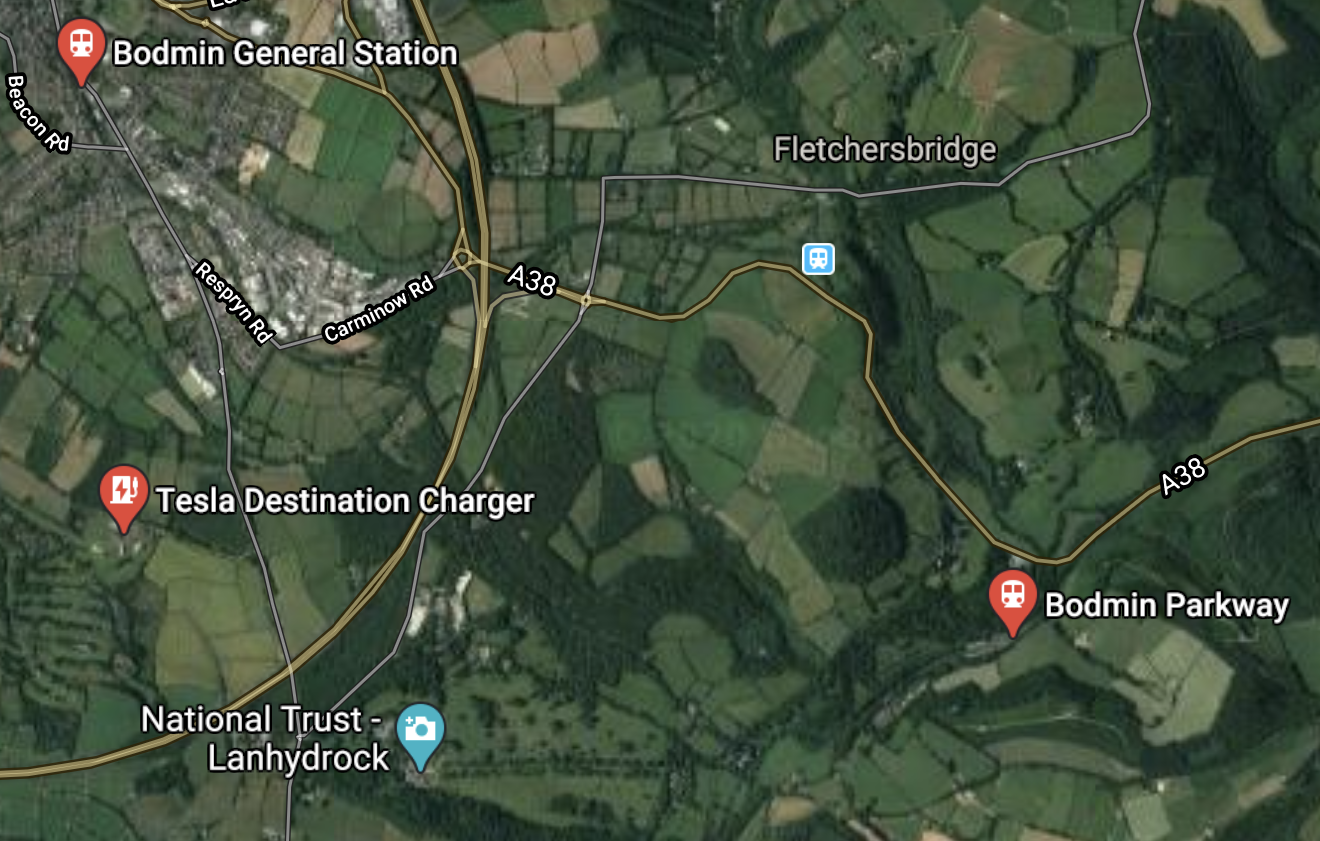
The two stations are clearly visible.
The aim of this Beeching Reversal project would appear to set up a more regular service between Bodmin Parkway station on the Cornish Main Line and Bodmin General station in the town.
This video shows some of the current trains run by the Bodmin and Wenford railway, between the two stations.
This article on Cornwall Live is entitled Plan To Link Heritage Railway At Bodmin To Mainline Train Services, gives a few scant details.
- There will be a second platform at Bodmin General station.
- This will allow extra services.
Looking at the space around Bodmin Parkway station, it should be possible to have a very comprehensive track layout, that connects the Bodmin branch to the main line.
It also appears that the platform is fully-funded from Great Western Railway (GWR) and Cornwall County Council.
Could A Shuttle Be Run Using Vivarail’s Pop-up Metro Concept?
Using Vivarail’s Pop-up Metro between the two stations is surely a possibility, with charging at either station.
What Do GWR Want In Return For Their Funding?
I think that GWR could have a couple of uses for a platform at Bodmin General station.
Reorganising The Services Between London Paddington and the South-West
Currently, there are three services on this route.
- London Paddington and Exeter St. Davids via Reading, Newbury, Pewsey, Westbury, Castle Cary, Taunton, Tiverton Parkway.
- London Paddington and Plymouth via Reading, Taunton, Tiverton Parkway, Exeter St Davids, Newton Abbot, Totnes.
- London Paddington and Penzance via Reading, Taunton, Tiverton Parkway, Exeter St Davids, Newton Abbot, Totnes, Plymouth, Liskeard, Bodmin Parkway, Lostwithiel, Par, St Austell, Truro, Redruth, Camborne, St Erth.
All services have a frequency of one train per two hours (tp2h)
Perhaps by reorganising the train paths, GWR could run another 1 tp2h service between London Paddington and Bodmin or Newquay station after the Transformation Of The Newquay Line.
Joining And Splitting Between London Paddington And The South-West
GWR’s Hitachi Class 80x trains have the ability to run in pairs, that are split and joined at convenient places en route.
This YouTube video, shows them doing it in Plymouth station.
As a means of evening out passenger loadings on pairs of trains running to the South-West, the two large stations of Exeter St. Davids and Plymouth would surely be possibilities for the manoeuvre.
I also think that Bodmin Parkway station could be used to split and join two trains from Cornwall.
- One train would come from Penzance and the West.
- The other could come from either Newquay or Bodmin General stations.
- In the future the second train, might come from a new Wadebridge station.
Bodmin Parkway station might need some small modifications, but it should be remembered that the closely-related Class 395 trains, do the deed and quickly disappear at Ashford International station.
Creating A Bodmin-Wadebridge Railway
There are also plans in the Beeching Reversal projects for the Reinstatement of the Bodmin-Wadebridge Railway
For trains to travel between Bodmin Parkway and Wadebridge stations, trains will need to reverse in the new platform at Bodmin General station.
Local Services From Exeter And Plymouth
From what I have read on the Internet, the Bodmin and Wenford Railway is an important tourist attraction and is one of several around Bodmin including the beaches and the Camel Trail.
So perhaps, a connection between Bodmin and Exeter and/or Plymouth in a vintage InterCity 125 could be a nice little earner for GWR and an appropriate way to arrive at the steam railway.
Steam Local Services From Exeter And Plymouth
Why not?
The new platform at Bodmin General station could probably take a locomotive and four coaches and all the facilities to handle steam engines are in the vicinity of the station.
Could The New Platform Be Used For High Speed Freight Shuttles?
Why not?
Rail Operations Group is looking at the possibility of running Class 769 trains as freight shuttles.
Bodmin could make an ideal Cornish terminal, as it’s the right side of county and has the main A38 close by.
Could The Platform Be Used To Charge Battery Electric Trains?
I feel that First Group are starting to embrace battery trains.
In Hitachi Trains For Avanti, I talked about how a fellow First Group company were reporting, that they might have battery trains.
If Great Western Railway were running extra trains into Cornwall, would a new platform at Bodmin General station, be an ideal place to charge a train?
Conclusion
A second platform at Bodmin General station could open up a lot of possibilities for train operating companies.
Beeching Reversal – Cirencester Community Railway
This is one of the Beeching Reversal projects that the Government and Network Rail are proposing to reverse some of the Beeching cuts.
It is also one of only a few of these projects, that has a very detailed plan.
- The plan has been written to the sort of standards, that would be expected of competent professionals from one of the large international rail consultancies.
- The plan is explained in detail on a comprehensive web site.
- The authors seem to have knowledge of recent developments in rail technology.
After a visit to Cirencester in November 2019, I wrote Could Cirencester Be Reconnected To The Rail Network?, which I started with this paragraph.
In Boris Johnson Vows New Life For High Streets And Axed Rail Lines, I laid out a list of rail lines that could be reopened by a future Conservative government.
Today, I’m going to Cirencester to have lunch with an old friend.
But, Cirencester does not have a rail connection, although there used to be a Cirencester branch line from Kemble station.
This was my conclusion.
With some clever and sympathetic engineering on the branch to handle the crossings, it could be a feasible reopening.
I also felt that a tram-train with batteries, could serve a two trains per hour (tph) service between Swindon and Cirencester via Kemble.
These are some details from the Cirencester Community Railway (CCR) plan.
The Route
In my post, I thought the last part of the route into Cirencester could be a problem.
The authors of the scheme have come up with an elegant solution.
- Between Kemble station and Parklease Farm, the route follows the previous route.
- Between Parklease Farm and the A433 Tetbury Road, the route runs North-South, possible along the route of an existing track.
- The route then follows the A433 into the town.
It is simple and there won’t be much major construction.
- A new bridge over the A429 will be needed.
- The track will need to cross the A433 on the level. It appears that this could be fitted in with major works to provide access to a new housing development.
All of the construction needed is laid out in the CCR report.
Single Or Double Track?
The report says that it will be built single track, which should be sufficient. Although there may be a need for a passing place around halfway to allow a more frequent service.
The Stations
Before detailing the stations, I will show this Google Map, which shows the route of the A433 Tetbury Road into Cirencester.
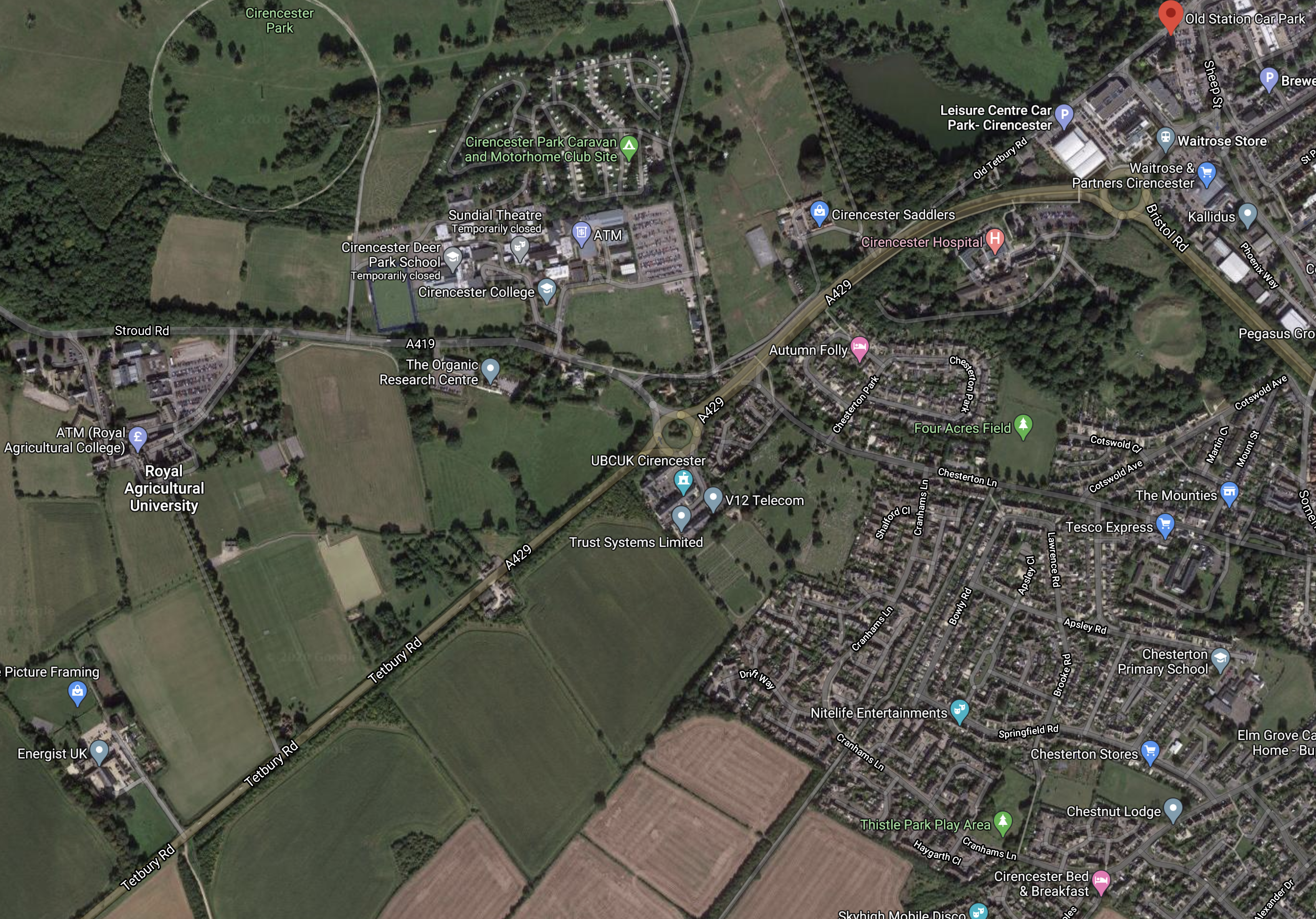
Note.
- The A 433 running SW-NE across the map.
- The Royal Agricultural University towards the West of the map.
- Cirencester College to the North-East of the University.
- The red arrow in the North-East corner of the map, which marks the Old Station Car Park.
The design envisages the following stations.
Parklease Farm
This station could be added, where the track changes direction, when it leaves the old route. It lies to the South of the Royal Agricultural University and off the map above.
It would probably be by request.
The University Station
This would be the main station on the route.
- It would serve the Royal Agricultural University.
- It would act as a Park-and-Ride station, with a large car park.
- Overnight stabling for the trains could be provided here.
If a passing loop is needed it could be added at this station.
The College Halt
This would be to the East of the roundabout on the map and would serve Cirencester College.
The Town Halt
This would be on the edge of the town centre, by the Old Station Car Park.
The Vehicles
The plan envisages using Very Light Rail vehicles.
- If these run on concrete tracks, as the report indicates, then effectively this means the the CCR will be separate from the UK rail network and through running will not be possible.
- In my post, I proposed battery tram-trains as these would allow extra local services between Kemble and Swindon, which might be needed if there was substantial housing development in the area.
- But then I like tram-trains and felt they would be a way to get to the centre of Cirencester. But the CCR’s route avoids the need for tram-trains.
I also wonder, if Very Light Rail would offer enough capacity. But it could probably offer a higher frequency easier than heavy rail.
Service Frequency
Nothing is said in the CCR report about service frequency.
As the University station doubles as a Park-and-Ride for the town, I think the frequency between the University station and the Town halt should be at least four tph.
Would this frequency apply to the whole of the CCR?
Great Western Railway’s Attitude
I can’t speak for Great Western Railway (GWR), but surely they would hope that the CCR would bring them a large number of passengers..
Currently, there is a two tph service between Swindon and Cheltenham through Kemble! Will this provide a good connection with the Cirencester service? Or will passengers find that they waste thirty minutes waiting for trains.
This was one of the reasons, I proposed tram-trains in my original post.
But this would not be a problem unique to the CCR, as the GWR has several branch lines with a similar problem.
So will GWR develop a company-wide solution to feed passengers in from branch lines?
Conclusion
The CCR have produced a well-thought out and detailed plan, but I think it can be improved. Especially, if GWR develop a company-wide solution for branch lines.
Reinstatement Of Rail Access To Devizes Via A New Station At Lydeway
This is one of the successful bids in the First Round of the Restoring Your Railway Fund.
Devizes is a growing town without a railway station.
The Wikipedia entry for the former Devizes station, says this about providing a new station.
Although Devizes was denied a railway station due to its stagnant population, as of 2017 the population had grown to 31,000, which could warrant its re-establishment. However, much of the vital land agreements and rights of way were sold off reducing the chances of reinstatement. An alternative plan has been proposed: to build Devizes Parkway Station at Clock Inn Park, three miles east of Devizes on the Reading–Taunton line, near to the site of the original junction for the branch at Etchilhampton.
It appears to have been taken from Baldrick’s book of cunning plans, where you create a virtual branch line using the A342, travellers’ personal transport and a shuttle bus service.
This Google Map shows the position of the station site at Clock Inn Park, with relation to Devizes.
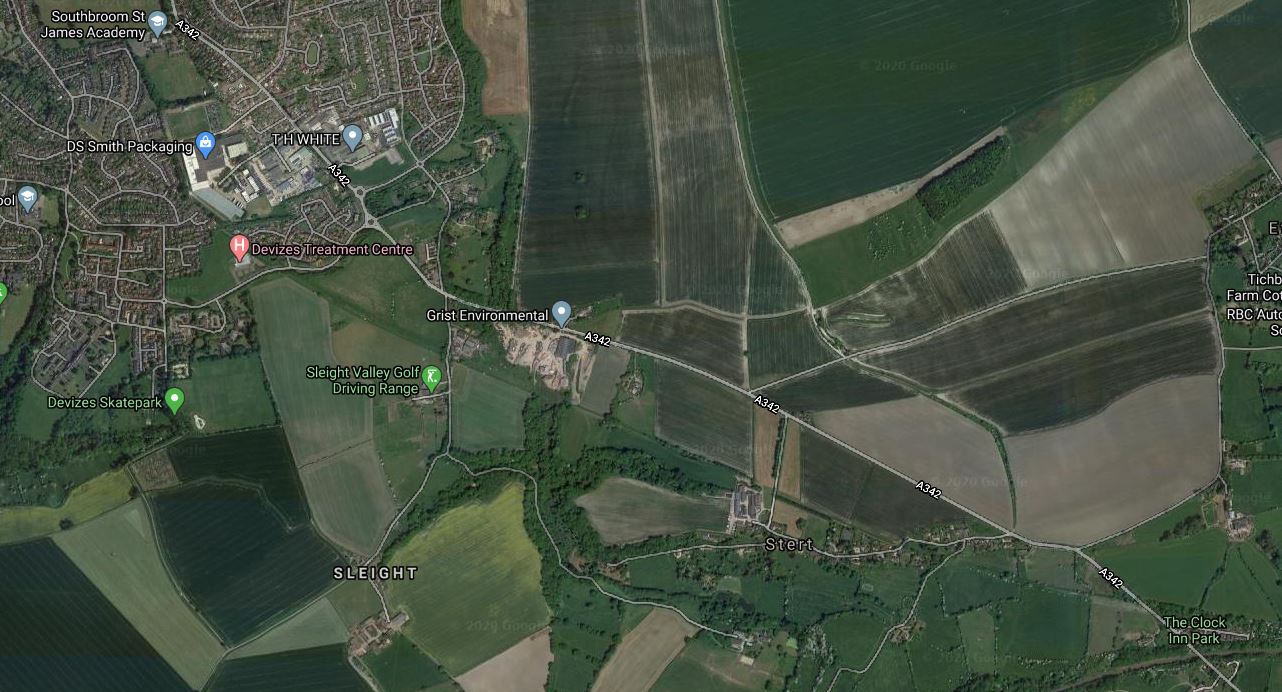
Note.
- Devizes in the North-West corner of the map.
- Clock Inn Park in the South-East corner of the map.
- The A342 road connecting the town with the station site.
This more detailed Google Map shows the station site.
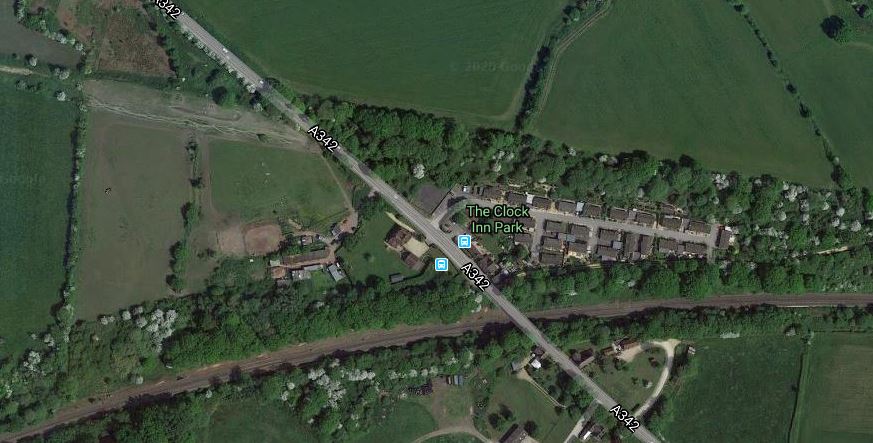
Note.
- The A342 going diagonally across the map.
- The Reading-Taunton Line going across the map.
- There’s even bus stops by the station site.
As the site could be fairly generous, I think a station with adequate parking could be created.
The Train Service
The train service is currently two hourly on this route between Paddington and Exeter St. David’s stations.
Perhaps, with an extra stop and more passengers, the service could be increased to hourly.
Another alternative would be to run battery-electric trains on the route between Paddington and Westbury, that called at all stations West of Newbury.
- Trains would use the electrification between Paddington and Newbury and would leave Newbury with a full battery.
- This service would be an extension of the current hourly service to Bedwyn station.
- Between Newbury and Westbury stations is forty-two miles of unelectrified lines, which should be possible with a battery electric version of the Class 802 train.
- Charging facilities would be needed at Westbury station.
- Between Paddington and Westbury stations takes one hour and thirteen minutes.
- Hitachi are quoting a ten minute charge time for one of their battery-electric trains.
- The trains would turn at Westbury station, which has refreshments and toilets for the crew.
- No extra electrification would be needed to run electric services to Westbury.
I think it could be feasible.
The Concept Of An Electrification Island
Westbury could be what I would call an electrification island.
Consider
- The Reading-Taunton Line passes through the station.
- The Wessex Main Line both passes through the station.
- The town of Westbury has a population of around 17,000 and some substantial heavy industries, so I suspect that it has a robust electricity supply.
- Taunton is 47 miles away.
- Newbury is 42 miles away.
- Weymouth is 59 miles away.
- Bristol Temple Meads is 40 miles away.
- Swindon is 32 miles away.
- Hitachi are claiming a range of between 55 and 65 miles for a battery-electric train.
Suppose the two routes through the station and perhaps for up to ten miles away from the town, were to be electrified.
- A battery-electric train turning back at Westbury would pan-up in the station and charge the battery. Leaving the station, the driver would leave the pantograph up for acceleration and then make sure pan-down was performed before the end of the electrification.
- A through battery-electric express between Paddington and Exeter would pan-up when under the electrification and pan down before it left the electrification.
- It might be prudent that all passing expresses stopped in Westbury station, to make sure, trains didn’t stop with a flat battery in the middle of nowhere, until procedures were seen to be totally reliable.
- A battery-electric train to and from Weymouth would probably need to run for about 45 miles between the electrification island at Westbury and the third-rail electrification at Dorchester Junction.
I believe that a well-designed electrification island at Westbury coupled with perhaps electrification between Exeter and Taunton, would enable battery-electric trains to work the following routes.
- Paddington and Exeter
- Westbury and Bristol
- Westbury and Weymouth
- Westbury and Swubdon
I suspect that Transwilts services could also be run by battery-electric trains, as they could charge at Westbury, Swindon and other electrified stations.
Conclusion
Devizes Parkway station would appear to be a simple way to provide a new station, at a town that has grown substantially since the days of Dr. Beeching.
Did Dr. Beeching and the Government of the day, have a view on population growth in the UK? They certainly didn’t take it into the account in their rail closure program. Or if they did, they got it spectacularly wrong!
GWR and DfT’s Commitment To The Night Riviera
The May 2020 Edition of Modern Railways has an article, which is entitled West Of England Improvements In GWR Deal.
Under a heading of Sleeper Planning, this is said about plans for the Night Riviera.
Whilst GWR is already developing plans for the short term future of the ‘Night Riviera’ sleeper service, including the provision of additional capacity at times of high demand using Mk. 3 vehicles withdrawn from the Caledonian Sleeper fleet, it is understood the company has been asked to develop a long-term plan for the replacement of the current Mk. 3 fleet of coaches, constructed between 1981 and 1984, as well as the Class 57/6 locomotives, which were rebuilt in 2002-03 from Class 47 locomotives constructed in the early 1960s.
This must show commitment from both GWR and the Department for Transport, that the Night Riviera has a future.
These are a few of my thoughts on the future of the service.
The Coaches
I would suspect that GWR will opt for the same Mark 5 coaches, built by CAF, as are used on the Caledonian Sleeper.
I took these pictures on a trip from Euston to Glasgow.










The coaches don’t seem to have any problems and appear to be performing well.
The facilities are comprehensive and include full en-suite plumbing, a selection of beds including doubles and a lounge car. There are also berths for disabled passengers.
The Locomotives
The Class 57 locomotives have a power output around 2 MW and I would suspect a similar-sized locomotive would be used.
Possible locomotives could include.
- Class 67 – Used by Chiltern on passenger services – 2.4 kW
- Class 68 – Used by Chiltern, TransPennine Express and others on passenger services – 2.8 MW
- Class 88 – A dual-mode locomotive might be powerful enough on diesel – 700 kW
I wouldn’t be surprised to see Stadler come up with a customised version of their Euro Dual dual-mode locomotives.
Shuffling The Class 165 Trains
The May 2020 Edition of Modern Railways has an article, which is entitled West Of England Improvements In GWR Deal.
The sub-title is the following.
EMU Trailers Could Be Inserted Into Turbo DMUs
GWR‘s Turbo DMUs are.
- Class 165 trains of which there are fifteen three-car trains and twenty two-car trains.
- Class 166 trains of which there are twenty-one three-car trains.
The article says, they will be internally-refreshed with interiors better suited for long-distance services.
It also looks that they might get hybrid transmissions, if a trial with a Chiltern Class 165 train is successful. In Class 165 Trains To Go Hybrid, I wrote about this trial.
The article says this about the retractioned units.
The additional power available from the new hybrid units would allow the sets to be lengthened with trailers released from withdrawn Class 365 or 465 EMUs, lengtheing two-car Turbos by one vehicle and the three-car sets to five carriages. The EMU vehicles are 20 metres long, rather than the 23 metres of the DMU design, but it is thought integration into the diesel sets would be relatively simple.
This sounds like a cunning plan, from BREL’s book of Cut-And-Paste With Trains.
At the time of writing there are nineteen Class 365 trains in storage, which could release 38 trailer cars. However, Varamis Rail may need some of these trains for their proposed parcel business, that I wrote about in Varamis Plans Electric Freight To Carry Light Goods.
If all the fifty-six trains were to be lengthened, this would need ninety-two trailer cars. So I suspect, that GWR will be awaiting the retirement of some of the 147 Class 465 trains, which are currently in service with Southeastern.
A sister company to GWR, South Western Railway is transferring thirty Class 707 trains to Southeastern. I wrote about the transfer in Southeastern Signs Deal To Lease Unwanted Class 707s. As each pair of Class 707 trains, could release two Class 465 trains containing four trailer cars, this could be the source of sufficient trailer cars to lengthen the Turbos.
This would mean that the following suitable trailer cars would be available.
- Thirty-eight from stored Class 365 trains.
- Sixty from Class 465 trains displaced by Class 707 trains at Southeastern.
It’s a close-run thing.
But there may be trouble ahead, as Chiltern have twenty-eight two-car and eleven three-car Class 165 trains, which would need another fifty trailer cars, if Chiltern decided to lengthen their trains in the same way as GWR.
- There appear to be twenty-one trains or forty-two trailer cars in service with Great Northern.
- Six trailer cars should be available from the previous swaps.
So it looks like they are one train or two trailer cars short, if they want to do a full conversion.
Unless the thirty Class 707 trains going to Southeastern, with their faster operating speed can scoot route the network faster and do the work of more than thirty Class 465 trains.
Are Hitachi Designing the Ultimate Battery Train?
In Sparking A Revolution, a post based on an article of the same name in Issue 898 of Rail Magazine, I repeated this about the specification of Hitachi UK Battery Train Specification.
- Range – 55-65 miles
- Performance – 90-100 mph
- Recharge – 10 minutes when static
- Routes – Suburban near electrified lines
- Battery Life – 8-10 years
Does this mean that the train can do 55-65 miles cruising at 90-100 mph?
How Much Energy Is Needed To Accelerate A Five-Car Class 800 Train To Operating Speed?
I will do my standard calculation.
- Empty train weight – 243 tonnes (Wikipedia for Class 800 train!)
- Passenger weight – 302 x 90 Kg (Includes baggage, bikes and buggies!)
- Train weight – 270.18 tonnes
Using Omni’s Kinetic Energy Calculator, the kinetic energy at various speeds are.
- 60 mph – 27 kWh
- 80 mph – 48 kWh
- 90 mph – 61 kWh
- 100 mph – 75 kWh
- 125 mph – 117 kWh – Normal cruise on electrified lines.
- 140 mph – 147 kWh – Maximum cruise on electrified lines.
Because the kinetic energy of a train is only proportional to the weight of the train, but proportional to the square of the speed, note how the energy of the train increases markedly after 100 mph.
Are these kinetic energy figures a reason, why Hitachi have stated their battery train will have an operating speed of between 90 and 100 mph?
A 100 mph cruise would also be very convenient for a lot of main lines, that don’t have electrification in the UK.
What Battery Size Would Be Needed?
In How Much Power Is Needed To Run A Train At 125 mph?, I calculated that a five-car Class 801 electric train, needed 3.42 kWh per vehicle-mile to maintain 125 mph.
For comparison, an InterCity 125 train, had a figure of 2.83 kWh per vehicle-mile.
Hitachi are redesigning the nose of the train for the new Class 810 train and I suspect that these trains can achieve somewhere between 1.5 and 3 kWh per vehicle-mile, if they are cruising at 100 mph.
Doing the calculation for various consumption levels gives the following battery capacity for a five-car train to cruise 65 miles at 100 mph
- 1.5 kWh per vehicle-mile – 487 kWh
- 2 kWh per vehicle-mile – 650 kWh
- 2.5 kWh per vehicle-mile – 812.5 kWh
- 3 kWh per vehicle-mile – 975 kWh
These figures don’t include any energy for acceleration to line speed from the previous stop or station, but they would cope with a deceleration and subsequent acceleration, after say a delay caused by a slow train or other operational delay, by using regenerative braking to the battery.
The energy needed to accelerate to operating speed, will be as I calculated earlier.
- 90 mph – 61 kWh
- 100 mph – 75 kWh
As the battery must have space to store the regenerative braking energy and it would probably be prudent to have a ten percent range reserve, I can see a battery size for a train with an energy consumption of 2 kWh per vehicle-mile, that needed to cruise at 100 mph being calculated as follows.
- Energy for the cruise – 650 kWh
- 10% reserve for cruise – 65 kWh
- Braking energy from 100 mph – 75 kWh
This gives a total battery size of 790 kWh, which could mean that 800 kWh would be convenient.
Note that each of the three MTU 12V 1600 diesel engines, fitted to a Class 800 train, each weigh around two tonnes.
In Innolith Claims It’s On Path To 1,000 Wh/kg Battery Energy Density, I came to these conclusions.
- Tesla already has an energy density of 250 Wh/Kg.
- Tesla will increase this figure.
- By 2025, the energy density of lithium-ion batteries will be much closer to 1 KWh/Kg.
- Innolith might achieve this figure. But they are only one of several companies aiming to meet this magic figure.
Suppose two of the MTU 12V 1600 diesel engines were each to be replaced by a two tonne battery, using Tesla’s current energy density, this would mean the following.
- Each battery would have a capacity of 500 kWh.
- The train would have one MWh of installed battery power.
- This is more than my rough estimate of power required for a 65 mile trip.
- The train would have little or no weight increase.
- I also wouldn’t be surprised to find that the exchange of a diesel engine for a battery was Plug-and-Play.
Hitachi would have an electric/battery/diesel tri-mode train capable of the following.
- Range – 55-65 miles
- Out and Back Range – about 20-30 miles
- Performance – 90-100 mph
- Recharge – 10 minutes when static
- Emergency diesel engine.
I feel it would be a very useful train.
Trains That Could Be Fitted With Batteries
The original article in Rail Magazine says this.
For the battery project, positive discussions are taking place with a number of interested parties for a trial, with both Class 385s and Class 800s being candidates for conversion.
So this means that the following operators will be able to use Hitachi’s battery technology o their trains.
- Avanti West Coast – Class 80x trains
- First East Coast Trains – Class 80x trains
- East Midlands Railway – Class 80x trains
- GWR – Class 80x trains
- Hull Trains – Class 80x trains
- LNER – Class 80x trains
- ScotRail – Class 385 trains
- TransPennine Express – Class 80x trains
Although, I based my calculations on Class 80x trains, I suspect that the methods can be applied to the smaller Class 385 trains.
Possible Out-And-Back Journeys
These are possible Out-And-Back journeys, that I believe Hitachi’s proposed battery-electric trains could handle.
- Edinburgh and Tweedbank – 30 miles from Newcraighall
- London Paddington and Bedwyn – 30 miles from Reading
- London Euston and Blackburn – 12 miles from Preston
- London Kings Cross and Bradford – < 27 miles from Leeds
- London Euston and Chester – 21 miles from Crewe
- London Kings Cross and Harrogate – <18 miles from Leeds
- London Kings Cross and Huddersfield – 17 miles from Leeds
- London St. Pancras and Leicester – 16 miles from Market Harborough
- London Kings Cross and Lincoln – 17 miles from Newark
- London St. Pancras and Melton Mowbray – 26 miles from Corby
- London Kings Cross and Middlesbrough – 20 miles from Northallerton
- London Kings Cross and Nottingham – 20 miles from Newark
- London Paddington and Oxford – 10 miles from Didcot
- London Kings Cross and Redcar – 29 miles from Northallerton
- London Kings Cross and Rotherham- 14 miles from Doncaster
- London Kings Cross and Sheffield – 20 miles from Doncaster
- London and Weston-super-Mare – 19 miles from Bristol
Note.
- Provided that the Out-And-Back journey is less than about sixty miles, I would hope that these stations are comfortably in range.
- Leicester is the interesting destination, which would be reachable in an Out-And-Back journey. But trains from the North stopping at Leicester would probably need to charge at Leicester.
- I have included Blackburn as it could be a destination for Avanti West Coast.
- I have included Melton Mowbray as it could be a destination for East Midlands Railway.
- I have included Nottingham, Rotherham and Sheffield as they could be destinations for LNER. These services could prove useful if the Midland Main Line needed to be closed for construction works.
- I’m also fairly certain, that no new electrification would be needed, although every extra mile would help.
- No charging stations would be needed.
I suspect, I’ve missed a few possible routes.
Possible Journeys Between Two Electrified Lines
These are possible journeys between two electrified lines, that I believe Hitachi’s proposed battery-electric trains could handle.
- London St. Pancras and Eastbourne via Hastings – 25 miles between Ashford and Ore.
- Leeds and York via Garforth – 20 miles between Neville Hall and Colton Junction
- London Kings Cross and Norwich via Cambridge – 54 miles between Ely and Norwich.
- Manchester Victoria and Leeds via Huddersfield – 43 miles between Manchester Victoria and Leeds.
- Preston and Leeds via Hebden Bridge – 62 miles between Preston and Leeds.
- Newcastle and Edinburgh – Would battery-electric trains get round the well-publicised power supply problems on this route?
Note.
- I am assuming that a range of 65 miles is possible.
- If the trains have a diesel-generator set, then this could be used to partially-charge the battery in places on the journey.
- Leeds and York via Garforth has been scheduled for electrification for years.
- Preston and Leeds via Hebden Bridge would probably need some diesel assistance.
- London Kings Cross and Norwich via Cambridge is a cheeky one, that Greater Anglia wouldn’t like, unless they ran it.
- As before no new electrification or a charging station would be needed.
I suspect, I’ve missed a few possible routes.
Possible Out-And-Back Journeys With A Charge At The Destination
These are possible Out-And-Back journeys, that I believe Hitachi’s proposed battery-electric trains could handle, if the batteries were fully charged at the destination.
- Doncaster and Cleethorpes – 52 miles from Doncaster.
- London Paddington and Cheltenham – 42 miles from Swindon
- London Kings Cross and Cleethorpes via Lincoln – 64 miles from Newark
- London Euston and Gobowen – 46 miles from Crewe
- London Euston and Wrexham – 33 miles from Crewe
- London Kings Cross and Hull – 45 miles from Selby
- London Kings Cross and Shrewsbury – 30 miles from Wolverhampton
- London Kings Cross and Sunderland 41 miles from Northallerton
- London Paddington and Swansea – 46 miles from Cardiff
- London Paddington and Worcester – 67 miles from Didcot Parkway
- London St. Pancras and Derby – 46 miles from Market Harborough
- London St. Pancras and Nottingham – 43 miles from Market Harborough
Note.
- I am assuming that a range of 65 miles is possible.
- If the trains have a diesel-generator set, then this could be used to partially-charge the battery in places on the journey.
- I am assuming some form of charging is provided at the destination station.
- As before no new electrification would be needed.
I suspect, I’ve missed a few possible routes.
Midland Main Line
The Midland Main Line could possibly be run between London St. Pancras and Derby, Nottingham and Sheffield without the use of diesel.
Consider.
- The route will be electrified between London St. Pancras and Market Harborough.
- In connection with High Speed Two, the Midland Main Line and High Seed Two will share an electrified route between Sheffield and Clay Cross North Junction.
- London St. Pancras and Derby can be run with a charging station at Derby, as Market Harborough and Derby is only 46 miles.
- London St. Pancras and Nottingham can be run with a charging station at Nottingham, as Market Harborough and Nottingham is only 43 miles.
- The distance between Clay Cross North Junction and Market Harborough is 67 miles.
- The distance between Sheffield and Leeds is 38 miles.
It looks to me that the range of East Midlands Railway’s new Class 810 trains, will be a few miles short to bridge the gap on batteries, between Clay Cross North Junction and Market Harborough station, but Leeds and Sheffield appears possible, once Sheffield has been electrified.
There are several possible solutions to the Clay Cross North and Market Harborough electrification gap.
- Fit higher capacity batteries to the trains.
- Extend the electrification for a few miles North of Market Harborough station.
- Extend the electrification for a few miles South of Clay Cross North Junction.
- Stop at Derby for a few minutes to charge the batteries.
The route between Market Harborough and Leicester appears to have been gauge-cleared for electrification, but will be difficult to electrify close to Leicester station. However, it looks like a few miles can be taken off the electrification gap.
Between Chesterfield and Alfriston, the route appears difficult to electrify with tunnels and passig through a World Heritage Site.
So perhaps options 1 and 2 together will give the trains sufficient range to bridge the electrification gap.
Conclusion On The Midland Main Line
I think that Hitachi, who know their trains well, must have a solution for diesel-free operation of all Midland Main Line services.
It also looks like little extra electrification is needed, other than that currently planned for the Midland Main Line and High Speed Two.
North Wales Coast Line
If you look at distance along the North Wales Coast Line, from the electrification at Crewe, you get these values.
- Chester – 21 miles
- Rhyl – 51 miles
- Colwyn Bay – 61 miles
- Llandudno Junction – 65 miles
- Bangor – 80 miles
- Holyhead – 106 miles
It would appear that Avanti West Coast’s new AT-300 trains, if fitted with batteries could reach Llandudno Junction station, without using diesel.
Electrification Between Crewe And Chester
It seems to me that the sensible thing to do for a start is to electrify the twenty-one miles between Crewe and Chester, which has been given a high priority for this work.
With this electrification, distances from Chester are as follows.
- Rhyl – 30 miles
- Colwyn Bay – 40 miles
- Llandudno Junction – 44 miles
- Bangor – 59 miles
- Holyhead – 85 miles
Electrification between Crewe and Chester may also open up possibilities for more electric and battery-electric train services.
But some way will be needed to charge the trains to the West of Chester.
Chagring The Batteries At Llandudno Junction Station
This Google Map shows Llandudno Junction station.
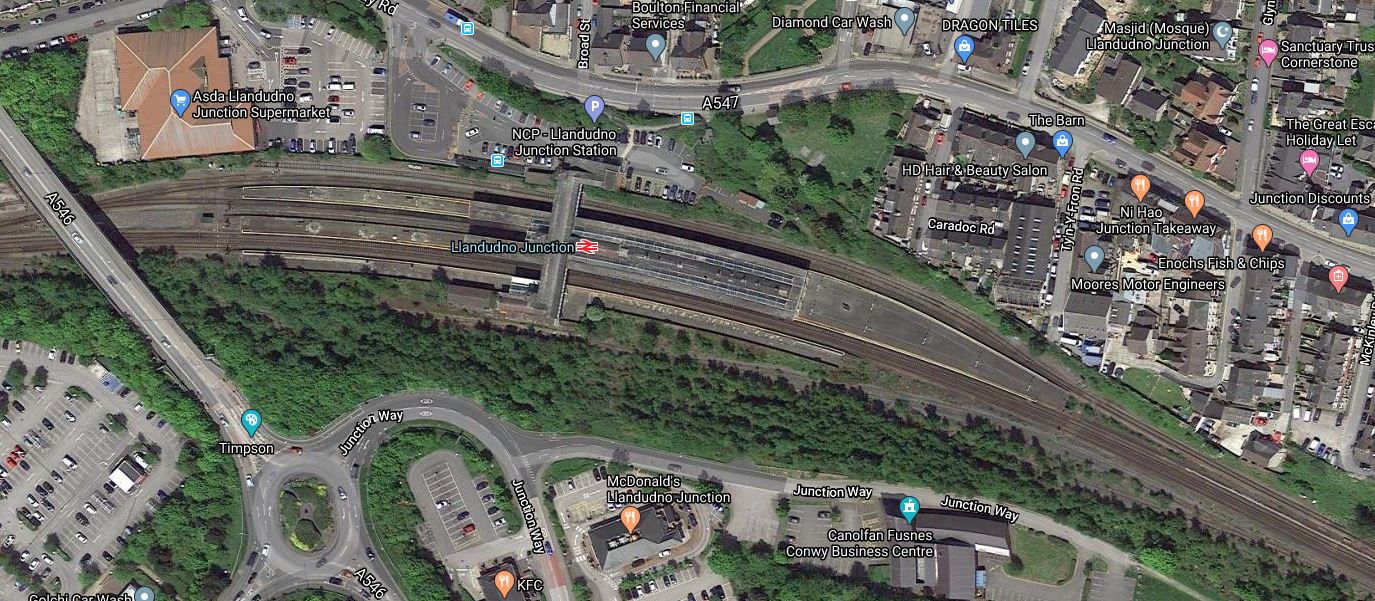
Note.
- It is a large station site.
- The Conwy Valley Line, which will be run by battery Class 230 trains in the future connects at this station.
- The Class 230 train will probably use some of Vivarail’s Fast Charging systems, which use third-rail technology, either at the ends of the branch or in Llandudno Junction station.
The simplest way to charge the London Euston and Holyhead train, would be to build a charging station at Llandudno Junction, which could be based on Vivarail’s Fast Charging technology or a short length of 25 KVAC overhead wire.
But this would add ten minutes to the timetable.
Could 25 KVAC overhead electrification be erected for a certain distance through the station, so that the train has ten minutes in contact with the wires?
Looking at the timetable of a train between London Euston and Holyhead, it arrives at Colwyn Bay station at 1152 and leaves Llandudno Junction station at 1200.
So would it be possible to electrify between the two stations and perhaps a bit further?
This Google Map shows Colwyn Bay Station,
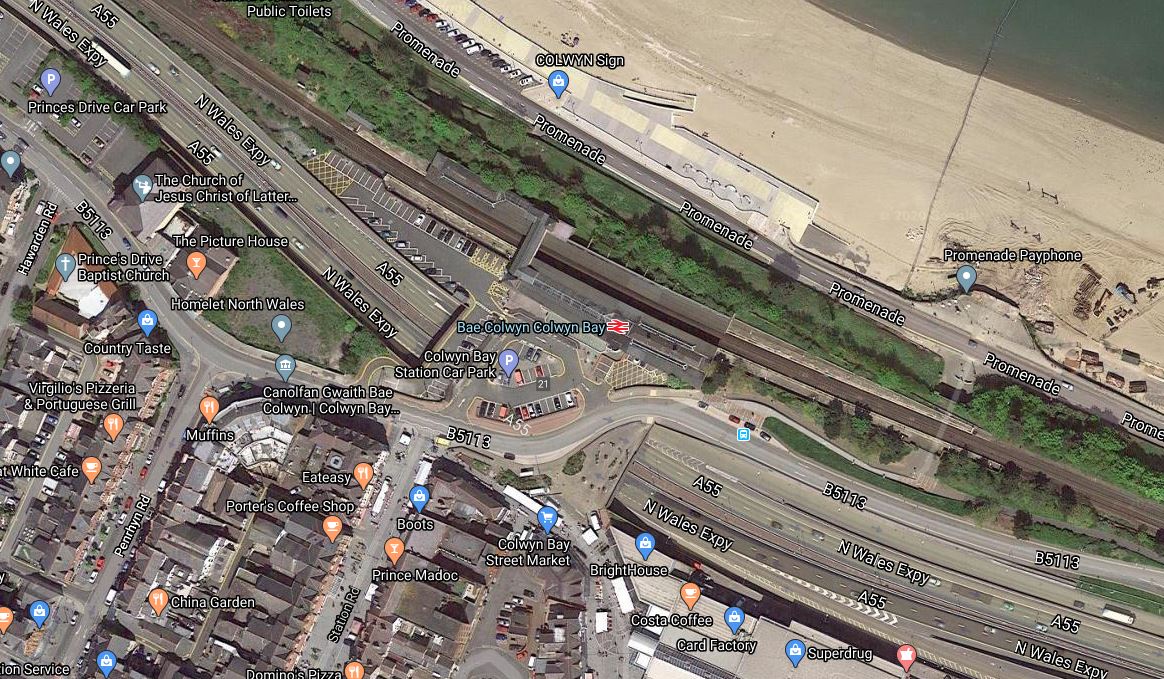
Note how the double-track railway is squeezed between the dual-carriageway of the A55 North Wales Expressway and the sea.
The two routes follow each other close to the sea, as far as Abegele & Pensarn station, where the Expressway moves further from the sea.
Further on, after passing through more caravans than I’ve ever seen, there is Rhyl station.
- The time between arriving at Rhyl station and leaving Llandudno Junction station is nineteen minutes.
- The distance between the two stations is fourteen miles.
- Rhyl and Crewe is fifty-one miles.
- Llandudno Junction and Holyhead is forty-one miles.
It would appear that if the North Wales Coast Line between Rhyl and Llandudno Junction is electrified, that Hitachi’s proposed battery trains can reach Holyhead.
The trains could even changeover between electrification and battery power in Rhyl and Llandudno Junction stations.
I am sure that electrifying this section would not be the most difficult in the world, although the severe weather sometimes encountered, may need some very resilient or innovative engineering.
It may be heretical to say so, but would it be better if this section were to be electrified using proven third-rail technology.
West of Llandudno Junction station, the electrification would be very difficult, as this Google Map of the crossing of the River Conwy shows.
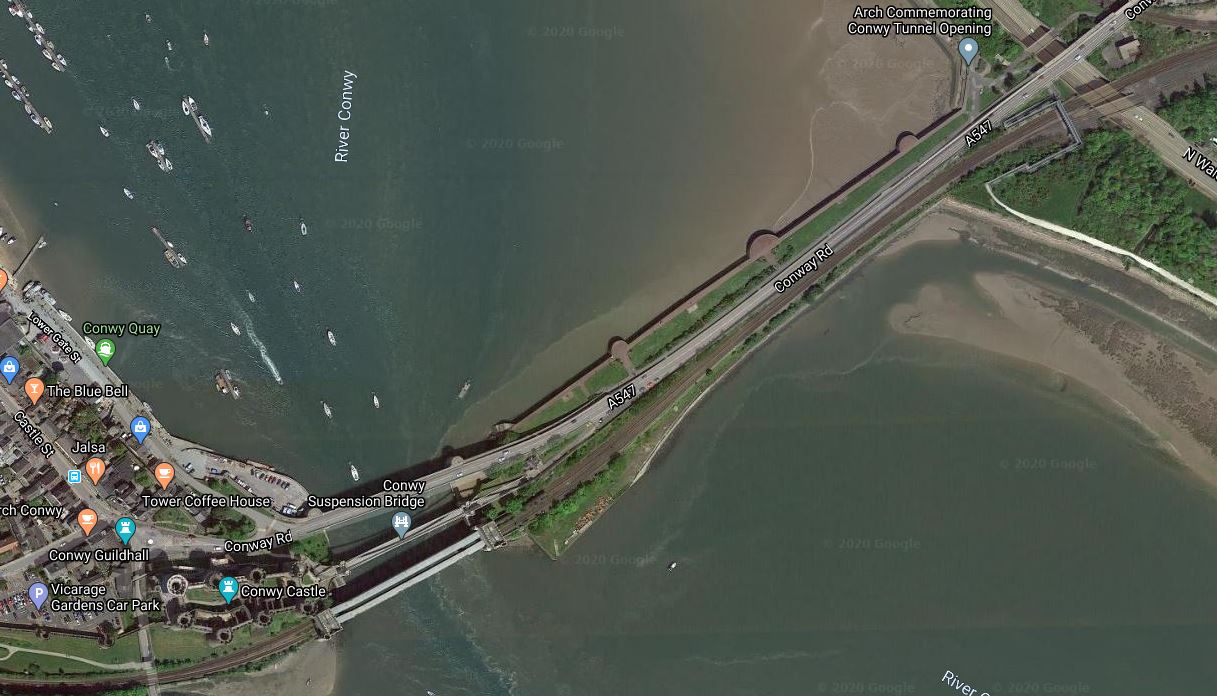
I don’t think anybody would want to see electrification around the famous castle.
Electrification Across Anglesey
Llanfairpwll station marks the divide between the single-track section of the North Wales Coast Line over the Britannia Bridge and the double-track section across Anglesey.
From my virtual helicopter, the route looks as if, it could be fairly easy to electrify, but would it be necessary?
- Llandudno Junction and Holyhead is forty-one miles, which is well within battery range.
- There is surely space at Holyhead station to install some form of fast-charging system.
One problem is that trains seem to turn round in only a few minutes, which may not be enough to charge the trains.
So perhaps some of the twenty-one miles between Llanfairpwll and Holyhead should be electrified.
London Euston And Holyhead Journey Times
Currently, trains take three hours and forty-three minutes to go between London Euston and Holyhead, with these sectional timings.
- London Euston and Crewe – One hour and thirty-nine minutes.
- Crewe and Holyhead – Two hours and four minutes.
The big change would come, if the London Euston and Crewe leg, were to be run on High Speed Two, which will take just fifty-five m,inutes.
This should reduce the London Euston and Holyhead time to just under three hours.
Freight On The North Wales Coast Line
Will more freight be seen on the North Wales Coast Line in the future?
The new tri-mode freight locomotives like the Class 93 locomotive, will be able to take advantage of any electrification to charge their batteries, but they would probably be on diesel for much of the route.
Conclusion On The North Wales Coast Line
Short lengths of electrification, will enable Avanti West Coast’s AT-300 trains, after retrofitting with batteries, to run between Crewe and Holyhead, without using any diesel.
I would electrify.
- Crewe and Chester – 21 miles
- Rhyl and Llandudno Junction – 14 miles
- Llanfairpwll and Holyhead – 21 miles
But to run battery-electric trains between London Euston and Holyhead, only Rhyl and Llandudno Junction needs to be electrified.
All gaps in the electrification will be handled on battery power.
A Selection Of Possible Battery-Electric Services
In this section, I’ll look at routes, where battery-electric services would be very appropriate and could easily be run by Hitachi’s proposed battery-electric trains.
London Paddington And Swansea
Many were disappointed when Chris Grayling cancelled the electrification between Cardiff and Swansea.
I went along with what was done, as by the time of the cancellation, I’d already ridden in a battery train and believed in their potential.
The distance between Cardiff and Swansea is 46 miles without electrification.
Swansea has these services to the West.
- Carmarthen – 32 miles
- Fishguard – 73 miles
- Milford Haven 71 miles
- Pembroke Dock – 73 miles
It looks like, three services could be too long for perhaps a three car battery-electric version of a Hitachi Class 385 train, assuming it has a maximum range of 65 miles.
But these three services all reverse in Carmarthen station.
So perhaps, whilst the driver walks between the cabs, the train can connect automatically to a fast charging system and give the batteries perhaps a four minute top-up.
Vivarail’s Fast Charging system based on third-rail technology would be ideal, as it connects automatically and it can charge a train in only a few minutes.
I would also electrify the branch between Swansea and the South Wales Main Line.
This would form part of a fast-charging system for battery-trains at Swansea, where turnround times can be quite short.
I can see a network of battery-electric services developing around Swansea, that would boost tourism to the area.
Edinburgh And Tweedbank
The Borders Railway is electrified as far as Newcraighall station and the section between there and Tweedbank is thirty miles long.
I think that a four-car battery-electric Class 385 train could work this route.
It may or may not need a top up at Tweedbank.
The Fife Circle
The Fife Circle service from Edinburgh will always be difficult to electrify, as it goes over the Forth Rail Bridge.
- The Fife Circle is about sixty miles long.
- Plans exist for a short branch to Leven.
- The line between Edinburgh and the Forth Rail Bridge is partly electrified.
I believe that battery-electric Class 385 train could work this route.
London Kings Cross and Grimsby/Cleethorpes via Lincoln
The Cleethorpes/Grimsby area is becoming something of a renewable energy powerhouse and I feel that battery trains to the area, might be a significant and ultimately profitable statement.
LNER recently opened a six trains per day service to Lincoln.
Distances from Newark are as follows.
- Lincoln – 17 miles
- Grimsby – 61 miles
- Cleethorpes – 64 miles
A round trip to Lincoln can probably be achieved on battery alone with a degree of ease, but Cleethorpes and Grimsby would need a recharge at the coast.
Note that to get to the Cleethorpes/Grimsby area, travellers usually need to change at Doncaster.
But LNER are ambitious and I wouldn’t be surprised to see them dip a toe in the Cleethorpes/Grimsby market.
The LNER service would also be complimented by a TransPennine Express service from Manchester Airport via Sheffield and Doncaster, which could in the future be another service run by a Hitachi battery train.
There is also a local service to Barton-on-Humber, which could be up for improvement.
London Waterloo And Exeter
This service needs to go electric, if South Western Railway is going to fully decarbonise.
But third-rail electrification is only installed between Waterloo and Basingstoke.
Could battery-electric trains be used on this nearly two hundred mile route to avoid the need for electrification.
A possible strategy could be.
- Use existing electrification, as far as Basingstoke – 48 miles
- Use battery power to Salisbury – 83 miles
- Trains can take several minutes at Salisbury as they often split and join and change train crew, so the train could be fast-charged.
- Use battery power to the Tisbury/Gillingham/Yeovil/Crewkerne area, where trains would be charged – 130 miles
- Use battery power to Exeter- 172 miles
Note.
- The miles are the distance from London.
- The charging at Salisbury could be based on Vivarail’s Fast-Charging technology.
- The charging around Yrovil could be based on perhaps twenty miles of third-rail electrification, that would only be switched on, when a train is present.
I estimate that there could be time savings of up to fifteen minutes on the route.
To Be Continued…
Exploring Devon And Cornwall In Castles
Castle is the name given by Great Western Railway to their four- and five-car InterCity 125 trains, with which they run services in the West Country.
These pictures show the trains, as I meandered up and down the Cornish Main Line.


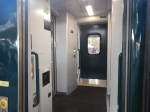
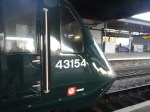

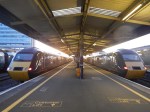












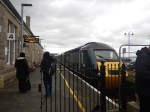

These are my observations.
The Doors
These trains now have electrically-controlled sliding doors and it seems to be a conversion, that has been carried out to a high standard.
Certainly, all the doors appeared to be working, as they should.
The Seats And Tables
The seats were comfortable, but not as comfortable as some seats I’ve used in Mark 3 coaches.
Could there be a few more tables?
The Ride
My pocket dynamometer was showing a speed of about 65 mph and the ride was as you’d expect from a well-maintained Mark 3 coach.
Access Between Platform And Train
This is not good as the pictures show.
This is the step on a Castle.
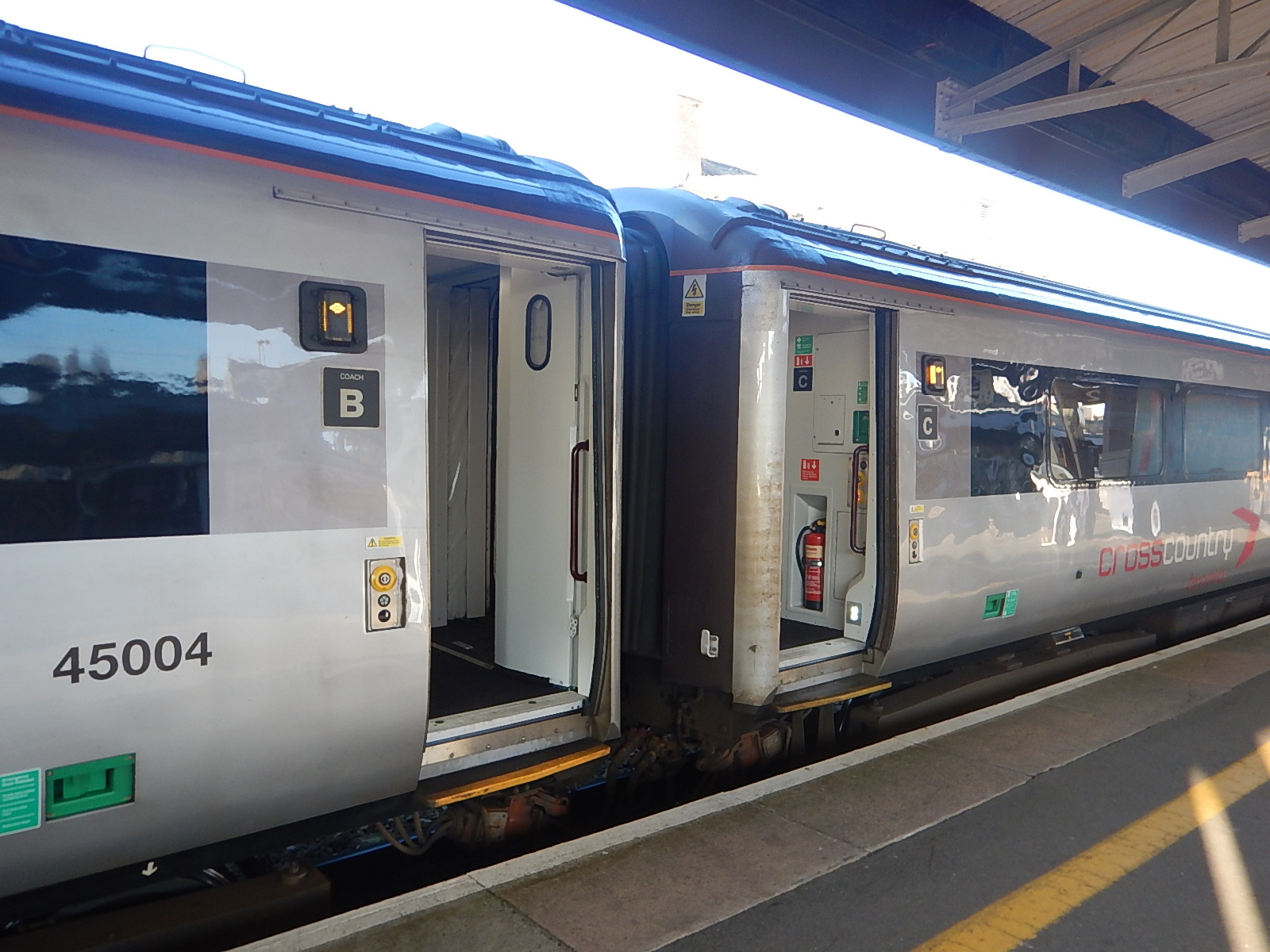
And this is the step on a new Class 755 train
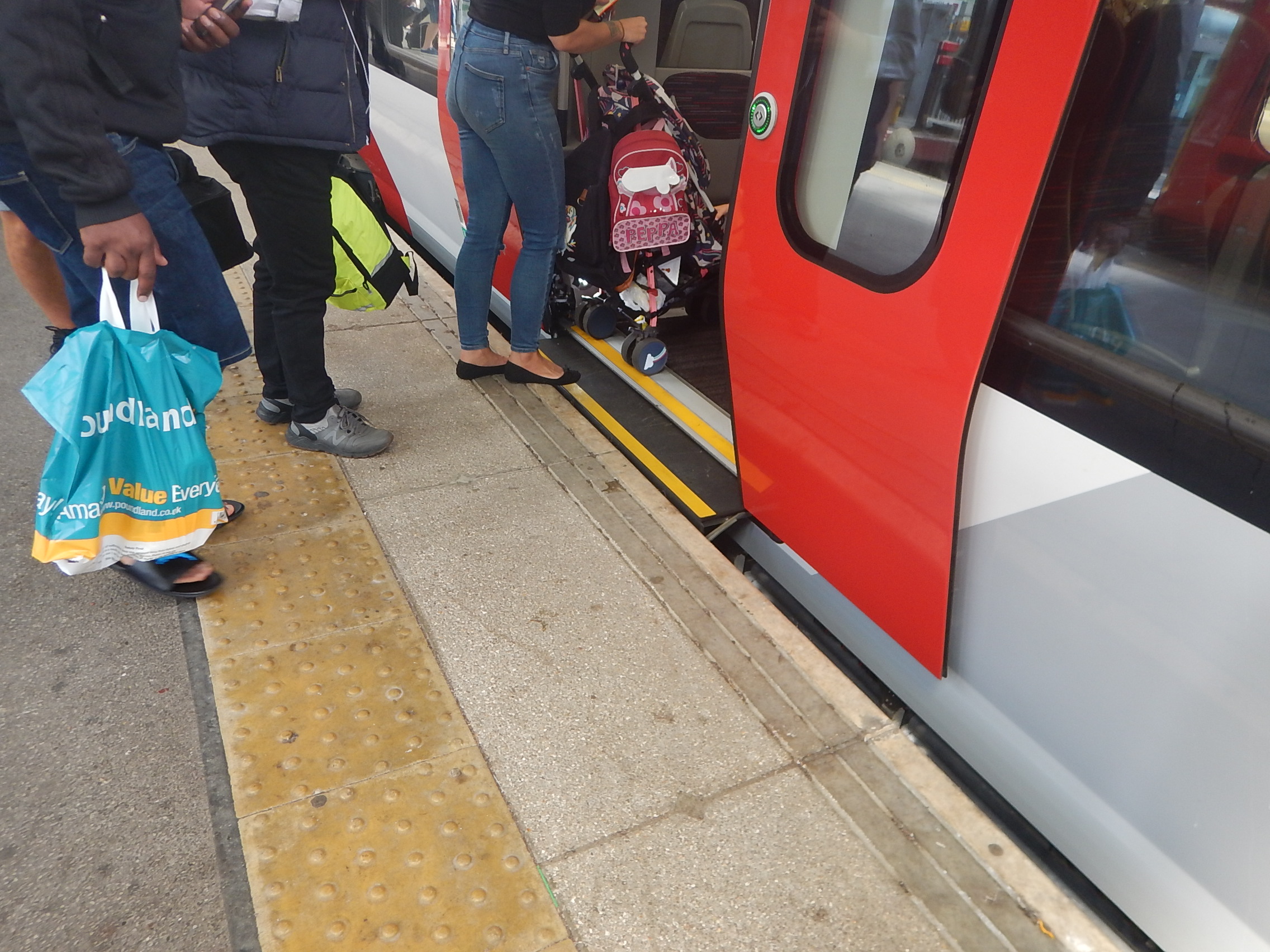
Think buggies, heavy cases and wheelchairs.
The Class 755 train, really is the Gold Standard of step-free access between platform and train.
Conclusion
These iconic trains will do a good job for Great Western Railway.
You could certainly find a good hotel in Devon or Cornwall and have a few enjoyable days riding between Penzance and Exeter, to explore the area
I do hope that they eventually put a catering trolley on the train.
 The Anonymous Widower