London’s First Two HS2 Tunnelling Machines Ordered
The title of this post, is the same as that of this article on Ian Visits.
The title gives a description of the story, but the article reveals a lot of details about the tunnels for High Speed Two.
- There will be ten tunnel boring machines (TBMs) in total for High Speed Two.
- The main tunnels are 42 % larger than those for Crossrail.
- There will be three pairs of tunnels under London; West Ruislip and Greenford (5 miles), Greenford and Old Oak Common (3.4 miles) and Old Oak Common and Euston (4.5 miles).
- It looks like these first two machines will bore the two outer tunnels and that two extra TBMs will be ordered for Greenford and Old Oak Common.
There are also two excellent infographics.
- The first shows the route of the tunnels.
- The second shows the three pairs of tunnels and the directions, they will be bored.
- The third also discloses that the tunnels will be up to fifty metres deep.
There will also be a vent shaft at Greenford in Green Park Way, when the tunnel opens.
This Google Map shows the area.
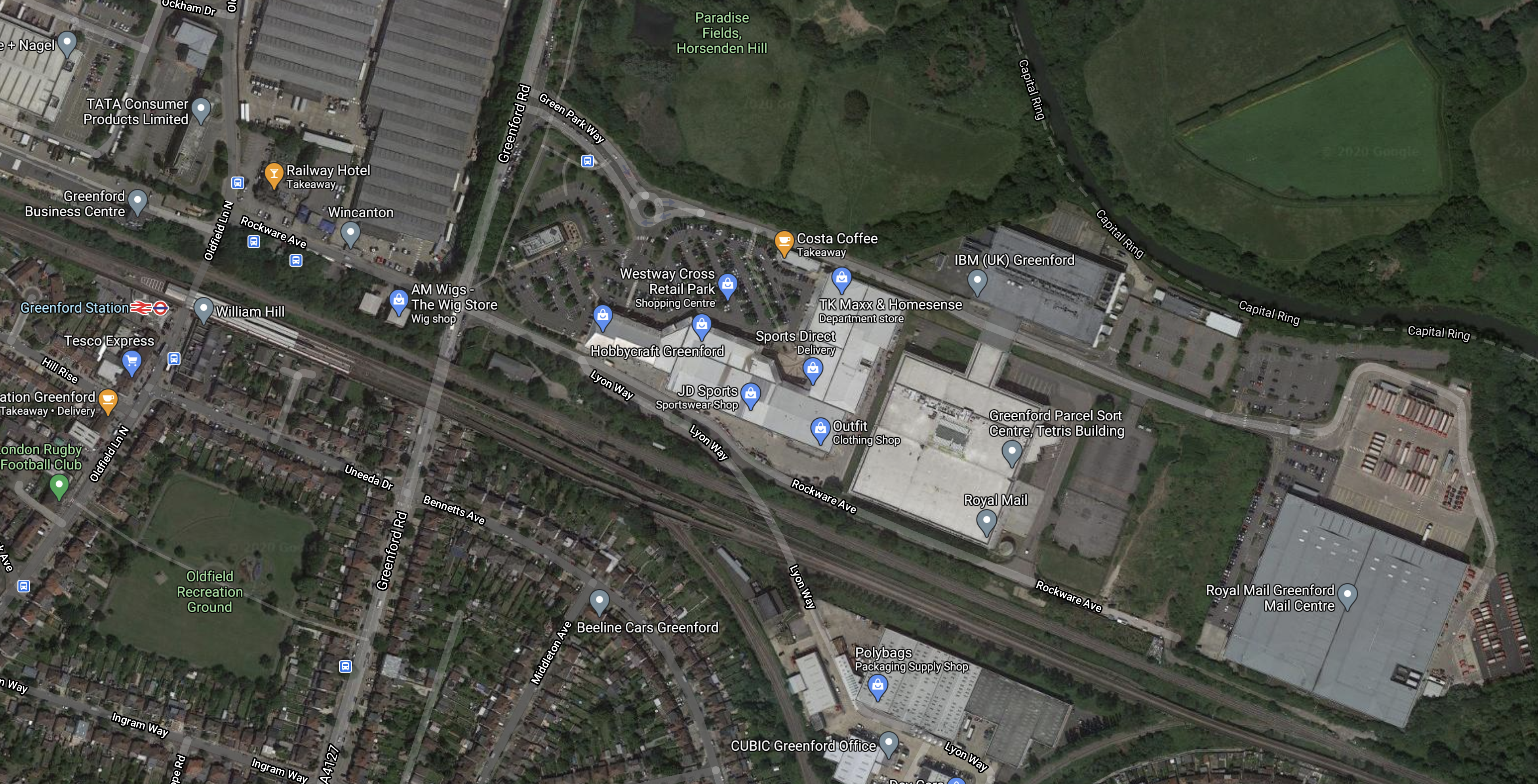
Note.
- The A 4127 runs North-South across the map.
- The railways running across the map are Acton and Northolt Line and the Central Line, which serves Greenford station.
- The Greenford Branch Line goes South from a triangular junction.
The green site squeezed in between the industrial buildings and just to the North of the railways could be the site for the vent shaft.
This second map is a clip of High Speed Two’s map of the area.
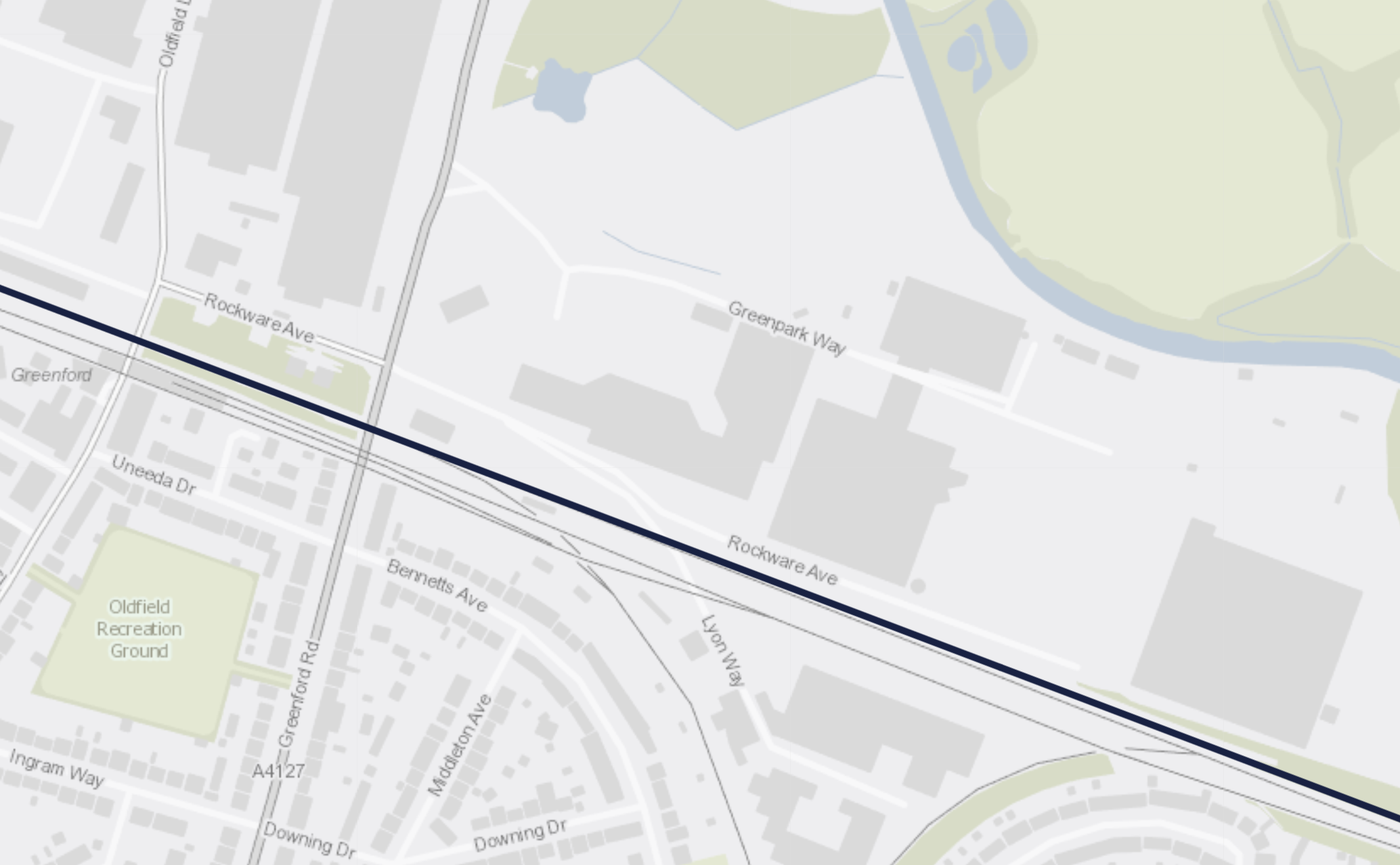
The black line is the route of the High Speed Two tunnel.
- It is to the North of the Central Line.
- It looks to be close to the vacant site.
When High Speed One was built through Hackney, they bored the tunnels under the North London Line, so High Speed Two only seem to be repeating, what worked successfully.
These pictures show some of the ventilation shafts for High Speed One in East London.






Crossrail’s vent shafts are smaller in number and less obtrusive. There is one disguised in this building; Moor House.
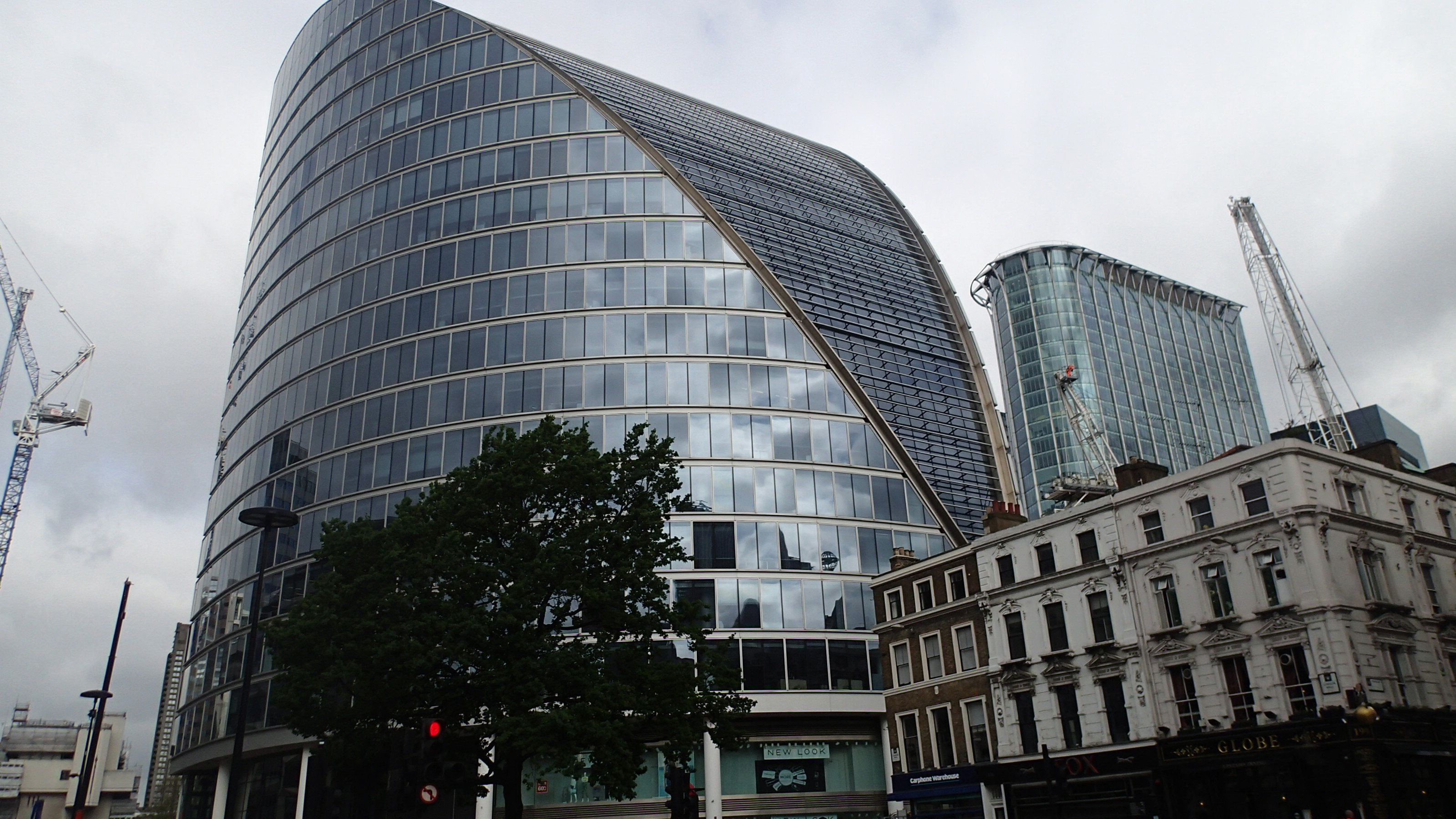
I would hope that High Speed Two could improve further and create a useful building on top, that adds value to the area and doesn’t follow the utilitarian constructions of High Speed One.
Boring the Tunnels
According to the infographics, the three tunnels will be built in the following directions.
- West Ruislip and Green Park Way – Towards Green Park Way
- Green Park Way and Old Oak Common – Towards Green Park Way
- Old Oak Way and Euston – Towards Euston.
These High Speed Two tunnels will be the fourth set of large tunnels to be bored under London in recent years after High Speed One, Crossrail and the Thames Tideway Scheme and I suspect there will be those , who will have worked on all four, at every level.
- I wouldn’t be surprised to see some innovative use of the TBMs, so that they are reused if possible.
- As four TBMs start at Old Oak Common and four finish at Green Park Way, I wonder if the planners have sequenced the insertion and extraction of the TBMs to make best use of the very expensive cranes needed.
- Two TBMs will be inserted at West Ruislip, where there is a public golf course that must give plenty of space.
- Two TBMs will be extracted a short distance to the North of Euston station. Again, there appears to be space.
I suspect experience from previous projects and good project planning has contributed to the design.
The Work Has Started At Green Park Way
These pictures show the Greenford site on the 12th of October 2020.
These pictures were taken from a Central Line train.
The Tunnel Portal Works At West Ruislip Station
These pictures show the West Ruislip site on the 12th of October 2020.
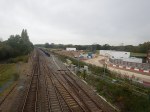
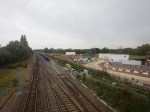
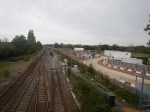

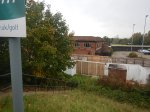

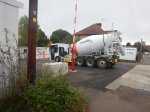

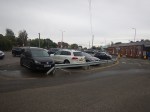
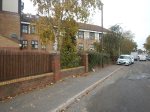

Note.
- This is where High Speed Two will emerge from the tunnels from Euston.
- The first three pictures were taken from the bridge over the railway and show the Chiltern Main Line, Chiltern’s turnback siding and the High Speed Two site.
- There is no sign of works around the car park and the L-shaped care home on the station side of the road, so I would assume, that they will be unaffected by the tunnel.
This Google Map shows West Ruislip station.
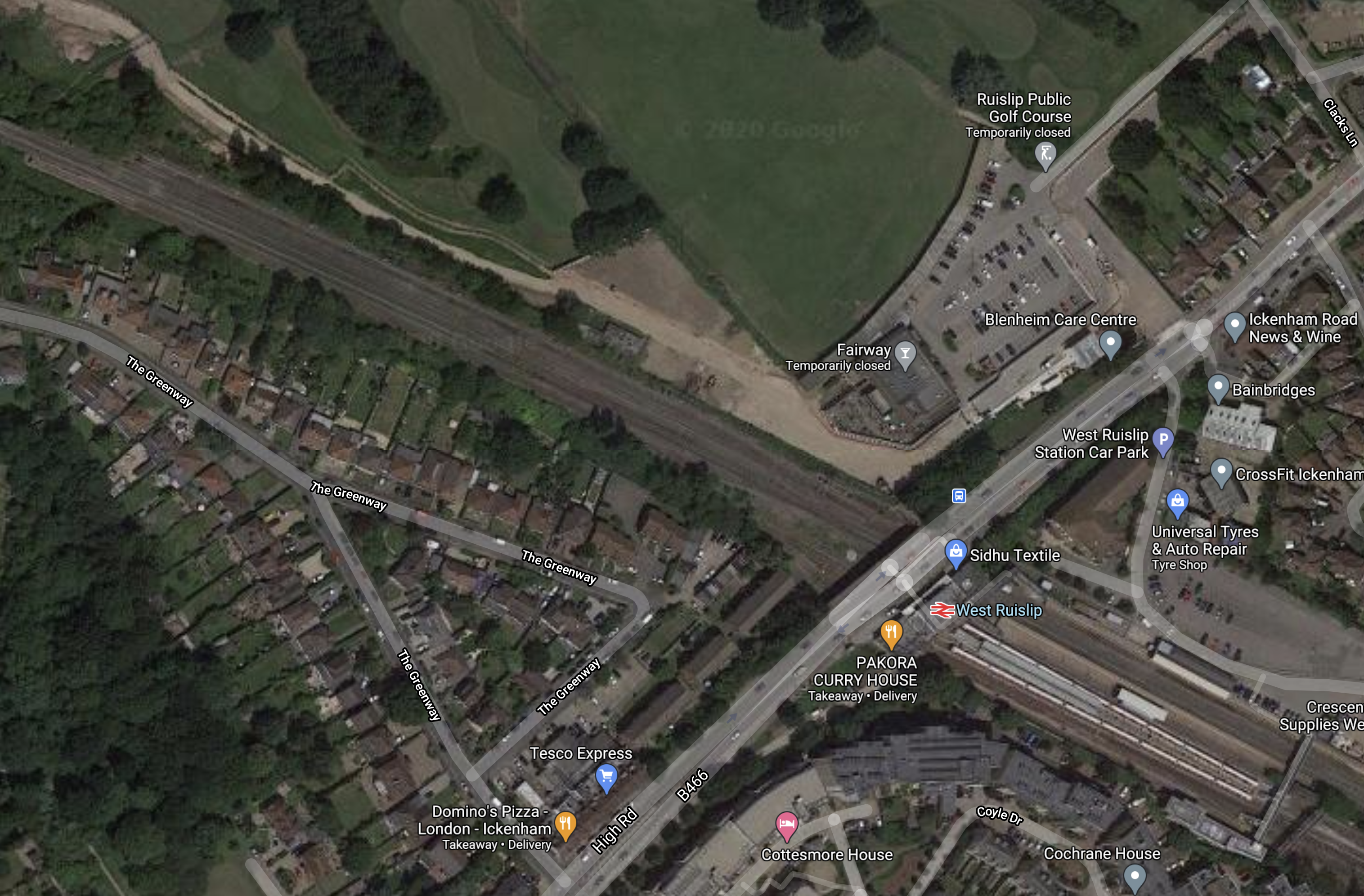
Note.
- The Central Line terminating in West Ruislip station.
- The Chiltern Main Line passing through the station.
- The scar of the construction of High Speed Two alongside the Chiltern Main Line.
If you follow the Chiltern Main Line on Google Maps for a couple of miles, you can see the route of High Speed Two.
This second map is a clip of High Speed Two’s map of the area.
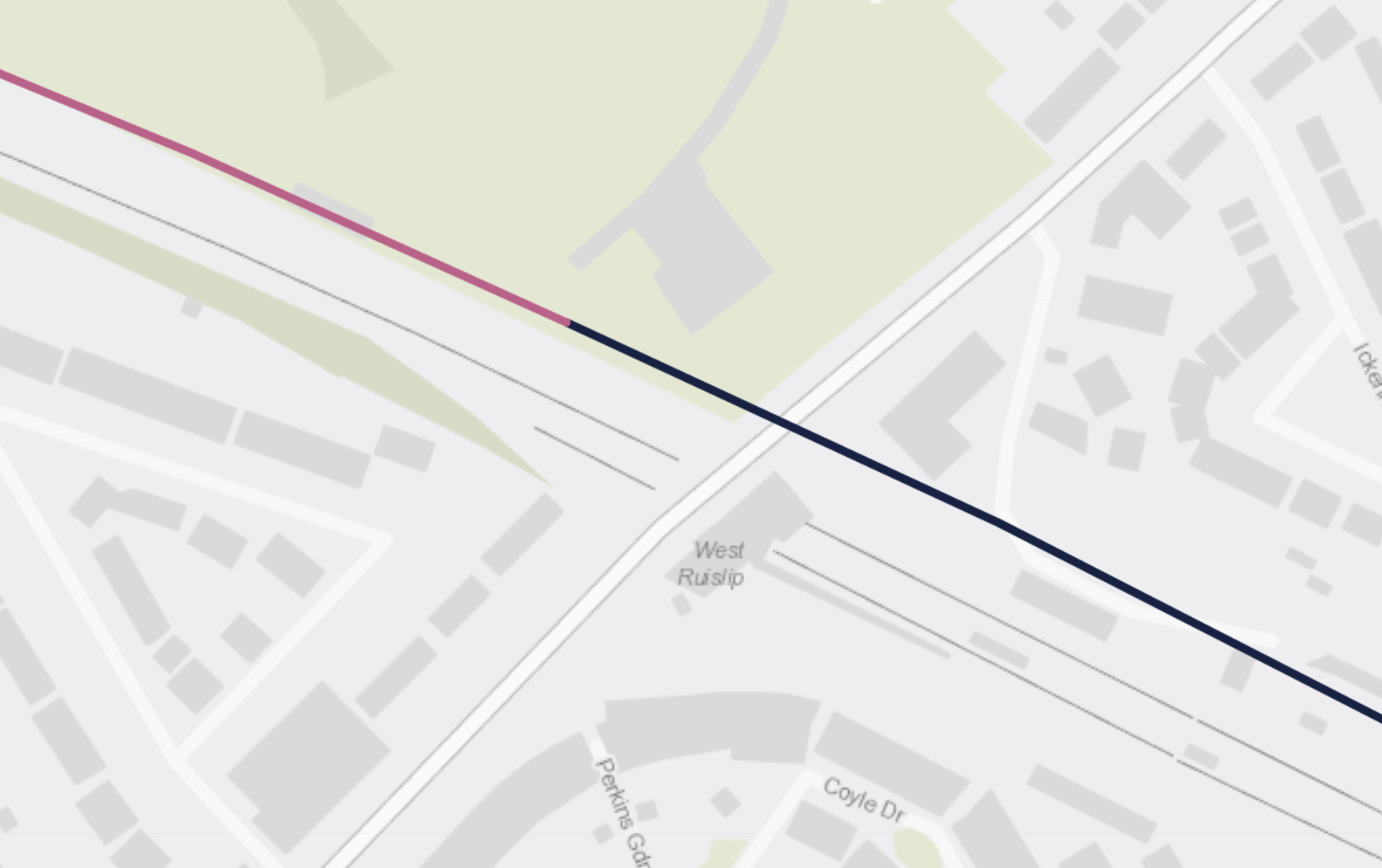
Note.
- The black line is the High Speed Two tunnel, that surfaces, where it changes colour.
- The L-shaped care home is still on the map, so it does appear the tunnel goes underneath.
It looks to me, that the bridge and Chiltern Trains going towards London, will offer good views of the tunnel works.
In the late 1950s, British Rail were increasing the number of tracks through Hadley Wood station, from two to four, by digging two extra tunnels.
I can remember my father taking me to see the works from Waggon Road or Wagon Road, which had and still had a few years ago, different names at either end.
Hull Station
On my recent visit to Hull station I took these pictures.
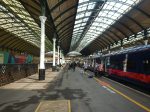
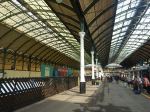
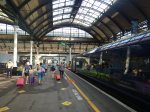
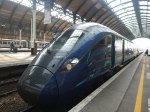

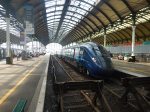

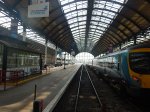




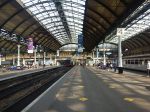
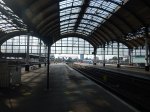
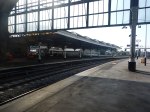
This Google Map shows the station.
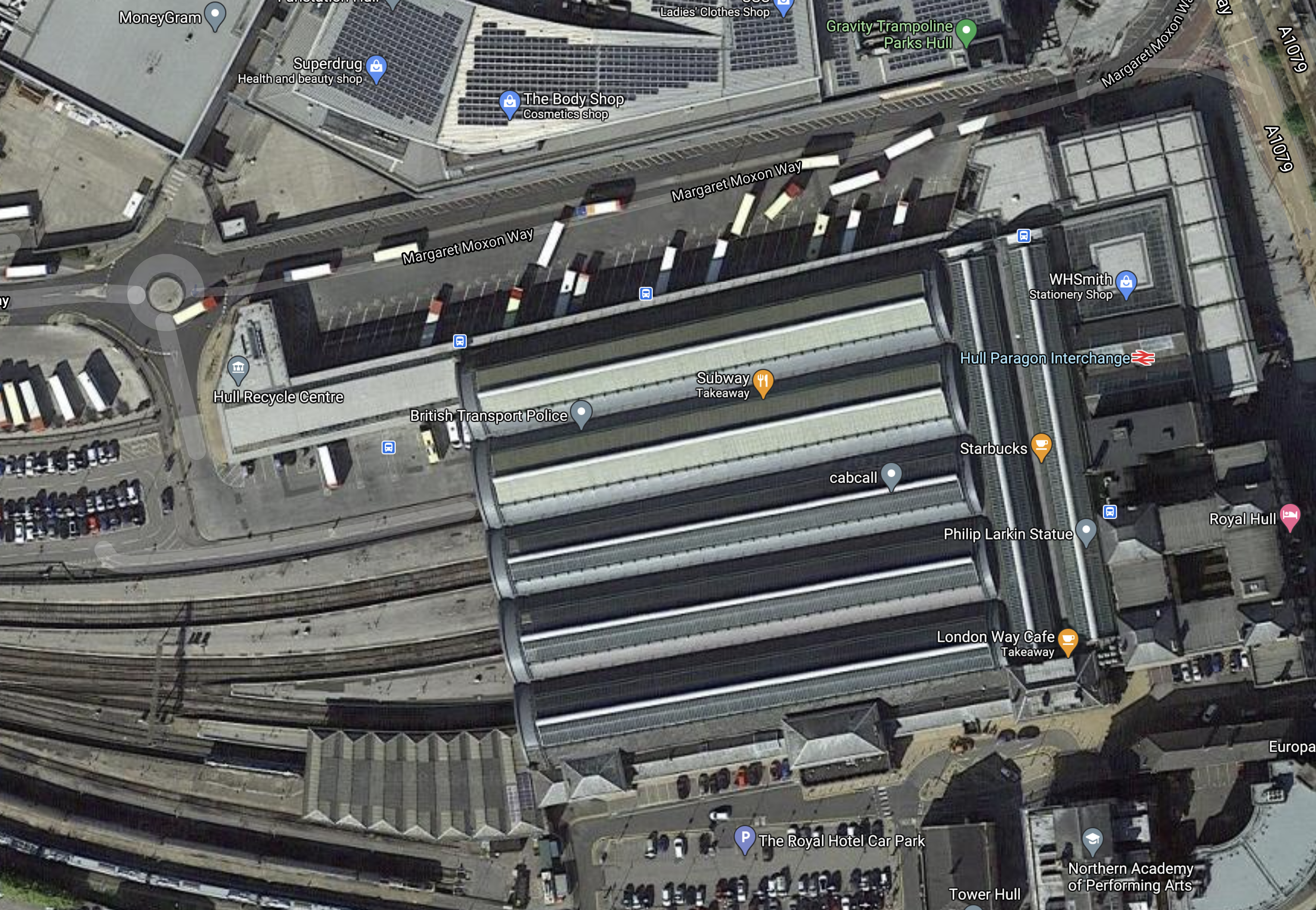
These are my thoughts on the station .
Platforms
Consider.
- The station has seven platforms, which are numbers 1 to 7 from South to North.
- My Hull Trains service from London arrived in the Northernmost platform, which is numbered 7.
- Most Hull Trains services seem to use this platform.
- LNER services also seem to use Platform 7.
- Platforms 4, 5 and 6 seem to be the same length as Platform 7
- A friendly station guy told me, that LNER have run nine-car Class 800 trains into the station. These trains are 234 metres long.
- My pictures show that Platform 7 is more than adequate for Hull Train’s five-car Class 802 train, which is 130 metres long.
- The platforms are wide.
This second Google Map shows the Western platform ends.
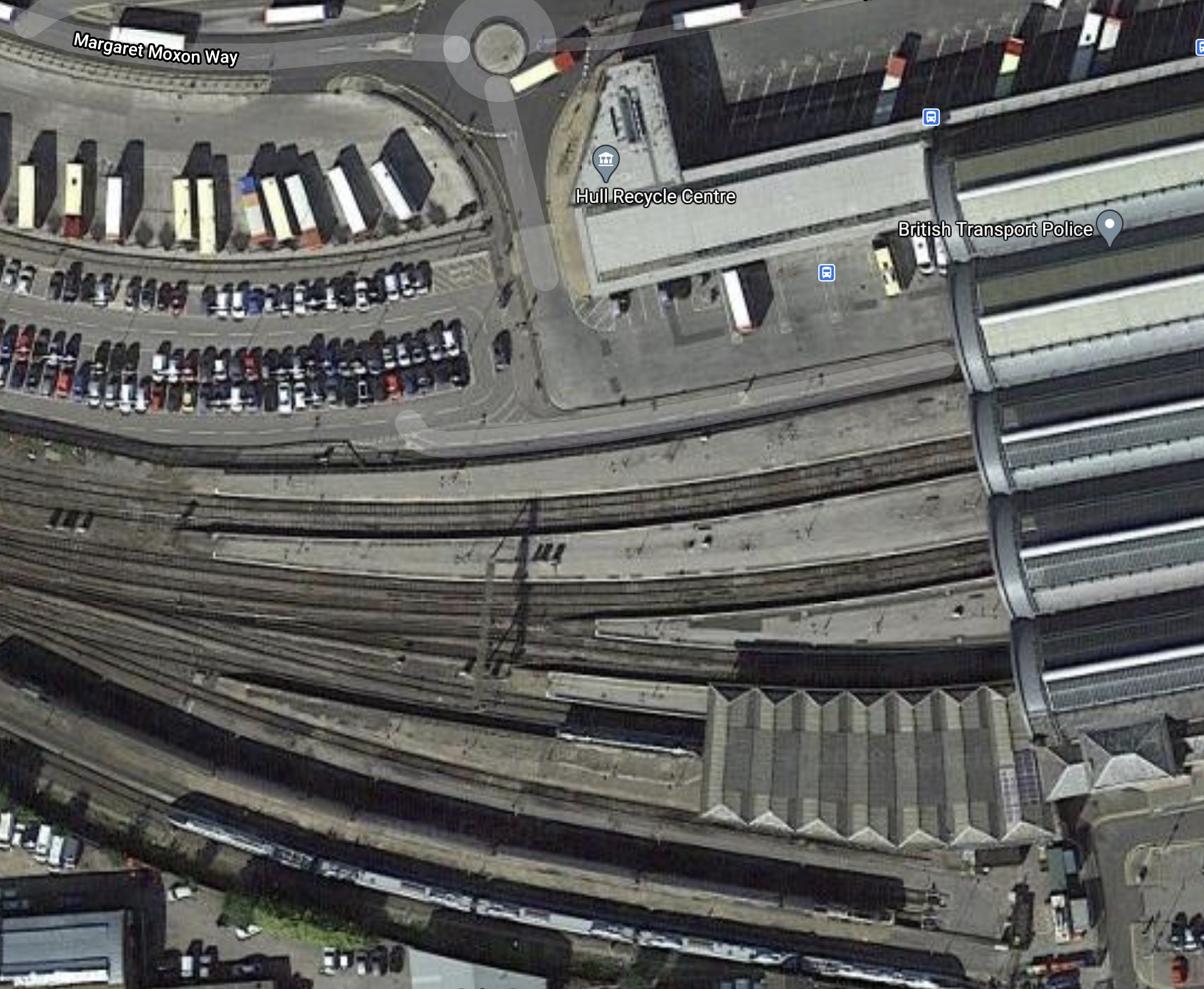
It looks to me, that the station should be capable of updating to have at least four platforms capable of taking trains, that are 200 metres long.
Current Long Distance Services To Hull Station
There are currently, two long distance services that terminate at Hull station.
- One train per hour (tph) – Manchester Piccadilly – two hours
- Eight trains per day (tpd) – London Kings Cross – two hours and forty-four minutes
Both services are run by modern trains.
Improvements To The Current London And Hull Service
I believe Hull Trains and LNER will run between London Kings Cross and Hull using battery-equipped versions of their Hitachi trains, within the next three years.
The trains will also be upgraded to make use of the digital in-cab signalling, that is being installed South of Doncaster, which will allow 140 mph running.
In Thoughts On Digital Signalling On The East Coast Main Line, I estimated that this could enable a two hours and thirty minute time between London Kings Cross and Hull.
It is very likely that the service will be hourly.
Hull Station As A High Speed Station
Plans for High Speed Two are still fluid, but as I said in Changes Signalled For HS2 Route In North, there is a possibility, that High Speed Two could be extended from Manchester Airport and Manchester Piccadilly to Leeds and ultimately to Newcastle and Hull.
In that post, I felt that services across the Pennines could be something like.
- High Speed Two – Two tph between London and Hull via Manchester Airport, Manchester Piccadilly and Leeds
- High Speed Two – One tph between London and Edinburgh via Manchester Airport, Manchester Piccadilly, Leeds, York and Newcastle.
- Northern Powerhouse Rail – One tph between Liverpool and Edinburgh via Manchester Airport, Manchester Piccadilly, Leeds, York and Newcastle.
- Northern Powerhouse Rail – Two tph between Liverpool and Sheffield via Manchester Airport and Manchester Piccadilly
- Northern Powerhouse Rail – Two tph between Liverpool and Hull via Manchester Airport, Manchester Piccadilly and Leeds
There would be four tph between Manchester Airport and Hull via Manchester Piccadilly, Leeds and other intermediate stations.
I estimate that the following timings would be possible.
- London Euston and Hull – two hours and 10 minutes – Currently two hours and forty-four minutes to London Kings Cross
- Liverpool and Hull – one hour and thirty minutes – No direct service
- Manchester and Hull – one hour and three minutes – Currently two hours
As I said earlier London Kings Cross and Hull could be only twenty minutes longer by the classic route on the East Coast Main Line.
I think it will be likely, that both High Speed Two and Northern Powerhouse Rail will use similar High Speed Two Classic-Compatible trains, which will have the following characteristics.
- Two hundred metres long
- Ability to run in pairs
- 225 mph on High Speed Two
- 125 mph and up to 140 mph on Classic High Speed Lines like East Coast Main Line, Midland Main Line and West Coast Main Line and sections of Northern Powerhouse Rail.
It would appear that as Hull station can already handle a nine-car Class 800 train, which is 234 metre long, it could probably handle the proposed High Speed Two Classic-Compatible trains.
I could see the following numbers of high speed trains terminating at Hull in a typical hour would be as follows.
- Two High Speed Two trains from London Euston
- Two Northern Powerhouse Trains from Liverpool Lime Street
- One Hull Trains/LNER train from London Kings Cross
As Hull already has four platforms, that can accept 200 metre long trains, I don’t think the station will have any capacity problems.
Charging Battery Trains At Hull Station
If Hull Trains, LNER and TransPennine Express, decide to convert their Class 800 and Class 802 trains, that run to and from Hull to Hitachi Regional Battery Trains, they will need charging at Hull station, to be able to reach the electrification of the East Coast Main Line at Temple Hirst Junction.
In Thoughts On The Design Of Hitachi’s Battery Electric Trains, I said this about having a simple charger in a station.
At stations like Hull and Scarborough, this charger could be as simple as perhaps forty metres of 25 KVAC overhead electrification.
-
- The train would stop in the station at the appropriate place.
- The driver would raise the pantograph.
- Charging would start.
- When the battery is fully-charged, the driver would lower the pantograph.
This procedure could be easily automated and the overhead wire could be made electrically dead, if no train is connected.
Platforms 4 to 7 could be fitted out in this manner, to obtain maximum operational flexibility.
Full Electrification Of Hull Station
Full electrification of Hull station would also allow charging of any battery electric trains.
I would hope, that any partial electrification carried out to be able to charge trains would be expandable to a full electrification for the station and the connecting rail lines.
A Full Refurbishment
The station would need a full refurbishment and a possible sorting out of the approaches to the station.
But this type of project has been performed at Kings Cross and Liverpool Lime Street in recent years, so the expertise is certainly available.
These pictures are of Liverpool Lime Street station.


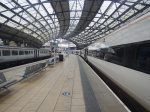

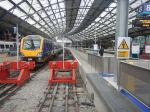
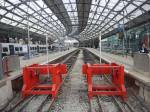

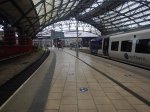
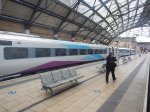
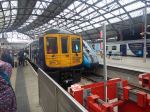
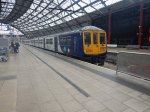

I could see Hull station being refurbished to this standard.
Conclusion
It is my belief that Hull would make a superb terminal station for both High Speed Two and Northern Powerhouse Rail
In the interim, it could be quickly developed as a modern terminal for long-distance battery electric trains to make services across the Pennines and to London zero carbon.
The work could also be organised as a series of smaller work packages, without interrupting train services to and from Hull.
Hopes Rekindled Of Full Midland Main Line Electrification
The title of this post, is the same as that of this article on Rail Magazine.
This is the key section of the article.
During a House of Commons debate on transport on September 17, HS2 Minister Andrew Stephenson said in response to a question from Alex Norris (Labour/Co-op, Nottingham North): “We are currently delivering the Midland Main Line upgrade, which includes electrification from London to Kettering, with additional electrification to Market Harborough being developed.
“Further electrification of the MML is currently at an early stage, but it is being examined by Network Rail.”
Stephenson said the DfT will continue to work closely with NR on the development of a proposal that would include approaches to advancing the delivery of electrification across the route.
The title of the article, probably sums it up well.
Electrification Of The Midland Main Line
Having read lots of stories about electrification of Midland Main Line, I think the following must be born in mind.
- Electrification on the line will reach as far North as Market Harborough station.
- The route between Sheffield station and Clay Cross North Junction will be shared with High Speed Two. It will obviously need to be electrified for High Speed Two.
- The section of the Midland Main Line between Derby and Clay Cross North Junction, runs through the World Heritage Site of the Derwent Valley Mills. The Heritage Taliban will love the electrification, with a vengeance.
- Electrification through Leicester station could be tricky, as the station building and the A6 road are over the tracks and there is limited clearance. Electrification could involve major disruption to the trains for some time.
These are some of the distances involved of sections of the route that are not electrified.
- Market Harborough and Derby are 54 miles apart.
- Market Harborough and Clay Cross North Junction are 67 miles apart.
- Market Harborough and Chesterfield are 70 miles apart.
- Market Harborough and Nottingham are 44 miles apart
- Market Harborough and Leicester are 16 miles apart.
- Derby and Clay Cross North Junction are 21 miles apart.
Since 2017, when electrification for the full route was originally abandoned, there have been big changes in rolling stock technology.
The biggest change has been the development of battery trains.
Hitachi’s Regional Battery Trains
This infographic from Hitachi gives the specification for their Regional Battery Train.

Note.
- The trains have a range of 56 miles on battery power.
- The trains can cruise at 100 mph on battery power.
- Hitachi have said that all of their AT-300 trains can be converted into Regional Battery Trains.
- Trains are converted by removing the diesel engines and replacing them with battery packs.
- I suspect these battery packs look like a diesel engine in terms of control inputs and performance to the driver and the train’s computer.
It is extremely likely, that the bi-mode Class 810 trains, which are a version of the AT-300 train, that have been ordered for the Midland Main Line can be converted into Regional Battery Trains.
These trains have four diesel engines, as opposed to the Class 800 and Class 802 trains, which only have three.
These are reasons, why the trains could need four engines.
- The trains need more power to work the Midland Main Line. I think this is unlikely.
- Four engine positions gives ,more flexibility when converting to Regional Battery Trains.
- Four battery packs could give a longer range of up to 120 kilometres or 75 miles.
It could just be, that Hitachi are just being conservative, as engines can easily be removed or replaced. The fifth-car might even be fitted with all the wiring and other gubbins, so that a fifth-engine or battery pack can be added.
I suspect the train’s computer works on a Plug-And-Play principle, so when the train is started, it looks round each car to see how many diesel engines and battery packs are available and it then controls the train according to what power is available.
London St. Pancras And Sheffield By Battery Electric Train
Any battery electric train going between London St. Pancras and Sheffield will need to be charged, at both ends of the route.
- At the London end, it will use the electrification currently being erected as far as Market Harborough station.
- At the Sheffield end, the easiest way to charge the trains, would be to bring forward the electrification and updating between Sheffield station and Clay Cross North Junction, that is needed for High Speed Two.
This will leave a 67 mile gap in the electrification between Market Harborough station and Clay Cross North junction.
It looks to me, the Class 810 trains should be able to run between London St. Pancras and Sheffield, after the following projects are undertaken.
- Class 810 trains are given four battery packs and a battery range of 75 miles.
- Electrification is installed between Sheffield station and Clay Cross North Junction.
Trains would need to leave Market Harborough station going North and Clay Cross Junction going South with full batteries.
Note.
- Trains currently take over an hour to go between Chesterfield to Sheffield and then back to Chesterfield, which would be more than enough to fully charge the batteries.
- Trains currently take around an hour to go between London St. Pancras and Market Harborough, which would be more than enough to fully charge the batteries.
- Chesterfield station is only three miles further, so if power changeover, needed to be in a station, it could be performed there.
- Leeds and Sheffield are under fifty miles apart and as both stations would be electrified, London St. Pancras and Sheffield services could be extended to start and finish at Leeds.
London St. Pancras and Sheffield can be run by battery electric trains.
London St. Pancras And Nottingham By Battery Electric Train
Could a battery electric train go from Market Harborough to Nottingham and back, after being fully-charged on the hour-long trip from London?
- The trip is 44 miles each way or 88 miles for a round trip.
- Services have either three or eight stops, of which two or three respectively are at stations without electrification.
- Trains seem to take over thirty minutes to turnback at Nottingham station.
Extra power North of Market Harborough will also be needed.
- To provide hotel power for the train, during turnback at Nottingham station.
- To compensate for power losses at station stops.
If 75 miles is the maximum battery range, I doubt that a round trip is possible.
I also believe, that Hitachi must be developing a practical solution to charging a train during turnback, at a station like Nottingham, where trains take nearly thirty minutes to turnback.
If the Class 810 trains have a battery range of 75 miles, they would be able to handle the London St. Pancras and Nottingham service, with charging at Nottingham.
Conclusion
It appears that both the Nottingham and Sheffield services can be run using battery electric Class 810 trains.
- All four diesel engines in the Class 810 trains would need to be replaced with batteries.
- The route between Clay Cross North Junction and Sheffield station, which will be shared with High Speed Two, will need to be electrified.
- Charging facilities for the battery electric trains will need to be provided at Nottingham.
On the other hand using battery electric trains mean the two tricky sections of the Derwent Valley Mills and Leicester station and possibly others, won’t need to be electrified to enable electric trains to run on the East Midlands Railway network.
Will it be the first main line service in the world, run by battery electric trains?
Beeching Reversal – To Reinstate The Keswick To Penrith Railway
September 10th – This Beeching Reversal project appears to have been rejected.
Thoughts On The Design Of The Route
Consider.
- Keswick and Penrith are around 17.3 miles apart by road.
- The rail distance should be less than 20 miles.
- There could be perhaps six intermediate stations.
- A battery electric train typically has a range of 55-65 miles.
- A quiet battery electric train would be ideal for this route.
I believe that a battery electric train could handle this route.
- Charging would be mainly in Penrith station, using the existing 25 KVAC overhead electrification in Platform 3.
- A charging station would be provided in Keswick station to be safe.
A battery electric train could go between the two stations, recharge the battery and be ready to return in under an hour.
The route would be single track, except for a short double track station in the middle to allow trains to pass.
The route would not be electrified.
All stations could be single track, except for the passing station.
Two trains would be needed to work an hourly service.
Four trains would be needed to work an two trains per hour (tph) service.
Could the track could be designed to these criteria?
- No level crossings.
- Gentle curves and gradients
- 80 mph operating speed.
I suspect modern computer technology, which was not available to the Victorians, would ease the design of an efficient track.
- If a highly-efficient track could be created, it might be possible for a train to do a round trip from Penrith to Keswick, within an hour.
- This would mean that one train could provide the hourly service.
- Charging would only be at Penrith, using existing electrification.
- The passing loop would not be built, but provision would be made to add it later, if the frequency were to be increased.
We could be seeing several of these highly-efficient branch lines run by 100 mph battery-electric trains, that are charged on existing electrified main lines.
The Effect Of High Speed Two
Consider.
- Currently, there is a roughly hourly service in both directions on the West Coast Main Line at Penrith station.
- High Speed Two will only provide an hourly service between Birmingham Curzon Street and Edinburgh or Glasgow via Wigan North Western, Preston, Lancaster and Carlisle.
- Carlisle will have three tph on High Speed Two, between England and Scotland.
- Carlisle will have scenic services to Edinburgh, Glasgow, Leeds and Newcastle.
- Services between Carlisle and Penrith take thirteen minutes.
But most importantly, High Speed Two could bring lots of extra tourists to the area.
So would it be better for the Keswick and Penrith service to terminate at Carlisle?
- Charging would now be on the West Coast Main Line.
- Trains would only make a typical two-minute stop in Penrith station.
This would probably mean that an hourly service could be provided with only one train on the branch at a time.
Conclusion
I feel the economics of this project could be transformed by using battery electric trains on this proposed route and terminating them at Carlisle.
Wigan North Western Station Set For Platform Extension Work
The title of this post. is the same as that of this article on Rail Advent.
This is the first three paragraphs.
Wigan North Western is set to undergo a multi-million-pound platform extension to provide passengers between Manchester and Leeds with longer trains.
The work is part of the Great North Rail Project and will see Platform 3 made longer to allow four-carriage trains to call at the station.
Northern can then provide extra capacity for passengers and move trains in and out of its new £46m depot at Ince-in-Makerfield.
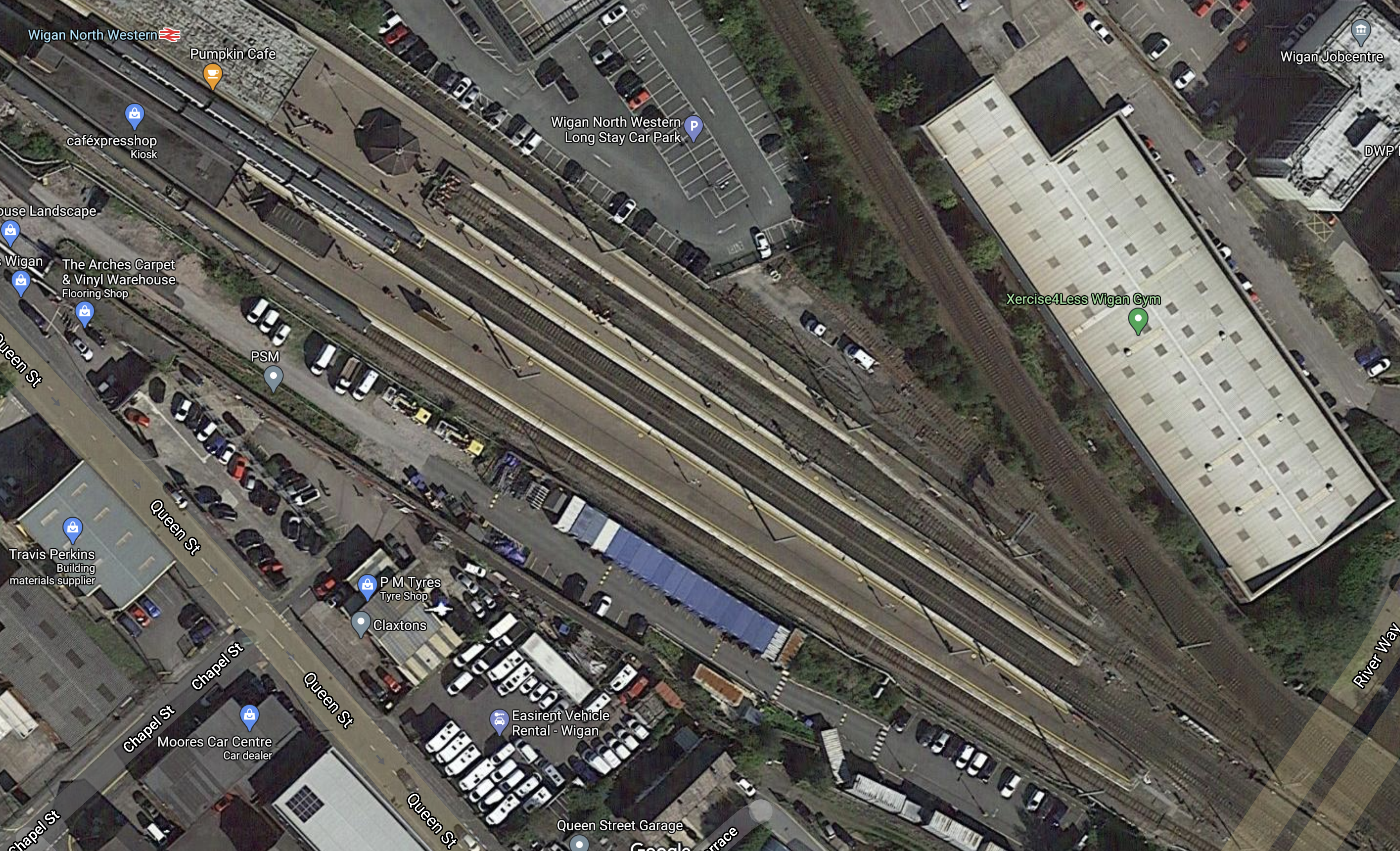
This Google Map shows Wigan North Western station.
Note.
- The six platforms are numbered 1-6 from North-East to South-West.
- Platforms 1, 2 and 3 are used for trains that start at the station and go to the Alderley Edge, Leeds, Manchester Piccadilly, Manchester Victoria and Stalybridge.
- Platform 1 is quite long and regularly handles two trains at the same time.
- Platforms 2 and 3 could probably be longer.
- Platforms 1, 2 and 3 appear to have their own private access track direct to Wigan Springs Branch TMD to the South, where multiple units can be serviced and washed.
- The access track sneaks down the East side of the West Coast Main Line, so that trains don’t block the track, when transferring to and from the depot.
- The double-track going North between the station and the large building leads to Wigan Wallgate station.
This picture shows the Platforms 1, 2 and 3 at the station.
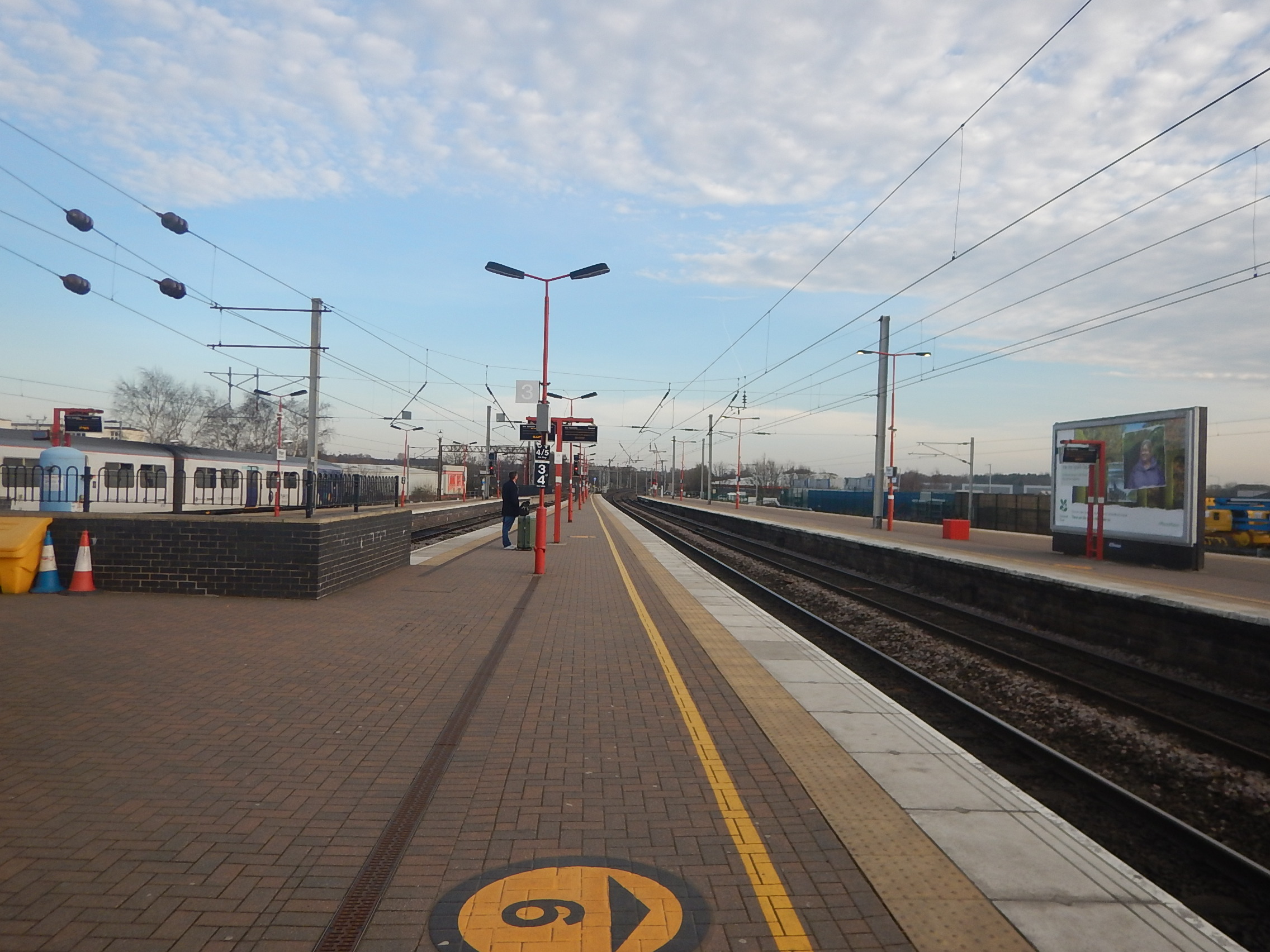
If you look at the train movements early in the morning, trains come out of the depot and start their first diagram from one of the three platforms on the left.
Lengthening Platform 3 will make this easier and more efficient.
Wigan North Western Station, West Coast Main Line And High Speed Two
Wigan North Western station is currently served by the following Avanti West Coast services on the West Coast Main Line.
- London Euston and Glasgow Central – Hourly
- London Euston and Glasgow Central or Edinburgh via Birmingham New Street – Hourly
- London Euston and Blackpool – Four trains per day
TransPennine Express also run four trains per day between Liverpool Lime Street and Glasgow Central.
The station is also planned to get two hourly High Speed Two services, which should be delivered in Phase 2a of the project.
- London Euston and Lancaster via Old Oak Common, Crewe, Warrington Bank Quay and Preston.
- Birmingham Curzon Street and Edinburgh or Glasgow via Preston, Lancaster, Carlisle and some other stations, depending on the Scottish destination.
It certainly looks like Wigan North Western station is being updated to have a comprehensive network of local electric services to give a large number of stations, good access to current West Coast Main Line and future High Speed Two services.
High Speed Two Through Lancashire Stations
The direct London and Scotland services are proposed to be as follows.
- They will run at a frequency of two trains per hour (tph)
- They will be formed of two classic-compatible 200 metre long trains.
- They will split and join at Carlisle, to give both Edinburgh and Glasgow a two tph service from London.
- One tph will stop at Old Oak Common, Preston and Carlisle in England.
- The second train will also stop at Birmingham Interchange in England.
Adding the services together, it would appear that the following services will run through Lancashire.
- One tph – London Euston and Lancaster – One 200 metre train
- Two tph – London Euston and Scotland – Two 200 metre trains.
- One tph – Birmingham and Scotland – One 200 metre train
This totals up to four tph.
I will now look, at the High Speed Two traffic through the various stations.
Warrington Bank Quay
I know Warrington Bank Quay is in Cheshire, these days, but High Speed Two trains will pass through.
Current plans include a by-pass round Warrington will be built for Phase 2b.
- Before by-pass four tph will pass through Warrington Bank Quay, with one stopping.
- After by-pass only one stopping train will pass.
If the High Speed Two service replaces the current Avanti West Coast service to Scotland, any problems at the station should be easy to solve.
Preston
Preston would appear to have three tph from High Speed Two passing through, with all stopping.
Phase 2b will add another tph.
Lancaster
Lancaster would appear to have two tph from High Speed Two passing through, with none stopping.
In addition, one service from Euston will terminate.
Phase 2b will add another tph, that passes thrugh.
Conclusion
It looks to me, that this relatively small project will be worthwhile.
How many other projects of this size need being added to the network urgently? I can think of possibly three within a dozen miles of my house, of which at least one is down to Beeching and/or British Rail’s cost cutting of the 1960s or 1970s.
Beeching Reversal – Increased Services To Nottingham And Leicester, via Syston And Loughborough From Melton Mowbray
This is one of the Beeching Reversal projects that the Government and Network Rail are proposing to reverse some of the Beeching cuts.
It is one of a pair of submissions from the local MP; Alicia Kearns. The other is More Stopping Services At Radcliffe-on-Trent And Bottesford Stations On The Poacher Line Between Grantham And Nottingham.
When I heard of the MP’s submissions, I wrote MP Campaigns To Extend Train Services For Melton Borough and the following uses that post as a starting point.
Wikipedia says this about services at Melton Mowbray station.
- There is an hourly off-peak service in both directions between Stansted Airport and Birmingham, that calls at Cambridge, Peterborough, Oakham and Leicester.
- East Midlands Railway and their predescessor have added services to London via Corby and to Derby and East Midlands Parkway.
When you consider, that both Bottesford and Melton Mowbray are the same Council and Parliamentary constituency, it does seem that a more direct train service is needed between Bottesford and Melton Mowbray stations.
It does seem to me that some innovative thinking is needed.
If the current plans to fulfil British Rail’s ambition of an Ivanhoe Line running from Lincoln to Burton-on-Trent via Nottingham, East Midlands Parkway, Loughborough and Leicester, are carried out, that will give important towns to the West of Leicester much better rail connections.
Given that High Speed Two is coming to East Midlands Hub station at Toton and there will be a Bedford and Leeds service run by Midlands Connect using High Speed Two classic-compatible trains, that I wrote about in Classic-Compatible High Speed Two Trains At East Midlands Hub Station, I wonder if in the interim, there should be more trains between Derby and Melton.
- Intermediate stations would be Syston, Sileby, Barrow-upon-Soar, Loughborough, East Midlands Parkway Long Eaton and Spondon.
- An hourly frequency would double the service frequency at smaller stations like Sileby and Barrow-upon-Soar.
- The Southern terminal could be Melton station, but I feel Corby or Peterborough stations would be better, as this would improve services at Oakham station. We should not forget Rutland!
- As Corby will be an electrified two-platform station with a two trains per hour (tph) service to London, this could work quite well as a Southern terminus.
- Peterborough would have advantages and give a good connection to Cambridge, London and Scotland, but improvements to the current Birmingham and Stansted Airport service would have similar effects.
This route would be just as valuable after High Speed Two opens through the East Midlands Hub station, as it will give fast ongoing connections to Birmingham, Leeds, Newcastle and York.
Electrification Of The Midland Main Line
I feel strongly, that full electrification of the Midland Main Line could be a step to far.
- Electrification, through Leicester station will mean a complete closure of the station for a couple of years.
- Electrification of the route North of Derby, through the Derwent Valley Mills, which is a World Heritage Site, will be opposed by the Heritage Taliban with all their might.
But.
- Electrification of the route between Clay Cross North Junction and Sheffield via Chesterfield will take place in conjunction with High Speed Two
- Electrification to Market Harborough, which is sixteen miles South of Leicester will happen.
- East Midlands Railway’s new Class 810 trains could be fitted with a battery option giving a range of between 55 and 65 miles.
- Pantographs on these trains can go up and down with all the alacrity of a whore’s drawers.
If the easier section of electrification between Leicester and Derby stations, were to be installed, this would enable the following routes to be run using battery-equipped Class 810 trains.
- London and Derby, where battery power would be used through Leicester.
- London and Nottingham, where battery power would be used through Leicester and between East Midlands Parkway and Nottingham.
- London and Sheffield, where battery power would be used through Leicester and between Derby and Clay Cross Junction.
- Lincoln and Burton-on-Trent, where battery power would be used South of Leicester and North of East Midlands Parkway.
- Derby and Corby, where battery power would be used between Syston and Corby.
There would also be the service between Derby and Norwich, which might be able to be run by a similar train.
Conclusion
I think the ideal way to achieve the MP’s objective would be to extend a proportion of London St. Pancras and Corby services to the Midland Main Line.
But the problem with this, is that the Corby trains will be Class 360 trains, which are electric, so the thirty-six mile route between Corby and the Midland Main Line would need to be electrified.
On the other hand, a shuttle train could be used between Corby and Leicester.
They would call at Oakham, Melton Mowbray and Syston stations.
If the Midland Main Line to the North of Leicester were to be electrified, Battery electric trains could be used on the route, with charging at Leicester and Corby.
It’s A Privilege To Work Here!
I was speaking to a young station assistant at Liverpool Lime Street station, who I suspect could have been a trainee or an apprentice, when he came out with the title of this post.
These pictures show the platforms at the station, since the recent remodelling.


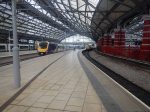
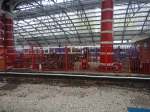
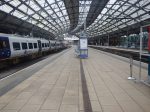

Note.
- The platforms are wide and can take an eleven-car Class 390 train.
- TransPennine Express’s five-car Class 802 trains are easily handled in the shorter platforms of the Western train shed.
- I suspect Avanti West Coast’s new Class 807 trains, which are fifty-two metres longer than the Class 802 trains, could fit into the Western train shed, if needed.
It is certainly a station with a large capacity and I believe, with a few tweaks the station will be able to handle High Speed Two and Northern Powerhouse Rail.
Train Lengths Into Liverpool Lime Street
These are the lengths of the various trains that will be terminating at the station.
- Class 350 train – eight cars – 160 metres
- Class 350 train – twelve cars – 240 metres
- Class 390 train – nine cars – 217.5 metres
- Class 390 train – eleven cars – 265.3 metres
- Class 730 train – five cars – 120 metres
- Class 730 train – ten cars – 240 metres
- Class 802 train – five cars – 130 metres
- Class 802 train – ten cars – 260 metres
- Class 807 train – seven cars – 182 metres
- High Speed Two Classic-Compatible train – 200 metres
That looks like future-proofing to me!
An Almost Absence Of Red
I have looked at arrivals into Liverpool Lime Street over the last couple of days on Real Time Trains and nearly all trains seemed to be on time.
So has all the work to improve the track and signalling on the approaches to the station, over the last couple of years, resulted in better time keeping?
Certainly, train and passenger flows seemed to be smooth.
Conclusion
Wikipedia says this about Liverpool Lime Street station.
Opened in August 1836, it is the oldest still-operating grand terminus mainline station in the world.
I’ve used Lime Street station for nearly sixty years and finally, it is the station, the city needs and deserves.
I’ve been to grand termini all over the world and Lime Street may be the oldest, but now it is one of the best.
Possibly One Of The Best Underground Railways In A Smaller City In The World!
I took these pictures, as I took the Wirral Line between James Street and Lime Street stations.



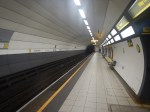

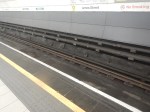
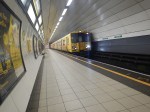
I do compare them with the dingy inside of Essex Road station, which was refurbished by British Rail about the same time.

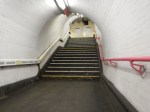


Merseyrail’s stations and trains are generally immaculate and that can’t be said for the dirty and tired infrastructure on the Northern City Line. As I indicated in the title of this post, t is one of the best underground railways under the centre of a smaller city. Liverpool would probably be regarded as a second size of city as it lacks the several millions of London, Paris or Berlin.
The tunnels of Merseyrail’s Northern and Wirral Lines, would have been probably been used as a model for British Rail’s proposed Picc-Vic Tunnel, that sadly never got to be built!
Manchester would be very different today, if it had an underground railway across the City to the standard of that in Liverpool or Newcastle.
This map clipped from Wikipedia show the proposed route of the Picc-Vic Tunnel.

Some of the other proposals included.
- The tunnel would be twin bores and jus under three miles long.
- The tunnel would be electrified with 25 KVAC overhead wires.
- The rolling stock would have been Class 316 trains, which would have been similar to those on Merseyrail.
- Train frequency could have been forty trains per hour (tph)
In some ways the specification was more ambitious than Crossrail, which might be able to handle 30 tph, at some time in the future. But Dear Old Vicky, which was designed at the same time, is now handling forty tph.
Wikipedia says the following routes could have run through the tunnel.
Note.
- The Styal Line now provides the link to Manchester Airport.
- The route map on the Wikipedia entry, shows only Bury and Bolton as Northern destinations. But surely fanning out the trains could have run to Barrow-in-Furness, Blackburn, Blackpool, Burnley, Clitheroe, Colne, Hebden Bridge, Kirkby, Preston, Rawtenstall, Tochdale, Southport, Stalybridge, Todmorden, Wigan and Windermere
The only problem, I could see would be that there would need to be a lot of electrification North of Manchester, some of which has now been done.
There have also been developments in recent years that would fit nicely with a system of lines running through the Picc-Vic Tunnel.
More Services In Manchester Piccadilly And Manchester Victoria Stations
If you look at Liverpool Lime Street station after the remodelling of the last few years, the station is now ready for High Speed Two.
You could argue, that it would be more ready, if the Wapping Tunnel connected services to and from the East to the Northern Line, as I wrote about in Liverpool’s Forgotten Tunnel, as this would remove a lot of local trains from the station.
The Picc-Vic Tunnel would have done the same thing for Manchester Piccadilly and Manchester Victoria stations and removed the local services.
This would have left more space for High Speed Two and other long distance services.
Northern Powerhouse Rail
The original plan also envisaged an East-West Tunnel at a later date. – Northern Powerhouse Rail?
But the creation of capacity by the diversion of local services from Manchester Victoria into the Picc-Vic Tunnel, would surely have enabled the station to be developed thirty years ago as a station on an improved TransPennine route.
Tram-Trains
The system would have accepted tram-trains, which hadn’t been invented in the 1970s.
Manchester Airport
Manchester Airport had only one runway in the 1970s and I think only a few would have believed, it would have expanded like it has.
The Picc-Vic Tunnel would create a superb service to the Airport, at a frequency upwards of six tph.
High Speed Two
The Picc-Vic Tunnel would have created the capacity in for Manchester Piccadilly station and allowed High Speed Two services to use the station.
In The Rival Plans For Piccadilly Station, That Architects Say Will ‘Save Millions’, I talked about a radical plan for extending Manchester Piccadilly station for High Speed Two, that has been put forward by Weston Williamson; the architects.
This sort of scheme would also fit well with the Picc-Vic Tunnel.
Conclusion
Manchester was short-changed and not building the Picc-Vic Tunnel was a major mistake.
It would have created an underground railway in a similar mould to that of Liverpool’s, but it would probably have served a larger network.
They would probably be the best pair of underground railways for smaller cities in the world.
Liverpool’s Forgotten Tunnel
The Wapping Tunnel in Liverpool was designed by George Stephenson and was the first tunnel in the world to be bored under a city.
It used to take goods trains between Liverpool Docks and the Liverpool and Manchester Line.
During the 1970s preparations were made to connect the Wapping Tunnel to Merseyrail’s Northern Line, so that trains could run between the Northern Line and the City Line, which would have connected the North and East of the City.
But the project was never completed.
It now appears, the project is on the agenda again.
This article on TransportExtra is entitled Liverpool CR Develops Plan To Boost City Centre Rail Capacity.
The plan outlined is as follows.
- At present, as many as two thirds of trains on the Northern Line turn back as Liverpool Central station.
- Between four and eight trains per hour (tph) could be diverted into the Wapping Tunnel to serve places like St. Helens, Warrington Central and Wigan.
- This would free up platforms in Liverpool Lime Street station for Inter-City and Inter-Regional services.
It is also pointed out, that a 2016 study, didn’t find any serious technical problems with the project.
I do have my thoughts on this project.
Services That Could Be Connected
Local services running from Liverpool Lime Street station include.
Manchester Oxford Road Via Warrington Central
This service is run by Northern.
- It has a frequency of two tph.
- One service calls at Edge Hill, Mossley Hill, West Allerton, Liverpool South Parkway, Hunts Cross, Halewood, Hough Green, Widnes, Sankey For Penketh, Warrington West, Warrington Central, Birchwood, Irlam, Urmston and Deansgate.
- The other service calls at Mossley Hill, West Allerton, Liverpool South Parkway, Hough Green, Widnes, Warrington Central, Padgate, Birchwood, Glazebrook, Irlam, Flixton, Chassen Road (1tp2h), Urmston, Humphrey Park, Trafford Park and Deansgate
- Both trains appear to take the same route.
- Some stations like Liverpool South Parkway, Warrington West and Deansgate have lifts, but disabled access is patchy.
- The service has a dedicated terminal at Manchester Oxford Road, which is without doubt Manchester’s worst central station for location, access to the Metrolink, onward travel and step-free access.
- It takes seventy-two minutes. which is an inconvenient time for train operators.
- The route is electrified with 25 KVAC overhead electrification at both ends.
I’ve used this route several times and usually pick it up from Deansgate, as it has a convenient interchange to the Metrolink.
I am fairly certain that Merseyrail’s new Class 777 trains running on battery power in the middle could handle this route.
- They would charge the batteries at the electrified ends of the route.
- They would join the route at Edge Hill station.
- They would offer step-free access between train and platform.
- These trains are built for fast stops, so could all services call at all stations?
- On Merseyrail’s principles, the service would probably be at least two tph, if not four tph.
I estimate that these trains are fast enough to do the return trip between the Wapping Tunnel portal at Edge Hill and Manchester Oxford Road in under two hours.
- A two-four tph stopping service between Liverpool and Manchester City Centres, that took less than an hour, would be very convenient for passengers.
- The service would be well-connected to local tram, train and bus services in both City Centres.
- The service would also very easy for train schedulers to integrate with other services.
Liverpool and Manchester would have the world’s first battery-powered inter-city railway.
Other than the connection of the Wapping Tunnel no extra infrastructure works would be needed.
Wigan North Western Via St. Helens Central
This service is run by Northern.
- It has a frequency of two tph.
- The service calls at Edge Hill, Wavertree Technology Park, Broad Green, Roby, Huyton, Prescot, Eccleston Park, Thatto Heath, St Helens Central, Garswood and Bryn
- The route is fully-electrified with 25 KVAC overhead.
- It takes fifty-one minutes. which is a very convenient time for train operators.
Merseyrail’s new Class 777 trains could handle this route, if fitted with pantographs for 25 KVAC overhead electrification.
- They would join the route at Edge Hill station.
- They would offer step-free access between train and platform.
- On Merseyrail’s principles, the service would probably be at least two tph, if not four tph.
I estimate that these trains are fast enough to do the return trip between the Wapping Tunnel portal at Edge Hill and Wigan North Western in under two hours.
- A two-four tph stopping service between Liverpool and Wigan, that took less than an hour, would be very convenient for passengers.
- Wigan North Western has good connections using the West Coast Main Line.
- The service would also very easy for train schedulers to integrate with other services.
Other than the connection of the Wapping Tunnel no extra infrastructure works would be needed.
Blackpool North
This service is run by Northern.
- It has an hourly frequency.
- The service calls at Huyton, St Helens Central, Wigan North Western, Euxton Balshaw Lane, Leyland, Preston, Kirkham & Wesham and Poulton-le-Fylde
- The route is fully-electrified with 25 KVAC overhead.
- It takes seventy-seven minutes. which is a reasonable time for train operators.
This is a service that could continue as now, but would probably be timed to fit well with four Merseyrail trains between the Wapping Tunnel and Wigan North Western.
Manchester Airport Via Warrington Central And Manchester Piccadilly
This service is run by Northern.
- It has an hourly frequency.
- The service calls at Liverpool South Parkway, Warrington West, Warrington Central, Birchwood, Manchester Oxford Road, Manchester Piccadilly and Mauldeth Road
- The route is partially-electrified with 25 KVAC overhead.
- The service is operated by diesel trains.
- The service uses the overcrowded Castlefield Corridor.
- It takes sixty-nine minutes, which is an inconvenient time for train operators.
This is one of those services, which I think will eventually be partially replaced by other much better services.
- Northern Powerhouse Rail is planning six tph between Liverpool Lime Street and Manchester Piccadilly via Warrington South Parkway and Manchester Airport, which will take just twenty-six minutes.
- Two-four tph on the route between Liverpool Lime Street and Manchester Oxford Road via Warrington Central would be a better service for the smaller stations. Passengers going to and from Manchester Airport would change at Liverpool Lime Street, Deansgate or Manchester Oxford Road.
Continuing as now, would definitely be possible.
Crewe And Manchester Airport Via Newton-le-Willows And Manchester Piccadilly
This service is run by Northern.
- It has an hourly frequency.
- The service calls at Edge Hill, Wavertree Technology Park, Broad Green, Roby, Huyton, Whiston, Rainhill, Lea Green, St Helens Junction, Earlestown, Newton-le-Willows, Patricroft, Eccles, Deansgate, Manchester Oxford Road, Manchester Piccadilly, Mauldeth Road, Burnage, East Didsbury, Gatley and Heald Green.
- The route is fully-electrified with 25 KVAC overhead.
- The service uses the overcrowded Castlefield Corridor
- It takes eighty-five minutes, which is an inconvenient time for train operators.
This is one of those services, which I think will eventually be partially replaced by other much better services.
- Northern Powerhouse Rail is planning six tph between Liverpool Lime Street and Manchester Piccadilly via Warrington South Parkway and Manchester Airport, which will take just twenty-six minutes.
- Two-four tph on the route between Liverpool Lime Street and Wigan North Western would be a better service for the smaller stations. Passengers going to and from Manchester Airport and Crewe would change at Liverpool Lime Street or Wigan North Western.
Continuing as now, would definitely be possible.
Warrington Bank Quay Via Earlstown
This service is run by Northern.
- It has an hourly frequency.
- The service calls at Edge Hill, Wavertree Technology Park, Broad Green, Roby, Huyton, Whiston, Rainhill, Lea Green, St Helens Junction and Earlestown.
- The route is fully-electrified with 25 KVAC overhead.
- The service takes forty-three minute, which is a convenient time for train operators.
Merseyrail’s new Class 777 trains could handle this route, if fitted with pantographs for 25 KVAC overhead electrification.
- They would join the route at Edge Hill station.
- They would offer step-free access between train and platform.
- On Merseyrail’s principles, the service would probably be at least two tph, if not four tph.
Other than the connection of the Wapping Tunnel no extra infrastructure works would be needed.
Three Possible Routes Through Wapping
Summing up this section, these are possible routes that could be replaced by services through the Wapping Tunnel.
- Two tph – Manchester Oxford Road
- Two tph – Warrington Bank Quay
- One tph – Wigan North Western
Increasing the Wigan North Western service to two tph, would increase the frequency between Edge Hill and Huyton to a very passenger-friendly four tph.
If eight tph could be accommodated in the Wapping Tunnel, the frequency could also be doubled to Manchester Oxford Road.
This would give the following services through the Wapping Tunnel.
- Four tph – Manchester Oxford Road
- Two tph – Warrington Bank Quay
- Two tph – Wigan North Western
The only local services that would need to run into Liverpool Lime Street would be.
- One tph – Northern – Blackpool North via Wigan North Western.
- One tph – Northern – Manchester Airport and Crewe via St. Helens and Newton-le-Willows.
- One tph – Northern – Manchester Airport via Warrington Central.
- One tph – Trains for Wales – Chester via Runcorn
I can understand, why so many seem to be enthusiastic about using the Wapping Tunnel to connect the Northern and City Lines.
Echoes Of The Brunels’ Thames Tunnel
George Stephenson’s Wapping Tunnel may be the first tunnel under a city, but the Brunels’ Thames Tunnel was the first under a navigable river.
The Brunels’ tunnel was built for horses and carts, but today it is an important rail artery of the London Overground, handling sixteen tph between Wapping and Rotherhithe.
I would expect that the Wapping Tunnel could do for Liverpool, what the Thames Tunnel has done for East London.
Modern signalling techniques probably mean that the theoretical capacity of the Wapping Tunnel is way in excess of the planned maximum frequency of eight tph.
High Speed Two Between Liverpool And London
The latest High Speed Two plans as laid out in the June 2020 Edition of Modern Railways, say that there will be two tph between Liverpool Lime Street and London Euston.
- Both trains will call at Old Oak Common, Crewe and Runcorn.
- Both trains will be 200 metres long classic-compatible High Speed Two trains.
- One train will split and join with a similar service between London Euston and Lancaster.
Will these High Speed Two services replace the current Avanti West Coast services?
Northern Powerhouse Rail Between Liverpool And Manchester
In Changes Signalled For HS2 Route In North, I looked at Transport for the North’s report, which is entitled At A Glance – Northern Powerhouse Rail.
This report says that Northern Powerhouse Rail between Liverpool and Manchester Piccadilly will be as follows.
- Services will go via Manchester Airport.
- There could be a new Warrington South Parkway station.
- Six tph between Liverpool and Manchester via Manchester Airport and Warrington are planned.
- Journey times will be 26 minutes.
I would assume that several of the six tph will continue across the Pennines to Huddersfield, Bradford, Leeds, York and Hull.
Will these Northern Powerhouse Rail services replace the current TransPennine and some of the Northern services?
Northern Powerhouse Rail Trains
Nothing has been said about the trains for Northern Powerhouse Rail.
I suspect they will be versions of the 200 metre long classic-compatible High Speed Two trains.
I do wonder, if Avanti West Coast have already ordered a prototype fleet of these trains,
Look at the specification of the Class 807 trains, they have ordered to boost services on the West Coast Main Line.
- 7 x 26 metre cars.
- 182 metres long. Shorter than an eleven-car Class 390 train.
- All-electric, with no diesel engines or traction batteries. Are they lightweight trains with sparkling acceleration?
- 125 mph operating speed. All Class 80x trains can do this.
- 140 mph operating speed with ERTMS digital signalling. All Class 80x trains can do this.
- Ability to work in pairs. All Class 80x trains can do this, up to a maximum length of twelve cars in normal mode and twenty-four cars in emergency mode. I doubt fourteen cars would be a problem!
To be classic-compatible High Speed Two trains, they would need to be able to cruise at 205 mph, whilst working on High Speed Two. I suspect that Hitachi have got some higher-capacity electrical gear and traction motors with lots more grunt in their extensive parts bin!
If these are a prototype fleet of classic-compatible High Speed Two trains, they will certainly get a lot of in-service testing even before the order is placed for the trains for High Speed Two.
Northern Powerhouse Rail will need trains with a slightly different specification.
- As they won’t generally work on high speed lines, for most trains an operating speed of 140 mph will be sufficient.
- For serving some destinations like Cleethorpes, Harrogate, Hull, Middlesbrough and Redcar an independently-powered capability would be desirable. Sixty miles on batteries would probably be sufficient!
Nothing would appear to be out of Hitachi’s current capabilities.
Liverpool Lime Street Station After Remodelling
Liverpool Lime Street station has two groups of platforms.
- Platforms 1-5 on the Western side
- Platforms 6-10 on the Eastern side.
These pictures show some views of the platforms at Liverpool Lime Street station after the remodelling of 2017-2019.
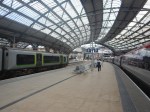
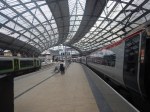
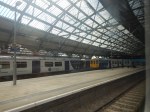
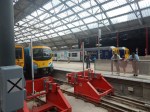
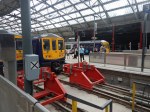

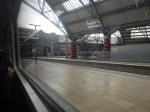
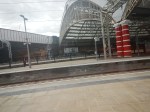

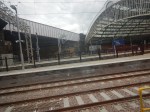
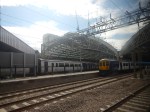

Note,
- The platforms are not narrow!
- It appears that the five platforms in the Eastern group are all long enough to take an eleven-car Class 390 train, which is 265.3 metres long.
- TransPennine Express trains can use the Western group.
I have looked at a whole day’s traffic on Real Time Trains and it appears that the new track layout allows almost all services to use any available platform.
This flexibility must make operation of the station much easily than it was!
Liverpool Lime Street Station As A High Speed Station
It would appear that the Eastern Group of Platforms 6-10 will all be capable of the following.
- Handling a 182 metre long Avanti West Coast Class 807 train.
- Handling a 200 metres long classic-compatible High Speed Two train.
- Handling a 130 metre long TransPennine Express Class 802 train.
- In the future, handling a Northern Powerhouse Rail train, which will probably be less than 200 metres long.
But they won’t be able to handle High Speed Two’s full-size trains.
Currently, these services capable of over 125 mph are running or are planned from Liverpool Lime Street station.
- 2 tph – Avanti West Coast – Liverpool Lime Street and London Euston
- 1 tph – TransPennine Express – Liverpool Lime Street and Newcastle
- 1 tph – TransPennine Express – Liverpool Lime Street and Scarborough
- 3 trains per day(tpd) – TransPennine Express – Liverpool Lime Street and Glasgow
This totals to four tph.
High Speed Two will add two classic-compatible High Speed Two trains.
Will these replace the two Avanti West Coast services?
- They will be run by the same company.
- They will take different routes.
- The current service takes 134 minutes.
- The High Speed Two train will take 94 minutes.
I can see Avanti West Coast running a one tph slower train via stations with difficult connections to Liverpool Lime Street. Think Watford Junction, Milton Keynes, Rugby, Stafford and Stoke-on-Trent.
This would bring the total to five tph.
Northern Powerhouse Rail will run six high speed trains to Manchester and beyond.
If they replaced the two TransPennine Express services, that would bring the maximum number of 200 metre long high speed trains to nine tph.
Could Liverpool Lime Street station handle nine high-speed tph?
Comparison With Birmingham Curzon Street Station
Birmingham Curzon Street station on High Speed Two will handle high speed trains from three directions, as will Liverpool Lime Street station.
The Birmingham station will handle nine tph on seven platforms.
As Liverpool Lime Street station will have ten platforms and also need to handle nine tph, I think it will be able to handle the trains.
Will There Be A Station In The Wapping Tunnel?
Just as London has its clay, which makes excavating for the Underground easy, the Centre of Liverpool has its sandstone, which has been honeycombed with tunnels. In addition to the Wapping Tunnel, there are two other tunnels from Edge Hill station to the Docks; the Waterloo Tunnel and the Victoria Tunnel.
Liverpool has plans for a Knowledge Quarter based on the Universities on Brownlow Hill.
As part of the development, it is intended to develop an area called Paddington Village.
Wikipedia says this about the village.
Paddington Village is a site at the eastern gateway to the city centre and has been earmarked as 1.8m sq ft of science, technology, education and health space.
This is also another paragraph.
Liverpool Mayor Joe Anderson announced that the council were looking into a new Merseyrail station to serve the site. A mention of a station is made in the October 2017 Liverpool City Region Combined Authority update to the Long Term Rail Strategy. Merseytravel commissioned a feasibility report into re-opening the Wapping Tunnel in May 2016 which found that it was a valid proposal which would allow for a new station to be built that could serve the Knowledge Quarter.
Someone has thought up a proposal for a Lime Line, which would be a tram or bus system, linking the Knowledge Quarter and the City Centre.
This map shows how their proposal fits in with all the other rail systems in Liverpool City.
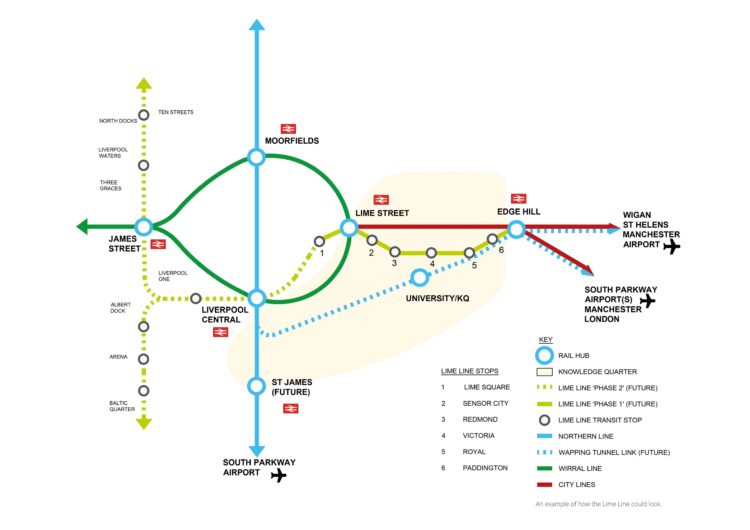
Note the Wapping Tunnel is shown on the map, as a dotted blue line.
- It connects to the Northern Line to the South of Liverpool Central station.
- It connects to the City Line to the West of Edge Hill station.
- A station named University/KQ is shown.
A new St. James station is also shown
Conclusion
Using the Wapping Tunnel to increase capacity in Liverpool City Centre could be used if required to improve capacity for the high speed network in the city, by removing local trains from Liverpool Lime Street station.
Midlands Rail Hub
On the Midlands Connect web site, they have a page, which is entitled Midlands Rail Hub.
This is the introductory paragraph.
The Midlands Rail Hub – our flagship project – is the biggest upgrade of our rail network for a generation.
The page contains this helpful map.

There is also a table of journeys and the improvements to be made.
- Birmingham – Nottingham – +1 tph – 72 minutes – 59 minutes
- Birmingham – Leicester – +2 tph – 66 minutes – 42 minutes
- Birmingham – Hereford – +1 tph – 85 minutes – 65 minutes
- Bitmingham – Worcester – +1 tph – 40 minutes – 35 minutes
- Birmingham – Derby – +2 tph – 38 minutes – 38 minutes
- Coventry – Leicester – +2 tph – 57 minutes – 38 minutes
- Coventry – Nottingham -+2 tph – 99 minutes – 63 minutes
- Birmingham – Bristol – +1 tph – 85 minutes – 80 minutes
- Birmingham – Cardiff – +1 tph – 117 minutes – 112 minutes
- Birmingham – Kings Norton – +2 tph – 18 minutes – 14 minutes
Note that the data by each route is the increase in frequency in trains per hour (tph), the current journey time and the future journey time.
I’ll now look at each route in more detail.
Birmingham And Bristol
Consider.
- Birmingham New Street and Bristol Temple Meads stations are 90 miles apart.
- Current service is two tph, which is provided by CrossCountry and goes via Worcestershire Parkway, Cheltenham Spa and Bristol Parkway.
- There is to be an increase of one tph.
- Current journey time is 85 minutes
- Future journey time is 80 minutes
As CrossCrountry’s Birmingham and Bristol service goes through to Edinburgh, Glasgow or Manchester Piccadilly, would it not be convenient, if the service could use High Speed Two to the North of Birmingham?
Birmingham And Cardiff
Consider.
- Birmingham New Street and Cardiff Central stations are 108 miles apart.
- Current service is two tph, which is provided by CrossCountry and goes via Worcestershire Parkway, Cheltenham Spa. Gloucester and Newport.
- There is to be an increase of one tph.
- Current journey time is 85 minutes
- Future journey time is 80 minutes
As CrossCrountry’s Birmingham and Cardiff service goes through to Nottingham, would it not be convenient, if the service could use High Speed Two between Birmingham and Nottingham?
It would appear that both Bristol and Cardiff services could benefit from a High Speed Two connection.
This map from High Speed Two shows the line’s route through the Water Orton area.
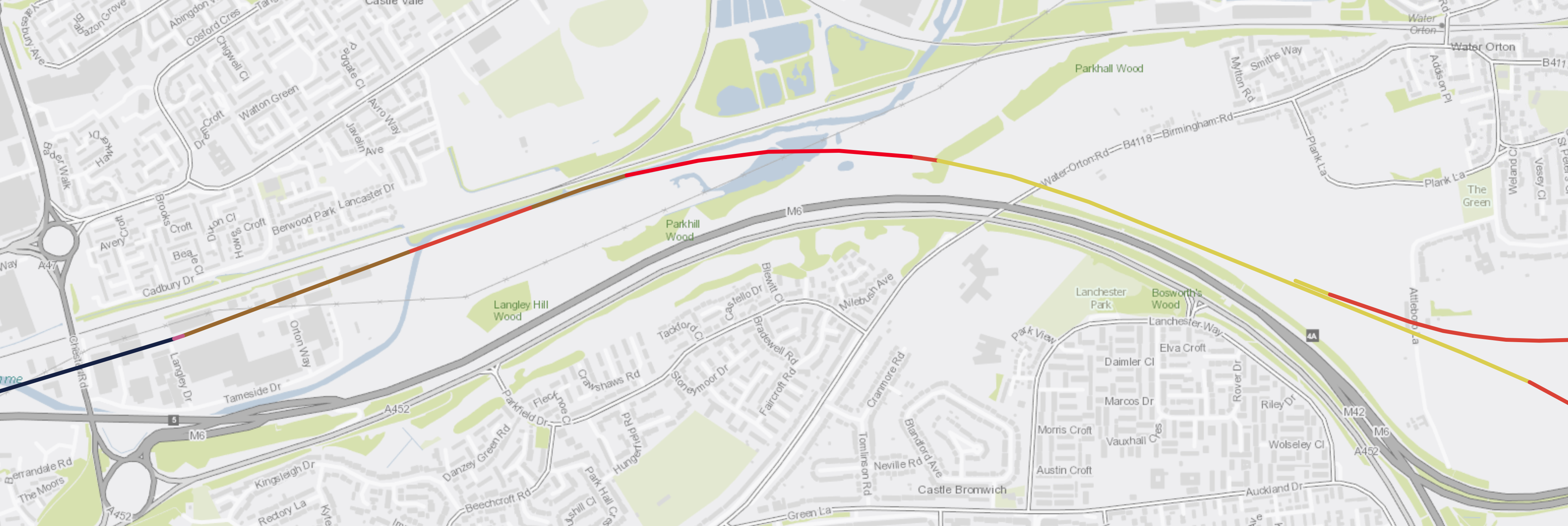
Note.
- High Speed Two is shown in various colours.
- High Speed Two splits at the Eastern edge of the map, with the Northern link going to Northern destinations and the Southern link going to Birmingham Interchange and London.
- Curving across the map beneath it, is the M6 motorway, with Spaghetti Junction off the map to the West.
- Water Orton station is in the North East corner of the map.
- The Birmingham and Peterborough Line, which connects Leicester and Birmingham New Street stations via Water Orton runs just tom the North of the route of High Speed Two shown on the map.
This Google Map shows the area.
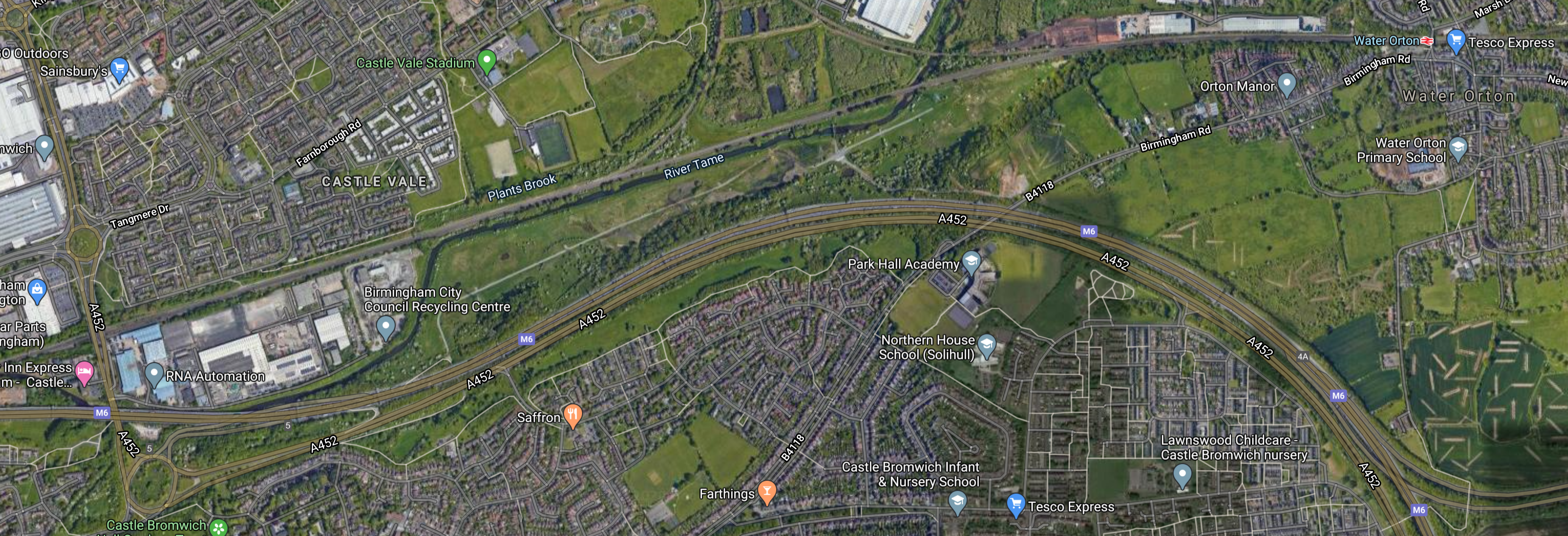
I wonder if it would be possible to provide links so that the following would be possible.
- Trains running East from New Street station could join High Speed Two to run to East Midlands Hub, Edinburgh, Glasgow, Leeds, Liverpool, Manchester, Newcastle, Sheffield and York.
- Trains from the North could run into New Street station and then continue to Bristol, Cardiff and Cheltenham.
The trains would have to be classic-compatible High Speed Two trains. These would fit into New Street station, as they are shorter than Class 390 trains and will have a aimilar height and width.
Time savings could be as follows.
- Bristol/Cardiff and Edinburgh – 110 minutes
- Bristol/Cardiff and Manchester Piccadilly- 50 minutes
- Bristol/Cardiff and Newcastle – 80 minutes
- Bristol/Cardiff and Nottingham – 45 minutes
All trains would be direct.
Birmingham And Derby
Consider.
- Birmingham New Street and Derby stations are 41 miles apart.
- Current service is two tph, which is provided by CrossCountry and goes via Wilnecote, Tamworth and Burton-on-Trent
- There is to be an increase of two tph.
- Current journey time is 38 minutes
- Future journey time is 38 minutes
- High Speed Two will run three tph between Birmingham Curzon Street and East Midlands Hub station in 20 minutes.
- Midlands Connect will run one tph between Birmingham Curzon Street and Nottingham Station in 30 minutes. See Classic-Compatible High Speed Two Trains At East Midlands Hub Station
Will passengers between Birmingham and Derby use High Speed Two services, which will be four tph or the current ones?
Birmingham And Hereford Via Worcester
Consider.
- Birmingham New Street and Hereford stations are 55 miles apart.
- Current service is one tph, which is provided by West Midlands Trains, and goes via Bromsgrove, Malvern Link and Great Malvern.
- There is to be an increase of one tph.
- Current journey time is 85 minutes
- Future journey time is 65 minutes
- The track between Bromsgrove and Birmingham is electrified.
- Hereford and Bromsgrove are 41 miles apart.
- Worcester and Bromsgrove are 13 miles apart.
With charging facilities at Worcester, this route would be an ideal one for battery electric trains.
Birmingham And Leicester
Consider.
- Birmingham New Street and Leicester stations are 40 miles apart.
- Current service is two tph, which is provided by CrossCountry and goes via Water Orton, Coleshill Parkway, Nuneaton, Hinckley and Narborough.
- There is to be an increase of two tph.
- Current journey time is 66 minutes
- Future journey time is 42 minutes
Birmingham – Nottingham
Consider.
- Birmingham New Street and Nottingham stations are 57 miles apart.
- Current service is two tph, which is provided by CrossCountry and goes via Tamworth, Burton-on-Trent and Derby.
- There is to be an increase of one tph.
- Current journey time is 72 minutes
- Future journey time is 59 minutes
- High Speed Two will run three tph between Birmingham Curzon Street and East Midlands Hub station in 20 minutes.
- Midlands Connect will run one tph between Birmingham Curzon Street and Nottingham Station in 30 minutes. See Classic-Compatible High Speed Two Trains At East Midlands Hub Station
Will passengers between Birmingham and Nottingham use High Speed Two services, which will be four tph or the current ones?
Coventry And Leicester
Consider.
- Coventry and Leicester are 28 miles apart.
- There is currently no direct train and a change is needed at Nuneaton
- There is to be an increase of two tph.
- Current journey time is 57 minutes
- Future journey time is 38 minutes
I suspect that a direct Coventry and Leicester service is being provided that does one of the following.
- Reverses in Nuneaton station.
- Takes a new flyover to cross the West Coast Main Line.
Would the Southern terminus of the route be Coventry, Leamington Spa or Stratford-on-Avon?
Coventry And Nottingham
Consider.
- Coventry and Nottingham are 55 miles apart.
- There is currently no direct train and a change is needed at Birmingham New Street or at both Nuneaton and Leicester.
- There is to be an increase of two tph.
- Current journey time is 99 minutes
- Future journey time is 63 minutes
Would this service be an extension of the Coventry and Leicester service?
As Leicester and Nottingham takes around thirty minutes, this could be the case.
Birmingham And Kings Norton Via The Camp Hill Line
The Midlands Rail Hub page, says this about the Bordesley Chords, which will connect Birmingham Moor Street station to the Camp Hill Line.
Construction of the Bordesley Chords, two viaducts creating new paths to the East Midlands and South West from Birmingham Moor Street Station.
This Google Map shows where they will be built.
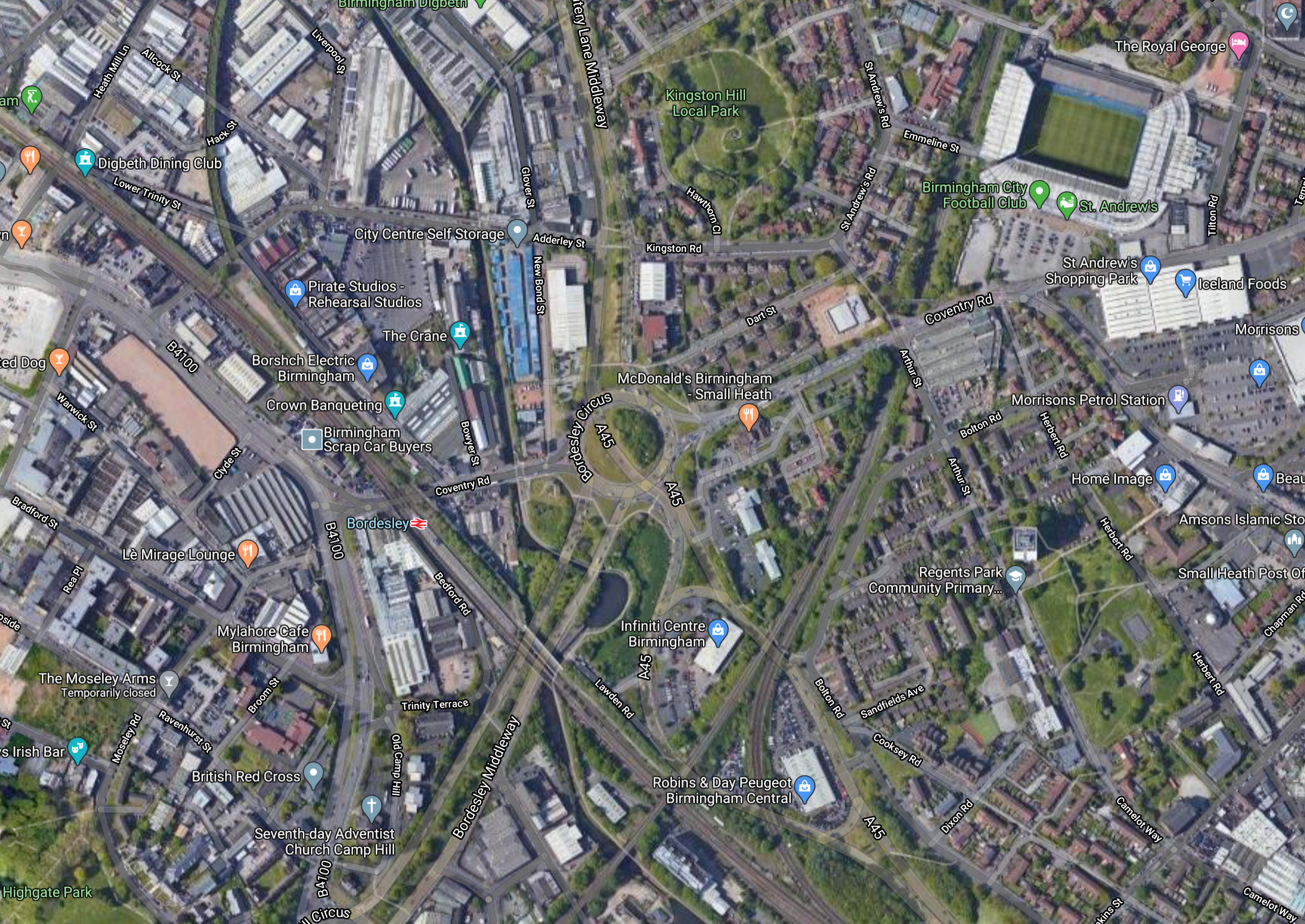
Note.
- The Football ground in the North-East corner of the map is St. Andrew’s, which is Birmingham City’s home ground.
- The rail line going North South across the map and passing to the West side of the ground is the Camp Hill Line, which leads to Water Orton station in the North and Kings Norton station in the South.
- The station in the middle of the map is Bordesley station.
- The rail line going NW-SE across the map through the station is the Chiltern Main Line into Birmingham Moor Street station, which is a couple of miles to the North-West.
The two Bordesley chords will be double-track chords linking the following routes.
- Moor Street station to the Camp Hill Line going South to Kings Norton via new stations at Moseley, Kings Heath and Hazelwell.
- Moor Street station to the Camp Hill Line going North to Water Orton station.
The initial service would appear to be two tph between Moor Street and Kings Norton stations.
CrossCountry Trains and Moor Street Station
Consider.
- Birmingham New Street station is very busy.
- Some CrossCountry trains take a Water Orton-Birmingham New Street-Kings Norton route across the city.
Could these trains go between Water Orton and Kings Norton, with a reverse in Moor Street station?
- Plymouth and Edinburgh Waverley
- Cardiff Central and Nottingham
And could these services terminate at Moor Street station?
- Birmingham New Street and Nottingham
- Birmingham New Street and Stansted Airport via Leicester
- Birmingham New Street and Leicester
It would seem there must be scope improve the operation of New Street station, by using Moor Street station and the Bordesley chords.
If all these trains used Moor Street station it would be a very busy station.
In an hour it would handle these trains via the Bordesley chords.
- CrossCountry – 1 tph – Cardiff Central
- CrossCountry – 1 tph – Edinburgh Waverley
- West Midlands Railway – 2 tph – Kings Norton
- CrossCountry – 2 tph – Leicester
- CrossCountry – 2 tph – Nottingham
- CrossCountry – 1 tph – Plymouth
- CrossCountry – 1 tph – Stansted Airport
That is a balanced five tph to the North and five tph to the South.
There would also be the existing services.
- Chiltern Trains – 2 tph – London Marylebone and Birmingham
- West Midlands Railway – 6 tph – Dorridge/Stratford-upon-Avon/Whittocks End and Stourbridge Junction
There would also be the proposed Moor Street and Oxford service.
Battery Electric Trains
If we assume that a battery electric train has a battery range equal to or longer than Hitachi’s quoted figure of 56 miles, these routes are possibilities for battery electric trains.
- Birmingham and Leicester with either electrification or charging at Leicester.
- Birmingham and Hereford with charging at Hereford
- Birmingham and Kings Norton
- Birmingham and Oxford with charging at Oxford and Banbury
- Coventry and Leicester
If the Midland Main Line is electrified in the Nottingham Area, then all services to Nottingham could be added.
CrossCountry And High Speed Two
Consider.
- There are up to half-a-dozen spare hourly paths on both the Northern legs of High Speed Two.
- Using High Speed Two tracks to the North of Birmingham can speed up services considerably.
- CrossCountry needs a new fleet of trains.
- Services could be run using classic-compatible High Speed Two trains.
- The trains might be shorter and would certainly have independent power sources.
It could be a large improvement in quality and journey times, with all current destinations served.
The only extra infrastructure needed would be a connecting junction near Water Orton station. A junction there would work, whether services used Moor Street or New Street station in Birmingham.
Cnnclusion
The concept of a Midlands Rail Hub is very sound.
 The Anonymous Widower