Lumo: Why Won’t The New Train Service Stop At Yorkshire Stations?
The title of this post, is the same as that of this article on the Yorkshire Post.
This is the first article, I’ve found about Lumo, that has a negative headline.
The reason is probably very simple, in that most Lumo services are planned to stop at only at Newcastle and Morpeth, with two services having an extra stop Stevenage.
They are intending to run the service in as short a time as possible between London King’s Cross and Edinburgh.
As each stop has a time penalty, not stopping in Yorkshire will give potential to go cut the journey time.
But the positive message that comes from the writer of the Yorkshire Post article is that Yorkshire likes the concept.
This paragraph is their take on the service.
The goal is to encourage a more environmentally friendly mode of transportation and affordable travel. Lumo will provide low-carbon emissions, affordable long-distance travel for more than one million passengers every year.
Perhaps they would like their own Yorkshire flyer.
The obvious way for this to happen would be for the Open Access operator; Grand Central to convert themselves into a train operator like Lumo.
- The ten diesel Class 180 trains would be replaced by new electric trains.
- The trains would need a 140 mph capability under digital signalling to fit in with the plans of Network Rail, LNER and Lumo to create a top-class high-speed high-capacity East Coast Main Line.
- The trains would need a battery capability as Grand Central’s routes are not fully electrified.
- They could copy Lumo’s green marketing philosophy, ticketing and catering offering.
As to the trains, I’m sure that Hitachi could offer a version of their Intercity Tri-Mode Battery Train, the specification of which is shown in this Hitachi infographic.

The trains would need a range of fifty miles on battery-power.
Charging facilities wold be needed at Bradford Interchange and Sunderland stations, as neither has suitable 25 KVAC overhead electrification.
Conclusion
The conversion of Grand Central to work on the Lumo model is possible and as the trains will need to be changed to zero-carbon ones soon to meet decarbonisation objectives, I would suspect that at least that will happen.
The London And Edinburgh Travel Market
This paragraph comes from of this article on Railway Gazette.
Lumo is aiming to carry more than 1 million passengers per year. It is particularly targeting people who currently fly between Edinburgh and London; in June it says there were 74 764 air journeys on the route, compared to 82 002 by rail.
Lumo’s million passengers per year, will equate to around 83,300 passengers per month.
What these figures don’t show is the number of rail journeys made to intermediate stations like Newcastle, York, Doncaster and Peterborough.
These are a few thoughts.
Rail Capacity Between London And Edinburgh
Consider.
- LNER is currently the only rail carrier offering a daytime service between London and Edinburgh.
- LNER run approximately 26 trains per day (tpd) in both directions between London and Edinburgh.
- A nine-car Class 801 train can carry 510 Standard Class passengers and 101 First Class passengers.
That means that LNER had a capacity of just over 950,000 seats in June.
It might seem poor to have only sold 82,002 seats in June between London and Edinburgh, which is just 8.6 % of the available seats.
On the other hand, LNER’s two trains per hour (tph) are a lot more than London and Edinburgh trains, as they connect towns and cities all the way up the East Coast Main Line between London and Aberdeen.
Lumo’s capacity of a million seats per year, works out at 83,300 seats per month, which is another 8.7 % of capacity.
- Lumo will sell seats on price initially and I suspect they’ll end up running about 85-95 % full.
- It has been stated that they need to run 80% full to break even.
- I also think, that they would like to have a few seats for late bookers.
But even so, they will surely affect LNER’s bookings.
What Will LNER Do?
Several of the things, that Lumo are doing can be easily copied by LNER.
- Early booking.
- Improve onboard service.
- Better seating.
They could even reduce prices.
I think it is very likely we could end up with a price and service war between LNER and Lumo.
Would The Airlines Be The Losers?
This could be an outcome of competition between LNER and Lumo.
We are now talking about times of around four hours and twenty-five minutes between London and Edinburgh, but there are improvements underway on the East Coast Main Line.
- The remodelling of the approach to Kings Cross station has not been reflected in the timetables.
- The Werrington Dive Under has not been completed yet.
- Digital signalling is being installed South of Doncaster.
- The power supply is being upgraded North of Newcastle.
When these and other improvements are complete, I can see journey times reduced below four hours.
But would that only be for starters?great b
If a 1970s-technology Intercity 225 train, admittedly running as a shortened train formation, could achieve a time of just under three-and-a-half hours for the 393.2 miles between Kings Cross and Edinburgh stations in September 1991, what could a modern Hitachi train do, if all of the improvements had been completed and perhaps half of the route could be run at 140 mph under the watchful eyes of full digital signalling and an experienced driver.
Consider.
- London and York is nearly two hundred miles of fairly straight railway, that is ideal for high speed.
- Current trains run the 393.2 miles in four hours 25 minutes, which is an average speed of 89 mph.
- A train running at 89 mph would take two hours and fifteen minutes to cover 200 miles.
- A train running at 125 mph would take one hour and thirty-six minutes to cover 200 miles.
- A train running at 140 mph would take one hour and twenty-six minutes to cover 200 miles.
When Network Rail, Great British Railways or the Prime Minister renames the East Coast Main Line as High Speed East Coast, I think we can be sure that trains between London and Edinburgh will be able to achieve three-and-a-half hours between the two capitals.
High Speed Two is only promising three hours and forty-eight minutes.
What About LNER’s New Trains?
LNER Seeks 10 More Bi-Modes, was written to explore the possibilities suggested by a short article in the December 2020 Edition of Modern Railways.
There has been no sign of any order being placed, but Hitachi have moved on.
- They are building the prototype of the Hitachi Intercity Tri-Mode Battery for testing on the Great Western Railway.
- They have completed some of the Class 803 trains for East Coast Trains, which has now been renamed Lumo. These trains have a battery for hotel power in case of catenary failure, but no diesel engines.
- They are building the Class 807 trains for Avanti West Coast, which appear to be designed for high speed and have no batteries or diesel engines.
- The latest versions of the trains will have a reshaped nose. Is it more aerodynamic at high speeds?
It does seem that there is an emphasis on speed, better acceleration and efficiency.
- Could the lessons learned be used to improve the performance of the existing trains?
- Could a small high performance sub-fleet be created to run LNER’s Scottish services?
There are certainly possibilities, that would cut journey times between London and Edinburgh.
Conclusion
I can see the airlines flying between London and Edinburgh suffering a lot of collateral damage, as the two train companies slug it out.
Werrington Dive-Under – 8th September 2021
I had gone to Peterborough to take pictures of the Werrington Dive Under, from a train between Peterborough and Spalding.
I took these pictures going Peterborough and Spalding.



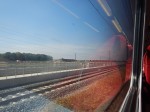
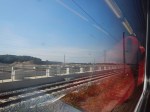
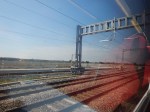


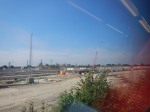




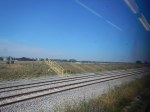

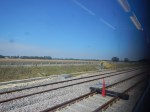
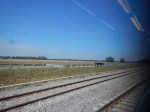
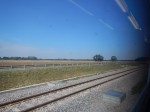
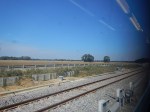
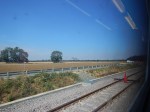
My train between Peterborough and Spalding stations took the following route.
- The Class 158 train was a great improvement on the Class 153 train, I took in From Peterborough To Lincoln in 2015.
- It started in Platform 1b at Peterborough station.
- It then crossed over to the Down Fast line to go North.
- Finally, it slowed to cross the Up Fast and Up Slow lines to go towards Spalding.
- It is surely not an efficient and the safest way to run a railway.
Think about turning right on a busy dual carriageway, by going through a gap in the central reservation.
This diagram shows the new track layout of Werrington Junction.
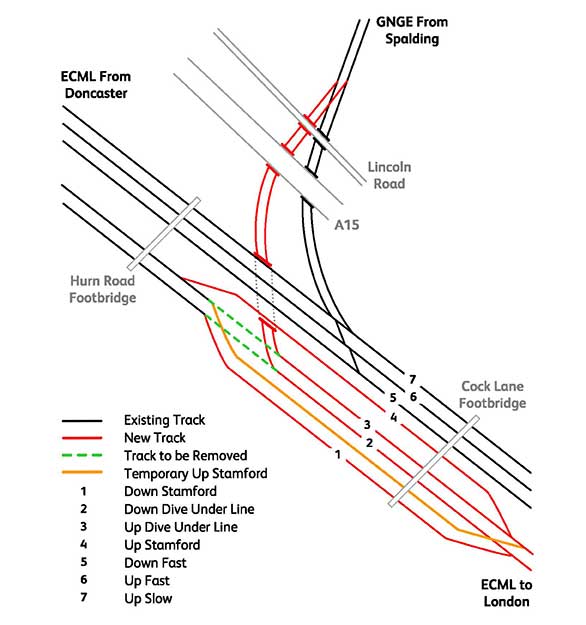
Note.
- My train was going North on Line 5, so it had to use the two crossovers to get to the lines to Spalding.
- The Up Stamford (Line 4) can be seen in the pictures after the two lines have disappeared into the dive-under.
It’s a pity the first of my pictures aren’t better, but the sun was in the wrong direction.
I took these pictures going Spalding and Peterborough.

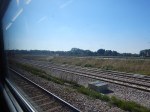

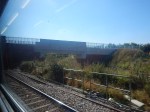
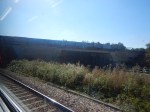
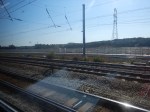
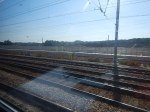
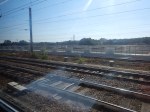
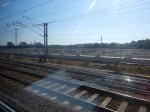
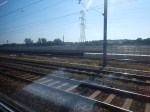
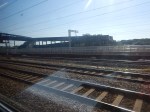
Note.
- The train used the Up Slow (line 7) to go between Werrington Junction and Peterborough station.
- The last two pictures show the Class 158 train in Platform 1b at Peterborough station.
At least this time, the train didn’t cross the Fast lines.
Will Passenger Trains Use The Werrington Dive-Under?
I’m very sure they will!
- On the Western side of Peterborough station, there are four platforms 4 to 7 and an avoiding line for freight trains going North.
- It appears that all of these lines can access the Down Stamford (Line 1) and Up Stamford (Line 4) to go to Werrington Junction.
- At Werrington Junction, trains either take the route to Stamford or use the dive-under for Spalding.
It looks to me, that if the trains to and from Spalding terminated in one of the Western platforms, then they could use the Stamford Lines to access the dive-under and they wouldn’t cross the Fast Lines of the East Coast Main Line on the flat.
Greengauge 21’s Suggestion, That Thameslink Be Extended To Spalding
In the study by Greengauge 21, which is entitled Connecting East Lincolnshire, this is said.
As noted the Spalding-Peterborough line should be a strong candidate for electrification because of its freight potential, and if so it could also accommodate an extension of Thameslink services from London and the South East to Spalding where interchange would be made with a Spalding–Boston–Louth–Grimsby express bus using the A16.
This proposal may be possible, if instead of using the dive-under, the Thameslink trains were able to use the Up Slow (line 7) to go both ways between Werrington Junction and Peterborough station.
As in the near future, full digital signalling will apply through Peterborough, this shouldn’t be a problem.
Electrification Of The Werrington Dive-Under?
Consider.
- There is a gap of around ninety miles in the freight route between the comprehensive electrification at Peterborough and Doncaster stations on the Great Northern and Great Eastern Joint Line (GNGE).
- There are dozens of level crossings.
- The route goes through the centre of Lincoln, where there are two level crossings.
There are two ways of decarbonising the route.
- Full electrification
- Using hydrogen-powered freight locomotives.
Both solutions have their proposers and opponents.
I favour hydrogen-electric hybrid locomotives, that can use electrification where it exists, as it reduces the infrastructure cost on overbridges and in freight depots.
- Hydrogen-powered locomotives have a go-anywhere capability.
- There are also a lot of routes in the UK, where freight trains currently run and it would take a long time to electrify all of them.
- As rail freight companies would have to purchase a lot of new locomotives, I can see them opting for hydrogen-electric hybrid locomotives.
But there are others, who think the only way is full electrification.
London And Lincolnshire By Electric Train
Passenger trains are not a problem, as Alstom, CAF, Hitachi, Stadler and others have demonstrated battery ranges of over fifty miles.
LNER are currently serving Lincoln from London using Hitachi bi-mode Class 800 trains, which use diesel for the 16.5 miles between Newark and Lincoln.
Hitachi’s proposed Intercity Tri-Mode Battery Train, is described in this Hitachi infographic.
I believe it would be possible to handle London and Lincoln via Newark without using diesel.
It also looks like it will be possible to convert the LNER’s current Class 800 trains into Intercity Tri-Mode Battery Trains.
But I doubt their range would sufficient to go between London and Lincoln via Peterborough, Spalding and Sleaford, unless there were to be a charging system at Lincoln.
But surely though, the ideal train for Lincolnshire would be a train that ran between London and Cleethorpes via Peterborough, Spalding, Sleaford, Lincoln, Market Rasen and Grimsby Town.
- Peterborough and Lincoln is 56.9 miles.
- Lincoln and Cleethorpes is 47.2 miles.
- The service could be timed for a convenient interchange with the other Lincolnshire train services.
- The service could run perhaps a few times per day.
With charging systems at Lincoln and Cleethorpes, similar to the Hitachi ABB Power Grids system that I described in Solving The Electrification Conundrum, this service could be run by an Intercity Tri-Mode Battery Train.
Peterborough And Lincolnshire By Electric Train
If you could run between Peterborough and major places in Lincolnshire, as part of a London service, I also suspect that a well-designed Peterborough and Lincolnshire service could serve Lincolnshire almost equally well.
It might use Platform 5 to terminate at Peterborough.
- This is paired with Platform 4, which is the platform generally used by LNER trains from London, so there would be a cross-platform interchange going North.
- Going South, there would be a need to use the footbridge.
How many people would use an hourly cross-TransLincs service?
Improving The Cross Country Route
The Cross Country Route is one of the UK’s forgotten railway lines.
- It runs between York and Bristol Temple Meads.
- Intermediate stations include Leeds, Wakefield Westgate, Rotherham Central, Meadowhall, Sheffield, Chesterfield, Derby, Burton-on-Trent, Tamworth, Birmingham New Street, University, Bromsgrove, Worcestershire Parkway, Cheltenham Spa and Bristol Parkway.
- At the Northern end trains can swap to the electrified East Coast Main Line and can extend services to Edinburgh and Aberdeen.
- At the Southern end trains can swap to the Great Western Main Line and extend services to Taunton, Exeter, Plymouth and Penzance.
- Trains can also swap to the South Wales Main Line in the Bristol area, to serve Cardiff and South Wales.
- Operating speeds are generally around 100 mph, but there are sections of 125 mph running.
- Some sections of the route have 25 KVAC overhead electrification.
I very much believe that it is a route that is ripe for improvement.
These are my thoughts.
Extra And Rebuilt Stations
Recently, Worcestershire Parkway station has been opened on the route.
Bromsgrove station was rebuilt and reopened in 2016.
Derby station was remodelled in 2018.
In addition, there are aspirations for other mew stations and station improvements on the route.
- University station is being rebuilt for the 2022 Commonwealth Games.
- Sheffield Region are proposing a station at Barnsley Dearne Valley. I wrote about this in Sheffield Region Transport Plan 2019 – A New Station At Barnsley Dearne Valley.
- Sheffield Region may be creating a new station in Rotherham.
I can see more station improvements and additions on the Cross Country Route.
New Trains
Most services are run by CrossCountry, who only use diesel trains.
Their core services are as follows.
Plymouth And Edinburgh uses the route between York and Bristol Temple Meads. The service runs under wires North of Leeds and at Bristol Parkway and at Birmingham New Street.
Southampton Central And Newcastle uses the route between York and Birmingham New Street. The service runs under wires North of Leeds and at Reading and at Birmingham New Street.
Bournemouth and Manchester Piccadilly uses the route at Birmingham New Street. The service runs under wires North of Birmingham New Street.
Bristol Temple Meads and Manchester Piccadilly uses the route between Bristol Temple Meads and Birmingham New Street. The service runs under wires at Bristol Parkway and North of Birmingham New Street.
Cardiff Central and Nottingham uses the route between Gloucester and Derby. The service runs under the wires West of Bristol Parkway and at Birmingham New Street.
Birmingham New Street and Nottingham uses the route between Birmingham New Street and Derby. The service runs under the wires at Birmingham New Street.
Birmingham New Street and Stansted Airport does not use the route. The service runs under the wires at Birmingham New Street and around Cambridge and Peterborough.
Birmingham New Street and Leicester does not use the route. The service runs under the wires at Birmingham New Street.
Note.
- Several services run under wires for sufficient time to charge a battery-electric train.
- Several services turn in stations for sufficient time to charge a battery-electric train.
- At least six or possibly seven of the services run for at least fifty miles on tracks that can handle 125 mph running. Some of this track will be upgraded to 140 mph with digital signalling.
This Hitachi infographic shows the Hitachi Intercity Tri-Mode Battery Train.
I believe that Hitachi could produce a version of this train, that would partially meet CrossCountry’s need for a new fleet to reduce their carbon footprint.
For the purpose of this analysis, I will assume this about the trains.
- Battery power will always be used in stations.
- The trains have a battery range of around forty miles at 100 mph.
- Running at 125 mph will need 25 KVAC overhead electrification.
This table shows the current electrification status of the Cross Country Route.
- York and South Kirby junction- 45.4 miles – Electrified
- South Kirby junction and Birmingham New Street – 96.6 miles – Not Electrified
- Birmingham New Street and Bromsgrove – 16 miles – Electrified
- Bromsgrove and Bristol Parkway – 69.8 miles – Not Electrified
- Bristol Parkway and Bristol Temple Meads – 4.8 miles- Not Electrified
The trains would appear to still need to use diesel on some parts of the route.
Or Hitachi ABB Power Grids could install short lengths of 25 KVAC overhead electrification to top up the trains’ batteries in appropriate places.
I believe CrossCountry could decarbonise this route using battery-electric trains and discontinuous electrification.
This would surely refresh the line and attract passengers, but would the trains speed up the service?
- Birmingham New Street and Leeds is 116.4 miles and currently takes just under two hours at an average speed of 59.3 mph in a Class 221 train.
- Several sections of line between Birmingham New Street and Leeds can sustain 125 mph running.
- London Liverpool Street and Norwich is 114.5 miles and has regularly been achieved by British Rail-era electric trains in ninety minutes on a 100 mph line, which is an average speed of 76 mph.
- Averaging 76 mph between Birmingham New Street and Leeds would give a time of 92 minutes.
For these and other reasons, I am fairly sure that a battery-electric train capable of running at 125 mph with fast acceleration could run between Birmingham New Street and Leeds in under ninety minutes, with the addition of some discontinuous electrification.
- There is currently one tph between Birmingham New Street and Leeds, which also serves Sheffield.
- There is also one tph between Birmingham New Street and Sheffield by a different route.
- There is two tph between Birmingham New Street and Nottingham.
- My calculations indicate that the Nottingham and Sheffield services would take under an hour to and from Birmingham New Street, with the Leeds service taking thirty minutes longer.
In normal circumstances no diesel would be used.
Track Improvements And Discontinuous Electrification
This table shows the current electrification status of the Cross Country Route.
- York and South Kirby junction- 45.4 miles – Electrified
- South Kirby junction and Birmingham New Street – 96.6 miles – Not Electrified
- Birmingham New Street and Bromsgrove – 16 miles – Electrified
- Bromsgrove and Bristol Parkway – 69.8 miles – Not Electrified
- Bristol Parkway and Bristol Temple Meads – 4.8 miles – Not Electrified
Solutions will have to be found to decarbonise a lot of the route.
I have flown my virtual helicopter from Tamworth to Sheffield and this part of the route seems to the sort of route that could be upgraded to a full 125 mph line, as it is fairly straight and some sections already allow trains to travel at this speed.
As the 15.5 miles between Clay Cross North Junction and Sheffield will be updated and electrified for High Speed Two’s spur into Sheffield sometime in the future, I would feel that as updating this section benefits High Speed Two, the Midland Main Line, the Cross Country Route and the Hope Valley Line, that this section should be rebuilt as necessary and electrified, as soon as is practically possible.
I believe that Clay Cross North Junction and Sheffield is one of the most important routes in the country to be electrified, if not the most important.
This table shows the electrification status of the Cross Country Route after electrification of Clay Cross North Junction and Sheffield.
- York and South Kirby junction- 45.4 miles – Electrified
- South Kirby junction and Sheffield – 18.8 miles – Not Electrified
- Sheffield and Clay Cross North junction – 15.5 miles – Electrified
- Clay Cross North junction and Birmingham New Street – 62.1 miles – Not Electrified
- Birmingham New Street and Bromsgrove – 16 miles – Electrified
- Bromsgrove and Bristol Parkway – 69.8 miles – Not Electrified
- Bristol Parkway and Bristol Temple Meads – 4.8 miles – Not Electrified
It looks that by electrifying the 15.5 miles between Sheffield and Clay Cross North junction, the gap of 18.8 miles between South Kirby junction and Sheffield could be easily bridged by a battery-electric train.
The section between Clay Cross North junction and Birmingham New Street can be split into three.
- Clay Cross North junction and Derby – 20.9 miles
- Derby and Tamworth – 23.9 miles
- Tamworth and Birmingham New Street – 17.3 miles
If Hitachi ABB Power Grids installed discontinuous electrification at Derby and Tamworth, this should bridge the gap to the electrification at Birmingham.
As some of this section can sustain 125 mph running, it may be better to fully electrify part of the route.
This table shows the electrification status of the route would become
- York and South Kirby junction- 45.4 miles – Electrified
- South Kirby junction and Sheffield – 18.8 miles – Not Electrified
- Sheffield and Clay Cross North junction – 15.5 miles – Electrified
- Clay Cross North junction and Derby – 20.9 miles – Not Electrified
- Derby and Tamworth – 23.9 miles – Not Electrified
- Tamworth and Birmingham New Street – 17.3 miles – Not Electrified
- Birmingham New Street and Bromsgrove – 16 miles – Electrified
- Bromsgrove and Bristol Parkway – 69.8 miles – Not Electrified
- Bristol Parkway and Bristol Temple Meads – 4.8 miles – Not Electrified
I have also flown my virtual helicopter from Bromsgrove to Westerleigh junction, where the Cross Country Route joins the electrified Great Western Main Line, about 4.5 miles East of Bristol Parkway station.
It looks to me that this Southern short section of electrified line would be able to charge a battery-electric train so that it could reach Bristol Temple Meads station.
But the sixty-plus miles of route without electrification between Bromsgrove and Westerleigh junction would be too far to travel without some electrification.
This could either be full electrification or discontinuous using the methods proposed by Hitachi ABB Power Grids.
It certainly looks to me, that Hitachi’s technology or similar, that I talked about in Solving The Electrification Conundrum could be used to run battery-electric trains between York and Bristol Temple Meads on the Cross Country Route.
Digital Signalling
I would assume this will be installed on the route, to give more precise control of trains on the more complicated sections of the route.
East Coast Main Line Improvements
There are several improvements to the North of York, that will reduce journey times on all services using the East Coast Main Line.
These could contribute time saving of up to ten minutes, according to High Speed Two’s Journey Planner and current timetables.
Comparison With The Proposed Eastern Leg Of High Speed Two
With all the talk about possible cancellation of the Eastern Leg of High Speed Two could an improved Cross Country Route be used in the interim?
I will look at a few timings from Birmingham.
Birmingham And Leeds
A fully-developed High Speed Two is claiming forty-nine minutes, as against the one hour and fifty-eight minutes today.
I have stated that ninety minutes is an attainable time on a 116.4 mile journey, where a good proportion of 125 mph running will be possible, sustained by electrification.
But with full electrification, more 125 mph running and even some 140 mph running under the control of digital signalling, I suspect that ninety minutes is only an upper limit to the journey time between Birmingham and Leeds.
High Speed Two are saying they will run two tph between Birmingham and Leeds, which is twice the current frequency.
I could see that an improved frequency on the Cross Country Route could be very convenient, if it increased the frequency between the two cities to four tph.
Is it going to annoy passengers, that services will leave from two different stations in Birmingham and if you go to the wrong one, you’ll have to wait thirty minutes for the next train?
Birmingham And Middlesbrough
Times between Birmingham and Middlesbrough will be determined by adding a Leeds and Middlesbrough time to the Birmingham and Leeds times.
The best time between Leeds and Middlesbrough today is one hour and 23 minutes, which I suspect will lose a few minutes due to East Coast Main Line improvements North of York.
This gives using High Speed Two to Leeds a time of two hours and eight minutes, as against two hours and forty-nine minutes using an improved Cross Country Route.
Birmingham And Newcastle
A fully-developed High Speed Two is claiming one hour and fifty-seven minutes, as against the three hours and twenty-six minutes today.
Based on the current and possible times between Birmingham at Leeds using CrossCountry, I feel times to stations North of Leeds will be reduced by at least twenty-eight minutes, putting the Birmingham and Newcastle time a few minutes under three hours.
Birmingham And Nottingham
A fully-developed High Speed Two is claiming twenty minutes to East Midlands Hub, which when adding in the tram to Nottingham City Centre will be thirty-five minutes..
,Current services are one hour and ten minutes today.
On an improved Cross Country Route, with with battery-electric trains and some 125 mph running, I can see this time shrink to under an hour, even with the reverse at Derby.
Midlands Connect are also proposing a high speed service between Birmingham Curzon Street and Nottingham station, which will take thirty-three minutes.
High Speed Two are saying they will run three tph between Birmingham and East Midlands Hub, which compares with two tph using the Cross Country Route.
Birmingham And Sheffield
A fully-developed High Speed Two is claiming fifty-seven minutes, as against the one hour and fifteen minutes today.
I have stated that an hour is an attainable time on this route, with battery-electric trains and some 125 mph running.
A time of an hour would be very competitive with the Eastern Leg of High Speed Two.
High Speed Two are saying they will run two tph between Birmingham and Sheffield with a change at East Midlands Hub, which compares with two tph using the Cross Country Route.
Conclusion
A fully developed East Coast Main Line will give High Speed Two a good run for its money on services between London and Yorkshire, North East England and Scotland. I indicated my thoughts and conclusions in What Is Possible On The East Coast Main Line?.
I also believe that an improved Cross Country Route could give the Eastern Leg of High Speed Two a very good run for its money.
Perhaps, we should safeguard the route of Eastern Leg of High Speed Two for building later to increase capacity when it is needed, but in the interim we should upgrade the following routes.
- Cross Country Route
- East Coast Main Line
- Midland Main Line
- Northern Powerhouse Rail
- West Coast Main Line
These routes should have at least these minimum standards.
- All passenger trains electric or battery-electric.
- All freight locomotives electric, battery-electric or hydrogen-electric.
- Where possible all lines should allow 125 mph running.
- Universal in-cab digital signalling
- There should be sections of 140 mph running, where possible.
We will need the Eastern Leg of High Speed Two in the future, but we don’t need it in the next few years.
Could High Speed Two Serve Holyhead?
Why?
It could be a way to create a zero- or low-carbon route between the islands of Great Britain and Ireland.
Battery-Electric Trains Could Be The Solution
In Will High Speed Two’s Classic-Compatible Trains Have Battery Operation?, I suggested that it might be feasible for High Speed Two’s Classic-Compatible trains to have batteries.
I said this at the start of that post.
I believe it is very likely, that High Speed Two’s new classic-compatible trains will have battery capabilities.
-
- Batteries would handle energy generated by regenerative braking.
- Batteries would give a train recovery capability in case of overhead catenary failure.
- Batteries would be used for depot movements.
- Batteries would probably improve the energy efficiency of the trains.
Effectively, the batteries would power the train and would be topped-up by the electrification and the regenerative braking.
Since I wrote that post in February 2020, Hitachi have launched two battery-electric trains, one of which is the Hitachi Intercity Tri-Mode Battery Train, which is described in this Hitachi infographic.
As diesel (or should I say Stuart) engines are so nineteenth-century. any high speed independently-powered train would probably use batteries, have no diesel engines and be a battery-electric train.
So could Hitachi or any other bidder for the High Speed Two Classic-Compatible trains produce a train, that would be capable of handling the long-distance routes from London, that would be difficult or expensive to electrify, by the use of batteries?
- Batteries will improve dramatically in the next few years.
- Batteries will also become more affordable.
- Engineers will also learn how to package them in better and more innovative ways.
I think it is very likely, that a High Speed Two Classic-Compatible train could be produced with a reliable range of over eighty miles on batteries.
Holyhead And Crewe By Battery-Electric Classic-Compatible High Speed Train
These are the distances between stops on the route between Holyhead and Crewe
- Holyhead and Bangor – 25 miles.
- Bangor and Llandudno Junction – 16 miles
- Llandudno Junction and Colwyn Bay – 4 miles
- Colwyn Bay and Rhyl – 10 miles
- Rhyl and Prestatyn – 4 miles
- Prestatyn and Flint – 14 miles
- Flint and Chester – 13 miles
- Chester and Crewe – 21 miles
Note.
- It is a route of only 105 miles.
- There is no 25 KVAC electrification, except at Crewe.
- It is nearly all double-track.
- The operating speed is 90 mph
- The route is also generally flat and mainly along the coast.
Suppose the following were to be done.
- Erect traditional electrification between Chester and Crewe.
- Hitachi ABB Power Grids build a section of their discontinuous electrification around Llandudno Junction.
- Install a battery charging system at Holyhead.
An alternative might be to put another section of discontinuous electrification through Bangor, if installing the charging station at Holyhead proved to be difficult.
I believe it would be possible to run a High Speed Two Classic-Compatible train equipped with batteries between London Euston and Holyhead.
What Time Would Be Possible?
Consider.
- High Speed Two are predicting 56 minutes between London Euston and Crewe.
- Avanti West Coast are showing journey times of one hour and 57 minutes between Crewe and Holyhead.
- Avanti West Coast are using 125 mph Class 221 trains, but are restricted to a lot less than this speed.
- The HSC Dublin Swift can sail between Dublin and Holyhead in several minutes under two hours.
I believe that a High Speed Two Classic-Compatible train equipped with batteries could go between London Euston and Holyhead in under three hours.
If this were to be linked to the latest hydrogen-powered fast ferry between Holyhead and Dublin, would London Euston and Dublin be fast enough to attract passengers from the airlines?
- The journey time could be under five hours.
- It would be zero-carbon.
- By cutting stops to the West of Chester and track improvements train times could be reduced.
- It would be the sort of adventure, that some families like!
I think that Avanti West Coast and the ferry company could have a rail and ferry service, that would appeal to many travellers.
Would There Be A Path To Euston For Another High Speed Service?
In How Many Trains Are Needed To Run A Full Service On High Speed Two?, I listed the trains that would use the Western leg of High Speed Two.
- Train 1 – London Euston and Birmingham Curzon Street – 400 metre Full-Size
- Train 2 – London Euston and Birmingham Curzon Street – 400 metre Full-Size
- Train 3 – London Euston and Birmingham Curzon Street – 400 metre Full-Size
- Train 4 – London Euston and Lancaster – Classic Compatible
- Train 4 – London Euston and Liverpool – Classic Compatible
- Train 5 – London Euston and Liverpool – Classic Compatible
- Train 6 – London Euston and Macclesfield – Classic Compatible
- Train 7 – London Euston and Manchester – 400 metre Full-Size
- Train 8 – London Euston and Manchester – 400 metre Full-Size
- Train 9 – London Euston and Manchester – 400 metre Full-Size
- Train 10 – London Euston and Edinburgh – Classic Compatible
- Train 10 – London Euston and Glasgow – Classic Compatible
- Train 11 – London Euston and Edinburgh – Classic Compatible
- Train 11 – London Euston and Glasgow – Classic Compatible
- Train 12 – Birmingham Curzon Street and Edinburgh or Glasgow – Classic Compatible
- Train 13 – Birmingham Curzon Street and Manchester – 200 metre Full-Size
- Train 14 – Birmingham Curzon Street and Manchester – 200 metre Full-Size
Note.
- A lot of the paths into London Euston would appear to be allocated.
- Train 4 is a pair of 200 metre long Classic-Compatible trains, that will split and join at Crewe, with one train going to Liverpool and the other going to Lancaster.
- Train 5 is only a single 200 metre long Classic-Compatible train.
I suspect it would be possible to make Train 5 a pair of 200 metre long Classic-Compatible trains, that will split and join at Crewe, with one train going to Liverpool and the other going to Chester and Holyhead.
It does appear that the proposed timetable for High Speed Two has been designed so extra trains can be added if the demand is there.
What Times Would Be Possible Between Holyhead And Crewe?
Consider.
- I have looked at the route from my virtual helicopter and suspect that much of the route can be upgraded to 100 mph running.
- The current average speed between Holyhead and Crewe is 54 mph.
- London Liverpool Street and Norwich is 114.5 miles and is regularly achieved in ninety minutes on a 100 mph line, which is an average speed of 76 mph.
- The number of stops could be reduced.
I can build a table of times for faster average speeds.
- 60 mph – One hour and 45 minutes – Two hours and 41 minutes
- 70 mph – One hour and 30 minutes – Two hours and 26 minutes
- 80 mph – One hour and 19 minutes – Two hours and 15 minutes
- 90 mph – One hour and 10 minutes – Two hours and 6 minutes
- 100 mph – One hour and 3 minutes – One hour and 59 minutes
Note.
- The first time is Holyhead and Crewe.
- The second time is London and Holyhead.
I am fairly certain, that a substantial time improvement is possible.
Why Not Electrify All The Way Between Holyhead And Crewe?
I am seventy-four and can remember several incidents of serious storms and flooding along the North Wales Coast Line.
There was a warning earlier this year according to this article on the BBC.
Perhaps it would be better to spend the money on improving the resilience and operating speed of the track?
Conclusion
London Euston and Holyhead could be a serious proposition.
With some development and a new fast ferry, it could also open up a practical zero-carbon route between Great Britain and Ireland.
Times of four and a half hours between London Euston and Dublin could be possible.
Where Are All The Battery-Electric Trains?
Consider these dates and notes
February 10th, 2015
, I wrote Is The Battery Electric Multiple Unit (BEMU) A Big Innovation In Train Design?, after an excellent first ride in Bombadier’s experimental battery-electric multiple unit or BEMU based on a Class 379 train.
October 10th, 2018
I wrote Battery Class 230 Train Demonstration At Bo’ness And Kinneil Railway, after a ride on Vivarail’s Class 230 train in Scotland.
October 15th, 2018
This article on Railway Gazette, which was entitled BatteryFLEX Desiro EMU Conversion Proposed, announced Porterbrook’s plan to convert their Class 350/2 trains to battery-electric operation.
September 30th, 2019
I wrote Battery Electrostars And The Uckfield Branch.
I indicated that according to Modern Railways, battery Electrostars were on their way to replace Class 171 trains, that need to be cascaded to East Midlands Railway by September 2021.
February 28th, 2020
I wrote Northern’s Battery Plans.
This described a plan by Northern Trains and CAF to convert three-car Class 331 trains into four-car battery electric trains, by adding a battery car.
July 6th, 2020
I wrote Hyperdrive Innovation And Hitachi Rail To Develop Battery Tech For Trains, which announced Hitachi’s Regional Battery Train, which is shown in this Hitachi infographic.

Hitachi are now testing Class 803 trains, which have batteries, but only for hotel purposes and not traction.
Although, I do suspect that the batteries in Class 803 trains will be very similar to those in other Hitachi trains.
It’s just not good engineering to do the same job twice and all Hitachi trains are members of the same A-train family.
August 12, 2020
In Converting Class 456 Trains Into Two-Car Battery Electric Trains, I mused on some remarks made by Mark Hopwood, who then was the interim Managing Director of South Western Railway.
December 15th, 2020
Hitachi released a press release which was entitled Hitachi And Eversholt Rail To Develop GWR Intercity Battery Hybrid Train – Offering Fuel Savings Of More Than 20%.
This is the Hitachi Intercity Tri-Mode Battery Train, which is described in this Hitachi infographic.
Details given in the press release include.
- A five-car train will be used as the prototype.
- The objective is fuel savings of 20 %.
- Battery power will be used in stations.
I have read elsewhere that testing will start in 2022, with trains entering service a year later.
In addition, I have written many posts on this blog about the possible deployment of battery-electric trains.
There are certainly a lot of ideas and aspirations for the development and use of battery trains, but except for the Class 803 trains, which only use batteries for emergency hotel power and are now under test, no battery-electric trains have been seen on the UK rail network.
I have a few thoughts.
Existing Trains That Could Be Converted To Battery-Electric Trains
The following trains would appear to be candidates for conversion to battery-electric operation for passenger operations.
- Class 350 trains – 87 trains of four cars – 110 mph – Will be replaced by Class 730 trains.
- Class 360 trains – 21 trains of four cars – 110 mph – In service with East Midlands Railway between St. Pancras and Corby, but with batteries could extend the route to Oakham and Melton Mowbray.
- Class 379 trains – 30 trains of four cars – 100 mph – Have been replaced by Class 745 trains and now filling in for late delivery of new Class 720 trains.
- Class 385 trains – 24 trains of four cars – 100 mph – In service with Scotrail and could be upgraded to Regional Battery Trains.
- Class 385 trains – 46 trains of three cars – 100 mph – In service with Scotrail and could be upgraded to Regional Battery Trains.
- Class 387 trains – 107 trains of four cars – 110 mph – Some are being replaced with new trains and it appears that some may be available for conversion. There must also be question marks over Heathrow and Gatwick Express services.
Note.
- All trains have an operating speed of 100 or 110 mph.
- I suspect most of the 100 mph trains could be upgraded to 110 mph trains.
- There is a total of nearly three hundred four-car trains.
In addition, there are other trains like Class 377 trains, Class 444 trains, Class 450 trains and Class 707 trains. that could be converted to battery-electric operation should it be necessary or the trains were withdrawn from service due to being replaced with new trains.
We could have access to over five hundred battery-electric trains, if all were to be converted.
Does that mean that until fleets start to wear out, we will not need to buy any new electric multiple units for the standard gauge UK rail network?
A Comparison Between A Hitachi Regional Battery Train And An Existing Electric Multiple Unit With Added Batteries
If you compare an Hitachi Regional Battery train based on a four-car Class 385 train with a four-car Class 350 train you get the following with Hitachi figures first.
- Cars – 4 – 4
- Operating Speed – 100 mph – 110 mph
- Seats – 273 – 270
- Length – 92 metres – 82 metres
- Dual-voltage – Probably possible – Yes
The two trains could share a route and few passengers would complain or even notice the difference.
Will Battery-Electric Trains Have Collateral Benefits?
All these trains, that are available to conversion to battery-electric trains are modern 100 mph four-car units that meet all the regulations.
They will offer a better standard of service than say a Class 156 diesel train, but most importantly, their size will mean that most services in the UK would be run by a four-car train, which would help to ease overcrowding in a lot of places.
Where Are The Battery Electric Trains?
Could it be that someone has added up the number of trains we already have and has decided that with decarbonisation to the fore, that by using a mix of battery-electric trains and discontinuous electrification, we can create a unified electric train network in England, Scotland and Wales, without ordering large fleets of new trains.
The specification for the UK’s standard battery-electric local train may need to emerge first, but I suspect that train manufacturers and upgraders like Wabtec, want to make sure they create a battery-electric train to these standards.
- Very reliable.
- A range as long as feasibly possible.
- Long-lasting
So with this technology change from pure-electric, bi-mode and diesel trains to pure-electric and battery-electric, is everybody making sure, that it ends up as a success, rather than a disaster?
Over the last few years, there have been a lot of late train deliveries for various reasons and releasing battery-electric trains too early might not be prudent.
Thor Point
In his Informed Sources column in the August 2021 Edition of Modern Railways, Roger Ford has a section with the same sub-title as this post.
He discusses what is to happen to the Class 22x fleets of 125 mph diesel trains and then says this about Project Thor, which was an idea of a few years back.
I still believe the addition of a pantograph transformer car to convert a ‘22x’ to a bi-mode has even more potential than the first time round. Routes operated by the CrossCountry ‘22x’ should be early candidates for electrification, and bi-modes are a simple way of boosting the benefits of electrification.
Project Thor is described in a section in the Wikipedia entry for the Voyager train, which is entitled Proposed Conversion To Electrical Operation. This is said.
In 2010 Bombardier proposed the conversion of several Voyager multiple units into hybrid electric and diesel vehicles capable of taking power from an overhead pantograph (electro-diesels EDMUs). The proposal was named Project Thor.
It appears that, one of the reasons the project foundered was that Bombardier had no capability to make steel carriages in the UK.
In the July 2018 Edition of Modern Railways, there is an article entitled Bi-Mode Aventra Details Revealed.
A lot of the article takes the form of reporting an interview with Des McKeon, who is Bombardier’s Commercial |Director and Global Head of Regional and Intercity.
This is a paragraph.
He also confirmed Bombardier is examining the option of fitting batteries to Voyager DEMUs for use in stations.
Nothing more was said.
In the three years since that brief sentence, technology has moved on.
Perhaps most significantly, Hitachi have launched the Hitachi Intercity Tri-Mode Battery Train, which is described in this Hitachi infographic.
Note that one engine is replaced with batteries.
My engineering experience, leads me to believe that Hitachi’s battery pack supplier; Hyperdrive Innovation, is developing a battery-pack that is plug-compatible with the MTU diesel engine, so that batteries and diesel engines can be swapped as required.
For this to be possible, there needs to be a power bus connecting all carriages of the train.
- This is common practice in the design of electric multiple units.
- I am certain this power bus exists on the Hitachi Class 800 trains as they have pantographs on both driver cars and all the motor cars are between the driver cars. So it is needed to supply power to the train.
- A power-bus could be used in a diesel-electric multiple unit like the Voyager, to ensure that in the case of engine failure in one of the cars, the car would still be supplied with hotel power.
Are the Bombardier Voyagers designed with a similar power bus?
If they are, I wonder, if one of the intermediate cars could be converted as follows.
- Replace the diesel engine and electrical generator with a plug-compatible battery pack of an appropriate size.
- Fit a lightweight pantograph in the roof of the train.
- Squeeze in all the electrical gubbins like a transformer underneath the train.
It would probably be a challenging piece of engineering, but if there is sufficient space under the train it should be possible.
But the outcome would be a genuine 125 mph bi-mode multiple unit.
Middlesbrough To London LNER Trains To Run From 13 December
The title of this post, is the same as that of this article on the BBC.
The title is clear and these paragraphs give details of the train service.
The daily weekday service in each direction will also connect nearby Thornaby with London King’s Cross.
The services will depart Middlesbrough at 07:08 and Thornaby at 07:15, arriving at King’s Cross at 10:22.
Northbound from London will leave at 15:25, stopping at York, to Thornaby at 18:08 and Middlesbrough at 18:18.
This is obviously not a complete service.
- It will be impossible to use direct trains to spend a day on Teesside from London, as I have done many times over the years, usually with a change at Darlington station.
- It needs to run seven days a week.
But as the article says, more work needs to be done at Middlesbrough to turn the trains.
Currently, LNER run one train per two hours (1tp2h) to York, which alternates with a service to Lincoln at the same frequency.
LNER have said, that the Middlesbrough service will be an extension of the York service.
- As York trains can be nine-car trains, this could explain the need for works at Middlesbrough station.
- As York and Middlesbrough are 51 miles and an hour apart, it looks to me, that once Middlesbrough station has been updated, LNER can extend services to Middlesbrough according to passenger demand.
I suspect that eventually, the London and Middlesbrough service will have a similar frequency as the Harrogate and Lincoln services of five trains per day (tpd).
What Real Time Trains Says About The Service
Although it’s exactly four months before the service starts, it has already been entered into Real Time Trains.
The following information is given about the services.
- One seven-minute stop at York going South and a five-minute stop going North.
- Changeover between diesel and electric at Longlands junction, where the Teesside trains leave and join the East Coast Main Line.
- Services do not appear to pass through Northallerton station.
Train times are as given by the BBC.
Splitting And Joining At Newark
I think it would be possible to combine the Lincoln, Middlesbrough and York services into one service.
- A pair of five-car Azumas would run between Kings Cross and Newark North Gate, with stops at Stevenage, Peterborough and Grantham.
- They would split at Newark North Gate station.
- The front train would continue Northwards to Middlesbrough, with stops at Retford, Doncaster, York and Thornaby.
- The rear train would continue Eastwards to Lincoln, with a possible extension to Grimsby Town and Cleethorpes.
Returning South the trains would join at Newark North Gate.
Note.
- As TransPennine Express services to and from Middlesbrough, call at Northallerton, LNER services could do the same.
- As with splitting and joining at Newark, only a five-car train runs to and from Middlesbrough, this could be used before the new platform at Middlesbrough is constructed.
- if this service ran at a frequency of 1tp2h, there would be space in the timetable for a new 1tp2h service to perhaps Newcastle and Edinburgh.
There are a lot of possibilities.
Battery-Electric Trains Between London And Middlesbrough
Only the twenty miles between Northallerton and Middlesbrough on the route are without electrification.
Hitachi have announced the Hitachi Intercity Tri-Mode Battery Train, which is described in this Hitachi infographic.
I believe that a version of this train could be given sufficient battery range to be able to achieve a round trip to Middlesbrough station from the electrification of the East Coast Main Line, without any need for charging at Middlesbrough.
It could be one of the first InterCity services in the world, run by battery-electric trains.
A New Timetable For The East Coast
The title of this post, is the same as that of an article in the August 2021 Edition of Modern Railways.
The Modern Railways article describes in detail the thinking behind the proposed timetable for the East Coast Main Line, that will be introduced in May 2022.
The new titletable would appear to be a compromise and judging by the number of complaints that have appeared in the media, the compromise doesn’t suit everyone.
A lot of my programming was concerned with the allocation of resources in large projects and that expertise convinces me, that the East Coast Main Line doesn’t have enough capacity to accommodate all the services that passengers need and train companies want to run.
These are my thoughts.
High Speed Two
When High Speed Two is completed to Leeds, it will add the following services to Leeds.
- Three trains per hour (tph) between London Euston and Leeds in a time of one hour and twenty-one minutes.
- Two tph between Birmingham Curzon Street and Leeds in a time of forty-nine minutes.
- One tph between Bedford and Leeds, run by Midlands Connect, in a time of one hour and thirty-six minutes.
Leeds will benefit from these services from the South on the new High Speed Two.
But the High Speed Two network has been designed to need to run three tph between York and Newcastle, which will have to share with other East Coast Main Line services.
Both High Speed Two and the aspiration of providing more services on the East Coast Main Line mean that more capacity must be provided between York and Newcastle.
High Speed Two is not mentioned in the Modern Railways article.
I know the Eastern Leg of High Speed Two is many years away, but surely, it should have an influence on the design of East Coast Main Line services.
For instance, destinations like Bradford, Cleethorpes, Doncaster, Harrogate, Huddersfield, Hull, Lincoln, Middlesbrough, Peterborough, Redcar, Scarborough, Skegness and Sunderland are unlikely to be served by High Speed Two services, so how does that determine our thinking, when planning train services to these destinations.
Perhaps, there should be lists of secondary destinations, that should be served by the various operators.
London And Leeds In Two Hours
This is mentioned in the Modern Railways article as being an aspiration of Virgin Trains East Coast, when they ran the franchise.
In Thoughts On Digital Signalling On The East Coast Main Line, I did a few rough calculations and said this.
Consider.
-
- The fastest current trains between London Kings Cross and Leeds take between two hours and twelve minutes and two hours and fifteen minutes.
- I suspect that the extra tracks into Kings Cross, that are currently being built will save a few minutes.
- There must be some savings to be made between Doncaster and Leeds
- There must be some savings to be made between London Kings Cross and Woolmer Green.
- There could be a rearrangement of stops.
I think it is highly likely that in the future, there will be at least one train per hour (tph) between London Kings Cross and Leeds, that does the trip in two hours.
It is my view, that any new East Coast Main Line timetable should include services between London Kings Cross and Leeds in a few minutes under two hours.
London And Edinburgh In Four Hours
This must be another objective of the train companies, as it is competitive with the airlines.
But it is not a simple process as cutting stops to save time, often annoys the locals.
So achieving the objective of a four-hour trip between London and Edinburgh probably needs some major upgrades to the East Coast Main Line.
Some of the improvements needed are detailed in Northern Powerhouse Rail – Significant Upgrades Of The East Coast Main Line From Leeds To Newcastle (Via York And Darlington) And Restoration Of The Leamside Line.
Projects in the related article include.
- Phase 2 Of The East Coast Main Line Power Supply Upgrade
- York to Church Fenton Improvement Scheme
- Darlington Station Remodelling
- The North Throat Of York Station Including Skelton Bridge Junction
- Use Of The Leamside Line
- Full Digital ERTMS signalling.
It would appear there’s a lot of work to do, but all of it, will be needed for High Speed Two.
The Modern Railways article does point out, that the new Hitachi trains have superior acceleration to the InterCity 225 trains, that they have replaced. So that will help!
Although it is a worthwhile objective, I think it will be some years before London and Edinburgh times of under four hours are obtained on the East Coast Main Line.
Hitachi’s Intercity Tri-Mode Battery Train
These trains are described in this Hitachi infographic.
Within a couple of years these trains will start to be seen on the East Coast Main Line serving destinations like Cleethorpes, Grimsby, Harrogate, Huddersfield, Hull, Lincoln, Middlesbrough and Sunderland.
Although, it says batteries will replace one engine in the infographic, I believe the standard five-car train for the East Coast Main Line will have two battery packs and an emergency diesel engine. Before the end of the decade, they will be fully-decarbonised with three battery packs.
Splitting And Joining
Although the Hitachi trains can accomplish splitting and joining with ease, it is only mentioned once in the Modern Railways article and that is concerned with a service to Huddersfield, which will split and join at Leeds.
I can see this being used to make sure that each train running into Kings Cross is either a nine-car or a pair of five-car trains, as this would maximise capacity on the route.
Currently, trains to York and Lincoln share a path into Kings Cross, with trains alternating to each destination, so each destination gets one train per two hours (1tp2h).
It would surely be possible for a pair of trains to leave Kings Cross, that split at Newark, with one train going to York and the other to Lincoln.
- The Modern Railways article says that the Middlesbrough service will be an extension of the 1tp2h York service.
- This means Kings Cross and Middlesbrough would call at Stevenage, Peterborough, Grantham, Newark North Gate, Retford, Doncaster and York.
- So at some time in the future could the Middlesbrough and Lincoln services share a path, with a split and join at Newark?
If the Lincoln and Middlesbrough services were to be run at a frequency of 1tp2h, the intervening paths could be used for other destinations.
Theoretically, by using pairs of five-car trains and splitting and joining, four destinations can be given a service of 1tp2h to and from London, that all use the same path.
I think the following splits and joins would be feasible.
- Lincoln/Middlesbrough splitting and joining at Newark North Gate.
- Lincoln/Scarborough splitting and joining at Newark North Gate.
- Nottingham/Sheffield splitting and joining at Newark North Gate.
- Harrogate/Huddersfield splitting and joining at Leeds.
- Bradford/Skipton splitting and joining at Leeds.
- Hull/Leeds splitting and joining at Doncaster.
Note.
- The two Lincoln splits and joins at Newark North Gate could possibly be arranged, so that Middlesbrough got roughly 1tp2h and Scarborough got perhaps two trains per day (tpd).
- Hull would be a very useful destination, as it is a large station to the East of the East Coast Main Line.
- Nottingham and Sheffield could be useful destinations during any disruption on the Midland Main Line, perhaps due to installation of full electrification.
The permutations and combinations are endless.
All Fast Trains Must Have Similar Performance
East Coast Trains, Hull Trains, LNER and TransPennine Express all use trains with similar performance.
But other operators like Great Northern use slower trains on the East Coast Main Line.
As the Hitachi trains will be running at up to 140 mph under the control of full digital signalling, it strikes me that for safe, fast and efficient operation, the other operators will need faster trains, where they run on the fast lines of the East Coast Main Line.
Grand Central
Grand Central‘s fleet of Class 180 trains will need to be replaced to decarbonise the operator and will surely be replaced with more 140 mph trains to take advantage of the digitally-signalled East Coast Main Line.
As their routes are not fully-electrified, I suspect they’ll be using similar Hitachi battery-electric trains.
The Cambridge Effect
Cambridge is becoming one of the most important cities in the world, let alone England and the UK.
It is generating new businesses at a tremendous rate and it needs an expanded rail network to give access to housing and industrial premises in the surrounding cities and towns.
- Peterborough is in the same county and is developing alongside Cambridge.
- Bury St. Edmunds, Norwich and other towns are being drawn into Cambridge.
- East West Rail to Bedford, Milton Keynes and Oxford is coming.
Cambridge is well-connected to London, but needs better connections to the North and Midlands.
King’s Cross And King’s Lynn
Currently, this route is run by 110 mph Class 387 trains.
These trains are just not fast enough for Network Rail’s 140 mph digitally signalled railway between King’s Cross and Hitchin.
In Call For ETCS On King’s Lynn Route, I examine how 125 mph trains and full digital signalling could be used to run between King’s Cross and King’s Lynn via Cambridge.
This would allow the trains to use the fast lines into King’s Cross.
I also feel, that to maximise the use of paths into King’s Cross, that the King’s Lynn service could be paired with a new Norwich service. The two trains would split and join at Cambridge.
Liverpool Lime Street And Norwich
This service is currently run by Class 156 trains and needs decarbonising. It also runs on 125 mph lines between.
- Peterborough and Grantham
- Nottingham and Sheffield
It certainly needs a thorough redesign and modern rolling stock to replace the current rolling road blocks.
East West Rail will certainly increase Cambridge and Norwich services to two tph, so why not terminate this Liverpool service at Cambridge rather than Norwich?
- Cambridge station has a lot of space to add extra platforms.
- The service would not need to reverse at Ely.
- It would add much-needed capacity to the Cambridge and Peterborough route.
- The service could even terminate at the new Cambridge South station.
- There have been plans for some time to split this service at Nottingham.
As between Peterborough and Grantham is a fully-electrified four-track line, I suspect that a Cambridge and Nottingham service could be handled by a 110 mph battery-electric train based on a Class 350 or Class 379 train.
Similar battery-electric trains could probably handle the Northern section between Nottingham and Liverpool Lime Street.
Stansted Airport And Birmingham Via Cambridge
After the work to the North of Peterborough at Werrington, this service has a clear route away from the East Coast Main Line, so it can be ignored.
The service does need decarbonisation and I suspect that it could be run by a 110 mph battery-electric train based on a Class 350 or Class 379 train.
CrossCountry And TransPennine Express Services
CrossCountry and TransPennine Express also run services on the Northern section of the East Coast Main Line.
- CrossCountry – 1 tph – Leeds and Edinburgh via York, Darlington, Durham, Newcastle, Alnmouth, Berwick-upon-Tweed and Dunbar (1tp2h)
- CrossCountry – 1 tph – Sheffield and Newcastle via Doncaster, York, Darlington and Durham.
- TransPennine Express – 1 tph – Liverpool Lime Street and Scarborough via Leeds, Garforth and York
- TransPennine Express – 1 tph – Manchester Airport and Redcar via Leeds, York, Thirsk, Northallerton, Yarm, Thornaby, and Middlesbrough.
- TransPennine Express – 1 tph – Liverpool Lime Street and Edinburgh via Leeds, York, Darlington, Durham, Newcastle and Morpeth.
- TransPennine Express – 1 tph – Manchester Airport and Newcastle via Leeds, York, Northallerton, Darlington, Durham and Chester-le-Street (1t2h)
In addition LNER and East Coast Trains also run these services on the same section.
- LNER – 1 tp2h – London Kings Cross and York
- LNER – 1 tph – London Kings Cross and Edinburgh via York, Darlington, Newcastle, Berwick-upon-Tweed
- LNER – 1 tph – London Kings Cross and Edinburgh via York, Northallerton (1tp2h), Darlington, Durham, Newcastle and Alnmouth (1tp2h)
- East Coast Trains – 5 tpd – London Kings Cross and Edinburgh via Newcastle and Morpeth.
Aggregating the stops gives the following.
- York – 8.5 tph
- Darlington – 6 tph
- Durham – 5 tph
- Chester-le-Street – 0.5 tph
- Newcastle – 6 tph and 5 tpd
- Morpeth – 1 tph and 5 tpd
- Almouth – 1.5 tph
- Berwick-on-Tweed – 2 tph
- Dunbar – 0.5 tph
Note.
- 1 tp2h = 0.5 tph
- Scotland is building two new stations at Reston and East Linton.
- Northern run trains between Newcastle and Morpeth.
It does appear from comments in the Modern Railways article, that the various train companies and passenger groups can’t agree on who calls where to the North of York.
Perhaps the Fat Controller should step in.
Between Newcastle and Berwick-on-Tweed
With the reopening of the Northumberland Line between Newcastle and Ashington, there may be an opportunity to reorganise services between Newcastle and Berwick-on-Tweed.
- Morpeth could be served via the Northumberland Line.
- Britishvolt are building a large gigafactory for batteries at Blyth.
- It would probably be a good idea to remove slow diesel services from the East Coast Main Line.
- Reston station will need a train service.
- Morpeth and Newcastle are under twenty miles apart on the East Coast Main Line and the route via Ashington is perhaps only ten miles longer.
It looks to me that local services on the Northumberland Line and between Newcastle and Reston on the East Coast Main Line could be run by a 110 mph battery-electric train.
Conclusion
There would appear to be a lot of scope to create a very much improved timetable for the East Coast Main Line.
I do think though that the following actions must be taken.
- Ensure, that all the long-distance train companies have trains capable of running at 140 mph under the control of digital signalling.
- Develop a 110 mph battery-electric train to work the local routes, that run on the East Coast Main Line.
- Get agreement between passengers and train companies about stopping patterns to the North of York.
- Use splitting and joining creatively to squeeze more trains into the available paths.
LNER would also need to increase their fleet.
LNER To Serve Cleethorpes
Under the proposed new LNER timetable, which will start in May 2022, there will be a new train service between London Kings Cross and Cleethorpes.
According to this article on the Lincolnite, which is entitled Direct Cleethorpes To London Rail Link ‘Close’ To Getting Go Ahead, there will be one service per day.
It will leave Cleethorpes at 06:24 and Grimsby Town at 06:32 before arriving at King’s Cross at 09:25.
The return will leave King’s Cross at 16:10 and arrive in Grimsby Town at 19:05 and Cleethorpes at 19:20.
The August 2021 Edition of Modern Railways makes these points about the service.
- The larger Azuma fleet makes this extension possible.
- ,A more regular service would require additional trains.
- LNER is examining whether other intermediate stations east of Lincoln could be served.
I would have thought, that Market Rasen station could be a possibility for an intermediate stop.
I have a few thoughts.
Extra Services
This single service is ideal for though living in Lincolnshire, but it doesn’t suit those people, who perhaps need to go to the area from London for business or family reasons.
- Lincoln appears to get around five or six trains per day in each direction to and from King’s Cross.
- Services are roughly one train per two hours.
- I suspect the Lincoln service can be run by a single train, that shuttles between King’s Cross and Lincoln stations.
I believe, that Cleethorpes needs at least a pair of services to and from London, so that travellers can spend a day in North-East Lincolnshire.
- This would probably need more trains.
- Services would go via Lincoln and Lincoln may get extra services to London.
- Selected services could stop at intermediate stations, like Market Rasen.
There are surely possibilities for a integrated timetable between King’s Cross and Lincoln, Market Rasen, Grimsby Town and Cleethorpes.
Battery-Electric Operation
Consider.
- LNER’s Class 800 trains are prime candidates for conversion to Hitachi Intercity Tri-Mode Battery Trains, so they can run away from the overhead wires of the East Coast Main Line to places like Lincoln, by the use of battery power.
- These battery trains could charge using the electrification between King’s Cross and Newark North Gate stations.
- The distance between Lincoln Central station and the East Coast Main Line is 16.6 miles.
- In Plans To Introduce Battery Powered Trains In Scotland, I quote Hitachi, as saying they expect a sixty mile range for battery trains.
I am sure, that these trains would have sufficient range on battery to be able to work King’s Cross and Lincoln services without using diesel.
But could the Hitachi trains reach Cleethorpes with some well-positioned charging?
- The distance between Lincoln and Cleethorpes stations is 47.2 miles.
- In Solving The Electrification Conundrum, I describe Hitachi’s solution to running battery-electric trains, by using well-placed short lengths of 25 KVAC overhead electrification controlled by an intelligent power system.
With a range of sixty miles on batteries and charging at Lincoln and Cleethorpes stations, it would appear that battery electric operation of Class 800 trains between King’s Cross and Cleethorpes is a distinct possibility.
Lincoln Station
Lincoln station has three operational through platforms and I suspect all would need to be electrified, so that trains could be charged as they passed through.
These are distances from Lincoln station.
- Cleethorpes – 47.2 miles
- Doncaster – 36.9 miles
- Nottingham – 33.9 miles
- Peterborough – 56.9 miles
- Sheffield – 48.5 miles
It does appear that if Lincoln station were to be electrified, most services from the city could be run using battery-electric trains.
Cleethorpes Station
This picture shows Cleethorpes station with two TransPennine Express Class 185 trains in the station.
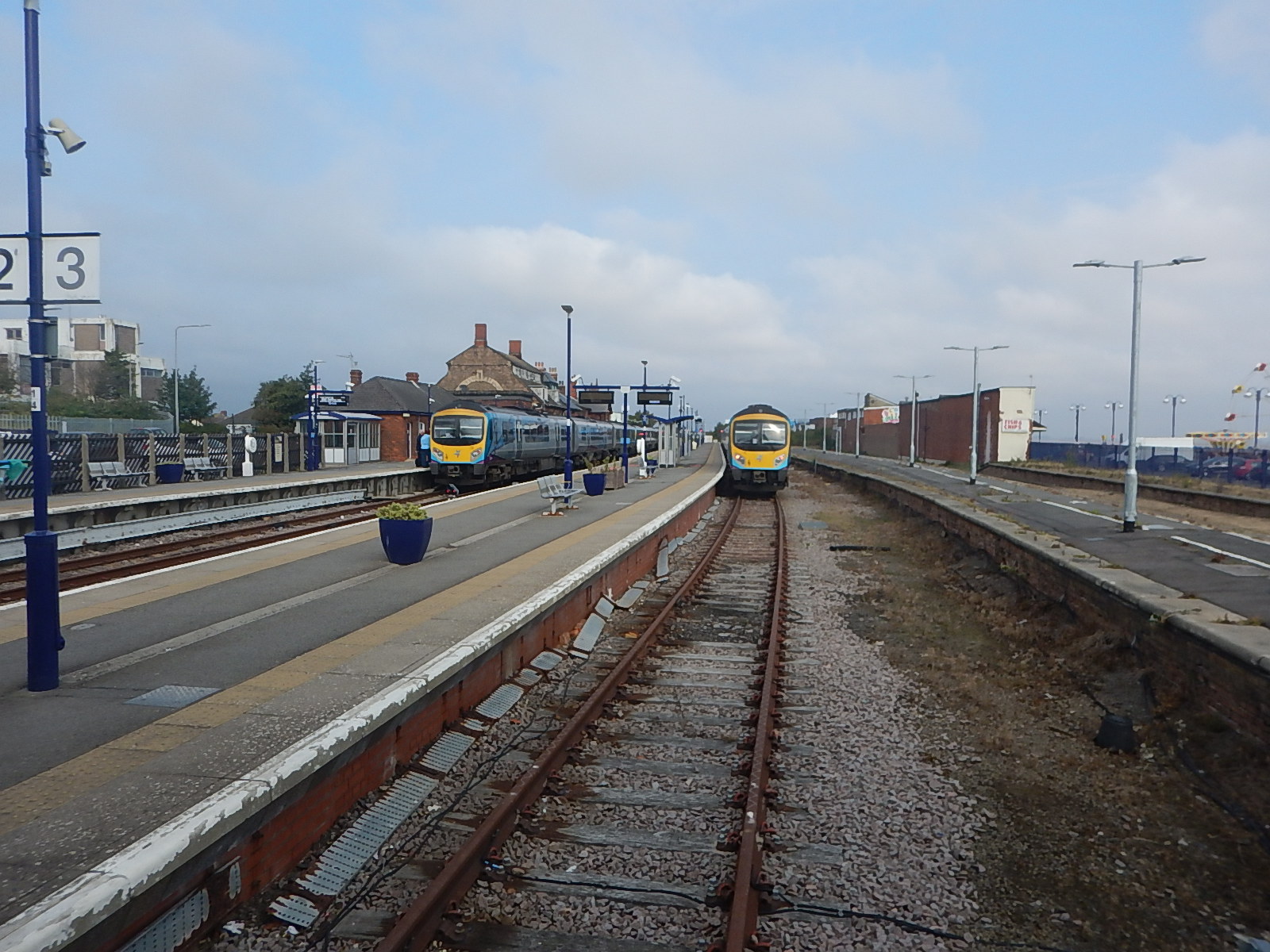
Note.
- The Class 185 trains are diesel, but could be replaced by Hitachi Class 802 trains, which could be converted to battery-electric operation.
- Cleethorpes and Doncaster are 52.1 miles apart, which could be in range of Hitachi’s battery-electric trains.
- It doesn’t look to be too challenging to electrify a couple of platforms to charge the battery-electric trains.
- Cleethorpes station could surely charge both the LNER and the TransPennine Express trains.
- The Cleethorpes and Barton-on-Humber service which is under fifty miles for a round trip could also be replaced with battery-electric trains.
Cleethorpes station could be totally served by battery-electric trains.
Battery-Electric Trains For Lincolnshire
At the present time, there is a surplus of good redundant electrical multiple units and the rolling stock leasing companies are looking for places where they can be used.
Porterbrook are already looking to convert their fleet of Class 350 trains to battery-electric operation and I am certain, that now that Hitachi and others have solved the charging problem, a lot more trains will be converted.
Most would appear to be four-car 100 mph trains, which will be very convenient and should fit most platforms.
Conclusion
Running battery-electric Class 800 trains to Lincoln, Grimsby Town and Cleethorpes could be the start of decarbonisation of Lincolnshire’s railways.
What would battery-electric trains do for the economy of Lincolnshire?
 The Anonymous Widower