Rolls-Royce Successfully Tests First Pure Methanol Marine Engine – Milestone For More Climate-Friendly Propulsion Solutions
The title of this post, is the same as that of this press release from Rolls-Royce.
These four bullet points act as sub-headings.
- World first: first high-speed 100 percent methanol engine for ships successfully tested
- Cooperation: Rolls-Royce, Woodward L’Orange and WTZ Roßlau are developing sustainable propulsion technology in the meOHmare research project
- Green methanol: CO2-neutral, clean and safe marine fuel
- Dual-fuel engines as a bridging technology on the road to climate neutrality
Rolls-Royce has successfully tested the world’s first high-speed marine engine powered exclusively by methanol on its test bench in Friedrichshafen. Together with their partners in the meOHmare research project, Rolls-Royce engineers have thus reached an important milestone on the road to climate-neutral and environmentally friendly propulsion solutions for shipping.
“This is a genuine world first,” said Dr. Jörg Stratmann, CEO of Rolls-Royce Power Systems AG. “To date, there is no other high-speed engine in this performance class that runs purely on methanol. We are investing specifically in future technologies in order to open up efficient ways for our customers to reduce CO2 emissions and further expand our leading role in sustainable propulsion systems.”
Rolls-Royce’s goal is to offer customers efficient ways to reduce their CO2 emissions, in-line with the ‘lower carbon’ strategic pillar of its multi-year transformation programme. The project also aligns with the strategic initiative in Power Systems to grow its marine business.
These are some questions.
Why Methanol?
Rolls-Royce answer this question in the press release.
Green methanol is considered one of the most promising alternative fuels for shipping. If it is produced using electricity from renewable energies in a power-to-X process, its operation is CO2-neutral. Compared to other sustainable fuels, methanol is easy to store, biodegradable, and causes significantly fewer pollutants.
“For us, methanol is the fuel of the future in shipping – clean, efficient, and climate-friendly. It burns with significantly lower emissions than fossil fuels and has a high energy density compared to other sustainable energy sources,” said Denise Kurtulus.
Note that Denise Kurtulus is Senior Vice President Global Marine at Rolls-Royce.
Could Methanol-Powered Engines Be Used In Railway Locomotives?
Given, there are hundreds of railway locomotives, that need to be decarbonised, could this be handled by a change of fuel to methanol?
I asked Google AI, the question in the title of this section and received the following answer.
Yes, methanol-powered engines can be used in railway locomotives, but they require a modification like high-pressure direct injection (HPDI) technology to be used in traditional compression ignition (CI) diesel engines. These modified engines typically use methanol as the primary fuel with a small amount of diesel injected to act as a pilot fuel for ignition, a process known as “pilot ignition”. Research and simulations have shown that this approach can achieve performance and thermal efficiencies close to those of standard diesel engines
From the bullet points of this article, it looks like Rolls-Royce have this pilot ignition route covered.
How Easy Is Methanol To Handle?
Google AI gave this answer to the question in the title of this section.
Methanol is not easy to handle safely because it is a highly flammable, toxic liquid that can be absorbed through the skin, inhaled, or ingested. It requires rigorous safety measures, proper personal protective equipment (PPE), and good ventilation to mitigate risks like fire, explosion, and severe health consequences, including blindness or death.
It sounds that it can be a bit tricky, but then I believe with the right training much more dangerous chemicals than methanol can be safety handled.
How Easy Is Green Methanol To Produce?
Google AI gave this answer to the question in the title of this section.
Producing green methanol is not easy; it is currently more expensive and capital-intensive than traditional methods due to high production costs, feedstock constraints, and the need for specialized infrastructure. However, new technologies are making it more feasible, with methods that combine renewable energy with captured carbon dioxide and renewable hydrogen to synthesize methanol.
Production methods certainly appear to be getting better and greener.
Which Companies Produce Methanol In The UK?
Google AI gave this answer to the question in the title of this section.
While there are no major, existing methanol production companies in the UK, Proman is planning to build a green methanol plant in the Scottish Highlands, and other companies like Wood PLC and HyOrc are involved in the engineering and construction of methanol production facilities in the UK. Several UK-based companies also act as distributors or suppliers for products, such as Brenntag, Sunoco (via the Anglo American Oil Company), and JennyChem.
It does appear, that we have the capability to build methanol plants and supply the fuel.
How Is Green Methanol Produced?
Google AI gave this answer to the question in the title of this section.
Green methanol is produced by combining carbon dioxide and hydrogen under heat and pressure, where the hydrogen is created using renewable electricity and the carbon dioxide is captured from sustainable sources like biomass or industrial emissions. Two main pathways exist e-methanol uses green hydrogen and captured carbon dioxide, while biomethanol is made from the gasification of biomass and other organic waste.
Note.
- We are extremely good at producing renewable electricity in the UK.
- In Rolls-Royce To Be A Partner In Zero-Carbon Gas-Fired Power Station In Rhodesia, I discuss how carbon dioxide is captured from a power station in Rhodesia, which is a suburb of Worksop.
In the Rhodesia application, we have a Rolls-Royce mtu engine running with carbon-capture in a zero-carbon manner, producing electricity and food-grade carbon-dioxide, some of which could be used to make methanol to power the Rolls-Royce mtu engines in a marine application.
I am absolutely sure, that if we need green methanol to power ships, railway locomotives and other machines currently powered by large diesel engines, we will find the methods to make it.
What Are The Green Alternatives To Methanol For Ships?
This press release from Centrica is entitled Investment in Grain LNG, and it gives hints as to their plans for the future.
This heading is labelled as one of the key highlights.
Opportunities for efficiencies to create additional near-term value, and future development options including a combined heat and power plant, bunkering, hydrogen and ammonia.
Bunkering is defined in the first three paragraphs of its Wikipedia entry like this.
Bunkering is the supplying of fuel for use by ships (such fuel is referred to as bunker), including the logistics of loading and distributing the fuel among available shipboard tanks. A person dealing in trade of bunker (fuel) is called a bunker trader.
The term bunkering originated in the days of steamships, when coal was stored in bunkers. Nowadays, the term bunker is generally applied to the petroleum products stored in tanks, and bunkering to the practice and business of refueling ships. Bunkering operations take place at seaports and include the storage and provision of the bunker (ship fuels) to vessels.
The Port of Singapore is currently the largest bunkering port in the world. In 2023, Singapore recorded bunker fuel sales volume totaling 51,824,000 tonnes, setting a new industry standard.
Note.
- After Rolls-Royce’s press release, I suspect that methanol should be added to hydrogen and ammonia.
- I don’t think Centrica will be bothered to supply another zero-carbon fuel.
- I can see the Isle of Grain providing a lot of fuel to ships as they pass into London and through the English Channel.
- Centrica have backed HiiROC technology, that makes hydrogen efficiently.
I can see the four fuels ammonia, hydrogen, LNG and methanol competing with each other.
What Are The Green Alternatives To Methanol For Railway Locomotives?
The same fuels will be competing in the market and also Hydrotreated Vegetable Oil (HVO) will be used.
An Interesting Comment From Lord Peter Hendy
This article on Modern Railways is entitled Chiltern FINALLY Signs Mk 5 Deal.
This extract from the article describes the deal.
An agreement for Chiltern Railways to lease the Mk 5A coaches previously operated by TransPennine Express and owned by Beacon Rail Leasing has been signed – and the trains are due to replace the current Mk 3 stock in phases from 2026. A 10-year lease has been agreed for the vehicles.
Chiltern will take on all 13 five-car sets as well as the spare Driving Trailer and the dedicated pool of 14 Class 68 locomotives.
The article also, has this excellent quote from Lord Peter Hendy, who is the Rail Minister at the end.
This government is putting passengers back at the heart of the 21st century railway by investing to make journeys easier, greener, and more comfortable.
“We are continuing to support Chiltern as they develop a plan to introduce additional services into their timetable, giving people more opportunities to work, live, and socialise.
I agree with much of what Lord Peter Hendy says, but could we see some actions to back up the words.
I have a few thoughts.
Lumo To Glasgow
I wrote about this new service in Lumo Will Extend Its King’s Cross And Edinburgh Service To Glasgow.
Given the opposition of the Transport Minister to open access services, I didn’t think this innovative service would be approved.
- But it does add an affordable passenger-friendly service to London and Glasgow routes.
- It will certainly be an easier route to London for some in Scotland.
- It also adds some much-needed direct services between Newcastle and Glasgow.
Did Lord Peter Hendy have words to help Lumo get its approval?
As I wrote in Could London And Central Scotland Air Passengers Be Persuaded To Use The Trains?, I also believe that this new Lumo service could persuade more air passengers to take the train to Scotland.
Lumo To Stirling
I wrote about this service in ORR: Open Access Services Given Green Light Between London And Stirling.
- First Group has taken over Grand Union Trains and the service will now be run by Lumo, who will use diesel Class 222 trains.
- But Lumo will have the option of running their electric Class 803 trains on the route, as it is fully electrified, when their fleet receives more trains.
This was another service, that I didn’t think would be approved, as no other services on the West Coast Main Line were approved, as Network Rail objected.
But it certainly meets the words in Lord Peter Hendy’s statement.
Like Lumo’s service to Glasgow, when the Stirling service gets electric trains, it will surely cut carbon emissions of travellers to Central Scotland.
Chiltern’s Replacement Trains
Chiltern Railways are replacing this fleet of locomotive hauled trains.
- 8 Class 68 locomotives
- 25 Mark 3 coaches
- 6 Driving Van Trailers
As services between London Marylebone and Birmingham Moor Street stations consist of one locomotive, five coaches and one driving van trailer, that means there are two spare locomotives, one spare coach and one spare driving van trailer, if there are five rakes of coaches in service.
The new fleet will be.
- 14 Class 68 locomotives
- 52 Mark 5A coaches
- 14 Driving Van Trailers
If services between London Marylebone and Birmingham Moor Street stations consist of one locomotive, four coaches and one driving van trailer, that means there are one spare locomotive and one spare driving van trailer, which gives a possible thirteen rakes of coaches in service.
There are certainly enough to expand Chiltern’s services. The obvious destination would surely be Oxford. These pictures show the two North-pacing platforms at Oxford station.
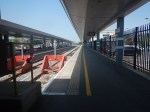
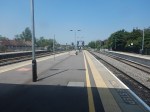
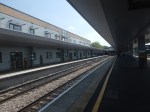
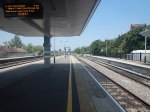
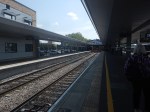
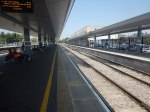
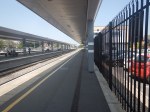
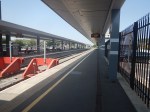
The platforms would be shared with East-West Rail, but they are around 160 metres in length.
The Modern Railways article quote Arriva Group Managing Director UK Trains Amanda Furlong as saying this.
Upgrading our fleet is a vital next step in Chiltern’s modernisation plans and an important part of Arriva’s wider ambition to support the transition to more sustainable rail travel across the UK and Europe.
We are proud to support this important milestone for Chiltern Railways, which is a great example of what can be achieved through strong collaboration with Government to deliver practical improvements for passengers. We look forward to seeing these upgraded trains improve journeys and lower emissions across the network.
She certainly would agree on some issues with Lord Peter Hendy.
So will Chiltern Railways do something to reduce the carbon footprint of their fourteen Class 68 locomotives?
- The Class 68 locomotives don’t have too many miles on the clock.
- Chiltern have already run some their Class 68 locomotives on HVO, so this must be a possibility.
- In total there are thirty-four Class 68 locomotives in service all of which have Caterpillar engines, so a conversion to zero-carbon power could be worthwhile.
I asked Google for an AI Overview on How many diesel locomotives have caterpillar engines worldwide? I got this answer.
While a precise worldwide count of diesel locomotives powered by Caterpillar (CAT) engines is difficult to pinpoint, it’s estimated that hundreds, if not thousands, of locomotives are equipped with CAT engines. Caterpillar has a long history of supplying engines to the rail industry, with engines like the 3500 series powering both mainline and switcher locomotives. Additionally, CAT engines are also used in generator sets for Head End Power (HEP) in passenger locomotives.
Note.
- It appears that, Caterpillar might have given up making truck engines because of emission issues.
- London Marylebone and Oxford is 66.8 miles
- London Marylebone and Birmingham Snow Hill is 112.3 miles.
Perhaps one of the consultants like Ricardo could convert these locomotives to run on hydrogen.
Government Pauses Midland Main Line Electrification
This is the first paragraph of this article on Modern Railways.
The Government has paused the third phase of Midland main line electrification to Sheffield and Nottingham, plus the final phase of the South West Rail Resilience Programme (SWRRP), which involves strengthening cliffs at Holcombe.
Currently, the Midland Main Line electrification appears to have been installed between London St. Pancras and Wigston, where there is a triangular junction.
This article on Modern Railways is entitled MML Wires To Wigston energised, says this in the first paragraph.
A major milestones on the Midland Main Line has been achieved with the energisation of the newly installed overhead wires between Kettering and Wigston and the first trip for a new East Midlands Railway Aurora bi-mode unit to St Pancras.
This OpenRailwayMap shows the Midland Main Line between Leicester station and Wigston junction.
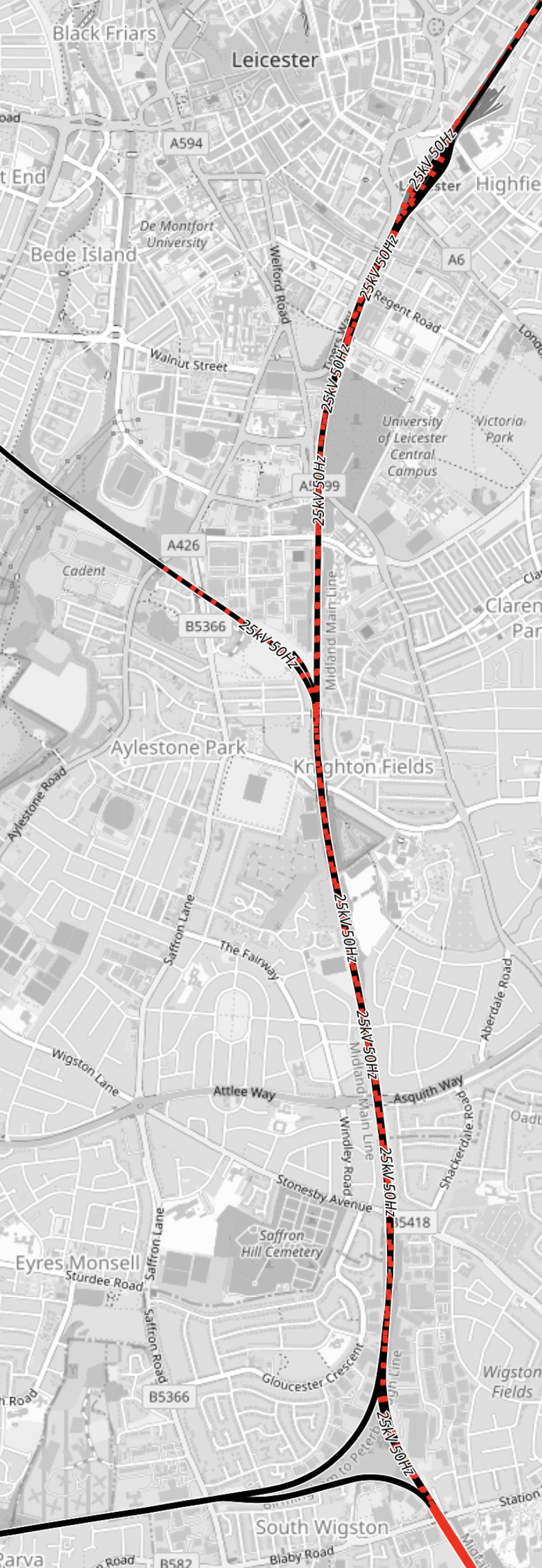
Note.
- Red tracks are electrified.
- Black tracks are not electrified.
- Black/red dashed tracked are being electrified.
- Wigston junction is at the bottom of the map.
- The red track indicates that the South of the junction is electrified.
- The North of the junction is now electrified according to the Modern Railways article.
- The West of the junction is not electrified and leads to the electrified Trent Valley Line at Nuneaton.
- The junction in the middle of the map is Knighton junction, that leads to Burton-on-Trent station.
- In the North-East corner of the map is Leicester station.
Distances from the electrified part of Wigston junction are as follows.
- Derby – 32.5 miles
- Leeds – 107.8 miles
- Leicester – 13.1 miles
- Nottingham – 30.5 miles
- Nuneaton – 15.6 miles
- Sheffield – 68.9 miles
I asked Google AI how far one of Hitachi’s Class 802 trains had gone during tests and got this reply.
A Class 802 train, when operating solely on battery power, can achieve a range of approximately 44 miles (70 km). This was demonstrated in a trial where a five-car Class 802/2 train reached a maximum speed of 87 mph using battery power alone, covering non-electrified sections. Hitachi Rail and Angel Trains are conducting trials to assess the viability of battery technology for longer distances and to reduce reliance on diesel power on non-electrified sections of routes.
Hitachi’s tests were performed with just one diesel engine replaced by a battery pack and it should be born in mind, that the Class 810 trains, that will be used on the Midland Main Line have four diesel engines.
As an electrical engineer, I feel battery range should be additive, so a three-battery train could have a range as much as 120 miles.
- This range would do nicely for a London and Leeds service, as Leeds station is fully-electrified to charge a train for return.
- As London and Sheffield return would be 137.8 miles, a charge at Sheffield would probably be needed to top-up the batteries.
On the other hand a two-battery and two-diesel unit, would have a battery range sufficient for the following services.
- London and Derby and return.
- London and Nottingham and return.
- London and Sheffield with return after a charge.
- London and Leeds with an intermediate charge at Sheffield.
We live in very electrifying times.
I am sure, that Hitachi and their battery-makers will find a solution to run all-electric services to the North of Wigston junction, without full electrification, but with just a charger at Sheffield.
The Electrification Problem At Leicester
Some years ago I came back to London from Leicester with a group of drivers. At one point, the conversation turned to electrification and they said that they had met a Network Rail engineer, who had told them, that the bridge was rather low for electrification and the track couldn’t be lowered because Leicester’s main sewer was underneath the railway.
In Leicester Station – 4th Jan 2022, I show a selection of pictures of Leicester station’s Grade II Listed frontage.
I doubt it would be possible to seriously alter Leicester station to electrify it, as the Heritage Taliban would have a field day.
But if I’m right that all services will be run North of Wigston on batteries, there will be no need to electrify through Leicester station.
Not only would using batter-electric trains probably be more affordable than electrification, but also because of the Leicester problem, it would be less inconvenient for passengers.
Could London and Leicester Be Run In An Hour Or Even Less?
Consider.
- The London and Sheffield services, which go non-stop between London and Leicester take around 64-66 minutes.
- The London and Nottingham services, which stop at Market Harborough take about 5-6 minutes longer.
- London and Leicester is 98.9 miles.
- The fastest trains average 93 mph between London and Leicester.
- Much of the route between London and Leicester has a maximum speed of 100 mph or more, with some sections of 125 mph running.
- Regenerative braking should reduce the time for the Market Harborough stop.
I can certainly see the non-stop Sheffield services being timed at under an hour between London and Leicester.
But I wouldn’t rule out all services between London and Leicester being timed at under an hour.
Could London and Sheffield Be Run In Two Hours Or Even Less?
Given that most services between London and Sheffield take two hours and four minutes and I reckon six minutes could be saved between London and Leicester, I suspect two hours or less is a very attainable target for London and Sheffield services.
Why Not Fit Four Batteries And Be Done With it?
I suspect it will be down to reliability and whether running the diesels on hydrotreated vegeatble oil is acceptable to some politicians.
Would This Be The World’s First Battery-Electric Main Line With 200 kph Running?
Quite possibly!
Conclusion
I can see no disadvantage in not electrifying North of Wigston junction and using battery-electric trains.
It could even be a lot more affordable.
Redundant Coal Wagons To Be Converted For Construction Traffic
The title of this post is the same as that of this article on Railway Gazette.
These three paragraphs describe the project.
WH Davis is to convert coal wagons owned by leasing company Porterbrook for use by Freightliner to transport aggregates.
’This is a fantastic opportunity to demonstrate what can be achieved by giving redundant fleets a purpose for the next 30-plus years’, said WH Davis Managing Director Andy Houghton on December 19. ‘It’s a truly sustainable option that also gives UK manufacturing a boost to enable the creation of UK jobs in the industry. I really can’t wait to see our latest box wagon design in traffic for Freightliner in 2025.’
Mark Wyborn, Head of Freight at Porterbrook, said freight volumes in the construction sector were expected to continue growing, and the deal ’highlights our commitment to investing in the long-term growth of rail freight while providing affordable, innovative and sustainable rolling stock for the UK railway’.
We need more recycling projects like these.
In the article, there is a picture of a Class 66 locomotive like this one.
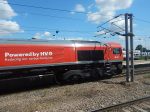
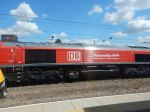
Except this one, which is named after Benjamin Gimbert GC, is different in that it is running on Hydrotreated Vegetable Oil (HVO). which is a more sustainable fuel.
Unfortunately, there is only so much second-hand vegetable oil from the likes of McDonalds and Burger King and it is also a component of Sustainable Aviation Fuel (SAF).
But in the UK, we have engineers at Cummins, JCB, Ricardo and a number of other companies, research organisations and universities, who could create a conversion for the American two-stroke diesels of the Class 66 locomotive so they could run on hydrogen.
These posts detail attempts to create a zero-carbon or dual-fuel locomotive in the UK and some of my thoughts.
- Dual-Fuel Class 37 And 66 Locomotive Concepts Unveiled
- Could Class 66 Locomotives Be Converted Into Battery-Electric Locomotives?
- Freightliner Secures Government Funding For Dual-Fuel Project
- Grants To Support Low-Carbon Technology Demonstrators
- Thoughts On A Battery/Electric Replacement For A Class 66 Locomotive
- A Hydrogen-Powered Locomotive
- Our Sustainability Journey
The Bi-Mode Class 99 locomotive is coming, but we need action now.
I estimate it would probably cost up to £2million to convert a Class 66 locomotive to hydrogen.
So why not have a competition with a prize of perhaps £10million to see who, can produce the best Class 66 or Class 68 locomotive conversion by the end of 2025?
Conclusion
We need urgent action to cut pollution, noise and emissions from heavy freight locomotives and market forces and government grants don’t seem to have produced a solution, so perhaps a competition with a big prize might do it.
It could even be televised,
Iarnród Éireann Looks At Diesel Loco Replacement Options
The title of this post, is the same as that of this article on Railway Gazette.
These three paragraphs introduce the article.
The Stadler Class 99 electro-diesel locomotive for UK operator GB Railfreight was receiving close scrutiny from Iarnród Éireann at InnoTrans in Berlin, with the Irish national operator confirming to Railway Gazette International that it had discussed with the manufacturer how the type might be adapted for operation in Ireland.
Iarnród Éireann Chief Executive Jim Meade told Railway Gazette International ‘we will eventually need to replace our aging diesel fleet with dual-mode locomotives because our freight strategy will take us down that direction after we complete our electrification programme.
‘The replacement for the class 071s and 201s eventually will have to be a bi-mode electric with some form of HVO [renewable diesel fuel] traction in the long term; even the Class 201s are beyond mid-life already.
The Class 99 locomotive is a version of the Stadler Eurodual locomotive, which is described in this Stadler data sheet.
The Wikipedia entry for the Stadler Euro Dual is also informative and lists a dozen different versions of the locomotive, that have been sold to various countries and operators.
This paragraph summarises how the design can handle different gauges and electrical voltages.
The Euro Dual was designed from the onset as a highly modular platform, allowing it to be offered to customers in various different configurations, covering various gauges and voltage systems.
I doubt Stadler would have great difficulty producing an Irish gauge locomotive capable of running on whatever electrification, the Irish erect.
Will The Irish Class 99 Have Enough Power?
The power of the various diesel locomotives are as follows.
- Current Irish Class 071 – 1.68 MW
- Current Irish Class 201 – 2.4 MW
- UK Class 66 – 2.4 MW
- UK Class 99 – 1.79 MW
It would appear that the Class 99 is less powerful than the Irish Class 201 and the UK Class 66, but the Wikipedia entry for the Class 99 says this.
The chief executive of GBRf, John Smith, reports that the Class 99, despite having a less powerful diesel engine than the Class 66, will outperform the Class 66 at low speeds. The greater tractive effort means that the Class 99 on diesel power can deliver more power at the rail than the 66.
But as the Class 99 has 6.17 MW in electric mode, the solution must be to electrify the difficult sections.
I have just looked at the Felixstowe Branch Line, which will be very much Class 99 territory. I am fairly sure, that with some short lengths of electrification on the single-track sections, any performance problems with the Class 99 on the branch could be solved.
Could The Irish Class 99 Use Hydrogen As Secondary Power?
This OpenRailwayMap shows all the railways on the island of Ireland.
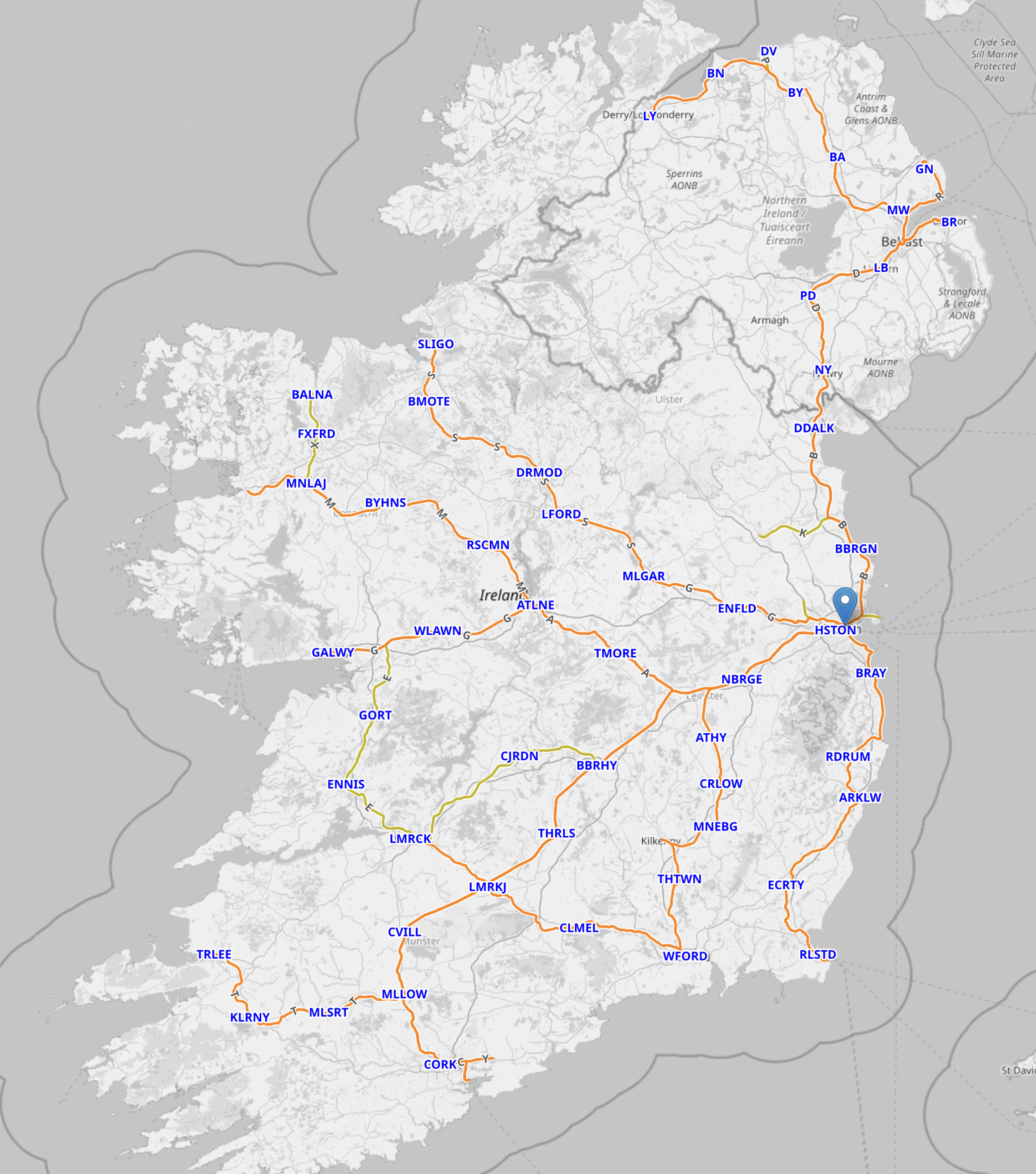
Note.
- All railways on the island of Ireland have an Irish gauge of 1.6 m.
- Only the DART in Dublin is electrified with 1,500 VDC overhead.
- There are 2,733 km. of track.
- New lines are still being added and old ones have been reopened in recent years.
- There will surely be pressure for the Irish to decarbonise their railways, both North and South of the Northern Irish border.
- There are no rail connections to another country, except for the link between Northern Ireland and the Republic of Ireland, which is between two similar systems.
- It is unlikely, that there will ever be a rail link between the Irish gauge railways on the island of Ireland and the standard gauge railways of Europe.
Effectively, the island of Ireland has an isolated network of tracks on which they could build a zero-carbon railway system.
- Signalling could be an off-the-shelf digital system.
- Zero-carbon traction power could be trains powered by either electricity and/or hydrogen.
- Both electricity and hydrogen would need substantial amounts of new rolling stock.
- Electricity would require electrification at €1,000,000 per single track kilometer, which could be around €5.5 billion for the electrification alone.
- Electrification would also need many bridges, stations and tunnels to be modified or rebuilt.
- Hydrogen would need a refuelling infrastructure and could go anywhere that diesel can.
- Hydrogen locomotives and trains, would be one-to-one replacements for diesel locomotives and trains.
It would appear that because of their geographic isolation, hydrogen could be an ideal zero-carbon fuel for the railways of Ireland.
In Do Cummins And Stadler Have a Cunning Plan?, I speculated that the electro-diesel Class 99 locomotive could be converted into an electro-hydrogen Class 99 locomotive, as Cummins are building diesel engines that can be converted into hydrogen ones.
Ireland with its unusual network could change to a zero-carbon railway in the following way.
- Purchase a fleet of diesel locomotives and trains that can run on Hydrotreated Vegetable Oil (HVO) and be convertible to hydrogen.
- A version of the Class 99 with or without the electrical gubbins would satisfy the locomotive replacement.
- A version of the tri-mode Stadler FLIRT like a Class 745 train, would satisfy the train replacement.
- All new trains and locomotives would replace the current stock and run on HVO.
- The hydrogen infrastructure would be built.
- The new trains and locomotives would be gradually converted to run on green hydrogen.
Within a few years, the island of Ireland would have a zero-carbon railway.
Advantages Of A Fully-Hydrogen Railway
These are a few advantages.
- One fuel for all trains.
- All trains and locomotives would be one manufacturer.
- No expensive electrification.
- Hydrogen trains and locomotives have a long range.
- No infrastructure modification for gauge clearance.
- Ireland has plenty of onshore and offshore wind for hydrogen.
- Standard fuelling systems are being developed.
- There would be no disruption as the trains changed to HVO and little disruption as they changed to hydrogen.
I believe that there would be a large increase in train usage both from locals and visitors, which can only be good for the Irish economy.
Managing The Project
This could be one of those rare projects that flows well.
- The changeover to hydrogen could involve very little rail infrastructure work.
- The hydrogen filling stations could be more-or-less independent of the rail infrastructure.
- Trains and locomotives could go into service, when they are accepted and the staff have been trained.
- Trains and locomotives would only be converted to hydrogen, as routes are made hydrogen-capable.
- There should be no gauging problems with the new trains and locomotives.
- There is only one train manufacturer.
Hopefully, it will all be delivered on time and on budget.
Innotrans 2024: Rolls-Royce Shows mtu Solutions For On-Track Energy Transition And Celebrates 100 years Of Rail Engine Business
The title of this post, is the same as that of this press release from Rolls-Royce.
These four bullet points, act as sub-headings.
- All mtu engine series for locomotives and railcars approved for sustainable fuels
- DB, RDC Autozug Sylt, Trenitalia and České dráhy use or test HVO
- Rolls-Royce celebrates 100 years of success with mtu rail drives
- More than 250 rail customers worldwide value the performance, compact design and low exhaust emissions of mtu systems
These are the first two paragraphs.
Rolls-Royce will be presenting its mtu-brand propulsion and service solutions at the international rail exhibition Innotrans in Berlin from September 24 to 27, 2024 in Hall 18, Booth 500. The company will be celebrating an anniversary at the same time: for 100 years, mtu products have been powering trains, including mainline and multi-purpose locomotives, high-speed trains and local transport railcars. On display will be sustainable propulsion solutions such as the mtu Series 4000 and 1600 engines for locomotives and the underfloor drive systems mtu PowerPacks for railcars, all of which are now released for sustainable fuels such as HVO. Rolls-Royce will also be presenting its repower and reman solutions.
100 years ago, Karl Maybach laid the foundation for the rail drive systems of today’s mtu brand with the world’s first high-speed diesel engine for railcars, the Maybach G 4a. Maybach also developed the GO 5 engine for the “Fliegender Hamburger” express train.
These are my thoughts.
Chiltern Railways Could Go Carbon-Neutral By Using HVO
In Vegetable Oil Fuelling Chiltern Railways Trains In UK First, I described how Chiltern Railways are running their Class 68 locomotives on HVO.
This move by Rolls-Royce mtu will allow all Chiltern’s Class 168 trains to be run on sustainable HVO, as they have Rolls-Royce mtu diesel engines.
Chiltern Railways Class 168 train fleet is as follows.
- 10 x 4-car
- 9 x 3-car
- 9 x 2-car
This will still leave Chiltern Railways Class 165 train fleet to be converted to sustainable fuel.
- 28 x 2-car
- 11 x 3-car
Note.
- There are 75 of these trains in service with Chiltern Railways and Great Western Railway.
- They are fitted with Perkins engines.
- Perkins engines are now owned by Caterpillar, who built the engines for the Class 68 locomotives.
As Caterpillar have the sustainable diesel technology, could they convert the Class 165 trains to HVO?
Cummins And HVO
Although this post is mainly about Rolls-Royce mtu, it would be convenient to put in this section about Cummins and how their diesel engines run on HVO.
The UK train fleet contains the following trains with Cummins engines.
- 10 x Class 175 train x 2-car
- 16 x Class 175 trains x 3-car
- 14 x Class 180 trains x 5-car
- 34 x Class 220 trains x 4-car
- 23 x Class 221 trains x 5-car
- 4 x Class 221 trains x 4-car
- 4 x Class 222 trains x 7-car
- 23 x Class 222 trains x 5-car
Cummins says this about their engines and HVO.
Cummins approves use of HVO fuel in all high-horsepower engines
(19L-95L), including the QSK19, K19, QSK23, QST30, QSK38, K38, QSK45,
QSK50, K50, QSK60, QSK78, QSK95, V903 and ACE for all industrial
markets. No engine modifications are required; engines currently in the
field can be used with HVO at any percentage.
It would appear that all trains with Cummins engines can be converted to run on HVO.
CAF And HVO
Class 195, 196 and 197 trains all have Rolls-Royce mtu diesel engines, so they will be able to run on HVO.
Hitachi And HVO
Class 800, 1801, 802, 805 and 810 trains all have Rolls-Royce mtu diesel engines, so they will be able to run on HVO.
Conclusion
If all diesel engines are to be converted to HVO, there is going to be a lot of HVO needed in the UK.
But many train fleets will be carbon-neutral.
Freightliner Offers Single Container Transport By ‘Carbon Reduced’ Trains
The title of this post, is the same as that of this article on Railway Gazette.
These two paragraphs explain the service.
Freightliner has launched its ECO90 booking service which enables customers of any size to reduce their carbon emissions by sending as little as one container on trains powered by alternative fuels.
The trains currently use hydrotreated vegetable oil, and Freightliner told Rail Business UK that other options could be available in the future, A certificate confirms that the fuel is fully traceable and from sustainable sources, and a Scope 3 carbon emissions report is provided.
It will be interesting to see if this service succeeds.
I suspect that in the future, the service’s biggest competitor will be the hydrogen-or electric- powered truck, which will offer an end-to-end zero-carbon service with minimal cargo handling.
Liberty Lines Commissions First High-Speed Ferry With mtu Hybrid System From Rolls-Royce
The title of this post, is the same as that of this press release from Rolls-Royce.
These two bullet points act as sub-headings.
- “Vittorio Morace” the world’s first hybrid high-speed ferry to IMO HSC standard with a length of almost 40 metres is fast at sea and emission-free in harbour
- A further 8 Liberty Lines ferries with mtu hybrid systems will enter into service in Italy, Slovenia and Croatia
This picture shows the first of the fleet.

This is the first paragraph.
On 27 June 2024, the Italian shipping company Liberty Lines ceremonially launched the world’s first hybrid fast ferry of this category and size in Trapani, Sicily, powered by an mtu hybrid propulsion system from Rolls-Royce. The 39.5 meter long ship has a capacity of 251 passengers, reaches a speed of over 30 knots and will significantly reduce the impact of ship operations on the environment. The “Vittorio Morace”, built by the Spanish shipyard Astilleros Armon and designed by Incat Crowther, is the world’s first IMO HSC (High-Speed Craft) hybrid fast ferry of this size and has been classified as a “Green Plus” ship by the Italian classification society RINA.
This ferry can truly be considered to be a Ship-of-the-World, with a design from an Australian-headquartered International company and German engines, that has been built in Spain.
This paragraph describes the power-train.
The battery-electric part of the drive is used for locally emission-free driving in the harbour area and as a booster. CO2 emissions are reduced by the particularly efficient mtu Series 4000 diesel engines which can also run on the renewable diesel (HVO, hydrotreated vegetable oil). Its use can lower the CO2 footprint by up to 90 per cent. Furthermore, the comparatively low overall weight of both the engines and the hybrid drive system contributes to high vessel propulsion efficiency, thereby reducing fuel consumption and emissions.
Over the last thirty years, I’ve been to several of the places served by Liberty Lines, so some excellent journeys, will be made faster, quieter and better.
The UK-Wide Need For Self-Powered Trains
How Many Diesel Trains Are In Service In The UK?
- Northern Trains – 73 x two-car and 6 x three-car.
- Great Western Railway – 20 x two-car.
- Transport for Wales – 36 x two-car.
- In Service – 129 x two-car and 6 x three-car.
These are 75 mph BR Second Generation trains.
- ScotRail – 5 x one-car.
- Transport for Wales – 31 x one-car.
- In Service – 36 x one-car.
- Stored – 27 x one-car.
These are 75 mph BR Second Generation trains.
- Northern Trains – 7 x two-car.
- In Service – 7 x two-car.
These are 75 mph BR Second Generation trains.
- Northern Trains – 58 x two-car.
- East Midlands Railway – 9 x two-car.
- ScotRail – 42 x two-car.
- In Service – 109 x two-car.
- Stored – 6 x two-car.
These are 75 mph BR Second Generation trains.
- ScotRail – 40 x two-car.
- Great Western Railway – 10 x two-car and 7 x three-car.
- East Midlands Railway – 26 x two-car.
- Northern Trains – 45 x two-car and 8 x three-car.
- Transport for Wales – 24 x two-car.
- South Western Railway – 10 x two-car.
- In Service – 155 x two-car and 15 x three-car.
These are 90 mph BR Second Generation trains.
- South Western Railway – 29 x three-car.
- In Service – 29 x three-car.
These are 90 mph BR Second Generation trains.
- Chiltern Railways – 39 x two-car.
- Great Western Railway – 20 x two-car and 16 x three-car.
- In Service – 59 x two-car and 16 x three-car.
These are 75 or 90 mph BR Second Generation trains.
- Great Western Railway – 21 x three-car.
- In Service – 21 x three-car.
These are 90 mph BR Second Generation trains.
- Chiltern Railways – 9 x two-car, 9 x three-car and 13 x four-car.
- In Service – 9 x two-car, 9 x three-car and 13 x four-car.
These are 100 mph Turbostar trains.
- CrossCountry – 7 x two-car and 22 x three-car.
- East Midlands Railway – 22 x two-car and 8 x three-car.
- Northern Trains – 16 x three-car.
- ScotRail – 17 x three-car.
- Transport for Wales – 8 x three-car.
- West Midlands Trains – 16 x three-car.
- In Service – 34 x two-car and 71 x three-car.
These are 100 mph Turbostar trains.
- Southern – 17 x three-car.
- In Service – 17 x three-car.
These are 100 mph Turbostar trains.
- West Midlands Trains – 24 x two-car and 15 x three-car.
- In Service – 24 x two-car and 15 x three-car.
These are 100 mph Turbostar trains.
- Transport for Wales – 9 x two-car and 15 x three-car.
- In Service – 9 x two-car and 15 x three-car.
- Stored – 2 x two-car and 1 x three-car.
These are 100 mph Coradia trains.
- Grand Central – 10 x five-car.
- East Midlands Railway – 1 x four-car and 2 x five-car.
- In Service – 1 x four-car and 12 x five-car.
These are 125 mph Coradia trains.
- TransPennine Express 51 three-car.
- In service – 51 three-car.
These are 100 mph Desiro trains.
- Northern Trains – 25 x two-car and 33 x three-car.
- In Service – 25 x two-car and 33 x three-car.
These are 100 mph CAF Civity trains.
- West Midlands Trains – 12 x two-car and 14 x four-car.
- In Service – 12 x two-car and 14 x four-car.
These are 100 mph CAF Civity trains.
- Northern Trains – 51 x two-car and 26 x three-car.
- In Service – 51 x two-car and 26 x three-car.
These are 100 mph CAF Civity trains.
- CrossCountry – 34 x four-car
- In Service – 34 x four-car
These are 125 mph Bombardier Voyager trains.
- Avanti West Coast -18 x five-cars
- CrossCountry – 24 x four-car.
- In Service – 24 x four-car and 18 x five-cars
- Stored – 2 x five-car
These are 125 mph Bombardier Voyager trains.
- CrossCountry – 23 x five-car and 4 x seven-car.
- In Service – 23 x five-car and 4 x seven-car.
These are 125 mph Bombardier Voyager trains.
- Transport for Wales – 11 x four-car.
- In Service – 11 x four-car.
These are 90 mph Stadler FLIRT bi-mode trains.
- Greater Anglia – 14 x three-car and 24 x four-car.
- In Service – 14 x three-car and 24 x four-car.
These are 100 mph Stadler FLIRT bi-mode trains.
- Transport for Wales – 7 x three-car and 17 x four-car.
- In Service – 7 x three-car and 17 x four-car.
These are 75 mph Stadler FLIRT bi-mode trains.
- Great Western Railway – 21 x five-car and 36 x nine-cars.
- LNER – 10 x five-car and 13 x nine-cars.
- In Service – 31 x five-car and 49 x nine-cars.
These are 125 mph Hitachi AT-300 trains.
- Great Western Railway – 22 x five-car and 14 x nine-cars.
- Hull Trains – 5 x five-car.
- TransPennine Express – 19 x five-car.
- In Service – 46 x five-car and 14 x nine-cars.
These are 125 mph Hitachi AT-300 trains.
- Avanti West Coast – 13 x five-car.
- In Service – 13 x five-car.
These are 125 mph Hitachi AT-300 trains.
- East Midlands Railways – 33 x five-car.
- In Service – 33 x five-car.
These are 125 mph Hitachi AT-300 trains.
These trains give totals as follows.
- One-car – 36
- Two-car – 601
- Three-car – 249
- Four-car – 135
- Five-car – 176
- Seven-car – 4
- Nine-car – 63
That is a total of 1254 trains that need to be decarbonised by either replacement or modification.
- Some trains are effectively double-counted, as both the current trains and their replacements are included.
- Some trains are planned to be replaced by electric trains.
- Some trains will be passed on.
But there are still a lot of trains to be decarbonised.
I will now look at each group in detail.
BR Second Generation Trains
- Class 150 – 129 x two-car and 6 x three-car.
- Class 153 – 36 x one-car.
- Class 155 – 7 x two-car.
- Class 156 – 109 x two-car.
- Class 158 – 155 x two-car and 15 x three-car.
- Class 159 – 29 x three-car.
- Class 165 – 59 x two-car and 16 x three-car.
- Class 166 – 21 x three-car.
Note.
- The trains have mostly Cummins engines, with some Perkins and a spattering of Rolls-Royce.
- Class 150,153, 155 and 156 trains are 75 mph trains and most of the others are capable of 90 mph.
- Condition of the interiors is variable, with some being excellent and others being terrible.
- There are 36 x one-car, 459 x two-car and 59 x three-car.
- There appears to be no plan to decarbonise these trains.
- Some will be replaced by new CAF diesel trains or new electric trains.
The best use of some of the better trains in this group would be to fill-in until zero-carbon trains are available.
Turbostar Trains
These trains are all Turbostars or their predecessor.
- Class 168 – 9 x two-car, 9 x three-car and 13 x four-car.
- Class 170 – 34 x two-car and 71 x three-car.
- Class 171 – 17 x three-car.
- Class 172 – 24 x two-car and 15 x three-car.
Note.
- The trains all have Rolls-Royce mtu engines.
- They are capable of 100 mph.
- Condition of the interiors is generally good.
- There are 67 x two-car, 112 x three-car and 13 x four-car.
- Rolls-Royce mtu engines may be able to run on sustainable fuel like Hydrotreated Vegetable Oil (HVO).
- 168329 has been converted into a diesel-hybrid, by Rolls-Royce mtu.
I feel that one way or another, the trains in this group should be capable of converting to net-zero operation.
Alstom Coradia, Bombardier Voyager and Siemens Desiro Trains
I am putting these trains together, as they are all 100-125 mph long-distance trains, that are not that old.
- Class 175 – 9 x two-car and 15 x three-car.
- Class 180 – 1 x four-car and 12 x five-car.
- Class 185 – 51 x three-car.
- Class 220 – 34 x four-car
- Class 221 – 24 x four-car and 18 x five-cars
- Class 222 – 23 x five-car and 4 x seven-car.
Note.
- The trains all have Cummins engines.
- They are capable of 100 mph or 125 mph.
- Condition of the interiors is generally good.
- There are 9 x two-car, 66 x three-car, 59 x four-car, 53 five-car and 4 x seven-car.
- Cummins engines may be able to run on sustainable fuel like Hydrotreated Vegetable Oil (HVO).
- In Grand Central DMU To Be Used For Dual-Fuel Trial, I described innovative fuel trails in a Class 180 train.
- I suspect Cummins will be taking an interest.
In Cummins And Leclanché S.A. To Collaborate On Lower-Emissions Solutions For Use In Marine And Rail Applications, I asked this question.
How many of these trains could be converted to hybrid operation, if Cummins and Leclanché were to create their version of the mtu Hybrid PowerPack?
I feel that one way or another, the trains in this group should be capable of converting to net-zero operation.
CAF Civity Trains
These three trains have all been recently introduced
- Class 195 – 25 x two-car and 33 x three-car.
- Class 196 – 12 x two-car and 14 x four-car.
- Class 197 – 51 x two-car and 26 x three-car.
Note.
- The trains all have Rolls-Royce mtu engines.
- They are capable of 100 mph.
- Condition of the interiors is probably as-new!
- There are 88 x two-car, 59 x three-car and 14 x four-car.
- All these trains were ordered between 2016 and 2018.
- Rolls-Royce mtu engines may be able to run on sustainable fuel like Hydrotreated Vegetable Oil (HVO).
I don’t believe that as these trains were only ordered a few years ago, that the trains were bought with the knowledge of a route which would convert these trains to net-zero operation.
I suspect the most likely route to net-zero operation, would involve the following.
- Replacing the Rolls-Royce mtu engines with mtu Hybrid PowerPacks.
- Running the trains on sustainable fuel.
The work needed would probably be the same for all trains.
Stadler FLIRT Bi-Mode Trains
- Class 231 – 11 x four-car.
- Class 755 – 14 x three-car and 24 x four-car.
- Class 756 – 7 x three-car and 17 x four-car.
Note.
- The trains all have Rolls-Royce mtu engines.
- They are capable of between 75 and 100 mph.
- Condition of the interiors is probably as-new!
- There are 21 x three-car and 52 x four-car.
- All these trains were ordered between 2016 and 2018.
- As with other recently ordered trains, I am fairly sure that the Deutz engines will be able to run on sustainable fuel like Hydrotreated Vegetable Oil (HVO).
Stadler have designed these trains, so that diesel engines can be replaced by battery packs.
I suspect the most likely route to net-zero operation, would involve the following.
- Replacing all or some the Deutz engines with battery packs.
- Running the trains on sustainable fuel.
The work needed would probably be the same for all trains.
Hitachi AT-300 Trains
Only the bi-mode trains are lists.
- Class 800 – 31 x five-car and 49 x nine-car.
- Class 802 – 46 x five-car and 14 x nine-car.
- Class 805 – 13 x five-car.
- Class 810 – 33 x five-car.
Note.
- The trains all have Rolls-Royce mtu engines.
- They are capable of 125 mph.
- Condition of the interiors is probably as-new!
- There are 123 x three-car and 63 x nine-car.
- Most were built after 2016.
- Rolls-Royce mtu engines may be able to run on sustainable fuel like Hydrotreated Vegetable Oil (HVO).
- Hitachi are developing battery packs for these trains.
I suspect the most likely route to net-zero operation, would involve the following.
- Replacing all or some the Rolls-Royce mtu engines with battery packs.
- Running the trains on sustainable fuel.
The work needed would probably be the same or similar for all trains.
Chiltern Railways Seeks Fleet Proposals
The title of this post, is the same as that of this article on Rail Business UK.
These are the first two paragraphs.
Chiltern Railways has invited proposals from established rolling stock owners for the lease and maintenance of between 25 and 70 existing vehicles to operate inter-city and regional services on the Chiltern Main Line between London Marylebone and Birmingham.
The operator is seeking either ‘self-powered’ multiple units or locomotive-hauled coaches, which can operate at 160 km/h in fixed formations of five or six passenger vehicles.
It does appear that only existing vehicles will be allowed.
These are my thoughts.
A Very Tight Timescale
The Rail Business UK article, says this about entry into service.
Requests to participate are required by February 2. Driver training is planned for 2024, and entry to passenger service for early 2025.
This requirement probably means that new trains are not allowed, as I doubt any manufacturer could deliver them by early 2025.
Although, I could envisage a proposal, where a couple of trains are delivered early for driver training and the other trains are delivered, as soon as they are refurbished or perhaps even built.
100 mph Trains With At Least Five Cars
The second paragraph from the Rail Business UK article is very definite about speed and the length of trains.
The operator is seeking either ‘self-powered’ multiple units or locomotive-hauled coaches, which can operate at 160 km/h in fixed formations of five or six passenger vehicles.
It does appear, that this paragraph, rules out multiple units, with less than five coaches. Unless it counts a two-car Class 175 train and a three-car Class 175 train working together as a five-car fixed formation. They would though be 100 mph trains.
Noise Restrictions
This noise restriction must be met according to the Rail Business UK article.
The trains must also offer a reduction in ambient noise compared to Chiltern’s existing MkIII coaches hauled by a Class 68 diesel locomotive.
This could be a difficult condition to meet for some trains and probably rules out diesel locomotives.
What Fuels Can Be Used?
This is the only restriction in the Rail Business UK article.
Any diesel-powered trains should be compatible with use of alternative fuels, such as HVO, from the service introduction date.
Chiltern have experience of this fuel.
‘Self-Powered’ Multiple Units Or Locomotive-Hauled Coaches
i am tending towards the former for the following reasons.
- I was told by someone, that between London and Norwich, ‘self-powered’ multiple units are faster than locomotive-hauled coaches.
- Without the locomotive and the driving van trailer, you may get more passengers in a shorter train. This might avoid some platform lengthening.
- The Chiltern route to Birmingham has around a dozen stops and the lighter ‘self-powered’ multiple units may save time.
- Battery-electric ‘self-powered’ multiple units can be very quiet.
- Chiltern have had complaints about noise from diesel locomotives.
The last two points probably clinch it.
The Operating Speed Of The Chiltern Main Line
I have followed the Chiltern Main Line on OpenRailwayMap and virtually all of it is faster than 75 mph, with several sections of 90-100 mph running.
Hence the need for 100 mph trains!
What Distances Are Involved
The route can be split into sections.
- London Marylebone and High Wycombe – 28.1 miles
- High Wycombe and Banbury – 41 miles
- Banbury and Warwick – 21.8 miles
- Warwick and Birmingham Moor Street – 20.8 miles
Note.
- The total distance is 111.7 miles.
- High Wycombe and Warwick are 62.8 miles apart.
No sections are too challenging.
Could A Battery-Electric Train Handle The Route?
In The Data Sheet For Hitachi Battery Electric Trains, these were my conclusions for the performance.
- The battery pack has a capacity of 750 kWh.
- A five-car train needs three battery-packs to travel 100 miles.
- A nine-car train needs five battery-packs to travel 100 miles.
- The maximum range of a five-car train with three batteries is 117 miles.
- The maximum range of a nine-car train with five batteries is 121 miles.
It would appear that a five-car train with three batteries could handle the route, but there would need to be some form of charging at both ends of the route. This might not be too easy to arrange, as all three terminal stations are not the most spacious.
Could A Tri-Mode Train Handle The Route?
LNER have taken the tri-mode route with their new trains, which I wrote about in First Tri-Mode Long Distance Trains For The East Coast Main Line.
These trains could be a possibility, especially if they used battery power in stations where there have been complaints of noise.
I suspect CAF’s tri-mode trains could also be run on HVO, as it is likely they’ll have Rolls-Royce mtu engines, which can use the fuel.
As Hitachi’s Class 802 trains also use Rolls-Royce mtu engines and Hitachi are developing a tri-mode version, these trains are also a possibility.
Although tri-mode trains are a possibility, I doubt that delivery would be easy by the beginning of 2025.
Unless, the Government has tipped off CAF and/or Hitachi and they are already building some trains that can be completed as tri-modes.
After all, CrossCountry, Grand Central, South Western Railway and TransPennine may need tri-mode trains for their routes.
What About Hydrogen?
I don’t think, there is a hydrogen train, that would be suitable and could start driver training this year.
So, unless someone like Stadler says they have a train, hydrogen looks to be a non-starter.
An Unusual Solution
As I said on the previous section about hydrogen, the time-scale is tight and this probably cuts out totally new trains.
But we may have an unusual solution, that surprised everyone.
Consider.
- I have stated that I believe that a five-car Class 802 train with three battery packs has a range of 117 miles.
- The range would be enough to go between London Marylebone and Birmingham.
- So why not put in short lengths of overhead electrification at High Wycombe, Banbury and Warwick, where the train can have a quick splash and dash?
I am certain, that a unusual strategy like this can be made to work.
Conclusion
I suspect we’ll see an innovative solution, that gives ISquared what they want.
 The Anonymous Widower