INEOS Inovyn Becomes Europe’s First Green Hydrogen ISCC PLUS Fully Certificated Producer
The title of this post, is the same as that of this press release from INEOS.
These two bullet points, act as sub-headings.
- INEOS Inovyn’s Antwerp hydrogen production, has been certified under the ISCC (International Sustainability & Carbon Certification) PLUS scheme.
- We become the first European company to have our renewable hydrogen fully audited with greenhouse gas data certification.
This paragraph describes how the hydrogen is produced.
Our Antwerp site produces hydrogen through Chlor-Alkali electrolysis – the electrolysis of brine producing chlorine, caustic soda/potash, sodium hypochlorite and hydrogen. The electricity used to produce this hydrogen comes directly from wind turbines off Belgium’s North Coast.
The Castner-Kellner process, that I worked on at ICI in the 1960s produced similar products.
Asbestos In M&S Killed My Wife — Gove’s Ruling Is A Disgrace
The title of this post, is the same as that of this article in The Sunday Times.
It is in a section of the paper, which is entitled Act Now In Asbestos, where the paper has a campaign.
These are the first three paragraphs.
Janice Allen met and fell in love with her husband, Stuart, when they worked together at Marks & Spencer’s flagship store in London’s Marble Arch.
The shop would end up killing her.
Janice died of mesothelioma, a cancer she got from exposure to asbestos. The M&S store was constructed using the toxic building material and it was found in several locations where she worked. The department store would award her substantial damages before she died at a hospice in Kent in June 2018.
I have only worked with asbestos once.
This picture shows my father’s printing works in Station Road, Wood Green.
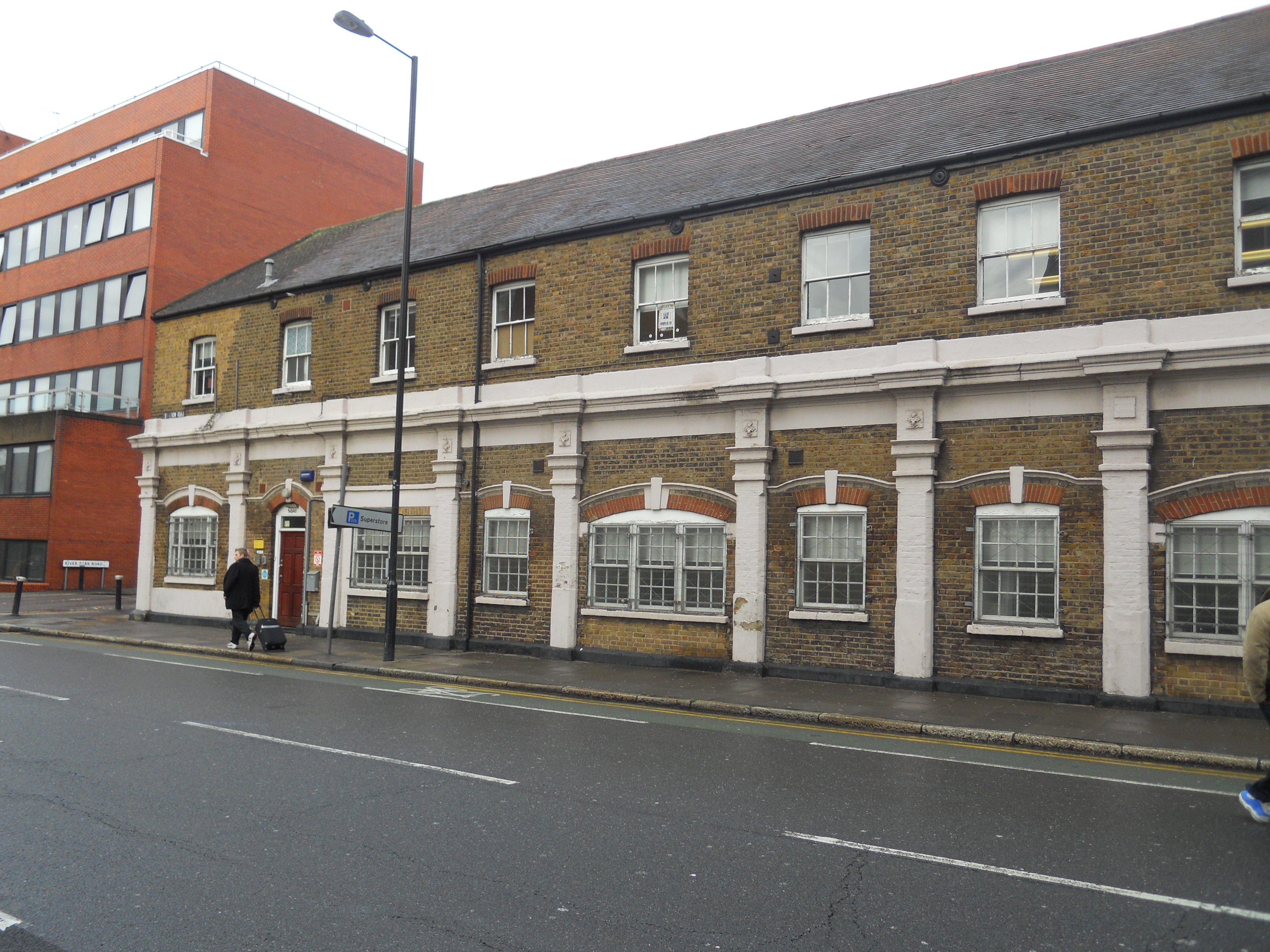
They were not the most salubrious of premises and my father was always making improvements.
My father was a very good practical carpenter and an accomplished painter and decorator.
The back wall of the building was covered on the inside with damp and mould, which even in the 1950s, he thought could be a health hazard, so he decided to do something about it.
- Above a certain height he cleaned the wall and painted it with a standard magnolia paint.
- About two metres above the ground, he fixed a two-by-two batten piece of wood to the wall.
- He also fixed another one to the wall, perhaps halfway up.
- To cover all the damp and mould, he then fixed corrugated asbestos cement sheeting to the two battens with galvanised roofing nails.
- To finish it off he screwed a piece of slatting to the top batten, which he painted a fetching blue colour.
The damp and mould was now out of sight and out of mind.
I remember how this construction was done, as I was my father’s ten-year-old assistant.
Although we’d used asbestos cement sheeting, I don’t think either my father or myself inhaled any asbestos dust, although we weren’t wearing masks, as no-one did in those days.
ICI And Asbestos
My next encounter with asbestos was at ICI in the late 1960s.
- A lot of chemical plants, built before the Second World War were riddled with it.
- But ICI, knew of the problems, and I was given strong warnings about asbestos.
- As I was only putting instruments on plants, with experienced plant fitters, I didn’t have an real encounters with it.
But why if ICI were so anti, were builders still using it and otherwise sensible companies not removing it from their buildings?
This is the large paragraph in The Times article.
An M&S spokesman said: “Like many older buildings, Marble Arch dates back to the interwar era when asbestos was commonly used in construction, and sadly our former colleague Janice Allen worked in the store over 40 years ago, before the consequences of asbestos use were known. Today we rigorously manage asbestos where it is present and ensure the store is safe for every colleague and customer.”
If ICI were worried about asbestos in the late 1960s, why weren’t Marks & Spencer worried about asbestos in the late 1970s.
A Barn In Suffolk
In the 1980s, I put up a new barn, where we lived.
Often, in those days, asbestos was still used for roofing, but I was recommended to use a new British Steel product, where steel was covered in a coloured weatherproof coating.
I Sneeze A Lot
These days, I sneeze a lot, but I didn’t sneeze this much before I was diagnosed as coeliac and went gluten-free.
Could it be that my immune system is so much stronger and when there is something in the air, it is only giving it a good kicking?
I’ve been sneezing a lot for the past few days, as the Council removed a dead tree from outside my house.
But we do know, that Nottingham University have shown, coeliacs on a gluten-free diet have a 25 % lower cancer rate than the general population.
Could this be due to a stronger immune system?
My Coeliac Son Died From Cancer
I believe my youngest son was an undiagnosed coeliac and he lived the rock-n-roll lifestyle on a diet of ciggies, cannabis and Subways, as he was a sound engineer in the music business. He died virtually out of the blue of pancreatic cancer at just thirty-seven.
So on the one hand being a diagnosed coeliac on a gluten-free diet gives you a certain immunity to cancer and other diseases and on the other hand undiagnosed coeliacs are prey to all the nasties we have to live with.
To return to the tragic story in The Times, which gives Stuart’s age as 62, so that places him as being born around 1960 and his late wife; Janice looks about the same age.
I think it is true to say, that in the 1960s, medicine started to change dramatically.
- Serious heart operations and kidney transplants became commonplace.
- The first heart transplant was performed in 1967.
- Drugs were improving.
- Vaccination was stopping polio and other diseases.
- The first test for coeliac disease in children was developed. Sadly, it wasn’t used on me.
But we had little inkling of the role of genes in diseases.
Incidentally, I didn’t come across my first coeliac, until 1972, when a neighbour had a coeliac baby son called Nicholas.
So was the poor lady in The Times story, in some ways a victim of her time?
- Asbestos was wrongly ignored by Marks & Spencer.
- Medicine hadn’t advanced enough to be able to identify, those susceptible to cancer.
- I have heard so many stories of bad use of asbestos.
Sadly, the dangers of asbestos are still ignored by many companies and organisations today and that includes the NHS.
One of my colleagues at ICI in 1968 will be livid at how we are ignoring asbestos.
Is This A Possible Scenario?
Consider.
- Someone is born coeliac and they are not diagnosed.
- If they were born before 1960, there was no test for coeliac disease in children.
- The simple genetic blood test came in around the turn of the century.
- They work with asbestos in their twenties.
- Their immune system is not good enough to protect them.
Just like my son, will they get a serious cancer?
Coeliac Disease And Covid-19
In Risk Of COVID-19 In Celiac Disease Patients, I look at a pier-reviewed paper from the University of Padua.
This sentence, sums up the study.
In this analysis we report a real life “snapshot” of a cohort of CeD patients during the SARS-CoV-2 outbreak in Italy, all followed in one tertiary centre in a red area of Northern Italy. Our data show, in accordance with Emmi et al., the absolute absence of COVID-19 diagnosis in our population, although 18 subjects experienced flu-like symptoms with only one having undergone naso-pharyngeal swab.
There were 138 coeliac disease subjects in the study and they had been gluten-free for an average of 6.6 years.
The downside of this, is how many undiagnosed coeliacs, suffered a severe dose of Covid-19.
Conclusion
Given the pain coeliac disease has inflicted on my family over the years, I believe that all children should be tested for coeliac disease.
I would also recommend, that anybody thinking of working with asbestos or taking a job with a high cancer risk, should get themselves tested for coeliac disease.
Being found to suffer from coeliac disease will not in itself kill you, and with the right diet, it might even prolong your life.
Tesla Megapack Battery Caught Fire At PG & E Substation In California
The title of this post, is the same as that of this article on CNBC, which was published in September 2022.
The article starts with these three key points.
- A Tesla Megapack caught fire at a PG&E energy storage facility in Monterey, California on Tuesday.
- The fire caused road closures and shelter-in-place orders for residents nearby.
- Richard Stedman, an air pollution control officer for the Monterey Bay Air Resources District (MBARD) said in general lithium ion battery fires can emit toxic constituents like hydrochloric and hydrofluoric acid.
The article goes on to say, that there were no power outages and no on-site personnel were injured.
In the late 1960s, I worked for ICI at Runcorn.
One of the instruments, I helped to develop was a detector for water in bromochlorodifluoromethane or BCF, as it is commonly known.
- You may have seen BCF on a fire-extinguisher, as that is the chemical’s main use.
- In those days, ICI made BCF on a plant that also manufactured the anaesthetic; Fluothane.
- The plant was in Rocksavage works by the Mersey.
It should be noted, that Rocksavage works had one of the best safety records in the whole of the company.
When the instrument was ready, I was told to go to the plant and see Charlie Akers, who was the foreman electrician on the plant. He would arrange fitting the instrument to the plant.
- Charlie was a short stout man and the first thing he did was to get a proper mug out of a box of perhaps two dozen new ones and write my name on it.
- He then made us both mugs of fresh tea with fresh milk from a bottle.
- He said something like. “Now you’ve got no excuse to come and see me before you go on the plant or have any questions!”
- He also said that everybody, who worked in Rocksavage was very proud of its safety record and proceeded to give me a tour of the plant pointing out its hazards.
One lesson, I learned that day and still do was to walk up stairs in a hazardous environment using the stanchions of the rails. You never know what has fallen on the handrails. On the BCF plant this could have been hydrochloric and hydrofluoric acid.
- At one point to illustrate the danger of the latter, he took a pair of tweezers and put a spec of hydrofluoric acid (HF) dust on the tip of my finger, which was painful.
- He also said that HBr was a lot more dangerous.
I didn’t disgrace myself on that plant and the lessons, I learned that day have stayed with me all my life. I even think, that they have had positive effects on my stroke recovery, as I was given tips about how to get out of a chemical plant, after a fire or serious spillage.
Thank you Charlie!
One of the key points in the CNBC article, is that lithium-ion battery fires can emit hydrochloric and hydrofluoric acid.
It makes me wonder, if our high levels of usage of these batteries for where there is an alternative is a good idea.
A Waste Of Valuable Resources Between Paddington And Heathrow
Much of my working life was spent in writing project management software.
I like to think, I was an expert at writing software to juggle resources.
I wrote my first piece of software in that field in ICI, to get my boss out of trouble, after he’d promised the department a program to allocate the department’s office space more efficiently.
Unfortunately, the student, who’d written the software, without leaving anything that worked or any decent instructions.
So I told my boss;Colin, that I’d have a go.
In my previous position at ICI in Runcorn, I’d worked out an algorithm to decode mass spectrometer traces, which started with a rough idea of what was there, which was entered by an operator and then used permutations and combinations to fit the output.
I used the algorithm in every resource scheduler, I ever wrote and it worked a treat.
So when I see a waste of resources, I get angry, as I know those who devised the system could have done a lot better.
Look at these pictures, I took of a Heathrow Express, that I took today.




It is barely ten percent full.
It has become a waste of resources; train, valuable paths in the Heathrow tunnel, and platform space at Paddington.
These are a few thoughts.
Capacity To And From Heathrow
Consider.
- Heathrow Express uses twelve-car Class 387 trains, with a capacity of 672 seats, that run at a frequency of four trains per hour (tph), which is 2,688 seats per hour.
- The Elizabeth Line uses nine-car Class 345 trains, with a capacity of 454 seats, that run at a frequency of six tph, which is 2,724 seats per hour.
- The Class 345 trains can also carry another 1046 standing passengers on each journey, which adds up to a maximum of 6276 standees per hour.
- The Piccadilly Line uses 73 Stock trains, with a capacity of 684 seats, that run at a frequency of twelve tph, which is 8,208 seats per hour.
This gives a capacity of 19,896 passengers, staff and visitors per hour, or which 13,620 get seats.
Expressed as percentages, the four modes of transport are as follows.
- Heathrow Express – 13.5 %
- Elizabeth Line – Sitting – 13.7 %
- Elizabeth Line – Standees – 33.8 %
- Piccadilly Line – 41.2 %
In Effects Of The ULEZ In West London, I said this about journeys to and from the airport.
Heathrow Airport is one of the world’s busiest airports and 76,000 people work at the airport, with many more employed nearby.
The airport handled 61.6 million passengers in 2022, which is a few short of 170,000 per day.
If you consider that those that work at the airport do two trips per day and passengers generally do one, that means there are 322,000 trips per day to or from the airport.
But as it now so easy to get to the Airport using the Elizabeth Line will more people use the new line to meet and greet and say goodbye to loved ones or business associates. Since the Elizabeth Line opened, I’ve met a couple of friends at Heathrow, who were passing through.
I wonder, if that daily journey total of 322,000 could be nearer to 350,000 or even 400,000.
If the ULEZ charge makes some passengers and staff switch from their car to using a bus or train, this probably means that public transport to and from the airport, will need to be boosted by a substantial amount.
322,000 trips per day is 13,416 per hour assuming a 24 hour day.
Consider.
- The ULEZ will drive employees and passengers to trains to Heathrow.
- A lot of would-be travellers to Heathrow have had a tough couple of years.
- Because of the Elizabeth Line more meeters and greeters will go to the airport.
- The Elizabeth Line is making it easy to get to Heathrow for a large proportion of those living in the South-East.
- There have been numerous car parking scandals at Heathrow and other airports.
- Are there enough charging points for electric cars in Heathrow’s parking?
- Parking at Heathrow is expensive.
- Taxis to the airport are very expensive.
- Passengers with large cases can use the Elizabeth Line.
- Good reports of the Elizabeth Line will push people to use it.
- The Elizabeth Line serves the City, Canary Wharf and the West End.
- The Elizabeth Line has a step-free connection with Thameslink.
- Passengers seem to travel with very large cases.
- Passengers seem to be deserting Heathrow Express, as I wrote in Elizabeth Line Takes Fliers Away From Heathrow Express.
Note.
- The train, I took back from Heathrow this morning was full with all seats taken and quite a few standees.
- And it was a Sunday morning!
- We won’t know the effect of the ULEZ until August, but I believe it will be significant.
Obviously, I’m only using rough figures, but they lead me to believe that in a few months, the Elizabeth Line will be at full capacity to and from Heathrow.
Heathrow Express’s Train Paths Should Be Re-Allocated To The Elizabeth Line
This would increase hourly passenger capacity from 19,896 to 23,208 or by seventeen percent.
Great Western Railway would get two extra platforms at Heathrow and the Class 387 trains could be reallocated.
Where Would Great Western Railway Run Trains From Two Extra Platforms?
Consider.
- Various government levelling up funding has been allocated to Wales and the West.
- I talk about the Mid-Cornwall Metro in Landmark Levelling Up Fund To Spark Transformational Change Across The UK.
- The Mid-Cornwall Metro could include direct trains between London and Newquay.
- There are also plans for a new station at Okehampton Parkway.
- Given all the wind farm development in the Celtic Sea, I can see more trains between London and Pembrokeshire.
- Cardiff and Bristol would probably welcome extra services.
I don’t think Great Western Railway will have problems finding destinations to serve from two extra platforms.
What Will Happen To The Class 387 Trains?
Currently, twelve Class 387 trains are used for Heathrow Express.
In The Future Of The Class 387 And Class 379 Trains, I said this.
The Battery-Electric Class 379 Train
I rode this prototype train in 2015.

An Outwardly Normal Class 379 Train
I think it is reasonable to assume, that as battery technology has improved in the seven years since I rode this train, that converting Class 379 trains to battery-electric operation would not be a challenging project.
Creating A Battery-Electric Class 387 Train
If the Class 387 train is as internally similar to the Class 379 train as it outwardly looks, I couldn’t believe that converting them to battery-electric operation would be that difficult.
I could see a lot of the Class 379 and Class 387 trains converted to 110 mph battery-electric trains.
Would Heathrow Express Completely Disappear?
If the Elizabeth Line trains are going between Heathrow Airport and Central London, at a frequency of 10 tph or one train every six minutes, I feel there may be scope for marketing and operational reasons to create a sub-fleet of the Class 345 trains.
The trains would be identical to the Elizabeth Line’s current fleet, except for livery, seating and some internal passenger features.
- Perhaps, they could be called the Heathrow Train boldly on the outside, so even the dimmest passenger didn’t get on a Reading train instead of a Heathrow one.
- All trains would have wi-fi and 4G connectivity. These features have been promised for the Class 345 trains.
- Some coaches would be fitted with luggage spaces for the outsize cases people carry.
I could envisage the Heathrow Trains terminating at a wide number of places in addition to Abbey Wood and Shenfield. Possibilities must include Beaulieu Park, Ebbsfleet, Gravesend, Northfleet and Southend Victoria
Farewell! Mary Quant!
This is a true story I heard, when I worked for ICI.
Do you remember those horrible drip-dry shirts, that men used to wear in the 1960s?
I suspect I took some to University, as my mother felt I could wash them.
Did you know that Mary Quant was partly responsible for their demise?
Mathematics tell us, that a pair of tights need a lot more nylon, than a pair of stockings.
As Mary Quant got a lot more ladies wearing tights to go with mini-skirts, there was a shortage of nylon.
ICI, who made much of the UK’s nylon, decided unilaterally to divert nylon from men’s shirts to ladies’ hosiery.
Bye bye! Nylon shirts!
RIP Dame Mary
Centrica Business Solutions Begins Work On 20MW Hydrogen-Ready Peaker In Redditch
The title of this post, is the same as that as this news item from Centrica Business Systems.
This is the sub-heading.
Centrica Business Solutions has started work on a 20MW hydrogen-ready gas-fired peaking plant in Worcestershire, as it continues to expand its portfolio of energy assets.
These three paragraphs outline the project.
Centrica has purchased a previously decommissioned power plant in Redditch, and is set to install eight UK assembled containerised engines to burn natural gas.
Expected to be fully operational later this year, the peaking power plant will run only when there is high or peak demand for electricity, or when generation from renewables is low. The Redditch project will have the capacity to power the equivalent of 2,000 homes for a full day when required, helping to maintain stability and reliability on the grid.
The engines will also be capable of burning a blend of natural gas and hydrogen, futureproofing the site and helping the UK transition towards a decarbonised energy system.
- The original power station had Rolls-Royce generators.
- Cummins and Rolls-Royce mtu and possibly other companies can probably supply the dual fuel generators.
- Cummins have received UK Government funding to develop hydrogen-powered internal combustion engines.
- This press release from Cummins, which is entitled Dawn Of A New Chapter From Darlington, gives more details on Cummins’ plans for the Darlington factory and hydrogen.
Given that Cummins manufactured sixty-six thousand engines in Darlington in 2021 and it is stated that these containerised engines will be assembled in the UK, I feel, that these engines may be from Cummins.
Centrica’s Plans
This paragraph in the Centrica Business Systems news item, outlines their plans.
The Redditch peaking plant is part of Centrica’s plans to deliver around 1GW of flexible energy assets, that includes the redevelopment of several legacy-owned power stations, including the transformation of the former Brigg Power Station in Lincolnshire into a battery storage asset and the first plant in the UK to be part fuelled by hydrogen.
As Redditch power station is only 20 MW, Centrica could be thinking of around fifty assets of a similar size.
Brigg Power Station
The Wikipedia entry for Brigg Power station gives these details of the station.
- The station was built in 1993.
- It is a combined cycle gas turbine power station.
- The primary fuel is natural gas, but it can also run on diesel.
- It has a nameplate capacity of 240 MW.
Brigg power station is also to be used as a test site for hydrogen firing.
This news item from Centrica is entitled Centrica And HiiROC To Inject Hydrogen At Brigg Gas-Fired Power Station In UK First Project.
These paragraphs from the news item explains the process.
The 49MW gas fired plant at Brigg is designed to meet demand during peak times or when generation from renewables is low, typically operating for less than three hours a day. Mixing hydrogen in with natural gas reduces the overall carbon intensity.
It’s anticipated that during the trial, getting underway in Q3 2023, no more than three per cent of the gas mix could be hydrogen, increasing to 20% incrementally after the project. Longer term, the vision is to move towards 100% hydrogen and to deploy similar technology across all gas-fired peaking plant.
HiiROC’s proprietary technology converts biomethane, flare gas or natural gas into clean hydrogen and carbon black, through an innovative Thermal Plasma Electrolysis process. This results in a low carbon, or potentially negative carbon, ‘emerald hydrogen’.
Because the byproduct comes in the form of a valuable, solid, pure carbon it can be easily captured and used in applications ranging from tyres, rubbers and toners, and in new use cases like building materials and even as a soil enhancer.
It looks to me, that HiiROC are using an updated version of a process called pyrolysis, which is fully and well-described in this Wikipedia entry. This is the first paragraph.
The pyrolysis (or devolatilization) process is the thermal decomposition of materials at elevated temperatures, often in an inert atmosphere. It involves a change of chemical composition. The word is coined from the Greek-derived elements pyro “fire”, “heat”, “fever” and lysis “separating”.
Pyrolysis is more common than you think and is even used in cooking to do things like caramelise onions. This is a video of a chef giving a demonstration of caramelising onions.
On an industrial scale, pyrolysis is used to make coke and charcoal.
I came across pyrolysis in my first job after graduating, when I worked at ICI Runcorn.
ICI were trying to make acetylene in a process plant they had bought from BASF. Ethylene was burned in an atmosphere, that didn’t have much oxygen and then quenched in naphtha. This should have produced acetylene , but all it produced was tonnes of black soot, that it spread all over Runcorn.
I shared an office with a guy, who was using a purpose-built instrument to measure acetylene in the off-gas from the burners.
When he discovered that the gas could be in explosive limits, ICI shut the plant down. The Germans didn’t believe this and said, that anyway it was impossible to do the measurement.
ICI gave up on the process and demolished their plant, but sadly the German plant blew up.
It does look like HiiROC have tamed the process to be able to put hydrocarbons in one end and get hydrogen and carbon black out the other.
I wonder how many old and possibly dangerous chemical processes can be reimagined using modern technology.
It certainly appears that Centrica are not holding back on innovation.
Conclusion
I’ve never run a large electricity network. Not even a simulated one.
But I’m fairly sure that having a large number of assets of different sizes, that can be optimised to the load and the fuel available, creates a more reliable and efficient network.
Heavy energy users may even have their own small efficient power station, that is powered by gases piped from the local landfill.
UK’s Largest Carbon Capture Project Will Turn 40,000 Tonnes Of CO2 Into Sodium Bicarbonate For Dialysis Machines, Pharmaceutical Tablets And Baking Soda Every Year
The title of this post, is the same as that of this article in the Daily Mail.
These bullet points summarise the article.
- A facility that turns carbon dioxide into sodium bicarbonate was opened today
- Tata Chemicals Europe will remove up to 40,000 tonnes of CO2 each year
- The resulting sodium bicarbonate will be used as baking soda and in tablets
- Much of it will be used in haemodialysis to treat people with kidney disease
When I worked at ICI in Runcorn, the company had a facility at Winnington.
- In the 1960s, when I was there the main product was soda ash, which was produced by the Solvay process.
- The plant is now owned by Tata Chemicals Europe, and I suspect the new process is a replacement for the Solvay process.
- The carbon dioxide probably comes from a local 94 MW gas-fired power station on the site.
This ia a good example of Carbon Capture and Use, where a modern process is much better for the environment.
How much better could we protect the environment and the health of everyone, by improving or changing industrial processes?
Memories of the Solvay Process
I went over one of the Solvay processes a couple of times, when I worked at Runcorn.
- I can’t remember why now, but it was probably just to give the newest engineer in the department some experience.
- ICI trained me well at that time, especially in Health and Safety.
- One of the Victorian plants, I went over was built using a framework of oak beams, rather than the steel, we’d use today.
- The thing, that I remember most was the white sodium bicarbonate powder everywhere at the finishing end.
All the grades had uses from baking down to clearing up acid spills. Wikipedia details these uses.
Solvay Process Repurposed
Searching the Internet for more information on Tata Chemicals Europe’s process, I found this article on Scientific American, which is entitled Desalination Breakthrough: Saving The Sea From Salt.
The first paragraph outlines the problem.
Farid Benyahia wants to solve two environmental problems at once: excess carbon dioxide in the atmosphere and excess salt in the Persian Gulf (aka the Arabian Gulf). Oil and natural gas drive the region’s booming economies—hence the excess CO2—and desalination supplies the vast majority of drinking water, a process that creates concentrated brine waste that is usually dumped back into the gulf.
Benyahia, who is a chemical engineer at Qatar University appears to have solved the problem, by repurposing and simplifying the Solvay process.
I suggest that if you’ve got this far, that you read the Scientific American article all the way through, as it paints a horrific vision of the dangers of water desalination.
Hopefully, though Benyahia has the solution, which turns the problem into baking soda and calcium chloride.
We Can Suck CO2 From The Air And Store It In The Ocean As Baking Soda
The title of this section is the same as that of this article on New Scientist.
I first heard about this process on Radio 5.
It concerns some work by Arup Sen Gupta at LeHigh University in Bethlehem, Pennsylvania.
He seems the sort of researcher, who does it properly and his research on capturing carbon dioxide and turning it into baking soda, that is stored in the ocean may well be an idea in the right direction.
It further supports my view that research will find new and better ways of reducing carbon dioxide levels in the atmosphere.
Researchers Use Sea Water To Produce Green Hydrogen At Almost 100% Efficiency
The title of this post, is the same as that of this article on Hydrogen Fuel News.
This paragraph gives more details.
“We have split natural seawater into oxygen and hydrogen with nearly 100 percent efficiency, to produce green hydrogen by electrolysis, using a non-precious and cheap catalyst in a commercial electrolyser,” explained Professor Shi-Zhang Qiao, project leader at the School of Chemical Engineering at the University of Adelaide.
They use what is called a Lewis acid catalyst.
In the late 1960s, I worked for ICI in Runcorn.
Most of the hydrogen they needed was produced from brine by the large Castner-Kellner process, which may have been green, but was filthy, as it used a lot of mercury.
ICI also had an older and cruder process, which produced hydrogen and oxygen, by electrolysing brine, in a simple cell.
- These cells had a metal tub, with a concrete lid.
- Two electrodes passed through the lid.
- The lids quickly degraded and cells were rebuild regularly.
- But it did produce medical grade sodium hydroxide.
Legend also had it, that the salt that collected around the lid was pure enough to use in the canteen.
In Torvex Energy, I describe a company in Stockton which is also going the sea water electrolysis route.
Having seen, its Victorian ancestor in operation, I believe that sea water electrolysis has possibilities to make hydrogen efficiently.
World’s First Offshore Wind Farm Using 16 MW Turbines Enters Construction In China
The title of this post, is the same as that of this article on the offshoreWIND.biz.
This is the sub-heading.
China Three Gorges Corporation (CTG) has started construction of the second phase of its offshore wind farm Zhangpu Liuao. The project will be both China’s and the world’s first wind farm to comprise 16 MW wind turbines.
I hope the Chinese have done all their calculations, research and testing. The dynamics of large wings are tricky and there are a lot of square law factors involved. I’d always be worried that at a particular wind speed a dangerous vibration will be setup.
How many Chinese engineers have seen videos of Galloping Gertie?
As the video says, no one was injured or killed, when the Tacoma Narrows Bridge fell into the river, but we nearly had a very similar disaster in the UK. I used to work at ICI in Runcorn and at the time, I lived in Liverpool, so every day, I went to work I crossed the Silver Jubilee Bridge twice.
One day, after a party in Cheshire, I even got so drunk, I had to stop the car on the bridge and was sick into the Mersey. It was before C and myself were married and she always claimed she nearly called the marriage off, after the incident.
But have you ever wondered, why that bridge is a through arch bridge rather than a suspension bridge as over the Forth, Hmber and Severn, which were all built around the same time?
Wikipedia has a section, which describes the Planning of the bridge.
The new bridge had to allow the passage of shipping along the Manchester Ship Canal. Many ideas were considered, including a new transporter bridge or a swing bridge. These were considered to be impractical and it was decided that the best solution was a high-level bridge upstream from the railway bridge. This would allow the least obstruction to shipping and would also be at the narrowest crossing point. The first plan for a high-level bridge was a truss bridge with three or five spans, giving an 8 yards (7 m) dual carriageway with a cycle track and footpaths. This was abandoned because it was too expensive, and because one of the piers would be too close to the wall of the ship canal. The next idea was for a suspension bridge with a span of 343 yards (314 m) between the main towers with an 8 yards (7 m) single carriageway and a 2-yard (2 m) footpath. However aerodynamic tests on models of the bridge showed that, while the bridge itself would be stable, the presence of the adjacent railway bridge would cause severe oscillation.
The finally accepted design was for a steel through arch bridge with a 10-yard (9 m) single carriageway. The design of the bridge is similar to that of Sydney Harbour Bridge but differs from it in that the side spans are continuous with the main span rather than being separate from them. This design feature was necessary to avoid the problem of oscillation due to the railway bridge. The main span measures 361 yards (330 m) and each side span is 83 yards (76 m).
But that misses out part of the story that I learned about at ICI.
I developed a very simple piece of electronics for ICI Runcorn’s noise and vibration expert. The equipment allowed the signals from two noise meters to be subtracted. This meant that if they were pointed in different directions, the noise generated by an object or piece of equipment could be determined.
The noise and vibration expert had tremendous respect from his fellow engineers, but his involvement in the design of the Runcorn bridge had elevated him to a legend.
The designers of the suspension bridge, that is detailed in the Wikipedia extract, presented their design to the ICI (Merseyside) Scientific Society.
The noise and vibration expert was at the meeting and questioned the design and said it would collapse due to oscillations caused by the presence of the railway bridge. He advised aerodynamic tests should be done on the bridge.
His back of the fag packet calculations were shown by tests to be correct and the bridge was built as a through arch bridge.
These pictures show the bridge.
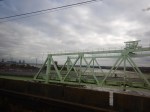
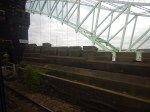
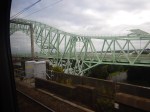


They were taken from a train on the railway bridge.
Centrica Partners With Hull-Based HiiRoc For Hydrogen Fuel Switch Trial At Humber Power Plant
The title of this post, is the same as that on this article on Business Live.
This is a paragraph.
It comes as the owner of British Gas has also increased its shareholding in the three-year-old business to five per cent. Last November it was one of several investors to pump £28 million into HiiRoc alongside Melrose Industries, HydrogenOne, Cemex, Hyundai and Kia, who joined existing strategic investors Wintershall Dea and VNG.
This could be sensational.
The reason I said that was that I used to share an office at ICI Mond Division, with Peter, who was putting instruments on a plant called the Badische. It was a new process to create acetylene. If I remember correctly, the process was as follows.
Ethylene was burned and then quenched in naptha.
The trouble was that the process produced a lot of carbon, which clogged the burners, and masses of black smoke, which upset everybody in Runcorn, especially on washing day!
Someone was worried that the plant might go into explosive limits, so Peter had devised a clever infra-red instrument to read the composition of the off-gas from the burner. It was found to be in explosive limits and ICI shut it down. BASF said ICI were wrong and there was no way to measure the composition of the off-gas anyway. A few months later BASF’s plant exploded and buried itself in a hillside in Southern Germany. Upon hearing this news, ICI shut the Badische for ever. ICI were annoyed in that they had to spend £200,000 on a flameless cutter to dismantle the plant.
I do wonder, if HiiROC have tamed BASF’s beast to do something useful, like produce hydrogen and carbon black!
 The Anonymous Widower