Is Cambridge Going To Save The World From Global Warming?
Watch this video!
And then visit Superdielectrics web site.
It does appear to be a bunch of mad scientists in Cambridge, who’ve come up with the bizarre idea of using the material in soft contact lenses as an energy storage medium.
Link Up With Rolls-Royce
And then there’s this press release on the Rolls-Royce-Royce web site, which is entitled Rolls-Royce Links Up With UK-based Superdielectrics To Explore Potential Of Very High Energy Storage Technology.
Conclusion
I have been observing technology since the 1960s.
This is either one of those scientific curiosities , like cold fusion, that appear from time-to-time and then disappear into the scientific archives or become a game-changer.
I suspect we’ll know in a couple of years.
But even if it is isn’t the solution to affordable and massive energy storage,, that will save the world, I believe that one of the teams of men and women in white coats, somewhere in the world will crack the problem.
Rugby Goal-Light Technology Trial At Principality Stadium
The title of this post is the same as that on this article on the BBC.
This is the first paragraph.
New technology to light up rugby posts in different colours to show whether a kick is successful was trialled at Cardiff’s Principality Stadium.
Although, I’m not registered blind, I do have problems with spotting movement in certain light conditions and at certain angles.
If I regularly went to rugby, these lights could improve my experience.
They are a good idea.
What puzzles me, is that the post says they could be used in American Football.
You’d have thought that the Americans would have already done it, but obviously they haven’t!
Is This Stadler’s Plan For A Multi-Mode Future?
We have not seen any of Stadler’s bi-mode Flirts in service yet although Greater Anglia’a Class 755 trains have been rumoured to be speeding between London and Norwich in ninety minutes from this May!
Today, I rode on one of Stadler’s diesel GTWs between Groningen and Eemshaven in the Netherlands, which I wrote about in The Train Station At The Northern End Of The Netherlands.
GTWs are a diesel electric train with a power-pack car in the middle of the three car train. The diesel electric Flirts are a later train with a similar layout to the GTW.
So are the diesel GTWs and Flirts just a bi-mode without a pantograph? Or more likely the bi-mode is a diesel electric train with the addition of a pantograph and extra electrical gubbins.
Looking at the visualisations on Wikipedia of the bi-mode Class 755 train and the all-electric Class 745 train, it appears that the next-to-end car has the pantograph.
Are these cars with the pantograph identical on both the bi-mode and the all-electric versions? It would certainly be sensible from a engine erring point of view.
So could it be that all that is needed to convert a diesel electric Flirt into a bi-mode Flirt is to add the pantograph car and swap the power pack car for a bi-mode one? The old power pack car could then be converted into another bi-mode power pack car to convert another train.
But the power pack cars are not as simple as they look. They have four slots for diesel engines. Three-car and four-car Class 755 trains have two and four engines respectively.
I believe that one or more of the slots can be filled with a battery to create Flirts like the tri-mode ones proposed for South Wales.
So could we see some of the Greater Anglia Flirts converted in this way? Surely, Colchester Town to Sudbury could be a service that could benefit from battery power West of Marks Tey?
Today, I had a chat with a GTW driver, who said that the train he’d been driving was diesel-electric and that he had heard that batteries or hydrogen power could be used on the eoute.
The lines around Groningen seem to employ quite a few GTWs and distances are not overly long. So could some be converted to 1500 VDC electric/diesel/battery tri-modes? There is electrification at Groningen station and some of the bay platforms used by GTWs already have wires.
If the conversion is successful, then Stadler could be on a Swiss roll, as there are a lot of GTWs and Flirts out there, many of which are diesel-electric, like the one I rode today.
Would a train operator prefer to upgrade a diesel electric train that works well or buy a new bi-mode from another train manufacturer?
Could also an electric Flirt be converted into a bi-mode, by splitting the train and sticking a power pack car in the middle. Engineering common sense says that the passenger cars must be very similar to those of diesel Flirts to simplify manufacture of the trains.
We already know, that four-car Flirts are only three-car trains with an extra passenger car. Stadler could mix-and-match passenger, pantograph and power pack cars to give operators what they need.
Intelligent computer software would choose which power option to be used and the driver would just monitor, that the train was behaving as needed.
Looking at my route yesterday between Groningen and Eemshaven, it is a route of just under forty kilometres or twenty-five miles. Adrian Shooter is talking of ranges of sixty miles with battery versions of Class 230 trains. So I don’t find it impossible to create a tri-mode GTW or Flirt for this lonely route at the very North of the Netherlands.
Conclusion
Stadler seem to have created a very imitative modular train concept.
As some Flirts can travel at 125 mph, could they be serious bidders to provide the new trains for the Midland Main Line?
Vivarail Unveils Fast Charging System For Class 230 Battery Trains
The title of this post is the same as that of this article on Railway Technology.
A few points from the article.
- Class 230 trains running on battery power have a range of sixty miles.
- Fully charging the train takes seven minutes.
- Short lengths of third and fourth-rail are used.
- Power is provided from a battery bank, which is trickle charged.
I feel this paragraph describes the key feature.
The automatic technique utilises a carbon ceramic shoe, which is capable of withstanding the significant amount of heat generated during the process.
The article finishes with a quote from Vivarail CEO Adrian Shooter.
I know how important it is to the public and the industry as a whole to phase out diesel units and our battery train is paving the way for that to take place today not tomorrow.
Consider.
- Alstom, Bombardier, Siemens and Stadler have built or are building third-rail powered trains for the UK.
- Bombardier, Porterbrook and Stadler are developing battery-powered trains for the UK.
- Trickle-charging of the secondary batteries could be performed by mains power or a local renewable source like wind or solar.
- Control electronics can make this a very safe system, with low risk of anybody being hurt from the electrical systems.
I’ve said it before, but I think that Vivarail may have some very important technology here.
If I have a worry, it is that unscrupulous companies and countries will probably find a way round any patent.
SWR And Porterbrook Trial New Emission-Slashing Rail Technology
The title of this post is the same as that as this article on Rail Technology Magazine.
This is the first three paragraphs of the article.
Groundbreaking emission-reducing technology is to be fitted to South Western Railway (SWR) train units as part of a new trial aiming to cut down harmful emissions from diesel trains by 80%.
Porterbrook is working in partnership with exhaust manufacturer Eminox to carry out the trial, with the DfT supporting the rolling stock company’s investment.
This will see South Western Railway’s Class 159 diesel units fitted with a first-of-its-kind emissions control device, with plans to roll out the technology to hundreds of diesel trains across the UK’s rail network.
I have looked up Eminox on their web site.
This is the mission statement on the front page.
Eminox designs and manufactures exhaust after-treatment systems, reducing emissions from heavy-duty vehicles and equipment.
Our products are supplied as original equipment to meet the latest emissions standards. We also produce complete emissions systems for retrofit to meet the ever-changing demands of local air quality programmes such as London’s Ultra Low Emission Zone and Clean Air Zones across the country.
Our Eminox Custom team specialises in exhaust conversions and bespoke systems.
While politicians dither and fiddle, engineers engineer, with a little bot of help from Porterbrook and the DfT.
If this technology proves to be successful, I can see its application to large numbers of diesel trains around the world.
Ovo Partners With Glen Dimplex To Deliver Smart Heating
The title of this post is the same as that of this article on Utility Week.
If you read the article, you will find out how the humble electric storage heater could be joining the smart electricity grid.
This is a paragraph.
It says the facility to store excess energy can lower the cost of electrification by reducing the need for backup generation and investment in the power grid to increase its peak capacity. Analysis by Imperial College London has indicated that deploying smart flexible heating could cut decarbonisation costs by £3.9 billion per year.
This is going to be technology to watch.
Especially, if your heating needs are best met by some form of electric storage heaters.
Grants To Support Low-Carbon Technology Demonstrators
The title of this post is the same as that of this article on Railway Gazette.
This is the two introductory paragraphs.
The Department for Transport has awarded grants of around £350 000 to each of five projects which aim to develop technology to reduce the rail network’s carbon footprint.
The projects were selected under the second round of the DfT’s First of a Kind competition, run by Innovate UK as part of the DfT’s wider Accelerating Innovation in Rail programme.
These are the winners.
Project 1 Riding Sunbeams
I wrote about this technology in Solar Power Could Make Up “Significant Share” Of Railway’s Energy Demand.
Project 2 Diesel Freight Carbon Reduction Technology
We all hate Class 66 locomotives, with their noise, vibration and pollution.
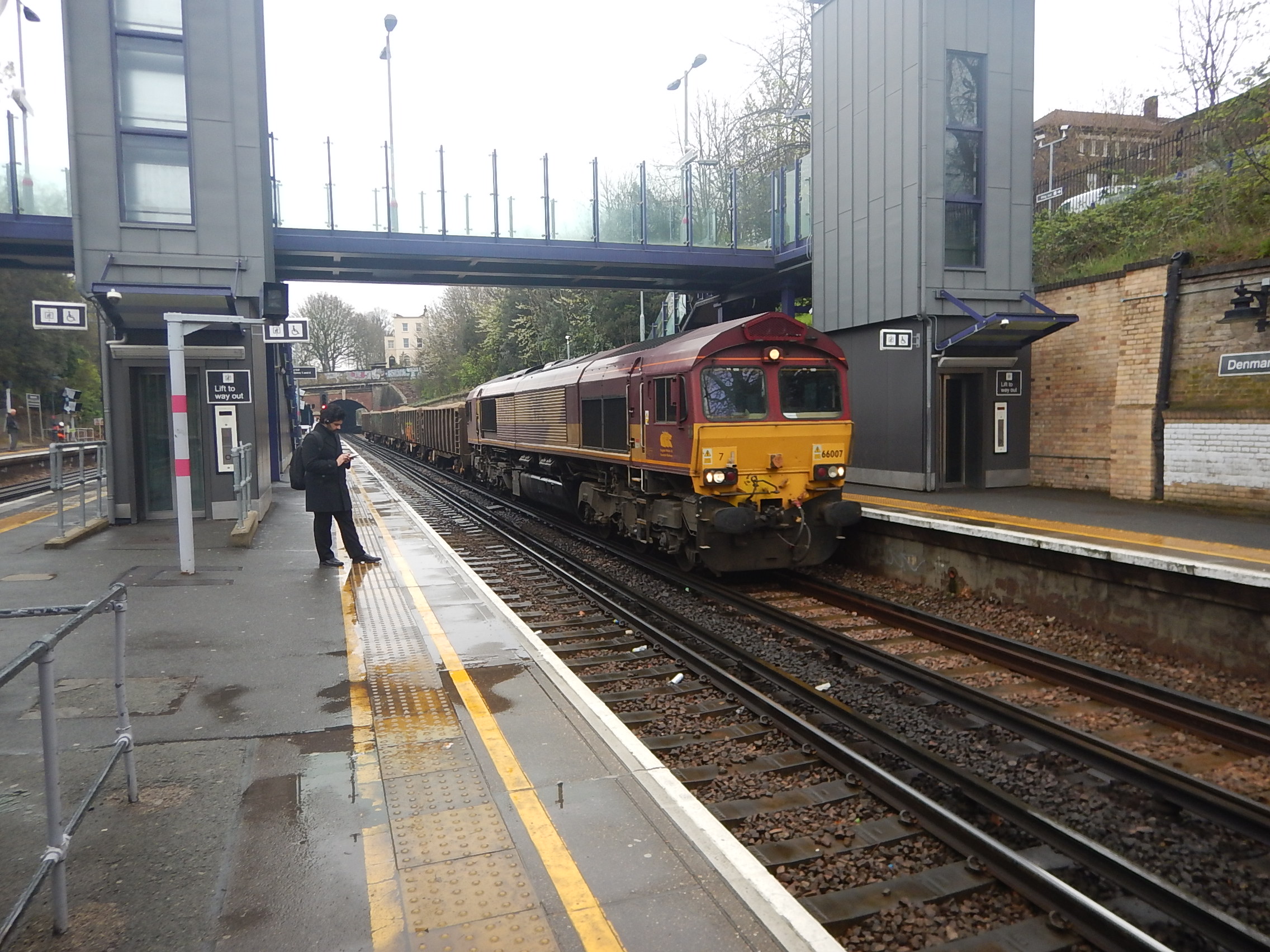
But an Essex company called Vortex Exhaust Technology has been awarded a grant to see if their free-flowing exhausts can tame, these most unfriendly of beasts.
They make this claim on their web site.
Vortex is the ONLY exhaust technology available that effectively eliminates back pressure, improving engine efficiency, boosting power and cutting emissions.
A Class 66 locomotive will be a tough challenge.
To see what the company can do for road vehicles, there is a case study at the bottom of this page.
But then they are Essex Boys! Performance is in the genes!
Project 3 CODD-P Hydraulic Pump
This is said in the Railway Gazette article.
Unipart Rail will undertake in-service testing of a commercial version of a digital displacement pump and electronic controller in place of a traditional hydraulic pump with swashplate design. This is expected to provide a significant reduction in fuel consumption.
It sounds like an idea from Artemis Intelligent Power in Edinburgh.
Project 4 Green Rail Exhaust After Treatment
This is said in the Railway Gazette article.
Leasing company Porterbrook will collaborate with Eminox to transfer an on-road exhaust after-treatment system widely fitted to heavy-duty vehicles to the railway environment, equipping a South Western Railway Class 158 DMU for in-service trials. This will enable the technical and commercial viability to be established, so it can be offered for widespread fitment.
There are currently 170 Class 158 trains and 30 of the closely-related Class 159 trains in service, so if this is successful, there won’t be a shortage of installations.
The picture shows one of East Midlands Trains, Class 158 trains.

It should also be said, that most Class 158 trains are in excellent condition, despite being nearly thirty years old.
Note that Porterbrook are involved. Train leasing companies seem to be getting increasingly involved with innovation.
Project 5 W2W Zero Emissions Power System
This is said in the Railway Gazette article.
Steamology’s Water 2 Water concept will use compressed hydrogen and oxygen gas in a ‘compact energy-dense steam generator’ to produce high pressure superheated steam to drive a turbine, which will generate electricity to charge the batteries as a ‘range extender’ for a Vivarail Class 230 multiple-unit produced from former London Underground vehicles.
It sounds to me, that the tabloids will say that this is the return of the steam train.
Conclusion
They are a broad spread of technology and I have this feeling, that the Department for Transport will get a sensible return for an outlay of around two million pounds.
But I suspect that the best and most profitable idea, will come, after a meeting between two or more of the award winners and their backers.
Storage At Scale Competition
The title of this post is the same as that of this press release from the Department of Business, Energy & Industrial Strategy.
This is the details of the competition.
Innovative large-scale energy storage will play an important role in decarbonising industry, power, heat and transport.
This competition is looking for innovative, replicable solutions which could provide a market competitive alternative to conventional commercial large scale energy storage technologies, for example pumped-hydro or batteries (such as lithium ion, lead acid or sodium-sulphur).
A range of electrical energy storage technologies are within scope, with a target minimum output power of 30 MW or minimum capacity of 50 MWh. Power-to-X technologies (e.g. power-to-gas) with a target minimum input power of 5 MW are also in scope.
Up to £20 million will be available from 2019 to 2021. The competition will support up to 3 demonstration projects with build completion by March 2021 and operational testing to be completed December 2021.
Projects should be at a technology readiness level of 6 or above, which could result in lower capital or operating costs to the traditional storage technologies, or improved capacity, sustainability and response rates at a comparable cost.
A few thoughts.
The Minimum Output Power
A minimum output of 30 MW is specified.
To put this in context, the pumped-storage Dinorwig Power Station, has a maximum power output of 1,800 MW.
The Minimum Capacity
A minimum capacity of 50 MWh is specified.
Dinorwig has a capacity of 9.1 GWh
Power-to-X Technologies
As Power-to-gas is mentioned, I would feel that this refers to a process like electrolysis, where electricity is perhaps converted into hydrogen, which can be stored and then converted back to electricity using fuel cells or combustion and a steam turbine.
Conclusion
The competition looks to me to be a good idea.
Let’s hope it produces something worthwhile.
Innovative Use Of Ground Source Heat Pumps At London Bridge Station
I like the idea of ground source heat pumps, as an efficient way of heating and cooling a building.
This article on Rail Engineer is entitled Looking Back On London Bridge.
This is an extract.
Working with GI Energy, we also drove the use of innovative technology – installing geothermal loops into 145 of the planned piles. These geothermal piles consist of pile foundations combined with two closed-loop ground source heat pump systems which span the length of the pile – they support the building while acting as a heat source in winter and a heat sink in summer. The piles alone will generate 79 tonnes per year in carbon savings.
Is that a case of having your cake and eating it?
How Do Porterbrook’s Battery/FLEX Trains Compare With Eversholt’s Hydrogen-Powered Trains?
In the two green corners of this ultra-heavyweight fight to provide electric trains for rail routes without electrification, there are two ROSCOs or rolling stock operating companies.
Eversholt Rail Group
Eversholt Rail Group‘s product is the Class 321 Hydrogen, which is an upgrade of a Class 321 train with batteries and hydrogen-power.
Porterbrook
Porterbrook‘s product is the Class 350 Battery/FLEX, which is an upgrade of a Class 350 train with batteries.
How Do The Two Trains Compare?
I will list various areas and features in alphabetical order.
Age
The Class 350 trains date from 2008-2009 and others were introduced to the UK rail network as early as 2004.
The Class 321 trains date from the 1990s, but that shouldn’t be too much of a problem as they are based on the legendary Mark 3 Coach.
Scores: Porterbrook 4 – Eversholt 3
Batteries And Supercapacitors
This is an area, where the flow of development and innovation is very much in favour of both trains.
Currently, a 1000 kWh battery would weigh about a tonne. Expect the weight and volume to decrease substantially.
Scores: Porterbrook 5 – Eversholt 5
Battery Charging – From Electrification
No problem for either train.
Scores: Porterbrook 5 – Eversholt 5
Battery Charging – From Rapid Charging System
I believe that a third-rail based rapid charging system can be developed for battery/electric trains and I wrote about this in Charging Battery/Electric Trains En-Route.
No problem for either train.
Scores: Porterbrook 5 – Eversholt 5
Development And Engineering
Fitting batteries to rolling stock has now been done successfully several times and products are now appearing with 400 kWh and more energy storage either under the floor or on the roof of three and four-car electrical multiple units.
I feel that adding batteries, supercapacitors or a mixture of both to typical UK electric multiple units is now a well-defined process of engineering design and is likely to be achieved without too much heartache.
It should be noted, that the public test of the Class 379 BEMU train, was a rare rail project, where the serious issues found wouldn’t even fill a a thimble.
So I have no doubt that both trains will get their batteries sorted without too much trouble.
I do feel though, that adding hydrogen power to an existing UK train will be more difficult. It’s probably more a matter of space in the restricted UK loading gauge.
Scores: Porterbrook 5 – Eversholt 3
Electrification
Both types of train currently work on lines equipped with 25 KVAC overhead electrification, although other closely-related trains have the ability to work on 750 VDC third-rail electrification.
Both trains could be converted to work on both systems.
Scores: Porterbrook 5 – Eversholt 5
Interiors
The interior of both trains will need updating, as the interiors reflect the period, when the trains were designed and built.
Eversholt have already shown their hand with the Class 321 Renatus.
The interiors is a design and refurbishment issue, where train operating companies will order the trains and a complimentary interior they need, for the routes, where they intend to run the trains.
Scores: Porterbrook 5 – Eversholt 5
Operating Speed
Both trains in their current forms are 100 mph trains.
However some versions of the Class 350 trains have been upgraded to 110 mph, which allows them to work faster on busy main lines and not annoy 125 mph expresses.
I am pretty sure that all Class 350 trains can be 110 mph trains.
Scores: Porterbrook 5 – Eversholt 4
Public Perception
The public judge their trains mainly on the interiors and whether they are reliable and arrive on time.
I’ve talked to various people, who’ve used the two scheduled battery/electric services, that have run in the UK.
All reports were favourable and I heard no tales of difficulties.
In my two trips to Hamburg, I didn’t get a ride on the Coradia iLint hydrogen-powered train, but I did talk to passengers who had and their reactions were similar to those who travelled to and from Harwich in the UK.
I rode on the Harwich train myself and just like Vivarail’s Class 230 train, which I rode in Scotland, it was impressive.
I think we can say, that the concept and execution of battery/electric or hydrogen-powered trains in the UK, will be given a fair hearing by the general public.
Scores: Porterbrook 5 – Eversholt 5
Range Without Electrification
Alstom talk of ranges of hundreds of miles for hydrogen trains.and there is no reason to believe that the Class 321 Hydrogen trains will not be capable of this order of distance before refuelling.
Bombardier, Vivarail and others talk of battery ranges in the tens of miles before a recharge is needed.
The game-changer could be something like the technique for charging electric trains, I outlined in Charging Battery/Electric Trains En-Route.
This method could give battery trains a way of topping up the batteries at station stops.
Scores: Porterbrook 3 – Eversholt 5
Conclusion
The total scores are level at forty-seven.
All those, who say that I fiddled it, not to annoy anybody are wrong.
The level result surprised me!
I feel that it is going to be an interesting engineering, technical and commercial battle between the two ROSCOs, where the biggest winners could be the train operating companies and the general public.
I wouldn’t be surprised to see two fleets of superb trains.
 The Anonymous Widower