Should The Great Northern And Great Eastern Joint Line Be Electrified?
The Great Northern And Great Eastern Joint Line was created in the Nineteenth Century by the Great Northern Railway and the Great Eastern Railway.
- The main purpose was to move freight like coal, agricultural products and manufactured goods between Yorkshire and Eastern England.
- It originally ran between Doncaster and Huntington via Gainsborough, Lincoln, Sleaford, Spalding and March.
- It had a full length of almost 123 miles.
- There was a large marshalling yard at Whitemoor near March.
Over the years the line has been pruned a bit and now effectively runs between Doncaster and Peterborough.
- Trains between Lincoln and March are now routed via Peterborough.
- It carries upwards of twenty freight trains per day in both directions through Lincoln Central station.
- Many of the freight trains are going to and from the East Coast ports.
- The distance between Doncaster and Peterborough is 93.7 miles, as opposed to the 79.6 miles on the East Coast Main Line.
- The line is not electrified, but it connects to the electrified East Coast Main Line at both ends.
There have been some important developments in recent years.
2015 Freight Upgrade
Wikipedia says this about the major 2015 freight upgrade.
In 2015 a £280 million upgrade of the Joint Line by Network Rail was substantially complete, enabling two freight trains per hour to be diverted from the congested East Coast Main Line; gauge enhancements to enable the passage of 9 ft 6 in (2.90 m) containers were included in the work.
The Sleaford avoiding line had been substantially downgraded since the 1980s and was reinstated to double track as part of the 2015 scheme. Resignalling and modernisation of level crossings was included.
This means that freight trains have an alternative route, that avoids the East Coast Main Line.
Doncaster iPort
Over the last few years the Doncaster iPort has been developed, which is an intermodal rail terminal.
- It has a size of around 800 acres.
- The site opened in early 2018.
- There is a daily train to the Port of Southampton and two daily trains to both Teesport and Felixstowe.
- The Felixstowe trains would appear to use the Joint Line.
I feel that as the site develops, the Doncaster iPort will generate more traffic on the Joint Line.
This Google Map shows the Doncaster iPort.

There would appear to be plenty of space for expansion.
The Werrington Dive Under
The Werrington Dive Under has been built at a cost of £ 200 million, to remove a bottleneck at the Southern end of the Joint Line, where it connects to the East Coast Main Line.
The Werrington Dive Under was built, so that it could be electrified in the future.
LNER To Lincolnshire
LNER appear to have made a success of a one train per two hours (tp2h) service between London King’s Cross and Lincoln station.
- LNER have stated, that they want to serve Grimsby and Cleethorpes in the North of the county.
- North Lincolnshire is becoming important in supporting the wind energy industry in the North Sea.
- Lincoln is becoming an important university city.
- Several towns in Lincolnshire probably need a service to Peterborough and London.
- In 2019, the Port of Grimsby & Immingham was the largest port in the United Kingdom by tonnage.
I can see an expanded Lincolnshire service from LNER.
Full Digital Signalling Of The East Coast Main Line To The South Of Doncaster
This is happening now and it will have a collateral benefits for the Joint Line.
Most passenger and freight trains will also use the East Coast Main Line, if only for a few miles, which will mean they will need to be fitted for the digital signalling.
This could mean that extending full digital signalling to Lincolnshire will not be a challenging project.
Arguments For Electrification
These are possible arguments for electrification.
Electric Freight Trains To And From The North
It would be another stretch of line, that could accommodate electric freight trains.
An Electrified Diversion Route For East Coast Main Line Expresses
Currently, when there is engineering blockades between Doncaster and Peterborough on the East Coast Main Line, the Hitachi Class 800 and Class 802 trains of Hull Trains and LNER are able to divert using their diesel power.
But the electric trains of LNER and Lumo have to be cancelled.
An electrified diversion route would be welcomed by passengers and train companies.
It would also mean that any trains running from King’s Cross to electrified destinations would not to have any diesel engines.
An Electrified Spine Through Lincolnshire
If there was an electrified spine between Doncaster and Peterborough via Gainsborough, Lincoln, Sleaford and Spalding, these stations would be these distances from the spine.
- Boston – 16.8 miles
- Cleethorpes – 47.2 miles
- Grimsby Town – 43.9 miles
- Market Rasen – 14.8 miles
- Skegness – 40.7 miles
Note.
- These distances are all possible with battery-electric trains.
- Charging would be on the electrified spine and at Skegness and Cleethorpes stations.
All of South Lincolnshire and services to Doncaster would use electric trains.
London Services
London services would be via Spalding and join the East Coast Main Line at Werrington.
- Boston and Skegness would be served from Sleaford, where the train would reverse.
- Market Rasen, Grimsby Town and Cleethorpes would be served from Lincoln, where the train would reverse.
This would enable Cleethorpes and Skegness to have at least four trains per day to and from London King’s Cross.
North Lincolnshire Services
There are two train services in North Lincolnshire.
Cleethorpes and Barton-on-Humber.
Cleethorpes and Manchester Airport via Grimsby Town, Scunthorpe, Doncaster, Sheffield and Manchester Piccadilly.
Note.
- Cleethorpes would need to have a charger or a few miles of electrification, to charge a train from London.
- Doncaster, which is fully electrified is 52.1 miles from Cleethorpes.
- Barton-on-Humber is 22.8 miles from Cleethorpes.
Battery-electric trains should be able to handle both services.
Arguments Against Electrification
The only possible arguments against electrification are the disruption that the installation might cause and the unsightly nature of overhead gantries.
Conclusion
The Great Northern and Great Eastern Joint Line should be electrified.
Talgo To Begin Fuel Cell Loco Trials
The title of this post, is the same as that of this article on Railway Gazette.
These are the first two paragraphs.
Trials are to begin shortly with the TPH2 fuel cell test locomotive developed by Talgo as part of its hydrogen traction programme. This forms part of a low-carbon research and development strategy which is being supported by a green hydrogen supply alliance and financing from the European Investment Bank.
The TPH2 loco has been produced by fitting fuel cells and traction batteries to the Travca L-9202 ‘Virgen del Buen Camino’ prototype multi-system and variable gauge locomotive which was built by Talgo in 2005.
This page on the Talgo web site describes the Travca locomotive like this.
Travca: Traction Without Borders
Travca is a locomotive that stops at nothing; not at different power supplies, track gauges nor signalling systems all of which makes Travca Talgo’s most advanced development in the field of traction.
This is the specification of the electric locomotive from the Talgo web site.
- Operating speed – Up to 250km/h (passenger version)
- Configuration – Bo-Bo
- Track gauge (mm) -1435-1668
- Length (m) – 19400
- Bodyshell width (mm) – 2950
- Unladen weight (tonnes) – 72 (passenger version)
- Number of axles – 4
- Power – 2,400 kW (25kV, 50Hz) / 2,000kW (3kV dc)
- Brakes – Regenerative, rheostatic and air brakes
Notes.
- It is a variable-gauge and variable-voltage locomotive.
- 1435 mm is standard gauge
- It is lighter and wider than a Class 90 locomotive.
It does seem to be the basis of a very useful locomotive.
This article on Railway News is entitled University Of Extremadura To Work With Talgo On Its Hydrogen Train, says this about the test train.
During the first stage of the hydrogen train project, Talgo is developing the necessary engineering for the assembly and commissioning of hydrogen traction in a test train. The train will comprise a Talgo Travca MS locomotive, which can change gauges and run under different electrification systems, and five Talgo hauled cars that will house the hydrogen fuel cell system. One of the cars will be a laboratory car.
This would appear to be an experimental train with the hydrogen power station in four of the coaches.
It also appears that Extremadura is developing a hydrogen infrastructure.
Applications In The UK
The obvious application in the UK, is as a Class 66 diesel locomotive replacement, for some of the light to medium duties.
The Class 66 locomotives have a power of 2400 kW, which could be within the range of the Talgo locomotive.
In LNER Seeks 10 More Bi-Modes, I speculated that Talgo, with all their experience of high speed trains might like to bid for the extra ten trains, that LNER requires.
They could be ideal to allow electric trains to run between London and Aberdeen and Inverness.
- The Travca locomotive running on electricity could certainly handle 140 mph between London and Edinburgh.
- The power requirements North of Edinburgh would be less, as speeds would be lower.
- Ranges on hydrogen would be under two hundred miles.
It would be a flagship service for both LNER and Talgo.
More Train Companies Are Advertising Now
At the end of October, I posted Hull Trains Are Mounting A Big Advertising Campaign.
Today LNER are also advertising in The Times and these follow other companies like Avanti West Coast, East Midlands Railway, Grand Central and Great Western Railway.
It looks like the Hull Trains campaign must have been successful.
To Middlesbrough By LNER
Today, I took the new LNER service to Middlesbrough.
It left at 15:25 and should have arrived in just under three hours. But it was eighteen minutes late.
I took these pictures of our arrival in Middlesbrough.



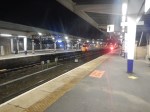
Note.
- The train wasn’t full at Middlesbrough.
- Quite a few passengers left and joined at York.
- There were also a good number of leavers at Thornaby.
- The train was five cars.
As it is only the third day of the new service, passenger numbers seem to me to be on-line with what I’ve seen for other new services.
I have a few thoughts.
Is A London and Middlesbrough Service Needed?
In the 1970s, when I worked at ICI, I would regularly travel to Middlesbrough from London for a day’s work at their Wilton site.
In those days there was no direct train and you had to change at Darlington.
Since then I’ve also travelled to Middlesbrough to see football matches and visit the local countryside.
I suspect I’ve done well over fifty trips between the town and London, but today’s trip was my first one that was direct.
Will More Services Be Added?
If you look at LNER’s service patterns to Harrogate and Lincoln, they started with a single service and have quietly grown to between five and seven trains per day (tpd) in both directions.
I suspect that an early and a late train are essential to allow a full day in London or Middlesbrough.
Could This Route Be Run By A Nine-Car Train?
I suspect normally, a five-car train would be sufficient, but suppose one of the big London football clubs was playing Middlesbrough in an FA Cup quarter final, LNER might like to add capacity for the match.
King’s Cross and York stations regularly handle nine-car Azuma trains and from my pictures, it looks like Middlesbrough can too! The only other stop is Thornaby station, which is shown in this Google Map.
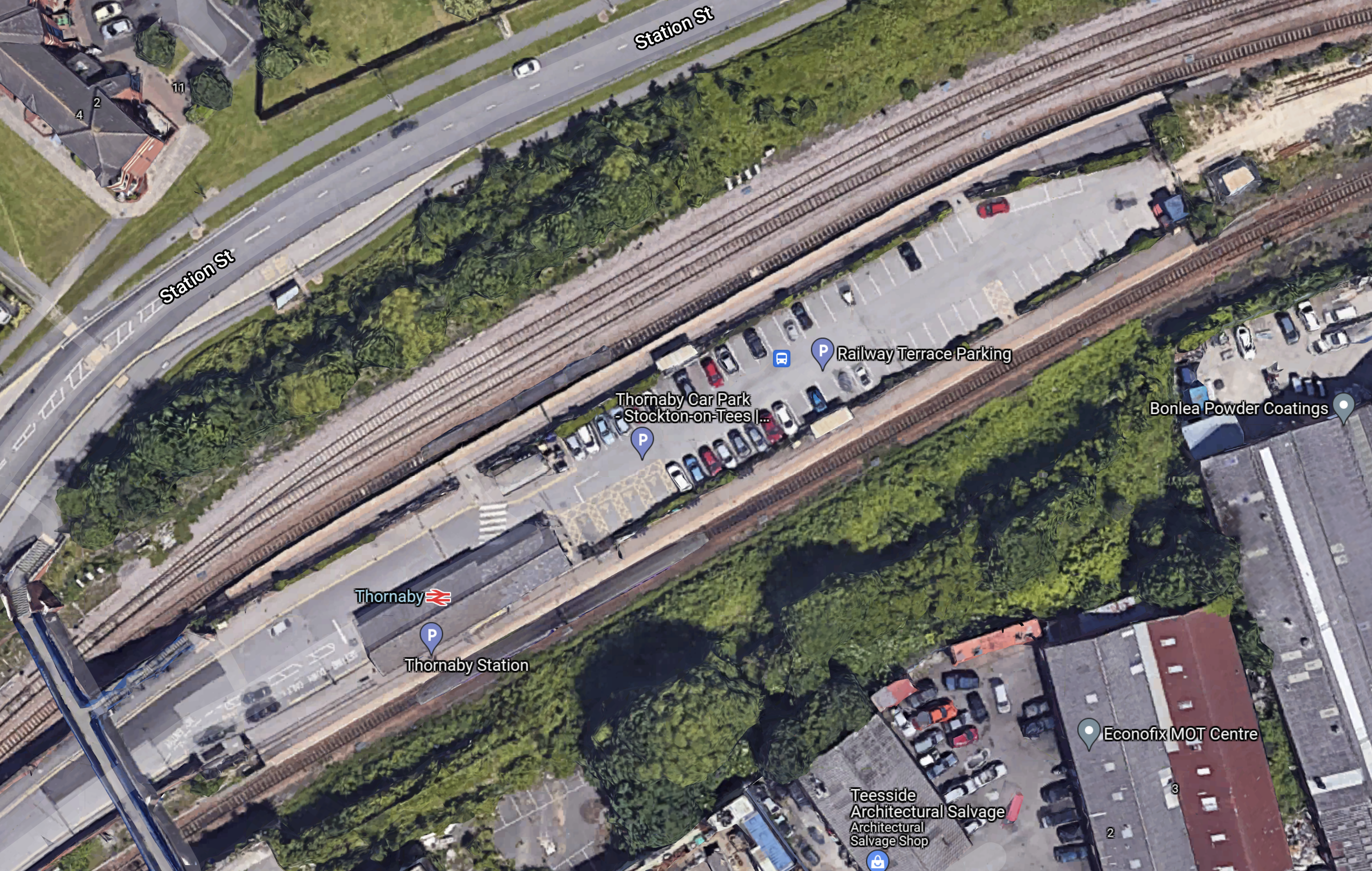
I suspect that it might just be possible, if Thornaby passengers were told to get in the first six cars.
Could This Route Be Run By A Battery-Electric Train?
Consider.
- The trains run on diesel power North of Longlands junction, where they leave and join the East Coast Main Line.
- It is a distance of only 22.2 miles.
With some form of charging at Middlesbrough, I think that within a few years, this could be an all-electric service.
It would be very handy for Hitachi, as any possible customers for battery-electric trains could be given a demo to or from London.
I Think The Stop At York Is A Good Idea
It could be argued that LNER’s King’s Cross and Middlesbrough service is two services in one.
- A direct service between London King’s Cross and Thornaby and Middlesbrough.
- A fast non-stop service between London King’s Cross and York, that takes several minutes under two hours.
Hence my view, that the York stop is a good idea.
Could The Middlesbrough Service Split And Join With Another Service At York?
The Middlesbrough service takes five minutes for the stop at York, but other services only take three minutes.
Has the longer stop been inserted into the timetable, so that the Middlesbrough timetable can be split to serve two separate destinations?
- Secondary destinations would have to be North of York or York station itself.
- These could include Bishops Auckland, Edinburgh, Newcastle, Scarborough and Sunderland.
- Given the arguments, there have been over the new timetable not calling at smaller stations, could these be served by a train to Newcastle?
There are quite a few sensible possibilities.
An alternative could be to split and join at Thornaby to serve both Middlesbrough and Sunderland.
Gift-Wrapping Service On Board LNER Trains This Christmas
The title of this post, is the same as that of this article on Rail Advent.
This article may seem a bit like an April Fool.
But the publicity might just get more people to travel by train.
Rail Minister Officially Opens Werrington Tunnel
The title of this post, is the same as that of this article on Rail Technology Magazine.
This is the first two paragraphs.
Werrington Tunnel, an underground freight tunnel running beneath the East Coast Main Line near Peterborough, has been formally opened by Rail Minister Chris Heaton-Harris.
A key step in the £1.2bn East Coast upgrade, the opening of the tunnel allows for freight services to be ran underneath the main rail artery, significantly improving passenger service reliability on the East Coast Main Line.
I also think, that the tunnel will be used creatively by passenger and freight operators.
Electrification
There is a possibility that the Great Northern and Great Eastern Joint Line (GNGE) between Werrington and Doncaster via Lincoln could be electrified.
- It would allow the many freight trains using the route to be hauled by electric locomotives.
- It would create a by-pass for the East Coast Main Line during engineering works, that could be used as a diversion route by electric trains.
- Werrington and Lincoln are just over fifty miles and might be handled by battery-electric trains, if the GNGE were to be partially electrified.
According to one report, the Werrington Tunnel has been readied for electrification, should that be decided.
An Improved Peterborough And Lincoln Service
In the past, I have travelled between London and Lincoln with a change at Peterborough. In one case, I just missed my connection, as it was a long crowded walk between the two platforms.
The Werrington Tunnel will enable trains to and from Lincoln to use platforms on the West side of Peterborough station.
Train times and platform allocations could be arranged to make connections at Peterborough easier.
A London And Lincoln Service Via Spalding And Sleaford
There are two possible routes between London King’s Cross and Lincoln
- The current LNER service leaves the East Coast Main Line at Newark.
- An alternative route would leave the East Coast Main Line at Peterborough and be routed via the Werrington Tunnel, Spalding and Sleaford.
These notes apply to the alternative route.
- The Lincoln service wouldn’t call at Grantham and Newark.
- Some services could also call at other stations.
- The current hourly Peterborough and Lincoln service via Spalding is run by a Class 153 train , which stops four times and takes fourteen minutes longer than LNER’s service via Newark.
- An easy connection to and from Skegness could be arranged at Spalding,
LNER also plans to extend some Lincoln services to Grimsby Town and Cleethorpes. Timings will dictate which will be the better route.
The Werrington Tunnel would add a large degree of flexibility in routing services between London King’s Cross and Lincoln and Lincolnshire.
Splitting And Joining At Peterborough
If the Werrington Tunnel makes Lincoln timings via Spalding and Sleaford viable, I wonder if it would be possible for trains to split and join at Peterborough.
- One train would go to Lincoln via the Werrington Tunnel, Spalding and Sleaford.
- The other might go North to Bradford, Hull, Middlesbrough, Scarborough or York.
The Werrington Tunnel again adds flexibility.
A Round-The-Wash Service Between Doncaster And Ipswich/Norwich
In Is There A Case For A Round-The-Wash Service Between Doncaster And Ipswich/Norwich?, I suggested this service, which would be an hourly Doncaster and Cambridge service via Scunthorpe, Grimsby Town Cleethorpes, Lincoln, Sleaford, Spalding, Werrington Tunnel and Peterborough that would alternatively extend to Ipswich or Norwich.
The Werrington Tunnel again opens up possibilities.
Conclusion
I’m sure that the Werrington Tunnel and the technology that built it will be imitated elsewhere.
Hitachi And Eversholt Rail To Develop GWR Intercity Battery Hybrid Train – Offering Fuel Savings Of More Than 20%
The title of this post is the same as that of this press release from Hitachi.
The press release starts with these bullet points.
- Batteries replacing an engine to cut fuel usage and reduce carbon emissions
- First time a modern UK intercity train, in passenger service, will use alternative fuel
- Tri-mode train can improve air quality and reduce noise across South West route’s non-electrified stations
They follow these with this introductory paragraph.
In a UK-first, Hitachi Rail and Eversholt Rail have signed an exclusive agreement aimed at bringing battery power – and fuel savings of more than 20% – to the modern Great Western Railway Intercity Express Trains that carry passengers between Penzance and London.
After a couple more paragraphs, the press return returns to the Penzance theme.
GWR’s Intercity Express Train fleet currently calls at 15 non-electrified stations on its journey between Penzance and London, all of which could benefit from trains running on battery-only power.
The press release then sets out their aims.
The projected improvements in battery technology – particularly in power output and charge – create opportunities to replace incrementally more diesel engines on long distance trains. With the ambition to create a fully electric-battery intercity train – that can travel the full journey between London and Penzance – by the late 2040s, in line with the UK’s 2050 net zero emissions target.
Penzance gets another mention, but the late 2040s for a fully electric-battery intercity train between Penzance and London, is not an ambitious target.
Hitachi Intercity Tri-Mode Battery Train
Hitachi have called the train the Intercity Tri-Mode Battery Train and the specification is shown in this infographic.

Note that fuel & carbon savings of at least 20 % are claimed.
Penzance To London In A Class 802 Train
It would appear that Penzance and London has been chosen as the trial route.
These figures were obtained from Real Time Trains figures for the 1015 from Penzance on the 14th December 2020.
- Penzance to St. Erth – 5.65 miles – 8 mins – 42.4 mph – 1 mins stop
- St. Erth to Camborne – 7.2 miles – 10 mins – 43.2 mph – 1 mins stop
- Camborne to Redruth – 3.65 miles – 5 mins – 43.8 mph – 2 mins stop
- Redruth to Truro – 9 miles – 10 mins – 54 mph – 2 mins stop
- Truro to St. Austell – 14.7 miles – 15 mins – 58.8 mph – 1 mins stop
- St. Austell to Par – 4.5 miles – 6 mins – 45 mph – 1 mins stop
- Par to Bodmin Parkway – 8 miles – 11 mins – 43.6 mph – 1 mins stop
- Bodmin Parkway to Liskeard – 9.2 miles – 12 mins – 46 mph – 1 mins stop
- Liskeard to Plymouth – 17.8 miles – 25 mins – 42.7 mph – 9 mins stop
- Plymouth to Totnes – 23.1 miles – 25 mins – 55.4 mph – 1 mins stop
- Totnes to Newton Abbot – 8.8 miles – 9 mins – 59.3 mph – 2 mins stop
- Newton Abbot to Exeter St. Davids – 20.2 miles – 18 mins – 71.3 mph – 2 mins stop
- Exeter St. Davids to Tiverton Parkway – 16.5 miles – 14 mins – 70.7 mph – 1 mins stop
- Tiverton Parkway to Taunton – 14.2 miles – 11 mins – 77.4 mph – 2 mins stop
- Taunton to Reading – 106.7 miles – 76 mins – 84.2 mph – 5 mins stop
- Reading to Paddington – 36 miles – 25 mins – 86.4 mph
The route can be broken neatly into four very different sections.
- Penzance and Plymouth – 79.5 miles – 112 mins – 42.5 mph – 75 mph operating speed
- Plymouth and Exeter St. Davids – 52 miles – 57 mins – 54.7 mph – 100 mph operating speed
- Exeter St. Davids and Newbury – 120.4 miles – 95 mins – 76 mph – 100 mph operating speed
- Newbury and Paddington – 53 miles – 36 mins – 88.3 mph – 100-125 mph operating speed
Note.
- The speed builds up gradually as the journey progresses.
- Only between Newbury and Paddington is electrified.
How does Penzance and Paddington stand up as a trial route?
- Penzance and Plymouth has eight intermediate stops about every nine-ten miles.
- The nine minute stop at Plymouth, is long enough to charge the batteries, should that be incorporated in the trial.
- The Cornish Main Line is generally double track, with an operating speed of 75 mph.
- Plymouth and Exeter includes the running by the sea, through Dawlish.
- Exeter could be given an extended stop to charge the batteries.
- Exeter and Newbury is a faster run and the batteries may help with performance.
- The Reading and Taunton Line has an operating speed of 110 mph.
- Remember the trains are designed for 140 mph and they achieve nothing like that on diesel.
- At each of the fifteen stops, the performance, noise and customer reaction can be evaluated. Strange, but my experience of battery trains, says that they are very much quieter than similar electric trains.
The route has a good selection of the types of routes, that Great Western Railway has in its network.
It would appear to be a good route to sort out the good and bad points of the train.
I have a few thoughts.
Possible Destinations For A Intercity Tri-Mode Battery Train
Currently, the following routes are run or are planned to be run by Hitachi’s Class 800, 802, 805 and 810 trains, where most of the route is electrified and sections do not have any electrification.
- GWR – Paddington and Bedwyn – 13.3 miles
- GWR – Paddington and Bristol Temple Meads- 24.5 miles
- GWR – Paddington and Cheltenham – 43.3 miles
- GWR – Paddington and Great Malvern – 76 miles
- GWR – Paddington and Oxford – 10.4 miles
- GWR – Paddington and Penzance – 252 miles
- GWR – Paddington and Swansea – 45.7 miles
- Hull Trains – Kings Cross and Hull – 36 miles
- LNER – Kings Cross and Harrogate – 18.5 miles
- LNER – Kings Cross and Huddersfield – 17 miles
- LNER – Kings Cross and Hull – 36 miles
- LNER – Kings Cross and Lincoln – 16.5 miles
- LNER – Kings Cross and Middlesbrough – 21 miles
Note.
- The distance is the length of line on the route without electrification.
- Five of these routes are under twenty miles
- Many of these routes have very few stops on the section without electrification.
I suspect that GWR and LNER have plans for other destinations.
What Is The Kinetic Energy Of A Five-Car Class 802 Train At Various Speeds?
I will do my standard calculation.
- Empty train weight – 243 tonnes (Wikipedia for Class 800 train!)
- Passenger weight – 302 x 90 Kg (Includes baggage, bikes and buggies!)
- Train weight – 270.18 tonnes
Using Omni’s Kinetic Energy Calculator, the kinetic energy at various speeds are.
- 60 mph – 27 kWh
- 75 mph – 42 kWh
- 80 mph – 48 kWh
- 90 mph – 61 kWh
- 100 mph – 75 kWh
- 110 mph – 91 kWh
- 125 mph – 117 kWh – Normal cruise on electrified lines.
- 140 mph – 147 kWh – Maximum cruise on electrified lines.
A battery must be large enough to capture this kinetic energy, which will be generated, when the train stops.
Acceleration And Deceleration Of A Five-Car Class 802 Train
The first Intercity Tri-Mode Battery Trains will be conversions of Class 802 trains.
This page on the Eversholt Rail web site, has a data sheet for a Class 802 train.
The data sheet shows the following for a five-car Class 802 train.
- It can accelerate to 120 kph/75 mph in 100 seconds in electric mode.
- It can accelerate to 160 kph/100 mph in 160 seconds in electric mode.
- It can accelerate to 120 kph/75 mph in 140 seconds in diesel mode.
- It can decelerate from 120 kph/75 mph in 50 seconds in electric mode.
- It can decelerate from 160 kph/100 mph in 90 seconds in electric mode.
Note.
- 75 mph is the operating speed of the Cornish Main Line and possibly the Highland Main Line.
- 100 mph is the operating speed for a lot of routes in the UK.
- It would appear that trains accelerate to 75 mph forty second faster in electric mode, compared to diesel mode.
- In diesel mode acceleration slows markedly once 100 kph is attained.
Can we assume that performance in battery mode, will be the same as in electric mode? I will assume that this is valid.
Battery Use In A Station Stop
Suppose the train is travelling at 75 mph with a full load of passengers and makes a station stop, without the use of the diesel engines.
- If the train is decelerating from 75 mph, there must be space for 42 kWh in the battery.
- Because regenerative braking is not 100 % efficient, only perhaps 80 % would be stored in the battery. This is 33.6 kWh.
- To accelerate the train to 75 mph, the battery must supply 42 kWh, as diesel power will not be used for this purpose.
- The train will take 50 seconds to decelerate, 100 seconds to accelerate and perhaps 60 seconds in the station or 210 seconds in total.
- Let’s say the battery will need to supply 2 kWh per minute per car for hotel power, that will be 35 kWh for the 210 seconds.
Adding and subtracting inputs and outputs to the battery gives this equation 33.6 – 35 – 42 = -43.4 kWh
The energy in the battery has been reduced by 43.4 kWh, at each 75 mph stop.
Repeating the calculation for a 100 mph stop, which takes 310 seconds, gives an equation of 60 -51.7 – 75 = -66.7 kWh.
Note that in this calculation, I have assumed that the efficiency of regenerative braking is 80 %. These are a selection of figures.
- For 60 % efficiency, the stops would cost 51.8 kWh from 75 mph and 81.7 kWh from 100 mph.
- For 80 % efficiency, the stops would cost 43.4 kWh from 75 mph and 66.7 kWh from 100 mph.
- For 90 % efficiency, the stops would cost 39.2 kWh from 75 mph and 59.2 kWh from 100 mph.
So it is important to raise the efficiency of regenerative braking to as near to 100 % as possible.
It should also be noted that with an 80 % efficiency of regenerative braking, hotel power has an effect.
- With 1 kWh per minute per car, the stops would cost 25.9 kWh from 75 mph and 40.8 kWh from 100 mph.
- With 2 kWh per minute per car, the stops would cost 43.4 kWh from 75 mph and 66.7 kWh from 100 mph.
- With 3 kWh per minute per car, the stops would cost 60.9 kWh from 75 mph and 92.6 kWh from 100 mph.
It is important to reduce the hotel power of the train, as low as possible.
With a 90 % regeneration efficiency and hotel power of 1 kWh per car per minute, the figures are 21.7 kWh from 75 mph and 33.3 kWh from 100 mph.
London Paddington And Penzance By Intercity Tri-Mode Battery Train
Listing the stops between London Paddington and Penzance and their speeds gives the following.
- St. Erth – 75 mph
- Camborne – 75 mph
- Redruth – 75 mph
- Truro – 75 mph
- St. Austell – 75 mph
- Par – 75 mph
- Bodmin Parkway – 75 mph
- Liskeard – 75 mph
- Plymouth – 75 mph
- Totnes – 100 mph
- Newton Abbot – 100 mph
- Exeter St. Davids – 100 mph
- Tiverton Parkway – 100 mph
- Taunton – 100 mph
- Reading – Electrified
This is nine stops from 75 mph, five from 100 mph and one where the electrification is used.
- Each 75 mph stop needs 43.4 kWh from the battery.
- Each 100 mph stop needs 66.7 kWh from the battery.
To achieve Hitachi’s aim of low noise and pollution-free station stops between London Paddington and Penzance will need 724.1 kWh of power from the battery.
With 80 % regeneration efficiency and hotel power of 2 kWh per minute per car gives a figure of 724.1 kWh.
With 90 % regeneration efficiency and hotel power of 1 kWh per minute per car gives a figure of 361.8 kWh.
The battery must also have sufficient capacity to handle the regenerative braking. I would suspect that provision will be made for a stop from 125 mph, which is 117 kWh.
So will the battery for the route be somewhere between 500 and 1000 kWh?
Note that each of the three MTU 12V 1600 diesel engines, fitted to a Class 800 train, weigh around two tonnes and Tesla claim an energy density of 250 Wh/Kg for their batteries.
This would mean a battery the weight of one of the diesel engines would have a capacity of 500 kWh.
A train with a full 500 kWh battery at Newbury could arrive in Penzance with some juice in the battery, if regenerative braking could be efficient and the demands of the train to run internal systems were at a low level.
Hitachi’s Increasing Efficiency Of Class 80x Trains
The next variant of the Class 80x trains to come into service, should be the Class 803 trains for East Coast Trains.
- These trains will be all-electric like LNER’s Class 801 trains.
- They are designed for a four-hour limited-stop service between London Kings Cross and Edinburgh.
- They will be one-class and average single fares will be £25,
This sentence from Wikipedia, describes a big difference between Class 803 and Class 801 trains.
Unlike the Class 801, another non-bi-mode AT300 variant which despite being designed only for electrified routes carries a diesel engine per unit for emergency use, the new units will not be fitted with any, and so would not be able to propel themselves in the event of a power failure. They will however be fitted with batteries to enable the train’s on-board services to be maintained, in case the primary electrical supplies would face a failure.
I wouldn’t be surprised to find out that the Class 803 trains have been put on a diet to increase their acceleration to meet the demanding schedule, which has been promised by East Coast Trains.
Hitachi has also given out clues to other efficiency improvements.
- Class 807 trains for Avanti West Coast, will have no diesel engines or batteries.
- Class 810 trains for East Midlands Railway will have a revised nose and different headlights. Is this for better aerodynamics?
- Class 810 trains, also have slots for four diesel engines. I can’t see why they would need all this power on the relatively-flat Midland Main Line. Will two of the slots be used by batteries to reduce fuel consumption and/or increase efficiency?
Hitachi are only doing, what all good engineers would do.
Low-Carbon Between Plymouth and Penzance
In How Much Power Is Needed To Run A Train At 125 mph?, I estimated that an all-electric Class 801 train needs around 3.42 kWh per vehicle mile to maintain 125 mph.
It will need less power to maintain the 75 mph of the Cornish Main Line. I would suspect that as air resistance is based on the square of the speed, that the energy consumption of the Class 802 train could be something under 2 kWh per vehicle. Or even less!
The Cornish Main Line is 79.5 miles between Plymouth and Penzance, but the Intercity Tri-Mode Battery Train, will not be on diesel all the way.
- At each station stop deceleration and acceleration, the train will not be using diesel. This could take a mile away for each station.
- All braking will be regenerative to the battery.
I suspect that by using the gradients on the route to advantage and by using diesel in selected areas, that a good driver or a well-written driver assistance system giving advice could safely navigate an Intercity Tri-Mode Battery Train all the way to Penzance on a minimum amount of diesel.
It’s not as if the train will be stranded, as they would have two onboard diesel engines.
I have a suspicion, that with a top-up at Plymouth, if Hitachi can raise efficiencies to a maximum and power consumption to a minimum, that on one battery, the train might be able to run between Plymouth and Penzance for much of the way, without using diesel.
The question also has to be asked, as to what would be the performance of the train with two diesel engines replaced by batteries?
I suspect this is something else to be determined in the trial.
Will Hitachi’s Intercity Tri-Mode Battery Train And Regional Battery Train Have The Same Battery Packs?
The specification of Hitachi’s closely-related Regional Battery Train is described in this Hitachi infographic.

The Regional Battery Train is stated to have a battery range of 90 km/56 miles at 162 kph/100 mph.
Operating speed and battery range have not been disclosed yet for the Intercity Tri-Mode Battery Train. I await them with great interest.
I would expect that it is likely, that Hitachi’s two battery trains and others that follow, will use identical battery packs for ease of manufacture, services and operation.
In their press release, which announced the Battery Regional Train, Hitachi said this.
Hitachi has identified its fleets of 275 trains as potential early recipients of the batteries for use in the UK, as well as installing them on new metro and intercity trains that will be needed in the coming years to replace ageing diesel fleets.
Battery trains produce no greenhouse gases, air pollution and are a far quieter, offering passengers cleaner air in stations, less noise disruption and a carbon-free way to travel. Installing batteries on to existing fleets can also extend their range and allow passengers to reach stations on non-electrified branch lines without having to change train.
They didn’t exactly say all battery packs will be the same, but they were close to it, by saying that they can already be fitted to 275 trains. I would read those paragraphs to say, that a series of trains would use the same technology for different purposes.
What Will Be The Battery Range Of A Hitachi Intercity Tri-Mode Battery Train?
This page on the Eversholt Rail web site, has a data sheet for a Class 802 train, which says that a five-car Class 802 train has an operating speed of 110 mph on diesel power.
According to Wikipedia and other sources, a Class 802 train has three diesel engines.
If the Regional Battery Train has replaced three diesel engines with battery packs in a five-car train like a Class 802 train to get the 90 km/56 mile range, would this mean?
- Replacing one diesel engine with a battery pack, give a range of thirty kilometres or about nineteen miles.
- Replacing two diesel engines with battery packs double the range to sixty kilometres or thirty-eight miles.
It looks like a Hitachi Intercity Tri-Mode Battery Train with one of the same battery-packs should easily reach several of the destinations in my list.
But they would need charging before return or some assistance from the two remaining diesel engines.
I talk about charging the Intercity Tri-Mode Battery Train in Charging The Batteries On An Intercity Tri-Mode Battery Train.
Conclusion
It sounds like a worthwhile train to me and I await the results of the trial with interest.
Would A Lumo-Style Service Work Between King’s Cross And Norfolk?
This is a bit of a fantasy and you’ll never know the real reason why I have written it!
With the upgrade of the East Coast Main Line to full digital signalling, there will be a problem South of Hitchin with 140 mph Azumas and Hitachi Class 802 trains and similar from Grand Central , Hull Trains and Lumo hogging the fast lines to and from King’s Cross. I first wrote about it in Call For ETCS On King’s Lynn Route.
One solution would be to replace the current Class 387 trains with a 140 mph train , such as a Hitachi Class 802 variant. This would enable these fast King’s Lynn and Cambridge trains to join the 140 mph trains on a fast run to and from King’s Cross.
The Future Of Cambridge
Cambridge is one of the UK’s four world cities, with its heritage and lately its high position in any technology league table.
The Current Rail Service Between London And Cambridge
Currently, it has a good service into King’s Cross, Liverpool Street and St. Pancras.
- Great Northern – two tph to King’s Cross – A stopping train using Class 700 or Class 387 trains.
- Great Northern – one tph between Ely and King’s Cross – A fast train using Class 387 trains.
- Great Northern – one tph between King’s Lynn and King’s Cross – A fast train using Class 387 trains.
- Thameslink – two tph to Brighton – A semi-fast train using Class 700 trains.
- Greater Anglia – two tph to Liverpool Street – A semi-fast train using Class 720 or Class 379 trains.
Note.
- tph means trains per hour.
- The similar Class 387 and Class 379 trains are both late-model Bombardier Electrostars with sensible seats and a large number of tables. Both train types can or could be modified to run at 110 mph.
- The Class 700 trains are unsuitable for the route, as they have ironing-board seats and no tables. These are only 100 mph trains.
- The Queen’s bottom doesn’t like the Class 700 trains.
A large proportion of the passengers and commuters between to and from Cambridge work in high-tech or information-rich businesses and I believe if the trains were more geared to this market they would attract passengers away from the roads.
The Cambridge Employment Problem
Fast-growing Cambridge is taking over the region and it is always looking for towns and villages to develop as places for dormitories and to build premises for the hundreds of high-tech businesses.
This is one of the reasons why Greater Anglia acquired new Stadler Class 755 trains to run services from Cambridge to Bury St. Edmunds, Ipswich, Norwich, Peterborough and Stansted Airport.
If you’re going to lure Cambridge’s well-paid high-tech commuters out of their cars, you must give them an equivalent seat to their car. The Class 379, 387 and 755 trains do this.
Living In Norfolk And Suffolk And Working In Cambridge
This has always been the choice of many who work in Cambridge, but using rail into Cambridge didn’t really take-off seriously until modern three-car Class 170 trains replaced the single-car Class 153 trains.
Greater Anglia have followed the upward trend in passenger numbers, by running hourly four-car Class 755 trains from Cambridge to both Ipswich and Norwich.
Before the pandemic, it was starting to look like Norwich and Cambridge would soon need a second service, especially with the planned opening of the new Cambridge South station in 2025.
Addenbrooke’s Hospital And The Cambridge Biomedical Campus
Cambridge South station is being built to serve Addenbrooke’s Hospital and Cambridge Biomedical Campus, which intend to be create the foremost medical research cluster in the world.
Staycations And Holiday Homes In East Anglia
Life is changing because of the covids and more people are taking staycations or buying holiday homes.
And many are following the example of the Queen and going to Norfolk for their relaxation.
The Undoubted Need To Improve Rail Services Between London King’s Cross And Norfolk Via Cambridge
These factors convince me that there is a need for a new or repurposed rail service between London King’s Cross and Norfolk via Cambridge.
- The need to provide a high-class commuter service between London and Cambridge.
- The need to bring workers into Cambridge from Norfolk.
- The need to provide a fast high-class rail link to Cambridge South station with all its medical research.
- The need to provide a comprehensive working environment on the trains.
- The need to cater for all those people relaxing in Norfolk after a hard week in London.
It is my view, that a radical design of train is needed for this route.
- It would need to have a high-class interior.
- It would need at least a 125 mph capability, so that it can use the fast lines between Hitchin and King’s Cross.
- The train may need the ability to split and join.
- It would need an independent power capability for running on the Breckland Line between Ely and Norwich.
- Because of Cambridge and because East Anglia is easy country for cycling, it would need a sensible capacity for cycles.
I also believe that because of the need to decarbonise, the train should be zero-carbon.
These are my thoughts.
Operating Speed
Because of running on the fast lines between Hitchin and King’s Cross with the 140 mph trains from the North, I suspect that an operating speed of at least 125 mph is needed. But if the Hitachi trains of LNER, Hull Trains, Lumo and in the future possibly other operators like Grand Central, will be capable of 140 mph, this speed could be desirable.
Speed limits once the trains have left the East Coast Main Line at Hitchin North junction are as follows.
- Hitchin and Cambridge – 90 mph
- Cambridge and King’s Lynn – 90 mph
- Ely and Norwich – 75-90 mph
I can see Network Rail using their expertise to raise the speed limit on sections of these lines.
Flighting Of Trains On The East Coast Main Line
To increase capacity on the East Coast Main Line, I believe that at some point in the not too distant future that trains will be flighted. This will involve two or more trains leaving King’s Cross in a sequence and proceeding with all trains at a safe distance from each other.
I can envisage a flight like this from King’s Cross.
- An Edinburgh train with York as the first stop – Leaves at XX.00
- A Leeds train with Doncaster as the first stop – Leaves at XX.03
- A Lincoln train with Peterborough as the first stop – Leaves at XX.06
- A Cambridge train with Stevenage as the first stop – Leaves at XX.09
Note.
- The Edinburgh train would set the speed.
- Trains would maintain their time behind the lead train.
- Everything could be controlled by the digital signalling.
- Gaps between the trains would be sufficient for a safe stop.
- No train in the flight would make a station stop unless it was the last train in the flight.
- The last train in the flight would drop off and go to their destination.
As there are at least two tph to Edinburgh, Leeds and Cambridge, there would be two main flights per hour leaving King’s Cross, with the second flight perhaps incorporating a service to Hull.
Digital signalling and precise driving would enable the flights to be built in the opposite direction into King’s Cross.
The big advantage would be that instead of needing eight paths per hour on the East Coast Main Line, only two would be needed.
All trains would need to have similar performance, so this is another reason why the Cambridge trains need to be at least 125 mph trains.
Train Interiors
Lumo has broken new ground in train interiors.
- It is one class.
- Everybody gets a decent seat.
- Everybody gets good legroom.
- Everybody gets some form of table.
- There are decent-sized overhead racks for hand-baggage and coats.
- There is space for bicycles and heavy luggage appropriate to the route.
This can be built on to provide a good working and playing environment suited to the passengers who would use a fast King’s Cross and Norfolk service via Cambridge.
- Lots of tables for four, as in the high-class Electrostars.
- Better bicycle storage.
- Better alignment of seats with windows.
Hitachi could obviously produce a train to this specification.
But what about other manufacturers.
Stadler’s Class 755 trains are surely a possibility.
- A senior driver from Greater Anglia told me that the design speed for a Class 755 train is 200 kph or 125 mph.
- They have good seats.
- They have flat floors.
- They have large windows.
- They have step-free access between train and platform.
- Like the Hitachi trains, they are in service.
I believe the closely-related Class 745 trains are probably the best commuter trains in the UK and are the only alternative to the Hitachi trains on a125 mph fully-electrified route.
Bridging The Electrification Gap Between Ely And Norwich
Between Norwich and Ely stations is 53.8 miles and this section is not electrified, although both stations have full electrification.
The line is not heavily used with typically only two passenger trains and the occasional freight trains in each direction in an hour.
This Hitachi infographic describes the Hitachi Regional Battery Train.
A 90 km. range could be sufficient to cover the gap between Norwich and Ely.
Could Hitachi build a Class 802 train or similar with a battery range of 90 km or 56 miles?
Certainly, a speed of 100 mph would probably be sufficient to bridge the gap in a decent time.
Improving The Breckland Line
The Breckland Line is the route between Cambridge and Norwich.
- Cambridge and Norwich is 68.5 miles
- Only the sixteen miles between Cambridge and Ely North junction is electrified.
- There are thirteen stops between the two cities.
- A typical time is 79 minutes
- This is an average speed of just 52 mph.
- The operating speed is 75-90 mph.
I am sure that Network Rail can squeeze a few minutes here and there to get the operating speed up to the 100 mph of the Great Eastern Main Line.
But the big problem at Norwich is the Trowse swing bridge.
It is only single track and it is likely that this bridge will be replaced soon.
This Google Map shows Trowse junction, a short distance South of the swing bridge.
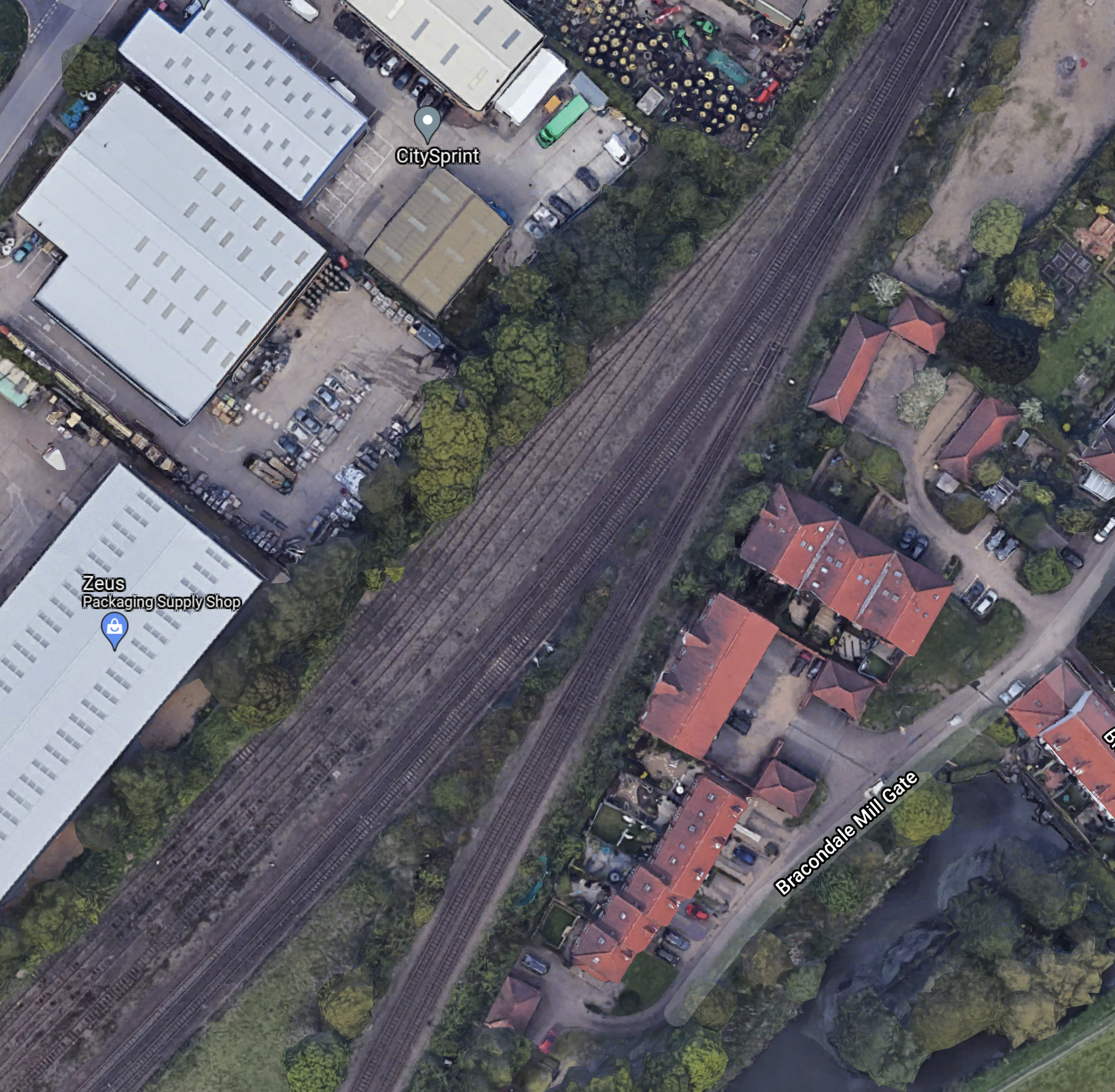
Note.
- The electrified double-track of the Great Eastern Main Line goes across the map from North East to South West.
- The double-track railway to the East of the main line is the unelectrified Breckland Line to Cambridge, which turns West and goes under the main line.
- On the West of the main lines are the Victoria sidings that I wrote about in Greater Anglia Completes Directly-Managed Norwich Victoria Sidings Project.
As the replacement of the swing bridge will require some work to be done to the electrification, I wonder if at the same time Network Rail would electrify the Norwich end of the Breckland Line.
There must be a balance point adding electrification or batteries to the trains.
As the Breckland Line has few freight trains, electrification is not needed for freight.
Ticketing
A high-speed high-capacity service as I’m proposing must be easy to use.
It is a classic route, where nothing short of London-style contactless ticketing will do, as I’m certain this encourages people to use the trains.
As East Anglia is self-contained and has few services that don’t terminate in the area or in London, I am certain that this could be achieved.
If you remove First Class as Greater Anglia has done on many services, you actually simplify the ticketing, so a Lumo-style mid-class is ideal.
High Speed Train Services
Currently Great Northern run two tph from King’s Cross to Ely via Cambridge.
- One service is extended to King’s Lynn.
- I could see the second service extended to Norwich.
Both services would need to be run by 125 mph trains because of the speed of other trains on the East Coast Main Line.
Conclusion
I think duch a system would be possible.
A Special Weekend Timetable Has Been Put In Place For Lincoln Christmas Market
The title of this post, is the same as that of this article on Rail Advent.
This is the first paragraph.
The timetable has been put in place for Lincoln Christmas Market with direct services from Leeds, Newcastle, Edinburgh, Aberdeen and Inverness.
It looks to be a clever piece of planning, whilst work is carried out on the East Coast Main Line between Doncaster and Peterborough.
- Services will be diverted onto the Great Northern and Great Eastern Joint Line though Spalding, Sleaford and Lincoln.
- Will the trains be using the new tracks at the Werrington dive-under.
- Nine-car Class 800 bi-mode trains will be used.
- On the Saturday, there will be two trains per hour (tph) in both directions.
- Of these trains, five trains per day (tpd) in both directions will stop at Lincoln Central station.
It does appear that LNER are making the best of a difficult situation.
Passengers going to Lincoln for the Christmas Market will not be disappointed.
Grand Central Trains
Grand Central Trains are also using the diversion route.
Hull Trains
Hull Trains are also using the diversion route.
On the Saturday, there will be five tpd in both directions.
These can be doubled up to ten-car trains if the demand is there.
Lumo Trains
Lumo trains don’t appear to be running.
Conclusion
Network Rail seem to have done a cunning piece of timetabling.
There’ll be trainspotters galore in the centre of Lincoln.
London To Edinburgh On Lumo
Yesterday, I took the 10:45 Lumo service from King’s Cross to Edinburgh.
I took some pictures on the way.
I have split them into sepate topics.
Lumo’s Class 803 Train Arrives
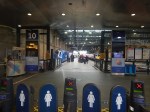

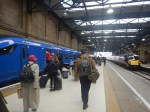
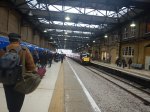
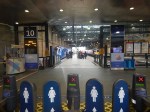
Note.
- The train is in Platform 10 in the old suburban station.
- This has now been reduced to just two platforms.
- In the other platform is a Grand Central service to Bradford Interchange station.
At least it appears, that there could be space to reinstate a third platform, if it should prove necessary.
Seating On Lumo
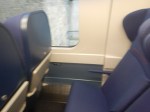

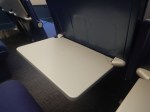


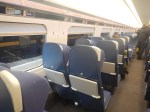

Note.
- I didn’t get a seat with a proper window.
- The seat-back table is generously-sized.
- There is a light over the table.
- The luggage racks were well used.
- There is more than normal leg-room. My neighbour, who was taller than my 1.70 metres, also liked the leg-room.
Both of us, thought the seats were more comfortable than LNER.
I have a spine that curves outwards at the bottom and it often objects to train and car seats. But after four-and-a-half hours on Lumo, it wasn’t protesting.
York to Church Fenton Improvement Scheme
When the York To Church Fenton Improvement Scheme and the closely related Huddersfield To Westtown (Dewsbury) Upgrade are completed, the TransPennine route between Huddersfield and York will be fully-electrified.
These pictures show the electrification is underway.
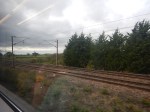
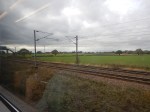






York to Huddersfield will be over forty miles of electrified line, with a remaining gap of just eighteen miles to the electrification being installed between Stalybridge and Manchester Victoria.
Work At Reston Station
Reston station is being built North of Berwick-on-Tweed. I took these pictures as we passed through.




I describe the station in a post called A New Reston Station.
Arrival In Edinburgh
I took these pictures when we arrived in Edinburgh.
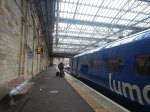

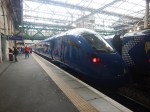
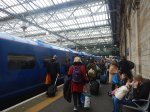
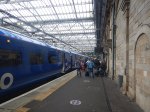

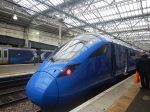
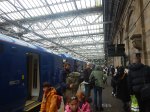
Note Edinburgh is not short of platforms that can take five- and ten-car trains.
These are a few other thoughts about the journey.
Non-Stop Between King’s Cross And Newcastle
It seemed to me, that a lot of passengers left the train at Newcastle.
- Times between King’s Cross And Newcastle are comparable betyween LNER and Lumo.
- Lumo is non-stop until Newcastle.
- Lumo is probably more affordable.
I can see Lumo picking up a lot of business on this leg.
Football At Newcastle
I have come across several Newcastle United season ticket holders in London.
Looking at Lumo’s full timetable, there are these two trains on a Saturday.
- A train leaves King’s Cross at 10:25 and arrives in Newcastle at 13:25.
- A train leaves Newcastle at 19:35 and arrives in King’s Cross at 22:29.
These could be ideal to see the match and get back to London.
Food
The full food service isn’t in operation yet, but we the trolley did come through twice.
Passenger Loading
Most seats were taken, as we left King’s Cross, but due to high number, who left at Newcastle, there were a few gaps as we ran between Newcastle and Edinburgh.
But then this is a shorter leg and perhaps travellers are more likely to drive.
I suspect that Lumo can’t wait to build up their service to the full five trains per day, as it does look like the demand is there.
Morpeth Station
There wasn’t many boarders and leavers at Morpeth station, but as services build up and travellers realise the system is there, will business increase?
Conclusion
I shall take another trip in the New Year, when the full service is implemented.
 The Anonymous Widower