‘UK-First’ Intercity Battery Trial Exceeds Expectations
The title of this post, is the same as that of this press release from Hitachi.
These three bullet points, act as sub-headings.
- Intercity battery train completes testing in the north of England, demonstrating superior performance and cost-effectiveness compared to diesel engines.
- Trial confirms single battery technology can reduce fuels costs between 35%-50% and enter and leave stations in zero-emission mode.
- Ahead of Railway 200 celebration, this new UK rail innovation is ready to reduce cost and emissions on the railways.
These are the first two paragraphs.
Today, Angel Trains, Hitachi Rail and TransPennine Express are celebrating the successful completion of the UK’s first intercity battery trial in the North of England.
The powerful 700kw battery technology met, and in some cases even surpassed, the key objectives of the trial, including:
- Fuel costs savings between 35%-50%, surpassing previous predictions of up to 30%.
- Just one battery has managed to power the train to speeds greater than 75mph, clearly demonstrating this technology can enter, alight and exit stations solely in zero-emission battery-mode to improve air quality and reduce noise pollution.
- Able to achieve all journey times and performance requirements so can meet operators timetable requirements.
- The battery matches the weight of a diesel engine and is installed in the same undercarriage space, ensuring no risk of track degradation and no impact on the passenger environment.
Note.
- I would expect, that most of the fuel cost savings are due to the use of regenerative braking to the battery.
- 75 mph might seem slow, but Hull Trains average slower speeds than this on their diesel sections.
- Running in a non-polluting mode in stations and sensitive areas, is not going to be disliked by anyone.
- The most powerful diesel engines in Class 800 and Class 802 trains are rated at 700 kW. So with the same weight and power, it is not surprising that the performance is the same.
It looks to me, that Hitachi have designed an efficient battery-electric electric train, that can extend services from electrified main lines onto branch lines without electrification.
The One Battery Test Train And Hull Trains
Hull Trains currently run one service to Hull and Beverley and have applied for another service to serve Worksop, Woodhouse and Sheffield, where the trains would leave the East Coast Main Line at Retford.
Hitachi’s current test train has two diesel engines and one battery pack.
An Electric Service Between London and Hull/Beverley
Distances for the Hull and Beverley service are.
- ECML and Hull – 58.1 km. – 3 stops
- Hull and Beverley – 13.2 km or 26.4 km both ways. – 1 stop
Note.
- Trains will be fully-charged, when they leave the ECML.
- Trains could be fully-charged, when they leave Hull station, if the platform they use has a charging system.
- All Hull Trains call in Platform 7 at Hull station.
- The Hitachi press release said “During a trial run, the battery’s impressive power enabled the train to operate solely in battery mode for 70km.” A speed of 75 mph is indicated.
- I would assume the Hitachi train used regenerative braking to help recharge the batteries, at the intermediate stops.
- Trains average around 57 mph between the ECML and Hull and 38 mph between Hull and Beverley.
- Much of the track between the ECML and Hull has a speed limit of 75 mph.
- Much of the track between Beverley and Hull has a speed limit of 70 mph or less.
Because of these figures and what Hitachi have said of the train’s performance on batteries, I am convinced that Hull Trains will use an electrified Platform 7 at Hull station to charge the trains.
These pictures show a Hull Trains’s Class 802 train in Platform 7 at Hull station.

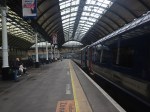
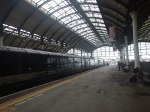
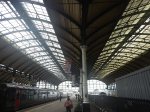


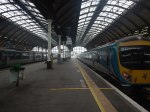
Note.
- The blue Hull Train is in Platform 7 in the pictures.
- Hull station has a classic Victorian cast-iron roof.
- Many other similar platforms have been electrified in the UK.
I believe that this platform can be electrified relatively easily with 25 KVAC overhead wires.
An Electric Service Between London and Worksop/Sheffield
Distances for the Worksop and Sheffield service are.
- ECML and Worksop – 12.2 km. – 1 stop
- Worksop and Sheffield- 25.3 km or 50.6 km both ways. – 1 stop
Note.
1. A train from London will leave Retford with a full battery.
2. Retford and Sheffield is only 37.5 km. So the round trip is only 75 km.
3. A full battery will power the train at 75 mph for 70 km – According to Hitachi.
4. Much of the track between Retford and Sheffield is only 60 mph. So going slower will give an energy saving.
5. Slowing at Worksop, Woodhouse and Sheffield will give the batteries a small charge.
6. There are no bridges in the Workshop station area, so a mile or so of electrification could be easy.
7. It’s an easy level route.
8. I’ve read somewhere that Hitachi have a full route simulator.
I calculate, that a two minute charge at Worksop would probably be all the train would need to travel the 75 km. on batteries.
We don’t know if Hitachi have licenced some of Vivarail’s FastCharge technology from FirstGroup. This could enable them to extract the maximum value from each stop at Worksop.
The One Battery Test Train And Lumo
Hitachi’s current test train has two diesel engines and one battery pack.
It is likely that a train with this configuration could be used on Lumo’s new service to Rochdale.
As London Euston and Manchester Victoria is fully electrified, the only unelectrified section is the 16.7 km. between Manchester Victoria and Rochdale. This would mean, that to complete the trip, Lumo’s train would need the ability to do 33.4 km on battery power.
As Hitachi’s test train can do 70 km on a full charge, Lumo could use trains with the standard two diesel engine and one battery pack configuration. The battery would be charged on the electrified sections of the route, between London Euston and Manchester Victoria stations.
It looks to me, to be a superb demonstration of the capabilities of a battery-electric InterCity train with two diesel engines and one battery pack.
The One Battery Test Train And LNER
Hitachi’s current test train has two diesel engines and one battery pack.
It is likely that a train with this configuration could be used on several LNER services from King’s Cross.
- Bradford Forster Square – 21.9 km. from Leeds
- Cleethorpes – 102.5 km. from Newark
- Grimsby Town – 97.9 km. from Newark
- Harrogate – 29.4 km from Leeds
- Lincoln – 26.9 km. from Newark
- Middlesbrough – 35.2 km. from ECML
- Cleethorpes – 102.5 km. from ECML
- Scarborough – 67.8 km. from York
Note.
- Some services like those to Bradford Forster Square, Harrogate and Lincoln could be run by only charging on the East Coast Main Line.
- Some services like those to Middlesbrough and Scarborough could be run by charging at the destination.
- Other services would need more batteries and/or charging at the destination.
I haven’t put in the Scottish services as running them may be more complicated.
Running Longer Distances On Battery Power
This paragraph is from the original Hitachi press release.
This success demonstrates that Hitachi Rail is ready to deliver the next stage of a full intercity battery-electric train. Based on real-world data, such a train would have a range between 100-150km. These ranges can cover significant sections of non-electrified routes, eliminating the need for wires in tunnels or stations, and potentially saving hundreds of millions of pounds on electrification projects.
Note.
- I would assume that as many diesel engines as possible would be replaced with battery packs.
- On a typical three-battery Class 800 train, 802 train or Class 805 train, this could be up to three batteries.
- But on a four-battery Class 810 train, this could be up to four batteries.
A strategy would need to be developed for all routes and trains would be configured and allocated to the routes accordingly.
50% Increase For Northumberland Passengers Heading To London
The title of this post, is the same as that of this article on Rail Advent.
These two paragraphs introduce the article.
In the last two years, the number of customers travelling by Lumo‘s train services between Morpeth and London has increased by 50%.
According to Lumo, the increased demand for its services is due to leisure and business customers looking to travel more sustainably and the area’s tourism opportunities.
I don’t feel that the fifty percent increase is unexpected, as LNER now run seven trains per day (tpd) in both directions between Morpeth and London and Lumo now run five.
- Not all passengers travel between North of Morpeth and London.
- If you live in the Borderlands, you may find Morpeth a better alternative than driving to Edinburgh or Newcastle.
- Morpeth station has only 72 car parking spaces.
- Local buses and taxis may play a part.
- Car hire is available at Newcastle and Morpeth.
- Low fares will certainly play a part.
It will start to get interesting, when services start to run between Newcastle and Morpeth via the Northumberland Line.
3rd October 2024 – A Day In Liverpool
A Three-Leg Journey North
This is the second time, I’ve bought one of there journeys North and they are a pain, unless you want to guarantee seats.
I suppose, I should buy my tickets earlier, but if I can buy my rickets on the day on other train companies, I would prefer to do it on Avanti West Coast.
Avanti West Coast’s problem is that they haven’t got their new Class 807 trains into service yet, which will double the services to Liverpool.
T arrived at Warrington Bank Quay on time and the transfer to Newton-le-Willows went smoothly, but then, I waited thirty minutes for my train to Liverpool Lime Street.
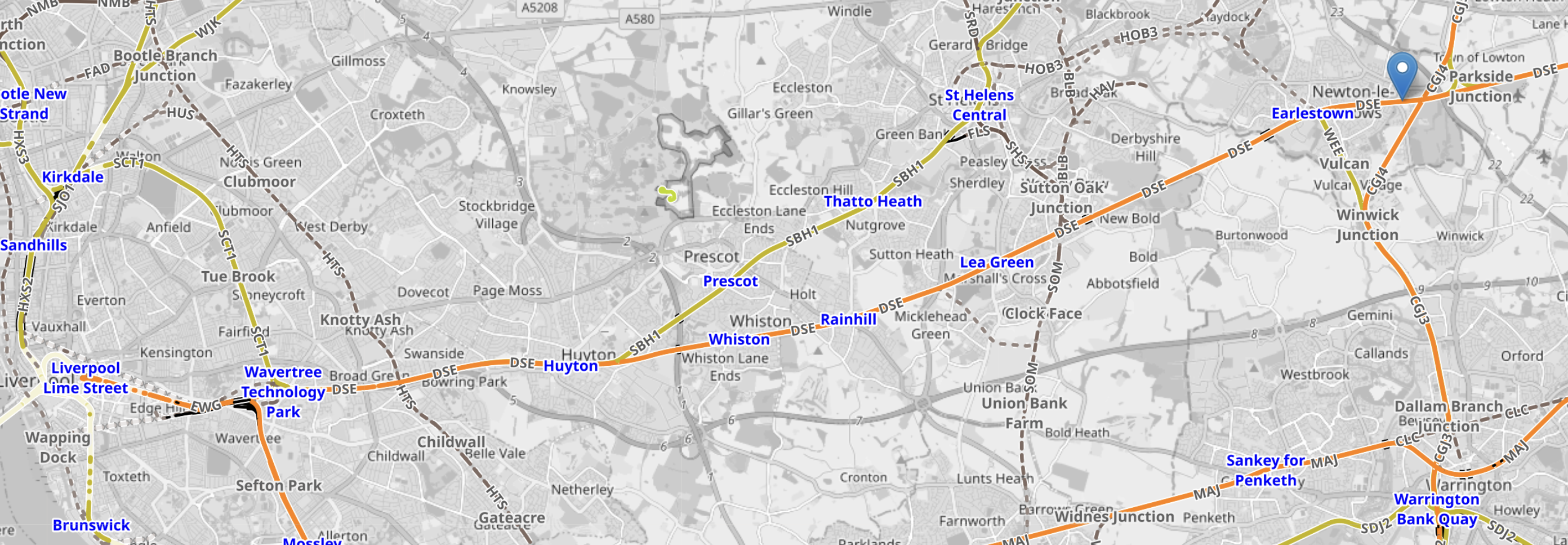
This OpenRailwayMap shows the route I took.
Note.
- Liverpool Lime Street station is at the Western side of the map.
- Newton-le-Willows station is marked by the blue arrow in the top right corner of the map.
- Warrington Bank Quay station is in the bottom right corner of the map.
It does seem a round about route, But I got there. Although, I was late.
Hopefully, in a couple of years, you’ll be able to take a local train between Liverpool Lime Street and Newton-le-Willows stations to link up with FirstGroup’s low-cost Lumo Open Access service between Euston and Rochdale.
A Single Journey Home
I was booked home on the 18:43 train from Lime Street, but as you can often do, I asked and was allowed to board the 17:43.
A Crowded And Crazy Euston
I arrived back at Euston at 20:00, but it was crowded, as the station is very much a building site for High Speed Two.
I felt I would treat myself to a taxi, but I couldn’t find any.
So I took a 205 bus along Euston Road to King’s Cross, where I jumped on the the Circle Line for Moorgate.
From there I took my usual 141 bus home.
A friendly station guy at Moorgate, indicated, there might not be any taxis at Euston.
I’d also found earlier, that there were no escalators to the Underground.
Perhaps more than ever, care should be taken at Euston, when getting to and from the station.
It Looks To Me That High Speed Two Has Got Their Planning Wrong At Euston
The big problem at Euston is getting to and from the National Rail station from East or West,
Compare Euston in this respect with Liverpool Street, King’s Cross, St. Pancras or Paddington.
In The New Step-Free Entrance At Euston Square Station, I show the plans for step-free access to the sub-surface lines.
This new entrance to Euston station, should be built first.
All the dithering about High Speed Two seems to have delayed it!
Arriva’s Grand Central Applies For Extended Track Access Rights
The title of this post, is the same as that of this news item from Arriva.
These three bullet points, act as sub-headings.
- Grand Central to submit application to the rail regulator for extended track access up to 2038.
- Proposals for a new, greener fleet are outlined as part of the application.
- Application signals Arriva’s long-term commitment to UK rail.
These three paragraphs add more detail to the application.
Arriva Group’s UK open access train operating company, Grand Central, has today announced it is seeking to extend its existing track access rights until 2038, securing its services for the next 15 years and unlocking Arriva’s intentions to invest in new, state-of-the-art trains.
Grand Central has been operating services on the East Coast mainline since 2007 as an open access operator, which means it receives no government funding or subsidy. It directly links 15 destinations, including cities in Yorkshire and the North East with London’s Kings Cross.
The application represents a significant commitment to long-term services and supports its plans to expand services with improved connectivity and increased frequency, as outlined in a previous application, submitted to the Office of Rail and Road in May this year.
These are my observations and thoughts.
Grand Central’s Current Services
Grand Central currently runs two separate services.
- King’s Cross and Sunderland via Peterborough,York, Thirsk, Northallerton, Eaglescliffe and Hartlepool – six tpd
- King’s Cross and Bradford Interchange via Peterborough, Doncaster, Pontefract Monkhill, Wakefield Kirkgate, Mirfield, Brighouse, Halifax and Low Moor – four tpd
Note.
- tpd is trains per day.
- Weekend services are reduced.
- Peterborough is served by one train in each direction.
Grand Central have applied to run more services.
Distances Without Electrification On Current Services
Only the Northern ends of both routes are not electrified.
- King’s Cross and Sunderland – Longlands junction and Sunderland – 48.5 miles
- King’s Cross and Bradford Interchange – Doncaster and Bradford Interchange – 52.1 miles
Note.
- Going North, any train batteries could be charged on the East Coast Main Line.
- Before returning South, train batteries could need to be charged at the two terminals.
- Battery-electric trains would need infrastructure changes at the two terminals.
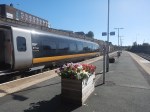
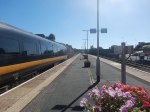
The two terminals; Bradford Interchange and Sunderland are not particular spacious.
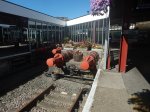
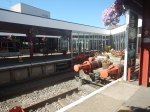
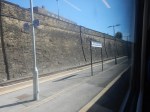
These pictures show Bradford Interchange station.

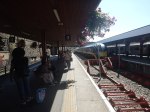

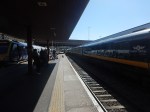
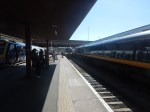


And these pictures show Sunderland station, which is underground.
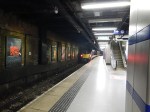
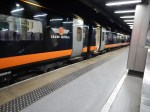
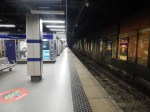
Putting even a short length of catenary to charge battery-electric trains might not be that easy at either station.
Grand Central’s New Trains
Arriva’s news item, gives these details on the new trains.
- Increased capacity: The new trains would feature approximately 20 per cent more seats than the current Class 180 units, providing additional capacity to meet growing passenger demand.
- Modernised fleet: The new Bi-Mode trains would replace the existing 24-year-old Class 180 units bringing new customer focussed features and a more comfortable experience for passengers.
- Greener services: The Bi-mode trains would cut carbon emissions and provide smoother journeys for passengers. They can operate on electric and non-electric tracks, so they can serve long into the future as track electrification gathers pace across the UK.
Note.
- A five-car Class 802 train has approximately twenty percent more seats than a four-car Class 180 train.
- Hull Trains, LNER, Lumo and TransPennine Express all run Hitachi Class 80x trains on the East Coast Main Line, which could ease operations, if all trains were similar.
- Bi-mode trains are specified. Grand Central will change mode once on each trip.
- LNER have specified CAF Tri-mode trains for their new fleet. Will these have an extra level of complication, that Grand Central don’t need?
I suspect that rand Central will opt for the Hitachi trains.
Using The Joint Line Between Peterborough and Doncaster via Lincoln
The diesel Class 180 trains can use this line, in times of incidents or engineering works.
Class 800 and Class 802 trains can also use this diversion, so it might be sensible to be able to use the line in time of trouble.
Chiltern Trains’ London And Birmingham Services
Both Arriva and Chiltern Trains are subsidiaries of Deutsche Bahn.
Currently, Chiltern run six-car rakes of Mark 3 coaches, with a Class 68 locomotive at one end and a driving van trailer at the other, between London and Birmingham.
They are nice trains, but they are not zero-carbon.
Could these be replaced by an eight-car Class 802 train?
- Chiltern have said that they are looking for new trains.
- An eight-car Class 802 train could be a similar length to the current trains.
- London Marylebone and Birmingham Moor Street is only 111.7 miles.
- The Hitachi trains would offer an increase in capacity.
- They might save a few minutes.
But the trains will still be not zero-carbon.
This page on the Hitachi web site is entitled Intercity Battery Trains.
The trains for London Marylebone and Birmingham Moor Street would be built as conventional eight-car Hitachi trains, with perhaps four diesel engines.
- Over the years, the Chiltern Main Line would be partially electrified, starting perhaps in the middle around Banbury.
- One by one, the diesel engines would be replaced by batteries, so that the trains could run on battery power between the electrified sections.
- Eventually, the London Marylebone and Birmingham Moor Street service would be fully battery-electric.
- As Kidderminster is only twenty miles past Birmingham Moor Street, there must surely be possibility for extension of the service.
I believe that Hitachi’s Intercity Battery Train, is going to play a large part in the decarbonisation of UK railways.
Chiltern Trains’ London And Oxford Services
If eight-car Hitachi Intercity Battery Trains can handle London Marylebone and Birmingham Moor Street services, then I am fairly sure that five-car Hitachi Intercity Battery Trains could handle London Marylebone and Oxford services.
They would also have more capacity, than the current trains, that serve Oxford and Bicester Village.
Conclusion
It may be advantageous for Deutsche Bahn to put the two orders together.
London And Edinburgh By Lumo Using the Joint Line Diversion
This press release on the First Group web site is entitled FirstGroup Applies To Run Rochdale To London Rail Service With New British-Built Trains.
These are the first two paragraphs.
FirstGroup plc, the leading private sector transport operator, has submitted the first phase of an application for a new open access rail service between Rochdale and London to the Office of Rail and Road (ORR), restoring this direct link for the first time in almost a quarter of a century.
FirstGroup plans to expand its open access rail operations as part of its successful Lumo business, building on Lumo’s existing service which has transformed long-distance connectivity between London and Edinburgh and helped support a growth in passenger numbers for all operators on the East Coast Mainline. All of the trains on this new route will be electric and battery powered, and the service will be operated by brand new trains built in the UK.
Note.
- This service will be run under the Lumo brand.
- Battery-electric trains will be used.
- Stops will include Manchester Victoria, Eccles, Newton-le-Willows and Warrington Bank Quay.
- Only 15 km. of the route, between Miles Platting and Rochdale is not electrified.
Allowing for out and back trips between Platting and Rochdale, a sensible reserve and I suspect a battery-electric train with a range of 40-50 kilometres, would allow the train to be able to do a round trip to Rochdale from London Euston.
Hitachi have now published this page on their web site, which is entitled Intercity Battery Trains.
These are the first two paragraphs.
A quick and easy application of battery technology is to install it on existing or future Hitachi intercity trains. Hitachi Rail’s modular design means this can be done without the need to re-engineer or rebuild the train and return them to service as quickly as possible for passengers.
Replacing one diesel engine with just one battery reduces emissions by more than 20% and offers cost savings of 20-30%. Our intercity battery powered trains can cover 70km on non-electrified routes, operating at intercity speeds at the same or increased performance.
It would appear that Hitachi’s standard Intercity Battery Train will have a range of 70 km.
- A 70 km. range would be more than enough to handle Lumo’s Euston and Rochdale service.
- Lumo’s Class 803 trains don’t have a diesel generator to replace.
- One car does have a smaller battery for emergency hotel power, should the electrification fail.
As an Electrical Engineer, I wouldn’t be surprised to find out that the traction batteries of Hitachi’s standard Intercity Battery Train and the emergency batteries of Lumo’s Class 803 trains are of a similar design. The batteries could even be interchangeable, which would enable both Lumo’s routes to Scotland and Rochdale to use identical Class 803 trains.
Lumo’s Class 803 trains would have this specification.
- All-electric.
- Emergency battery to provide back-up hotel power.
- A range on battery of 70 km or 43 miles away from electrification.
The off-electrification range could be very useful in getting round incidents or overhead wiring problems.
An extended range of 70 km. would allow the following destinations to have all-electric services from London.
- Beverley #
- Bristol Temple Meads #
- Cheltenham #
- Chester
- Harrogate
- Huddersfield
- Hull
- Lincoln
- Middlesbrough
- Swansea #
Destinations marked with a hash (#), would need charging at the final destination.
A more detailed analysis will probably show other possible routes.
It looks to me, that Hitachi have got the specification of their Intercity Battery Train about right.
Bridging The Joint Line Diversion
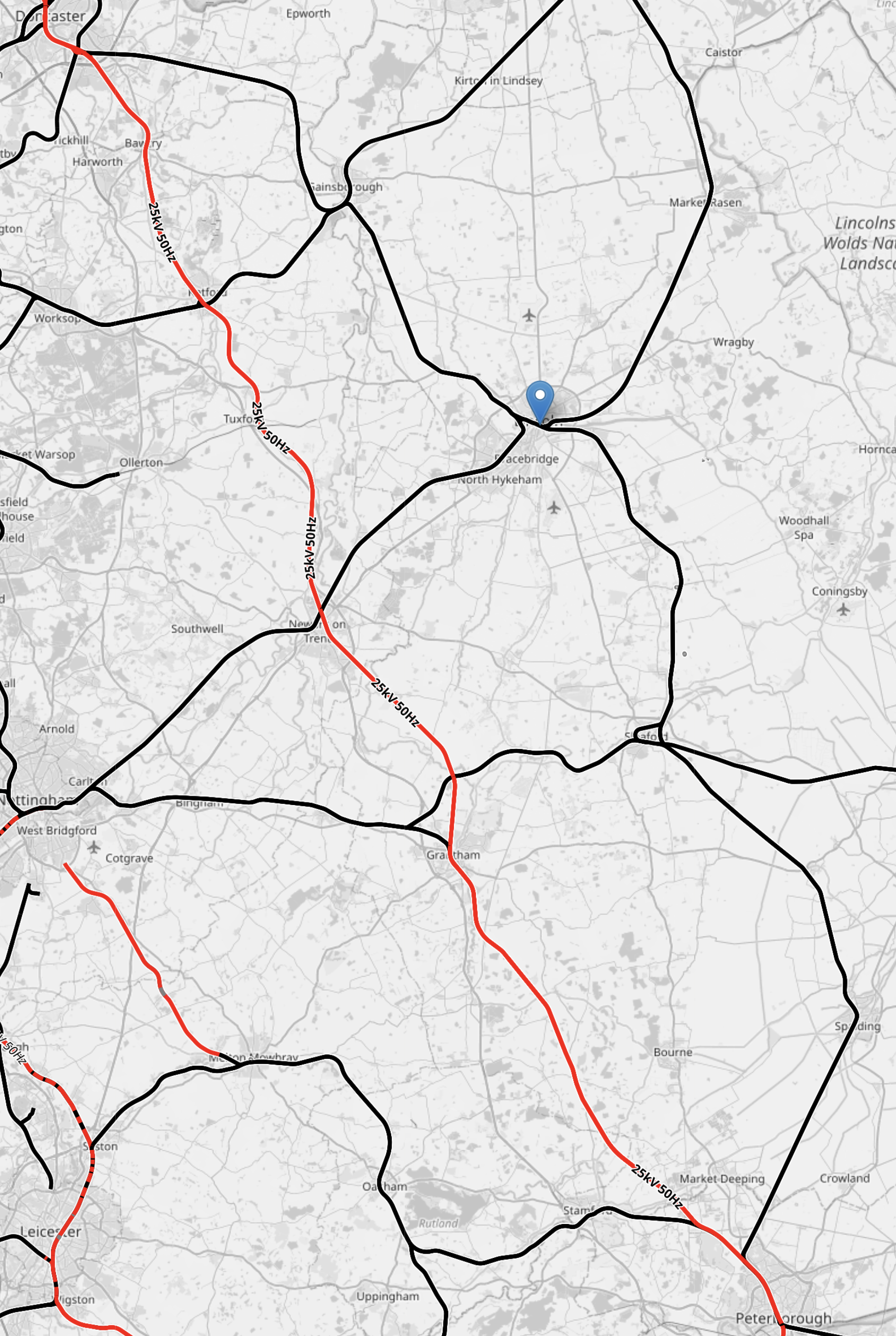
This OpenRailwayMap shows the Great Northern and Great Eastern Joint Line (GNGE) or Joint Line.
Note.
- Doncaster is in the North-West corner of the map.
- Peterborough is in the South-East corner of the map.
- The red line connecting them is the East Coast Main Line.
- Lincoln station is marked by the blue arrow.
Great Northern and Great Eastern Joint Line (GNGE) is described like this by its Wikipedia entry.
The Great Northern and Great Eastern Joint Railway, colloquially referred to as “the Joint Line” was a railway line connecting Doncaster and Lincoln with March and Huntingdon in the eastern counties of England. It was owned jointly by the Great Northern Railway (GNR) and the Great Eastern Railway (GER).
Over the last decades of the Twentieth Century, the Joint Line declined and British Rail did their worst to simplify the route.
But in the 2010s, Network Rail developed the route into a by-pass for the East Coast Main Line between Werrington and Black Carr junctions via Lincoln.
- Trains are routed via Spalding, Sleaford, Lincoln, Saxilby and Gainsborough.
- There is no electrification.
- The route can handle two freight trains per hour.
- The route can handle 9 ft. 6 in containers.
- There is a passenger service between Doncaster and Peterborough via Lincoln.
- Self-powered trains like InterCity125s, Class 800 trains and Class 802 trains can use their diesel power to use the diversion.
- All-electric trains, like LNER’s Class 801 trains and Lumo’s Class 803 trains have no self-power, so can’t use the diversion.
- Black Carr junction and Lincoln is 35 miles.
- Werrington junction and Lincoln is 51.7 miles.
The January 2024 Edition of Modern Railways says that the diversion is approximately 90 miles or 145 kilometers.
It would appear that there are two simple solutions.
- Electrify a section through Lincoln, so that Lincoln is within 70 kilometres of the electrification at both Werrington and Black Carr junctions.
- Fit bigger batteries to the trains.
A combination of both solutions might be possible.
LNER Names Train ‘The Flying Swiftie’ Ahead Of Tonight’s Opening Gig
The title of this post, is the same as that of this press release from LNER.
This is the sub-heading,
Forget “The Flying Scotsman”, LNER is today naming the 1000 London-Edinburgh train “The Flying Swiftie” – as thousands of Taylor Swift fans take the train to her first UK gig in the Scottish capital.
These are the first three paragraphs, which give a few more details.
The rail firm famous for having Red seats knows All Too Well that its passengers love a named train – from The Flying Scotsman to the Highland Chieftan and the recently introduced Carolean Express.
As passengers travel in Style and say So Long, London they will be reminded with on-train and station announcements that Everything Has Changed and that they’re on The Flying Swiftie, while screens around the station and along the route will refer to the train’s name too.
Taylor Swift fans will be able to get refreshments onboard cheaper than their Wildest Dreams thanks to a special Flying Swiftie discount.
Recently, Lumo did a similar promotion for Gateshead fans going to Wembley for the FA Trophy final, which I wrote about in Excitement Brewing for Gateshead FC Away At Wembley.
Last Train Home
In the past, I’ve had difficulty with getting a return train after some matches and it is a complaint of the fans of many sides.
- Taylor Swift’s concert seems to finish shortly before midnight.
- I’ve never had trouble from Greater Anglia, as they always run a late train back to London.
- In one case at Ipswich, there were track problems in the Colchester area, so Greater Anglia returned fans to Sudbury by taxi.
- Lumo ran an extra return train to make sure everybody got home after the match.
It certainly looks to me, that if you are going to put on a package for an event, you must make sure, that it is possible for those attending the event to get home.
What Is Possible
Lumo and LNER have shown what is possible on the East Coast Main Line and I would hope that they will develop these two experiences to cover, events like these.
- London football teams playing matches in Newcastle.
- Newcastle United playing matches in London.
- England and Scotland rugby matches.
I hopr to see more services like these in the future.
Brand New Battery Technology To Be Trialled On TransPennine Train
The title of this post, is the same as that of this press release from Hitachi.
These three bullet points, act as sub-headings.
- First-ever trial in the UK to replace a diesel engine with a battery on an intercity train is underway.
- Pioneering collaboration between Angel Trains, TransPennine Express, Turntide Technologies and Hitachi Rail.
- Hitachi Rail has built a battery using the North East supply chain, with one battery unit predicted to reduce emissions and fuel costs by as much as 30%.
These are my thoughts on some of the paragraphs in the press release.
The First Paragraph
This is the first paragraph.
Testing of the UK’s first intercity battery train commenced earlier today. The battery, which generates a peak power of more than 700kw, has now been successfully retrofitted onto a TransPennine Express ‘Nova 1’ train (five-carriage intercity Class 802), ahead of the trial on Transpennine routes this summer.
Each of the three diesel power packs in on of TransPennine Express’s Class 802 trains can generate 700 kW, so the battery packs can provide the same power as the current Rolls-Royce mtu diesel power packs.
The Third Paragraph
This is the third paragraph.
The single battery unit is incredibly powerful, storing enough electricity to power more than 75 houses for a day. This impressive energy and power density will deliver the same levels of high-speed acceleration and performance, while being no heavier than the diesel engine it replaces.
This equity of high-speed acceleration and performance is to be expected, as the train power and weight is the same, if the power is diesel engines or batteries.
The Fourth Paragraph
This is the fourth paragraph.
The installation of a battery will reduce emissions and improve energy efficiency. It is predicted to reduce emissions and fuel costs by as much as 30% on a Hitachi intercity train.
I would assume that this improvement in emissions and fuel costs, is due to the use of regenerative braking to recharge the batteries, when the train slows down.
The Fifth Paragraph
This is the fifth paragraph.
Most importantly for passengers, the trial will test how intercity trains can enter, alight and leave non-electrified stations in zero-emission battery mode to improve air quality and reduce noise pollution.
As the trains enter a non-electrified station, the regenerative braking will recharge the batteries to both power the train in the station and accelerate the train on its way.
The Seventh Paragraph
This is the seventh paragraph.
The trial will provide real-world evidence to inform the business case for a 100% -battery-electric intercity train, capable of running up to 100km in battery mode. This remarkable range means this battery technology could be deployed to cover the final non-electrified sections of intercity routes in the coming years. It will also demonstrate how battery technology can reduce infrastructure costs by reducing the need for overhead wires in tunnel sections and over complex junctions.
Note that 100 kilometres is 62.1 miles.
You can never do too much real world testing!
These are my further thoughts.
Acceleration And Braking Under Battery Power
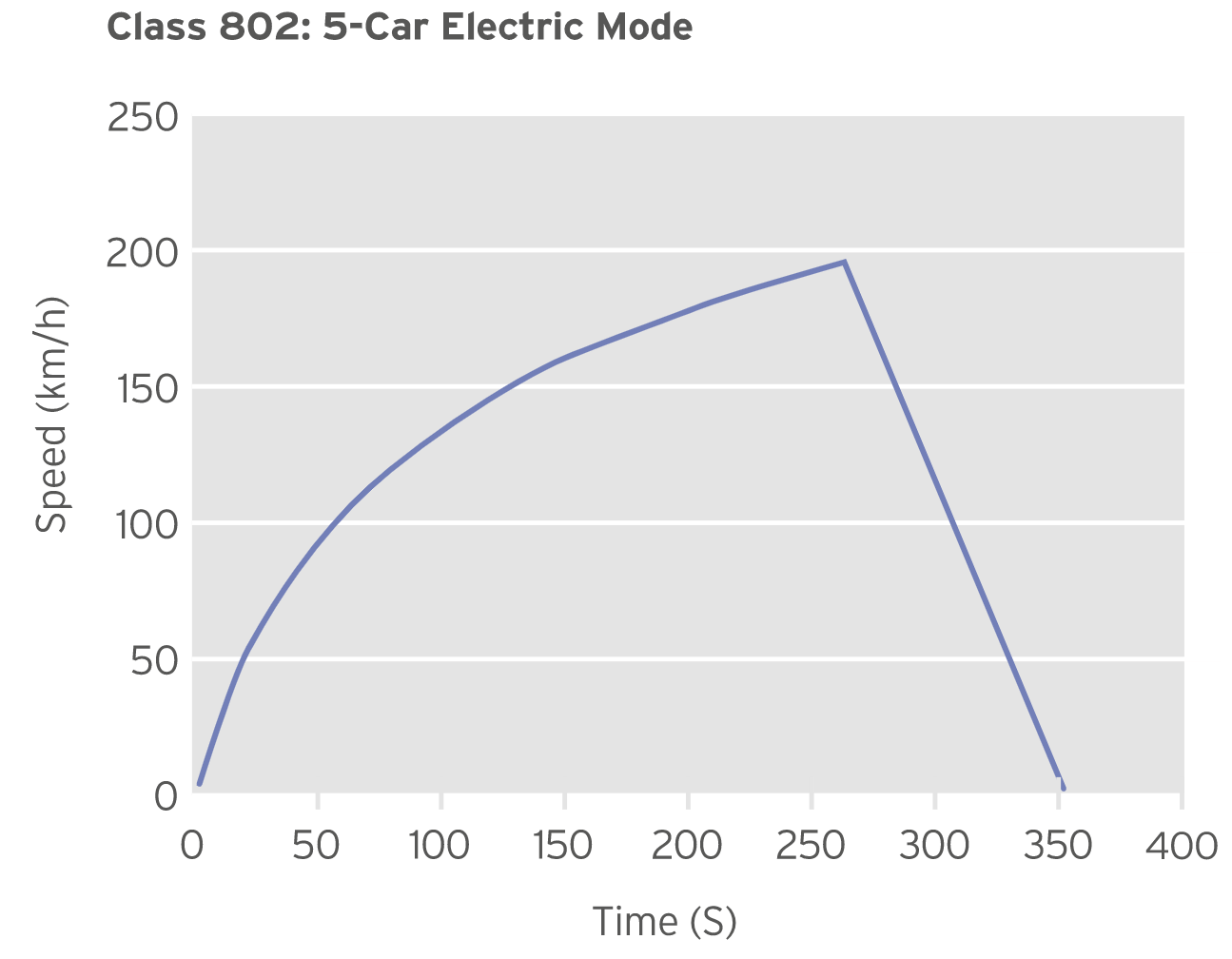
This graph from Eversholt Rail, shows the acceleration and deceleration of a five-car Class 802 electric train.
As Hitachi have said in the press release that.
- The weight of a battery pack is the same as a diesel engine.
- The power of a battery pack is the same as a diesel engine.
The acceleration and braking curve for a Class 802 train, with a single traction battery will surely be the same.
Would this mean, that if a battery-electric train replaced a diesel-electric train, the timetable would be the same?
What would be the effects, if a second diesel engine were to be replaced with a battery pack?
- The train would still weigh the same.
- The train’s performance would still be the same.
- The train would have 1400 kW of power available, but I doubt this could be used efficiently, as it might exceed the train’s performance limits.
- The train would have enough electricity for a 200 kilometre or 124.3 mile range.
There might be a need for a sophisticated control system to set the power mode, but in my experience of riding in the cab of an InterCity 125 and a Boeing 747, drivers or pilots have enough intelligence and fingers to control systems with multiple engines.
What would be the effects, if a third diesel engine were to be replaced with a battery pack?
- The train would still weigh the same.
- The train’s performance would still be the same.
- The train would have enough electricity for a 300 kilometre or 186.4 mile range.
The range is sufficient for a lot of routes.
London And Beverley
Consider.
- This route has 44.3 miles of unelectrified track between Temple Hirst Junction and Beverley.
- One battery range is 100 kilometres or 62.1 miles.
- As the trains have three slots for battery packs or diesel engines, they could always carry a diesel engine for emergencies.
The route could be run in one of two ways.
- By using one battery, that would be charged at Beverley.
- By two batteries, that would be charged on the main line to the South of Temple Hirst Junction. One battery would be used in each direction.
Note.
- The second method would not require any new infrastructure at Beverley or Hull.
- All batteries would be identical 100 km batteries.
- Trains would just swap an appropriate number of diesel engines for batteries.
The service could run as soon as the trains had the power transplants.
Using The Lincoln Diversion
In Extra Luggage Racks For Lumo, I also talked about Lumo taking the diversion via Lincoln.
Consider.
- This route is 88.5 miles of unelectrified track.
- It would be possible to be handled by a Class 802 train with two battery packs.
- Hull Trains will need battery packs to get to Beverley.
- Some LNER services will use battery packs.
Perhaps trains will use one battery to Lincoln and one from.
Crewe And Holyhead
In October 2023, the government said, that the North Wales Coast Line would be electrified.
Consider.
- Crewe and Holyhead are 105.5 miles apart.
- The route currently has no electrification.
- It has been planned to electrify the 21.1 miles between Crewe and Chester for some time.
- A lot of the route West of Chester may arouse the wrath of the Nimbies and be politically difficult to electrify, as castles and electrification don’t mix.
- Llandudno Junction station might be a station, where trains could be charged.
- Shotton and Chester stations need rebuilding.
- The line is not short of electric power, because of Electric Mountain and the windfarms along the coast.
- The route will soon be served by Hitachi Class 805 trains.
I believe the North Wales Coast Line could be one of those routes, which Hitachi’s partial electrification might be ideal.
I also believe that, it could be an extension of High Speed Two from Crewe, which provided a zero-carbon route between London and Ireland.
Conclusion
I can see if the tests perform as expected, that there will be some battery express trains running soon.
FirstGroup’s Lumo Seeks To Launch Rochdale – London Open Access Service
The title of this post, is the same as that of this article on Railway Gazette.
These two paragraphs outline the service.
FirstGroup has applied to operate Rochdale – London open access passenger trains, more than 20 years after a short-lived through service ran between the two destinations.
On May 17 FirstGroup said that it had applied to the Office of Rail & Road to launch six Lumo-branded return journeys per day linking London Euston and Rochdale via the West Coast Main Line. The trains would call at Warrington Bank Quay, Newton-le-Willows, Eccles and Manchester Victoria.
These are my thoughts.
The Route Isn’t Fully-Electrified
The route is electrified between London Euston and Manchester Victoria stations, but the 10.4 miles between Manchester Victoria and Rochdale is not electrified.
In Extra Luggage Racks For Lumo, I also talk about the possibility of fitting traction batteries to Lumo’s Class 803 trains, so they could handle the 88.5 mile diversion on the East Coast Main Line via Lincoln.
Trains with a traction battery, with an 88.5 mile range, would be able to travel between Manchester Victoria and Rochdale and return.
How Long Would London Euston And Rochdale Take?
Consider.
- The fastest London Euston and Warrington Bank Quay services take 1 hour and 44 minutes
- The fastest Warrington Bank Quay and London Euston services take 1 hour and 47 minutes
- Northern’s Class 195 trains take between 44-51 minutes Rochdale and Warrington Bank Quay with three stops.
- Northern’s Class 195 trains take between 29-32 minutes Manchester Victoria and Warrington Bank Quay with two stops.
- I will add two minutes for the extra stop.
These are my estimates for overall journey times.
- London Euston and Manchester Victoria – 2 hours and 15 minutes
- London Euston and Rochdale – 2 hours and 29 minutes
- Manchester Victoria and London Euston – 2 hours and 21 minutes
- Rochdale and London Euston – 2 hours and 40 minutes
The fastest direct Avanti West Coast services between London Euston and Manchester Piccadilly take 2 hours and 6 minutes.
Could The Service Be Extended To Leeds?
For my timings between Rochdale and Warrington Bank Quay, I used Northern’s Leeds and Chester service.
This service goes between Manchester Victoria and Leeds calling at Rochdale, Todmorden, Hebden Bridge, Halifax, Bradford Interchange, New Pudsey and Bramley.
I estimate it would take about 3 hours 32 minutes.
When Bradford has a new through station, I wouldn’t be surprised if a train operator looked at this route between London Euston and Leeds.
As Leeds and Manchester Victoria is only 49.8 miles, Lumo’s battery electric trains, with 88.5 mile batteries sized for the Lincoln diversion on the East Coast Main Line, would have no difficulty serving Leeds, where they would charge before return.
Could Lumo Run Pairs Of Five-Car Trains Between London Euston and Manchester Victoria?
As I said in Ten-Car Hull Trains, Lumo’s sister company; Hull Trains, runs the occasional ten-car service.
Perhaps for a big football match or other event, Lumo might like to run ten-car trains between Manchester Victoria and London Euston.
I suspect they could do it if the platforms were long enough, but they wouldn’t be able to run a 260 metre ten-car train to Rochdale, as that station only has a 135 metre long platform.
Warrington Bank Quay Station Will Get Six Extra Non-Stop Trains To And From London
This would provide real competition to Avanti West Coast over this route.
Newton-le-Willows Station Is Only A Few Miles From The Town Of St. Helen’s
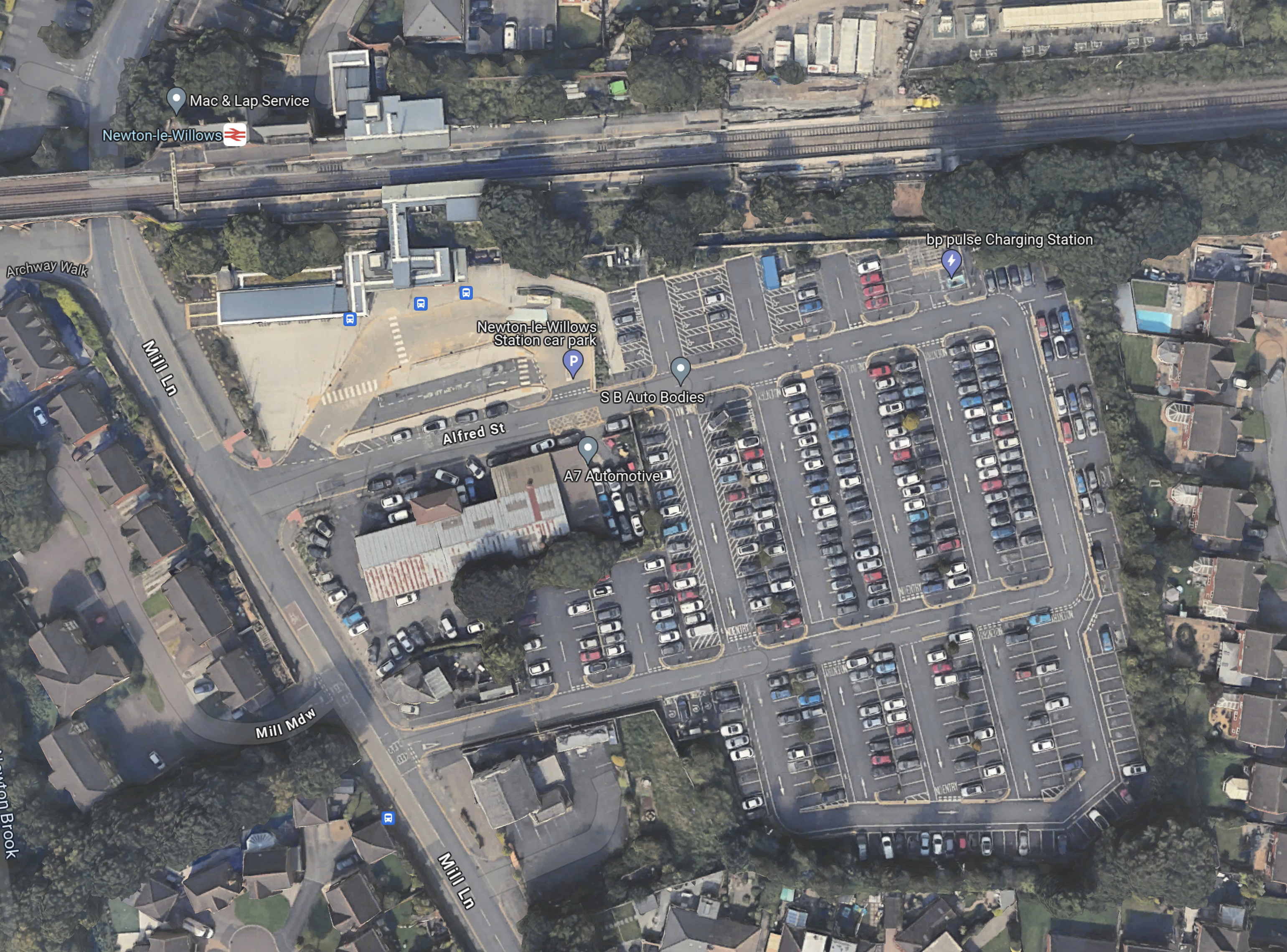
Newton-le-Willows station has 400 parking spaces and 32 disabled parking spaces.
Note.
- The parking is all free!
- There are regular local trains to Chester, Leeds, Liverpool Lime Street, Manchester Airport and Wigan North Western.
A six trains-per-day service to and from London, will help fill up the parking spaces.
Eccles Station Is Within Walking Distance Of Eccles Interchange
This OpenRailwayMap shows Eccles station and Eccles Interchange.
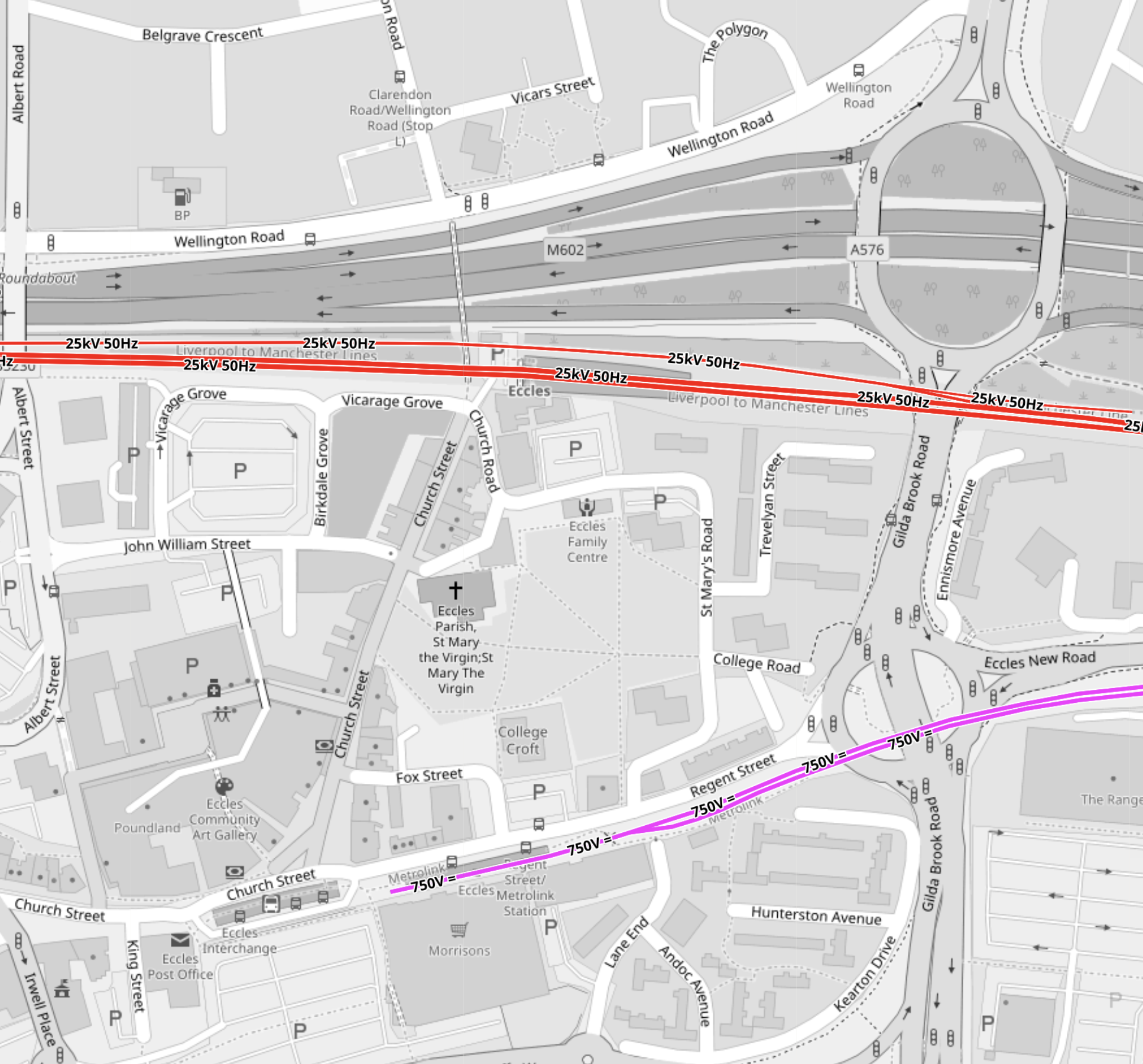
Note.
- The mauve tracks are the Manchester Metrolink.
- They terminate in the South-West at Eccles Interchange.
- The red tracks are the Liverpool-Manchester lines.
- Eccles station is a Northerly walk from Eccles Interchange.
This connection must be useful to more than a few.
I suspect if you’re going between London and Media City UK, Salford Quays or Piccadilly Gardens, you may be better to change to the Metrolink at Eccles.
Will Lumo’s Rochdale Service Run As A Flight With Avanti’s Glasgow Service?
Flighting is where two or more trains going on the same route run a few minutes apart.
- Every hour, on the half hour, an Avanti West Coast service for leaves London Euston for Glasgow Central.
- As with Lumo’s Rochdale service, the first stop is Warrington Bank Quay station.
- The Lumo service would leave London Euston a few minutes after Avanti’s Glasgow service.
- The distance between the two trains would be such, that if the first train stopped, the second train could stop safely.
- Digital signalling as is being installed on UK rail lines would make it easier to ensure safe separation.
But the benefit would be that both trains ran fast to Warrington Bank Quay station.
A Day-Trip To Manchester
If I’m right about the 2 hours and 15-21 minutes between London Euston and Manchester Victoria, then a day-trip would certainly be feasible.
Last Trains
This is a table of the last train times for Lumo between Newcastle and London.
- Weekdays – 20:27 21:35
- Saturdays – 18:27 19:22
- Sundays – 19:24 20:21
Note.
- The first time is the last Northbound departure.
- The second time is the last Southbound departure.
- Are these late enough for football matches?
I shall be interested to see the proposed last train times for the Manchester route.
- Will they be timed so you can get a tram from the Etihad or Old Trafford stadium after an evening match, that allowed you to get the last train back to London from Manchester Victoria?
- Taylor Swift gave the Manchester Arena a lot of favours with her concerts. Would you have been able to see her concert and get the last train back to London?
A few extra full trains wouldn’t hurt Lumo’s finances.
Conclusion
It looks like, this could be a very worthwhile service.
Excitement Brewing for Gateshead FC Away At Wembley
The title of this post, is the same as that of this news item on Lumo.
This is the sub-heading.
Lumo, the Open Access rail operator, has teamed up with local Gateshead brewery Black Storm to offer Gateshead FC fans a special commemorative beer onboard its trains.
These first two paragraphs add a few more details.
Hot on the heels of Tyneside based Lumo, the Open Access rail operator, announcing an extra train on Saturday 11th May to get Gateshead FC fans back from London as part of the club’s huge achievement of a second Wembley FA cup final in as many years, they’ve teamed up with local Gateshead brewery Black Storm to offer fans and travellers a special commemorative beer onboard its trains.
The appropriately named’ Whistle Stop’ is a 5% ABV Helles Lager featuring special commemorative Gateshead FC Wembley 2024 and Lumo branding on the can and will be available to purchase on the LumoEats at seat trolley service on all Lumo trains from this week, including on its specially named ‘Heed Army Express’ trains on Saturday 11th (running from Newcastle to London at 07:12 and 10:22, and returning at 20:26).
Surely, rail companies should do more deals like this to support local teams and suppliers.
 The Anonymous Widower