Rock Rail Wins Again!
This article on the Railway Gazette, is entitled Abellio Orders East Midlands Inter-City Fleet.
The order can be summarised as follows.
- The trains will be Hitachi AT-300 trains
- There will be thirty-three bi-mode trains of five cars.
- The trains will be 125 mph capable.
- Unlike the similar Class 802 trains, the trains will have 24 metre long cars, instead of 26 metres.
- They will have a slightly modified nose profile.
- The new trains will have an extra diesel engine.
- The new trains will cost a total of £400 million.
A few of my thoughts.
I shall constantly refer to an earlier post called Vere Promises East Midlands Bi-Modes In 2022.
Cost Of The Trains
In the earlier post, I calculated that the five five-car AT-300 all-electric trains, ordered by First Group for London and Edinburgh services cost four million pounds per car.
Thirty-three trains at this four million pounds per car, works out at £660 million, which is sixty-five percent higher than the price Abellio is quoted as paying.
Abellio are actually paying just £2.42 million per car or forty percent less than First Group.
So are Abellio buying a cut price special?
As Abellio East Midlands Railway will be competing up against LNER’s Azumas on some journeys, I can’t see that running a second class train would be a sound commercial decision.
I am left to the conclusion, that Abellio have got a very good deal from Hitachi.
What Diesel Power Is Used?
In a five-car Class 802 train, there are three MTU 12V 1600 R80L diesel engines, each of 700 kW , which gives a total power of 2,100 kW.
If the Abellio train needs this power, with four diesel engines, each must have 525 kW.
Not sure yet, but this could save a couple of tonnes in weight.
I doubt that Hitachi are dissatisfied with the performance of the MTU diesel engines in the current Class 800, 801 and 802 trains, as there are no media reports of any ongoing problems. So I feel that they could go with the same supplier for the trains for Abellio East Midlands Railway.
If you type “Class 800 regenerative braking” into Google, you will find this document on the Hitachi Rail web site, which is entitled Development of Class 800/801 High-speed Rolling Stock for UK Intercity Express Programme.
The only mention of the R-word is in this paragraph.
An RGS-compliant integrated on-train data recorder (OTDR) and juridical recording unit (JRU), and an EN-compliant energy
meter to record energy consumption and regeneration are fitted to the train.
If you search for brake in the document, you find this paragraph.
In addition to the GU, other components installed under the floor of drive cars include the traction converter, fuel tank, fire protection system, and brake system.
Note that GU stands for generator unit.
The document provides this schematic of the traction system.

Note BC which is described as battery charger.
Braking energy doesn’t appear to be re-used to power the train, but to provide hotel power for the train.
I talk about this in more detail in Do Class 800/801/802 Trains Use Batteries For Regenerative Braking?.
In my view, it is an outdated design compared to some of those seen in the latest road vehicles and trains from other manufacturers.
This is a sentence from the Railway Gazette article.
According to Hitachi, the EMR units will be an ‘evolution’ of the AT300 design supplied to other UK operators, with 24 m long vehicles rather than 26 m, and a slightly modified nose profile.
So does that evolution include regenerative braking to batteries on the train?
This could have advantages.
- improved acceleration and smoother braking
- Less electricity and diesel consumption.
- No running of diesel engines in stations.
I’m only speculating, but could the batteries or supercapacitors be under the car without a diesel engine? A balanced design might make this the middle car of the train
There must also be the possibility, that instead of using MTU diesel engines, the trains use MTU Hybrid PowerPacks.
Why shouldn’t Hitachi get their respected supplier to do as much of the hard work as possible?
Train Length
A five-car Class 222 train, which work the Midland Main Line now, consists of two 23.85 metre and three 22.82 metre cars. So it is 116.16 metres long.
The article says the cars in the new trains will be 24 metres long,, so a new train will be 120.0 metres long or 3.84 metres longer.
This will probably mean that there will be no need for costly and disruptive platform lengthening at a couple of stations.
Capacity
Abellio have stated that passengers like having a table and that they will be offering a catering service
So will we see most seats having a table?
Chiltern have proved it’s a philosophy that works for all stakeholders!
This means that capacity comparisons with the current trains will be difficult, as you’re comparing apples with oranges.
Hopefully, we’ll get more details soon!
Splitting And Joining
I would assume the new trains will have the ability to split and join an route like the other Hitachi trains.
This could be very useful in organising trains in the limited number of paths South of Kettering.
A ten-car train might leave St. Pancras as two five-car units running as a pair. It could split at East Midlands Parkway station and one train could go to Nottingham and the other to Derby. Coming South the two trains would join at East Midlands Parkway.
A Nose Job
I’m intrigued by the phrase “slightly different nose profile” in the extract I quoted earlier.
Have Hitachi’s champion origamists found a way of designing a train which can split and join with both an aerodynamic nose and a corridor connection?
After their experience with the Class 385 train and its curved windows, I suspect Hitachi have learned a lot. Could for instance one end of the five-car train have a Class 800-style nose and the other an improved Class 385-style front end?
Trains would mate blunt-to-blunt, so the Southern train would always point towards London and the Northern train would always point towards Sheffield.
I used to have a friend, who learned origami skills at Hiroshima in the 1950s, whilst doing National Service in the Army.
I don’t think my proposal is impossible, but I’ll admit it’s unusual!
- The blunt end might have a pair of doors, each with a flat window, thus giving the driver an uninterrupted view, when driving from that end.
- When the trains connected the doors would open and swing forward. The gang way would unfold probably from under the cab The driver’s desk would probably fold away, as the two cabs wouldn’t be needed in a ten-car train.
- Connect and disconnect would be totally automatic.
Effectively, two five-car trains would convert into a ten-car train.
The Number Of Trains
In my earlier post, I estimated that Abellio East Midlands Railway would buy 140 bi-mode carriages.
This works out as 35 trains, as against the thirty-three actually ordered.
This is close enough to say, that these new trains are only for main line services and will not be used on the electric services to Corby, which I estimate will be another seven 240 metre-long electric trains
A Complete Fleet Renewal
This is a paragraph from the Railway Gazette article.
Abellio UK Managing Director Dominic Booth said the new trains would ‘form the centrepiece of our ambitious plans for a complete replacement of all the trains on the East Midlands Railway’, representing ‘a more than £600m investment to really improve the region’s railway’.
When Abellio say renewal, they mean renewal.
So will Bombardier or another manufacturer receive a consolation prize of the seven high-capacity 240 metre long electric trains for the St. Pancras and Corby service?
A version of the Abellio part-owned, West Midlands Trains‘s, Class 730 train, would surely do just fine.
The Role Of Rock Rail
The trains will be leased from Rock Rail.
The Rock Rail web site gives this insight.
Rock Rail’s game changing approach to rolling stock funding has:
- Enabled long term institutional investors to invest directly into a new sector.
- Driven better value for government, operators and passengers.
- Extended the market for infrastructure finance.
Rock Rail works closely with the franchise train operators and manufactures to ensure a collaborative approach to design, manufacture and acceptance of the new state of the art trains on time and to budget as well as to manage the long-term residual value and releasing risks.
It’s obviously an approach that has worked, as they have been behind three rolling stock deals at they have funded trains for Moorgate services, Greater Anglia and South Western Railway in recent months.
The Abellio East Midlands Railway makes that a fourth major fleet.
Take a few minutes to explore their web site.
Rock Rail say their backers are institutional investors. So who are these faceless institutions with deep pockets.
I have seen Standard Life Aberdeen mentioned in connection with Rock Rail. This Scottish company has £670 billion of funds under management and it is the second largest such company in Europe.
Companies like these need secure long term investments, that last thirty to forty years, so that pension and insurance funds can be invested safely to perhaps see us through retirement. I know that some of my pension is invested in a product from Standard Life Aberdeen, so perhaps I might ultimately own a couple of threads in a seat cover on a train!
As the Government now insists everybody has a pension, there is more money looking for a safe mattress!
Rock Rail allows this money to be used to purchase new trains.
Rock Rail seem to be bringing together train operators, train manufacturers and money to give train operators, their staff and passengers what they want. I seem to remember that Abellio did a lot of research in East Anglia about the train service that is needed.
Conclusion
Abellio have made a very conservative decision to buy trains from Hitachi, but after my experiences of riding in Class 800, 801 and 802 trains in the last few months, it is a decision, that will satisfy everyone’s needs.
Unless of course, Hitachi make a horrendous mess of the new trains!
But the four fleets, they have introduced into the UK, have only suffered initial teething troubles and don’t seem to have any long term problems.
There are some small design faults, which hopefully will be sorted in the new trains.
- Step-free access between train and platform.
- The carriage of bicycles and other large luggage.
The second will be more difficult to solve as passengers seem to bring more and more with them every year.
Vere Promises East Midlands Bi-Modes In 2022
The title of this post is the saqme as that of this article on Rail Magazine.
This is the first paragraph.
East Midlands Railway will have its entire bi-mode fleet in traffic by December 2022, according to Baroness Vere, the Government’s transport spokesman in the House of Lords.
This statement means that whoever manufactures the trains has just over three years from today to design, build and test the trains.
This paragraph from the article talks about how Bombardier and Hitachi would design the trains.
It’s known that Bombardier and Hitachi are interested in the contract, but both will be supplying new designs, with the former offering a bi-mode Aventra while the latter will offer an AT300 (the Intercity Express Programme platform) but with shorter vehicles.
What do we know about these two trains?
Bombardier Bi-Mode Aventra
In the July 2018 Edition of Modern Railways, there is an article entitled Bi-Mode Aventra Details Revealed.
As is typical with Bombardier interviews, they give their objectives, rather than how they aim to achieve them.
In Bombardier Bi-Mode Aventra To Feature Battery Power, I said this.
The title of this post is the same as this article in Rail Magazine.
A few points from the article.
- Development has already started.
- Battery power could be used for Last-Mile applications.
- The bi-mode would have a maximum speed of 125 mph under both electric and diesel power.
- The trains will be built at Derby.
- Bombardier’s spokesman said that the ambience will be better, than other bi-modes.
- Export of trains is a possibility.
Bombardier’s spokesman also said, that they have offered the train to three new franchises. East Midlands, West Coast Partnership and CrossCountry.
Very little more can be gleaned from the later Modern Railways article.
Consider.
- Aventras are designed to a modular concept.
- Bombardier have finally got the software for the train working to a high standard.
- The trains are designed for ease of manufacture, at a high rate.
- Development of the bi-mode train must have started before June 2018.
- Christian Wolmar disclosed the objective of a 125 mph Aventra in February 2017.
- I have seem references to Aventras, being tested at 110 mph.
On the balance of probabilities, I think it is very possible that Bombardier can deliver a full fleet of 125 mph bi-mode trains with batteries before the end of 2022.
Hitachi AT-300
Consider.
- Class 802 trains are a version of the AT-300 train, which in turn are a member of Hitachi’s A-Train family.
- Class 802 trains are successfully in service on the Great Western Railway.
- Class 385, 395, 800 and 801 are all members of the A-train family and are closely related to the Class 802 train.
- The A-Train is a modular family.and different numbers of cars and car length, shouldn’t be a problem.
- Hull Trains ordered their fleet of five Class 802 trains in November 2016 and they will enter service around December 2019 or early in 2020.
- First Group ordered five AT-300 trains in March 2019 and they will enter service in Autumn 2021.
If the order has been placed in the last few months, there is every chance that Hitachi could deliver a fleet of new bi-mode trains for service in December 2022.
Stadler Flirt
These aren’t mentioned in the Rail Magazine article, but they were mentioned as a possibility for the order in an article by Roger Ford, which was entitled East Midlands IC125 Dilemma, in the June 2019 Edition of Modern Railways.
This is an extract from Roger’s article.
In theory, Stadler should be in pole position. Itis also supplying Abellio’s Greater Anglia franchise, where Flirt bi-modes are running on test.
As they haven’t had any serious problems yet, and they are Swiss, everyone thinks they are amazingly efficient and wonderful. Whjich may turn out to be the case.
In the end, Roger rates their chances as slim.
But Stadler certainly has the technical capability to produce a 125 mph bi-mode train.
Electric Trains To Corby
When the electrified St. Pancras and Corby service opens in December 2020, a round trip will take three hours.
This means that as few as three trains would be needed to provide the service.
The specification would be.
- Electric traction
- Twelve cars and 240 metres long.
- 125 mph capability.
- Three trains and a spare would probably be needed by December 2020, with a further three trains by December 2021.
Abellio would also probably like the trains to be very similar for drivers and staff.
Currently, it appears that the electric services to Corby, will be run initially by cascaded Class 360 trains.
- But with a bit of juggling of production, Bombardier, Hitachi and Stadler might be able to manufacture, the four trains needed to start the service in December 2020.
- Abellio also have Class 360 and Class 379 trains working on Greater Anglia, that are likely to be replaced before December 2020.
So they have a sensible back-stop.
How Many Trains Will Abellio Need?
The current service is two trains per hour to both Nottingham and Sheffield.
These are fastest times.
- London and Nottingham is one hour forty minutes
- London and Sheffield is two hours
Even if there is a bit of a speed increase, it looks like at least eight trains will be needed for both services.
As to train length, I doubt five cars will be enough on all trains.
- Some services are currently run by six and eight-car HSTs.
- Have Abellio promised more seats?
- Abellio will be extending some Sheffield services to Rotherham, Barnsley and Leeds.
- It has already been stated that the Corby trains will be 240 metres long
- So will we see a uniform fleet of longer trains?
There are some short platforms, so I suspect Abellio will buy a mixture of full-length 240 metre-long trains and half-length 120 metre-long trains, as several train companies have done.
I feel we could see something like eight full length trains and perhaps twelve half-length trains.
I have calculated that seven full-length trains are needed for Corby.
Adding this up gives the following.
- Eight full-length bi-mode trains of ten-cars.
- Seven full-length electric trains of ten-cars.
- Twelve half-length bi-mode trains of five-cars
This gives a total of 27 trains of a total of 210 cars, of which 140 are bi-mode and 70 are electric.
All of this is based on running the current service with new trains.
abellio Greater Anglia have not not just done this in East Anglia, but have purchsed extra trains to add new services and increase frequencies.
So I would feel, that these trains are a minimum order, if Abellio are not doing any expansion.
Daily Telegraph Report – 19th July 2019
A report in the Daily Telegraph on the 19th July 2019, which is entitled Blow For Bombardier’s Derby Plant As £600m Train Contract Goes To Hitachi, says the order has gone to Hitachi.
- Value is quoted at £600million.
- A formal announcement is expected next week.
Has next week already passed without an announcement from Abellio?
I do find it strange, that there has been no reference to the Telegraph report in local sources around Derby.
This article on Railway Gazette is entitled Trains Ordered For 2021 Launch Of ‘High-Quality, Low Fare’ London – Edinburgh Service.
FirstGroup have ordered AT-300 trains.
- All-electric.
- Five trains of five-cars.
- A total order value of £100 million.
- Order placed in March 2019
- Service starting in Autumn 2021
This works out at four million pounds per car.
Earlier, I calculated that Abellio needed to buy 140 bi-mode cars and seventy electric ones.
Assuming that Abellio run the Corby services with refurbished Class 360 trains, then 140 carriages will cost £560 million.
But this would mean the following.
- Abellio would be running two separate fleets on the Midland Main Line.
- The Corby services would run below the operating speed of the route.
- Expansion would mean the purchase of more trains.
This is very different to their philosophy in Abellio Greater Anglia.
- Class 745 and Class 755 trains are very similar to drivers and other staff.
- Both trains can operate at 100 mph on the Great Eastern Main Line.
- Abellio Greater Anglia have significantly increased the size of their train fleet.
I believe that Bombardier, Hitachi and Stadler can all met this schedule.
- Deliver four 125 mph electric trains by a date early enough for a December 2020 start for Corby services.
- Deliver another three 125 mph electric trains by December 2021 for two trains per hour to Corby.
- Deliver the fleet of 125 mph bi-mode electric trains by December 2022 for Derby,Nottingham, Sheffield and beyond.
At four million pounds for a car for a Hitachi train, this works out at £840 million.
So could it be, that Hitachi have thrown in a good discount to make sure of the order.
It will be very interesting, when Abellio announce their order.
Interim Trains
Baroness Vere also discussed the other trains on the Midland Main Line.
This was the final two paragraph from the article.
As it stands, the 12 High Speed Trains cannot operate in passenger traffic beyond December 31 2019 this year, as they will not meet new accessibility regulations.
When announcing the Abellio contract win in April, Government confirmed that four Class 180s would transfer from Hull Trains to EMR. There was also the possibility that the LNER HSTs could also transfer to the MML, although these do not meet the disability requirements either.
So what is going to happen?
It appears that the four Class 180 trains and the twenty-seven Class 222 trains of various lengths will have to manage.
But I do think, that Baroness Vere’s statement.
East Midlands Railway will have its entire bi-mode fleet in traffic by December 2022.
Is very welcome, as the HSTs will retire on the 31st December 2019 and there will be less than three years of a reduced fleet.
These points should also be noted.
- In December 2020, when the electrification goes live and new electric trains start running between London and Corby, there will be a few more Class 222 trains available.
- The Corby electric trains, will also add capacity between London and Kettering.
- I don’t think it unlikely, that some other trains are rustled up to fill the gaps using perhaps Mark 4 coaches and Class 43 locomotives.
I hope for Abellio’s and their passengers sake, that what Baroness Vere said, comes true!
Could Abellio Go For A Safety-First Solution?
Consider.
- Abellio Greater Anglia’s new Class 745, Class 755 and Class 720 trains are all running, if not years, but a few months late.
- There has been nothing serious and Greater Anglia only has one fleet that is not PRM-compliant; the London and Norwich expresses.
- Providing all goes reasonably well with the introduction of the new Class 745 trains, Greater Anglia’s fleet will be fully PRM-compliant, by the end of the year.
But if they had opted for off-the-shelf Hitachi Class 801 trains for London and Norwich, there might have been less worry. On the other hand, Hitachi way of making trains, by shipping the bodies from Japan probably doesn’t lead itself to high productio rates.
But for Midland Main Line services, Abellio East Midlands Railway aren’t looking at a large fleet of trains.
I estimate they could need.
- Eight full-length bi-mode trains of ten-cars.
- Seven full-length electric trains of ten-cars.
- Twelve half-length bi-mode trains of five-cars
Now that Hitachi’s big orders are coming to an end, Abellio can probably be sure, they will get the main line trains on time and with the minimum of fuss.
Going the safety-first route of buying a fleet of Hitachi trains could deliver the trains that are needed urgently.
- Four 125 mph electric trains by a date early enough for a December 2020 start for Corby services.
- Another three 125 mph electric trains by December 2021 for two trains per hour to Corby.
- A fleet of 125 mph bi-mode electric trains by December 2022 for Derby,Nottingham, Sheffield and beyond.
It might be a bit tight for the Corby electrics, but other trains that could work the route in the interim are available.
Abellio could do a lot worse than give Hitahi the order, if they could deliver early!
Conclusion
If any of the three train manufacturers can supply new trains for the St. Pancras and Corby service to the tight timetable, Abellio would surely be very pleased, as they would only have one train type to introduce on the route.
But I do think, that there is a possibility, that a good discount has won it for Hitachi!
The High Speed Local Train
If Great Western Railway (GWR) are going to run a train service between Paddington and Bedwyn, they need an electric train which can power itself on the last thirteen miles between Newbury and Bedwyn, which is not electrified and is unlikely to be so in the next couple of decades.
The train must also be capable of cruising at 125 mph on the fast lines of the Great Western Main Line between Reading and Paddington.
GWR have no choice, but to run the service with a five-car Class 802 train.
When Hitachi were designing these 125 mph trains in Japan, I don’t suspect that running a service over a distance of 66.5 miles between London and a small village in Berkshire, was in the specification.
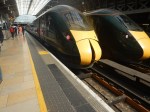
This morning, I took the 10:05 service from Paddington to Bedwyn, with the intention of returning on the 11:41 from Bedwyn to Paddington.
These are a few of the pictures that I took.
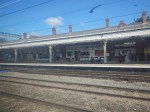
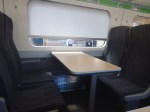
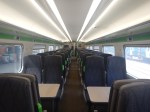

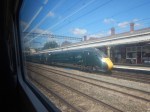

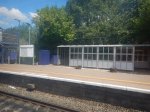
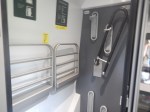
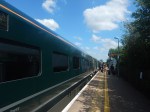

But things didn’t turn out as planned.
- Nothing serious and some animals got on the tracks between Reading and Swindon, meaning that we were some minutes late into Bedwyn, due to platform congestion at Reading.
- The return journey was consequently delayed.
These are a few observations.
Operating Speed
These were speeds on various parts of the journey.
- I timed the train at 115 mph through Southall and at 123 mph through Hayes & Harlington as the train accelerated out of Paddington.
- The train was doing just short of 125 mph for the major part of the route between London and Reading, until it had to stop because of the congestion.
- The train was doing around 100 mph on the electrified line between Reading and Newbury.
- Between Newbury and Bedwyn, speeds were between 80 and 90 mph.
Similar speeds were attained on the return journey.
Passenger Numbers
As the pictures show, there weren’t that many passengers who were travelling to Bedwyn, although there were more heading back to London.
Many more joined and left the service at the three larger stations of Reading, Newbury and Hungerford.
Now that the service is hourly between Reading and Bedwyn and half-hourly between Reading and Newbury in modern, comfortable trains, I can see passenger numbers growing.
Current Service
There are eleven trains per day, between Paddington and Bedwyn, at an hourly frequency, which take around three hours for a round trip.
So it would appear that three trains are needed for the service.
The service is also supplemented by an hourly stopping shuttle train between Reading and Newbury.
Two years ago, the service was just one three-car diesel train per hour between Paddington and Bedwyn with a few additional stops from long-distance trains.
Bedwyn Station Improvements
I got the impression, that Bedwyn station is probably at its limit for car parking with the current twenty-five spaces and cars all over the place.
This article on the Wiltshire Gazette and Herald, is entitled It’s A Rail Problem At Great Bedwyn and indicates that commuters and residents don’t see eye-to-eye with the car parking.
If the car parking were to be increased and usage at the station increased then I feel that a step-free bridge could be needed.
In Winner Announced In The Network Rail Footbridge Design Ideas Competition, I wrote how the competition was won by this bridge.
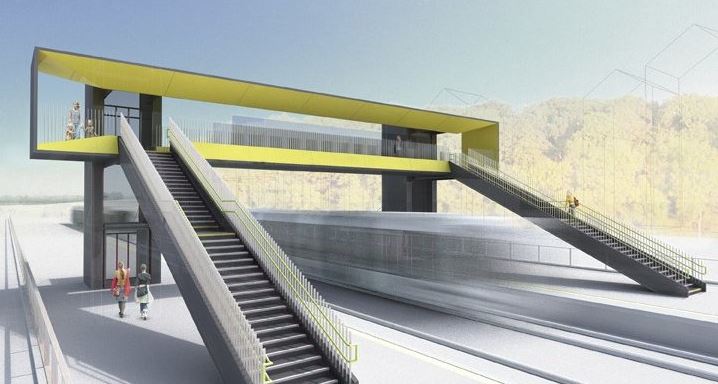
So could a factory-built bridge like this be installed at Bedwyn station?
The installation wouldn’t be difficult, but the politics could be.
Other Station Improvements
A quick look at other stations suggest these improvements.
- Hungerford station, which has a large car park, needs a step-free bridge.
- Kinbury station doesn’t have a bridge.
- Midgham station doesn’t have a bridge
- Theale station has improvements planned.
There are level crossings at Hungerford, Kintbury, Thatcham and Midgham.
Future Trains To Bedwyn
In Hitachi Plans To Run ScotRail Class 385 EMUs Beyond The Wires, I discussed how Hitachi were proposing to add battery power to Class 385 trains, which are in the same family as GWR’s Class 802 trains.
So surely, what is a power source for the goose is also a power source for the gander.
As it would only be a journey of thirteen miles both ways between Newbury and Bedwyn, this would surely be an ideal route for the use of battery power.
The other route, where battery power could be used would be between Didcot and Oxford, which is just over ten miles.
A Future Service To Marlborough
I covered this proposal in A Station For Marlborough.
Marlborough would be served by a single-track branch line on an old railway alignment, probably terminating near the large Tesco superstore in a single platform station.
The advantages of doing this would be.
- Marlborough, which is an important market town of 8,500 people would be connected to the rail network.
- Adequate car parking could be provided.
- Creating a station at Marlborough could be an alternative to expanding Bedwyn station, which could be problematical.
- It would improve the economics of the Paddington and Bedwyn service.
This is the sort of service, that should be developed.
Other Possible Services
The big advantage of this high speed local service for Great Western Railway, is that when it is on the Great Western Main Line, it becomes just another 125 mph service or once digital signalling is installed a possible 140 mph service.
These routes could have this type of high speed local services.
Great Western Main Line
Great Western Railway has several routes, where Class 800 and Class 802 trains break away from the Great Western Main Line to operate local services.
- Paddington and Bedwyn
- Paddington and Oxford
It could be argued that services to Cheltenham and Hereford are also high speed local services.
East Coast Main Line
In April 2018, I wrote Call For ETCS On King’s Lynn Route.
This post was based on an article in Rail Magazine, which talked about running 125 mph trains on the Kings Cross and Kings Lynn route.
This would make operation of the East Coast Main Line easier with herds of 125 mph trains steaming into and out of London.
I think, improvement would also extend to the Cambridge Line, in addition to the Fen Line.
- Operating speed up from 90 mph to 110 mph plus.
- Full digital signalling.
- Automatic Train Control.
Journey times and frequency to and from London Kings Cross would be improved significantly.
Siemens would probably need to uprate the Class 700 trains for faster running, as 100 mph trains are just too slow!
If you look at the East Coast Main Line between Doncaster and Edinburgh, large sections of the line are only double track.
It is the ambition of train operating companies to run more high speed expresses between London and the North of England and Scotland.
I can see a time, when all trains using the East Coast Main Line will have to confirm with a high minimum speed, otherwise the future plans cannot be fulfiled.
Midland Main Line
By the end of 2020, the Midland Main Line South of Market Harborough, will be a 125 mph electrified railway with a high speed branch to Corby, which will be served by a half-hourly twelve-car electric service.
From 2022, 125 mph bi-mode trains will be running services on the Midland Main Line.
I can see services between St. Pancras and Corby becoming another high speed local service.
- Half-hourly service.
- 125 mph running.
- Limited stop between Corby and London, with stops at Kettering, Luton And Luton Airport Parkway.
- The journey time could even be under an hour.
Selected trains could even use battery power to extend the service to Melton Mowbray.
West Coast Main Line
The West Coast Main Line will become increasingly crowded with fast 140 mph trains, especially after the opening of Phase 2a of High Speed Two to Crewe in 2027.
I believe that this will mean that all passenger services using the West Coast Main Line will need to be run using trains capable of at least 110 mph and possibly 125 mph.
The new operation of suburban services on the West Coast Main Line; West Midlands Trains are replacing their fleet with new Class 730 trains. Like the previous trains, they are 110 mph units, but are they capable of upgrading to 125 mph?
If they are upgradeable, they would ease timetabling problems between London and the West Midlands, as they could mix it with Virgin’s Class 390 trains.
Further North, Northern run services like these.
- Barrow and Manchester Airport.
- Blackpool and Manchester Airport
- Windermere and Manchester Airport
Currently, the operator is introducing new Class 195 and Class 331 trains, alongside the Class 319 trains.All of these trains are 100 mph capable, which is probably not fast enough, if they have to use the West Coast Main Line between Crewe and Lancaster, some of which is only double-track.
In Northern Considering Options For More New Trains, I wrote about Northern’s future rolling stock plans.
I suspect some 125 mph trains are in their plans for both the East and West Coast Main Lines.
Implications For Freight
There must surely be pressure for freight trains to go faster.
The 110 mph Class 93 locomotive is on its way, but with rail freight increasing we need to radically think how we run freight trains on a busy passenger line.
Conclusion
We will increasingly see upgrading of suburban services that use 125 mph line and not just around London.
Leicester Station – 11th July 2019
I took these pictures at Leicester station today.
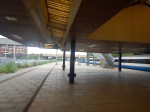

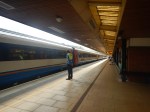
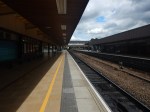
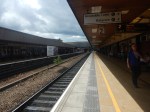
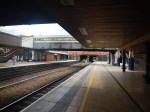

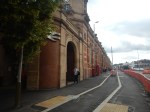

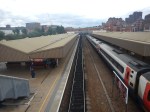
These are a few of my thoughts.
Long Straight Platforms
The two main platforms for trains to and from London are long and straight and can easily accommodate the longest trains that do or will use the station.
Wide Spacious Platforms
The two island platforms are wide and spacious.
In my time at the station, I didn’t see any trains use the outer platforms and I do wonder if the station is used to the maximum capacity allowed by the layout.
The Station Could Have More Trains And Be A Better Interchange
When you arrive at Ipswich station on a fast train from London, one of the half-hourly services has an easy connection to either Bury St. Edmunds and Cambridge, Felixstowe, Lowestoft and/or Peterborough. and staff and information screens are there to speed you on your way.
Leicester station doesn’t seem to welcome you to continue your journey elsewhere
Abellio And Ipswich Station
Abellio with their new trains and timetable, will be increasing frequencies, so that Suffolk’s County Town with a population of 133,000, will have the following services.
- Two trains per hour (tph) to Bury St. Edmunds. – Doubled from current.
- One tph to Cambridge – A second hourly service will be available with a change at Ely.
- One tph to Felixstowe – Might be doubled, now thst the Felixstowe branch has more capacity.
- Three-four tph to London – Faster and up from two expresses and a stopping train per hour.
- One tph to Lowestoft – Better timetable and faster.
- Three tph to Norwich – Up from two tph
- One tph to Peterborough – Doubled from current one train per two hours.
The creation of the East-West Rail Link will see a doubling of the service to Cambridge and one train per two hours to Oxford.
Applying Abellio’s East Anglian Rules To Leicester
Leicester is a city and County Town, with a population of 330,000.
These appear to be the current services.
- Two tph to Birmingham
- One tph to Cambridge, Peterborough and Stansted Airport
- Two tph to Derby
- One tph to Lincoln – Stopping train via Loughborough and East Midlands Parkway.
- Four tph to London
- Two tph to Nottingham
- Two tph to Sheffield
Leicester doesn’t seem to have the sort of train service the City deserves.
This is the London, Ipswich and Norwich philosophy as proposed by Abellio and in the process of being delivered.
- New maximum-length and maximum-speed high-capacity Class 745 trains will provide more seats on the route.
- A fifty per-cent increase in train frequency from two tph to three tph.
- Four express services per day, only stopping at Ipswich, have been introduced, giving a ninety minute service between London and Norwich.
- Four trains per day between Lowestoft and London.
What would a similar philosophy for London Midland Main Line, look like at Leicester?
- Three tph to Derby, Chesterfield and Sheffield.
- Six tph to London
- Three tph to Nottingham
- All trains would be maximum-length with a capacity at least similar to a 2+8 HST.
- Greater Anglia’s Class 745 trains will have 757 seats in two classes and a buffet. Expect a similar specification on the Midland Main Line.
- Services will be faster, with I suspect no trains taking longer than an hour from Leicester to London or Sheffield.
- Could there be a couple of non-stop trains every hour between London and Leicester?
This service would be a lot better and it only needs.
- An extra tph between London and Sheffield via Derby and Chesterfield
- An extra tph between London and Nottingham.
- Enough new maximum-length trains, which will probably be bi-mode trains, that are scheduled to arrive in 2022.
Four tph between London and Sheffield and London and Nottingham would surely be the ideal, but there just isn’t the capacity to the South of Kettering and in St. Pancras station.
So will we see extra services on the Midland Main Line to boost services North of Leicester?
- One tph between Leicester and Sheffield via Louthborough, East Midlands Parkway, Long Eaton, Derby and Chesterfield.
- One tph between Leicester and Sheffield via Louthborough, East Midlands Parkway, Ilkeston, Langley Mill, Alfreton and Chesterfield.
- One tph between Leicester and Nottingham via Louthborough, East Midlands Parkway and Beeston.
- The one tph Leicester to Lincoln service could also be included.
The services would be as follows.
- Trains would probably be shorter versions of the maximum-length bi-mode Midland Main Line trains.
- They would use the outer platforms at Leicester station to give cross-platform interchange with the frequent London trains.
- Services could possibly be extended past Sheffield to Leeds and past Nottinghm to Newark or Lincoln.
Leicester’s excellent platform design would see an increase in the number of trains and hopefully passengers.
Leicester And East-West Services
I also think, that there is sufficient capacity in Leicester station to add the following East-West services.
- Four tph to Birmingham
- Four tph to Cambridge
- Four tph to Peterborough
The following should be noted.
- Abellio has a substantial interest in all three stations and Leicester.
- The routes are often run by two-car Class 170 trains.
- The trains are often full.
- There is only short sections of lines that are electrified.
I believe that there should be the following service between Birmingham and Cambridge.
- Four tph
- At least four-car bi-mode trains.
- At least a 100 mph capability.
- Stops would include Coleshill Parkway, Nuneaton, Leicester, Melton Mowbray, Oakham, Stamford, Peterborough, March and Ely.
- At the Birmingham end, services could go via Birmingham International and Coventry.
- At the Cambridge end. perhaps two tph could be extended to Audley End and Stansted Airport.
- At Leicester there would be an easy interchange to London, the East Midlands and Sheffield.
- At Peterborough, there would be an easy interchange to London, Leeds, Newcastle and Scotland
It could be argued that if there is a need for a Cambridge and Oxford rail link, then Britain’s fastest growing high-technology hub, needs to have a high quality rail link to Birmingham via Leicester, Coventry and Birmingham International.
One overcrowded hourly two-car diesel train is not suitable for this important rail route.
Currently, trains take two hours forty-five minutes between Birmingham and Cambridge, which means with a fifteen minute turnround at either end, twenty-four trains would be needed for the service.
So it is probably not feasible, but I suspect it could be an aspiration for Abellio.
- I wouldn’t be surprised to see Abellio try to take over the Birmingham and Stansted Airport service from CrossCountry.
- Greater Anglia’s four-car Class 755 trains would double the capacity and be able to use electrification at both ends of the route.
- Greater Anglia have a few spare Class 755 trains, so is this takeover in their ambitions.
- Would the service be easier for Abellio to run, than CrossCountry?
This is a service to watch over the next couple of years.
Class 755 Trains In The East Midlands
I also suspect that Class 755 trains could be in Abellio’s plans for the East Midlands. Lincolnshire’s railways are little different to those of East Anglia.
The Bridges At The Southern End Of The Station
A trusted source told me, that one of the problems of electrifying through Leicester station with 25 KVAC overhead wires, is that the bridges at the Southern end of the station are a problem.
The general impression, I got was that the structure under the bridges is so complicated, that there would need to be a massive reconstruction of the railway.
To make matters worse a major sewer is in or under the bridges.
So if this meant that the railway had to be closed for a number of months, is this the reason for only electrifying as far as Market Harborough?
Surely, if the Midland Main Line is only to be partly-electrified, then Leicester would be a better changeover point.
Charging Battery Electric Trains
In The Mathematics Of Fast-Charging Battery Trains Using Third-Rail Electrification, I showed how a third-rail-based fast charging sstem, like that proposed by Vivarail could transfer several hundred kWh to the batteries of a train stopped in the station, for a few minutes.
Leicester station with the two tracks between widely-spaced platforms with a gap between the tracks, would be an ideal location for such a charging system.
- The two third-rail would be laid together between the two tracks.
- The third-rails could be shielded, but as they would only be live with a train on the top, would it be necessary?
- The driver would only need to stop the train in the correct position, but they do that anyway.
In a three minute contact between the train and the third-rail, I believe it would be possible to transfer up to 200 kWh to the batteries of the train.
Conclusion
Leicester station is a station, that suits the ambitions of the City.
But the unimaginative train service as provided by Stagecoach, is very fourth-rate and has left Abellio with a lot of scope to improve the train service throughout the East Midlands.
Stagecoach have only themselves to blame for losing the franchise.
Market Harborough Station – 11th July 2019
Compare these pictures taken today, with those in Market Harborough Station – 10th May 2019.
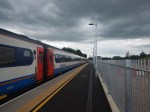
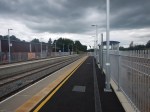
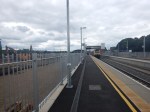
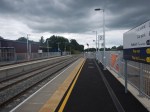
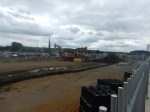
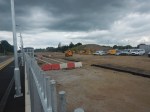
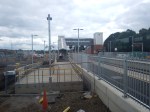
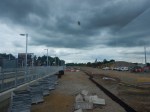
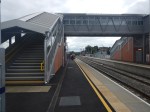
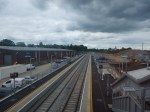
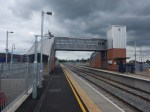
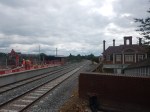
In the intervening two months, there have been major changes at Market Harborough station.
Two Shorter Curved Platforms Have Been Replaced
The two shorter curved platforms have been replaced by two long straight platforms.
- They can handle the longest trains likely to stop in the station.
- As they are straight, it is likely that there will be a smaller gap to mind, between platform and train.
- The platforms and the tracks have been moved to the West by several metres.
- The platforms are now furnished to a high standard, with shelters and information screens.
The new platforms and tracks are a great improvement for passengers, staff and train operators.
But they also mean.
- Trains that stop at the station, can perform faster stops, as the better train-platform interface speeds passengers entering or leaving the train.
- Passing trains can benefit from a higher speed limit through the station.
This should mean a faster journey time along the Midland Main Line.
The Land Released Will Be Used To Extend The Car Park
Several hundred new car parking spaces will be provided on the Eastern side of the line, in the land released by moving the platforms and tracks.
There Is A Fully Working Step-Free Bridge
The new step-free bridge is now fully working.
- The steps are wide enough for bi-directional traffic.
- There are lifts on both sides.
It is asymmetric, with the steps probably leading in the direction most passengers will be walking to and from.
- On the Eastern London-bound platform, passengers will be walking to and from the car park.
- On the Western Leicester-bound platform, passengers will be walking to and from the main station building with the exit to the town, the ticket office and the cafe.
The bridge will certainly handle commuters to London or Leicester, who drive to the station and have to cross the tracks before or after one journey.
It will also handle commuters, who walk or cycle from the town centre.
This bridge has been placed by someone, who knows what they’re doing!
There Are A Pair Of Crossovers To The North Of the Station
I don’t know whether these are new, but they certainly will give operational advantages, if for instance, a train should fail in Market Harbprough station.
As it is likely, that the Midland Main Line will be electrified as far North as Market Harborough station, could they be used for other purposes?
125 mph electric services could be run between London and Market Harborough.
- The two crossovers would easy turnback of the trains or the building of a stabling siding, North of the station.
- Trains would probably take under an hour.
- They could stop at intermediate stations like Luton Airport Parkway Luton, Bedford and Wellingborough.
- Market Harborough station has a lot of parking.
- It could be a second electric service into St. Pancras.
It could be a useful complimentary service or an alternative one whilst planned major regeneration work is ongoing at Leicester station.
Market Harborough Station Has A Bigger Capacity
Consider.
- The longer platforms will allow longer trains with more seats to call at the station.
- The shorter dwell times at the station of stopping trains will allow more trains to stop in the station every hour.
- The step-free bridge is additional capacity for crossing the tracks.
- There will be a massive increase in car parking.
It looks to me that the station has been upgraded to fulfil a need for more trains.
These figures show the population and passenger numbers at stations around Market Harborough.
- Corby – 70,800 – 300,000 – 4.24
- Kettering – 56,200 – 1,070,000 – 19
- Market Harborough – 22,900 – 900,000 – 39.3
- Wellingborough -49,100 – 1,015,000 – 20.7
The last figure was obtained by dividing the number of journeys by the population.
Does Market Harborough’s high figure mean that there is a high demand for travellers living around Market Hsrborough and the large amount of extra car parking will be well-used.
Note.
- I travelled to Market Harborough with a lady and her two young children, who wee actually going to Leicester and were being picked up by family at the earlier station due to all the traffic problems around Leicester station.
- There used to be four stations between Market Harborough and Leicester, but all closed in 1968.
- There used to be two stations between Market Harborough and Kettering, but all closed in the 1960s.
- Market Harborough is well-connected by roads.
So is Market Harborough station used by locals as a Leicester South station?
As an aside, I wouldn’t be surprised to see a new parkway station developed in conjunction with a large housing development, built between Kettering and Leicester, at some point in the future..
Future Electrification
There is a section entitle Electrification in the Wikipedia entry for the Midland Main Line.
This is the last paragraph.
On 26 February 2019 Andrew Jones, Parliamentary Under Secretary of State for Transport, announced that electrification would be extended northwards from Kettering to Market Harborough, enabling the connection of the railway to a new power supply point at Braybrooke.
I will assume that this means, that electric trains will be able to run to Market Harborough station.
As I said earlier, there are a pair of crossovers to the North of the station, which could be useful for turning trains or giving easy access to a couple of stabling sidings.
Hopefully, electrifying the station will not be difficult, as it has only recently been built and foundations for the electrification gantries have either been built or surveyed thoroughly.
Battery Trains Through Market Harborough Station
One thing that won’t be needed at Market Harborough station is a charging station for battery-electric trains, as this will be handled by the electrification.
Bi-mode and battery-electric trains would either raise or lower the pantograph at speed or at a stop in the station.
The operation of a battery-electric train going North could be interesting.
If it wasn’t scheduled to stop in the station, the train would go through Market Harborough station, with maximum charge in the onboard storage, after being charged by the overhead electrification, on the way up from London. The train would also run through the station, at the highest possible speed, as allowed by the track, so that the train had the highest possible kinetic energy.
Electrification to Market Harborough will act like a catapult to send trains North at their maximum kinetic energy and they could probably glide all the way to Leicester station using little of their energy stored in the onboard battery.
The electrification would probably go a short way North of Market Harborough station, so that sropping trains could be accelerated to full speed using the electrification.
There Is Still Work To Be Done
Work to be done appears to include.
- Refurbishing the original subway to give access between the London-bound platform and the station building.
- Finishing the shelters and other platform furnishings.
- Landscape the car-park and create ramped access to the London-bound platform.
A notice said the subway would reopen in December 2019.
Conclusion
Market Harborough now has a much higher capacity modern station.
Market Harborough Station – 10th May 2019
I stopped at Market Harborough station and took these pictures.
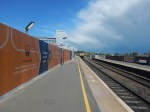
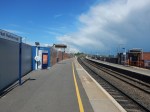
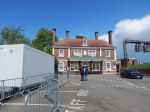
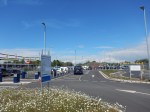
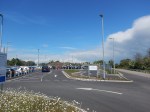
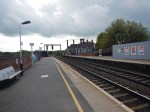
As can be seen, the works at the station are well underway.
Market Harborough Line Speed Improvement Project
This document on the Network Rail web is entitled Market Harborough Line Speed Improvement Project.
According to the document, the project will deliver.
- A line speed increase through Market Harborough enabling a reduction in journey time for passengers.
- New longer platforms that improve access and reduce stepping distances onto trains whilst also catering for longer trains with more seats.
- Station accessibility will be improved with a new footbridge featuring lifts, opening up travel opportunities for more passengers.
- A new 300 space car park has already been constructed, providing step-free access to platforms for passengers arriving by car.
Unfortunately, Network Rail don’t seem to have published a well-prepared visualisation of what passengers, will see, when the project is completed.
There isn’t even a decent visualisation on the station.
Talk about Mushroom Marketing! Keep your customers and project funders in the dark and feed them shit.
This Google Map shows the station..
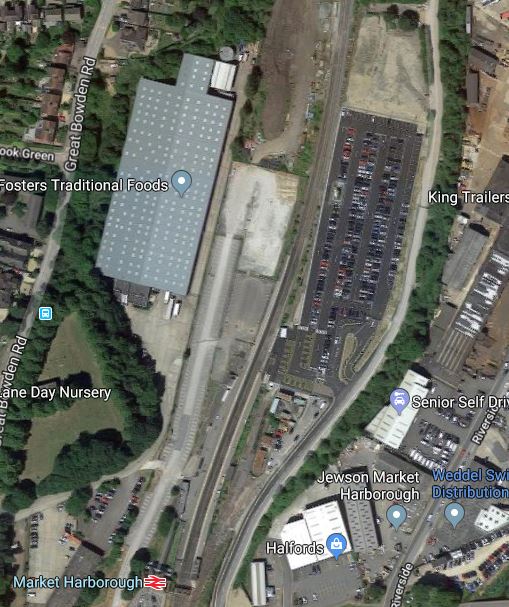
Note.
- The Midland Main Line going up the middle of the map.
- The large new car-park on the Eastern side of the line.
- The building site on the Western side of the line, where new strauighter tracks will go.
The completion date is planned to be December 2019.
Conclusion
The project looks good in the flesh, but that can’t be said for the project presentation to stakeholders.
Are Greater Anglia’s Flirts Faster Than 100 mph?
Over the last fifty years or so, a lot of fast trains have been introduced onto the UK’s railways.
- InterCity 125 trains were designed to provide 125 mph services and held the world record for diesel trains at 143 mph
- InterCity 225 trains were designed to provide 140 mph services, but have been timed at 161 mph
- Class 442 trains were designed to provide 100 mph services, but have been timed at 108 mph
- Most Electrostars are 100 mph trains, but the Class 387 train can cruise at 110 mph.
It does seem that often the design speed and what is possible differ by up to twenty miles per hour.
It is probably in part good design, as it means that an accidental overspeed can be safely handled.
Greater Anglia has ordered two fleets of Stadler FLIRTs.
- Class 745 electric trains, which have twelve cars.
- Class 755 bi-mode trains, which have three or four cars.
Note
- Both trains share a lot of features and are capable of 100 mph.
- Some Norwegian electric FlLIRTs have a top speed of 120 mph. They have an extra powered axle, but do they have ostensibly the same running gear and electrifical systems?
So would it be reasonable to assume that Stadler have designed FLIRTs, so that faster versions can be created?
If the answer is in the affirmative, there is two interesting possibilities.
London To Norwich Services
The section of line between Norwich and Haughley Junction has the following characteristics.
- Double-track
- 31 miles long.
- 100 mph operating speed
- Electrified
- A few level-crossings
- It is fairly straight
- There is the Trowse swing bridge over the River Wensum
- Passenger services on the route will be run only using Stadler FLIRTs.
Network Rail have been very successful in upgrading routes like this for faster running and as the Trowse swing bridge will be replaced, I wouldn’t be surprised to see this section of line upgraded to perhaps 110 mph. This would save a couple of minutes, if the trains could take advantage.
Other services in East Anglia would also benefit from works to improve line speed.
Midland Main Line Services
The Midland Main Line will receive brand-new 125 mph bi-mode trains in 2022.
If Class 755 bi-mode trains could be configured to run at 125 mph, like their electric cousins, they must be a possibility.
Conclusion
Only Stadler know if their Class 745 and 755 trains can be upgraded to higher speeds.
But if they can be upgraded, they could be a very useful train for UK railways.
Why Are Abellio Starting Norwich-in-Ninety With Class 755 Trains?
At the May timetable change Abellio Greater Anglia will be running four trains per day between London and Norwich in ninety minutes.
I have read that this is possible with the current Class 90 locomotive /Mark 3 coach train sets and that is a fall-back position.
I was also told by a former employee of Greater Anglia, that one night, he was a passenger between Norwich station and Illford depot in an empty Class 321 train, that achieved an incredible time.
So why take the risk with untried Class 755 trains on the first day of the new timetable?
- Abellio must be very sure that the trains will perform, as they say in the brochure.
- They also know all the publicity that running new trains will bring.
But could Abellio just want to check the public’s reaction to these trains with effectively a locomotive in the middle, before they decide on the 125 mph bi-mode trains for the Midland Main Line?
I don’t believe that building a 125 mph version of Class 755 train would be beyond the bounds of possibility.
The Weight Of A Class 755 Train
I haven’t been able to do my energy calculation for a Class 755 train, as I can’t find the weight of a Class 755 train on the Internet.
However, I can estimate the weight of a four-car Class 755/4 train from the Stadler data sheet for the train.
This gives the following.
- Mean Acceleration Electric (0-40 mph) – 1.1 metres/second squared
- Maximum traction – 200 kN
- 202 seats and 27 tip-up seats
I think it is reasonable to assume that the acceleration rate is for a train with a typical load of passengers.
Using Omni’s Acceleration Calculator, this gives a time of 16.256 seconds to accelerate from 0-40 mph.
Then putting this time into Omni’s Newton’s Second Law Calculator, gives a train mass of 181.8 tonnes.
As passengers can weigh around twenty tonnes, if they weigh 90 Kg each, with baggage, bikes and buggies, I would estimate that an empty Class 755/4 train weighs around 160-170 tonnes.
By comparison.
- An empty four-car electric Class 350 train weighs 175.5 tonnes
- An empty three-car diesel Class 170 train weights 135.3 tonnes.
I don’t think a figure of 160-170 tonnes is out of line, with a figure of 180 tonnes for a typical loaded train.
Remember too, that these trains are Stadler FLIRTs, where FLIRT is Fast Light Intercity and Regional Train.
Applying Omni’s Kinetic Energy Calculator, gives these figures for the kinetic energy of a train.
- 90 mph – 40 kWh
- 100 mph – 50 kWh
- 125 mph – 78 kWh
As some electric FLIRTs can nun at 125 mph, I believe that a bi-mode FLIRT, based on the Class 755 train could be designed with these characteristics.
- 125 mph on electric power
- 125 mph on diesel power
Acceleration on diesel to 125 mph would probably be the biggest problem and it is likely that more power than for a Class 755 train will be needed.
Do Abellio Greater Anglia’s initial Norwich-in-Ninety trains give a clue in that they will be two four-car Class 755 trains working as an eight-car train?
- It will be eight passenger cars and two power cars at the 25% and 75% positions in the formation.
- Stadler have built the similar Stadler GTW with two power cars in a single train.
So I suspect that Stadler know the dynamics of these trains very well.
I wouldn’t be surprised if someone told me, that Stadler had offered a bi-mode Stadler FLIRT with two power cars, for the Midland Main Line.
- The power car concept has been sold to operators with diesel, electric and battery power options.
- Stadler are proposing to use battery power in the Class 93 locomotive to boost performance.
- Many would believe, as I do, that hydrogen power could be added to a Stadler power car.
So are these runs at 100 mph with two four-car Class 755 trains, a final trial of the technology to prove that similar higher-powered trains could run at 125 mph on the Midland Main Line, before Abellio sign a contract?
Hydrogen Trains To Be Trialled On The Midland Main Line
This article on Railway Gazette is entitled Bimode And Hydrogen Trains As Abellio Wins Next East Midlands Franchise.
Abellio will be taking over the franchise in August this year and although bi-mode trains were certain to be introduced in a couple of years, the trialling of hydrogen-powered trains is a surprise to me and possibly others.
This is all that is said in the article.
Abellio will also trial hydrogen fuel cell trains on the Midland Main Line.
It also says, that the new fleet will not be announced until the orders are finalised.
In this post, I’m assuming that the hydrogen trial will be performed using the main line trains.
Trains for the Midland Main Line will need to have the following properties
- 125 mph on electric power
- 125 mph on diesel power
- Ability to go at up to 140 mph, when idigital n-cab signalling is installed and the track is improved.
- UK gauge
- Ability to run on hydrogen at a future date.
I think there could be three types of train.
- A traditional bi-mode multiple unit, with underfloor engines like the Hitachi Class 800 series, is obviously a possibility.
- An electrical multiple unit, where one driving car is replaced by a bi-mode locomotive with appropriate power.
- Stadler or another manufacturer might opt for a train with a power pack in the middle.
The second option would effectively be a modern InterCity 225.
- South of Kettering, electricity would be used.
- North of Kettering, diesel would be used
- Hydrogen power could replace diesel power at some future date.
- Design could probably make the two cabs and their driving desks identical.
- The locomotive would be interchangeable with a driver car.
Bi-modes would work most services, with electric versions working to Corby at 125 mph.
Which manufacturer has a design for a 125 mph, hydrogen-powered train?
Alstom
Alstom have no 125 mph UK multiple unit and their Class 321 Hydogen train, is certainly not a 125 mph train and probably will still be under development.
Bombardier
In Mathematics Of A Bi-Mode Aventra With Batteries, I compared diesel and hydrogen-power on bi-mode Aventras and felt that hydrogen could be feasible.
In that post, I wrote a section called Diesel Or Hydrogen Power?, where I said this.
Could the better ambience be, because the train doesn’t use noisy and polluting diesel power, but clean hydrogen?
It’s a possibility, especially as Bombardier are Canadian, as are Ballard, who produce hydrogen fuel-cells with output between 100-200 kW.
Ballard’s fuel cells power some of London’s hydrogen buses.
The New Routemaster hybrid bus is powered by a 138 kW Cummins ISBe diesel engine and uses a 75 kWh lithium-ion battery, with the bus being driven by an electric motor.
If you sit in the back of one of these buses, you can sometimes hear the engine stop and start.
In the following calculations, I’m going to assume that the bi-mode |Aventra with batteries has a power source, that can provide up to 200 kW, in a fully-controlled manner
Ballard can do this power output with hydrogen and I’m sure that to do it with a diesel engine and alternator is not the most difficult problem in the world.
So are Bombardier designing the Bi-Mode Aventra With Batteries, so that at a later date it can be changed from diesel to hydrogen power?
All an Aventra needs to run is electricity and the train, the onboard staff and passengers don’t care whether it comes from overhead wires, third-rail, batteries, diesel or hydrogen.
Bombardier also have the technology for my proposed locomotive-based solution, where one driver-car of an Aventra is replaced by what is effectively a locomotive.
If Bombardier have a problem, it is that they have no small diesel train to replace Abellio’s small diesel trains. Could the longer services use the bi-mode Aventras and the shorter ones Aventras with battery power?
CAF
CAF probably have the technology, but there would be a lot of development work to do.
Hitachi
Hitachi have the bi-mode trains in the Class 802 trains, but haven’t as yet disclosed a hydrogen train.
Siemens
They’ve made a few noises, but I can’t see them producing a bi-mode train for 2022.
Stadler
In a few weeks time, I will be having a ride in a Stadler-built Class 755 train, run by Abellio Greater Anglia.
The Class 755 train is a bi-mode 100 mph train, from Stadler’s Flirt family.
Could it be stretched to a 125 mph train?
- Stadler have built 125 mph electric Flirts.
- It is my view, that Stadler have the knowledge to make 125 mph trains work.
- Flirts are available in any reasonable length.
- I’ve read that bi-mode and electric Flirts are very similar for drivers and operators.
These could work the Midland Main Line.
If the mainline version is possible, then Abellio could replace all their smaller diesel trains with appropriate Class 755 trains, just as they will be doing in East Anglia.
Stadler with the launch of the Class 93 locomotive, certainly have the technology for a locomotive-based solution.
East Midlands Railway would be an all-Stadler Flirt fleet.
As to hydrogen, Stadler are supplying hydrogen-powered trains for the Zillertalbahn, as I wrote in Zillertalbahn Orders Stadler Hydrogen-Powered Trains.
Talgo
Talgo could be the joker in the pack. They have the technology to build 125 mph bi-mode trains and are building a factory in Scotland.
My Selection
I think it comes down to a straight choice between Bombardier and Stadler.
It should also be noted, that Abellio has bought large fleets from both manufacturers for their franchises in the UK.
Zero-Carbon Pilots At Six Stations
This promise is stated in the franchise.
Once the electrification reaches Market Harborough in a couple of years, with new bi-mode trains, running on electricity, the following stations will not see any passenger trains, running their diesel engines.
- St. Pancras
- Luton Airport Parkway
- Luton
- Bedford
- Wellingborough
- Kettering
- Corby
- Market Harborough
These are not pilots, as they have been planned to happen, since the go-ahead for the wires to Market Harborough.
Other main line stations include.
- Beeston
- Chesterfield
- Derby
- East Midlands Parkway
- Leicester
- Long Eaaton
- Loughborough
- Nottingham
- Sheffield
Could these stations be ones, where East Midlands Railway will not be emitting any CO2?
For a bi-mode train to be compliant, it must be able to pass through the station using battery power alone.
- As the train decelerates, it charges the onboard batteries, using regernerative braking.
- Battery power is used whilst the train is in the station.
- Battery power is used to take the train out of the station.
Diesel power would only be used well outside of stations.
How would the trains for the secondary routes be emission-friendly?
- For the long Norwich to Derby and Nottingham to Liverpool routes, these would surely be run by shorter versions of the main line trains.
- For Stadler, if secondary routes were to be run using Class 755 trains, the battery option would be added, so that there was no need to run the diesel engines in stations.
- For Bombardier, they may offer battery Aventras or shortened bi-modes for the secondary routes, which could also be emission-free in stations.
- There is also the joker of Porterbrook’s battery-enhaced Class 350 train or BatteryFLEX.
I think that with the right rolling-stock, East Midlands Railway, could be able to avoid running diesel engines in all the stations, where they call.
Why Are Abellio Running A Hydrogen Trial?
This is a question that some might will ask, so I’m adding a few reasons.
A Train Manufacturer Wants To Test A Planned Hydrogen Train
I think that it could be likely, that a train manufacturer wants to trial a hydrogen-powered variant of a high-speed train.
Consider.
- The Midland Main Line is about 160 miles long.
- A lot of the route is quadruple-track.
- It is a 125 mph railway for a proportion of the route.
- It has only a few stops.
- It is reasonably straight with gentle curves.
- Part of the route is electrified.
- It is connected to London at one end.
In my view the Midland Main Line is an ideal test track for bi-mode high speed trains.
A Train Manufacturer Wants To Sell A Fleet Of High Speed Trains
If a train manufacturer said to Abellio, that the fleet of diesel bi-mode trains they are buying could be updated to zero-carbon hydrogen bi-modes in a few years, this could clinch the sale.
Helping with a trial, as Abellio did at Manningtree with Bombardier’s battery Class 379 train in 2015, is probably mutually-beneficial.
The Midland Main Line Will Never Be Fully Electrified
I believe that the Midland Main Line will never be fully-electrified.
- The line North of Derby runs through the Derwent Valley Mills World Heritage Site. Would UNESCO allow electrification?
- I have been told by drivers, that immediately South of Leicester station, there is a section, that would be very difficult to electrify.
- Some secondary routes like Corby to Leicester via Oakham might be left without electrification.
But on the other hand some sections will almost certainly be electrified.
- Around Toton, where High Speed Two crosses the Midland Main Line and the two routes will share East Midlands Hub station.
- Between Clay Cross North Junction and Sheffield, where the route will be shared with the Sheffield Spur of High Speed Two.
- The Erewash Valley Line, if High Speed Two trains use that route to Sheffield.
The Midland Main Line will continue to need bi-mode trains and in 2040, when the Government has said, that diesel will not be used on UK railways,
It is my view, that to run after 2040, there are only two current methods of zero-carbon propulsion; on the sections without overhead electrification battery or hydrogen power.
So we should run trials for both!
Abellio Know About Hydrogen
Abellio is Dutch and after my trip to the Netherlands last week, I wrote The Dutch Plan For Hydrogen, which describes how the Dutch are developing a green hydrogen economy, where the hydrogen is produced by electricity generated from wind power.
So by helping with the trial of hydrogen bi-mode trains on the Midland Main Line, are Abellio increasing their knowledge of the strengths and weaknesses of hydrogen-powered trains.
In Thoughts On Eurostar To North Netherlands And North West Germany, I proposed running bi-mode trains on the partially-electrified route between Amsterdam and Hamburg via Groningen and Bremen, which would be timed to connect to Eurostar’s services between London and Amsterdam. These could use diesel, hydrogen or battery power on the sections without electrification.
If hydrogen or battery power were to be used on the European bi-mode train, It would be possible to go between Sheffield and Hamburg on a zero-carbon basis, if all electric power to the route were to be provided from renewable sources.
Abellio Sees The PR Value In Running Zero-Carbon Trains
In My First Ride In An Alstom Coradia iLint, I talked about running hydrogen-powered trains on a hundred mile lines at 60 mph over the flat German countrside
The Midland Main Line is a real high speed railway, where trains go at up to 125 mph between two major cities, that are one-hundred-and-sixty miles apart.
Powered by hydrogen, this could be one of the world’s great railway journeys.
If hydrogen-power is successful, Abellio’s bottom line would benefit.
Conclusion
This franchise will be a big improvement in terms of carbon emissions.
As I said the choice of trains probably lies between Bombardier and Stadler.
But be prepared for a surprise.
Thoughts On Kentish Town Station
Kentish Town station is not step-free, as these pictures show.
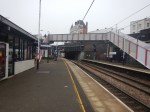
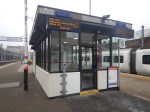
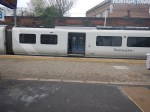
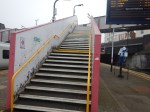

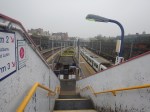
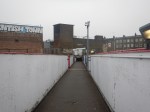
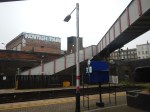
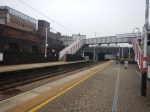
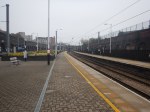
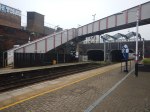
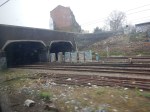
This Google Map shows the layout of the station.
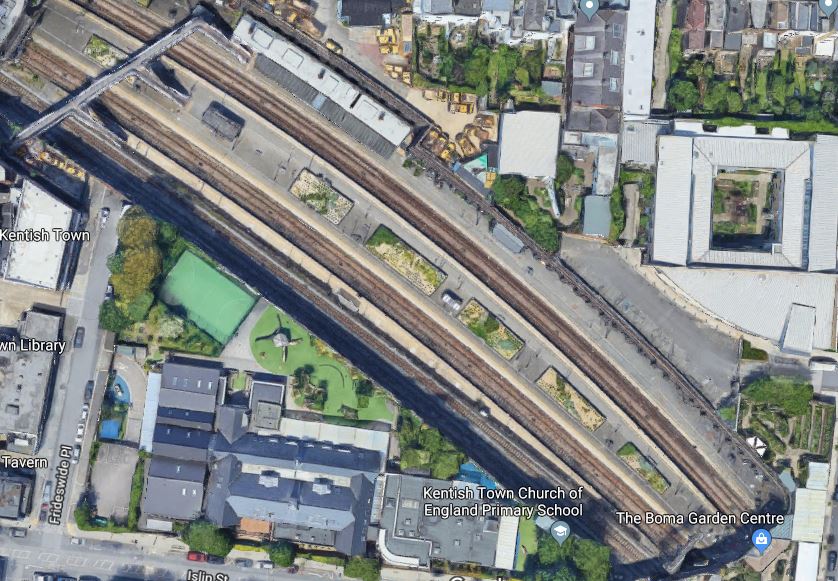
Note the four platforms and two extra tracks on the Southern side.
But I do believe it is a station with potential.
An All-Electric Railway
In perhaps 2022 or a couple of years later, when the new bi-mode trains are delivered, between Kentish Town and St. Pancras stations will be an all-electric railway.
The Station Is In A Cutting
The station is in a cutting and given the price of land in the area and the demand for housing, I wouldn’t be surprised to see the whole station roofed over at some time in the future.
This couldn’t be done until the railway was all-electric.
Step-Free Access To National Rail Platforms
If the station was covered by development, I’m sure it would be possible to provide step-free access between the surface and the National Rail platforms.
Step-Free Access To Underground Platforms
This map from carto.metro.free.fr shows the lines at Kentish Town station.
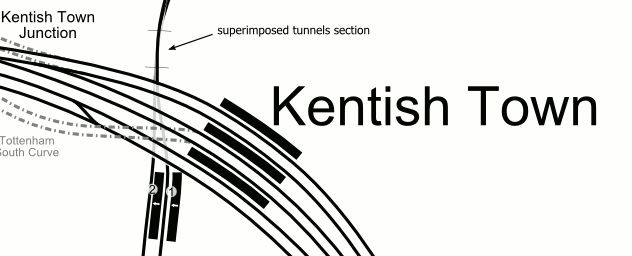
Note how the Northern Line is at almost right angles to the Midland Main Line.
Providing step-free access might be easier from the area to the North of the current Undegrround station, which could be within any new development.
Some of the new techniques used on Crossrail might make a connection possible.
Kentish Town And West Hampstead Thameslink Stations
The next station to the North of Kentish Town is West Hampstead Thameslink.
Both stations have six tracks, but only four platforms.
It would probably be very advantageous if there were six tracks on the Midland Main Line along this very busy railway.
But this is impossible as the tunnels that lie between the two stations only have a total of four tracks.
I suspect that Network Rail’s engineers sometimes muse about what might have been, if the Victorians had built the extra tracks.
- Thameslink services could have their own separate tracks.
- Express services could be roaring through at 200 kph.
- The West London Orbital Railway could terminate at Kentish Town station.
But short of rebuilding the Midland Main Line between the two station and digging a lot of extra tunnels, these are impossible ideas.

