Digital Signalling Work Outlined By Network Rail For Northern City Line
The title of this post, is the same as that of this article on Rail Business Daily.
This is the first paragraph.
Network Rail has detailed work due to be delivered on the Northern City Line to Moorgate.
I use this line regularly and I believe that with digital signalling the Northern City Line could see a large increase in frequency.
Currently, the service from Moorgate is as follows.
- 4 tph to Welwyn Garden City via Potters Bar
- 4 tph to Hertford North of which 2 tph extending to Watton-at-Stone and 1tph of those continuing to Stevenage.
Note.
- tph is trains per hour.
- Although the service is reduced from that shown, because of the pandemic and lower passenger demand.
But eight tph means a train every seven minutes and thirty seconds.
If you look at London’s high frequency lines, they have or will have passenger frequencies as follows.
- Crossrail – 24 tph on dedicated tracks with digital signalling.
- East London Line – 16 tph on dedicated tracks.
- North London Line – 8 tph on tracks shared with freight trains.
- Thameslink – 24 tph on dedicated tracks with digital signalling.
Note.
- The East London Line is planned to go to 20 tph with two extra tph to Clapham Junction and Crystal Palace.
- 20 tph means a headway between trains of three minutes.
- 24 tph means a headway between trains of two minutes and thirty seconds.
It should also be noted that the Victoria Line runs upwards of thirty tph on a fully digitally-signalled line.
What Level Of Service Would Be Possible?
These are my thoughts on various aspects of the Northern City Line.
How Many Trains Could Be Handled Between Finsbury Park And Moorgate?
This section of track is a simple double-track with a diamond crossing to the North of the two platforms at Moorgate, so that trains can use either platform.
This layout is used at Brixton and Walthamstow Central on the Victoria Line and Battersea Power Station on the Northern Line to name just three of many.
So I suspect that the track layout at the terminus at Moorgate can handle well-upwards of twenty tph.
The new Class 717 trains that run into Moorgate have an operating speed of 85 mph, which is faster than the previous Class 313 trains, which appear to have run at 30 mph South of Drayton Park.
I suspect that eventually twenty or even twenty-four tph will be possible on a digitally-signalled route between Finsbury Park and Moorgate.
But in the interim, sixteen tph would be a good compromise.
How Many Trains Could Be Handled On The Current Routes?
Currently, four tph use the both the Welwyn Garden City and the Hertford East/Stevenage routes.
I am fairly sure that both routes could handle eight tph, with the only proviso, that there is enough terminal capacity to turn the trains.
Looking at the layout of Welwyn Garden City station, I am certain that it could be modified to be able to handle eight tph.
I would hope that the new platform at Stevenage station, built to handle trains to and from Moorgate, can cater for four tph. As there are turnback platforms at Gordon Hill and Hertford North stations, I’m sure the other four tph could be handled.
The Piccadilly Line And The City of London
It has always been difficult to get between the Northern section of the Piccadilly Line and the City of London.
In the 1960s, I used to use my bicycle. By public transport, you generally had to use the bus or the 641 trolley bus to Moorgate.
With the improvement of the Northern City Line and Finsbury Park station, the fastest route to Moorgate is probably to change between the Piccadilly and Northern City Lines at Finsbury Park station.
Increasing the frequency of Northern City Line services between Finsbury Park and Moorgate would create a high-capacity route to the City for those commuting from the Northern section of the Piccadilly Line.
The Piccadilly Line And Crossrail
There is no connection between the Piccadilly Line and Crossrail.
A trip between Oakwood and Canary Wharf would be difficult.
As with getting to the City of London, the improvement of the Northern City Line and Finsbury Park station offers a route to Crossrail.
Oakwood and Canary Wharf would probably be done with changes at Finsbury Park and Moorgate.
The Victoria Line And The City of London
There is a cross-platform interchange at Highbury & Islington station between the Victoria and Northern City Lines.
With an increased frequency of Northern City Line services between Finsbury Park and Moorgate, I would expect that more people would use this route.
The Victoria Line And Crossrail
There is no connection between the Victoria Line and Crossrail.
The easiest route will be to take the route in the previous section and join Crossrail at Moorgate.
Conclusion
It does look that with the current routes sixteen tph to and from Moorgate could be a practical limit.
But that would still be a train every three minutes and forty-five seconds between Finsbury Park and Moorgate.
This increased frequency could be needed to create a high capacity link between the Northern sections of the Piccadilly and Victoria Lines and the City of London and Crossrail.
‘Box Structure’ Flyover Saves £70m And Six Months For East West Rail
The title of this post, is the same as that of this press release on Network Rail.
This is the first paragraph.
Engineers have saved £70m of taxpayers’ money by using creative new methods to build a railway flyover as part of the East West Rail project.
This Network Rail picture shows how the new flyover rests on a concrete box, that spans the West Coast Main Line (WCML).
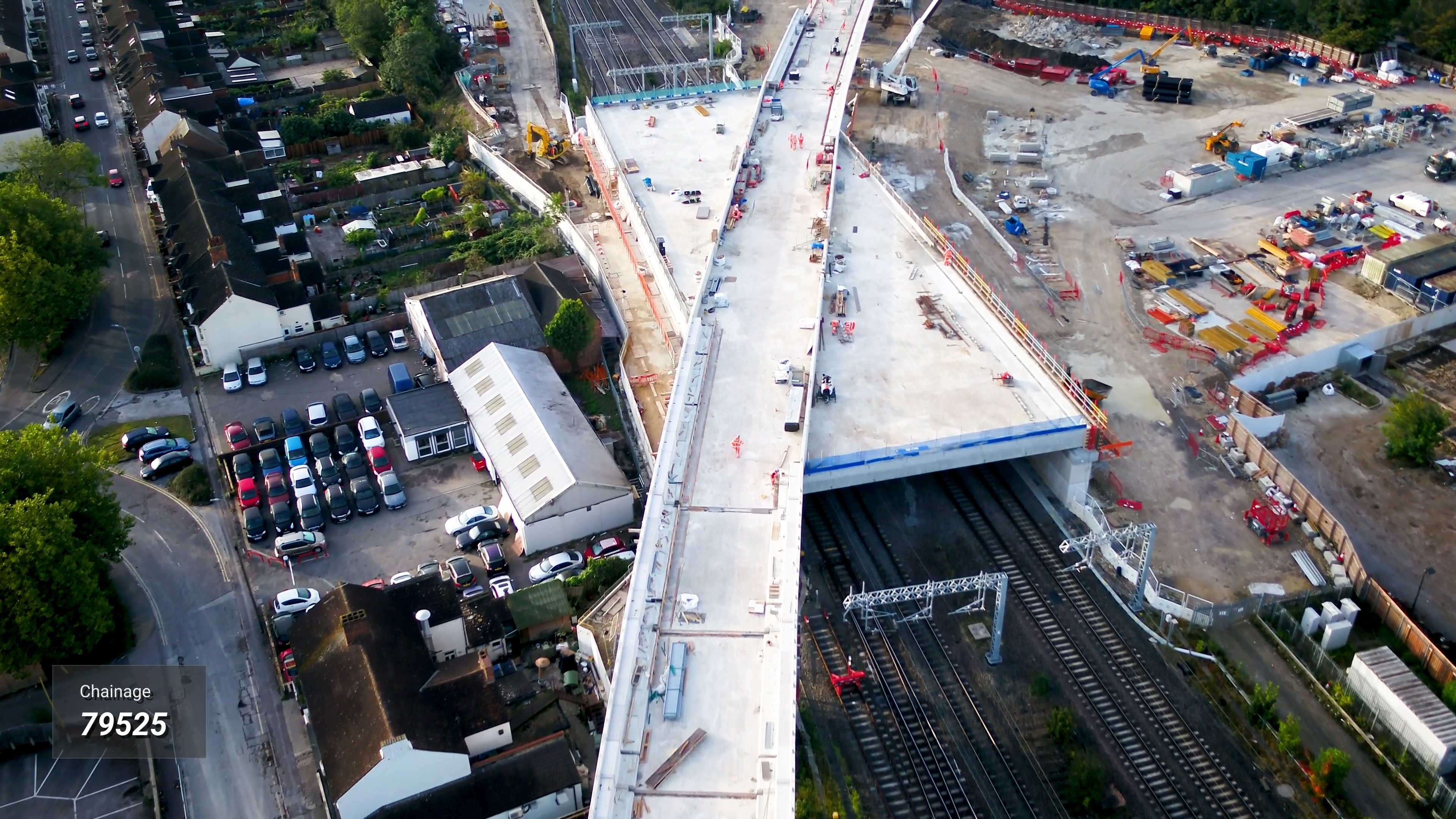
Note that the press release contains a video that explains how the flyover was replaced and why the method of construction saved all the money and time.
The main cost savings came about because of the following.
- Construction could go on above the WCML without having to stop the trains.
- Components for the flyover were made in a factory, with subsequent cost reductions and quality increases.
Anybody, who’s ever poured a concrete slab in typical British weather will understand the second point.
According to the press release, the method of construction gives a hundred and twenty year life span for the structure.
For comparison, this 3D Google Map visualisation shows the Hitchin flyover, which was opened in 2013.
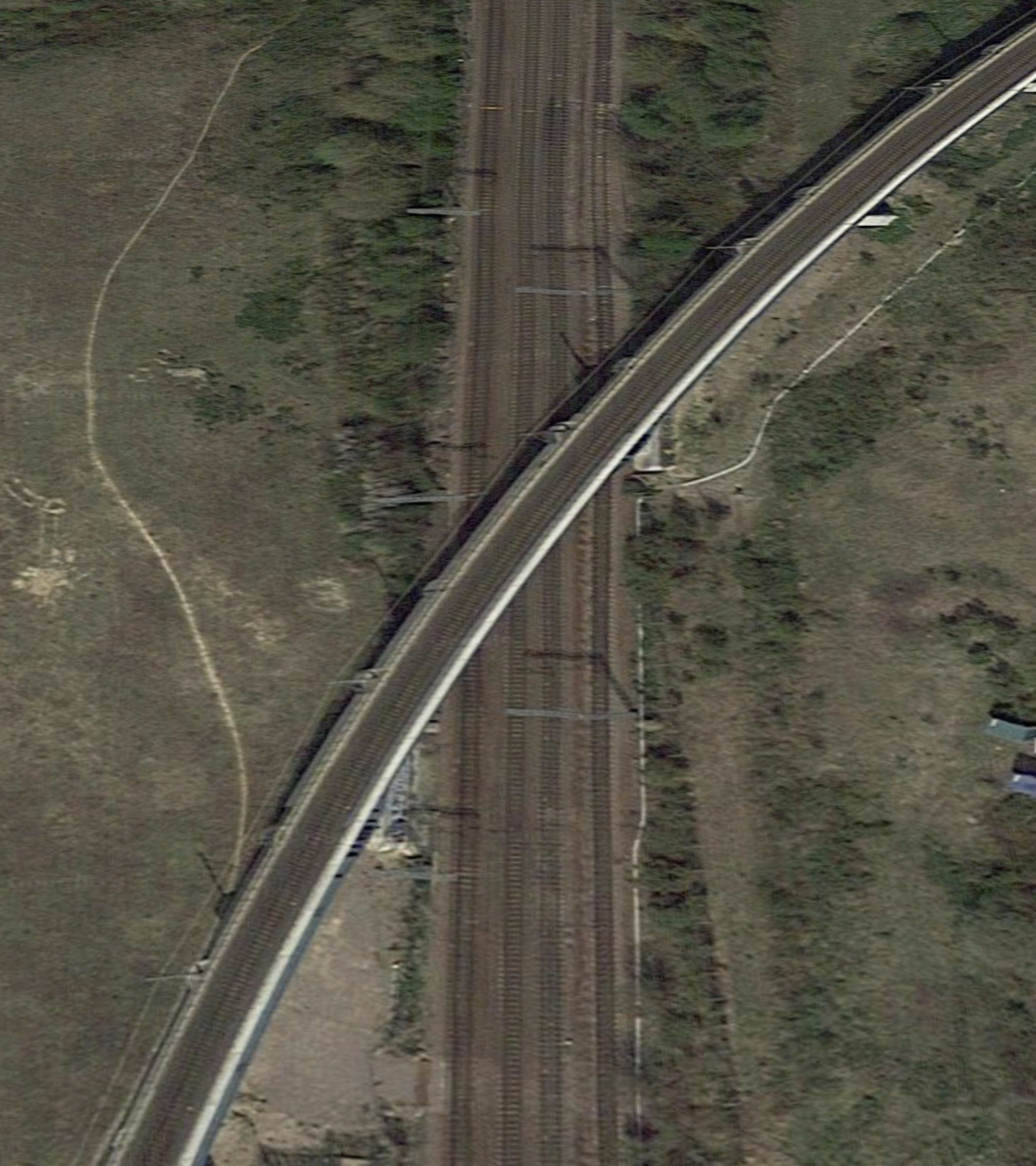
Note the columns supporting the single-track railway.
If this was being built today, would a box be used as at Bletchley?
Hitachi Rail And Angel Trains To Create Intercity Battery Hybrid Train On TransPennine Express
The title of this post, is the same as that of this Press Release from Hitachi Rail.
The press release starts with these three points.
- Hitachi Rail, Angel Trains and TransPeninne Express (TPE) agree to trial retrofitting battery on intercity train
- Trial, starting next year, can cut fuel usage by at least 20% and reduce emissions on Transpennine network from 2022 onwards
- Tri-mode service can cut noise pollution in urban areas and improve air quality.
Hitachi also point to this infographic.
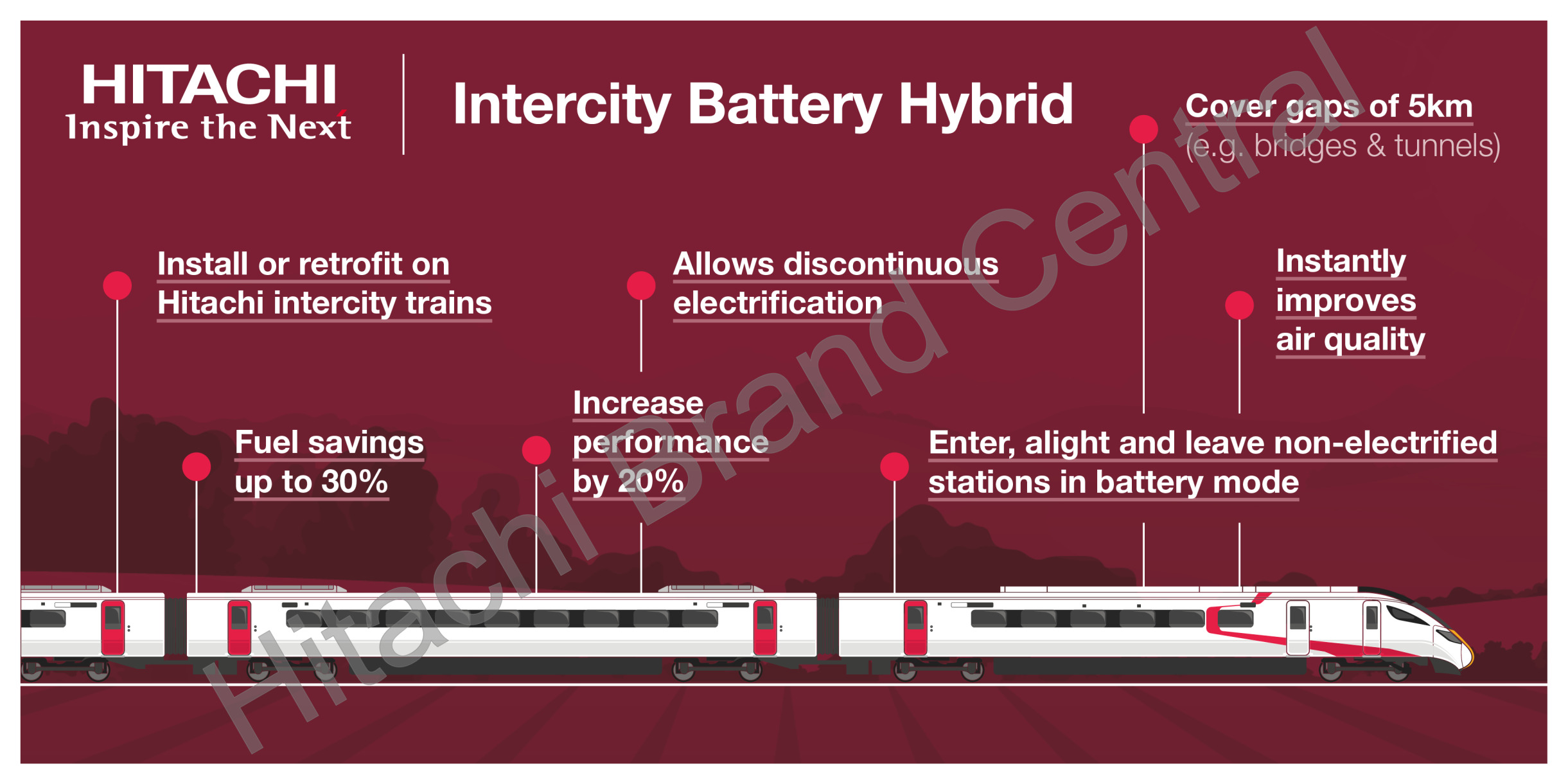
This very much looks to be a step forward from the Intercity Tri-Mode Battery Train that was announced in December 2020 in this press release from Hitachi which is entitled Hitachi And Eversholt Rail To Develop GWR Intercity Battery Hybrid Train – Offering Fuel Savings Of More Than 20%.
The Intercity Tri-Mode Battery Train is described in this Hitachi infographic.

The specifications are very similar, except for the following.
- The battery range is given as five kilometres.
- Fuel savings are up to 30% instead of at least 20%.
- A performance increase of 30 % is claimed.
- The upgrade appears to be able to be fitted to Hitachi intercity trains, as opposed to a straight replacement of one engine by batteries.
It looks to me, that Hitachi have been working hard to improve their design.
I think this paragraph of the press release is key.
The trial will see a diesel engine replaced by batteries to help power a five-carriage train, along with the two remaining engines. The power provided by the batteries will help to reduce the amount of fuel required to operate the train.
Hitachi don’t say, but I suspect the trains and their batteries have a lot of energy saving features.
- Regenerative braking is already used to power some services like lighting and air-conditioning on the trains.
- But I suspect regenerative braking will also be used to recharge the batteries.
- A sophisticated computer system will drive the train in the most optimal manner.
- Hopefully, diesel will only be used as a last resort.
Features like these and others will enable the trains to jump gaps in the electrification. As more and more tricks are added and batteries hold more charge, the gaps the trains will be able to cross will get larger.
Five kilometres might not sound much, but I think it could be surprisingly useful.
I will use an example from the Midland Main Line to illustrate how the trains and discontinuous electrification might work.
In Discontinuous Electrification Through Leicester Station, I described the problems at Leicester station and how discontinuous electrification could solve the problem.
The following is a modified extract from that post.
This Google Map shows the bridge and the Southern end of the station.
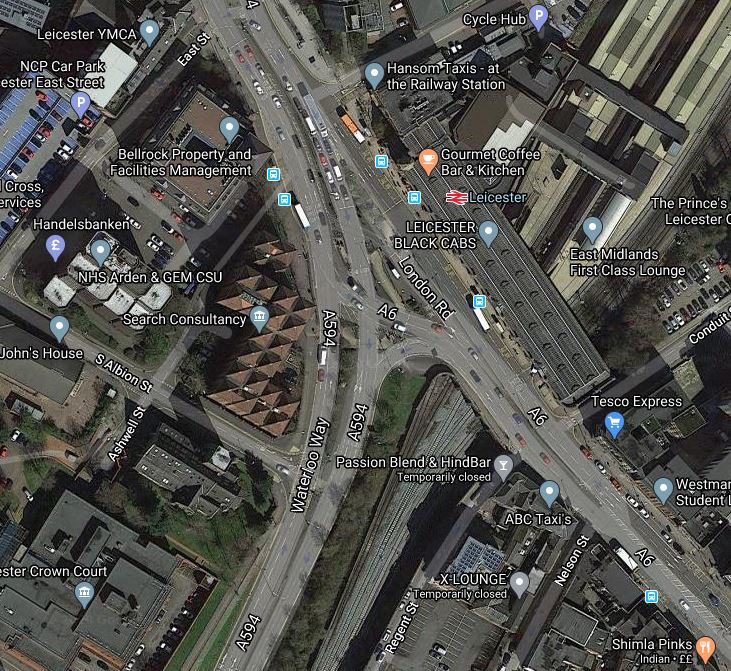
It looks to me, that Leicester station and the road, would have to be closed to traffic for some time, if the bridge were to be rebuilt, to allow the erection of electrification through the area. Leicester and all train passengers would love that!
A solution could be discontinuous electrification.
- The electrification from the South, would finish on the South side of bridge.
- The electrification from the North, would finish at a convenient point in Leicester station or just to the North.
- Electric trains would cover the gap of up to five kilometres on battery power.
Note.
Pantographs could be raised and lowered, where the wires exist.
Trains would probably use a stopping profile in Leicester station, that ensured they stopped with full batteries.
This would mean they had enough electricity to get back up to speed and reconnect to the electrification on the other side of the station.
To get an idea at how long five kilometres is in the Centre of Leicester, this Google Map shows the Leicester station.

Note that the platforms are around three hundred metres long.
In other words the electrification can be kept well away from the station and its troublesome bridge.
How much money would be saved and disruption avoided?
Application To The TransPennine Express Routes
These are the various routes, where Class 802 trains could be used.
Liverpool Lime Street And Edinburgh, Newcastle, Scarborough Or York
Sections are as follows.
- Liverpool Lime Street and Manchester Victoria – 31.7 miles – Electrified
- Manchester Victoria and Stalybridge – 8 miles – Electrified probably by 2024
- Stalybridge and Huddersfield – 18 miles – Diesel
- Huddersfield and Dewsbury – 8 miles – Electrified probably by 2024
- Dewsbury and Leeds – 9.2 miles – Diesel
- Leeds and York – 25.6 miles – Electrified probably by 2024
- York and Newcastle – 80.2 miles – Electrified
Note.
- All services take a common route between Liverpool Lime Street and York.
- A surprising amount is electrified.
- A further 42 miles are being electrified.
- The 3 km Morley Tunnel between Dewsbury and Leeds might not be electrified.
- The 5 km Standedge Tunnel between Huddersfield and Stalybridge might not be electrified.
It looks to me that the 5 km battery range will avoid electrification of two long Victorian tunnels.
Manchester Airport And Newcastle Or Redcar Central
Sections are as follows.
- Manchester Airport and Manchester Victoria – 13.2 miles – Electrified
- Manchester Victoria and Stalybridge – 8 miles – Electrified probably by 2024
- Stalybridge and Huddersfield – 18 miles – Diesel
- Huddersfield and Dewsbury – 8 miles – Electrified probably by 2024
- Dewsbury and Leeds – 9.2 miles – Diesel
- Leeds and York – 25.6 miles – Electrified probably by 2024
- York and Newcastle – 80.2 miles – Electrified
- Northallerton and Redcar Central – 29 miles – Diesel
The route goes through the Morley and Standedge tunnels.
Manchester Piccadilly And Hull
Sections are as follows.
- Manchester Piccadilly and Stalybridge – 7.5 miles – Electrified probably by 2024
- Stalybridge and Huddersfield – 18 miles – Diesel
- Huddersfield and Dewsbury – 8 miles – Electrified probably by 2024
- Dewsbury and Leeds – 9.2 miles – Diesel
- Leeds and Selby – 21 miles – Diesel
- Selby and Hull – 31miles – Diesel
The route goes through the Morley and Standedge tunnels.
Manchester Piccadilly And Huddersfield
The route goes through the Standedge tunnel.
Huddersfield And Leeds
The route goes through the Morley tunnel.
Manchester Airport And Cleethorpes
The Hope Valley Line which is part of this route has three tunnels.
Perhaps they will use a bit of diesel to get through Totley.
The Future
This paragraph sums up what Hitachi and Angel Trains could see as a possible future direction.
Once complete, the trial provides a pathway for Hitachi Rail, the train builder and maintainer, and Angel Trains, the train’s owner to develop plans to retrofit batteries to the wider fleet.
These plans will probably go in the directions like decarbonisation, more efficient operation and better standards for passengers.
Conclusion
This looks like a solution that has been helped by real ale in an appropriate hostelry.
- The battery range has been chosen so Network Rail don’t necessarily have to electrify the tunnels.
- Full electrification can be used either side of the tunnels.
- Will any stations not be electrified. After all if the trains are using battery power in stations do they need electrification?
- It might be useful to have some more bi-mode freight locomotives, that could traverse the tunnels on diesel or batteries.
Hitachi and Network Rail certainly seem to be cooking up a solution.
Network Rail And Vivarail Bring The Next-Generation Battery Train To COP26
The title of this post, is the same as that of this article on Network Rail.
These are the first two paragraphs.
Network Rail and Vivarail today announced that Vivarail’s next-generation battery train will be launched at COP26 and will run daily services throughout the international climate change conference.
This zero-emission train uses new batteries, developed by Vivarail, to combine maximum range with the ability to recharge quickly. The result is a train that can travel for up to 80 miles on battery power and recharge in only 10 minutes using Vivarail’s patented Fast Charge system.
That is an excellent range coupled with a fast turnround time.
How will other companies like CAF, Hitachi and Stadler respond?
If all battery-electric trains can reach this range, I don’t think we’ll need hydrogen for multiple units, but we will probably need it for freight and other locomotives.
New East Linton Station Development Given The Go Ahead
The title of this post, is the same as that of this article on Rail Technology Magazine.
This is the first paragraph.
Proposals to open a station in the village of East Linton, for the first time in over half a century, have just been approved by East Lothian Council’s planning committee.
In The Scottish Borders Have Caught London Overground Syndrome, I said this.
It would also appear that because of the success of the Borders Railway, that there are suggestions to add new stations on the East Coast Main Line at Reston and East Linton. This is said under Future in the Wikipedia entry for East Linton station.
Proposals to reopen the station, along with the former station at Reston, have received the backing of John Lamont MSP, who has taken the case to the Scottish Parliament. A study published in 2013 proposed that East Linton and Reston stations be reopened. Since Abellio ScotRail took over the franchise in April 2015, they have now committed to reopening East Linton and Reston Stations as part of the local Berwick service by December 2016 but due to the shortage of rolling stock this will now commence in December 2018.
So it would appear there is a high chance it will happen.
Reston station is well on the way to completion and the site is shown in this Google map.

Note.
- The East Coast Main Line running between the North-West and South-East corners of the map.
- The brown scars around the railway indicate the site of the station.
- The main A1 road is just off this map to the North.
In New Rail Service From Newcastle To Edinburgh To Stop At These Northumberland Stations, I indicated that a new service from TransPennine Express will start running in December 2021 and will call at Reston station, when it opens.
Now East Linton station is on its way.
This Google Map shows the village of East Linton.
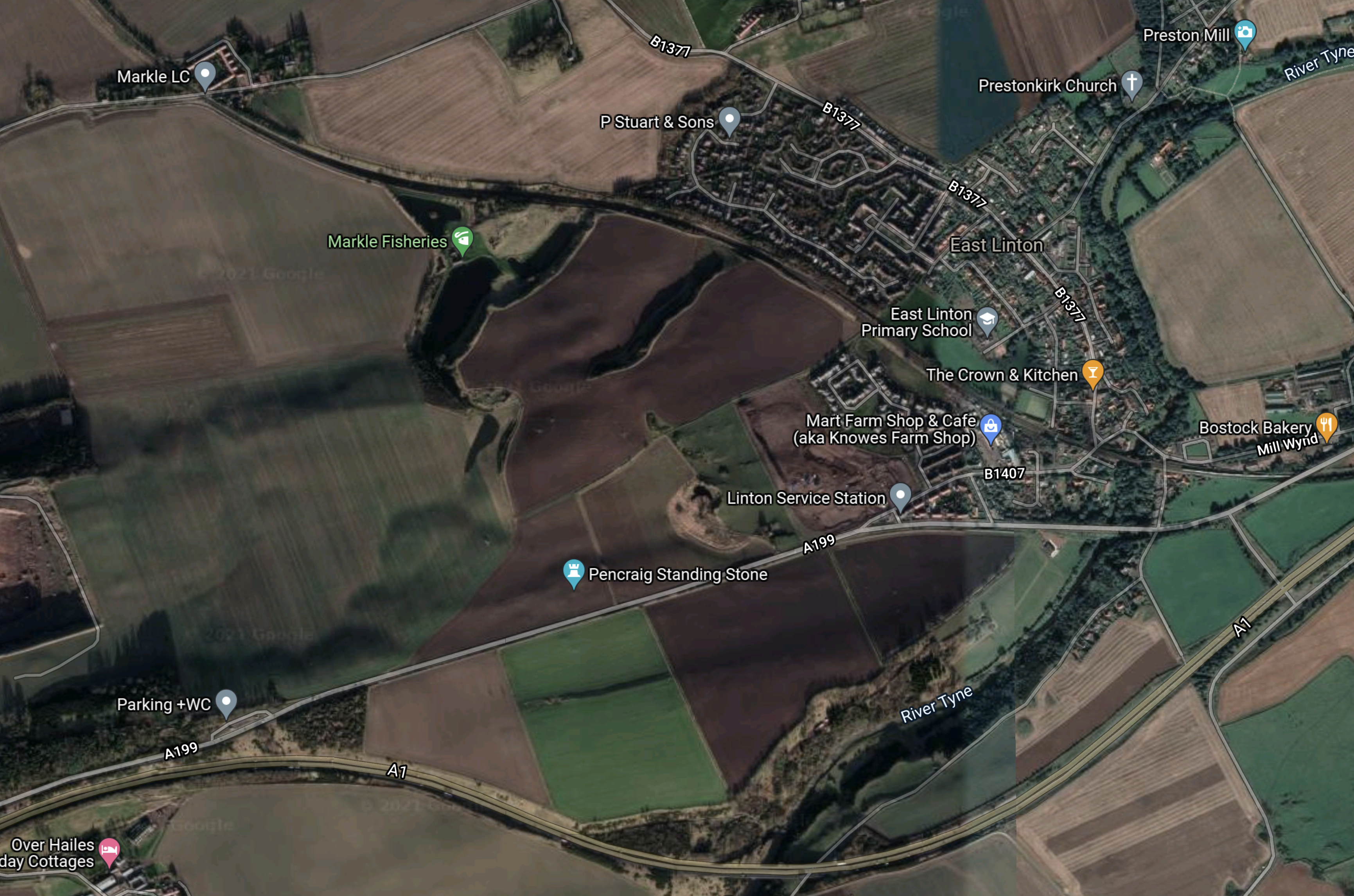
Note.
- The East Coast Main Line going through the middle of the village.
- The A1 curves South of the village.
Will the station be built in the middle of the village?
The page on Scotland’s Railway, indicates it will be.
East Linton and Reston stations seem to be progressing at speed, but then so did Horden and it appears Soham will be open this year.
Network Rail seem to have at last got their project management right.
The London And Edinburgh Travel Market
This paragraph comes from of this article on Railway Gazette.
Lumo is aiming to carry more than 1 million passengers per year. It is particularly targeting people who currently fly between Edinburgh and London; in June it says there were 74 764 air journeys on the route, compared to 82 002 by rail.
Lumo’s million passengers per year, will equate to around 83,300 passengers per month.
What these figures don’t show is the number of rail journeys made to intermediate stations like Newcastle, York, Doncaster and Peterborough.
These are a few thoughts.
Rail Capacity Between London And Edinburgh
Consider.
- LNER is currently the only rail carrier offering a daytime service between London and Edinburgh.
- LNER run approximately 26 trains per day (tpd) in both directions between London and Edinburgh.
- A nine-car Class 801 train can carry 510 Standard Class passengers and 101 First Class passengers.
That means that LNER had a capacity of just over 950,000 seats in June.
It might seem poor to have only sold 82,002 seats in June between London and Edinburgh, which is just 8.6 % of the available seats.
On the other hand, LNER’s two trains per hour (tph) are a lot more than London and Edinburgh trains, as they connect towns and cities all the way up the East Coast Main Line between London and Aberdeen.
Lumo’s capacity of a million seats per year, works out at 83,300 seats per month, which is another 8.7 % of capacity.
- Lumo will sell seats on price initially and I suspect they’ll end up running about 85-95 % full.
- It has been stated that they need to run 80% full to break even.
- I also think, that they would like to have a few seats for late bookers.
But even so, they will surely affect LNER’s bookings.
What Will LNER Do?
Several of the things, that Lumo are doing can be easily copied by LNER.
- Early booking.
- Improve onboard service.
- Better seating.
They could even reduce prices.
I think it is very likely we could end up with a price and service war between LNER and Lumo.
Would The Airlines Be The Losers?
This could be an outcome of competition between LNER and Lumo.
We are now talking about times of around four hours and twenty-five minutes between London and Edinburgh, but there are improvements underway on the East Coast Main Line.
- The remodelling of the approach to Kings Cross station has not been reflected in the timetables.
- The Werrington Dive Under has not been completed yet.
- Digital signalling is being installed South of Doncaster.
- The power supply is being upgraded North of Newcastle.
When these and other improvements are complete, I can see journey times reduced below four hours.
But would that only be for starters?great b
If a 1970s-technology Intercity 225 train, admittedly running as a shortened train formation, could achieve a time of just under three-and-a-half hours for the 393.2 miles between Kings Cross and Edinburgh stations in September 1991, what could a modern Hitachi train do, if all of the improvements had been completed and perhaps half of the route could be run at 140 mph under the watchful eyes of full digital signalling and an experienced driver.
Consider.
- London and York is nearly two hundred miles of fairly straight railway, that is ideal for high speed.
- Current trains run the 393.2 miles in four hours 25 minutes, which is an average speed of 89 mph.
- A train running at 89 mph would take two hours and fifteen minutes to cover 200 miles.
- A train running at 125 mph would take one hour and thirty-six minutes to cover 200 miles.
- A train running at 140 mph would take one hour and twenty-six minutes to cover 200 miles.
When Network Rail, Great British Railways or the Prime Minister renames the East Coast Main Line as High Speed East Coast, I think we can be sure that trains between London and Edinburgh will be able to achieve three-and-a-half hours between the two capitals.
High Speed Two is only promising three hours and forty-eight minutes.
What About LNER’s New Trains?
LNER Seeks 10 More Bi-Modes, was written to explore the possibilities suggested by a short article in the December 2020 Edition of Modern Railways.
There has been no sign of any order being placed, but Hitachi have moved on.
- They are building the prototype of the Hitachi Intercity Tri-Mode Battery for testing on the Great Western Railway.
- They have completed some of the Class 803 trains for East Coast Trains, which has now been renamed Lumo. These trains have a battery for hotel power in case of catenary failure, but no diesel engines.
- They are building the Class 807 trains for Avanti West Coast, which appear to be designed for high speed and have no batteries or diesel engines.
- The latest versions of the trains will have a reshaped nose. Is it more aerodynamic at high speeds?
It does seem that there is an emphasis on speed, better acceleration and efficiency.
- Could the lessons learned be used to improve the performance of the existing trains?
- Could a small high performance sub-fleet be created to run LNER’s Scottish services?
There are certainly possibilities, that would cut journey times between London and Edinburgh.
Conclusion
I can see the airlines flying between London and Edinburgh suffering a lot of collateral damage, as the two train companies slug it out.
Comings And Goings At Ely Station
On my meander around the Fens yesterday, I spent twenty minutes or so at Ely station, as the variety of trains came through the station, whilst I waited for a train to March.



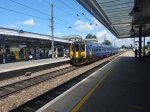
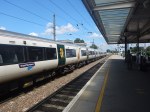
Ely and the surrounding lines are to be remodelled, so that more trains can pass through the complicated junctions.
I had hoped to see a freight train pass through, which would have used the avoiding lines to pass the station.
In some ways, Ely sums up the problems of some of our major railway junctions.
- Several important passenger services needing to pass through.
- Several long freight trains a day.
- Level crossings everywhere.
- More passenger services are needed.
And on top of it all, there is a need to decarbonise.
British Rail and Network Rail have been trying to sort Ely for decades and it should be noted that the Fen Line to King’s Lynn station was electrified in 1992, which was probably an early phase of their master-plan.
Ely And Battery-Electric Trains
These are the distances without electrification on the various routes from Ely.
- Ipswich – 39 miles
- Norwich – 52 miles
- Peterborough – 30.5 miles
- Wisbech – 25 miles
Routes to King’s Cross, King’s Lynn, Liverpool Street, Stansted Airport and Stevenage are all fully electrified.
It does appear to me, that the new generation of battery-electric should be able to handle services from Ely on battery power.
For many of these services, which are or will be run by Greater Anglia, the required battery range can be achieved by swapping some of the diesel engines in the Class 755 trains for batteries.
Freight And Hydrogen Power
In Was This The Most Significant Statement On Freight Locomotives Last Week?, I referred to this press release from Freightliner, which is entitled Freightliner Secures Government Funding For Dual-Fuel Project.
This sixth paragraph from the press release is very significant.
This sustainable solution will support a programme to decarbonise freight operating companies’ diesel fleets in a cost-efficient manner that does not require significant short-term investment and facilitates operational learning in support of a longer-term fleet replacement programme, potentially using 100% hydrogen fuel.
I believe the paragraph indicates, that Freightliner and possibly the other companies involved in the building and operation of heavy freight locomotives have concluded, that the technology is now such, that a zero-carbon rail locomotive powered by 100 % hydrogen is now possible.
Hydrogen offers several advantages.
- Large amounts of power.
- Range comparable with diesel locomotives.
- Depots and freight terminals can be without electrification.
- As hydrogen-powered locomotive will most likely have an electric transmission, this opens the possibilities of using electrification where it exists and regenerative braking to an onboard battery.
My unreliable crystal ball says that we’ll see hydrogen-powered locomotives by 2026.
Tidying Up At Cheshunt Station – 4th August 2021
As I approached Cheshunt station, it looked like there had been some tidying up on the Western side of the line.
Unfortunately, I didn’t have my camera handy, so I was unable to take any pictures.
But I did take these pictures later from the station.
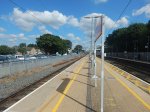
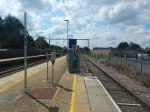
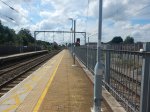

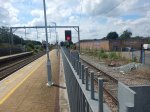
It does seem that Network Rail are tidying up the inside of the bend.
The Internet offers no clue, as to what is happening, but it could be anything from improving the car park entrance, to installing a second bay platform at the station, so that more trains can be run to and from Liverpool Street.
But there is a clue here in West Anglia Route Improvement – Cheshunt Station – 26th February 2017, which from the date is four years old.
The Google Map in this post, shows the Southern end of Platform 2 to be a different shape, to the pictures I took today.
It looks like the platforms have been lengthened.
- Originally, they could handle an eight-car Class 317 train, which are 160 metres long.
- It looks like now, they can handle a pair of five-car Class 720 trains, which are 244 metres long.
This will allow pairs of five-car Class 720 trains to work Cambridge services.
Pairs of four-car Class 710 trains are only 166 metres long, so they don’t need any platform lengthening.
The Sunset Studios Effect
If I was right in The Location Of Sunset Studios In Broxbourne, that a station will be built on the London Overground between Turkey Street and Theobalds Grove to serve the studio complex, then this may require modifications at Cheshunt, if traffic increases substantially.
- Cheshunt station will need to be step-free.
- Cheshunt station will need better passenger facilities, like more ticket machines.
- Cheshunt station may need more car parking.
- The bay platform at Cheshunt station will need to be handle upwards of four trains per hour (tph), all of which will be pairs of four-car trains.
A large housing development is planned for just to the North of Cheshunt station and hopefully, the developer will sort a lot of these issues.
Will Zero-Carbon Freight Trains Be Powered By Battery, Electric Or Hydrogen Locomotives?
These are a few initial thoughts.
We Will Not Have A One-Size-Fits-All Solution
If you consider the various freight and other duties, where diesel locomotives are used, you get a long list.
- Light freight, where perhaps a Class 66 locomotive moves a few wagons full of stone to support track maintenance.
- Intermodal freight, where a Class 66 locomotive moves a long train of containers across the country.
- Stone trains, where a Class 59 or Class 70 locomotive moves a very heavy train of aggregate across the country.
- Empty stock movements, where a diesel locomotive moves an electrical multiple unit.
- Supporting Network Rail with trains like the New Measurement Train, which is hauled by two diesel Class 43 power cars.
- Passenger trains at up to and over 100 mph.
I can see a need for several types of zero-carbon locomotive.
- A light freight locomotive.
- A medium freight locomotive, that is capable of hauling many intermodal trains across the country and would also be capable of hauling passenger services.
- A heavy freight locomotive, capable of hauling the heaviest freight trains.
- A Class 43 power car replacement, which would probably be a conversion of the existing power cars. Everybody loves InterCity 125s and there are over a hundred power cars in regular service on railways in the UK.
There are probably others.
The UK Hydrogen Network Is Growing
Regularly, there are news items about companies in the UK, who will be providing green hydrogen to fuel cars, vans, buses, trucks and trains.
Hydrogen is becoming a fuel with a much higher availability.
The UK Electricity Network Is Growing And Getting More Resilient
We are seeing more wind and solar farms and energy storage being added to the UK electricity network.
The ability to support large numbers of battery-electric buses, cars, trucks and trains in a reliable manner, is getting more resilient and much more comprehensive.
There Will Be More Railway Electrification
This will happen and installation will be more innovative. But predicting where electrification will be installed, will be very difficult.
Hydrogen Fuel Cells Now Have Rivals
Hydrogen fuel cells are normally used to convert hydrogen gas to electricity.
But over the last few years, alternative technology has evolved, which may offer better methods of generating electricity from hydrogen.
- Rolls Royce have developed a beer keg-sized 2.5 MW generator, that could run on hydrogen, which I wrote about in Our Sustainability Journey.
- Honeywell are possibly going the same route, which I wrote about in Honeywell Introduces Power Source For Hybrid-Electric Aircraft.
- JCB have converted diesel engines to run on hydrogen, which I wrote about in JCB Finds Cheap Way To Run Digger Using Hydrogen.
- Caterpiller, Cummins and Rolls-Royce mtu are showing signs of taking a similar route to JCB.
Fuel cells will not be having it all their own way.
Batteries Are Improving Their Energy Density
This is inevitable. and you are starting to see improvements in the fabrication of the battery packs to get more kWh into the space available.
In Wrightbus Presents Their First Battery-Electric Bus, I said this about the Forsee batteries used in the new buses from Wrightbus.
The Forsee brochure for the ZEN SLIM batteries gives an energy density of 166 Wh per Kg. This means that the weight of the 454 kWh battery is around 3.7 tonnes.
A one-tonne battery would have a capacity of 166 kWh.
- It is the highest value I’ve so far found.
- Technology is likely to improve.
- Other battery manufacturers will be striving to match it.
For these reasons, in the rest of this post, I will use this figure.
Some Example Locomotives
In this section, I shall look at some possible locomotives.
Conversion Of A Class 43 Power Car
There are two Class 43 power cars in each InterCity 125 train.
- The diesel engine is rated at 1678 kW.
- The transmission is fully electric.
- These days, they generally don’t haul more than five or six intermediate Mark 3 coaches.
I would see that the biggest problem in converting to battery power being providing the means to charge the batteries.
I suspect that these power cars would be converted to hydrogen, if they are converted to zero-carbon.
- I would estimate that there is space for hydrogen tanks and a small gas-turbine generator in the back of the power car.
- Much of the existing transmission could be retained.
- A zero-carbon power car would certainly fit their main use in Scotland and the South-West of England.
- I doubt hydrogen refuelling would be a problem.
They may even attract other operators to use the locomotives.
A Battery-Electric Locomotive Based on A Stadler Class 88 Locomotive
I am using this Class 88 locomotive as a starting point, as the locomotive is powerful, reliable and was built specifically for UK railways. There are also ten already in service in the UK.
In Thoughts On A Battery Electric Class 88 Locomotive On TransPennine Routes, I started the article like this.
In Issue 864 of Rail Magazine, there is an article, which is entitled Johnson Targets A Bi-Mode Future.
As someone, who has examined the mathematics of battery-powered trains for several years, I wonder if the Age of the Hybrid Battery/Electric Locomotive is closer than we think.
A Battery/Electric Class 88 Locomotive
After reading Dual Mode Delight (RM Issue 863), it would appear that a Class 88 locomotive is a powerful and reliable locomotive.
-
- It is a Bo-Bo locomotive with a weight of 86.1 tonnes and an axle load of 21.5 tonnes.
- It has a rating on electricity of 4,000 kW.
- It is a genuine 100 mph locomotive when working from 25 KVAC overhead electrification.
- The locomotive has regenerative braking, when working using electrification.
- It would appear the weight of the diesel engine is around seven tonnes
- The closely-related Class 68 locomotive has a 5,600 litre fuel tank and full of diesel would weight nearly five tonnes.
The locomotive would appear to be carrying between 7 and 12 tonnes of diesel-related gubbins.
Suppose that the diesel-related gubbins of the Class 88 locomotive were to be replaced with a ten tonne battery.
Using the Forsee figures, that I quoted earlier, this battery would hold 1660 kWh.
At the power level of the 700 kW of the Caterpillar C27 diesel engine in the Class 88 locomotive, that would give more than two hours power.
It looks to me, that a battery-electric Class 88 locomotive could be a very useful locomotive.
It might even be able to haul freight trains in and out of the Port of Felixstowe, which would be a big advantage in decarbonising the port.
Certainly, methods to charge battery trains on the move, are being developed like the system from Hitachi ABB Power Grids, that put up short sections of 25 KVAC overhead electrification, which would be driven by a containerised power system.
These systems and others like them, may enable some battery-electric freight trains to work routes like.
- Felixstowe and Ipswich.
- Ipswich and Peterborough
- Peterborough and Nuneaton.
- Peterborough and Doncaster via Lincoln
- Birmingham and Oxford
None of these routes are fully-electrified.
But because of the power limit imposed by the batteries, these locomotives will need to be recharged at points on the route.
This Google Map shows the Ipswich and Peterborough route crossing the Fen Line at Ely station.
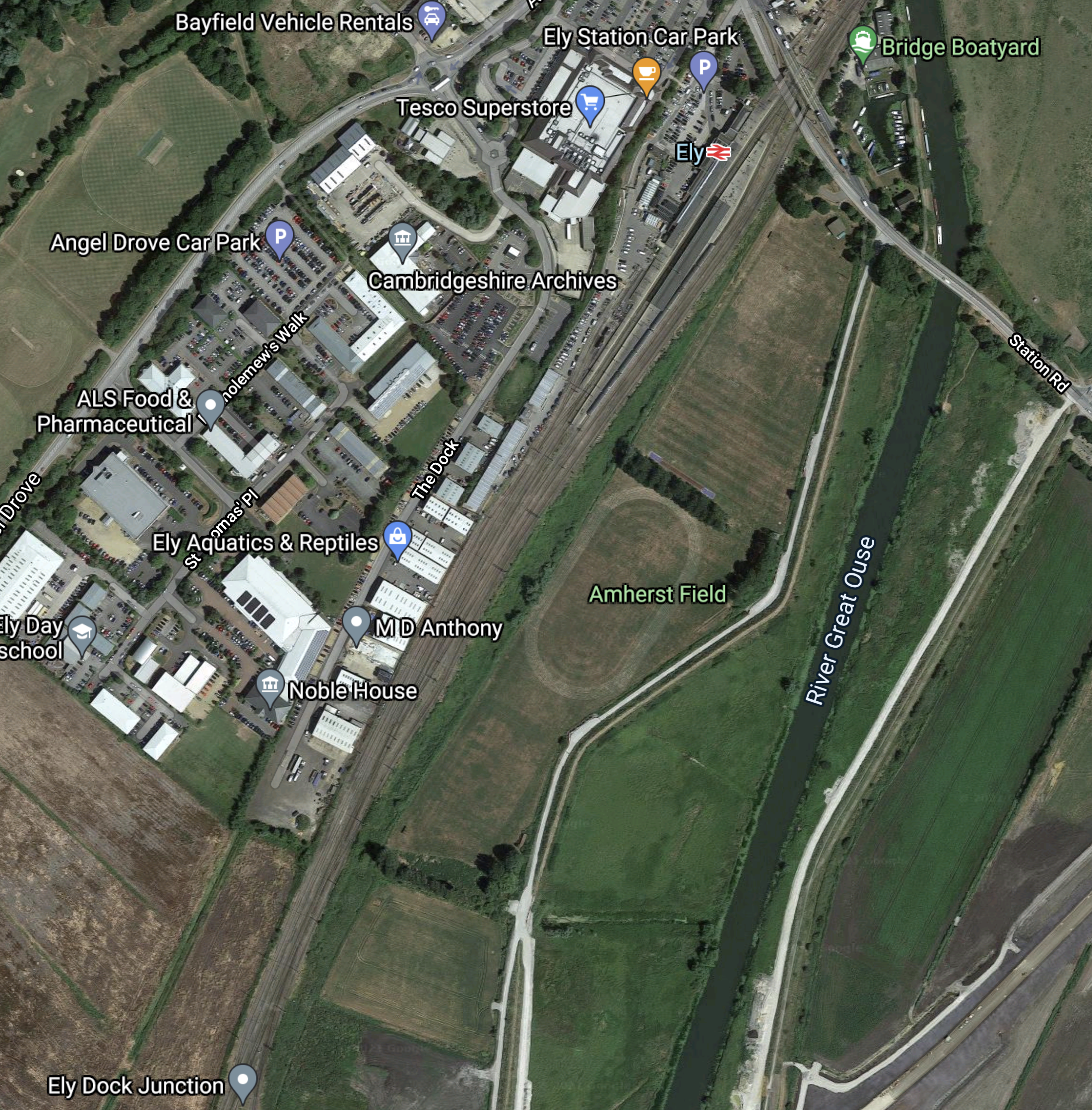
Note.
- Ely Dock junction in the South-West corner, where the line from Ipswich and Bury St. Edmunds joins the lines through Ely.
- Ely station towards the North-East corner of the map.
- Passenger trains run through the station.
But freight trains can take a route on the Eastern side of the station, which is not electrified.
At Ely station, a loop like this can be electrified using the existing electrification power supply, but at other places, systems like that from Hitachi ABB Power Grids can be used to electrify the loop or an appropriate section of the route.
These short sections of electrification will allow the train to progress on either electric or battery power.
A Hydrogen-Electric Locomotive Based on A Stadler Class 88 Locomotive
In The Mathematics Of A Hydrogen-Powered Freight Locomotive, I looked at creating a hydrogen-powered locomotive from a Class 68 locomotive.
I decided it was totally feasible to use readily available technology from companies like Rolls-Royce and Cummins to create a powerful hydrogen-powered locomotive.
The Class 68 locomotive is the diesel-only cousin of the electro-diesel Class 88 locomotive and they share a lot of components including the body-shell, the bogies and the traction system.
I suspect Stadler could create a Class 88 locomotive with these characteristics.
- 4 MW using electric power
- At least 2.5 MW using hydrogen power.
- Hydrogen power could come from Rolls-Royce’s 2.5 MW generator based on a small gas-turbine engine.
- 100 mph on both electricity and hydrogen.
- It would have power output on hydrogen roughly equal to a Class 66 locomotive on diesel.
- It would have a range comparable to a Class 68 locomotive on diesel.
This locomotive would be a zero-carbon Class 66 locomotive replacement for all duties.
A Larger And More Powerful Hydrogen-Electric Locomotive
I feel that for the largest intermodal and stone trains, that a larger hydrogen-electric locomotive will be needed.
With the way Wabtec are going in the United States, I wouldn’t be surprised to see a suitable locomotive cross the pond.
Conclusion
In the title of this post, I asked if freight locomotives of the future would be battery, electric or hydrogen.
I am sure of one thing, which is that all freight locomotives must be able to use electrification and if possible, that means both 25 KVAC overhead and 750 VDC third rail. Electrification will only increase in the future, making it necessary for most if not all locomotives in the future to be able to use it.
I feel there will be both battery-electric and hydrogen-electric locomotives, with the battery-electric locomotives towards the less powerful end.
Hydrogen-electric will certainly dominate at the heavy end.
Using Hitachi ABB Power Grids Technology At Uckfield Station
This post describes how the ABB Power Grids technology could be used to allow battery-electric trains to run between London Bridge and Uckfield stations.
The London Bridge And Uckfield Route
The London Bridge And Uckfield route has these characteristics.
- It is forty-six miles long
- The Southern section between Heald Green junction and Uckfield station is 24.7 miles and is not electrified.
- A service takes approximately eighty minutes.
- Trains run at a frequency of one train per hour (tph)
- The route has been upgraded to be able to handle twelve car trains.
- The route is currently run by Class 171 diesel trains.
- Govia Thameslink Railway is the operator.
It looks to me if you assume a ten minute turnround, then that gives a three-hour round trip.
This would mean the following.
- Trains would have ten minutes charging time at Uckfield.
- If twelve car trains were running on the branch then nine four-car trains would be required for an hourly service.
- Two tph would require twice as many trains.
It looks to me, that Network Rail have arranged the route and the timetables for a fleet of battery-electric trains.
The Battery-Electric Trains
There have been several hints in the rail media, that battery-electric Bombardier Electrostars will be used for the London Bridge and Uckfield route.
I wrote Battery Electrostars And The Uckfield Branch in September 2019.
- In the related post I suggested Class 377, Class 379 or Class 387 trains.
- All are four-car Bombardier Electrostars.
- All are 100 or 110 mph trains.
- The Class 387 trains are already dual voltage, but I suspect all trains could be converted to third-rail or dual-voltage.
- My choice would be Class 379 trains, as they are being made redundant by Greater Anglia and thirty quality trains are looking for a new home.
But all three types would be acceptable and Govia Thameslink Railway has both of the other types in its extensive fleet.
Charging The Battery-Electric Trains
This picture shows the single twelve-car platform at Uckfield station.

There would appear to be plenty of space on the side away from the platform.
There would appear to be two main methods of charging the trains.
A Length Of 750 VDC Third-Rail Electrification On The Side Away From The Platform
- The electrification would be long enough to charge a twelve-car train.
- It could even be made very safe, if an interlock were to be provided, that ensured that the third-rail were only to be live, when a train was in the station that needed charging.
This would be possible, but I suspect the Anti-Third-Rail Electrification Mafia will get this simple method stopped.
A Length Of 25 KVAC Overhead Electrification Powered By One Of Hitachi ABB Power Grids Containised Power Systems
The electrification would be long enough to charge a twelve-car train.
The driver or an automated system would raise the pantographs after the train stopped in the station.
Interlocks could be provided to increase safety.
The overhead electrification would be powered by one or more of Hitachi ABB Power Grids’s containerised power systems
Lightweight catenary could be used to reduce visual intrusion.
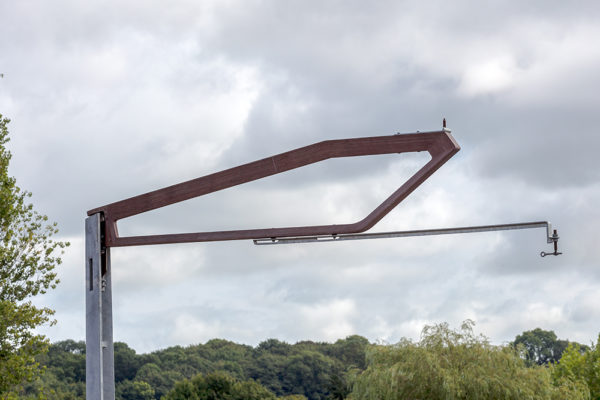
The curved beam at the top of this overhead electrification gantry is laminated wood.
Because of the higher voltage used, I suspect that the Hitachi ABB Power Grids could charge a twelve-car train in under ten minutes.

