Is This The World’s Best Renewable Energy Video?
This is a promotional video from Minesto about their Deep Green technology.
Is it a serious proposition or is it just kite-flying?
After reading their web site in detail, I think they are serious.
Here’s why!
The Company Is A Well-Backed Spin-Out from Swedish Aerospace Company SAAB
These two paragraphs are from the About Us page.
Minesto is a marine energy technology developer, founded in 2007 as a spin-off from Swedish aerospace manufacturer Saab. Since then, Minesto has successfully developed its unique Deep Green technology.
The company has operations in Sweden, Wales, Northern Ireland and Taiwan, with headquarters in Gothenburg, Sweden. Main owners are BGA Invest and Midroc New Technology. The Minesto share is listed on the Nasdaq First North Growth Market in Stockholm.
A company rarely succeeds without appropriate and sufficient financial backing.
One Of Their Target Markets Is Powering Remote Islands
This page from World Atlas is entitled Which Countries Have The Most Islands?
These are the top five countries.
- Sweden – 267,570
- Norway – 239,057
- Finland – 178,947
- Canada – 52,455
- United States – 18,617
Note.
- That’s a lot of islands.
- The United Kingdom is 26th with a thousand islands.
- Scandinavia has 685574 islands or 686993 if you include Denmark.
Sweden has a thousand inhabited islands, so that means that in Scandinavia alone, there are about 2,500 inhabited islands. How many need a reliable decarbonised power supply?
In the UK, we are developing Remote Island Wind to serve similar locations, which I wrote about in The Concept Of Remote Island Wind.
The UK and Minesto are both looking at the supply of power to remote islands.
One of Minesto’s projects is in the Faroe Islands and it is described in this page on the Minesto web site, which has a title of Faroe Islands – Tidal Energy To Reach 100% Renewable By 2030.
These are the first two paragraphs.
In the Faroe Islands, Minesto is part of one of the world’s most ambitious energy transition schemes.
Collaborating with the electric utility company SEV, Minesto is working to pave the way for tidal energy to become a core part of the Faroese energy mix, allowing them to reach 100% renewable energy by 2030.
Onshore wind and tidal could be an ideal combination, if they worked together.
At the bottom of the Faroe Islands page, the web site talks about The Deep Green Island Mode Project, where this is said.
In June 2019, Minesto was awarded a €2.5 million grant from the European Commission’s SME Instrument programme. The awarded funding will support the installation of Minesto’s technology in the Faroe Islands together with the utility company SEV. The aim of the project, called Deep Green Island Mode (DGIM), is to install Minesto’s first two commercially viable microgrid units in a production and customer environment.
Successful demonstration of DGIM will act as a first step to developing commercial ties with utilities across Europe, both for smaller-scale microgrid systems and as a catalyst for the market up take of larger utility-scale Deep Green systems.
This is also said about the number of installations in Europe.
15 million Europeans live on Europe’s 2,400 inhabited islands, at an average of approximately 1,500 households per island. As recognised by the European Commission, island energy is expensive, polluting, inefficient and dependent on external supply, with significant negative impacts on emissions, the competitiveness of businesses, and the economy.
It appears to me, that Minesto have researched their market well.
Minesto Can Provide Baseload Power
Another of Minesto’s projects is in Taiwan and it is described in this page on the Minesto web site, which has a title of Taiwan – Replacing Nuclear With Renewable Baseload.
These are the first two paragraphs.
In Taiwan, Minesto is carrying out site development with the purpose to establish the first tidal energy arrays with Minesto’s technology in Asia – and to demonstrate renewable baseload generation from the continuously-flowing Kuroshio current.
The conditions for extracting marine energy in Taiwan are very good due to access to both tidal streams and continuous ocean currents. Taiwan aims to produces 20% of electricity from renewable sources by 2025 and has decided to scrap its nuclear power capacity within the same timeframe. Today, 97.5 percent of the country’s total energy use comes from imported fossil fuels.
Taiwan has a well-developed industrial infrastructure and a number of stakeholders in the private and public sectors are active in marine energy.
Decarbonising Taiwan and removing nuclear is a tough ask!
Conclusion
Minesto may be kite-flying in an unusual way, but they appear to be a very serious Swedish company.
Five Long-Duration Energy Storage Projects Get Funding In New York
The title of this post, is the same as that of this article on Power Engineering.
These are the two opening paragraphs, which outline the state’s ambitions.
New York awarded $16.6 million in funding for five long-duration energy storage projects and made another $17 million available for projects that advance development of long-duration energy storage technologies, including hydrogen.
The state’s larger goal is to install 3,000 MW of energy storage by 2030 to help integrate renewables. New York wants to eventually develop 6,000 MW.
The article then lists the projects, which I will look at in separate posts.
The Future Is Blowing In The Wind
In Can We Move The Equilibrium Point Of The Energy Market?, I have been adding up all of the renewable energy to be commissioned in the next few years.
I am only looking at schemes that are being built or are consulting the public, have contracts and are by reputable and reliable developers, like BP, Equinor, Orsted, Scottish Power, Shell, SSE and Wattenfall
The numbers are not small.
This year 3.2 GW, should be commissioned, with another 2.3 GW in 2023. But the total between now and 2028 is at least 30 GW plus Hinckley Point C. In fact it could be higher, as I have ignored nearly all of the 25 plus GW of the Scotwind projects in the seas around Scotland.
As the UK needs about 23 GW to wash its face and we already have 25.5 GW of renewables installed, by the mid point of the decade, we should be able to reorganise our energy, by cutting gas usage for power generation and exporting surpluses to Europe.
The future is blowing the wind!
Consortium Plan To Build & Operate Scotland’s First Low Carbon, Energy Efficient, Soil-Free Vertical Farms In The Central Belt
The title of this post, is the same as that of this press release from RheEnergise.
These four paragraphs introduce the project.
A consortium of four British companies have earmarked a series of sites between Dumbarton and Dundee for the locations of Scotland’s next generation of hectare+ scale vertical farms, powered by 100% Scottish renewables. These farms would provide locally produced fresh foods (salads and fruits) to over 60% of the Scottish population.
The vertical farms will help meet the Scottish Government’s ambitions to produce more homegrown fruit and vegetables. Each vertical farm would be powered by locally produced renewable energy.
Next generation vertical farms use advanced soil-free growing techniques and stack crops in specially designed beds and trays. They minimise water, fertiliser and pesticide use which is highly beneficial to the environment and make use of artificial lighting and climate control to get the desired results.
The V-FAST consortium comprises UK Urban AgriTech (UKUAT), Vertegrow Ltd, Light Science Technologies Ltd and RheEnergise Limited, the UK energy storage company.
The press release is certainly worth a detailed read.
Fortescue And E.ON To Supply Europe With Green Hydrogen
The title of this post, is the same as that of this article on Hydrogen Fuel News.
This is the introductory paragraph.
Fortescue Future Industries Pty Ltd. of Australia and E.ON SE, energy giant from Germany, have teamed up to supply green hydrogen to Europe. This strategy is meant to help the EU to reduce its reliance on Russian energy.
These are other points from the article.
- FFI intends to supply five million tonnes of hydrogen per year by 2030.
- The hydrogen will be produced by renewable hydrogen in Australia.
- E.ON will handle the distribution.
- Five million tonnes is about a third of Germany’s energy imports.
I have some further thoughts.
How Much Energy Is Needed to Produce Five Million Tonnes Per Year Of Hydrogen?
In Can The UK Have A Capacity To Create Five GW Of Green Hydrogen?, I said the following.
Ryze Hydrogen are building the Herne Bay electrolyser.
- It will consume 23 MW of solar and wind power.
- It will produce ten tonnes of hydrogen per day.
The electrolyser will consume 552 MWh to produce ten tonnes of hydrogen, so creating one tonne of hydrogen needs 55.2 MWh of electricity.
55.2 MWh/tonne is 55.2 kWh/kg.
To produce five million tonnes of hydrogen will need 55.2 * 5.000,000 / 10 MWh.
- This is 27,600,000 MWh or 27,600 GWh.
- It works out at an average of 75.6 GWh per day or 3.15 GWh per hour.
This article on vox is entitled The Economic Limitations Of Wind And Solar Power, where this is said.
“Capacity factor” refers to how often a power plant runs and thus how much power it produces relative to its total potential (capacity). Nuclear power plants in the US run around 90 percent of the time, so they have a 90 percent capacity factor. On average, the capacity factor of solar ranges anywhere from 10 to just over 30 percent. For wind, it ranges from 20 to just over 50 percent, averaging around 34 percent in the US.
If FFI is using solar to generate electricity in Australia, I suspect that the capacity factor will be around twenty percent at best.
So will FFI need around 16 GW of solar power to satisfy the supply to Germany?
The Wikipedia entry for Solar Power In Australia gives a good insight into its capability of providing the 16 GW of energy needed. This statement is key.
Using solar to supply all the energy needed would use less than 0.1% of land.
It does look that Australia could provide Germany with some of the hydrogen it needs.
Would It Be Cheaper To Produce The Hydrogen In The North Sea?
This is probably heresy to Andrew Forrest, who is the Australian billionaire behind Fortescue Future Industries.
Consider.
- North Sea Hydrogen could be piped to Germany.
- Australia and Germany would probably need transfer by liquid hydrogen tanker.
- Electrolysers would need to be used to create hydrogen from renewable energy in both Australia and the North Sea.
- Floating wind farms in the North Sea could be more efficient than solar in Australia, as the capacity factor is higher.
We obviously won’t know until both wind and solar technologies are fully developed.
Will There Be Price Competition Between Australian And North Sea Hydrogen?
It does appear that Andrew Forrest believes in research and I wouldn’t be surprised to see his company developing ideas that drop the price of solar-produced hydrogen.
Research and good engineering on both sides will also drop prices, so I suspect price competition will occur.
Will Fortescue Future Industries Develop North Sea Hydrogen?
Given the ambition being shown by Andrew Forrest to be the Hydrogen King, I wouldn’t be surprised if he joined the streams of international investors in the North Sea, who are developing wind farms.
Conclusion
Go! Aussie! Go!
The African Nation Aiming To Be A Hydrogen Superpower
The title of this post, is the same as that as this article on the BBC.
It is a fascinating tale of how Namibia aims to modernise its economy, by becoming a major producer of hydrogen using electricity generated by wind and solar power.
Conclusion
Could other countries follow Namibia’s lead?
Rolls-Royce Makes Duisburg Container Terminal Climate Neutral With MTU Hydrogen Technology
The title of this post, is the same as this press release from Rolls-Royce.
This is the first sentence.
Rolls-Royce will ensure a climate-neutral energy supply at the container terminal currently under construction at the Port of Duisburg, Germany.
There is also this Rolls-Royce graphic, which shows the energy sources.

It would appear batteries, combined heat and power (CHP), grid electricity, hydrogen electrolyser, hydrogen storage and renewable electricity are being brought together to create a climate-neutral energy system.
- As the graphic was named hydrogen technology for ports, I would assume that this is a Rolls-Royce mtu system that will be deployed at more than one port around the world.
- Note the H2 CHPs in the graphic. Could these be applications for Rolls-Royce’s beer keg-sized 2.5 MW electrical generator based on a Super Hercules engine?
- One of Rolls-Royce’s small modular nuclear reactors could be ideal for a large port outside Germany.
This is the last paragraph of the press release.
“Hydrogen technology is no longer a dream of the future, but hydrogen technology will prove itself in everyday use in Duisburg. The parallel use of fuel cell solutions and hydrogen engines shows that we have taken the right path with our technology-open approach to the development of new solutions for the energy supply of the future,” says Andreas Schell, CEO of Rolls-Royce Power Systems.
Rolls-Royce mtu appear to be very serious about the possibilities of hydrogen.
KEPSA Signs Large-Scale Green Energy Projects MoU In Kenya
The title of this post, is the same as that of this article on ESI Africa.
This is the first paragraph.
The Kenya Private Sector Alliance (KEPSA) has signed a Memorandum of Understanding (MoU) with green energy company Fortescue Future Industries (FFI) to help facilitate its members participation in new large scale green energy projects in Kenya.
FFI are planning a possible green hydrogen and green ammonia facility in the country, that will use renewable energy.
Andrew Forrest is building up the air miles again.
Andrew Forrest’s Fortescue Future Industries Inks Deal With Kingdom of Jordan For Green Hydrogen Study
The title of this post, is the same as that of this article on The West Australian.
I can’t read the contents without subscribing, but I assume the title says it all.
However, I have a few thoughts.
This Google Map shows the Kingdom of Jordan.
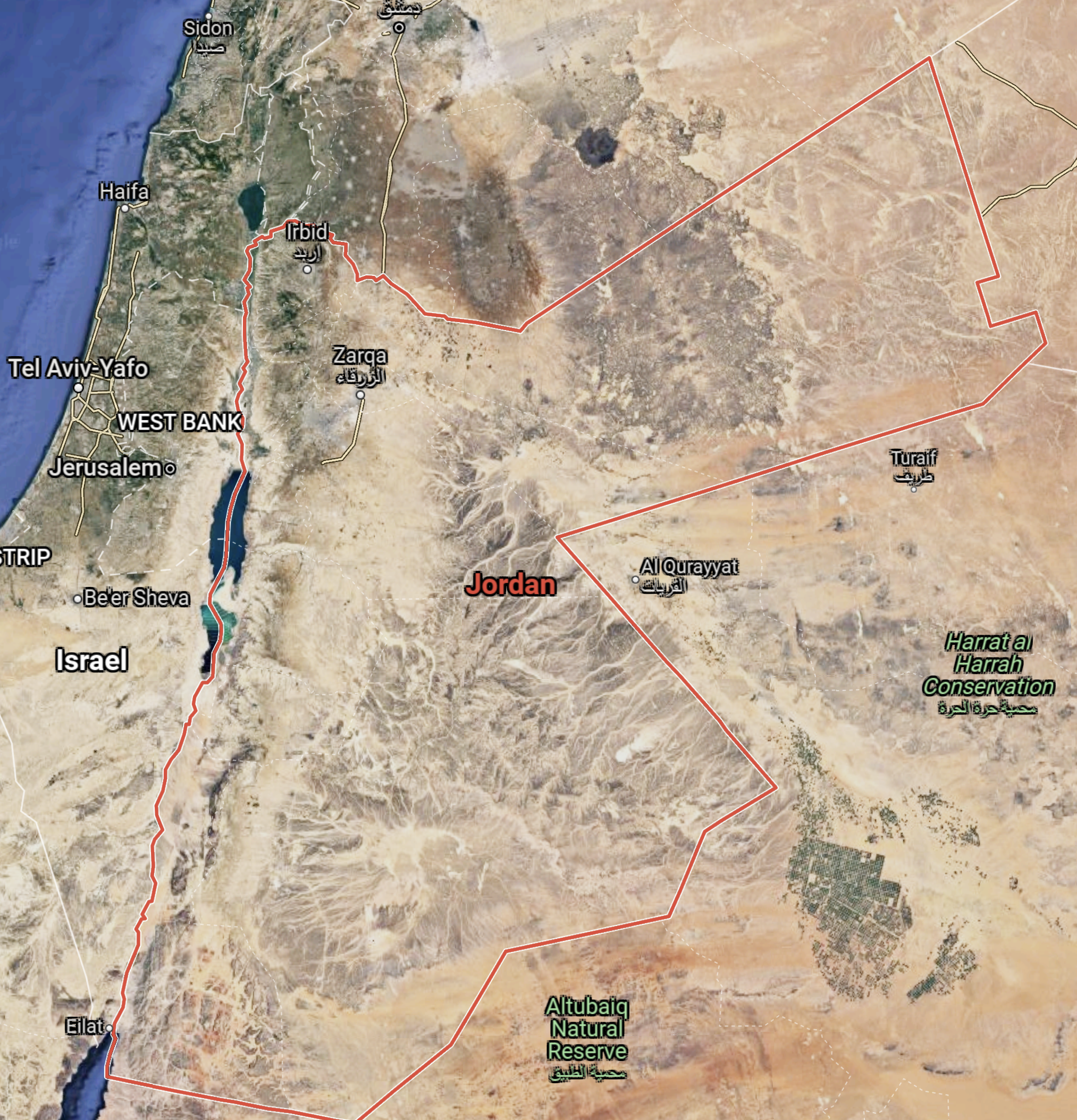
Jordan is outlined in red.
The map suggests how hydrogen could be produced.
- I would assume that there is plenty of sun in Jordan and there appears to be plenty of space for solar panels.
- What is the potential for wind energy in the desert?
- It would appear to me, that there are two routes to export the hydrogen. By pipeline across Israel to the Mediterranean Sea or by tanker from a port on the Red Sea, which just creeps onto the map in the South-West corner.
- Perhaps, a giant electrolyser and export terminal could be built near Aqaba, which is Jordan’s only seaport.
What I like about this plan, is that to the North-East and South-East of Jordan, lie the deserts of Iraq and Saudi Arabia. Could these in future be carpeted with solar panels, where the electricity is fed to Aqaba to create more green hydrogen?
Andrew Forrest is a busy man and seems to be organising a one man project to provide the world with green hydrogen.
- I wrote about his deal with Argentina in Australia’s FFI Plans $8.4 Billion Green Hydrogen Project In Argentina.
- I wrote about his deal with JCB in JCB Signs Green Hydrogen Deal Worth Billions.
He is the second richest Australian according to Wikipedia.
I wouldn’t be surprised to see some more hydrogen deals at COP26, where Andrew Forrest is involved.
Shetland Blasts Off Into Space Race As Britain’s First Rocket Launch Pad Skyrora
The title of this post, is the same as that of this article on The Times.
This second paragraph, explains what Skyrora are doing.
Skyrora, a technology company with its headquarters in Edinburgh, has agreed a deal for scores of rocket launches over the next decade from a site on Unst, the most northerly of the Shetland islands.
This Google Map shows the most Northerly part of Unst.
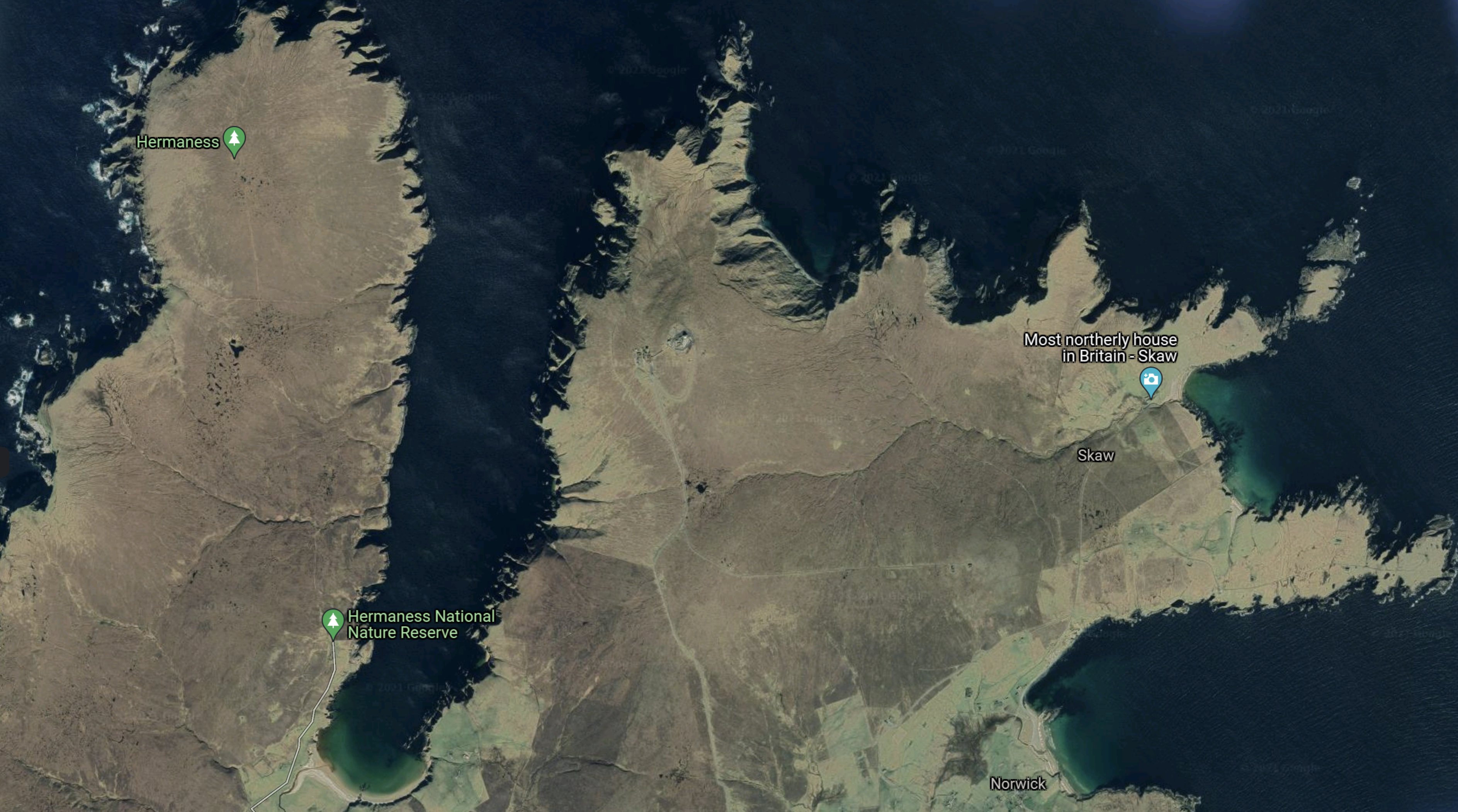
There’s not really much there, except birds, trees and the most northerly house in Britain.
Enlarging to the West of the house, gives this second Google Map.
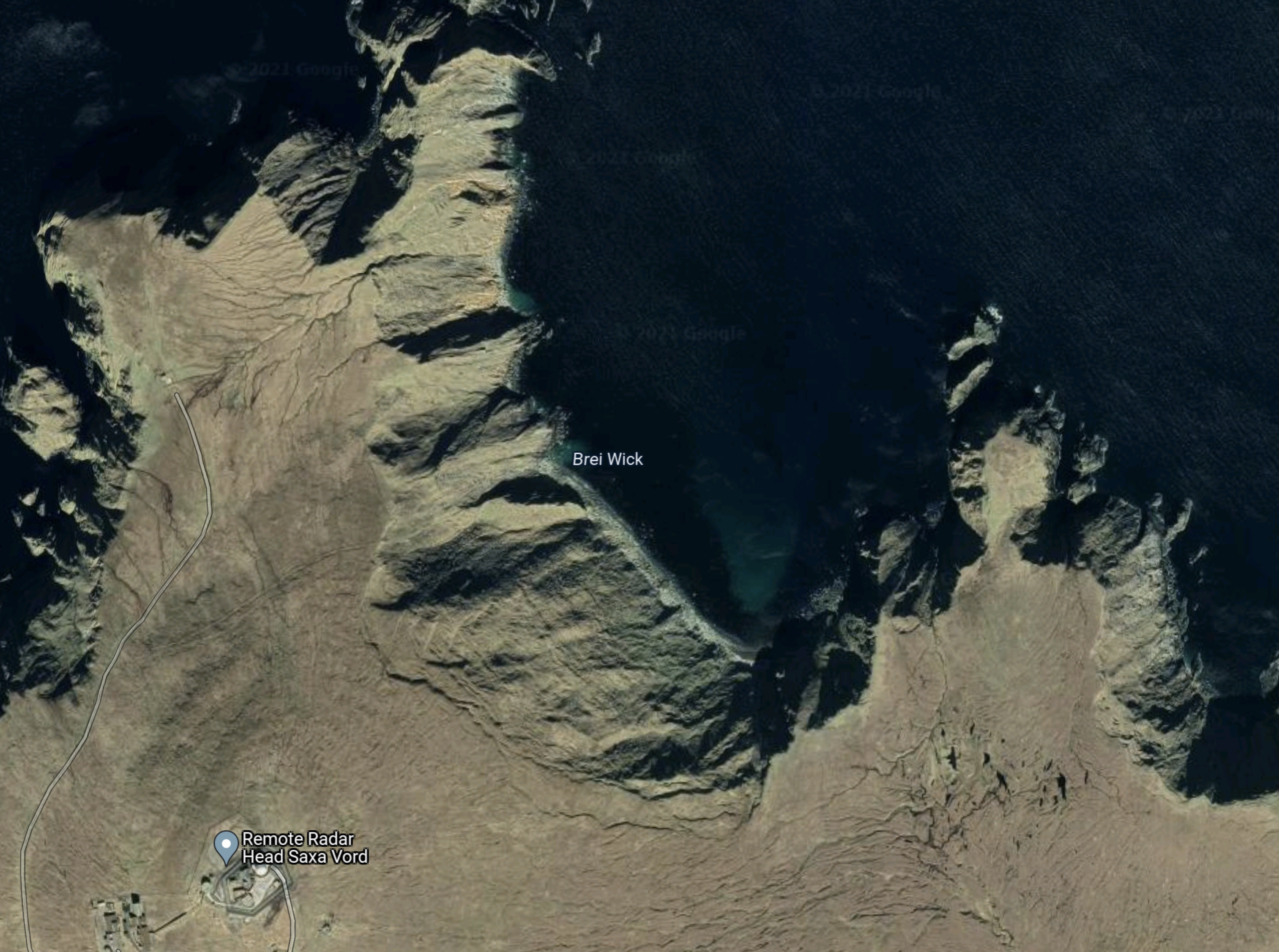
Note the Remote Radar Head Saxa Vord, which has a Wikipedia entry as RAF Saxa Voe.
- It is now a fully-operational radar station again, after closure in 2006.
- It is at the same latitude as St. Petersburg and Anchorage.
- In 1992, it measured a wind speed of 197 mph, before the equipment blew away.
The Wikipedia entry is worth a read, as it gives a deep insight into radar and its tracking of Russian intruders in the Cold War.
This third Google Map shows a 3D closeup of the radar.
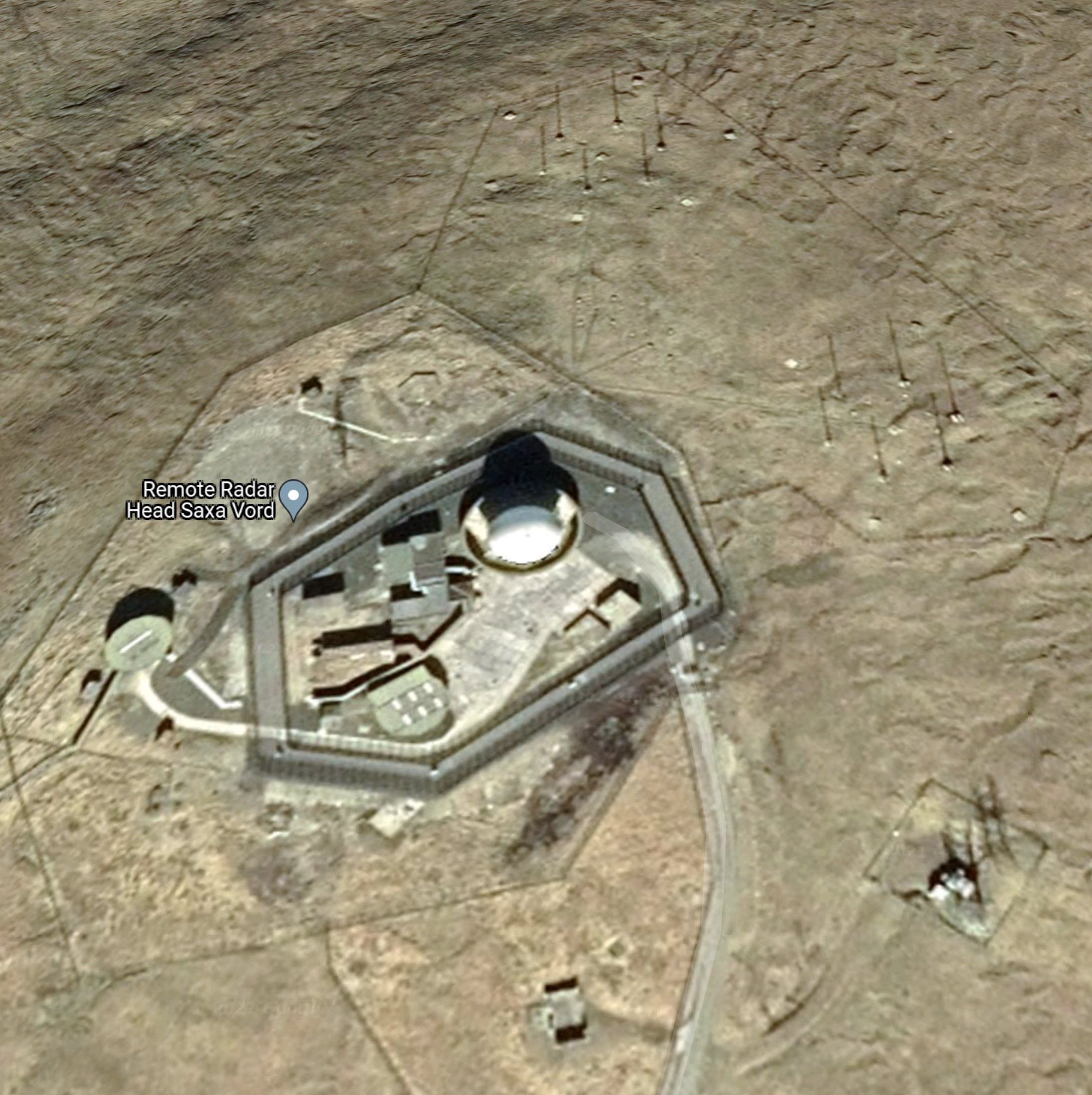
No staff are based at Saxa Vord, although maintenance staff do visit.
According to The Times, the space port will be at Lamba Ness, which is to the East of the most northerly house in Britain.
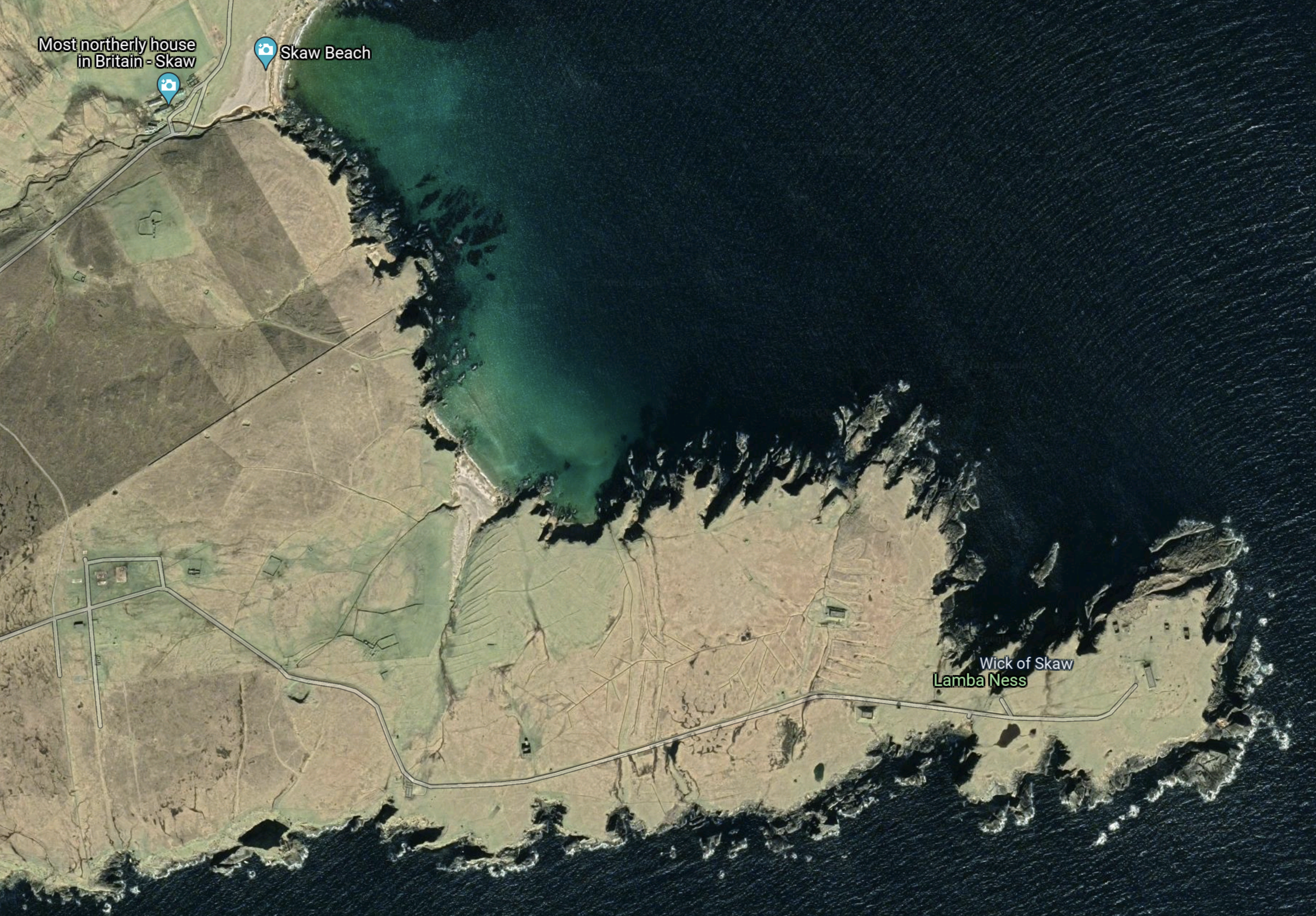
The peninsular in the South-East is marked Lamba Ness.
It may seem a very bleak place, but it could have one thing, that rocketry will need – rocket fuel!
In Do BP And The Germans Have A Cunning Plan For European Energy Domination?, I introduced Project Orion, which is an electrification and hydrogen hub and clean energy project in the Shetland Islands.
The project’s scope is described in this graphic.
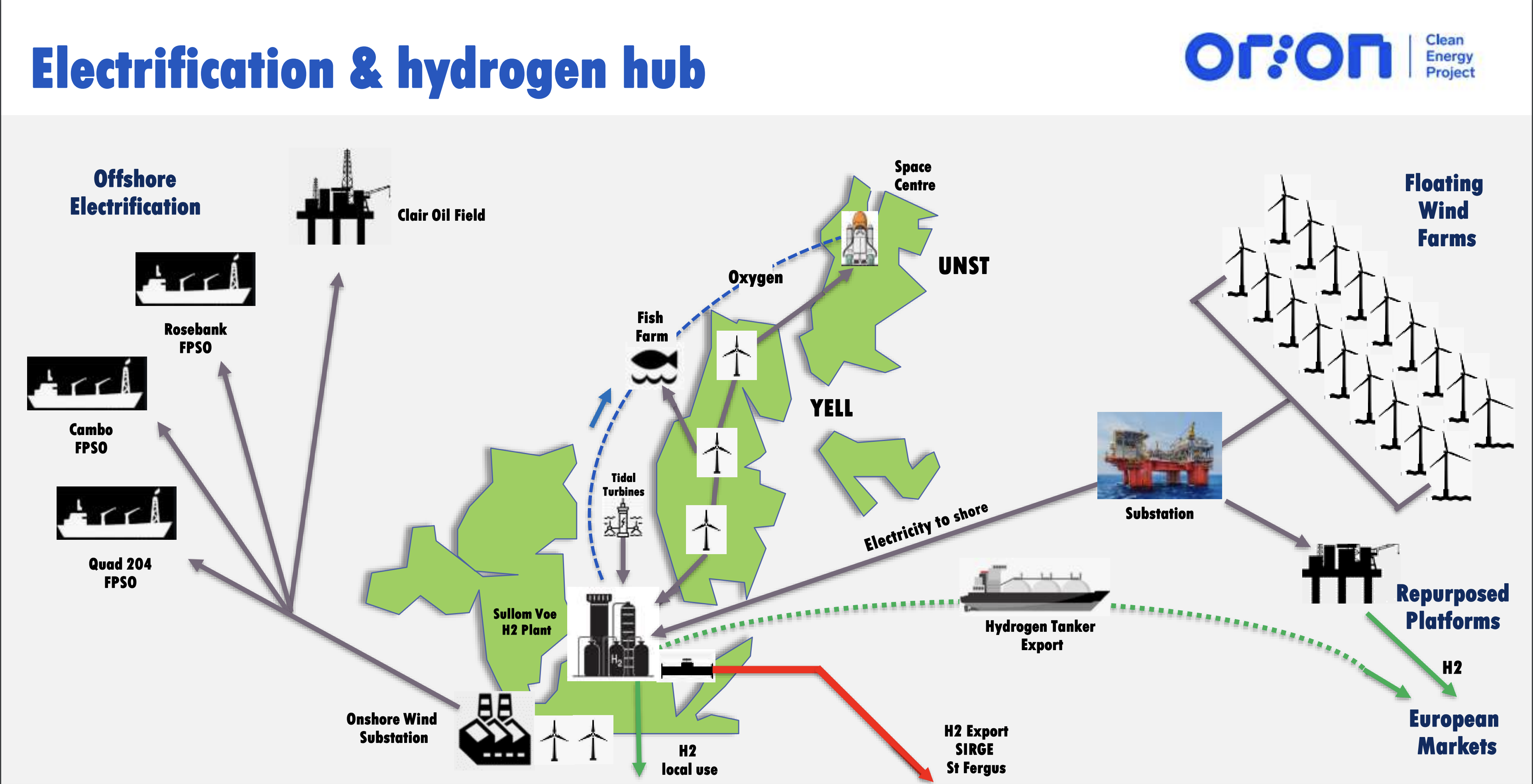
Note
- Project Orion now has its own web site.
- A Space Centre is shown on the Island of Unst.
- There is an oxygen pipeline shown dotted in blue from the proposed Sullom Voe H2 Plant to the Fish Farm and on to the Space Centre.
- I suspect if required, there could be a hydrogen pipeline.
The Space Centre on Unst could be fuelled by renewable energy.
Who Are Skyrora?
They have a web site, which displays this mission statement.
Represents a new breed of private rocket companies developing the next generation of launch vehicles for the burgeoning small satellite market.
The Times also has this paragraph.
At the end of last year, the company also completed trials of the third stage of its Skyrora XL rocket, including its orbital transfer vehicle which, once in orbit, can refire its engines 15 times to carry out tasks such as acting as a space tug, completing maintenance or removing defunct satellites.
The company seems to have big ambitions driven by innovation and a large range of ideas.
Conclusion
I shall be following this company.
 The Anonymous Widower