The Third Route To Zero-Carbon Transport
The two most common routes to zero-carbon transport are.
- Battery-electric vehicles
- Hydrogen fuel-cell vehicles
Note that most hydrogen-fuel cell vehicles also have a battery.
But I believe there’s a third route and that is the use of hydrogen in an internal combustion engine.
Earlier today, I wrote Rolls-Royce And AVK Provide Over 3.5 Gigawatts Of Emergency Power Capacity In The UK, which is based on a Rolls-Royce press release, with the same title.
This is an extract.
And this is said about the use of hydrogen.
Rolls-Royce is also currently developing its mtu gas engine portfolio for power generation so that the engines can run on hydrogen fuel in future, enabling a Net Zero energy supply. The company is also launching complete mtu hydrogen fuel cell solutions, that emit nothing but water vapor from 2025. This will enable CO2-free generation of emergency power for data centers and many other critical applications.
I certainly think, that they are going in the right direction.
Rolls-Royce mtu have a lot to lose, if their diesel engines that power trains, heavy equipment, ships and emergency power generators are replaced by other companies zero-carbon solutions.
- Large investments will need to be made in hydrogen electrolyser and fuel cell production.
- Some traditional factories making diesel engines will be closed and could this mean redundancies?
- A lot of retraining of staff at both manufacturer and customer will need to be made.
But a traditional internal combustion engine, that runs on hydrogen or even both hydrogen and diesel makes the transition to hydrogen a lot less painful.
Other companies going this route include Cummins, Deutz and JCB.
Conversion Of Existing Diesel Engines To Hydrogen
Surely, if an equivalence hydrogen engine exists for all of their diesel engines, a company like Cummins or Rolls-Royce mtu can produce a sound engineering route to decarbonise some of their existing applications.
A classic application would be converting London’s Routemaster buses to hydrogen, which I wrote about in Could London’s New Routemaster Buses Be Converted To Hydrogen Power?
This was my conclusion in that post.
I believe from my knowledge of Cummins and the way they work, that they will come up with a hydrogen-based solution, that will replace the Cummins diesel in these buses with a zero-carbon engine.
If Cummins don’t then someone else will.
Whoever solves the problem of converting London’s new Routemasters to hydrogen will have one of the best adverts for their product, there has ever been.
After converting London’s thousand Routemasters, the engineers could move on to anything powered by a Cummins engine.
As this is a world-wide problem, I believe that the manufacturers of cars, buses, trucks and many other vehicles will offer zero-carbon solutions for their products, as it will be necessary for survival.
If you have just bought a new diesel BMW and your government says that in two years time, diesel will no longer be available, you’re up the creek without a paddle. But if BMW can convert it to hydrogen for a small fraction of the cost of a new electric equivalent, you have a more available way out.
Rolls-Royce And AVK Provide Over 3.5 Gigawatts Of Emergency Power Capacity In The UK
The title of this post, is the same as that of this press release from Rolls-Royce.
The press release starts with these two bullet points.
- UK’s largest technology companies rely on emergency power solutions from AVK and Rolls-Royce
- Focus on Net Zero solutions with sustainable fuels and fuel cells
And then this summary of the business in the UK.
Rolls-Royce has delivered 200 mtu emergency generators to AVK, UK’s leading provider of critical power solutions, in just three years. AVK has already installed and commissioned the majority across Europe, and in total has already provided more than 3.5 gigawatts of power to data centers, the financial, telecommunications and healthcare industries in the UK and Ireland.
AVK is now the largest supplier of emergency power solutions to data centers and the financial sector in the UK, and since signing the exclusive agreement with the Rolls-Royce business unit Power Systems, has been using only mtu brand emergency gensets.
The next two paragraphs describe the business in more detail.
These are some points from these paragraphs.
- Data is now the ‘fourth utility’ required by all.
- The European colocation data center market is expected to grow at a compound annual growth rate of 13.1 percent from 2021 to 2028.
- The most important European markets for data centers are Frankfurt, London, Amsterdam, and Paris, where demand is highest.
- AVK provides, installs and maintains systems over their entire service life.
- Emergency power systems based on mtu diesel systems ranging from 825 to 4,000 KVA are tailored to customer needs.
- AVK has been using mtu engines for emergency power systems for over 20 years.
Rolls-Royce And AVK seem to have developed a nice little earner.
Net Zero Emergency Power Solutions
The last section talks about net-zero solutions for generators and emergency power.
This is set about sustainable fuels.
Sustainability already plays a major role for data center operators. As a result, interest in alternative fuels has grown and AVK is increasingly providing support and guidance on switching from using diesel to HVO (Hydrotreated Vegetable Oil). mtu Powergen engines from Rolls-Royce can be used unchanged for sustainable EN15940 fuels, such as HVO; no engine hardware or software modifications are required with the same performance. Using HVO can significantly reduce CO2, nitrogen oxide and particulate emissions.
And this is said about the use of hydrogen.
Rolls-Royce is also currently developing its mtu gas engine portfolio for power generation so that the engines can run on hydrogen fuel in future, enabling a Net Zero energy supply. The company is also launching complete mtu hydrogen fuel cell solutions, that emit nothing but water vapor from 2025. This will enable CO2-free generation of emergency power for data centers and many other critical applications.
I certainly think, that they are going in the right direction.
- Data center operators are said to want sustainability.
- Other users of emergency power will probably want the same.
- A full range of solutions is offered.
Hopefully, it will bring more sales, as the market size increases.
Boris Baldrick’s Cunning Plan
This written statement to Parliament on the UK Government web site, is entitled Transport Update: Transpennine Route Upgrade.
It has been published by Grant Shapps and this is the sub-title.
Additional funding has been made available for the Transpennine route upgrade.
This is the complete statement.
Today 19 July 2022, the government has made available £959 million of additional funding to continue to progress the delivery of the ambitious Transpennine route upgrade.
This funding is a significant milestone and another step towards upgrading the key east-west rail artery across the north of England, to further this government’s levelling up and decarbonisation objectives.
In addition to progressing the design of aspects of the upgrade, this funding will enable further on-the-ground delivery of electrification and journey time improvement works, mostly west of Leeds.
One of the first tangible benefits will be enabling electric trains to run between Manchester and Stalybridge by the middle of the decade. We are also developing scope that will enable the Transpennine route upgrade to become the first phase of Northern Powerhouse Rail, including plans to unlock freight flows and take thousands of lorries off our roads.
We are also more than trebling the investment in the Transpennine route upgrade from £2.9 billion to between £9.0 billion and £11.5 billion.
This additional investment will enable the roll out of digital signalling technology, electrification of the full route and the provision of additional tracks for commercial and freight services, giving rail users more reliable, more punctual, more comfortable and greener rail journeys.
I have some thoughts.
It’s Not A Wish List, But A Reality
The last paragraph reads like a wish list.
This additional investment will enable the roll out of digital signalling technology, electrification of the full route and the provision of additional tracks for commercial and freight services, giving rail users more reliable, more punctual, more comfortable and greener rail journeys.
But it’s not a wish list, it’s what is to be done.
Where Will The Government Get Between Nine and Eleven-And-A-Half Billion Pounds?
It’s not the sort of small change that you have in a sock draw.
This document on the UK government web site, is entitled PM Opening Remarks At Press Conference With German Chancellor Olaf Scholz: 8 April 2022, where this is these three paragraphs.
We will also agree on the importance of weaning ourselves off dependence on Russian gas and oil, and ensuring that our energy security cannot be threatened by a rogue state.
This is not easy for any of us, and I applaud the seismic decisions taken by Olaf’s government to move Germany away from Russian hydrocarbons.
Today we have agreed to maximise the potential of the North Sea and collaborate on energy security and on renewables, where Germany and the UK lead the way in new technology.
So did Boris and Olaf sign the world’s first Green Alliance based on zero-carbon energy?
- They may not have signed an Alliance, but they have agreed on common actions.
- Over the last year or so, German money and technology has started to be more visible in our offshore wind farms.
- BP have been backed by German utility; enBW in some of their huge wind farms.
- Siemens Gamesa are providing a lot of wind turbines.
- Will German shipyards build the floats for floating wind farms?
- An interconnector between the Isle of Grain and Wilhelmshaven is planned.
- Rolls-Royce and its German subsidiary MTU are charging into battle against climate change.
- The Germans have taken a liking to ITM Power’s electrolysers to produce hydrogen.
I can see the North Sea or the German Ocean becoming Europe’s power station, with by 2030, a large amount of the energy not needed by the UK, being exported to the Continent, either as electricity or hydrogen.
The Germans could become our magische Geldbäume.
But unlike gas and oil, wind power in the North Sea won’t run out, as it’s renewable.
In How Britannia With Help From Her Friends Can Rule The Waves And The Wind, this was my conclusion.
Boris’s vision of the UK becoming a Saudi Arabia of wind is no fantasy of a man with massive dreams.
Standard floating wind turbines, with the possibility of also harvesting wave power could be assembled in ports along the coasts, towed into position and then connected up.
Several GW of wind-power capacity could probably be added each year to what would become the largest zero-carbon power station in the world.
By harvesting the power of the winds and waves in the seas around the British Isles it is an engineering and mathematical possibility, that could have been developed by any of those great visionary Victorian engineers like Armstrong, Bazalgette, Brunel and Reynolds, if they had had access to our modern technology.
Up Yours! Putin!
This energy and the money it provides will finance our infrastructure and our tax cuts.
Rolls-Royce To Develop mtu Hydrogen Electrolyser And Invest In Hoeller Electrolyser
The title of this post, is the same as that of this press release from Rolls-Royce.
These are the three main points in the press release.
- Holdings in start-up companies in northern Germany secure Rolls-Royce Power Systems access to key green hydrogen production technology.
- Electrolysis systems for several megawatts of power.
- First demonstrator in 2023 using a Hoeller stack.
This is the introductory paragraph to the deal.
Rolls-Royce is entering the hydrogen production market and acquiring a 54% majority stake in electrolysis stack specialist Hoeller Electrolyzer, whose innovative technology will form the basis of a new range of mtu electrolyzer products from its Power Systems division. Hoeller Electrolyzer, based in Wismar, Germany, is an early-stage technology company that is developing highly efficient polymer electrolyte membrane (PEM) stacks, under the brand name Prometheus, for the cost-effective production of hydrogen.
This page on the Hoeller Electrolysis web site gives details of Prometheus.
- Hoeller are planning small, medium and large electrolyser modules, the largest of which is rated at 1.4 MW.
- Load changes of between 0 and 100 % within seconds.
- Cold start capability.
- It will produce 635 Kg/day.
- They are talking of a cost of 4€/Kg.
It all sounds good to me.
This paragraph is from the press release.
Founded in 2016, Hoeller Electrolyzer has positioned itself, with Prometheus, as one of the few highly specialized expert players in the field of high-efficiency PEM electrolysis stacks. Its founder, Stefan Höller, has more than a quarter of a century’s experience of developing electrolysis technology and has already registered 14 patents connected with Prometheus. Particularly high efficiency is promised by special surface technologies for the bipolar plates which significantly reduce the use of expensive precious metals platinum and iridium as catalysts, as well as increased output pressure.
I know a small amount about electrolysis and feel that Rolls-Royce may have got themselves a high-class deal.
Rolls-Royce’s large German presence in companies like mtu, will also help to smooth any doubts about the deal.
This paragraph indicates a shared belief.
Rolls-Royce and Hoeller Electrolyzer are united by a shared belief in the opportunity of zero-carbon energy – both for power supply and the propulsion of heavy vehicles. With decades of experience and systems expertise, Rolls-Royce is going to develop a complete electrolyzer system and has a global sales and service network, which opens up the potential for significant worldwide sales.
But perhaps, this is the most significant paragraph of the press release.
Armin Fürderer, who heads up the Net Zero Solutions business unit of Power Systems, said: “We’re going to launch electrolyzers with several megawatts of power right from the start. A total output of over 100 megawatts is conceivable by combining several electrolyzers.”
A quick search of the Internet, indicates that 100 MW is the size of the world’s largest electrolysers.
Applications
I can see applications for these large electrolysers.
Rolls-Royce Power Systems
This is a sentence from the press release.
Hoeller Electrolyzer, whose innovative technology will form the basis of a new range of mtu electrolyzer products from its Power Systems division.
The Rolls-Royce Power Systems web site, has this mission statement.
The Power Systems Business Unit of Rolls-Royce is focused on creating sustainable, climate neutral solutions for drive, propulsion and power generation.
In Rolls-Royce Makes Duisburg Container Terminal Climate Neutral With MTU Hydrogen Technology, I describe one of Rolls-Royce Power Systems projects.
The title of this post, is the same as this press release from Rolls-Royce.
This is the first sentence.
Rolls-Royce will ensure a climate-neutral energy supply at the container terminal currently under construction at the Port of Duisburg, Germany.
There is also this Rolls-Royce graphic, which shows the energy sources.

It would appear batteries, combined heap and power (CHP), grid electricity, hydrogen electrolyser, hydrogen storage and renewable electricity are being brought together to create a climate-neutral energy system.
Note.
- The system uses a large hydrogen electrolyser.
- I suspect the hydrogen will be generated by off-peak electricity and local renewables.
- Hydrogen will probably power the container handling machines, ships, trucks, vehicles and other equipment in the port.
Hydrogen appears to be used as a means of storing energy and also for providing motive power.
I would suspect, the ultimate aim is that the port will not emit any carbon dioxide.
Other ports like Felixstowe and Holyhead seem to be going the hydrogen route.
Refuelling Hydrogen Buses and Charging Electric Buses
If you look at the Duisburg system, I can imagine a similar smaller system being used to refuel hydrogen buses and charge electric ones.
- The hydrogen electrolyser would be sized to create enough hydrogen for a day or so’s work.
- Hydrogen would be generated by off-peak electricity and local renewables.
- If an operator bought more buses, I’m certain that the architecture of the electrolyser would allow expansion.
- Hydrogen fuel cells would boost the electricity supply, when lots of buses needed to be charged.
- Any spare hydrogen could be sold to those who have hydrogen-powered vehicles.
- Any spare electricity could be sold back to the grid.
It should be noted that manufacturers like Wrightbus have developed a range of hydrogen and electric buses that use the same components. So will we see more mixed fleets of buses, where the best bus is assigned to each route?
I have used buses as an example, but the concept would apply to fleets of cars, trucks and vans.
Green Hydrogen
Large efficient electrolysers will surely be the key to producing large quantities of green hydrogen in the future.
It appears that about 55 MWh is needed to produce a tonne of green hydrogen using existing electrolysers.
The Hoeller electrolyser appears to be about 53 MWh, so it is more efficient.
Green Hydrogen From An Onshore Wind Farm
If you look at the average size of an onshore wind farm in the UK, a quick estimate gives a figure of 62 MW. I shouldn’t expect the figure for much of the world is very different, where you ignore the gigafarms, as these will distort the numbers.
An appropriately-sized electrolyser could be added to onshore wind farms to provide a local source of hydrogen for transport, an industrial process or a domestic gas supply for a new housing estate.
A single 5 MW wind turbine with a capacity factor of around 30 % would produce around 680 Kg of green hydrogen per day.
Green Hydrogen From An Offshore Wind Farm
There are basic methods to do this.
Put the electrolyser onshore or put the electrolyser offshore and pipe the hydrogen to the shore.
I think we will see some innovative configurations.
In ScotWind N3 Offshore Wind Farm, I described how Magnora ASA are developing the ScotWind N3 wind farm.
The floating turbines surround a concrete floater, which in the future could contain an electrolyser and tankage for hydrogen.
The ScotWind N3 wind farm is designed to be a wind farm rated at 500 MW.
I can see an electrolyser on the floater, of an optimal size to make sure all electricity is used.
Pink Hydrogen
Pink hydrogen, is zero-carbon hydrogen produced using nuclear-generated electricity.
There are industrial processes, like the making of zero-carbon chemicals, concrete and steel, that will require large quantities of zero-carbon green or pink hydrogen.
Rolls-Royce are developing the Rolls-Royce SMR, which will be a 470 MW small modular nuclear reactor.
One of these placed near to a steel works and coupled to one or more 100 MW electrolysers could provide enough zero-carbon electricity and hydrogen to produce large quantities of zero-carbon green steel.
Manufacturing
Rolls-Royce and their subsidiaries like mtu, seem to be extensive users of advanced manufacturing techniques and I would expect that they can improve Hoeller’s manufacturing.
Research And Development
The press release says this about the founder of Hoeller.
Its founder, Stefan Höller, has more than a quarter of a century’s experience of developing electrolysis technology and has already registered 14 patents connected with Prometheus.
If Rolls-Royce can develop and support Stefan Höller and his team, development could easily go to a higher level.
Conclusion
I think that Rolls-Royce have taken over a company, that will in the end, will design excellent efficient electrolysers.
News Of The Day From Rolls-Royce
This press release from Rolls-Royce is entitled Rolls-Royce Advances Hybrid-Electric Flight With New Technology To Lead The Way In Advanced Air Mobility.
This is the introductory paragraph.
Rolls-Royce is officially announcing the development of turbogenerator technology, which includes a new small engine designed for hybrid-electric applications. The system will be an on-board power source with scalable power offerings and will complement the Rolls-Royce Electrical propulsion portfolio, enabling extended range on sustainable aviation fuels and later as it comes available through hydrogen combustion.
This paragraph outlines the use of the new small engine.
Current battery technology means all-electric propulsion will enable eVTOL and fixed wing commuter aircraft for short flights in and between cities and island-hopping in locations like Norway and the Scottish Isles. By developing turbogenerator technology, that will be scaled to serve a power range between 500 kW and 1200 kW, we can open up new longer routes that our electric battery powered aircraft can also support.
There is also a video in the press release, which gives more information.
- The turbogenerator is compatible to their electric power and propulsion offering.
- The turbogenerator has a power of 500-1200 kW to serve different aircraft platforms.
- The system is modular and can be tailored to different applications.
- The turbogenerator can either power the aircraft directly or charge the batteries.
- The system can be configured to provide primary power for other applications.
- Rolls-Royce are designing all the components; the turbogenerator, the gas turbine, the generator, the power electronics, so they all fit together in a compact and lightweight solution.
- Rolls-Royce intend to manufacture all components themselves and not rely on bought-in modules.
- Every gram of weight saved is important.
I suspect that one of the keys to making this all work is a very comprehensive and clever control system.
I have a few thoughts.
Weight Is Key
Rolls-Royce emphasise weight saving in the video. Obviously, this is important with any form of flying machine.
An Example System
Let’s suppose you want an electric power system to power a railway locomotive or one of those large mining trucks.
- The locomotive or truck has an electric transmission.
- Power of 2 MW is needed.
- A battery is needed.
- Fuel will be Sustainable Aviation Fuel (SAF) or hydrogen.
A series hybrid-electric power unit will be created from available modules, which could be very fuel efficient.
What Will Rolls-Royce’s System Be Able to Power?
Although the system is aimed at the next generation of electric flying machines, these systems will be used in any application that wants an efficient zero- or low-carbon power source.
Consider.
- Some large trucks have diesel engines with a power of almost 500 kW.
- A Class 68 bi-mode locomotive has a 700 kW diesel engine.
- A Class 802 train has three 700 kW diesel engines.
- Rolls-Royce subsidiary MTU are a large supplier of diesel engines for rail, road and water.
It looks to me that Rolls-Royce have sized the system to hoover up applications and they have MTU’s experience to engineer the applications.
Class 43 Power Cars
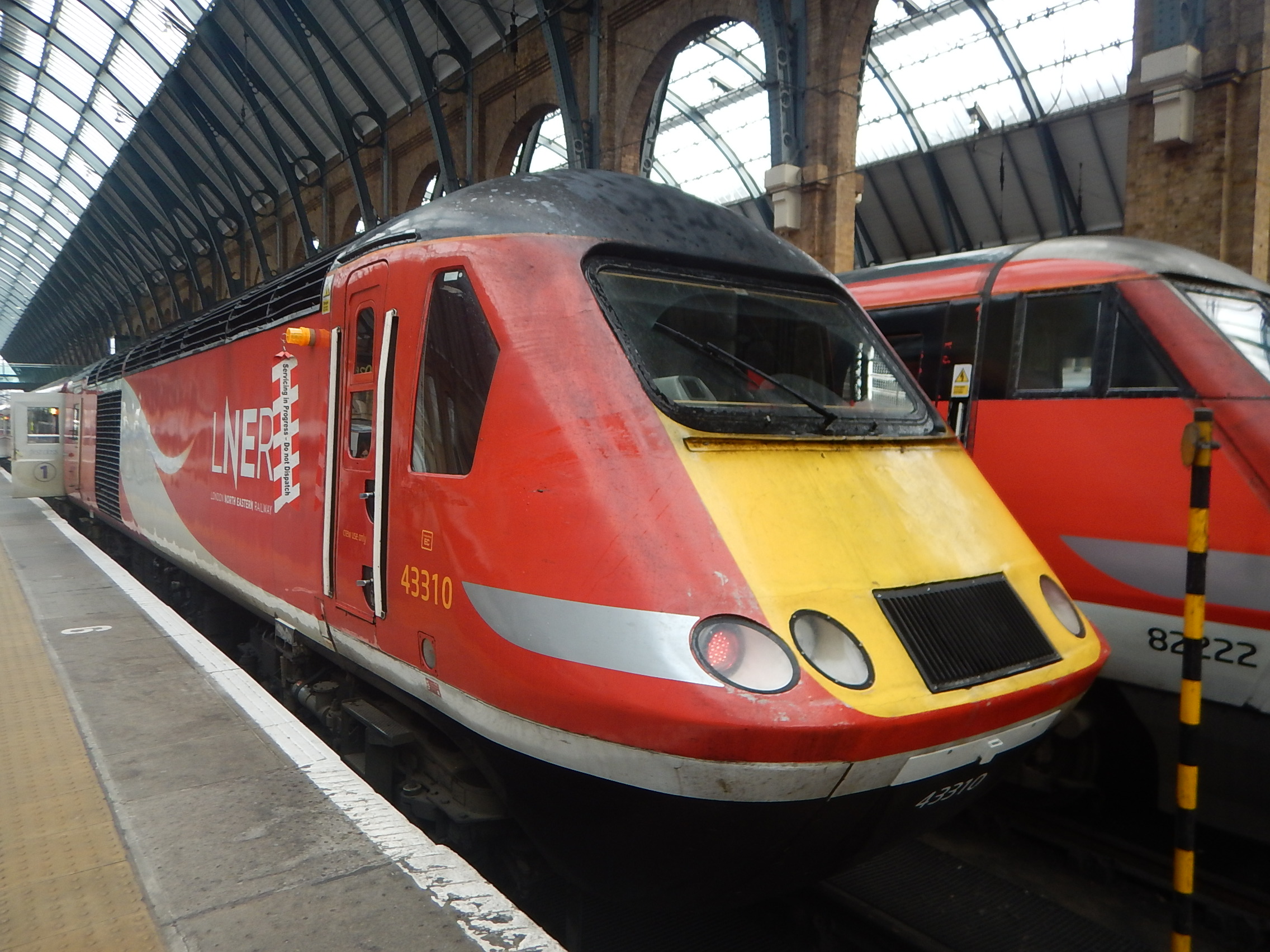
The iconic Class 43 power cars running on UK railways are an interesting possibility for powering with Rolls-Royce’s new system.
- Despite being over forty-years old, there are over a hundred and twenty still in service.
- They were upgraded with new 1.7 MW MTU diesel engines in the early part of this century.
- Rolls-Royce is based in Derby.
- The Class 43 power cars were developed in Derby.
- Hydrogen-powered Class 43 power cars, hauling GWR Castles or ScotRail Inter7Cities would be tourist attractions.
- The Class 43 power cars need to be either decarbonised or replaced in the next few years.
Decarbonisation using Rolls-Royce’s new system would probably be more affordable.
This all sounds like a project designed in a pub in Derby, with large amounts of real ale involved.
But I wouldn’t be surprised if it happened.
Will The System Be Upgradable From Sustainable Aviation Fuel To Hydrogen?
This is an except from the introductory paragraph.
The system will be an on-board power source with scalable power offerings and will complement the Rolls-Royce Electrical propulsion portfolio, enabling extended range on sustainable aviation fuels and later as it comes available through hydrogen combustion.
This would appear that if used in aviation, it will be possible to upgrade the system from sustainable aviation fuel to hydrogen, when a suitable hydrogen supply becomes available.
But all applications could be upgraded.

A truck, like the one shown in the picture could be delivered as one running on sustainable aviation fuel and converted to hydrogen later.
Conclusion
Rolls-Royce have put together a modular system, that will have lots of applications.
A Hydrogen-Electric Class 99 Locomotive
In GB Railfreight Plans Order For Future-Proofed Bi-Mode Locomotives, I introduced the Class 99 locomotive, for which the first order was announced by Stadler and GB Railfreight yesterday.
This was the start of that post, which I wrote in early March 2022.
The title of this post, is the same as that of this article on Railway Gazette.
This is the introductory paragraph.
GB Railfreight is planning to order a fleet of main line electro-diesel locomotives with a modular design which would facilitate future replacement of the diesel engine with a battery or hydrogen fuel cell module.
In this post, I will look at the design of a Class 99 locomotive running on hydrogen.
These are my thoughts.
Using Hydrogen Fuel Cells
The Railway Gazette article suggests that hydrogen fuel-cells will be used to create a hydrogen-electric Class 99 locomotive.
A typical hydrogen fuel-cell transmission will have the following elements, which will replace the diesel-electric generator.
- A hydrogen fuel tank
- A appropriately-sized hydrogen fuel-cell which generates electricity from hydrogen.
- A battery to store electricity.
- Regenerative braking will also be used to charge the battery.
- The locomotive will have an electric transmission.
The various components will be fitted into the space, that was occupied by the diesel engine.
This Alstom video promotes the Alstom Coradia iLint and explains how it works.
Most hydrogen fuel-cell trains and trucks , work as the train does in this video.
Using A Reciprocating Engine Running On Hydrogen
This press release from Caterpillar is entitled Caterpillar to Expand Hydrogen-Powered Solutions to Customers.
It describes how Caterpillar will develop versions of their reciprocating engines, that will run on 100 % hydrogen.
This would be an alternative way of developing a zero-carbon Class 99 locomotive.
Note that Cummins, JCB and Rolls-Royce mtu have also converted diesel engines to run on hydrogen.
This method of conversion has advantages.
Rolls-Royce Provide mtu Trigeneration Plant For Largest Data Centre In Romania
The title of this post, is the same as that of this press release on the Rolls Royce web site.
- mtu Series 4000 gas generator sets to provide electricity, heat and cooling for ClusterPower’s Technology Campus in Craiova
The completed campus will feature five data centers and provide a significant boost to the region’s global IT infrastructure competitiveness - Rolls-Royce, along with its distributor partner Knopf & Wallisch (K&W), has supplied three mtu customized and containerized combined cooling, heat and power plant (CCHP) trigeneration units to Romanian cloud service provider ClusterPower. They will be used for the efficient and sustainable energy supply at its new technology campus near the southern Romanian city of Craiova, where the IT company will open the largest data center in Romania.
The press release also says that trigeneration plants are hydrogen-ready.
The engines are gas engines, that can be converted to running on a mix of 25 % hydrogen and natural gas or eventually to pure hydrogen.
Conclusion
This would appear to be a neat way to sell the end customer an engine that can handle natural gas now and convert it over time to hydrogen.
Will We See Class 43 Power Cars Converted To Hydrogen?
To say that the Class 43 power cars of the InterCity 125 trains are iconic is rather an understatement.




Note.
They were built by British Rail in the late 1970s and early 1980s.
- They have an operating speed of 125 mph.
- They are now powered by a modern MTU 16V4000 R41R diesel engine after being re-engined earlier this century.
- They have an electric transmission.
According to Wikipedia, there are over a hundred and twenty in service.
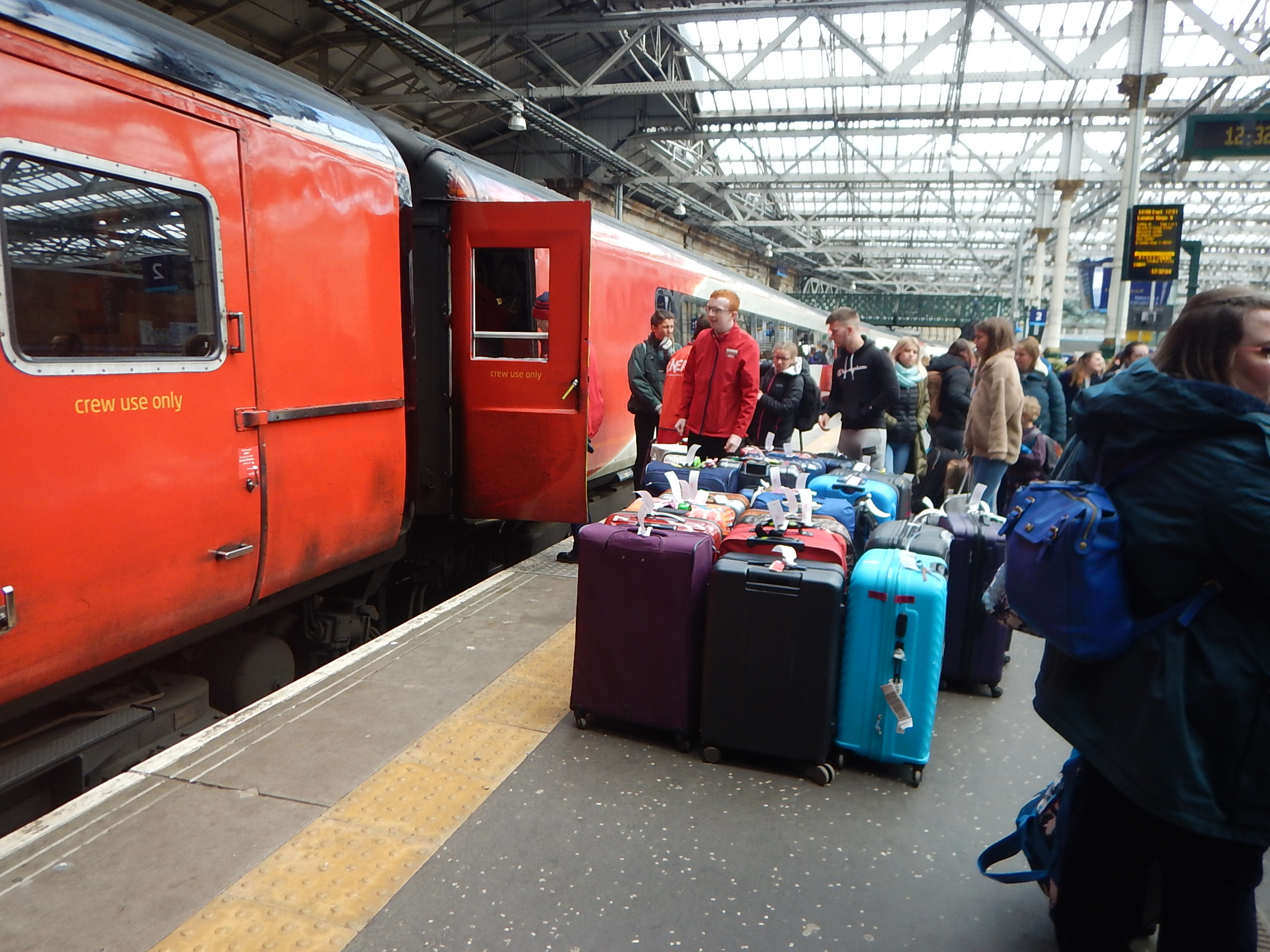
At the back of the power car there is a lot of space, as this picture shows.
This press release from Rolls-Royce is entitled Rolls-Royce Launches mtu Hydrogen Solutions For Power Generation.
These are the introductory bullet points to the press release.
- From 2022 mtu Series 500 and Series 4000 ready for 25% hydrogen
- From 2023 mtu engines and conversion kits available for 100% hydrogen
And what engine is there in a Class 43 power car? – It’s an MTU 16V4000 R41R diesel engine.
Is it an mtu Series 4000 engine?
If it is, there is space in the back of the power car for the hydrogen tank and the diesel engine can be converted to run on hydrogen, Rolls-Royce have everything they need break the speed record for hydrogen-powered trains. After all power cars; 43102 and 43159 hold the diesel-train speed record at 148 mph.
It would be the ultimate Roller.
Rolls-Royce Invests In Methanol Technology For Climate-Friendly Shipping
The title of this post, is the same as this press release from Rolls-Royce.
The press report starts with these bullet points.
- Rolls-Royce Power Systems to set standards in high-speed marine methanol engines
- New engines based on proven mtu technologies
- Methanol and synthetic diesel as key fuels of the future for climate-friendly engine operation
- Fuel cell another option on the way to climate-neutral ship operation
It then says this
Rolls-Royce is focusing on methanol as a fuel for climate-friendly shipping: Rolls-Royce business unit Power Systems is currently working on mtu engines for use with methanol. The new high-speed four-stroke engines, which are based on proven mtu technologies, are planned to be available to customers as soon as possible for use in commercial ships and yachts.
This paragraph gives the reasons, why Rolls-Royce is in favour of methanol.
Methanol offers a number of advantages for Rolls-Royce’s efforts to make shipping more climate-friendly and ultimately climate-neutral: The fuel can be produced in a CO2-neutral manner in the so-called power-to-X process, in which CO2 is captured from the air. The energy density of methanol is high compared to other sustainable fuels and, thanks to its liquid state, it can be easily stored and refuelled at ambient temperatures. Existing infrastructure can continue to be used in many cases. Unlike ammonia, methanol is not highly toxic and is environmentally safe. The combustion of methanol in a pure methanol engine can be climate-neutral with significantly reduced nitrogen oxide emissions, thus eliminating the need for complex SCR exhaust gas aftertreatment. Methanol tanks can be flexibly arranged in the ship and require significantly lower safety measures compared to hydrogen or ammonia. Besides the safety aspects and the lower complexity, the lower investment costs for users are a further upside of the methanol tank system.
Methanol seems to be a convenient and safe fuel, which is easier to incorporate into the marine environment, than hydrogen or ammonia.
Wikipedia says this about methanol’s use in shipping.
Methanol is an alternative fuel for ships that helps the shipping industry meet increasingly strict emissions regulations. It significantly reduces emissions of sulphur oxides (SOx), nitrogen oxides (NOx) and particulate matter. Methanol can be used with high efficiency in marine diesel engines after minor modifications using a small amount of pilot fuel (Dual fuel).
Rolls-Royce certainly seem to be keen to use the fuel. They also seem to have the technology.
Rolls-Royce Makes Duisburg Container Terminal Climate Neutral With MTU Hydrogen Technology
The title of this post, is the same as this press release from Rolls-Royce.
This is the first sentence.
Rolls-Royce will ensure a climate-neutral energy supply at the container terminal currently under construction at the Port of Duisburg, Germany.
There is also this Rolls-Royce graphic, which shows the energy sources.
It would appear batteries, combined heat and power (CHP), grid electricity, hydrogen electrolyser, hydrogen storage and renewable electricity are being brought together to create a climate-neutral energy system.
- As the graphic was named hydrogen technology for ports, I would assume that this is a Rolls-Royce mtu system that will be deployed at more than one port around the world.
- Note the H2 CHPs in the graphic. Could these be applications for Rolls-Royce’s beer keg-sized 2.5 MW electrical generator based on a Super Hercules engine?
- One of Rolls-Royce’s small modular nuclear reactors could be ideal for a large port outside Germany.
This is the last paragraph of the press release.
“Hydrogen technology is no longer a dream of the future, but hydrogen technology will prove itself in everyday use in Duisburg. The parallel use of fuel cell solutions and hydrogen engines shows that we have taken the right path with our technology-open approach to the development of new solutions for the energy supply of the future,” says Andreas Schell, CEO of Rolls-Royce Power Systems.
Rolls-Royce mtu appear to be very serious about the possibilities of hydrogen.
 The Anonymous Widower