Cardiff And Caerphilly – 24th March 2026
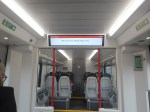
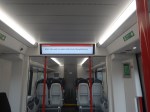
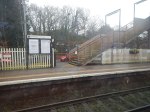
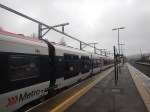
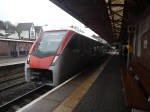
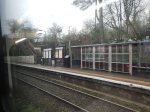
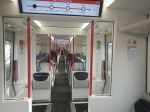
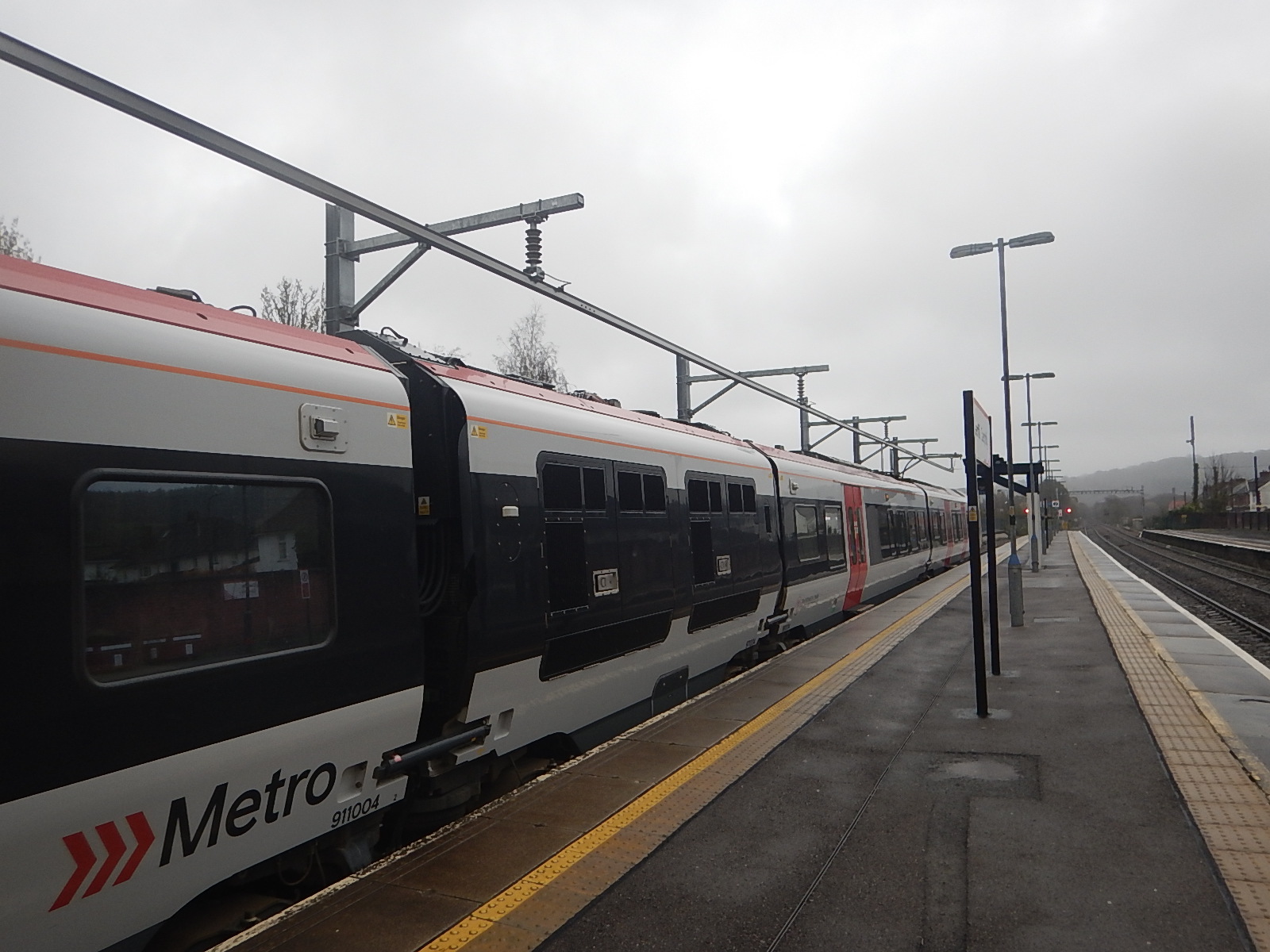
I took this pictures, as I rode up the Rhymney Valley from Cardiff to Caerphilly.
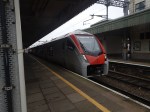
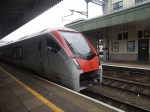
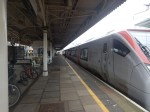
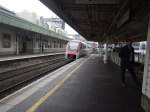
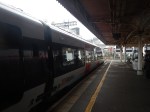
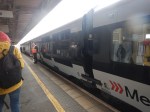
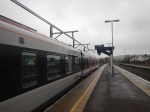
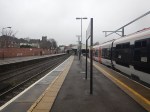
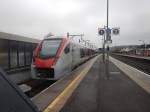
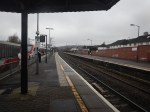
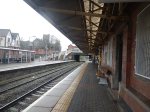
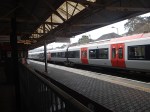
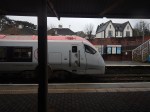
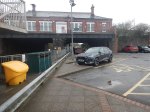
Note.
- The trains I took up and down the valley were both Class 756 tri-mode trains.
- My train reversed to Penarth in Platform 1.
- I think they were running using the diesel power in the power pack.
- There is an overhead conductor rail in Platform 1 at Caerphilly station to charge trains.
- The electrification North of Caerphilly station can be seen through the bridge in one of the pictures.
- Platforms 2 and 3 are not electrified.
I think Caerphilly station is a very neat electrification layout for occasional charging of battery-electric or tri-mode trains.
I have some specific thoughts.
What Have Caerphilly And St. Pancras Thameslink Stations Got In Common?
These pictures show the rigid conductor rail through St. Pancras Thameslink station.
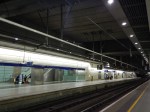
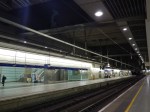
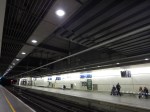
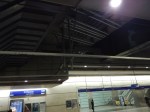
It looks remarkably similar to that in Platform 1 at Caerphilly station.
Judge in this picture.
The rails are probably out of the same Swiss electrification maker’s parts bin.
Both look equally professional with an I-section conductor, which could be aluminium, as it is lightweight and a good electrical conductor.
Google AI finds this.
The I-beam overhead conductor system used in St. Pancras Thameslink station is made of a hollow extruded aluminium profile. This system, known as a conductor beam, holds a conventional copper contact wire, providing a rigid, low-profile alternative to traditional overhead wires.
Key details:
Material: Extruded aluminium profile.
Structure: Hollow, designed to hold an un-tensioned, conventional copper contact wire.
Application: Developed by Balfour Beatty to reduce the required depth of overhead line equipment.
Installation: Often installed in a sinusoidal wave to ensure consistent wear on the pantograph.
This technology is used in areas with restricted overhead space, such as tunnels and some modern station approaches, to manage 25kV AC electrification.
It looks like it’s been used to provide a charging rail in Caerphilly station.
Is The Conductor Rail In Platform 1 Used To Create A Continuous Electrical Connection Around Caerphilly Station?
Look at this OpenRailwayMap, which shows the completed electrification through Caerphilly station.
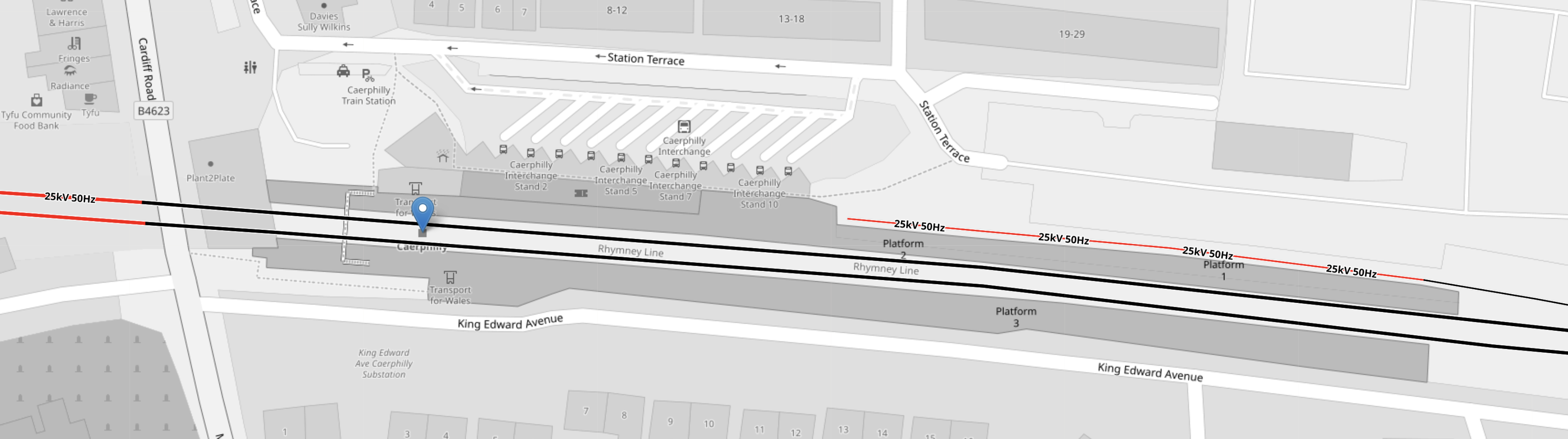
Note.
- Red tracks are electrified.
- Black tracks are not electrified.
- Caerphilly station is indicated by the blue arrow.
- The electrification continues to the Western end of the station.
- The two main platforms 2 & 3 are not electrified.
- The bay platform 1 is electrified to charge trains for return to Cardiff.
- Class 756 tri-mode electric-diesel-battery trains are already in service.
- There appears to be a comprehensive bus interchange.
The power for Platform 1 could come from the electrification at the Western end of the station.
I wouldn’t be surprised that the Rhymney Line will be fed with electricity at the heads of the valleys and it is fully-connected down to Cardiff to give a secure electrical connection.
Will Welsh Wind Power From The Heads Of The Valleys Be Used To Power The Cardiff Valley Lines?
To start with, as I know it can be blowy there, I asked Google AI, this question.
“Is Onshore Wind Planned At The Heads Of The Valleys In South Wales?”
I received this answer.
Yes, there is significant onshore wind energy development planned and in progress along the Heads of the Valleys area in South Wales. This region, encompassing areas like Merthyr Tydfil, Blaenau Gwent, and northern Rhondda Cynon Taf, is part of a broader push to increase onshore wind capacity in Wales, with many projects located on Natural Resources Wales forestry land.
Key Developments and Proposed Projects (2025-2026):
Trydan Gwyrdd Cymru: The Welsh government-owned developer has selected sites in South Wales for new, large-scale wind farms intended to be operational by 2040.
Carreg Wen Wind Farm: A planned 18-turbine project located between Aberdare and Maerdy (Rhondda Cynon Taf), near the Hirwaun/Heads of the Valleys area.
Hirfynydd Renewable Energy Park: A proposed project located on the Hirfynydd mountain range between Seven Sisters and Banwen, north of Neath, near the western end of the Heads of the Valleys.
Mynydd Llanhilleth and Trecelyn Wind Farms: Projects in the pre-application or planning stages by Pennant Walters in the Blaenau Gwent area.
Abergorki Wind Farm: A consented three-turbine project on Mynydd Maerdy (Rhondda Cynon Taf) with construction scheduled for 2026.
Operational Context:
Pen y Cymoedd: Already operational and currently the largest onshore wind farm in England and Wales, situated in the hills above the upper Neath, Afan, Rhondda, and Cynon Valleys.
Grid Infrastructure: Proposed new substations, such as one near Hirwaun (Rhondda Cynon Taf), are intended to connect these new projects to the national grid.
These developments are part of a target to generate 70% of Wales’ electricity from renewable sources by 2030, with a focus on areas previously identified as suitable for large-scale wind development.
Note.
- Pen y Cymoedd is the largest onshore wind farm in Wales and England, with an installed capacity of 228 MW.
- With the right size of battery, I’m fairly sure, that this wind farm could go a long way to powering the Cardiff Valley Lines.
- Carreg Wen Wind Farm is planned to be 108 MW wind farm.
- Hirfynydd Renewable Energy Park is planned to be a 100 MW hybrid development of wind turbines and solar with a battery.
- Mynydd Llanhilleth is planned to be a 48 MW wind farm.
- Trecelyn is planned to be a 20 MW wind farm.
- Abergorki is planned to be a 13 MW wind farm.
The total of new developments is 389 MW, which is about the same size as a Rolls-Royce SMR.
To Sheffield In An East Midlands Railway Class 810 Train
I took these pictures on the journey.
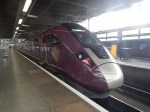

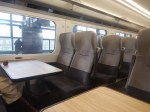






















Note.
- Five-car Class 222 And Class 810 trains Have similar lengths, so they can share platforms at St. Pancras – Nice Thinking!
- The Trainspotters will be able to see East Midlands Railway, Eurostar and Southeastern Highspeed.
- The Wymington Deviation was a Victorian fix for a steep gradient. I suspect all trains like it.
- Leicester, Loughborough, East Midlands Parkway and Long Eaton stations are quite close together.
South Yorkshire Now Has Better North-South Connections
The December 14th 2025 timetable change was a big day for South Yorkshire.
Three big changes will transform, public transport in South Yorkshire.
The Opening Of A New Tram-Stop At Magna Science Adventure Centre On The Tram-Train Route Between Sheffield And Rotherham
The Magna Science Adventure Centre is described like this in the first paragraph of its Wikipedia entry.
Magna Science Adventure Centre is an educational visitor attraction in Rotherham, South Yorkshire, England.
This map shows the site and the tram-train track between Sheffield and Rotherham.
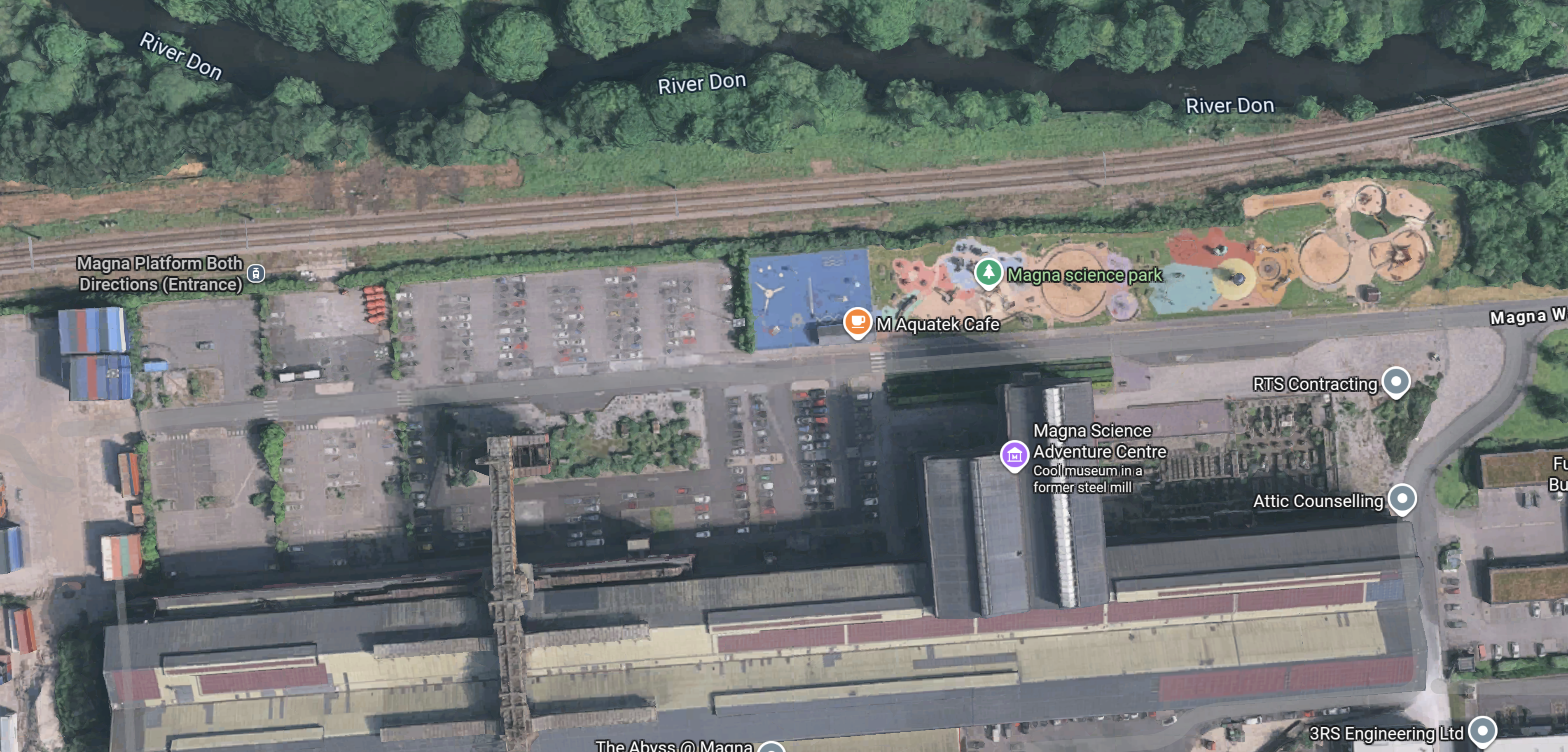
Note.
- The tram-train track runs East-West across the top of the map.
- Sheffield is to the West and Rotherham is to the East.
- At the Western end of the site, a label indicates the position of the Magna Platform.
- The position of the tram-train stop is already marked.
- There will be 29 extra Park-and-Ride spaces.
- The Magna Science Adventure Centre is indicated by the purple arrow in the middle of the map.
- Magna Way runs East-West through the site.
- There are four pavilions: Earth, Air, Fire, and Water.
This article on the BBC is entitled Lifts And Bridge Added As Tram Stop Takes Shape.
This picture from the article shows the bridge with lifts.

Note.
It will be an impressive tram stop.
It doesn’t look like it will be long before it opens.
But as yet no information is available.
Google AI gave this answer.
The new Magna Tram Train stop is scheduled to open in early 2026.
Construction of the new £10 million station and Park & Ride facility in Rotherham, part of a wider investment in the South Yorkshire Supertram network, is currently on track.
The new stop will improve access to the Magna Science Adventure Centre, local businesses, and link up with existing walking and cycling routes, aiming to ease congestion in the Lower Don Valley.
I shall be going next week to take photographs of the tram stop.
The Increase In Frequency Of Express Trains Serving Doncaster On The East Coast Main Line
Since the December 14th 2025 timetable change, the Monday to Friday express trains, that stop at Doncaster on the East Coast Main Line have included.
- CrossCountry – 8 trains per day (tpd) in both directions.
- Grand Central – 4 tpd in both directions.
- Hull Trains – 7 tpd in both directions.
- LNER- 3.5 trains per hour (tph) in both directions.
- TransPennineExpress – 1 tph in both directions.
Note.
- This totals to 173 express trains per day stopping at Doncaster
- Or about 7 tph in both directions or a train every 8.5 minutes.
- This is about a thirty percent increase in frequency.
- Doncaster has become the Crewe of South Yorkshire.
I can see this large number of express trains to Doncaster bringing large numbers of visitors to go to the Magna Science Adventure Centre or its tram stop for onward connection to other destinations on the Sheffield Supertram network.
The trouble is, that at present the Magna tram stop is not connected to Doncaster station.
This OpenRailwayMap shows the rail lines between Doncaster and Sheffield stations.
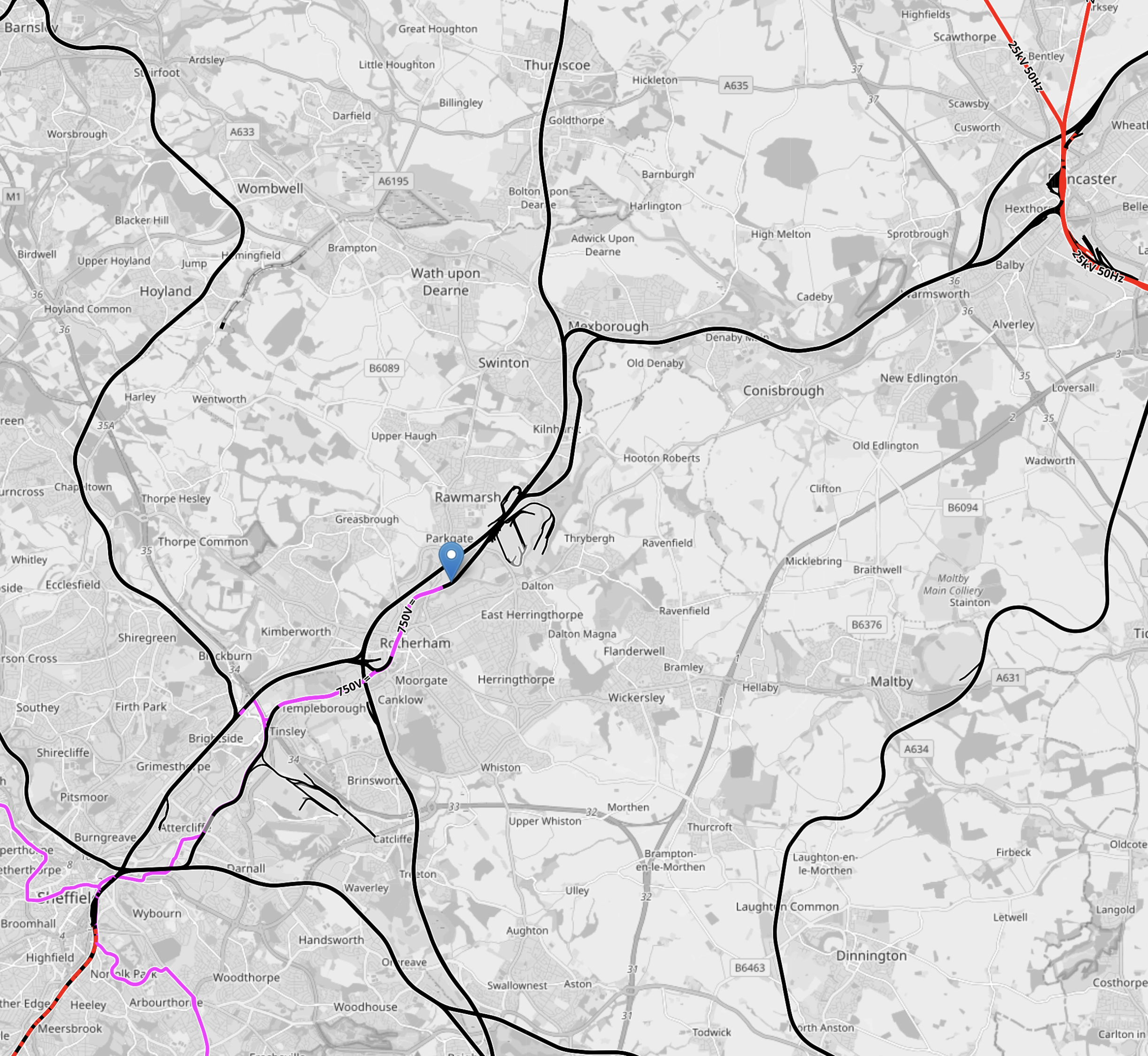
Note.
- The short length of red track in the North-East corner of the map is the East Coast Main Line.
- Doncaster station can be picked out.
- The short length of red track in the South-West corner of the map is the Midland Main Line, which connects Sheffield to London.
- Sheffield station is at the Northern end of the electrification, which will be installed soon.
- The pink tracks are the 750 VDC electrified tracks of the Sheffield Supertram.
- The blue arrow marks Rotherham Parkgate station, which is the limit of the current tram-train route.
The tram-train route needs to be extended so that the tram-trains can go between Rotherham Parkgate tram stop and Doncaster station.
The route seems to have these characteristics.
- It is about 11.8 miles long.
- Stops are Rotherham Central, Swinton (South Yorkshire), Mexborough and Conisborough.
- Diesel trains take about thirty minutes between Rotherham Central and Doncaster.
- All platforms at Doncaster are electrified with 25 KVAC.
- Platform 5 is a convenient bay platform at Doncaster, that could be used by the tram-trains.
- Sheffield’s Class 399 tram-trains can use 25 KVAC for traction.
- South Wales have similar Stadler tram-trains, that are to be fitted with batteries.
I am fairly sure, that a solution can be found so that Sheffield’s tram-trains can be extended to Doncaster station.
This OpenRailwayMap shows the route between Rotherham Parkgate tram stop and Doncaster station.
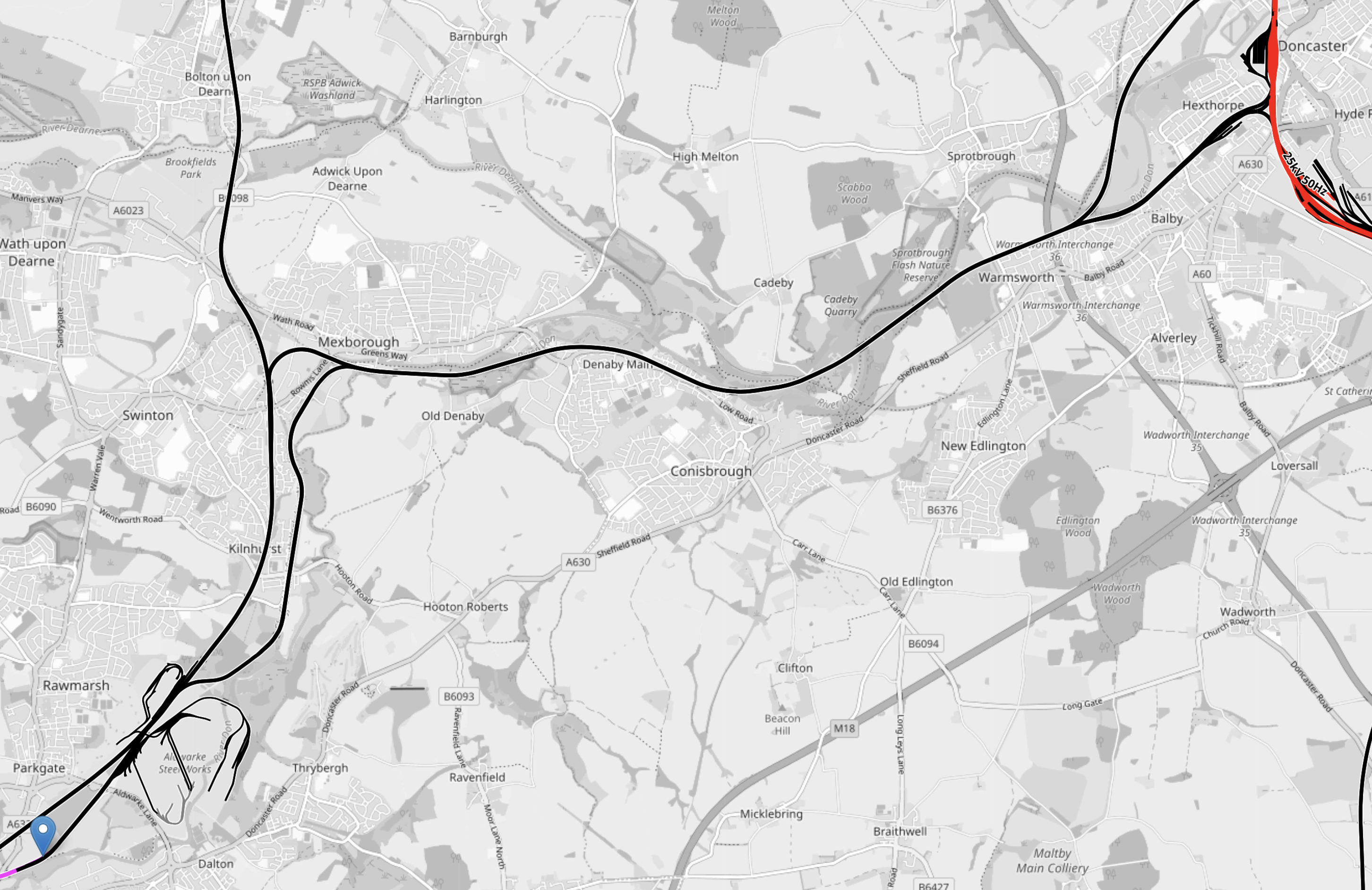
Note.
- The short length of red track in the North-East corner of the map is the East Coast Main Line.
- Doncaster station can be picked out.
- The short length of pink tracks are the 750 VDC electrified tracks of the Sheffield Supertram.
- The blue arrow marks Rotherham Parkgate station, which is the limit of the current tram-train route.
- Most of the route is not electrified.
As there is electrification at both ends, I suspect the easiest way of powering the trams would be to use batteries, as has been done in South Wales.
The New Class 810 trains between London St. Pancras And Sheffield On The Midland Main Line
These new Class 810 trains have started running this month and I suspect soe travellers will use these trains to go to Magna or its tram stop.
his OpenRailwayMap shows the tram routes in Sheffield city centre.
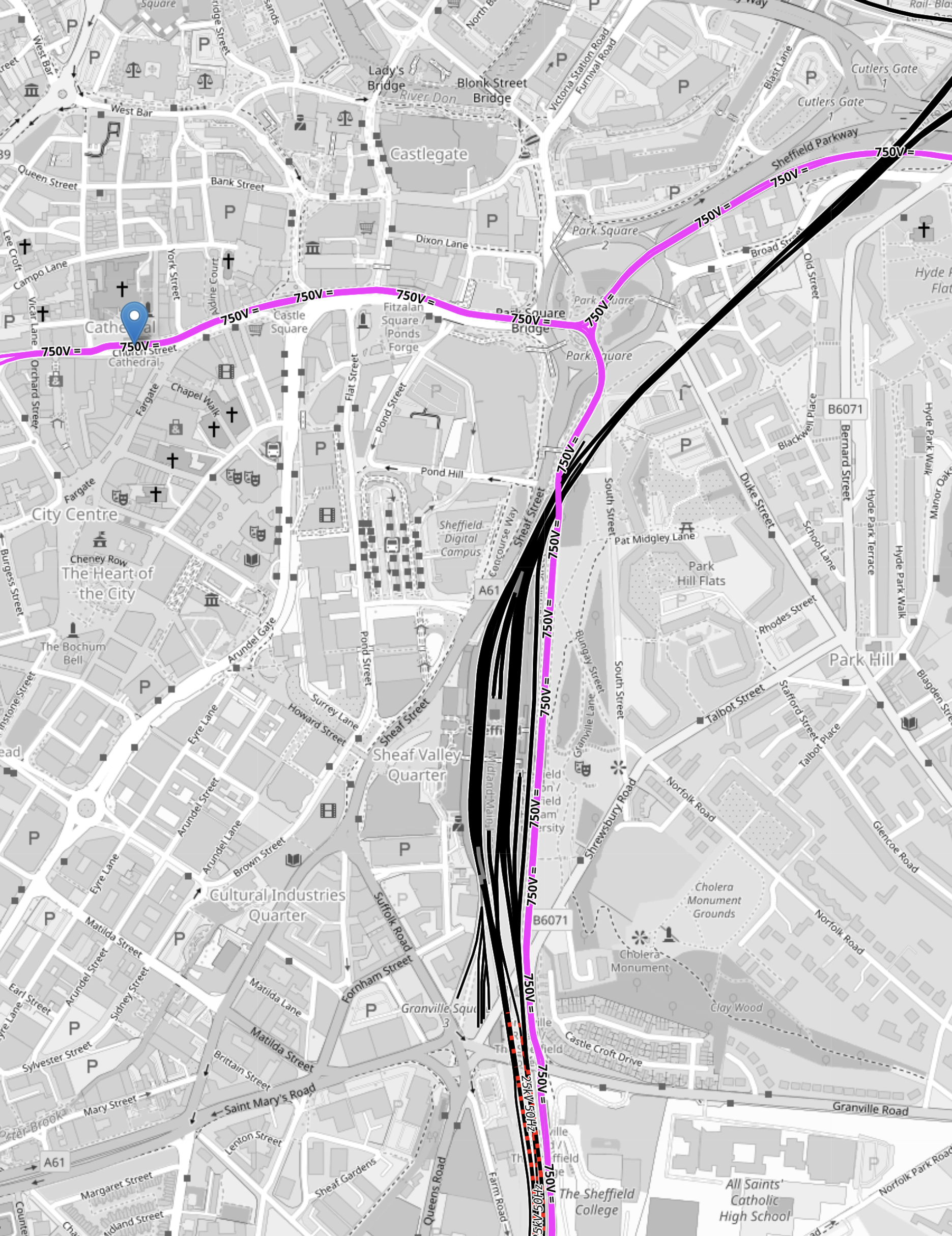
Note.
- The pink tracks are tram-tracks.
- The black tracks are unelectrified train tracks.
- The short lengths of red-and-black tracks are tracks to be electrified with 25 KVAC overhead, for the Class 810 trains.
- The blue error indicated the Cathedral tram-stop, where tram-trains will be caught to Magna.
- The mass of black tracks in the middle of the map is Sheffield station.
- There is a tram stop on the East side of the train station for the trams.
- Trams going South go to Halfway and Herdings Park.
- Trams going North-East go to Rotherham Parkgate and Meadowhall Interchange, and will go to Magna, when it opens.
- Trams going North-West go to Malin Bridge and Middlewood.
It is a difficult interchange between Cathedral and Sheffield station, if you are catching the tram-train, as it is a hard walk up hill, so it might be better if you are goinging between Sheffield station and the tram-train to change trams at Meadowhall South.
East West Rail Unveils Next Phase For Oxford-Cambridge Growth
The title of this post, is the same as that of this press release from the UK Government.
These three bullet points act as sub-headings.
- more frequent trains on the horizon for millions of passengers between Oxford and Cambridge as multibillion pound East West Rail project confirms next steps
- new rail station set to help serve upcoming Universal theme park in Bedford, as well as improvements planned for several existing stations
- new route delivers on the government’s Plan for Change, unlocking £6.7 billion of regional economic growth and delivering up to 100,000 new homes
These two introductory paragraphs make a few general points about the overall project, housing and jobs.
Millions of people across the Oxford to Cambridge corridor are set to benefit from more frequent trains as the East West Railway Company (EWR Co) has revealed the next steps for the second phase of the project today (19 November 2025).
As one of Britain’s largest transport projects, East West Rail forms a cornerstone of the government’s Plan for Change, unlocking £6.7 billion of regional economic growth by 2050, enabling up to 100,000 new homes and supporting tens of thousands of new jobs along the route.
These sections make some more detailed points.
How Many Permanent Staff Will Be Employed At Universal Studios Bedford?
As many will want to live locally, this will surely encourage many to use the trains on the East-West Rail to travel to work, so this will be an important factor.
I asked Google AI, the question in the title of this section and received this answer.
Universal Studios plans to employ 8,000 permanent staff at its new resort in Bedford. This number is part of an overall total of approximately 28,000 jobs, which includes 20,000 jobs during the construction phase.
My project management knowledge is telling me that the station should be built before the theme park.
How Many Daily Visitors Are Expected At Universal Studios Bedford?
I asked Google AI, the question in the title of this section and received this answer.
The Universal Studios theme park in Bedford is expected to have 55,000 visitors on peak days from its launch, based on its plan to handle 8.5 million annual visitors. The project, planned to open in 2031, is expected to attract 8.5 million annual visitors in its first year, with numbers rising to 12 million within 20 years.
I would expect a large number of visitors and staff will probably be encouraged to come by train, just as they are at some Premier League football stadiums.
Will Universal Studios Bedford Be Marketed As A Low Carbon Theme Park?
I’m asking this question, as it seems, the railway is being upgraded make this easier.
I asked Google AI, the question in the title of this section and received this answer.
Yes, it appears Universal Studios Bedford will be marketed as having a low-carbon focus, as evidenced by its planning applications that highlight sustainability efforts. The project outlines include goals for water conservation, energy reduction and clean energy use, waste minimization, and the use of low-carbon materials, all of which will likely be part of the marketing narrative for the theme park, according to LinkedIn.
How Many Car Parking Spaces Will Be Provided At Universal Studios Bedford?
I asked Google AI, the question in the title of this section and received this answer.
The Universal Studios resort planned for Bedford will include a minimum of 7,106 parking spaces and 100 coach bays. The resort is also expected to have 250 cycle spaces and enough room for over 7,100 cars
That is a lot of car parking spaces. Hopefully, there will be a lot of car charging points.
Increased Train Frequency And Capacity
These two paragraphs from the press release, talk about increased train frequency and capacity.
Following extensive consultation with local communities, the multi-billion-pound project has confirmed it is exploring a series of transformative plans including increasing the proposed frequency of trains from 3 or 4 to up to 5 per hour.
These enhancements could provide up to 70% more seating across the route, easing overcrowding and speeding up boarding, as well as cutting average waiting times, improving service resilience and creating a smoother, more reliable passenger experience.
When you consider that London Overground, Merseytravel, the South Wales Metro, West Midlands Trains and other local lines in the UK consider than four trains per hour to be a minimum service, then five trains per hour is to be welcomed.
Station Improvements And New Stations
These two paragraphs from the press release, talk about station improvements and new stations..
Several other improvements across the route have also been confirmed, including new station entrances at Bletchley, Cambridge and Bedford, as well as four brand-new stations along the Marston Vale Line – the first significant investment since the 1960s.
With the current stations on the Marston Vale Line seeing some of the lowest usage in the country, the new stations will better serve local communities by providing faster, more frequent services, as well as helping to serve the upcoming Universal theme park.
I thought Bletchley, Cambridge and Bedford stations had already been substantially improved in recent years.
A New Station At Stewartby
Are the station improvements to upgrade public transport access to the Universal theme park at Stewartby station?
- An East-West Rail service between Oxford and Stansted Airport via Bletchley, Milton Keynes Central, Stewartby, Bedford and Cambridge would give the Universal theme park all-important airport access.
- Would an upgraded Bletchley station improve interchange between the West Coast Main Line and East-West Rail give better access to the theme park from London, the West Midlands and North-West for visitors?
- Would an upgraded Bedford station improve interchange between the Midland Main Line and East-West Rail give better access to the theme park from London, the East Midlands and North-East for visitors?
- An upgraded Bedford station could also be marketed as a zero-carbon route between the theme park and the Continent via St. Pancras International and Eurostar.
- Would an upgraded Cambridge station give better access to the theme park from the East of England?
In addition four new stations on the Marston Vale Line would improve access for visitors and staff, who live locally.
Will Battery-Electric Trains Be Used On The East-West Rail?
As five major East-West Rail stations; Bedford, Bletchley, Cambridge, Milton Keynes and Reading are substantially served by main line electric trains, and it is likely that more stations will be in future, I believe that East-West Rail must either be electrified or services should be run by battery-electric trains, which would enable zero-carbon rail routes to and from London and all the city’s airports, Birmingham, Liverpool, Manchester and an increasing number of cities in the North and Midlands of England, and Scotland and Wales.
I asked Google AI, the question in the title of this section and received this answer.
Yes, the East West Rail (EWR) project plans to use battery-electric trains as part of a discontinuous electrification strategy. This means trains will run on overhead electric power in sections where they are installed, and on onboard batteries in other sections of the route.
It does appear that discontinuous electrification and battery-electric trains will be used.
Electrification At Bedford Station
This OpenRailwayMap shows The East side of Bedford station.
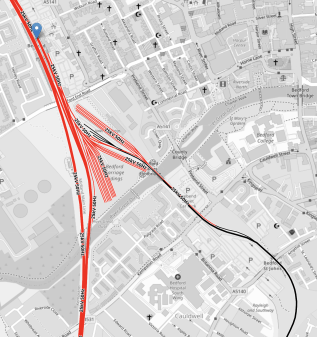
Note.
- The red tracks are electrified and black tracks are not.
- The black track looping into the station from the East is the Marston Vale Line, which will connect the East-West Rail to Bedford station.
- At the Easternmost part of the curve is Bedford St. Johns station, which serves Bedford hospital.
- The Marston Vale Line services normally connect to Platform 1A at Bedford station.
- But it also appears trains can also use Platforms 1 and 2 at Bedford station.
- It also appears that that Platforms 1A, 1 and 2 are all electrified.
This picture confirms electrification in Platforms 1A and 1.
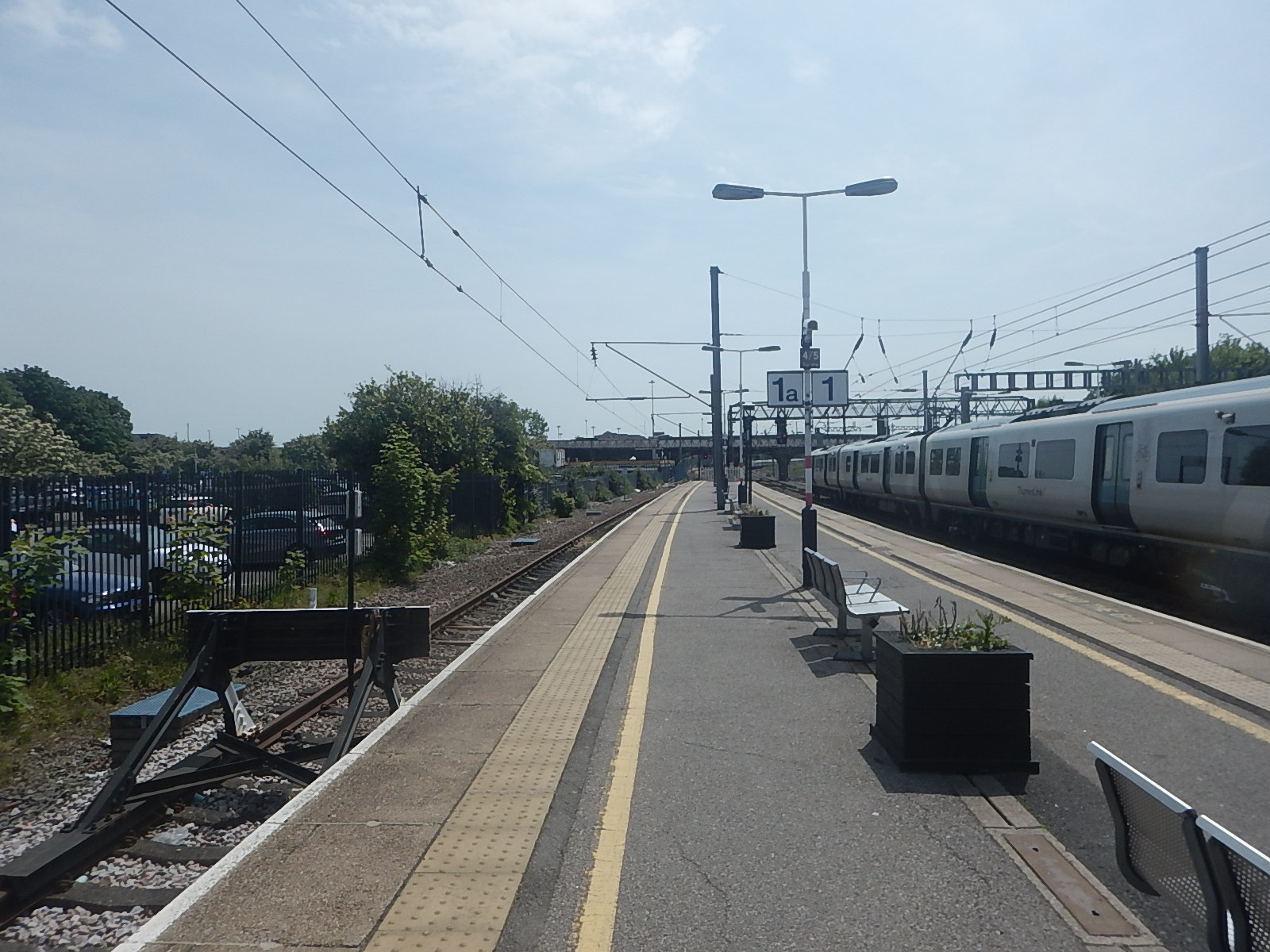
Note.
- Platform 1A is on the left.
- Platform 1 is on the right.
- The Thameslink train on the right is in Platform 2.
- Platforms 1A, 1 and 2 are all clearly electrified.
- Platform 1A is 81 metres long, so could accept a typical four-coach train.
Battery-electric trains with pantographs could certainly by charged in either of these two platforms at Bedford station.
Electrification At Milton Keynes Central Station
It would appear that East-West Rail services will use Platform 2A at Milton Keynes Central station.
This OpenRailwayMap shows Platform 2A at Milton Keynes Central station.
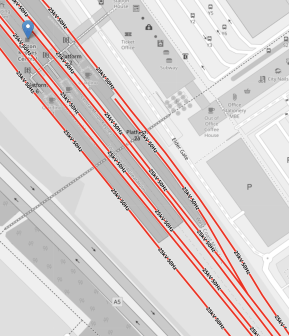
Note.
- The red tracks are electrified and black tracks are not.
- Platform 1 is the through platform on the North-East side of the station.
- Platform 2A is the bay platform tucked underneath Platform 1.
- Platform 2A is clearly electrified.
- Platform 2A is 124 metres long, so could accept a typical five or six-coach train.
These pictures show Platforms 1 and 2A at Milton Keynes Central station.
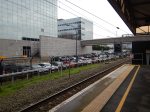

Battery-electric trains with pantographs could certainly by charged in Platform 2A at Milton Keynes Central station.
Electrification At Oxford Station
It would appear that terminating East-West Rail services will use Platform 1 or 2 at Oxford station.
This OpenRailwayMap shows the platforms at Oxford station.
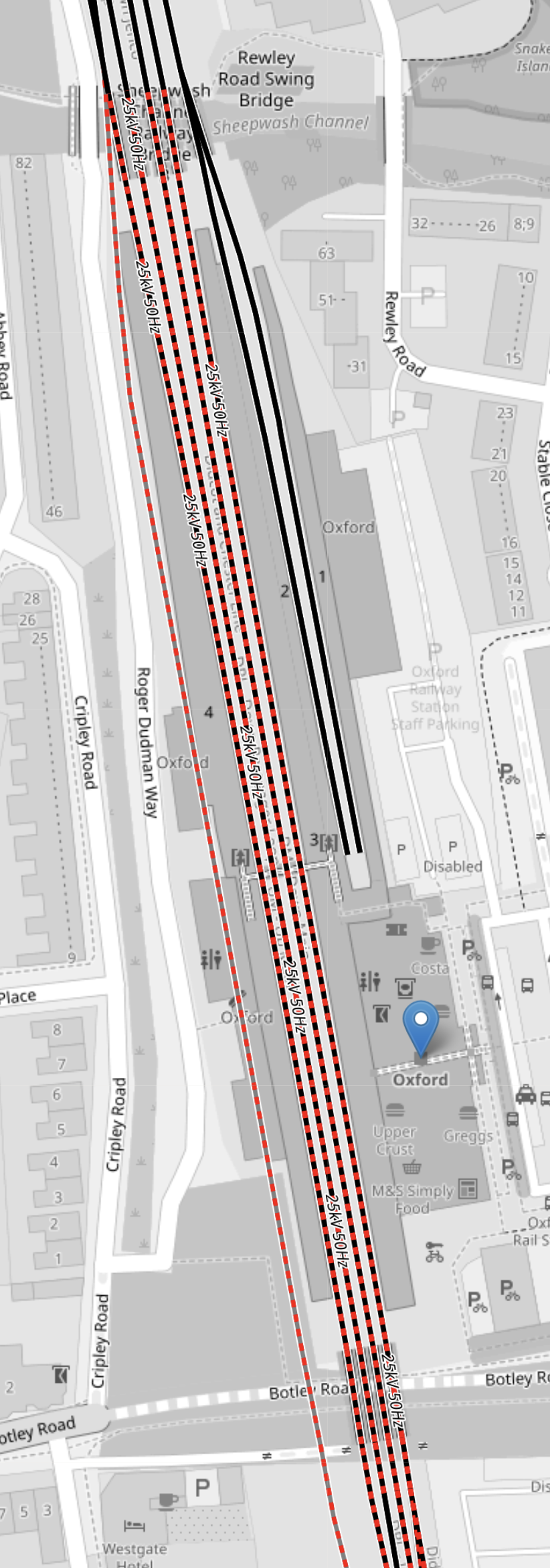
Note.
- The red and black tracks are to be electrified and black tracks are not.
- Platforms 1 and 2 are shown in black and are likely to be used by terminating East-West Rail trains.
- Platforms 1 and 2 would need to be electrified to be able to charge trains.
- Platforms 1 and 2 would also be used by Chiltern’s London services.
- Platform 1 and 2 are respectively 157 and 160 metres long, so could accept a typical five or six-coach train.
- As Oxford and Reading is to be electrified, through East-West Rail trains could use that electrification to travel to and from Reading.
These pictures show Platforms 1 and 2 at Oxford station.
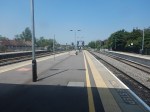
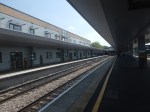
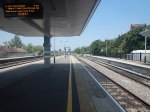
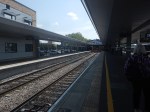
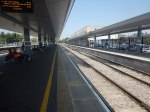

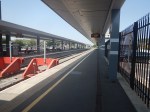
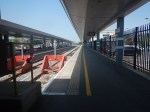
Battery-electric trains with pantographs could certainly by charged in Platform 1 and 2 at Oxford station, if the platforms were electrified.
Electrification At Reading Station
The West-facing platforms at Reading station are all electrified and longer than 120 metres, so could accept a typical four or five-coach train.
What Trains Should Be Used?
Consider.
- There is only one battery-electric train, that has been tested on the UK rail network – The Hitachi Class 802 train or similar.
- There is only one battery-electric train, that has been ordered – The Hitachi Class 802 train or similar.
- The longest distance on battery, between Reading and Bedford, is probably about thirty miles.
The Government could do a lot worse than order some more Class 802 trains, that were tailored for East-West Rail.
The Hitachi Class 802 train has five-cars, which are 26 metres long.
- It has a 125 mph operating speed.
- It has a range of 45 miles on battery power.
- The trains have been proven in service.
- The trains are made in the UK.
- The trains could handle extended routes like Birmingham and Stansted Airport or Cardiff and Cambridge.
A four-car variant of the train with a 100 mph operating speed could be an alternative.
What Will Be The Initial East-West Rail Service?
I asked Google AI, the question in the title of this section and received this answer.
The initial East West Rail service will be between Oxford and Milton Keynes/Bletchley, with passenger services delayed until at least 2026 due to a dispute over train crew roles. Freight services began in June 2025, and temporary diesel services will run until the line is electrified. The full project aims to connect Oxford and Cambridge.
Note.
- Stewartby station for Universal Studios Bedford will not be served by East-West Rail initially.
- But I suspect, that the current Marston Vale Line service will continue, with a change if needed at Bletchley or Bedford to get to Stewartby.
- Earlier I showed that Google AI is predicting 20,000 construction jobs at Universal Studios Bedford, which I am sure will need some form of high-capacity rail transport, if grid-lock is to be avoided in much of Bedfordshire.
Perhaps an initial fleet of four- or five-car Class 802 diesel-electric trains could be ordered and they would run the full route between Oxford and Bedford stations, with a reverse in Platform 2A at Milton Keynes station.
- The trains would run initially on diesel.
- By using stepping-up in Platform 2A at Milton Keynes station, I believe a two trains per hour (tph) service could surely be run.
- Hitachi could probably deliver the trains quickly, as they have not long been out of production.
- Those living locally would get a much improved train service from their local station to and from Bedford, Milton Keynes or Oxford.
- A large portion of the onward connectivity of the East-West Rail would be delivered early to the benefit of locals and visitors.
- If extra services are needed, semi-fast services could be added between Bedford and Reading with stops at Stewartby, Bletchley, Bicester Village, Oxford Parkway and Oxford stations.
When Platforms 1 and 2 at Oxford station are electrified and the trains are converted to battery-electric operation, the route could be converted to zero-carbon operation.
Virtually Nothing Is Said About The Route Of The East-West Rail Between Bedford and Cambridge South Stations Via Tempsford Station
This quote from David Hughes, CEO, East West Railway Company, is the only time, that Tempsford is mentioned in the press release.
“From a new station at Cambridge East to better access in Oxford and clear alignment through Tempsford, East West Rail is shaping the modern, sustainable transport link this region needs to thrive.”
I asked Google AI, if the proposed route of the East-West Rail between Bedford and Cambridge South stations through Tempsford is controversial and I received this reply.
Yes, the proposed route of East West Rail between Bedford and Cambridge is controversial, with opposition from some local residents and political figures who have expressed concerns about the southern alignment through Tempsford and surrounding villages. However, East West Rail Co has selected the route north of the Black Cat roundabout as the preferred alignment, citing reasons like cost-effectiveness and fewer disruptions, while also updating designs to include a southern station entrance to connect with planned growth areas around Tempsford.
Does Government or Artificial Intelligence have precedence?
Cambridge East Station Gets A First Mention
This quote from David Hughes, CEO, East West Railway Company, is the first time, that I’ve seen Cambridge East station mentioned.
“From a new station at Cambridge East to better access in Oxford and clear alignment through Tempsford, East West Rail is shaping the modern, sustainable transport link this region needs to thrive.”
In this document on the East-West Rail Consortium web site, there is extensive talk of an A14 Parkway station.
- The document dates from 2018.
- Google AI can’t find any trace of the A14 Parkway station referred to in the document.
- This article on the BBC, which was written five days ago and is entitled Additional City station Proposed By East West Rail, is the only reference on the Internet, that references Cambridge East station.
- The BBC article also says that other proposals after consultation include a new eastern entrance for Cambridge station, locating Cambourne station closer to the town and a mined tunnel for Bourn Airfield.
- I also have to assume that A14 Parkway has also morphed into Cambridge East station.
- To access all my posts, that relate to A14 Parkway, click this link.
But it does seem that consultation appears to have produced an acceptable compromise.
Between Kempston Hardwick and Tempsford Stations Through Bedford
I’ve now found that OpenRailwayMap has been updated between Bedford and Cambridge.
This first section shows the route between Kempston Hardwick and Tempsford stations through Bedford.
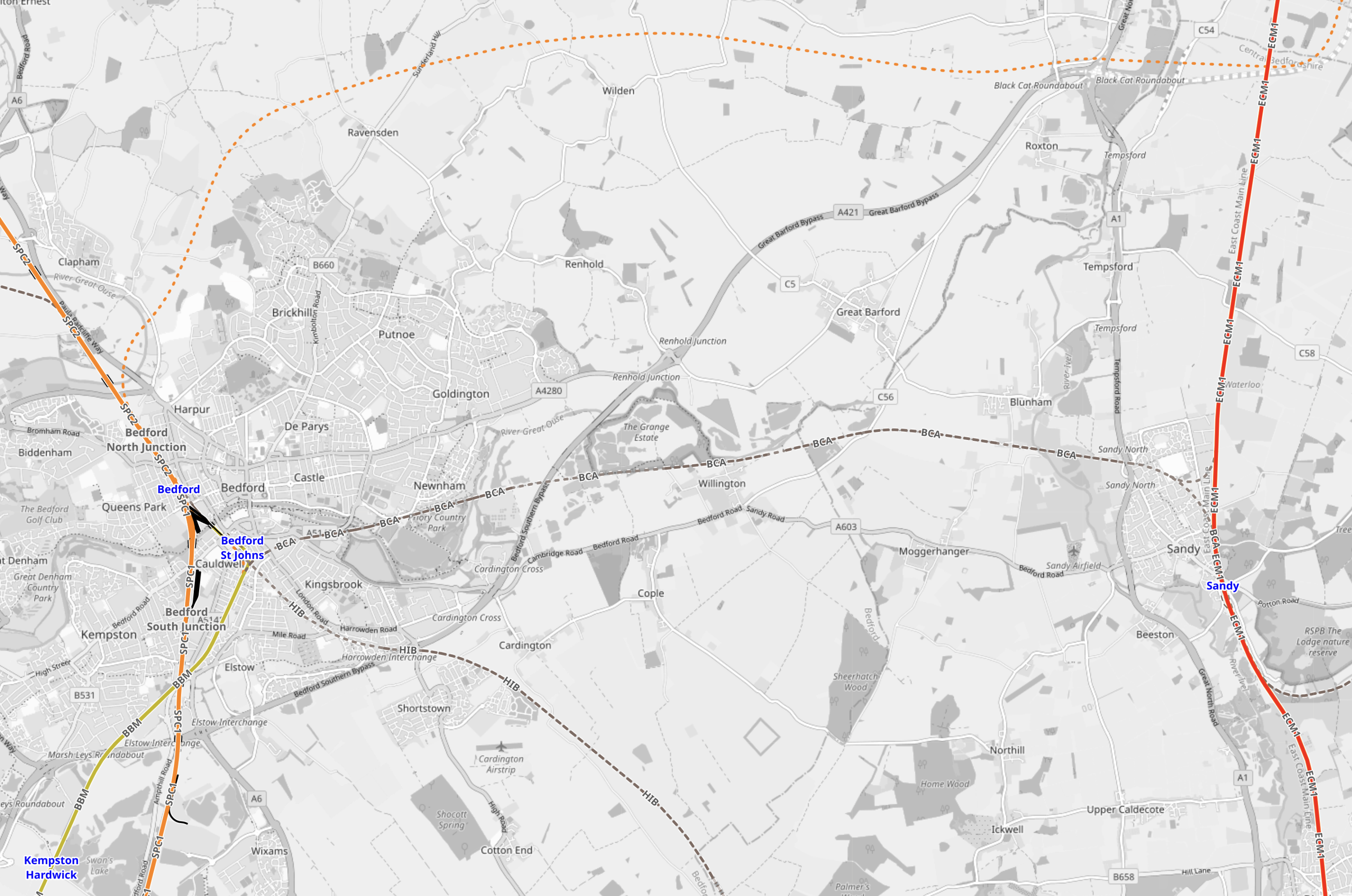
Note.
- Kempston Hardwick station is in the South-West corner of the map.
- The yellow track is the Marston Vale Line, which goes through Bedford St. Johns and Bedford stations.
- The red track on the West side of the map is the Midland Main Line.
- The red track on the East side of the map is the East Coast Main Line.
- The dotted red line across the top of the map will be the route of the East-West Rail.
- Tempsford station will be to the South-West of where the East Coast Main Line and East-West Rail cross in the North-East cornet of the map.
I hope the good people of Bedford are happier now!
Between Tempsford and Cambourne
I’ve now found that OpenRailwayMap has been updated between Bedford and Cambridge.
This second section shows the route between Tempsford and Cambourne stations.
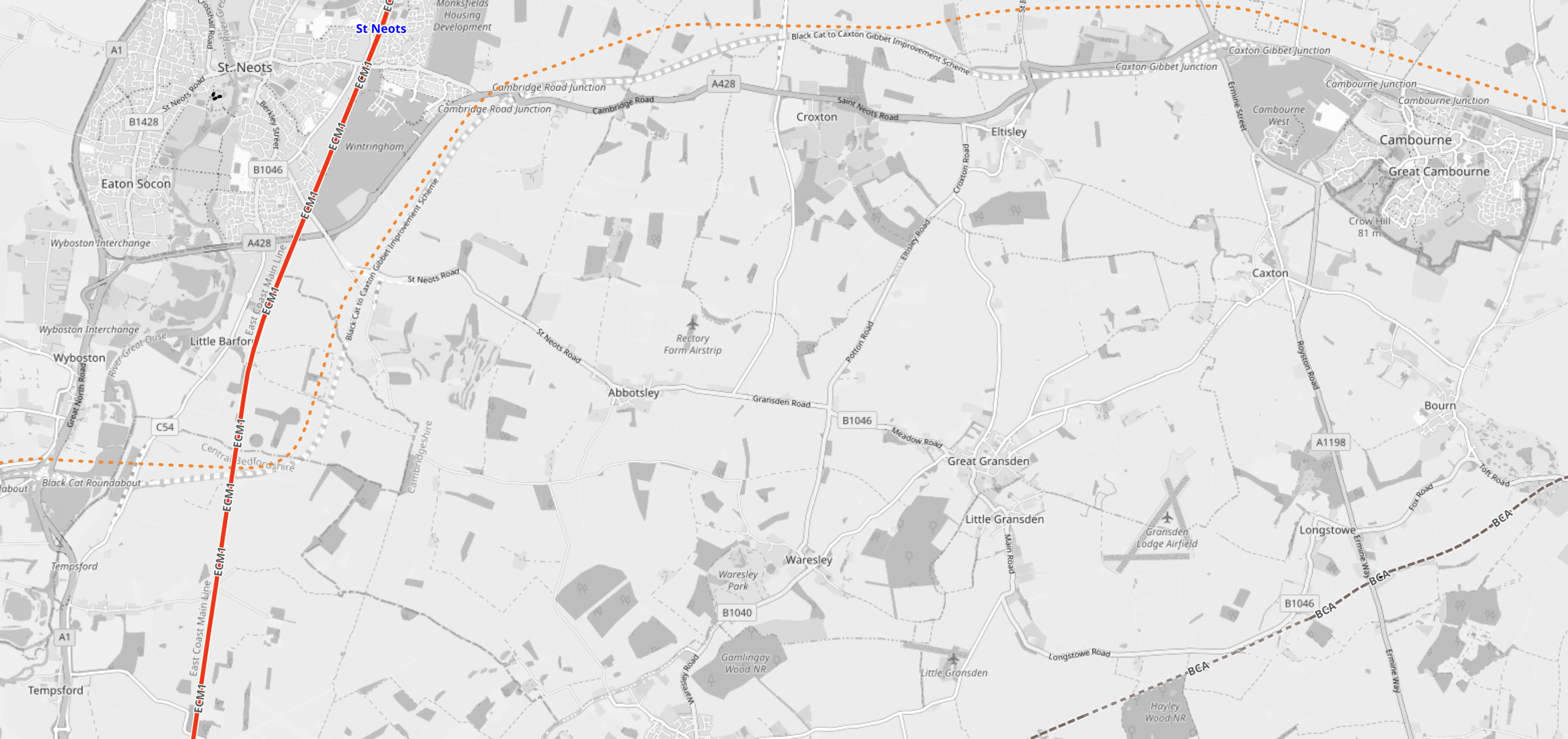
Note.
- The dotted red line across the top of the map will be the route of the East-West Rail.
- Tempsford station is in the South-West corner of the map on the route of the East-West Rail.
- The red track on the West side of the map is the East Coast Main Line.
- Cambourne is the village in the North-East corner of the map.
Eurostar Orders First Double-Decker Trains
The title of this post, is the same as that of this article on the BBC.
This is the sub-heading.
Eurostar has revealed plans to run double-decker trains through the Channel Tunnel for the first time.
These three paragraphs add more details.
The cross-channel rail operator has confirmed it will order up to 50 trains from manufacturer Alstom, eventually increasing the size of its fleet by nearly a third.
The expansion plans would include investing heavily in a crucial London depot, it said.
But questions remain over whether the facility has enough space for both Eurostar and potential rival operators to use it.
This my solution to the problem outlined in the last paragraph.
Note, that I wrote the software that planned the building of the Channel Tunnel and the rail links to London and was also friends with the project manager of the 1960s attempt to build a Channel Tunnel.
We need more terminal platforms and depot space in the UK to handle Eurostar’s extra trains and the other companies who want to run to London.
We should split services into two groups.
Group 1 would terminate as now in an updated St. Pancras with more passenger handling capacity, which could probably be built over the tracks at the Northern end of the station. Trains would still be stabled at Temple Mills.
Group 2 would terminate at Ebbsfleet International, which would have extra platforms, a new depot, masses of car parking and a coach terminal.
Some trains from both groups could also stop at Ashford International.
To access Ebbsfleet from Central London and also create a Heathrow link to the Channel Tunnel, the Lizzie Line would be extended to Northfleet, where there is space to handle up to eight trains per hour in new platforms built in two disused sidings.
This OpenRailwayMap shows the location of Northfleet and Ebbsfleet stations.
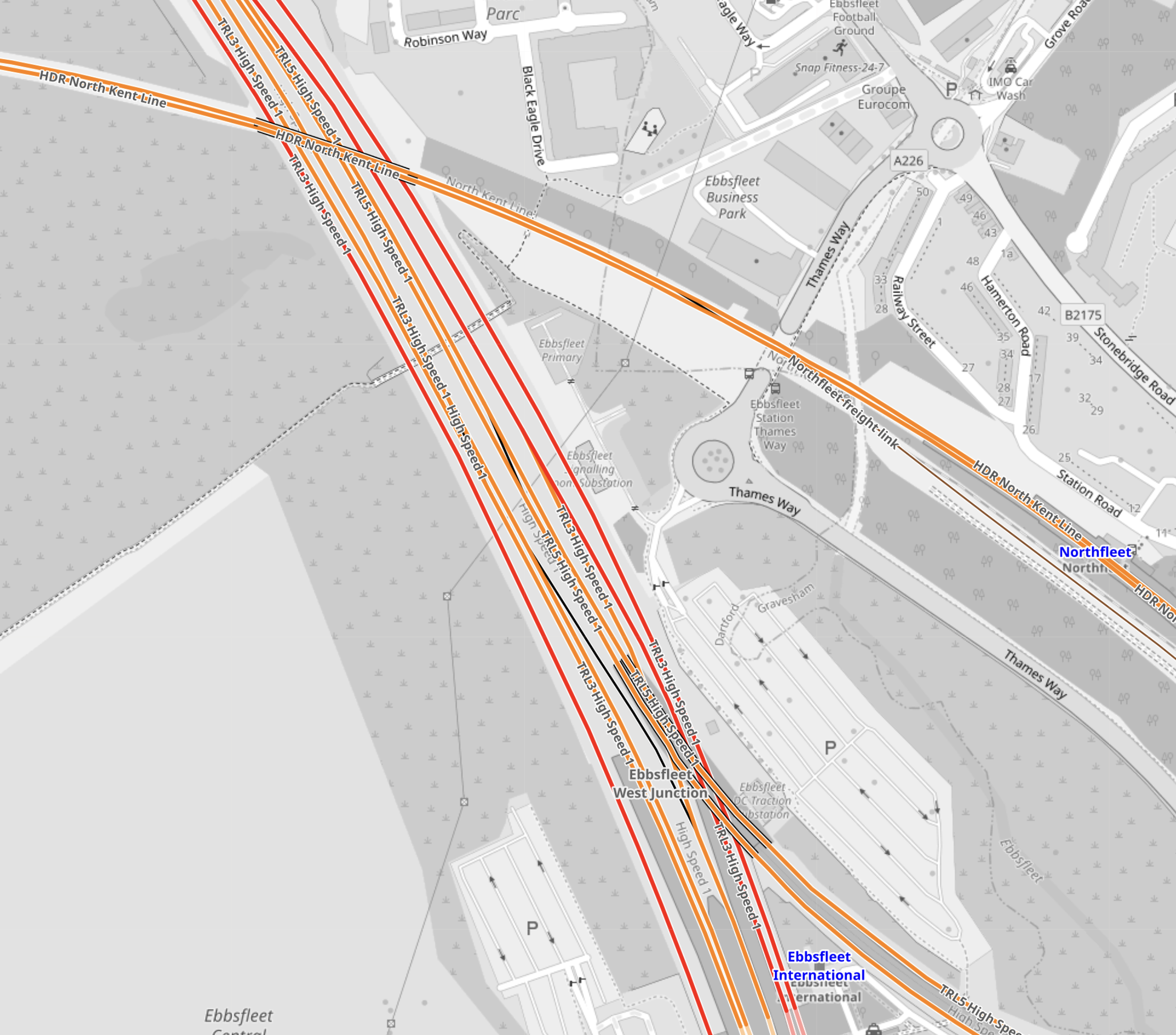
Note.
- Ebbsfleet International station at the bottom of the map.
- The red tracks are High Speed One.
- The orange tracks are third-rail electrified lines.
- The orange tracks going across the map is the North Kent Line.
- Northfleet station is at the right edge of the map on the North Kent Line.
- Northfleet and Ebbsfleet stations are less than a kilometer apart.
- Ebbsfleet has a lot of car parking spaces.
I believe a spectacular cable-car or other link would connect Northfleet and Ebbsfleet stations.
These are some other thoughts.
Ebbsfleet International Station Has Good Motorway Access
This Google Map shows the location of Ebbsfleet International station in relation to the motorways.
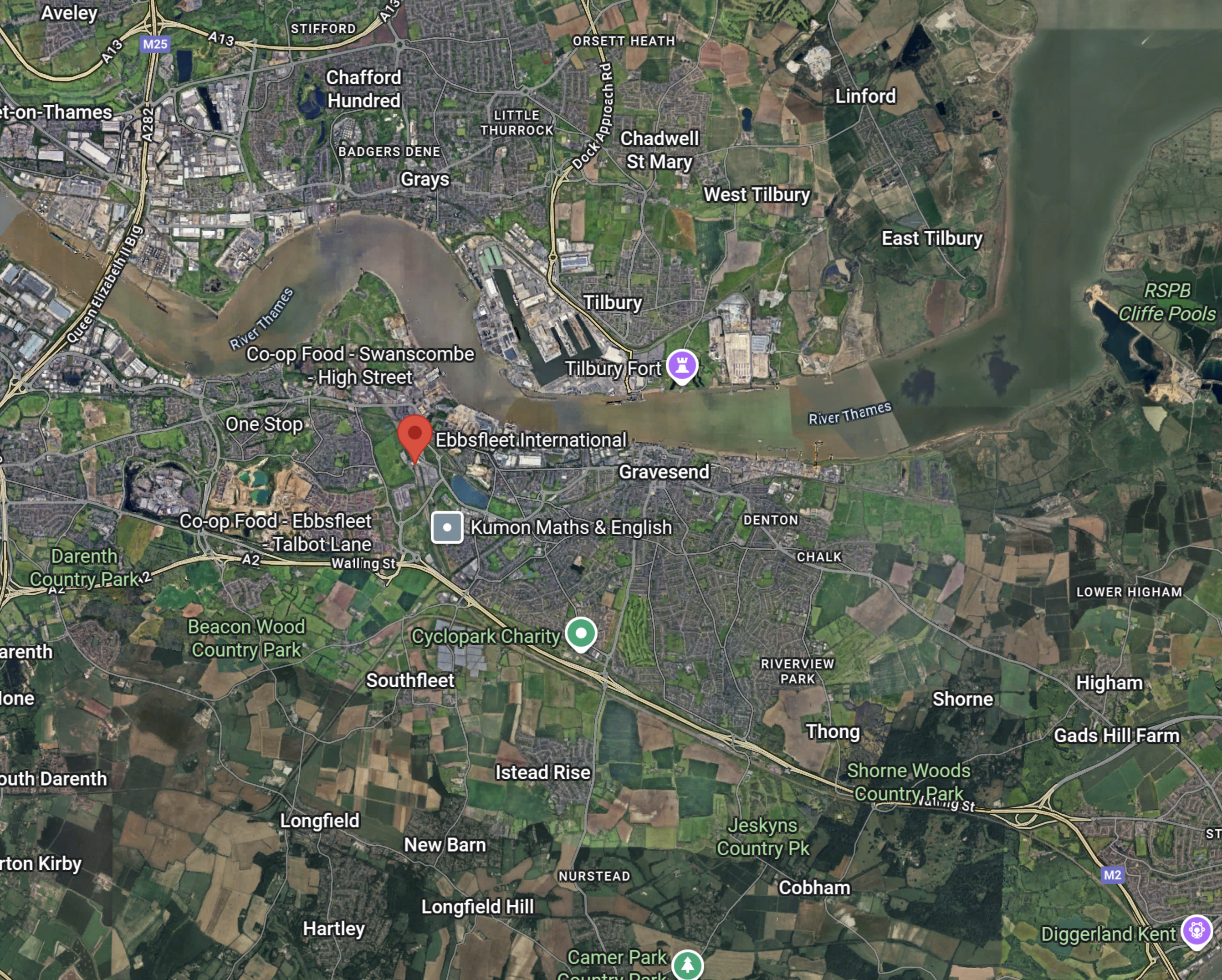
Note.
- The A2/M2 road runs across the bottom half of the map.
- The red arrow marks the position of Ebbsfleet International station.
- The Dartford Crossing is a few miles West of the station.
In my last few years, as an Ipswich season ticket holder, I regularly had a lift to Ebbsfleet International from a friend and the route to the station from the M25 and the A2/M2 wasn’t bad.
But it will be getting better.
This map from the Government’s consultation on the Lower Thames Crossing, shows the road layout in a few years.
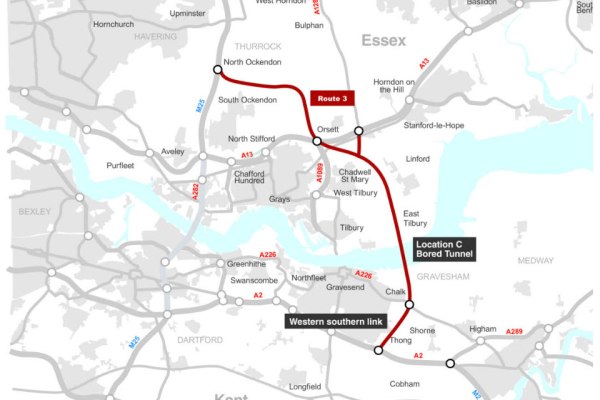
Note.
- The Lower Thames Crossing is shown in red.
- Ebbsfleet International station is about a mile South of Northfleet
- The new crossing will connect to the A2, a few miles East of the link road to the station.
Travellers from much of the East of and Middle England could use the new crossing to get to Ebbsfleet International station.
These are current times from Google.
- Birmingham – 2 hours and 41 minutes
- Cambridge – 1 hour and 17 minutes
- Edinburgh – 7 hours and 44 minutes
- Fishguard – 5 hours and 29 minutes
- Glasgow – 7 hours and 6 minutes
- Holyhead – 5 hours and 29 minutes
- Hull – 4 hours and 1 minute
- Ipswich – 1 hour and 29 minutes
- Leeds – 3 hours and 55 minutes
- Liverpool – 4 hours and 40 minutes
- Manchester – 4 hours and 28 minutes
- Milton Keynes – 1 hour and 37 minutes
- Newcastle 5 hours and 25 minutes
- Norwich – 2 hours 23 minutes
- Nottingham – 2 hours and 55 minutes
- Peterborough – 1 hour and 54 minutes
- Sheffield – 3 hours and 35 minutes
- Stoke-on-Trent – 3 hours and 25 minutes
- York – 4 hours and 16 minutes
Note.
- I would suspect that the opening of the Lower Thames Crossing will knock 10-15 minutes off these times.
- Edinburgh, Glasgow, Hull, Leeds, Newcastle, Nottingham, Peterborough, Sheffield and York would probably be quicker to Europe with a change to Continental train services at St. Pancras, rather than Ebbsfleet International.
- With improvements to rail services, more of these journeys will be quicker by train.
- High Speed Two should connect Birmingham, Liverpool, Manchester and Stoke-on-Trent to London, by the mid 2030s.
But there are some, who always feel their car is safer in a car park!
Ebbsfleet International Station Has A Large Amount Of Car Parking
This map shows the car parks at Ebbsfleet International station.
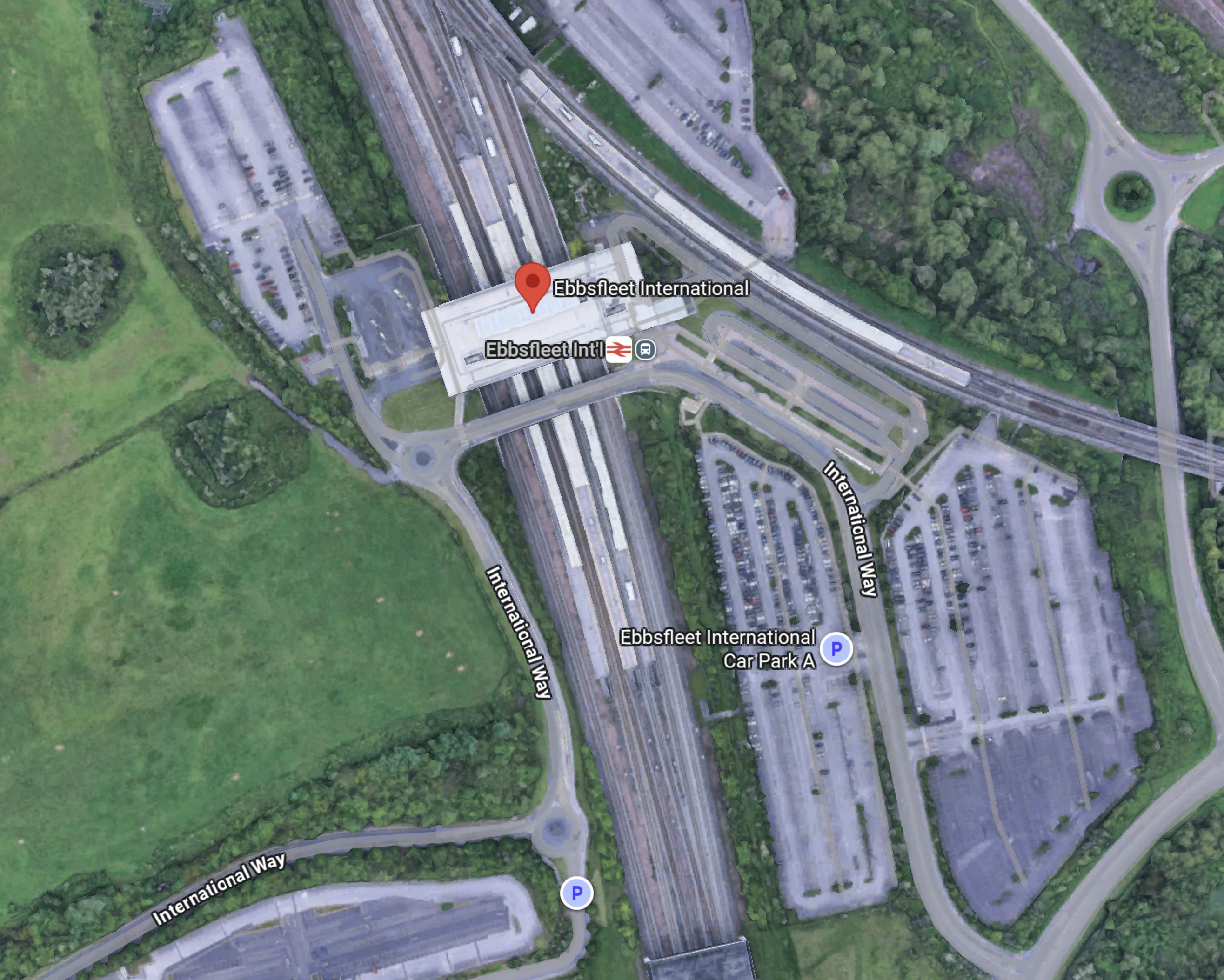
Note.
- Some of the parking areas are marked with a P.
- It is easy to pick-up and drop passengers.
- The car parks could be double-decked to add more spaces if needed.
- According to the Ebbsfleet International web site, the station currently has 5225 parking spaces, 68 accessible car parking spaces.
For those that have a lot of luggage or a large family, taking the car to Ebbsfleet International may be the best option.
Ebbsfleet International Station Should Have A Coach Station
Consider.
- In the next few years, hydrogen-powered coaches with a thousand kilometre range will come to dominate the long distance coach market.
- Mercedes and Wrightbus are know to be developing long-distance hydrogen-powered coaches.
- Hydrogen-powered coaches will be able to reach all of England and Wales and a large part of Scotland from Ebbsfleet International.
- Ebbsfleet International is closely connected to the UK motorway network.
- Continental coaches using the Channel Tunnel, could use Ebbsfleet as a coach interchange with the UK.
- Ebbsfleet International could also handle customs services for Continental coach services, which would take the pressure off the Channel Tunnel and the ferries.
- Ebbsfleet International could also have a coach link to Gatwick Airport.
These and other reasons make me feel, that a coach terminal at Ebbsfleet International is essential.
A Green Connection Between The Two Halves Of The European Union For the Gretas Of This World
Consider.
- There is no zero-carbon route between the island of Ireland and Continental Europe.
- Eurostar is all-electric between London and Continental Europe, but only serves a limited number of destinations.
- Low- or zero-carbon ferries are being designed, that run on hydrogen.
- Trains between London and the Irish ferries are diesel-powered.
- The simplest solution would surely be to run hydrogen-powered coaches between Ebbsfleet International and Fishguard and/or Holyhead. Both journeys would take three and a half hours.
Hydrogen-powered coaches are under development by Wrightbus.
I also asked Google AI if anybody is planning zero-carbon ferries between the UK and ireland and received this answer.
Yes, there are plans for zero-carbon ferries between the UK and Ireland, with a specific “Green Corridor” feasibility study underway for the Holyhead to Dublin route, and a separate, separate commuter service project planned between Belfast and Bangor. The Belfast Maritime Consortium is developing the zero-carbon commuter service, and a separate “Green Corridor” feasibility study is assessing potential low-carbon pathways between Holyhead and Dublin
I believe the green connection is feasible, provided the following happens.
- Ebbsfleet International is reopened and developed as a station for Continental Europe.
- The zero-carbon ferries are developed.
- The busmasters from Ballymena deliver the ultimate hydrogen-powered coach.
- Hydrogen and other fuels are made available, where they is needed.
This could do wonders for the economy of the island of Ireland.
Out of curiosity, I did ask Google AI, what is the longest coach route in the UK and received this answer.
The longest scheduled coach journey in the UK is the Scottish Citylink route from Glasgow to Uig on the Isle of Skye (route 915 or 916), which is about 230 miles and takes around 7 hours and 50 minutes. Historically, there have been much longer international bus routes, such as the Penn Overland tour from London to Ceylon, but these were not regular, scheduled services.
So my proposal at five hours and 29 minutes is only a short hop.
I also believe that with good project management that the additional infrastructure could be built by 2030, with little or no disruption to existing services.
St. Pancras And Leicester Via Corby
This OpenRailwayMap shows the route between Kettering and Leicester via Corby.
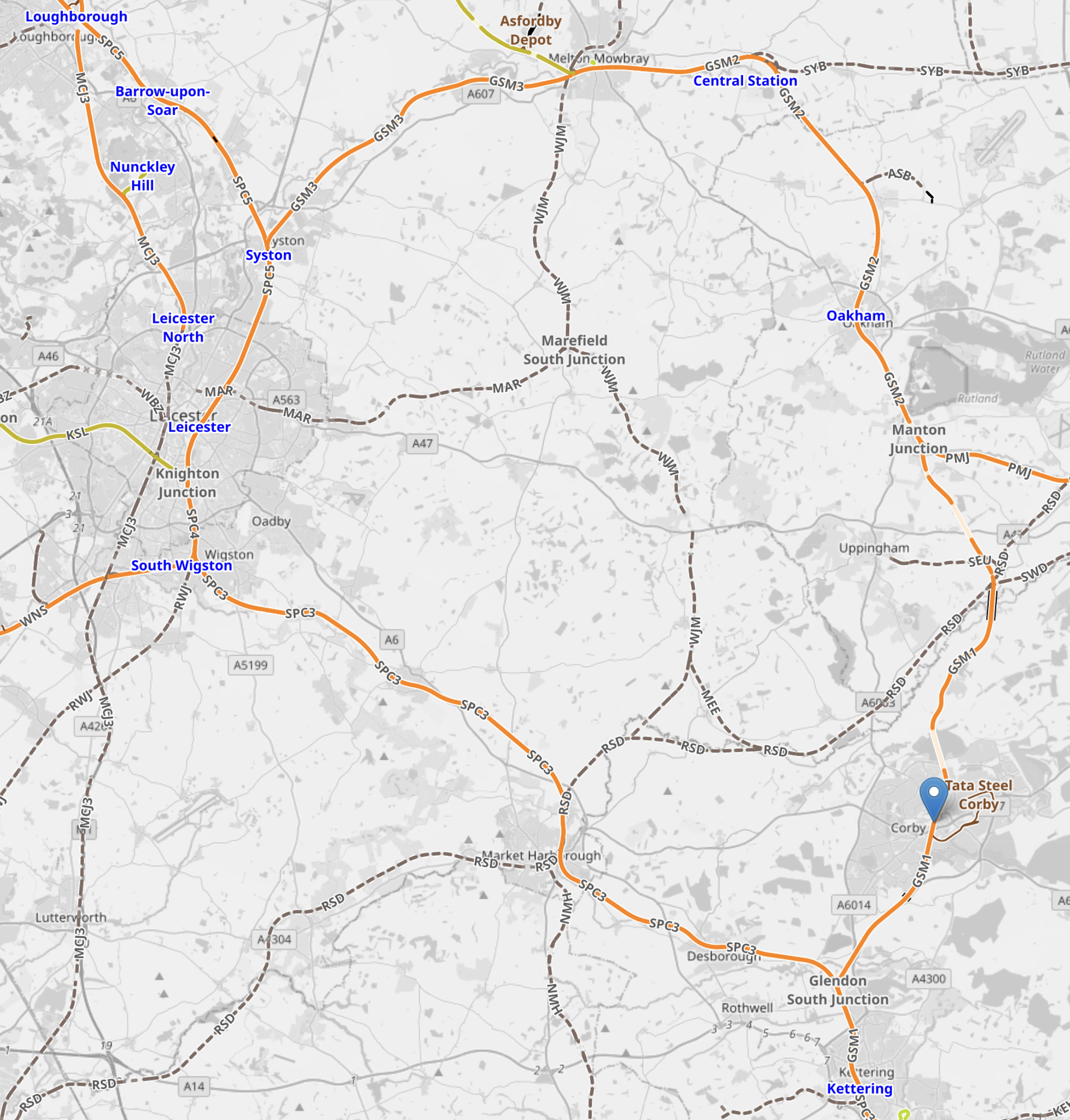
Note.
- Kettering station is in the bottom right corner of the map.
- Kettering is on the Midland Main Line from St. Pancras.
- North of Kettering the route splits into two.
- The Midland Main Line goes North-West through Market Harborough to Wigston junction and Leicester.
- The Midland Main Line is electrified to Wigston junction.
- The Corby branch goes North-East to Corby, which is indicated by a blue arrow.
- The Corby branch is electrified to Corby.
On Saturday, I went to Leicester and because there were engineering works at Market Harborough, the train went via Corby.
Over The Welland Viaduct
After Corby, the train went over the Welland Viaduct and I took these pictures.
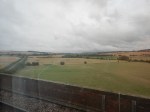
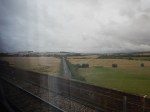


It is an impressive viaduct and is the longest viaduct across a valley in the United Kingdom.
I have some further thoughts.
Could The Corby Service Be Extended to Leicester?
Consider.
- Between Corby and Leicester is 40.8 miles of track without electrification.
- Trains could call at Oakham, Melton Mowbray and Syston stations.
- Oakham, Melton Mowbray and Syston stations, could be given an appropriate number of trains every day to Leicester, Corby, Kettering, Wellingborough, Bedford, Luton, Luton Airport Parkway and London St. Pancras International stations.
- No new infrastrructure would be needed.
- I suspect an hourly service would be sufficient.
I am fairly sure that a Class 810 train fitted with batteries could work the route.
Leicester, Oakham, Melton Mowbray And Syston Stations Would Get A Direct Connection To Luton Airport
Some travellers might find this very useful.
Leicester Station Would Have A Neat Passenger Drop-Off For Luton Airport
I wrote about this in Busiest UK Airports Raise Kiss-and-Fly Fees, Says RAC.
Every rail station needs a passenger drop-off as good and affordable as the one at Leicester station.
Could East Midlands Railway Run A St. Pancras And Leeds Service?
East Midlands Railway’s new Class 810 trains have been designed, so that a pair will fit into one platform at St. Pancras.
If we assume one platform at St. Pancras is used for the Corby and Luton Airport Express services, that leaves three platforms for pairs of Class 810 trains to run expresses to the East Midlands.
This could be as many as twelve pairs of five-car trains per hour.
Where wioll they all terminate in the North?
Leeds station must be the obvious new destination.
- Leeds has the largest population and is the largest commercial and finance centre in Yorkshire and the North-East.
- Leeds would have gained three trains per hour (tph) from London, two tph from Birmingham and four tph from the East Midlands Hub at Nottinham.
- Leeds is getting a brand new metro.
- Leeds is a fully-electrified station, so it could charge the trains before they return to Sheffield, Leicester, Wigston junction and St. Pancras.
- Leeds and Wigston junction is 107.8 miles, which should be within the range of a battery-electric Class 810 train. If it is too far, an extended stop could be taken at Sheffield to top up the batteries.
- Note that Stadler hold the Guinness World Record for the greatest distance covered on one charge at 139 miles. Hitachi Rail, who are partnered with JCB’s battery-maker in Sunderland, should be able to smash that.
The Rail Minister; Lord Peter Hendy went to Leeds University.
Which Route Would The Trains Take Between Sheffield And Leeds?
Consider.
- The fastest trains between Sheffield and Leeds, go via Meadowhall, Barnsley and Wakefield Kirkgate stations.
- Trains take about an hour.
- The current frequency is two tph.
- The distance is 41.1 miles with no electrification.
A frequency of two additional tph between St. Pancras and Leeds would give the following.
- A nice round four tph between Yorkshire’s two most important cities.
- Four fast tph between Meadowhall, Barnsley and Wakefield Kirkgate stations, and Leeds and Sheffield.
- Two direct trains between Meadowhall, Barnsley and Wakefield Kirkgate, and Chesterfield, Derby, Long Eaton, East Midlands Parkway, Loughborough, Leicester and St. Pancras.
It would be complimentary to any Leeds Metro.
Could East Midlands Railways Also Serve Huddersfield?
Consider.
- Huddersfield is 36.4 miles further than Sheffield on the Penistone Line, which is not electrified.
- Wigston junctionand Huddersfield station is 105.3 miles.
- Huddersfield is a Grade I Listed station with two pubs in the middle of the town.
- Huddersfield station is being fully-electrified in connection with the TransPennine Upgrade.
- All trains from Sheffield, that use the Penistone Line terminate in Platform 2 at Huddersfield station.
This OpenRailwayMap shows the position of Platform 2 in the station.
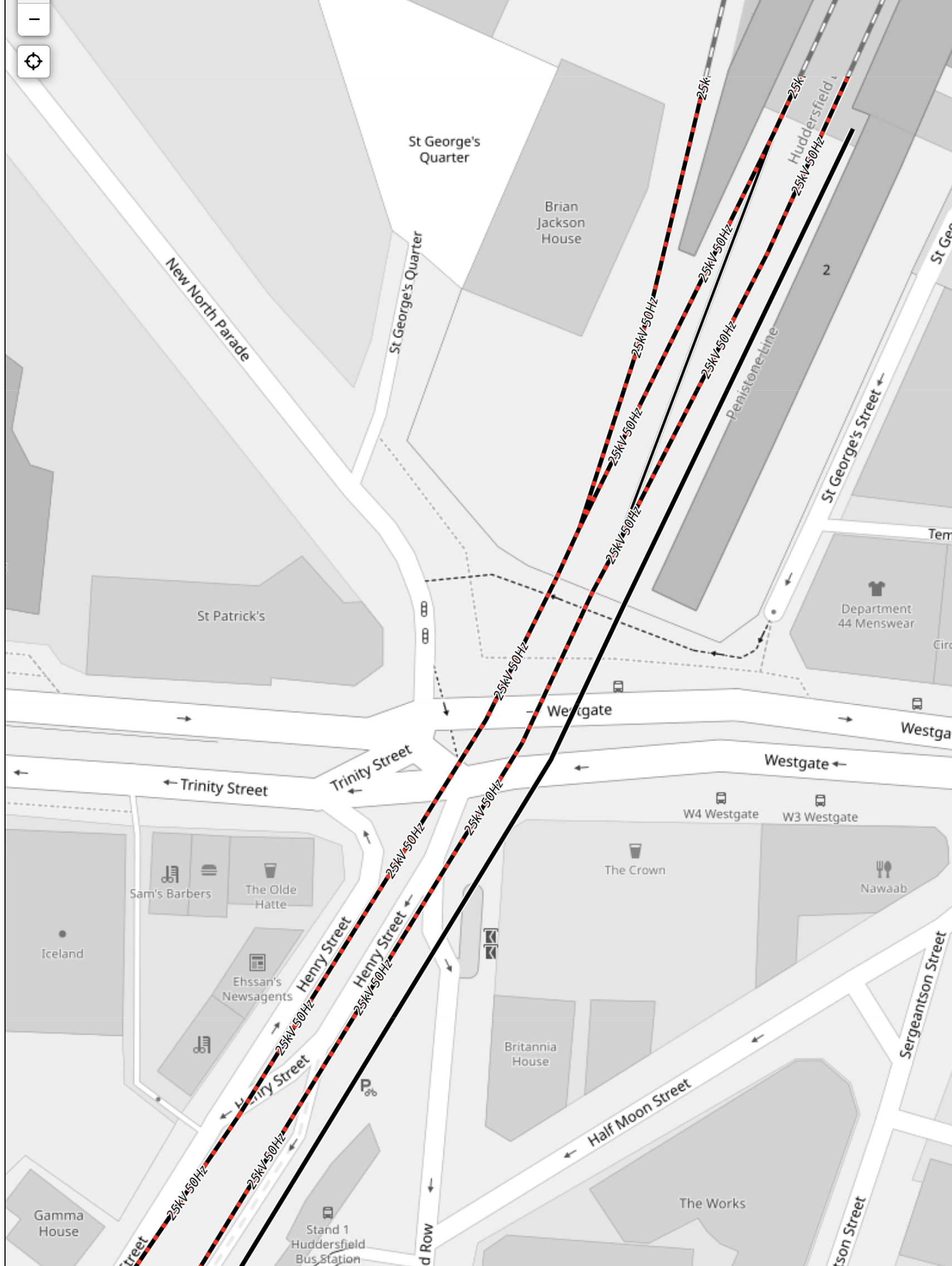
Note.
- The red-and-black dotted tracks are being electrified.
- The black tracks are not going to be electrified.
- Platform 2 is marked 2 in the top-right corner of the map.
- Platform 2 looks to be about 90 metres long.
- Five-car Class 810 trains are 120 metres long.
- From the map, it looks like the platform could be lengthened by the required thirty metres.
I suspect that some form of charger can be squeezed into the available space. After all, you don’t often get the chance to put charging into one of the most grand stations in Europe. Power supply would not be a problem, because of the electrification.
A frequency of twotph between St. Pancras and Huddersfield would give the following.
- Two fast tph between Meadowhall, and Barnsley, and Huddersfield and Sheffield.
- Two extra direct trains between Meadowhall and Barnsley, and Chesterfield, Derby, Long Eaton, East Midlands Parkway, Loughborough, Leicester and St. Pancras.
It would connect many stations to the TransPennine Route at Huddersfield station.
What Could The Sheffield and St. Pancras Look Like?
Consider that currently.
- There are two tph.
- Trains stop at Leicester, Loughborough (1tph), East Midlands Parkway (1tph), Long Eaton (1tph), Derby and Chesterfield.
- Trains are five- or seven-cars.
The simplest solution would probably be.
- A pair of five-car trains run all services.
- Trains split and join at Sheffield with one train going to Leeds and one going to Huddersfield.
I estimate that the Class 810 trains will offer about thirty more seats in every hour.
The Problem Of Electrifying Leicester Station
This post is my attempt to try and explain the problem of electrifying the Midland Main Line through Leicester station.
This Google map shows the Southern end of the station.
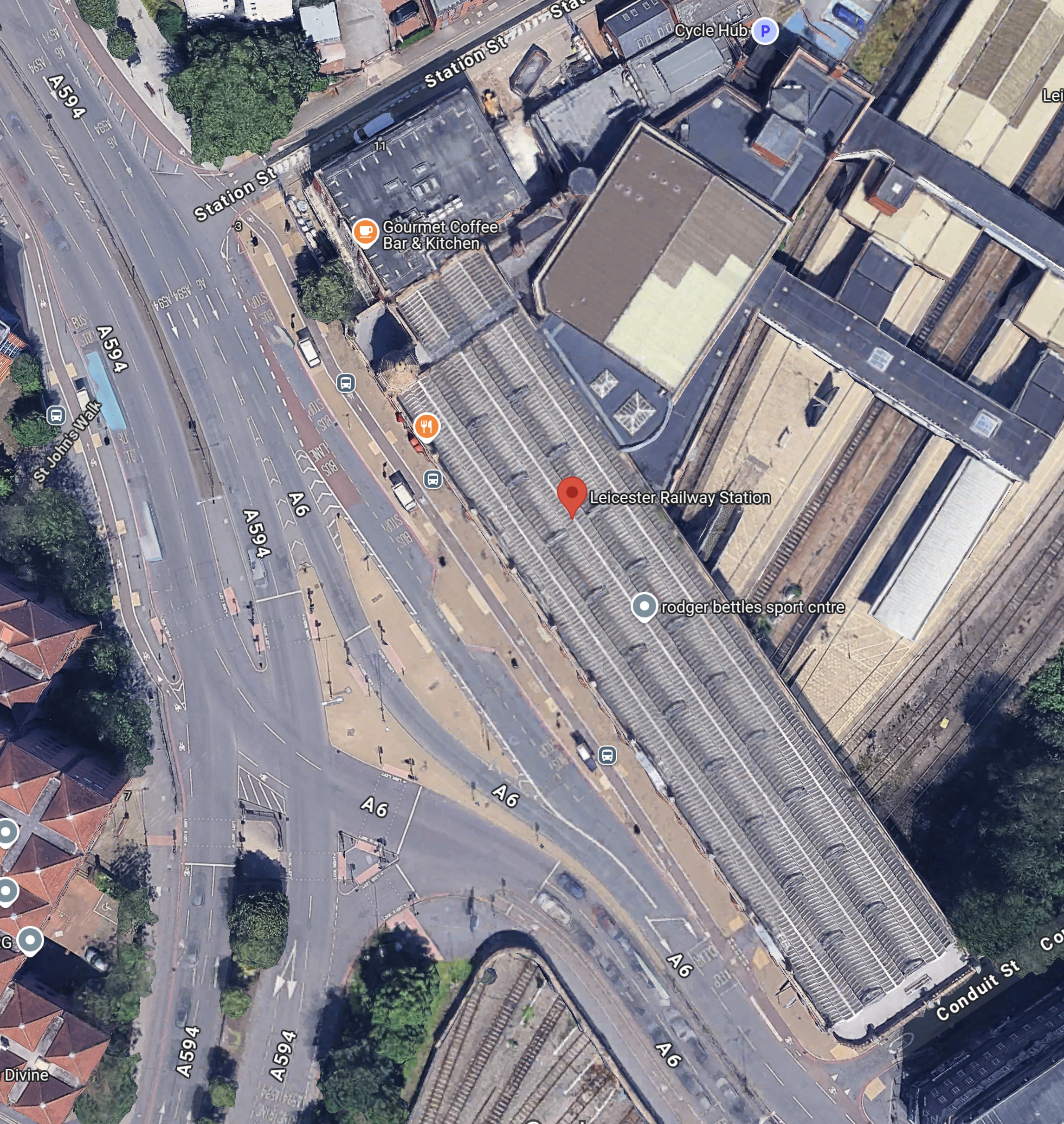
This OpenRailwayMap shows the station.
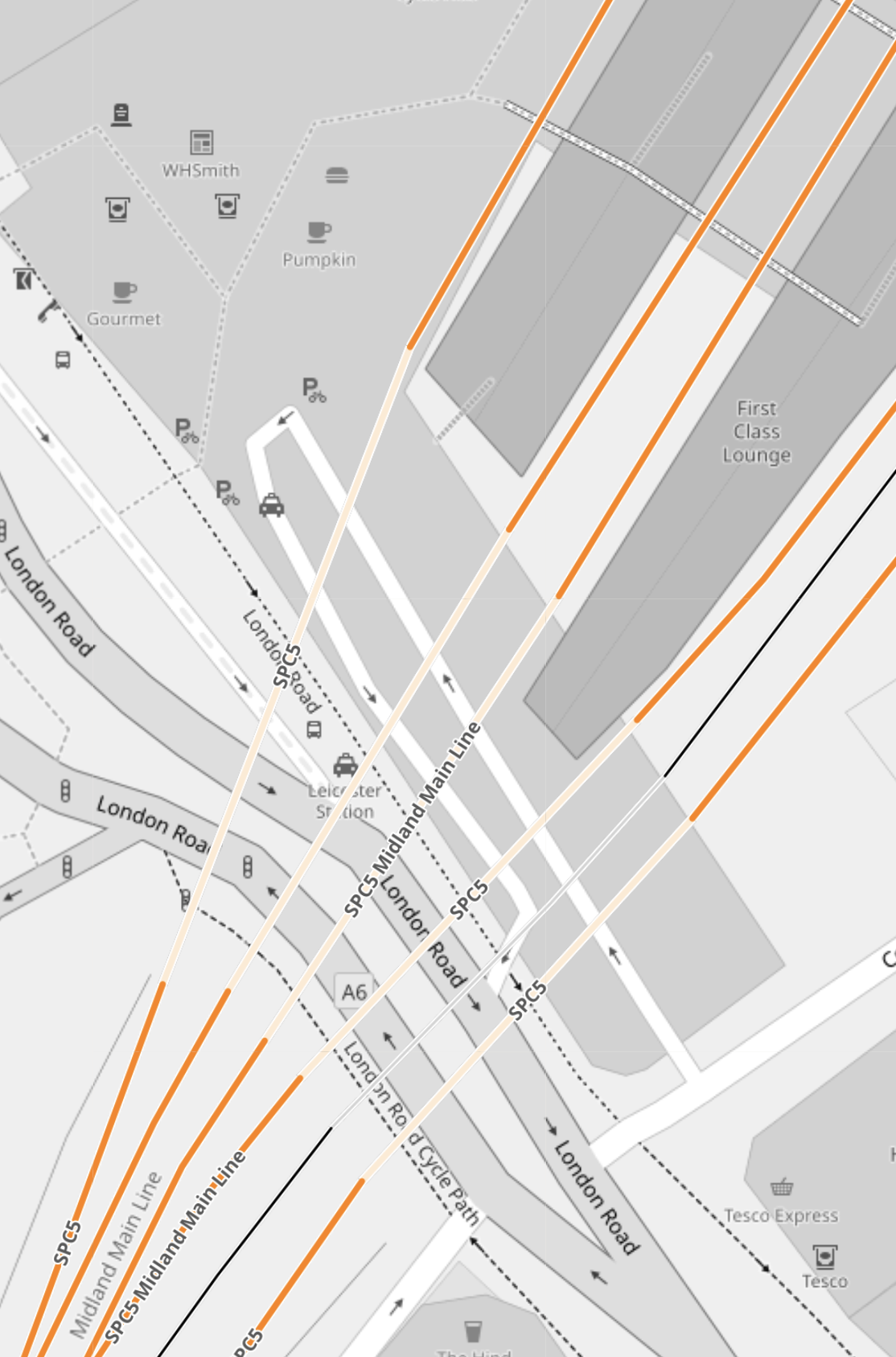
Note.
- There appear to be five tunnels under the station buildings and London Road.
- What is the tunnel going underneath the tracks used for?
Leicester station has a Grade II Listed frontage.









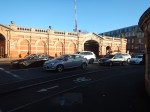
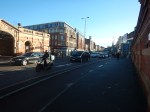
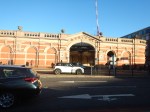

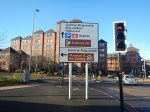

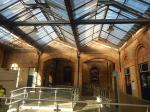

Note.
- It is an impressive Victorian station.
- The station building is on a bridge over the tracks.
- The station is also on one of the main roads through Leicester.
- The road layout is very complicated.
This 3D Google Map, shows an aerial view of the station.
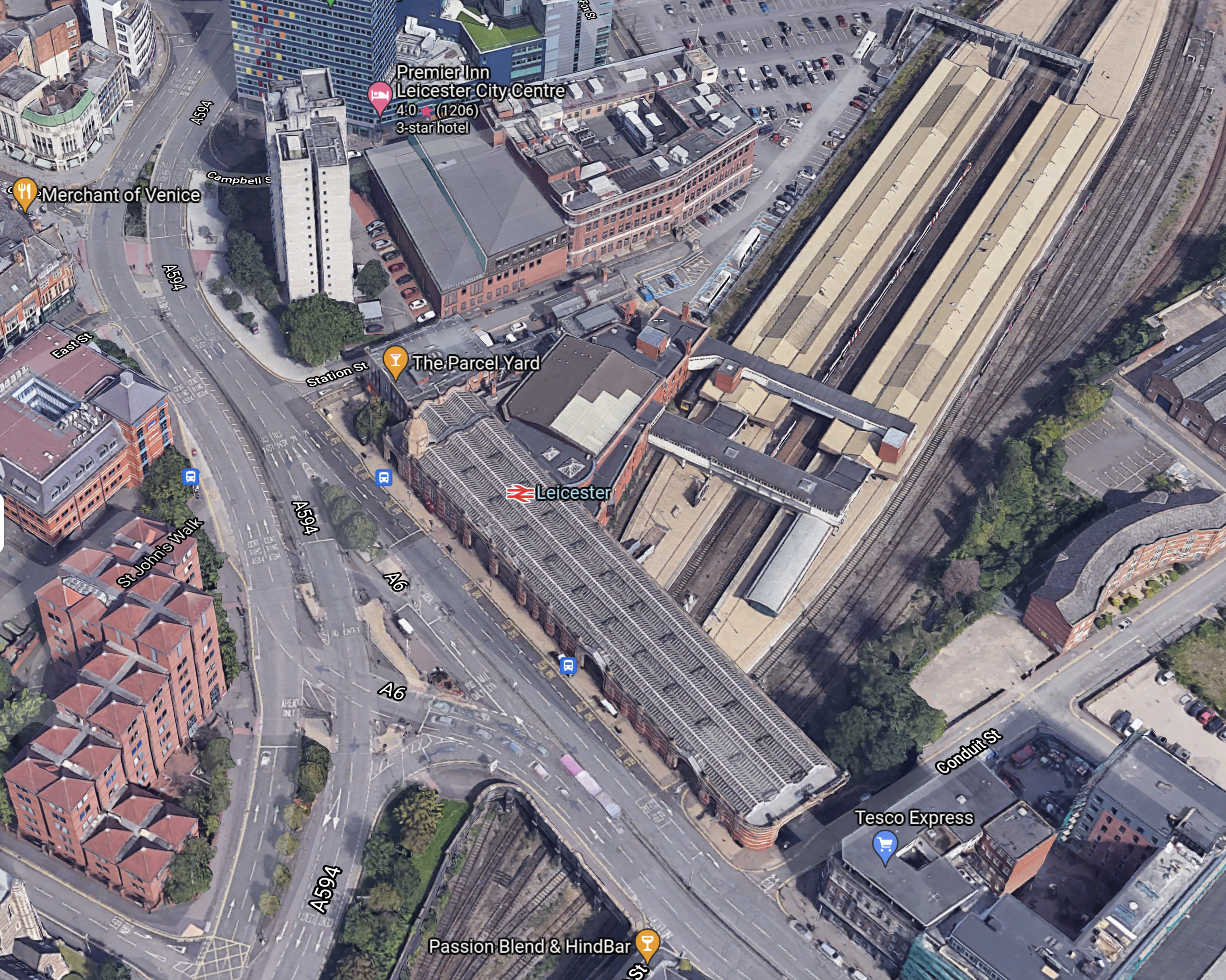
Note.
- There four platforms, which are numbered 1-4 from the left.
- The expresses between London and Derby, Nottingham and Sheffield use the two middle tracks.
- Other main line and East-West services use the outside platforms.
- There is an avoiding line for freight services.
- 5. The step-free footbridge is clearly visible.
This second 3D Google Map, shows an enlargement of the frontage of the station.
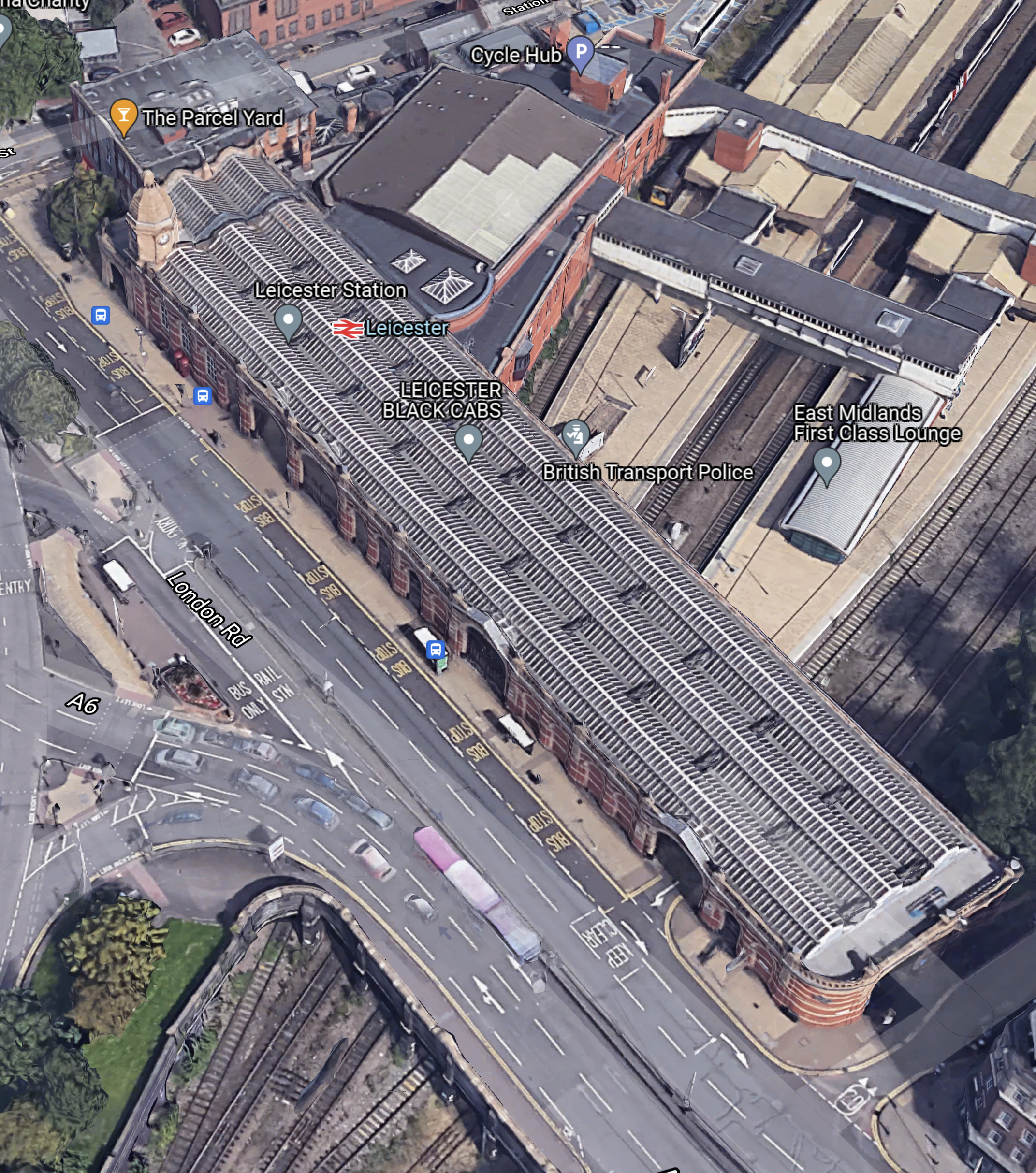
These pictures show what is inside the building at the front of the station.


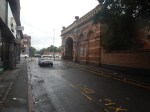


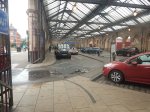

The building would appear to be a Grade II Listed taxi rank and free twenty-minute car park.
There are plans to increase the capacity of the station.
- A fifth platform will be added.
- Three miles of quadruple track will be be built South of the station.
- The Midland Main Line was also to be electrified.
Real Time Trains indicates that the distance between Leicester and Wigston North junction is 3.1 miles.
This OpenRailMap shows that section of track.
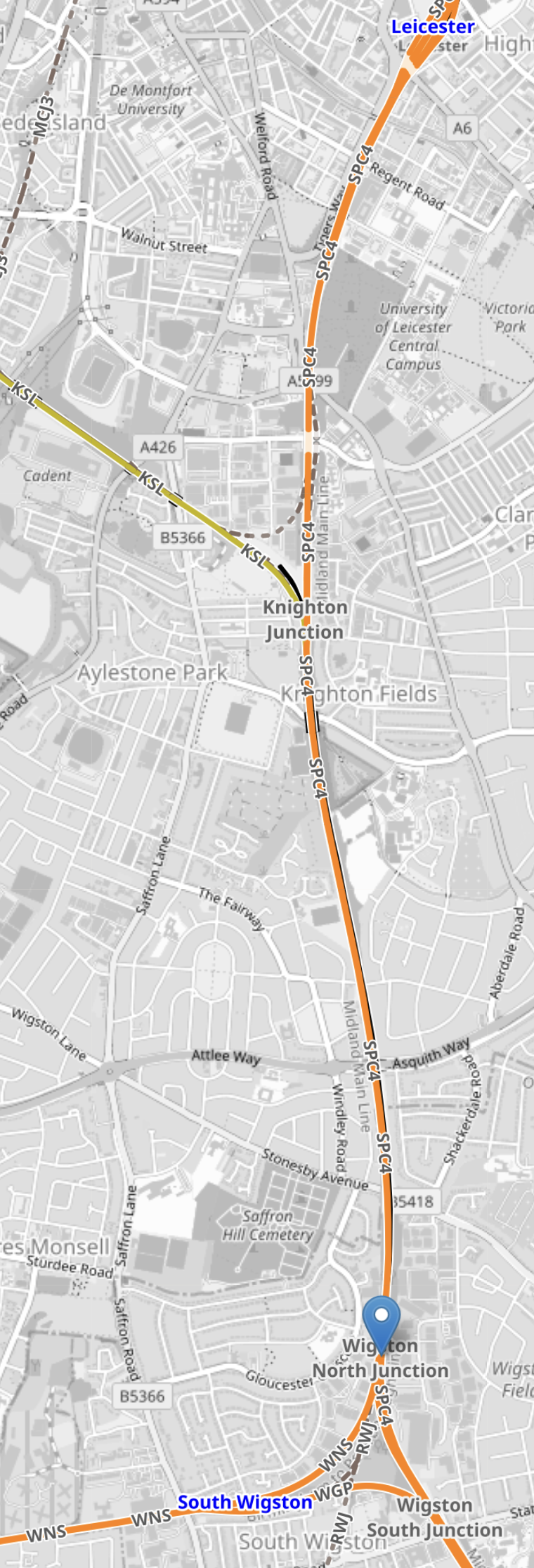
Note.
- Leiester station is at the top of the map.
- Wigston junction is the triangular junction at the bottom of the map.
- Wigston North Junction is indicated by the blue arrow.
- OpenRailwayMap only shows a 100 mph Northbound track and a 90 mph Southbound track on the route.
It looks to me, that four tracks between Leicester and Wigston North junction would mean that trains could expedite arrivals to and departures from Leicester to and from the South.
South From Wigston Junction
Consider.
- London St. Pancras and Kettering is a four-track railway as far as the Corby Branch.
- North of Luton the slowest maximum speed is 100 mph, with much of the line rated at 110 mph plus.
- Wigston North junction and Luton station is 65.8 miles.
- Current Class 222 diesel trains typically take 40 minutes.
- This is an average speed of 98.7 mph.
- An average speed of 110 mph between Wigston North junction and Luton station would take 36 minutes.
- An average speed of 125 mph between Wigston North junction and Luton station would take 31.6 minutes.
- An average speed of 130 mph between Wigston North junction and Luton station would take 30.4 minutes.
I believe with track improvements and digital signalling, there are time savings to be gained between St. Pancras and Leicester stations.
Ultimately, if the 140 mph design speed of the Class 810 trains under digital signalling could be maintained, this would do the following.
- Push the St. Pancras and Leicester times under an hour.
- Push the St. Pancras and Nottingham times under ninety minutes.
- Push the St. Pancras and Sheffield times under two hours.
Batteries would only be used on the three miles between Wigston North junction and Leicester station.
Could Bi-Mode Trains Be Used?
They could be used initially and to prove if the partial electrification works.
But each train has four diesel engines and sometimes they will be working in pairs through the stations between Leicester and Sheffield.
Passengers will take a dim view of being covered in lots of diesel smoke, when they have been promised clean, zero-carbon electric trains.
But the battery-electric trains will be much quieter and pollution-free.
This page on the Hitachi Rail web site is entitled Intercity Battery Trains.
New Infrastructure Needed
The only infrastructure needed will be that which will support the new trains.
The Class 810 trains will be maintained at Etches Park at Derby.
If they are battery-electric trains, there may be some strategically-placed chargers, which typically would be a short length of overhead wire.
Darlington Station – 26th June 2025
I visited Darlington station, three times on my trip.
These pictures are in chronological order.
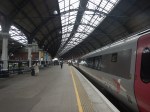
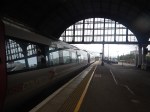
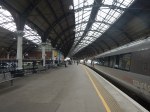
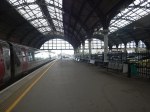
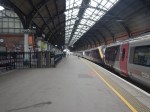
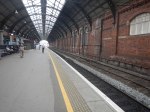
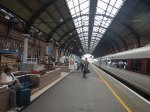

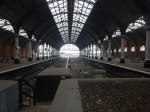
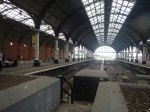
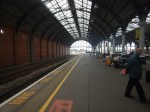
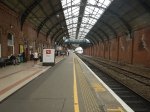
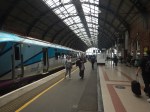
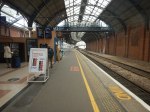
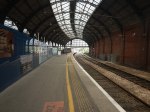
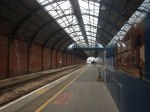
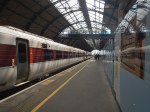
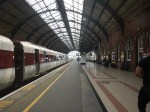
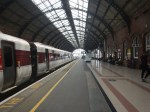

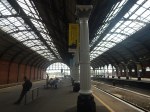





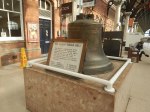
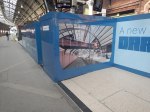

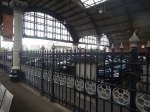
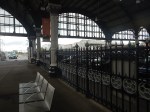
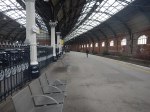
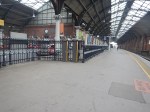
Note.
- The station is being given a major upgrade, so it can handle more trains.
- The station has a large number of top-quality Victorian features.
- The station is Grade II* Listed.
- Inside the enormous train-shed are two long platforms, that handle most of the trains and two South-facing bay platforms.
- Two new platforms, which are numbered 5 & 6, and possibly a double-track avoiding line are being added outside the train-shed on the East side.
- In images with a comment saying Note Platform 5, the new long electrified Platform 5 can be seen.
- Platform 5 appears to be already electrified at its Southern end.
These three OpenRailwayMaps shows the future layout.
The first OpenRailwayMap shows the junction, where the branch to Newton Aycliffe, Shildon and Bishop Auckland connects.
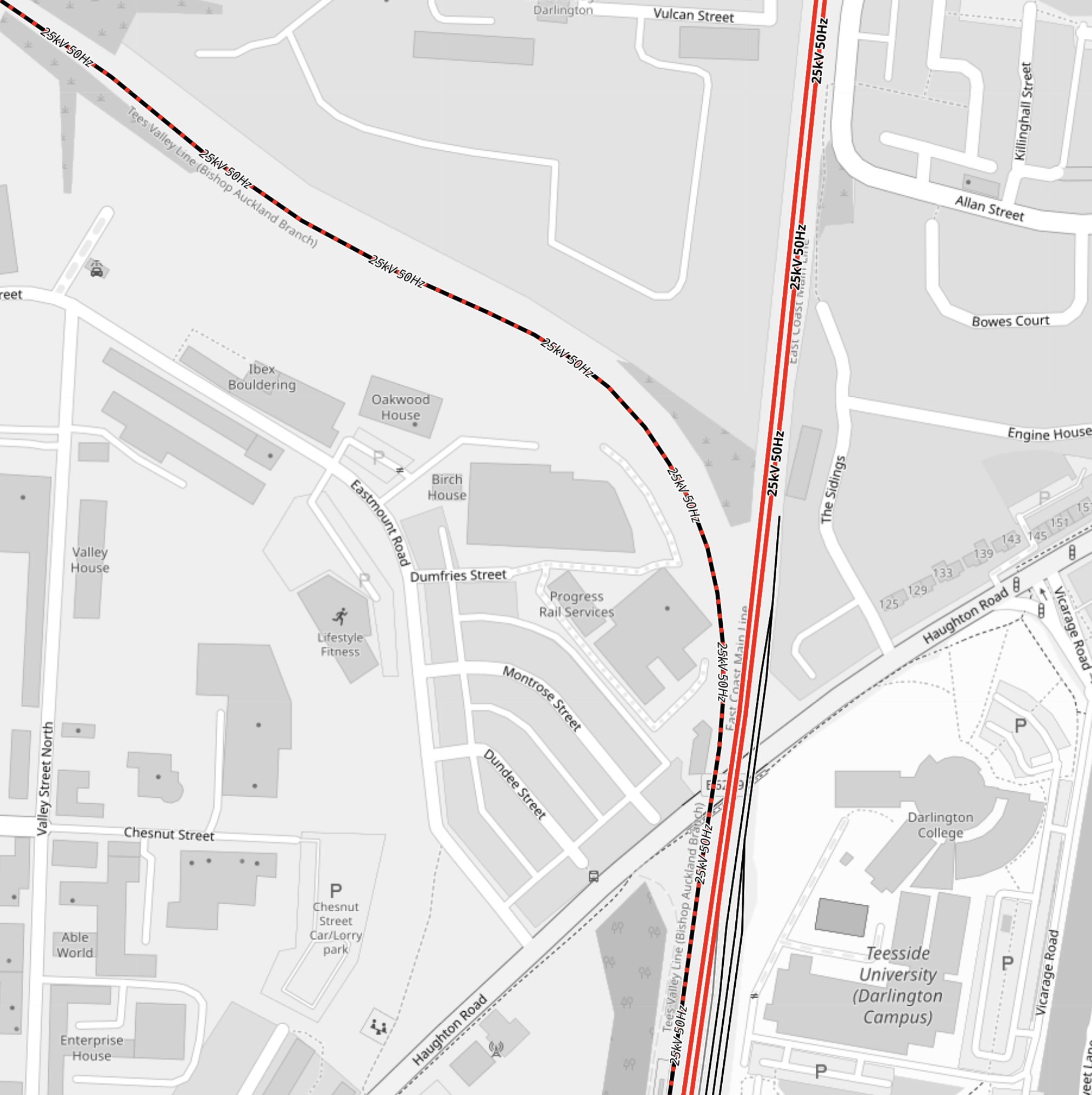
Note.
- The red tracks are electrified and indicate the East Coast Main Line.
- The track curving off to the North-West is the Bishop Auckland Branch.
- The black tracks are not-electrified.
- The Bishop Auckland Branch is shown dotted black and red, as it will be electrified, so that Hitachi can get their new trains to the East Coast Main Line.
- The two tracks of the East Coast Main Line are very straight and the map shows them to have a 125 mph operating speed.
The second OpenRailwayMap, shows the lines immediately to the South of Darlington station.
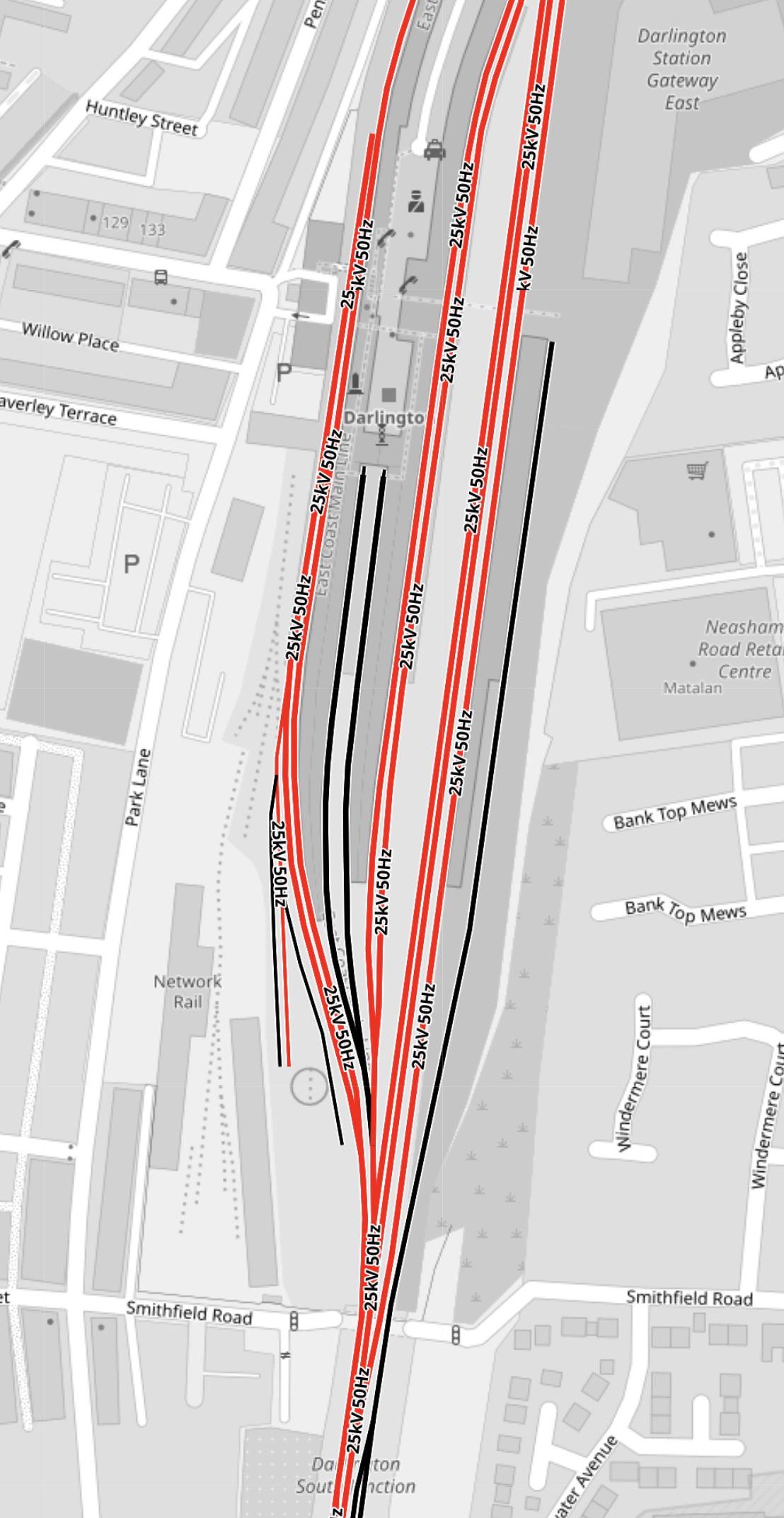
Note.
- The red tracks are electrified.
- The black tracks are not electrified.
- Tracks are number 4, 3, 2 and 1 from the West.
- The Southern ends of Platforms 1 and 4, and Platforms 2 and 3, which are inside the current train-shed appear to be virtually unchanged.
- Platform 1 is electrified and will probably still cater for Southbound trains.
- Platforms 2 and 3 are bay platforms without electrification for trains terminating at Darlington.
- Platform 4 is electrified and will probably still cater for Northbound trains.
- There is an electrified avoiding line to the East of Platform 1.
- The brick wall of the current train shed is in the white space to the East of Platform 1.
- Outside the current train shed are two electrified 125 mph lines, an electrified through platform and a South-facing bay platform without electrification.
- The new electrified platform looks very long. Could it be long enough to handle a pair of High Speed Two Classic-Compatible trains? I suspect though it is long enough to handle the splitting and joining of a pair of five-car Hitachi Class 80x trains.
- The new bay platform looks longer that the current bay platforms 2 & 3. Is it long enough to handle a five-car Hitachi Class 80x train?
- It does appear from the track layout, that the new electrified platform is connected to the East Coast Main Line, the Saltburn branch and stabling sidings to the North of the station.
- The new bay platform appears to be connected to the Saltburn branch.
The two new platforms also appear to be adjacent to an area of the station, which is labelled Darlington Station Gateway East. I would assume, that this proximity will be used to make the station easy for changing trains.
The third OpenRailwayMap shows the section of the station between the two previous maps.
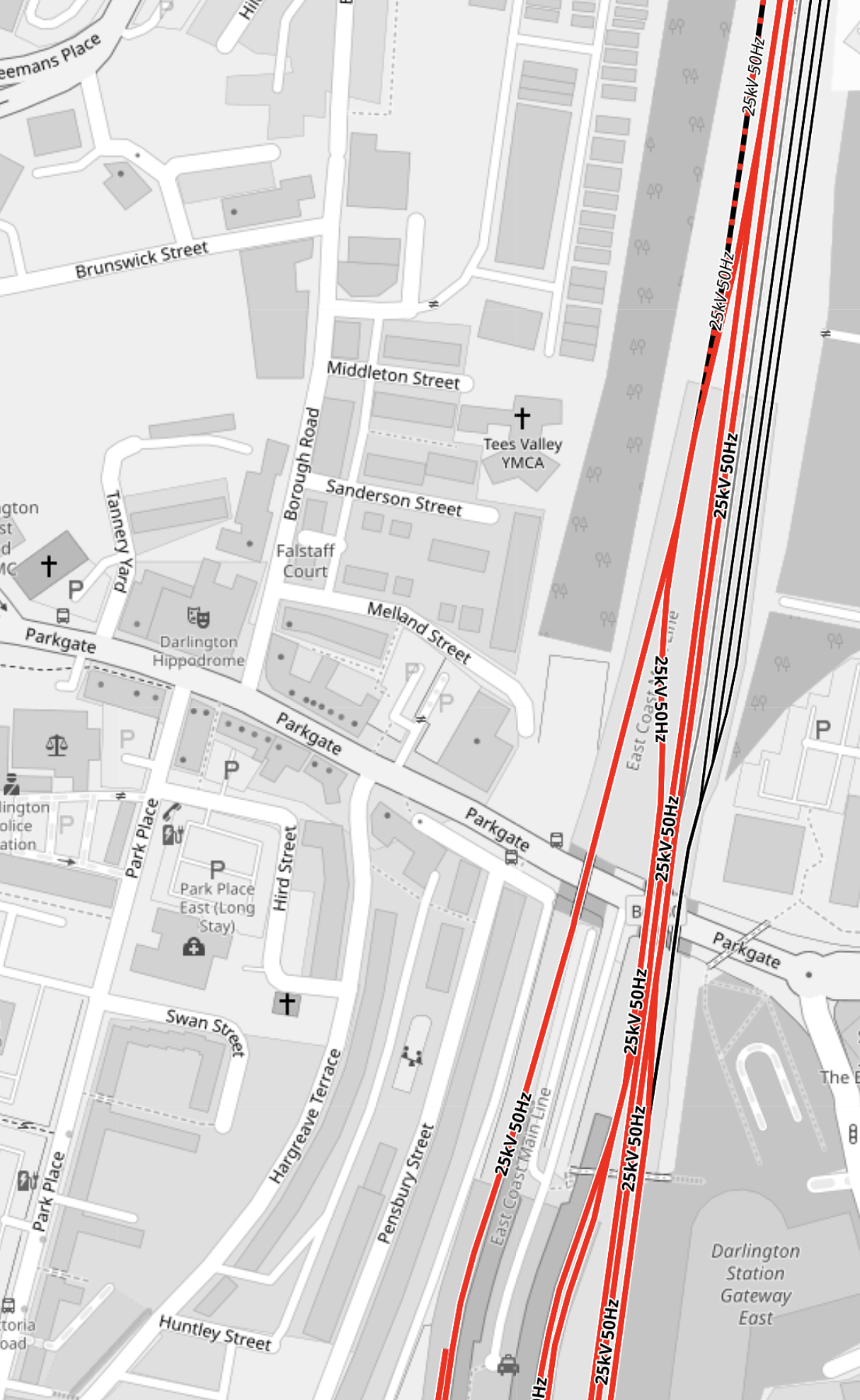
Note.
- The red tracks are electrified.
- The black tracks are not-electrified.
- The Darlington end of the Bishop Auckland Branch is shown dotted black and red, as it will be electrified, so that Hitachi can get their trains to and from the East Coast Main Line.
- Both Platforms 1 and 4 appear to connect to the East Coast Main Line, so high speed services can operate as they do now, by taking a diversion through the current Darlington station.
- To the East of the East Coast Main Line, there appear to be some very useful stabling sidings.
I have some general thoughts about Darlington station.
Will Trains Not Stopping At Darlington Station Use The New 125 mph Lines Through the Station?
It does appear that the two 125 mph lines through the new part of the station are very straight.
- They are shown as 125 mph, but could be faster.
- It should be remembered that according to Wikipedia, British Rail built the Selby Diversion for 160 mph in 1983.
- Between Durham and York stations is 66.2 miles of mainly 125 mph railway.
I believe that cutting out the need for trains to slow to go through Darlington station could save several minutes.
Will Trains Stopping At Darlington Station Use The Current Platforms 1 And 4 As They Do Now?
The track layout would seem to allow this and those changing to another train, would not have to walk a long way.
Can Trains Stopping At Darlington Station Use The New Eastern Platforms?
I have examined the second and third maps in detail and it looks as if the track layout will allow trains on the East Coast Main Line in both directions to stop at the long electrified platform.
The shorter bay platform appears to be only connected to the Tees Valley Line to Middlesbrough and Saltburn.
How Long Are The New Eastern Platforms?
Estimating against the scale on the map, I reckon these are the likely lengths.
- Long electrified platform – 400 metres – Appears to be numbered 5
- Bay platform – 200 metres – Appears to be numbered 6.
These are very useful lengths.
An Aerial View Of The New Platforms
This image from Tees Valley Combined Authority shows the Northern ends of the new platforms and the new footbridge.
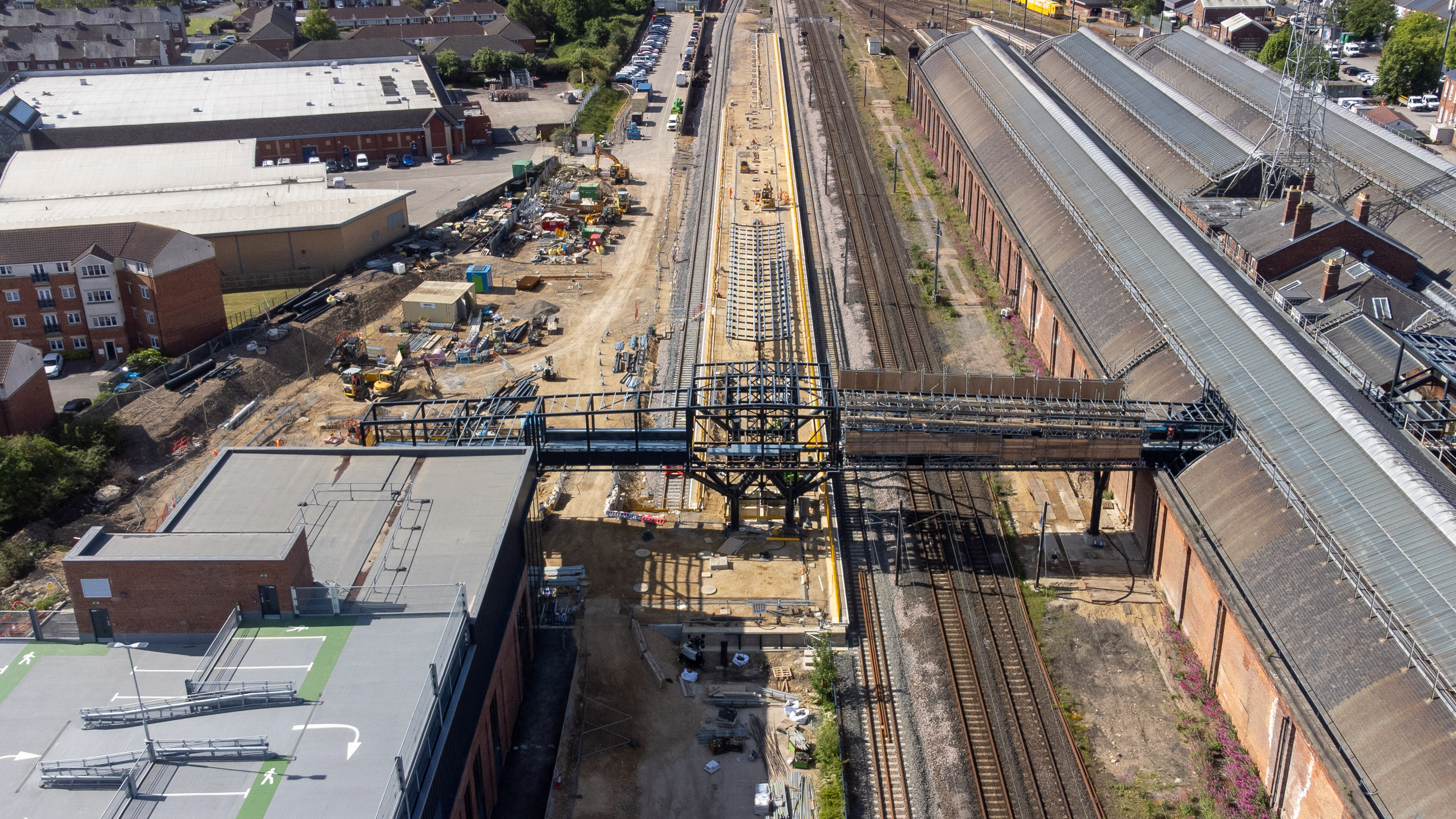
Note.
- The original four-platform Victorian station is on the right, which is the Western side.
- The East wall of the Victorian train shed can be clearly seen.
- The two absolutely straight 125 mph lines, that allow trains to bypass the original station are closest to the wall.
- The long electrified platform, which appears to be numbered 5, also appears to be absolutely straight.
- The unelectrified bay platform, which appears to be numbered 6, is to the left.
- Platforms 5 and 6 would seem to be separated by a wide island platform, which would make interchange easy.
This page on the Network Rail web site, gives more information.
Car Parking At Darlington Station
This image from Tees Valley Combined Authority shows the Northern end of the station.
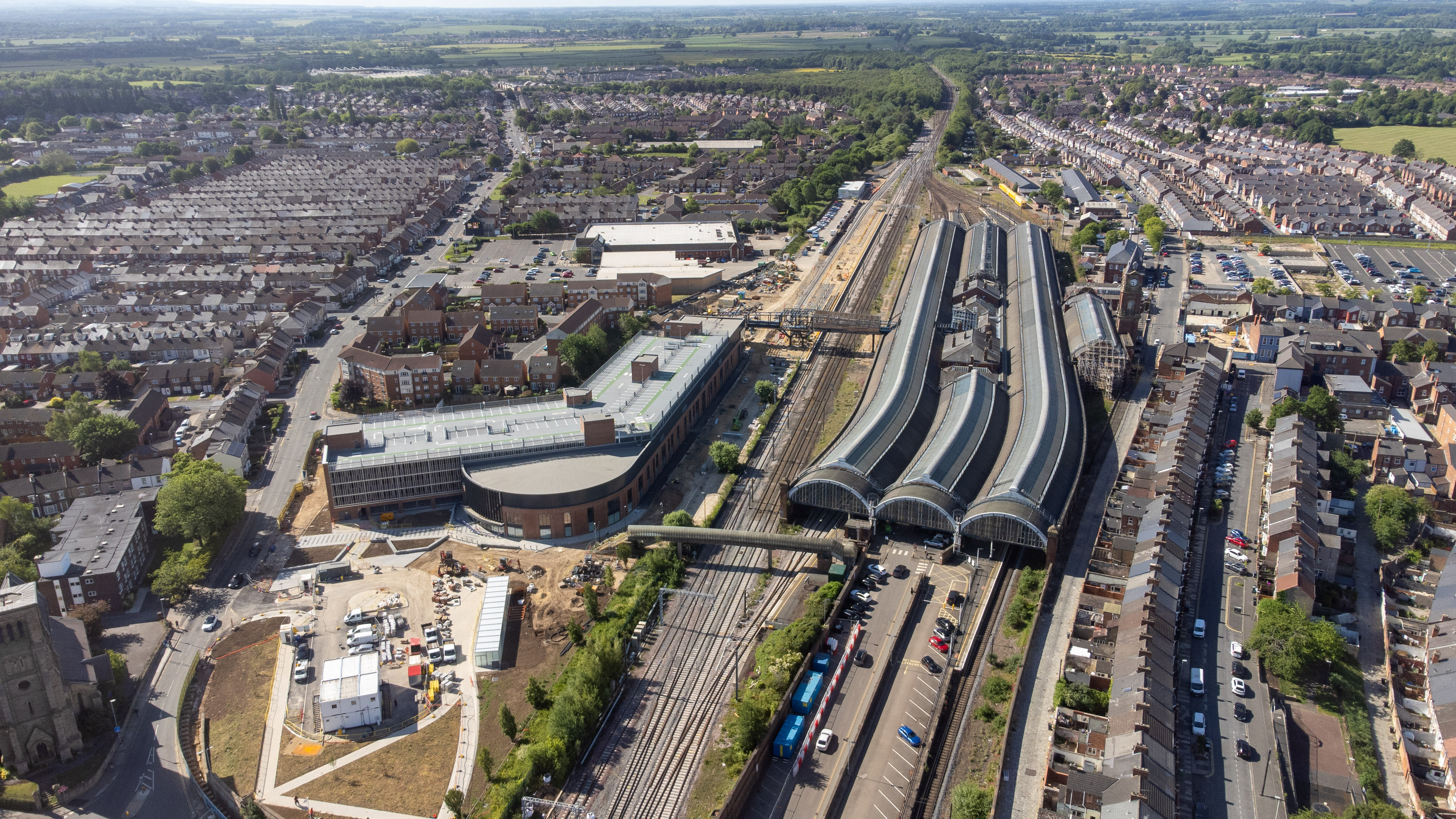
Note.
- The three sections of the Victorian station.
- The two new platforms ; 5 and 6 at the top of the image.
- The two 125 mph lines bypassing the Victorian station.
- There are two new footbridges connecting the Victorian station to the land on the other side of the 125 mph lines.
To the left of the station, there appears to be a massive multi-story car-park.
I asked Google about the new car park at Darlington station and got this reply.
The new multi-story car park at Darlington Station will have a capacity of more than 650 vehicles. This is part of a larger £140 million redevelopment of the station, which also includes new platforms and an eastern concourse. The car park will include accessible parking bays and electric car charging points.
This image from Tees Valley Combined Authority shows the car parking from the South.
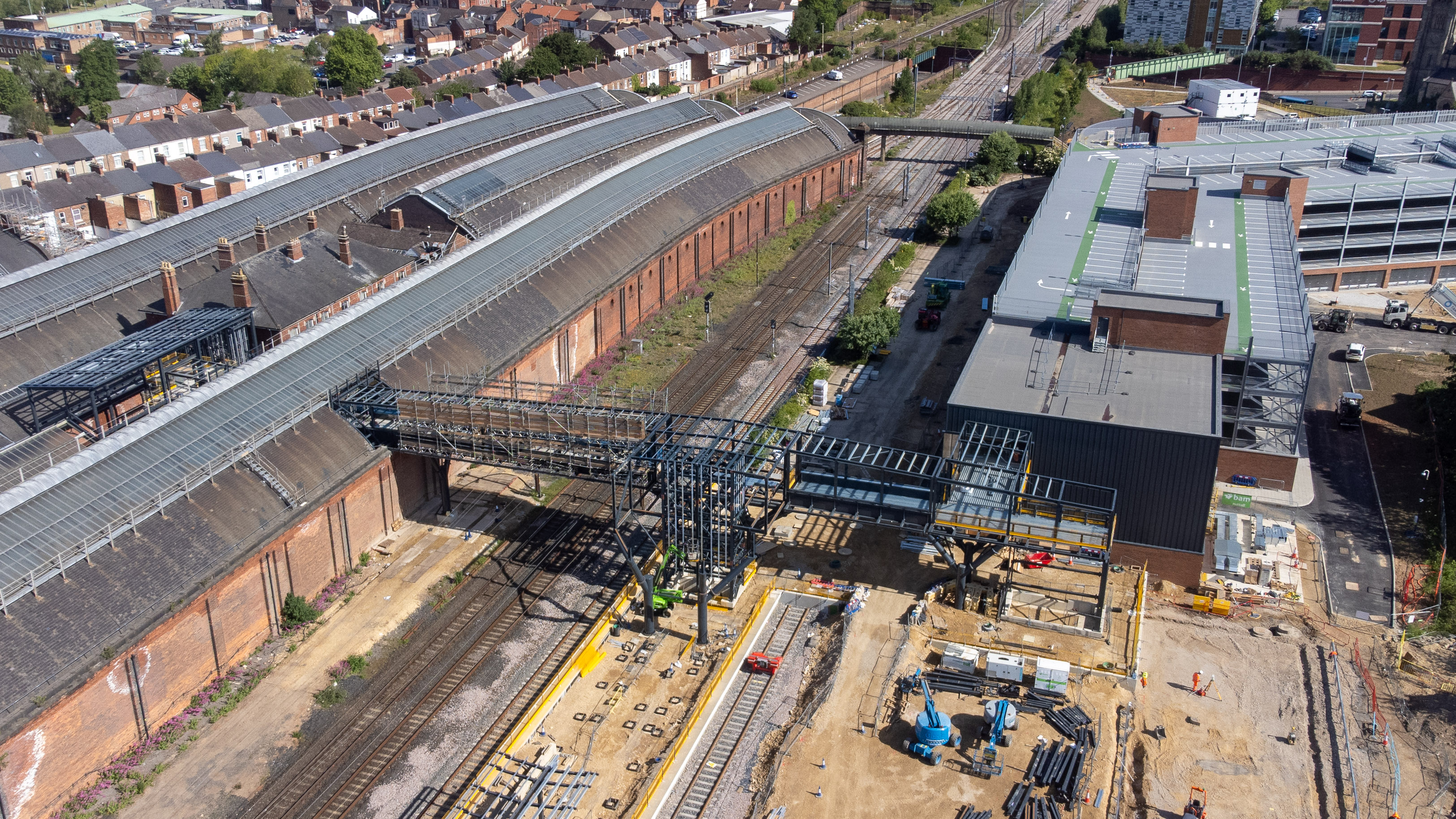
Note.
- The building appears to be a five-story car park.
- There appears to be a very easy connection between the car park and the bridge to the station.
- From the roof layout, there appears to be several lifts.
- It looks like there will be a large area between the platforms and the car park, where travellers can meet and socialise.
- The bay platform 6 already has a pair of red buffer stops.
Railways may have come to Darlington two hundred years ago and it looks like they are getting the car parking at the station ready for at least the next two hundred.
Further Electrification
If as I expect, the UK embraces battery electric technology for local and regional trains, I can see the three South-facing bay-platforms being electrified, so they could charge he battery-electric trains.
This picture shows that bars have been placed across Platforms 2 and 3, that could be used to support the electrification.
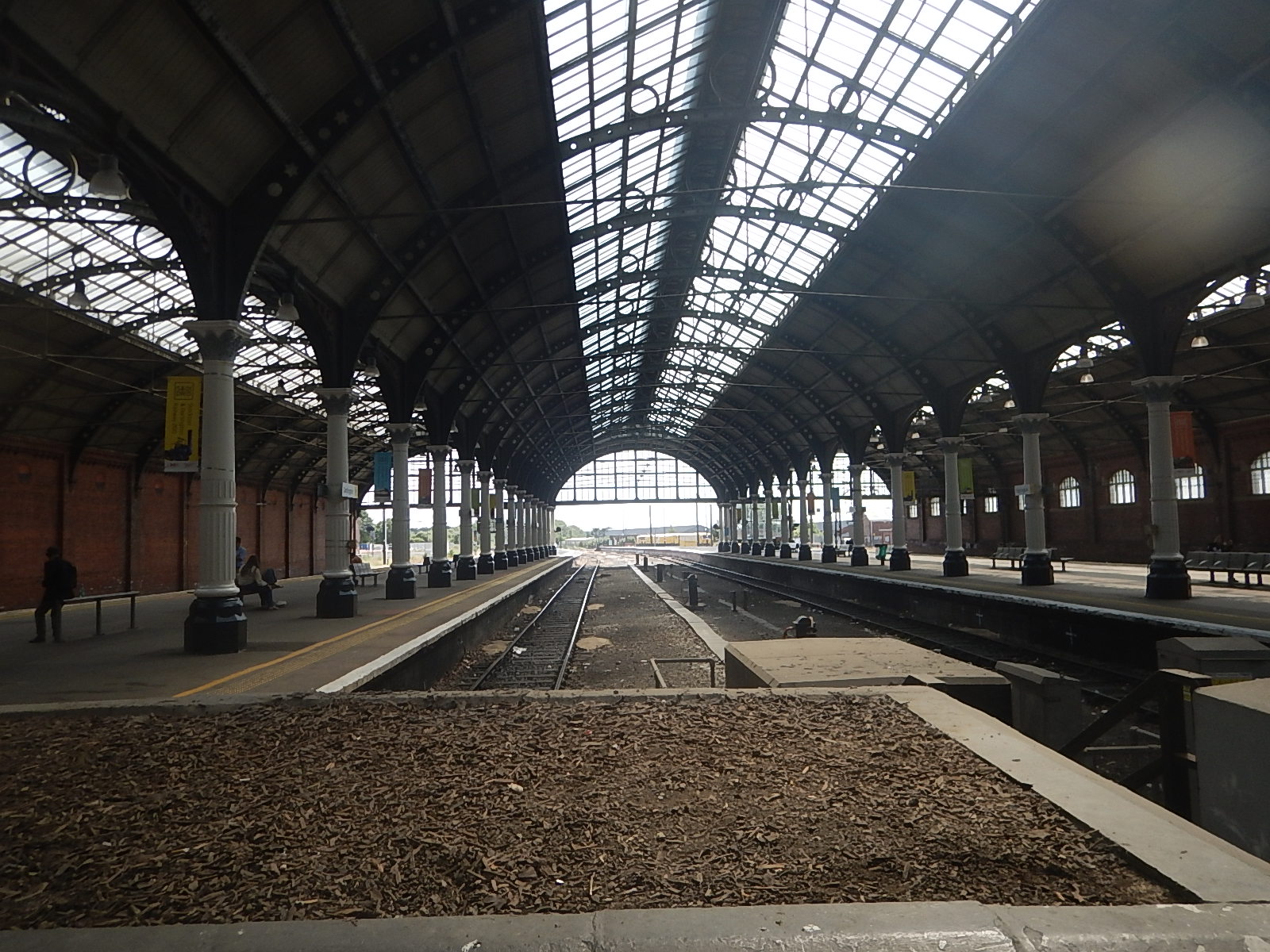
This method has been used in Victorian stations in the UK before. I show some installations and discuss electrifying Victorian stations in Could Hull Station Be Electrified?.
Darlington Station And High Speed Two
This graphic shows the original service pattern for High Speed Two.
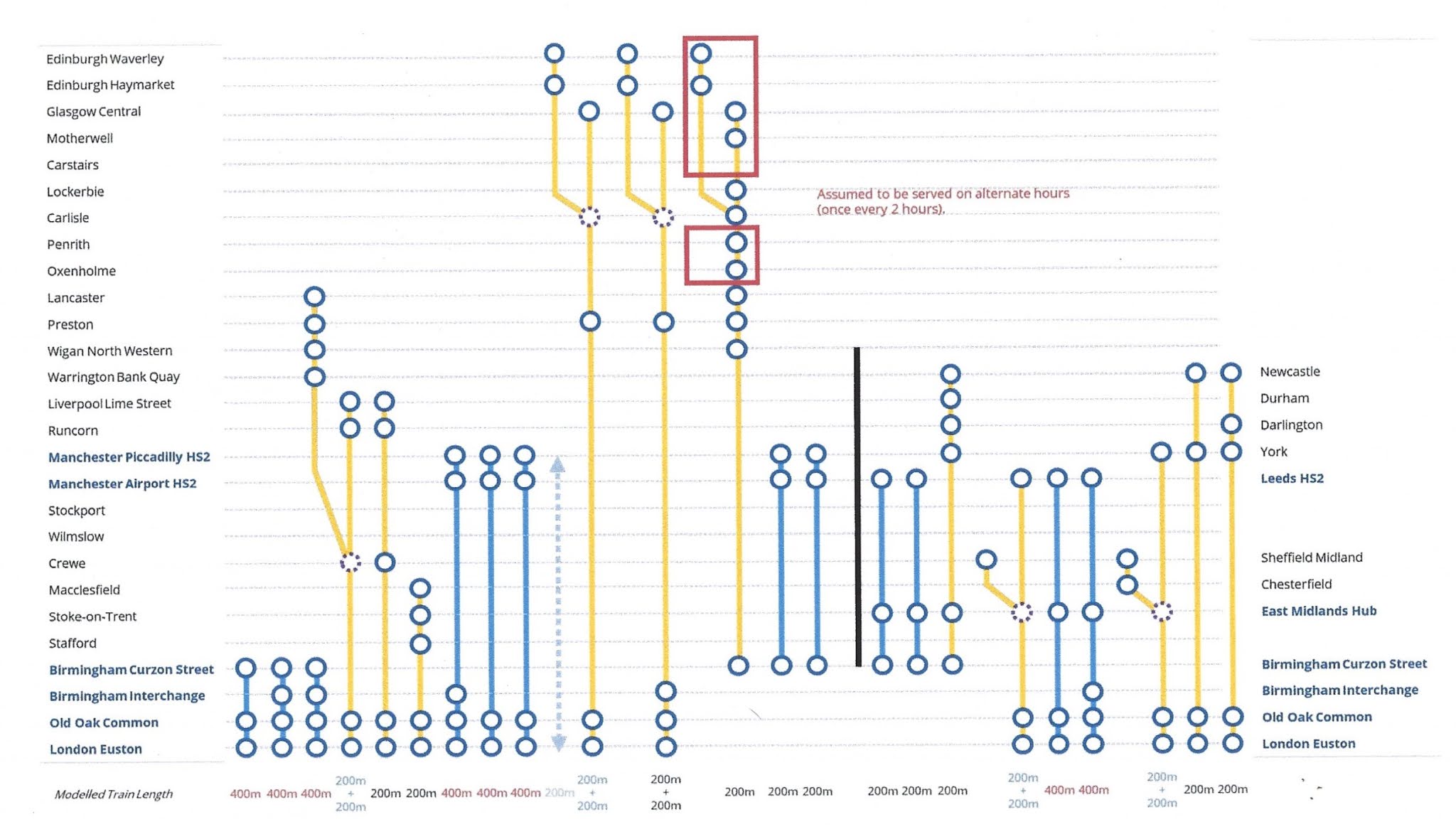
Note.
- There are seventeen paths terminating in the South at Euston station.
- Six of these paths go to Leeds, Newcastle or York.
- As the Eastern leg has been abandoned, that means there will be no High Speed Two trains to Leeds HS2, York, Darlington, Durham and Newcastle via the East Coast Main Line.
Darlington was to be served by these hourly services.
- Train 17 – Birmingham Curzon Street and Newcastle via East Midlands Hub, York, Darlington and Durham.
- Train 23 – London and Newcastle via York and Darlington.
Both trains would have been a single 200 metre long High Speed Two Classic-Compatible train.
Joining And Splitting Trains At Darlington
As Platform 5 looks like it would be a 400 metre long platform, it would look like it would be possible to handle a pair of High Speed Two Classic-Compatible trains.
But these trains will not now be serving Darlington in the near future, as the Eastern leg of High Speed Two has been cancelled.
A pair of nine-car Class 801 trains would be 467.4 metres long and might be able to fit into Platform 5.
But a pair of seven-car trains would certainly fit into a 400 metre Platform 5.
In Do Class 800/801/802 Trains Use Batteries For Regenerative Braking?, I found this snippet in an Hitachi document.
To simplify the rearrangement and management of train configurations, functions are provided for identifying the train (Class 800/801), for automatically determining the cars in the trainset and its total length, and for coupling and uncoupling up to 12 cars in
normal and 24 cars in rescue or emergency mode.
So I suspect with software updates two nine-car trains could run together.
Suppose LNER wanted to attack the airlines on the London and Scottish route.
- Two seven- or nine-car Class 800 or 801 trains would leave Edinburgh working as a pair.
- First stop would be Platform 5 in Darlington.
- The trains would split in Darlington.
- One train would go to King’s Cross stopping at perhaps Doncaster and Peterborough.
- The other train would go to St. Pancras stopping at perhaps Leeds, Sheffield, Nottingham and Bedford.
Note.
- A seven-car Azuma would be under 200 metres long.
- Seven-car trains would fit in St. Pancras.
- LNER have run an Azuma train into St. Pancras.
- The train would interchange with East-West Rail at Bedford.
- Travellers to and from East Anglia would change at Peterborough.
Large areas of England would have a fast route to and from Scotland.
East Midlands Railway’s Dirty Trains
I took these pictures today on my return from East Midlands Parkway.
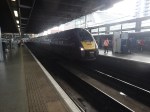
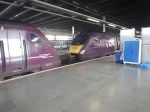
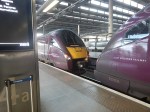
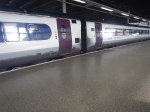
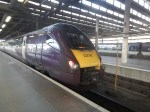
The trains seemed particularly dirty. Perhaps it’s the colour scheme.
 The Anonymous Widower