Hydrogen Energy Explained
The title of this post, is the same as this story on Centrica.
This is the sub-heading.
Hydrogen is a clean alternative to natural gas, when it’s burnt it doesn’t produce carbon dioxide, which is a harmful greenhouse gas. It has the potential to play a significant role in achieving net-zero and decarbonising various sectors.
The story is a good introduction to hydrogen.
In the 1960s, when I first worked in a hydrogen electrolyser at ICI in Runcorn, I would have found a document like this one from Centrica invaluable.
Australian Volgren Rolls Out First Hydrogen Bus Based On Wrightbus Chassis Technology
The title of this post, is the same as that of this article on Sustainable Bus.
These four paragraphs outline the progress.
Australian bus bodybuilder Volgren is rolling out of production a first hydrogen-powered bus model manufactured in cooperation with Northern Irish bus manufacturer Wrightbus.
Back in 2019, Volgren announced launch of its first battery-electric on BYD chassis. The deal with Wrightbus for fuel cell bus manufacturing in Australia dates back to May 2022.
With over 150 zero-emission buses already in operation, spanning six variants of both battery-electric and fuel-cell technologies, this hydrogen-powered bus represents the latest addition in Volgren’s offer.
A second hydrogen bus is already in production and will be delivered to the customer in the coming months, Volgren says.
It will be interesting to see how this deal develops.
Will it follow the successful path set by some of JCB’s deals around the world, or will the Chinese feel Australia is their patch and find a way to kick Wrightbus and its technology, out of the country?
UK Investment Summit Latest: Starmer Announces £1.1bn Expansion Of Stansted Airport
The title of this post, is the same as that of this article on The Times.
The Times has this sub-heading about Stansted
Analysis: Stansted Deal Prioritises Growth Over Climate
There are four paragraphs of analysis.
Over the weekend, Sir Keir Starmer made clear that his commitments to boost workers’ rights would not get in the way of his desire to bring in cash from the owners of P&O. As ministers now trumpet a deal to upgrade Stansted airport, it seems that growth and jobs also trump concerns about emissions.
Louise Haigh, the transport secretary who prompted the row with DP World by calling P&O a “rogue operator”, praised the Stansted deal as a “clear signal that Britain is open for business”. She argued that Stansted could be upgraded “while also meeting our existing environment obligations”, with the airport promising a new solar farm to generate electricity. But environmentalists will be dismayed by the prospect of more plane journeys and associated emissions.
The deal also raises fresh questions about a third runway at Heathrow after years of dithering under the Conservatives. No 10 has previously said it is “not opposed” to expansion if it can meet tests on emissions, climate change, noise pollution — and growth.
Starmer has said he will not duck decisions because they are “too difficult”. A decision on Heathrow offers a very clear test of that promise.
Is Hydrogen The Reason For The Choice Of Stansted?
I wonder if the choice of Stansted for expansion is down to the likelihood, that East Anglia will be a big centre for the generation of zero-carbon green and pink hydrogen, with gigawatts of offshore wind farms for the green and nuclear at Sizewell for the pink.
Aircraft of the future will surely need hydrogen for flying to their destinations.
Already, the massive construction of Sizewell C is going to be performed using zero-construction methods involving electricity and hydrogen, as far as is possible.
Large construction at Stansted Airport could be done in a similar manner, using perhaps a hydrogen pipeline between Sizewell and Stansted running along the A 14. This would probably be built anyway, so that East Anglia’s large numbers of heavy trucks could be converted to hydrogen.
Already the hydrogen buses to bring workers to the Sizewell C site have been ordered from Wrightbus in Ballymena.
Airbus, are planning to have their hydrogen-powered Boeing 737/A 320-size airliner in service by the mid-2030s. From visualisations released by Airbus, the Zeroe hydrogen Turbofan looks very much like a redesigned version of the current A320 neo, with two hydrogen turbofans (hopefully with RR on the side!) Converting an existing proven airliner, only means that the new parts need to be certified, so this would bring the plane into service quicker.
Airbus’s infographic shows the Zeroe hydrogen Turbofan will seat up to 200 passengers and have a range of 2,000 nautical miles or 3,700 km.
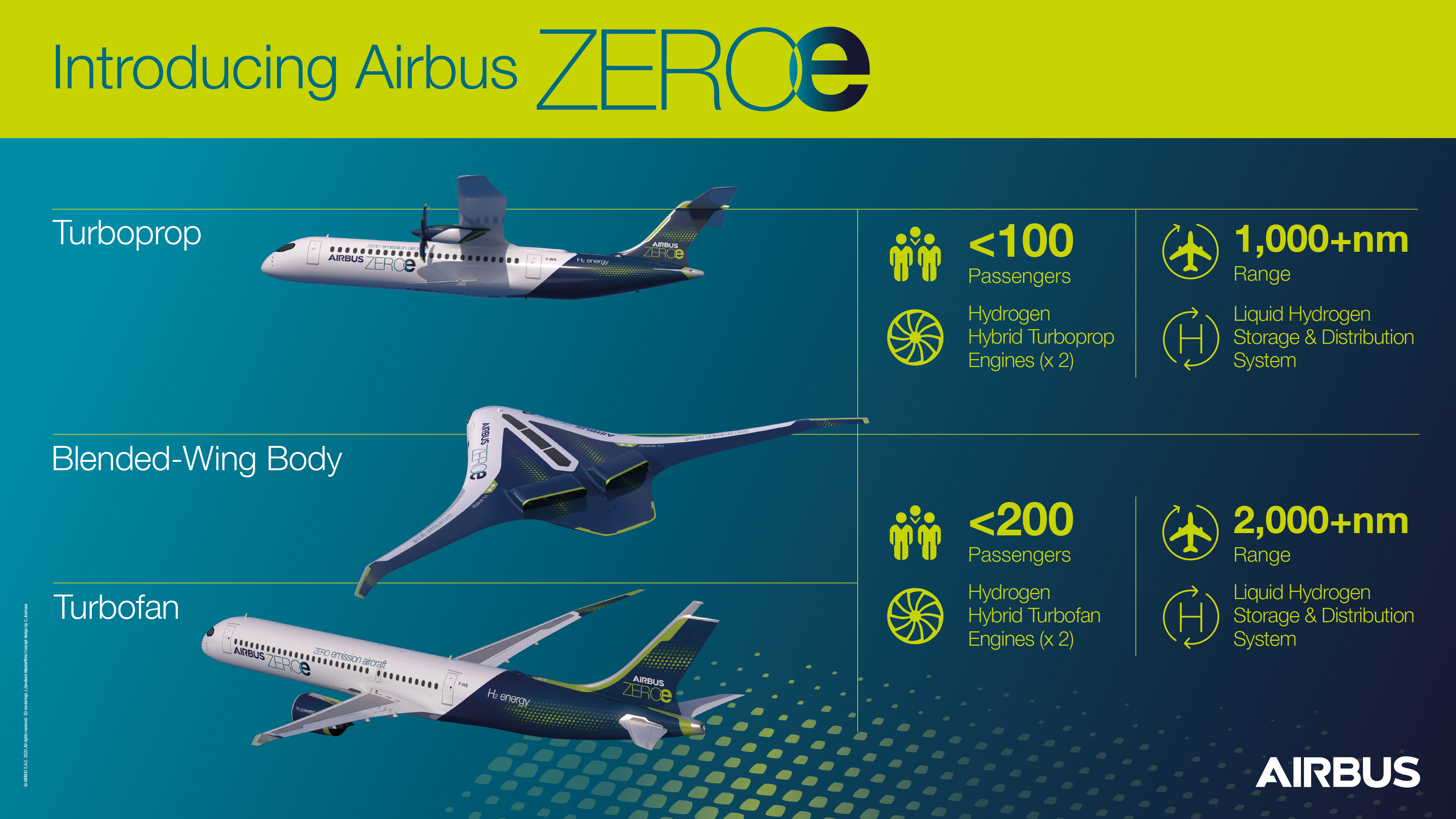
Discover the three zero-emission concept aircraft known as ZEROe in this infographic. These turbofan, turboprop, and blended-wing-body configurations are all hydrogen hybrid aircraft.
A typical A 320 neo will fly 165 passengers up to 3,500 nautical miles or 6.500 km.
A few distances from Stansted include.
- Athens – 2,400 km.
- Berlin – 905 km.
- Cairo – 3514 km.
- Copenhagen 913 km.
- Dublin – 470 km.
- Edinburgh – 509 km.
- Gander 3,800 km
- Geneva – 760 km.
- Glasgow – 540 km.
- Istanbul – 2480 km.
- Madrid – 1300 km.
- Milan – 960 km.
- Munich – 909 km.
- Palma de Mallorca – 1,400 km.
- Reykjavík – 1870 km.
- Rome – 1,442 km.
- Stockholm – 1,400 km.
- Tel-Aviv – 3,564 km.
- Tenerife North – 2944 km.
- Tenerife South – 2999 km.
- Warsaw 1,412 km.
These distances would mean, a lot of current European destinations could be reached, if the plane were filled at both airports, but a surprising number of popular places could be reached by only refuelling at Stansted.
It also appears to me, that with refuelling in Iceland and perhaps a stopover, in that delightful and different country, zero-carbon flights across the Atlantic would be possible.
If a hydrogen-powered aircraft has the 3,700 km. range that Airbus are promising, it will be an aircraft with a lot of possibilities!
Short Flights
- Amsterdam – 541 km.
- Cardiff – 253 km.
- Exeter – 284 km.
- Jersey – 344 km.
- Liverpool – 264 km.
- Newcastle – 373 km.
- Newquay – 399 km.
- Ronaldsway – 408 km.
- Southampton – 151 km.
Some of these flights would be competing with trains.
Flights Around The British Isles
One of the longest flights around the British Isles would be between Stansted and Sumburgh Airport in the Shetland Isles.
But this is only 894 kilometres, so a return trip would be possible.
I also feel that arranging hydrogen refuelling on Shetland will not be a difficult task, as the islands are likely to have copious supplies of green hydrogen.
Flights From Stansted To Europe
Applying a ten percent reserve probably means a safe one-way range of around 1,700 km.
This would mean that.
- Amsterdam – 541 km.
- Berlin – 905 km.
- Copenhagen – 913 km.
- Madrid – 1300 km.
- Milan – 960 km.
- Munich – 909 km.
- Palma de Mallorca – 1,400 km.
- Rome – 1,442 km.
- Stockholm – 1,400 km.
- Warsaw 1,412 km.
Should all be in range. of an out-and-back flight, after fully fuelling the plane at Stansted Airport.
Others like.
- Athens – 2,400 km.
- Bucharest – 2070 km.
- Cairo – 3514 km.
- Istanbul – 2480 km.
- Lisbon – 1630 km.
- Malta – 2107 km.
- Marrakech – 2350. km.
- Sofia – 2010 km.
- Tel-Aviv – 3,564 km.
- Tenerife North – 2944 km.
- Tenerife South – 2999 km.
Could be handled by refuelling at the destination.
Hopping Across The Atlantic
Consider.
- My great aunt Beatrice used to fly the Atlantic in the 1950s, although it was usually a succession of small hops between Heathrow Shannon and Gander Airports. I think she regularly used ships like the Queen Mary and Elizabeth, as she found them less stressful.
- Icelandair offer short stopovers in Reykjavik and I suspect they will offer this with hydrogen-fuelled aircraft.
- British Airways used to offer a London City Airport to New York flight via Shannon using an Airbus A 318.
I would certainly be interested to hop across from Stansted to New York in a hydrogen-powered aircraft, and I suspect others would do it for the environmental brownie points.
Legs could be.
- Stansted and Reykjavík – 1870 km.
- Reykjavík and Gander – 2568 km
- Gander and New York – 1767 km.
A stop could possibly be squeezed in at Boston.
It could be an interesting way to cross the Atlantic.
Hydrogen Production In East Anglia
I said earlier that East Anglia could produce a lot of zero-carbon green and prink hydrogen from wind and nuclear and this would be used for the following.
- Aviation out of Stansted and Southend Airports.
- Shipping out of the Port of Felixstowe, London Gateway and other smaller ports.
- Providing energy for heavy transport in East Anglia.
- Providing energy for Freeport East at Felixstowe and Harwich.
- Refuelling passing shipping.
- Supplying off-grid energy to rural properties and businesses in the East of England, which I wrote about in Developing A Rural Hydrogen Network.
Any spare hydrogen could always be sold to the Germans.
Decarbonisation Of The Railways In East Anglia
Undoubtedly, some hydrogen will be used to decarbonise some parts of East Anglia’s railways.
Many passenger trains are electrified, but some rural and cross-country services still use diesel. However, the Class 745 trains, that were built by Stadler for these services could be converted to hydrogen or battery-electric.
Similarly, locomotives that haul the freight trains out of the ports of East Anglia will be replaced with hydrogen or battery-electric locomotives.
I am fairly certain, that by 2040, all railways in East Anglia will be zero-carbon.
The East-West Rail Link
It is not known yet, whether the current government will continue to build the East West Rail Link, but it could be invaluable in connecting Stansted Airport to the West of England.
Connecting Stansted Airport To The North Of England and Scotland By Rail
If Stansted is developed as a zero-carbon airport, based on the new hydrogen-powered aircraft, travellers between say the North of England and Scotland, will surely want to travel to Stansted in a carbon-free manner.
So would it be sensible to run rail electric services between the North and Stansted?
Conclusion
Stansted could develop into the UK’s zero-carbon airport.
Vauxhall Begins UK Customer Trials Of Hydrogen Vans
The title of this post, is the same as that of this press release from Stellantis.
These four bullet points, act as sub-headings.
- First customer trials of Vauxhall Vivaro HYDROGEN in the UK are underway
- Already sold in LHD markets by Opel, Vauxhall’s sister brand, Vivaro HYDROGEN is the first commercially available production hydrogen van
- Companies to take part in fleet evaluation process ahead of UK launch of Movano HYDROGEN later this year
- Movano HYDROGEN will offer a range of up to 311 miles (WLTP) and can be re-fuelled in under five minutes
- Orders for Movano HYDROGEN will open later this year, with first customer deliveries expected in 2025
- Vauxhall will be the only manufacturer offering two zero emission solutions (BEV & FCEV), enabling van fleets to choose the one that best suits their operational requirements
- Vauxhall was the UK’s number one electric van manufacturer in 2021, 2022 and 2023
This is one of Vauxhall’s accompanying images.
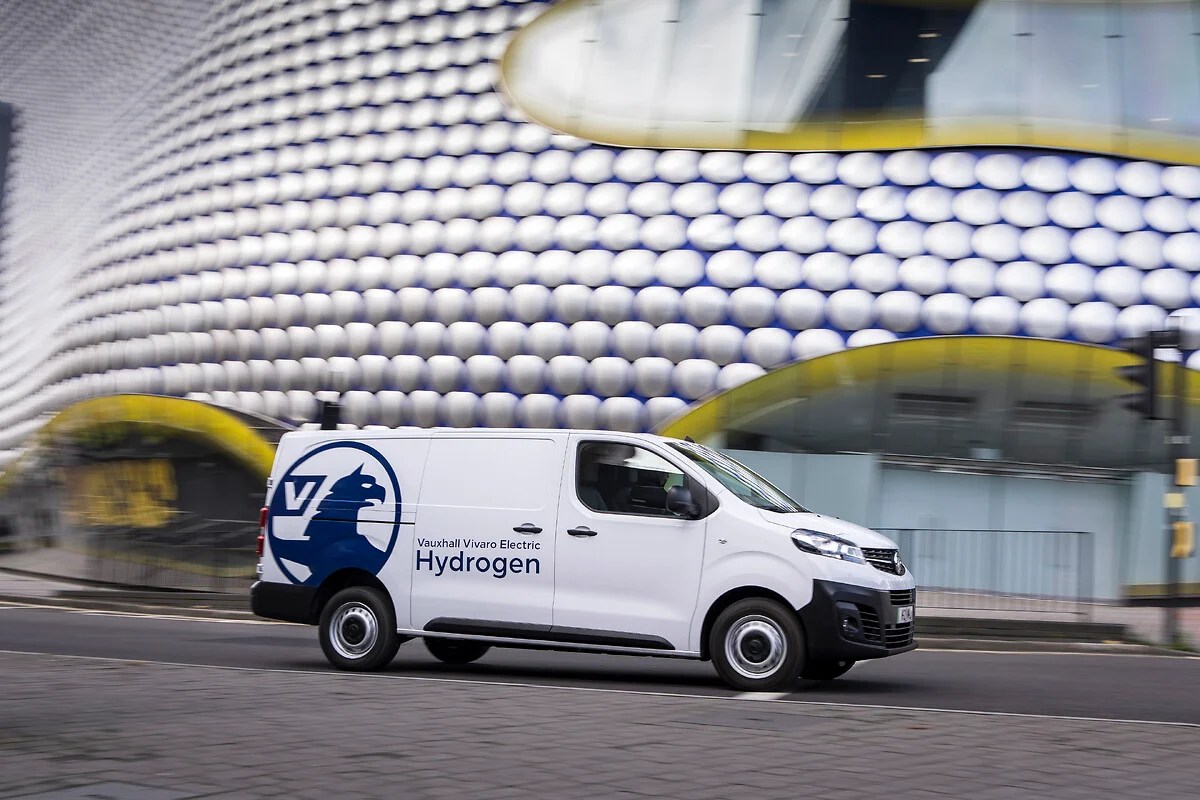
It just looks like a normal Movano with the H-word on the side.
These two paragraphs describe the van.
Based on the existing fully electric Vivaro Electric, the Vivaro HYDROGEN features a 45kW fuel cell and 10.5kWh lithium-ion battery located under the front seats for a driving range of 249 miles (WLTP). The 5kg hydrogen fuel tanks located under the floor can be re-filled in just five minutes – about the same time needed to fill up a conventional diesel or petrol vehicle.
The 10.5kWh lithium-ion battery provides dynamic peak power when required, such as at start-up and under acceleration. It also ensures the fuel cell can run at optimum operating conditions and allows for regenerative braking. The plug-in capability enables the battery to be re-charged externally if necessary, providing 31 miles of pure battery electric range.
It does strike me, that 45 kW could be a bit light for the engine power, when you consider a diesel Movano has a 103 kW turbo diesel. But then Stellantis should know what they are doing and as they say, the battery provides dynamic peak power when required. The Movano Electric for comparison has a 75 kWh battery.
I feel strongly, that where hydrogen is available, some operators will choose the Movano Hydrogen over the Movano Electric.
World’s First Public Demonstration Of Hydrogen Engine Motorcycle
This title of post, is the same as that of this news item from Kawasaki.
This is the sub-heading.
On July 20, Kawasaki Motors, a member of the Kawasaki Heavy Industries Group, conducted the world’s first public demonstration run of a hydrogen ICE (internal combustion engine) motorcycle by a mass-production motorcycle manufacturer at Suzuka Circuit in Suzuka City, Mie Prefecture, Japan.
These three paragraphs outline the demonstration.
The hydrogen ICE motorcycle was designed and built as part of research that began in March 2023, with test runs starting this year, culminating in the public demonstration run. Mounted in the machine is a hydrogen engine based on the 998 cm3 In-Line Four Supercharged Engine found in Kawasaki’s Ninja H2 motorcycle, with modifications made to allow direct injection of hydrogen fuel into the cylinders. The motorcycle’s chassis was designed to accommodate hydrogen fuel canisters and a hydrogen fuel supply system on-board.
Hydrogen ICE motorcycles run on hydrogen combustion, producing the rumble and pulsating sensation that riders enjoy when twisting the throttle, while emitting mainly water.
As part of their carbon neutral initiative, Kawasaki Motors is currently conducting research and development with the aim of realizing a functioning hydrogen ICE motorcycle*2 as one carbon-neutral option for riders in the early 2030s.
Some people will prefer quiet, hydrogen-fuel cell motorcycles.
Lawnmowers And Other Small-Engined Equipment
As hydrogen fuel spreads around the countryside, I can see lots of rural equipment using it for motive power.
Cummins Debuts Integrated HELM Drivetrain At IAA
The title of this post, is the same as that of this article on truckinginfo.com.
This is the sub-heading under a rather informative image.
Cummins’ integrated drivetrain offers fleets three powertrain options: advanced diesel, diesel-hybrid and zero-carbon hydrogen.
These are the first two paragraphs.
Cummins pulled the curtain back on a new integrated drivetrain concept at the IAA Transport Show in Hannover, Germany, on September 17. According to Jennifer Rumsey, Cummins chair and CEO, the newly designed drivetrain is based on the OE’s HELM engine platform. It is also intended to highlight Cummins’ broader product portfolio and continued commitment to providing flexible, sustainable power solutions.
The Cummins HELM engine platform is a fuel-agnostic series of engine versions that are derived from a common base.
The article could be called the Jennifer and Jane Show, after the two people, who provided most of the words.
When I was dealing with large American corporations in the last century, one lady would have been a rarity, but two at the top indicates how Cummins has turned itself into a sustainable company for the twenty-first century.
The Cummins Integrated Drivetrain Concept
The Cummins Integrated Drivetrain Concept is shown in a Cummins image in the trucking.info.com article.
- Up-front is a 15-litre internal combustion engine, which can be diesel, natural-gas or hydrogen-fueled.
- As Cummins manufacture fuel cells, I suspect that the motive power can be one or more hydrogen fuel cells.
- It looks like along each side of the truck are tanks for the hydrogen fuel cells.
- Between the tanks is a powerful electric motor, that drives the rear axle.
- The electric rear axle could incorporate batteries for regenerative braking and traction efficiency.
A vehicle of any size between a Fiat 500 and a 44-tonne articulated truck could use this integrated drivetrain concept, with components sized accordingly.
This is a paragraph from the trucking.info.com article.
Rumsey emphasized that Cummins’ acquisition of Meritor, Siemens Commercial Vehicles and Jacobs Vehicle Systems in recent years means Cummins can now offer full powertrain capability.
Don’t develop your own, if you can buy the best!
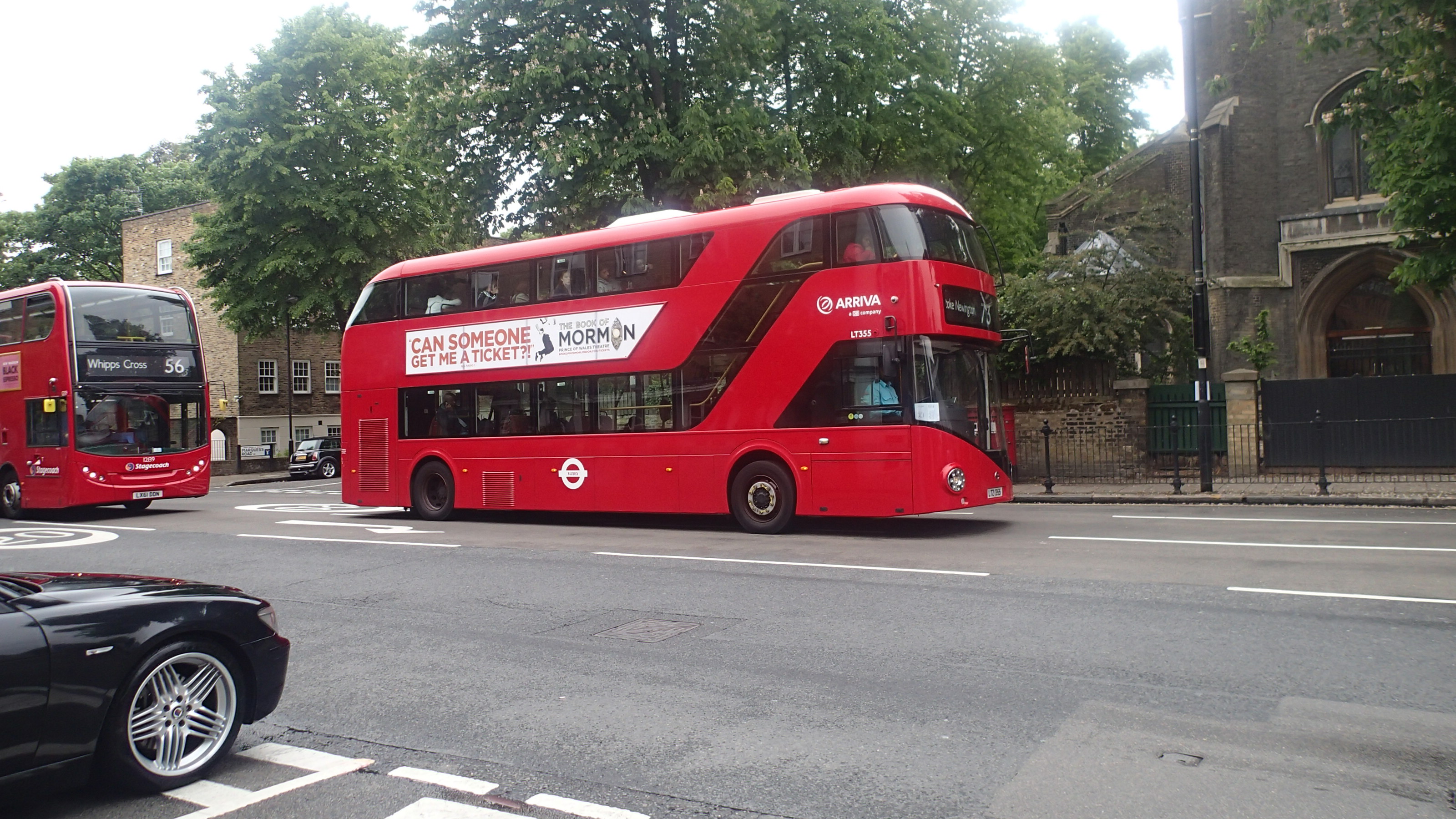
Siemens electric motors and Cummins diesel engines are used in London’s New Routemaster buses.
Could The Cummins Integrated Drivetrain Concept Be Used For A Small Car?
I don’t see why not?
Just watch the Koreans, who are going large on hydrogen.
Stadler Presents A World First In Berlin
The title of this post, is the same as that of this press release from Stadler.
These are the first two paragraphs.
With the RS ZERO, the rail vehicle manufacturer is presenting the successor to the successful Regio-Shuttle RS1 model. There is a choice of two modern and environmentally friendly drive technologies: Hydrogen and battery. Both will enable CO2 emission-free operation of secondary lines in the future.
Stadler today unveiled the prototype of the new RS ZERO, the innovative successor to the successful RS1 Regio-Shuttle. The Regio-Shuttle has been one of the most popular vehicles in German regional rail transport for 28 years, with around 500 RS1 vehicles currently in operation in Germany and the Czech Republic. Stadler is building on this proven technology and integrating state-of-the-art, environmentally friendly drive systems. The RS ZERO is optionally available with a hydrogen and/or battery drive and thus not only sets new standards for environmentally friendly rail transport, but also presents a world first.
These pictures from Chemnitz Trams And The Chemnitz Model, show the Regio-Shuttle RS1.



Note.
- The Regio-Shuttles can run as up to seven car trains.
- These Regio-Shuttles are electro-diesel.
- The distinctive diagonal windows.
- They can carry 170 passengers at 75 mph.
- They can run as train-trams using the Chemnitz model on compatible tram networks.
The Regio-Shuttle Wikipedia entry gives more details.
This image from the press release shows the prototype RS ZERO.
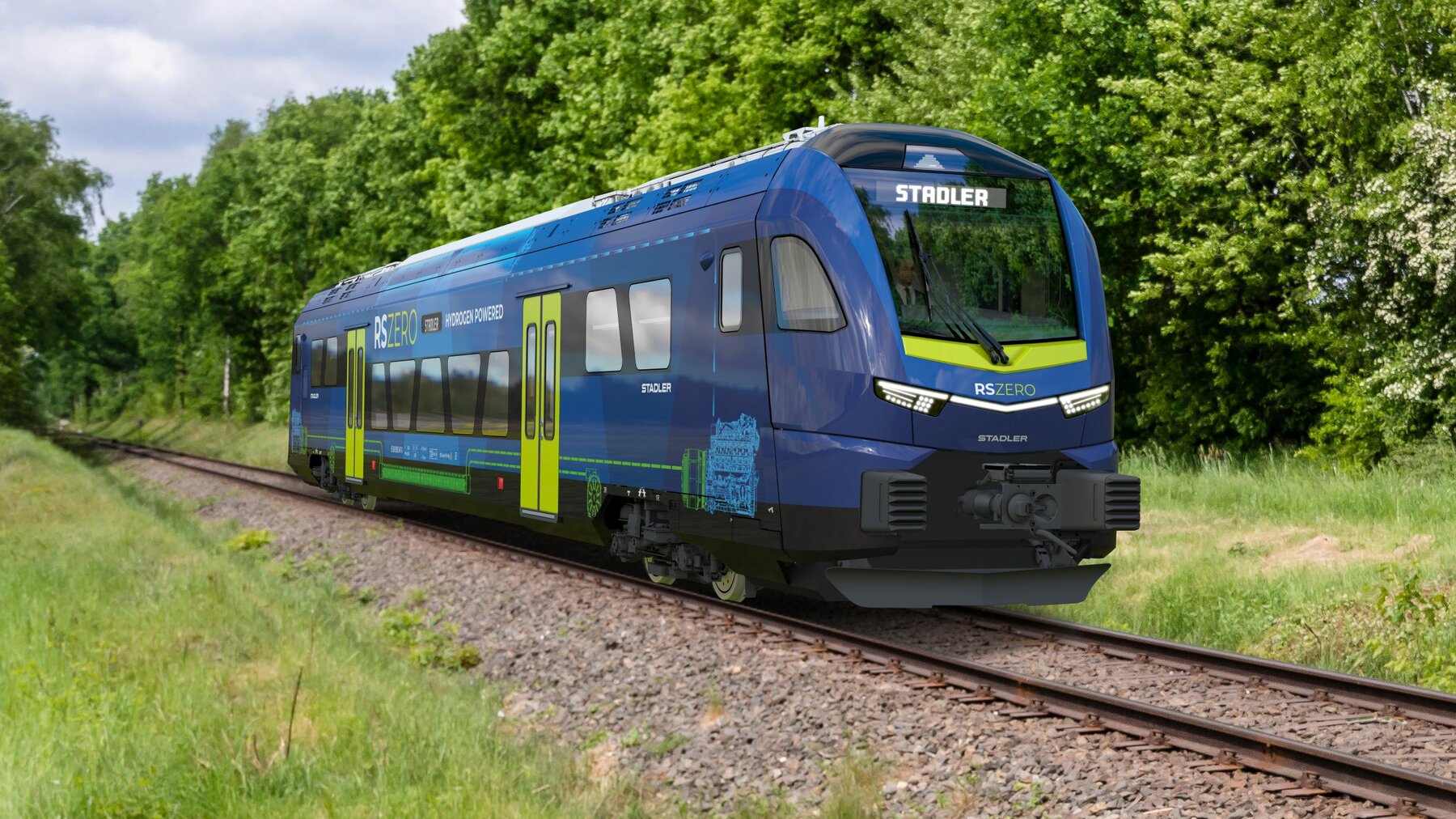
It looks very similar to my pictures from Chemnitz.
I have a few thoughts.
Comparison To A Class 150 Train
A Class 150 train can carry up to 149 seated passengers at 75 mph, which is similar to the RS ZERO.
As Stadler have built trains for Greater Anglia, Merseyrail and the Glasgow Subway, I believe that Stadler could build an RS ZERO, that would fit the UK loading gauge.
In What Train Is This?, I show the standard of interior, that can be achieved by refurbishing a Class 150 train, but unlike the RS ZERO, the train won’t be zero-carbon.
Does The RS ZERO Have A Toilet?
This is a paragraph from the press release.
The prototype of the RS ZERO presented today in Berlin is a one-car vehicle with hydrogen drive. Stadler is demonstrating the numerous design options with a multi-purpose area equipped for carrying bicycles, pushchairs and bulky luggage, lounge and comfort zones, standard and privacy seats, a wheelchair space, WC and a train office.
The train appears to be able to have what an operator might need.
What Will Be The Range Of An RS ZERO On Hydrogen?
I suspect, Stadler will provide a train, that will handle the route.
Conclusion
This could be a very handy train to decarbonise branch and secondary lines in the UK.
Spotlight On The IVECO E-WAY H2: Less Weight, 15% More Passenger Capacity
The title of this post, is the same as that of this article on Sustainable Bus.
This is the sub-heading.
Up to seven time less batteries than a BEV bus (one module instead of 7), with 15% more passengers. These are the specifications mostly stressed by IVECO BUS when outlining the features of IVECO BUS E-WAY H2, presented at Busworld 2023 in Brussels. The bus model derives directly from the E-WAY BEV bus model
Note.
- The hydrogen fuel cell technology is from Hyundai.
- The bus is designed to be lighter in weight, which increases passenger capacity from 93 to 111 and gives an enhanced range.
- The driveline is from Accelera by Cummins, with a Siemens electric motor.
- IVECO provide the front axle and ZF the rear.
- Surprisingly, the bus is assembled from stainless steel panels, onto a steel floor.
It strikes me, that if the late great Colin Chapman had designed a bus, it would follow some of IVECO’s design.
Conclusion
This bus could set the standard for hydrogen-powered buses.
I particularly liked the saving in lithium compared to an electric bus.
Funding Awarded For Study On Hydrogen Storage Potential In The East Midlands
The title of this post, is the same as that of this article on the British Geological Survey.
This is the sub-heading.
A new study has been awarded funding to explore the underground hydrogen storage potential in the East Midlands.
These are the first three paragraphs.
East Midlands Storage (EMstor), a consortium led by Cadent and partnered with BGS, Star Energy Group, Net Zero Strategy and the University of Edinburgh, has been awarded discovery funding by Ofgem’s Strategic Innovation Fund to undertake a new study to evaluate geological storage potential in the East Midlands.
The EMstor study is the first of its kind in the region. It will undertake a feasibility assessment of the East Midlands’ geology to evaluate its potential to host storage technologies, allowing expansion of Cadent’s proposed 100 per cent hydrogen pipeline.
The East Midlands has numerous depleted oil reservoirs, which may have potential to store hydrogen. The study will characterise the potential geological reservoir to establish if it is suitable for hydrogen storage at scale in the local area.
The oilfields of the East Midlands Oil Province have their own Wikipedia entry, which gives full details of the dozens of small oil fields in the area.
- It may not be the world’s largest oil resource, but it certainly helped us during the Second World War.
- Experienced Texan oil-men were even imported, to help boost production.
- It used to be possible to spot the occasional lonely nodding donkey, as you passed through the area.
Surely, if some of the oilfields can be converted to hydrogen stores, this would be very useful.
 The Anonymous Widower