€190m Order To Bring Hydrogen Trains To Regions In France
The title of this post, is the same as that of this article on H2 View.
This is the introductory paragraph.
What is believed to be the first order of dual mode electric-hydrogen trains has been made today (8th April) for the Auvergne-Rhône-Alpes, Bourgogne-Franche-Comté, Grand Est and Occitanie regions of France.
I very much hope that Alstom’s Class 600 trains for the UK are dual mode, as that surely is the best design option.
Plans Announced For ‘Low Carbon’ Power Stations In Lincolnshire
The title of this post, is the same as that of this article on the BBC.
This is the introductory paragraph.
Hundreds of jobs could be created after plans were announced to build two “low carbon” power stations in North Lincolnshire.
Last year, I only had one night away from home and that was in Doncaster, from where I explored North East Lincolnshire and wrote Energy In North-East Lincolnshire, where I made a few predictions.
These are my thoughts on my predictions and other points made in the BBC article.
Keadby 1
Keadby 1 is a 734 MW gas-fired power station, that was commissioned in 1996.
Keadby 2
- Keadby 2 will be a 840 MW gas-fired power station.
- It will be possible to add Carbon Capture and Storage technology to Keadby 2 to make the plant net-zero carbon.
- Keadby 2 will be able to run on hydrogen.
Keadby 2 is under construction.
Keadby 3 And Keadby 4
I predicted that two new power stations would be added to the Keadby cluster.
- When I wrote the other post, SSE were still designing Keadby 3, but had said it would be a 910 MW station.
- This would mean that Keadby 1, Keadby 2 and Keadby 3 would have a combined capacity of 2484 MW of electricity.
- Adding a fourth station, which I called Keadby 4, which I proposed to be the same size as Keadby 3 would give a combined capacity of 3394 MW.
This will be more than the planned capacity of the under-construction Hinckley Point C nuclear power station will be able to generate 3200 MW.
The BBC article says this about the plans for Keadby.
One plant would burn natural gas and use carbon capture technology to remove the CO2 from its emissions. The CO2 would then be transported along pipelines before being securely stored in rocks under the North Sea.
The hydrogen power station would produce “zero emissions at the point of combustion”, its developers claimed.
It looks like Keadby will have the power of a Hinckley Point nuclear station, but running on gas.
Carbon Capture And Storage
From what I read on the sseThermal web site and published in Energy In North-East Lincolnshire, it looks like Keadby 2 and Keadby 3 will use carbon capture and storage and Keadby 4 will use hydrogen.
There are plenty of depleted gas fields connected to the Easington terminal that can be used for carbon-dioxide storage.
The Zero Carbon Humber Network
The Zero Carbon Humber is going to be a gas network along the Humber, that will distribute hydrogen to large industrial users and return carbon dioxide for storage under the North Sea.
This map shows the Zero Carbon Humber pipeline layout.

Note.
- The orange line is a proposed carbon dioxide pipeline
- The black line alongside it, is a proposed hydrogen pipeline.
- Drax, Keadby and Saltend are power stations.
- Easington gas terminal is connected to around twenty gas fields in the North Sea.
- The terminal imports natural gas from Norway using the Langeled pipeline.
- The Rough field has been converted to gas storage and can hold four days supply of natural gas for the UK.
I can see this network being extended, with some of the depleted gas fields being converted into storage for natural gas, hydrogen or carbon dioxide.
Enter The Vikings
This article on The Times is entitled SSE and Equinor’s ‘Blue Hydrogen’ Power Plant Set To Be World First.
This is the introductory paragraph.
The world’s first large-scale power station to burn pure hydrogen could be built in Britain this decade by SSE and Equinor to generate enough low-carbon energy to supply more than a million homes.
This second paragraph explains the working of the production of the blue hydrogen.
The proposed power station near Scunthorpe would burn “blue hydrogen”, produced by processing natural gas and capturing and disposing of waste CO2 in a process that has low but not zero emissions. Equinor is already working on plans for a blue hydrogen production facility at Saltend in the Humber.
This may seem to some to be a wasteful process in that you use energy to produce blue hydrogen from natural gas and then use the hydrogen to generate power, but I suspect there are good reasons for the indirect route.
I believe that green hydrogen will become available from the North Sea from combined wind-turbine electrolysers being developed by Orsted and ITM Power, before the end of the decade.
Green hydrogen because it is produced by electrolysis will have less impurities than blue hydrogen.
Both will be zero-carbon fuels.
According to this document on the TNO web site, green hydrogen will be used for fuel cell applications and blue hydrogen for industrial processes.
Blue hydrogen would be able to power Keadby 2, 3 and 4.
I can see a scenario where Equinor’s blue hydrogen will reduce the price of hydrogen steelmaking and other industrial processes. It will also allow the purer and more costly green hydrogen to be reserved for transport and other fuel cell applications.
Using The Carbon Instead Of Storing
The document on the TNO web site has this surprising paragraph.
Hydrogen produced from natural gas using the so-called molten metal pyrolysis technology is called ‘turquoise hydrogen’ or ‘low carbon hydrogen’. Natural gas is passed through a molten metal that releases hydrogen gas as well as solid carbon. The latter can find a useful application in, for example, car tyres. This technology is still in the laboratory phase and it will take at least ten years for the first pilot plant to be realised.
This technical paper is entitled Methane Pyrolysis In A Molten Gallium Bubble Column Reactor For Sustainable Hydrogen Production: Proof Of Concept & Techno-Economic Assessment.
This may be a few years away, but just imagine using the carbon dioxide from power stations and industrial processes to create a synthetic rubber.
But I believe there is a better use for the carbon dioxide in the interim to cut down the amount that goes into long-term storage, which in some ways is the energy equivalent of landfill except that it isn’t in the least way toxic, as carbon-dioxide is one of the most benign substances on the planet.
Lincolnshire used to be famous for flowers. On a BBC Countryfile program a couple of weeks ago, there was a feature on the automated growing and harvesting of tulips in greenhouses.
There are references on the Internet to of carbon dioxide being fed to flowers in greenhouses to make them better flowers.
So will be see extensive building of greenhouses on the flat lands of Lincolnshire growing not just flowers, but soft fruits and salad vegetables.
Conclusion
The plans of SSE and Equinor as laid out in The Times and the BBC could create a massive power station cluster.
- It would be powered by natural gas and hydrogen.
- Blue hydrogen will be produced by an efficient chemical process.
- Green hydrogen will be produced offshore in massive farms of wind-turbine/electrolysers.
- It would generate as much electricity as a big nuclear power station.
- All carbon-dioxide produced would be either stored or used to create useful industrial products and food or flowers in greenhouses.
Do power stations like this hasten the end of big nuclear power stations?
Probably, until someone finds a way to turn nuclear waste into something useful.
Orsted In Gigawatt-Scale Offshore Wind To Green Hydrogen Plan With Steel Giant ArcelorMittal
The title of this post, is the same as that of this article on Recharge.
The title says a lot and at the heart of the plan is a 1 GW electrolyser.
Now that is enormous.
Will it be made in Rotherham by ITM Power?
The article is a must read.
Zero Emission Refuse Trucks: Why Fuel Cell Power Just Makes Sense
The title of this post, is the same as this blog post on Ballard.
It is a must-read and illustrates how these prominent vehicles can go zero-carbon at a similar cost to diesel, without altering working practices.
They also talk about Glasgow’s roll-out of a fleet of 19 hydrogen-powered refuse trucks.
I can’t find out who are building these trucks, but the electrolyser to produce the hydrogen is from ITM Power.
BP Investigates Potential Of Largest Blue Hydrogen Plant In The United Kingdom
The title of this post, is the same as that of this article on Hydrogen Fuel News.
Some points from the article.
- A feasibility study is being conducted and a decision will be made 2024.
- It would be the largest such fascility in the UK.
- It will be located in the North East of England and called H2Teesside.
- It could create enough hydrogen to heat a million homes.
- It would use carbon capture technology.
- It would have a 1 GW production capacity by 2030.
This project should be gauged alongside the Government’s goal of 5 GW of hydrogen capacity by 2030.
This is the last paragraph.
The goal of the introduction of the H2 is to make it easier for residential and industrial customers to use their existing gas connections to decarbonise.
As an example of the things that will happen, last night, I read of a proposal to power hydrogen buses, using hydrogen delivered through the current gas mains.
I wouldn’t be surprised to see a hydrogen filling system, that could be built into your drive or garage, so you can refuel your hydrogen car.
Hydrogen: Can The Lightest Gas Turn Heavy Industry Green?
The title of this post, is the same as that as this article on the FT.
It is an excellent summary of how we will decarbonise heavy industries like steel, cement and chemicals using hydrogen.
If you don’t read anything else this morning, then read this article.
Beeching Reversal – Firsby And Louth
This is one of the Round 3 bids of Beeching Reversal projects that the Government and Network Rail are proposing to reverse some of the Beeching cuts.
The Proposed Route
This route was part of the historic East Lincolnshire Railway, which is shown in this diagram from Wikipedia.
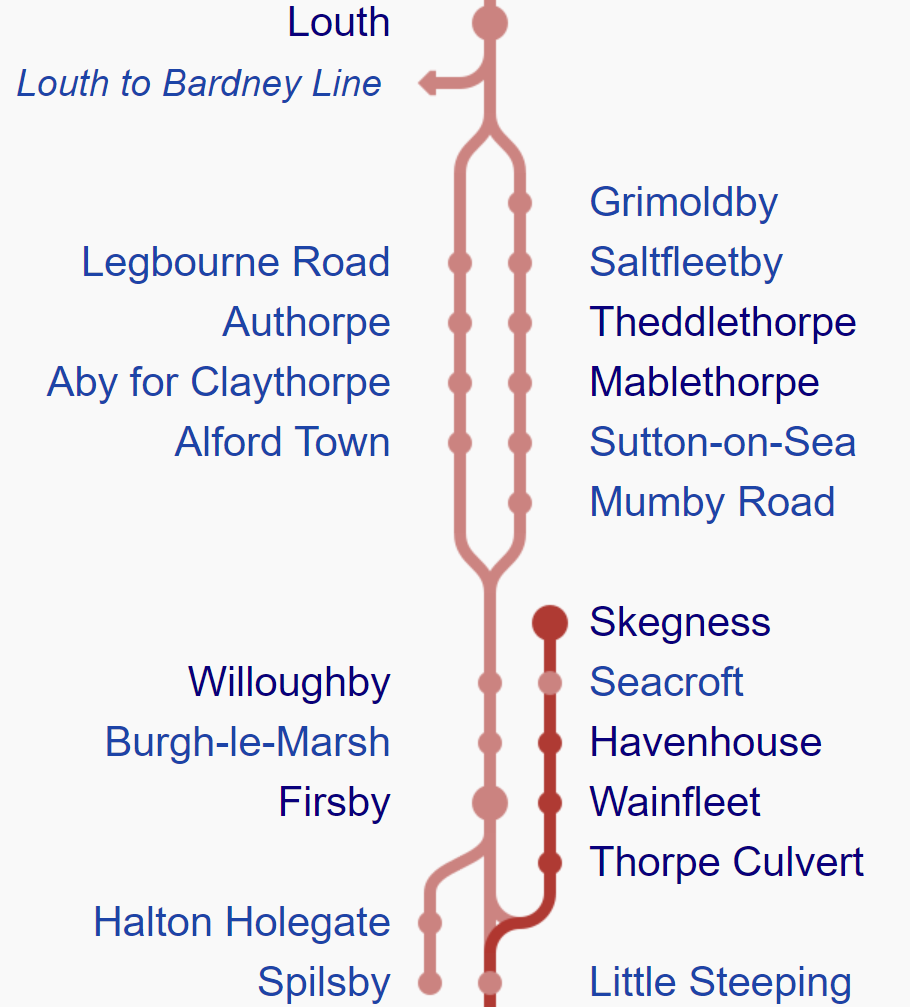
Note.
- North of Louth, the line used to connect to Grimsby Town, Immingham and Cleethorpes.
- The loop that goes through Mablethorpe.
- Boston is to the South.
- The Poacher Line between Boston and Skegness is the only section that is still open.
These Google Maps show sections and features of the route.
North From Spilsby Road Level Crossing
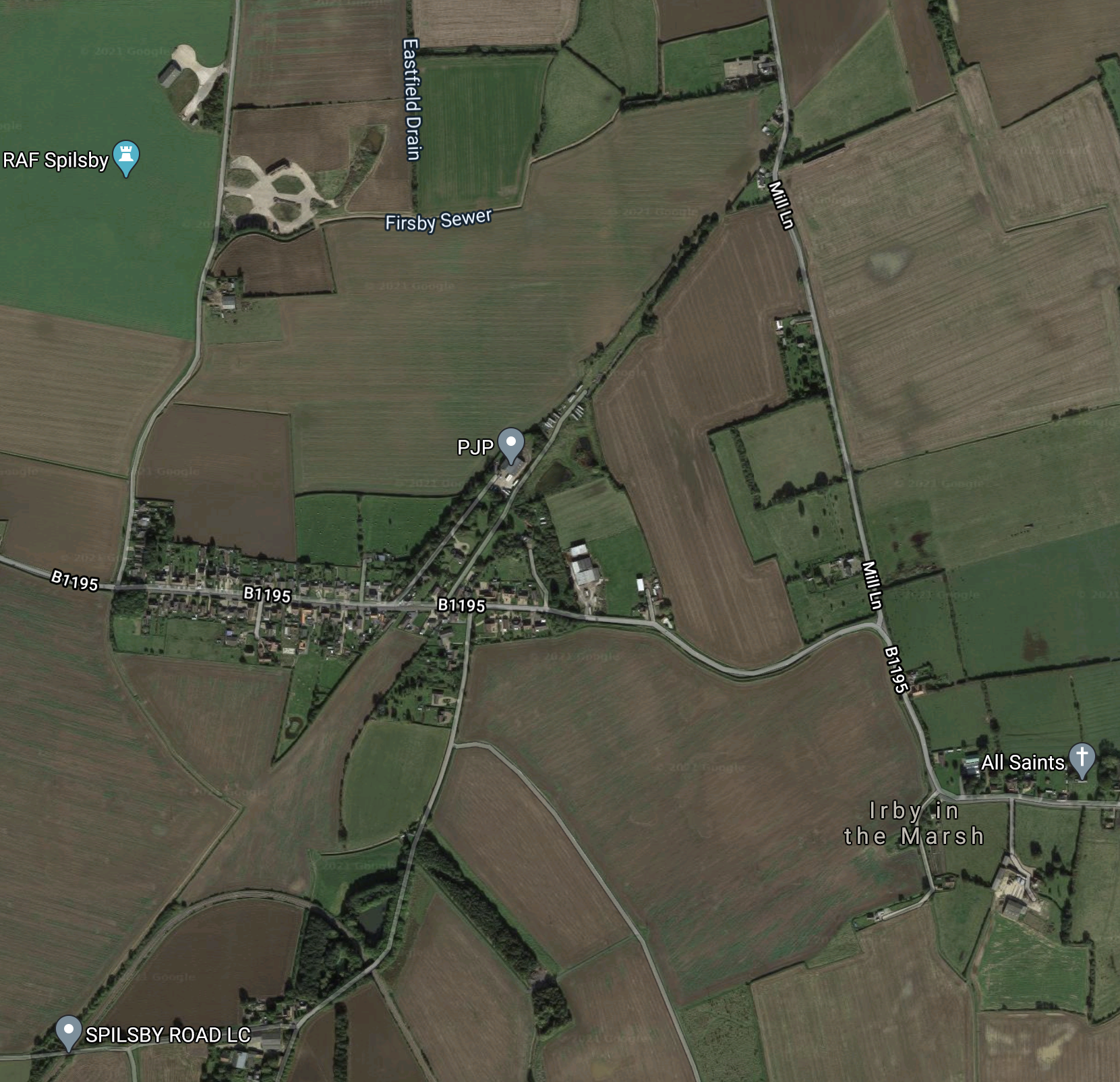
The Spilsby Road level crossing is in the South-West corner, with the track of the old railway between Firsby and Louth going to the North-East.
Junction With The Poacher Line
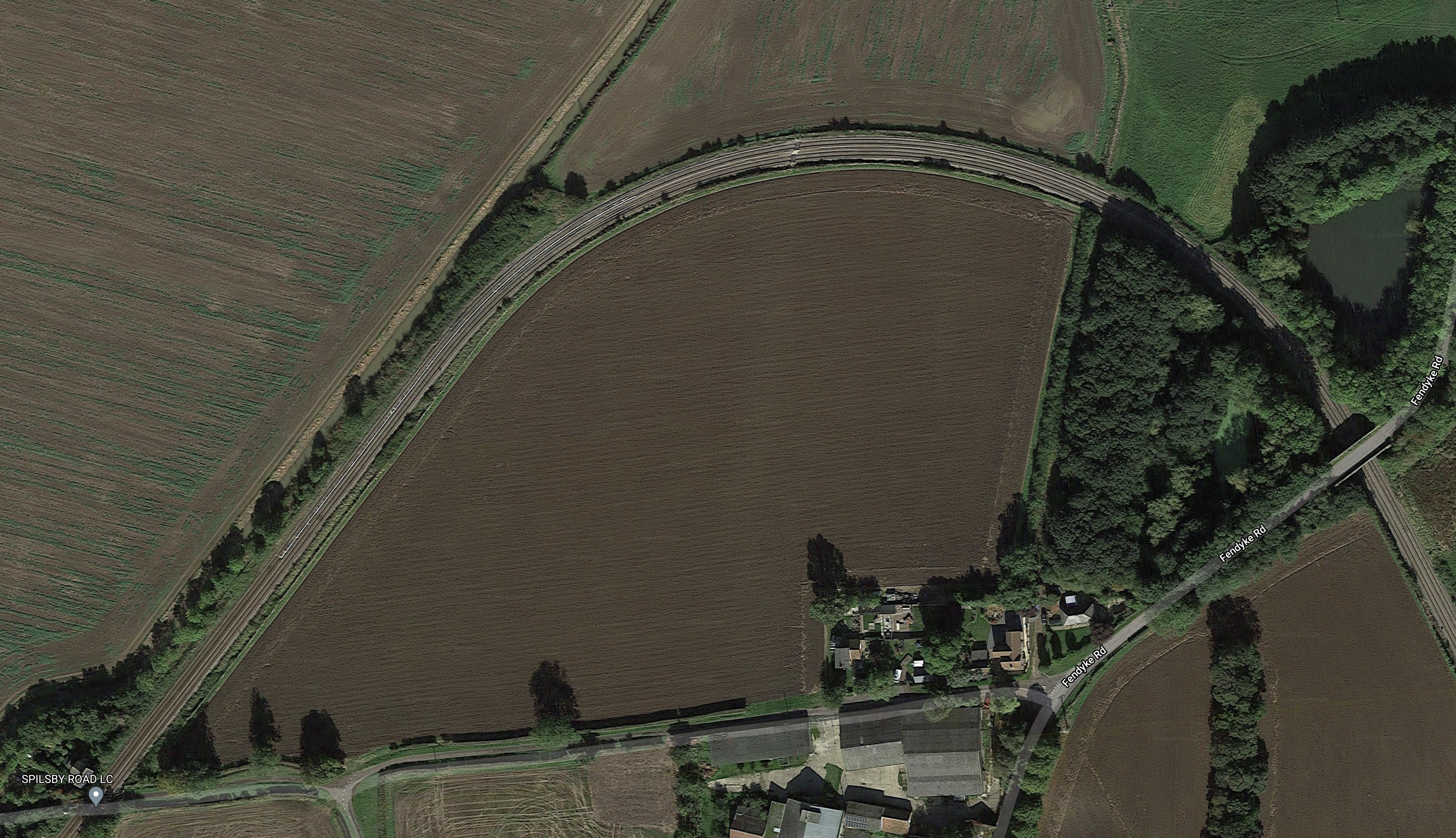
This is an enlargement of the South-West corner of the map.
- The Spilsby Road level crossing can be seen.
- The Poacher Line does a loop and goes South-East on its way to Skegness.
- It looks like Firsby station was quite important, with three platforms and lots of facilities.
A junction could be built here to connect the Firsby and Louth line to the Poacher Line.
Would a station built between the lines, be possible to provide interchange between the Louth and Skegness trains?
Willoughby Station
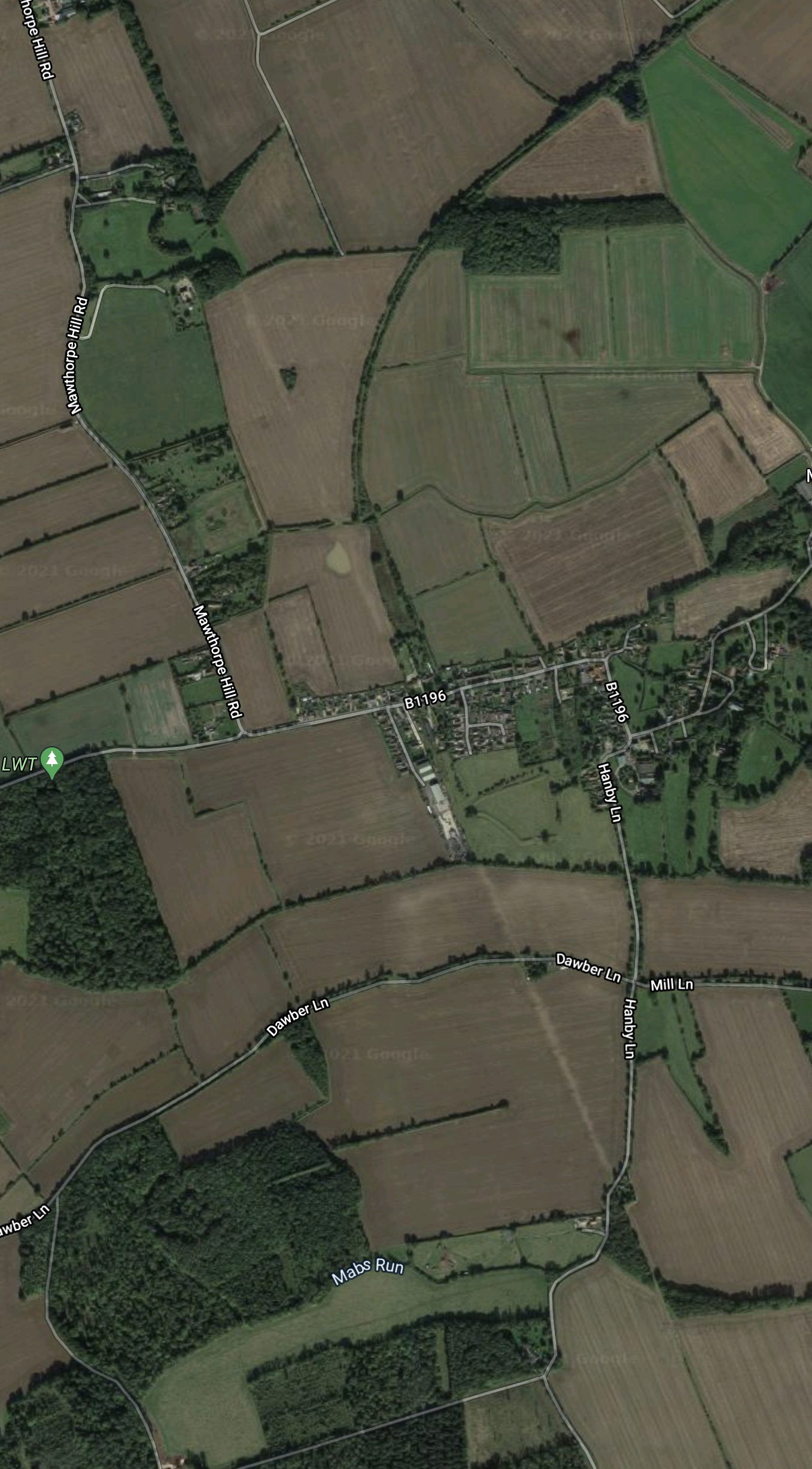
Note.
- The scar of the East Lincolnshire Railway can be followed from the South-East corner to the North-West corner of the map.
- The green scar of the Mablethorpe loop can be seen branching off from the East Lincolnshire Railway to the North-East corner of the map.
Could a station be rebuilt at Willoughby?
Alford And Alford Town Station

Note.
- The green scar of the East Lincolnshire Railway can be can be followed from the South-East corner to the North-West corner of the map.
- The town is Alford
- If you click on the map to enlarge it, you can see Station Road, which must have been the location of Alford Town station.
I would have thought a station would be needed.
Straight Between Alford And Louth
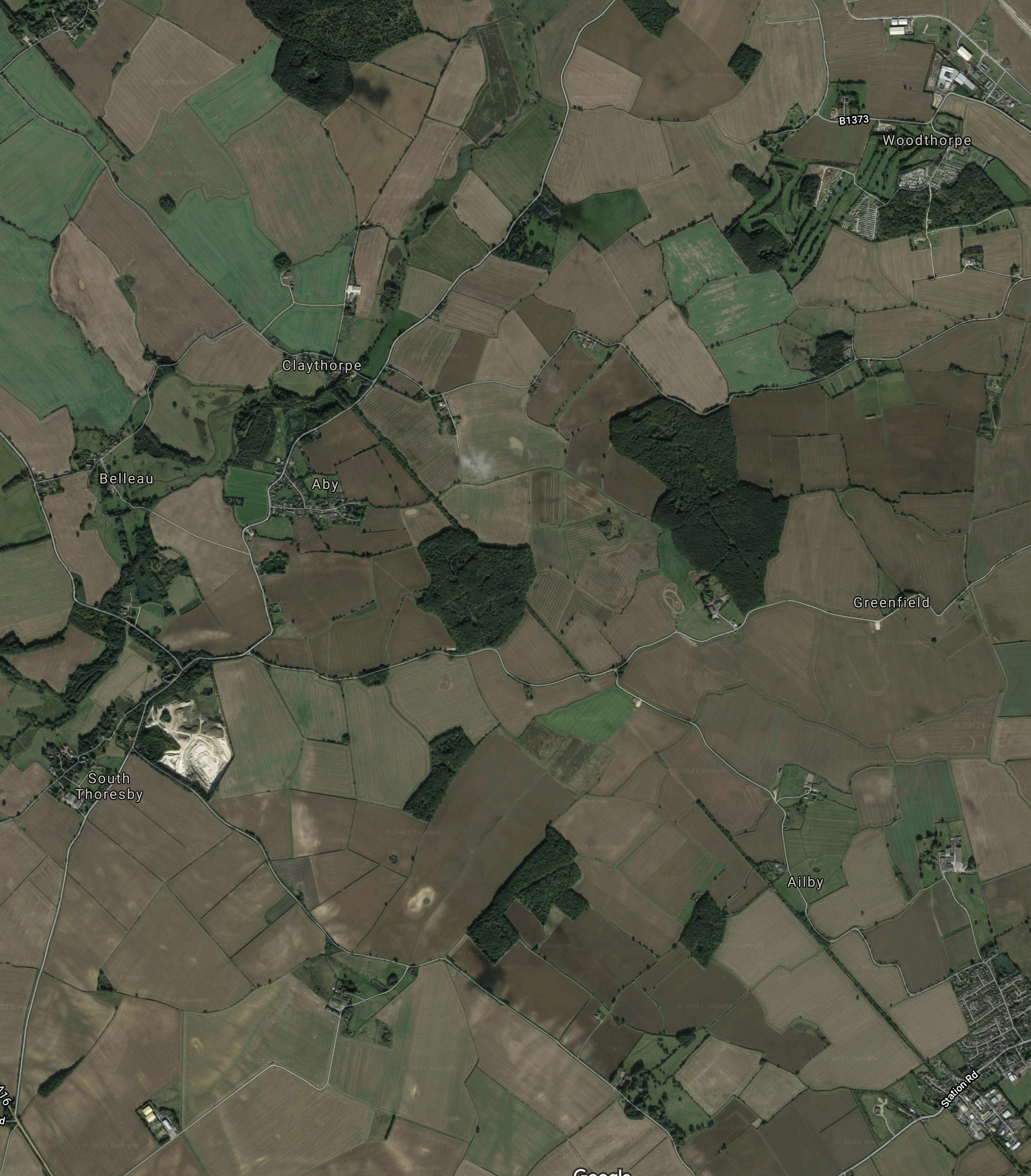
Note.
- The green scar of the East Lincolnshire Railway can be can be followed from the South-East corner to the North-West corner of the map.
- There are three stations on this section; Aby for Claythorpe, Authorpe and Legbourne Road.
This section would appear to be a rail engineer’s dream.
How many stations would be needed?
Louth

Note.
- The green scar of the East Lincolnshire Railway can be can be followed from the South-East corner to the North edge of the map.
- Louth is the largest town in Lincolnshire without a station.
It could be difficult to thread the line through the town.
Onward To Grimsby
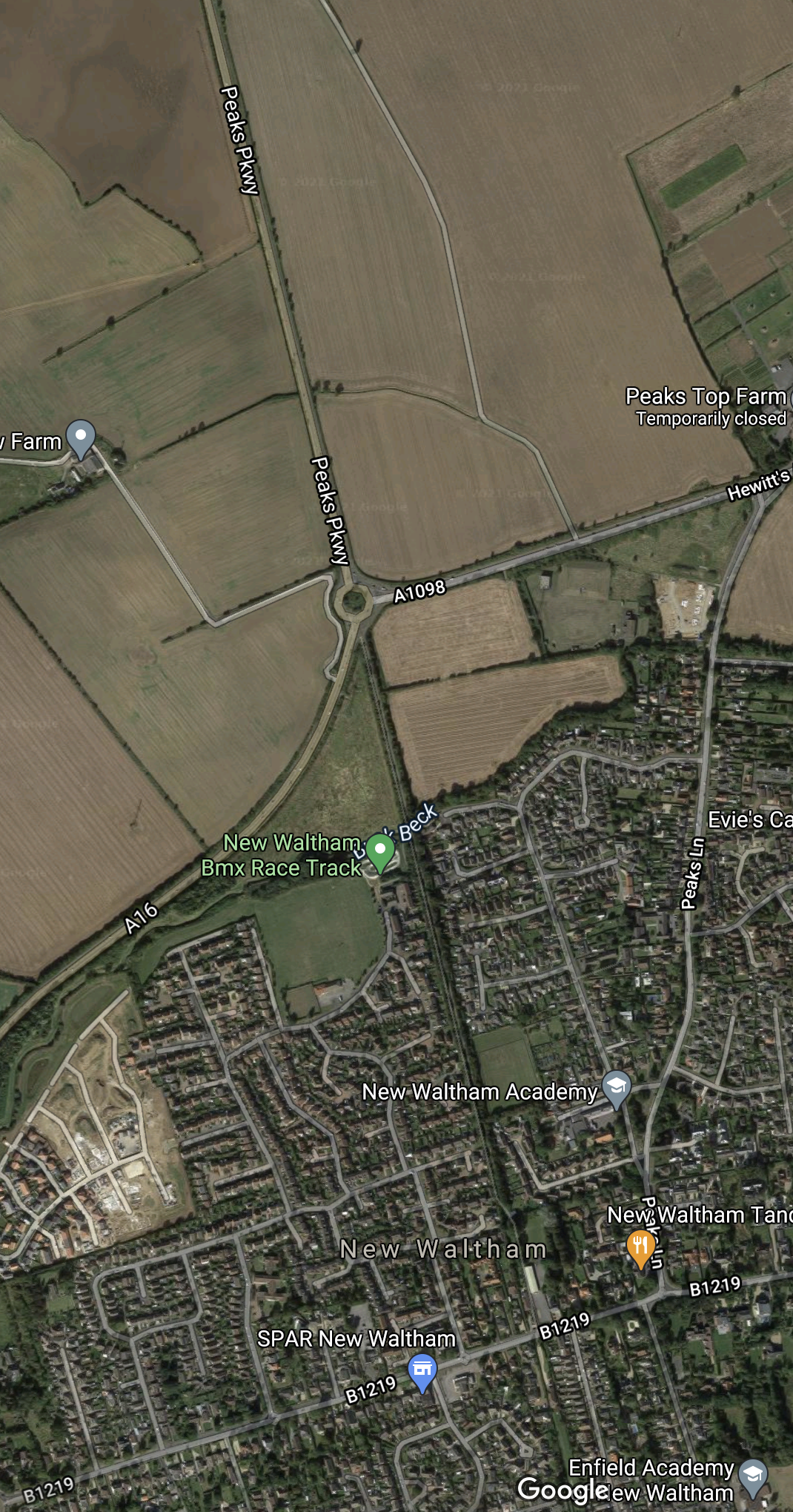
The map shows the final section of the route between Louth and Grimsby.
Note that from North of New Waltham, the track bed has been used for Peeks Parkway.
Does this mean that any reopened rail line between Firsby and Louth must end at New Waltham or Louth?
Grimsby Town Station And Centre
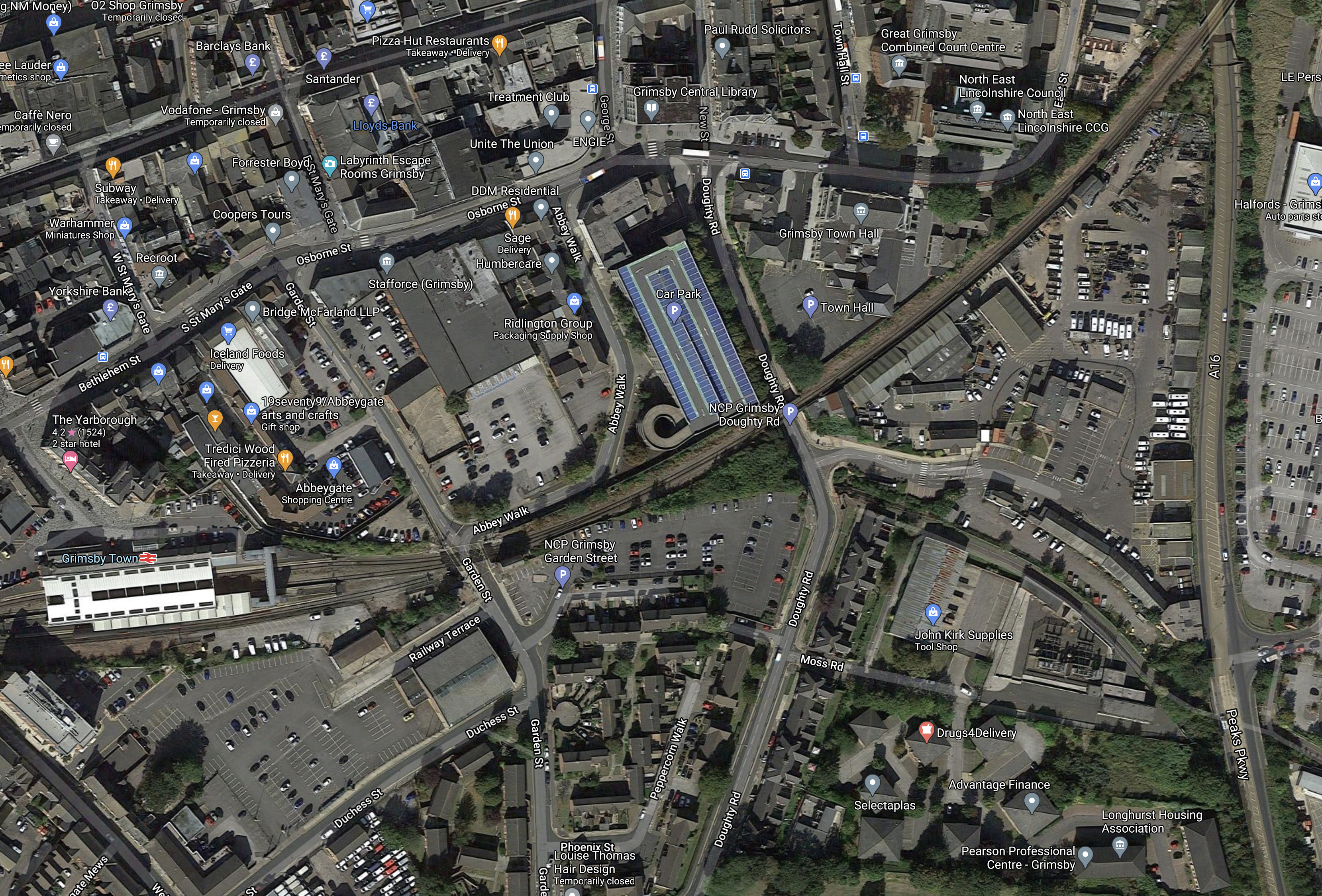
Note.
- Grimsby Town station is in the West.
- The rail line between Grimsby Town and Cleethorpes stations runs across the map.
- Peeks Parkway runs up the East side of the map.
- It looks to me, that this was once a large triangular junction, that also allowed trains to go between Grimsby Town an Louth stations.
Grimsby town centre seems to have been planned for cars and losers without cars can go elsewhere.
Thoughts On The Firsby And Louth Rail Link
I have a few thoughts on the possible design of a rail link between Firsby and Louth.
Should The Line Allow Freight Trains?
It might be a future need that freight trains will need to go between say Peterborough and Immingham, but I don’t think any use that route at present.
So other than the occasional maintenance train, I think the route could be freight-free at present.
Should The Line Terminate at Grimsby?
Consider.
- Grimsby is a town of 88,000
- It is a large centre for food processing, which needs large numbers of people.
- Grimsby is becoming an increasing important centre for the development of renewable energy.
- Grimsby and Boston are nearly fifty miles apart, which illustrates that Lincolnshire is not a small county.
I believe in a perfect world, Grimsby would have an hourly train service to Boston via Louth and several other stops.
Terminating at Louth rather than Grimsby would be like terminating all trans pennine services at Leeds.
So how would a line terminate at Grimsby?
- The missing side of the triangular junction could be rebuilt, so that traIns could run between Grimsby Town and Louth stations.
- Trains could terminate at a new Grimsby South station on the outskirts of the town.
- Trains could continue through Grimsby Docks station and terminate at Cleethorpes. with possibly an additional station in Grimsby town centre.
There is always an innovative tram-train solution, where with a small amount of street running, they sneaked into the town centre and called at Grimsby Town station and the major places people needed to visit.
This solution has been proposed for Ipswich and Felixstowe by East West Rail to increase the capacity on the Felixstowe Branch. I wrote about this scheme in Could There Be A Tram-Train Between Ipswich And Felixstowe?.
It would be challenging, but I think that it might be possible.
Failing that, I believe that a single-track could be sneaked along Peeks Parkway and go through the town centre to Grimsby Docks and Cleethorpes. stations.
The distance between Cleethorpes and New Waltham is about 7 miles.
A train would probably take about ten minutes.
Any town centre station could be a single platform.
Would An Hourly Service Be Enough?
An hourly service between Boston and Louth would probably be enough, but in an ideal world two trains per hour (tph) would probably be better.
- A single-track section between New Waltham and Cleethorpes could probably handle four tph working bi-directionally.
- Two tph is also regularly handled on single platform stations, like Galashiels and Newcourt.
- The long straight sections of the route offer lots of scope for loops.
My feeling, is the service should start hourly, but that it can be designed to be upgraded to two tph. Or it could even work at two tph at certain times of the day.
Could Boston and Cleethorpes Be Run In Fifty Minutes?
Consider.
- This time would be ideal for a service as it would give ten minutes to turn the trains at both ends.
- Boston and Cleethorpes would be the longest service that would be run and it is 50 miles.
- Fifty minutes would need an average speed including stops of 60 mph.
- Ipswich and Cambridge is run at an average of 43.2 mph with seven stops.
- The straight and flat Breckland Line has an operating speed of between 75 and 90 mph.
- Trains between Cambridge and Norwich average 53 mph with six stops.
I believe that the Firsby and Louth line could be built with an operating speed of up to 90 mph and fifty minutes between Boston and Cleethorpes could be possible.
Will Firsby And Louth Be Single Track?
I believe that the route can be single track with one platform stations.
This will save both space and costs and would probably allow two tph with careful design.
As there are long straight sections to the North of Alford, I suspect it wouldn’t be difficult to add passing loops, if they were required.
What Rolling Stock Would Be Used?
Lincolnshire is a renewable energy-rich county and because of offshore wind and the HumberZero project, Lincolnshire will probably have more wind power and green hydrogen per head of population, than any other area of the UK.
So undoubtedly, the trains will be zero carbon, which means, electrification, battery electric or hydrogen trains.
If new trains are in the budget, then the obvious candidate is the Hitachi Regional Battery Train.
The specification is given in this Hitachi infographic.

Note that it is a 100 mph train with a range of 56 miles.
It would need to be charged at both ends of the route.
In Cleethorpes Station – 16th September 2020, I suggested that electrification be added between Cleethorpes and Habrough stations should be electrified, so Cleethorpes and Manchester services could be run by Hitachi Regional Battery Trains.
This electrification could be used to charge the trains at Cleethorpes or a charging system could be installed.
This Google Map shows Boston station.
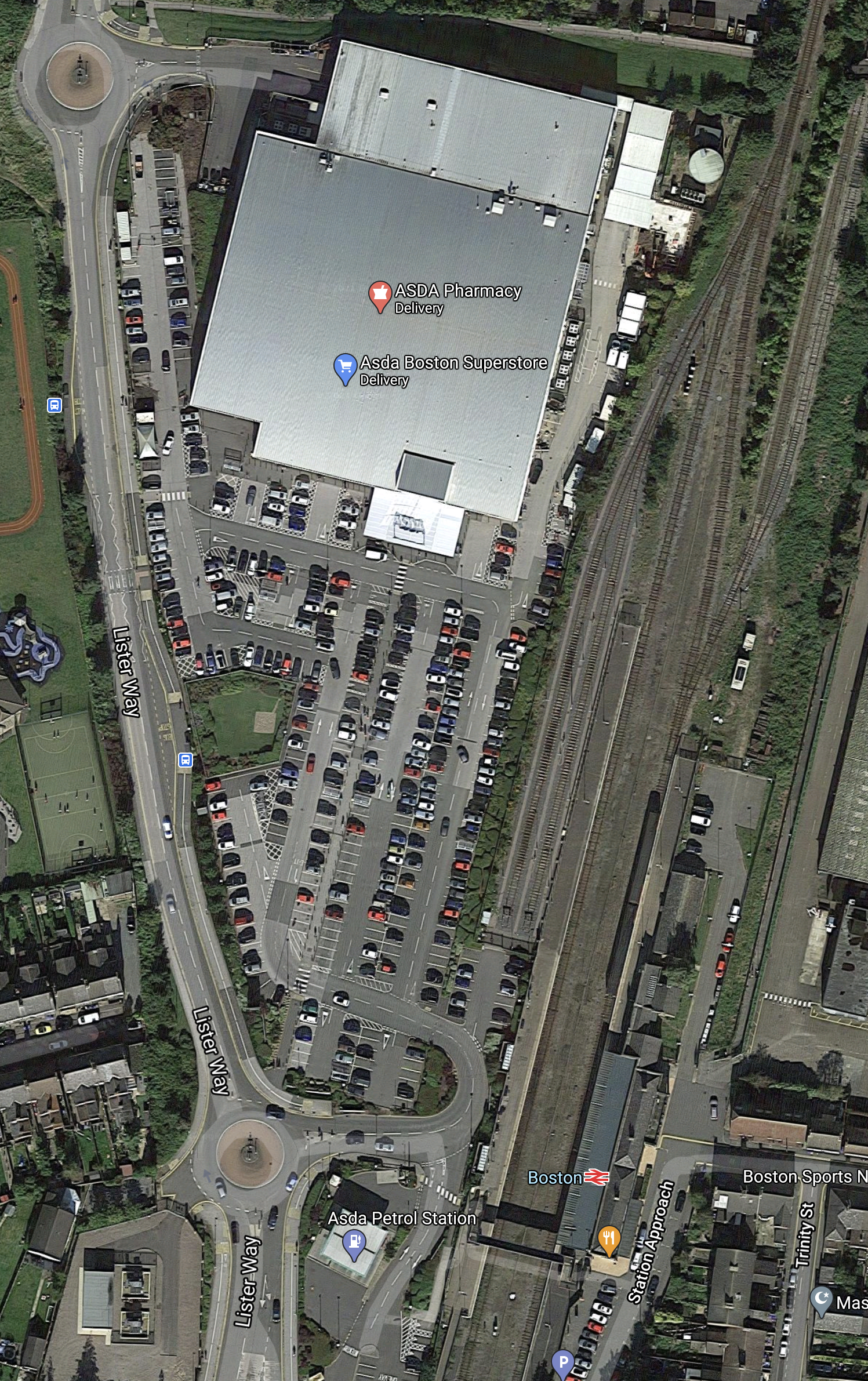
Note.
- The station has only two platforms.
- It looks like there were two North-facing bay platforms.
A charging system would be added to charge the trains.
The other obvious train for the route, would be Alstom’s Class 600 train, which is powered by hydrogen.
This is a visualisation of the train.
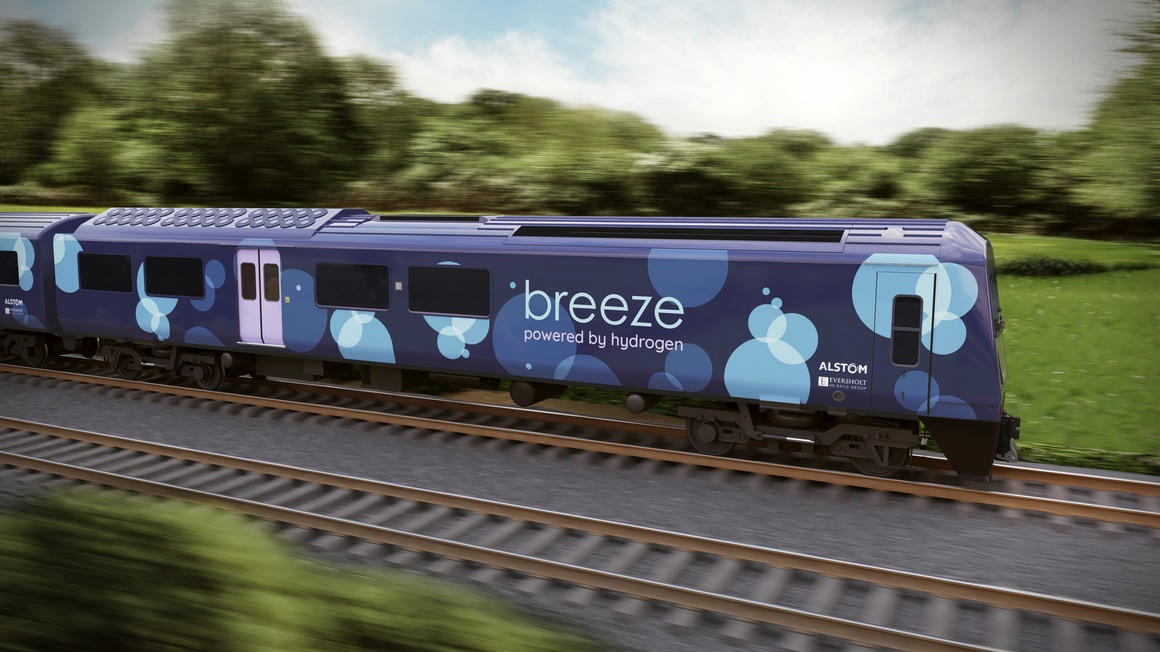
The specification has not been published yet, so there is no idea of the operating speed, although the range will be several hundred miles.
I speculated about the train in Breeze Hydrogen Multiple-Unit Order Expected Soon.
- There will be plenty of hydrogen available in Lincolnshire if the Humber Zero project goes to plan.
- Trains may be able to do several trips between refuelling.
- Trains will not need any infrastructure at Boston.
The forsby and Louth route would be an ideal route for both trains.
The Hitachi product will probably be slightly larger, faster and new!
WindH2 Hydrogen Project Commissioned In Germany
The title of this post, is the same as that as this article on Chemical Engineering.
This is the introductory paragraph.
Salzgitter AG, Avacon and Linde have taken an important step on the path to decarbonizing the steel industry. With the commissioning of “Wind Hydrogen Salzgitter – WindH2”, Germany’s only cross-sector project, green hydrogen will be produced in future with electricity generated by wind power on the site of the steelworks in Salzgitter.
This sentence describes the hydrogen production.
Avacon, a member of the E.ON Group, operates seven newly built wind turbines with an output totaling 30 megawatts on the premises of Salzgitter AG. Salzgitter Flachstahl GmbH has installed two Siemens 1.25 megawatt PEM electrolyzer units on its plant site that are capable of producing around 450 m3 per hour of ultra pure hydrogen.
It appears that Salzgitter AG are initially using hydrogen to cut their carbon footprint.
To get an impression of the size of the steelworks, look at this Google Map.
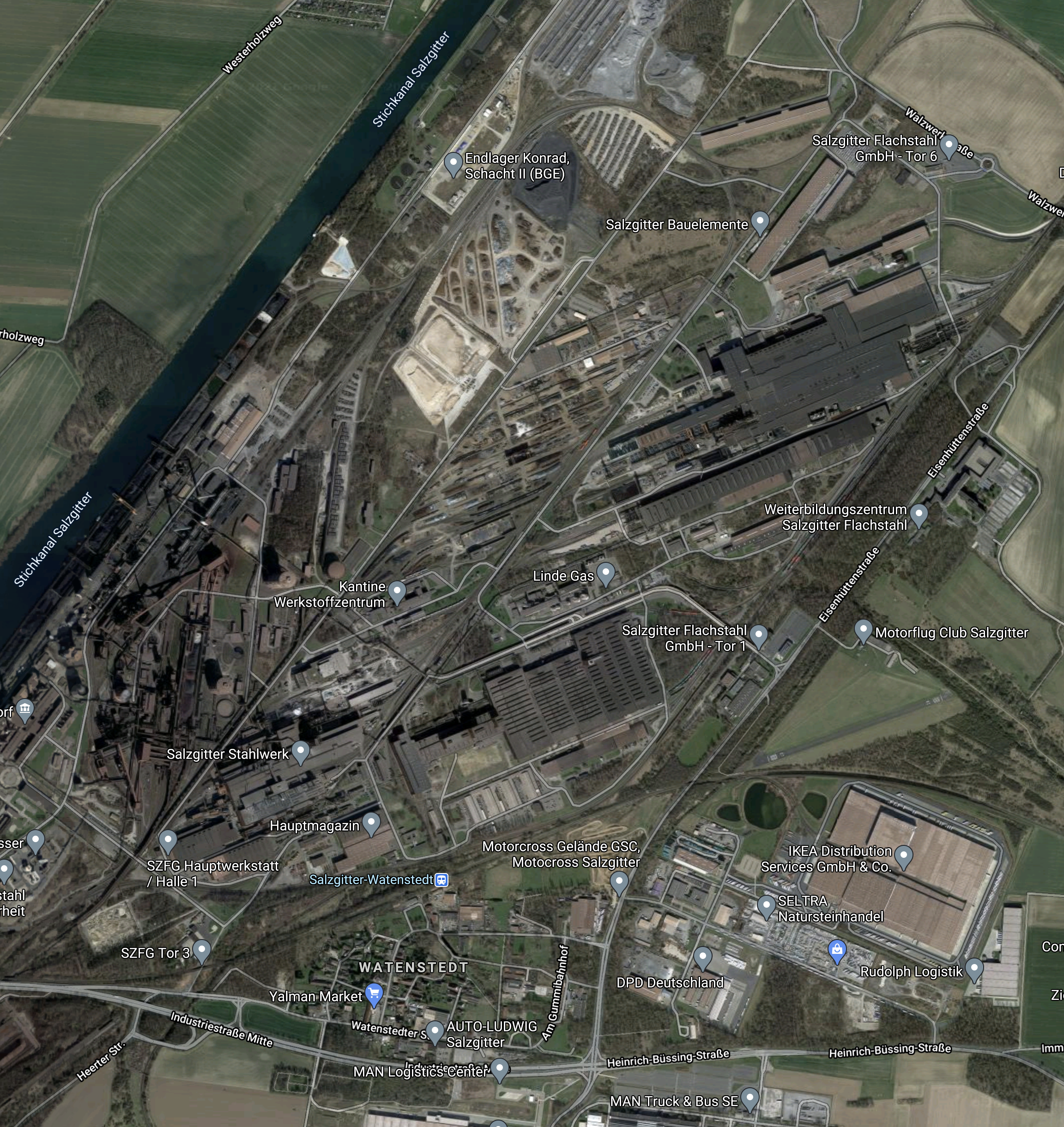
Note that if you click on the map to show it in a large scale, stahl is German for steel.
The article is certainly worth a read.
Morocco Could Produce Up To 4% Of World’s Green Hydrogen By 2030
The title of this post, is the same as that of this article on Morocco World News.
This is the first paragraph.
Morocco could produce up to 4% of the global demand for green hydrogen by 2030, according to the German Ministry of Economic Cooperation and Development.
They are aiming to produce 10,000 tonnes of hydrogen per year by 2025.
Wikipedia has an informative topic called Energy Policy in Morocco, which indicates the following.
- The country has little oil and gas reserves. Although it does have some oil shale, that could be developed.
- Wind, solar and hydro power are being developed.
- They could install a nuclear power station East of Rabat.
It sounds, that they could have an electricity structure, that would be ideal for the production of green hydrogen.
Conclusion
Morocco could be joining an ever growing club, which includes Australia, Saudi Arabia and Spain, who will produce hydrogen for export to countries like Germany, Japan and South Korea.
Get H2 Partners Propose Green Hydrogen Pipeline In Europe
The title of this post, is the same as that of this article on the Green Car Congress.
This is the first paragraph.
Seven companies from the GET H2 initiative in Europe want to build a cross-border pipeline for green hydrogen. From Lingen (Emsland) to Gelsenkirchen and from the Dutch border to Salzgitter, production, transport, storage and industrial acceptance of green hydrogen are to be connected in several steps between 2024 and 2030 under the umbrella of the overall project.
Note.
- I suspect this could be almost four hundred kilometres of hydrogen pipeline.
- The hydrogen will be used in refineries, for steelmaking and other industrial uses.
- It could avoid production of sixteen million tonnes of carbon dioxide by 2030.
This will need a lot of wind-turbines and electrolysers, most of which I expect will be in the German and Dutch parts of the North Sea.
 The Anonymous Widower