Will INEOS And Rolls-Royce Get Together Over Hydrogen Production?
It has been a busy week for press releases.
8th November 2020 – Rolls-Royce signs MoU With Exelon For Compact Nuclear Power Stations
9th November 2020 – Rolls-Royce signs MoU with CEZ For Compact Nuclear Power Stations
9th November 2020 – INEOS Launches A New Clean Hydrogen Business To Accelerate The Drive To Net Zero Carbon Emissions
Does the timing of these three press releases indicate that there is possible co-operation between the INEOS and Rolls-Royce?
These are my thoughts.
Electricity Needs Of Integrated Chemical Plants
Integrated chemical plants, like those run by INEOS need a lot of electricity.
When I worked for ICI Plastics in the early 1970s, one of the big projects at Wilton works was the updating of the Wilton power station.
- Fifty years later it is still producing electricity.
- It is fired by a variety of fuels including coal, oil, gas and biomass.
- It even burned 110,000 tonnes of cow fat (tallow) from the carcasses of animals slaughtered during the BSE Crisis of 1996.
- It produces 227 MW of electricity.
- It also produces around 4,000,000 tonnes of steam per year for the plants on the complex.
- Wilton 10 is a 2007 addition to the station, that burns 300,000 tonnes of a combination of sustainable wood, sawmill waste and otherwise unusable wood offcuts a year.
- Wilton 11 is a 2016 addition to the station, that burns domestic waste, which arrives by train from Merseyside.
ICI was proud of its power station at Wilton and there were regular rumours about the strange, but legal fuels, that ended up in the boilers.
Integrated chemical plants like those on Teesside can be voracious consumers of electricity and steam.
I can envisage companies like INEOS boosting their electricity and steam capacity, by purchasing one of Rolls-Royce’s small modular reactors.
A Look At Teesside
If you look at the maps of the mouth of the Tees, you have the Hartlepool nuclear power station on the North side of the river.
- It was commissioned in 1983.
- It can generate 320 MW of electricity.
- It is expected to close in 2024.
This Google Map shows the mouth of the Tees.
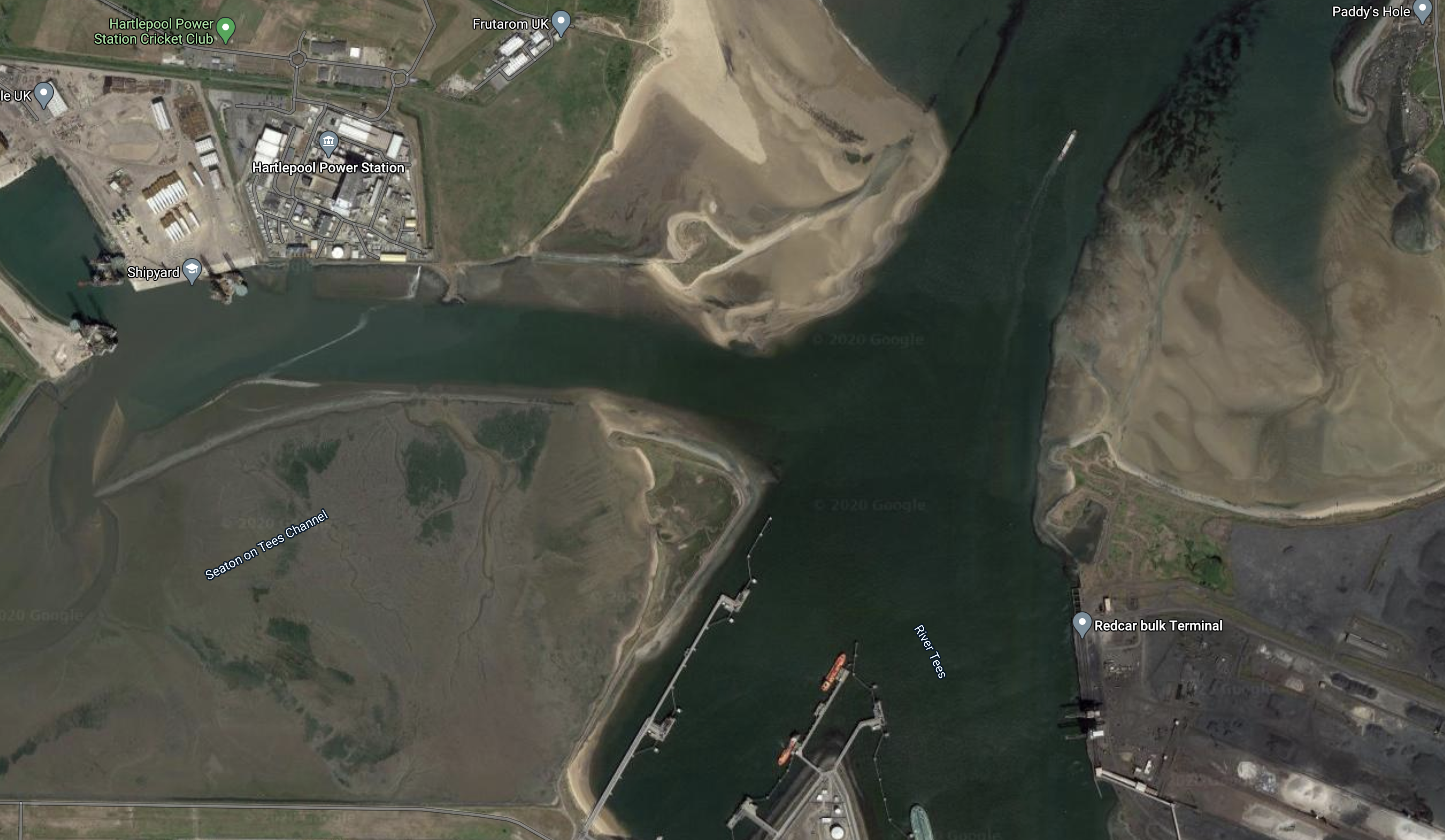
Note.
- Hartlepool power station is in the North-West corner of the map.
- The Hartlepool site is probably about forty acres.
- Wilton power station is on the South side of the Tees in the Wilton International site.
I can see, when Hartlepool power station closes, that more power will be needed on Teesside to feed the various industries in the area.
Some will come from offshore wind, but could a fleet of perhaps four of Rolls-Royce’s small modular reactors be built on a decommissioned Hartlepool power station site to replace the output of the current station?
If built in a planned sequence to correspond to the expected need, there are savings to be made because each unit can be commissioned, when they are completed and used to generate cash flow.
I can even see INEOS building a large electrolyser in the area, that is powered either by wind or nuclear power, according to what power is available and the various costs.
An Integrated Small Modular Nuclear Reactor And Electrolyser
Some countries don’t have good resources to exploit for renewable power.
Will a small modular nuclear reactor, be pared with a large electrolyser to produce hydrogen for feedstock for chemical plants and fuel for transport?
How Much Hydrogen Would A Small Modular Nuclear Reactor Produce?
Consider.
- One of Rolls-Royce’s small modular nuclear reactors has a power output of 440 MW.
- It takes 23 MWh of electricity to create ten tonnes of hydrogen.
This would create 4,600 tonnes of hydrogen in a day.
That is a lot of zero-carbon chemical feedstock to make fertiliser, plastics, pharmaceuticals and other chemicals and fuel for heavy transport.
Conclusion
I will be very surprised if INEOS were not talking to Rolls-Royce about using small modular nuclear reactors to generate the enormous quantities of electrical power and steam, needed to produce chemicals and fulfil their ambition to be a world leader in the supply of hydrogen.
INEOS Launches A New Clean Hydrogen Business To Accelerate The Drive To Net Zero Carbon Emissions
The title of this post, is the same as that of this press release from inovyn, which is an INEOS company.
The press release starts with these points.
- The targets set out by the UN and National Governments around the world requires concrete action. INEOS is aiming not only to contribute by decarbonising energy for its existing operations, but also by providing hydrogen that will help other businesses and sectors to do the same.
- The new business will be based in the UK and will invest in ‘first intent’ Clean Hydrogen production across Europe.
- The production of hydrogen based on electrolysis, powered by zero carbon electricity, will provide flexibility and storage capacity for heat and power, chemicals and transport markets.
- The European Union Hydrogen Strategy, which outlines an infrastructure roadmap for widespread utilisation of hydrogen, across Europe by 2030, present new opportunities for the business.
- Geir Tuft CEO INOVYN said, “INEOS is uniquely placed to play a leading role in developing these new opportunities, driven by emerging demand for affordable, low-carbon energy sources, combined with our existing capabilities in operating large-scale electrolysis.”
With revenue in 2019 of $85 billion in 2019, INEOS has the financial resources to make their ambitions come true.
These are my thoughts on statements in the press release.
Geir Tuft’s Statement
Geir Tuft is reported in the press release as saying.
INEOS is uniquely placed to play a leading role in developing these new opportunities, driven by emerging demand for affordable, low-carbon energy sources, combined with our existing capabilities in operating large-scale electrolysis.
This is the first paragraph of the Wikipedia entry for electrolysis.
In chemistry and manufacturing, electrolysis is a technique that uses direct electric current (DC) to drive an otherwise non-spontaneous chemical reaction. Electrolysis is commercially important as a stage in the separation of elements from naturally occurring sources such as ores using an electrolytic cell. The voltage that is needed for electrolysis to occur is called the decomposition potential.
From my experience of working in ICI’s hydrogen plant at Runcorn in the 1970s and my knowledge of the technology and companies involved in the production of hydrogen, there are two standard routes to produce hydrogen by electrolysis.
- Water can be electrolysed as in the classic school physics experiment to produce hydrogen and oxygen.
- Brine can be electrolysed to produce hydrogen, chlorine, sodium metal and sodium hydroxide.
I worked as an instrument engineer in a plant, where brine was electrolysed using the Caster-Kellner process. As the process uses mercury, it is a process that is not without problems. There is a History section in the Wikipedia entry for the Castner-Kellner process, from where this was extracted.
The mercury cell process continues in use to this day. Current-day mercury cell plant operations are criticized for environmental release of mercury leading in some cases to severe mercury poisoning as occurred in Japan Minamata_disease. Due to these concerns, mercury cell plants are being phased out, and a sustained effort is being made to reduce mercury emissions from existing plants.
My work in the plant, involved developing instruments to measure the mercury in the air inside the plant. I was also developing other instruments and programming a Ferranti Argus 500 computer.
Because of the death of her father, C wasn’t happy in Liverpool and when the chance came of a transfer to ICI Plastics at Welwyn Garden City, I took it.
In his statement Geir Tuft says this.
Combined with our existing capabilities in operating large-scale electrolysis.
Large-scale electrolysis was certainly handled professionally in 1970 and I’m certain that INEOS, which now owns the Runcorn plant, handles the hydrogen just as well, if not better with the help of modern technology.
Hydrogen As A By-Product
In some ways, fifty years ago, the hydrogen was considered a by-product and to some a nuisance, as I don’t think, there was much of a mass market for the gas.
I used to see it being taken away in specialist trailers, but there didn’t seem to be a major use.
300,000 Tonnes Of Clean Hydrogen
This paragraph of the press release, outlines the structure of the business.
INEOS has today launched a new business to develop and build Clean Hydrogen capacity across Europe, in support of the drive towards a zero-carbon future. INEOS currently produces 300,000 tonnes of hydrogen a year mainly as a co-product from its chemical manufacturing operations.
Note that co-product is used, but I suspect in many places they have too much of it, so new markets are welcome.
I have used a figure of 23 MWh, as being needed to obtain ten tonnes of hydrogen, but I can’t find where I obtained it. If it is correct then INEOS will need 690 GWh of electricity.
INEOS, Electrolysis And Hydrogen
This paragraph of the press release, outlines the relationship between INEOS, electrolysis and hydrogen
Through its subsidiary INOVYN, INEOS is Europe’s largest existing operator of electrolysis, the critical technology which uses renewable energy to produce hydrogen for power generation, transportation and industrial use. Its experience in storage and handling of hydrogen combined with its established know-how in electrolysis technology, puts INEOS in a unique position to drive progress towards a carbon-free future based on hydrogen.
All they need is the renewable energy, to add to their expertise in turning it into hydrogen.
INEOS’s Vision
This paragraph of the press release, outlines INEOS vision for hydrogen.
INEOS is already involved in several projects to develop demand for hydrogen, replacing existing carbon-based sources of energy, feedstocks and fuel. It expects to develop further partnerships with leading organisations involved in the development of new applications. INEOS will also work closely with European Governments to ensure the necessary infrastructure is put in place to facilitate hydrogen’s major role in the new Green Economy.
It is certainly a comprehensive vision.
The Conclusion Of The Press Release
Wouter Bleukx, Business Unit Manager Hydrogen has said this.
Hydrogen is an important part of a climate neutral economy that has been discussed for decades. Finally, a hydrogen-fuelled economy is within reach as transportation in the UK, Germany, France and other countries begins to run on this carbon free technology. With extensive experience in electrolysis, INEOS is uniquely placed to support these new opportunities, driven by emerging demand for affordable zero-carbon energy sources.
You can’t say the company lacks ambition.
Conclusion
This looks to me to be ambition and disruptive innovation on a grand scale.
But it is a plan that can only get bigger and more far reaching.
If the company succeeds, I believe, it will bring hydrogen for all.
H2U Eyre Peninsula Gateway Hydrogen Project Begins Largest Green Ammonia Plant
The title of this post, is the same as that of this article on Hydrogen Fuel News.
- South Australia will be creating the largest green ammonia plant in the world.
- It will make 40,000 tonnes of green ammonia every year.
- The plant will be powered totally by renewable energy.
- At its heart will be a 75 MW hydrogen electrolyser.
This paragraph sums up the main objective of the plant.
According to Dr. Attilio Pigneri, H2U CEO, the project will play an important role in the ongoing development of the emerging green hydrogen and green ammonia markets.
It appears a lot of the green ammonia will be exported to Japan.
What Is Green Ammonia?
It is just ammonia produced by renewable energy. This is the first paragraph of the Wikipedia entry for ammonia.
Ammonia is a compound of nitrogen and hydrogen with the formula NH3. A stable binary hydride, and the simplest pnictogen hydride, ammonia is a colourless gas with a characteristic pungent smell. It is a common nitrogenous waste, particularly among aquatic organisms, and it contributes significantly to the nutritional needs of terrestrial organisms by serving as a precursor to food and fertilizers. Ammonia, either directly or indirectly, is also a building block for the synthesis of many pharmaceutical products and is used in many commercial cleaning products. It is mainly collected by downward displacement of both air and water.
It is a very useful chemical compound and it is now being developed as a zero-carbon fuel, as I wrote in The Foul-Smelling Fuel That Could Power Big Ships.
It can also be used as a refrigerant.
One of the most amazing pieces of engineering, I ever saw was a very old barn, where a farmer stored vast tonnages of apples. It was kept cool, by a refrigeration plant certainly built before the Second World War or possibly even the First, which used ammonia as the refrigerant.
Now that’s what I call engineering!
Hydroflex Takes To The Main Line
The title of this post is the same as that of an article in the November 2020 Edition of Modern Railways.
This is the opening paragraph.
Hydroflex, the UK;s first full-size hydrogen train, made its debut on the main line on 21 September, travelling from Long Marston to Evesham and back.
This looks like a good start.
I am not surprised that the conversion was designed and built by Birmingham University.
Look at this picture of myself in front of a detector in the Large Haldron Collidor at CERN in Geneva.

Much of the detector was built in the workshops at Liverpool University.
The quality of engineering in most universities is very high, which is surely a good omen for the future.
Work in Birmingham on Hydroflex seems to be proceeding apace, with the following objectives.
- More automation.
- Moving the hydrogen drive train components to rafts under the driving cars.
- Improving operating speed from the current 50 mph.
There is also this significant paragraph that quotes Helen Simpson of Porterbrook.
‘At Porterbrook we want to present a fleet of hydrogen trains as a commercial offering to operators’ Ms. Simpson adds, noting that moving equipment out of passenger saloons is an important element of this. Porterbrook will apply learning from its Class 769 electric/diesel bi-mode units, which have placed diesel engines beneath the driving vehicles. Ms. Simpson does not rule out retro-fitment on other classes of train, but notes a lot of work has been undertaken on converting 319s’.
The big difference between the Hydroflex and the Alstom Coradia iLint, is that the Hydroflex retains the capability to use overhead electrification, so the hydrogen power can be used as a range extender.
Liquid Hydrogen Tested As An Auto Fuel
The title of this post is the same as that of this article on the Lethbridge Herald.
I find it strange that I have only picked up this story from a local newspaper in Alberta.
Lethbridge is a city, with a population of a bit over 100,000. It doesn’t seem to have much to do with Alberta’s oil industry, which might see hydrogen as a threat.
This is the introductory paragraph.
A recent demonstration project was evaluated for a hydrogen-fuelled vehicle by the U.S. Department of Energy Division. This demonstration will be applicable to other means of transportation such as trucks and trains.
This paragraph describes the conversion.
They used a 1979 Buick Century four-door sedan with 3.8-litre displacement, turbocharged V-6 engine. This vehicle provided a good compromise on trunk space for installation of the DFVLR tank, passenger accessibility for demonstration, engine compartment space for versatility in selection of substitute engines, available engine sizes, efficiency and suitability for modification of hydrogen operation.
I am left with the impression, after reading the article, that it might be possible for large American style cars to be converted to hydrogen.
Hydrogen Fuel Cell Train To Be Developed With EU Funding
The title of this post, is the same as that of this article on Railway Gazette.
This is the introductory paragraph.
The FCH2RAIL consortium’s €14m project to design, develop and test a prototype hydrogen fuelled train has been awarded a €10m grant from the European Commission’s Fuel Cells & Hydrogen Joint Undertaking as part of the Horizon 2020 Programme.
The FCH2RAIL consortium is led by CAF, who have a factory at Newport in South Wales.
CAF are actively working on a battery electric version of their Class 331 train for the UK, which I wrote about in Northern’s Battery Plans.
The battery-electric Class 331 train will involve adding an extra car with batteries.
Will CAF be looking to apply this hydrogen technology developed from the FCH2RAIL programme on UK-sized trains?
They could add a fourth car to a Class 331 train with all the necessary hydrogen gubbins.
Ireland’s First Green Hydrogen Project To Come On Stream ‘In Weeks’
The title of this post, is the same as that of this article on the Irish Times.
This is the first two paragraphs.
Belfast is set to receive Ireland’s first hydrogen-powered double-decker buses in coming weeks using fuel coming from wind energy generated in nearby north Antrim.
The initiative is the first “green hydrogen” project on the island of Ireland and the first step to decarbonise Northern Ireland’s public transport by 2040, according to Mark Welsh, energy services manager with Energia, which is generating the hydrogen at its wind farm near Ballymena.
Green hydrogen is produced by an electrolyser powered by renewable electricity.
The article gives a good summary of the use of hydrogen in Ireland in the future.
But isn’t all hydrogen created and used on the island of Ireland green?
Plans For £45m Scottish Green Hydrogen Production Plant Revealed
The title of this post, is the same as that of this article on H2 View.
This is the opening paragraph.
UK-built hydrogen buses powered by Scottish-made green hydrogen, transporting COP26 delegates around Glasgow in 2021: that’s the vision of a new £45m project unveiled today (3rd Nov).
Some details of the plant are also given.
- It will be built at Lesmahagow.
- It will be co-located with wind turbines and solar panels.
- It will have an initial capacity of 9 MW, with a possible increase to 20 MW.
- It will produce 800 tonnes of hydrogen per annum.
- The company behind it, is called Hy2Go
It sounds like the electrolyser is the one mentioned in Green Hydrogen For Scotland, which was announced in a press release from ITM Power.
Although, that electrolyser may be situated at Whitelee Wind Farm, which is a few miles closer to the coast.
Will Scotland Have Two Electrolysers To the South Of Glasgow?
Consider.
- Whitelee is the UK’s largest onshore wind farm with a capacity of 539 MW.
- It is planned to install a large battery at Whitelee. See Super Battery Plan To Boost UK’s Biggest Onshore Windfarm on this page on the Scottish Power web site.
- Lesmahagow’s turbines and solar panels have not been installed yet.
- Much of the wind power in the South of Scotland and the North of England is mainly onshore, rather than onshore.
- The location of the Lesmahagow electrolyser will be close to the M74.
- The location of the Whitelee electrolyser will be close to the M77.
- There is a good motorway network linking the electrolysers’ to the major cities in the South of Scotland and the North of England.
- Newcastle might be a bit difficult to supply, but that may receive hydrogen from Teesside or the Humber.
Perhaps, the economics of onshore wind, with electrolysers nearby, makes for an affordable source of plentiful green hydrogen.
I would expect that if Scotland built two large electrolysers South of Glasgow, they wouldn’t have too much trouble using the hydrogen to reduce the country’s and the North of England’s carbon footprint.
Have These Two Projects Merged?
Consider.
- The Lesmahagow site is stated in the article to possibly have two electrolysers with a total capacity of 20 MW.
- The Lesmahagow site is in an excellent position close to a junction to the M74 motorway, with easy access to Edinburgh, Glasgow and England.
- The Lesmahagow site could probably have a pipeline to a hydrogen filling station for trucks and other vehicles on the M74.
- The Whitelee wind farm is huge.
- Lesmahagow and Whitelee are about twenty miles apart.
- More wind turbines might be possible between the two sites.
- There must also be a high-capacity grid connection at Whitelee.
Combining the two projects could have advantages.
- There could be cost savings on the infrastructure.
- It might be easier to add more wind turbines.
There may be time savings to be made, so that hydrogen is available for COP26.
Conclusion
Scotland is making a bold green statement for COP26.
A network of very large hydrogen electrolysers is stating to emerge.
- Glasgow – Lesmahagow.
- Herne Bay for London and the South East – Planning permission has been obtained.
- Humber – In planning
- Runcorn for North West England – Existing supply
- Teesside – Existing supply
Joe Bamford’s dream of thousands of hydrogen-powered buses, is beginning to become a reality.
Mitsubishi Power Receives Order For First Solid Oxide Fuel Cell In Europe
The title of this post is the same as that of this article on Fuel Cells Works.
A fuel cell converts a fuel like hydrogen or natural gas directly into heat and electricity, so what is a solid state fuel cell?
Wikipedia has an entry for solid state fuel cell, that appears to be professionally written.
The entry sums up their advantages and disadvantages in this sentence.
Advantages of this class of fuel cells include high combined heat and power efficiency, long-term stability, fuel flexibility, low emissions, and relatively low cost. The largest disadvantage is the high operating temperature which results in longer start-up times and mechanical and chemical compatibility issues.
They sound to be a tricky engineering challenge.
Teeside’s Refurbished Trains
On my trip around Teeside, I took four trains.
There was none of the usual rubbish, that I have endured in the North like this scrapyard special at Carlisle.
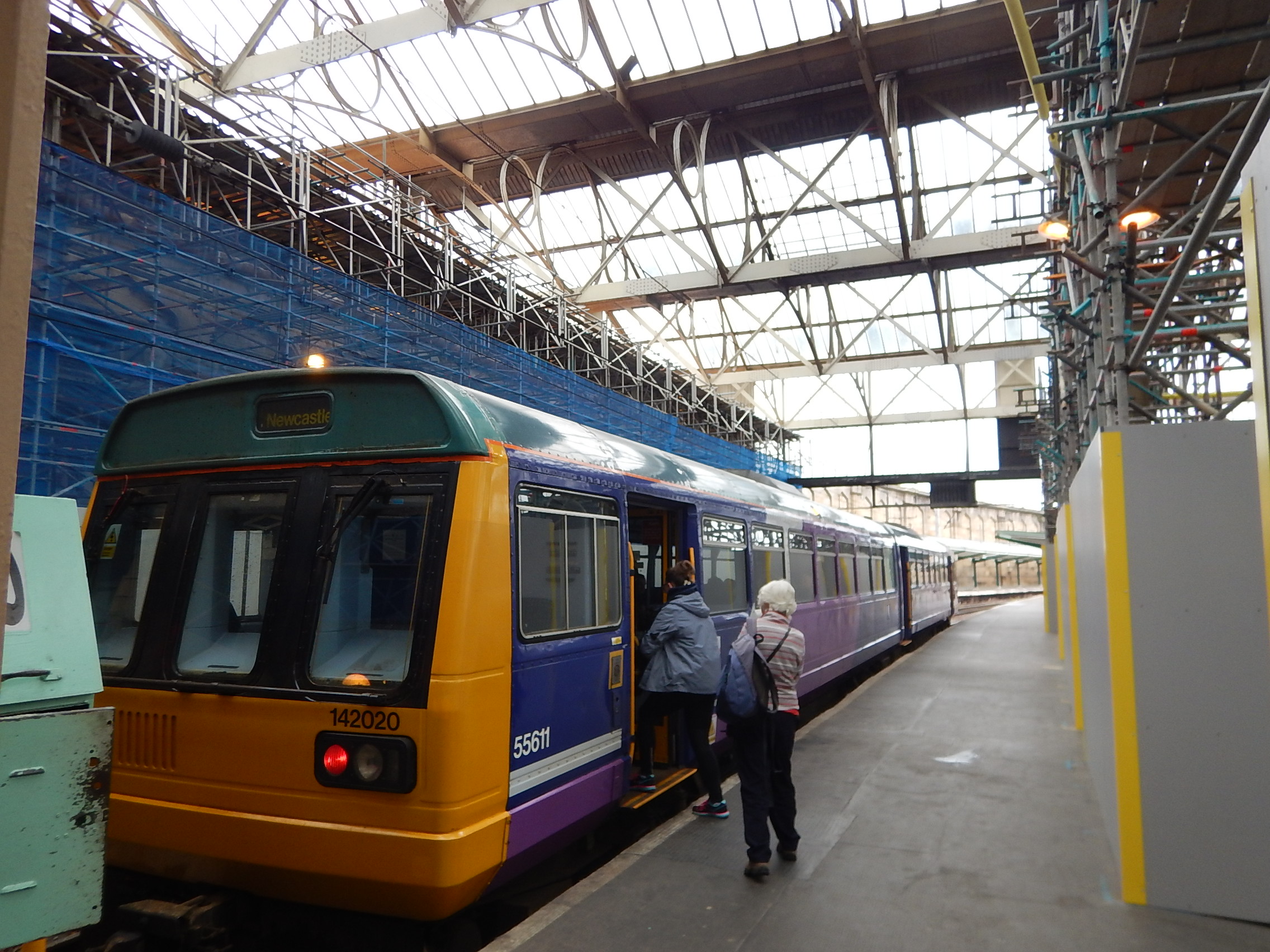
All trains were refurbished Class 158 trains.








They were a lot better, with tables and clean, working toilets.
But will they get replaced with hydrogen or updated to zero-carbon trains?
Hydrogen Trains
In Fuelling The Change On Teesside Rails, I talked about the local services on Teesside being run by a fleet of hydrogen trains, based on an article in RAIL Magazine.
But the order has not been placed and it must be getting tight if trains are going to run in a few years.
There was this report in the November 2020 Edition of Modern Railways, which is entitled Tees Valley Hydrogen Hub.
This is the first paragraph.
Mott MacDonald is to create a masterplan for the development of a hydrogen transport hub in the Tees Valley. Transport Secretary Grant Shapps made the announcement as he travelled on the HydroFLEX on the 29th of September.
It appears the masterplan could be published in January and would cover several modes of transport.
Battery Electric Trains
There have been developments in the battery electric train field over the past few months.
Hitachi at Newton Aycliffe and Hyperdrive Innovation at Sunderland have partnered up to produce Hitachi’s Regional Battery Train. Three-car trains based on Hitachi’s Class 385 trains would be ideal for trundling around the North East.










The trains would need charging and what better charging system is there than Vivarail’s Fast Charge system? And they could be produced at Vivarail’s factory at Seaham just up the coast towards Sunderland.
As I indicated in £100m Station Revamp Could Double Local Train Services, where I said this about the location of chargers to power battery electric trains in the Tees and the Tyne.
There will need to be strategically-placed battery chargers around the North-East of England. These could include.
-
- Hexham
- Nunthorpe
- Redcar or Saltburn – This would also be used by TransPennine Express’s Class 802 trains, if they were to be fitted with batteries.
- Whitby
If Grand Central did the right thing and ran battery electric between London and Sunderland, there would probably be a need for a battery charger at Sunderland.
It appears that Adrian Shooter of Vivarail has just announced a One-Size-Fits-All Fast Charge system, that has been given interim approval by Network Rail.
I discuss this charger in Vivarail’s Plans For Zero-Emission Trains, which is based on a video on the Modern Railways web site.
Vivarail might just have another card or should it be train to play.
In the video, Mr. Shooter discusses using Vivarail’s technology to convert British Rail era diesel multiple units to battery electric trains.
Northern have already refurbished the Class 158 trains, so it would surely be an economical route to convert them to battery electric operation.
 The Anonymous Widower