West Coast Main Line Electro-Diesels On Test
The title of this post, is the same as that of this article on Railway Gazette.
This is the first paragraph.
The first two of 13 Hitachi Class 805 electro-diesel trainsets ordered for Avanti West Coast services are undergoing testing on the West Coast Main Line ahead of entry into service later this year.
These Class 805 trains will go to places like Chester, Bangor and Holyhead via Crewe.
It is interesting to look at various Crewe to London Euston services this morning.
- 0740 – Class 390 train – From Liverpool – One Stop – 1 hour 40 minutes
- 0755 – Class 221 train – From Holyhead – One Stop – 1 hour 40 minutes
- 0832 – Class 390 train – From Manchester – One Stop – 1 hour 37 minutes
- 0844 – Class 390 train – From Glasgow – 1 hour 28 minutes
Note.
- The first field is the four-figure time that the train left Crewe.
- The last field is the journey time between Crewe to London Euston.
- The Class 390 and 805 trains will use electricity to run between Crewe and London Euston, whereas the Class 221 train will use diesel.
- Crewe and London Euston is 158 miles.
- The Glasgow train covers the 158 miles at an average speed of 107.7 mph.
I have some thoughts.
What Will Be The Time For A Class 805 Train Between Crewe And London Euston?
Consider.
- From Crewe, the Class 805 train will be using the electrification to London Euston.
- The Class 390 train can tilt, whereas the Class 805 train can’t!
- The Class 805 train is at least three tonnes lighter per car, than the Class 390 train.
- The lighter weight and possibly more power of the Class 805 trains, will give better acceleration.
- There is twenty-one years of difference in the build dates of the two trains. In that time, I also suspect that Network Rail have improved the track between Crewe and London Euston.
- Norton Bridge junction has been improved to avoid conflicts.
- It would be very convenient for Avanti West Coast and Network Rail, if the performance under electrification of the two trains were similar.
For these reasons, I believe that the performance of a non-stop Crewe And London Euston service using a Class 805 train will be such that it can match that of a Class 390 train.
I would also expect that with a similar stopping pattern between Crewe And London Euston, there would be little to choose between the two trains.
I can see with its better acceleration and lighter weight that the time between Crewe and London Euston will be perhaps a dozen minutes faster than the current time.
Using the electrification will also save a lot of diesel fuel with all its emissions.
Along The North Wales Coast Line
Consider.
- Crewe and Holyhead is 105.5 miles and takes two hours and two minutes in a typical service.
- These figures give an average speed of 52 mph.
- There are six stops, which are scheduled to take a total of ten minutes.
- About half the North Wales Coast Line has a maximum operating speed of 90 mph, but through Chester, Llandudno Junction and West of Bangor, the operating speed is 75 mph or less.
I am fairly sure, that with both the current Class 221 trains and the new Class 805 trains, it will be the track, rather than the train that determines the average speed.
It would therefore appear that if the average speed can be raised by track improvements these time savings could be achieved.
- 60 mph – 105.5 mins – 16.5 mins
- 70 mph – 90 mins – 32.5 mins
- 80 mph – 79 mins – 43 mins
- 90 mph – 70 mins – 52 mins
- 100 mph – 63 mins – 59 mins
- 110 mph – 58 mins – 64 mins
- 120 mph – 53 mins – 69 mins
- 130 mph – 49 mins – 73 mins
- 140 mph – 45 mins – 77 mins
Note.
- The first column is the average speed.
- The second column is the time between Holyhead and Crewe.
- The third column is the saving.
- I suspect that 90 or 100 mph would be the highest possible practical average speed.
- Trains average 100 mph on several long sections of the Great Eastern Main Line.
- I put in the higher speeds to show what is possible, if the North Wales Coast Line were to be converted into a 140 mph electrified line with digital signalling.
Even at these relatively slow speeds compared to High Speed Two, there are considerable time savings to be made, just by improving the tracks.
Incidentally, High Speed Two is quoted in Wikipedia as aiming for a Crewe and London Euston time of 56 minutes, so by averaging 100 mph between Crewe and Holyhead, London Euston and Holyhead could be under two hours.
Batteries And Class 805 Trains
I wouldn’t be surprised that soon after the Class 805 trains are delivered, they could be converted to a version of Hitachi’s Intercity Tri-Mode Battery Train, the specification of which is shown in this Hitachi infographic.

Note.
- I suspect that the batteries will be used to handle regenerative braking on lines without electrification, which will save diesel fuel and carbon emissions.
- The trains accelerate faster, than those they replace.
- The claimed fuel and carbon saving is twenty percent.
- It is intended that these trains will be introduced in 2023.
But Hitachi have not given any predictions of the range of these trains on battery power alone.
However, they do claim a battery range of 56 miles for the Hitachi Regional Battery Train, which is based on similar technology.
These trains could help in speeding the stops between Crewe and Holyhead.
- Batteries would be charged at Holyhead and on the electrification to the South of Crewe.
- At each stop, trains would use a proportion of the power in the battery to accelerate faster and save fuel and cut emissions.
- Battery power would be used in stations for train hotel power.
- Westbound trains would arrive in Holyhead and Southbound trains would arrive in Crewe, with not much power in the battery.
I suspect that, whether diesel or battery power is used, will be controlled by a sophisticated computerised control system.
Electrification Along The North Wales Coast Line
I think this will eventually happen to allow High Speed Two Classic-Compatible trains to run to Chester and along the North Wales Coast Line to Llandudno, Bangor and Holyhead.
But there is no benefit to be gained in electrifying until higher speeds are possible, after track improvements.
I believe these times will be possible with track improvements and the opening of High Speed Two.
- Holyhead and Crewe – Class 805 train and 80 mph average – 79 mins
- Holyhead and Crewe – Class 805 train and 90 mph average – 70 mins
- Holyhead and Crewe – High Speed Two Classic-Compatible train, electrification and 100 mph average – 63 mins
- Crewe and London Euston – Class 805 train – 80 mins
- Crewe and London Euston – High Speed Two Classic-Compatible train – 56 mins
Note, electrification will be needed, to run High Speed Two Classic-Compatible trains along the North Wales Coast Line.
I am confident that these times will be possible.
- Holyhead and London Euston – Class 805 train and 90 mph average along the coast – 2 hours 30 mins
- Holyhead and London Euston – High Speed Two Classic-Compatible train and 100 mph average along the coast – 2 hours
The current time between Holyhead and London Euston is over three hours 45 minutes.
Conclusion
These trains will certainly speed up trains to North Wales.
Reopening Of Abandoned Merseyside Railway Under Consideration
The title of this post, is the same as that of this article on New Civil Engineer.
This is the sub-heading.
St Helens Borough Council is investigating the possibility of reopening part of the abandoned St Helens and Runcorn Gap railway in Merseyside.
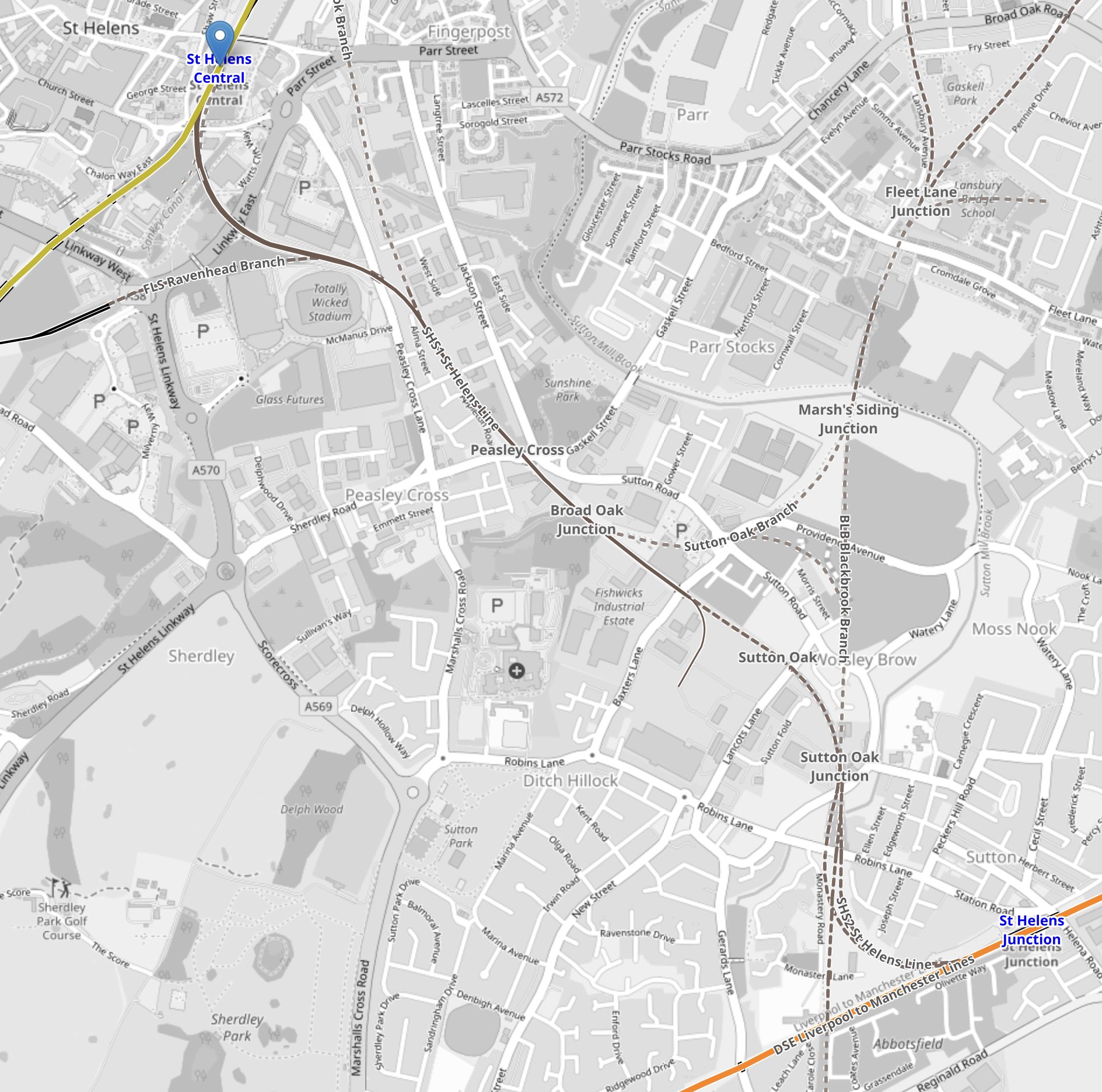
This map from OpenRailwayMap shows the section of railway that will be reopened.
Note.
- The line runs between St. Helens Central and St. Helens Junction stations.
- St. Helens Central is in the North-West corner of the map and is marked by a blue arrow.
- St. Helens Junction station is in the South-East corner of the map.
- Both stations have two tracks and two platforms.
- St. Helens Central appears to have full disabled access,
- Both stations are electrified.
- It appears, that the route is still viable, but the track is not intact.
I have a few thoughts.
St. Helens Junction Station
This Google Map shows St. Helens Junction station.

Note.
- There are two platforms.
- Platform 1 is the Northern platform and trains go East.
- Platform 2 is the Southern platform and trains go to Liverpool Lime Street.
- There appears to be a footbridge at the Eastern end.
- Trains from the new route from St. Helens Central station would approach from and leave to the South-West.
- In a typical hour, between five and eight trains per hour (tph) go through the station in both directions on the main line.
I feel that a bay platform would need to be built at the station to handle the proposed service at St. Helens Junction station. But it would be able to handle four tph.
St. Helens Central Station
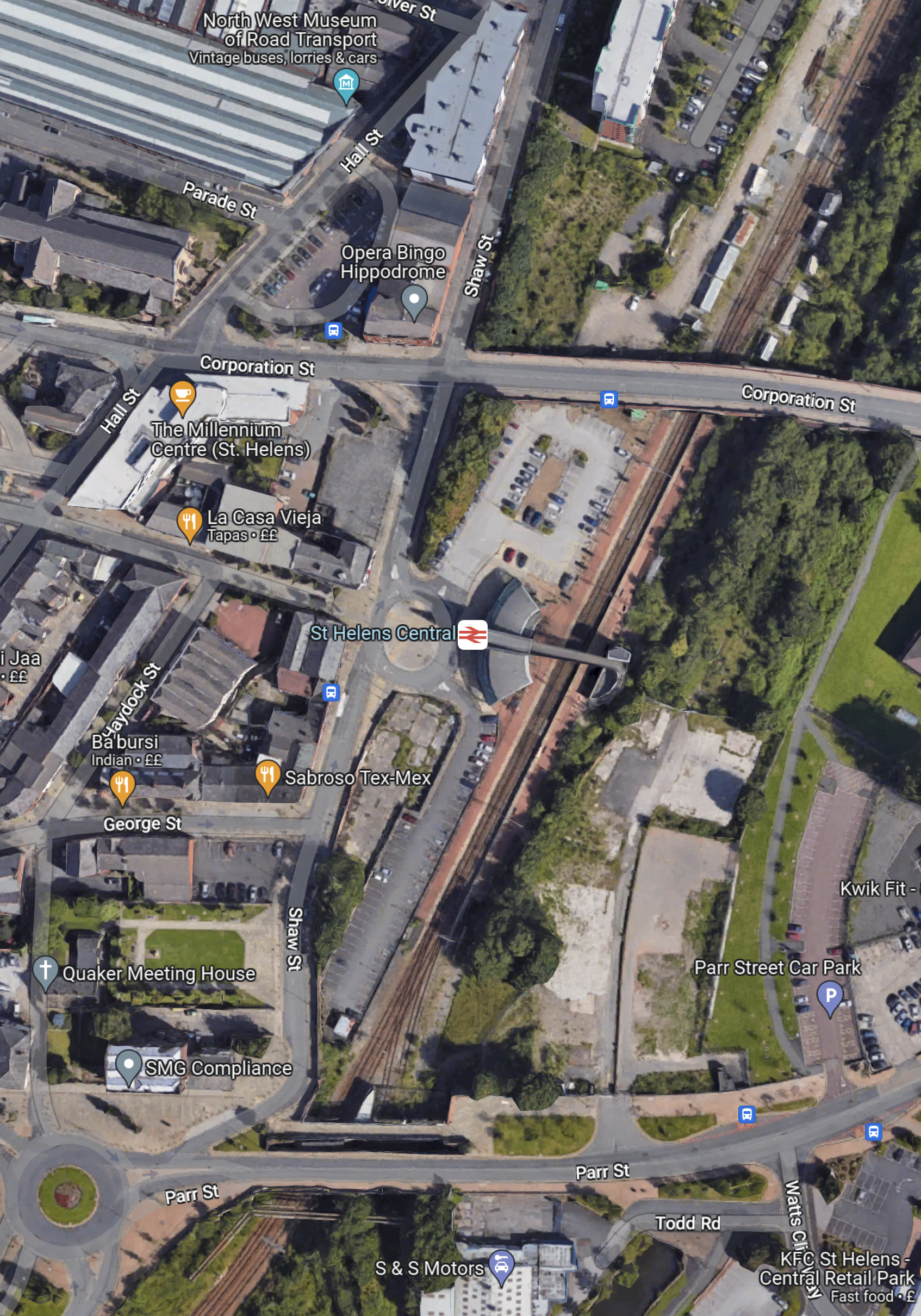
This Google Map shows St. Helens Central station.
Note.
- There are two platforms.
- Platform 1 is the Western platform and trains go to Wigan North Western.
- Platform 2 is the Eastern platform and trains go to Liverpool Lime Street.
- There appears to be a footbridge in the middle, with lifts.
- Trains from the new route from St. Helens Junction station would approach from and leave to the South-West.
- In a typical hour, between two and three tph go through the station in both directions on the main line.
It may be possible to run two tph on the route to St. Helens Junction station, by using the Southern end of Platform 2.
It would probably be able to handle two tph, by fitting in between the current services.
If a new bay platform were to be built at St. Helens Central four tph would be possible.
What Would Be The Frequency Of The Service?
Consider.
- As I said earlier, because of the current frequency of trains through St. Helens Junction station, I feel a dedicated bay platform will be needed at that station, which would probably handle four tph.
- Without building a dedicated bay platform, I doubt that St. Helens Central station could have more than two tph.
- Two tph on the new route, would fit well with the services through St. Helens Central station.
I believe that providing it gave sufficient capacity for the route, that two tph will be the frequency, as it only needs one bay platform at St. Helens Junction station to be built.
What Length Of Train Will Be Used?
As a bay platform will have to be built at St. Helens Junction station, this will probably determine the length of train.
I would build the bay platform to accept a three or four car train, as lengthening platforms is always a pain.
Looking at the map of St. Helens Junction station, I suspect that a four-car platform may be the longest possible.
What Type Of Train Should Be Used?
If you look at all the Beeching Reversal schemes, there isn’t one like this, where two electrified lines are connected by a short length of new railway, which in this case is only 3.5 km, according to the New Civil Engineer article.
Consider.
- A round trip is only 7 kilometres.
- I suspect each trip between the two stations will take no more than ten minutes.
- If the frequency is two tph, there will be plenty of time to turn a train at each end.
- All new routes opened on UK railways from now on, should have carbon-free traction.
For these reasons, I suspect that the route could be run by a battery-electric train, which is charged at one end.
Putting up a short length of overhead electrification in the new bay platform at St. Helens Junction, as the station is already electrified, would not be the most challenging of tasks.
Alternatively, the train could be charged, whilst it is waiting to return in St. Helens Central, using the existing overhead electrification.
Will There Be Any Intermediate Stations Between St. Helens Central And St. Helens Junction?
On the first map the station sites of two former stations are shown; Peasley Cross and Sutton Oak.
According to the Wikipedia entry for Sutton Oak station, there was quite an intensive service a hundred years ago.
Why shouldn’t they be rebuilt? Especially, if there are plans for housing or regeneration in the area.
Will Between St. Helens Central And St. Helens Junction Be Single Track?
This would still enable two tph, if the trains did a quick turn-round in the bay platform at St. Helens Junction.
But it would mean.
- Lower cost infrastructure.
- Simple tram-style intermediate stations.
- One train on line operation for safety.
I feel that it is highly likely the new route will be single-track.
Carr Mill Station
This map shows Merseyrail’s future plans.

Note the proposed new station at Carr Mill, which is North-East of St. Helens Central on the Liverpool and Wigan Line.
The Wikipedia entry for Carr Mill station, says this about a proposed new station.
Proposals to construct a new station to serve the expanding population have been suggested by Merseytravel but funding has yet to arrive. A new proposal to open a station was raised by Metro Mayor of the Liverpool City Region Steve Rotheram as part of his re-election plans in January 2020.
It should be noted, that a new Carr Mill station could be on the East Lancashire Road, so it might be a good place to create a Park-and-Ride station for Liverpool and St. Helens.
Perhaps if a bay platform were to be incorporated into the new Carr Mill station, it might be better to run a service between Carr Mill and St. Helens Junction.
- There would be two tph.
- Intermediate stops would be St. Helens Central, Peasley Cross and Sutton Oak.
- I estimate the distance would be about four miles of which 1.8 miles would be electrified.
- The trains would be charged on the electrified line between Carr Mill and St. Helens Central stations.
There would be no need to electrify the bay platform at St. Helens Junction
Should The Service Go All The Way To Wigan?
It must surely be a possibility to run the service between Wigan North Western and St. Helens Junction.
- There would be two tph.
- Intermediate stops would be Carr Mill, Bryn, Garswood, St. Helens Central, Peasley Cross and Sutton Oak.
- I estimate the distance would be about eleven miles of which nine miles would be electrified.
- The trains would be charged on the electrified line between Wigan North Western and St. Helens Central stations.
This would create an excellent connection to Wigan North Western for all the long distance trains to Scotland and the South.
Should The New Route Be Electrified?
Consider.
- St. Helens and Wigan North Western is a fully-electrified route.
- It is only 2.2 miles, which would probably be single track railway.
- As there is electrification at both ends of the new route, there would be no problem arranging power.
- It would remove the need for battery-electric trains.
I suspect that this is one that accountants will decide, as both battery-electric and electrification will work equally well!
What Trains Would Be Used?
If the route is electrified, any electric train of a suitable length could be used. I would argue, that the same class of train, as is used through the two St. Helens stations, should be used for operational and passenger convenience.
To maintain the operational and passenger convenience, if battery-electric trains are used, then Northern’s Class 331 trains and Merseyrail’s Class 777 trains come or will come in both electric and battery-electric versions.
Conclusion
This looks like a very sensible scheme.
Ballymena: Wrightbus To Develop Hydrogen Production Facility
The title of this post, is the same as that of this article on the BBC.
This is the sub-heading.
Wrightbus is planning to develop a green hydrogen production facility at its factory in Ballymena.
And these first three paragraphs outline the project.
The proposal is being made in partnership with a sister company, Hygen Energy.
Part of the Wrightbus business is the manufacturing of hydrogen-powered buses, some of which are operated by Translink.
The new facility would help create a reliable source of fuel for those buses and other hydrogen-powered vehicles.
It seems a well-designed project and it appears Hygen are building a similar facility in Bradford.
Some months ago, I had a drink in my house, with three senior London bus company executives.
One has had problems with electric buses, as getting the required power to charge a fleet in some Central London garages is not easy.
I showed them these figures, from the Wrightbus web site.
- A Wrightbus electric double-decker takes 2.5 hours to charge for a 200 mile range.
- A hydrogen double-decker takes 8 minutes to refuel with up to a 280 miles range.
They were impressed. Especially, as a typical duty for a bus in London is almost 200 miles. A hydrogen bus seemed to make a lot more sense.
So why isn’t London preparing for scores of hydrogen buses?
Ask the Mayor!
This Hydrogen Bus Will Take You And Your Car To Your Holiday Destination – Topgear
The title of this post, is the same as that of this article on Hydrogen Central.
The article details an interesting concept called Symone, from the French.
Looking at it, I suspect British Rail’s Motorail service was more efficient, as it had a larger capacity.
Riding On Hydrogen-Powered Buses And Trains
These posts describe my trips on hydrogen-powered buses
Note.
- The first bus starts from Birmingham City Centre.
- The second bus runs between Paddington station and John Lewis in Oxford Street in London.
This post describes my first ride in a hydrogen-powered train.
My First Ride In An Alstom Coradia iLint
This was through the German countryside between Hamburg and Cuxhaven.
Bank Station Upgrade – 11th February 2023
I took these pictures as I passed through Bank station this morning.
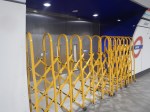
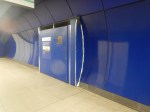
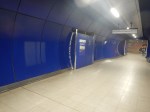

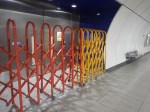
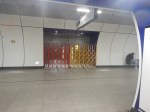

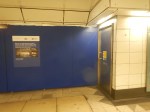
The central passageway between the two Northern Line platforms appears to be complete with the standard heavy steel fire-doors.
I also took these pictures of the new Cannon Street entrance.
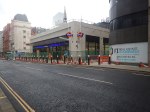




Note the passage running up the side of the station to King William Street.
Chatting to staff I got two different stories about the opening.
- One said it will open on Friday.
- Another said there would be testing earlier in the week to decide when it opens.
But those two stories would fit.
Swedish Battery-Electric Aircraft Selected By A Major Airline
The title of this post, is the same as that of this article on autoevolution.
This is the sub-heading.
You know that saying, “New year, new me”? In the case of this major airline, it’s more like “New decade, new me.” Air New Zealand wants to flaunt a brand-new regional fleet starting 2030. And it looks like that will include an all-electric model developed by the Sweden-based Heart Aerospace.
The article then gives a description of their plan called Mission Next Gen Aircraft to go zero-carbon on their short haul routes.
This paragraph describes the aircraft that will be used.
ATR will bring its upgraded aircraft concept, called the ATR EVO, designed to be 100% compatible with SAF (sustainable aviation fuel). Embraer will showcase the innovations of an entire new family of aircraft named Energia, based on various types of clean propulsion. Universal Hydrogen will retrofit the existing regional airliners with its efficient hydrogen solution. Last but not least, Heart Aerospace will focus on the niche segment of battery-electric aircraft.
It will be fascinating to see how all this works out.
We’re still waiting in the UK for an airline to announce the purchase of a zero-carbon aircraft.
Especially, as we have some routes, like those around Scottish islands, where there are many short routes, that have less than a dozen passengers on a flight.
Honda And GM To Produce Systems For Hydrogen Fuel Cell Cars And Trucks
The title of this post, is the same as that of this article on Hydrogen Fuel News.
This is the first paragraph.
A hydrogen fuel cell system co-developed by Honda Motor and General Motors (GM) will begin production this year and will gradually increase its numbers throughout this decade.
This could be a big development.
Skegness Station To Benefit From A £3.3m Improvement Package
The title of this post, is the same as that of this article on Rail Technology Magazine.
I took these pictures of Skegness station, on a visit to the town in July last year, which I wrote about in A Trip To Skegness.
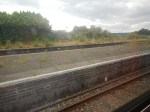
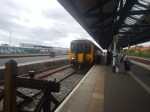







I feel that Skegness station would welcome some improvement.
The Rail Technology Magazine article says this about the project.
Upon completion of the project, customers will be able to utilise a number of enhanced facilities, including an improved accessible toilet with changing spaces, two new start-up offices, a community café and retail provisions. Upgrades will continue through improved access into the station for pedestrians and vehicles, offering integration with the surrounding community.
Work is hoped to start this year.
A Modern Zero-Carbon Train Service
If £3.3 million is going to be spent on Skegness station, would it not be a good idea to have better trains serving the station.
In A Trip To Skegness, I talked about updating the hourly Nottingham and Skegness service using Class 170 trains with Rolls-Royce MTU Hybrid PowerPacks.
I wonder if this route could be improved by fitting the Class 170 trains with Rolls-Royce MTU Hybrid PowerPacks?
- The hybrid technology would have a lower fuel consumption and allow electric operation in stations.
- The prototype hybrid is already working on Chiltern Railways in a Class 168 train.
- The Class 168 train is an earlier version of the Class 170 train and they are members of the Turbostar family.
- Rolls-Royce are developing versions of these hybrid transmissions, that will work with sustainable fuels.
- As we have a total of 207 Turbostar trainsets, these could be a convenient way of cutting carbon emissions on long rural lines.
- As Rolls-Royce MTU are also developing the technology, so their diesel engines can run on hydrogen, it is not outrageous to believe that they could be on a route to complete decarbonisation of this type of train.
I believe that we could see hydrogen-hybrid Class 170 trains, with a Rolls-Royce badge on the side.
But would it be possible to go the whole way using one of Stadler’s battery-electric trains?
Consider the service between Nottingham and Skegness.
- It is hourly.
- The route is run by 100 mph Class 170 trains.
- Nottingham and Grantham are 22.7 miles apart.
- Grantham and Skegness are 58.2 miles apart.
- Trains take four minutes to reverse at Grantham.
- Trains wait 20 minutes before returning at the two end stations.
- Trains reverse at Nottingham in a bay platform, which is numbered 2.
- Grantham is electrified.
- Nottingham station will be electrified in the next few years.
- Skegness station is next to the bus station in the middle of the town, so hopefully the electricity supply is robust enough to charge buses and trains.
Stadler make a train called an Akku.
- It is a member of the FLIRT family.
- It is a 100 mph train.
- I wrote Stadler FLIRT Akku Battery Train Demonstrates 185km Range, which means it could run between Nottingham and Skegness without intermediate charging.
This leads me to the conclusion that with charging systems at Nottingham and Skegness and taking a four-minute top-up at Grantham if needed, a FLIRT Akku could handle this route with ease.
Conclusion
Skegness is a town that needs leveling-up. A refurbished station and 100 mph electric trains to Grantham and London would be a good start.
Battery Train Pilot Project On Challenging’ Westerwald Routes
The title of this post, is the same as that of this article on Railway Gazette.
It is only a small order for three Mireo Plus B battery-electric multiple-units from Siemens Mobility, but I feel, it is significant that engineers and managers are confident that a battery-electric multiple unit can handle a challenging route.
 The Anonymous Widower