Toyota Shock Admission: Electric HiLux And 4WDs Won’t Suit Mainstream Buyers Until Battery Tech Leaps Forward
The title of this post, is the same as that of this article on EVCentral.
These are the three introductory paragraphs.
Toyota says electric utes and 4WDs are still years away from suiting mainstream, consumer-facing applications like touring and towing.
The admission came from Toyota Australia’s engineering team, speaking at the recent HiLux BEV and LandCruiser 300 Performance Hybrid briefing.
Toyota Australia’s product planning chief Ray Munday said battery energy density remains the single biggest obstacle standing between today’s electric utes and something capable of doing what a diesel HiLux or LandCruiser can do.
EVCentral also has an article entitled Toyota boss exults in Australian launch of new HiLux EV in 2026, hydrogen HiLux coming in 2028.
I hope, I’m still here in 2028, so I can have a ride in a hydrogen HiLux.
Hammersmith Bridge’s Future ‘Could Be Driverless’
The title of this post, is the same as that of this article on the BBC.
This is the sub-heading
A community group in west London has proposed using autonomous pods to move people over the Hammersmith Bridge, which has been closed to vehicular traffic since 2017.
These three paragraphs add more detail.
Barnes and Hammersmith Electric Light Transit (BHELT) was established “to help explore, develop and promote the idea of lightweight autonomous electric pods operating across Hammersmith Bridge”.
The not-for-profit organisation said the pods could be part of “an inclusive and sustainable transport future” for the area.
Transport for London said it had no plans to introduce the pods on the river crossing, or for driverless buses more generally on its network.
I notice that the picture of one of the pods, has a sticker on it, that says Milton Keynes.
It appears that the trials THERE ended in March.
So, I can’t go and have a ride.
But BHELT has a web site.
Wrightbus Launches In Australia With Battery And Hydrogen Buses On Show
The title of this post, is the same as that of this article on Fuel Cell Works.
These two bullet points, act as sub-headings.
- Wrightbus has officially launched its Australian expansion, introducing a range of battery-electric and hydrogen fuel cell buses backed by local sales, service and long-term support
- The move strengthens the company’s international growth strategy as Australia increases investment in zero-emission public transport and heavy-duty decarbonization
This first paragraph adds more details.
Wrightbus has officially entered the Australian market, marking a significant milestone in the Northern Ireland manufacturer’s international growth strategy. The company unveiled its expansion during the Australasia Bus & Coach Expo in Sydney, where it presented its battery-electric and hydrogen fuel cell bus portfolio to operators, government agencies and transport stakeholders. The launch will be led locally by a dedicated Australian team and is supported by a long-term commitment to aftersales service, technical support and partnerships with Australian industry.
I believe that this is the start of something big.
- Wrightbus know how to sell large numbers of buses to conurbations like London, Manchester and Leeds.
- An operator can decarbonise their network in a way that suits them.
- In the Ultroliner, Wrightbus have a bus that can be introduced as a diesel and then converted to hydrogen or electric, when the operator has sorted the fuel.
- Australia must surely be a big market for Wrightbus’s hydrogen-powered coach, with a 1,000 km range on one fill-up.
- It should be born in mind, that the average Wrightbus zero-carbon bus, makes the competition from China look like junks.
Will Wrightbus manufacture the buses and coaches in Ballymena, Malaysia or Australia?
North-East-Based Turntide Receives Initial Battery Production Order From Hitachi Rail For Arriva’s Grand Central Intercity UK Battery Trains
The title of this post, is the same as that of this news item from Turntide Technologies.
This is the sub-heading.
New batteries to enable greener train operations to remove over 600 engines on existing trains, offering lower cost of operations, more range, and path to zero-emissions travel.
These are the initial three paragraphs, that add more detail.
Turntide Technologies (Turntide), a global leader in electrification and hybridisation solutions and a long-standing North East manufacturer, received its first order from Hitachi Rail to begin production of its next-generation modular battery system for the first U.K.-manufactured battery trains for Arriva’s Grand Central.
First announced on July 2, 2025, this partnership involved an R&D component and has officially moved into production with the potential to support either new battery trains or retrofitting over 600 engines on existing Hitachi Rail U.K. fleets.
This new battery system will allow for lower cost of operations, extended range, and a path to zero-emission travel, while reducing reliance on fossil fuels and improving air quality and noise pollution. Turntide’s bespoke batteries are designed to deliver even greater power density in the same footprint of a diesel engine. This battery production is an advanced manufacturing milestone for Arriva’s Grand Central new fleet, which is being built in Newton Aycliffe, County Durham by Hitachi Rail.
In Are Hitachi’s Tri-Mode Trains Exceeding Expectations?, I said this.
I asked Google AI, the question in the title of this post and received this answer.
Yes, Hitachi’s tri-mode (battery-hybrid) trains are exceeding expectations, particularly following successful trials in the UK in late 2024. Trials of the battery-equipped Class 802/2 demonstrated superior performance to initial forecasts, leading to a £300 million order for a new fleet to be delivered in 2028.
Key findings from trials and operational expectations:
Performance Exceeded: The trial, conducted with TransPennine Express and Angel Trains, showed fuel cost savings of 35%–50%, surpassing initial predictions of up to 30%.
Operational Capability: The battery technology enabled trains to reach speeds greater than 75 mph and provided enough range for zero-emission, silent running in and out of stations, significantly reducing noise and improving air quality.
Energy Efficiency: The battery matched the weight of a diesel engine, meaning no extra track degradation.
Future Impact: The success of the trial led to an order from Arriva Group for a new fleet for Grand Central services, which will increase seating capacity by 20% and are expected to significantly reduce carbon emissions.
These trains, designed to run on electric, battery, or diesel power, are part of a push to modernize rail services, with the technology allowing for the gradual elimination of diesel-only operation on certain routes.
In The Data Sheet For Hitachi Battery Electric Trains, I came to these conclusions.
- The battery pack has a capacity of 750 kWh.
- A five-car train needs three battery-packs to travel 100 miles.
- A nine-car train needs five battery-packs to travel 100 miles.
- The maximum range of a five-car train with three batteries is 117 miles.
- The maximum range of a nine-car train with five batteries is 121 miles.
Hitachi have seen my figures and told me they’re not far out.
As battery technology gets better, these distances will increase
What Battery Range Do Arriva Grand Central Trains Need?
Arriva Grand Central Trains currently run services to Bradford Interchange and Sunderland and hope of adding services to Cleethorpes.
All services would go between Doncaster and Kings Cross, with some stopping additionally at Peterborough.
The lengths of unelectrified track on each route is as follows.
- Bradford Interchange – Shaftholme junction and Bradford Interchange is not electrified – 47.8 miles
- Cleethorpes – Doncaster and Cleethorpes is not electrified – 52.1 miles
- Sunderland – Northallerton and Sunderland is not electrified – 47.4 miles
Note.
- Bradford Interchange station is on a tightly hemmed-in site and putting charging infrastructure in the station might be difficult.
- All Bradford Interchange services will soon be passing electrification at Mirfield station, so there may be scope for a quick charge and continue.
- Cleethorpes station is an open-air station with four platforms.
- I believe it is likely, that Cleethorpes station will also be a destination station for other battery-electric trains from LNER, Northern Trains and TransPennine, so I would suspect that charging facilities will be installed.
- Cleethorpes station could be an ideal location for one of Siemens’ Rail Charging Converters.
- Sunderland station is underground and has a unique layout where both platforms are electrified for the Metro. It is all explained in the Wikipedia entry for the station.
- The Wikipedia entry shows an open-air siding without electrification. One possibility would be for the Class 820 trains to park there and use their on-board diesel to top-up the batteries, so they could reach Northallerton.
- It appears that Grand Central visit Ryhope Grange Sidings between arriving and leaving for King’s Cross. The trains could have their batteries topped up there if needed.
It does look like a five-car train with a battery range of at least 105 miles would be able to handle these three routes.
The Arriva Grand Central Trains Fleet Are Now Class 820 trains
They have a Wikipedia entry.
The order was for nine trains of five cars.
- Wikipedia describes them as tri-mode trains.
- I believe they will have three battery packs and one diesel generator.
- Three battery packs should give a range of 117 miles.
- Google AI says that on one diesel generator, these trains can limp home at 60 miles per hour.
- Google AI says that the diesel generator will be able to charge the batteries at the destination station?
- From comments on the Internet, it appears that Hitachi have a very clever train control system, that ekes out the available power.
It looks to me that Hitachi have designed a train that can handle an unelectrified branch line of up to 60 miles or 120 miles if there are charging facilities at the destination station.
Did LNER And TransPennine Express Not Want To Be First With Battery-Electric Intercity Trains?
Consider.
- TransPennine and LNER are under government control.
- TransPennine provided the train for the testing, so they must know all the results and their drivers, who were probably involved certainly do.
- LNER must have the best initial route in King’s Cross and Lincoln, where only the last 16.6 miles, between Newark and Lincoln is not electrified.
- Surely, both companies should have been given at least one of the first batteries, so they could start training staff in how to use and service the batteries.
I have also totalled how many existing diesel power-packs are in existing Hitachi trains and it is 759.
This figure surprised me, as the sub-heading in the Turntide news item said the number of engines in existing trains was over 600. But then East Midlands Railway are still introducing their fleet of 33 x Class 810 trains, which have a total of 132 engines, and 627 could be described as over 600 engines.
How Much Would A Turntide Battery-Pack Cost?
Consider.
- This is a bespoke product for Hitachi.
- Hitachi have stated that the weight is the same as a diesel-pack, so that track-access rules and charges won’t change.
- As a Control Engineer, I wouldn’t be surprised, that the battery-pack is designed to tell the train control system, that it is a diesel power pack. So it acts just like one!
- In the 1960s, I was designing, building and installing transisterised control systems to replace electronic valve and relay equipment in a rolling mills. The two generations of control systems were interchangeable. Are diesel-packs and battery-packs the same?
- Why did Hitachi choose a small supplier in Gateshead, rather than one of a number of capable companies in Japan? You don’t go halfway around the world, if the quality is available locally.
- Deployment of these trains, will avoid the cost of scores of miles of overhead electrification.
- A lot of routes won’t even need chargers at the remote destination, as the range will be sufficient for an out and back journey from the current electrification.
- Fuel cost savings of 35%–50% were achieved in development testing.
- I have ridden in three battery-electric trains. All were mouse quiet. Will that increase ridership?
I believe these batteries are no ordinary batteries. So they won’t come cheap!
I wouldn’t be surprised that the cost of each battery-pack between a half-a-million pounds and a million pounds, with support.
Will These Trains Create Growth In The Economy?
I have ridden in all current variants of the Hitachi Intercity Express Trains, with the possible exception of the Class 805 train and as each version has been introduced, they are no worse, but often better than previous versions.
I have had two or maybe three return trips to Nottingham and Sheffield in the latest variant, which is East Midlands Railway’s Class 810 train.
This is without doubt the pick of the bunch.
I therefor believe that if this continuous improvement carries on, that the new Class 820 train, that has been ordered by Grand Central will be even better.
- My experience of battery-electric trains, says it will be quieter.
- The environment of stations will be improved.
- Train fuel costs will be reduced.
- I believe that ridership will be increased, as people will be intrigued by a 125 mph train running on batteries.
- The trains will have the ability to divert via Lincoln using the GNGE Diversion on the East Coast Main Line during engineering works.
- Because of their regenerative braking, the trains should be able to do very quick extra stops at intermediate stations.
- New routes will be developed.
- Less ugly electrification will be erected on scenic routes like Settle and Carlisle, and across the Highlands of Scotland.
I believe strongly, that at the end of the day, that battery-electric trains will increase the profits of operators and Network Rail, and reduce the cost to the taxpayers of the railways.
Grand Central’s New Trains Will Improve Services
All these stations will be served by the new Class 820 trains.
- Barnetby
- Bradford Interchange
- Brighouse
- Cleethorpes
- Doncaster
- Eaglescliffe
- Grimsby
- Habrough
- Halifax
- Hartlepool
- Low Moor
- Mirfield
- Northallerton
- Peterborough
- Pontefract Monkhill
- Scunthorpe
- Seaham
- Sunderland
- Thirsk
- Wakefield Kirkgate
- York
Passengers should notice the following from the new Grand Central trains.
- A quieter ride.
- Less vibration.
- Slightly faster services due to faster stops at stations.
- No diesel smoke and much less noise from trains in stations.
Note.
- Cross Country, Hull Trains, LNER, Lumo, TransPennine Express and other operators will come under pressure to follow suit.
- Batteries, will not have the power for freight trains, so will we see a new generation of hydrogen freight locomotives?
But will the improved services bring that exclusive growth to the economy?
Only time will tell!
Private And Public Operators
In the UK, we have.
- Private open access operators like Grand Central, Hull Trains and Lumo, who can buy trains on a loan from a leasing company.
- Public operators like LNER and TransPennine Express, who probably have to get sign off from the Treasury.
- Several companies like Great Western Railways and East Midlands Railway, who are soon to be taken over by Great British Railways, who are stuck in a sort of limbo.
My late friend ; David, who rose to the highest level in banking in the UK, would have come up with a solution.
He would probably have said, that there’s is very little difference between the groups of operators.
- The train services they offer vary only on destinations and prices.
- The ticketing system is now unified, so if you turn up at the last minute and want to go to Newcastle and Lumo and LNER both have tickets, you are offered a choice and you can pick the one that’s best for you.
- All services will soon be running similar battery-electric trains, fprobably from the same Hitachi factory in Newton Aycliffe.
- Food and beverage service is not competitive and could be improved.
- Staff are probably on similar employment agreements.
So why shouldn’t Great British Railways be able to lease trains and even battery packs from companies like Angel Trains, who are funding the trains for Grand Central?
It might get more battery trains running on tracks all over Great Britain sooner than it appears they will now!
India Gets Its First Hydrogen Train
I just had to link to this YouTube video, which shows the launch of India’s first and the world’s longest hydrogen train.
I talked about the train in India’s First Hydrogen-Powered Train Notified: Know Route, Launch Date & What Makes It Special.
India’s First Hydrogen-Powered Train Notified: Know Route, Launch Date & What Makes It Special
The title of this post, is the same as that of this article on Times of India.
These two paragraphs add some detail.
India’s first hydrogen train has been notified by Indian Railways. The new hydrogen-powered train is expected to be flagged off by PM Narendra Modi on July 17. He will also unveil a series of other infrastructure projectsacross Haryana, state minister Krishan Kumar Bedi said on Thursday.
The government says that project underscores Indian Railways’ wider focus on technological innovation, improved energy efficiency, and environmentally sustainable transportation, while supporting India’s national objectives on clean energy and achieving net-zero carbon emissions.
The route will be between Jind and Sonipat, which are both shown on this OpenRailwayMap.

Note.
- Jind, which has two stations Jind City and Jind Junction is in the North-West corner of the map.
- The blue arrow indicates Jind City station.
- Jind Junction station has a Wikipedia entry, which indicates that Jind Junction station has a hydrogen refilling station.
- Sonipat Junction station is in the South-East corner of the map.
- Jind and Sonipat are about fifty miles apart by train.
- OpenRailwayMap shows that most, if not all of the rail lines shown in this map are electrified using 25 KVAC overhead.
It looks to me, that Indian Railways are following similar rules to Network Rail, when they tested the battery-electric Class 379 train on the Mayflower Line.
- Test new technology on a line with spare capacity.
- Test new technology with a train, that can still run using current electrification.
- Test new technology on an electrified line.
From talking to some of those, who used the Harwich train every day, there were no problems during the test.
Visiting The Hydrogen Train
I feel that if you were passing through New Delhi, it would be feasible, if you had time to spare to visit the hydrogen train.
Google AI says this about the New Delhi and Sonipat service.
Trains to Sonipat Station run directly from New Delhi Railway Station (NDLS). Several long-distance, express, and local EMU/MEMU trains connect the two stations daily, making the journey in approximately 30 to 50 minutes.
The Ghostly Drone That Spins Almost Too Fast To See
The title of this post, is the same as this article on The Times.
This is the sub-heading.
The ‘Phantom Twist’ prototype rotates about 25 times a second while its body moves in the opposite direction — appearing as a faint haze
These two initial paragraphs add some more details.
Engineers have created a drone that almost vanishes in flight by spinning so quickly the human eye sees only a faint, translucent haze.
The body of the drone, called the Phantom Twist, rotates about 25 times a second, while its propeller spins in the opposite direction. Its inventors describe it as “morphing into a ghostly smudge that seamlessly blends into the background”.
This technology obviously works and was developed at North Western University in the United States.
This paragraph speculates on a few civilian uses.
It is, they say, intended for civilian uses. The researchers believe less conspicuous aircraft could be useful for monitoring nesting birds, surveying wilderness areas or inspecting bridges and other infrastructure without causing wildlife to scatter or prompting people to alter their behaviour.
The article then details how drones have transformed the war in Ukraine.
UAE Building New Port To Bypass The Strait Of Hormuz
The title of this post, is the same as that of this article on The Times.
This is the sub-heading.
New facility on the Emirates’ east coast is past the tip of the strait but would still be vulnerable to Iranian drone and missile attacks.
These three paragraphs add more details.
The United Arab Emirates is building another port in an attempt to bypass the Strait of Hormuz, having already expedited the construction of a new oil pipeline.
The new port would join an existing facility in Fujairah along the country’s eastern coastline and past the tip of the strait that Iran closed to shipping during the war with the United States.
This Google Map shows the Eastern side of the Arabian Peninsular.
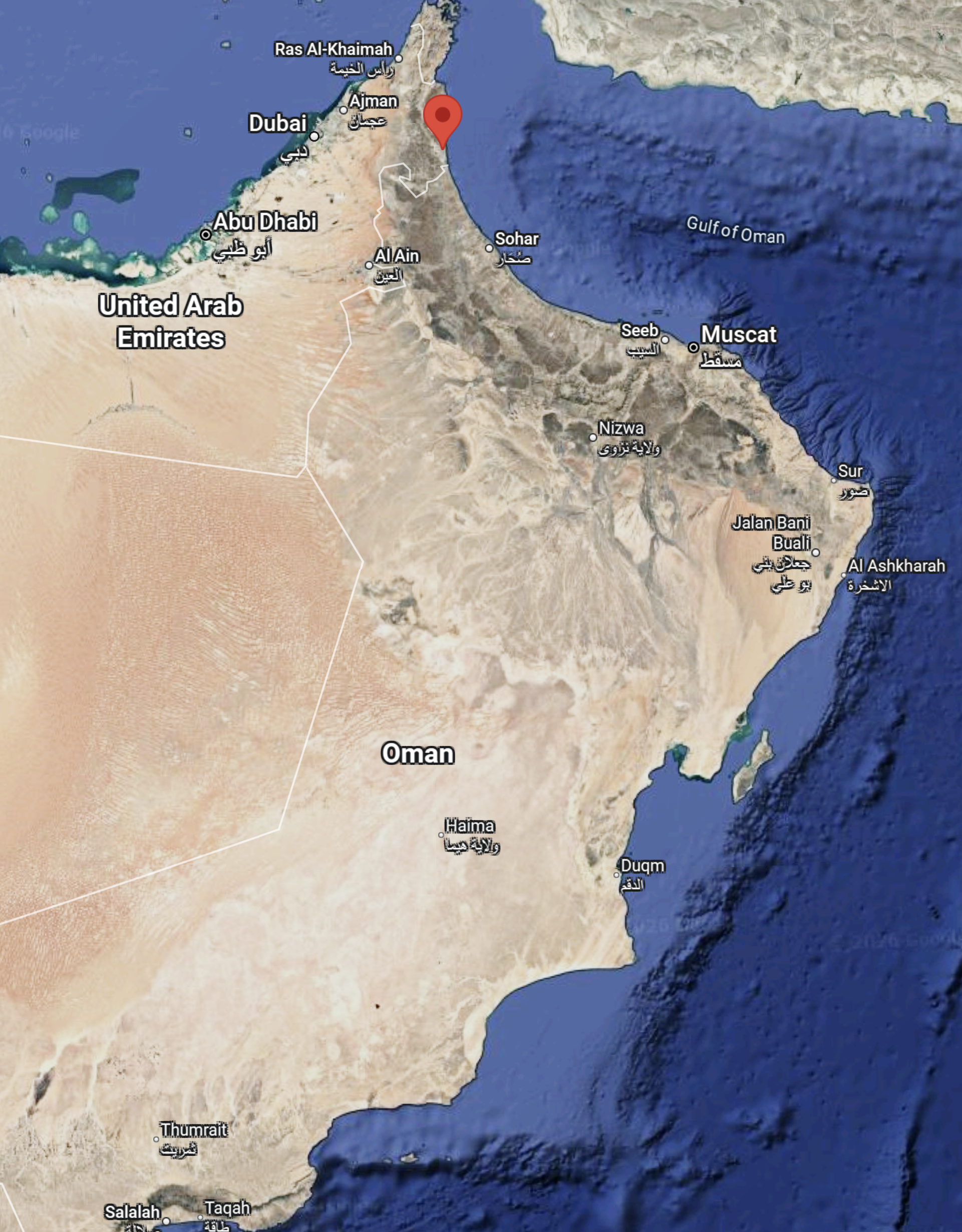
Note.
Fujairah is indicated by the red arrow.
Iran is the land mass in the North-East corner of the map.
The Strait of Hormuz is between the Arabian Peninsular and Iran.
As you come South from Fujairah, you pass through Muscat and then Iran.
Oman has two deep water ports at Duqm and Salalah.
This second Google Map shows the Port of Fujairah and the Strait of Hormuz.
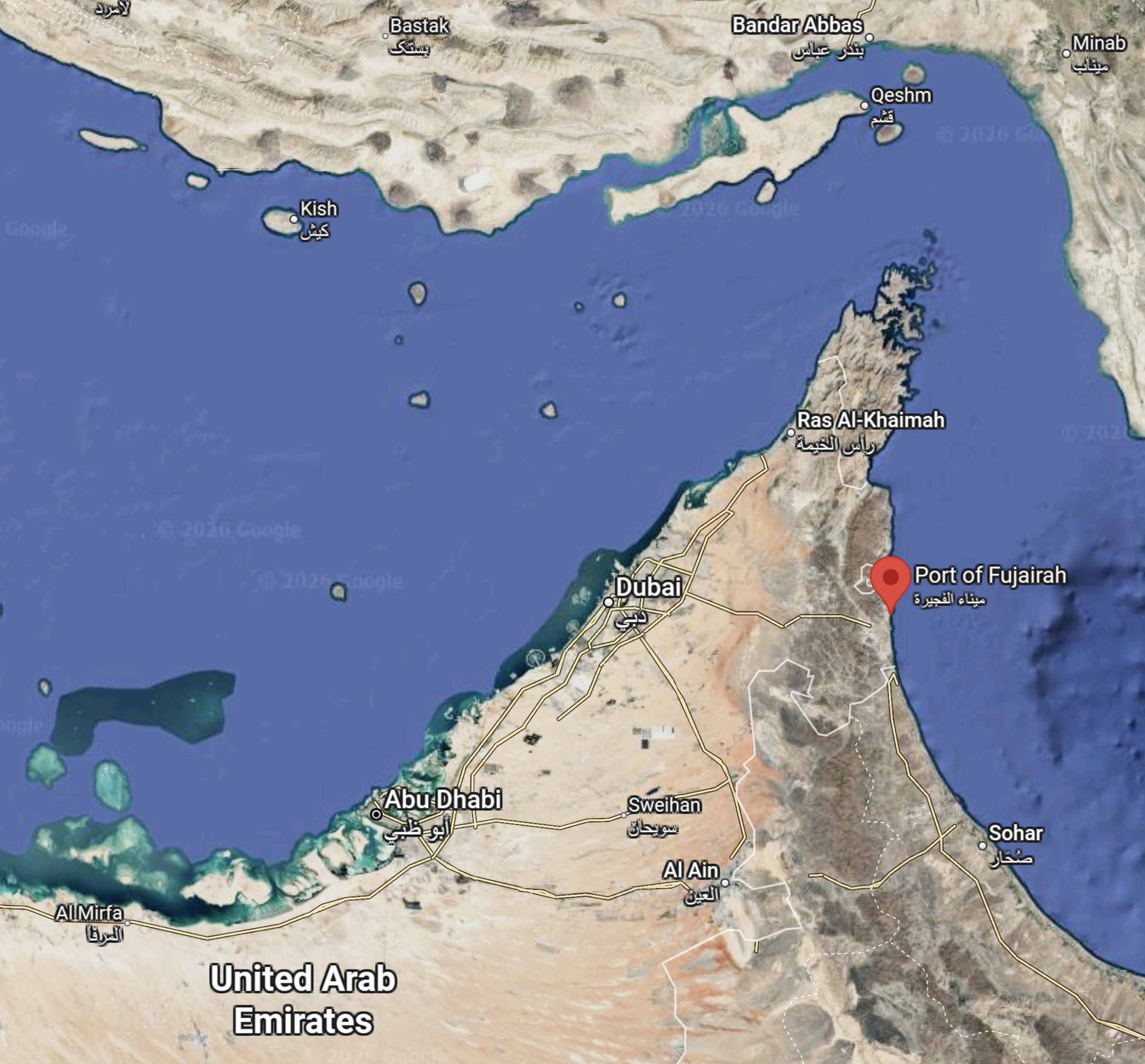
Note.
- The Port Of Fujairah is indicated by the red arrow.
- Dubai and Abu Dhabi are indicated on the map.
- The Strait of Hormuz is between the United Arab Emirates and Iran.
- There is a passenger train between Fujairah and Abu Dhabi that opened recently and takes an hour and 45 minutes.
This OpenRailwayMap shows the route of Etihad Rail.
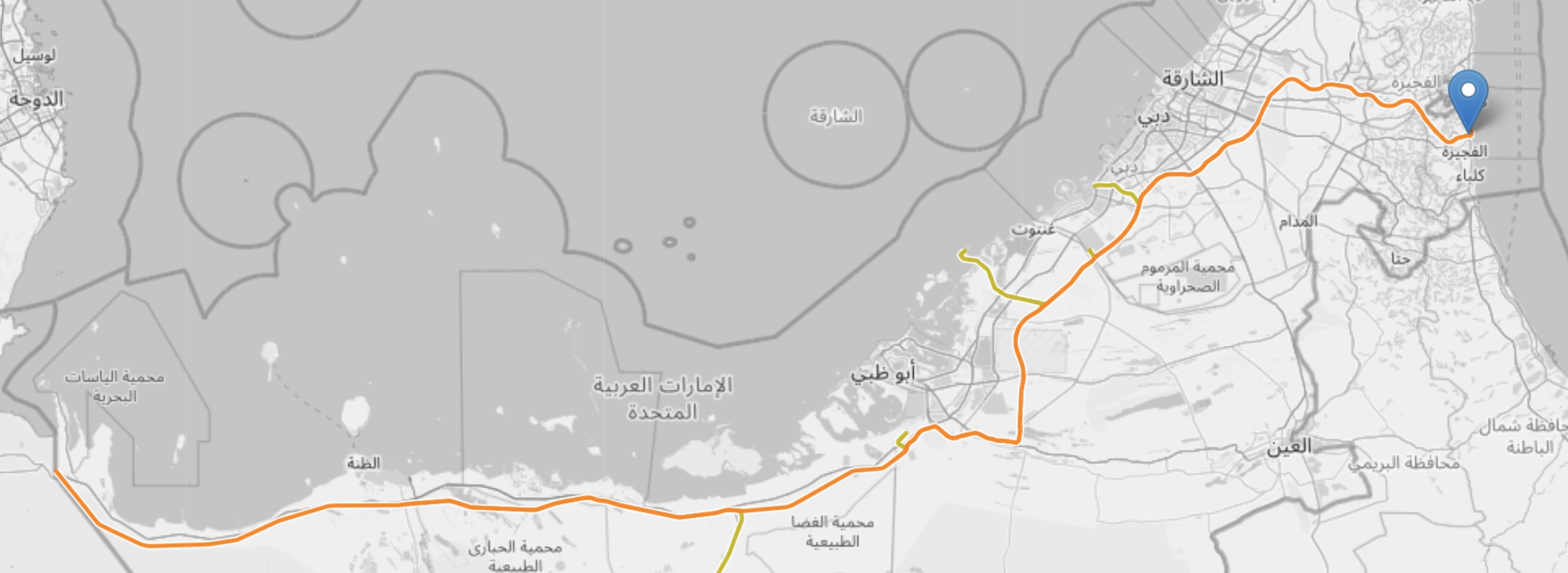
Note.
- The Port Of Fujairah is indicated by the blue arrow.
- Dubai and Abu Dhabi are on the Western coast.
- Etihad Rail has a Wikipedia entry.
- Etihad Rail has a web site.
- It is both a passenger and freight railway.
- It is 559 miles long.
It is planned to be extended to Saudi Arabia.
I can see Etihad Rail being very successful.
Could Duqm And/Or Salalah In Oman Be Developed As Oil And Gas Ports To Bypass Hormuz?
This REPEATED Google Map shows the Eastern side of the Arabian Peninsular.
The deep-water ports of Duqm and Salalah are shown on this map.
When I put the question in the title of this section to Google AI, I received this answer.
Yes, the Port of Duqm and the Port of Salalah are uniquely positioned to serve as critical oil and gas export hubs that bypass the Strait of Hormuz. Both deep-water ports are located on Oman’s open Arabian Sea coast, entirely avoiding the narrow maritime chokepoint.
Developing these ports into massive oil and gas export hubs is highly feasible but presents logistical and financial challenges:
Pipeline Corridors: Bypassing Hormuz would require constructing extensive, multi-billion dollar cross-border pipeline networks spanning over 1,800 kilometers from oil-producing hubs in Iraq, Kuwait, Saudi Arabia, and the UAE to the Omani coast.
Cost & Timeline: Estimates suggest a twin-pipeline project terminating in Duqm and Salalah—capable of moving 10 million barrels per day—would cost upwards of $50 billion and take up to seven years to complete.
Liquefied Natural Gas (LNG): Qatar and other nations could also route gas to the Omani coast, though doing so would require building multibillion-dollar liquefaction and export terminals on the Arabian Sea.
Regional Alliances: Projects at this scale require deep cross-border energy integration and substantial political consensus among the Gulf states.
Although, this route would be expensive, it would keep oil and gas for countries like China, India, Japan and Korea well away from Iran and their partners in crime the Houthis.
The Times article finished with this paragraph.
Plans now include pipelines that could run through Israel, Turkey and Syria to the Mediterranean and Europe, securing supplies to western countries but creating longer shipping times to China and India — both major consumers of Middle East oil.
Conclusion
The one common factor in all these plans is that Iran is sidelined.
And also alternative infrastructure must be better than the destructive US-Iran War.
Poland Receives Its First Electricity from Offshore Wind As Baltic Power Starts Delivering
The title of this post, is the same as that of this article on offshoreWIND.biz.
This is the sub-heading.
Electricity generated by the Baltic Power offshore wind farm has entered Poland’s national power grid, marking the first time the electricity generated by offshore wind turbines is added to the country’s energy mix.
This first paragraph gives more details of the project.
54 of 76 turbines have already been installed at Poland’s first offshore wind farm, with the first now generating electricity. Construction is scheduled for completion this autumn, ORLEN and Northland Power, the owners of the project, said.
When complete, the Baltic Power wind farm will generate up to 1.2 GW.
How Much Offshore Wind Does Poland Have Planned?
I asked Google AI, the question in the title of this section and received this reply.
Poland has massive offshore wind plans in the Baltic Sea.
The country targets 5.9 GW by 2030 and 18 GW by 2040. To meet these goals, the government is pursuing two primary development phases to transition the national grid away from coal.
A breakdown of Poland’s offshore wind rollout includes:
Phase I (Advanced Projects): Includes 5.9 GW of capacity.
Baltic Power: Poland’s first offshore wind farm (1.2 GW), developed by Orlen and Northland Power, officially connected to the national grid in July 2026.
Bałtyk 2 & 3: Equinor and Polenergia have finalized financing for an additional 1.4 GW, slated for commercial operation around 2028.
Phase II (Auction-Backed): Poland recently allocated over 3.4 GW in new capacity through competitive offshore wind auctions, pushing development well into the next decade.
Long-Term Outlook: Industry groups estimate the total technical potential in Poland’s portion of the Baltic Sea could reach up to 33 GW.
Will Poland Be Welcoming Any Invading Germany Wind Farms?
In New Study Shows How North Sea Offshore Wind Can Yield More While Costing Less, I talked about how Germany doesn’t have enough sea in which to place the wind farms it needs to generate the green electricity and hydrogen it needs.
This map from Wikipedia shows Exclusive Economic Zones in the North Sea, but it also shows who has control of the sea in the Baltic.
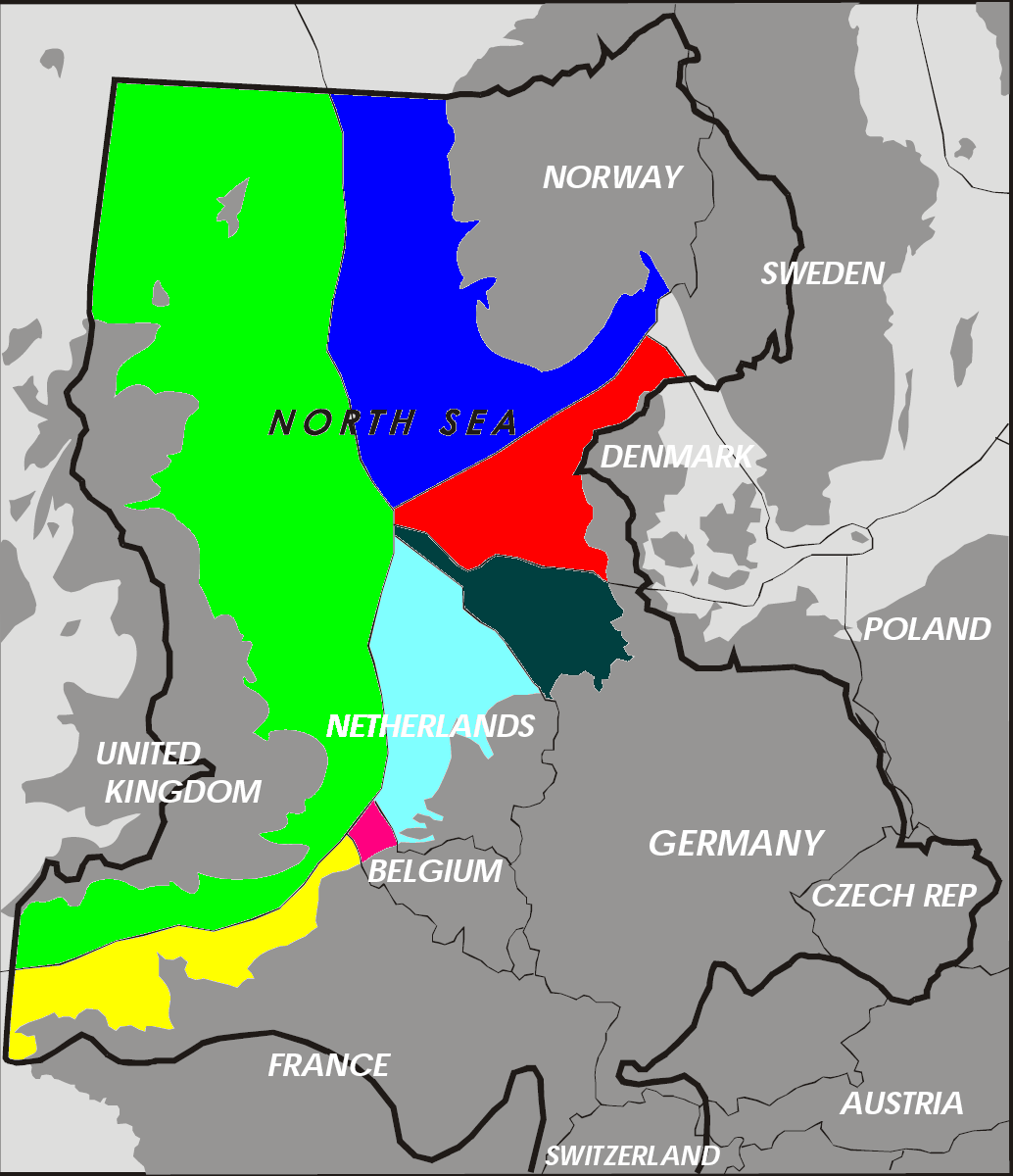
Note.
- Yellow is France.
- Mauve is Belgium, who drew the short straw.
- Light Blue is The Netherlands.
- Black is Germany, who despite their large land area, don’t have as much sea as the UK.
- Red is Denmark.
- Dark Blue is Norway.
- Green is The UK.
- Germany and Poland seen to share the Southern Baltic.
I wouldn’t be surprised to see Germany and Poland co-operating to maximize the wind power capacity of the Southern Baltic.
A Visit To Poland’s Coal Capital
On one of my trips to Poland, I went to Katowice, which is in Poland’s coal-mining region. I wrote about it in An Excursion In Katowice.
Google AI produced this snapshot of Katowice.
Katowice is historically known as the “Polish Coal Capital” and served as the absolute backbone of the region’s heavy industry. First transforming into an industrial powerhouse in the mid-19th century due to rich local coal and metal reserves, the city’s economy and rapid growth were entirely reliant on coal mining and steel.
While coal and heavy industry historically anchored its identity, the city of Katowice has aggressively transformed into a modern cultural, technological, and business hub. The wider Silesia region remains heavily tied to coal mining, but the municipality itself has shifted its focus to avoid reliance on it.
My visit to Katowice was an excellent pit-stop on a train ride between Krakow and Prague, when I did my Home Run From Krakow.
If you like your food and like me, you’re coeliac, I would certainly recommend Poland for a few days away.
Strangely, the language is not a problem, as if you get three Poles together, one will speak English better than what you do.
Toyota To Enter Hydrogen-Powered Car In 2027 Dakar Rally
The title of this post, is the same as that of an article on autosport.
This is the sub-heading.
Toyota will field a fuel cell-powered prototype alongside its regular petrol-engined Hilux in the Dakar.
These two paragraphs add more details.
Toyota’s Gazoo Racing arm has announced plans to field a hydrogen-powered prototype in the 2027 Dakar Rally.
Christened the DKR GR FC Hilux, the car incorporates fuel cell technology into the pick-up that has become the benchmark in the World Rally-Raid Championship.
As someone, who worked in a hydrogen factory in the 1960s, I find this a very positive development for the use of hydrogen.
 The Anonymous Widower