Aberdeen For £76.85 On A Walk-Up Basis On LNER
Yesterday, I was chatting with a friend, who had had trouble getting a reasonably priced ticket of any sort to Aberdeen.
- In the end she’d taken the Caledonian Sleeper, as she needed to get to Aberdeen early.
- I asked her, if she’d tried the LNER walk-up tickets, where you get what they haven’t sold, at a better price than the full price.
- I talked about these tickets in An Affordable Trip To Doncaster.
She hadn’t heard of them.
So this morning, I went to King’s Cross to look at LNER’s offers for travel to Aberdeen.
- I would have been able to get a Super Off Peak Single with my Senior Railcard for £76.85 on any one of four trains, each with a single change.
- Now back home, I am certain, that I could have gone both ways for £76.85 each way.
But I suspect that the intelligent machines at King’s Cross could have sold me a Super Off Peak Return for a better price than £153.70.
If I want to book at the beginning of September, I can do it for £132.45 from a reputable ticket site.
Do We Need More Anglo-Scottish Rail Services?
I have spent nearly sixty years analysing data and as the walk-up tickets seem to bottom out for Aberdeen at £76.85 and some trains are labelled as Sold Out, I feel that we need to add more capacity in Anglo-Scottish services.
- My friend’s difficulty in booking an Aberdeen ticket would seem to indicate that.
- Are travellers between London and Edinburgh, Glasgow and Stirling deserting the airlines in favour of zero- or at least lower-carbon rail travel?
I believe some AI is needed.
Are Anglo-Scottish Travellers Travelling By Rail Instead Of Flying To Cut their Carbon Footprint?
Google AI gave me this answer.
Yes, a significant and growing number of Anglo-Scottish travellers are choosing rail over flying between London and Scottish cities like Edinburgh, motivated partly by the fact that train travel emits up to 90% less carbon than the equivalent short-haul flight.
Travel Trends and Shift to Rail
Majority preference: On the Edinburgh-to-London corridor, rail has overtaken air as the preferred choice, with over 57% of travellers taking the train rather than flying.
Public sector leadership: Government bodies and public sector organizations have actively adopted “think rail first” policies, driving a steep decline in domestic work-related flights to London.
New operators: The arrival of budget-friendly rail competitors like Lumo alongside established operators like LNER has increased capacity and lowered average advance ticket costs, making the shift easier.
Why Travellers Choose Trains
Lower emissions: A train journey from London to Edinburgh accounts for roughly 12.5kg of CO2e per passenger compared to over 165kg of CO2e via a commercial flight.
Door-to-door convenience: City-centre to city-centre train connectivity bypasses airport security queues, baggage drops, and long transfers to and from outlying airports.
Productivity: On-board Wi-Fi and stable table space allow for continuous work that is difficult to maintain during a cramped short-haul flight.
I would only fly from London to Scotland, if I wanted to write about the flight.
My Interim Conclusion
It would be my conclusion, that we need more Anglo-Scottish rail services.
But how?
East Coast Digital Programme
The East Coast Digital Programme has its own web site.
As a Graduate Control Engineer, I suspect, it will bring the following benefits.
- Continuous running at 140 mph on some sections of the East Coast Main Line, as opposed to the current maximum of 125 mph.
- The 14 mile Selby Diversion was built in 1983 by British Rail, with a maximum speed of 160 mph to avoid the Selby coalfield. Trains at 125, 140 and 160 mph will take 6.72, 6 and 5.25 minutes.
- Will we see more 160 mph running? I wouldn’t be surprised,as in 1989 on Stoke Bank between Peterborough and Grantham, an InterCity 225 was recorded at a speed of 162 mph.
- The high speed capabilities of the InterCity 225 were again demonstrated via a 3 hours and 29 minutes non-stop run between London and Edinburgh on 26 September 1991.
- Trains can be flighted, where one train sets the speed and others follow. Think cycling pursuit at 140 mph with 10-car trains.
- As I indicated in Hopes Railway Station In Picturesque Village Could Become ‘Gateway’ To Northumberland Coast, strategic stops could be added to improve connectivity.
- Proven ideas from other lines with full digital signalling will be able to be applied to the East Coast Main Line.
- Journey times will be reduced.
In the 1960s, the sections, that I worked in at ICI, were applying digital control to complex chemical plants and this gave large productivity benefits.
West Coast Digital Programme
I believe that what can be applied to the East Coast Main Line can also be applied to the West Coast Main Line.
Could There Be Better Transport Connections Between Leeds/Bradford and Glasgow/Edinburgh?
How Much Does Each Ride On The Silvertown Cycle Shuttle Cost Taxpayers?
This post was suggested by an article in the Daily Express, which was picked up by one of my Google Alerts.
Google AI gave me this answer.
The Silvertown Cycle Shuttle costs taxpayers between £43 and over £100 per passenger ride, depending on fluctuating daily usage data.
Because the zero-emission shuttle is a free service, the entirety of its operational funding is subsidized by Transport for London (TfL).
Cost Breakdown
According to official figures scrutinized by the Greater London Authority and London Assembly members, the service features the following financial profile:
Total Annual Cost: Approximately £2 million per year (£1,967,010 contractual cost).
Daily Running Cost: Roughly £5,400 per day to operate the buses on a continuous 12-minute frequency.
Average Cost Per Ride (£43): Calculated when the shuttle sees a typical baseline demand of 100 to 130 cyclists per day.
Peak Cost Per Ride (£100+): Triggered during low-demand periods, such as select winter weeks when numbers plummeted to just 51 cyclists per day.
Context of the Subsidy
The shuttle service was launched to provide a river-crossing alternative because bicycles are strictly prohibited from riding through the motor-vehicle-only Silvertown Tunnel.
Despite ongoing criticisms from assembly members regarding low passenger turnout and value for money, TfL is legally required by a Department for Transport Development Consent Order to maintain the service until at least 2028. To maximize utility, TfL has explored opening the shuttle to pedestrians.
Conclusion
This post shows how easy it is to use AI to check a fact and then post it.
Hopefully, as more people get familiar with simple AI systems, governments around the world will be called to account.
Between Cardiff Queen Street And Cardiff Bay In A Class 398 Tram-Train
Yesterday, I made a quick trip to Cardiff to see the new Class 398 tram-train, which runs as a shuttle betteen Cardiff Queen Street and Cardiff Bay stations.
These are some of the pictures, that I took.

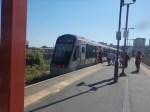
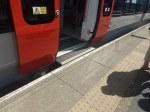
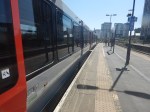
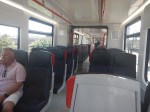
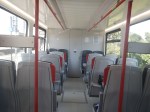
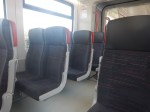









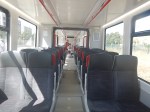

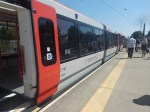
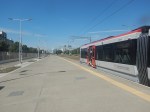
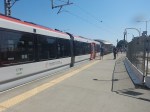
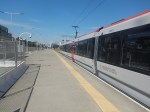
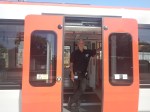
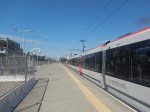
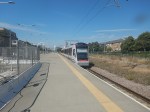

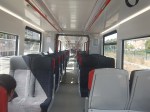
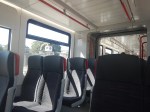
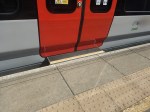


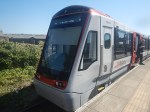
Note.
- Transport for Wales Rail are acquiring 36 Class 398 tram-trains.
- Each can hold 126 seated and 126 standing passengers.
- Both stations have step-free access to the tram-train.
- A second platform will be built at Cardiff Bay station.
- Google AI says the second platform at Cardiff Bay station will be electrified.
- The platform appears to be wide.
- In Karlsruhe, their German cousins regularly climb hills, as they will in South Wales.
This OpenRailwayMap shows the stations to the East of Cardiff Central station.
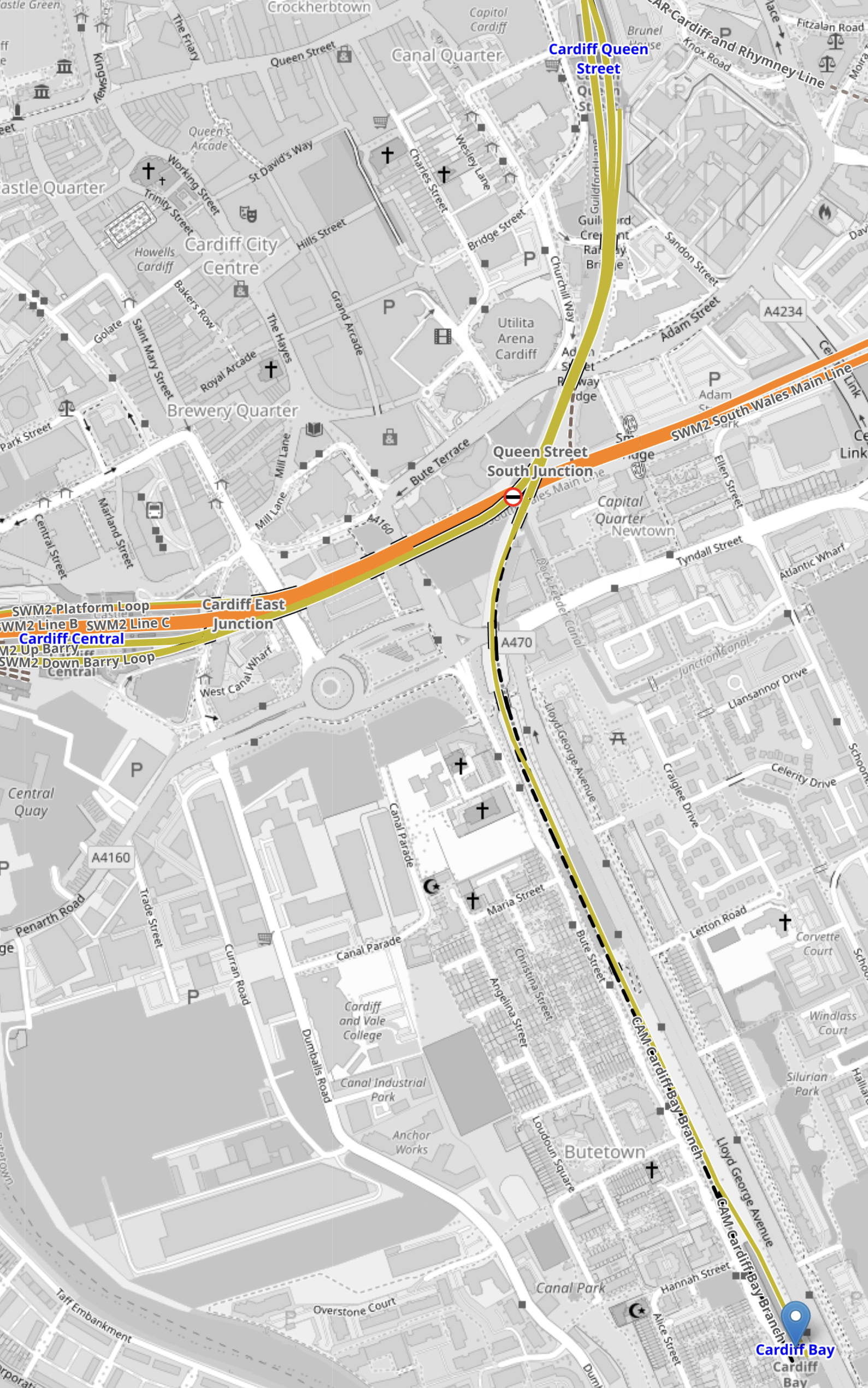
Note.
- Cardiff Bay station is in the South-East corner of the map and marked with the blue arrow.
- Cardiff Queen Street station is at the top of the map.
- The orange tracks are the South Wales Main Line.
- Cardiff Central station is on the main line at the left of the map.
The Cardiff Crossrail will link Cardiff Bay and Cardiff Central stations as a street tram.
I wonder how many short rail routes could be improved or even extended using tram-train technology?
The Southern Entrance To London City Airport – Revisited
I wrote The Southern Entrance To London City Airport in December 2022 and today, it is my top post.
I wonder why?
Any ideas?
Hydromax Sets US Speed Record
The title of this post, is the same as that of this of this press release from Ricardo.
This is the sub-heading.
The Ricardo supported vehicle achieves 368.347 mph record
These three paragraphs add some more detail.
JCB Hydromax has set a US Southern California Timing Association (SCTA) record Bonneville Speed Week. having achieved 368.347mph.
JCB Hydromax was developed by JCB with support from Ricardo and Prodrive, with Ricardo responsible for uprating JCB’s production hydrogen engines from 75 to 800 horsepower, while also reducing their weight by 100kg. And working closely with Prodrive, to ensure the engines could run laying on their sides to improve vehicle aerodynamics, and cope with the high altitude and temperatures of the Bonneville Salt Flats.
The Ricardo team have been on site in Utah throughout speed week to support with the preparation and running of the 32 foot streamliner car.
What I find amazing is the engineering, that must have gone into the project, to update a production hydrogen engine by eleven times and lose a 100 kg. of weight in the process.
Hopes Railway Station In Picturesque Village Could Become ‘Gateway’ To Northumberland Coast
The title of this post, is the same as that of this article on the Chronicle Live.
This is the sub-heading.
A rail company boss said there was a “real opportunity” for the station to have a bigger role
These three paragraphs add more details.
A key railway boss has provided hope that one of Northumberland’s quietest railway stations could finally see more trains pulling in. Chathill Station on the East Coast Mainline is close to two of the county’s most popular tourist destinations in Seahouses and Bamburgh.
Despite the excellent location it is one of the county’s least-used stations. Just 1,580 passengers were recorded between April 2024 and March 2025 – although this was up 25% on the previous 12 months.
Locals have been urging rail companies to make more stops in the village. Now, the boss of operator First Rail Open Access, which runs Lumo services, has visited the station and claimed there is a “real opportunity” to strengthen its role. Lumo provides services on the East Coast between King’s Cross and Edinburgh Waverly, passing through Chathill.
It seems that Lumo must think it is worthwhile stopping at Chathill.
Chathill: The Station That The Nation Forgot
This feature has the same title as this section.
It is well worth a read and gives a good background to the history of Chathill station and the other stations on the East Coast Main Line, and the former branch to Seahouses.
Could Modern Digital Signalling Be The Key For Lumo?
Lumo runs between London Kings Cross and Edinburgh Waverley and Glasgow Queen Street six time per day, calling at Stevenage, Newcastle, Morpeth, Edinburgh Waverley, Haymarket and Falkirk High.
Note.
- Stevenage calls only pick up Northbound and put down Southbound, so have Lumo developed procedures to get passengers on and off the train, as fast as possible?
- The East Coast Main Line is also under control of full digital signalling at Stevenage, so is that used to expedite the stop?
- Going North the trains seem to have a time where they leave Stevenage like 0606 and in reality they might arrive at 0604 and leave at 0606. So do they go as fast as traffic will allow between Kings Cross and Stevenage, using the digital signalling and the Mark 1 eyeball to keep tabs on the train in front?
- Going South a similar procedure seems to be used.
A typical stop at Stevenage seems to take between one and two minutes.
I have just checked Morpeth and all Lumo services seem to stop at Morpeth and they seem to take between one and two minutes.
It looks to me, as a Graduate Control Engineer, that full digital signalling on the East Coast Main Line might allow a couple extra stops to be added to Lumo’s timetable.
Will East Coast Main Line Digital Signalling Allow 140 mph Running?
I asked Google AI the question in the title of this section and received this reply.
Yes, the digital signalling being installed via the East Coast Digital Programme is a key technical enabler for future 140 mph (225 km/h) operation on parts of the East Coast Main Line.
This will surely, allow trains to pick up enough time on 140 mph sections of the line, to give enough time for the extra stops.
How Much Time Will 140 mph Running Save?
A quick calculation shows that if a train ran at 140 mph instead of 125 mph for a hundred miles, there would be approximate five minutes saved.
I suspect this would allow two extra stops.
Could An Extra Stop Be Made At Reston?
This OpenRailwayMap shows Chathill and South-East Scotland.
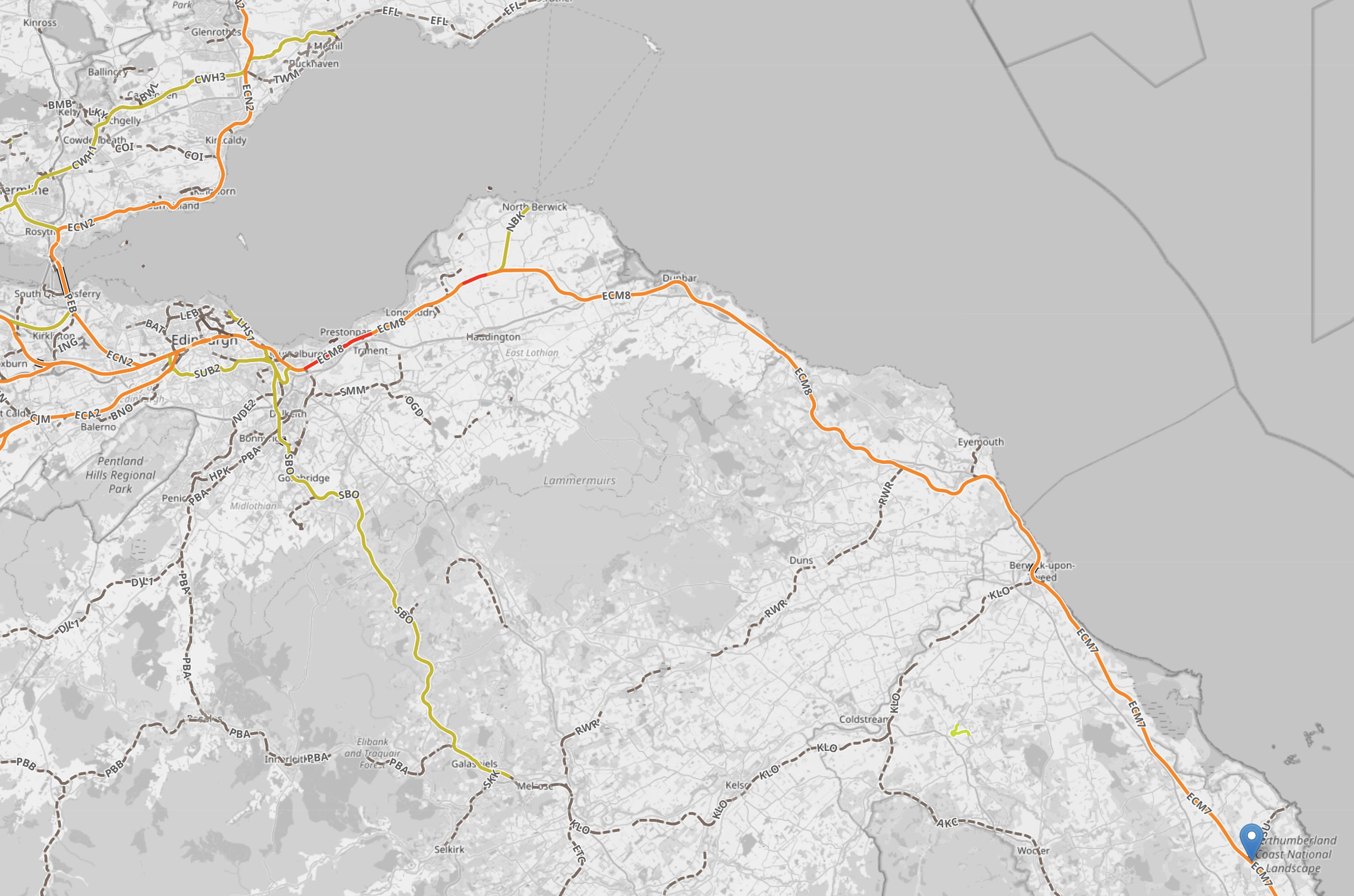
Note.
- The orange track going up the coast is the East Coast Main Line between London Kings Cross and Edinburgh.
- Chathill station is marked by the blue arrow in the South-East corner of the map on the East Coast Main Line.
- The East Coast Main Line crosses the Firth of Forth on the Forth Bridge to the West of Edinburgh.
- The yellow track coming down from the Edinburgh area is the Borders Railway to Galashiels and Tweedbank.
- Two former railways lead between Tweedbank and Berwick-upon-Tweed and Reston stations on the East Coast Main Line.
- Important stations, that are North of Chathill, are Berwick-upon-Tweed, Reston, Dunbar and East Linton.
- Berwick-on-Tweed and Dunbar are well-served by LNER, with Reston getting one train per day.
I could see Lumo stopping at Reston, just as they share business at Morpeth with LNER.
Are There Any Plans To Connect The Borders Railway To Berwick-On-Tweed?
Looking at the map, I just had to ask Google AI the question in the title of this section.
I received this reply.
Official feasibility and business case studies are instead focused on extending the current Tweedbank terminus south toward Hawick and Carlisle along the old Waverley Route.
Grassroots Proposals
Tweed Valley Campaign: A volunteer group called the Tweed Valley Railway Campaign has lobbied to restore a link running east from St Boswells toward Berwick-upon-Tweed.
Local Benefits: Proponents argue an east-west connection would link the Borders directly to the East Coast Main Line, helping tourism and commuters.
Official Status: Despite local campaigns, transport authorities and councils have not adopted the Berwick route as part of official funded transport strategies.
Official Extension Plans
Carlisle Route: Government backing and funding are directed toward an extension study heading toward Hawick and Carlisle.
Timeline: Consultants are advancing a strategic business case for the Carlisle alignment, expected to report by late 2027.
I wonder if there might be a simpler interim plan.
Consider.
- Galashiels has a vert smart rail and bus interchange.
- Google AI says that Galashiels interchange can handle coaches.
- Wrightbus are launching hydrogen coaches in the next year or so.
- Hydrogen coaches will be powerful and silent.
- Hydrogen coaches will have a working range of 1,000 km.
I could see that hydrogen coaches running from Galashiels to Carlisle and Berwick-on-Tweed could be a winner.
The Role Of Train Stations In Driving Economic Growth
The title of this post, is the same as that of this article on Business Live.
This is the sub-heading.
This role of railway stations is set out in a recent report by Development Economics.
These two paragraphs add more detail.
We usually think of railways and railway stations as places to catch trains. And so they are. They provide us in parts of Wales with an alternative to the motor car particularly for longer journeys; and within the UK where air travel options are few.
This role of railway stations is set out in a recent report by Development Economics: Growing Places – Railway Stations: Engines of Economic Growth. It illustrates the impact of Great Western main line stations including Carmarthen, a medium size station in terms of passenger numbers handling nearly half-a-million entries and exits annually.
It sounds to me, that next time I go to South Wales, I should go and look at Carmarthen.
The report from Development Exconomics is also mentioned in this article on Rail Industry Connect, which is entitled Railway Stations Emerge As Engines Of Growth, But SMEs Must Move Quickly To Secure Their Place.
This is the sub-heading.
Railway stations across the UK are being recast as far more than transport hubs, with new analysis positioning them at the centre of economic growth, regeneration and investment. A recent report by Great Western Railway, Growing Places: Railway Stations – Engines of Economic Growth, sets out the scale of this shift and, crucially, what it means for the rail supply chain.
The initial paragraph adds some more detail.
For SMEs, the message is clear. The opportunity is substantial, but it is evolving. Value is no longer created solely through infrastructure delivery; it is increasingly tied to the wider economic ecosystems that stations enable.
Both articles are a must read.
Andy Burnham should read both!
Could There Be Better Transport Connections Between Leeds/Bradford and Glasgow/Edinburgh?
I shall start this post with eleven questions, that I will ask Google AI.
How Many People Live In the Greater Leeds/Bradford Area?
I received this answer from Google AI.
The greater Leeds-Bradford urban and larger urban zone has an estimated population of about 1.65 million to 2.4 million people. The core combined Leeds-Bradford continuous built-up area holds roughly 1.66 million people, while the wider Leeds City Region and Larger Urban Zone reaches approximately 2.4 million.
How Many People Live In the Greater Glasgow Area?
I received this answer from Google AI.
The Greater Glasgow urban area has an estimated population of over 1 million people. Depending on how the boundaries are drawn, the wider NHS health board region contains about 1.2 million, and the broader Glasgow City Region counts roughly 1.8 million residents.
How Many People Live In the Greater Edinburgh Area?
I received this answer from Google AI.
The greater Edinburgh metropolitan or wider city region has an estimated population of approximately 912,000 to 1.35 million, depending on the regional boundary used. The City of Edinburgh council area itself holds 531,370 residents.
How Many Sheduled Air Services Are There Between Leeds/Bradford and Glasgow Airports?
I received this answer from Google AI.
There are currently zero direct, scheduled non-stop air services operating between Leeds Bradford Airport (LBA) and Glasgow Airport (GLA).
How Many Scheduled Air Services Are There Between Leeds/Bradford and Edinburgh Airports?
I received this answer from Google AI.
There are currently zero direct, scheduled non-stop air services operating between Leeds Bradford Airport (LBA) and Edinburgh Airport (EDI).
How Many Scheduled Direct Rail Services Are There Between Leeds or Bradford and Glasgow?
I received this answer from Google AI.
There is typically only 1 scheduled direct train service per day in each direction between Leeds and Glasgow (operated via CrossCountry), and n0 direct scheduled services between Bradford and Glasgow.
How Many Sheduled Direct Rail Services Are There Between Leeds or Bradford and Edinburgh?
I received this answer from Google AI.
There are typically only 1 to 2 scheduled direct train services per day running from Leeds to Edinburgh (usually operated by CrossCountry or via select extensions), taking roughly 3 hours. Bradford has zero regular scheduled direct rail services to Edinburgh; journeys from Bradford require at least one change (commonly transferring at Leeds).
How Long Does It Take To Drive Between Leeds And Glasgow?
I received this answer from Google AI.
Driving between Leeds and Glasgow takes about 3 hours and 50 minutes to 4 hours and 15 minutes under normal conditions, covering a distance of roughly 210 to 222 miles via the A1(M) and M74.
How Long Does It Take To Drive Between Leeds And Edinburgh?
I received this answer from Google AI.
Driving between Bradford and Glasgow takes about 3.5 to 4 hours under normal conditions. The total distance is roughly 200 miles (322 km), mostly following the A1(M) or M6 motorways depending on your chosen route.
How Long Does It Take To Drive Between Bradford And Glasgow?
I received this answer from Google AI.
Driving between Leeds and Glasgow takes about 3 hours and 50 minutes to 4 hours and 15 minutes under normal conditions, covering a distance of roughly 210 to 222 miles via the A1(M) and M74.
How Long Does It Take To Drive Between Bradford And Edinburgh?
I received this answer from Google AI.
Driving between Bradford and Edinburgh takes about 4 hours to 4.5 hours under normal traffic conditions. The total driving distance is roughly 196 to 202 miles, primarily heading north via the A1(M) or M1 and A69/M74 routes.
But I do think that Northern England and Scotland could be getting closer together in the next few years.
Consider.
- LNER stopped running between King’s Cross and Glasgow a couple of years ago.
- No airlines fly between Leeds/Bradford and Glasgow or Edinburgh Airports.
- TransPennine Express run direct rail services between both Liverpool and Manchester, and Glasgow.
- There are only occasional direct rail services between Leeds or Bradford, and Glasgow or Edinburgh.
- Driving is not an easy or quick option.
- Lumo run a few limited rail services between Glasgow and Stirling, and London.
There is a big gap in rail and air services between the 1.5 million people in Leeds/Bradford and nearly 2 million in Central Scotland.
But.
- Between Bradford and Carlisle is the Settle and Carlisle Line.
- The Settle and Carlisle is one of the most scenic lines in Europe, if not the world.
- The Settle and Carlisle is not electrified.
- Until 1974, it was used by the Thames-Clyde Express between London St. Pancras and Glasgow.
- Avanti have used the route for engineering diversions, using their new five-car Class 805 trains in pairs.
- Bradford Forster Square station has been updated so that ten-car trains on the route can call at both Leeds and Bradford Forster Square stations
- I believe that in a couple of years, LNER will have CAF tri-mode trains and Hitachi battery-electric trains, that will be able to bridge the gap in the electrification between Skipton and Carlisle.
Selected Kings Cross and Bradford Forster Square services could be extended to Skipton, Settle, Carlisle, Dumfries, Kilmarnock and Glasgow.
There will be three major benefits.
- Several towns and cities will gain a London service.
- The extra services will help to take on the airlines between London and Glasgow.
- Leeds and Bradford will be connected to Glasgow.
No major infrastructure would need to be created.
I have other thoughts.
Can Ten-Car Trains Use The Settle And Carlisle?
This article on the BBC is entitled Rail Operator Crosses Picturesque Line.
There is a picture in the article of two Avanti five-car Class 805 trains crossing the Ribblehead Viaduct on the Settle and Carlisle Line.
If they can do it, I suspect that a new 10-car CAF Class 897 train can also run on the line.
Could High-Class Food Be Served Between London And Glasgow?
Google AI gives this history of Pullman Dining on current GWR services.
Great Western Railway (GWR) has been running Pullman Dining on its Intercity Express Trains (Class 800 and sister Class 802 units) for about seven years, since the new Hitachi-built fleets rolled out fine-dining menus around 2017 to 2018 to replace the legacy High Speed Train (HST) sets.
In On The 10:45 From Paddington, I describe one of the best simple meals I’ve ever had.
I’m sure there are a few Scottish chefs, who could create a Scottish-themed menu for services to Scotland via the Settle and Carlisle.
Passengers Would Have A Choice Between London And Glasgow
These would be the options.
- Fast – Ryanair and lose a lot of brownie points.
- All-Electric Semi-Fast – Avanti or Lumo.
- Slower, but enjoying the scenery and why not a meal – LNER via Settle and Carlisle.
Five trains per day each way would add 3,000 seats per day, which would be around 15 of Ryanair’s 737s per day.
Will Leeds/Bradford Airport Have A Glasgow Or Edinburgh Flight Some Time Soon?
Consider.
- Between Leeds-Bradford and Glasgow airports is 177.4 miles.
- Between Leeds-Bradford and Edinburgh airports is 159.5 miles.
- The all-electric Eviation Alice has a range of 250 miles with 10 passengers.
- The all-electric Heart Aviation ES-30 has a range of 220 miles with 30 passengers.
Google AI gives this view on when the Heart Aviation ES-30 will enter service.
The Heart Aerospace ES-30 hybrid-electric airplane is scheduled to enter commercial service in 2028, though some industry analysis and program updates suggest development adjustments could stretch the timeline closer to 2029 or 2031.
The Eviation Alice doesn’t give a date at present.
Given the option, I suspect some travellers would prefer to fly.
Do LNER Have Some Cunning Plans For The Serenzas?
Along with some others, I was surprised, when LNER ordered a fleet of new trains in 2023, to run alongside the Azumas, that it wasn’t some more Azumas.
I wrote about the order in First Tri-Mode Long Distance Trains For The East Coast Main Line.
Why Didn’t LNER Just Order More Azumas?
I asked Google AI, the question in the title of this section and received this reply.
When London North Eastern Railway (LNER) needed additional trains for the East Coast Main Line, they chose to order 10 new “tri-mode” (electric, diesel, and battery) trains from Spanish manufacturer CAF in November 2023 rather than buying more Hitachi Azumas.
Why LNER Didn’t Order More Azumas?
Desire for New Technology: LNER wanted cutting-edge “tri-mode” capability—incorporating battery technology alongside electric and diesel power—to reduce carbon emissions and future-proof the fleet. Hitachi’s corresponding tri-mode platform was centered in Italy, making CAF a more ready and accessible option with an established UK manufacturing platform in Newport, Wales.
Procurement and Pricing: Industry discussions and reports noted varying challenges with Hitachi regarding pricing and availability for small add-on batches, prompting a competitive procurement process where CAF ultimately won the contract to replace remaining older InterCity 225 sets.
Operational Resilience: The new CAF battery-hybrid trains provide unique operational flexibility for diversions on un-electrified routes (such as the Joint Line) that standard electric Azumas cannot traverse under their own power without external help.
These are my current thoughts on LNER’s plans for the Serenzas.
Will The Serenzas Run To Harrogate?
As the seven trains per day to Harrogate use diesel between Leeds and Harrogate, I suspect the new trains will take over Harrogate services and run silently on batteries North of Leeds, which is less than 40 miles out and back.
How will the lack of noise affect ridership? London Kings Cross and Harrogate will be an interesting test case, as it looks like from the in service date of the trains of 2028, that they could be one of the first battery-electric train services, run over a distance of over two hundred miles.
So it will be an interesting test route in several ways for the new Serenzas.
Could The Serenzas Go Further Than Harrogate?
This OpenRailwayMap shows the electrification in Yorkshire between Bradford, Harrogate, Leeds and York.

Note.
- Electrified lines are shown in red.
- Unelectrified lines are shown in black.
- Lines in the process of being electrified are shown in dotted red and black.
- The City of Bradford is in the South-West corner of the map.
- The electrification entering the city from the North goes to Bradford Forster Square station, where LNER services from London terminate.
- On the opposite side of the city centre is Bradford Interchange station, where Grand Central services from London terminate.
- North of Bradford is the electrified triangular junction at Shipley station
- Trains go West from Shipley junction to Skipton, where the electrification ends and the iconic Settle and Carlisle line to Carlisle and eventually Glasgow.
- Trains go North from Shipley junction on an electrified line to Ilkley station.
- Trains go East from Shipley junction on an electrified line to Leeds station.
- From the Leeds area an unelectrified line leads to the North and Harrogate station, which is marked by a blue arrow.
- The City of York is in the North-East corner of the map.
- A partially-electrified line leads from Leeds to York.
- The Leeds and York line is being fully-electrified so that electric trains can reach Neville Hill depot in Leeds.
- Harrogate and York are connected by an unelectrified line, that goes via Knaresborough.
Between Bradford, Harrogate, Leeds and York, there are a coomprehensive layout of lines many oy of which are electrified.
Could The Serenzas Go On From Harrogate To York?
Consider.
- Leeds and York is only 38.8 miles via Harrogate, so I suspect that this is possible using battery power.
- Harrogate has seven trains per day (tpd) from London Kings Cross via Leeds, at a frequency of one train per two hours (tp2h).
- York has six tpd from London Kings Cross, at a frequency of one tp2h.
Could LNER be thinking of a train, that does a Grand Tour of Yorkshire from London Kings Cross?
- It could call at Stevenage, Newark Northgate, Doncaster, Wakefield Westgate, Leeds, Horsforth, Harrogate, Knaresborough, York, Doncaster, Retford and Peterborough.
- It is the sort of concept, that is made possible by using a tri-mode train, that can go anywhere, there’s a railway.
- Was an idea like this, thought up by CAF to sell trains?
It is certainly possible.
Could The Serenzas Go On From Bradford Forster Square To Glasgow?
Consider.
- Until 1974, there used to be a Thames-Clyde Express, which has this Wikipedia entry.
- The route was between London St. Pancras and Glasgow Central.
- Intermediate stops were Luton, Kettering, Leicester, Nottingham, Derby, Chesterfield, Sheffield, Wakefield, Leeds, Skipton, Settle, Carlisle, Dumfries and Kilmarnock.
- LNER gave up serving Glasgow in 2024.
- Currently, Leeds and Bradford have no direct train service to Glasgow.
- The Settle and Carlisle route is one of the most scenic railway lines in Europe, if not the world.
- Do any airlines fly Leeds/Bradford and Glasgow? No according to Google AI!
Remember, that the Rail Minister; Lord Hendy, is an Economic Geography graduate of Leeds University, so he must know something about Yorkshire and its people.
I believe a modern-day Thames-Clyde Express could be run, by extending a number of LNER’s London and Bradford Forster Square services.
- The route would be between London Kings Cross and Glasgow Central.
- Intermediate stops would be Stevenage, Newark Northgate, Doncaster, Wakefield Westgate, Leeds, Shipley, Bradford Forster Square, Skipton, Settle, Carlisle, Dumfries and Kilmarnock.
- The route is now substantially electrified.
- It would take on the airlines on the London and Glasgow route.
- Class 805 bi-mode trains have used the Settle and Carlisle.
This could become one of the great railway journeys of Europe.
Thoughts On The Diesel Engines On Class 800/802 Trains
On my trip down to Devon yesterday, I remarked to the young lad, who I was sitting opposite that I couldn’t feel or hear the diesel engine under the floor of our car.
The Wikipedia entry for the Class 800 train, says this about which cars have a diesel orchestra under the floors.
The Class 800 and Class 802 bi-mode are equipped with three GUs per five-car set and five GUs per nine-car set; a five-car set has a GU situated under vehicles 2/3/4 and a nine-car set has a GU situated under vehicles 2/3/5/7/8. In comparison, the electric-orientated Class 801 features a single GU for a five- to nine-car set, which provides emergency power for limited traction and auxiliaries if the power supply from the overhead line fails. By adding or removing GUs, a Class 800 can be converted into a Class 801 and vice versa.
I believe we were in car 6 of a nine-car set, which would have explained the Silence of the Diesels.
Coming back, I was sitting in a car, which was labelled C, so as car 9 was leading, I must have been in Wikipedia’s car 7. So as it was quiet, was car 7’s diesel not being used?
But both trips indicated how quiet running will be, when batteries replace diesels.
What Is The Battery Range Of An Hitachi Intercity Tri-Mode Battery Train?
In The Data Sheet For Hitachi Battery Electric Trains, I came to these conclusions.
- The battery pack has a capacity of 750 kWh.
- A five-car train needs three battery-packs to travel 100 miles.
- A nine-car train needs five battery-packs to travel 100 miles.
- The maximum range of a five-car train with three batteries is 117 miles.
- The maximum range of a nine-car train with five batteries is 121 miles.
As battery technology gets better, these distances will increase.
Could Class 800/802 Trains Run Between Newbury And Exeter St. Davids?
Consider.
- Trains from London to the South-West switch to diesel power at Newbury, which is 53 miles from London.
- Exeter St. Davids is 173.4 miles from London.
- Newbury and Exeter St. Davids is 120.4 miles.
- Taunton station could be electrified for a Splash and Dash.
But it does appear that Exeter St. Davids can be reached by a battery-electric train from London.
Could Class 800/802 Trains Run Between Exeter St. Davids And Plymouth?
Consider.
- All trains seem to wait for ten minutes at Plymouth.
- Plymouth station could be electrified for a Splash and Dash.
- Plymouth and Exeter St. Davids is only 52 miles.
Could Class 800/802 Trains Run Between Penzance And Plymouth?
Consider.
- All trains seem to wait for ten minutes at Plymouth.
- Plymouth station could be electrified for a Splash and Dash.
- Penzance and Plymouth is only 79.5 miles.
It looks like trains can easily run between Penzance and Plymouth on battery-power.
Charging A Pair Of Trains
I believe platform lengths at Taunton, Exeter St. Davids, Plymouth and Penzance are all long enough to handle a pair of five-car Class 800 or Class 802 trains.
There could be separate circuits at each end of the platform so both trains could be quickly charged.
I doubt the Nimbys would object much to electrification in stations.
Conclusion
I’m fairly sure, that with short lengths of electrification at Taunton, Exeter St. Davids, Plymouth and Penzance, and batteries, that Class 800 and Class 802 trains can hop their way between Penzance and Newbury.
As a ten-minute stop is already included in the timetable at Plymouth, the trains could have a quick top up.

