Heathrow Southern Rail Link Gets Boost As London Mayor Gives Backing
The title of this post, is the same as that of this article on Rail Technology Magazine.
These were the two introductory paragraphs.
The Railway Industry Association has welcomed the backing from London Mayor, Sadiq Khan for the proposed Heathrow Southern Rail Link.
Speaking at the London Assembly recently, Mr Khan said: “I welcome the useful role that a Southern Rail Link to Heathrow could play in supporting a shift to sustainable modes, while transforming access to Heathrow Airport for passengers and staff from south London, Surrey and Hampshire.
I introduced the Heathrow Southern Railway in November 2016 in Why I Like The Heathrow Southern Railway Proposal.
I still like it and we now have more information, which includes this map.
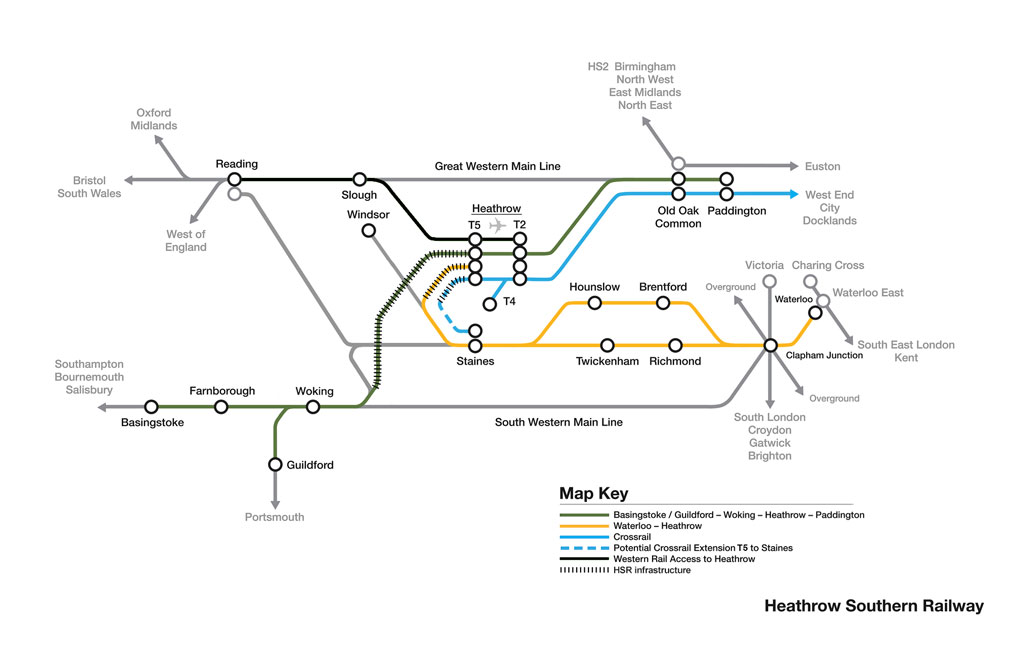
Note.
- The blue line is the Elizabeth Line.
- The yellow line is a direct link from Waterloo to Heathrow.
- The station in a six pointed star is Clapham Junction.
On the Heathrow Southern Railway web site there is a section called Service Opportunities.
It details two routes.
- Heathrow and Waterloo via Staines and Clapham Junction
- Basingstoke/Guildford and Paddington via Woking and Heathrow
These are a few random thoughts.
A ULEZ Avoiding Line
If the Elizabeth Line is extended to Staines, then Heathrow Southern Railway provides a ULEZ avoiding route for Heathrow employees to help get the Mayor out of a hole. A station guy at Staines told me a lot of Heathrow staff take buses to the airport from Staines station.
West London Orbital Railway
I believe that the West London Orbital Railway would make sense to give lots of other routes for Heathrow staff and passengers.
Conclusion
I’ve always liked the Heathrow Southern Railway and I hope this interest from the Mayor moves the project forward.
Cummins Agrees To Integrate Its Hydrogen ICE Technology Into Terex® Advance Trucks
The title of this post, is the same as that of this article on H2 View.
These three paragraphs outline the deal.
Cummins and Terex® Advance have signed a Letter of Intent (LoI) to integrate hydrogen internal combustion engines (ICE) into Terex’s Commander Series.
The Commander Series trucks are currently powered by Cummins’ diesel engines, but the company will now provide its X15H hydrogen ICE when series production of the technology begins later this decade.
The X15H is based on familiar combustion engine technology, with integration into the truck chassis being straightforward and doesn’t require a major overhaul of vehicle design or business operations.
Note.
This page is the Terex Advance web site.
This page on the Terex web site shows the Terex Advance Commander series.
I think it is true to say to UK and European eyes, these trucks are an unusual design.
In Cummins Fuel-Agnostic X Series Platform, there is a link to a Cummins video, which explains Cummins multi-fuel technology.
This is a side view of the top-of-the-range monster.
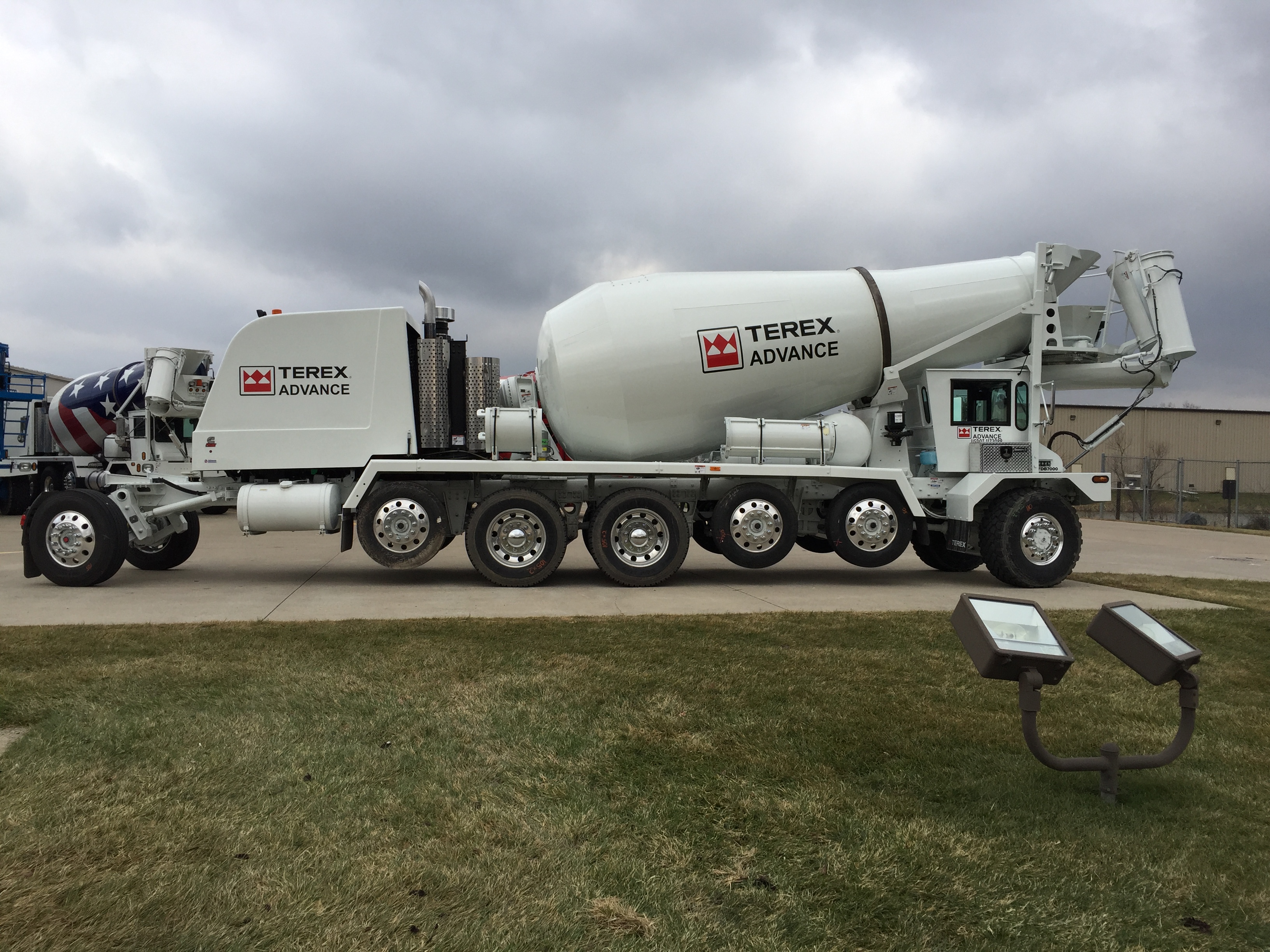
Note.
- Front is to the right.
- I suspect the driver doesn’t have to get out of the cab to discharge the concrete.
- The engine is at the rear with vertical exhausts.
- All axles are driven.
You’d certainly notice one of these if they were to be used in the City of London.
And this is the baby of the range.
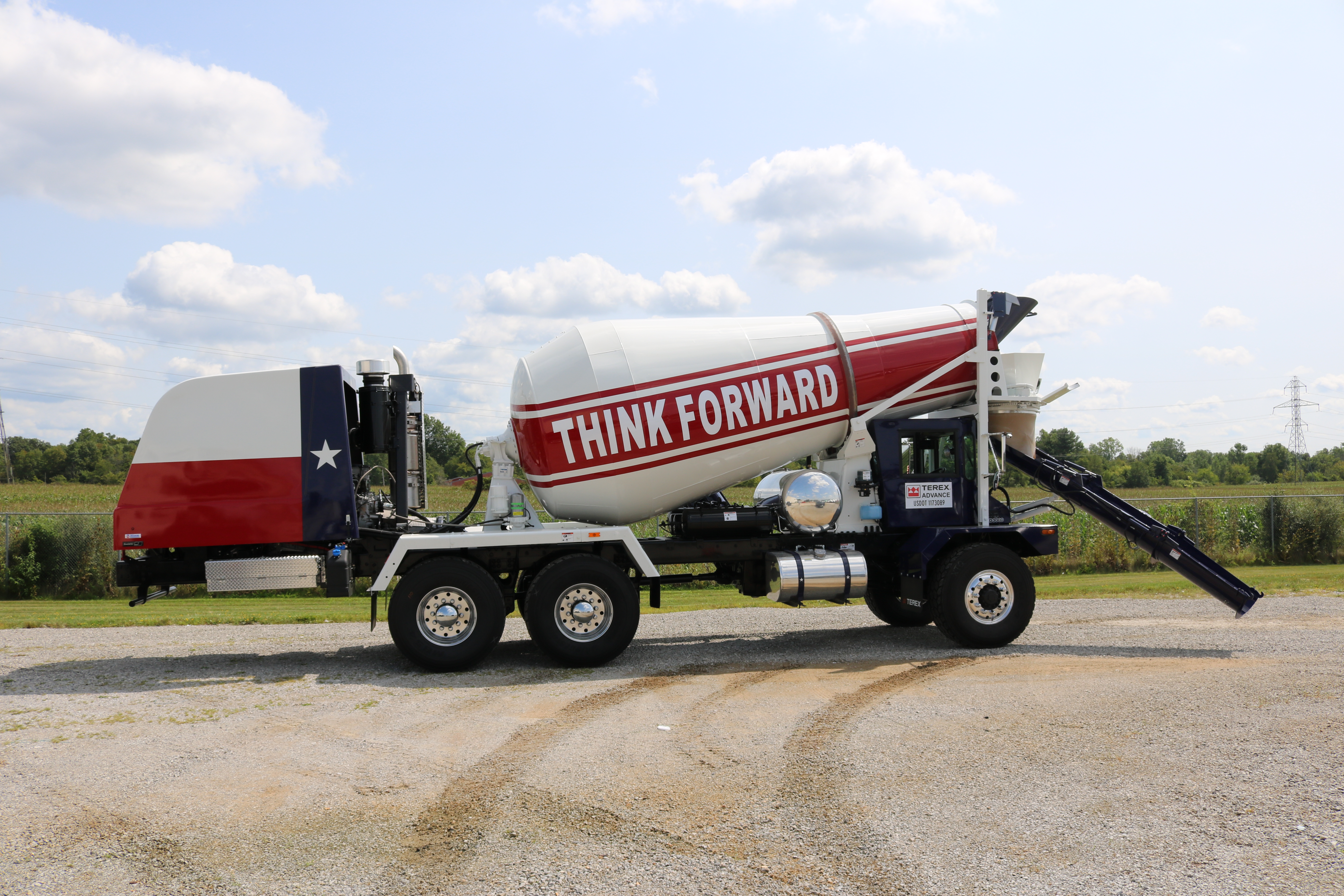
Three axles is normal for the UK. so I wonder if this machine will ever make it across the pond.
This last paragraph in the article describes the X15H hydrogen internal combustion engine.
The X15H was showcased at the Advanced Clean Transportation (ACT) Expo in May (2023), along with its hydrogen ICE-powered concept truck. The X15H features a 700-bar pressure 80kg capacity hydrogen storage system and a range of more than 500 miles, with up to 500 horsepower.
Could one of these trucks really deliver ready-mix concrete from London to Manchester and return?
Conclusion
The article says that integration of the hydrogen technology is straightforward and if you watch the Cummins video, the animation says it is.
But surely the big advantage on construction sites, is that all the workers will not get the dose of pollution, that they would currently get from a diesel cement mixer delivering a load of ready-mixed concrete, that had to be distributed and laid.
I think this could be a very neat application of hydrogen technology and Cummins will be looking for more applications of a similar nature.
German Police Probe ‘Political Motive’ In Railway Fires
The title of this post, is the same as that of this article on DW.com.
This is the sub-heading.
A series of fires hit rail infrastructure on the main line between Hamburg and Berlin overnight, leading to widespread train disruptions. Police say they suspect a politically motivated act of sabotage.
This is the first two paragraphs.
German police are investigating a suspected political motive behind an alleged act of sabotage targeting a major train route connecting the port city of Hamburg to the capital, Berlin.
Fire broke out overnight at three locations in the northern Hamburg region, affecting shafts holding railway cables.
This paragraph describes a claim for responsibility.
An anonymous letter published on the far-left website Indymedia claimed responsibility for the incident, describing it as an act of “sabotage.” The letter said it was a protest against “neo-colonial exploitation and earth destroying extraction of raw materials.”
I don’t think we want anything like this in the UK.
Hydrogen Fuel Cell-Electric Coach Driveline Coming From Wrightbus
The title of this post, is the same as that of this article on RouteOne.
These are the first two paragraphs.
Wrightbus has been awarded up to £534,000 of government funding via the Advanced Propulsion Centre (APC) for the development, testing and validation of a hydrogen fuel cell-electric coach driveline.
The Ballymena manufacturer will receive the money from an £11 million pot administered by APC as a second round of the Advanced Route to Market Demonstrator scheme (ARMD2), which itself is part of over £50 million of public funding towards 30 “cutting edge manufacturing projects” in the UK.
I have never driven a coach, but I do feel that this project could be a winner.
- From riding in hundreds of their products over the years, I’m sure Wrightbus could produce a coach that satisfies the demands of coach companies and their passengers.
- Long routes like London and Scotland are popular coach routes and are of the order of 400 miles. Would passengers tolerate a thirty minute stop halfway to charge the batteries on an electric coach?
- Through, the experiences of the vehicle leasing company, I owned, I know that finance for quality coaches is not hard to come by and they are a good investment.
I also believe that a hydrogen-powered coach could be a flagship product for the hydrogen-powered transport sector.
We’ve all been on a motorway and seen coaches in the fast lane at 70 mph.
What effect will that have if the coach was emblazoned with “Green Hydrogen Coach – London-Glasgow Non-Stop In 7 Hrs”?
Airbus, Rolls-Royce, EasyJet Headline Formation Of UK Hydrogen Alliance
The title of this post, is the same as that of this article from Future Flight.
These two paragraphs outline the story.
A group of leading companies in the UK aviation and renewable energy sectors including EasyJet, Rolls-Royce, and Airbus has established the Hydrogen in Aviation (HIA) alliance to accelerate the delivery of zero-carbon aviation, the companies said Tuesday. HIA, whose partners also include Ørsted, GKN Aerospace, and Bristol Airport, said decarbonization efforts involving hydrogen should assume more urgency at a time when sustainable aviation fuel and batteries have drawn so much of the sector’s attention.
Working with government, local authorities, and the aviation and hydrogen sectors, the group plans to draw on members’ expertise to propose “a clear and deliverable pathway” to achieving hydrogen-powered aviation. Efforts center on clearing a pathway for preparing the needed infrastructure as well as policy, regulatory, and safety frameworks.
This Airbus infographic describes the aircraft in Airbus’s ZEROe project.
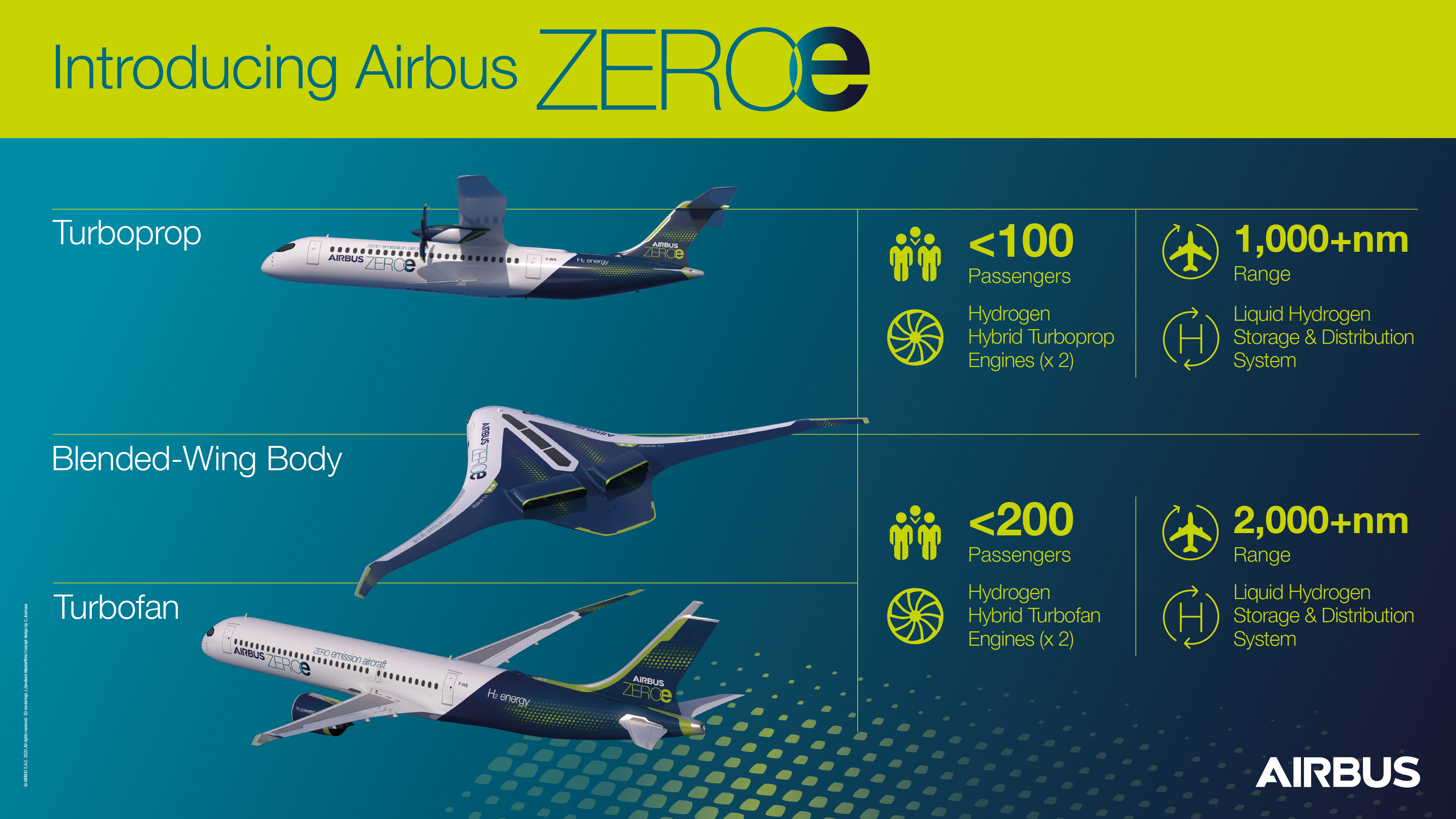
Discover the three zero-emission concept aircraft known as ZEROe in this infographic. These turbofan, turboprop, and blended-wing-body configurations are all hydrogen hybrid aircraft.
These are my thoughts.
Do The ZEROe Turboprop And The ZEROe Turbofan Have Similar Hydrogen Systems?
This is Airbus’s summary of the design of the ZEROe Turboprop
Two hybrid-hydrogen turboprop engines, which drive eight-bladed propellers, provide thrust. The liquid hydrogen storage and distribution system is located behind the rear pressure bulkhead
This screen capture taken from an Airbus video, shows a rear view of the plane.

Note the sizeable cone-shaped rear end to the fuselage with no windows.
This is Airbus’s summary of the design of the ZEROe Turbofan
Two hybrid hydrogen turbofan engines provide thrust. The liquid hydrogen storage and distribution system is located behind the rear pressure bulkhead.
This screen capture taken from an Airbus video, shows the plane.

Note how there are no windows at the back of the fuselage, as the hydrogen tank doesn’t need them.
It looks to me, that similar cone-shaped tanks for hydrogen, customised for each aircraft could be placed behind the rear bulkhead.
There would probably be space for any pumps needed to distribute the hydrogen to the engines.
All the stored hydrogen and its gubbins could be safely sealed behind the rear bulkhead.
I am fairly certain that the ZEROe Turboprop and the ZEROe Turbofan will have similar hydrogen systems.
Do The ZEROe Turboprop And The ZEROe Turbofan Have Auxiliary Power Units?
The auxiliary power unit or APU in an aircraft that provides energy for functions other than propulsion.
In Airbus To Trial In-flight Auxiliary Power Entirely Generated By Hydrogen, I wrote about Airbus’s development of APU’s based on fuel cells and running on hydrogen.
This surely could be a way to go.
- A battery could store power.
- Fuel cells are proving to be reliable.
- The plane would have two independent electrical systems.
Power would always be available for the cockpit, flying controls and to restart the engines, just as it is in any airliner today.
Do The ZEROe Turboprop And The ZEROe Turbofan Have The Same Cockpit?
The cockpits of the A 320 neo and the A 320 ceo seem to have a similar profile, but the cockpit of the ZEROe Turbofan seems to have been reprofiled.
In ZEROe – Towards The World’s First Zero-Emission Commercial Aircraft, I showed these front on views of the cockpits of the ZEROe Turboprop and ZEROe Turbofan.


I questioned if the two cockpits were related.
- A single cockpit for both aircraft would surely ease manufacture, maintenance and pilot training.
- I’m no aerodynamicist, but it certainly looks that the new cockpit will reduce drag and fuel consumption.
This common cockpit concept was used for the Boeing 757 and the Boeing 767 in the 1980s, so it is not a new concept.
Although the cockpit, appears to be being used in the ZEROe for the first time, I would expect it is already under development and might feature in any later version of the A 320 neo.
Do Airbus Have A Preferred Development Order?
Consider.
- My product development experience indicates that the development of the ZEROe Blended-Wing Body will involve more flight testing and aerodynamic checks than the other two aircraft, so I would make it the last aircraft to enter service.
- The ZEROe Turboprop appears to be a development of the ATR 72.
- The ZEROe Turbofan appears to be a development of an A 320 neo.
- The ZEROe Turboprop and ZEROe Turbofan would appear to have similar designs of cockpit, hydrogen systems and auxiliary power units.
- It looks to me that either of the ZEROe Turboprop or ZEROe Turbofan could be developed first.
I would develop the ZEROe Turboprop first, as it is the smaller aircraft.
Why Bristol Airport?
This page on the Airbus web site is entitled Airbus In The United Kingdom, where this is the first paragraph.
Building on a proud 100-year British aviation heritage, Airbus is part of the very fabric of the UK – which is one of the company’s four home markets, alongside France, Germany and Spain. Its 11,000-strong UK workforce is part of a global family of 125,000 employees.
This is said under Commercial Aircraft.
The sites at Filton and Broughton design, test and manufacture the wings for all Airbus’ A320 family, A330 and A350 commercial aircraft, directly sustaining more than 8,000 full-time jobs and hundreds of apprenticeships.
A220 family wings are designed and built by Spirit AeroSystems in Belfast, Northern Ireland.
Broughton has a proud tradition of aerospace manufacturing dating back 80 years, having supplied the RAF with vital aircraft during the Second World War. Employing almost 5,000 people, Broughton is a global centre of excellence for manufacturing and delivers over 500 wing sets per year for the A320 family, A330 and A350. Airbus has invested more than £2 billion in the Broughton plant over the past 10 years.
Core activities at Filton, where an additional 3,000 people work, are the design, engineering and support for Airbus wings, fuel systems and landing gear systems. Teams also work on aerodynamics research, development and test facilities, including our future zero-emissions programme, ZEROe, while wings for the A400M transporter are assembled on site.
It would appear that Filton in Bristol, is a very important part of Airbus’s operations in the UK.
- It appears to have major responsibility for all Airbus wings except the smallest.
- It has a large responsibility with respect to the ZEROe family of aircraft.
- Filton Airfield is now closed.
- Filton can do substantial assembly if required.
So was it just a logical decision to phone up Bristol Airport and ask, if they’d like to join the project?
In addition.
- Bristol Airport has a 2000 metre East West asphalt runway.
- The airport can handle a Boeing 787 Dreamliner and Airbus A330.
- It is the eighth busiest airport in the UK.
- It is a busy general aviation airfield.
- There is plenty of electricity in the area and Hinckley Point C will open down the road in a couple of years.
Bristol Airport is probably typical of many provincial airports around the world.
Why EasyJet?
These paragraphs from the Future Flight article help to explain.
“There is no doubt that the UK has the potential to become a world leader in hydrogen aviation, which could bring with it a £34 billion per annum boost to the country’s economy by 2050, but in order to capture this opportunity, rapid change is needed and the time to act is now,” said Johan Lundgren, CEO of EasyJet and HIA’s first chairman.
“We must work together to deliver the radical solutions required for a hard-to-abate industry like aviation so we can protect and maximize the benefits that it brings to the UK economy and society and that we know British consumers want to be preserved.”
Under its Zero-E program, Airbus aims to bring to market the first hydrogen-powered narrowbody commercial airplane by 2035. Separately, a partnership between Rolls-Royce and EasyJet signed last year saw the companies test hydrogen fuel in gaseous form in an adapted AE2100-A turbine, the engine that powers the Saab 2000 regional airliner. The November 2022 test, which used hydrogen produced in the Orkney Islands by the European Marine Energy Centre using renewable energy, marked the first run of a modern engine using hydrogen.
EasyJet seems to be enthusiastic about hydrogen and their CEO will be the HIA’s first chairman.
EasyJet also has a series of routes from Bristol Airport.
- Alicante – 907 miles
- Amsterdam – 326 miles
- Athens – 1592 miles
- Antalya – 1981 miles
- Barcelona – 733 miles
- Basel/Mulhouse – 530 miles
- Belfast–City – 259 miles
- Belfast–International – 269 miles
- Berlin – 694 miles
- Bilbao – 559 miles
- Bodrum – 1772 miles
- Bordeaux – 462 miles
- Catania – 1295 miles
- Chania – 1719 miles
- Copenhagen – 694 miles
- Corfu – 1356 miles
- Dalaman – 1981 miles
- Dubrovnik – 1155 miles
- Edinburgh – 316 miles
- Enfidha – 1241 miles
- Faro – 1026 miles
- Fuerteventura – 1687 miles
- Funchal – 1473 miles
- Geneva – 536 miles
- Gibraltar – 1060 miles
- Glasgow – 317 miles
- Gran Canaria – 1749 miles
- Grenoble – 556 miles
- Heraklion – 1768 miles
- Hurghada – 2526 miles
- Ibiza – 887 miles
- Innsbruck – 693 miles
- Inverness – 429 miles
- Isle of Man – 203 miles
- Kefalonia – 1451 miles
- Kos – 1770 miles
- Kraków – 991 miles
- La Rochelle – 366 miles
- Lanzarote – 1649 miles
- Larnaca – 2126 miles
- Lisbon – 925 miles
- Lyon – 529 miles
- Madrid – 755 miles
- Málaga – 1020 miles
- Marrakesh – 1393 miles
- Marseille – 662 miles
- Menorca – 863 miles
- Milan–Malpensa – 682 miles
- Murcia – 945 miles
- Mykonos – 1670 miles
- Nantes – 251 miles
- Naples – 1085 miles
- Newcastle upon Tyne – 256 miles
- Nice – 704 miles
- Olbia – 929 miles
- Palma de Mallorca – 859 miles
- Paphos – 2087 miles
- Paris–Charles de Gaulle – 285 miles
- Paris–Orly – 290 miles
- Pisa – 808 miles
- Porto – 755 miles
- Prague – 746 miles
- Preveza/Lefkada – 1421 miles
- Pula – 885 miles
- Reykjavík–Keflavík – 1121 miles
- Rome–Fiumicino – 968 miles
- Rovaniemi – 1436 miles
- Salzburg – 745 miles
- Santorini – 1726 miles
- Sharm El Sheikh – 2507 miles
- Sofia – 1359 miles
- Split – 927 miles
- Tenerife–South – 1766 miles
- Toulouse – 569 miles
- Turin – 645 miles
- Venice – 798 miles
- Zakynthos – 1484 miles
Note.
- There are nine routes under 400 miles, which might enable a round trip without refuelling in a ZEROe Turboprop.
- There are nine routes under 800 miles, which might enable a round trip without refuelling in a ZEROe Turbofan.
- There are only four routes over 2000 miles, which might make a single trip difficult in a ZEROe Turbofan.
- Bristol and Toulouse is a convenient 569 miles for Airbus and its employees, customers and contractors.
It does appear that, EasyJet’s routes fit the 1000 mile range of a ZEROe Turboprop and the 2000 mile range of a ZEROe Turbofan exceedingly well.
Conclusion
Bristol will be important in the development of Airbus’s three ZEROe aircraft.
Toyota Unveils Prototype Hydrogen Fuel Cell Hilux
The title of this post, is the same as that of this article in The Engineer.
This is the sub-heading.
Toyota has today (September 5, 2023) unveiled a prototype hydrogen fuel cell-powered Hilux at Toyota Manufacturing UK’s Burnaston car plant in Derby.
This is the first paragraph.
The pick-up has been developed in a joint project with consortium partners Ricardo, ETL, D2H Advanced Technologies and Thatcham Research. and funding from the government via the Advanced Propulsion Centre (APC).
It would appear to be a consortium of some of the important great and good of British automobile engineering.
- Ricardo are a well-respected environmental and engineering consultancy, who probably know more about powering vehicles, than most companies have forgotten.
- Thatcham Research is the motor insurers’ automotive research centre.
- The Advanced Propulsion Centre collaborates with UK government, the automotive industry and academia to accelerate the industrialisation of technologies.
To my mind, the great advantage is that they are starting with a vehicle that has a formidable reputation.
When I outlined, the product to a friend, who had owned vehicles of this type, his reply was “Wow!”
Points from the article include.
- The expected driving range is more than 365 miles.
- The project began in early 2022 with a feasibility study undertaken by TMUK and Toyota Motor Europe with the consortium partners.
- Design and development started at July 1, 2022.
- Prototype construction began on June 5, 2023.
- The first vehicle was completed in three weeks.
- Ten preproduction examples will be produced before the end of the year.
- Ricardo supported preparations for the prototype build and will undertake complete evaluation of the vehicle over the coming months.
- Thatcham Research supported the project through the provision of sustainable repair consultancy and the preparation of hydrogen training for the repair market.
On paper, it looks like the consortium have taken an extremely useful vehicle and updated it for the 21st century.
Inly time will tell, if the design is right.
I have a few questions.
What Is The Towing Performance?
In my experience, many owners will want to tow heavy trailers, horse boxes or portable cafes and toilets for events like music festivals and agricultural and country shows.
If the towing performance matches that of a diesel Hilux, Toyota will probably have got it right.
How Many Miles Does The v Average Small Builder Or Smallholder Do In A Week?
Toyota must know this from servicing records of the diesel HiLux fleet.
I would suspect for many, 365 miles would allow a weekly or twice weekly refuelling!
Where Would Owners Refuel Their Hydrogen-Powered HiLux?
I suspect that Toyota dealerships Selling Hydrogen-Powered HiLux and Mirai, would make their own arrangements.
Would A Hydrogen-Powered HiLux Help To Decarbonise Work Sites?
I suspect it would and the electrical system could probably be used to power and charge small electrical tools.
Would A Hydrogen-Powered HiLux Be An Ideal Farm Runabout?
I am thinking about a friend of mine, who is a Suffolk farmer, who farms rare breed sheep.
He uses a big pick-up to tow a large trailer to take the sheep to market and shows and to move them around the country to other breeders. He has in the past used a golf buggy to check on his flocks and help with the welfare of the animals.
Some of his sheep are raised on the saltings, which gives them a unique flavour, but does involve the occasional accident, and sometimes needs a tricky recovery.
I spoke to him last night and he will be looking at this Toyota. His current vehicle does tend to frighten the sheep as it is too noisy.
Would A Hydrogen-Powered HiLux Work Well In Hot Countries?
The current HiLux is built in South Africa and those for Europe were generally made there.
So I would expect some African examples could have been made there.
Some hydrogen fuel cells need to be cooled, so would this be a problem in hot countries?
On the other hand , it does seem that hydrogen production in hot countries, with all that sun, might not be a problem.
Would A Hydrogen-Powered HiLux Make A Good Technical?
Diesel HiLux are popular as technicals and I suspect that the hydrogen-powered HiLux will be just as good.
Although the low-down mounting of the hydrogen tanks may make them susceptible to landmines.
Why Is It Not Called A HyLux?
I couldn’t resist asking that.
Conclusion
I like the hydrogen-powered HiLux and feel it will be a winner.
Artemis Technologies Unveils All-Electric CTV Design
The title of this post, is the same as that of this article on offshoreWIND.biz.
This is the sub-heading.
UK-based Artemis Technologies has unveiled the design of its 100 per cent electric high-speed crew transfer vessel (CTV) for the offshore wind industry.
These are the first two paragraphs.
The Artemis EF-24 CTV has a maximum speed of 36 knots and a foiling range of 87 nautical miles.
The vessel is intended to transport up to 24 industrial personnel and the incorporation of the company’s Artemis eFoiler system should ensure a smooth and comfortable ride as well as reduce passenger and crew susceptibility to seasickness, Artemis said.
The Artemis Technologies web site has a home page with a video showing one of their hydrofoil workboats at speed in Belfast Harbour.
Conclusion
This looks to be viable technology.
The last two paragraphs, indicate how the vessels could be charged in the future.
Artemis Technologies, together with its partners, is developing offshore charging points for electric vessels.
The goal of the project is to design, build, and test an electric charge point situated on a wind turbine. This approach will access the infrastructure already in place such as a turbine platform and electrical cables, to provide renewable electricity to vessels.
Artemis Technologies is certainly a company that appears to be going places.
Fresh Air Fuels Global
Because of its history, South Africa has developed technology to create biofuels, as alternatives to diesel.
If you read the Wikipedia entry for South African chemical company; SASOL, you’ll see the things that South African chemists did, to get round the sanctions imposed because of apartheid.
SASOL has advanced the Fischer–Tropsch process and uses it to produce diesel and other fossil fuels.
Note that Velocys have also developed this process to make sustainable aviation fuel in the UK.
Fresh Air Fuels Global have a page on the G-volution web site.
The page is dominated by an infographic, which shows organic waste (animals and plants) going into an anaerobic digester, which produces.
- Biogas, which is used to create heat, electricity, CO2, biomethane, fuel and gas for the grid.
- Digestate, which is used for fertiliser and livestock bedding.
It almost sounds too good to be true.
This is the mission statement below the graphic.
Our mission: To be the most reliable producer of energy secure low carbon fuels.
There is then these paragraphs, which explain the relationship between G-volution and Fresh Air Fuels Global.
Global energy security concerns and climate targets necessitate countries and businesses to transition away from high-cost fossil fuels towards low-carbon alternatives.
Over more than a decade, Cape Advance Engineering South Africa (CAE) have been developing an incredibly cost-effective Anaerobic Digestion (AD) technology, which has proven to generate renewable energy from organic waste in the form of gas, heat and electricity that is cost competitive with fossil fuels.
G-Volution has partnered with CAE to form Fresh Air Fuels Global (FAFG), with aim of introducing the CAE technology to international markets that the G-Volution already have a foothold, constructing AD plants and creating carbon neutral biofuel from waste that can be used in dual fuel engines.
In Grand Central DMU To Be Used For Dual-Fuel Trial, I describe how G-volution’s dual fuel technology has been applied to one of Grand Central’s Class 180 train.
This picture I took after travelling in a Grand Central Class 180 train, shows that G-volution don’t hide their light under a bushel.
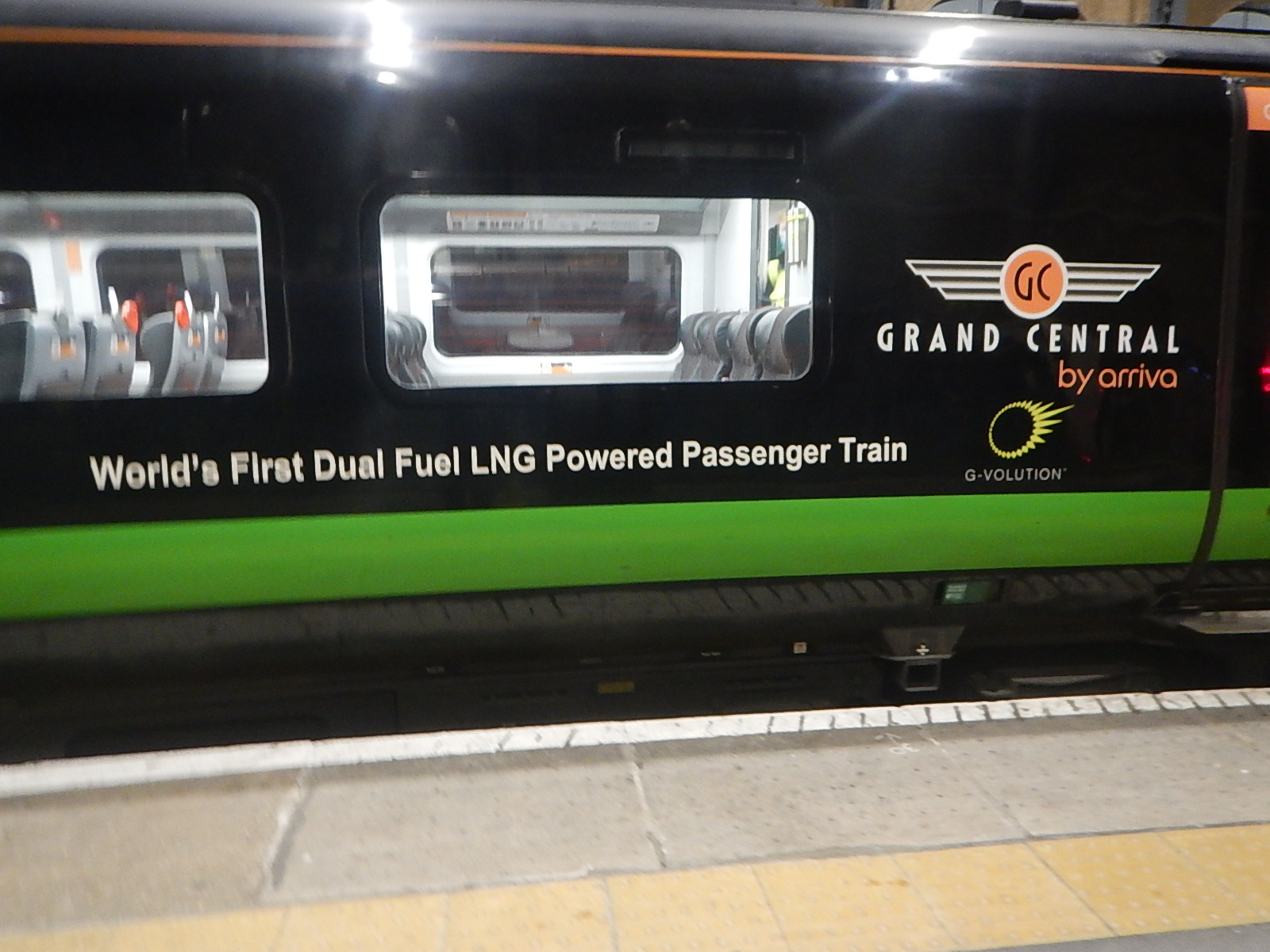
Note.
- This train appears to run on diesel and liquified natural gas.
- This G-volution video gives more details.
This clip from the video, shows the possible fuels.
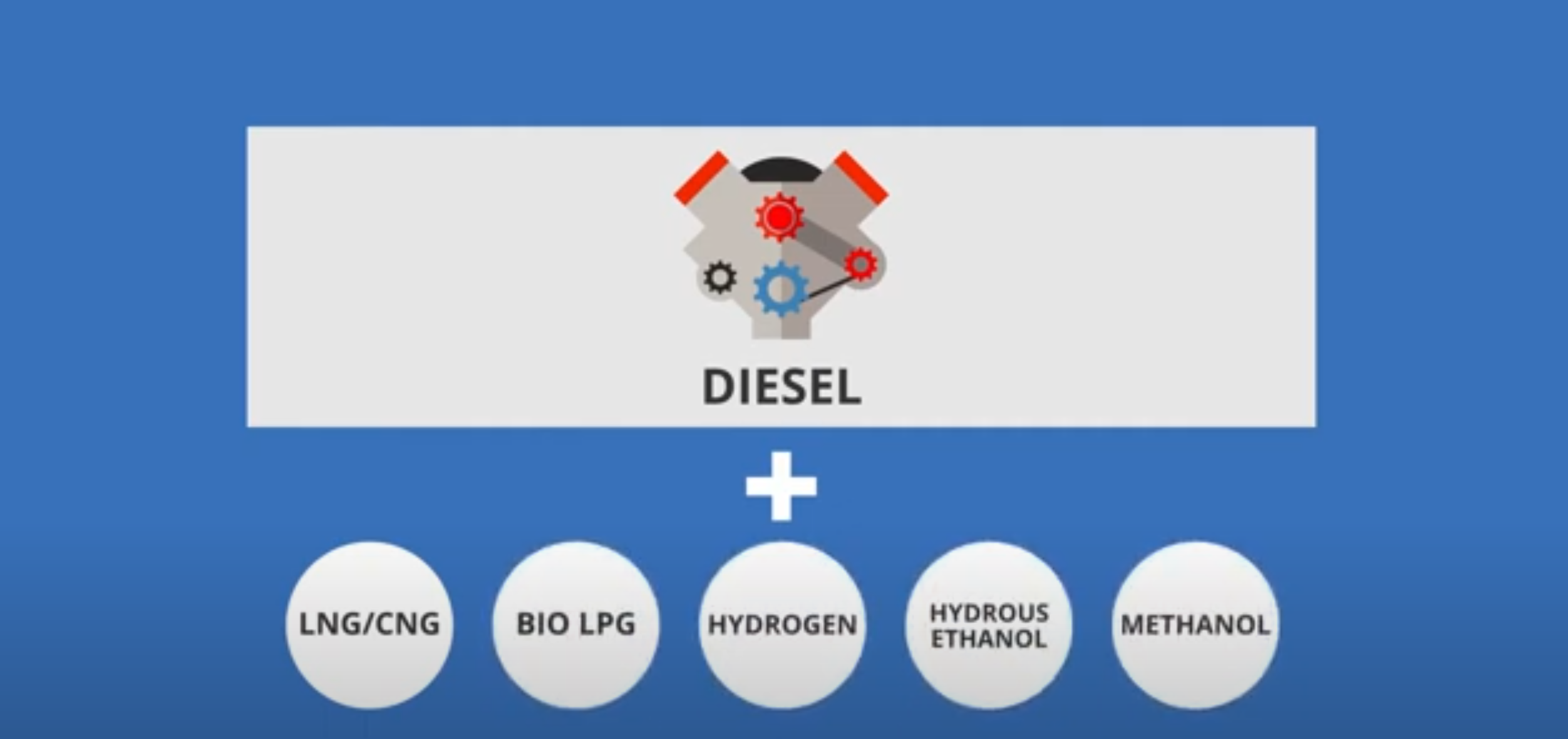
Note.
- Can the dual fuel engine use biodiesel or HVO instead of diesel?
- It looks like the Fresh Air Fuels Global process can produce biomethane, which could be liquified as LNG.
- Hydrogen is the only true zero-carbon secondary fuel.
- There is a Wikipedia entry for ethanol fuel.
- Hydrous ethanol is about 95% ethanol and 5% water and is used as a fuel in Brazil in petrol cars.
- There is a Wikipedia entry for the use of methanol as fuel.
Have G-volution got access to the technology to both reduce the fuel consumption of diesel engines and run them on zero-carbon fuel?
UK Trains That Have Cummins QSK-19 R Diesel Engines
Grand Central’s Class 180 trains have a Cummins QSK-19 R diesel engine.
All these trains have the same engine.
- 14 – Class 180 trains
- 51 – Class 185 trains
- 34 – Class 220 trains
- 44 – Class 221 trains
- 27 – Class 222 trains
In addition, Class 175 trains have a different engine made by Cummins.
Conclusion
If G-volution’s technology can be made to work successfully, it could play a large part in the decarbonisation of UK passenger trains.
TransPennine Express To Stop Using Loco-Hauled Push-Pull Trains In December
The title of this post, is the same as that of this article on Railway Gazette.
This is the sub-heading.
TransPennine Express has confirmed that it will cease using its push-pull sets of Class 68 locomotives and MkVa coaches, previously designated Nova 3 sets, from the December 2023 timetable change.
These are my thoughts.
The Nova 3 Trains
Currently, the Nova 3 trains are made up from the following.
- 14 – Class 68 locomotives
- 52 – Mark 5a coaches
- 14 – Driving Van Trailers
Note.
- There have been complaints about the noise of the Class 68 locomotives at Scarborough and also at Marylebone with Chiltern Railways.
- The Class 68 locomotives could be switched to freight duties.
- The coaches are capable of 125 mph.
- A maximum of thirteen sets can be created.
- I suspect CAF wouldn’t object to being asked to build some more Mark 5a coaches and driving van trailers.
- The current fleet has a spare locomotive and a spare driving van trailer to allow for servicing.
All locomotives and coaches are a maximum of seven years old, so will have plenty of life left.
The Class 93 Locomotive
Rail Operations Group have ordered ten Class 93 locomotives, with twenty options, which have an impressive specification.
- Built by Stadler in Valencia.
- Same family as a Class 68 and 88 locomotive.
- Electric, diesel and battery power
- 110 mph operating speed
- Ability to pull passenger and freight trains.
- Delivery scheduled for 2023.
I believe that if the Class 68 diesel locomotive of a Nova 3 train, were to be replaced with a Class 93 locomotive, a very useful train would be created.
- It would be ten mph faster, than a Nova 3 train.
- It could use the diesel engine and the batteries to bridge gaps in electrification.
- By adding extra carriages it could be tailored to the needs of a route.
- In Vegetable Oil Fuelling Chiltern Railways Trains In UK First, I discuss how it might be possible to run all these locomotives on HVO to cut emissions.
- It could be quieter.
Could it be a simple way to reduce carbon emissions on a route?
The Successor To The Class 93 Locomotive
Stadler keep innovating in their designs for locomotives and are already building hydrogen-powered multiple units.
I can see Stadler coming up with a hydrogen-powered locomotive, with the following specification.
- In the same family as Class 68, 88 and 93 locomotives.
- Ability to do everything that Class 68, 88 and 93 locomotives can do.
- Ability to use 25 KVAC overhead electrification, where it exists.
- Ability to be able to be fitted with third-rail equipment, so it can use 750 VDC third-rail electrification, where it exists.
- At least a 110 mph operating speed.
- Range of at least 200 miles on hydrogen.
Stadler would sell a lot of these locomotives to decarbonise railways all over the world.
Possible Routes
These are possible routes for a rake of Mark 5a coaches hauled by a Class 93 locomotive or its zero-carbon successor.
Hull Trains
Consider.
- Hull Trains is an open access operator.
- Hull Trains currently have a fleet of five Class 802 trains, each of which have five-cars.
- A Class 93 locomotive has a power of 900 kW on diesel, whereas the Class 802 train has 2100 kW.
- The Class 802 train has nearly ten percent more capacity.
- In Ten-Car Hull Trains, I saw two Class 802 trains working as a pair. Does this indicate they have a capacity problem?
- Between Hull and the East Coast Main Line is only 36.1 miles and isn’t very challenging and I suspect could probably be easily handled by a Class 93-hauled rake of Mark 5a coaches.
- Adding extra coaches would not be difficult and would probably be less costly than with the more complex Class 802 trains.
- Hull Trains need to have a plan to decarbonise.
- HVO could be used to cut down emissions.
A Class 93-hauled rake of Mark 5a coaches could be an intermediate step to full decarbonisation with a hydrogen locomotive.
Would other operators of Class 802 trains like to increase their fleets, by adding Hull Trains’s five Class 802 trains?
TransPennine Express
Consider.
- TransPennine Express currently have four different fleets of trains, so it must cause problems with the allocation of drivers.
- The Class 397 trains are confined to the West Coast Main Line.
- So that leaves the bi-mode Class 802 trains and the diesel Class 185 trains to work the TransPennine routes.
The Wikipedia entry for the Class 802 train, gives more details of the plans for the Class 802 trains.
During October 2021, it was announced that TransPennine Express, Hitachi, and Angel Trains had agreed to convert one of the former’s Nova 1 trainsets into a battery hybrid train on a trial basis with the aim of supporting the technology’s further development. If successful, Hitachi and Angel Trains have proposed the retrofitting of the entire fleet. In January 2022, reports emerged that the Nova 1 fleet was operating under diesel power even when operating on entirely electrified sections of the East Coast Main Line on account of the insufficient power supplies present along the line; national railway infrastructure owner Network Rail is reportedly set to complete upgrades to the power supplies within two years.
The fleet is also set to benefit from the rollout of electrification under the Transpennine route upgrade scheme. The company’s management has noted that, in the event of largescale electrification being funded and implemented, the Class 802s could have some of their engines removed to reduce roughly 15% of their weight and thus raise their efficiency. Furthermore, Leo Goodwin, TPE’s managing director, has observed that while the Class 802s have an initial maximum speed of 125 mph (201 km/h), they have the capability of being modified for operating at 140 mph (230 km/h) if infrastructure upgrades were to permit such speeds at a future date.
Could an augmented fleet of battery-electric Class 802 trains handle the bulk of the TransPennine routes, with the shorter and unelectrified ones still being handled by the Class 185 trains?
These shorter routes are.
- Leeds and Huddersfield
- Manchester Piccadilly and Huddersfield
- York and Scarborough
Plans only exist to electrify Leeds and Huddersfield.
I suspect a few more battery-electric Class 802 trains would be needed.
Great Western Railway
Could a Class 93-hauled rake of Mark 5a coaches be used as a replacement for the GWR Castles or short-formation InterCity125s?
- They both have four passenger coaches.
- They are both 125 mph trains.
- A Class 68 locomotive could be used on routes without electrification.
- HVO could be used to cut down emissions.
- The Mark 5a coaches would probably be quieter, as they only have one diesel engine.
A Class 93-hauled rake of Mark 5a coaches could be an intermediate step to full decarbonisation with a hydrogen locomotive.
Alternatively, five-car Class 802 trains could be used as replacements for GWR Castles.
Great Western Railway also have the problem of decarbonising services between Bristol/Gloucester and Weymouth/Southampton/Portsmouth.
Great Western Railway look like they’re needing some innovative thinking.
I also suspect a few more battery-electric Class 802 trains would be needed for other routes.
Transport For Wales Rail
Transport for Wales Rail run a Premier Service between Holyhead and Cardiff using Class 67 locomotives and Mark 4 coaches.
According to the Wikipedia entry for Transport for Wales Rail, they have seven sets of 4/5 coaches to run this service.
If Transport for Wales Rail wanted to decarbonise this route, they would need to replace the locomotives for a zero-carbon unit.
Perhaps, their best solution, would be to wait until a suitable hydrogen-powered locomotive is available and buy seven rakes of new coaches with driving van trailers.
Grand Union
Grand Union has a detailed Wikipedia entry, where this is the first paragraph.
Grand Union is a prospective open access operator who are proposing to operate train services in the United Kingdom from England to Wales and Scotland. Grand Union is headed by Ian Yeowart, who founded previous open access operators Alliance Rail Holdings and Grand Central before selling both to Arriva.
That seems a sound foundation.
- They have permission to run trains between Paddington and Carmarthen starting in December 2024.
- They have also applied to run trains between Euston and Stirling.
- They are now backed by Spanish companies; Serena Industrial Partners and Renfe.
- They are proposing to use nine Mark 4 coaches hauled by Class 93 locomotives.
Consider.
- CAF has a factory in Wales.
- CAF has sold trains to Transport for Wales.
- The Mark 5a coaches will definitely be available by December 2024.
- Mark 5a coaches could easily be arranged as a rake of eight coaches and a driving van trailer.
- Grand Union is backed by Spanish companies.
I wouldn’t be surprised if Grand Union were to use sets of CAF-built Mark 5a coaches for their Carmarthen service. And later for their Stirling service.
A Class 93-hauled rake of Mark 5a coaches could be an intermediate step to full decarbonisation with a hydrogen locomotive.
Grand Central
Consider.
- Grand Central is another open access operator.
- Grand Central has a mixed fleet of twelve five-car diesel trains.
- These trains run under electrification on the East Coast Main Line.
- According to the Wikipedia entry for Grand Central trains, they have plans for expansion across the North and to and from London.
- Grand Central need to have a plan to decarbonise.
- HVO could be used to cut down emissions.
A Class 93-hauled rake of Mark 5a coaches could be an intermediate step to full decarbonisation with a hydrogen locomotive.
South Western Railway
South Western Railway have an excellent fleet of new or nearly new trains, with the exception of the diesel Class 158 and Class 159 trains, that work services between Waterloo and Exeter trains via Basingstoke and Salisbury.
- Waterloo and Exeter is 172 miles.
- Only the 47.7 miles between Waterloo and Basingstoke is electrified with 750 VDC third-rail electrification.
- Train lengths vary between five and eight cars.
- The current trains date from around 1990 and must need replacing soon.
I wouldn’t be surprised that if after a rebranding with new trains, this could be a popular route.
A version of Hitachi’s ubiquitous bi-mode Class 802 could be used.
But.
- They would need to be ordered and built.
- The third-rail gear, would need to be developed and tested.
- Passengers would be travelling for over two and a half hours with underfloor diesel engines.
An alternative could be a Class 68-hauled rake of Mark 5a coaches.
- These trains would be available after release from TransPennine Express.
- They would run in TransPennine Express formation.
- Length could be adjusted by adding or removing coaches, if required.
- The noise is all in the locomotive, which is isolated from the passengers.
At some point in the future, the route could be decarbonised by swapping the locomotive for a hydrogen-electric locomotive with the ability to handle third-rail electrification.
ScotRail
ScotRail have a similar problem to Great Western Railway with their short-formation InterCity125s.
- They have 52 Class 43 locomotives and 120 Mark 3 coaches, which is probably enough for 24 trains.
- Scotland has substantial amounts of electrification.
- I feel that a Class 68-hauled rake of Mark 5a coaches would be a more than adequate replacement.
- Class 93 locomotives could be used where routes are partially electrified.
- Scotland is not going to be short of green hydrogen.
When a suitable hydrogen-electric locomotive is available, these trains can be decarbonised.
CrossCountry
CrossCountry have a fleet consisting of the following trains.
- 5 – 2+7 InterCity125 trains
- 7 – two-car Class 170 trains
- 22 – three-car Class 170 trains
- 34 – four-car Class 220 trains
- 4 – four-car Class 221 trains
- 20 – five-car Class 221 trains
Note.
- The fleet is all diesel.
- I’ll ignore the Class 170 trains in this analysis.
- The Class 220 and 221 trains often work in pairs to provide the required capacity.
So how could these trains be decarbonised?
- The InterCity125s and the Class 220 and 221 trains could be replaced by a locomotive-hauled rake of Mark 5a coaches of an appropriate length.
- Motive power could be provided by an appropriate Class 68 or 93 locomotive.
When a suitable hydrogen-electric locomotive is available, these trains can be fully decarbonised.
Decarbonisation Of UK Main Line Services
It is generally assumed that the railways of the UK will need to fully decarbonise if the UK and the constituent nations are going to meet their decarbonisation targets.
I believe that my analysis shows that decarbonisation of main line passenger services can be achieved by the purchase of two types of trains.
- Five-car bi-mode Class 802 trains or similar.
- Locomotive-hauled rakes of Mark 5a coaches of an appropriate length.
Note.
- The Class 802 trains would be mainly to augment existing Hitachi fleets.
- Some Class 802 trains would be fitted with batteries instead of diesel generators to handle gaps in the electrification.
- The rakes of coaches would be powered by an appropriate locomotive.
- The lengths of the rakes of coaches would be adjusted to meet the demand of each service.
Initially, the following locomotives would be used.
- Class 68 locomotives would be used on unelectrified lines.
- Class 93 locomotives would be used on full or partially electrified lines.
When the hydrogen-electric locomotives become available, these would take over the routes, which couldn’t be decarbonised by full electrification or by using a Class 93 locomotive.
Vegetable Oil Fuelling Chiltern Railways Trains In UK First
The title of this post, is the same as that of this article on the BBC.
This is the sub-heading.
Passenger trains are being fuelled by vegetable oil for the first time in the UK, a train operator has said.
These are the first two paragraphs.
Chiltern Railways began using hydrotreated vegetable oil (HVO) to power some of its fleet on Thursday.
HVO is made mostly of used cooking oils and can reduce greenhouse gas emissions by up to 90%, compared to diesel.
Note.
- There are thirty-four Class 68 locomotives in the UK and they are powered by Caterpillar diesel engines.
- There are also ten Class 88 locomotives in the UK and thirty Class 93 locomotives on order for the UK.
As the Class 88 and Class 93 locomotives , are in the same family as the Class 68 locomotive and all have Caterpillar diesel engines, I feel it is reasonable to assume that all these locomotives can run on HVO.
 The Anonymous Widower