East-West Rail: Along The Marston Vale Line
For the initial phase of the East West Railway, it doesn’t appear that the Marston Vale Line will be improved.
As I write this, I have not heard of any improvements between Bedford and Bletchley.
Perhaps, with all the arguments about the section of the East West Railway between Bedford and Cambridge, the Government, Network Rail and the East West Railway feel that the best approach, is to do what they can with the existing track layout and the rebuilt viaduct at Bletchley.
These are my thoughts.
The Capacity Of The Marston Vale Line
In the Wikipedia entry for the Marston Vale Line, this is said about the infrastructure of the line.
Apart from a short length of single track at both ends, the line is double track, and is not electrified. It has a loading gauge of W8 and a line speed of 60 miles per hour (97 km/h). The line’s signalling centre is at Ridgmont.
The line has a length of only 16.5 miles.
I believe with modern signalling and well-trained drivers, that the line could accommodate at least two trains per hour (tph) in both directions.
At its simplest every half hour, a train would leave both end stations and the two trains would pass each other on the long double-track section in the middle.
Proposed Train Services
Train services on the East West Railway will be as follows, when it opens between Oxford and Milton Keynes and Bedford, are proposed to be as follows.
- 2 tph – East West Railway – Oxford and Milton Keynes Central via Oxford Parkway, Bicester Village, Winslow and Bletchley
- 1 tph – East West Railway – Oxford and Bedford via Oxford Parkway, Bicester Village, Winslow, Bletchley, Woburn Sands and Ridgmont
- 1 tph – West Midlands Trains – Bletchley and Bedford via Fenny Stratford, Bow Brickhill, Woburn Sands, Aspley Guise, Ridgmont, Lidlington, Millbrook, Stewartby, Kempston Hardwick and Bedford St Johns
If the East West Railway uses the Marston Vale Line between Bletchley and Bedford, then there will be two tph along the Marston Vale Line.
I believe that if the Marston Vale Line is not improved until later, then the proposed initial train service pattern can be achieved.
The New Bletchley Viaduct
The tracks appear to have been laid on the Bletchley Viaduct.
This Google Map shows the tracks on the viaduct.
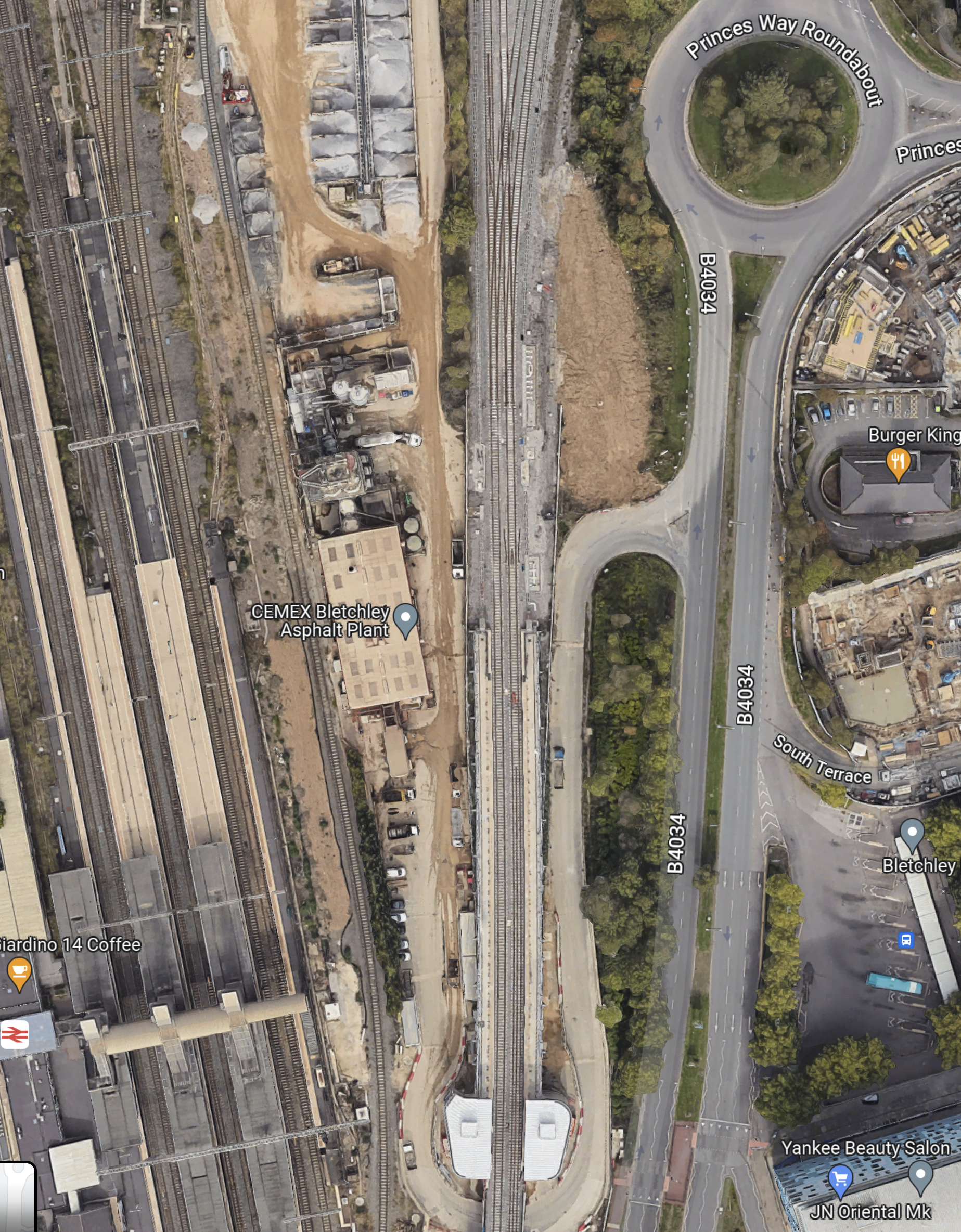
Note.
- The double-track viaduct runs North-South in the middle of the map.
- The two platforms appear to be substantially complete.
- The two lift and stair towers are at the Southern end of the platforms.
This second Google Map shows the section of the viaduct by the roundabout.
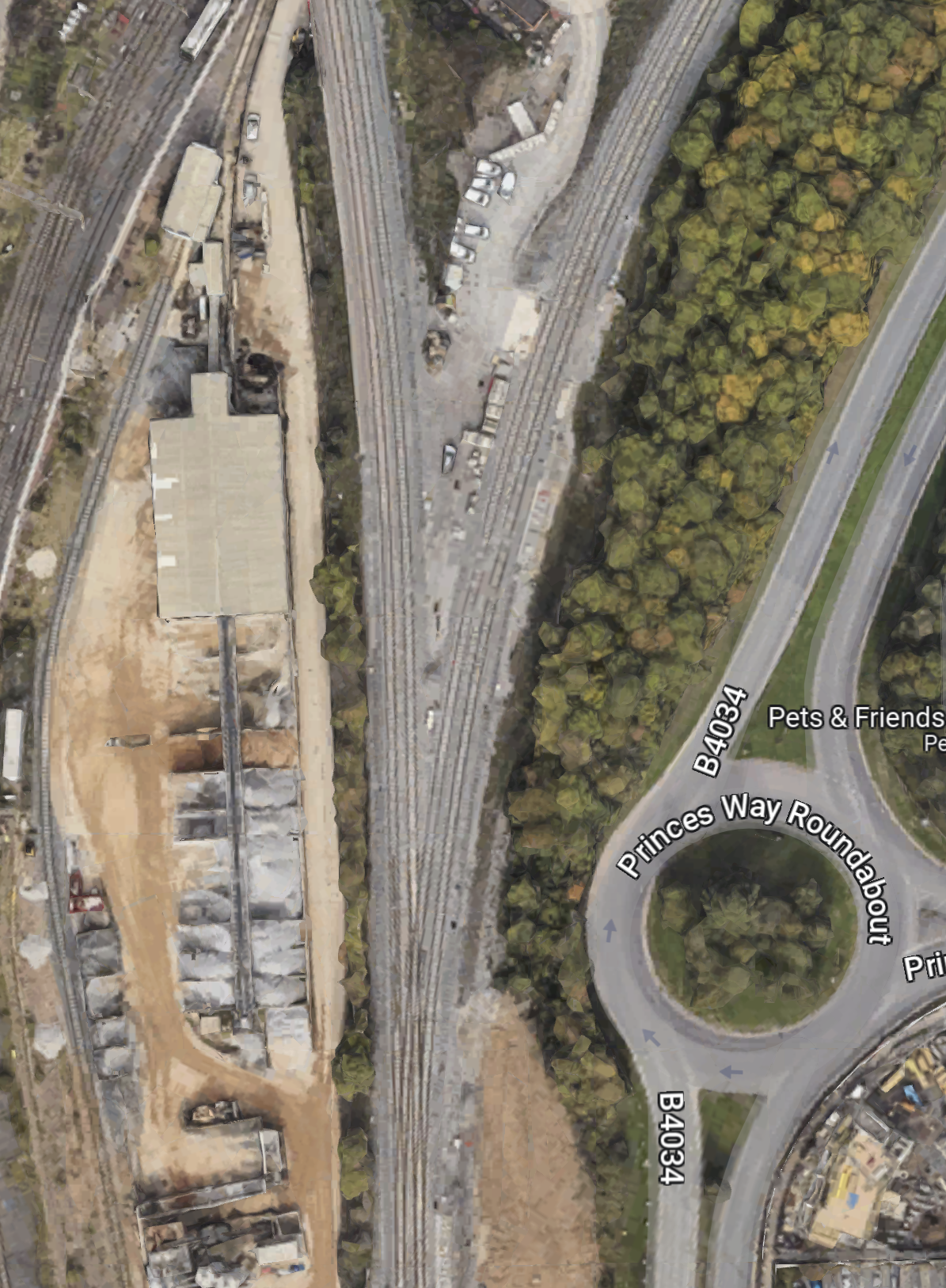
Note.
- The viaduct splits with two tracks going North-West to Milton Keynes Central and two tracks going North-East to Bedford.
- There is a complicated junction, which appears to allow a lot of flexibility for train operations.
I have followed the Milton Keynes tracks and there are cross-overs, so that trains can go between Platform 2A at Milton Keynes Central station and either of the viaduct platforms at Bletchley station, which they will need to do to run services between Oxford and Aylesbury, and Milton Keynes Central.
This Google Map shows the tracks between the viaduct and Fenny Stratford, which is the first station towards Bedford.
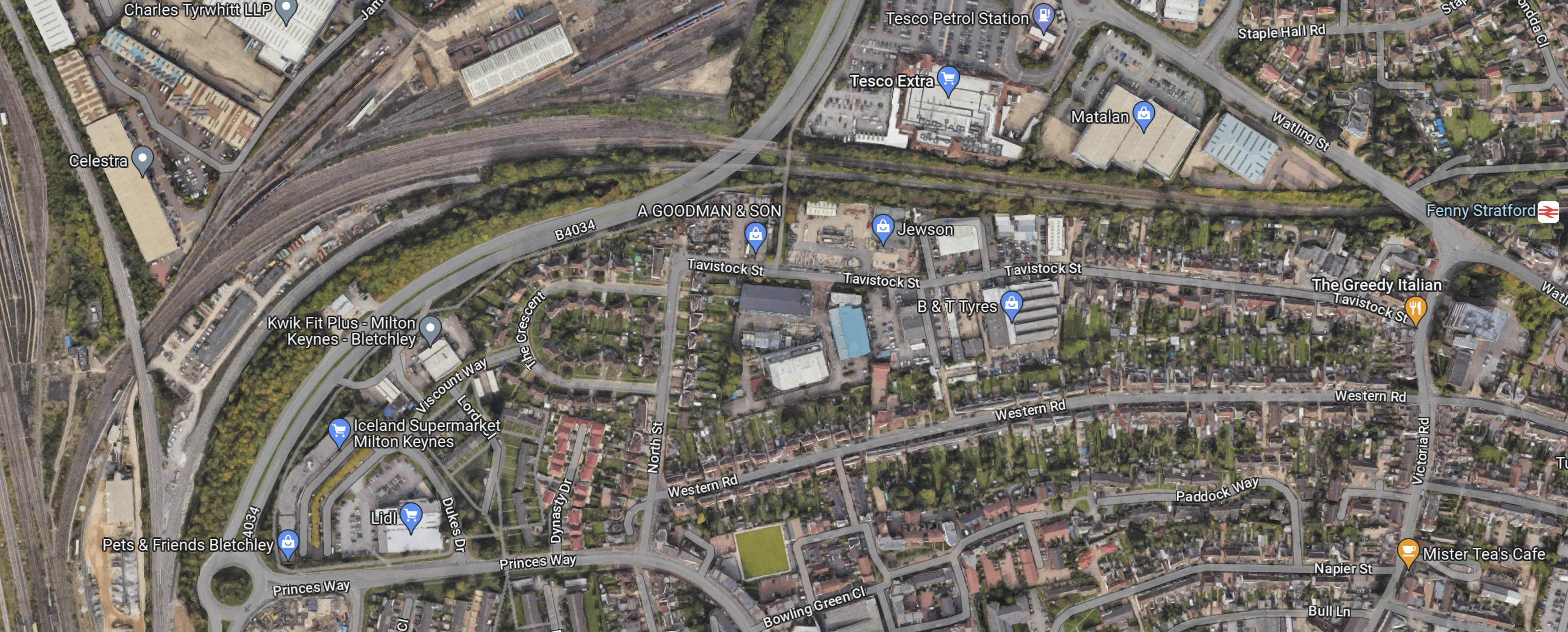
Note.
- The Princes Way roundabout in the West of the map.
- The Milton Keynes and Bedford tracks divide close to the roundabout.
- Fenny Stratford station in the East of the map.
- The tracks gradually combine from West to East, so there is only one track for the single platform at Fenny Stratford station.
This Google Map shows the Western section of the tracks between the viaduct and Fenny Stratford.
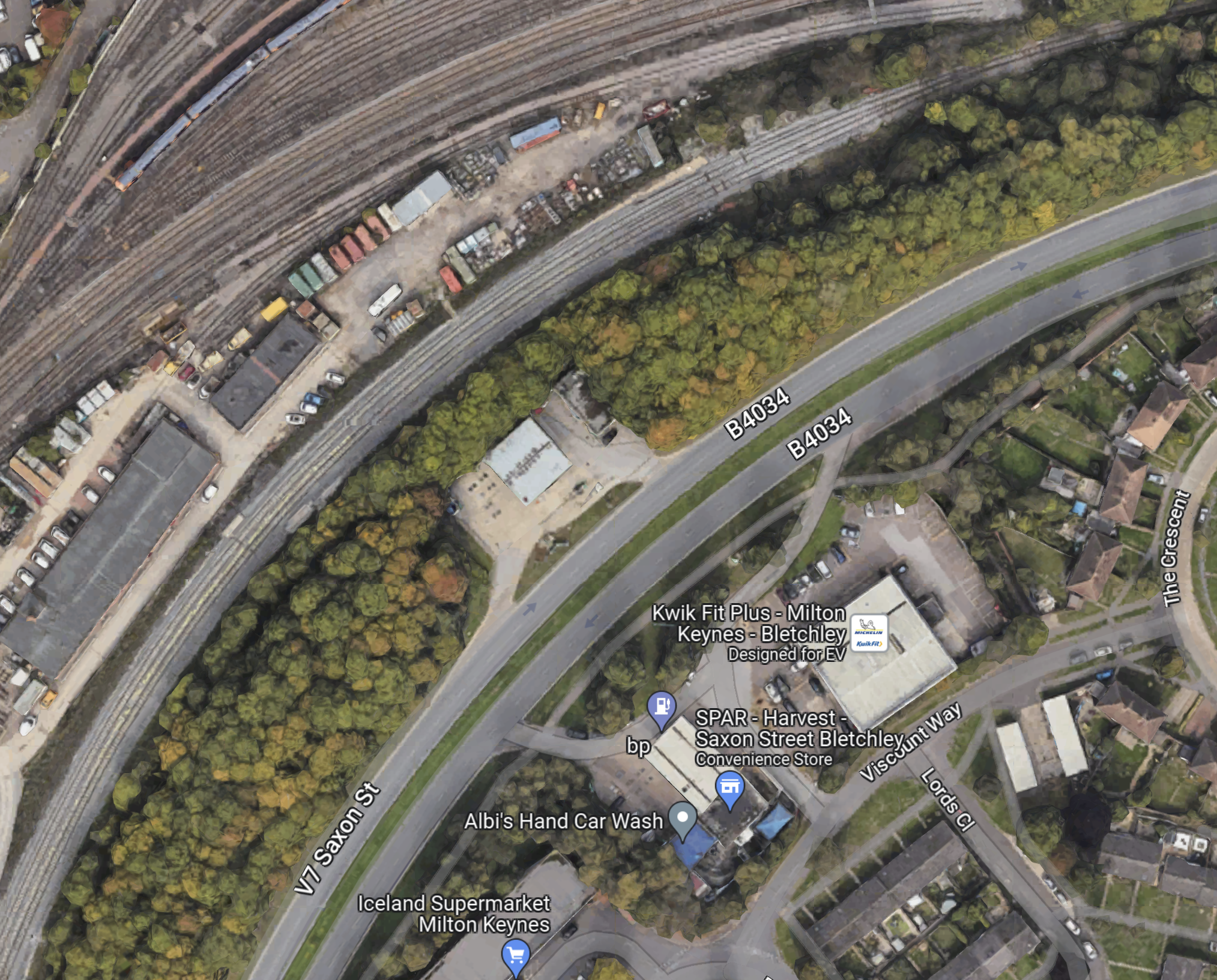
Note, how the two tracks on the viaduct join into one for going towards Fenny Stratford in the North-East corner of the map..
I’m certain, that this track layout, allows a train to go between the single platform at Fenny Stratford station and either of the viaduct platforms at Bletchley station.
A Milton Keynes Central And Bedford Service
In the Wikipedia entry for the Marston Vale Line, there is a section, which is entitled Extension to Milton Keynes Central, where this is said.
In June 2005, the then franchisee, Silverlink Trains announced an intention to extend the Marston Vale service via the West Coast Main Line to Milton Keynes Central, where a new platform and track would be built alongside the up slow track. Work began on 4 December 2006 at the station to prepare for a service connection. The platform was ready for use in January 2009 but the service did not materialise and there are no longer any published plans for it to do so. A firm service pattern on East West Rail remains to be announced but the illustrative pattern has no Bedford–Milton Keynes Central service; passengers will continue to have to change at Bletchley. There is no east-to-north chord between this line and the WCML: As of December 2020, the route the chord might take is occupied by trade outlets and a warehouse.
But.
Supposing a Milton Keynes to Bedford train did this.
- It ran from Platform 2A at Milton Keynes Central to the Northbound platform on the Bletchley viaduct.
- It would then reverse and run to Bedford along the Marston Vale Line.
- It would terminate in Platform 1A at Bedford station.
And supposing a Bedford to Milton Keynes train did this.
- It ran from Platform 1A at Bedford to the Northbound platform on the Bletchley viaduct.
- It would then reverse and run to Milton Keynes Central along the tracks alongside the West Coast Main Line.
- It would terminate in Platform 2A at Milton Keynes Central station.
Note.
- There would be some bi-directional running.
- Trains would only reverse on the Northbound platform on the Bletchley viaduct.
- Platform 2A at Milton Keynes Central would handle 4 tph.
- Platform 1A at Bedford station would handle 2 tph.
As the only reversing happens on the Northbound platform on the Bletchley viaduct, would it be sensible for a new driver to step-up, so that the reverse was fast?
I believe that with some innovative running, that a Milton Keynes and Bedford service is possible, because of the comprehensive track layout that has been installed.
East-West Rail: Aylesbury Spur
This map from East West Rail shows the complete route of the East West Railway between Oxford and Cambridge.

Note the spur to Aylesbury, which is shown dotted, which the legend says means it is a Potential Future Section of the EWR.
The papers in the area have different views.
- This article on Bucks Herald is entitled Aylesbury Spur Excluded From Government’s Latest East West Rail Route Outline.
- This article on Buckinghamshire Live is entitled East West Rail Aylesbury ‘Spur’ Plans Remain On The Table As Route Announced For £5bn Project.
So what do I feel about the Aylesbury Spur?
Train Services
In the Wikipedia entry for the East West Railway, it is stated that there will be an hourly service between Aylesbury and Milton Keynes Central stations, that would call at Aylesbury Vale Parkway, Winslow and Bletchley.
Wikipedia also states that there will be no Marylebone and Milton Keynes or Aylesbury and Manchester Piccadilly services.
I am surprised that a Marylebone and Milton Keynes service is ruled out, for these reasons.
- A Marylebone and Milton Keynes service would give Winslow a direct service to London.
- Aylesbury Vale Parkway has an hourly service from Marylebone, which could be extended to Milton Keynes Central to create the service.
- Aylesbury Vale Parkway and Marylebone have as many as three trains per hour (tph) in the Peak. Does this make timetabling of an hourly Marylebone and Milton Keynes service difficult?
The Wikipedia entry for Aylesbury Vale Parkway, says this about a Marylebone and Aylesbury Vale Parkway service.
It was proposed that, if services are extended to the north, trains between Milton Keynes Central and Marylebone would run via High Wycombe and not Amersham.
This dates from 2012.
But.
- There may be troubles with the timings of a Marylebone and Milton Keynes service between Aylesbury Vale Parkway and Milton Keynes.
- A separate Aylesbury and Milton Keynes service would give a half-hourly service between Aylesbury Vale Parkway and Aylesbury, whereas an extended service only gives the current hourly service.
This Google Map shows Aylesbury Vale Parkway station.

Note.
- The station only has a single bay platform.
- It appears that there is a step-free walk between the car park and the platform.
- There is no bridge or need for one.
- There is a single through line at the station on the opposite side to the car park, which is mainly used by trains going to the landfill at Calvert.
It looks from this map, that if the single platform were widened to an island platform, that both terminating and through trains could call in the station.
Perhaps though the modifications at Aylesbury Vale Parkway are too complicated or expensive?
The ruling out of the Aylesbury and Manchester Piccadilly service is probably easier to understand.
Consider.
- Milton Keynes Central will have a two tph service to Oxford and was planned to have an hourly service from Aylesbury.
- Milton Keynes Central has an hourly Avanti West Coast service to Manchester Piccadilly via Rugby, Stoke-on-Trent, Macclesfield and Stockport.
- Milton Keynes Central has an hourly Avanti West Coast service to Liverpool Lime Street via Crewe and Runcorn.
- Milton Keynes Central has a two-hourly Avanti West Coast service to Edinburgh Waverley via Rugby, Coventry, Birmingham International, Birmingham New Street, Sandwell and Dudley, Wolverhampton, Stafford, Crewe, Warrington Bank Quay, Wigan North Western, Preston, Lancaster, Oxenholme Lake District, Penrith, Carlisle, Haymarket
- Milton Keynes Central has a two-hourly Avanti West Coast service to Preston via Rugby, Coventry, Birmingham International, Birmingham New Street, Sandwell and Dudley, Wolverhampton, Stafford, Crewe, Warrington Bank Quay and Wigan North Western. Five trains per day (tpd) are extended to Glasgow and two tpd are extended to Blackpool North.
Note.
- A train running between Aylesbury and Manchester Piccadilly would probably need to be a 125 mph electric train, which would mean electrifying the East West Railway.
- A change at Milton Keynes Central would give access to trains for nearly all North-West England and Southern Scotland.
But because of all the connectivity at Milton Keynes Central, it surely puts pressure on providing an Aylesbury and Milton Keynes Central service.
The Track
It is possible to follow the track North from Aylesbury Vale Parkway until it joins the East West Railway to the West of Winsford station.
This Google Map shows the junction, just North of the hamlet of Calvert..
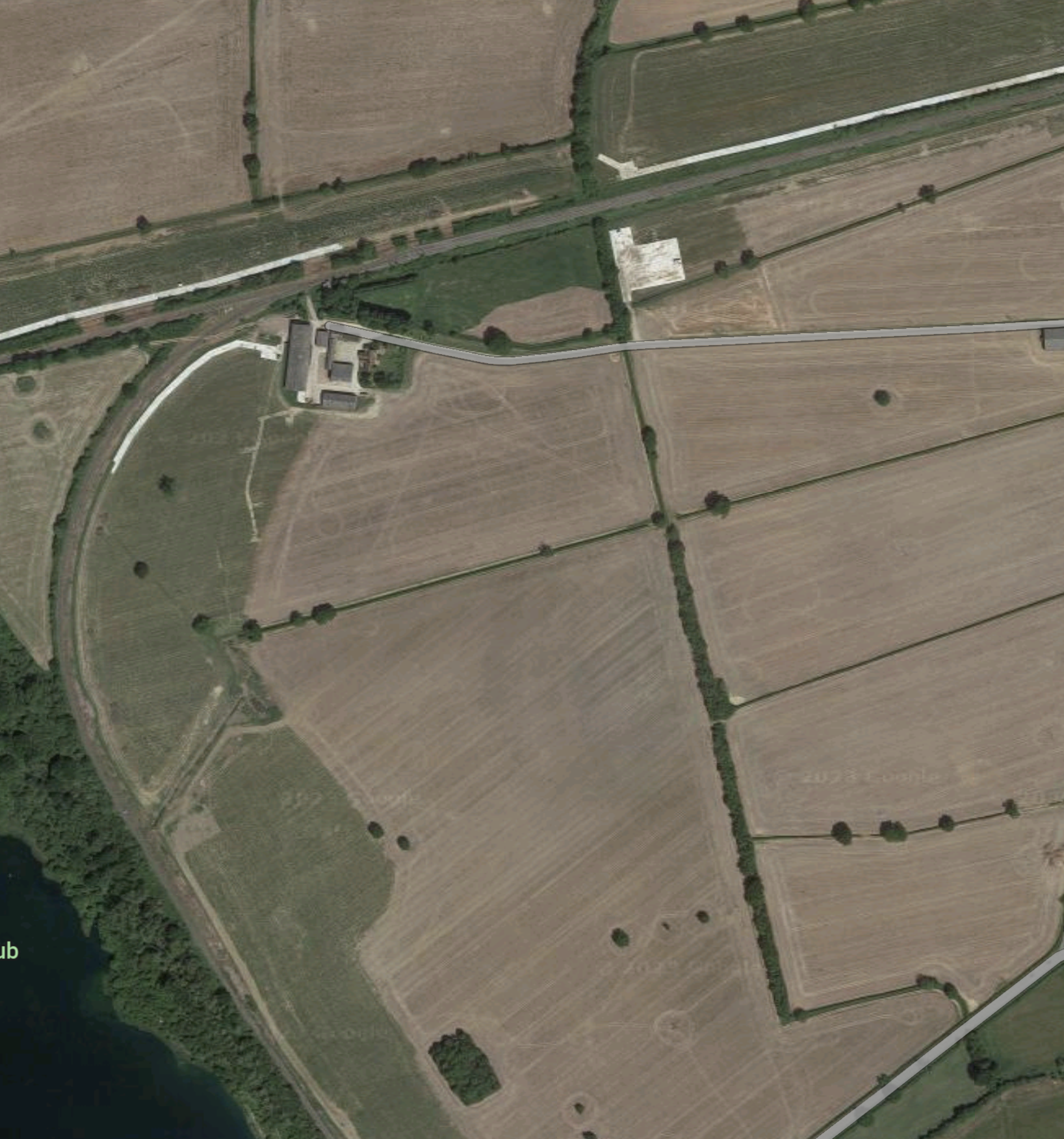
Note.
- The East West Railway going across the top of the map.
- The single track railway to Aylesbury Vale Parkway coming North and then turning East to join the East West Railway.
- The railway from Aylesbury Vale Parkway is still used by trains taking landfill.
The Wikipedia entry for Calvert, says this about the landfill site.
Another of the clay pits is now a landfill site. Waste is collected from Bristol, Bath and London each day and transported using rail via Aylesbury to Calvert. The site has a power station capable of producing 14 MWe of electricity from landfill gas, coming from the decomposition of organic matter to convert it into renewable electricity MW.
Looking at the map and the traffic on Real Time Trains, it would appear that there would be enough capacity for both the freight and an hourly passenger train between Aylesbury and Milton Keynes.
There is also the slight problem, that High Speed Two will be going through the area, as this map shows.
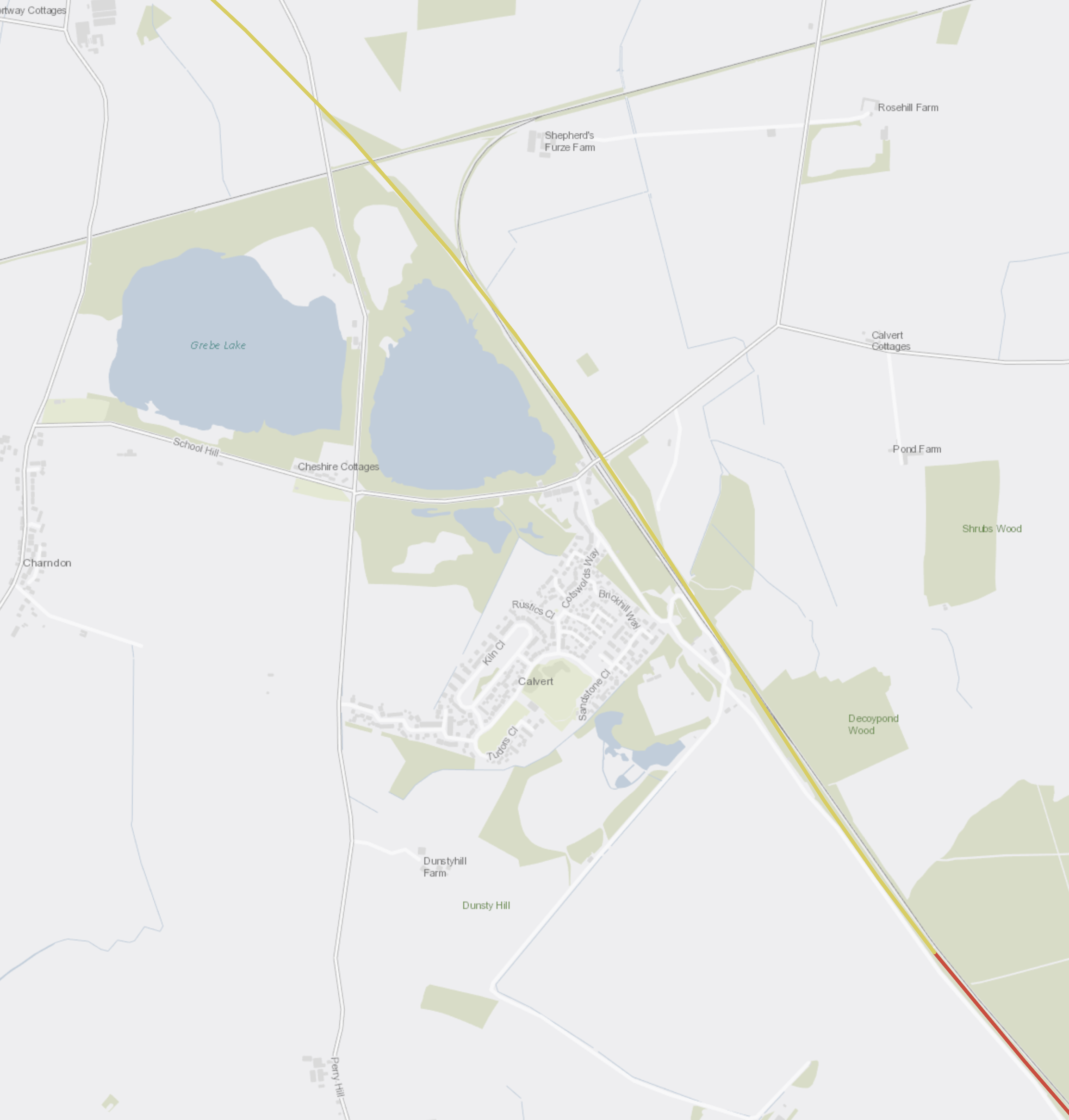
Note.
- High Speed Two is shown in yellow (cutting) and embankment (red).
- High Speed Two appears to run either on the same route or alongside the route to Aylesbury.
- The East West Railway goes across the top of thye map.
- The chord that connects the Aylesbury Spur to the East West Railway can clearly be seen.
- The Aylesbury Spur will run along the same route as High Speed Two.
- Aylesbury Vale Parkway will be just off the South-East corner of the map.
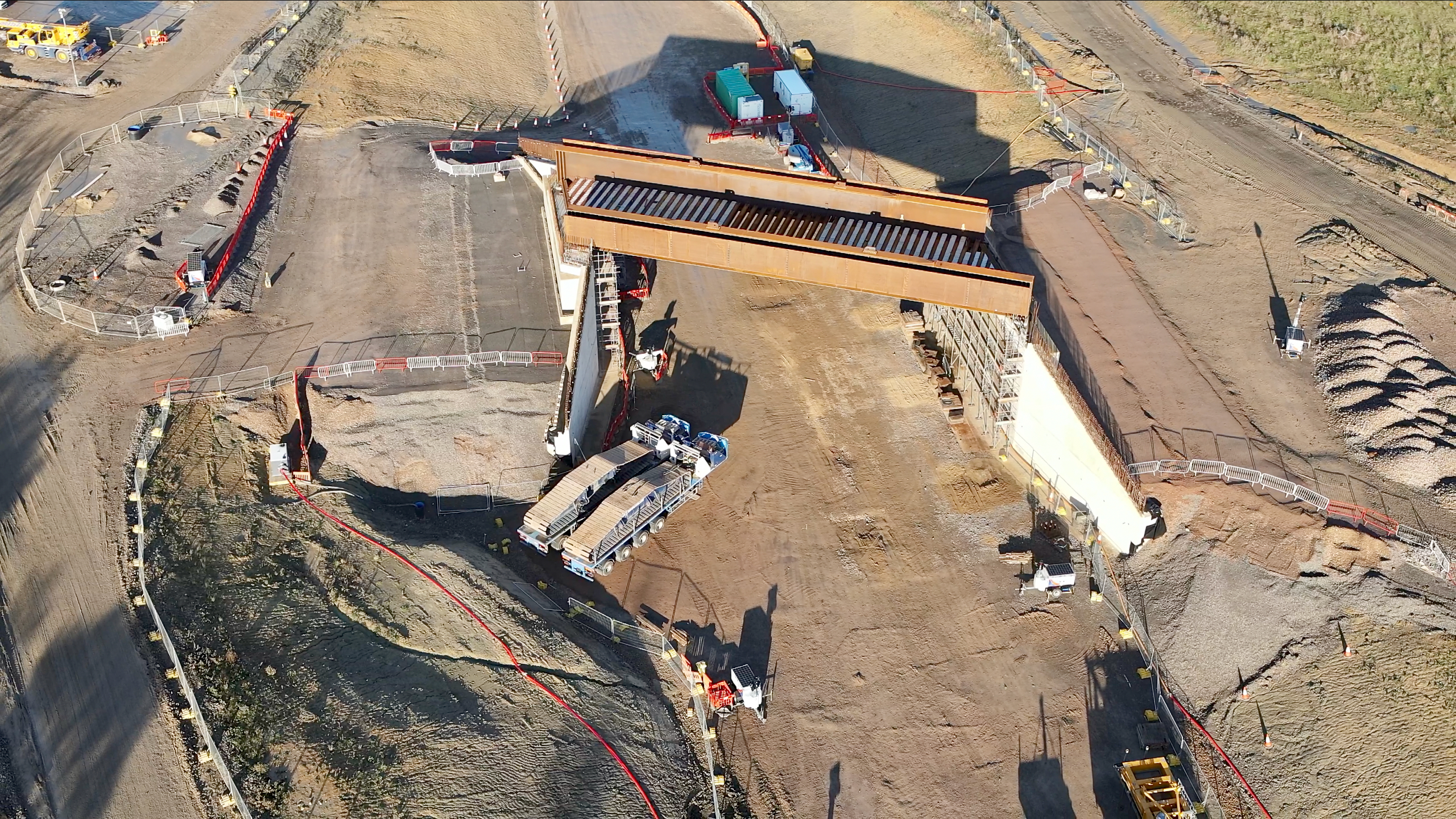
This page on the High Speed Two web site is entitled Boost for Oxford-Cambridge Connections As HS2 Builds Key East West Rail Bridge, describes the installation of a bridge to take the East West Railway goes over High Speed Two.
This picture is from High Speed Two.
As the landfill at Calvert will still need to be filled, I suspect that High Speed Two will leave the route between Aylesbury Vale Parkway and the East West Railway as a fully-serviceable railway, when they tidy up and leave this section of their route.
It looks to me, that once these tasks are complete.
- High Speed Two relay all the tracks between Aylesbury Vale Parkway and the East West Railway.
- The junction between the Aylesbury Spur and the East West Railway is completed.
- Aylesbury Vale Parkway station is updated.
The Aylesbury Spur as needed by the East West Railway to run passenger services between Aylesbury and Milton Keynes Central could be complete.
And all because of High Speed Two and a landfill site.
Conclusion
I am drawn to the conclusion, that the Aylesbury Spur would not be a difficult railway to build and because it links to the important interchange station at Milton Keynes Central, it could be delivered soon after High Speed Two are finished in the area.
It also appears that Avanti West Coast have already aligned their services with the East West Railway.
Electra.aero
I have signed up to FutureFlight‘s weekly newsletter and this week it gave two articles about a new nine-seat airliner called an Electra.aero.
It must be the first airliner named after its web site or vice-versa.
The first article is entitled Electra.aero Gives A Glimpse If Its eSTOL Technology Development Aircraft.
It says this about the aircraft and the company.
As it works on plans for a nine-passenger eSTOL blown-wing aircraft, Electra.aero has posted a short video teasing followers with a glimpse of what it describes as a technology demonstrator. The video shows what appears to be a subscale model of the larger hybrid-electric design, but the Virginia-based company is giving very little away for now.
This week, the U.S. start-up announced the appointment of former Boeing Commercial Airplanes president and CEO James Albaugh to its board of advisors, along with the former Airbus America CEO and FAA Administrator Allan McArtor, and aircraft finance expert Kristen Bartok Touw.
You can also watch a video.
The second article is entitled Electra.aero Uses Truck To Test Gives A Glimpse If Its eSTOL Aircraft Propulsion System And Wing.
It says about more the aircraft.
Electra.aero’s planned nine-passenger eSTOL aircraft is expected to be able to operate from landing strips as short as 300 feet. The company’s blown-wing design and hybrid-electric propulsion system will be key factors in achieving this breakthrough performance for regional air services. At its base in Manassas Regional Airport in Virginia, the company is using a technology demonstrator and a truck to conduct ground testing key systems in preparation for anticipated test flights later this year.
You can also watch a video.
The home page also shows a visualisation of a flight between Washington DC and New York.
Note.
- Blown-wing and blown flaps have been used before on aircraft like the Lockheed F-104 Starfighter, the Boeing C-17 Globemaster and the Blackburn Buccaneer.
- Blown flaps’ use on the Electra.aero, seems to be the first application on a small propeller-driver airliner.
- Electra.aero seems well-connected, which helps in the aviation industry.
- Power seems to come from a hybrid-electric design.
- Being able to operate from landing strips as short as a football field is a unique characteristic.
- Pictures on the web site show the aircraft has eight propellers, with those close to the fuselage being larger.
- A 400 nautical mile range with a 45 minute reserve, a cruise speed of 175 knots and a quiet take-off are claimed.
As someone, who has over a thousand hours in command of a twin-engined Cessna 340A, this aircraft could be the real deal.
- The field performance is sensational.
- The range is excellent.
- Except for the number of electric engines, it looks like an aircraft and won’t put off the passengers.
- It could fly between Washington DC and New York or London and Paris.
According to their web site, they already have a $3 billion order-book.
SWR Complete Major Refurbishment On 85-Year-Old Malden Manor Station
The title of this post, is the same as that of this article on Global Railway Review.
So I thought I’d go and take a look at Malden Manor station.
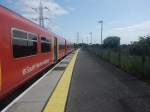
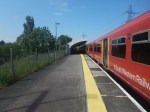

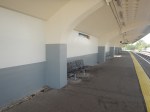

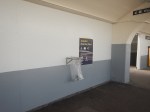


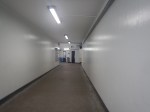
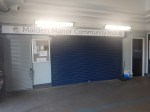

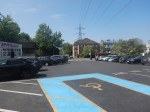
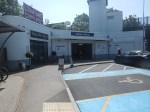


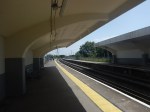

Note.
- The station was built in the 1930s.
- It will be part of Crossrail 2, if it’s ever built.
- The cafe is worth a visit.
The station certainly seems to have benefitted from a deep clean up and a new coat of paint.
Thoughts On The East Midlands Railway Timetable After Class 810 Trains Enter Service
East Midlands Railway will soon be replacing their diesel Class 222 trains with new bi-mode Class 810 trains.
- 32 trains will be replaced by 33 trains.
- 167 cars will be replaced by 165 cars.
- The current trains come in four, five and seven cars.
- The new trains come in five-cars only.
- The platforms at St. Pancras station can accept a pair of the new trains.
- Both Class 222 and Class 810 trains are genuine 125 mph trains.
- St. Pancras and Corby takes one hour and fifteen minutes
- St. Pancras and Nottingham takes hour and forty-five minutes
- St. Pancras and Sheffield takes two hours
The current services are as follows.
- St. Pancras and Corby via Luton Airport Parkway, Luton, Bedford, Wellingborough and Kettering
- St. Pancras and Nottingham via Kettering, Market Harborough, Leicester, Loughborough (1 tph), East Midlands Parkway (1 tph) and Beeston (1 tph).
- St. Pancras and Sheffield via Leicester, Loughborough (1 tph), East Midlands Parkway (1 tph), Long Eaton (1 tph), Derby and Chesterfield.
Note.
All services are two trains per hour (tph)
If all services were run by single trains, the following number of trains would be needed for each service.
- St. Pancras and Corby – 6 trains
- St. Pancras and Nottingham – 8 trains
- St. Pancras and Sheffield – 9 trains
Note.
- This means a total of twenty-three trains.
- I am assuming, that trains can turn round in fifteen minutes at each end of the journey.
- If pairs of trains run, then the numbers can be doubled to forty-six trains.
These are my thoughts.
Do The Luton Airport Express Services Need Pairs Of Trains?
The Corby service is now branded as the Luton Airport Express.
This picture shows a packed Luton Airport Express at Luton Airport Parkway station.

After seeing this, I believe that a pair of trains must run to Corby to pick up passengers, who want a fast service to and from Luton Airport.
Will The Class 810 Trains Replace The Class 360 Trains To Corby?
If all services are run by single Class 810 trains, the following would apply.
- The current service pattern would need 23 trains.
- All stations would get the same number of trains to and from St. Pancras.
- All East Midlands Railway out of St. Pancras would use the same 125 mph electric trains and services could probably be speeded up.
- The Class 810 train has 2.94 MW on diesel and the Class 360 train has 1.55 MW on electric, so I suspect that the Class 810 train has the faster acceleration.
- Bedford, Kettering, Luton, Luton Airport Parkway, Market Harborough and Wellingborough would have 125 mph electric commuter services to and from London.
- Corby and Luton Airport Parkway services would have marginally more seats, if Corby services were pairs of trains.
There would be ten spare trains, if the Class 360 trains were replaced or four spare trains, if pairs of trains ran to Corby.
Would Class 810 Trains Running On Electric Execute Stops Faster?
This document on Rail Engineer gives these figures for total power on electric of Class 802 trains.
- Five-car – 2712 kW
- Nine-car – 4520 kW
Note.
- These figures are based on a Hitachi figure of 226 kW for the power of a traction motor.
- The five-car train has twelve motors and the nine-car has twenty.
- As a five-car train has three powered cars and a nine-car train has five, it looks like each powered car has four traction motors.
- The document also says that the power to weight ratio on electric is thirty percent more than on diesel.
This document on the Hitachi web site provides this schematic of the traction system.

Note that four traction motors are confirmed.
Consider the power of the various trains, that run or will run on the Midland Main Line.
- Four-car Class 180 train has one 559 kW diesel engine per car.
- Four, five and seven-car Class 222 train has one 559 kW diesel engine per car.
- Four-car Class 360 train has 1.55 MW on electric – 387 kW per car.
- Five-car Class 810 train has 2.94 MW on diesel – 588 kW per car.
- Five-car Class 810 train has 2.94 MW on electric – 588 kW per car.
Note.
- The Class 810 train will out-accelerate the Class 360 train as it has at least 40 percent more power on electric.
- The Class 810 train has pantographs on both driving cars.
- The Class 810 train has two powered cars; numbers 2 and 4.
- I have assumed that if the Class 810 train can handle 2.94 MW on both diesel and electric.
- With eight traction motors, they would need to be 367.5 kW.
- The Class 810 train should out-accelerate the Class 180 train and Class 222 train as it has at five percent more power on both diesel and electric.
I think it is also relevant that the order for the Class 810 trains was placed in August 2019 and Hitachi announced their collaboration with Eversholt Rail Group to develop the battery-electric versions of the Class 802 trains only sixteen months later. As the Class 810 appears to be an revolution of the Class 802 train, I suspect that Hitachi were working hard on battery design, as this train’s design evolved.
These are the five cars of the Class 810 train.
- 1 – DPTS – Driver-Pantograph-Trailer-Standard with Generator Unit
- 2 – MS – Motored-Standard with Generator Unit
- 3 – TS – Trailer-Standard with Transformer
- 4 – MC – Motored-Composite with Generator Unit
- 5 – DPTF – Driver-Pantograph-Trailer-First with Generator Unit
Note.
- Generator Unit is a diesel generator.
- Motored means the car has four traction motors.
- Composite means a car with both First and Standard accommodation.
- Cars 1-2, and 4-5, form two power units with two generator units, four traction motors and a pantograph, at each end of the train. Cables would connect them to the transformer in car 3.
It looks a neat solution, which probably has high reliability.
I can envisage the two generator units under cars 2 and 4 could be replaced by battery packs.
- The battery packs would mimic the function of the generator units.
- Noise in cars 2 and 4 would be reduced.
- Carbon emissions would be reduced.
- The battery packs would be charged, when running under the wires or possibly from chargers or short length of overhead wires at terminal stations.
- The battery packs would handle regenerative braking.
- Adding battery packs would allow the trains to jump gaps left in the electrification.
At some point in the future, the other two generator units could be removed or replaced with battery packs, depending on whether full electrification happens on the Midland Main Line.
These meanderings convince me that the Class 810 trains will be able to save time in the stops on the Midland Main Line.
Because of these savings, I can see East Midlands Railway, reorganising stops on the electrified section of the route, as although the stop will add a minute or two, this lost time will be picked up on savings at existing stops and by more 125 mph running.
Could The Nottingham And Sheffield Services Be Combined?
These are the current services to Nottingham and Sheffield.
- St. Pancras and Nottingham via Kettering, Market Harborough, Leicester, Loughborough (1 tph), East Midlands Parkway (1 tph) and Beeston (1 tph).
- St. Pancras and Sheffield via Leicester, Loughborough (1 tph), East Midlands Parkway (1 tph), Long Eaton (1 tph), Derby and Chesterfield.
Note.
- Both services call at Leicester , Loughborough and East Midlands Parkway.
- Some trains call at Luton Airport Parkway, Luton, Bedford, Wellingborough, Kettering and Market Harborough on the section of the Midland Main Line, which is currently being electrified between Kettering and Wigston.
- A lot of money has been spent on the Luton DART and it only has two fast trains from St. Pancras. Four tph would be ideal.
Suppose the Sheffield and Nottingham trains operated like this.
- A pair of Class 810 trains would leave St. Pancras.
- South of Leicester, they would call at one or two stations, as defined in the timetable.
- They would then call at Leicester , Loughborough and East Midlands Parkway.
- At East Midlands Parkway, the two trains would split.
- One train would go to Sheffield and the other would go to Nottingham, stopping as defined in the timetable.
Note.
- Because of the trains superior performance, they would be doing quicker calls at stations, which should allow the existing timetable to be maintained or even improved.
- Hitachi trains can split and join in around two minutes.
- These trains would call at Luton Airport Parkway, to give that station four tph from St. Pancras, Luton and Bedford.
I calculated earlier that a 2 tph Sheffield service would need nine trains. So if it served both Nottingham and Sheffield it would need another nine trains. This would give a total of eighteen trains.
- If the St.Pancras and Corby service were to be run by pairs of Class 810 trains, this would require twelve trains.
- Adding the two services together would require thirty trains. Would three trains be enough for backup and in maintenance?
I suspect splitting and joining at East Midlands Parkway could be beneficial.
Could Four tph Be Run To Nottingham And Sheffield?
Consider.
- Bristol, Cardiff, Edinburgh, Leeds, Liverpool, Manchester, Newcastle, Norwich, Southampton and York all get two tph from London.
- Some closer stations like Birmingham, Cambridge, Ipswich, Leicester, Oxford and Reading get more.
- Most of these routes are electrified and run modern trains.
I wouldn’t say never, but adding two tph to both Nottingham and Sheffield services would require.
- Two more hourly train paths on both between St. Pancras and Nottingham, and St. Pancras and Sheffield.
- Eighteen extra trains.
But as a sub-two hour service would be running on both routes, it would probably be possible to accurately predict, when more trains were needed.
Electrification Through Leicester
As more electrification is added, this should result in faster journeys, that reduce carbon emissions.
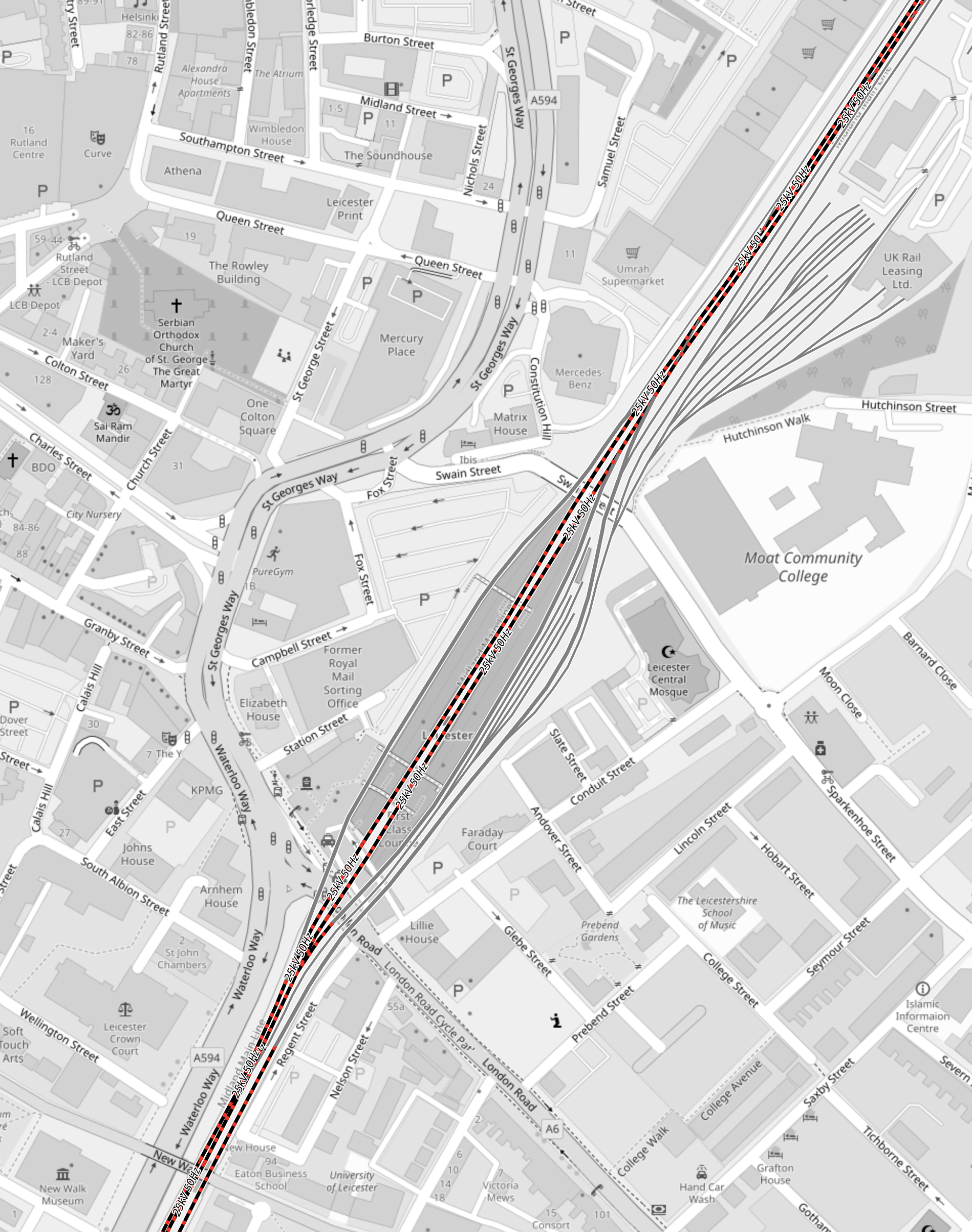
OpenRailwayMap is now showing the electrification as dotted lines on the Midland Main Line.
This map shows the electrification scheme through Leicester.
Note.
- Only the two main lines in the centre of the station seem to be going to be electrified.
- These lines are used by East Midlands Railway’s through trains and surprisingly some freight trains.
- Terminating services from places like Birmingham, Grimsby and Lincoln seem to stop in the outer platforms.
This picture shows the platforms from the Northern footbridge.

This picture shows the platforms from the Northern footbridge.
At the Southern end of the station, the tracks go under the London Road bridge. This map shows the tracks there.

Note.
- The two main tracks of the Midland Main Line appear that they will be electrified.
- But the lines at each side are not electrified.
Some years ago I came back to London from Leicester with a group of drivers. At one point, the conversation turned to electrification and they said that they had met a Network Rail engineer, who had told them, that the bridge was rather low for electrification and the track couldn’t be lowered because Leicester’s main sewer was underneath the railway.
It looks like Network Rail have found a way to squeeze two electrified tracks through the middle of the bridge and then use diesel, battery or other self-powered trains on lines without electrification on either side.
125 mph Upgrade For MML OLE South Of Bedford
The title of this post, is the same as that of an article in the June 2023 Edition of Modern Railways.
This is the sub-heading.
Targeted Investment Benefits From Project SPEED Approach
The main objective was to upgrade the 1980s electrification between Bedford and St. Pancras, so that it could support 125 mph running by East Midlands Railway’s new Class 810 trains.
Originally, a total replacement was envisaged, but in the end a more selective approach will be carried out.
This paragraph indicates the benefits of the approach.
The proposal for wholesale replacement of the OLE South of Bedford would have cost several hundreds of millions of pounds, whereas the approved scheme comes in at just £84 million, around one-third of the previous cost – testament to the application of SPEED principles.
I have a couple of thoughts.
Network Rail’s Project Management
If I go back to the 1970s and 1980s, when we were developing and selling the project management system; Artemis to the world, we sold very few systems to the UK Government and none to British Rail or the NHS. Later Artemis was used on the Channel Tunnel and the Rail Link to London, the Jubilee Line Extension, sections of the Docklands Light Railway and railways in Australia and Hong Kong.
So it is good to see, Network Rail getting to grips with managing the electrification upgrade of the Midland Main Line with some good project management.
An Encounter With A Group Of Drivers
It might have been five years ago, when I travelled with a group of drivers from East Midlands Trains positioning to St. Pancras.
- One of the observations they had was that the Class 700 trains coming into service were not fast enough as they were only 100 mph trains, whereas their Class 222 trains were capable of 125 mph.
- Since then the Class 360 trains have been introduced on Corby services. These trains have been uprated from 100 to 110 mph.
- We now have the situation, where Class 810 trains capable of running at 125 mph will replace the Class 222 train.
If you look at the traffic at West Hampstead Thameslink station, you can see that Both Thameslink and East Midlands Railway are using the fast lines, through platforms 3 and 4.
The fast lines have a maximum speed of 125 mph North of Luton and generally 100-110 mph between Luton and West Hampstead Thameslink station.
Would it help the timetabling of services on the Midland Main Line, if the Thameslink services were capable of running faster, when they were using the fast lines?
I feel the drivers may have a point.
East-West Rail: Through Bedford
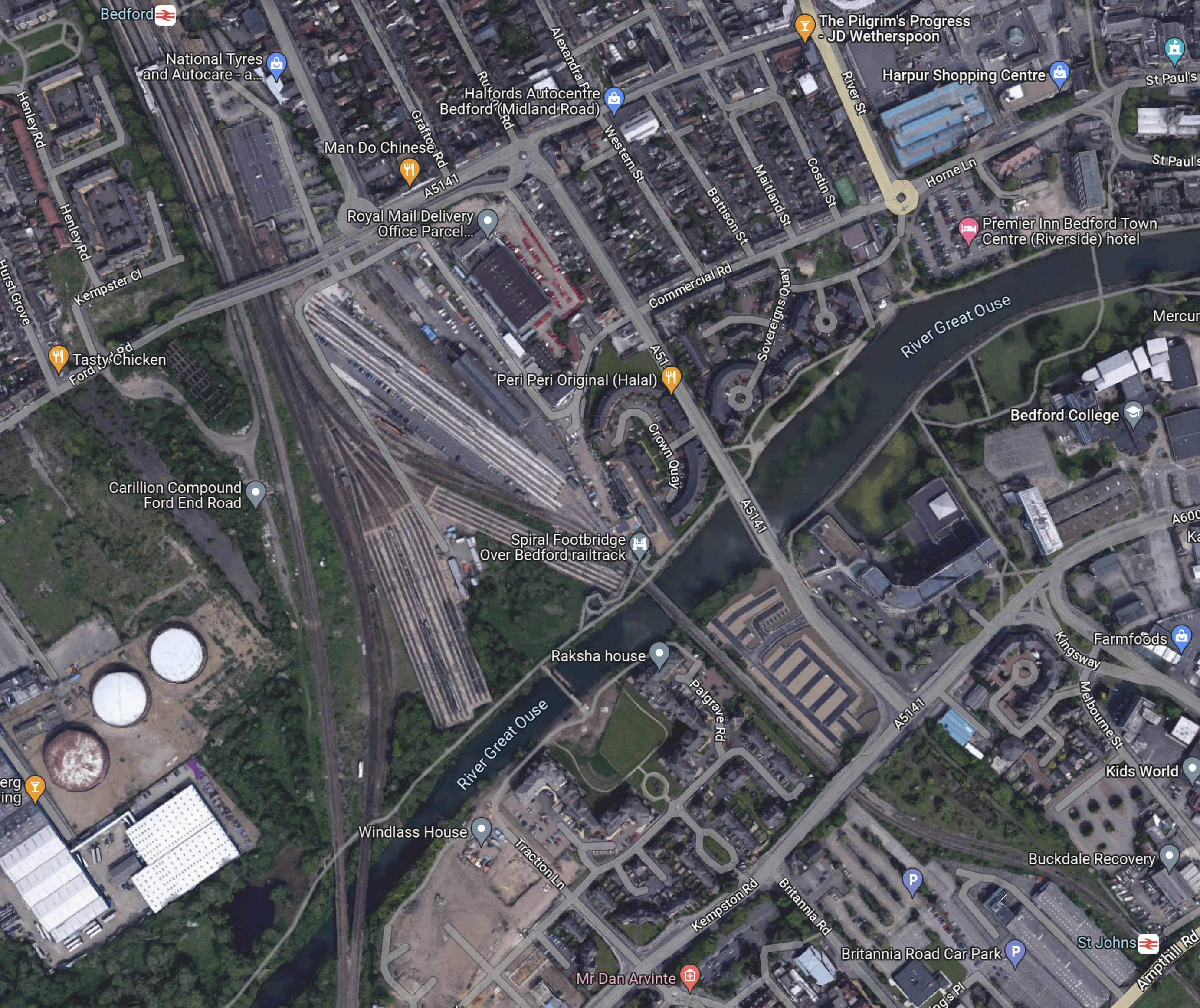
This Google Map shows the route of East West Rail through Bedford.
Note.
- Bedford St. Johns station in the South-East corner of the map.
- Bedford station is in the North-West corner of the map.
- Tracks run between the two stations to allow Marston Vale Line trains to terminate in Platform 1A at Bedford station.
- There are a lot of sidings for Thameslink trains South of Bedford station.
- The Great Ouse divides the town into two.
I’ll now explore further.
Bedford St. Johns Station
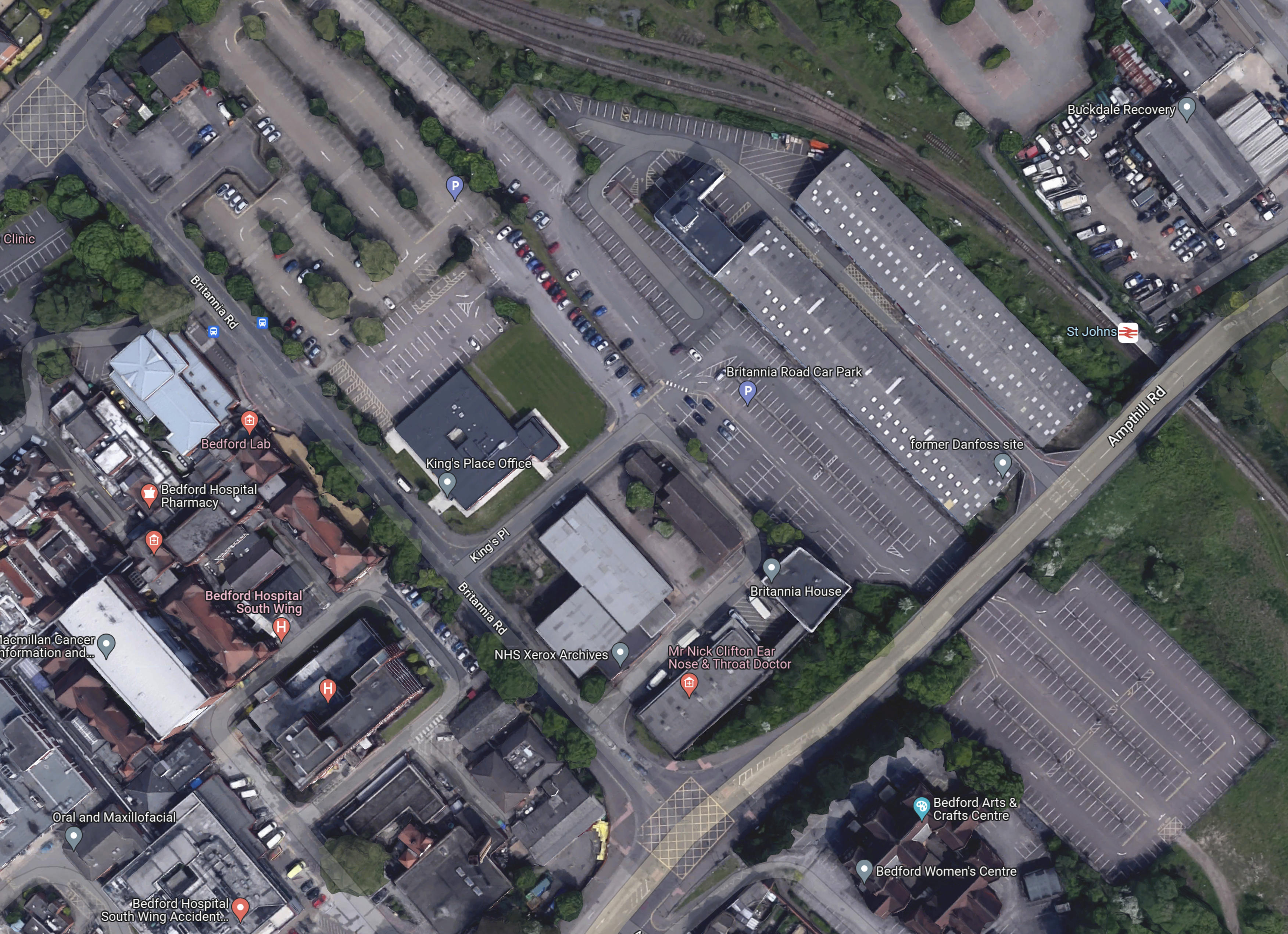
This Google Map shows Bedford St. Johns station.
Note.
- Bedford St. Johns station towards the North-East corner of the map.
- The single-track Marston Vale Line passing through the station.
- The track becomes double track to the North of the station.
- Although not shown on the map, the Marston Vale Line becomes double track to the South of the station.
- If it was all double-track, this would surely make operation of the Marston Vale Line easier for two trains per hour (tph).
- In the South-West of the map is Bedford hospital.
The Wikipedia entry for Bedford St. Johns station, says this about the future of the station.
In March 2021, plans were unveiled which, if taken forward, would see Bedford St Johns railway station relocated as the track through the station will be realigned. In May 2023, EWRL announced that it proposes to relocate the station further north (to Kempston Road) to better serve Bedford Hospital.
That sounds sensible, as it would allow either a full two-platform step-free station or a smaller single-sided one-platform station to be built.
Over The Great Ouse
This Google Map shows the railway crossing the Great Ouse.
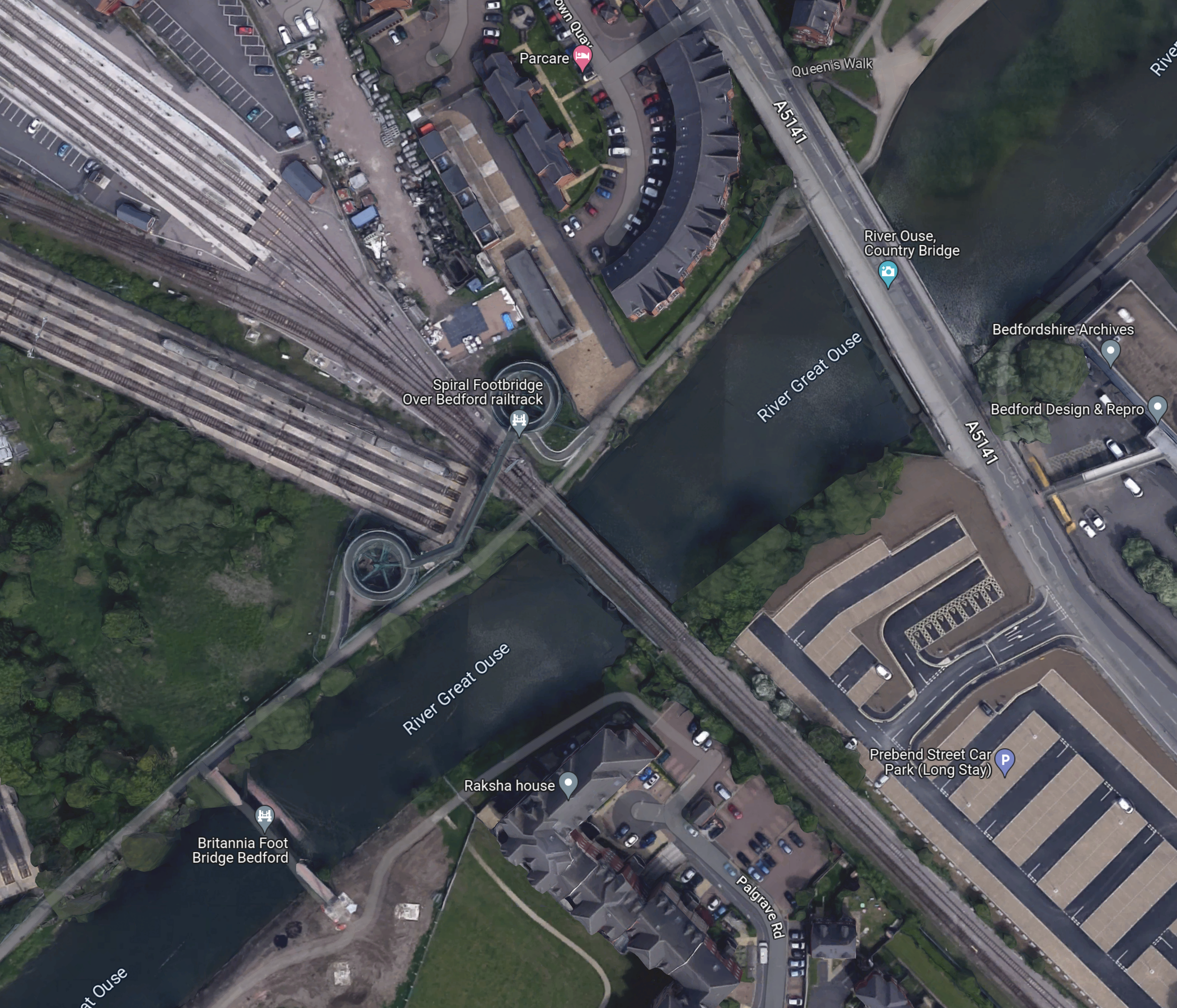
Note.
- The Marston Vale Line runs to the South -West of the long-stay car park in the South-East corner of the map.
- The Western bridge takes the line over the Great Ouse.
- It then runs between the sidings to Bedford station.
This picture, which was taken from the Spiral Footbridge on the North bank of the Ouse, shows the double-track rail bridge.
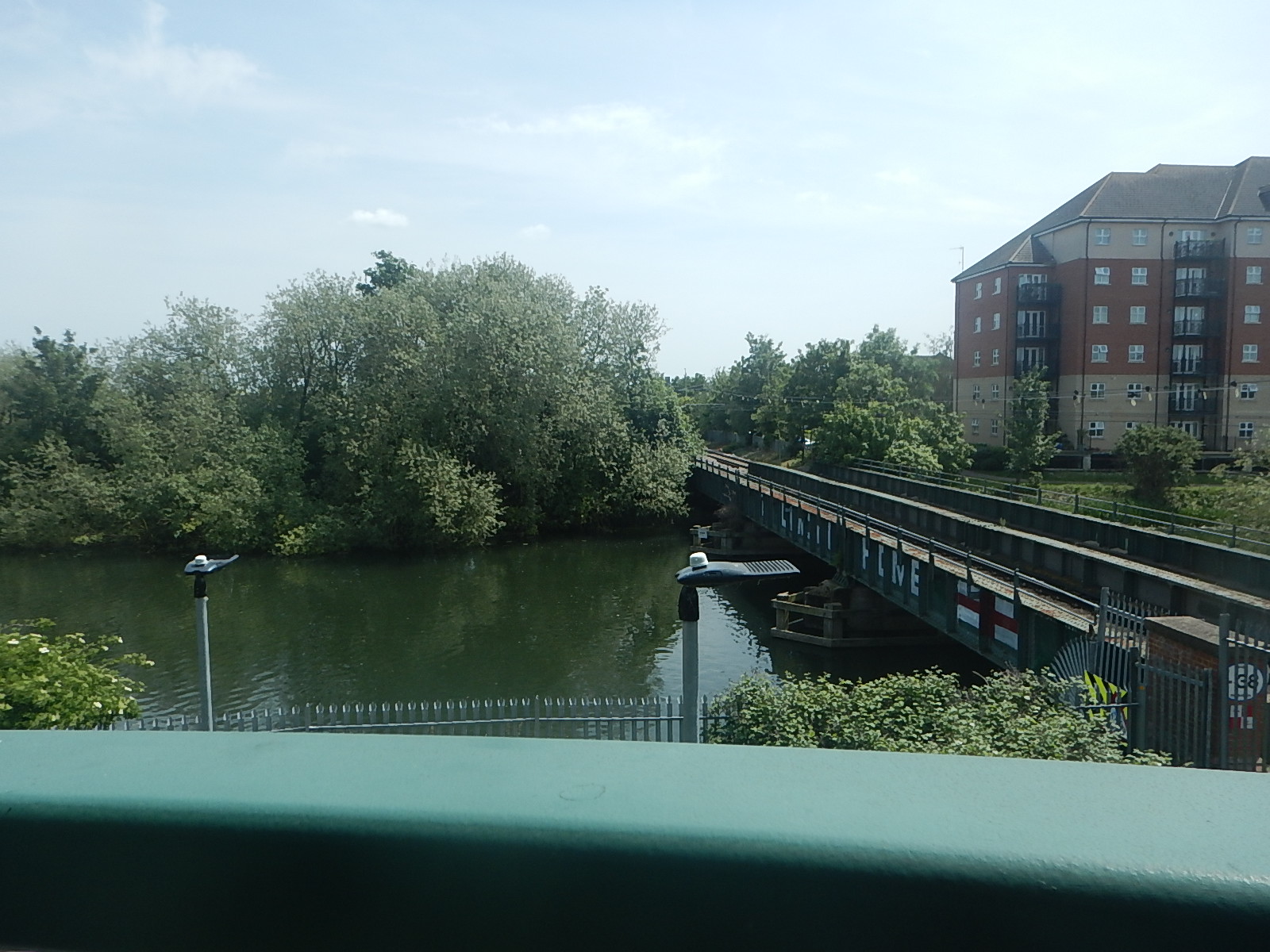
There are two tracks all the way from where the single-track divides to the North of Bedford St. Johns station.
The Southern Approaches To Bedford Station
This Google Map shows the Southern approaches to Bedford station.
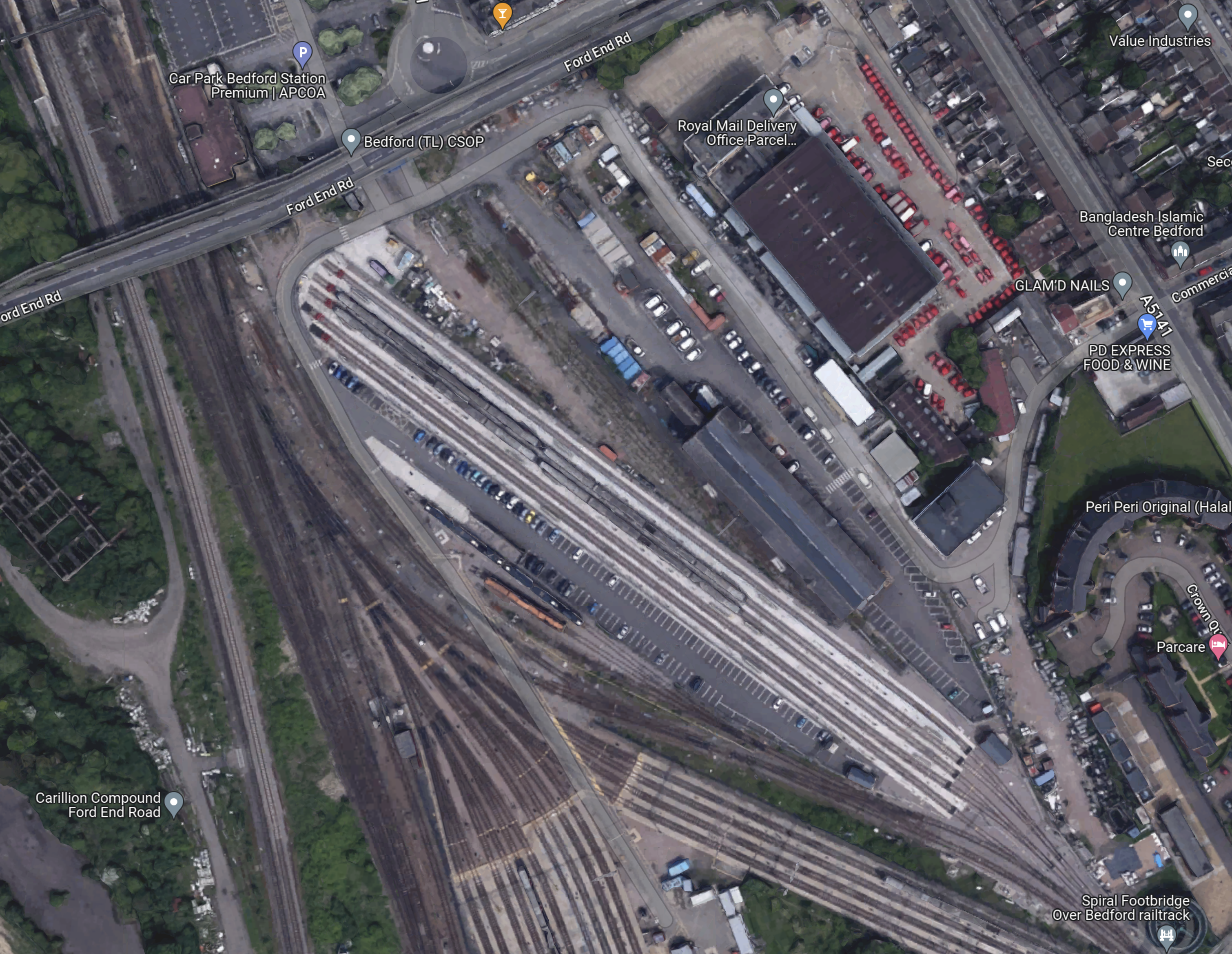
I have looked at the track layout and I’m fairly sure of the following.
- Current Marston Vale trains can go directly into Platform 1A without crossing any other tracks.
- Marston Vale trains can use Platform 1 if required.
- Thameslink trains can terminate in Platforms 1, 2 or 3.
- Southbound Corby trains can call in Platforms 1, 2 or 3.
- If they stop in Platforms 1 or 2, they appear to cross over South of Bedford station to the Midland Main Line.
If 2 tph were running on the Marston Vale Line; one fast and one stopping, a single platform should be able to handle the trains, if it was long enough.
Bedford Station
These pictures show Bedford station.

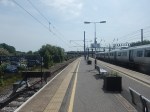
Note.
- The first two pictures were taken from the footbridge.
- The fast line between Platforms 3 and 4, is clearly visible in the second picture.
- Platform 1A is electrified.
This Google Map shows Platform 1A, where Marston Valley Line trains currently terminate.

Note.
- Platforms from the right are 1A and 1, 2 and 3 on the islands, with 4 to the left.
- Judging it against the three cars of the train in Platform 2, I reckon that Platform 1A could be updated to hold a six-car train.
Would a six-car train be long enough?
Initial East West Rail Services To Bedford
According to the Wikipedia entry for the East West Railway, these services will run on the railway between Oxford and Bedford.
- East West Railway – Oxford and Milton Keynes Central via Oxford Parkway, Bicester Village, Winslow and Bletchley – 2 tph
- East West Railway – Oxford and Bedford via Oxford Parkway, Bicester Village, Winslow, Bletchley, Woburn Sands and Ridgmont – 1 tph
- East West Railway – Aylesbury and Milton Keynes Central via Aylesbury Vale Parkway, Winslow and Bletchley – 1 tph
- West Midlands Trains – Bletchley and Bedford via Fenny Stratford, Bow Brickhill, Woburn Sands, Aspley Guise, Ridgmont, Lidlington, Millbrook, Stewartby, Kempston Hardwick and Bedford St Johns – 1 tph
Note.
- tph is trains per hour.
- There a fast train and a stopping train between Bletchley and Bedford.
- It appears that both these trains could terminate in Platform 1A at Bedford station.
I believe this will be possible with the current track layout, as the Marston Vale Line is almost all double-track.
East West Rail Services To Cambridge And Beyond
In this document on the East-West Rail Consortium web site, these services are suggested, for when the East West Rail is complete.
- An hourly train via Norwich terminating at Great Yarmouth.
- An hourly train via Ipswich terminating at Manningtree.
Would this mean three of four passenger tph on the Marston Vale Line?
If Cambridge and Oxford services, were running under digital signalling, I suspect trains could cross between the Thameslink and Marston Vale Lines, so that they could call in the through platforms at Bedford station.
How Would Trains Connect To The East At Bedford Station?
This Google Map shows the Midland Main Line through Bedform.
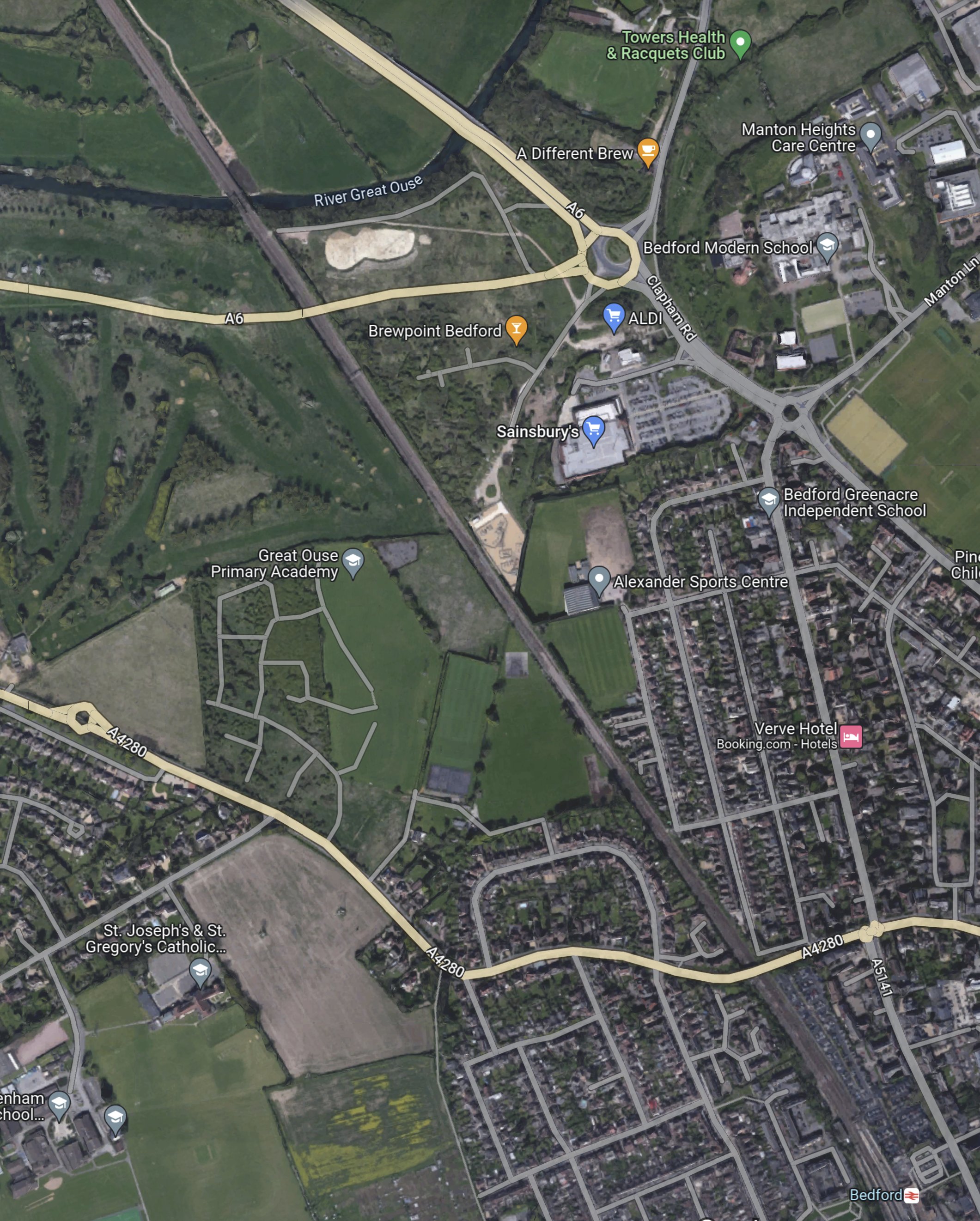
Note.
- Bedford station in the South-East corner of the map.
- The Midland Main Line runs diagonally from Bedford station across the map.
- The A6 seems to take a curious route in the North-West corner of the map, where it connects to a roundabout with an Aldi and a Sainsbury’s
This Google Map shows the countryside to the North-East of the roundabout.
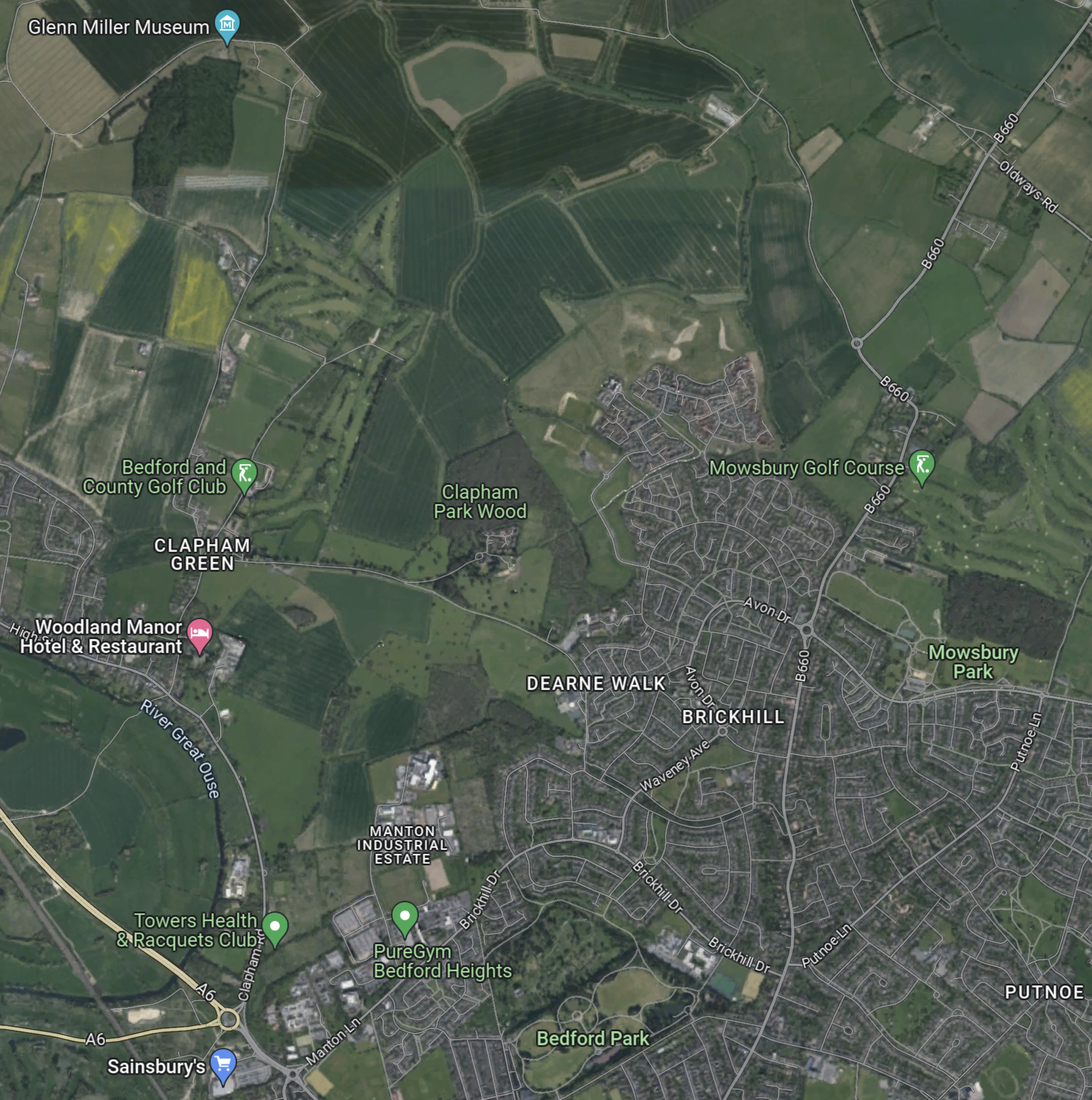
Judging by the colours of the fields to the North-East of the roundabout, I suspect, that a high proportion of the land is in one ownership.
This map clipped from the East West Rail route map, shows the route between Bedford and the East Coast Main Line between St. Neots and Sandy stations.
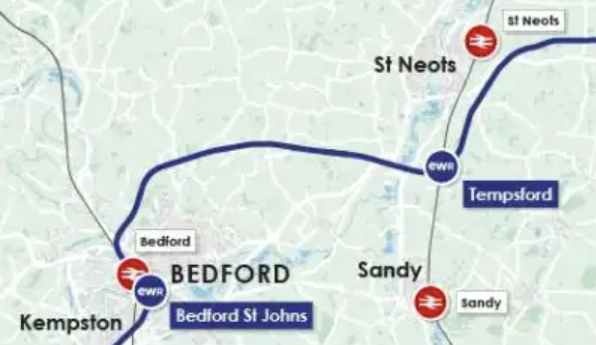
This Google Map shows the area of the junction, that would connect the East West Rail tracks to the slow lines through Bedford station.
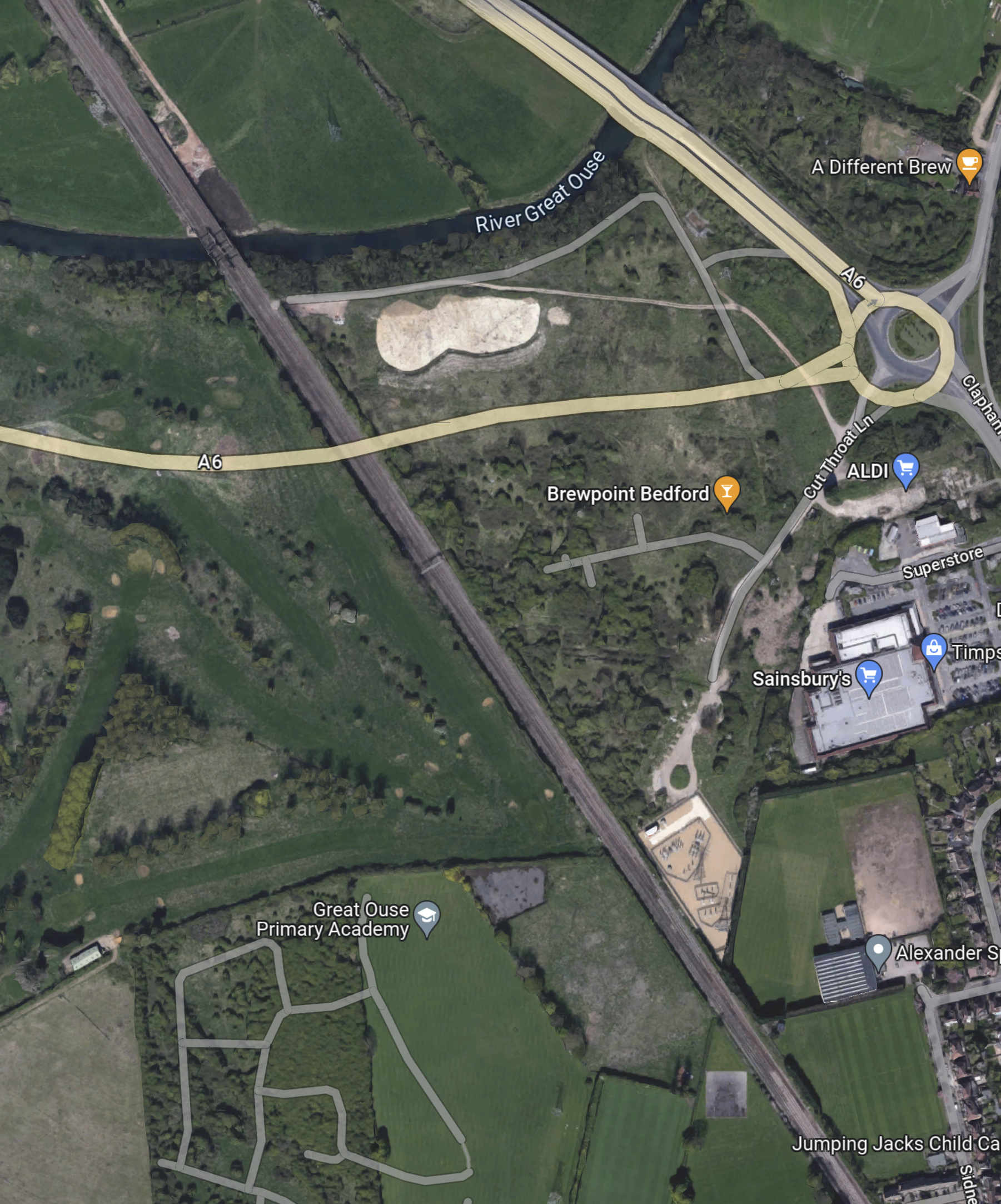
Note.
- The four-track Midland Main Line runs diagonally across the map.
- The beige-coloured diamond-shaped area by the railway is an electrical substation.
- There doesn’t appear to be many properties that would need to be demolished.
- There would need to be a viaduct over the A6.
- Once over the A6, the land seems to be in one ownership, which should ease building the railway across.
I feel it would be feasible, possibly with the use of a dive-under or flyover to connect the East West Rail tracks to the slow lines through Bedford station.
Reading Green Park Station – 27th May 2023
Reading Green Park station opened today, so I went and took these pictures.
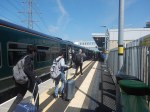
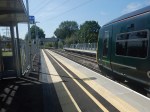
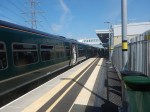
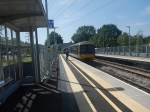

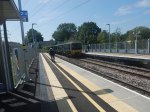
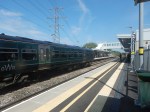


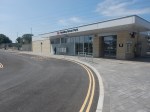
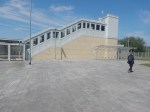
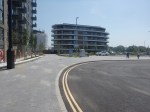
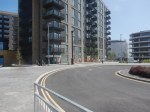

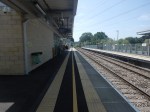

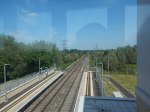
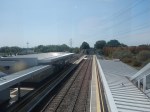
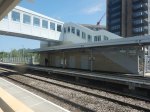
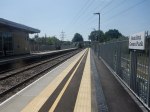
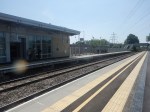
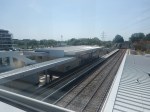
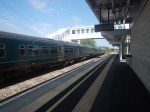
Note.
- It is a high-specification station with two platforms, toilets and full step-free access using a bridge and lifts.
- I was told, that the station can handle six-car trains.
- There is no coffee kiosk in the station, but there is a Tesco Express outside.
- Trains run between Reading and Basingstoke, at a frequency of two trains per hour (tph).
- The Reading and Basingstoke Line is partially-electrified.
- As I’ve seen before, there was a Chinese guy taking pictures of the station.
- At present there are only 54 parking spaces, but Wikipedia indicates this could be increased.
This Google Map shows the station under construction.
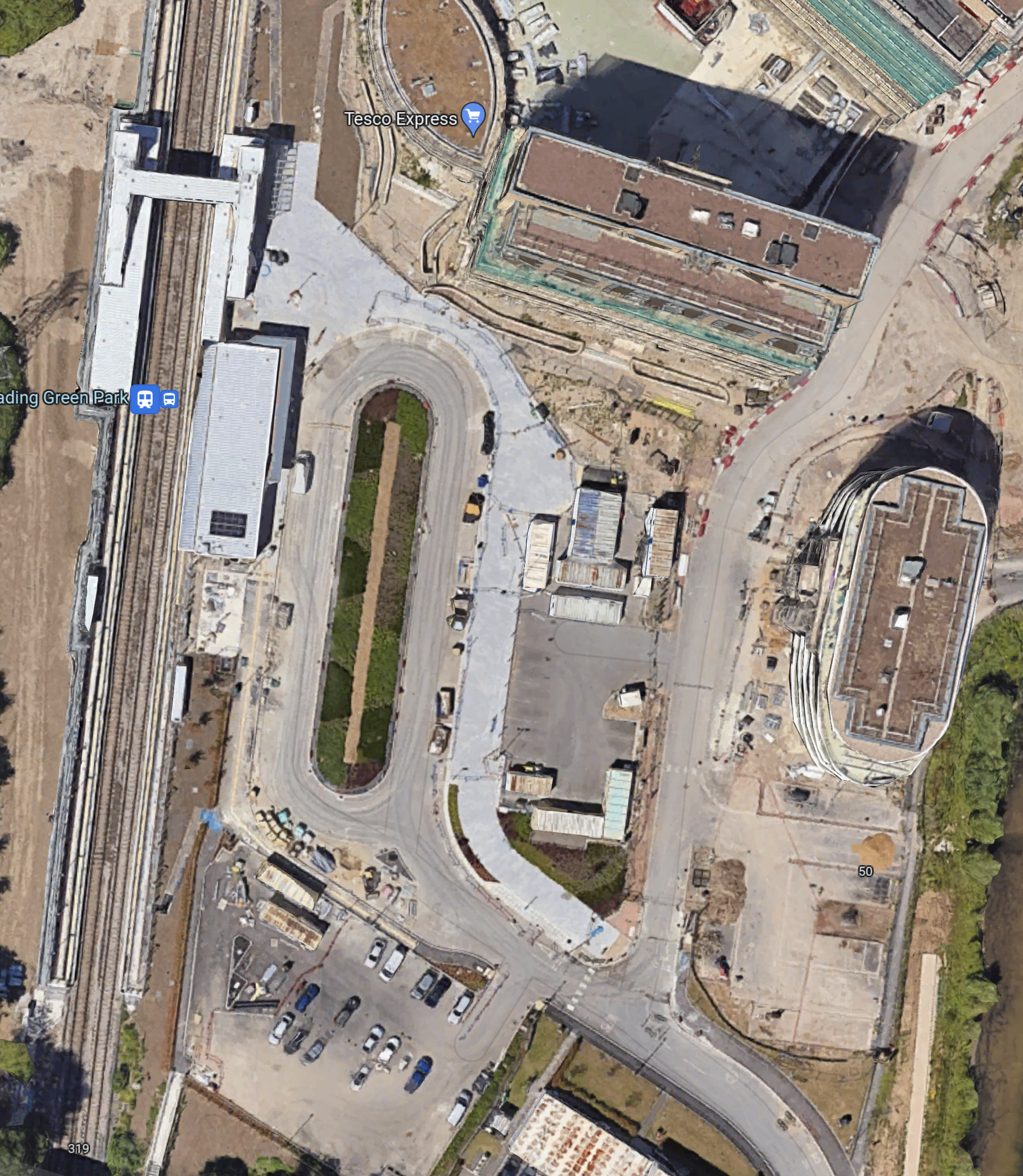
The map shows the station has room for expansion, which in a thriving town like Reading could be important.
I have a few thoughts.
Rolling Stock
The route is not unique, but it is unelectrified, but has 1.8 miles of high quality electrification at the Northern end.
This equates to a route, where 11.7 % is electrified.
Trains normally terminate at Reading in the fully-electrified Platform 2, which is shown in this picture.
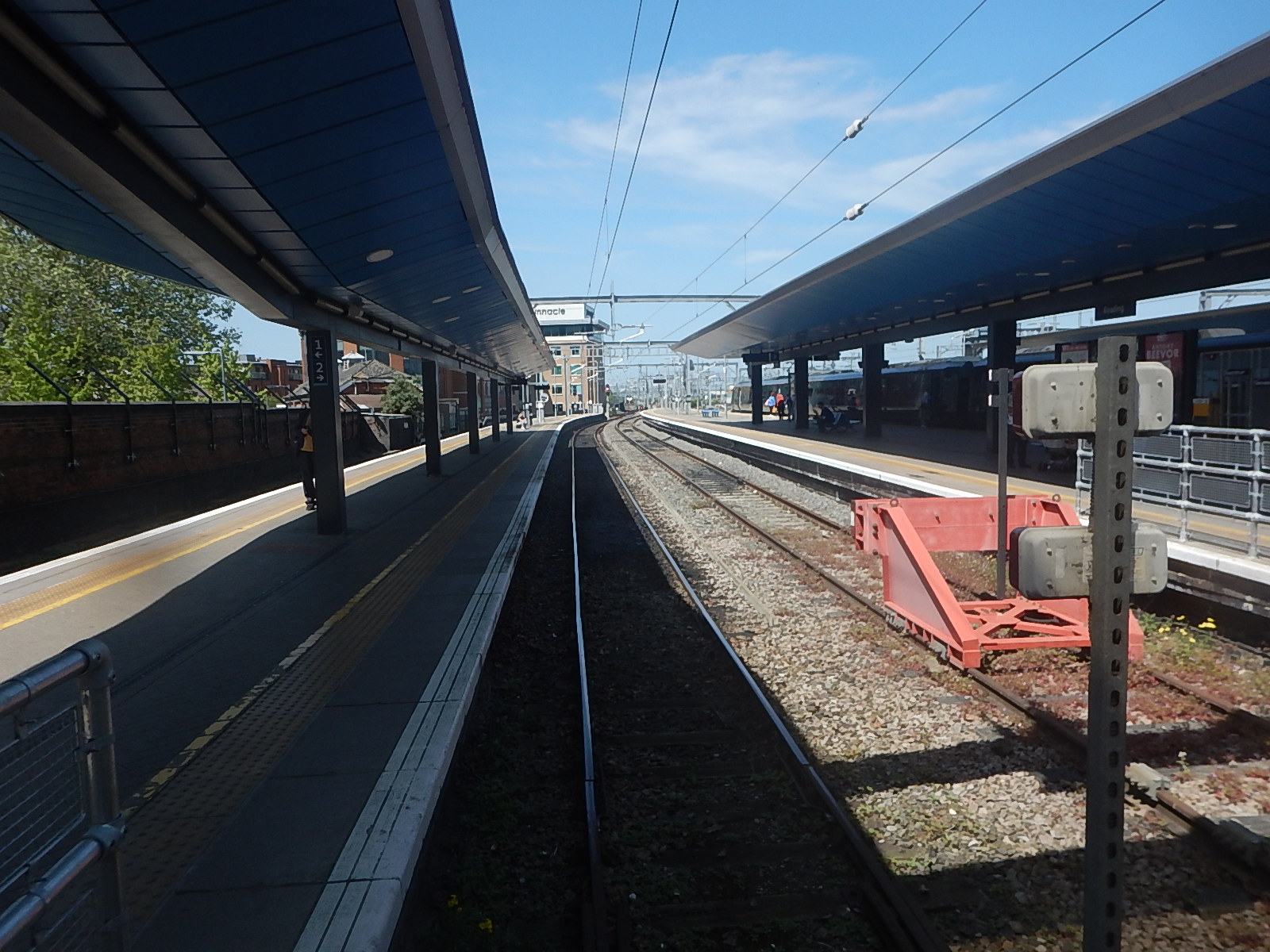
In a typical round trip, a train can spend up to 26 mins under the wires between passing Southcote junction going North and passing it going South.
This time should be more than enough to fully-charge a battery-electric train.
Consider.
- Modern battery-electric trains have a range in excess of sixty miles.
- Network Rail must have known that from before 2015, when they ran the Class 379 IPEMU trial on the Mayflower Line, which I wrote about in Is The Battery Electric Multiple Unit (BEMU) A Big Innovation In Train Design?.
- I was told, by the onboard text engineer, that the Class 379 IPEMU train had a range of sixty miles on the batteries.
- In Is It Architecture,Engineering Or Art? I describe my first visit to the superbly rebuilt Reading Station. This was in 2013 and there is no sign of any electrification.
So was the electrification scheme at Reading designed knowing the results of the trials in Essex, which showed that battery-electric trains did more than work and were a serious proposition?
A sixty mile range would mean a battery-electric train could handle, these routes from Reading.
- Southcote junction and Basingstoke and then back to the electrification at Southcote junction, which would be 27.2 miles.
- Newbury and Westbury, which is 42.5 miles.
- Didcot Parkway and Oxford and then back to the electrification at Didcot Parkway, which would be 21.0 miles.
If four-car Class 321 Renatus, Class 379 or Class 387 trains were to be converted, I doubt there would be many modifications needed to stations and track.
The Bridge
The bridge has everything anybody would want with two lifts, stairs and lots of glass for good views.
But what puzzles me about Network Rail’s bridges is that a few years ago, they held a competition with RIBA to design a bridge.
This stylish, affordable and easy-to-install footbridge was the winner.
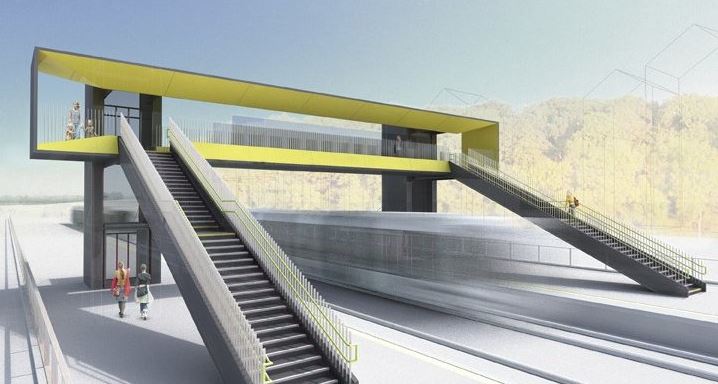
I wonder why not one has been built!
Ticketing
I feel there could be a minor problem with the ticketing.
For my trip today, I used my Freedom Pass on the Elizabeth Line as far as Reading, where I bought a return to Basingstoke, as I wanted to photograph something at that station.
In common with many stations, I had to exit from Reading station to buy my ticket from a machine.
As Reading has that superb bridge with lots of space and many changes at Reading will involve crossing the bridge, would it not be possible to put a ticket machine on the bridge?
I have travelled extensively on German trains and they place lots of ticket machines on the platforms, which I have used extensively, as their English is better than my German, which I have to use in a ticket office.
East-West Rail: Oxford And Bedford
This map from East West Rail shows the route between Oxford and Bedford.
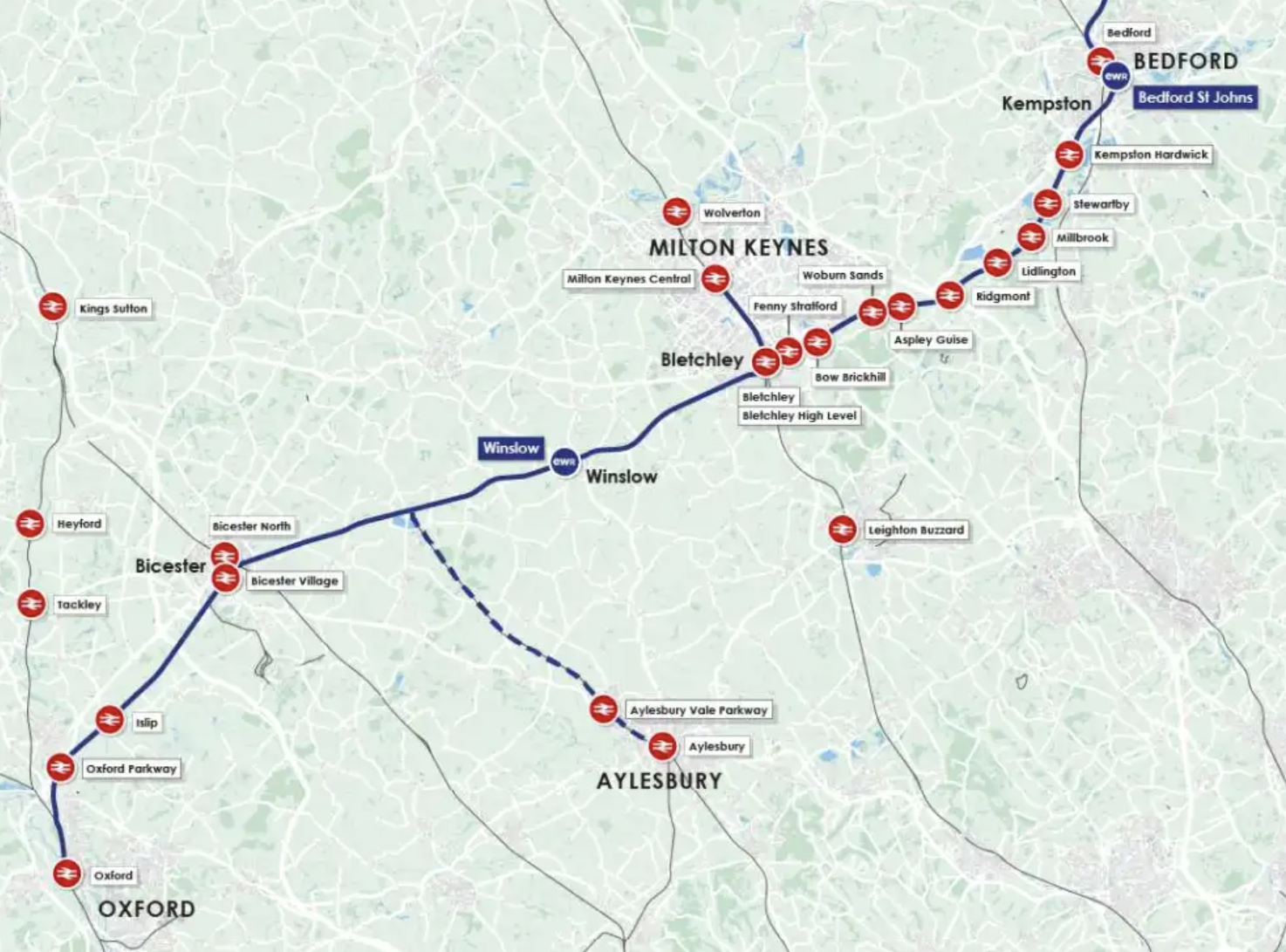
Note.
- The proposed route is shown in blue.
- The possible Southern extension to Aylesbury is shown dotted.
- The route between Bicester and Bletchley is rebuilt track along a former alignment.
- The route between Bletchley and Bedford will surely be rebuilt track along the Marston Vale Line.
- The Bicester and Bedford sections of track will be joined by the Bletchley Flyover, which is well on the way to completion.
This Google Map shows Bletchley station.

Note.
- Bletchley Station has six platforms.
- The double-track Bletchley Flyover runs North-South at the Eastern side of the station.
- There are the beginnings of two platforms on the flyover, which will increase the number of platforms at Bletchley station to eight.
- There is a junction at the Northern end of the flyover, where one pair of tracks go North to Milton Keynes Central and the other takes the Marston Vale Line to Bedford.
The track-layout at Bletchley station allows trains between Oxford and Bedford and Oxford and Milton Keynes Central to call at Bletchley station.
Proposed Passenger Trains Between Oxford and Bedford
According to the Wikipedia entry for the East West Railway, these service will run on the railway between Oxford and Bedford.
- East West Railway – Oxford and Milton Keynes Central via Oxford Parkway, Bicester Village, Winslow and Bletchley – 2 tph
- East West Railway – Oxford and Bedford via Oxford Parkway, Bicester Village, Winslow, Bletchley, Woburn Sands and Ridgmont – 1 tph
- East West Railway – Aylesbury and Milton Keynes Central via Aylesbury Vale Parkway, Winslow and Bletchley – 1 tph
- West Midlands Trains – Bletchley and Bedford via Fenny Stratford, Bow Brickhill, Woburn Sands, Aspley Guise, Ridgmont, Lidlington, Millbrook, Stewartby, Kempston Hardwick and Bedford St Johns – 1 tph
Note.
- tph is trains per hour.
- All larger stations get at least a half-hourly service.
- There are three tph between Oxford and Bletchley via Oxford Parkway, Bicester Village and Winslow.
- There a fast train and a stopping train between Bletchley and Bedford.
- It is still undecided, whether provision will be made for the Aylesbury service.
I think that this service pattern is achievable, with or without the Aylesbury service.
East-West Rail: Route For £5bn Bedford To Cambridge Link Announced
The title of this post, is the same as that of this article on the BBC.
This is the sub-heading.
The preferred route of part of £5bn railway line connecting Oxford and Cambridge has been announced.
The first two paragraphs summarise the route.
The East-West Rail (EWR) project confirmed details of the section between Bedford and Cambridge.
It will include new stations at Tempsford and Cambourne, and enter Cambridge via the south of the city.
This map from East West Rail shows the route.
Note.
- The proposed route is shown in blue.
- The possible Southern extension to Aylesbury is shown dotted.
- The Wikipedia entry for East West Rail has conflicting information, as to when trains can run between Bicester and Bedford.
These related posts describe and discuss various parts and issues of the route.
East-West Rail: Along The Marston Vale Line
East-West Rail: Aylesbury Spur
East-West Rail: Electrification
East-West Rail: Oxford And Bedford
East-West Rail: Through Bedford
 The Anonymous Widower