Happy Christmas To Everyone!
Let’s hope 2022 is better than 2020 and 2021!
Will We See Class 43 Power Cars Converted To Hydrogen?
To say that the Class 43 power cars of the InterCity 125 trains are iconic is rather an understatement.


Note.
They were built by British Rail in the late 1970s and early 1980s.
- They have an operating speed of 125 mph.
- They are now powered by a modern MTU 16V4000 R41R diesel engine after being re-engined earlier this century.
- They have an electric transmission.
According to Wikipedia, there are over a hundred and twenty in service.
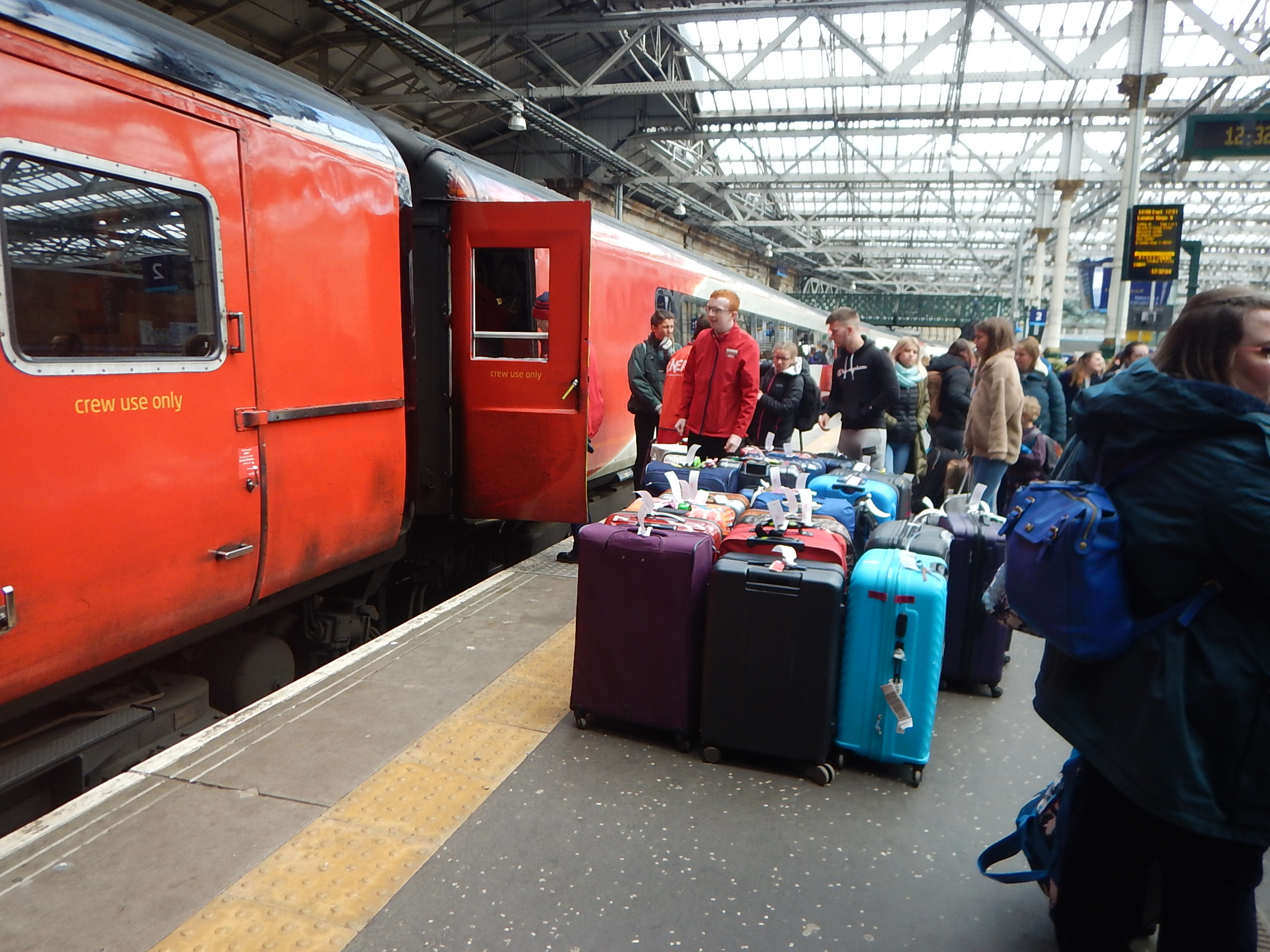
At the back of the power car there is a lot of space, as this picture shows.
This press release from Rolls-Royce is entitled Rolls-Royce Launches mtu Hydrogen Solutions For Power Generation.
These are the introductory bullet points to the press release.
- From 2022 mtu Series 500 and Series 4000 ready for 25% hydrogen
- From 2023 mtu engines and conversion kits available for 100% hydrogen
And what engine is there in a Class 43 power car? – It’s an MTU 16V4000 R41R diesel engine.
Is it an mtu Series 4000 engine?
If it is, there is space in the back of the power car for the hydrogen tank and the diesel engine can be converted to run on hydrogen, Rolls-Royce have everything they need break the speed record for hydrogen-powered trains. After all power cars; 43102 and 43159 hold the diesel-train speed record at 148 mph.
It would be the ultimate Roller.
Rolls-Royce Invests In Methanol Technology For Climate-Friendly Shipping
The title of this post, is the same as this press release from Rolls-Royce.
The press report starts with these bullet points.
- Rolls-Royce Power Systems to set standards in high-speed marine methanol engines
- New engines based on proven mtu technologies
- Methanol and synthetic diesel as key fuels of the future for climate-friendly engine operation
- Fuel cell another option on the way to climate-neutral ship operation
It then says this
Rolls-Royce is focusing on methanol as a fuel for climate-friendly shipping: Rolls-Royce business unit Power Systems is currently working on mtu engines for use with methanol. The new high-speed four-stroke engines, which are based on proven mtu technologies, are planned to be available to customers as soon as possible for use in commercial ships and yachts.
This paragraph gives the reasons, why Rolls-Royce is in favour of methanol.
Methanol offers a number of advantages for Rolls-Royce’s efforts to make shipping more climate-friendly and ultimately climate-neutral: The fuel can be produced in a CO2-neutral manner in the so-called power-to-X process, in which CO2 is captured from the air. The energy density of methanol is high compared to other sustainable fuels and, thanks to its liquid state, it can be easily stored and refuelled at ambient temperatures. Existing infrastructure can continue to be used in many cases. Unlike ammonia, methanol is not highly toxic and is environmentally safe. The combustion of methanol in a pure methanol engine can be climate-neutral with significantly reduced nitrogen oxide emissions, thus eliminating the need for complex SCR exhaust gas aftertreatment. Methanol tanks can be flexibly arranged in the ship and require significantly lower safety measures compared to hydrogen or ammonia. Besides the safety aspects and the lower complexity, the lower investment costs for users are a further upside of the methanol tank system.
Methanol seems to be a convenient and safe fuel, which is easier to incorporate into the marine environment, than hydrogen or ammonia.
Wikipedia says this about methanol’s use in shipping.
Methanol is an alternative fuel for ships that helps the shipping industry meet increasingly strict emissions regulations. It significantly reduces emissions of sulphur oxides (SOx), nitrogen oxides (NOx) and particulate matter. Methanol can be used with high efficiency in marine diesel engines after minor modifications using a small amount of pilot fuel (Dual fuel).
Rolls-Royce certainly seem to be keen to use the fuel. They also seem to have the technology.
Rolls-Royce Makes Duisburg Container Terminal Climate Neutral With MTU Hydrogen Technology
The title of this post, is the same as this press release from Rolls-Royce.
This is the first sentence.
Rolls-Royce will ensure a climate-neutral energy supply at the container terminal currently under construction at the Port of Duisburg, Germany.
There is also this Rolls-Royce graphic, which shows the energy sources.

It would appear batteries, combined heat and power (CHP), grid electricity, hydrogen electrolyser, hydrogen storage and renewable electricity are being brought together to create a climate-neutral energy system.
- As the graphic was named hydrogen technology for ports, I would assume that this is a Rolls-Royce mtu system that will be deployed at more than one port around the world.
- Note the H2 CHPs in the graphic. Could these be applications for Rolls-Royce’s beer keg-sized 2.5 MW electrical generator based on a Super Hercules engine?
- One of Rolls-Royce’s small modular nuclear reactors could be ideal for a large port outside Germany.
This is the last paragraph of the press release.
“Hydrogen technology is no longer a dream of the future, but hydrogen technology will prove itself in everyday use in Duisburg. The parallel use of fuel cell solutions and hydrogen engines shows that we have taken the right path with our technology-open approach to the development of new solutions for the energy supply of the future,” says Andreas Schell, CEO of Rolls-Royce Power Systems.
Rolls-Royce mtu appear to be very serious about the possibilities of hydrogen.
Flirt Akku And Class 755 Train Compared
This article on Focus Transport is entitled 224-kilometre Battery Range For FLIRT Akku – Stadler Sets World Record For Guinness Book Of Records.
These facts about the record run are given.
- The route was from from Berlin to Warnemünde.
- It appears to have been independently verified.
- The distance was 224 kilometres or 139 miles.
- This distance is more than London to Great Yarmouth via Norwich.
- It is reported that the temperature was around zero, which is not very battery-friendly.
No mention was made in the article of the number of passengers on board or the average speed.
Various articles have stated that the Flirt Akku is a three-car train, but I was not sure, if it included a PowerPack car like the Class 755 train.
So I flew my virtual drone over the route and got this picture.

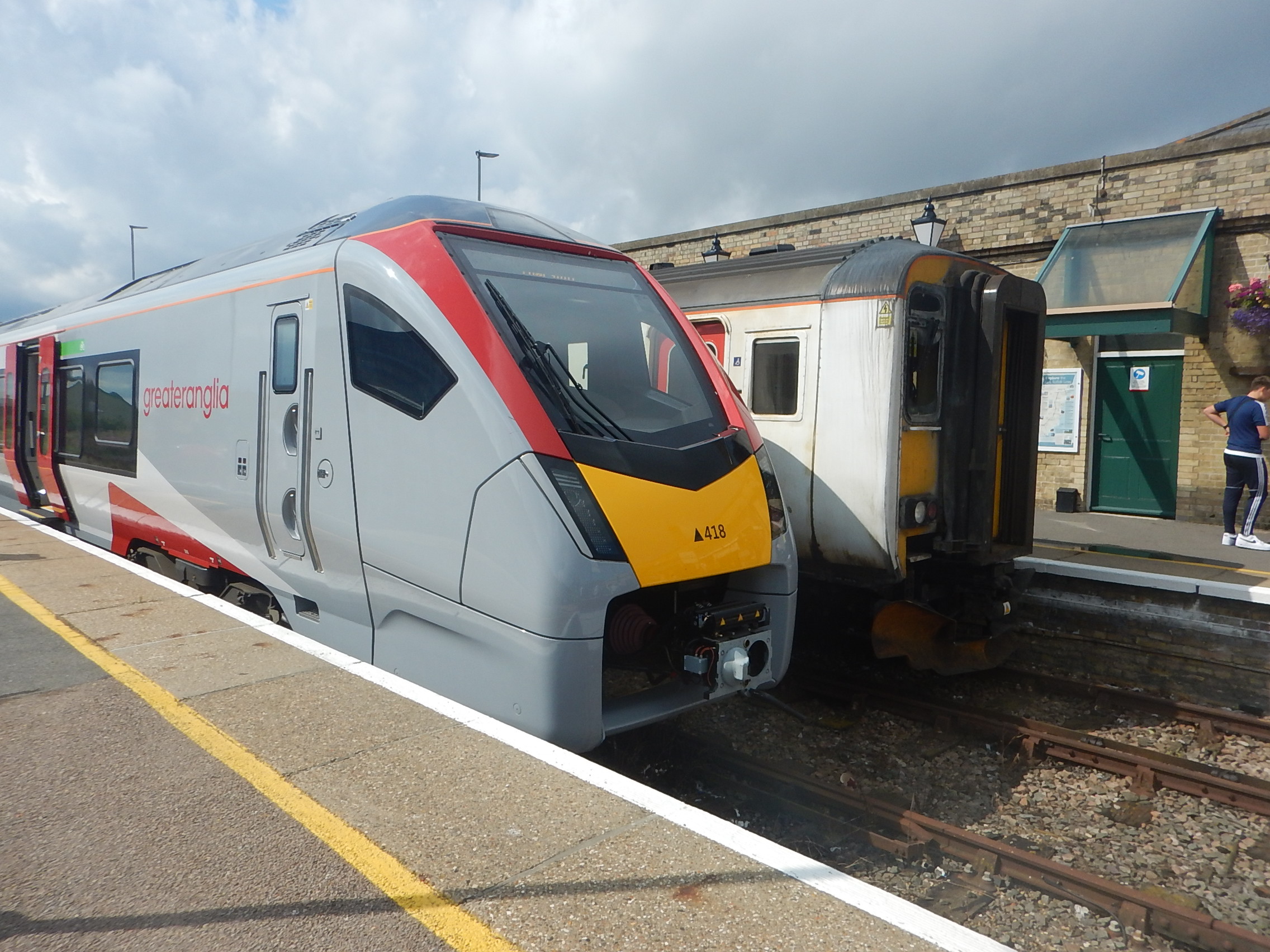
Compare the front end with this picture of a Class 755 train at Lowestoft.
And the side view with this diagram of the trains, that I clipped from Wikipedia.
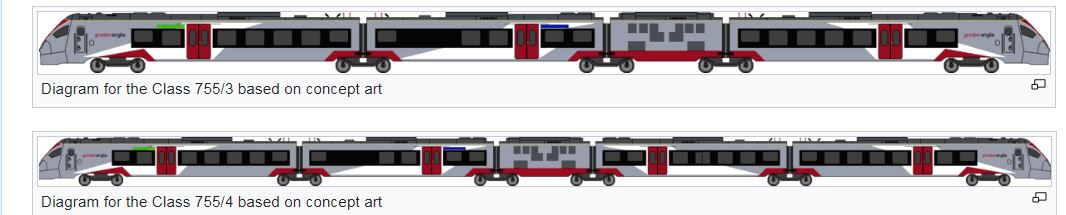
I can come to these conclusions.
- The two front ends are very different, although the basic layout of doors and windows appears the same.
- The Akku seems to have a flatter side.
- The Akku lacks the PowerPack of the British train.
It also looks like the Greater Anglia train has better step-free access between between train and platform. But then you never seem to find good step-free access on German trains.
Some extra information and thoughts .
Testing The Flirt Akku
This article on Railvolution is entitled FLIRT AKKU Research Project Completed.
The article comprehensively described the testing process and gave more details of the train.
- The train was running at 140 kph or 87 mph.
- This speed is available from the catenary or battery.
- Battery charging takes twenty minutes.
- The train seats 154 passengers in a 2 + 2 configuration.
The train appears to be roughly the same size and performance as a three-car Class 755 train.
Range On A Battery-Electric Class 755 Train
The battery range needed on various Greater Anglia routes are as follows.
Ipswich and Cambridge – 41.3 miles
- Ipswich and Felixstowe – 15.6 miles
- Ipswich and Lowestoft – 48.9 miles
- Ipswich and Peterborough – 71.2 miles
- Norwich and Great Yarmouth – 18.3 miles
- Norwich and Lowestoft – 23.5 miles
- Norwich and Sheringham – 30 miles
- Norwich and Stansted Airport – 53.7 miles
- Marks Tey and Sudbury – 11.8 miles
Note.
- Cambridge, Ely, Ipswich, Norwich and Peterborough are stations with full electrification.
- I suspect some services will need charging at the remote station.
It looks like to handle all routes will need a train with a range of around 80 miles or around 129 kilometres.
Conclusion
I don’t think that it would be impossible for Stadler to create a battery-electric Class 755 train with enough range.
Caterpillar To Offer Power Solutions Generator Operating On 100% Hydrogen To Customers In 2021
The title of this post is the same as that, of this article on Hydrogen Central.
The title says most of it, although engines will soon be offered that can run on natural gas with up to ten percent of hydrogen added.
The last part of the article described various projects being undertaken by Caterpillar with hydrogen.
It looks like Caterpillar are taking the route chosen by Cummins and JCB to embrace hydrogen, rather than fight it.
Mote – World’s First Carbon Removal Plant Converting Wood Waste To Hydrogen
The title of this post, is the same as that of this article on Hydrogen Central.
This paragraph caught my eye.
Mote is also in discussions with carbon utilization company CarbonCure Technologies on the potential of permanently storing its CO2 in concrete via CarbonCure’s carbon removal technologies, deployed in hundreds of CO2 mineralization systems at concrete plants worldwide.
So I looked up CarbonCure Technologies web site.
This page gives an overview of their technology.
According to their web site, they can add carbon dioxide to precast concrete sections. How much carbon dioxide would it have been possible to bury, if the tunnel linings for Crossrail had used CarbonCure’s technology?
How To Tell A Valid Year-End Forecast From A Vague, Unreliable Prediction
The title of this post, is the same as that of this article in The Times.
It is a thought-provoking must-read article.
New California Hydrogen Fuel Plant Will Use Wood Waste
The title of this post, is the same as that of this article on Hydrogen Fuel News.
- It is being developed by a company called Mote.
- They are spending $100 million on the development.
- The plant will be built at Bakersfield in California.
The Mote web site is worth a look.
It explains their process with a good graphic.
- Wood waste is gasified and processed, so that the carbon dioxide and hydrogen are separated.
- The hydrogen is used as normal.
- The carbon dioxide is stored.
The company claims the process is carbon negative.
They also give figures for their first facility.
- It will remove 150,000 tonnes of carbon from the atmosphere every year.
- It will produce twenty tonnes of hydrogen per day.
Fluor, who are one of the United States largest construction companies are involved.
Conclusion
In Can The UK Have A Capacity To Create Five GW Of Green Hydrogen?, I said the following.
Ryze Hydrogen are building the Herne Bay electrolyser.
- It will consume 23 MW of solar and wind power.
- It will produce ten tonnes of hydrogen per day.
The electrolyser will consume 552 MWh to produce ten tonnes of hydrogen, so creating one tonne of hydrogen needs 55.2 MWh of electricity.
This would mean that Mote’s Bakersfield plant is twice the size in terms of hydrogen production, than the electrolyser at Herne Bay.
Looking up Bakersfield on Wikipedia, it appears that there is a lot of agriculture in the area and it ranks in the top five in the States.
I’d like to learn more about this company and their method of hydrogen production.
Does it count as green hydrogen, as it appears the carbon dioxide is stored.
Given the agriculture in the area, could the carbon dioxide be fed to plants growing in greenhouses.
What Will Happen To Northern’s Class 195 Trains?
Northern’s Class 195 trains could be a problem in the future.
- They are diesel multiple units.
- There are twenty-five two-car trains and thirty-three three-car trains.
- All cars have a Rolls-Royce MTU 6H1800R85L diesel engine, that drives the train through a ZF EcoLife 6-speed transmission.
- They are 100 mph trains, which is adequate for the routes they serve.
- According to Wikipedia, the trains are designed for a lifespan of thirty-five years, which takes the trains past the date, when it is intended that all trains should be zero-carbon.
It looks to me, that a plan will be needed to decarbonise these trains, as they are probably too new and costly to scrap.
These are possibilities to upgrade them to zero-carbon.
Rebuild as Class 331 Electric Trains
The design of the Class 195 trains is based on the same platform as that of the Class 331 trains.
I would expect that it could be possible to rebuild the Class 195 trains as Class 331 trains.
But it would be an expensive and disruptive process and would require a lot of electrification.
Some battery-electric versions could be created to cut the need for electrification.
Run The Trains On Net-Zero Hydrogenated Vegetable Oil Or Other Fuels
In Powered By HVO, I wrote about research going on into the use of Hydrogenated Vegetable Oil or HVO.
There is also ongoing research into other net-zero fuels that can be used in a diesel engine.
The process used by Velocys to create sustainable aviation fuel can also be used to produce diesel from various sources like disposable nappies, household waste and scrap wood.
Run The Trains On A Dual Fuel Basis With Hydrogen
In Grand Central DMU To Be Used For Dual-Fuel Trial, I talk about how Grand Central in collaboration with a company called G-volution are running experiments with dual-fuelling a Class 180 train. G-volution state that they could dual fuel with hydrogen using their technology.
The Class 180 trains have Cummins engines, but I suspect G-volution’s technology or something similar could be applied to the Rolls-Royce MTU engines in the Class 195 trains.
This could be a very promising route.
Convert The Diesel Engines To Run On Hydrogen
Cummins and JCB have developed internal combustion engines, that can run on hydrogen. I would be very surprised if Rolls-Royce MTU are not developing this technology.
Conclusion
There are options to convert the Class 195 trains into low or zero-carbon trains.
.
 The Anonymous Widower