Centrica And PTT Sign Heads Of Agreement For Long-Term LNG Supply
The title of this post, is the same as that as this press release from Centrica.
These two paragraphs add details to the deal.
Under the agreement, PTT will supply LNG to Centrica for a 10-year period across a range of destinations in Asia, with deliveries expected to begin in 2028.
This agreement marks a significant step forward in Centrica’s strategic efforts to grow its LNG portfolio. The agreement provides access to diverse markets in Asia, whilst deepening Centrica’s relationship with PTT, an important partner in Asia. For PTT, this deal represents its first, long-term, international LNG sale.
I wonder if this is a much wider deal than it first appears.
There are a lot of small nations in Asia and it looks as the press release talks about a range of destinations in Asia, that Centrica are setting themselves up as a major supplier of LNG to the smaller nations in Asia.
Centrica are also building up a portfolio of products, that they could offer to these small nations.
- LNG terminals from their own engineering resources.
- Domestic client management software.
- Hydrogen production from HiiROC, which they have backed.
- Carbon black for soil improvement from HiiROC.
- Liquid Air energy storage from Highview Power, which they have backed.
- Gas-fired power stations perhaps based on Rolls-Royce mtu diesel engines running on natural gas or hydrogen.
Countries could get these products and services from China, but at what price?
The British Mini Nuclear Fusion Reactor That Actually Works
The title of this post, is the same as that as this article in The Times.
This is the sub-heading.
The only functional model in the world is so small it fits on a table and is set to help diagnose and cure cancer
These are the first two paragraphs, which add more details.
There are a few things that mark this nuclear fusion reactor out as unusual. For one, it is rather small: it could fit on a table top. For another, this research model currently has a little more gaffer tape than you might expect of the energy technology of the future.
But the biggest difference between it and its competitors is that this nuclear fusion reactor, in a warehouse north of Bristol, is actually working. And it is on the cusp of doing something more unusual still: making money.
It almost makes you think, that it should be filed under Too Good To Be True!
In the late 1960s, I shared an office at ICI Mond Division in Runcorn, with a guy, who was working on a process to make acetylene by a revolutionary route.
The process never worked, but now it has turned up being used by a company called HiiROC to make hydrogen.
They are also backed by some big names like Centrica, Hyundai, Kia and others.
I wonder how many other old ideas are finally ripe for developing, due to improvements in manufacturing and systems to control them.
Centrica And Equinor Agree Major New Deal To Bolster UK Energy Security
The title of this post, is the same as that as this news item from Centrica.
This is the sub-heading.
Centrica and Equinor have today announced a £20 billion plus agreement to deliver gas to the UK. The new deal will see Centrica take delivery of five billion cubic meters (bcm) of gas per year to 2035.
These three paragraphs add more detail to the deal.
The expansive ten-year deal continues a long-term relationship with Equinor that dates back to 2005 bringing gas from Norway to the UK.
In 2024, the UK imported almost two-thirds (66.2%) of its gas demand, with 50.2% of the total imports coming from Norway1. This is an increase from the UK importing around a third of its gas requirements from Norway in 20222 and underlines the strategic importance of the Norwegian relationship to UK energy and price security.
The contract also allows for natural gas sales to be replaced with hydrogen in the future, providing further support to the UK’s hydrogen economy.
I believe there is more to this deal than, is stated in the news item.
These are my thoughts.
Where Does AquaVentus Fit In?
The AquaVentus web site has a sub heading of Hydrogen Production In The North Sea.
This video on the web site shows the structure of the project.
I clipped this map from the video.

Note.
- The thick white line running North-West/South-East is the spine of AquaVentus, that will deliver hydrogen to Germany.
- There is a link to Esbjerg in Denmark, that is marked DK.
- There appears to be an undeveloped link to Norway, which goes North,
- There appears to be an undeveloped link to Peterhead in Scotland, that is marked UK.
- There appears to be a link to just North of the Humber in England, that is marked UK.
- There appears to be an extra link, that would create a hydrogen link between Norway and Humberside.
- Just North of the Humber are the two massive gas storage sites of Aldbrough owned by SSE and Brough owned by Centrica.
- Aldbrough and Rough gas storage sites are being converted into two of the largest hydrogen storage sites in the world!
- There appear to be small ships sailing up and down the East Coast of the UK. Are these small coastal tankers, that are distributing the hydrogen to where it is needed?
When it is completed, AquaVentus will be a very comprehensive hydrogen network.
RWE
I should add that AquaVentus is a project of German energy company; RWE.
It should be noted that RWE are the largest generator of electricity in the UK.
They will soon be even larger as they are developing these offshore wind farms in British waters.
- Dogger Bank South – 3 GW
- Norfolk Boreas – 1.4 GW
- Norfolk Vanguard East – 1.4 GW
- Norfolk Vanguard West – 1.4 GW
Note.
- This is 7.2 GW of electricity.
- The three Norfolk wind farms wwere possibly acquired at a bargain price from Vattenfall.
- None of these wind farms have Contracts for Difference.
- RWE are developing large offshore electrolysers.
- East Anglia is in revolt over pylons marching across the landscape.
I wonder, if RWE will convert the electricity to hydrogen and bring it ashore using AquaVentus, coastal tankers or pipelines to existing gas terminals like Bacton.
The revenue from all this hydrogen going to Germany could explain the rise in Government spending, as it could be a Magic Money Tree like no other.
HiiROC
HiiROC is a Hull-based start-up company backed by Centrica, that can turn any hydrocarbon gas, like chemical plant waste gas, biomethane or natural gas into turquoise hydrogen and carbon black.
I asked Google about the size of Norway’s chemical industry and got this reply.
Norway’s chemical industry, including oil refining and pharmaceuticals, is a significant part of the country’s economy. In 2023, this sector generated sales of NOK 175 billion (approximately €15.2 billion), with 83% of those sales being exports. The industry employed 13,800 full-time equivalents and added NOK 454 billion (approximately €3.9 billion) in value.
Isn’t AI wonderful!
So will Norway use HiiROC or something similar to convert their natural gas and chemical off-gas into valuable hydrogen?
If AquaVentus were to be extended to Norway, then the hydrogen could be sold to both the UK and Germany.
A scenario like this would explain the option to switch to hydrogen in the contract.
Aldbrough And Brough
Earlier, I said that just North of the Humber are the two massive gas storage sites of Aldbrough owned by SSE and Brough owned by Centrica.
I have read somewhere, that Germany is short of hydrogen storage, but I’m sure Centrica and SSE will help them out for a suitable fee. Centrica are also thought to be experts at buying energy at one price and selling it later at a profit.
Conclusion
I have felt for some time, that selling hydrogen to the Germans was going to be the Conservative government’s Magic Money Tree.
Has this Labour government decided to bring it back to life?
South Korea Aims To Lead The Global Market With Hydrogen Train
The title of this post, is the same as that of this article on Railly News.
These are the first two introductory paragraphs.
South Korea is taking an ambitious step with a vision of becoming a major player in the rapidly growing global hydrogen rail market. To 26,4 billion dollars The country that wants to gain a competitive advantage in this market that is expected to reach A self-developed Hydrogen Train by 2028 announced plans to introduce.
This strategic project is the national railway operator of South Korea korail will be managed by Korail, Building a two-car hydrogen train prototype by 2027 and creating the necessary legal and operational infrastructure for the dissemination of this technology. $23 million will make an investment. South Korean officials also clearly state that they aim to set international standards in the field of hydrogen-based mobility with this project.
I’ve thought for some time, that the Koreans have been serious about hydrogen-powered transport, as Hyundai keeps popping up with hydrogen transport and other ideas.
British company; Centrica owns a big share with Hyundai, Kia and others of a British start-up company from Hull, called HiiROC.
This is the HiiROC web site.
HiiROC can take any hydocarbon gas and split it into green hydrogen and carbon black.
Green hydrogen is obviously useful and the carbon black can be used for making tyres for vehicles, anodes for lithium-ion batteries and in agriculture for soil improvement.
Waste off-gas from a chemical plant can be split into green hydrogen and carbon black.
Biomethane from a sewage plant can be split into hydrogen and carbon black. Could a sewage plant on an estate be used to create biomethane for cooking and feeding to the HiiROC plant? Yes!
Could green hydrogen produced on the estate be used to drive vehicles like cars, vans and ride-on-mowers. Yes! If the manufacturer of the vehicle allows it!
How convenient would it be to have Hydrogen-at-Home?
The Korean investment in HiiROC by Hyundai and Kia clearly fits with the philosophy expressed in the second paragraph of the article of creating the hydrogen infrastructure.
I believe that at some point in the future, you will be able to buy a HiiROC device, that gives you as much hydrogen as you need to power your car, truck, bus, tram or train. The Koreans have a track record of turning ideas like this into reality.
Another Headache For Fossil Fuels: Liquid Air Energy Storage
The title of this post, is the same as that of this article on Clean Technica.
This article is an honest American look at Highview Power’s liquid air batteries and a must-read.
This is the first paragraph.
Whatever happened to liquid air energy storage? The UK startup Highview Power was going to bring its new liquid air system to the US back in 2019, providing the kind of scaled-up and long duration energy storage needed to support more wind and solar power on the grid. Highview switched gears and headed back home where the grass is greener. Our loss is the UK’s gain…
They first wrote about Highview Power in 2011, which shows how long some of these projects take to come to fruition.
The article also has this view on the state of offshore wind in the United States today.
Perhaps it’s just as well that Highview dropped its US plans when it did. Offshore wind stakeholders in the US were just beginning to find their footing along the Atlantic coast when President Trump took office on January 20 and promptly sent the offshore industry into a death spiral.
If I lived in the US today, I’d thinking about leaving given Trump’s barmy energy policies.
This paragraph from Highview Power’s web site, discloses their backers.
The £300 million funding round was led by the UK Infrastructure Bank (UKIB) and the British multinational energy and services company Centrica, alongside a syndicate of investors including Rio Tinto, Goldman Sachs, KIRKBI and Mosaic Capital.
So at least some American companies believe in Highview Power. KIRKBI is the investment vehicle of the family, that invented Lego.
Wrightbus At Heart Of £6.5bn Hydrogen Mega-Project Set To Transform UK Economy
The title of this post is the same as that of this article on Love Ballymena.
These are the first three paragraphs.
Ballymena’s Wrightbus is at the forefront of a transformative £6.5 billion clean hydrogen initiative that promises to create 24,300 jobs across the UK and position the nation as a global leader in renewable energy.
Project HySpeed, unveiled this week, unites some of Britain’s most influential companies—including Wrightbus, Centrica, JCB, and ITM Power—in a landmark effort to scale up green hydrogen production, reduce costs, and accelerate industrial decarbonisation.
The project is a major coup for Ballymena, where Wrightbus, a pioneer in zero-emission transport, has been a vital part of the local economy for decades. As a key member of the HydraB Power group, which spearheads HySpeed, Wrightbus brings its expertise as the producer of the world’s first hydrogen-powered double-decker bus.
I believe we need the Irish dimension in Project HySpeed, as the Irish have a unique way of getting things done.
I am reminded by a story, that I heard from a retired Guards officer about the liberation of Vienna in World War II.
The city was in a desperate state and as he hold me the story, the retired officer said that a woman could be had for the price of two cigarettes.
In the mess one evening, the officers were discussing what to do, when an Irish Guards officer said, “The people need some fun! Let’s organise a horse race meeting!”
They all thought he was joking, but that is what they did!
The guy, who told the story is long since dead, but he believed that day of fun meant that Austria wasn’t taken over by the Soviets, like so many other East European countries.
The Irish do have this unique way of getting things done.
Note that the CEO of Centrica is Chris O’Shea. Does he have Irish roots?
AI Forecast To Fuel Doubling In Data Centre Electricity Demand By 2030
The title of this post, is the same as that as this article in The Times.
This is the sub-heading.
International Energy Agency predicts that artificial intelligence could help reduce total greenhouse gas emissions
These are the first two paragraphs.
Data centres will use more than twice as much electricity by 2030 than they do today as artificial intelligence drives demand, the International Energy Agency predicts.
The agency forecast that all data centres globally will use about 945 terawatt-hours of electricity each year by 2030, roughly three times as much as the UK’s total annual demand of 317 terawatt-hours in 2023.
I am very much an optimist, that here in the UK, we will be able to satisfy demand for the generation and distribution of electricity.
- Our seas can accommodate enough wind turbines to provide the baseload of electricity we will need.
- Roofs and fields will be covered in solar panels.
- SSE seem to be getting their act together with pumped storage hydro in Scotland.
- I am confident, that new energy storage technologies like Highview Power with the packing of companies like Centrica, Goldman Sachs, Rio Tinto and others will come good, in providing power, when the wind doesn’t blow and the sun doesn’t shine.
- Hopefully, Hinckley Point C and Sizewell C will be online and soon to be joined by the first of the new small modular nuclear reactors.
- Hopefully, Mersey Tidal Power will be operating.
- There will be innovative ideas like heata from Centrica’s research. The economical water heater even made BBC’s One Show last week.
The only problem will be the Nimbies.
Backing Up The Wind With The Keadby Power Stations
I went to Cleethorpes from Doncaster by train yesterday. You pass the Keadby site, where there are two large gas–fired power stations of 734 MW and 710 MW. A third one ; Keadby 3 of 910 MW complete with carbon capture and storage should join them by 2027.
So that will be nearly 2.5 GW of reliable electricity.
I find it interesting that one of our first gas-fired power stations with carbon capture will be in Lincolnshire, which is famous for growing plants of all shapes, types and sizes. So will we be seeing lots of greenhouses on the flat lands I saw yesterday, growing plants in an atmosphere they like, so that we can generate our carbon dioxide and eat it.
The next power station at Keadby is called the Keadby Next Generation power station, which is intended to be complete by 2030. It is a bit of a puzzle in that it will run on up to 1800 MW of hydrogen and only produce up to 910 MW of electricity.
Note.
- The hydrogen will come from SSE’s hydrogen store at Aldbrough and Centrica’s store at Rough.
- Surely, the amount of hydrogen and electricity should balance.
When I worked in ICI’s hydrogen plant in the 1960s, ICI had no use for the hydrogen, so they sent it to their power station, blended it with coal gas and used it to make steam for other processes.
Could Keadby Next Generation power station be providing zero-carbon steam for the chemical and other processes on Humberside?
Adding the 910 MW of electricity to Keadby’s gas-fired total of 2.5 GW gives 3.4 GW of electricity from Keadby to back up the wind farms.
3.4 GW at Keadby is what I call backup!
It also should be noted, that one of the reasons for building the Mersey Tidal Barrage is to provide backup for all the wind farms in Liverpool Bay.
Conclusion
I believe that SSE could be supplying zero-carbon steam in addition to electricity from the Keadby Hydrogen power station.
From Doncaster To Cleethorpes
These pictures were taken on my journey between Doncaster and Cleethorpes.


























































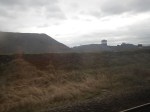





























The area is best summed up as flat and decorated with these features.
- A few hedges.
- Some trees and some woodland.
- dozens of wind turbines.
- Lots of pylons carrying electricity.
- Scunthorpe steelworks
- A few stations and railway sidings.
- A couple of waterways.
- Estates of new housing as you approach Grimsby.
When I returned there was more of the same on the other side of the tracks.














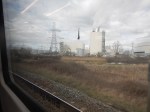
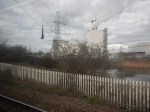



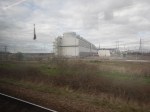
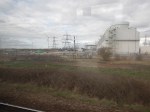

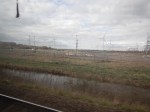













With the addition of all the power stations at Keadby and a couple of wind farms.
These are my thoughts on how this landscape will look at some time after 2030.
More Onshore Wind Farms
There will be a lot more wind farms lining the Doncaster and Cleethorpes railway.
The government has said it might pay for turbines and transmission lines to spoil views.
I feel they will have to, to meet their net-zero targets.
There Will Be Massive Hydrogen Storage On The Other Side Of The Humber
SSE are developing Albrough and Centrica are developing Rough into two of the largest hydrogen stores in the world.
The wind farms of the North Sea will provide them with hydrogen.
More Housing
If the government has its wish there will be a lot more new housing.
And as the newer houses show in my pictures, many of them will have solar panels.
More Power Stations At Keadby
Consider.
- The main purpose of the power stations at Keadby will be to provide backup to the wind and solar power in the area and far out to sea.
- The power stations will use hydrogen stored at Albrough and Rough.
- Some of the gas-fired power stations at Keadby will be fitted with carbon capture.
- One hydrogen-fired power station is already being planned.
The power stations at Keadby will probably be capable of supplying several GW of zero-carbon energy.
There Will Be Energy-Hungry Industries Along The South Bank Of The Humber
Just as in the Victorian era, coal attracted steel-making, chemicals and refining to the area, a South Humberside with large amounts of energy will attract heavy industry again.
Already, Siemens have built a train factory at Goole.
There Will Also Be Large Greenhouses In Lincolnshire
Greenhouses are a wonderful green way of absorbing waste heat and carbon dioxide.
Where Have I Seen This Blend Of Offshore Energy, Hydrogen, Heavy Industry And Agriculture Before?
After I visited Eemshaven in the Northern Netherlands, I wrote The Dutch Plan For Hydrogen.
We are not doing something similar, but something much bigger, based on the hydrogen stores at Aldbrough and Brough, the massive offshore wind farms and Lincolnshire’s traditional heavy industry and agriculture.
The Railway Between Doncaster and Cleethorpes Will Be Developed
Just as the Dutch have developed the railways between Groningen and Eemshaven.
Centrica Business Solutions Powers Gressingham Foods Into A Sustainable Future
The title of this post, is the same as this press release from Centrica Business Systems.
This is the sub-heading.
Centrica Business Solutions has partnered with luxury poultry supplier, Gressingham Foods, to decarbonise its operation and unlock significant energy savings, with the installation of a 3.27MW solar array
These four paragraphs detail the project, its operation and the thinking it.
The energy solutions company will deliver a 5,100 solar panel array to Gressingham Foods’ main food processing site in Redgrave, Suffolk capable of providing more than a quarter of its total energy requirements – enough energy to power 111 homes.
The project will break ground in March and is expected to be fully operational by September 2025.
Once live, the solar project will accelerate the decarbonisation plans of the famous Gressingham Duck producer, by reducing more than 670 tonnes of carbon in the first year alone. The chosen site for the project is part of the original Gressingham duck farmland on the property – with low agricultural land grading, solar represents a great solution to make sustainable use of the space.
The solar project is part of a flexible Power Purchase Agreement (PPA) that will see Gressingham Foods purchase the energy generated by the solar installation from Centrica Business Solutions over the next 12 years, with no upfront capital cost to Gressingham Foods. During this period, Centrica Business Solutions will own and maintain the solar site, guaranteeing its optimal performance.
I have posted this, as I feel the project is a good example of how this type of business can be partially decarbonised.
Certainly, with my rooftop solar installation, I now have the knowledge to have managed the energy on the stud farm, I owned with my wife, in a more efficient manner.
 The Anonymous Widower