Increased CCS Can Decarbonise GB Electricity Faster On Route To Net Zero
The title of this post, is the same as that of this news item on the SSE web site.
This is the first paragraph.
Building more power carbon capture and storage plants (Power CCS) could significantly accelerate the UK’s plans to decarbonise the GB electricity system on route to net zero, according to new analysis commissioned by SSE.
I am not surprised, as in my time, I have built several production, storage and distribution mathematical models for products and sometimes bringing things forward has beneficial effects.
These three paragraphs summarise the findings.
The UK Government’s proposed emissions reductions from electricity for 2035 could be accelerated to 2030 by combining its 50GW offshore wind ambition with a significant step up in deployment of Power CCS. This would require 7-9GW (equivalent to 10-12 plants) of Power CCS compared to the current commitment of at least one Power CCS plant mid-decade, according to experts at LCP Delta.
Replacing unabated gas with abated Power CCS generation will deliver significant reductions in greenhouse gas emissions. The analysis suggests that adding 7-9GW Power CCS to the UK’s 2030 offshore wind ambition will save an additional 18 million tonnes of CO2 by 2040, by preventing carbon emissions during periods when the sun isn’t shining, and the wind isn’t blowing.
Gas consumption for electricity generation would not significantly increase, given the 7-9GW Power CCS would displace older and less efficient unabated gas power stations already operating and reduce importing unabated gas generation from abroad via the interconnectors. Importantly, Power CCS can provide a safety net to capture emissions from any gas required to keep the lights on in the event of delays to the roll out of renewables or nuclear.
The report is by LCP Delta, who are consultants based in Edinburgh.
The report says this about the transition to hydrogen.
Power CCS also presents significant opportunities to kickstart, then transition to, a hydrogen economy, benefitting from the synergies between CCS and hydrogen, including proximity to large-scale renewable generation and gas storage facilities which can support the production of both electrolytic and CCS-enabled hydrogen.
And this about the reduction in carbon emissions.
The existing renewables ambition and the accelerated Power CCS ambition are expected to save a total of 72 million tonnes of CO2 by 2040 compared to commitments in the UK’s Net Zero Strategy from October 2021.
I don’t think there’s much wrong with this analysis.
But of course the greens will trash it, as it was paid for by SSE.
I have a few thoughts.
Carbon Capture And Use
I believe we will see a great increase in carbon capture and use.
- Carbon dioxide is already an ingredient to make Quorn.
- Carbon dioxide is needed for fizzy drinks.
- Carbon dioxide can be fed to tomatoes, salad plants, herbs and flowers in giant greenhouses.
- Carbon dioxide can be used to make animal and pet food.
- Carbon dioxide can be used to make building products like plasterboard and blocks.
- Carbon dioxide can be added to concrete.
- Carbon dioxide can be used as a refrigerant and in air-conditioning. There are one or two old Victorian systems still working.
Other uses will be developed.
Carbon Capture Will Get More Efficient
Carbon capture from power stations and boilers, that use natural gas is a relatively new process and its capture will surely get better and more efficient in the next few years.
Gas From INTOG
I explain INTOG in What Is INTOG?.
One of INTOG’s aims, is to supply electricity to the oil and gas rigs and platforms in the sea around the UK.
Currently, these rigs and platforms, use some of the gas they produce, in gas turbines to create the electricity they need.
- I have seen reports that ten percent of the gas that comes out of the ground is used in this way.
- Using the gas as fuel creates more carbon dioxide.
Decarbonisation of our oil and gas rigs and platforms, will obviously be a good thing because of a reduction of the carbon dioxide emitted. but it will also mean that the gas that would have been used to power the platform can be brought ashore to power industry and domestic heating, or be exported to countries who need it.
Gas may not be carbon-neutral, but some gas is more carbon-neutral than others.
SSE’s Plans For New Thermal Power Stations
I have taken this from SSE’s news item.
SSE has deliberately chosen to remain invested in the transition of flexible thermal electricity generation due to the key role it plays in a renewables-led, net zero, electricity system and is committed to decarbonising the generation.
Together with Equinor, SSE Thermal is developing two power stations equipped with carbon capture technology. Keadby 3 Carbon Capture Power Station is based in the Humber, the UK’s most carbon-intensive industrial region, while Peterhead Carbon Capture Power Station is located in the North East of Scotland. Combined, the two stations could capture around three million tonnes of CO2 a year.
Studies have shown that Keadby and Peterhead Carbon Capture Power Stations could make a lifetime contribution of £1.2bn each to the UK economy, creating significant economic opportunity in their respective regions. Both will be vital in supporting the huge amount of renewables which will be coming on the system.
SSE Thermal and Equinor are also collaborating on Keadby Hydrogen Power Station, which could be one of the world’s first 100% hydrogen-fuelled power stations, and Aldbrough Hydrogen Storage, which could be one of the world’s largest hydrogen storage facilities.
Note.
- SSE appear to think that gas-fired power stations with carbon capture are an ideal backup to renewables.
- If gas is available and it can be used to generate electricity without emitting any carbon dioxide, then why not?
- Hydrogen is coming.
Things will get better.
Is A Virtuous Circle Developing?
Consider.
- Spare wind electricity is turned into hydrogen using an electrolyser or perhaps some world-changing electro-chemical process.
- The hydrogen is stored in Aldbrough Hydrogen Storage.
- When the wind isn’t blowing, hydrogen is used to backup the wind in Keadby Hydrogen power station.
- The other Keadby power stations can also kick in using natural gas. The carbon dioxide that they produce, would be captured for storage or use.
- Other users, who need to decarbonise, can be supplied with hydrogen from Aldbrough.
Note.
- Gas turbines are throttleable, so if National Grid wants 600 MW to balance the grid, they can supply it.
- As time progresses, some of the gas-fired power stations at Keadby could be converted to hydrogen.
- Rough gas storage is not far away and could either store natural gas or hydrogen.
- Hydrogen might be imported by tanker from places like Africa and Australia, depending on price.
Humberside will be levelling up and leading the decarbonisation of the UK.
If you have an energy-hungry business, you should seriously look at moving to Humberside.
Centrica And Ryze Agree To Develop Hydrogen Pathway
The title of this post, is the same as that of this press release from Centrica.
These are the first three paragraphs.
Centrica and Ryze Hydrogen are set to jointly build and operate hydrogen production facilities aimed at providing a reliable supply of hydrogen for industry and transportation.
Under the landmark agreement the firms will jointly develop hydrogen production projects on existing Centrica sites and work with third-parties to build production on their sites too.
A Memorandum of Understanding has been signed and will combine expertise in order to kickstart the development of the UK hydrogen economy, targeting the mobility, industrial and commercial markets.
There are also some other interesting statements in the press release.
- Centrica’s Head of Hydrogen, says that we should be bold in our thinking about hydrogen.
- The partnership will explore how the UK can work with international hydrogen production facilities.
- Jo Bamford, green entrepreneur and Executive Chairman of Ryze, believes that Centrica are very serious about hydrogen.
- Centrica and Ryse will convert some of the British Gas fleet to hydrogen.
I feel this could be a very significant deal for the decarbonisation of the UK.
Dartmoor Line Passes 250,000 Journeys On Its First Anniversary, As Rail Minister Visits To Mark Official Opening Of The Station Building
The title of this post, is the same as that of this press release from Network Rail.
These three paragraphs talk about the Dartmoor Line’s reopening.
Just over a year after the Dartmoor Line reopened to regular passenger trains, journey numbers on the line have passed 250,000 this Monday morning [28 November], with the arrival of an extra special visitor, Rail Minister, Huw Merriman MP, to officially open the renovated station building.
The line reopened on 20 November 2021, restoring a regular, year-round service for the first time in almost 50 years following more than £40m of Government investment.
The previously mothballed rail line, which runs between Okehampton and Exeter, was restored in just nine months and delivered £10m under budget, becoming the first former line to reopen under the Government’s £500m Restoring Your Railway programme.
I have a few thoughts.
A Well-Managed Project
It does appear that Network Rail upped a gear or two to fulfil this project. The press release puts it like this.
Reinstatement of the Dartmoor Line was made possible by Network Rail’s team of engineers who worked tirelessly to deliver a huge programme of work including laying 11 miles of new track and installing 24,000 concrete sleepers and 29,000 tonnes of ballast in a record-breaking 20-day period.
But it does appear that over recent months Network Rail seems to do things a lot better and quicker.
I do wonder, if on the construction side, Network Rail have been able to bring in new working practices, that they are still trying to get lots of their other workers to accept.
A Quarter Of A Million Journeys
The press release says this about passenger numbers.
In the same week as it celebrated its one-year anniversary, the Dartmoor Line also saw its 250,000th journey, showing an incredible patronage on the line and more than double the demand originally forecast.
But they still can’t get the forecasts right.
Passenger Numbers Are Still Rising
The press release says this about rising passenger numbers
Since Great Western Railway (GWR) increased services to hourly in May 2022, passenger use has continued to rise, with over 500 journeys starting at Okehampton every day and a further 300 travelling into the town from across the rail network.
Is There Still Growth To Come?
There are several zero-carbon trains under development, so why not have a civilised shoot out, with each manufacturer given say four weeks in which to show off their products in passenger service.
This would hopefully indicate, if there was more growth to come and what would be the best trains to use.
Conclusion
The Dartmoor Line has been shown to be a success so lets repeat the dose.
‘Castle’ HSTs To Be Withdrawn By Great Western Railway
The title of this post, is the same as that of this article on Rail Advent.
This quote from a GWR spokesman, sums up the action that will be taken.
The Castles were always designed to be a temporary measure on the Cardiff to Penzance route. We expect to replace the Castle Class trains on a phased basis over the next couple of years, bringing customers the benefit of more modern trains that will reduce both cost and carbon emissions across the route.
These are my thoughts.
Could The Engines In The Power Cars Be Replaced With Modern Carbon-Neutral Engines?
This would be an alternative way to solve the decarbonisation problem.
It would also mean that other applications of the Class 43 power cars, like ScotRail’s Inter7City trains, Cross Country’s HSTs and Network Rail’s New Measurement Train would have a decarbonisation route,
In Rolls-Royce Releases mtu Rail Engines For Sustainable Fuels, Rolls-Royce mtu outline their route to decarbonise rail engines using sustainable fuels.
This was the first paragraph of my conclusion in the linked article.
Rolls-Royce and Cummins seem to be doing a thoroughly professional job in decarbonising the diesel engines they have made in recent years.
The Class 43 power cars have Rolls-Royce mtu Series 4000 engines, which will soon be available to run on sustainable fuel.
I think as a possible fall-back, one Class 43 power car should be converted to carbon neutral.
Could The Engines In The Power Cars Be Replaced With Modern Hydrogen Engines?
I looked at this in Will We See Class 43 Power Cars Converted To Hydrogen?.
I came to the conclusion, that this might be possible and said this.
It would be the ultimate Roller.
But then Rolls-Royce know about winning battles with large internal combustion engines.
The Option Of New Trains
This quote from a GWR spokesman was fairly definite about new trains, when they said.
The Castles were always designed to be a temporary measure on the Cardiff to Penzance route. We expect to replace the Castle Class trains on a phased basis over the next couple of years, bringing customers the benefit of more modern trains that will reduce both cost and carbon emissions across the route.
What trains could replace the Castles?
- The Cardiff and Penzance route is just short of 250 miles or roughly 400 kilometres.
- Only about 30 miles at the Cardiff end is electrified.
- Trains would need to be able to handle 25 KVAC overhead electrification.
- 125 mph trains will be needed at the Cardiff end.
- Four or five passenger cars will be needed.
- Currently, there are twelve Castles, so I will assume twelve new trains.
As these trains will be lasting up to forty years, they must be zero-carbon, which must mean battery-electric or hydrogen.
Charging Battery-Electric Trains
Consider
- Bristol Temple Meads, Exeter St. Davis and Plymouth are large stations with several platforms. I suspect that a number of Furrer + Frey’s charging stations can be installed along the route.
- The timetable would be adjusted to allow trains to be charged as they stopped to set down and pick up passengers.
- Trains would dwell in the station and then use their 125 mph performance to regain the time.
- I’ve also found a Penzance to Cardiff service, that stopped at Plymouth for fourteen minutes, which is more than enough to charge the batteries.
- Regenerative braking to the batteries would further eke out the range.
- There might also be some extra electrification around Bristol or Exeter.
- Some form of charging would be needed at Penzance.
Note.
- Putting up electrification may mean that it will delay the new trains for a few years.
- Charging stations along the route could probably be installed to a tight timetable.
I believe that with some top-class work, by battery and charger manufacturers, that a battery-electric train could be developed that could run between Cardiff and Penzance.
Thoughts On Hydrogen
Consider.
- The Alstom Coradia iLint train has a range of about 1,000 km. on hydrogen.
- Companies like Airbus, Boeing and a host of rocket makers will improve the storage and safety of hydrogen.
- A range of a 1,000 km. would allow refuelling at one end of the route.
- Trains could be multiple units or a hydrogen-electric locomotive pulling a rake of coaches with a driving van trailer.
I feel that hydrogen would be very feasible as a power source.
Alstom Could Offer A Hydrogen Aventra
Consider.
- Alstom are developing a hydrogen-powered Aventra.
- Bombardier were offering a 125 mph Aventra.
- A typical Aventra like a Class 720 train seats a hundred passengers a car.
A hydrogen Aventra would be feasible.
Hitachi Could Offer A Battery-Electric Or Hybrid AT-300
In 2021, in Hitachi And Eversholt Rail To Develop GWR Intercity Battery Hybrid Train – Offering Fuel Savings Of More Than 20%, I wrote about the announcement of the Hitachi Intercity Tri-Mode Battery Hybrid Train, which is shown in this Hitachi infographic.

Note.
- Batteries replacing an engine to cut fuel usage and reduce carbon emissions.
- First time a modern UK intercity train, in passenger service, will use alternative fuel.
- These Hitachi trains use mtu engines, so I suspect they will be switched to sustainable fuel like HVO.
- The trains are 125 mph and 140 mph with the latest digital signalling.
- Great Western Railway already have 58 five-car Class 800/802 trains and 35 nine-car 800/802 trains.
- They would not need any changing stations or other infrastructure changes.
- Staff retraining would be minimal.
Testing of the prototype of these trains must be getting very close or even underway.
Stadler Could Offer A Battery-Electric Flirt Akku
Consider
- Stadler have run a Flirt Akku on batteries for 243 km.
- Flirt Akkus will go into service soon.
- Flirts have been designed for 125 mph running.
With charging at Cardiff, Bristol, Exeter, Plymouth and Penzance, I believe a Flirt Akku could handle the route.
Are Hitachi Home And Hosed?
I have a feeling that the announcement has been made about retiring the Castles as the prototype Hitachi Intercity Tri-Mode Battery Hybrid Train is under test and is performing well.
So I wouldn’t be surprised to see an order for twelve more Class 802 trains soon.
New Nanomaterial Offers Efficient Hydrogen Production – Just Add Light
The title of this post, is the same as that of this article on Hydrogen Central.
These are the first two paragraphs.
A new nanomaterial catalyst needs only light to convert ammonia into hydrogen, its developers have said.
Made of inexpensive raw materials, the catalyst was developed by a team from Rice University in Texas, Syzygy Plasmonics Inc., and Princeton University in New Jersey.
I am not surprised, as I am a great believer in the power of catalysts.
In Hydrogen Fuel Cells Could Get A Lot Cheaper With Newly Developed Iron Catalyst, I wrote.
In the early 1970s, I worked with one of ICI’s catalyst experts and he said, that improvements in this area will be large in the future.
Increasingly, I see his prediction being proved right, in the varied fields, where catalysts are used.
It may be over fifty years ago, but then scientific truths don’t fade away and die. They just sit there quietly waiting to be rediscovered.
It is worth looking at the Syzygy Plasmonics web site.
Under a heading of Deep Decarbonisation For Chemical Manufacturing, this is their mission statement.
Syzygy is commercializing a deep-decarbonization platform dedicated to cleaning up the emissions-heavy chemical industry. We use breakthrough technology pioneered in the Laboratory for Nanophotonics at Rice University to harness energy from LED light to power chemical reactions. This new technology has the potential to partially or fully electrify the chemical industry, shifting it to renewable electricity, and cost-effectively reducing its carbon footprint.
The energy transition is here. The time to act is now.
That is some mission statement! But possibly one to expect from Houston.
Construction Has Started On The Silvertown Tunnel
These pictures show that construction has started on the Silverton Tunnel.







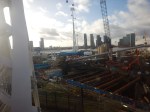
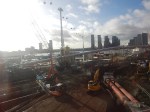



Note that New Civil Engineer is reporting that tunnelling has started.
My Current Thoughts On The Silvertown Tunnel
In 2015, I wrote No To Silvertown Tunnel, which I started with these two paragraphs.
My personal feelings about the Silvertown Tunnel are that it is irrelevant to me, except that it might help some trucks bring goods that I buy online or at a local shop. Although as a sixty-eight year-old-widower living alone, I don’t think my transport needs through the tunnel will be high.
I don’t drive after my stroke and I like that lifestyle, except when last night it took me three trains, a coach and a taxi to get back from watching football at Ipswich. But that tortuous late night journey was caused because NuLabor spent my tax money on pointless wars that will haunt us for generations, rather than in extending and renewing our rail system, that will nurture and enrich our future.
But my objections to the Silvertown Tunnel have changed and expanded.
New Transport Infrastructure Attracts Passengers
This may seem obvious, but there has been several cases recently in London to prove my point.
- The London Overground has been a success beyond Transport for London’s wildest dreams and as an example the North London Line, that started with three x three-car trains per hour (tph) is now running eight x five-car tph. This is a four time increase in capacity.
- New buses and contactless ticketing have encouraged more passengers to use the buses.
- Electrification and new trains has transformed the Gospel Oak to Barking Line.
- The expansion of Thameslink and new trains now carries a lot more North-South traffic through London.
- Every time, a new section of the Elizabeth Line opens more passengers are attracted to the new line.
- The remodelling of London Bridge station has increased passenger numbers. And shoppers!
On a personal note, I live on a bus corridor, that runs between North London and Moorgate for the Lizzie Line. Since the Lizzie Line has been fully connected, passenger numbers have risen by a big margin.
I don’t believe that the ability to attract more traffic of the Silvertown Tunnel will be any different.
More Traffic Means More Congestion And Pollution
I live close to the Balls Pond Road, which increasingly seems to be a truck route across North London.
The Silvertown Tunnel will be two lanes each way; one for trucks and buses, and one for smaller vehicles.
I can’t see that pollution and congestion around the Silvertown Tunnel and on the routes to the tunnel, will not increase.
There Is Little Or No Provision For Cyclists And Pedestrians
This will be a big problem. Especially, as the local traffic in the area will increase dramatically.
Does Central London Have Enough Parking For The Increased Traffic?
Parking in Central London is probably close to capacity now!
So What Would I Do?
Given that construction has already started, I feel it is too late to cancel.
Better Alternatives Than Driving
I feel measures should be adopted that provide better alternatives than driving.
Obviously, this won’t help with trucks, but it could reduce the total number of vehicles going through the tunnel.
These could include.
- Increase the frequency of trains on both the Lizzie Line and Thameslink.
- Increase the number of destinations on both the Lizzie Line and Thameslink.
- Add an extra car to Lizzie Line trains.
- Remove First Class on the shorter eight-car Thameslink trains.
- Add provision on some Lizzie Line and Thameslink routes for bicycles.
- Add a Silvertown station to the Elizabeth Line for London City Airport.
- Add one or more pedestrian and cycling bridges across the Thames.
- Expand of the Docklands Light Railway.
- Expand the Thames Clipper.
- Connect Barking Riverside station to Thamesmead and Abbey Wood station either by a rail or a fast ferry.
- Keep the cable-car.
I suspect there are other viable ideas.
Develop Incentives To Use Public Transport
Incentives could be in these areas.
- Better station and bus terminals encourage more to use trains and buses.
- Full free onboard wi-fi and phone charging.
- Special fares for some journeys.
An example of the latter could be a discount for certain cross-river journeys.
Make The Silvertown Tunnel Available For Zero Carbon Vehicles Only
This would surely cut pollution in London.
Conclusion
We should use the Silvertown Tunnel to improve London’s air quality.
ZERRCI – Zero Emissions Repowering Of Railway Construction Infrastructure
This project was one of the winners in the First Of A Kind 2022 competition run by Innovate UK.
In this document, this is said about the project.
Project No: 10037562
Project title: ZERRCI – Zero Emissions Repowering Of Railway Construction Infrastructure
Lead organisation: EMINOX LIMITED
Project grant: £59,852
Public description: Eminox, HS2 and SCS Railways propose a solution for the delivery of a low emissions, greener
railway. Our solution covers the development of an electric motor and battery system, which can be
retrofitted into existing construction equipment, replacing the traditional diesel engine with a quieter,
cleaner, zero emissions drivetrain. These pieces of plant and equipment will be used as direct
replacements for diesel machines in the constructing and maintaining railway infrastructure.
Eminox is leading this project with its experience in providing cost effective retrofit emissions
solutions and together with HS2 and SCS JV will be involved in demonstrating the first repowered
construction equipment in a real-world rail infrastructure environment.
This proposed venture has been instigated by HS2 in line with their ambition as set out in their Net
Zero Carbon plan for diesel free construction sites by 2029. As the solution will extend the life
expectancy of the machine, it will contribute to HS2’s vision of net-zero by 2035.
This solution will offer a more cost-effective route to zero emissions construction compared to
purchasing similar new electric powered equipment by extending the life expectancy of existing
plant and machinery. With a target of 50% the price of purchasing new excavators it is expected to
incentivise the broader uptake of demand in electric plant and equipment at scale across the
industry supply chain.
Phase 1 of this project aims to deliver a proposal for a prototype zero-emissions excavator. By
performing a feasibility study on the conversion principals, we intend to extract a broad
understanding of the challenges associated with integration and develop an optimised battery and
motor system specification.
Phase 2 will involve the conversion, commissioning and delivery of a repowered excavator, and
subsequent in-service validation. By using this converted machine to conduct initial trials, it will be
proven that no machine functionality or safety features have been compromised during conversion,
and we will establish power storage requirements to provide adequate duty cycle performance.
This will result in a fully proven demonstrator with real-world validation enabling further
development of optimised battery solutions.
My Thoughts And Conclusion
ECML Net Zero Traction Decarbonisation
This project was one of the winners in the First Of A Kind 2022 competition run by Innovate UK.
In this document, this is said about the project.
Project No: 10036245
Project title: ECML Net Zero Traction Decarbonisation
Lead organisation: SIEMENS MOBILITY LIMITED
Project grant: £59,983
Public description: Electrification is the foundation of all modern railways and fundamental to decarbonisation. Through
delivering faster, smoother, quieter and more reliable train services, rail electrification reduces
industry fuel cost by 45%, rolling stock costs by 33%, and track maintenance costs by 10-20%
(compared to diesel operation). Electric railways are the most efficient, lowest carbon form of
transportation in the UK.
Network Rail operates the largest power distribution network in the UK, and is the largest consumer
of electricity in the UK, consuming 4TWh electricity per year. Power is provided from the electricity
supply industry, a mix of gas, nuclear, coal and renewables, emitting approximately 944,000 tonnes
of carbon dioxide annually. Connecting new renewable generation directly to the railway reinforces
the railway power supply, while reducing coal and gas use in the UK and is a longstanding Network
Rail industry challenge statement. To date, engineering incompatibilities between renewable,
electricity supply systems and the railway single-phase electrical and other railway systems have
prevented local renewable connection in rail.
In a world first, Siemens Mobility, working with British Solar Renewables, DB Cargo UK, Network
Rail, ECML operators, and the University of York, will directly connect large-scale renewable
generation to the East Coast Mainline. The demonstrator phase will deliver up to 1GWh green
electricity direct to trains each year, reducing UK gas imports by 151,000 cubic metres and carbon
emissions by 236 tonnes annually. It will gather vital data creating a new green industry, creating a
precedent and setting standards to enable larger scale roll-out across the UK.
My Thoughts And Conclusion
This page on the Network Rail web site is entitled Power Supply Upgrade.
Since 2014, Network Rail and its partners have been upgrading the overhead electrification and the associated substations and electricity supply on the East Coast Main Line (ECML).
- It is not a small project which includes fifty new substations and 1,600 km. of new cabling between London and Edinburgh.
- When complete, fleets of electric trains on the route will be receiving high-quality electric power from the upgraded overhead electrification.
However, the East Coast Main Line is unique among British electrified main lines, in that it runs more or less close to a coast, that is populated by a large number of massive wind farms.
I believe the objective of this project, is to more directly connect the massive wind farms to the East Coast Main Line.
Lessons learned could then be applied to other electrified main lines.
We may even see onshore wind farms or small modular nuclear reactors built to power the railways.
Hydrogen-Powered Turbines May Help Clean And Improve Electrical Grid Reliability
The title of this post, is the same as that of this article on Hydrogen Fuel News.
This is the first paragraph.
In less than three years, one or more hydrogen-powered turbines are expected to be up and running at or near New Jersey’s Bayonne Energy Center power plant, which feeds power to New York City.
Note.
- The Bayonne Energy Center is a peaker plant with ten gas turbines, with a total capacity of 640 MW.
- Peaker plants automatically cut in, when power demand is high, but power generation is low.
- The Bayonne Energy Centre transfers power to New York, through an underwater cable.
- The electrolyzers will be made by Ohmium International Inc and I suspect they will be powered by offshore wind.
- The hydrogen that is created will be stored. As Bayonne has a history of chemical manufacturing, there may be salt caverns that can be used or the hydrogen could be stored as a compressed gas or liquid in tanks.
I can see hydrogen being used in peaker plants elsewhere in the world, where there is lots of renewable energy and suitable hydrogen storage.
The hydrogen can also be used to decarbonise local industries and transportation.
The Potential For Wind Power In New Jersey
Wikipedia says this about the potential of wind power in the state.
New Jersey has the potential to generate 373 GWh/year from 132 MW of 80 m high wind turbines or 997 GWh/year from 349 MW of 100 m high wind turbines located onshore as well as 430,000 GWh/year from 102,000 MW of offshore wind turbines.
Note.
- New Jersey used 76,759 GWh in 2011
- It appears that most of these turbines would be located along the coast.
There is also a worry about hurricanes. But solving that is an engineering problem.
From my experience of modelling floating structures, I believe they may stand up to high winds better. But I’m not sure!
ERiCS – Emissions Reductions in Closed Stations
This project was one of the winners in the First Of A Kind 2022 competition run by Innovate UK.
In this document, this is said about the project.
Project No: 10038627
Project title: ERiCS – Emissions Reductions in Closed Stations
Lead organisation: PORTERBROOK LEASING COMPANY LIMITED
Project grant: £59,459
Public description:
We have previously developed an exhaust aftertreatment system to install on Porterbrook’s Class 170 and Class 158/9 vehicles. This technology successfully showed we could significantly reduce the emissions from mid-life diesel trains.
All aftertreatment systems, including those fitted to new diesel engines, work effectively at higher exhaust temperatures but when the train is idling in a station, the aftertreatment is much less effective. This innovation is to develop a new exhaust gas heating solution with geo-fencing capability to dramatically improve the effectiveness of the exhaust
aftertreatment system in covered stations.
The innovation is a development of an electrically heated catalyst which has been used in road applications but is entirely new to rail and could unlock the in-station benefits of aftertreatment systems on diesel trains. This will specifically target NOx and complement PM reduction in stations caused by trains idling and provide a viable retrofit option until full electrification is available.
The innovation will be led by rolling stock asset owner Porterbrook with their partner Eminox who has supplied rail exhaust solutions to diesel engines for several decades. In Phase 1, the project will carry out work to prove the technology on a bench test at Eminox’s test facility. Later in Phase 2, if we are successful, working with our operating partner East Midlands Railway, we propose to demonstrate the additional benefit in emissions reductions in stations by fitting the equipment onto a suitable DMU, and validating the test results in passenger service. This new innovation enhances the business case for fleet roll out of this technology by offering additional benefits where it matters to passengers, staff and neighbours at railway stations. Both Porterbrook and Eminox are delighted to continue the development of their after-treatment system to specifically target emissions in stations, this will take abatement solutions to the next level and provide greener railways. Neil Bamford, Fleet Director at East Midlands Trains said, “The project aligns well to our sustainability objectives, as it offers the opportunity to provide tangible benefits for emissions reduction in stations. We look forward to working with the consortium”
My Thoughts And Conclusions
 The Anonymous Widower