RWE Opens ‘Grimsby Hub’ For Offshore Wind Operations And Maintenance
The title of this post, is the same as that of this article on offshoreWIND.biz.
This is the sub-heading.
RWE officially opened its ‘Grimsby Hub’ offshore wind operations and maintenance (O&M) facility in the UK on 9 July. From the new O&M base, located at Associated British Ports’ (ABP) Port of Grimsby, RWE’s teams will maintain and operate the Triton Knoll and Sofia offshore wind farms.
These are the first two paragraphs.
The Grimsby Hub also houses RWE’s new UK Centralised Control Room (CCR), which has been set up to provide 24/7 monitoring of the company’s UK offshore wind farms and can provide services such as marine coordination, turbine operations, alarm management, high voltage monitoring and Emergency Response services with a team of twelve operatives, the developer says.
The O&M facility is already employing over 90 Full-Time Equivalents (FTEs), according to RWE, and is expected to employ around 140 RWE staff by 2027, as well as create approximately 60 new locally sourced jobs through the development of the CCR and ongoing offshore operations.
Note.
- Does RWE’s new UK Centralised Control Room control all their UK offshore wind farms?
- I have added them all up and there are almost 12 GW around our shores.
- I’ve read somewhere, that RWE are the UK’s largest power generator. From these figures, that would not surprise me.
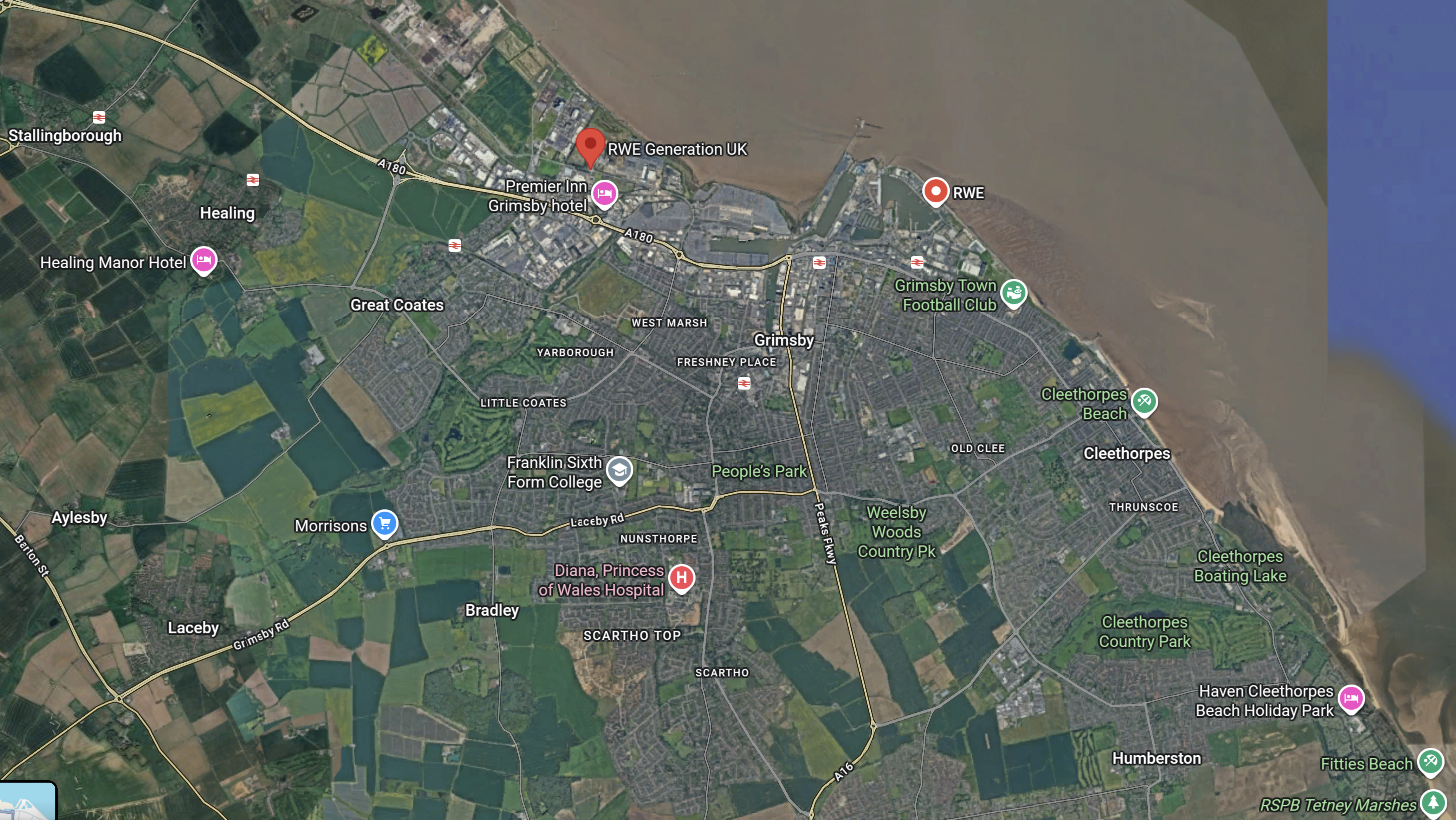
This Google Map shows the location of RWE’s facilities in Grimsby.
Note.
- The bright red arrow at the top of the map indicates RWE Generation UK in Grimsby Docks.
- There is another RWE location to the right of the bright red arrow.
- There is a line of stations along the coast, which from left-to-right are Stallingborough, Healing, Great Coates, Grimsby Town, Grimsby Docks, New Clee and Cleethorpes.
- Cleethorpes is not shown on the map.
- Doncaster and Cleethorpes are 52.1 mile apart, which is within the range of a battery-electric Hitachi and other trains.
- Charging would be at Doncaster, which is fully electrified and at Cleethorpes, by a short length of electrification.
This OpenRailwayMap shows the layout of and the railways around Grimsby Dock.

Note.
- Cleethorpes station is indicated by the blue arrow, in the South-East corner of the map.
- Cleethorpes station has four platforms, but no electrification.
- Grimsby Docks are to the North of the railway to Cleethorpes.
- This Wikipedia entry for Cleethorpes station, shows other railways and light railways served the area. Some were even electric.
These are a few of my thoughts on the development of railways between Sheffield and Cleethorpes.
RWE Will Be A Large Driver Of Employment In Grimsby
Earlier I wrote.
- Does RWE’s new UK Centralised Control Room control all their UK offshore wind farms?
- I have added them all up and there are almost 12 GW around our shores.
- I’ve read somewhere, that RWE are the UK’s largest power generator. From these figures, that would not surprise me.
It’s a long time, since I’ve added resources to a large project, so I asked Google AI, “How many people are needed to support a 1 GW offshore wind farm in the UK?”, and received this answer.
Direct & Indirect Support: For a large-scale project, this often breaks down into approximately 100–150 direct, permanent, high-skilled roles (technicians, engineers, management) and hundreds more in indirect, contracted, or supply chain roles (vessel crews, port operations, logistics).
Industry Average: Studies suggest that for operations and maintenance (O&M), around 50–100 full-time equivalent (FTE) jobs are generated per GW of installed capacity in terms of direct, permanent staff.
Key Takeaways for a 1 GW Farm:
- Direct Technicians/Operators: ~100–200+ (working on-site, turbines, or in control rooms).
- O&M Support Services: ~300–400+ (vessel operators, port logistics, supply chain).
- Total Operations Personnel: 300–600+ people.
Google AI appeared to have borrowed the figure from Ørsted and Hornsea 1 and 2.
So if it’s correct, there will be a total of 7,200 personnel supporting RWE’s wind farms in the UK. Even if only a third were employed in Grimsby, that is still a lot of people to accommodate and who will need to travel to work.
I also think a lot of personnel will come in by train, as the station is close to RWE’s locations.
Will Grimsby Have An Aberdeen-Sized Office-Shortage Problem?
One of the biggest problems, I was always hearing in the 1970s, was the shortage of offices in Aberdeen for the use of the oilmen.
In RWE Goes For An Additional 10 GW Of Offshore Wind In UK Waters In 2030, I talked about RWE’s plans for the future and published this table of new wind farms.
- Sofia – 1,400 MW
- Norfolk Boreas – 1380 MW
- Norfolk Vanguard East – 1380 MW
- Norfolk Vanguard West – 1380 MW
- Dogger Bank South – 3000 MW
- Awel y Môr – 500 MW
- Five Estuaries – 353 MW
- North Falls – 504 MW
Note.
- Sofia is nearly complete.
- Only the three Norfolk and the Dogger Bank South wind farms are on the East side of England and suitable to be serviced from Grimsby., but they still total 7,140 MW.
Has Grimsby got the office-space for all the people needed?
Could The Cleethorpes And Liverpool Lime Street Service Be Run By Battery-Electric Rolling Stock?
The various sections of this route are as follows.
- Cleethorpes and Doncaster – No Electrification – 52.1 miles
- Doncaster and Meadowhall – No Electrification – 15.2 miles
- Meadowhall and Sheffield – No Electrification – 3.4 miles
- Sheffield and Dore & Totley – No Electrification – 4.2 miles
- Dore & Totley and Hazel Grove – No Electrification – 29.2 miles
- Hazel Grove and Stockport – Electrification – 3.3 miles
- Stockport and Manchester Piccadilly – Electrification – 5.9 miles
- Manchester Piccadilly and Deansgate – Electrification – 0.8 miles
- Deansgate and Liverpool South Parkway -Not Electrified – 28.2 miles
- Liverpool South Parkway and Liverpool Lime Street – Electrified – 5.7 miles
Adding the sections together gives.
- Cleethorpes and Hazel Grove – No Electrification – 104.1 miles
- Hazel Grove and Deansgate – Electrification – 10 miles
- Deansgate and Liverpool South Parkway -Not Electrified – 28.2 miles
- Liverpool South Parkway and Liverpool Lime Street – Electrified – 5.7 miles
Note.
- To cover the 104.1 miles to Hazel Grove battery-electric trains would probably need to leave Cleethorpes with full batteries.
- Doncaster is a fully-electrified station and passing trains may be able to have a quick top-up.
- In South Yorkshire Now Has Better North-South Connections, I calculated that Doncaster is a very busy station with 173 express trains per day calling at the station or one every 8.5 minutes.
- Will trains be able to stop for a long period to charge batteries?
- It may be prudent to electrify between Meadowhall and Sheffield, under the Midland Mainline Electrification.
- Sheffield and Dore & Totley is shown that it will be electrified, under the Midland Mainline Electrification.
- Do we really want to have electrification marching along the Hope Valley Line?
- I believe that hydrogen-hybrid locomotives will be a better solution for freight trains on scenic lines like the Hope Valley, as they are zero-carbon, powerful and with a range comparable to diesel.
I believe CAF, Hitachi and Siemens have off the shelf rolling stock and factories in this country, who could build trains for the Cleethorpes and Liverpool Lime Street route.
How Would You Charge Battery-Electric Trains At Cleethorpes?
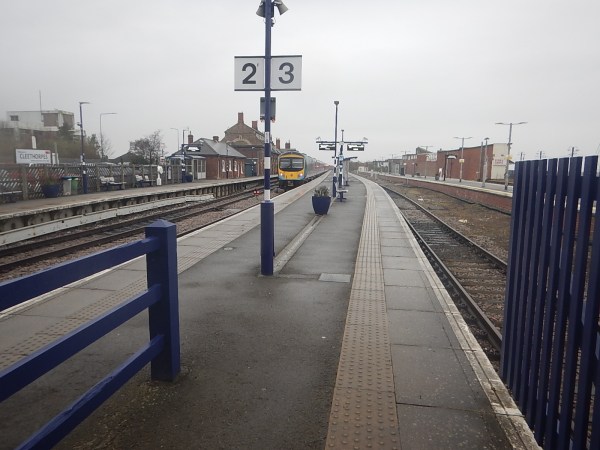
This picture shows Cleethorpes station
Note.
- The four long platforms without electrification.
- The platforms have recently been refurbished.
- The train in Platform 2 is a TransPennine Express Class 185 Siemens Desiro diesel train.
The simplest way to electrify the station would be to put up enough 25 KVAC overhead wires, so that battery-electric trains needing a charge could put up a pantograph and have a refreshing drink.
In Technology Behind Siemens Mobility’s British Battery Trains Hits The Tracks, I wrote about Siemens Rail Charging Converter.
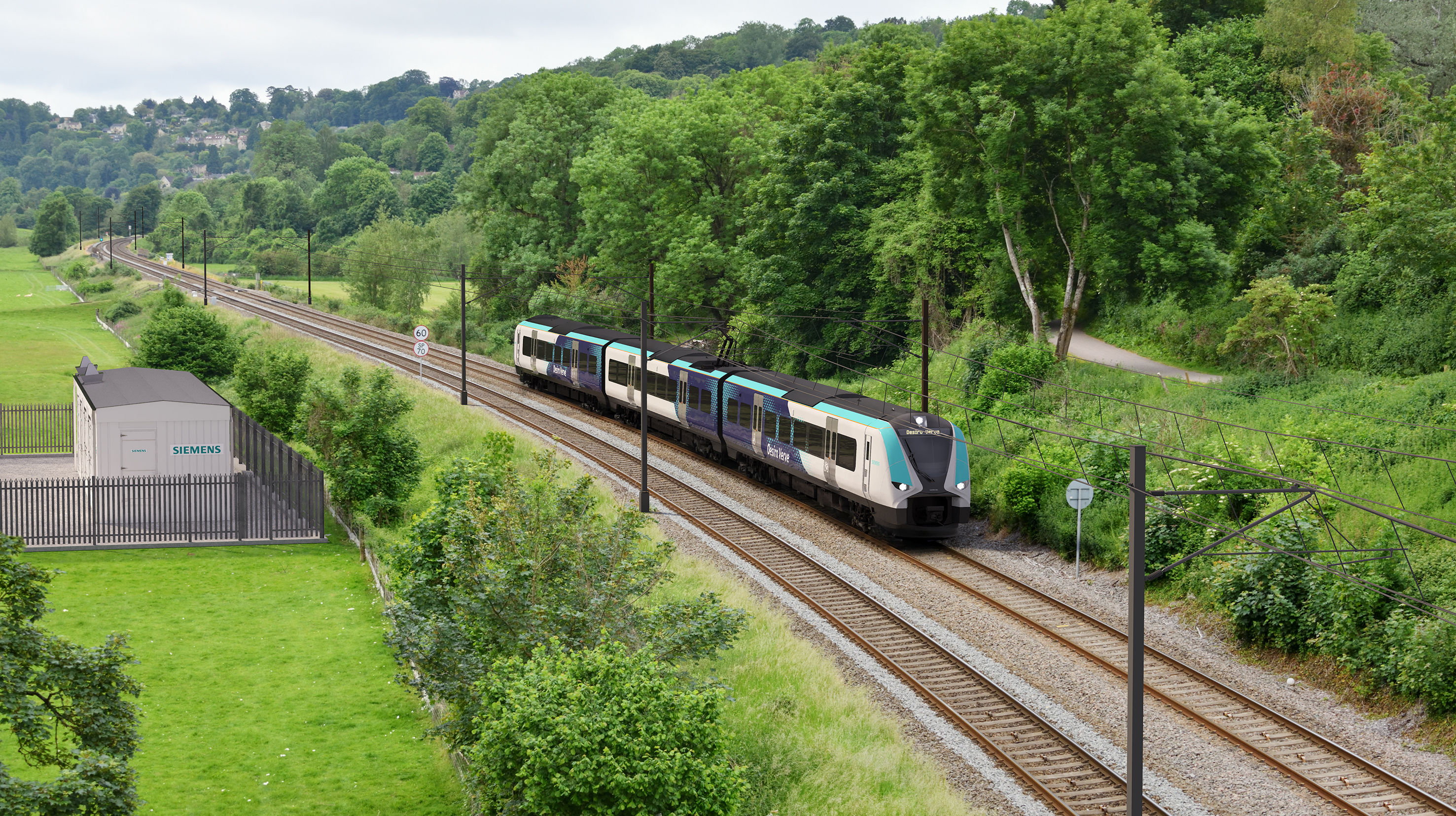
This is a visualisation of a Siemens Rail Charging Converter in action.
Note.
- The track is electrified with standard 25 KVAC overhead electrification.
- The train is a standard Siemens electric or battery-electric train.
- Siemens Rail Charging Converter, which is the shed in the compound on the left is providing the electricity to energise the catenary.
- I suspect, it could power third rail electrification, if the Office of Rail and Road ever allowed it to be still installed.
- The Siemens Rail Charging Converter does have one piece of magic in the shed. I suspect it uses a battery or a large capacitor to help power the electrification, as it can be powered from any typical domestic grid supply.
- I also wonder, if it has safety devices that cut the power outside the shed if track workers or intruders are detected, where they shouldn’t be?
- It could even cut the power, when trains are not running to save power and increase safety.
This looks to me, that a Siemens Rail Charging Converter could be a superb example of out-of-the-box thinking.
Could The Cleethorpes And Barton-on-Humber Service Be Run By Battery-Electric Rolling Stock?
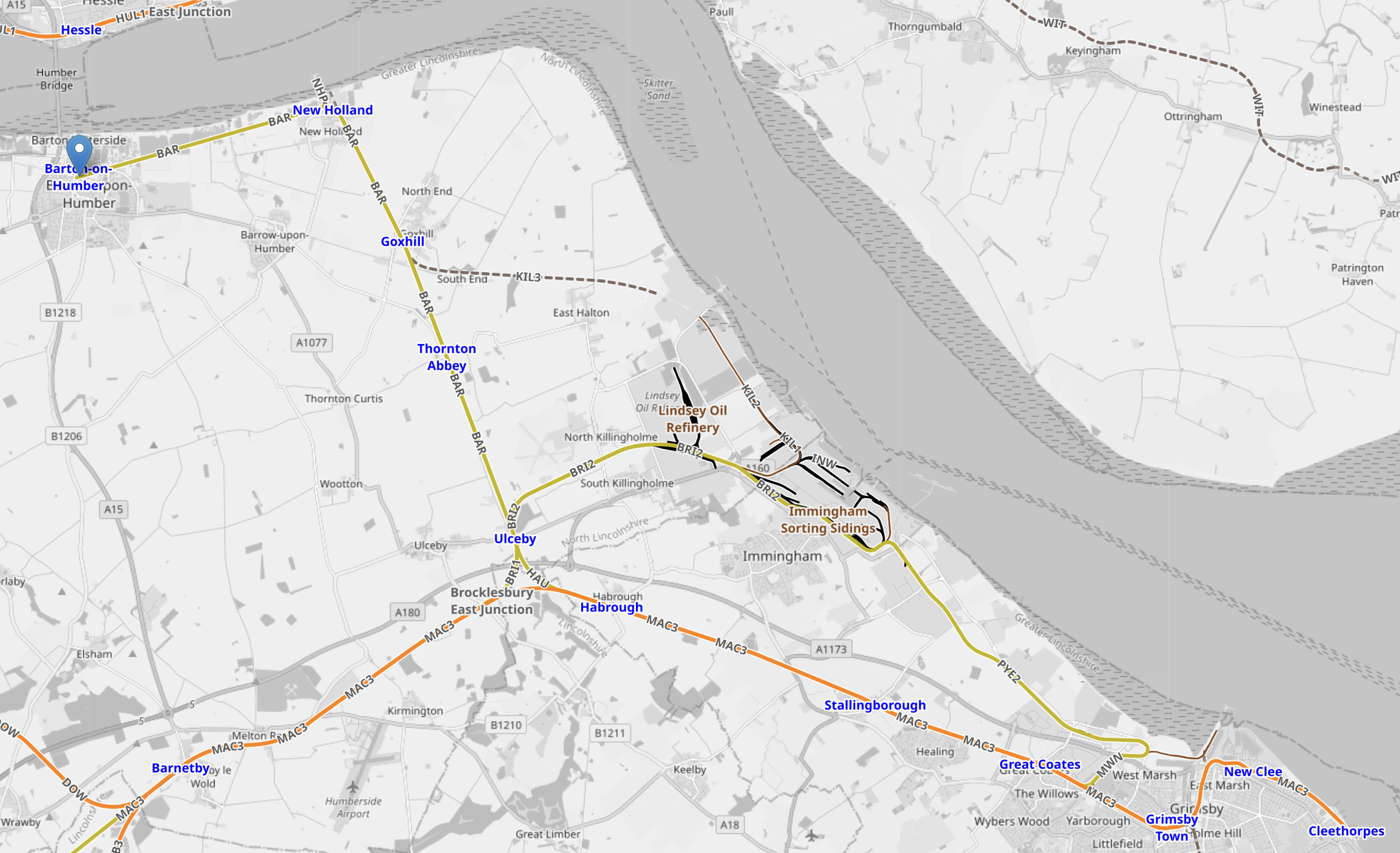
This OpenRailwayMap shows the railways of North-East Lincolnshire.
Note.
- Cleethorpes is in the South-East Corner of the map.
- Barton-on-Humber is in the North-West corner of the map and marked by a blue-arrow.
- Stations from South to North would be New Clee, Grimsby Docks, Grimsby Town, Great Coates, Healing, Stallingborough, Habrough, Ulceby, Thornton Abbey, Goxhill, New Holland and Barrow Haven.
- The line is double track.
- Cleethorpes and Barton-on-Humber is just 22.8 miles.
- A round trip would be under fifty miles, which would be well within range of a full-charge at one end.
- Service is one train per two hours (tp2h), which would only need a single train, shuttling between Cleethorpes and Barton-on-Humber.
- Two trains could provide an hourly service.
I would expect, that well-designed, solid and reliable German engineering could build a Siemens’ Rail Charging Connector that could charge four trains per hour (tph) at Cleethorpes station.
At present services are.
- TransPennineExpress – 1 tph to Liverpool Lime Street.
- East Midlands Railway – 1 tp2h to Barton-on-Humber
- East Midlands Railway – 1 tp2h to Matlock via Lincoln and Nottingham
- Northern Trains – 1 train per day (tpd) Sheffield via Brigg.
That is probably only about two tph.
Could The Cleethorpes And Sheffield Service Be Run By Battery-Electric Rolling Stock?
This is a description of the current Cleethorpes and Sheffield service.
- It is run by Northern Trains.
- The morning train leaves Sheffield at 09:54 and arrives in Cleethorpes at 11:40.
- The afternoon train leaves Cleethorpes at 13:20 and arrives in Sheffield at 15:10.
- The train is a Class 150 diesel train, which is a bit of a Joan Collins of a train – Of a certain age, but still scrubs up extremely well!
- Intermediate stations are Worksop, Retford, Gainsborough Central, Kirton Lindsey, Brigg, Barnetby and Grimsby Town
- The route length is 71.6 miles
- Trains take about 45-50 minutes.
It is also a parliamentary train.
The Wikipedia entry for parliamentary train gives this description of the Cleethorpes and Sheffield service.
Via Kirton Lindsey & Brigg. Became a parliamentary service when weekday services were withdrawn in 1993. Regular trains have operated between Gainsborough and Sheffield for most timetable periods since. Suspended January 2022 by Northern, who cited COVID-19 and staffing issues , but the service was reinstated in December 2022. Changed in May 2023 to be one return journey on weekdays only.
In the 1950s and 1960s I lived in Felixstowe part of the time and in the 1970s and 1980s I lived near Woodbridge and I observed first hand the development of the Port of Felixstowe and the effects it had on the surrounding countryside.
The development of the Port of Felixstowe, has brought the following.
- Improved roads and railways.
- Ipswich is now an hour from London by train.
- Ipswich is now a University town.
- New housing and other developments, both in Ipswich and Felixstowe and the surrounding countryside.
- Employment also has increased considerably, both in the Port and in surrounding towns.
- Ipswich’s football team is very much respected all over Europe and has won the English top division, the FA Cup and the UEFA Cup.
When you consider the jobs that RWE could create in the Port of Grimsby, I believe that this could have similar effects in Grimsby and Cleethorpes, as the Port of Felixstowe had in East Suffolk.
Already, the following are being talked about.
- A direct rail link between Cleethorpes and Grimsby to London.
- Battery-electric trains between Cleethorpes and Grimsby and Doncaster, Manchester and Liverpool Lime Street.
I believe that an improved rail link between Cleethorpes and Sheffield could be the catalyst for much needed housing along the route, which would be to the benefit of Cleethorpres, Grimsby, Sheffield and all the intermediate towns and villages on the route.
and the affects this will have on the countryside around the town, I believe that a strong case can be made out for a more frequent service between Cleethorpes and Sheffield.
Dore & Totley Station – 1st April 2025
It seems like only yesterday, when I visisited Dore and Totley station and wrote Dore And Totley Station – 13th July 2020, when I took these pictures.
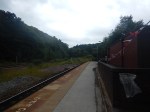
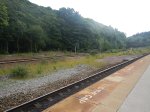



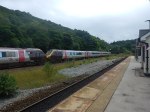
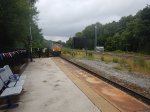


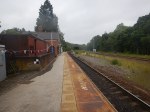

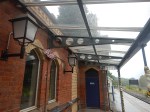
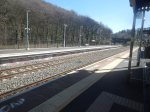
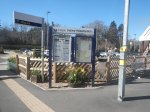
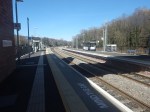
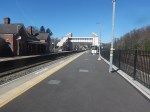
But it was yesterday, when I visited the station again and look at the station now.
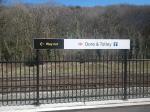
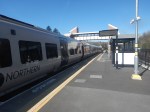
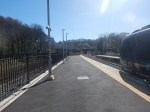
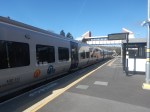
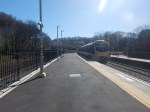
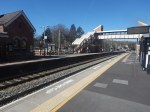
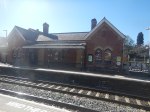
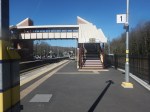
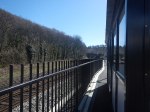

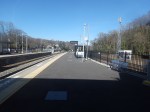
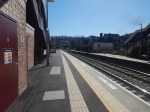
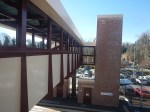
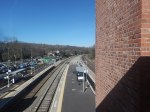
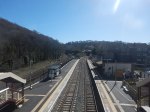
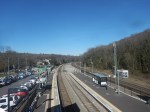


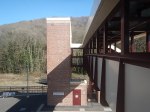
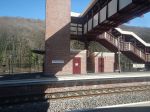
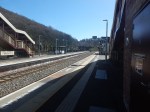
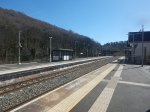
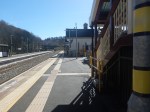
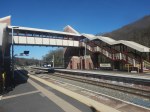
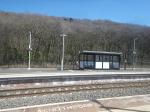


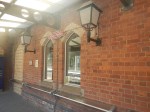
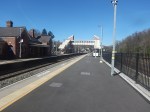
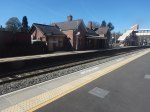
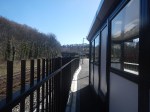
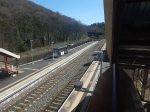
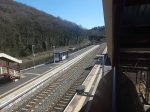
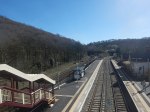
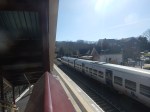
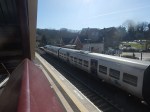
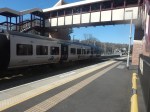
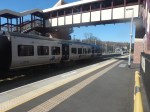
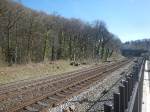
Note.
- The footbridge is in keeping with the original station building.
- The only changes to the original station building, is a small amount of tasteful restoration.
- The footbridge is high enough for future electrification.
- There are one shelter on the entry/car park and two on the far side.
- As I watched several Class 158, Class 195 and Class 222 trains pass through, it appears that the curve has been profiled for speed.
- I am pretty sure, that the station has been designed so that if required, at least one extra platform can be added to the Chesterfield Lines.
- The Rajdhani Restaurant in the original station building is rated 4.2 on Trip Advisor, which says they do gluten-free options.
- The maximum speed through the station appears to be 50 mph, with 70 mph on the Chesterfield Lines.
From my brief visit, it appears to be another station, that has been superbly updates.
Let’s bring on a few more.
Rail Minister Marks Completion Of £150m Hope Valley Railway Upgrade
The title of this post is the same as that of this article on Rail Magazine.
These first two paragraphs summarise the work.
More reliable journeys are promised on the Hope Valley line between Manchester and Sheffield after a £150 million upgrade was completed in early April.
Over the last three years, the existing platform at Dore & Totley station on the south side of Sheffield has been extended to cope with six-coach trains. Meanwhile the second platform has been rebuilt and commissioned (after it was removed in the 1980s), two mechanical signal boxes have been abolished and a new one-kilometre freight loop laid in the Peak District. At Hathersage, a pedestrian crossing has also been removed and replaced with a footbridge.
These are my thoughts.
Dore And Totley Station
The Rail Magazine article says this about the improvements at Dore and Totley station.
Replacing two tracks through Dore & Totley removes a single-track bottleneck that often saw Sheffield to Manchester express services held up by slower stopping services and cement trains destined for Earles Sidings. A nine-day shutdown of the route in March was needed to finish the work.
The new platform sits between the Midland Main Line and the Hope Valley line, so can only be reached via the new footbridge or lifts. As well as the usual ‘blister paving’ slabs marking the edge of the platform, other tactile paving has been laid to help people with visual impairments find their way around the station.
This OpenRailwayMap shows the new layout of tracks at Dore and Totley station.

Note.
- The four tracks at the North of the map go to Sheffield station.
- The Eastern pair of tracks are the Midland Main Line and they go to the South-East corner of the map for Chesterfield and the South.
- The Western pair of tracks are the Hope Valley Line and they go to the South-West corner of the map for Manchester.
- The blue lettering in the middle of the map indicates Dore and Totley station.
- There is a single track curve between the Midland Main Line and the Hope Valley Line, which is mainly used by freight trains.
This secondOpenRailwayMap shows Dore and Totley station in greater detail.

The big improvement is that the Hope Valley Line is now double instead of single track, which must eliminate a lot of delays.
These pictures show the station in July 2020.

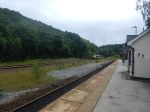
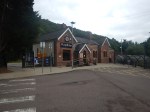
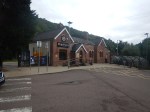
The pictures clearly show the single track and platform at Dore and Totley station.
Dore South Curve
Dore South Curve links the Southbound Midland Main Line with the Westbound Hope Valley Line.
This OpenRailwayMap shows the curve.

There is a crossover in the South-West corner of the map, so with careful signalling, trains can use the Dore South Curve in both directions.
Bamford Loop
This is a freight loop between Bamford and Hathersage stations.
This OpenRailwayMap shows the loop.

Note.
- The Hope Valley Line goes diagonally across the map.
- Manchester is to the North-West.
- Sheffield is to the South-East.
- Bamford station is in the North-West corner of the map.
- Hathersage station is just off the South-East corner of the map.
- The loop is on the Northern side of the Hope Valley Line.
The loop will most likely be used by trains going to Sheffield or Chesterfield.
Hathersage Footbridge
This Google Map shows Hathersage station.

Note.
- Dore Lane and the B 6001 appear to pass under the railway.
- There appears to be what could be foundations just to the West of the platforms at Hathersage station.
- From pictures found by Google the bridge appears to be a simple steel structure.
I shall have to go and take pictures.
Fast Trains Between Manchester And Nottingham
In the Wikipedia entry for the Hope Valley Line, this is said.
Nottinghamshire County Council and the Department for Transport have investigated the possibility of adding another service that does not call at Sheffield in order to improve the journey time between Nottingham and Manchester. Stopping (and changing direction) in Sheffield, the fastest journey is 110 minutes (in 2019), but the council has estimated bypassing Sheffield would cut the time to 85 minutes. Suggested improvements on a 2+1⁄2-mile (4 km) stretch near Stockport may reduce journey times by 2–3 minutes.
Consider.
- According to Google, the driving time between the two cities is 128 minutes and the motorway route is via the M1 and M62.
- If nearly half-an-hour could be saved between Manchester and Nottingham could be a big saving in journey time.
- Manchester Piccadilly is likely to be rebuilt for High Speed Two and a fast route via Nottingham could be a viable alternative.
- Both Manchester and Nottingham have good local tram and train networks.
- As the electrification of the Midland Main Line progresses, the route will be increasingly suitable for 100 mph battery-electric trains.
A Manchester and Nottingham express service looks to be an easy service to implement after the Hope Valley Line has been improved.
Hourly Stopping Trains Between Manchester And Sheffield
The Wikipedia entry for the Hope Valley Line gives these details for the stopping service between Manchester Piccadilly and Sheffield.
- Trains are hourly.
- Trains call at Reddish North, Brinnington, Bredbury, Romiley, Marple, New Mills Central, Chinley, Edale, Hope, Bamford, Hathersage, Grindleford and Dore & Totley.
- But some services do not call at some or all of Edale, Bamford, Hathersage, Grindleford and Dore & Totley giving some 2-hour gaps between services at these stations.
Let’s hope that some of the extra capacity is used to provide a regular service at all stations on the Hope Valley Line.
As in a few years, it will have electrification at both ends, this route could be very suitable for battery-electric trains.
Completion Date
It appears that the first day, when passengers will be able to use the new upgraded tracks and stations will be Thursday, the 2nd of May.
Conclusion
The improvements, certainly seem to allow extra and improved services through on the Hope Valley Line.
I also feel that in a few years, services will be run by battery-electric trains.
Electrification Of The Hope Valley Line
This news story from the Department of Transport is entitled Yorkshire And The Humber To Benefit From £19.8 billion Transport Investment.
This is said about the Hope Valley Line.
The Hope Valley Line between Manchester and Sheffield will also be electrified and upgraded, with the aim of cutting journey times from 51 to 42 minutes and increasing the number of fast trains on the route from 2 to 3 per hour, doubling capacity.
The fast trains are currently TransPennine’s service between Liverpool Lime Street and Cleethorpes.
- Between Platform 13 at Manchester Piccadilly station and Sheffield station is 42.6 miles.
- At the Manchester end, there will be electrification between Manchester Piccadilly and Hazel Grove stations, which is 8.7 miles and takes typically 17 minutes.
- After the electrification of the Midland Main Line to Sheffield, there will be electrification between Dore & Totley and Sheffield stations, which is 4.2 miles and takes typically 8 minutes.
The gap in the electrification between Dore & Totley and Hazel Grove stations will be 29.7 miles.
But it will not be an easy route to electrify.
- At the Western end, there is the Disley Tunnel, which is 3535 metres long.
- In the middle, there is the Cowburn Tunnel which is 3385 metres long, that is also the deepest tunnel in England.
- At the Eastern end, there is the Totley Tunnel, which is 5700 metres long.
Yorkshire doesn’t have an Underground railway, but the combined length of these three tunnels is 7.84 miles, which means that over 26 % of the electrification needed between Manchester Piccadilly and Sheffield will have to be installed in tunnels.
Could The Route Be Run Using Battery-Electric Trains?
Consider.
- The gap in the electrification between Dore & Totley and Hazel Grove stations will be 29.7 miles.
- There is electrified sections at Dore & Totley and Hazel Grove stations, which will be able to charge the trains.
- Merseyrail’s Class 777 trains have demonstrated a battery range of 84 miles.
- A Stadler Akku train has demonstrated a battery range of 139 miles.
- Hitachi are developing a battery-electric version of TransPennine’s Class 802 train.
- If all trains can run on batteries or be self-powered, there would be no need to electrify the long and possibly difficult tunnels.
I believe that it would be possible to electrify all passenger services between Manchester and Sheffield using appropriate battery-electric trains.
Freight would be a problem and I suspect that hydrogen-hybrid and other self-powered locomotives could handle the route.
Could The Complete TransPennine Liverpool Lime Street and Cleethorpes Service Be Run By Battery-Electric Class 802 trains?
These are the various electrified and unelectrified sections.
- Liverpool Lime Street and Liverpool South Parkway – Electrified – 5.7 miles – 10 minutes
- Liverpool South Parkway and Trafford Park – Not Electrified – 25.2 miles – 30 minutes
- Trafford Park and Hazel Grove – Electrified – 12.6 miles – 28 minutes
- Hazel Grove and Dore & Totley – Not Electrified – 29.7 miles – 35 minutes
- Dore & Totley and Sheffield – Electrified – 4.2 miles – 6 minutes
- Sheffield and Doncaster – Not Electrified – 18.6 miles – 25 minutes
- Doncaster and Cleethorpes – Not Electrified – 52.1 miles – 78 minutes
Note.
- This is a total of 125.6 miles without electrification.
- The Manchester Piccadilly and Sheffield time is 56 minutes.
- The distance is 37.8 miles.
- That is an average speed on 40.5 mph.
- Most of the line between Manchester Piccadilly and Sheffield has an maximum speed of 70 mph, but there is a short length of track with a 50 mph speed and another longer one with 90 mph.
To achieve 40 minutes between Manchester Piccadilly and Sheffield would need an average speed of 60.7 mph. Given the improvements being carried out by Network Rail at the current time, I believe that forty minutes between Manchester Piccadilly and Sheffield should be possible.
I’ll look at a train going East.
- The train will leave Liverpool Lime Street with a reasonably full battery after charging using the current electrification in the station.
- The train will leave Liverpool South Parkway with a full battery after charging using the current electrification from Liverpool Lime Street.
- The train will arrive at Trafford Park with a battery perhaps two-thirds full, but it will be fully charged on the current electrification to Hazel Grove.
- The train will arrive at Dore & Totley with a battery perhaps two-thirds full, but it will be fully charged on the Midland Main Line electrification to Sheffield.
- The train will arrive at Doncaster with a battery perhaps two-thirds full and the train would wait until it had enough charge to reach Cleethorpes.
I’ll look at a train going West.
- The train will leave Cleethorpes with a full battery after charging using the new electrification in the station.
- The train will arrive at Doncaster with a battery perhaps two-thirds full and the train would wait until it had enough charge to reach Sheffield.
- The train will arrive at Sheffield with a battery perhaps two-thirds full, but it will be fully charged on the Midland Main Line electrification to Dore & Totley.
- The train will arrive at Hazel Grove with a battery perhaps two-thirds full, but it will be fully charged on the current electrification to Trafford Park.
- The train will arrive at Liverpool South Parkway with a battery perhaps two-thirds full, but the route is electrified to Liverpool Lime Street.
Note.
- If the battery range on a full battery was over 90 miles, the two most easterly sections could be run without any charging at Doncaster.
- If the battery range was over 125.6 miles, the journey could be done by starting with a full battery.
- If every time the train decelerated, regenerative braking would recover energy, which could be reused.
- The only new electrification needed will be a short length at Cleethorpes station, that would charge the trains.
I certainly believe that Liverpool Lime Street and Cleethorpes services could be run by battery-electric trains.
Could The Complete TransPennine Liverpool Lime Street and Cleethorpes Service Be Run By Battery-Electric Class 802 trains Without The Midland Main Line Electrification?
In this section, I’m assuming, that there is no electrification at Sheffield.
These would be the various electrified and unelectrified sections.
- Liverpool Lime Street and Liverpool South Parkway – Electrified – 5.7 miles – 10 minutes
- Liverpool South Parkway and Trafford Park – Not Electrified – 25.2 miles – 30 minutes
- Trafford Park and Hazel Grove – Electrified – 12.6 miles – 28 minutes
- Hazel Grove and Cleethorpes – Not Electrified – 104.6 miles – 143 minutes
Note.
- This is a total of 129.6 miles without electrification.
- The battery range of the train, should probably be around 120 miles to make sure the train could run between Hazel Grove and Cleethorpes.
- One diesel power-pack could be installed for emergency use.
I’ll look at a train going East.
- The train will leave Liverpool Lime Street with a reasonably full battery after charging using the current electrification in the station.
- The train will leave Liverpool South Parkway with a full battery after charging using the current electrification from Liverpool Lime Street.
- The train will arrive at Trafford Park with a battery perhaps 80 % full, but it will be fully charged on the current electrification to Hazel Grove.
- The train would then eek out what power it had left to reach Cleethorpes.
If necessary, the train could stop in the electrified Doncaster station to top up the batteries from the East Coast Main Line electrification for the run to Cleethorpes.
I’ll look at a train going West.
- The train will leave Cleethorpes with a full battery after charging using new electrification in the station.
- The train will arrive at Doncaster with a battery perhaps 57 % full and the train would wait if needed, until it had enough charge to reach Hazel Grove.
- The train will arrive at Hazel Grove with a battery perhaps one-thirds full, but it will be fully charged on the current electrification to Trafford Park.
- The train will arrive at Liverpool South Parkway with a battery perhaps one-thirds full, but the route is electrified to Liverpool Lime Street.
Note.
- If the battery range on a full battery was over 105 miles, the Eastern section could be run without any charging at Doncaster.
- If the battery range was over 129.6 miles, the journey could be done by starting with a full battery.
- If every time the train decelerated, regenerative braking would recover energy, which could be reused.
- The only new electrification needed will be a short length at Cleethorpes station, that would charge the trains.
However, it might be prudent to electrify the through platforms at Sheffield, so that they could be used for emergency charging if required.
Northern Train’s Service Between Sheffield And Manchester Piccadilly Via The Hope Valley Line
There is a one train per hour (tph) Northern service between Sheffield and Manchester Piccadilly.
- The Class 195 diesel train takes 78 minutes.
- The distance is 42 miles.
- The first mile or so at the Manchester end is electrified.
- Trains seem to take about sixteen minutes to turn round at Manchester Piccadilly.
- Trains seem to take about nine minutes to turn round at Sheffield.
- The service runs via Reddish North, Brinnington, Bredbury, Romiley, Marple, New Mills Central, Chinley, Edale, Hope, Bamford, Hathersage, Grindleford and Dore & Totley.
- The max speed is generally 60 mph to the West of New Mills Central and 70 mph to the East, with short lower speed sections.
There would appear to be two ways to run this route withy battery-electric trains.
- As Manchester Piccadilly station is fully-electrified and trains could be connected to the electrification for upwards of twenty minutes, trains will certainly be able to be fully-charged at Manchester. As the round trip is only 84 miles, could trains run the service without a charge at Sheffield.
- Alternatively, there could be a dedicated electrified platform at Sheffield. But the problem with this, is that currently this service uses a random platform at Sheffield.
It looks like, if the train has the required range, that charging at the Manchester end would be the better solution.
Liverpool And Norwich Via The Hope Valley Line
This service uses a similar route between Liverpool Lime Street and Sheffield, as the Liverpool and Hull service and then it meanders, through the East Midlands.
- Liverpool Lime Street and Liverpool South Parkway – Electrified – 5.7 miles – 11 minutes
- Liverpool South Parkway and Trafford Park – Not Electrified – 25.2 miles – 33 minutes
- Trafford Park and Hazel Grove – Electrified – 12.6 miles – 26 minutes
- Hazel Grove and Dore & Totley – Not Electrified – 29.7 miles – 28 minutes
- Dore & Totley and Sheffield – Electrified – 4.2 miles – 6 minutes
- Sheffield and Nottingham – Being Electrified – 40.6 miles – 52 minutes
- Nottingham and Grantham – Not Electrified – 22.7 miles – 30 minutes
- Grantham and Peterborough – Electrified – 29.1 miles – 29 minutes
- Peterborough And Ely – Not Electrified – 30 miles – 31 minutes
- Ely and Norwich – Not Electrified – 53.7 miles – 56 minutes
This is a total of 161.3 miles without electrification.
But as Sheffield and Nottingham and Grantham and Peterborough will be fully electrified, this route will be possible using a battery-electric train.
Electrifying Sheffield Station
I said earlier in this post, that electrifying Sheffield station would be an option for electrifying the Sheffield and Manchester Piccadilly service.
If this were to be done, it would have collateral benefits for other services that terminate at Sheffield, which could be charged whilst they turned around.
I wrote about Sheffield station as a battery-electric train hub in Could Sheffield Station Become A Battery-Electric Train Hub?
Conclusion
I believe that full electrification of the Hope Valley Line is not needed, if battery-electric trains are used.
I also believe that battery-electric trains and the current improvements being carried out on the Hope Valley Line will enable a forty minute time between Manchester Piccadilly and Sheffield.
Northern Powerhouse Rail – Significant Upgrades And Journey Time Improvements To The Hope Valley Route Between Manchester And Sheffield
In this article on Transport for the North, which is entitled Northern Powerhouse Rail Progress As Recommendations Made To Government, one of the recommendations proposed for Northern Powerhouse Rail is significant upgrades and journey time improvements to the Hope Valley Line between Manchester and Sheffield.
I shall look at a few of the possibilities for the route.
Northern Powerhouse Rail’s Objective For The Route
Wikipedia, other sources and my calculations say this about the trains between Manchester and Sheffield.
- The distance between the two stations is 42.6 miles
- The current service takes 49 to 57 minutes and has a frequency of two trains per hour (tph)
- This gives an average speed of 52.2 mph for the fastest journey.
- The proposed service with Northern Powerhouse Rail will take 40 minutes and have a frequency of four tph.
- This gives an average speed of 63.9 mph for the journey.
This last figure of 63.9 mph, indicates to me that a 100 mph train will be able to meet Northern Powerhouse Rail’s objective.
Current Trains On The Hope Valley Line
In July this year, I went along the Hope Valley Line between Manchester Piccadilly and Dore and Totley stations, which I wrote about in Along The Hope Valley Line – 13th July 2020.
My train was a pair of refurbished Class 150 trains.
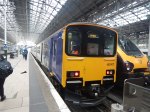
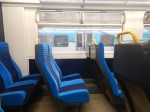

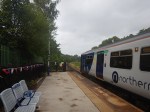
These trains can handled the current timetable but they have an operating speed of only 75 mph.
Looking at Real Time Trains for last week, it now appears that Northern are using new three-car Class 195 trains.
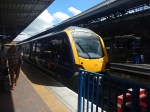
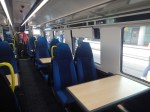
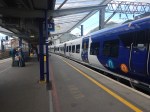
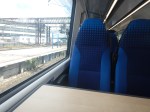
These are much better.
- They are 100 mph trains with much better acceleration.
- The train was still running the timetable for the slower trains.
With thirteen stops, I suspect that these new trains could be under fifty minutes between Manchester and Sheffield.
Will The Hope Valley Line Be Electrified?
Consider.
- Currently, the Hope Valley Line is electrified between Manchester Piccadilly and Hazel Grove stations.
- In the future, the line is likely to be electrified between Sheffield and Dore & Totley stations, in conjunction with rebuilding the Midland Main Line, to the North of Clay Cross North junction for High Speed Two.
- After the electrification at the Eastern end, just over thirty miles will be without electrification.
- The Hope Valley Line has an operating speed of 90 mph.
This Hitachi infographic shows the specification of the Hitachi Regional Battery train.

As these are a 100 mph train with a range of 90 km or 56 miles on battery power, these trains could work Manchester and Sheffield in the required time of forty minutes. provided they could be charged at the Sheffield end of the route.
TransPennine’s Class 802 trains can be fitted with batteries to become Regional Battery Trains, so it would appear that TransPennine’s services on this route could go zero-carbon.
In addition Northern, who are the other passenger operator on the route are working with CAF on battery electric trains, as I wrote about in Northern’s Battery Plans,
I don’t believe there are pressing reasons to electrify the Hope Valley Line to allow passenger trains to meet Northern Powerhouse Rail’s objective.
Will Operating Speed On The Hope Valley Line Be Increased?
Under Plans in the Wikipedia entry for the Hope Valley Line, this is said.
Network Rail, in partnership with South Yorkshire ITA, will redouble the track between Dore Station Junction and Dore West Junction, at an estimated cost of £15 million. This costing is based on four additional vehicles in traffic to deliver the option, however, this will depend on vehicle allocation through the DfT rolling stock plan. This work will be programmed, subject to funding, in conjunction with signalling renewals in the Dore/Totley Tunnel area.
Other proposals include a 3,600 feet (1,100 m) loop in the Bamford area, in order to fit in an all-day (07:00–19:00) hourly Manchester–Sheffield via New Mills Central stopping service, by extending an existing Manchester–New Mills Central service. Planning permission for this was granted in February 2018, but delays mean that this will now not be completed until 2023.
These changes to allow three fast trains, a stopping train and freight trains each hour were also supported in a Transport for the North investment report in 2019, together with “further interventions” for the Northern Powerhouse Rail programme.
It would also probably be a good idea, to increase the operating speed of the line to 100 mph where possible.
Effect On Passenger Services
100 mph trains on a track with an operating speed of 100 mph, could show some impressive timings.
On the Great Eastern Main Line, which is a very busy 100 mph double-track railway, 100 mph trains, achieve a 77 mph average for 90 minutes over the 115 miles, between London Liverpool Street and Norwich with a single stop.
A one-stop Manchester and Sheffield service at this speed would take just 33.2 minutes.
The stopping trains would be more of a challenge to get under forty minutes, but at least if they were battery electric trains, they’d have the better acceleration and deceleration of the electric trains.
- Fifty minutes would be a realistic time.
- Ten minutes turnround time at each end, would be ideal for charging the batteries and give an efficient two hour round trip.
Efficient timetabling could create a very comprehensive service for the Hope Valley Line.
Freight Trains On The Hope Valley Line
Under Freight in the Wikipedia entry for the Hope Valley Line, this is said.
Over a million tons of cement a year is taken away by rail from Earle’s Sidings at Hope.
That is a very large number of freight trains, all of which are currently hauled by diesel locomotives.
- Looking at Real Time Trains, there are nearly always two freight trains in every hour of the day.
- If you look at the routes, they go to a myriad number of destinations.
- Following the routes between Dore Junction and the quarries to the South of the Hope Valley Line, there are several tunnels.
- There are numerous quarries in a cluster, all served by their own rail lines.
Electrifying the delivery of the cement and limestone from the quarries would be a large and very expensive operation.
This Google Map shows Earle’s Sidings at Hope.
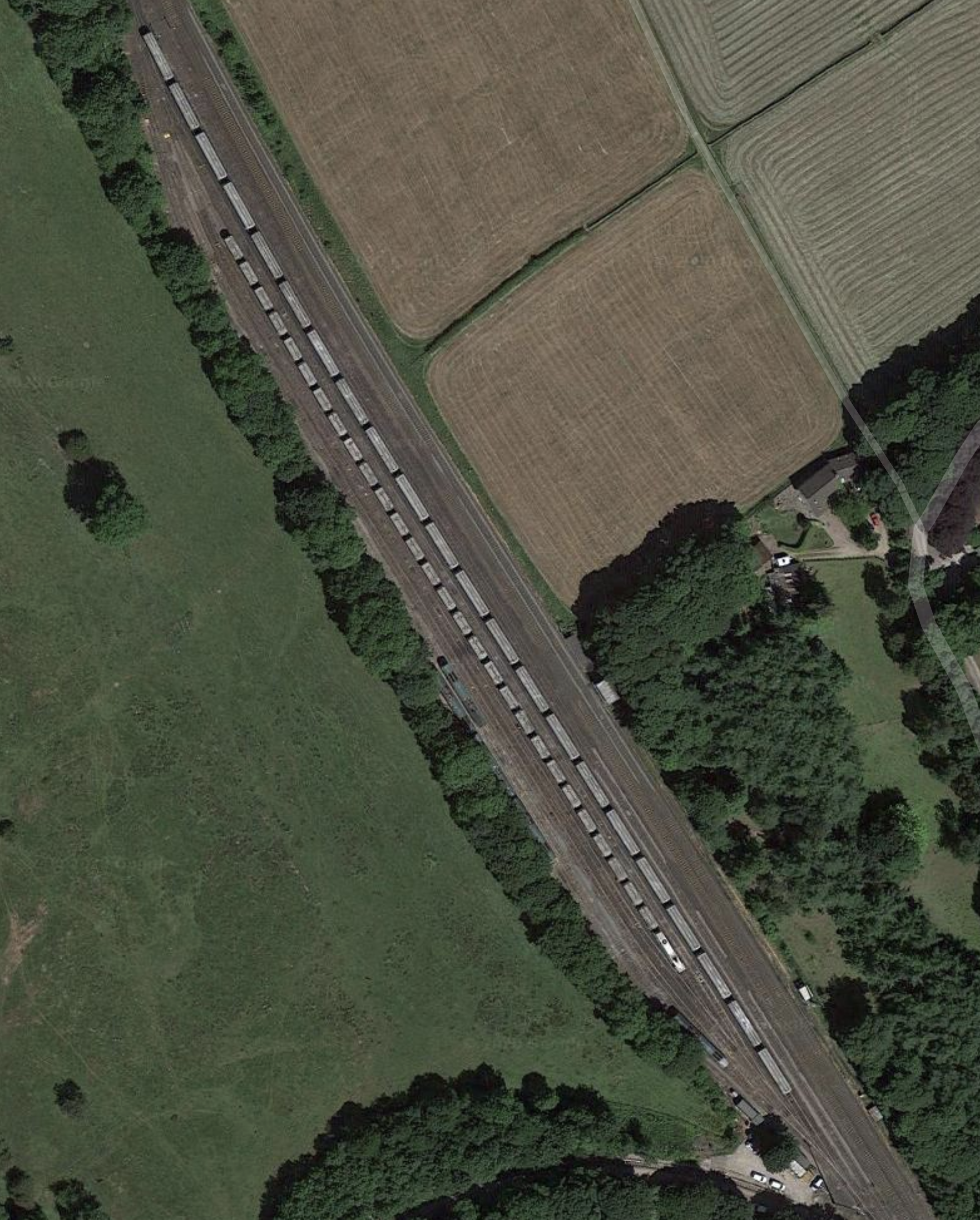
Perhaps a half-way house solution would be to use diesel to haul trains between the quarries and Earle’s sidings, where the locomotive is changed for an electric one?
- But that would then mean that all routes from between the Peak District quarries and their destinations would need to be fully-electrified.
- It should be noted that that the problem of zero-carbon trains, also exists at port and rail freight interchanges, where safe operation with 25 KVAC overhead wires everywhere can be a nightmare.
- Rail freight companies are unlikely to change their old diesel locomotives for new expensive electric locomotives, until all possible routes are fully electrified.
- It is also a big problem, all over the world.
Perhaps, what is needed is a self-powered zero-carbon locomotive with sufficient power to haul the heaviest trains?
I believe such a locomotive is possible and in The Mathematics Of A Hydrogen-Powered Freight Locomotive, I explored the feasibility of such a locomotive, which was based on a Stadler Class 68 locomotive.
The zero-carbon locomotive, that is eventually developed, may be very different to my proposal, but the commercial opportunities for such a locomotive are so large, that I’m sure the world’s best locomotive designers are working on developing powerful locomotives for all applications.
Conclusion
Northern Powerhouse Rail’s ambition for Manchester and Sheffield via the Hope Valley Line is simply stated as four tph in forty minutes. But this may be something like.
- Three fast tph in forty minutes.
- One stopping tph in perhaps fifty minutes.
- One freight tph in each direction to and from the quarries that lie to the South of the line.
I didn’t realise how close that the line is to that objective, once the following is done.
- Introduce 100 mph passenger trains on the route.
- Improve the track as has been planned for some years.
Note that all the passenger trains, that now run the route; Class 185, 195 and 802 trains, are all 100 mph trains, although they are diesel-powered.
With a length of just under 43 miles, the route is also ideal for battery electric trains to work the passenger services, be the trains be from Hitachi, CAF or another manufacturer, after High Speed Two electrifies the Midland Main Line to the North of Clay Cross North Junction, in preparation for high speed services between London and Sheffield.
I would recommend, that one of High Speed Two’s first Northern projects, should be to upgrade the Midland Main Line between Clay Cross North junction and Sheffield station to the standard that will be required for High Speed Two.
I would also recommend, that the Government sponsor the development of a hydrogen electric locomotive with this specification.
- Ability to use 25 KVAC overhead or 750 VDC electrification
- 110 mph operating speed on electrification.
- Ability to use hydrogen.
- 100 mph operating speed on hydrogen.
- 200 mile range on hydrogen.
A locomotive with this specification would go a long way to decarbonise rail freight in the UK and would have a big worldwide market.
Project Management Recommendations
This project divides neatly into three.
- Perform the upgrades at Dore Junction and add the loop in the Bamford area, as detailed in Wikipedia, which will increase the capacity of the Hope Valley Line.
- Electrify the Midland Main Line between Clay Cross North junction and Sheffield, as will be needed for High Speed Two. This electrification will allow battery electric trains to run between Manchester and Sheffield and between Sheffield and London.
- Procurement of the trains. CAF and Hitachi are currently finalising suitable designs for this type of operation.
It would also be helpful, if the freight trains could be hauled by zero-carbon hydrogen electric locomotives, to create a much-improved zero-carbon route between Manchester and Sheffield.
Dore And Totley Station – 13th July 2020
These pictures show Dore and Totley station.
These are my thoughts on the station and the tracks through it.
The Midland Main Line And High Speed Two
The two tracks, that are furthest away from the station platform are the Midland Main Line between Sheffield and Chesterfield, Derby and the South.
- These tracks will be taken over by High Speed Two.
- They will be electrified with 25 KVAC overhead electrification between Clay Cross North junction and Sheffield station.
- The trains on the Midland Main Line will continue to use the electrified tracks.
- East Midlands Railway have ordered bi-mode Class 810 trains, which will each be 120 metres long or 240 metres long, when running as a pair.
- CrossCountry’s Class 220 trains are 187 metres long running as a pair.
- I estimate that the faster trains were doing around 100 mph, as they passed Dore and Totley station. I shall measure it properly next time, I go to Sheffield on a train.
Note.
- High Speed Two’s trains will probably be going through at the same speed as East Midlands Railway’s Class 810 trains.
- High Speed Two will be running their 200 metre long classic-compatible trains to and from Sheffield, so except that there will be two more trains in every hour, there will be little difference.
- Both the High Speed Two and the East Midlands Railway trains will be running on electric power between Sheffield and Chesterfield stations.
- It is likely that other services will use electric power on the Midland Main Line.
- There will be no platforms on the High Speed tracks at Dore and Totley station.
I would suspect that there will be little disruption to train services through the area, whilst the electrification is installed, judging by the disruption caused during electrification between Bedford and Corby.
Dore Junction
Dore Junction is a triangular junction, that connects the Hope Valley Line and the Midland Main Line to the South of Dore and Totley station.
This Google Map shows Dore Junction.
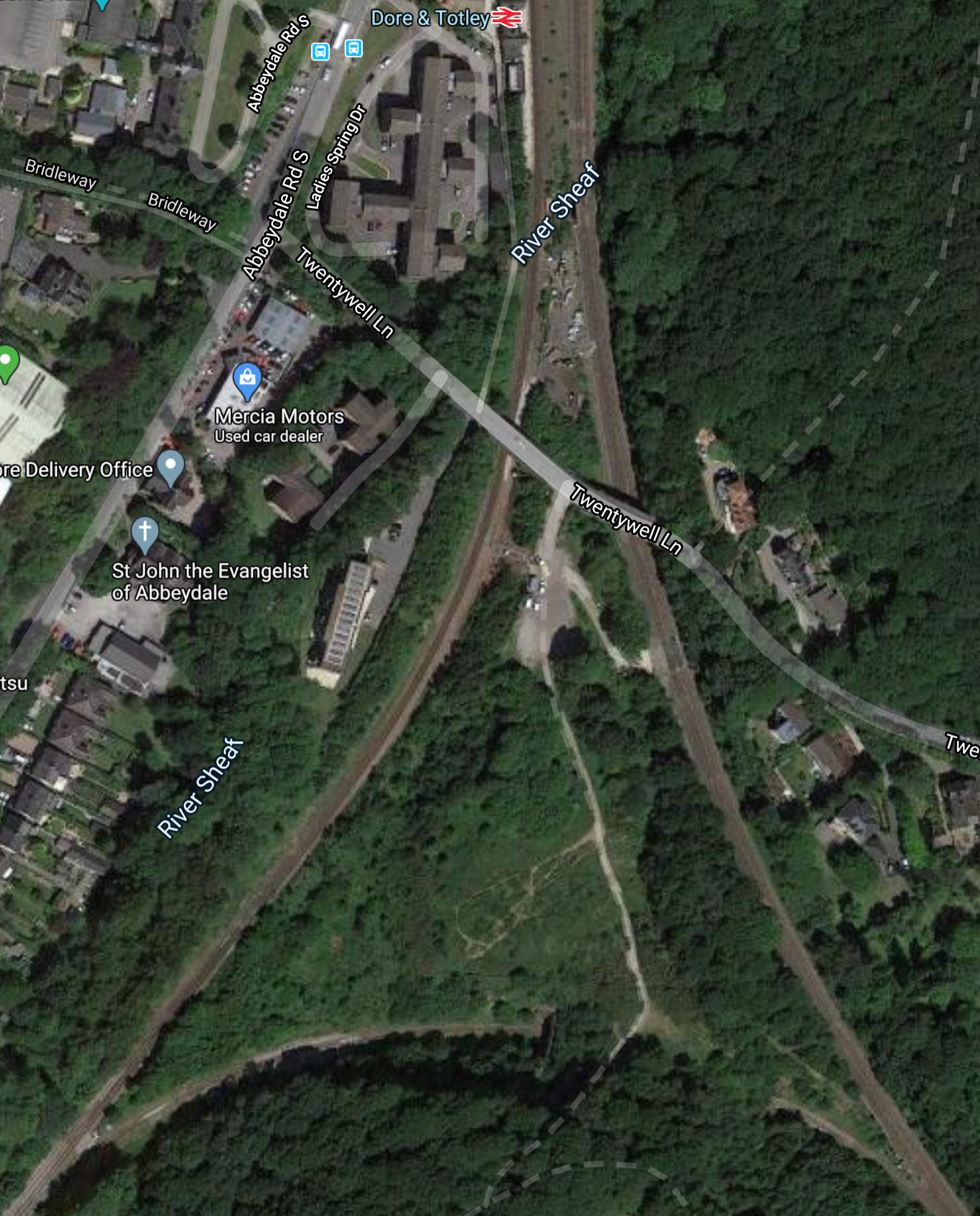
Note.
- Dore and Junction station is at the North of the Map.
- Dore West Junction is in the South West corner of the map and leads to the Hope Valley Line.
- Dore South Junction is in the South East corner of the map and leads to Chesterfield on the Midland Main Line.
This second Google Map shows Dore South Junction.
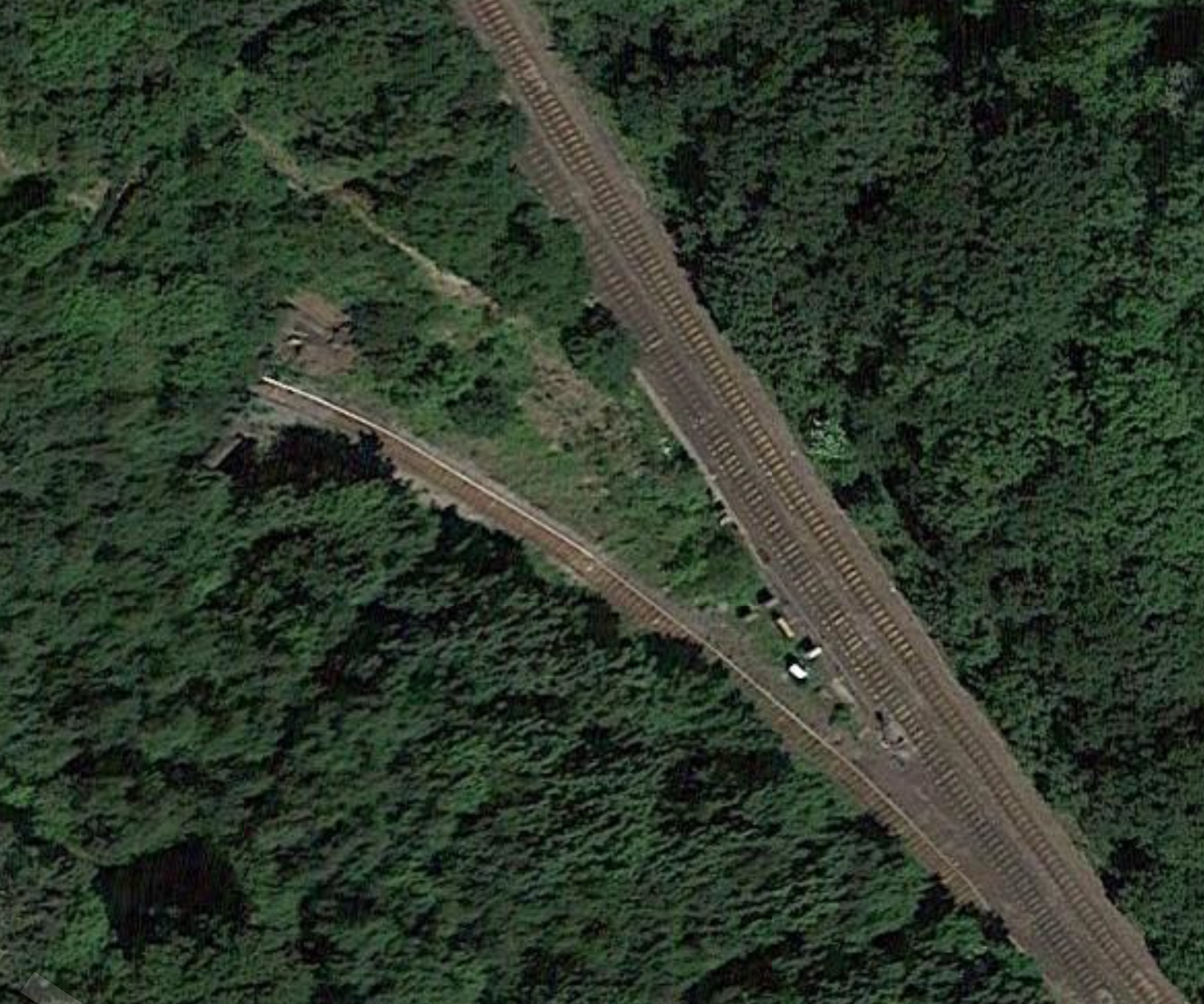
Could this junction be improved to increase capacity and efficiency?
- The Southern track of the triangular junction is only single track.
- It is a major route for stone trains between Derbyshire and London and the South.
If Network Rail have any ideas for Dore Junction, then surely, when the works in the area are being carried out, is the time for them to be performed.
Platform Length At Dore And Totley Station
I took these two pictures when I arrived at Dore and Totley station.
As the train was formed of two two-car Class 150 trains and the train fits the platform, it would appear that the platform is about eighty metres long.
An Extra Platform At Dore And Totley Station
There may be no plans to put platforms on the Midland Main Line, but plans exist for an extra track through the station, that will connect to the Hope Valley Line.
This Google Map shows Dore and Totley station and the Midland Main Line.
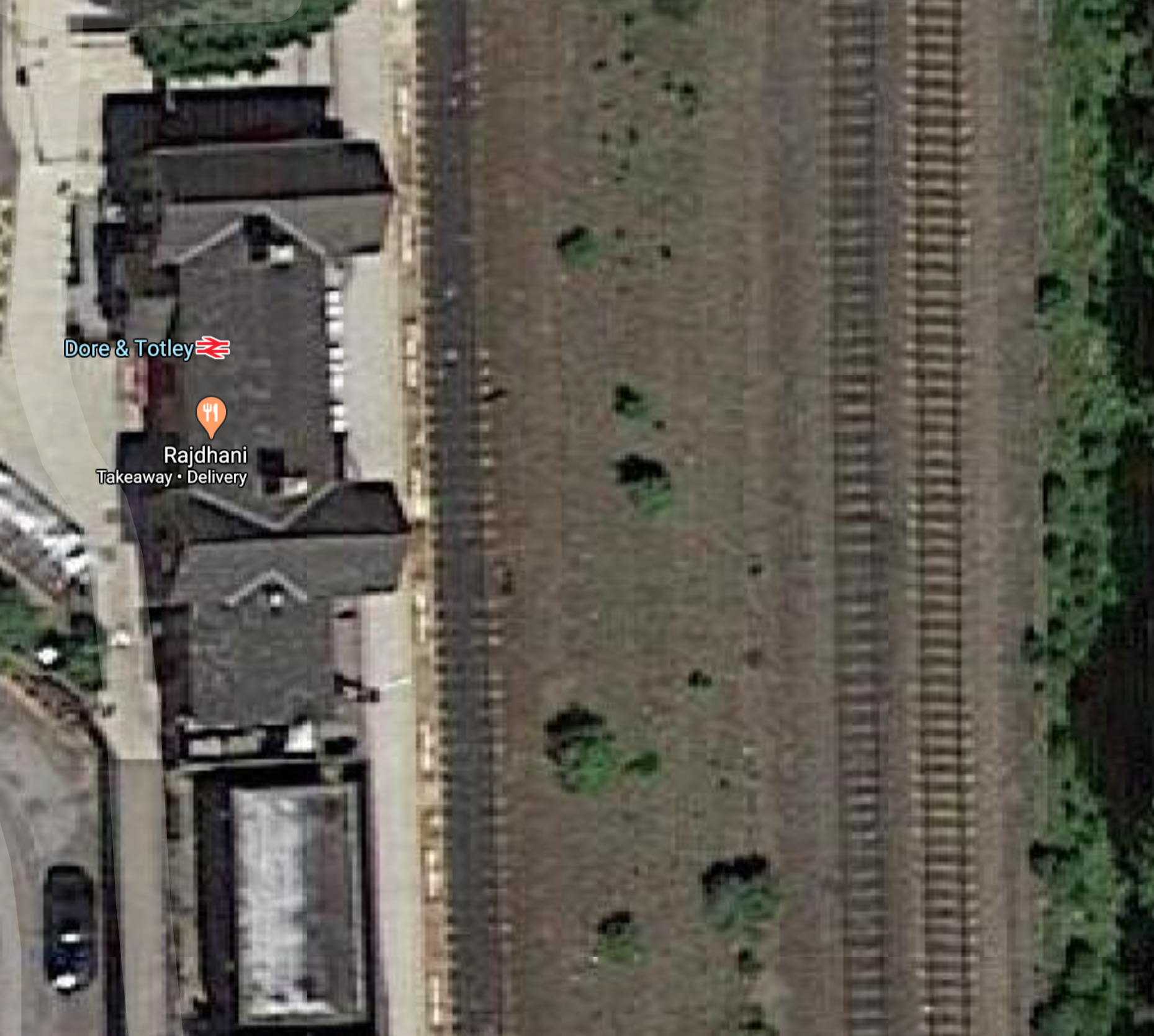
The second platform wouldn’t be the widest platform,. but I’m sure a second track and a safe platform could be squeezed in.
- A bridge with lifts would be needed.
- The current single platform at the station is around eighty metres long, but as I said in Beeching Reversal – Sheaf Valley Stations, the platforms must be long enough to take a pair of Class 185 trains or a five-car Class 802 train, which is probably around 140 metres.
I wonder if more space is needed, the Midland Main Line could be realigned to give more space and better performance.
A Turnback At Dore And Totley Station
In Beeching Reversal – Sheaf Valley Stations, I said this about a possible turnback at Dore and Totley station.
This Google Map shows Dore & Totley station and the area to the South.
Note.
- There would appear to be a lot of space between the Midland Main Line and the single track, that leads between Dore & Totley station and the Hope Valley Line.
Flying my helicopter, as low as I dare, it looks like the area is either a rubbish dump or very low grade businesses.
Crossrail has designed turnbacks at Abbey Wood and Paddington stations, that will handle twelve tph.
I believe that it would be possible to design a turnback at Dore & Totley station, that would handle eight trains per hour, if not twelve tph.It might even be possible to squeeze in some overnight stabling.
Whilst I was at Dore and Totley station, I met a couple, who were perhaps a few years older than me, who had grown up in the area.
He could remember local steam services between Sheffield and Dore and Totley stations, where there had been a turntable to the South of the station to reverse the locomotive.
Conclusion
After what I saw on my visit to Dore and Totley station, I would suspect that the station can be updated to the standard required to allow four tph between Manchester Piccadilly and Sheffield stations.
It could also be a station that will attract passengers.
Along The Hope Valley Line – 13th July 2020
These pictures show my return trip between Manchester Piccadilly and Dore & Totley stations.

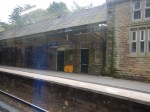
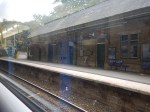
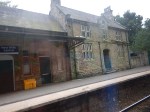
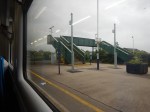
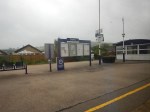

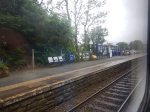
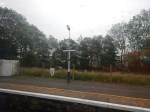


There are an assorted set of stations.
- Some stations appear to have new platforms.
- Marple station has a impressive step-free bridge.
- Some stations may be Listed or should be.
- There are walking routes from some stations.
- Some stations need improvements to the access.
I also have some thoughts on the service.
The Class 150 Trains
The Class 150 trains have these characteristics.
- Installed Power – 426 kW
- Weight – 35.8 tonnes
- Operating Speed – 75 mph.
This compares with these for a Class 195 train.
- Installed Power – 780 kW
- Weight – 40 tonnes
- Operating Speed – 100 mph.
- Acceleration – 0.83 m/sec/sec
Unfortunately, I can’t find the acceleration for a Class 150 train, but I suspect that it’s not as good as the Class 195 train.
- I was in a Class 150 train, for both journeys.
- IThe train was on time both ways.
- The engine under my carriage wasn’t working that hard.
- The train was trundling around at around 60 mph.
- The operating speed of the line is 90 mph.
So I suspect, that a well-driven Class 195 train will shave a few minutes from the journey time.
Transport For The North’s Plan For Manchester And Sheffield
Transportbfor the North objective for Manchester Piccadilly and Sheffield stations can be summed up as follows.
Four tph in forty minutes.
As current trains take over anhour, it could be a tough ask!
The Timetable
The timetable isn’t very passenger-friendly with no easy-to-remember clock-face timetable.
This must be sorted.
Hopefully, it will increase the number of passengers riding on the route.
Battery Electric Trains
Consider.
- Sheffield station will be electrified for High Speed Two.
- It is likely that the route between Dore & Totley and Sheffield station will be electrified.
- There is electrification at the Manchester end of the route.
- The distance without electrification in the middle is probably about thirty-six miles.
- Fifty-sixty miles seems a typical range quoted for a battery electric train by train manufacturers.
As electric trains generally accelerate faster than their diesel equivalent, these could run the route reliably and save time on the journey.
Conclusion
I’m coming round to the opinion, that Transport for the North’s objectives for the route can be met without electrification.
Beeching Reversal – Sheaf Valley Stations
This is one of the Beeching Reversal projects that the Government and Network Rail are proposing to reverse some of the Beeching cuts.
Stations To Be Rebuilt
As you approach Sheffield station, you pass four station sites, three of which are demolished and the fourth is just a shadow of its former self.
Dore & Totley
Dean & Totley station used to have four platforms and this Google Map, shows what is left after British Rail’s vandalism in the mid-1980s.
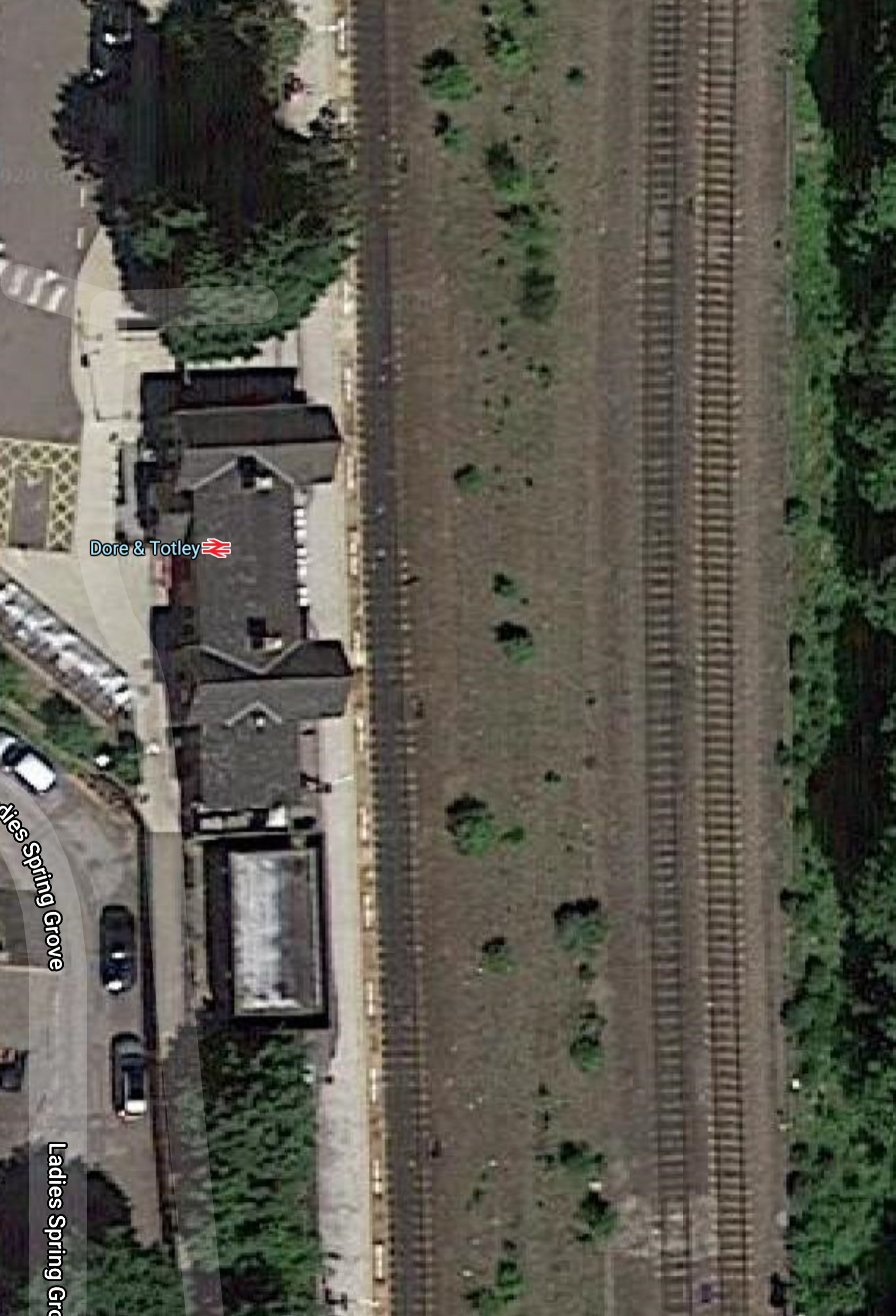
Note.
- The station has only one platform.
- The single track in the platform handles all trains to and from the Hope Valley Line.
- At present it appears to be two trains per hour (tph) in both directions.
- The two tracks at the right are the Midland Main Line.
Transport for the North wants to run four tph between Manchester Piccadilly and Sheffield through here, that will take forty minutes between the two cities.
Updates planned for the station include.
- A second platform for Manchester-bound trains.
- A new bridge with lifts.
- Platforms long enough to take a pair of Class 185 trains or a five-car Class 802 train.
- A full hourly service.
There certainly seems to be enough space for another platform and track through the middle of the station.
At some point in the near future, the two Midland Main Line tracks will be electrified, as part of the upgrade for High Speed Two.
Between Dore & Totley And Beauchief
This Google Map shows a typical section of the line between Dore & Totley and Beauchief stations.
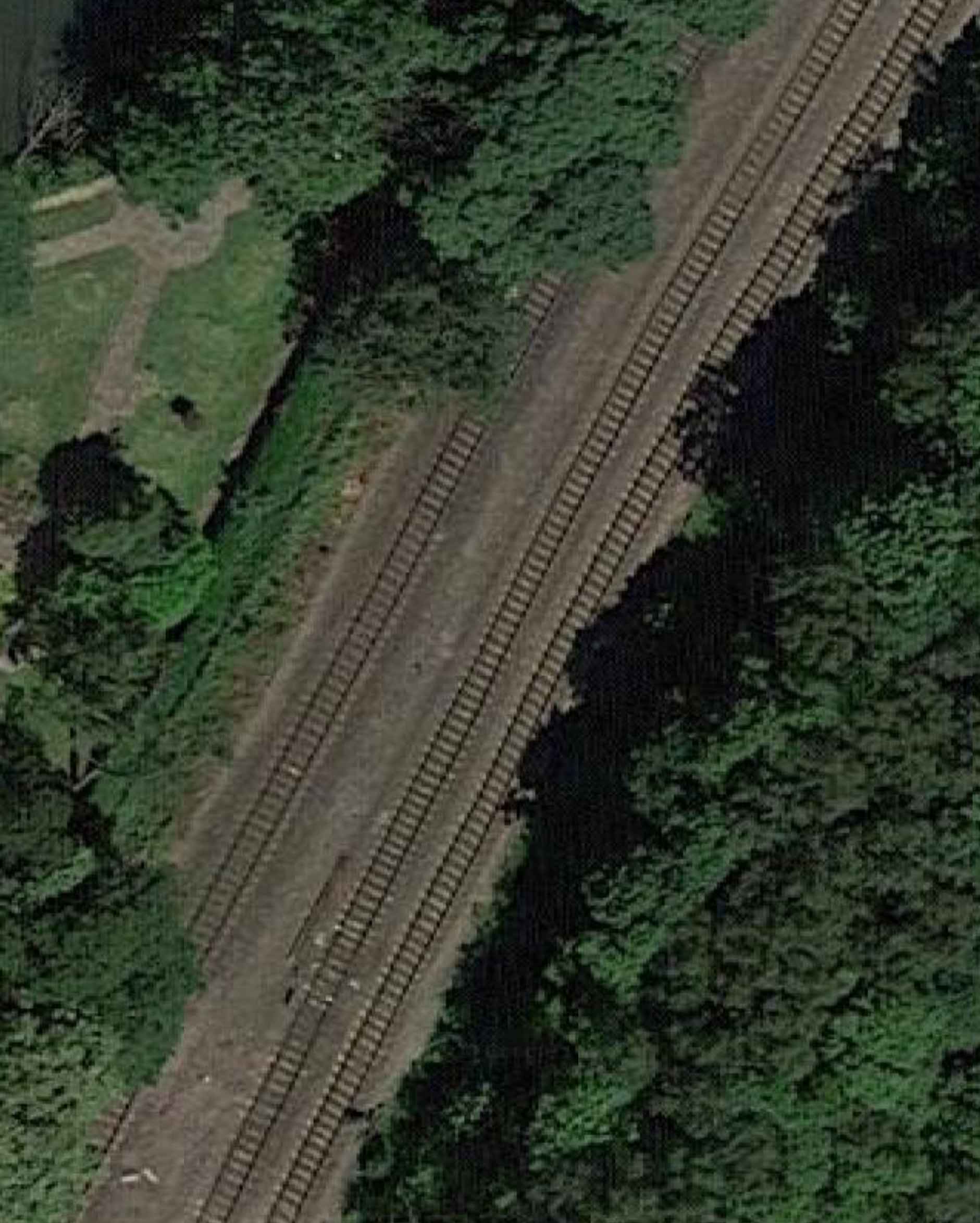
Note the two Midland Main Line tracks on the right and single-track to the Hope Valley Line on the left.
It would appear that the fourth track can be squeezed in between the single track and the Midland Main Line.
Beauchief
Beauchief station used to have four platforms before it was demolished.
This Google Map shows the station’s former location.
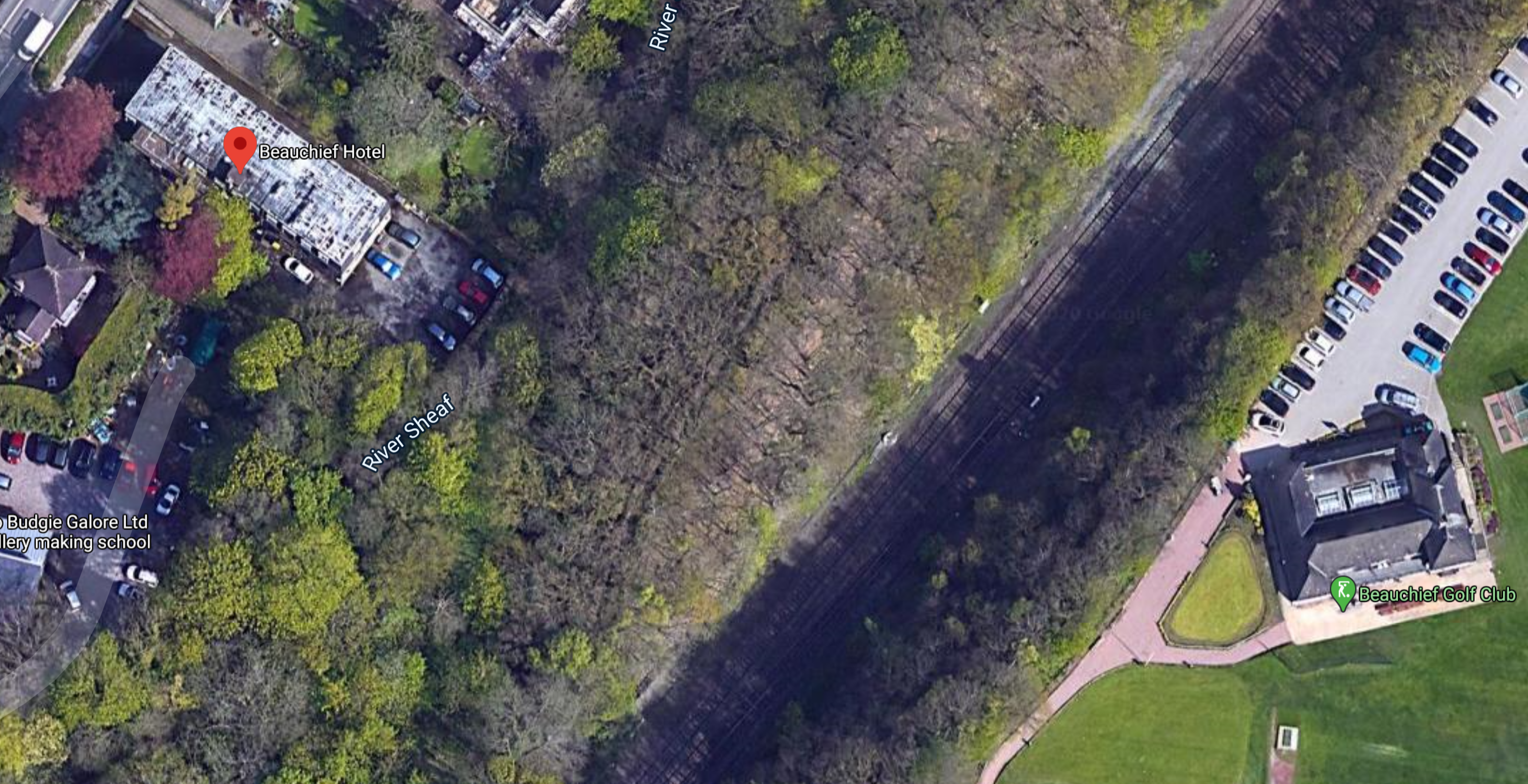
Note.
- The building with the red dot is the former Beauchief Hotel. which was by the station.
- On a larger screen you can see three tracks going into Sheffield.
I’m fairly certain that four tracks and two platforms for a station can be fitted into this narrow trackbed.
Millhouses & Eccleshall
Millhouses and Eccleshall station used to have four platforms before it was demolished.
This Google Map shows the station’s former location.
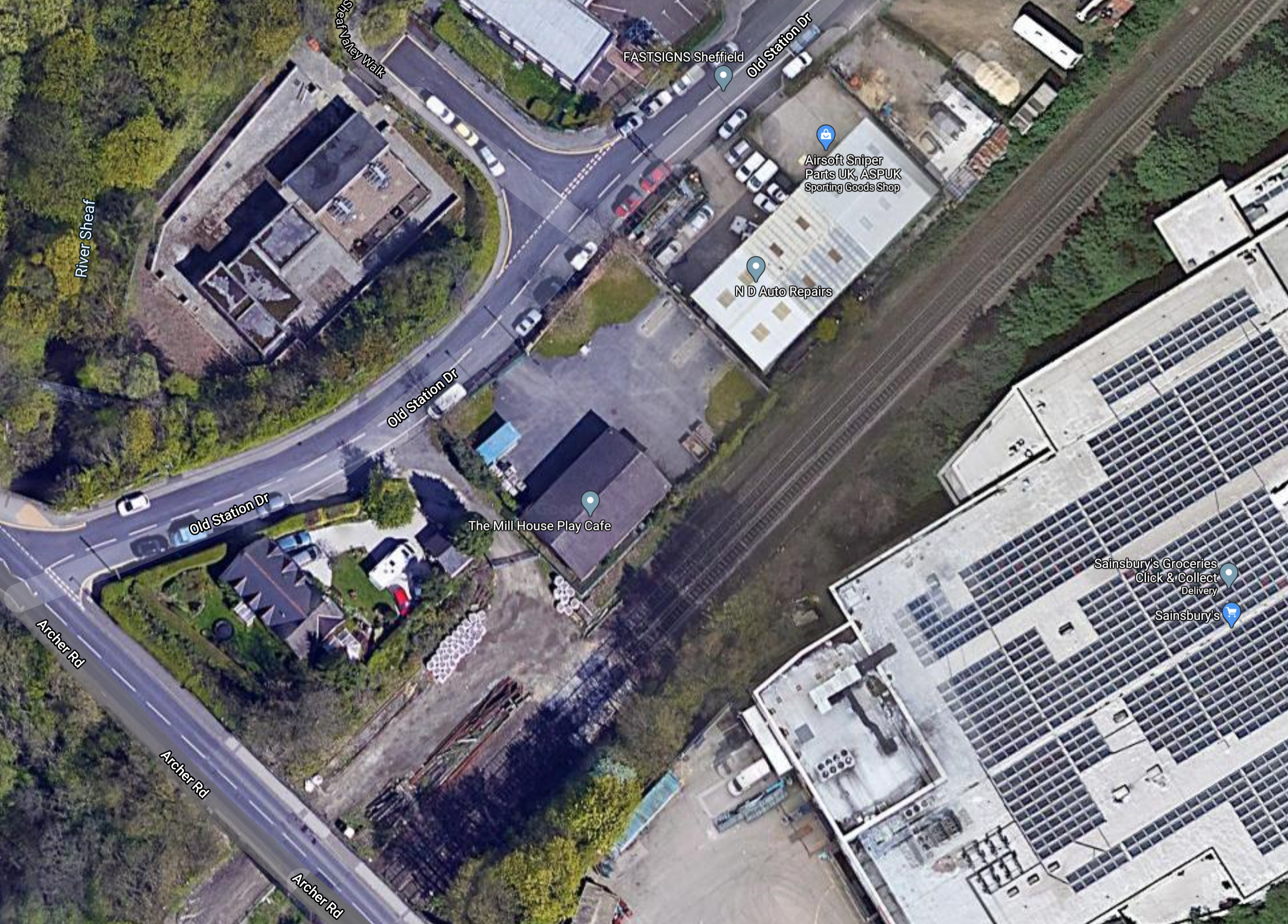
Note.
- Wikipedia says the station was accessed from the Archer Road bridge, which is in the South East corner of the map.
- It looks like there are three tracks with space for four.
- The road to the North-West of the railway is called Old Station Road.
As at Beauchief, it will be tight.
Heeley
Heeley station used to have four platforms before it was demolished.
This Google Map shows the station’s former location.
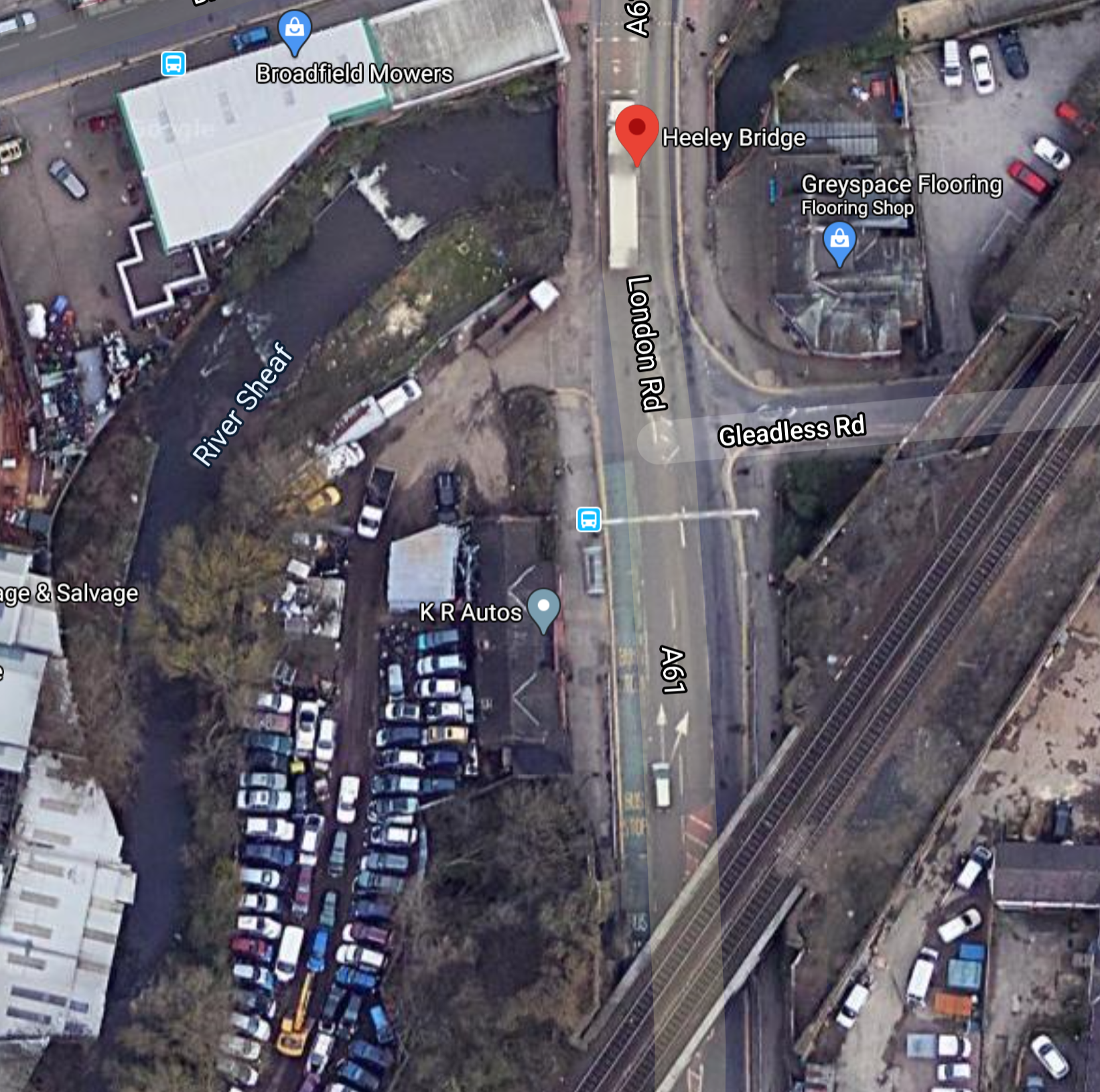
Note.
- The red arrow indicates Heeley Bridge, which Wikipedia says is near the station site.
- There appears to be only two tracks through here.
It is easy to follow the tracks from here to Sheffield station.
Could A Four Track Railway Be Rebuilt Between Dore & Totley And Sheffield Stations?
I’ve not seen anything that says that building a four-track railway through here is not possible.
In a few years, there could be the following tracks and platforms, on this section.
- Two fast tracks for High Speed Two, Midland Main Line and CrossCountry trains, that will be electrified with 25 KVAC overhead electrification, between Clay Cross North Junction and Sheffield station.
- The High Speed Two trains will be classic-compatible and up to 200 metres long.
- The two fast tracks will not have any platforms.
- Two slow tracks for local services, that will be appropriately electrified.
- The slow tracks will have step-free platforms, that will be long enough to take a five-car Class 802 train or a pair of Class 185 trains.
I can’t for the life of me understand, why this stretch of four-track main line between Dore & Totley and Sheffield stations was ever simplified, as at other places on the UK network, extra tracks were being added to the main lines, at the same time.
Future Services On The Fast Lines
Currently, the following services take the fast lines between Sheffield and Chesterfield stations via Dore & Totley station.
- East Midlands Railway – Sheffield and London St. Pancras – 2 tph
- East Midlands Railway – Sheffield and Norwich via Nottingham – 1 tph
- CrossCountry – Edinburgh/Newcastle and Derby/Birmingham and the South – 2 tph
- Northern – Sheffield and Nottingham – 1 tph
That is a very modest six tph.
High Speed Two are currently planning to run two tph between Sheffield and London Euston.
There may or may not be other changes.
- As Birmingham Curzon Street and Sheffield will be just forty-seven minutes by High Speed Two all the way, will these destinations have a direct high speed classic-compatible service? There’s plenty of space capacity on High Speed Two.
- I don’t think the Sheffield and St. Pancras services will be dropped, but they might be.
- CrossCountry will probably be running intelligent multi-mode trains capable of 125 mph running and up to 140 mph in places.
- Northern’s service between Sheffield and Nottingham might go via a reopened Barrow Hill Line.
But the biggest change will be that these two fast lines will be to High Speed Two standards.
- Sheffield and Chesterfield will be electrified.
- There will in-cab digital signalling, which theoretically could probably allow eighteen tph on the route.
- High Speed Two Trains between Sheffield and Chesterfield will take twelve minutes.
- Sheffield station will have been modified as required, to be able to handle all trains very efficiently.
But it would still be carrying a modest eight tph.
If required Sheffield would have the capacity to accept more trains from the South.
I wouldn’t be surprised to see, the following trains added.
- An extra tph to and from London Euston via High Speed Two.
- Two tph to and from Birmingham Curzon Street via High Speed Two.
I also wouldn’t be surprised to see CrossCountry using classic-compatible High Speed Two trains and switching to High Speed Two between Birmingham New Street and Sheffield. But these trains would still use the same tracks to access Sheffield station.
But I am led to the conclusion, that Sheffield will have more than enough capacity linking the City to Chesterfield and the South.
Future Services On The Slow Lines
Or should I use lines connecting to the Hope Valley Line rather than slow lines?
Currently, the following services take the slow lines between Sheffield and Dore & Totley stations.
- East Midlands Railway – Liverpool Lime Street and Sheffield – via Manchester Piccadilly – 1 tph
- TransPennine Express – Manchester Airport and Cleethorpes via Manchester Piccadilly – 1 tph
- Northern – Sheffield and Manchester Piccadilly – 1 tph
Transport for the North aims to run a four tph service with a forty minute journey time between Manchester Piccadilly and Sheffield.
Consider.
- 100 mph TransPennine Express trains take fifty-three minutes between Sheffield and Manchester Piccadilly without a stop.
- Classic-compatible trains with a battery capability could easily handle the route.
- Northern’s services on the Hope Valley Line are timed for 75 mph trains.
- Dore & Totley and Hazel Grove stations are twenty-nine miles apart.
If between Dore & Totley and Sheffield stations were to be electrified and track improvements like passing loops were to be made to the Hope Valley Line, I believe that to achieve a forty minute all-stops timing between Sheffield and Manchester Piccadilly, would need a train with the following specification.
- Electric train with batteries.
- Four cars
- 100 mph or faster operating speed.
- Step-free access between platform and train.
- Sparkling acceleration and deceleration.
- Ability to run under in-cab digital signalling to keep out of the way of freight services.
Looking at Crossrail between London Paddington and Maidenhead stations, the London route is probably as difficult as the Hope Valley Line and it has been designed as a forty minute service with ten stops, using a modern electric train.
If TransPennine fitted batteries to their Class 802 trains, these trains would fit the Northern Powerhouse Rail requirements.
East Midlands Railway and Northern would find that the following trains could be used.
- Bombardier – Aventra with batteries
- Bombardier – Class 377 train with batteries
- Bombardier – Class 379 train with batteries
- CAF – Class 331 train with batteries
- Hitachi – Class 385 train with batteries
- Porterbrook – Battery/FLEX train based on Class 350 train
- Stadler – Flirt with batteries
All would need that between Dore & Totley and Sheffield stations be electrified.
After the upgrades and the new or refurbished trains are running, this would mean that between Dean & Totley and Sheffield would be handling four tph, which would be semi-fast trains between Sheffield and Manchester Piccadilly. Although to current passengers on the line, they would seem to be fast services of a much higher standard.
It would not be very different to how the slow lines into Paddington also handle about four tph of other services, including GWR services and freight.
I believe that to provide an adequate service to the reopened and rebuilt stations of Dore & Totley, Beauchief, Millhouses & Eccleshall and Heeley, that a Turn-Up-And-Go service of at least four tph should be run between Dore & Totley and Sheffield stations.
A Turnback At Dore & Totley
This Google Map shows Dore & Totley station and the area to the South.
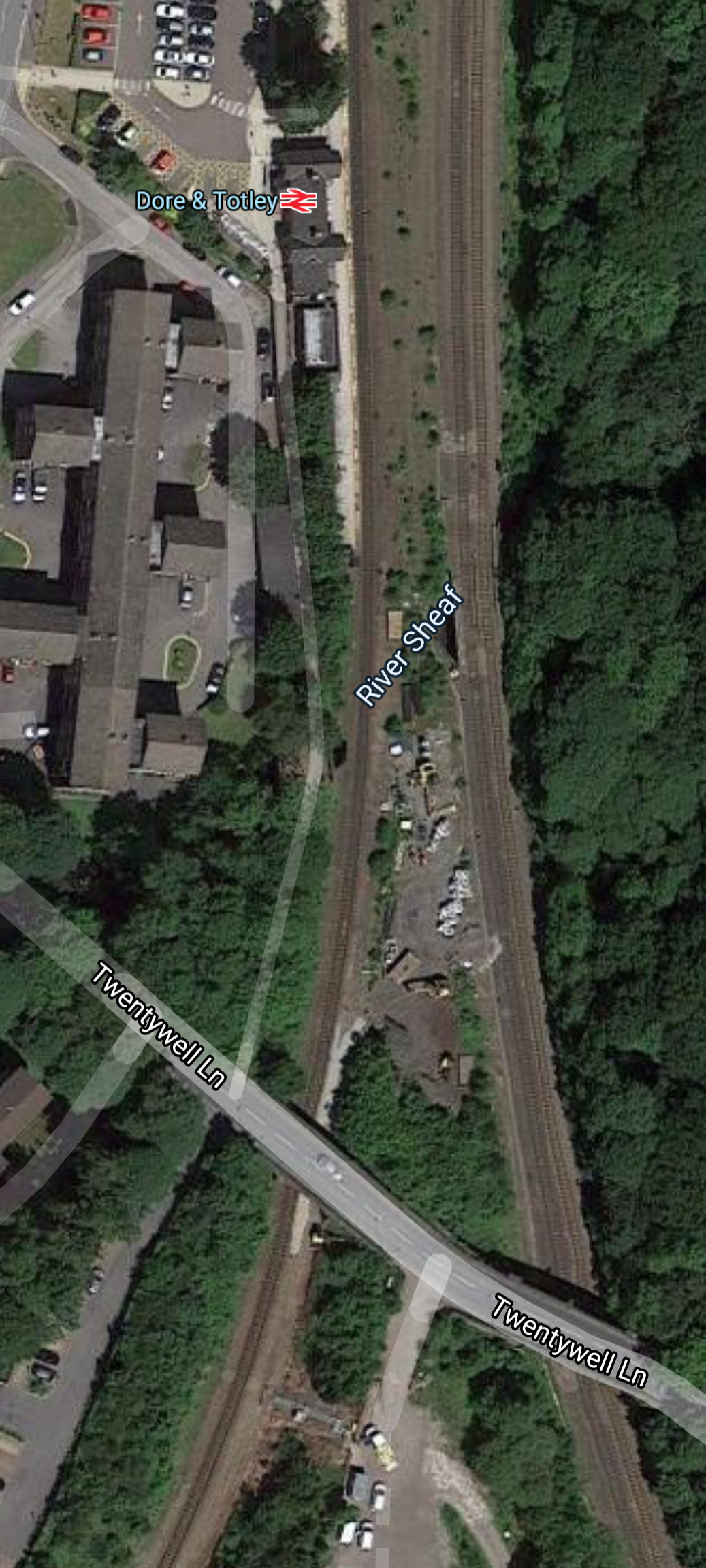
Note.
- There would appear to be a lot of space between the Midland Main Line and the single track, that leads between Dore & Totley station and the Hope Valley Line.
- Flying my helicopter, as low as I dare, it looks like the area is either a rubbish dump or very low grade businesses.
- Crossrail has designed turnbacks at Abbey Wood and Paddington stations, that will handle twelve tph.
I believe that it would be possible to design a turnback at Dore & Totley station, that would handle eight trains per hour, if not twelve tph.
It might even be possible to squeeze in some overnight stabling.
Trains Or Tram-Trains Between Dore & Totley And Sheffield Stations
In my view, it doesn’t matter.
Crossrail’s 12 tph turnbacks can handle a 205 metre long Class 345 train, so I’m sure a well-designed turnback at Dore & Totley could handle a mixture of any trams or tram-trains below a defined maximum length of say 140 metres, which would be defined by a pair of Class 185 trains, which might have to be turned back during service disruption.
Where Would The Services Terminate in The East?
It is my view that cross-city services like Birmingham’s Cross-City Line, Liverpool’s Northern Line, London’s Crossrail and Thameslink, Newcastle’s Metro and Paris’s RER are efficient for both passengers and train operators.
So Dore & Totley station could be one end of a Sheffield cross-city line, with a frequency of at least eight tph through Beauchief, Millhouses & Eccleshall, Heeley and Sheffield stations.
So where would services go on the other side of Sheffield? Wikipedia gives these as services to the East of Sheffield.
- Leeds via Barnsley and Wakefield (fast) – 2 tph
- Leeds via Meadowhall, Barnsley, Wakefield and Castleford (stopping). – 1 tph
- Leeds via Meadowhall, Moorthorpe and Wakefield. – 1 tph
- Scarborough via Meadowhall, Doncaster, Hull and Bridlington. – 1 tph
- Lincoln Central via Worksop and Retford – 1 tph
- Gainsborough Central via Worksop, three trains per week continue to Cleethorpes via Brigg. – 1 tph
- Huddersfield via Meadowhall, Barnsley and Penistone – 1 tph
- Doncaster via Meadowhall and Rotherham, with one train per hour continuing to Adwick – 2 tph
- York via Moorthorpe and Sherburn-in-Elmet. – 3 trains per day (tpd)
For much of the day, that is a frequency of 10 tph, with 5 tph calling at Meadowhall, 2 tph calling at Worksop and two fast tph passing Meadowhall without stopping.
But there are other rail projects under development.
- High Speed Two will enable a new fast service between Sheffield and Leeds via Meadowhall and a new station in the Dearne Valley.
- The Sheffield Region Transport Plan 2019 envisages a new station at Barnsley Dearne Valley. See Sheffield Region Transport Plan 2019 – A New Station At Barnsley Dearne Valley.
- The Sheffield Region Transport Plan 2019 envisages tram-trains running between Sheffield and Doncaster-Sheffield Airport See Sheffield Region Transport Plan 2019 – Tram-Trains Between Sheffield And Doncaster-Sheffield Airport.
- The Sheffield Region Transport Plan 2019 envisages a new Station at Waverley. See Sheffield Region Transport Plan 2019 – A New Tram-Train Route To A New station At Waverley.
- High Speed Two might enable a fast classic-compatible service between Sheffield and Scarborough via York.
- The possible opening of the South Yorkshire Joint Railway to passenger traffic, may open up further opportunities. See Beeching Reversal – South Yorkshire Joint Railway.
- The possible reinstatement of the Barrow Hill Line. See Reinstatement Of The Barrow Hill Line Between Sheffield And Chesterfield.
- The development of the Stocksbridge Railway for passenger services.
I can see classic-compatible High Speed Two trains serving the following places to the East of Sheffield.
- Leeds
- Hull via Doncaster
- Scarborough via York
- Cleethorpes via Doncaster, Scunthorpe and Grimsby.
A train like a five-car Class 802 train would probably be enough for most routes except Leeds.
I can see the following terminals for tram-trains to the East of Sheffield.
- Doncaster and Doncaster-Sheffield Airport
- Waverley station, which could be on a loop from the Sheffield and Lincoln Line.
- Barnsley Dearne Valley
There may well be others.
If Sheffield were Karlsruhe in Germany, the tram-trains would probably serve the following routes.
- Huddersfield via Penistone.
- Lincoln via Worksop and Gainsborough.
- Manchester via the Hope Valley Line.
But the Germans have a much larger electrified core, than Sheffield will have, even if High Speed Two electrifies between Dore & Totley and Thurnscoe stations via Sheffield.
I can make a table of destinations and distances and how they could be served.
- Barnsley – 16 miles – Possible return trip from Sheffield for a battery electric train.
- Barnsley Dearne Valley – 8 miles from Rotherham Parkgate – Possible return trip from Sheffield via Rotherham Parkgate for a battery electric tram-train.
- Doncaster – 11 miles from Rotherham Parkgate – Possible return trip from Sheffield via Rotherham Parkgate for a battery electric tram-train.
- Chesterfield via Barrow Hill – 17 miles – Possible return trip from Sheffield for a battery electric tram-train.
- Doncaster Sheffield Airport – 10 miles from Doncaster – Possible return trip from Sheffield via Rotherham Parkgate and Doncaster for a battery electric tram-train.
- Gainsborough Lea Road. – 32 miles – See Lincoln Central.
- Huddersfield – 36 miles – Possible battery electric train with charging at Huddersfield.
- Hull – 59 miles – Possible battery electric train with charging at Doncaster and Hull.
- Lincoln Central – 48 miles – Possible battery electric train with charging at Lincoln and/or Gainsborough Lea Road. Otherwise diesel.
- Penistone – 23 miles – Possible return trip from Sheffield for a battery electric train, using Newton’s friend on the way back.
- Retford – 23 miles – Possible return trip from Sheffield for a battery electric train.
- Waverley – About 6 miles – Possible return trip from Sheffield for a battery electric tram-train.
- Worksop – 16 miles – Possible return trip from Sheffield for a battery electric train.
It looks to me like a mix of battery electric trains and tram-trains could run most of the services from Sheffield, if services that used new High Speed Two infrastructure used classic-compatible trains or trains like the existing Class 802 trains, that have been converted to battery electric operation.
Note.
- I am assuming, that a battery electric train has a range of 56 miles on a single charge.
- Rotherham Parkgate station is changed to a through station.
- Tram-trains passing through Doncaster can recharge on the station’s 25 KVAC overhead electrification.
- Charging can be provided as required at other stations.
There are lots of possibilities.
Consider, this for tram-train extensions to Barnsley Dearne Valley, Doncaster and Doncaster Sheffield Airport.
- Extend the tram-train service at Rotherham Parkgate to either Doncaster and Doncaster Airport or Barnsley Dearne Valley stations.
- Run tram-trains between Dore & Totley and Rotherham Parkgate via Sheffield, Meadowhall and Rotherham Central.
This would give a double-ended route across Sheffield and Rotherham between Dore & Totley and the existing Supertram network in the West and Barnsley Dearne Valley, Doncaster and Doncaster Sheffield Airport in the East.
Consider how to connect the branch to Waverley station to the Supertram network.
- Waverley station will be either on or on a loop from the Sheffield and Lincoln Line.
- The Sheffield and Lincoln Line has no obvious connection with the Supertram network.
- The Sheffield and Lincoln Line goes straight in to Sheffield station.
- Trains to Lincoln always appear to use Platform 4 in Sheffield station.
- Sheffield station has four through platforms.
This Google Map shows where the Sheffield and Lincoln Line passes behind the Supertram Depot at Nunnery.
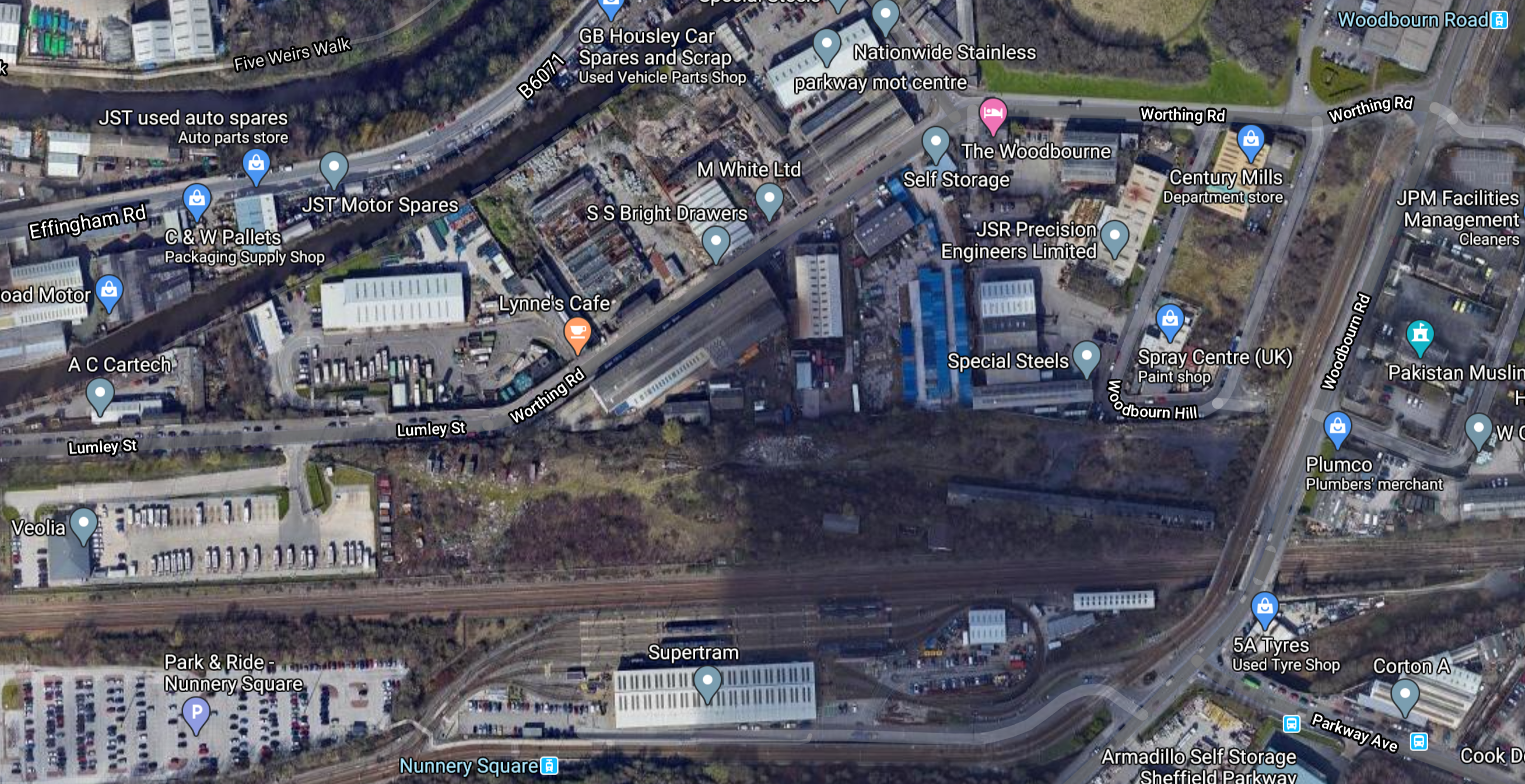
Note.
- The Nunnery Square Park and Ride is in the South West corner of the map.
- The Supertram depot is to the East of the Park-and-Ride, with the Nunnery Square tram stop to the South.
- The Woodbourn Road tram stop is in the North East corner of the map.
This second Google Map shows the lines around the Park-and-Ride.
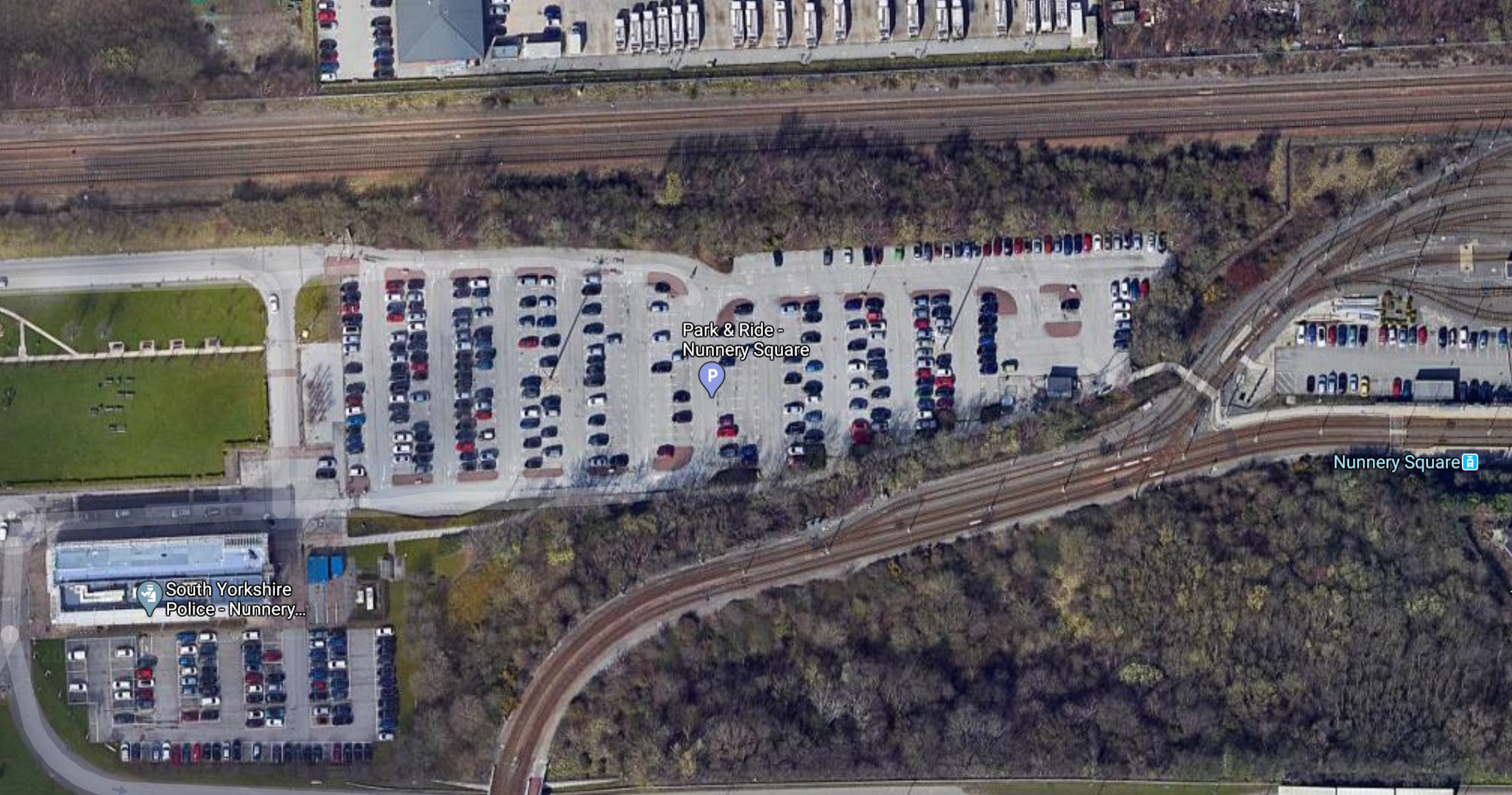
I suspect that a connection between the Supertram system and the Sheffield and Lincoln Line, could be built to the North of the Nunnery Depot.
But would it be easier to continue to Sheffield station or pass through the station and terminate at Dore & Totley station?
I can’t be sure looking at the maps, but it could be logical that trains to and from Lincoln use the Southern pair of tracks past the Nunnery Depot, as they would be on the right side of the tracks for Lincoln.
This would make it easier to do the following.
- Create a connection between the Nunnery Depot and the Sheffield and Lincoln Line, which would surely be needed for efficient maintenance and operation of tram-trains running to and from Waverley.
- Allow tram-trains used to serve the proposed Waverley station to return to the Depot every night.
- Allow tram-trains working between Sheffield and Meadowhall to use the Lincoln and Sheffield Line to enter the Nunnery Depot.
- Build a tram stop/station by the Park-and-Ride.
There would also be less need to build another depot.
Looking at the maps, could there be space to extend the Nunnery Depot?
Conclusion
This could be a very good project.
- It fits in well with the plans and needs of High Speed Two.
- It connects the new Waverley station to Sheffield station.
- It fits well with the Sheffield Region Transport Plan 2019.
- It connects Sheffield, Rotherham and Doncaster to Doncaster Sheffield Airport.
- It opens up the Hope Valley Line to improve services between Manchester and Sheffield.
I also don’t think, there’s any great risk!
I
Sheffield Region Transport Plan 2019 – Hope Valley Line Improvements
The improvements to the Hope Valley Line are listed under Plans in the Wikipedia entry for the line.
This is said.
Network Rail, in partnership with South Yorkshire ITA, will redouble the track between Dore Station Junction and Dore West Junction, at an estimated cost of £15 million. This costing is based on four additional vehicles in traffic to deliver the option, however, this will depend on vehicle allocation through the DfT rolling stock plan. This work will be programmed, subject to funding, in conjunction with signalling renewals in the Dore/Totley Tunnel area.
Other proposals include a loop in the Bamford area, in order to fit in an all-day (07:00–19:00) hourly Manchester–Sheffield via New Mills Central stopping service, by extending an existing Manchester–New Mills Central service. Planning permission for this was granted in February 2018.
These changes to allow three fast trains, a stopping train and freight trains each hour were also supported in a Transport for the North investment report in 2019, together with “further interventions” for the Northern Powerhouse Rail programme.
So what does that all mean?
All of the stations mentioned like Dore & Totley, Bamford are at the Sheffield end of the Hope Valley Line, where it joins the Midland Main Line.
This map, which was clipped from Wikipedia, shows the lines and the stations.
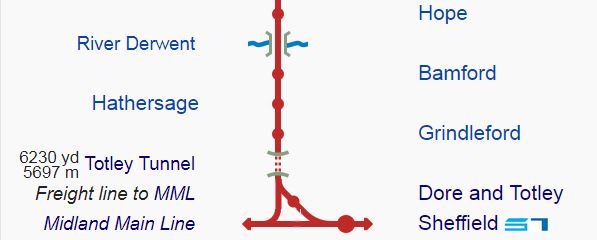
Note.
- The Midland Main Line runs South to North and West is upwards
- Dore West Junction is close to the Eastern end of Totley Tunnel.
- The Hope Valley Line is double track from Dore West Junction to the West.
- The Midland Main Line is double-track.
- Dore & Totley station is on a single-track chord, between Dore West Junction and Dore Station Junction.
- Another single-track chord connects Dore West Junction and Dore South Junction on the Midland Main Line.
I’ll now cover each part of the work in seperate sections.
Dore Junction And Dpre & Totley Station
This Google Map shows the area of Dore & Totley station and the triangular junction.
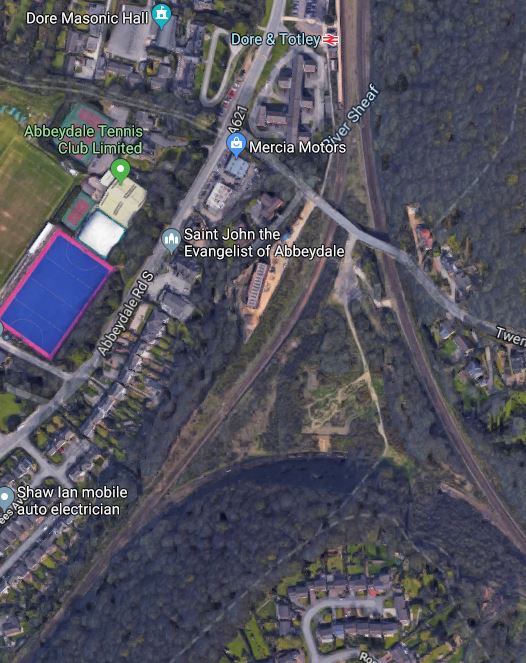
Note.
- Dore & Totley station is at the North of the map.
- The Midland Main Line goes down the Eastern side of the triangular junction.
- The Hope Valley Line goes West from Dore West Junction.
- The Midland Main Line goes South from Dore South Junction.
Network Rail’s plan would appear to do the following.
- Create a double-track between Dore Station Junction and Dore West Junction, through the Dore & Totley station.
- Add a second platform and a footbridge with lifts to the station.
Instead of a single-track line handling traffic in both directions, there will be a double-track railway with a track in each direction.
Capacity will have been increased.
In some ways Network Rail are only returning the station to how it existed in the past, so it shouldn’t be the most difficult of projects. But many of this type of project have surprises, so I’ll see it when the new station opens.
The Bamford Loop
On this page on the Friends of Dore & Totley Station web site, this is said about the Bamford Loop.
A Bamford Loop which is a place to halt frieight trains to allow passenger trains to overtake. This is east of Bamford station.
It is around a thousand metres long.
Flying my helicopter between Bamford and Heathersage stations, the track appears almost straight and adding a loop shouldn’t be that difficult.
The only problem is that there is a level crossing for a footpath at Heathersage West.
This will be replaced by a footbridge.
Benefits
The page on the Friends of Dore & Totley Station gives the main benefits of the scheme are to :-
- Increase the number of fast trains from 2 to 3 per hour
- Increase the stopping trains from 1 every 2 hours to 1 per hour
- To provide for 3 freight trains every two hours as at present.
- Allow trains of up to 6 cars to use the route
- Accommodate longer freight trains
- Improve reliability on the route
These seem to be fairly worthwhile benefits from a relatively simple scheme
 The Anonymous Widower