Are Hitachi Designing the Ultimate Battery Train?
In Sparking A Revolution, a post based on an article of the same name in Issue 898 of Rail Magazine, I repeated this about the specification of Hitachi UK Battery Train Specification.
- Range – 55-65 miles
- Performance – 90-100 mph
- Recharge – 10 minutes when static
- Routes – Suburban near electrified lines
- Battery Life – 8-10 years
Does this mean that the train can do 55-65 miles cruising at 90-100 mph?
How Much Energy Is Needed To Accelerate A Five-Car Class 800 Train To Operating Speed?
I will do my standard calculation.
- Empty train weight – 243 tonnes (Wikipedia for Class 800 train!)
- Passenger weight – 302 x 90 Kg (Includes baggage, bikes and buggies!)
- Train weight – 270.18 tonnes
Using Omni’s Kinetic Energy Calculator, the kinetic energy at various speeds are.
- 60 mph – 27 kWh
- 80 mph – 48 kWh
- 90 mph – 61 kWh
- 100 mph – 75 kWh
- 125 mph – 117 kWh – Normal cruise on electrified lines.
- 140 mph – 147 kWh – Maximum cruise on electrified lines.
Because the kinetic energy of a train is only proportional to the weight of the train, but proportional to the square of the speed, note how the energy of the train increases markedly after 100 mph.
Are these kinetic energy figures a reason, why Hitachi have stated their battery train will have an operating speed of between 90 and 100 mph?
A 100 mph cruise would also be very convenient for a lot of main lines, that don’t have electrification in the UK.
What Battery Size Would Be Needed?
In How Much Power Is Needed To Run A Train At 125 mph?, I calculated that a five-car Class 801 electric train, needed 3.42 kWh per vehicle-mile to maintain 125 mph.
For comparison, an InterCity 125 train, had a figure of 2.83 kWh per vehicle-mile.
Hitachi are redesigning the nose of the train for the new Class 810 train and I suspect that these trains can achieve somewhere between 1.5 and 3 kWh per vehicle-mile, if they are cruising at 100 mph.
Doing the calculation for various consumption levels gives the following battery capacity for a five-car train to cruise 65 miles at 100 mph
- 1.5 kWh per vehicle-mile – 487 kWh
- 2 kWh per vehicle-mile – 650 kWh
- 2.5 kWh per vehicle-mile – 812.5 kWh
- 3 kWh per vehicle-mile – 975 kWh
These figures don’t include any energy for acceleration to line speed from the previous stop or station, but they would cope with a deceleration and subsequent acceleration, after say a delay caused by a slow train or other operational delay, by using regenerative braking to the battery.
The energy needed to accelerate to operating speed, will be as I calculated earlier.
- 90 mph – 61 kWh
- 100 mph – 75 kWh
As the battery must have space to store the regenerative braking energy and it would probably be prudent to have a ten percent range reserve, I can see a battery size for a train with an energy consumption of 2 kWh per vehicle-mile, that needed to cruise at 100 mph being calculated as follows.
- Energy for the cruise – 650 kWh
- 10% reserve for cruise – 65 kWh
- Braking energy from 100 mph – 75 kWh
This gives a total battery size of 790 kWh, which could mean that 800 kWh would be convenient.
Note that each of the three MTU 12V 1600 diesel engines, fitted to a Class 800 train, each weigh around two tonnes.
In Innolith Claims It’s On Path To 1,000 Wh/kg Battery Energy Density, I came to these conclusions.
- Tesla already has an energy density of 250 Wh/Kg.
- Tesla will increase this figure.
- By 2025, the energy density of lithium-ion batteries will be much closer to 1 KWh/Kg.
- Innolith might achieve this figure. But they are only one of several companies aiming to meet this magic figure.
Suppose two of the MTU 12V 1600 diesel engines were each to be replaced by a two tonne battery, using Tesla’s current energy density, this would mean the following.
- Each battery would have a capacity of 500 kWh.
- The train would have one MWh of installed battery power.
- This is more than my rough estimate of power required for a 65 mile trip.
- The train would have little or no weight increase.
- I also wouldn’t be surprised to find that the exchange of a diesel engine for a battery was Plug-and-Play.
Hitachi would have an electric/battery/diesel tri-mode train capable of the following.
- Range – 55-65 miles
- Out and Back Range – about 20-30 miles
- Performance – 90-100 mph
- Recharge – 10 minutes when static
- Emergency diesel engine.
I feel it would be a very useful train.
Trains That Could Be Fitted With Batteries
The original article in Rail Magazine says this.
For the battery project, positive discussions are taking place with a number of interested parties for a trial, with both Class 385s and Class 800s being candidates for conversion.
So this means that the following operators will be able to use Hitachi’s battery technology o their trains.
- Avanti West Coast – Class 80x trains
- First East Coast Trains – Class 80x trains
- East Midlands Railway – Class 80x trains
- GWR – Class 80x trains
- Hull Trains – Class 80x trains
- LNER – Class 80x trains
- ScotRail – Class 385 trains
- TransPennine Express – Class 80x trains
Although, I based my calculations on Class 80x trains, I suspect that the methods can be applied to the smaller Class 385 trains.
Possible Out-And-Back Journeys
These are possible Out-And-Back journeys, that I believe Hitachi’s proposed battery-electric trains could handle.
- Edinburgh and Tweedbank – 30 miles from Newcraighall
- London Paddington and Bedwyn – 30 miles from Reading
- London Euston and Blackburn – 12 miles from Preston
- London Kings Cross and Bradford – < 27 miles from Leeds
- London Euston and Chester – 21 miles from Crewe
- London Kings Cross and Harrogate – <18 miles from Leeds
- London Kings Cross and Huddersfield – 17 miles from Leeds
- London St. Pancras and Leicester – 16 miles from Market Harborough
- London Kings Cross and Lincoln – 17 miles from Newark
- London St. Pancras and Melton Mowbray – 26 miles from Corby
- London Kings Cross and Middlesbrough – 20 miles from Northallerton
- London Kings Cross and Nottingham – 20 miles from Newark
- London Paddington and Oxford – 10 miles from Didcot
- London Kings Cross and Redcar – 29 miles from Northallerton
- London Kings Cross and Rotherham- 14 miles from Doncaster
- London Kings Cross and Sheffield – 20 miles from Doncaster
- London and Weston-super-Mare – 19 miles from Bristol
Note.
- Provided that the Out-And-Back journey is less than about sixty miles, I would hope that these stations are comfortably in range.
- Leicester is the interesting destination, which would be reachable in an Out-And-Back journey. But trains from the North stopping at Leicester would probably need to charge at Leicester.
- I have included Blackburn as it could be a destination for Avanti West Coast.
- I have included Melton Mowbray as it could be a destination for East Midlands Railway.
- I have included Nottingham, Rotherham and Sheffield as they could be destinations for LNER. These services could prove useful if the Midland Main Line needed to be closed for construction works.
- I’m also fairly certain, that no new electrification would be needed, although every extra mile would help.
- No charging stations would be needed.
I suspect, I’ve missed a few possible routes.
Possible Journeys Between Two Electrified Lines
These are possible journeys between two electrified lines, that I believe Hitachi’s proposed battery-electric trains could handle.
- London St. Pancras and Eastbourne via Hastings – 25 miles between Ashford and Ore.
- Leeds and York via Garforth – 20 miles between Neville Hall and Colton Junction
- London Kings Cross and Norwich via Cambridge – 54 miles between Ely and Norwich.
- Manchester Victoria and Leeds via Huddersfield – 43 miles between Manchester Victoria and Leeds.
- Preston and Leeds via Hebden Bridge – 62 miles between Preston and Leeds.
- Newcastle and Edinburgh – Would battery-electric trains get round the well-publicised power supply problems on this route?
Note.
- I am assuming that a range of 65 miles is possible.
- If the trains have a diesel-generator set, then this could be used to partially-charge the battery in places on the journey.
- Leeds and York via Garforth has been scheduled for electrification for years.
- Preston and Leeds via Hebden Bridge would probably need some diesel assistance.
- London Kings Cross and Norwich via Cambridge is a cheeky one, that Greater Anglia wouldn’t like, unless they ran it.
- As before no new electrification or a charging station would be needed.
I suspect, I’ve missed a few possible routes.
Possible Out-And-Back Journeys With A Charge At The Destination
These are possible Out-And-Back journeys, that I believe Hitachi’s proposed battery-electric trains could handle, if the batteries were fully charged at the destination.
- Doncaster and Cleethorpes – 52 miles from Doncaster.
- London Paddington and Cheltenham – 42 miles from Swindon
- London Kings Cross and Cleethorpes via Lincoln – 64 miles from Newark
- London Euston and Gobowen – 46 miles from Crewe
- London Euston and Wrexham – 33 miles from Crewe
- London Kings Cross and Hull – 45 miles from Selby
- London Kings Cross and Shrewsbury – 30 miles from Wolverhampton
- London Kings Cross and Sunderland 41 miles from Northallerton
- London Paddington and Swansea – 46 miles from Cardiff
- London Paddington and Worcester – 67 miles from Didcot Parkway
- London St. Pancras and Derby – 46 miles from Market Harborough
- London St. Pancras and Nottingham – 43 miles from Market Harborough
Note.
- I am assuming that a range of 65 miles is possible.
- If the trains have a diesel-generator set, then this could be used to partially-charge the battery in places on the journey.
- I am assuming some form of charging is provided at the destination station.
- As before no new electrification would be needed.
I suspect, I’ve missed a few possible routes.
Midland Main Line
The Midland Main Line could possibly be run between London St. Pancras and Derby, Nottingham and Sheffield without the use of diesel.
Consider.
- The route will be electrified between London St. Pancras and Market Harborough.
- In connection with High Speed Two, the Midland Main Line and High Seed Two will share an electrified route between Sheffield and Clay Cross North Junction.
- London St. Pancras and Derby can be run with a charging station at Derby, as Market Harborough and Derby is only 46 miles.
- London St. Pancras and Nottingham can be run with a charging station at Nottingham, as Market Harborough and Nottingham is only 43 miles.
- The distance between Clay Cross North Junction and Market Harborough is 67 miles.
- The distance between Sheffield and Leeds is 38 miles.
It looks to me that the range of East Midlands Railway’s new Class 810 trains, will be a few miles short to bridge the gap on batteries, between Clay Cross North Junction and Market Harborough station, but Leeds and Sheffield appears possible, once Sheffield has been electrified.
There are several possible solutions to the Clay Cross North and Market Harborough electrification gap.
- Fit higher capacity batteries to the trains.
- Extend the electrification for a few miles North of Market Harborough station.
- Extend the electrification for a few miles South of Clay Cross North Junction.
- Stop at Derby for a few minutes to charge the batteries.
The route between Market Harborough and Leicester appears to have been gauge-cleared for electrification, but will be difficult to electrify close to Leicester station. However, it looks like a few miles can be taken off the electrification gap.
Between Chesterfield and Alfriston, the route appears difficult to electrify with tunnels and passig through a World Heritage Site.
So perhaps options 1 and 2 together will give the trains sufficient range to bridge the electrification gap.
Conclusion On The Midland Main Line
I think that Hitachi, who know their trains well, must have a solution for diesel-free operation of all Midland Main Line services.
It also looks like little extra electrification is needed, other than that currently planned for the Midland Main Line and High Speed Two.
North Wales Coast Line
If you look at distance along the North Wales Coast Line, from the electrification at Crewe, you get these values.
- Chester – 21 miles
- Rhyl – 51 miles
- Colwyn Bay – 61 miles
- Llandudno Junction – 65 miles
- Bangor – 80 miles
- Holyhead – 106 miles
It would appear that Avanti West Coast’s new AT-300 trains, if fitted with batteries could reach Llandudno Junction station, without using diesel.
Electrification Between Crewe And Chester
It seems to me that the sensible thing to do for a start is to electrify the twenty-one miles between Crewe and Chester, which has been given a high priority for this work.
With this electrification, distances from Chester are as follows.
- Rhyl – 30 miles
- Colwyn Bay – 40 miles
- Llandudno Junction – 44 miles
- Bangor – 59 miles
- Holyhead – 85 miles
Electrification between Crewe and Chester may also open up possibilities for more electric and battery-electric train services.
But some way will be needed to charge the trains to the West of Chester.
Chagring The Batteries At Llandudno Junction Station
This Google Map shows Llandudno Junction station.
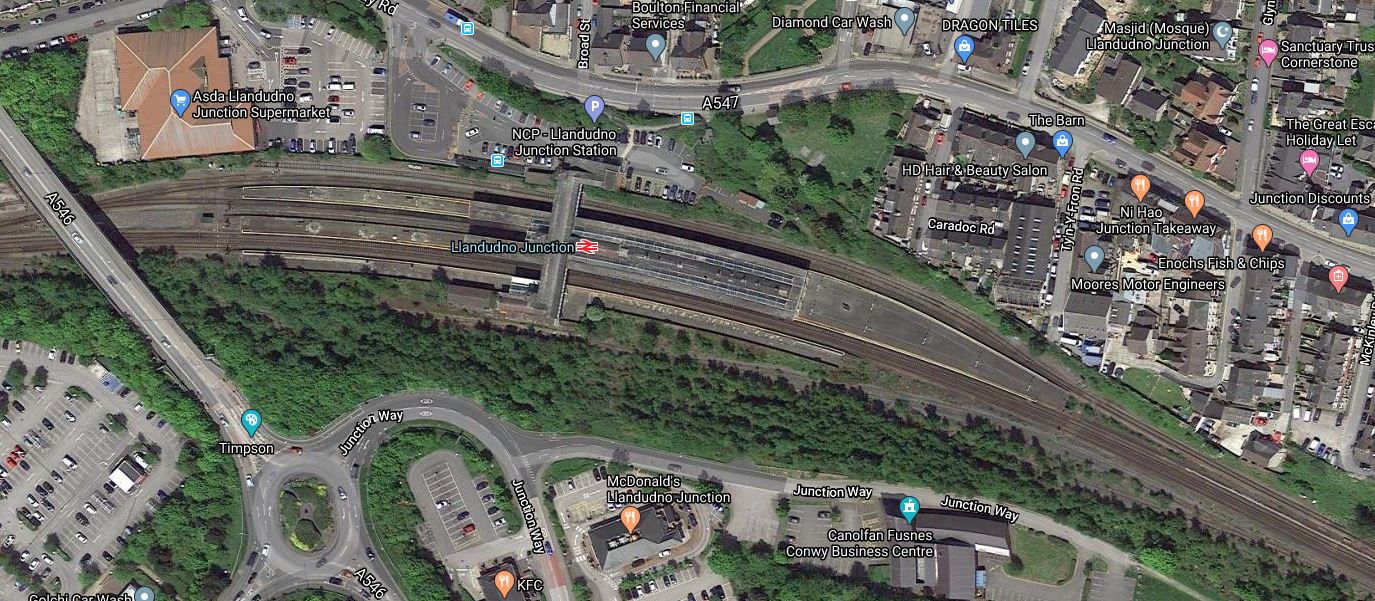
Note.
- It is a large station site.
- The Conwy Valley Line, which will be run by battery Class 230 trains in the future connects at this station.
- The Class 230 train will probably use some of Vivarail’s Fast Charging systems, which use third-rail technology, either at the ends of the branch or in Llandudno Junction station.
The simplest way to charge the London Euston and Holyhead train, would be to build a charging station at Llandudno Junction, which could be based on Vivarail’s Fast Charging technology or a short length of 25 KVAC overhead wire.
But this would add ten minutes to the timetable.
Could 25 KVAC overhead electrification be erected for a certain distance through the station, so that the train has ten minutes in contact with the wires?
Looking at the timetable of a train between London Euston and Holyhead, it arrives at Colwyn Bay station at 1152 and leaves Llandudno Junction station at 1200.
So would it be possible to electrify between the two stations and perhaps a bit further?
This Google Map shows Colwyn Bay Station,
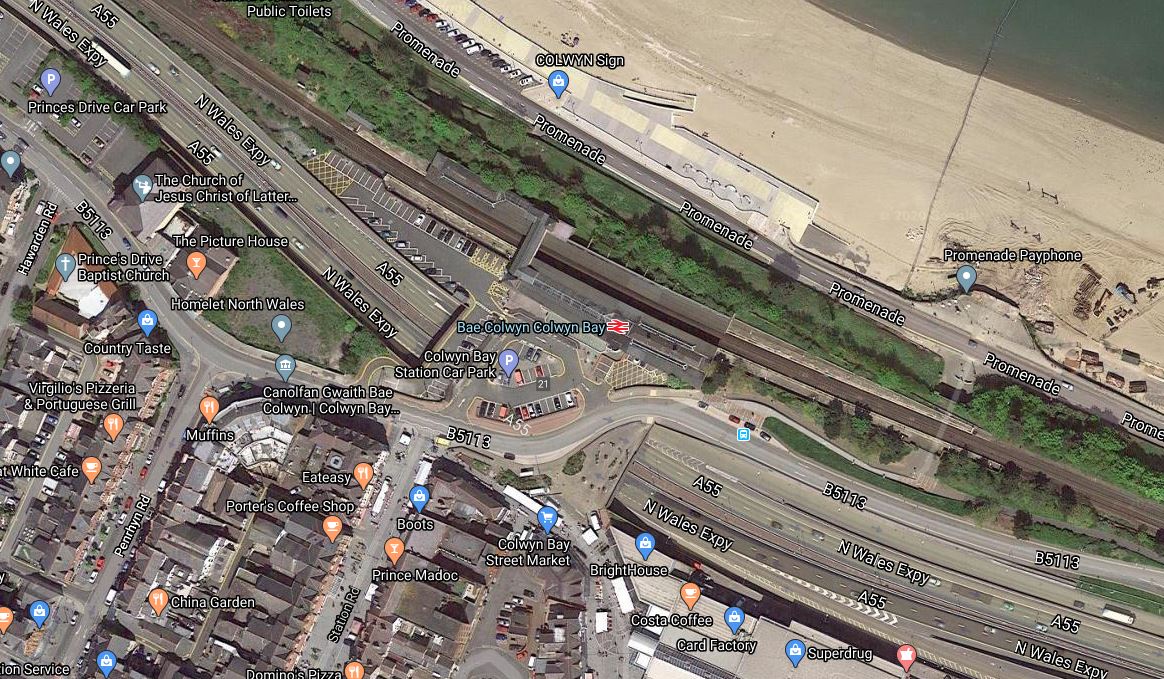
Note how the double-track railway is squeezed between the dual-carriageway of the A55 North Wales Expressway and the sea.
The two routes follow each other close to the sea, as far as Abegele & Pensarn station, where the Expressway moves further from the sea.
Further on, after passing through more caravans than I’ve ever seen, there is Rhyl station.
- The time between arriving at Rhyl station and leaving Llandudno Junction station is nineteen minutes.
- The distance between the two stations is fourteen miles.
- Rhyl and Crewe is fifty-one miles.
- Llandudno Junction and Holyhead is forty-one miles.
It would appear that if the North Wales Coast Line between Rhyl and Llandudno Junction is electrified, that Hitachi’s proposed battery trains can reach Holyhead.
The trains could even changeover between electrification and battery power in Rhyl and Llandudno Junction stations.
I am sure that electrifying this section would not be the most difficult in the world, although the severe weather sometimes encountered, may need some very resilient or innovative engineering.
It may be heretical to say so, but would it be better if this section were to be electrified using proven third-rail technology.
West of Llandudno Junction station, the electrification would be very difficult, as this Google Map of the crossing of the River Conwy shows.
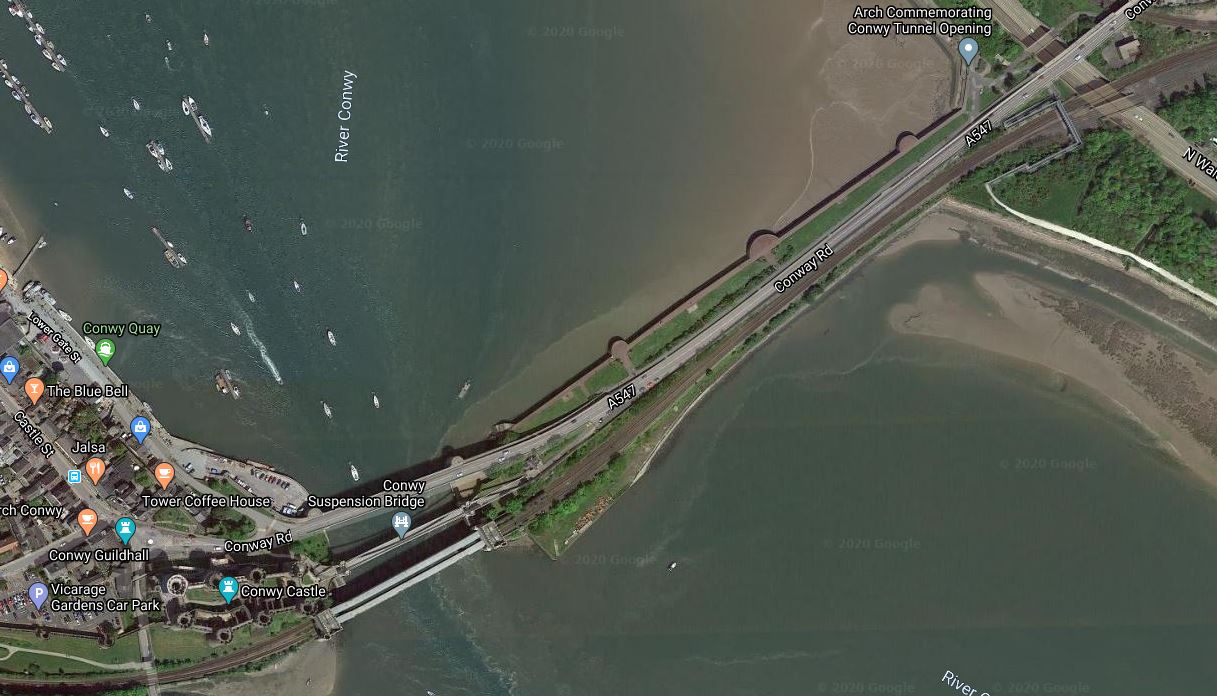
I don’t think anybody would want to see electrification around the famous castle.
Electrification Across Anglesey
Llanfairpwll station marks the divide between the single-track section of the North Wales Coast Line over the Britannia Bridge and the double-track section across Anglesey.
From my virtual helicopter, the route looks as if, it could be fairly easy to electrify, but would it be necessary?
- Llandudno Junction and Holyhead is forty-one miles, which is well within battery range.
- There is surely space at Holyhead station to install some form of fast-charging system.
One problem is that trains seem to turn round in only a few minutes, which may not be enough to charge the trains.
So perhaps some of the twenty-one miles between Llanfairpwll and Holyhead should be electrified.
London Euston And Holyhead Journey Times
Currently, trains take three hours and forty-three minutes to go between London Euston and Holyhead, with these sectional timings.
- London Euston and Crewe – One hour and thirty-nine minutes.
- Crewe and Holyhead – Two hours and four minutes.
The big change would come, if the London Euston and Crewe leg, were to be run on High Speed Two, which will take just fifty-five m,inutes.
This should reduce the London Euston and Holyhead time to just under three hours.
Freight On The North Wales Coast Line
Will more freight be seen on the North Wales Coast Line in the future?
The new tri-mode freight locomotives like the Class 93 locomotive, will be able to take advantage of any electrification to charge their batteries, but they would probably be on diesel for much of the route.
Conclusion On The North Wales Coast Line
Short lengths of electrification, will enable Avanti West Coast’s AT-300 trains, after retrofitting with batteries, to run between Crewe and Holyhead, without using any diesel.
I would electrify.
- Crewe and Chester – 21 miles
- Rhyl and Llandudno Junction – 14 miles
- Llanfairpwll and Holyhead – 21 miles
But to run battery-electric trains between London Euston and Holyhead, only Rhyl and Llandudno Junction needs to be electrified.
All gaps in the electrification will be handled on battery power.
A Selection Of Possible Battery-Electric Services
In this section, I’ll look at routes, where battery-electric services would be very appropriate and could easily be run by Hitachi’s proposed battery-electric trains.
London Paddington And Swansea
Many were disappointed when Chris Grayling cancelled the electrification between Cardiff and Swansea.
I went along with what was done, as by the time of the cancellation, I’d already ridden in a battery train and believed in their potential.
The distance between Cardiff and Swansea is 46 miles without electrification.
Swansea has these services to the West.
- Carmarthen – 32 miles
- Fishguard – 73 miles
- Milford Haven 71 miles
- Pembroke Dock – 73 miles
It looks like, three services could be too long for perhaps a three car battery-electric version of a Hitachi Class 385 train, assuming it has a maximum range of 65 miles.
But these three services all reverse in Carmarthen station.
So perhaps, whilst the driver walks between the cabs, the train can connect automatically to a fast charging system and give the batteries perhaps a four minute top-up.
Vivarail’s Fast Charging system based on third-rail technology would be ideal, as it connects automatically and it can charge a train in only a few minutes.
I would also electrify the branch between Swansea and the South Wales Main Line.
This would form part of a fast-charging system for battery-trains at Swansea, where turnround times can be quite short.
I can see a network of battery-electric services developing around Swansea, that would boost tourism to the area.
Edinburgh And Tweedbank
The Borders Railway is electrified as far as Newcraighall station and the section between there and Tweedbank is thirty miles long.
I think that a four-car battery-electric Class 385 train could work this route.
It may or may not need a top up at Tweedbank.
The Fife Circle
The Fife Circle service from Edinburgh will always be difficult to electrify, as it goes over the Forth Rail Bridge.
- The Fife Circle is about sixty miles long.
- Plans exist for a short branch to Leven.
- The line between Edinburgh and the Forth Rail Bridge is partly electrified.
I believe that battery-electric Class 385 train could work this route.
London Kings Cross and Grimsby/Cleethorpes via Lincoln
The Cleethorpes/Grimsby area is becoming something of a renewable energy powerhouse and I feel that battery trains to the area, might be a significant and ultimately profitable statement.
LNER recently opened a six trains per day service to Lincoln.
Distances from Newark are as follows.
- Lincoln – 17 miles
- Grimsby – 61 miles
- Cleethorpes – 64 miles
A round trip to Lincoln can probably be achieved on battery alone with a degree of ease, but Cleethorpes and Grimsby would need a recharge at the coast.
Note that to get to the Cleethorpes/Grimsby area, travellers usually need to change at Doncaster.
But LNER are ambitious and I wouldn’t be surprised to see them dip a toe in the Cleethorpes/Grimsby market.
The LNER service would also be complimented by a TransPennine Express service from Manchester Airport via Sheffield and Doncaster, which could in the future be another service run by a Hitachi battery train.
There is also a local service to Barton-on-Humber, which could be up for improvement.
London Waterloo And Exeter
This service needs to go electric, if South Western Railway is going to fully decarbonise.
But third-rail electrification is only installed between Waterloo and Basingstoke.
Could battery-electric trains be used on this nearly two hundred mile route to avoid the need for electrification.
A possible strategy could be.
- Use existing electrification, as far as Basingstoke – 48 miles
- Use battery power to Salisbury – 83 miles
- Trains can take several minutes at Salisbury as they often split and join and change train crew, so the train could be fast-charged.
- Use battery power to the Tisbury/Gillingham/Yeovil/Crewkerne area, where trains would be charged – 130 miles
- Use battery power to Exeter- 172 miles
Note.
- The miles are the distance from London.
- The charging at Salisbury could be based on Vivarail’s Fast-Charging technology.
- The charging around Yrovil could be based on perhaps twenty miles of third-rail electrification, that would only be switched on, when a train is present.
I estimate that there could be time savings of up to fifteen minutes on the route.
To Be Continued…
Mule Trains Between Liverpool And Norwich
I have done two trips to Liverpool in the last week.
On Saturday, I saw this collection of one-car Class 153 trains with a two-car Class 156 train thrown in.

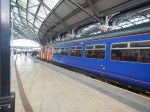
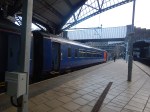
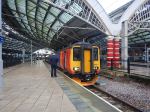


They were forming one of East Midlands Railway‘s Liverpool and Norwich services.
And then yesterday, I had to travel between Liverpool and Sheffield and this was the collection of trains that took me.
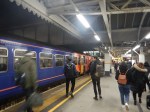
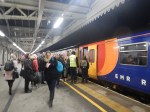


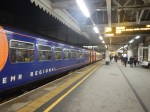
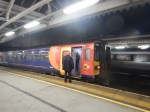
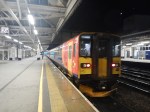
So what was it like?
It started badly, with the driver announcing that because of the late arrival due to an undisclosed problem with the incoming train, that we would be leaving ten minutes after the planned departure time of 1551. He also indicated that our late departure meant that we would be stuck behind one of Northern’s services.
In the end, despite the gloomy faces of passengers we left twelve minutes late at 1603.
It was a bit like one of those classic films, where an ancient train escapes in the nick of time, with a lot of important and assorted passengers.
The asthmatic Cummins diesels under the train could be heard straining.
- But the driver was at the top of his game and the train was running smoothly towards Manchester at close to 75 mph, which is the maximum speed of a Class 153 train.
- At Manchester Piccadilly, the driver had pulled back two minutes.
- There were obviously, no problems on the Dove Valley Line and the driver pulled back another minute before Sheffield, to arrive nine minutes late.
Looking at Real Time Trains, the train ran well until March (The place, not the month!), but there was some form of delay there and sadly it was thirty-four minutes late into Norwich.
The Train Was Clean
I should say there was nothing wrong with the train except for its design and age. It was also as clean as you can get one of these trains. The toilet, that I used was better than many I’ve used on trains and worked as it should.
Customer Service
East Midlands Railway had loaded a trolley and a steward and in the two hours I was on the train, he came through twice. The only problem for me, that he had no card machine, but I did find a fiver in my briefcase.
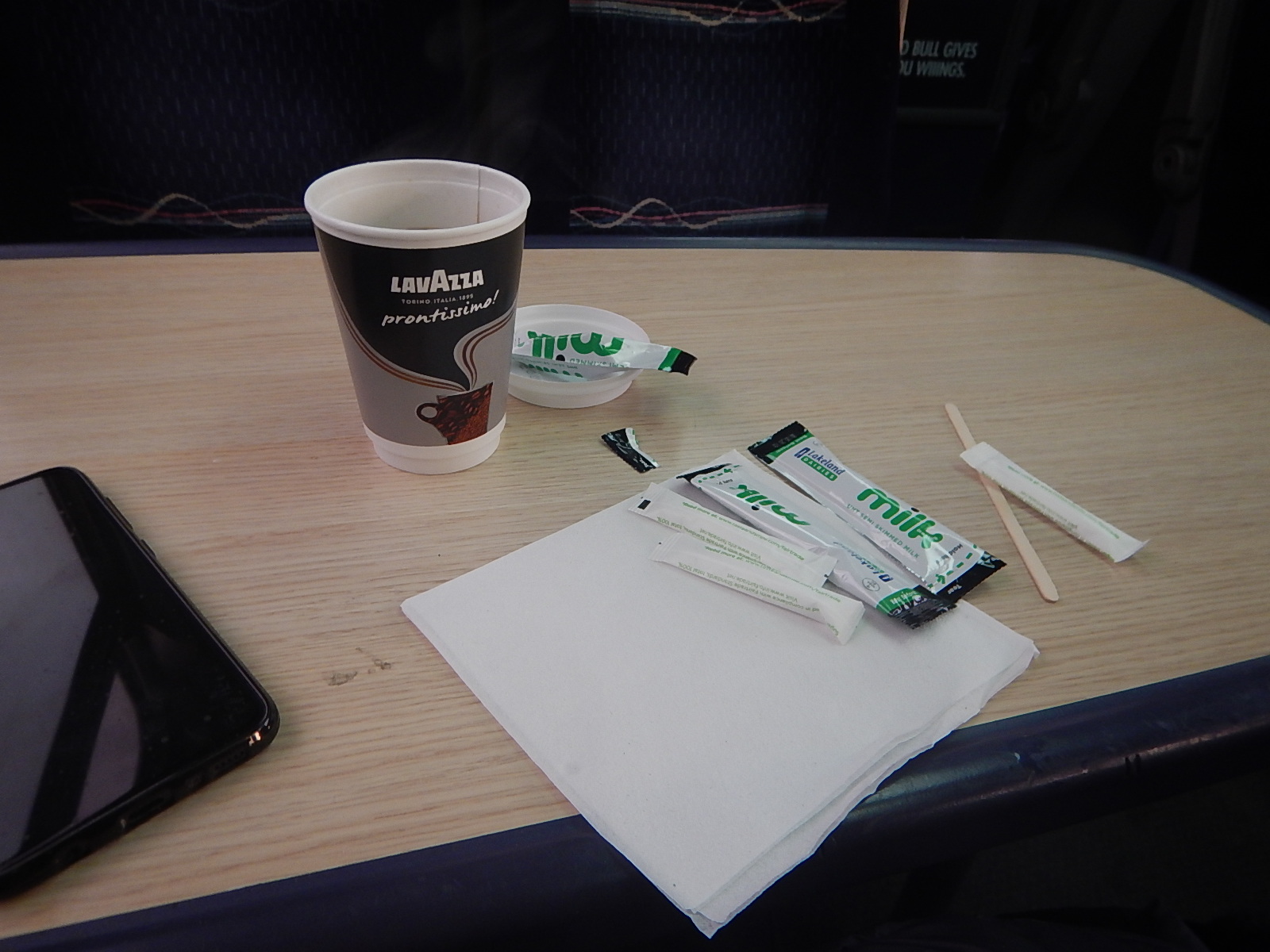
At least it was very drinkable. Even, if I hate those plastic tubs of milk, as they are difficult to open with one good hand.
Where Did Two Cars Go?
I had been fairly certain, that we had started with six cars, but we only arrived in Sheffield with four Class 153 trains.
I suspect that the trouble that delayed the train, concerned two cars and these were left on the naughty step or the end of Platform 6 in Liverpool Lime Street station.
Being Fair To East Midlands Railway
This service used to be run by a four-car formation of two-car Class 158 trains, but these have been causing trouble lately and they will be replaced by Class 170 trains cascaded from other operators.
But because of late arrivals of new trains the much better Class 170 trains haven’t arrived yet.
The driver, steward and other staff did a good job and I feel that the steward enjoyed it. No-one was abusive and stories were just exchanged, as we climbed across the Pennines in what by Sheffield was a very crowded train.
Class 153 trains may have been built as a stop-gap for short branch lines, but you couldn’t fault their performance.
Unless of course, one caused the delay at March, by expiring in a cloud of blue smoke.
Other Observations
These are other observations.
Scheduled Journey Times
On my journey the scheduled times were
- Liverpool and Manchester Oxford Road – forty-seven minutes.
- Liverpool and Sheffield – one hour and forty-eight minutes.
- Liverpool and Nottingham – two hour and forty minutes.
- Liverpool and Norwich – Five hours and twenty-seven minutes
The train considering the configuration, nearly achieved them.
It’s probably the motoring equivalent of doing the journey in a Morris Minor!
The Nine Stops Were Executed Perfectly
There were nine stops on my journey and eight took less than a minute, with Sheffield taking four, as the driver and crew changed.
A modern train like a Class 755 train, with fast acceleration and level boarding could probably save up to three minutes a time on each stop.
The Route Is A Genuine 75 mph Railway In Good Condition
I was checking the speed of the train on parts of the route and the driver had his motley crew at a steady 75 mph for long periods.
- The train was riding well, indicating to me, that both trains and track were in reasonably good condition.
- Note that 75 mph is the maximum speed of a Class 153 train.
- The train recovered three minutes on the late departure from Liverpool.
I can see a faster train and improvements to the route, some of which are underway, could reduce the journey time by a few minutes.
Could Merseyrail’s New Class 777 Trains Work To The Bay Platform At Oxford Road?
Merseyrail’s new Class 777 trains will have the following performance.
- A possible range of perhaps 40-50 miles on battery power.
- An operating speed of 75 mph.
- An acceleration rate of 1.1 m/sec², which is faster than a Class 153 or Class 170 train.
- Fast stops due to regenerative braking, fast acceleration and level boarding.
As Liverpool Lime Street to Oxford Road is thirty four miles of which nine is electrified, I suspect that these new trains could extend Merseyrail’s Northern Line service from Hunts Cross to Manchester Oxford Road.
- Two trains per hour (tph), but I’m sure four tph would transform the area.
- I doubt any track modifications would be needed.
But would Liverpool and Manchester be able to sort out the local politics?
The Future Of The Liverpool And Norwich Service
This service will probably be spilt into two services.
- Liverpool Lime Street and Derby, which could be run by TransPennine Express or Northern Trains.
- Derby and Norwich, which would be run by East Midlands Railway.
As to the trains to be used, consider the following.
The Liverpool and Derby leg would probably need six trains, with the same number needed for Derby and Norwich, or twelve in total.
Currently, eleven or twelve is needed for the longer service.
Sections of the route like through Manchester and between Grantham and Peterborough are electrified.
There are even sections of route, where 125 mph running is possible.
Run reliably to an hourly frequency, I think that this service could attract passengers, especially, as it would serve Derby and extra stops like Ilkeston and Warrington West could be added.
This leads to the following trains being possibilities.
Class 802 trains – 125 mph bi-mode train of which TransPennine Express have 19 trains.
Class 185 trains – 100 mph diesel train of which TransPennine Express have 51 trains.
Class 810 trains – 125 mph bi-mode train of which East Midlands Railway have ordered 33 trains.
Class 755 trains – 100 mph diesel train of which Greater Anglia have 38 trains, which are based at Norwich.
Alstom Breeze hydrogen trains could be ideal for Liverpool and Derby.
Note.
- Greater Anglia and East Midlands Railway are both subsidiaries of Abellio.
- Developments of Class 755 trains could include battery and hydrogen versions.
- I suspect that 125 mph trains may be required for both legs, to maximise capacity on the East Coast Main Line and Midland Main Line.
The trains will certainly get better.
Silent Hydrogen Trains On The Cards For New Line Linking Burton And Leicester
The title of this post is the same as that on this article on Derbyshire Live.
The idea of using hydrogen power came about after some people worried about the noise of trains, if the full route were to reopen.
The Proposed Route
The proposed route that would be reopened is the Leicester and Burton-on-Trent Line.
- The route is double-track.
- It is around forty miles long.
- It is still used by freight trains, so the track must be in serviceable condition.
- There are no stations.
Sadly, when the route was closed to passengers in 1964, British Rail simplified Knighton Junction at the Leicester end of the line. Wikipedia says this.
At the Leicester end of the line, Knighton North Junction has been dismantled and the former course of the line to the junction has been sold and turned into an industrial estate. The line’s remaining connection with the Midland Main Line is Knighton South Junction, which faces southwards, away from Leicester station. Trains between Leicester and the line therefore have to reverse direction at the junction.
This Google Map shows, what’s left of the junction.
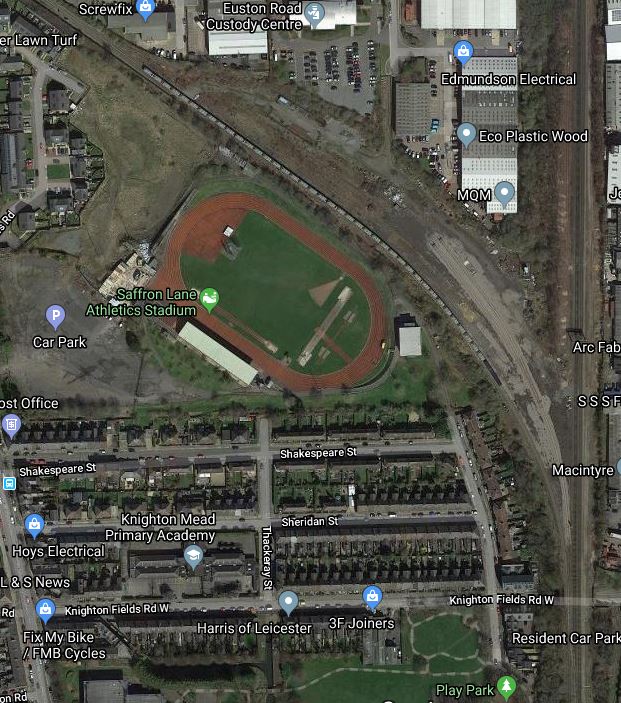
Note.
- Leicester is to the North
- Burton is to the North-West.
- Melton Mowbray and London are to the South.
It looks to me, that someone at British Rail made it absolutely certain, that the rail line could not be reopened to provide a passenger service between Leicester and Burton.
For a train to go between Leicester and Burton, it would either need to reverse as Wikipedia indicated, or the curve would have to be very tight.
There is only one class of passenger train, that can go round tight curves and that is a Class 399 tram-train!
So to enable trains to go direct around the corner, the option is either expensive disruptive demolition or use something like tram-train technology or a specially designed bendy train.
The Ivanhoe Line
The route was originally planned to be the second part of the Ivanhoe Line, but this was discontinued after rail privatisation.
Services on this line is an hourly service between Leicester and Lincoln Central stations.
- Intermediate stations are Syston, Sileby, Barrow-upon-Soar, Loughborough, East Midlands Parkway, Beeston, Nottingham, Newark Castle, Collingham, Swinderby and Hykeham.
- Services can get overcrowded, as the service is run by two-car trains.
- Platforms would need to be lengthened for longer trains.
Extending this service to Burton station would surely be good for connectivity at and through Leicester.
The Association Of Train Operating Companies Plan For The Line
This is taken from the Wikipedia entry for the line.
In 2009 the Association of Train Operating Companies published a £49 million proposal (Connecting Communities: Expanding Access to the Rail Network) to restore passenger services to the line that would include reopening stations at Kirby Muxloe, Bagworth and Ellistown, Coalville Town, Ashby de la Zouch, Moira, and Gresley (for Swadlincote). There is also some support in the Leicester area for the line to have new stations to serve Leicester City F.C.’s stadium and the suburb of Braunstone.
Wikipedia also says, it could be developed as a no-frills line.
Possible New Stations In Leicester
I have mentioned new stations in Leicester, so here’s a few more thoughts.
Leicester Reversal Station
A friend said that to reverse the trains between Leicester and Burton, a station has been proposed to be built, south of Knighton Junction.
This Google Map shows the junction and the line to the South.
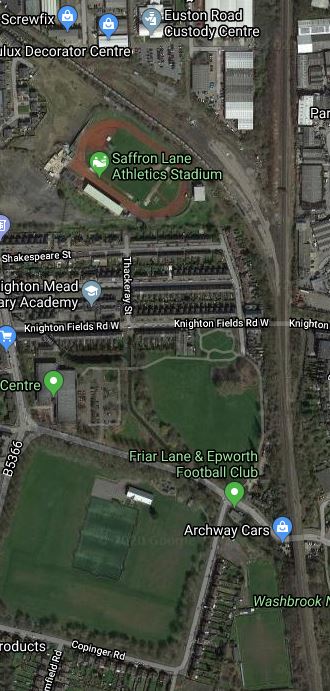
Only a single-platform station would be needed and it would be a simple and affordable solution to British Rail’s lack of vision of the future.
Leicester City Stadium
This Google Map shows the stadium.
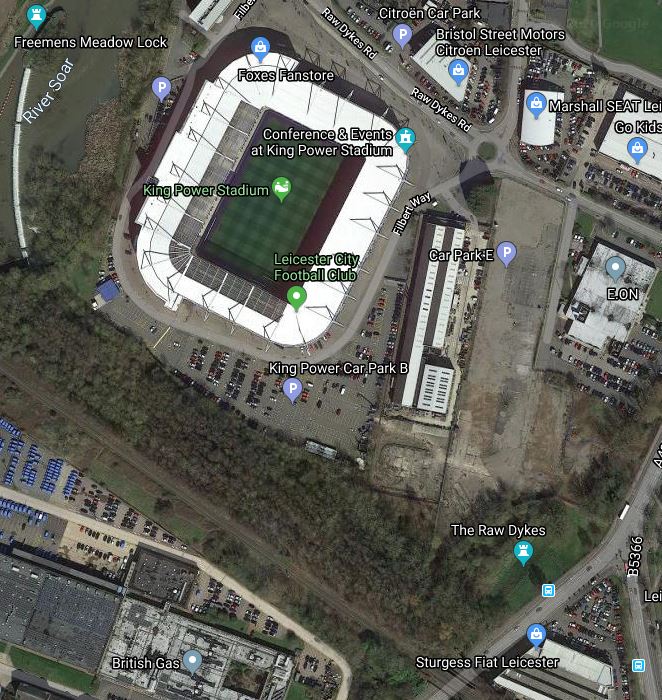
Note the rail line passing to the South of the station.
It would appear that building a new station would not be the most difficult of projects.
But after the experience of Coventry City, who were relegated twice after Coventry Arena station opened, would eicester City want a station?
Braunstone Station
This Google Map shows the rail line running through Braunstone.
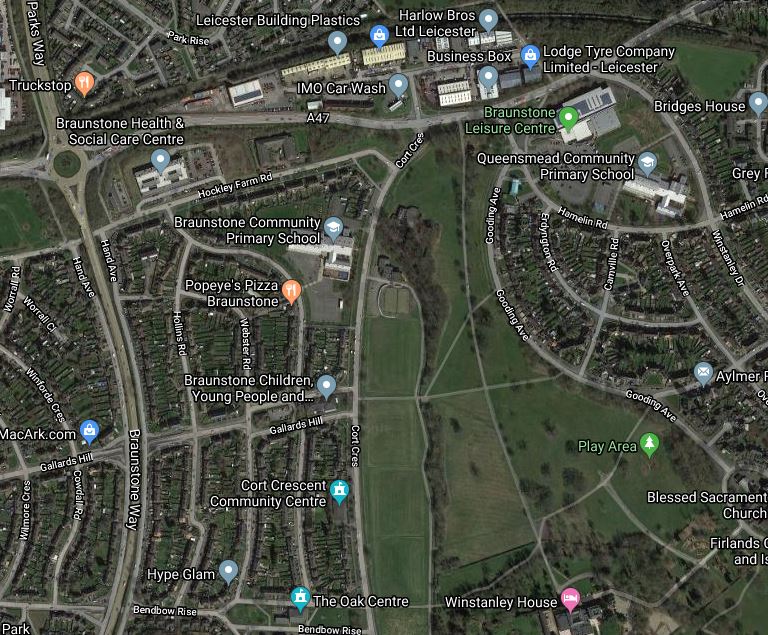
The rail line is at the top of the map.
Leicester Forest East Station
I wrote about this possible station in A Station At Leicester Forest East.
Burton Station
Intriguingly, Burton station is run by East Midlands Railway, who run no services to the town.
Services are provided by CrossCountry using a variety of long distance services.
The South Staffordshire Line connects Burton and Birmingham.
Part of this line is being converted to become an extension of the West Midlands Metro and Staffordshire County Council have looked at converting the whole route to tram-train operation to bring trams to Burton to promote tourism.
Hydrogen Power
I estimate that the distance between Lincoln and Burton is about a hundred miles.
Alstom are predicting a range of several hundred miles for their hydrogen trains for their Breeze train, which should mean a round trip to Lincoln from Burton will surely be in range.
Refuelling could be at a suitable place on the route.
In Delivering Hydrogen For Vehicles, I talk about how iTM Power are building hydrogen refuelling stations for road vehicles.
As the company is already building stand-alone hydrogen fuelling stations for fleets of buses in Birmingham and Pau, I’m sure that one for a fleet of trains is not a problem.
All their filling stations need is a small amount of space, a supply of tap water and a connection to the electricity grid.
It should be noted that Central Rivers Depot is four miles South of Burton.
Possibilities
There are a lot of possibilities to extend the Ivanhoe Line to Burton and even beyond using the South Staffordshire Line.
- Battery or hydrogen trains can be used.
- Stations can be added as required.
- The route will connect to Eat Midlands Airport.
- A solution for Knighton Junction can surely be devised.
Amazon are reported to be interested in the project, as they have a big depot at Coalville.
No News On Hydrogen Trains For The Midland Main Line
In April 2019, I wrote Hydrogen Trains To Be Trialled On The Midland Main Line, which was based on an article on Railway Gazette that is entitled Bimode And Hydrogen Trains As Abellio Wins Next East Midlands Franchise.
I said this in my post.
Abellio will be taking over the franchise in August this year and although bi-mode trains were certain to be introduced in a couple of years, the trialling of hydrogen-powered trains is a surprise to me and possibly others.
This is all that is said in the article.
Abellio will also trial hydrogen fuel cell trains on the Midland Main Line.
It also says, that the new fleet will not be announced until the orders are finalised.
Nothing has been heard since about the hydrogen train trial for the Midland Main Line.
But there have been several related developments, that might have implications for the trial.
East Midlands Railway Has Ordered Hitachi Class 810 Trains For EMR InterCity Services
Class 810 trains are Hitachi’s latest offering, that are tailored for the Midland Main Line.
The trains will have a few differences to the current Class 800,/801/802 trains.
But will they be suitable for conversion to hydrogen power?
Consider.
- The Hitachi trains have a comprehensivecomputer system, that looks at the train and sees what power sources are available and controls the train accordingly.
- Trains have already been ordered in five, seven and nine-car lengths. I have read up to twelve-car trains are possible in normal operation. See Do Class 800/801/802 Trains Use Batteries For Regenerative Braking?
- Hydrogen train designs, with a useful range of several hundred miles between refuelling, seem to need a hydrogen tank, that takes up at least half of a twenty metre long carriage.
- The Hitachi train design has pantographs on the driver cars and can support diesel generator units in the intermediate cars, as it does in current trains.
- The Japanese are researching hydrogen trains.
- The five-car Class 802 trains have 2,100 kW of installed generator power.
I think that Hitachi’s engineers can build another carriage, with the following characteristics.
- It could be based on a Motor Standard car.
- The passenger seats and interior would be removed or redesigned in a shorter space.
- Powered bogies would be as required.
- It would contain a hydrogen tank to give sufficient range.
- Appropriately-sized batteries and fuel-cells would be inside or under the vehicle.
- Regenerative braking would help to recharge the batteries.
- There would probably be no diesel generator unit.
There would need to be a walkway through the car. Stadler have shown this works in the Class 755 train.
A Hydrogen Power car like this would convert a five-car bi-mode diesel-electric train into a six-car hydrogen-electric hybrid train. Or they might just replace one Motor Standard car with the Hydrogen Power Car to create a five-car hydrogen-electric hybrid train, if the longer train would cause problems in the short platforms at St. Pancras.
- The computer system would need to recognise the Hydrogen Power Car and control it accordingly. It would probably be very Plug-and-Play.
- The weight of the train could probably be reduced by removing all diesel generator units.
- The passenger experience would be better without diesel power.
- The range away from the wires would probably be several hundred miles.
The drivers and other staff would probably not need massive retraining.
What Do I Mean By Appropriately-Sized Batteries And Fuel Cells?
I can’t be sure,, but I suspect the following rules and estimates hold.
- The batteries must be large enough to more than hold the kinetic energy of a full five-car train, running at the full speed of 140 mph.
- I estimate that the kinetic energy of the train,will be around 200 kWh, so with a contingency, perhaps battery capacity of between 400-500 kWh would be needed.
- Currently, a 500 kWh battery would weigh five tonnes, which is of a similar weight to one of the diesel generator units, that are no longer needed.
- In How Much Power Is Needed To Run A Train At 125 mph?, I estimated that the all-electric Class 801 train, needs 3.42 kWh per vehicle mile to maintain 125 mph. This means that travelling at 125 mph for an hour would consume around 2,000 kWh or an output of 2,000 kW from the fuel cell for the hour.
- Note that 1 kg of hydrogen contains 33.33 kWh of usable energy, so the hydrogen to power the train for an hour at 125 mph, will weigh around sixty kilograms.
From my past experience in doing chemical reaction calculations in pressure vessels, I think it makes the concept feasible. After all, it’s not that different to Alstom’s Breeze.
I would assume, that the train manufacturers can do a full calculation, to a much more accurate level.
Applying The Concept To Other Hitachi Trains
Once proven, the concept could be applied to a large number of Hitachi bi-mode trains. I suspect too, that it could be applied to all other Hitachi A-train designs, that are in service or on order, all over the world.
In the UK, this includes Class 385, Class 395 and Class 80x trains.
Bombardier Have Said That They’re Not Interested In Hydrogen Power
But Electrostars and Aventras have the same Plug-and-Play characteristic as the Hitachi train.
I wouldn’t be surprised to find that Bombardier have a Hydrogen Power Car design for an Aventra. All that it needs is an order.
They could also probably convert a five-car Class 377 train to effectively a four-car train, with a Hydrogen Power Car in the middle. This would be ideal for the Uckfield Branch and the Marshlink Lines. I suspect it could be done to meet the timescale imposed by the transfer of the Class 171 trains to East Midlands Railway.
There must be an optimal point, where converting an electric multiple unit, is more affordable to convert to hydrogen, than to add just batteries.
But then everybody has been dithering about the Uckfield and Marshlink trains, since I started this blog!
Stadler Have Shown That a Gangway Through A Power Car Is Acceptable To Passengers In The UK
Stadler’s Class 755 trains seem to be operating without any complaints about the gangway between the two halves of the train.
Stadler Have Two Orders For Hydrogen-Powered Trains
These posts describe them.
- Zillertalbahn Orders Stadler Hydrogen-Powered Trains
- MSU Research Leads To North America’s First Commercial Hydrogen-Powered Train
Stadler also have a substantial order for a fleet of battery Flirt Akku in Schleswig Holstein and they are heavily involved in providing the rolling stock for Merseyrail and the South Wales Metro, where battery-powered trains are part of the solution.
It looks to me, that Stadler have got the technology to satisfy the battery and hydrogen train market.
The Driver’s View Of Stadler
It’s happened to me twice now; in the Netherlands and in the UK.
- Both drivers have talked about hydrogen and Stadler’s trains with the engine in the middle.
- They like the concept of the engine.
- The English driver couldn’t wait to get his hands on the train, when he finished his conversion.
- Both brought up the subject of hydrogen first, which made me think, that Stadler are telling drivers about it.
Or does driving a hydrogen-powered vehicle as your day job, score Greta points in the pub or club after work?
Could The Hydrogen Train On The Midland Main Line Be A Stadler?
Greater Anglia and East Midlands Railway are both controlled by Abellio or Dutch Railways.
In The Dutch Plan For Hydrogen, I laid out what the Dutch are doing to create a hydrogen-based economy in the North of the country.
Stadler are going to provide hydrogen-powered for the plan.
In addition.
- Greater Anglia have bought a lot of Class 755 trains.
- A lot of Lincolnshire and Norfolk is similar to the North of the Netherlands; flat and windy.
- One of these trains with a hydrogen PowerPack, could be an ideal train for demonstrating hydrogen on rural routes like Peterborough and Doncaster via Lincoln.
But the promise was on the Midland Main Line?
Conclusion
Hydrogen trains seem to be taking off!
Even if there’s been no news about the trial on the Midland Main Line.
The Missing Link At St. Pancras Station
This picture was taken inside St. Pancras station.
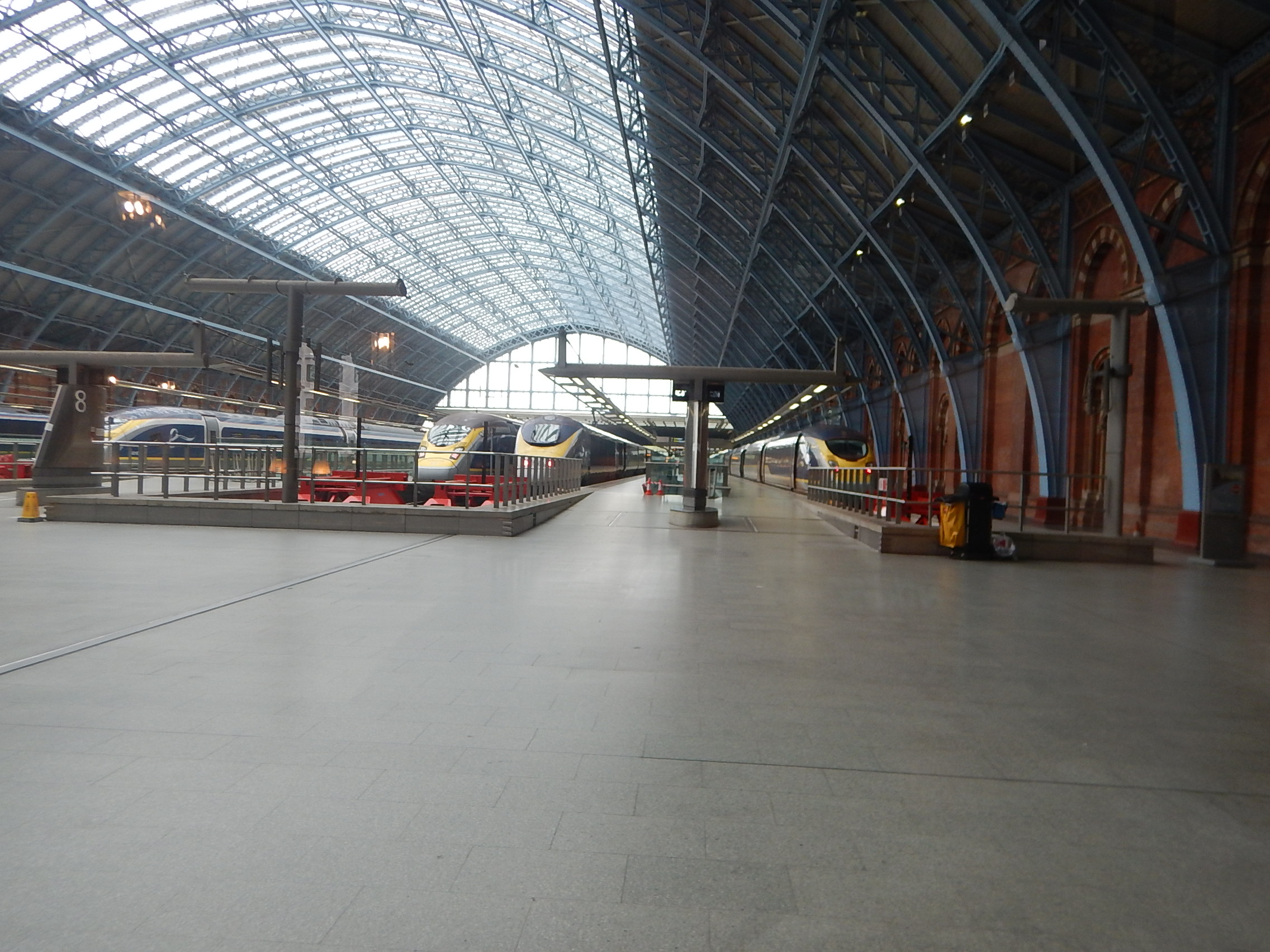
I was standing in front of the glass security wall, towards the East (Kings Cross) side of the station.
On the British Library side of the station it is possible to walk along to the four platforms for East Midlands Railway trains.
I wonder why, there isn’t a link down the Kings Cross side of the station, so that it would be possible to walk from the front of the station to the Souyjeastern HighSpeed commuter routes.
Bombardier And Hitachi Come Up With Similar Car Lengths
In an article in the October 2019 Edition of Modern Railways, which is entitled EMR Kicks Off New Era, more details of the new Hitachi bi-mode trains for East Midlands Railway are given.
This is said.
The first train is required to be available for testing in December 2021 with service entry between April and December 2022.
The EMR bi-modes will be able to run at 125 mph in diesel mode, matching Meridian performance in a step-up from the capabilities of the existing Class 80x units in service with other franchises. They will have 24 metre vehicles (rather than 26 metres), a slightly different nose to the ‘800s’ and ‘802s’, and will have four diesel engines rather than three.
I will examine this extract further.
Car Length
If you look at Bombardier’s Class 720 train, the five-car trains are 122 metres long, giving a 24 metre car length.
The ten car Class 720 train is 243 metres long, which is a similar length to three Class 360 trains running as a twelve-car train and only a few metres longer than three Class 321 trains running together.
This must be good for Greater Anglia’s train renewal, as it will minimise expensive platform lengthening.
It looks to me, that two of the new EMR InterCity trains running as a pair will be of a similar length to a twelve-car formation of Class 360 trains.
Consider.
- As trains for EMR InterCity and EMR Electrics will share platforms at some stations, platform lengthening will again be minimised.
- If you divide 240 by 10, you usually get the same answer of 24.
- But if 26 metre cars were to be used, a nine-car EMR bi-mode would be 234 meres long. and two five-car trains working together would be 260 metres long.
- Twelve-car Class 700 trains are 242.6 metres long.
These points lead me to believe that 24 metre cars are a better length for the Hitachi trains as ten-car formations are the same length as twelve-car formations of many of the UK’s older multiple units.
Maximum Speed On Diesel
Consider.
- Various places on the Internet say that the maximum speed on diesel of a Class 800 train is 118 mph.
- Maximum speed of a train is probably more determined by the aerodynamic drag of the train, which is proportional to the square of the speed.
- So if a Class 800 train needs 3 * 560 kW to maintain 118 mph, it will need 1885 kW or 12.2 percent more power to maintain 125 mph
- A fourth 560 kW diesel engine will add 33.3 percent more power.
This rough calculation shows that a fourth engine will allow the train to more than attain and hold 125 mph on the same track where a Class 800 train can hold 118 mph.
But adding a fourth engine is a bit of a crude solution.
- It will add more dead weight to the train.
- It will be useful when accelerating the train, but probably not necessary.
- It will add more noise under the train. Especially, if four cars had engines underneath.
- It could cause overheating problems, which have been reported on the current trains.
I’ll return to this later.
Aerodynamics
Power required to maintain 125 mph can be reduced in another much more subtle way; by improving the aerodynamics.
- I have stood on a platform, as an Aventra has silently passed at speed. It is very quiet, indicating that the aerodynamics are good.
- But then Bombardier are an aerospace company as well as a train builder.
I’ve no idea if a Bombardier Class 720 train has less aerodynamic drag, than a Hitachi Class 800 train, but I’m sure that aerodynamic wizards from Formula One could improve the aerodynamics of the average modern train.
Could better aerodynamics explain why the EMR InterCity bi-modes are stated to have a different nose?
Look at the noses on these Spanish High Speed trains, which were built by Talgo!
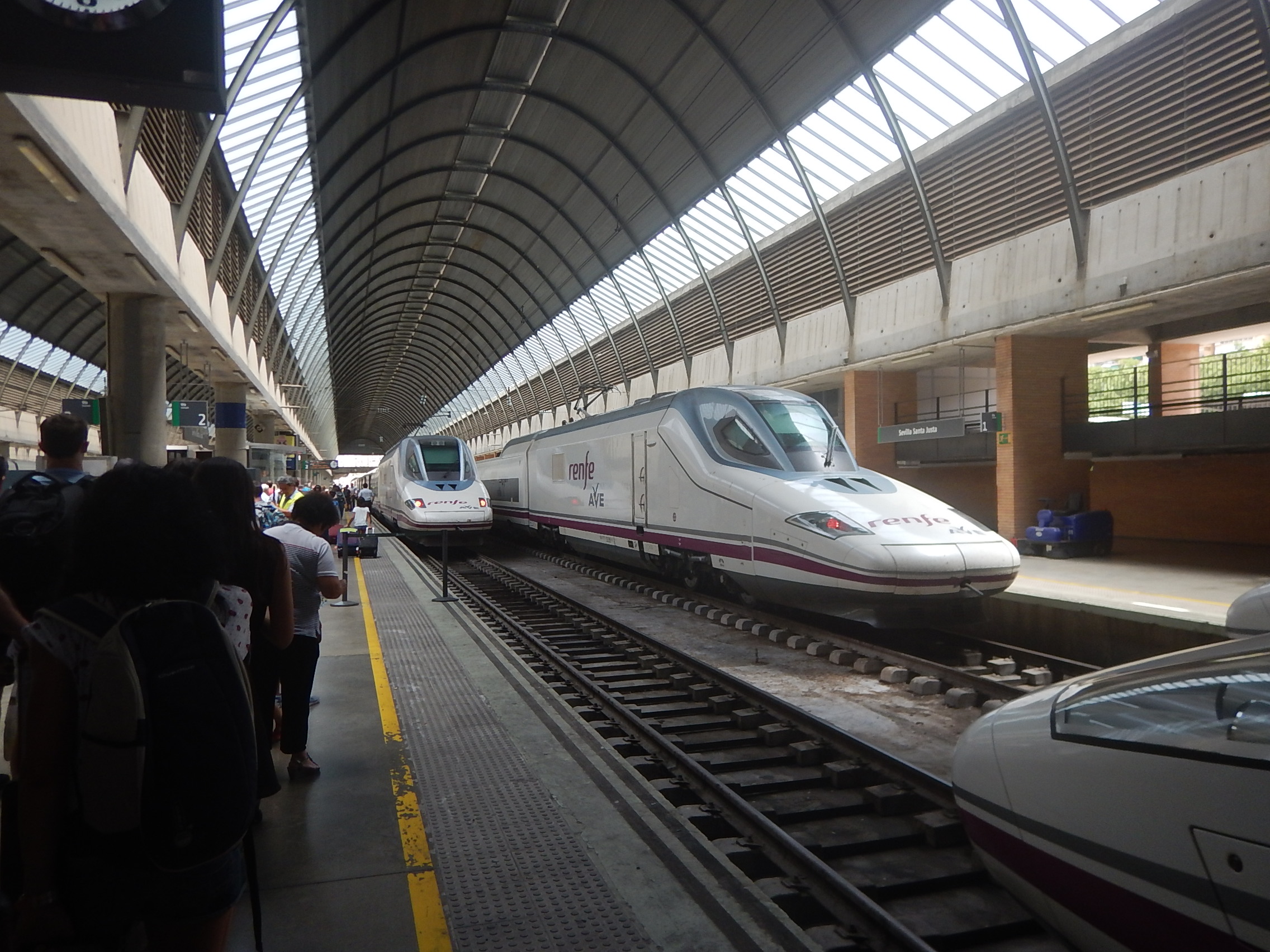
Are they more aerodynamic? Do they exert a higher down-force making the train more stable?
They certainly are different and they obviously work., as these are very fast trains.
Incidentally, these trains, are nicknamed pato in Spanish, which means duck in English.
Aerodynamic drag is proportional to a drag coefficient for the object and the square of the speed.
Let’s assume the following.
- The drag coefficient for the current train is d.
- The drag coefficient for the train with the aerodynamic nose is a.
- The terminal velocity of the train with the aerodynamic nose is v.
If the current Class 800 train travels at 118 mph on full power of 1680 kW, what speed would the train with an improved aerodynamic nose do on the same power, for various values of a?
If the new nose gives a five percent reduction in aerodynamic drag, then a = 0.95 * d, then the maximum speed of the train will be given by this formula
d * 118 * 118 = .0.95 * d * v* v
Solving this gives a speed of 121 mph.
Completing the table, I get the following.
- A one percent reduction in drag gives 119 mph
- A two percent reduction in drag gives 119 mph
- A three percent reduction in drag gives 120 mph
- A four percent reduction in drag gives 120 mph
- A five percent reduction in drag gives 121 mph
- A six percent reduction in drag gives 122 mph
- A seven percent reduction in drag gives 122 mph
- An eight percent reduction in drag gives 123 mph
- A nine percent reduction in drag gives 124 mph
- A ten percent reduction in drag gives 124 mph
- An eleven percent reduction in drag gives 125 mph
I can certainly understand why Talgo have developed the duck-like nose.
The conclusion is that if you can achieve an eleven percent reduction in drag over the current train, then with the same installed power can raise the speed from 118 mph to 125 mph.
Why Have A Fourth Engine?
If aerodynamics can make a major contribution to the increase in speed under diesel, why add a fourth engine?
- It might be better to fit four slightly smaller engines to obtain the same power.
- It might be better to put a pair of engines under two cars, rather than a single engine under four cars, as pairs of engines might share ancillaries like cooling systems.
- Extra power might be needed for acceleration.
- Four engines gives a level of redundancy, if only three are needed to power the train.
I wouldn’t be surprised to find out, that Hitachi are having a major rethink in the traction department.
Will The Trains Have Regenerative Braking To Batteries?
I would be very surprised if they don’t, as it’s the only sensible way to do regenerative braking on diesel power.
Will The Trains Be Built Around An MTU Hybrid PowerPack?
This or something like it from Hitachi’s diesel engine supplier; MTU, is certainly a possibility and it would surely mean someone else is responsible for all the tricky software development.
It would give the following.
- Regenersative braking to batteries.
- Appropriate power.
- Easier design and manufacture.
- MTU would probably produce the sophisticated power control system for the train.
- MTU could probably produce a twin-engined PowerPack
Rolls Royce MTU and Hitachi would all add to the perception of the train.
I would rate Hitachi using MTU Hybrid PowerPacks quite likely!
Would Two Pairs Of Engines Be Better?
The current formation of a five-car Class 800 train is as follows.
DPTS-MS-MS-MC-DPTF
Note.
- Both driver cars are trailers.
- The middle three cars all have generators, that are rated at 560 kW for a Class 800 train and 700 kW for a Class 802 train.
- Take a trip between Paddington and Oxford and you can feel the engines underneath the floor.
- The engines seem to be reasonably well insulated from the passenger cabin.
The system works, but could it be improved.
If I’m right about the aerodynamic gains that could be possible, then it may be possible to cruise at 125 mph using a power of somewhere around 1,800 kW or four diesel generators of 450 kW each.
Putting a diesel generator in four cars, would mean one of the driver cars would receive an engine, which might upset the balance of the train.
But putting say two diesel generators in car 2 and car 4 could have advantages.
- A Class 800 train has a fuel capacity of 1,300 litres, which weighs 11.06 tonnes. and is held in three tanks. Would train dynamics be better with two larger tanks in car 2 and 4?
- Could other ancillaries like cooling systems be shared between the two engines?
- Could a substantial battery pack be placed underneath car 3, which now has no engine and no fuel tank?
- As the engines are smaller will they be easier to isolate from the cabin?
The only problem would be fitting two generators underneath the shorter 24 metre car.
What size of battery could be fitted in car 3?
- According to this datasheet on the MTU web site, the engine weighs between five and six tonnes.
- I think this weight doesn’t include the generator and the cooling systems.
- Removing the fuel tank would save 3.7 tonnes
I suspect that a ten tonne battery could replace the diesel engine and its support systems in car 3..
On current battery energy densities that would be a battery of around 1000 kWh.
In How Much Power Is Needed To Run A Train At 125 mph?, I estimates that an electric Class 801 train needs 3.42 kWh per vehicle mile to maintain 125 mph.
This would give a range of almost sixty miles on battery power.
The battery would also enable.
- Regenerative braking to batteries, which saves energy at station stops.
- Diesel engines would not need to be run in stations or sensitive areas.
- Battery power could be used to boost acceleration and save diesel fuel.
You can almost think of the battery as an auxiliary engine powered by electrification and regenerative braking, that can also be topped up from the diesel generators.
It should also be noted, that by the time these trains enter service, the Midland Main Line will be electrified as far as Kettering and possibly Market Harborough.
This will enable the following.
- Trains will leave the electrification going North with a full battery.
- As Nottingham is less than sixty miles from Kettering and the trains will certainly have regeneratinve braking, I would not be surprised to see Northbound services to Nottingham being almost zero-carbon.
- A charging station at Nottingham would enable Southbound services to reach the electrification, thus making these services almost zero-carbon.
- Trains would be able to travel between Derby and Chesterfield, which is only 23 miles, through the World Heritage Site of the Derwent Valley Mills, on battery power.
- Corby and Melton Mowbray are just 26 miles apart, so the bi-mode trains could run a zero-carbon service to Oakham and Melton Mowbray.
- Trains could also run between Corby and Leicester on battery power.
- If and when the Northern end of the route is electrified between Sheffield and Clay Cross North Junction in conjunction with High Speed Two, the electrification gap between Clay Cross North Junction and Market Harborough will be under seventy miles, so the trains should be able to be almost zero carbon between London and Sheffield.
It does appear that if a battery the same weight as a diesel generator, fuel tank and ancillaries is placed in the middle car, the services on the Midland Main Line will be substantially zero-carbon.
What Would Be The Size Of |The Diesel Engines?
If the battery can be considered like a fifth auxiliary engine, I would suspect that the engines could be much smaller than the 560 kWh units in a Class 800 train.
Improved aerodynamics would also reduce the power needed to maintain 125 mph.
There would also be other advantages to having smaller engines.
- There would be less weight to accelerate and lug around.
- The noise from smaller engines would be easier to insulate from passengers.
- Engines could be used selectively according to the train load.
- Engines might be less prone to overheating.
The mathematics and economics will decide the actual size of the four engines.
Earlier, I estimated that a 10-11 % decrease in the trains aerodynamic drag could enable 124-5 mph with 1680 kW.
So if this power was provided by four engines instead of three, they would be 420 kW engines.
Conclusion
The Hitachi bi-modes for East Midlands Railway will be very different trains, to their current Class 80x trains.
Corby Class 360/1s Earmarked For 110 mph Running
The title of this post, is the same as that of an article on Page 10 of Issue 886 of Rail Magazine.
In Are Class 360 Trains Suitable For St. Pancras And Corby?, I came to this conclusion.
In my view there is a lot of upgrade work to be done to the Class 360 trains to make them suitable for working on the services between St. Pancras and Corby.
- They need a new upgraded interior.
- The trains need upgrading to at least 110 mph.
- A possible upgrading with digital signalling.
I can’t help feeling that the Class 360 trains would make a good stop-gap, but in the long-term it might be better to have a small fleet of electric trains.
The Rail Magazine article says the following will be done.
- Trains will be upgraded for 110 mph running.
- 3+2 seating will be replaced by 2+2 seating.
- Wi-fi, tables and updated information screens will be added.
This all sounds a lot better.
Are Class 360 Trains Suitable For St. Pancras And Corby?
It appears that East Midlands Railway will be using Class 360 trains on the route between St. Pancras and Corby stations running them under the branch name of EMR Electrics.
The London And St. Pancras Route
The route has the following characteristics.
- It is just short of 80 miles long.
- The current Class 222 trains take one hour and fifteen minutes for the journey.
- This means these trains have a start to stop average at 64 mph.
- Much of the route is cleared for 125 mph running.
- The route is being made a complete double track.
- The whole route is being electrified with 25 KVAC overhead wires.
In December 2020, the route will host a new electric service.
East Midlands Railway’s Train Specification For The Route
This page on the Department for Transport web site is an interactive map of the Abellio’s promises for East Midlands Railway.
These features are mentioned for Midland Main Line services to Corby.
- Increased capacity
- Twelve-car trains in the Peak.
- More reliable service
- Improved comfort
- Passenger information system
- Free on-board Wi-Fi
- At-seat power sockets
- USB points
- Air conditioning
- Tables at all seats
- Increased luggage space
- On-board cycle storage
What more could passengers want?
How Well Do Class 360 Trains Fit The Specification?
These are a few pictures of a Class 360 train, which I took today.
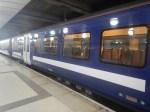
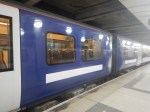
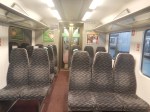

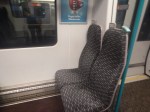

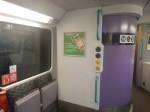
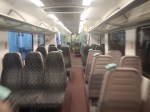
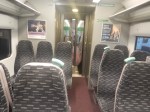
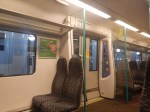
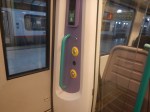
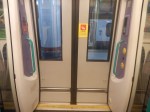
Some problems and strengths are immediately obvious.
- There are no tables.
- Will two+three seating e acceptable, considering that the current trains on the route have two+two seating.
- There is no space for bicycles.
- There are no luggage racks, which will be needed as the Corby service will also double as a service to Luton Airport.
- The trains are in reasonably good condition.
- There ia a fully-accessible toilet.
A lot of work will need to be done to update the interior of the trains to a standard, that fits East Midland Railway’s specification and their customers expectations.
But there is a full twelve months before the trains will be needed to run on the newly electrified route between St. Pancras and Corby stations.
This may seem enough time, but many current train refurbishment projects are running late.
Is The Performance Of Class 360 Trains Good Enough?
The current Class 222 trains have the following performance.
- 125 mph maximum speed.
- An acceleration rate of 0.80 m/sec/sec
By comparison the Class 360 trains have the following performance.
- 100 mph maximum speed.
- An acceleration rate of 0.98 m/sec/sec.
Given that much of the route between St. Pancras and Corby stastions will be constructed for 125 mph running, will the top speed of the Class 360 trains be high enough?
Will The Class 360 Trains And The Hitachi AT-300 Bi-Modes Be Compatible?
East Midlands Railway has ordered thirty-three AT-300 bi-modes, which will be able to run at 125 mph on the fully-electrified Midland Main Line to the South of Market Hsrborough station.
As thetwo trains will share the fast lines, with the Class 360 trains, will there be conflicts, as the Class 360 trains are only capable of 100 mph?
Ideally, the Class 360 trains should be upgraded to their highest speed possible.
Some of similar Class 350 trains are capable of 110 mph.
This could be enough, but surely for ease of operation, all of East Midlands Railway’s services into St. Pancras should be run by trains capable of running at 125 mph.
Will The Class 360 Trains Need Digital Signalling?
The Hitachi AT-300 trains will probably be able to run using digital signalling, which could be a valuable way of creating more paths on the Midland Main Line.
So will the Class 3560 trains be fitted with digital signalling?
Conclusion
In my view there is a lot of upgrade work to be done to the Class 360 trains to make them suitable for working on the services between St. Pancras and Corby.
- They need a new upgraded interior.
- The trains need upgrading to at least 110 mph.
- A possible upgrading with digital signalling.
I can’t help feeling that the Class 360 trains would make a good stop-gap, but in the long-term it might be better to have a small fleet of electric trains.
Electric AT-300 trains must be one of the favourites, although Class 745 trains, similar to those that Abellio will run between Liverpool Street and Stansted Airport, would do nicely.
East Midlands Railway Announces Three Brands
The title if this article is the same as that of this article on Railway Gazette.
This is a quote about their electric trains to Corby, which will run under the brand name of EMR Electrics.
EMR said that once various developments had been completed, passengers would be able to reach the terminal at Luton Airport in ‘a little under half an hour’ from central London.
Currently, the fastest services going to between St. Pancras and Luton Airport Parkway stations take twenty-four minutes using 125 mph Class 222 trains with Luton Airport Parkway as the first stop.
Thameslink using 100 mph Class 700 trains take 30 minutes and more!
I question, whether the 100 mph Class 360 trains, running with Luton Airport Parkway as the first stop, can do the trip in the 24-26 minutes to get to the terminal in under half an hour, even with Luton Airport’s DART shuttle train working!
In Are Class 360 Trains Suitable For St. Pancras And Corby?, I looked at Class 360 trains running the service between St. Pancras and Corby stations.
I came to this conclusion.
In my view there is a lot of upgrade work to be done to the Class 360 trains to make them suitable for working on the services between St. Pancras and Corby.
- They need a new upgraded interior.
- The trains need upgrading to at least 110 mph.
- A possible upgrading with digital signalling.
I can’t help feeling that the Class 360 trains would make a good stop-gap, but in the long-term it might be better to have a small fleet of electric trains.
Electric AT-300 trains must be one of the favourites, although Class 745 trains, similar to those that Abellio will run between Liverpool Street and Stansted Airport, would do nicely.
So will East Midlands Railway have updated and faster Class 360 trains or will they be bringing in 125 mph trains to hit the required schedule to Luton Airport Parkway?
Conclusion
Luton Airport will have a real Airport Express!
But will the Class 360 trains, be able to deliver it? I have my doubts!
Little Has Been Said About East Midlands Railway’s Promised Hydrogen Trains
In their proposal for the East Midlands franchise, Abellio said that they would trial hydrogen-powered trains on the Midland Main Line.
But little has been heard of this promise since winning the franchise.
So where could the franchise use hydrogen-powered trains on the Midland Main Line?
Extending Corby Trains To Oakham And Melton Mowbray
This is a distance of under thirty miles, so it would probably be within range of a well-designed hybrid battery-hydrogen-electric train.
- Refuelling with hydrogen could be at Corby or Melton Mowbray stations.
- Trains would be 240 metres long.
- In addition batteries would be charged between St. Pancras and Corby stations.
- Trains would run at 125 mph for much of the route between St. Pancras and Corby.
- Hydrogen power would be used as a top-up between Corby and Melton Mowbray if required.
The service could even go further and turn back at Leicester.
Perhaps one train per hour (tph) of the two Corby services could be extended.
Non-Stop London To Leicester Trains
The Midland Main Line will be electrified as far as Market Harborough, so there would be under twenty miles without electrification on the route between St. Pancras and Leicester stations.
- Trains would run at 125 mph for much of the route between St. Pancras and Leicester.
- Refuelling could be at Leicester.
- To publicise the service, it might be best to run two tph non-stop.
- Perhaps the only stop would be Luton Airport Parkway, as the Airport wants more fast services.
As with the Corby Extension service, it wouldn’t require a great deal of running on hydrogen.
Why Not Run A Loop From London?
If the Corby Extension service went as far as Leicester it would approach the station from the North, whereas the London service would approach from the South.
So why not run the services back-to-back?
- There could be two tph in each direction.
- There could be a longer stop at Leicester to take on hydrogen.
- Stops could include Luton Airport Parkway in both directions, to give the Airport four tph to and from London and Leicester.
- There might also be the possibility of an improved station at Syston, which is to the North-East of Leicester.
It wouldn’t need any new platforms or other infrastructure, except for the hydrogen filling station at Leicester and the possible improvements at Syston.
It would deliver high speed hydrogen-powered trains to Leicester at a frequency of two tph direct and two trph via Corby.
It would fit Luton Airport’s ambitions as I outlined in Luton Trains Its Eye On Sub 30-Minute Express.
What would that do for the prestige of the Leicester and the ambitions of Luton Airport?
Who Would Build The Trains?
These are my thoughts.
- Alston have the technology, but do they have the train?
- Bombardier have stated they are not interested in hydrogen.
- CAF have the train and the battery technology, but do they have the hydrogen technology?
- Hitachi have the train, but do they have the battery and hydrogen technology?
- Stadler have the train and the battery technology, but do they have the hydrogen technology?
I have heard rumours they are pushing hydrogen technology and also that their PowerPack concept works at 125 mph, so I suspect that Stadler are as likely as any to produce a working high speed hybrid hydrogen train.
But they will have several dozen trains working in the UK in a year or so.
They are not to be underestimated.
But then the prize for successfully running a 200 kph or 125 mph zero-carbon train will be immense, and this will not be lost on the train builders.
Or East Midlands Railway for that matter!
The first person, who does something is always remembered!
Losers come second!

