A Trip On The East Suffolk Line In A New Stadler Class 755 Train
Today, I took a round trip between Ipswich and Lowestoft stations, along the East Suffolk Line, in one of Greater Anglia’s new Class 755 trains.





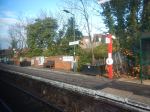
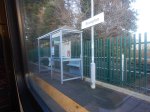
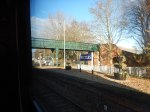
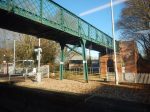
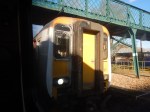



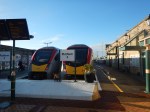
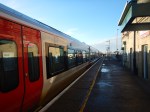



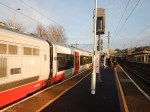
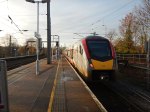
These are my observations and comments.
Stations
The stations vary between the very good and the very basic.
- I don’t think that any station has a step-free bridge to cross the line.
- Many stations are just a single platform.
- Crossing the line often involves a nearby level crossing.
- Westerfield, Woodbridge, Saxmundham, Darsham, Halesworth and Beccles have two platforms.
- Lowestoft and Ipswich are both step-free from the street to the platforms.
- There also appears to be step-free access between the new trains and the platforms.
Overall, from what I could see from the train, each stop was fairly efficient, although I do think that when the drivers and train staff, fully get to grips with the trains, that there is time to be saved on each of the ten stops.
Consider.
- These trains have much better acceleration and deceleration, than the trains for which the timetable was written.
- The trains have level access between train and platform. At Lowestoft, I saw an electric wheelchair roll out of the train at a smart speed.
- These trains set the Gold Standard for step-free access.
I wouldn’t be surprised to see at least a minute and possibly two minutes saved at each station.
That would reduce the current journey time of one hour and thirty minutes between Lowestoft and Ipswich by perhaps ten minutes.
Level Crossings
Consider.
- Over the years, Greater Anglia and its predecessors right back teyond British Rail have been plagued by accidents at level crossings.
- Network Rail would like to close them all,
- But there are always a lot of local objections especially in rural counties like Suffolk.
- Removal is often expensive, as a new toad of several miles needs to be constructed.
I noticed perhaps ten crossings on my trip.
A big problem is that at many stations on the East Suffolk Line, there is a level crossing and it is often the only way to cross the line.
This Google Map shows Saxmundham station.
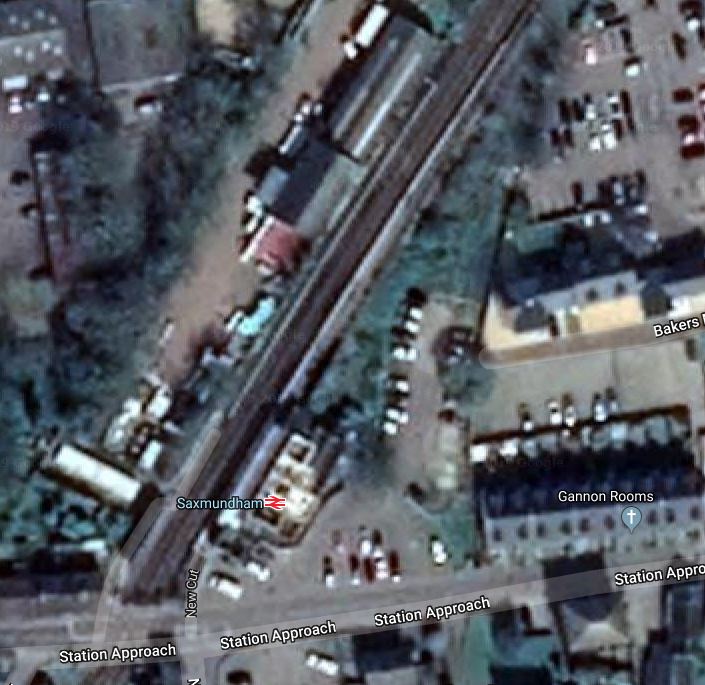
This is typical of the line. But here at Saxmundham, there is probably enough space to squeeze in a step-free bridge like this one, that won the Network Rail/RIBA Footbridge Design Competition.
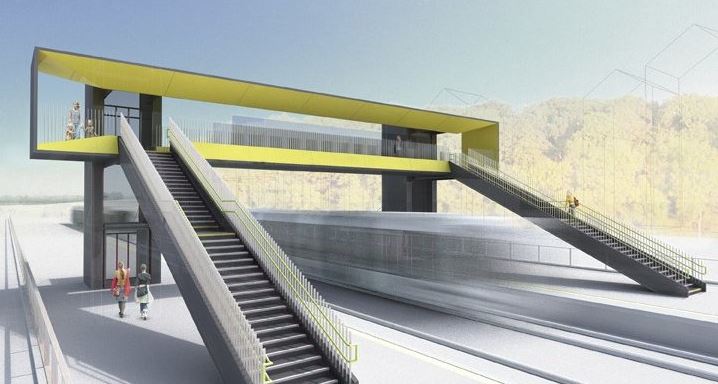
There are lots of rural stations like Saxmundham in the country, so why should suburban stations get all the investment?
How long will it be before one of the new Class 755 trains hits a vehicle on an East Anglian level crossing?
Other Traffic
The only other trains that I saw on the route were Greater Anglia trains going the other way, which we passed in stations like Beccles and Saxmundham.
Checking on realtrimetrains.co.uk, there appears to have been no trains other than the Lowestoft and Ipswich service all day.
It appears that although parts of the route are only single track, that a well-designed timetable operated by well-trained and well-performing staff can provide a reliable hourly service.
Line Speed
I brought my personal dynamometer car with me and the train trundled along at a very easy and leisurely 55-60 mph, which is around the operating speed of the line of 55 mph.
Consider.
- The train gave me the impression, that all those 2,920 kW in the diesel engines could go a bit faster.
- The timetable was probably designed around a Class 156 train, which has just 425 kW per car, as opposed to the 730 kW per car of the Stadler train.
- I estimate that the Stadler train is about sixty percent heavier per car, but it does have a lot of electrical gubbins to carry around.
- The weight of the Stadler train does appear to be lighter per car than a Class 170 train.
I would expect that a well-driven Class 755 train has the power and speed to skip from station to station along the East Suffolk Line at several minutes faster than the timetable.
The line is 49 miles long and trains typically take 90 minutes between Lowestoft and Ipswich. That is an average speed of just under 33 mph.
The leg between Saxmundham and Darsham is just over four miles long and it takes nine minutes. This is an average speed of 27 mph.
Consider
- The acceleration of a Class 755 train is 0.9 m/s², which means to get up to a line speed of 60 mph takes thirty seconds.
- Four miles at 60 mph takes four minutes.
- Driver assistance software can tell the driver exactly where to start slowing for the next station.
It might be possible to do the Saxmundham and Darsham leg in perhaps three or four minutes less than the current timetable.
How much time could be saved on the whole route between Lowestoft and Ipswich?
Trains Needed
Look at a typical Off Peak pattern.
- An Off Peak train is the 1007 from Lowestoft, which arrives at Ipswich at 1136.
- This train returns from Ipswich at 1217, which arrives in Lowestoft at 1343.
- It then leaves Lowestoft for Ipswich at 1407.
The train takes four hours to do a round trip on the route, with forty-one minutes wait at Ipswich and twenty-four minutes wait at Lowestoft.
As trains are scheduled from Lowestoft at 1107, 1207 and 1307, four trains will be needed to provide the service.
This is very inefficient.
I feel that it is totally possible for the new trains to run between Lowestoft and Ipswich in around an hour and fifteen minutes, which would mean a saving of between one-two minutes on each leg of the journey.
Suppose though the trains could achieve this time, with an allowance of fifteen minutes to turn the trains at the two end stations.
This would mean that the round trip is now three hours and only three trains will be needed to provide the service.
The Possibility Of A Half-Hourly Service
The current timetable waits for awkward times in each of the end stations.
But my proposed hour and fifteen minute journey with a fifteen minute turnround could offer the possibility of a half-hourly service.
- Suppose two trains left Ipswich and Lowestoft at identical times on the hour.
- They would arrive at their destination an hour and fifteen minutes later at a quarter past the hour.
- By the half-hour, they would be ready to return to the other station.
- They would arrive back at the start at a quarter to the hour and fifteen minutes they would be ready to repeat the cycle.
The only problem would be to make sure all trains met each other at a place, where they could pass.
The half-hourly service would need six trains. or two more than the current service.
I don’t think that any major engineering works will be needed, although , there might be a need to adjust a passing loop or the signalling.
This is probably only one of many possibilities to provide a half-hourly services.
A Service Between Ipswich And Leiston And Aldeburgh
As I passed this branch the orange army was clearing the track of years of tree and other plant growth.
I’ve always thought that this would be a good idea and I wrote about it in A Station For Leiston.
- A half-hourly service would need two trains.
- It would add extra capacity between Ipswich and Saxmundham.
- It would certainly be needed if Sizewell C is built.
- Much of the route is double-track between Saxmundham and Ipswich.
It should also be noted that Sizewell has a high-capacity electricity grid connection and with the growtyh of offshore wind, Sizewell might be the ideal place for a large energy storage facility,
Cambridge And Lowestoft?
I took a train recently between Cambridge and Norwich and I noticed it went on to Cromer and Sheringham.
This was just Greater Anglia’s way of scheduling the trains for their convenience.
But could the same joining be done between these two services.
- Lowestoft and Ipswich
- Ipswich and Cambridge
It would do the following.
- Make better use of Platform 1 at Ipswich.
- Improve train utilisation.
- It might encourage day trippers to the coast to use the trains.
- It would improve the link from East Suffolk to Stabsted Airport.
- Create a comprehensive service, that connects all the major towns in Suffolk.
- It would connect these Suffolk towns; Lowestoft, Beccles, Saxmundham, Woodbridge, Ipswich, Needham Market, Stowmarket, Bury St. Edmund’s and Newnarket.
- It would serve the proposed A14 Parkway station.
- It would be an excellent feeder sewrvice for the East-West Rail Link.
It would be a true TransSuffolk railway.
Could There Be A Lowestoft And Great Yarmouth Service?
There has been talk of a new service between Lowestoft and Great Yarmouth stations.
There are two options to provide a service.
- Reinstatement of the Reedham Curve that was closed in 1880.
- By reversing the train in Reedham station.
I describe these options in Norfolk Rail Line To Remain Closed As £68m Upgrade Project Overruns.
As the second option does not need any extra infrastructure, I think it is more likely.
This was my conclusion about the route with a reverse.
Typical timings appear to be.
- Between Reedham and Yarmouth – 14-16 minutes
- Between Reedham and Lowestoft – 24-26 minutes
Given that the Class 755 trains have the following characteristics.
- They are 100 mph trains.
- They are optimised for fast stops.
I wouldn’t be surprised to see a sub-forty minute time between Lowestoft and Yarmouth.
It would appear that one train could run an hourly shuttle between Lowestoft and Great Yarmouth.
A Scenic Route Between Norwich And Ipswich
Using the current times between Ipswich and Lowestoft and Norwich and Yarmouth, it also looks like a sub-three hour scenic route is possible between Ipswich and Norwich.
It could be East Anglia’s version of the Cumbrian Coast Line.
Onboard Catering
The East Suffolk Line service currently takes ninety minutes.
I feel that this service is one that could benefit from a coffee service from a trolley.
The service could be provided by Greater Anglia or as on the Settle & Carlisle Line, by the local Community Rail Partnership.
Conclusion
The arrival of Class 755 trains on the East Suffolk Line could be the start of something special!
Should High Speed Two Have A Station At Calvert?
The leak of the Oakervee Report into High Speed Two published in today’s Times, says that extra stations might be added to High Speed Two and in particular one could be built at Calvert in Buckinghamshire, where it would also be an interchange with the East-West Rail Link between Oxford and Cambridge.
Calvert And The Current Railways
This Google Map shows the area around the village of Calvert.
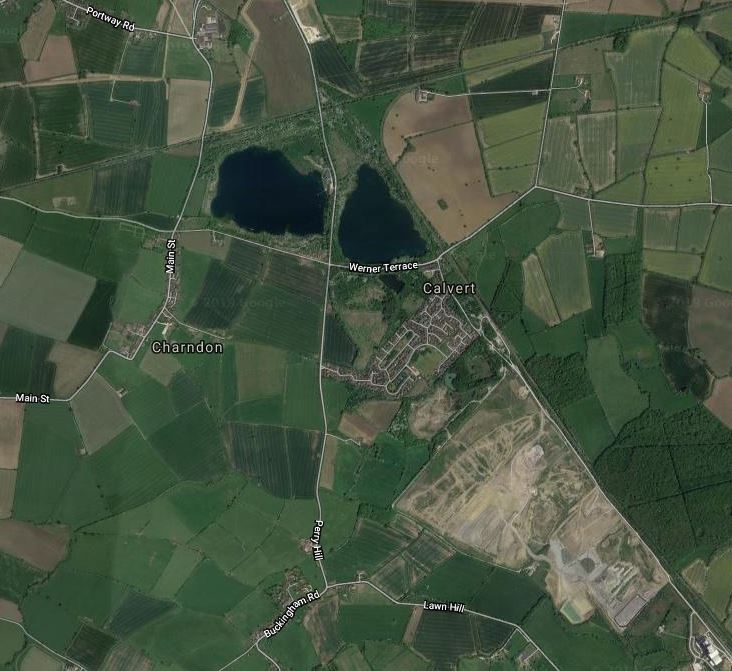
Note.
- The two lakes in old clay pits to the North of the village; one for sailing and one for fishing.
- A massive landfill to the South.
- The route of the East-West Rail Lnk runs East-West to the North of the two lakes.
The enlarged Google Map shows the two lakes and the East-West Rail Link.
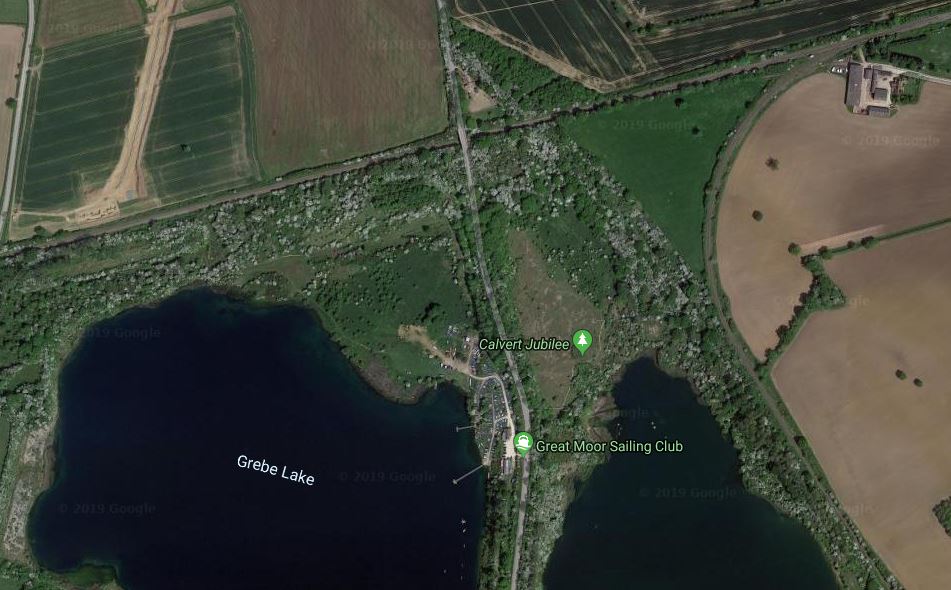
There is a distinct cross where the North-South Great Central Main Line crosses the former the East-West Varsity Line.
The Great Central Main Line from Aylesbury Vale Parkway station in the South, has a chord to the East and joins the disused track, that used to form part of the Varsity Line. This chord and line will be developed in the next few yeas to allow Chiltern Railways to open a service to Milton Keynes Central station.
Calvert And High Speed Two
This paragraph from the Wikipedia entry for Calvert, describes the possibilities in the area for High Speed Two.
The planned route of High Speed 2 (HS2) will run along the Great Central Railway north-south corridor in this area, past Calvert and the phase one Infrastructure Maintenance Depot will be located near Calvert. No passenger interchange between East West Rail and HS2 is proposed, since stopping high speed trains ‘too often’ reduces their high speed benefits, although in February 2017, the local MP called for the station to be built at the junction between East West Rail and the HS2 line, serving both lines.
Note how the track of the Grand Central Railway can be picked out on the second map.
It looks like the Oakervee Report is recommending that at least passive provision is made for a station in the area, that would connect to the East-West Rail Link.
Calvert And The Oxford To Cambridge Expressway
This paragraph from the Wikipedia entry for Calvert, describes the trunk roads in the area.
Calvert sits in the strip of land which the Government announced in 2018 as its ‘preferred route’ for the new Oxford-Cambridge Expressway road, which would link the A34, M40, and M1 trunk roads. It has been noted that the convergence of HS2, East-West Rail, and the Oxford-Cambridge Expressway at this location would offer opportunities for future provision of a key regional facility, such as an airport, or a New Town.
I doubt there will be a new airport, but other forms of development would be better than landfill.
Oakervee’s Recommendation For Calvert
It looks like the Oakervee Report is recommending that at least passive provision is made for a station in the area, that would connect to the East-West Rail Link.
Thoughts On A Possible Calvert Station
These are my thoughts on a possible Calvert station, that would be built to connect the East-West Rail Link and High Speed Two.
Changing Between The East-West Rail Link And High Speed Two At Calvert Station
This would be very easy to arrange in a well-designed station and would give a lot of stations a direct connection to High Speed Two.
- Oxford, Swindon, Bristol, Newport, Cardiff and Swansea
- Oxford, Swindon, Bristol, Exeter, Plymouth and Penzance
- Reading, Basingstoke, Southampton and Bournemouth
- Cambridge, Ipswich and Norwich
- Milton Keynes and Northampton
Bi-mode trains would run direct to Calvert station, where passengers would change to and from High Speed Two.
Could Trains Run Direct Between The East-West Rail Link And High Speed Two At Calvert?
In the leak of the Oakervee Report, The Times also says that it could be advantageous if existing trains could use the HS2 track.
Suppose Transport for Wales wants to improve services between South Wales and the Northern destinations of High Speed Two.
As I read the leak, they could obtain their own Classic-compatible High Speed Two trains and perhaps run services to Birmingham, Manchester, Leeds and other destinations.
The only extra infrastructure needed would be as follows.
- Appropriate flyovers at Calvert.
- Electrification between Calvert and Didcot.
- Electrification between Cardiff and Swansea.
The electrification would be needed, as I suspect trains running on High Speed Two would be unlikely to be bi-modes.
In fact, if the connection is built as Phase 1 of High Speed Two, Swansea and Birmingham via Cardiff, Bristol, Swindon and Oxford, could be one of the initial High Speed services on High Speed Two.
I estimate that a Swansea and Birmingham service would take about two and a half hours.
When the East-West Rail Link is completed between Calvert and Cambridge, services will also be able to turn East to Cambridge, Ipswich and Norwich.
How the services are arranged will depend on where passengers want to go and in what numbers.
Will There Be Commuters From Calvert Station?
Consider.
- Calvert station will not be surrounded by large amounts of housing, with the exception of Milton Keynes perhaps fifteen minutes away.
- Services on the East-West Rail Link will probably call at Calvert station.
- The route of the proposed Oxford to Cambridge Expressway could serve Calvert station.
- I estimate that Euston and Calvert will have a journey time around twenty-five to thirty minutes.
Calvert might develop into a commuter station and not just to London and Birmingham.
A Calvert And Market Harborough Service Via Milton Keynes And Northampton
In Shapps Supports Beeching Axe Reversals, I talked about a proposal to reopen the Market Harborough-Northampton Line that was only finally closed in 1981.
I also included this map, which shows the link between Milton Keynes and link to Market Harborough.
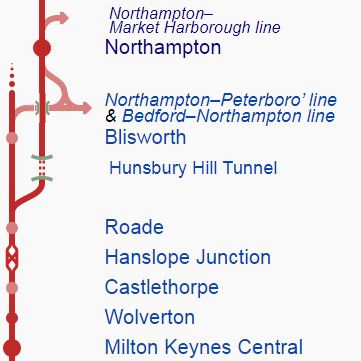
So could we see a service linking High Speed Two at Calvert to the fast-expanding Milton Keynes Northampton and Market Harborough?
I feel that if there was a four trains per hour (tph) service between Calvert and Milton Keynes, this could mean a possible simplification of the services on the completed East-West Rail Line.
\services to Milton Keynes could be.
- Two tph – Calvert and Market Harborough via Winsford, Bletchley, Milton Keynes, Wolverton and Northampton.
- Two tph – Marylebone and Milton Keynes via Winsford and Bletchley.
East-West Rail Link services wouldn’t call at Milton Keynes Central, as this would mean a reverse.
Calvert Station Will Be A High Speed Station For The Local Area
If road access is good, the station will get used as a Park-and-Ride station for accessing High Speed Two for passengers living in the local area.
Useful Routes Via Calvert
Off the top of my head, these are a selection of routes, that could be run via Calvert station; either direct or with a change.
- East Anglia (Cambridge, Colchester, Ipswich and Norwich) and The Midlands, Northern England and Scotland
- South Wales (Cardiff, Newport and Swansea) and The Midlands, Northern England and Scotland
- West and South West England (Bristol, Exeter, Penzance and Plymouth) and The Midlands, Northern England and Scotland
- Southern England (Bournemouth, Portsmouth and Southampton) and The Midlands, Northern England and Scotland
- Thames Valley (Oxford, Reading and Heathrow) and The Midlands, Northern England and Scotland
Journeys between areas like South Wales and East Anglia could be done with a change at Calvert.
Times To And From Calvert
These are my estimates of times to and from Calvert station.
- Aylesbury Vale Parkway – 12 minutes
- Baswingstoke – 68 minutes
- Bedford – 49 minutes
- Bicester Village – 14 minutes
- Birmingham via HS2 – 19 minutes
- Bletchley – 21 minutes
- Bournemouth – 150 minutes
- Bristol Temple Meads – 125 minutes
- Bristol Parkway – 110 minutes
- Cambridge – 91 minutes
- Cardiff – 147 minutes
- East Midlands via HS2 – 21 minutes
- Euston via HS2 – 25-30 minutes
- Exeter – 186 minutes
- Glasgow via HS2 – 318 minutes
- Leeds via HS2 – 60 minutes
- Leicester – 74 minutes
- Liverpool via HS2 – 66 minutes
- Manchester via HS2 – 70 minutes
- Manchester Airport via HS2 – 61 minutes
- Market Harborough – 62 minutes
- Marylebone via Chiltern – 77 minutes
- Milton Keynes – 26 minutes
- Newport – 133 minutes
- Northampton – 42 minutes
- Oxford – 29 minutes
- Penzance – 360 minutes
- Portsmouth – 146 minutes
- Preston via HS2 – 54 minutes
- Plymouth – 240 minutes
- Reading – 52 minutes
- Swansea – 203 minutes
- Swindon – 85 minutes
- Southampton – 103 minutes
- Winchester – 83 minutes
I will improve and add to these figures.
As an example, I’ll take journeys from Leicester to the North West of England.
Currently, Manchester Piccadilly takes 140 minutes with one change, whereas my estimates say the HS2 route will be four minutes longer, with a change at Calvert.
Currently, Manchester Airport takes 165 minutes with two changes, whereas my estimates say the HS2 route will be thirty minutes shorter , with only a single change at Calvert.
Currently, Liverpool takes 170 minutes with one change at Birmingham New Street, whereas my estimates say the HS2 route will be thirty minutes shorter, with a change at Calvert.
Currently, the faster time to Preston is about 150-160 minutes with one change, whereas my estimates say the HS2 route will be about 130 minutes with a change at Calvert.
My estimates were only crude, but ithey do indicate.
- Changing at Calvert often means the journey only needs a single change.
- Some journeys are up to thirty minutes faster.
Other HS2 interchange stations, like Birmingham Interchange, Crewe, East Midlands Hub and Preston will probably function in a similar manner.
Conclusion
Trying to predict what would happen if a station were to be built at Calvert is not easy.
But on balance, I very much feel that it would improve the connectivity of High Speed Two.
A Calvert station would also improve the East-West Rail Link, with faster trains and better connectivity.
High Speed Two should be for all and not just services to and from London!
Is The East-West Rail Link Going For The Freight Market?
I will deal with question in two main sections; West and East.
Freight In The West
In Shapps Supports Beeching Axe Reversals, I talked about the reopening of the Northampton and Marketharborough Line to connect the West Coast and Midland Main Lines..
- Passenger services could run between Market Harborough or Leicester and Marylebone, Milton Keynes, Oxford or Reading.
- Multi-modal services could run between freight terminals in the North Midlands and Yorkshire and Southampton Docks.
- With electrification, it could create the Electric Spine, that was cancelled a few years ago.
Judging by Grant Shapps comments, I do wonder if this scheme is part of the East-West Rail Link.
Look at freight trains between Sheffield or South Yorkshire and Southampton Docks.
- Currently, they seem to use a route via Chesterfield, Ilkeston, Toton, Burton-on-Trent, Bordesley, Solihull, Warwick Parkway, Banbury, Oxford, Reading and Basingstoke.
- After the East-West Rail Link and the Northampton and Market Harborough Line are opened, the trains would go via Chesterfield, Ilkeston, East Midland Parkway, Loughborough, Leicester, Market Harborough, Northampton, Milton Keynes, Bletchley, Bicester, Oxford, Reading and Basingstoke.
The advantages of the new second route would appear to be.
- It doesn’t involve a Grand Tour of Birmingham.
- It only involves the next phase of the East-West Rail Link.
- It is partially-electrified.
- It would be relatively easy to electrify between Didcot and Bletchley.
- Innovative locomotives like the Class 93 locomotive might be ideal for the route.
I do suspect that the new route will be substantially quicker.
Freight In The East
If the East-West Rail Link will improve freight services in the West, what will it do in the East?
I wrote about freight at the Eastern end of the route in Roaming Around East Anglia – Freight Trains Through Newmarket.
This was the introduction to that article.
The East West Rail Consortium plan to change the route of freight trains to and from Haven Ports; Felixstowe, Harwich and Ipswich to the West of Kennett station.
In this document on the East-West Rail Consortium web site, this is said.
Note that doubling of Warren Hill Tunnel at Newmarket and
redoubling between Coldham Lane Junction and Chippenham Junction is included
in the infrastructure requirements. It is assumed that most freight would operate
via Newmarket, with a new north chord at Coldham Lane Junction, rather than
pursuing further doubling of the route via Soham.How would these changes affect Newmarket and the horse-racing industry in the town?
I then examined the affects in detail.
My conclusions were that it will be a difficult project to get approved, as Newmarket won’t like a double-track freight railway through the centre.
Summary Of Freight Routes Using The East-West Rail Link
As far as I can see, these will be the major freight routes using the link.
Felixstowe and Birmingham
Ipswich, Newmarket, Cambridge, Bletchley, Nuneaton and Castle Bromwich
Felixstowe and Bristol
Ipswich, Newmarket, Cambridge, Bletchley, Oxford and Swindon
Felixstowe and Cardiff
Ipswich, Newmarket, Cambridge, Bletchley, Oxford, Swindon and Newport
Felixstowe and Glasgow
Ipswich, Newmarket, Cambridge, Bletchley, Stafford, Crewe, Preston and Carlisle
Felixstowe and Liverpool
Ipswich, Newmarket, Cambridge, Bletchley, Stafford, Crewe and Runcorn
Felixstowe and Trafford Park
Ipswich, Newmarket, Cambridge, Bletchley, Stafford Crewe, Manchester Piccadilly and Manchester Oxford Road
Southampton and Birmingham
Basingstoke, Oxford, Bletchley, Nuneaton and Castle Bromwich
Southampton and Glasgow
Basingstoke, Oxford, Bletchley, Stafford, Crewe, Preston and Carlisle
Southampton and Liverpool
Basingstoke, Oxford, Bletchley, Stafford, Crewe and Runcorn
Southampton and Sheffield
Basingstoke, Oxford, Bletchley, Northampton, Market Harborough, Leicester, East Midlands Parkway, Ilkeston and Chesterfield
Southampton and Trafford Park
Basingstoke, Oxford, Bletchley, Stafford Crewe, Manchester Piccadilly and Manchester Oxford Road
Note, that I have ignored routes like Felixstowe and Leeds or London Gateway and Trafford Park, which will avoid the East-West Rail Link.
Conclusion
The East-West Rail Link is going to be a very important freight route.
Winners And Losers
Will there be objections in places like Cambridge, Market Harborough and Newmarket, which will see a large increase in freight traffic?
On the other hand, some places like Banbury, Birmingham and North London will see a reduction in freight traffic.
Others like Oxford would see little difference in the numbers of trains.
Electrification
The East-West Rail Link connects to five electrified main lines at Oxford, Bletchley, Bedford, Sandy and Cambridge.
For freight’s sake, I think it should be electrified to make the most of new motive power, like the Class 93 locomotive and reduce pollution and carbon emissions.
Shapps Supports Beeching Axe Reversals
The title of this post is the same as that of this article on Rail Magazine.
This is the introductory paragraph.
Secretary of State for Transport Grant Shapps says he supports the reopening of routes closed in the Beeching cuts of the 1960s.
In the article, which describes proceedings in the House of Commons, Grant Shapps, says he was very supportive of opening the Market Harborough Line.
I have now moved the rest of this article to a standalone article with a title of Reopening Milton Keynes And Market Harborough Via Northampton.
The East-West Rail Link Plans For Services Between Reading And East Anglia
This report on the East-West Rail web site is entitled Eastern Section Prospectus and gives full details of their proposals for the train services along the East-West Rail Link.
This post is particularly about services to Reading and the report says this about services between Reading and East Anglia.
Proposed Core Train Services
This is a sentence.
It has been assumed that, by this stage, a half hourly service will operate on the Central and Western sections between Oxford – Cambridge.
The report then goes on to add.
25 minutes are added to the Oxford journey time to represent the option of one service being extended to / from Reading with a Reading – Oxford non-stop.
So that looks like there will be a core hourly service between Reading and Cambridge, which will take 98 minutes.
The report then goes on to detail how various towns and cities in East Anglia will be connected to Reading.
Bury St. Edmunds
2h16 hourly with cross-platform changes at Cambridge and new A14 Parkway station.
Great Yarmouth
3h14 hourly direct
Ipswich
2h43 hourly with cross-platform changes at Cambridge and new A14 Parkway station.
Lowestoft
3h30 hourly with change at Norwich and cross platform change at Reedham.
Norwich
2h40 hourly direct
Trains For The Route
It looks like there will be two direct hourly train services.
- Reading and Great Yarmouth via Cambridge and Norwich, which will take three hours and fourteen minutes.
- Oxford and Ipswich via Cambridge and Bury St. Edmunds, which will take two hours and nineteen minutes.
The long term service pattern, envisages extending the Oxford and Ipswich service to Manningtree, which would add twenty-five minutes.
These are long services and given the overcrowding that happens on the current service between Norwich and Liverpool, I would think that the trains should be as follows.
- At least four or five cars.
- An on-board buffet.
- At least 100 mph operation.
I also think the trains should be bi-mode trains, able to use 25 KVAC overhead electrification or onboard power.
How Many Trains?
It looks like the Reading and Great Yarmouth service would be a seven-hour round trip, which would need seven trains.
The future Oxford and Manningtree service would be a six-hour round trip, which would need six trains.
So add in an allowance for maintenance and a spare, I suspect the fleet should be sixteen trains.
Stowmarket Station To Go Step-Free
This document on the Government web site is entitled Access for All: 73 Stations Set To Benefit From Additional Funding.
Stowmarket station is on the list.
In Roaming Around East Anglia – Stowmarket Station, I said this.
The station is Grade II Listed, has the capability to handle the long London-Norwich expresses and probably only needs a step-free footbridge to be ready for the East-West Rail Link.
This picture shows the bridge.
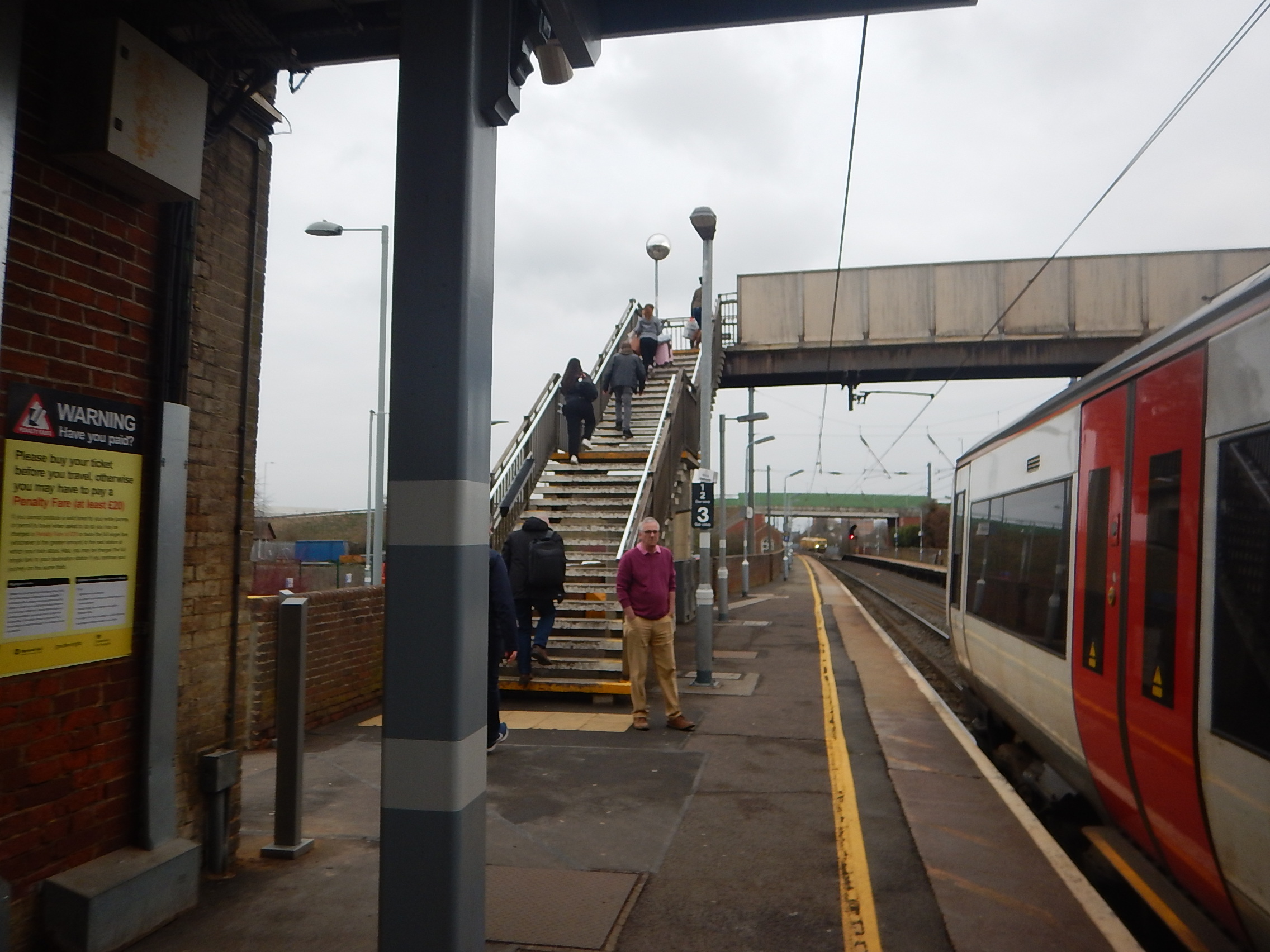
Step-free access would create an easy interchange between stations.
- On the Great East Main Line between Stowmarket and Norwich.
- On the East-West Rail Link between Stowmarket and Cambridge/Peterborough and further West.
Journeys like between Diss and Bury St. Edmunds, Newmarket, Cambridge and Peterborough will be so much easier.
Greater Anglia is already planning to increase services on both routes, so the step-free bridge will be well used.
Installing Step-Free Access
In Winner Announced In The Network Rail Footbridge Design Ideas Competition, I wrote how the competition was won by this bridge.
So could a factory-built bridge like this be installed at Stowmarket station?
- I think this could be possible, if the existing bridge were to be removed.
- At least there is a level crossing by the station, which could be used as an emergency means of crossing the railway.
I very much favour this approach. which surely could be installed on a weekend possession.
‘Compelling Case’ Put Forward For £4bn Metro Network For Cambridgeshire
The title of this post is the same as that of this article on Rail Technology Magazine.
This is the first two paragraphs.
There is a “compelling case” for a metro scheme for Greater Cambridge after a feasibility report has claimed it could create 100,000 jobs and 60,000 new homes, but could cost £4bn.
The feasibility study was commissioned by the Cambridgeshire and Peterborough Combined Authority (CPCA), and mayor James Palmer declared there was a compelling case for the new regional transport network covering 88 miles.
Other details of the Cambridge Autonomous Metro include.
- Turn-Up-and-Go service.
- It would use trackless electric vehicles.
- Across Cambridge in twelve minutes.
- 7.5 miles of underground corridors under the City.
- Cambourne, Haverhill, Huntingdon, Mildenhall, St. Ives, St. Neots and Waterbeach would be served.
I think that the route network is feasible and if any City in England can fund such a scheme it is Cambridge.
I can see the point about trackless electric vehicles, as illustrated by this picture.
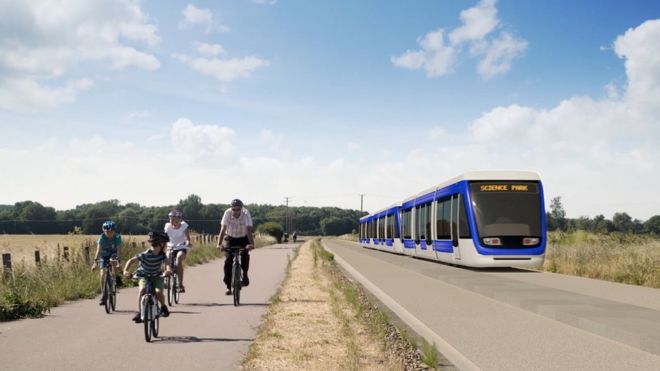
It looks to me, that the track is just a road with a cycle track alongside.
But would it be better to use tram-trains and the Karlsruhe model?
- This would enable the system to use the heavy rail tracks to Bury St. Edmunds, Ely, March, Newmarket and Wisbech.
- Bury St. Edmunds certainly needs a frequent service to Cambridge.
- East West Rail Consortium has a plan for a Parkway station on the A14, which needs a frequent connection to Cambridge.
- The technology is proven.
Hopefully, tram-trains have been rejected for good reasons.
But does the proposed system fit well with the East-West Rail Link.
More Than A Thousand People In This Town Want A Rail Service To Cambridge
The title of this post is the same as that of this article on Cambridgeshire Live.
This is the first three paragraphs.
t’s a town talked about more for its struggling market than its booming businesses.
But more than a thousand people in St Neots have signed a petition wanting to see that end.
The petition, which was started by Michelle Woodbridge, a resident from the town, wants the ‘forgotten’ area to be part of a new rail connection between Oxford and Cambridge – which people believe may revitalise the area.
St. Neots station is on the East Coast Main
- It is to the East of the town.
- The station has a new footbridge with lifts.
- It has an half-hourly Thameslink service between Peterborough and Horsham, with extra services in the Peak.
- There is a bus connection to Cambridge
This Google Map shows the Eastern area of the town around the railway station.
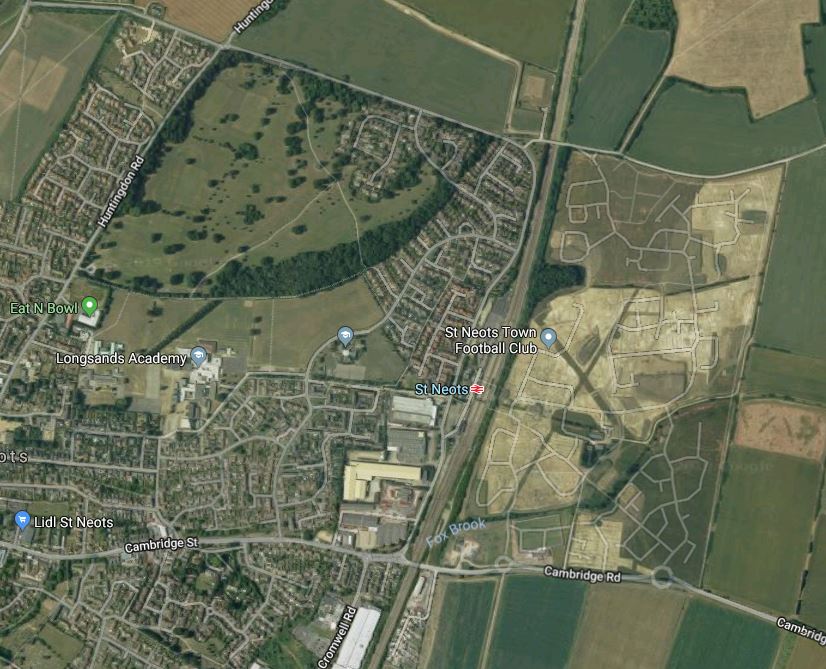
Note.
- The large area of development to the East of the station.
- The A428 road running across the bottom half of the map.
- The A428 is being upgraded and could become a dual-carriageway route to Cambridge via Caxton Gibbet, Cambourne and Madingley.
The East-West Rail Link between Oxford and Cambridge is planned to cross the East Coast Main Line at Sandy and then take a Southerly route to Cambridge South station.
The Route Option B is described like this in Wikipedia.
Route B involves running from the Marston Vale line to a new Bedford South station before then running to a relocated Sandy (to the north Tempsford area or south of St. Neots). The route heads east to a new station in Cambourne before swinging south to join the existing line northbound to Cambridge.
It does seem a bit of a roundabout route, but the new station at Tempsford could be a well-placed Park-and-Ride station for Cambridge.
I don’t think that the choice of route between Bedford and Cambridge will be easy.
However, certain factors may help in the design of the route.
An Improved A1 Road
The A1 road runs North-South to the West of the East Coast Main Line.
The road is only a two lanes in each direction and probably needs improvement.
So the improvements could be done in conjunction with the building of the East-West Rail Link.
The East Coast Main Line Is Four Tracks
Much of the East Coast Main Line is four tracks or could be made so, through St. Neots and Sandy stations.
Both stations have four platforms.
Sandy Station Could Be An Interchange Between The East-West Rail Link And The East Coast Main Line
I wouldn’t be surprised to see Sandy station developed into a comprehensiove interchange station, either in its present position or slightly closer to St. Neots.
It would be served by the following services.
- East Coast Main Line services between Kings Cross, the North of England and the East of Scotland.
- Tramslink services between London and Peterborough.
- East-West services between Cambridge and Oxford via Bedford and Milton Keynes.
It would also be a Park-and Ride station for London, Bedford and Cambridge.
The East Coast Main Line Will Be Digitally Signalled
This must help increase the numbers of trains on the Route.
Greater Anglia Are Ambitious
I just wonder if there was a flyover at Sandy station, if trains could use the East Coast Main Line and the East West Rail Link to create a new service from Cambridge to Peterborough via Cambridge South, Sandy, St. Neots, and Huntingdon.
It would suit Greater Anglia’s ambitions and the 100 mph Class 755 trains could handle the partially-electrified route with ease.
There could even be a circular service, where trains returned from Peterborough via March, Ely, Waterbeach and Cambridge North.
- The trains would not terminate at Cambridge, but would go through the three Cambridge stations in order.
- Four trains per hour (tph), with two going via Sandy and two via Ely could be handled in a single platform at Peterborough.
I estimate the following times are possible
- Cambridge and Peterborough via Sandy – 60 minutes
- Cambridge and Peterborough via Ely – 50 minutes
Two tph doing the circular route in both directions would need eight trains. All stations would get at least two tph service to Cambridge and Peterborough.
Conclusion
I can see a time when there is a direct service between Peterborough and Cambridge via Cambridge South, Sandy, St. Neots, and Huntingdon.
St. Neots would have a two tph service to Cambridge South, Cambridge, Cambridge North, Ely and Peterborough.
Roaming Around East Anglia – Freight Trains Through Newmarket
The East West Rail Consortium plan to change the route of freight trains to and from Haven Ports; Felixstowe, Harwich and Ipswich to the West of Kennett station.
In this document on the East-West Rail Consortium web site, this is said.
Note that doubling of Warren Hill Tunnel at Newmarket and
redoubling between Coldham Lane Junction and Chippenham Junction is included
in the infrastructure requirements. It is assumed that most freight would operate
via Newmarket, with a new north chord at Coldham Lane Junction, rather than
pursuing further doubling of the route via Soham.
How would these changes affect Newmarket and the horse-racing industry in the town?
How Many Freight Trains Are We Talking About?
This table shows the number of freight trains going through Kennett station on the 1st of March 2019.
- 00 1 1
- 01 1 0
- 02 0 1
- 03 2 1
- 04 1 1
- 05 1 1
- 06 1 2
- 07 1 1
- 08 1 0
- 09 1 0
- 10 1 0
- 11 0 0
- 12 0 0
- 13 2 2
- 14 0 2
- 15 1 1
- 16 0 1
- 17 1 1
- 18 0 1
- 19 1 1
- 20 1 0
- 21 1 2
- 22 0 2
- 23 0 0
In the table the first figure is the hour, the second figure is the number of freight trains going West and the third figure is the number of freight trains going East.
This gives a daily total of eighteen trains going West and twenty-one trains going twenty-one trains going East.
But these figures will increase!
At present, Network Rail are adding a passing loop on the Felixstowe Branch Line. This article on Rail Magazine is entitled £60.4m Felixstowe Branch Upgrade Under Way and says this about the upgrade.
Installing the new line will create capacity for up to ten additional freight trains, each the equivalent of 76 lorries.
Not all will come via Kennett, as some will go via London.
The Port of Felixstowe will get larger and other improvements on the route across Suffolk will increase the number of freight trains passing through Kennett station.
I estimate that it is very likely that in a few years there will be two trains per hour (tph) in both directions for every hour of the day.
Rerouting The Trains Through Newmarket
Currently, these freight trains go via Ely, but the plan of the East West Rail Consortium would be to reroute all these freight trains through the Warren Hill tunnel and Newmarket station.
I suspect the reasons for the change of route could include the following.
Accessing The East West Rail Link From Newmarket Is Easy And Quick
If as expected the East West Rail Link joins the London-Cambridge Line just South of Cambridge South station, then the trains would run through Dullingham, Cambridge and Cambridge South stations, when running between the East West Rail Link and Newmarket station.
The East West Rail Link Will Be An Efficient Railway
Drive on a new motorway and the curves are smooth with relaxed gradients.
A new railway will be like that too and less energy will be used to power trains along its length.
Increasing the Capacity Through Ely Is Difficult
There is a very complicated track layout at Ely and increasing the number of trains might be difficult or very expensive.
Freight Trains Will Use The East West Rail Link To Avoid London
Take going between the Haven Ports and Bristol or South Wales.
Currently, these trains tend to go via London and in a couple of years will have to share tracks with London’s intensive Crossrail network between Acton Main Line and Reading stations.
Using the East West Rail Link, the trains would join the Great Western Main Line at Didcot, a few miles West of Reading.
How many services will use the East West Rail Link to by-pass London?
Freight Trains Will Use The East West Rail Link To Get To The West Coast Main Line
Currently, these trains either go via London or take the slow cross-country route via Peterborough to Nuneaton for the West Coast Main Line.
If they use the East-West Rail Link, they can join the West Coast Main Line at Bletchley.
The East-West Rail Link Will Be An Important Freight Link
I think that as the years pass and more freight terminals are created, we will see more freight trains using the East-West-Rail-Link and many of these trains will go through Newmarket.
What Problems Would The Rerouting Create In Newmarket?
I can see these problems.
Noise And Vibration
Four freight trains per hour will create a lot of noise and vibration as they pass through.
Frightening The Horses
This Google Map shows a corner of the gallops at Newmarket.
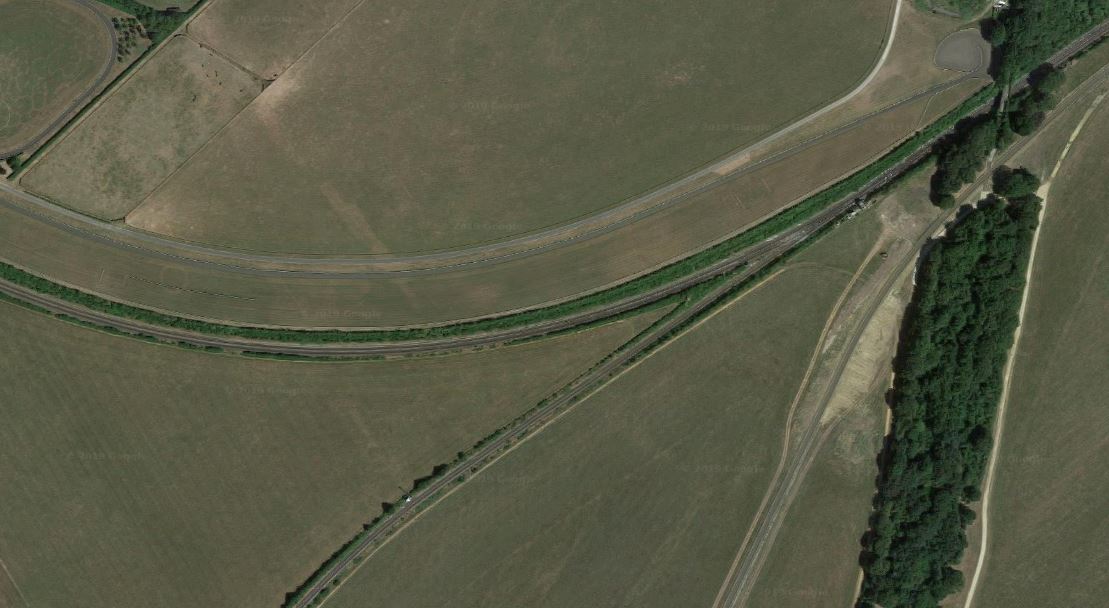
Note how the railway from the East splits into two, to the West of the band of trees running down the map.
- The top branch curves away to the North and goes through Soham to Ely.
- The bottom branch curves away to the South and goes through Warren Hill Tunnel to Newmarket station and then on to Cambridge.
Alongside, the Southern route is the Al Bahatri all-weather gallop, which is an important facility for training racehorses. It can just be picked out as a sand-coloured line.
Currently, nearly all the freight trains take the Northern route to Ely, keeping them away from the Al Bahatri.
But, if the main freight route was through the town, as planned by the East West Rail Consortium, then at least four freight trains per hour would run alongside the gallop. There could also be four passenger trains per hour.
Railway Electrification
It is unlikely, that the railway through Newmarket will be electrified, but under a different government, this could happen.
It might add another dimension to disturbance through the town, as you get pantograph noise and occasional sparks and flashes. I don’t know how horses will react, but from my own experience years ago, they do react to electrical fields.
The Rail Freight Industry
Look at most freight trains on the UK’s railways and the locomotive on the front, is a noisy, smelly and polluting Class 66 or Class 70 locomotive.
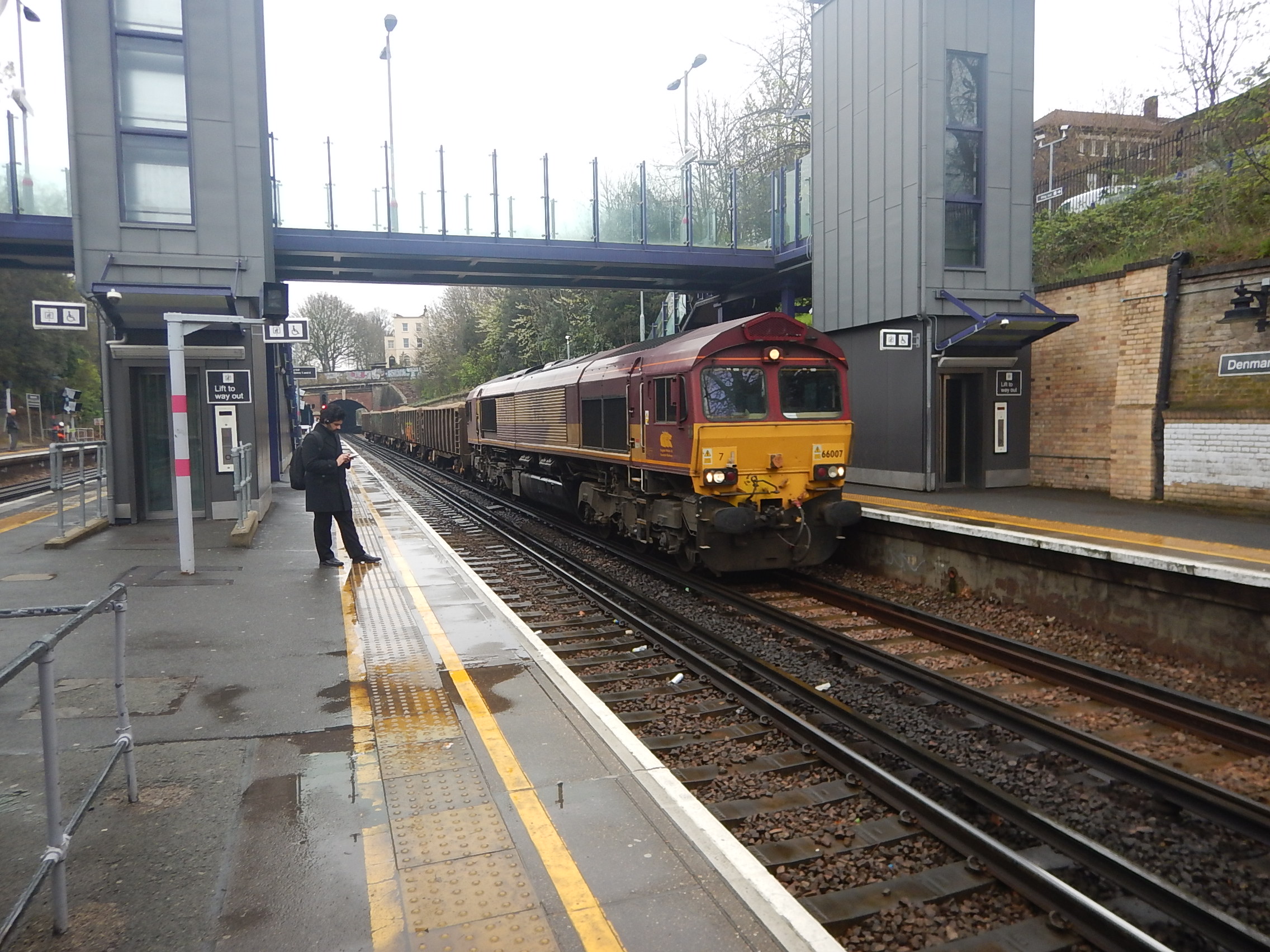
You’ll see these American imports, which don’t meet the latest emission regulations, hauling freight trains, even when there are overhead wires for electric haulage.
Why?
Because rail freight companies are so driven by accountants, that they can’t be bothered to obtain more modern diesel locomotives, that are quieter, more powerful and less polluting.
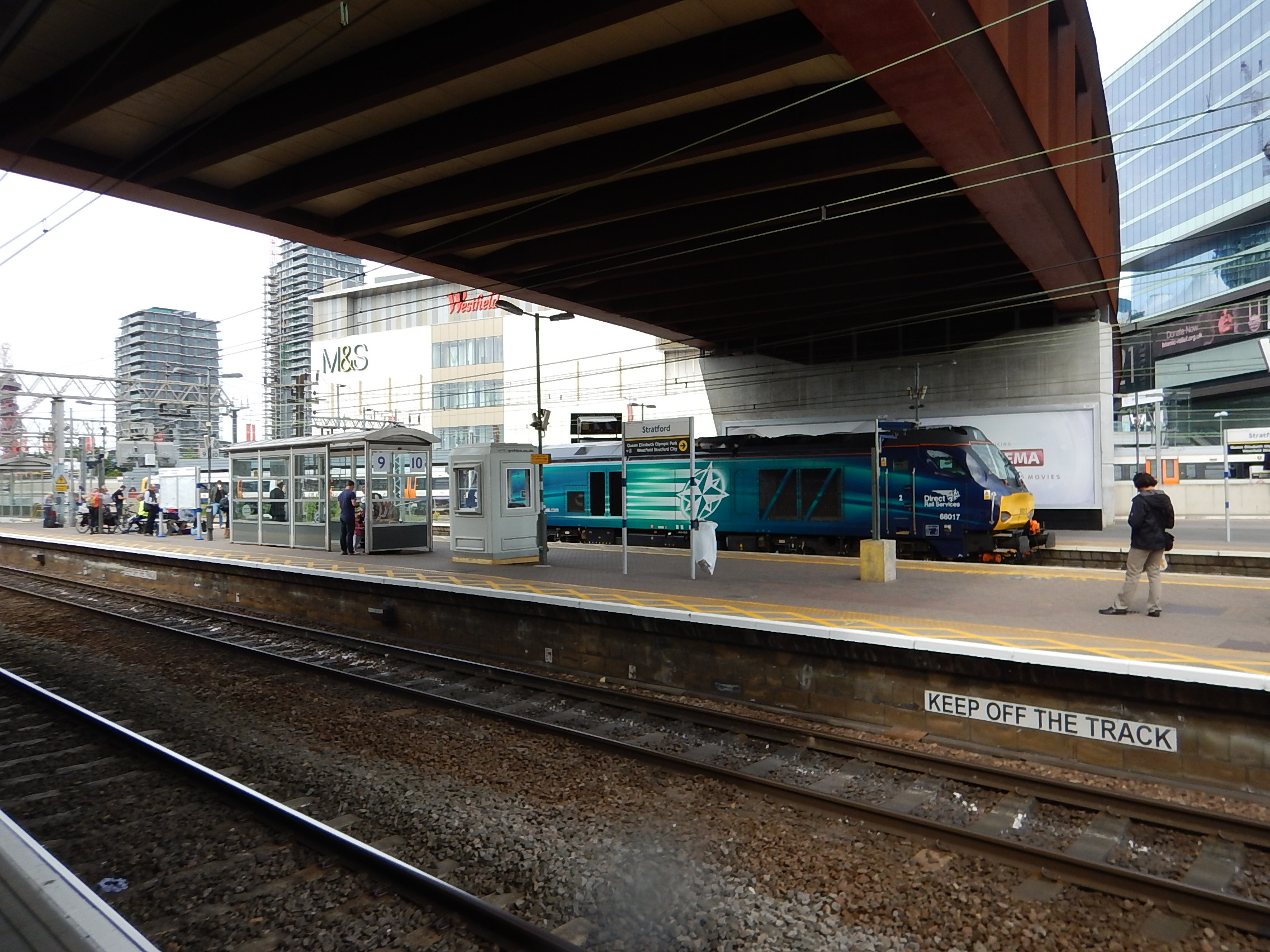
The picture shows a modern Class 68 locomotive at Stratford. These are quieter and meet most of the noise and emission regulations.
Mitigating The Problems
I’ll deal with various methods, that could be used, starting with the easiest.
A Level Railway Through The Town
It looks like the Victorian engineers, who built the railway through the town, built it as level as possible, so that steam locomotives didn’t have to work so hard in the Warren Hill Tunnel, which I don’t think has a chimney for smoke.
Modern engineers will ensure that the railway is as level as possible, with gentle gradients and curves all the way between Kennett and Dullingham stations.
Passenger Trains With Batteries
Greater Anglia’s new Class 755 trains are powered by both overhead electrification and onboard diesel engines. The latter sit in a power pack in the middle of the train.
Not having seen or heard one of these Swiss-built trains in the metal, I can make no comment as to the noise and vibration of these trains, but they should be quieter than the current three-car Class 170 trains.
It does appear that passenger trains built in the last years are much quieter, as they are much more aerodynamically correct and slippery, so they generate less noise.
The new trains have also been ordered for the South Wales Metro. But the Welsh trains will additionally be fitted with batteries to avoid some difficult electrification in the Valleys.
So if the passenger trains prove to be noisy through the town, which I doubt they will be, there will be the option of adding batteries to avoid the use of diesel power.
It is my belief, that technology will ensure that passenger trains will not be a problem.
More Environmentally-Friendly Freight Locomotives
As I said earlier, smelly, noisy and polluting freight locomotives are a big problem.
This is not just a problem for places like Newmarket with special circumstances, but on railways like the London Overground and those in Central Birmingham, Leeds and Manchester,, where suburban electric railways have to accommodate heavy rail freight.
The railway locomotive manufacturers have designed solutions for the problem in recent years.
Stadler, who are an innovative Swiss company have started to manufacture a Class 93 locomotive, which can run on diesel, electric and/or battery power. I’m fairly sure, that one of the design goals of this locomotive is to be able to haul a heavy freight train between Felixstowe and Peterborough, using electric power where it is available and a mix of diesel and battery at other times.
At Newmarket if the new double-track was well-designed and almost level, I suspect that a Class 93 locomotive could haul a train between Kennett and Dullingham stations on battery power.
Locomotives of this type should be compulsory on all freight routes through sensitive areas.
The government must legislate, as left to themselves the rail freight companies will sit on their hands and wallets.
One of the conditions of a double-track railway through Newmarket, should be that only locomotives that meet the latest noise, vibration and pollution standards, like the Class 93 locomotive should be allowed.
Quieter 100 mph Freight Trains
Karl Watts, who is a disruptive innovator and CEO of the Rail Operations Group, has bought the first ten Class 93 locomotives and intends to use them to haul 100 mph freight trains, where the routes allow.
On the electrified Great Eastern Main Line between Ipswich and London, the operating speed is 100 mph. But freight trains trundle up and down at 75 mph, thus slowing all of the passenger services.
Watts plans to use the Class 93 locomotives with new 100 mph container wagons to run freight trains at 100 mph on this and other routes, which would increase the freight and passenger capacity of the line.
New 100 mph freight wagons will be smoother, quieter and used through Newmarket at an appropriate speed would remove a large proportion of the noise and vibration.
Again, it would need investment from the freight companies.
However, modern freight trains hauled by modern hybrid locomotives like the Class 93 could significantly remove noise and vibration.
Lengthen Warren Hill Tunnel
A second bore will be dug to double-track the kilometre long Warren Hill Tunnel.
Some rail tunnels have been extended with covers and this technique might be possible at the Newmarket station end of the tunnel. The techniques exist, so that housing or other developments can be built on top of the railway.
Techniques like this not only suppress noise and vibration, but create much needed housing.
Acoustic Barriers
You see these a lot in Germany to reduce noise and vibration from railway lines in sensitive area, but rarely in the UK.
Conclusion
It will be difficult to put a double-track railway through Newmarket, but I believe that using modern rolling stock and some advanced construction, that a solution can be found.
Newmarket should dig in its heels and only accept the best to force rail freight companies to get their act together.
Government too, should enforce the current regulations on diesel locomotives, which most of the current locomotives do not meet.
 The Anonymous Widower