Backing Up The Wind With The Keadby Power Stations
I went to Cleethorpes from Doncaster by train yesterday. You pass the Keadby site, where there are two large gas–fired power stations of 734 MW and 710 MW. A third one ; Keadby 3 of 910 MW complete with carbon capture and storage should join them by 2027.
So that will be nearly 2.5 GW of reliable electricity.
I find it interesting that one of our first gas-fired power stations with carbon capture will be in Lincolnshire, which is famous for growing plants of all shapes, types and sizes. So will we be seeing lots of greenhouses on the flat lands I saw yesterday, growing plants in an atmosphere they like, so that we can generate our carbon dioxide and eat it.
The next power station at Keadby is called the Keadby Next Generation power station, which is intended to be complete by 2030. It is a bit of a puzzle in that it will run on up to 1800 MW of hydrogen and only produce up to 910 MW of electricity.
Note.
- The hydrogen will come from SSE’s hydrogen store at Aldbrough and Centrica’s store at Rough.
- Surely, the amount of hydrogen and electricity should balance.
When I worked in ICI’s hydrogen plant in the 1960s, ICI had no use for the hydrogen, so they sent it to their power station, blended it with coal gas and used it to make steam for other processes.
Could Keadby Next Generation power station be providing zero-carbon steam for the chemical and other processes on Humberside?
Adding the 910 MW of electricity to Keadby’s gas-fired total of 2.5 GW gives 3.4 GW of electricity from Keadby to back up the wind farms.
3.4 GW at Keadby is what I call backup!
It also should be noted, that one of the reasons for building the Mersey Tidal Barrage is to provide backup for all the wind farms in Liverpool Bay.
Conclusion
I believe that SSE could be supplying zero-carbon steam in addition to electricity from the Keadby Hydrogen power station.
From Doncaster To Cleethorpes
These pictures were taken on my journey between Doncaster and Cleethorpes.































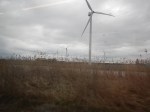






















































The area is best summed up as flat and decorated with these features.
- A few hedges.
- Some trees and some woodland.
- dozens of wind turbines.
- Lots of pylons carrying electricity.
- Scunthorpe steelworks
- A few stations and railway sidings.
- A couple of waterways.
- Estates of new housing as you approach Grimsby.
When I returned there was more of the same on the other side of the tracks.














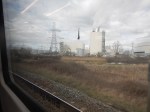
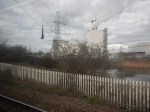



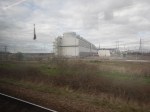

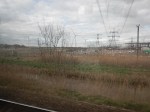
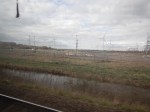













With the addition of all the power stations at Keadby and a couple of wind farms.
These are my thoughts on how this landscape will look at some time after 2030.
More Onshore Wind Farms
There will be a lot more wind farms lining the Doncaster and Cleethorpes railway.
The government has said it might pay for turbines and transmission lines to spoil views.
I feel they will have to, to meet their net-zero targets.
There Will Be Massive Hydrogen Storage On The Other Side Of The Humber
SSE are developing Albrough and Centrica are developing Rough into two of the largest hydrogen stores in the world.
The wind farms of the North Sea will provide them with hydrogen.
More Housing
If the government has its wish there will be a lot more new housing.
And as the newer houses show in my pictures, many of them will have solar panels.
More Power Stations At Keadby
Consider.
- The main purpose of the power stations at Keadby will be to provide backup to the wind and solar power in the area and far out to sea.
- The power stations will use hydrogen stored at Albrough and Rough.
- Some of the gas-fired power stations at Keadby will be fitted with carbon capture.
- One hydrogen-fired power station is already being planned.
The power stations at Keadby will probably be capable of supplying several GW of zero-carbon energy.
There Will Be Energy-Hungry Industries Along The South Bank Of The Humber
Just as in the Victorian era, coal attracted steel-making, chemicals and refining to the area, a South Humberside with large amounts of energy will attract heavy industry again.
Already, Siemens have built a train factory at Goole.
There Will Also Be Large Greenhouses In Lincolnshire
Greenhouses are a wonderful green way of absorbing waste heat and carbon dioxide.
Where Have I Seen This Blend Of Offshore Energy, Hydrogen, Heavy Industry And Agriculture Before?
After I visited Eemshaven in the Northern Netherlands, I wrote The Dutch Plan For Hydrogen.
We are not doing something similar, but something much bigger, based on the hydrogen stores at Aldbrough and Brough, the massive offshore wind farms and Lincolnshire’s traditional heavy industry and agriculture.
The Railway Between Doncaster and Cleethorpes Will Be Developed
Just as the Dutch have developed the railways between Groningen and Eemshaven.
Energy In – Hydrogen And Carbon Dioxide Out
This article was inspired by this article in the Sunday Times, which is entitled ‘It’s A Slog’: Life Inside Britain’s Last Coal Power Station.
The article is about Ratcliffe-on-Soar power station, which is next to East Midlands Parkway station.
This is the first paragraph of the station’s Wikipedia entry.
Ratcliffe-on-Soar Power Station is a coal-fired power station owned and operated by Uniper at Ratcliffe-on-Soar in Nottinghamshire, England. Commissioned in 1968 by the Central Electricity Generating Board, the station has a capacity of 2,000 MW. It is the last remaining operational coal-fired power station in the UK, and is scheduled to close in September 2024.
I took these pictures of the power station in 2019.
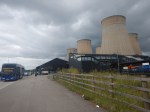
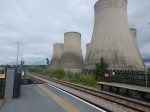



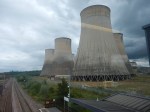


Ratcliffe-on-Soar is the last of a number of large coal-fired power stations, that were built in the area, mainly along the River Trent.
- Rugeley – 600 MW – 1961
- Drakelow – 1630 MW – 1964
- Willington – 800 MW – 1962
- Castle Donington – 600 MW – 1958
- Ratcliffe-on-Soar – 2000 MW – 1968
- High Marnham – 1000 MW – 1959
- Cottam – 2000 MW – 1968
- West Burton – 2000 MW – 1968
Note.
- The date is the commissioning date.
- That is 10,630 MW of electricity.
- There are also a few large gas-fired power stations along the river, that are still operating.
- Both coal and gas-fired stations use the water from the River Trent for cooling.
At the mouth of the river, there is the Keadby cluster of gas-fired power stations.
- Keadby 1 – 734 MW – 1996
- Keadby 2 – 849 MW – 2023
- Keadby 3 – 910 MW – 2027
- Keadby Hydrogen – 900 MW – 2030
Note.
- The date is the commissioning date.
- That is 3,393 MW of electricity.
- Keadby 2 is the most efficient CCGT in the world.
- Keadby 3 will be fitted with carbon capture.
- Keadby 2 has been designed to be retrofitted with carbon capture.
- Keadby Hydrogen will be fuelled by zero-carbon hydrogen.
As the years progress, I can see the Keadby cluster of power stations becoming a large zero-carbon power station to back-up wind farms in the North Sea.
- Hydrogen power stations will emit no carbon dioxide.
- Carbon dioxide from all gas-fired stations will be captured.
- Some carbon dioxide will be sold on, to companies who can use it, in industries like construction, agriculture and chemical manufacture.
- The remaining carbon dioxide will be stored in depleted gas fields.
As technology improves, more carbon dioxide will be used rather than stored.
Other Power Sources In The Humberside Area
In the next few sub-sections, I will list the other major power sources in the Humberside area.
Drax Power Station
Drax power station is a shadow of its former self, when it was one of the power stations fed by the newly discovered Selby coalfield.
These days it is a 2,595 MW biomass-fired power station.
Eastern Green Link 2
Eastern Green Link 2 will be a 2 GW interconnector between Peterhead in Scotland and Drax.
It is shown in this map.

Note.
- Most of the route is underwater.
- It is funded by National Grid.
- Contracts have been signed, as I talk about in Contracts Signed For Eastern Green Link 2 Cable And Converter Stations.
- It is scheduled to be completed by 2029.
This interconnector will bring up to 2 GW of Scottish wind-generated electricity to Drax and Humberside.
Drax has the substations and other electrical gubbins to distribute the electricity efficiently to where it is needed.
2 GW could also reduce the amount of biomass used at Drax.
In the long term, if the concept of the four Eastern Green Links is successful, I could see another Eastern Green Link to Drax to replace imported biomass at Drax.
I also, don’t see why a smaller Drax can’t be run on locally-sourced biomass.
Solar Farms And Batteries Along The River Trent
As the coal-fired power stations along the River Trent are demolished, solar farm developers have moved in to develop large solar farms.
Salt End Power Station And Chemical Works
These two paragraphs from the Wikipedia entry for Salt End describes the hamlet and its power station and chemical works.
Salt End or Saltend is a hamlet in the East Riding of Yorkshire, England, in an area known as Holderness. It is situated on the north bank of the Humber Estuary just outside the Hull eastern boundary on the A1033 road. It forms part of the civil parish of Preston.
Salt End is dominated by a chemical park owned by PX group, and a gas-fired power station owned by Triton Power. Chemicals produced at Salt End include acetic acid, acetic anhydride, ammonia, bio-butanol, bio-ethanol, ethyl acetate (ETAC) and ethylene-vinyl alcohol copolymer (EVOH) with animal feed also being produced on site.
I wonder, if running the complex on hydrogen would give cost and marketing advantages.
Aldbrough Hydrogen Storage Facility
This page on the SSE Thermal web site is entitled Plans For World-Leading Hydrogen Storage Facility At Aldbrough.
This is the most significant paragraph of the page, that is definitely a must-read.
With an initial expected capacity of at least 320GWh, Aldbrough Hydrogen Storage would be significantly larger than any hydrogen storage facility in operation in the world today. The Aldbrough site is ideally located to store the low-carbon hydrogen set to be produced and used in the Humber region.
This is a hydrogen storage facility for a much wider area than Humberside.
Rough Gas Storage Facility
This is the first paragraph of the Wikipedia entry for the Rough Gas Storage Facility.
Rough is a natural gas storage facility under the North Sea off the east coast of England. It is capable of storing 100 billion cubic feet of gas, nearly double the storage capacities in operation in Great Britain in 2021.
In Wood To Optimise Hydrogen Storage For Centrica’s Rough Field, I describe Centrica’s plans to convert the Rough gas storage into a massive hydrogen storage.
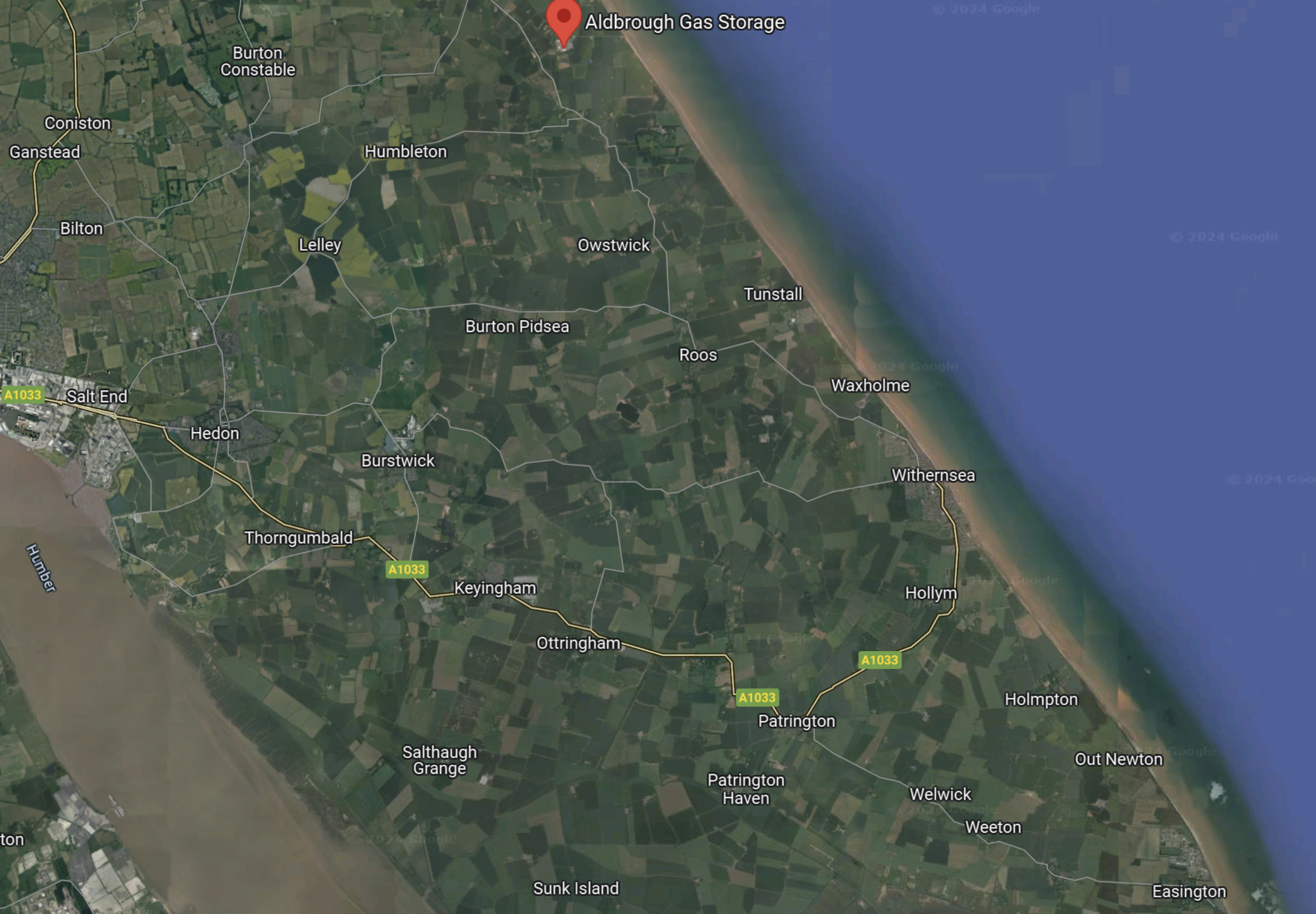
The Location Of Aldbrough Gas Storage, Rough Gas Storage, Salt End And Easington Gas Terminal
This Google Map shows between Salt End and the coast.
Note.
- The river crossing the South-West corner of the map is the Humber.
- Salt End with its power station and chemical works is on the North Bank of the Humber, where the river leaves the map.
- Aldbrough Gas Storage is marked by the red arrow at the top of the map.
- Easington Gas Terminal is in the South-East corner of the map.
- According to Wikipedia, gas flows into and out of the Rough Gas Storage are managed from Easington.
Looking at the map, I feel that the following should be possible.
- The two gas storage sites could be run together.
- Salt End power station and the related chemical works could run on hydrogen.
- Salt End will always have a reliable source of hydrogen.
- This hydrogen could be green if required.
All the chemical works at Salt End, could be run on a zero-carbon basis. Would this mean premium product prices? Just like organic does?
Enter The Germans
The Germans have a huge decarbonisation problem, with all their coal-fired power stations and other industry.
Three massive projects will convert much of the country and industry to hydrogen.
- H2ercules, which is a project of OGE and RWE, will create a hydrogen network to bring hydrogen, to where it is needed.
- In Uniper To Make Wilhelmshaven German Hub For Green Hydrogen; Green Ammonia Import Terminal, I describe how Uniper are going to build a hydrogen import terminal at Wilhelmshaven.
- AquaVentus is an RWE project that will use 10.3 GW of offshore wind power in German territorial waters to create a million tonnes per year of green hydrogen.
These would appear to be three of Europe’s largest hydrogen projects, that few have ever heard of.
AquaVentus And The UK
This video shows the structure of AquaVentus.
I clipped this map from the video.

Note.
- The thick white line running North-West/South-East is the spine of AquaVentus, that delivers hydrogen to Germany.
- There is a link to Denmark.
- There appears to be an undeveloped link to Norway.
- There appears to be an undeveloped link to Peterhead in Scotland.
- There appears to be a link to just North of the Humber in England.
- Just North of the Humber are the two massive gas storage sites of Aldbrough owned by SSE and Brough owned by Centrica.
- There appear to be small ships sailing up and down the East Coast of the UK. Are these small coastal tankers, that are distributing the hydrogen to where it is needed?
In the last century, the oil industry, built a substantial oil and gas network in the North Sea.
It appears now the Germans are leading the building of a substantial hydrogen network in the North Sea.
These are my thoughts about development of the AquaVentus network.
Hydrogen Production And AquaVentus
This RWE graphic shows the layout of the wind farms feeding AquaVentus.
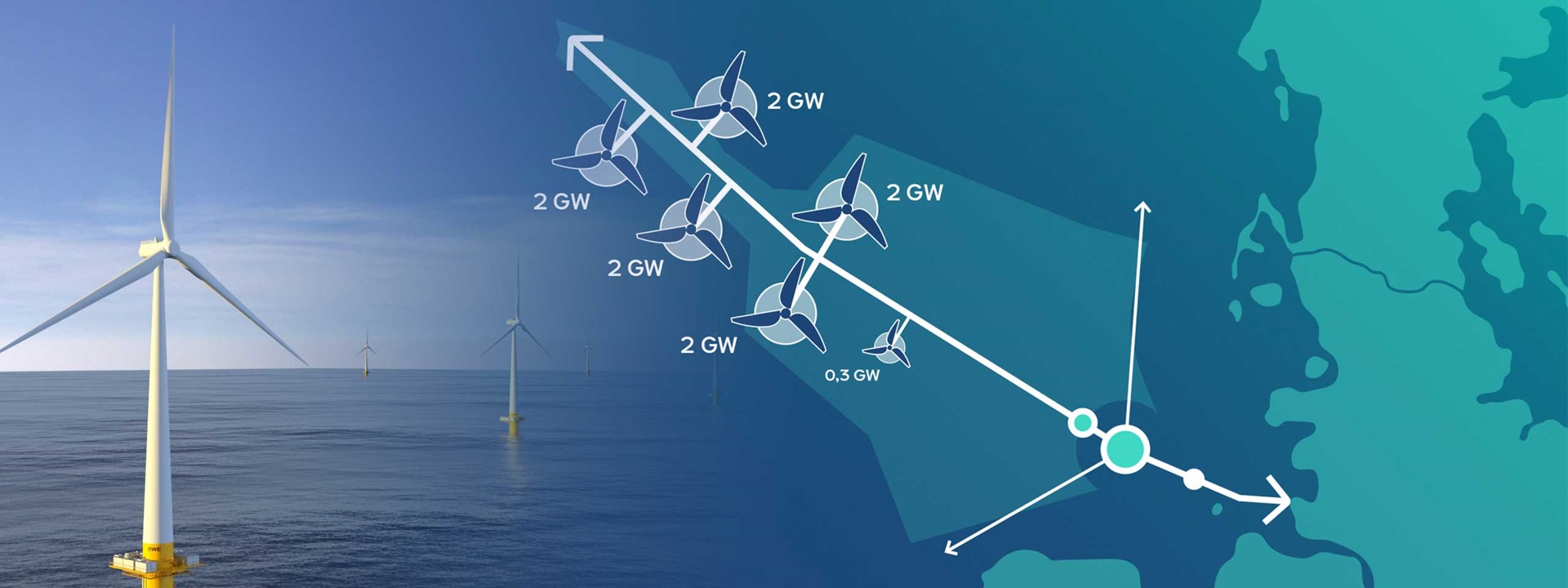
Note.
- There is a total of 10.3 GW.
- Is one of the 2 GW web sites on the UK-side of AquaVentus, the 3 GW Dogger Bank South wind farm, which is being developed by RWE?
- Is the 0.3 GW wind farm, RWE’s Norfolk wind farm cluster, which is also being developed by RWE?
Connecting wind farms using hydrogen pipelines to Europe, must surely mitigate the pylon opposition problem from Nimbys in the East of England.
As the AquaVentus spine pipeline could eventually connect to Peterhead, there will be other opportunities to add more hydrogen to AquaVentus.
Hydrogen Storage And AquaVentus
For AquaVentus to work efficiently and supply a large continuous flow of hydrogen to all users, there would need to be storage built into the system.
As AquaVentus is around 200 kilometres in length and natural gas pipelines can be up to 150 centimetres in diameter, don’t underestimate how much hydrogen can be stored in the pipeline system itself.
This page on the Uniper web site is entitled Green Wilhelmshaven: To New Horizons.
This is a sentence on the page.
Access to local hydrogen underground storage at the Etzel salt cavern site.
An Internet search gives the information, that Etzel gas storage could be developed to hold 1 TWh of hydrogen.
That would be enough hydrogen to supply 10 GW for a hundred hours.
Note that the UK branch of AquaVentus reaches the UK, just to the South of the massive hydrogen storage facilities at Aldbrough and Rough.
It would appear that both Germany and the UK are connected to AquaVentus through substantial storage.
I am certain, that all country connections to AquaVentus will have substantial storage at the country’s hydrogen terminal.
AquaDuctus
This would appear to be the first part of the AquaVentus network and has its own web site.
The web site is entitled Nucleus Of A Offshore Hydrogen Backbone.
These are the first two paragraphs.
The project partners are focusing on a scalable, demand-driven infrastructure: By 2030, AquaDuctus will connect the first large hydrogen wind farm site, SEN-1, with a generation capacity of approximately one gigawatt. SEN-1 is located in the German EEZ in the northwest of Helgoland. The pipeline will transport at a length of approx. 200 km green hydrogen produced from offshore wind to the German mainland and from there to European consumers via the onshore hydrogen infrastructure.
In the next project stage, AquaDuctus will be extended to the remote areas of the German exclusive economic zone towards the tip of the so-called duck’s bill. By that, additional future hydrogen wind farm sites will be connected. Along its way AquaDuctus will provide interconnection points with the opportunity for linking of adjacent national offshore hydrogen infrastructures originating from Denmark, Norway, the Netherlands, Belgium and United Kingdom which opens the door for Europe-wide offshore hydrogen transport by pipeline.
There is also an interactive map, that gives more details.
This paragraph explains, why the Germans have chosen to bring the energy ashore using hydrogen, rather than traditional cables.
Recent studies show that offshore hydrogen production and transport via pipelines is faster, cheaper, and more environmentally friendly than onshore electrolysis with a corresponding connection of offshore wind turbines via power cables. The German federal government has also recognized this advantage and has clearly expressed its intention to promote offshore hydrogen production in the North Sea.
I suspect, that some UK offshore wind farms will use the same techniques.
Hydrogen Production For The UK
Electrolysers will probably be built along the East Coast between Peterhead and Humberside and these will feed hydrogen into the network.
- Some electrolysers will be offshore and others onshore.
- Turning off windfarms will become a thing of the past, as all surplus electricity will be used to make hydrogen for the UK or export to Europe.
- Until needed the hydrogen will be stored in Albrough and Rough.
Backup for wind farms, will be provided using hydrogen-fired power stations like Keadby Hydrogen power station.
Financial Implications
I reported on Rishi Sunak’s Manifesto Speech, which he made on June 11th. This is an extract
This document on the Policy Mogul web site is entitled Rishi Sunak – Conservative Party Manifesto Speech – Jun 11.
These are three paragraphs from the speech.
We don’t just need military and border security. As Putin’s invasion of Ukraine has shown, we need energy security too. It is only by having reliable, home-grown sources of energy that we can deny dictators the ability to send our bills soaring. So, in our approach to energy policy we will put security and your family finances ahead of unaffordable eco zealotry.
Unlike Labour we don’t believe that we will achieve that energy security via a state-controlled energy company that doesn’t in fact produce any energy. That will only increase costs, and as Penny said on Friday there’s only one thing that GB in Starmer and Miliband’s GB Energy stands for, and that’s giant bills.
Our clear plan is to achieve energy security through new gas-powered stations, trebling our offshore wind capacity and by having new fleets of small modular reactors. These will make the UK a net exporter of electricity, giving us greater energy independence and security from the aggressive actions of dictators . Now let me just reiterate that, with our plan, we will produce enough electricity to both meet our domestic needs and export to our neighbours. Look at that. A clear, Conservative plan not only generating security, but also prosperity for our country.
I can’t remember any reports about an energy security policy, which he outlined in the last paragraph of my extract from his speech.
He also said we would have sufficient electricity to export to our neighbours. As I said earlier some of this energy will be in the form of hydrogen, which has been created by offshore electrolysers.
If we are exporting electricity and hydrogen to Europe, this is likely to have three effects.
- An improvement in Europe’s energy security.
- H2ercules will improve and decarbonise German industry, using UK hydrogen.
- The finances of UK plc will improve.
It looks like there would be winners all round.
Rishi Sunak had the cards and he played them very badly.
It is now up to Keir Starmer, Great British Energy and Jürgen Maier to play those cards to link the energy systems of the UK and Germany to ensure security and prosperity for Europe.
Centrica Completes Work On 20MW Hydrogen-Ready Peaker In Redditch
The title of this post, is the same as that of this press release from Centrica.
This is the sub-heading.
Construction is complete on Centrica’s new 20MW hydrogen-blend-ready gas-fired peaking plant in Worcestershire, transforming the previously decommissioned Redditch power plant.
These paragraphs give more details of the project.
The plant is designed to support times of high or peak demand for electricity. Peaking plants only operate when production from renewables can’t meet demand, supporting the energy transition by maintaining a stable electricity supply. The Redditch site can power the equivalent of 2,000 homes for a full day, helping to maintain stability and reliability on the grid.
The plant is capable of using a blend of natural gas and hydrogen, futureproofing the site and supporting the UK’s transition towards a decarbonised energy system.
The Redditch peaking plant forms part of Centrica’s plans to invest between £600m – £800m a year until 2028 in renewable generation, security of supply, and its customers, including building out a portfolio of flexible energy assets. That includes the redevelopment of several legacy power stations, including the Brigg Energy Park in to a power generation and battery storage asset, and the first power station in the UK to be part-fuelled by hydrogen.
I also wrote Centrica Business Solutions Begins Work On 20MW Hydrogen-Ready Peaker In Redditch, about this project.
HiiROC
I wonder if this power station will be fitted with a HiiROC system, which will split the natural gas into two useful products; hydrogen and carbon black.
I wrote about HiiROC in Centrica Partners With Hull-Based HiiRoc For Hydrogen Fuel Switch Trial At Humber Power Plant.
I can see lots of HiiROC systems creating a hydrogen feed, to decarbonise various processes.
Whose Engines Are Used At Redditch?
Centrica still haven’t disclosed, whose engines they are using.
Pension Power Backing For New Battery Energy Storage Plant
The title of this post, is the same as that of this article on Nation.Cymru.
These paragraphs outline the project,
A new battery energy storage plant at the site of a decommissioned power station will be funded by Welsh pensioners.
The plan for the facility at the former Uskmouth B Power Station at the Gwent Wetlands on the edge of Newport, was approved by the city council’s planning committee this January.
The batteries will store excess power during times of “excess supply” and then put that electricity back into the grid when demand is higher.
The Greater Gwent Pension Fund, which manages the retirement savings of more than 65,000 members from Blaenau Gwent, Caerphilly, Monmouthshire Newport and Torfaen councils as well as 52 other active employers in the Gwent region, has revealed it is investing in the project.
According to their Wikipedia entry, the Uskmouth power stations have had rather a chequered history and both appear to be currently non-productive.
- The original coal-fired Uskmouth A has been demolished and the site is now occupied by an 832 MW gas-fired CCGT power station. Currently, it is in a ‘dormant’ state, after its owner entered administration.
- The original coal-fired Uskmouth B has been converted and now can generate 363 MW on a mixture of biomass and waste plastic. Uskmouth B is currently being demolished.
This press release from Quinbrook Infrastructure Partners is entitled Quinbrook To Build Large-Scale Battery Storage Project At Uskmouth, South Wales.
This is the sub-heading.
Uskmouth will be one of the largest storage projects in the UK and will directly support the UK’s energy transition.
These first two paragraphs outline the project.
Quinbrook Infrastructure Partners (“Quinbrook”), a specialist investment manager focused on renewables, storage and grid support infrastructure has acquired the exclusive development rights for one of the UK’s largest battery storage projects to date.
The planned 230MW / 460MWh Battery Energy Storage System (“BESS”), will be located at the site of the former Uskmouth coal fired power station in south Wales (“Project Uskmouth”) and will seek to utilise existing power transmission infrastructure and provide a new lease of life to the area. Uskmouth was acquired from Simec Atlantis Energy Limited (“SAE”). Quinbrook has partnered with Energy Optimisation Solutions Limited (“EOS”) in the origination and development of Project Uskmouth, which represents a major anchoring project in the planned re-development and regeneration of the Uskmouth site into a Sustainable Energy Park that will support innovative future industry. Quinbrook considers these types of regeneration projects as key to making meaningful contributions to delivery of the Government’s Levelling Up ambitions.
Note.
- The battery can supply 230 MW for two hours.
- It looks like the battery will replace the older of the two power stations and work with the relatively-modern 832 MW gas-fired CCGT power station.
- Will they act as backup to renewables?
As there are very few renewables in the area, will this work with the wind farms being developed in the Celtic Sea or are Quinbrook anticipating wind farms South of Newport in the Bristol Channel?
I have a few thoughts.
Will Uskmouth Work With Hinckley Point C?
This Google Map shows the relative locations of Uskmouth and Hinckley Point C.

Note.
- Uskmouth is just South of Newport, in the North-East corner of the map.
- I estimate that Uskmouth and Hinckley Point C are 24.7 miles apart.
A cable across the Bristol Channel would surely increase the energy security of South Wales.
Will There Be Wind Farms In The Bristol Channel?
I feel that this is inevitable.
This document on the Welsh Government web site is entitled Future Potential For Offshore Wind In Wales, was written by The Carbon Trust.
This paragraph is the document’s assessment of wind farms in the Bristol Channel.
Despite high energy demand and good infrastructure, environmental conditions in the Bristol Channel
makes this area challenging for offshore wind development. In addition to lower average wind speeds,
the Bristol Channel has complex seabed, including areas of hard rock, and is exposed to strong tidal
currents from the Severn Estuary. Seabed conditions and tidal currents were the main drivers behind
cancellation of the Atlantic Array project and it is considered unlikely that a developer would look to
revive this site in the near-term, particularly given competition with other more favourable UK sites.
That doesn’t seem very promising.
But this is the document’s assessment of wind farms in the Pembrokeshire Atlantic area.
Exposure to the prevailing south-westerly Atlantic wind and swells means that the waters off
Pembrokeshire have excellent wind speeds, often exceeding 10 m/s, but also a harsher wave
environment than elsewhere in Wales. Significantly, water depths quickly increase to over 50m,
suggesting that floating foundations are likely to be required, particularly if projects are located
further from shore, which is likely given constraints from environmental impact and seascape near to
the Pembrokeshire Coast National Park.Grid infrastructure is constrained for thermal generation but should not be a barrier to new
renewables. The Greenlink interconnector could also support the addition of new capacity. The region
has good port infrastructure at Milford Haven and Pembroke Dock, which is already actively pursuing
upgrades to future proof the port for potential offshore wind deployment.
That is a lot more promising.
- Some demonstration wind farms are under development.
- Hopefully, the steel would be available at Port Talbot.
- I can see this area, having almost 50 GW of floating wind.
I do feel though, that once the sea off Pembrokeshire is full of wind farms, that developers will turn their attention to the more difficult waters of the Bristol Channel.
Is The Uskmouth BESS A Good Investment?
The Nation.Cymru article discusses this and what they say is well worth reading.
My feelings are that the BESS will be very busy balancing electricity on the South Wales Coast and to and from Ireland using the 500 MW Greenlink Interconnector, which opens this year.
These electrical systems are relatively easy to model and I suspect Quinbrook wouldn’t be investing, if the BESS was not going to generate a substantial income.
InterGen’s Two Huge Batteries
InterGen are developing two huge lithium-ion batteries, which seem to be rather under the radar of the mainstream media.
InterGen are an energy company, of which few people have heard.
On the About InterGen page, this is the sub-heading of a section describing their business.
InterGen is a uniquely independent energy company. We support the journey to a stable, dependable, net zero energy system through delivering the flexible electricity solutions that underpin it.
These four paragraphs introduce the business.
Founded in 1995, we have decades of experience in the GB market.
Our power stations provide secure, flexible energy to consumers, and help the grid to take on more and more renewables.
Our expert trading team in Edinburgh sells electricity and services to help utilities, system operators and the wider energy market deliver secure power to homes and businesses across the country, whilst our pipeline of new developments includes some of the world’s largest battery storage assets, an essential component in the future energy system.
The world is changing, and we’re proud to be playing an active role in the unfolding energy story for generations to come.
Batteries are very much for generations to come.
These four paragraphs on this page says this about their batteries.
Developing a large-scale energy storage capability will help to resolve the challenge of the intermittency of renewable generation. At InterGen, we’re managing the delivery of one of Europe’s largest battery storage portfolios, with over 2GW of grid scale projects, having dedicated grid connections and proceeding through the permitting process.
The share of wind and solar power is increasing in the UK’s energy mix, but these sources only generate power when the wind blows or the sun shines. The use of batteries to store the excess power generated can help provide low carbon power to balance supply and demand with renewable power during periods of low output.
InterGen’s UK battery projects are world-leading in this kind of technology deployment. The facilities will use proven lithium-ion technology which has zero emissions, has superior flexibility, and will complement the increasing amounts of renewable energy generation in the UK.
In Essex, our project at London Gateway Port to create up to 900MWh of energy received planning permission in January 2023, and when complete will be large enough to provide power for up to 450,000 homes. At Spalding, we have consent to develop up to 1.1GWh of storage capability, adjacent to our existing operational CCGT and OCGT plants. Both of these developments are world-class in terms of size. It’s all part of our goal to support the transition to low carbon generation through the provision of flexible capacity.
Gateway Energy Centre
This page describes the Gateway Energy Centre, where this is said.
InterGen is in late stage development of a world leading battery storage project in the London Gateway Logistics Park, next to the DP World London Gateway Port on the north bank of the River Thames in Essex. InterGen built and continues to operate the existing 800 MW Coryton gas-fired combined cycle power station which is located approximately one kilometre from the proposed Gateway Energy Centre site.
The Gateway project will consist of a Battery Energy Storage System (BESS) with a rated electrical output of up to 900MWh (up to 450MW).
InterGen received Town and Country Planning Permission in January 2023, making the Gateway project the largest battery in the UK once operational. The £300m project will provide power for over 450,000 homes once fully complete.
Note.
- I assume they mean this battery is a 450 MW/900 MWh battery, that will provide 450 MW for two hours.
- It is close to the 732 MW Coryton gas-fired combined cycle power station.
I would assume that one of its tasks will be to make sure the London Gateway complex gets rnough reliable power.
Spalding Energy Park
This page describes the Spalding Energy Park, where this is said.
The Spalding Energy Park, adjacent to InterGen’s existing combined and open cycle gas plants at Spalding, has received Town and Country Planning Permission in June 2023 for one of Europe’s largest battery storage projects. The battery development could deliver up to 1,100MWh of electricity once operational, providing power for up to 500,000 homes.
Spalding Energy Park received planning consent in January 2018 from the Department of Business, Energy and Industrial Strategy. The project is carbon capture ready.
As at Gateway Energy Centre, the battery is located close to a large 860 MW gas-fired power station.
Co-location of a gas-fired power station and a battery must make the grid connection simpler.
Conclusion
A total of 2 GWh of storage is a good start and I’ll suspect we’ll hear more about these two batteries in the next couple of years.
British Wind Farms Outstrip Gas-Fired Electricity Generation For The First Time
The title of this post, is the same as that of this article on offshoreWIND.biz.
This is the sub-heading.
Wind farms in Britain generated more electricity than gas-fired power stations for the first time in the first quarter of 2023. Offshore and onshore wind turbines supplied 32.4 per cent of electricity while gas-fired power stations delivered 31.7 per cent during the first three months of this year.
It does appear that we’re progressing in the right direction.
There’s a detailed graph showing the UK’s energy generation by source going back to 2010.
‘Czech Sphinx’ Power Plant Intended To Keep Lights On
The title of this post, is the same as that of this article on The Times.
This is the first paragraph.
The businessman known as the “Czech Sphinx” is set to expand his position in Britain’s energy market after securing subsidy contracts to build a new gas-fired power plant and battery storage project.
As I needed to find the answers to particular questions, I looked for and found the original press release on the EP Holdings web site, which is entitled EPH Will Build A New Gas-Fired Power Plant And Battery Storage Facility In The UK At A Cost Of More Than £1 billion.
These statements describe the project.
- It will be a 1700MW high efficiency H-class CCGT power project and a 299MW 2-hour battery storage project
- The power station will be built on the site of the former Eggborough coal station in East Yorkshire.
I find this to be the most significant paragraph.
The high efficiency H-class CCGT project will be the single largest flexible generation asset to be commissioned in the UK since 2012, whilst the battery project will also be one of the largest to be built in the UK to date. Given the site’s close proximity to existing National Grid infrastructure and a number of proposed CCUS and hydrogen pipeline routes, under EPUKI’s plans these projects will make a significant contribution to the UK’s energy transition and security for years to come.
This map from OpenRailwayMap, shows the relationship between the Eggborough site and the nearby Drax power station.

Note.
- The Eggborough power station site is in the South-West corner of the map and is identified by the rail loop. which was used to deliver the coal.
- The Drax power station site is in the North-East corner of the map and is similarly identified by a rail loop.
- There is a high voltage transmission line connecting the two power stations.
- As the crow flies is about eight miles between Eggborough and Drax.
This Google Map shows the Eggborough power station site.

Note.
- The remains of the eight cooling towers are visible at the North of the site.
- The large circular black area in the middle is the coal yard with its rail loop.
- It is a large site.
I have looked in detail at the cleared area in the North-West of the site and the pylons of the connection to Drax are still visible.
So it looks like there is still an electrical connection of some sort to the site.
According to Wikipedia, the original coal-fired power station had a nameplate capacity of 1960 MW, so I suspect that a modernised electricity connection to handle the maximum near 2,000 MW of the new station would be possible.
This map shows the Zero Carbon Humber pipeline layout.

Note.
- The orange line is a proposed carbon dioxide pipeline
- The black line alongside it, is a proposed hydrogen pipeline.
- Drax, Keadby and Saltend are power stations.
- Keadby and Saltend are gas-fired power stations.
- Easington gas terminal is connected to around twenty gas fields in the North Sea.
- The terminal imports natural gas from Norway using the Langeled pipeline.
- The Rough field has been converted to gas storage and can hold four days supply of natural gas for the UK.
- To the North of Hull is the Aldbrough Gas Storage site, which SSE plan to convert to hydrogen storage.
The Eggborough power station site is about eight miles to the South-West of Drax.
I don’t suspect that connecting the Eggborough site to the carbon dioxide, gas and hydrogen pipelines will not be the most challenging of tasks.
So when the press release says.
Given the site’s close proximity to existing National Grid infrastructure and a number of proposed CCUS and hydrogen pipeline routes, under EPUKI’s plans these projects will make a significant contribution to the UK’s energy transition and security for years to come.
The company is not exaggerating.
It appears that carbon dioxide, gas and hydrogen pipelines can be developed and National Grid connections can be reinstated.
Eggborough Will Not Be Alone
From the EP Holdings press release, it appears that the Eggborough power station will be fitted with carbon-capture and will be hydrogen-ready.
This will make it the second power-station in the area to be fitted out in this way, after SSE’s planned Keadby 3, which is described in this page on the SSE web site in this document, which is entitled Keadby 3 Carbon Capture Power Station.
They could also be joined by Keadby Hydrogen power station.
This would mean that zero-carbon power stations in the area could include.
- Eggborough Gas/Hydrogen – 1700 MW
- Eggborough Battery – 299 MW
- Keadby 3 Gas/Hydrogen – 910 MW
- Keadby Hydrogen – 1800 MW – According to this Equinor press release.
Note.
- The Eggborough Battery pushes the total zero-carbon capacity over 4500 MW or 4.5 GW.
- The various Dogger Bank wind farms are to have a total capacity of 8 GW within ten years.
- The various Hornsea wind farms are to have a total capacity of 5.5 GW in a few years.
I would expect that the zero-carbon power stations would make a good fist of making up the shortfall, when the wind isn’t blowing.
Drax, Keadby 1 And Keadby 2 Power Stations
Consider.
- Drax has a nameplate capacity of 3.9 GW, of which 2.6 GW is from biomass and the rest is from coal.
- Keadby 1 has a nameplate capacity of 734 MW.
- Keadby 2 has a nameplate capacity of 734 MW.
How much of this capacity will be fitted with carbon capture, to provide extra zero-carbon backup to the wind farms?
Green Hydrogen From Surplus Wind Power
At times, there will be an excess of renewable energy.
I suspect, an order for a large electrolyser will be placed soon, so that surplus renewable energy can be used to create green hydrogen.
This will be stored in the two storage facilities, that are being developed in the area; Aldbrough and Rough.
Controlling The Fleet
I am by training a Control Engineer and this fleet can be controlled to provide the electricity output required, so that the carbon-dioxide produced is minimised and the cost is at a level to the agreement of producers and users.
Conclusion
It looks like in excess of 20 GW of reliable zero-carbon energy could be available on Humberside.
I’m sure British Steel would like to by a lot of GWhs to make some green steel at Scunthorpe.
Equinor And SSE Eye Green Hydrogen Production For 1.32 GW Dogger Bank D
The title of this post, is the same as that of this article on offshoreWIND.biz.
This is the sub-heading.
SSE Renewables and Equinor, the developers of the Dogger Bank Wind Farm in the UK, are exploring two options for Dogger Bank D, the fourth wind farm the partners are looking to build as part of the development. These include using Dogger Bank D for electricity that would feed into the UK grid and/or for green hydrogen production.
This says to me, that depending on need, electricity from the Dogger Bank Wind Farms and D in particular, can be distributed in the grid or converted into green hydrogen.
- The article says that the electrolyser could become the UK’s largest green hydrogen project
- There will be plenty of hydrogen storage in the salt caverns at Aldbrough, which can currently store the equivalent of 320 GWh of electricity, It is currently being expanded to be one of the largest hydrogen stores in the world according to this page on the SSE web site.
- There are currently two gas-fired power stations at Keadby and they will in a few years be joined by a third, that will be fitted with carbon-capture and a hydrogen-fueled power station.
The various wind farms, power stations and gas storage on Humberside are growing into a very large zero-carbon power cluster, with an output approaching six GW.
Any shortfall in wind output, could be made-up by using the Keadby 3 gas-fired power station with carbon capture or the Keadby hydrogen power station.
Conclusion
Humberside is getting a cluster of power stations and wind farms, that can produce almost twice the electricity of Hinckley Point C nuclear power station.
Neptune Energy, Ørsted And Goal7 Explore Powering Integrated Energy Hubs With Offshore Wind
The title of this post, is the same as that of this press release from Neptune Energy.
These four paragraphs outline the agreement.
Neptune Energy today announced it has signed a Memorandum of Understanding with Ørsted and Goal7 to explore powering new integrated energy hubs in the UK North Sea with offshore wind-generated electricity.
Integrated energy hubs have the potential to combine multiple energy systems, including existing oil and gas production assets, carbon storage and hydrogen production facilities. They could extend the life of producing fields and support the economic case for electrification with renewable energy, to keep carbon emissions low.
The agreement will see the companies examine the potential to supply renewable electricity from Ørsted’s Hornsea offshore windfarm projects to power future Neptune-operated hubs in the UK North Sea.
Goal7 will provide project management support and technical input.
Note.
- Neptune Energy has three oil and gas fields in the UK North Sea; Cygnus (operational), Isabella (exploration) and Seagull (development)
- Gas from Cygnus comes ashore at the Bacton Gas Terminal.
- Ørsted owns the Hornsea wind farm, which when fully developed will have a capacity of around 6.5 GW.
- Cygnus and Hornsea could be not much further than 50 km apart.
- Seagull and Isabella are further to the North and East of Aberdeen.
- Ørsted has an interest in the Broadshore wind farm, which was numbered 8 in the ScotWind Leasing round.
These are my thoughts.
The Cygnus Gas Field And The Hornsea Wind Farm
This could be like one of those stories where boy meets the girl next door and they hit it off from the first day.
This page on the Neptune web site says this about the Cygnus gas field.
The biggest natural gas discovery in the southern North Sea in over 30 years is now the largest single producing gas field in the UK, typically exporting over 250 million standard cubic feet of gas daily. Cygnus contributes six per cent of UK gas demand, supplying energy to the equivalent of 1.5 million UK homes. It has a field life of over 20 years.
Two drilling centres target ten wells. Cygnus Alpha consists of three bridge-linked platforms: a wellhead drilling centre, a processing/utilities unit and living quarters/central control room. Cygnus Bravo, an unmanned satellite platform, is approximately seven kilometres northwest of Cygnus Alpha.
In 2022, we plan to drill two new production wells at Cygnus, with the first of these expected to come onstream in 4Q. The second well is due to be drilled in the fourth quarter and is expected onstream in the first quarter of 2023, with both wells helping to maintain production from the field and offset natural decline.
Gas is exported via a 55 km pipeline. Cygnus connects via the Esmond Transmission System (ETS) pipeline to the gas-treatment terminal at Bacton, Norfolk. Neptune Energy has a 25% minority interest in ETS.
Note.
- Cygnus with a twenty year life could be one of the ways that we bridge the gap until we have the two Cs (Hinckley Point and Sizewell) and a few tens of offshore wind gigawatts online.
- The two extra wells at Cygnus will help bridge the gap.
- The gas field has a pipeline to Bacton.
So what can the gas field and the wind farm, do for each other?
Hornsea Can Supply The Power Needs Of Cygnus
Typically, ten percent of the gas extracted from the wells connected to a gas platform, will be converted into electricity using one or more gas-turbine engines; which will then be used to power the platform.
So, if electricity from the Hornsea wind farm, is used to power the platform, there are two benefits.
- More gas will be sent through the pipeline to Bacton.
- Less carbon dioxide will be emitted in recovering the gas.
Effectively, electricity has been turned into gas.
Electricity Can Be Stored On The Sea-Bed
The Hornsea One wind farm has an area in the order of 150 square miles and it is only one wind farm of four, that make up the Hornsea wind farm.
I would argue that there is plenty of space between the turbines and the wells of the Cygnus gas field to install some form of zero-carbon underwater battery to store electricity.
But does this technology exist?
Not yet! But in UK Cleantech Consortium Awarded Funding For Energy Storage Technology Integrated With Floating Wind, I described a technique called Marine Pumped Hydro, which is being developed by the STORE Consortium.
- Energy is stored as pressurised water in 3D-printed hollow concrete spheres fitted with a hydraulic turbine and pump.
- The spheres sit on the sea-bed.
- This page on the STORE Consortium web site, describes the technology in detail.
- The technology is has all been used before, but not together.
I think it is excellent technology and the UK government has backed it with £150,000 of taxpayers’ money.
I also believe that Marine Pumped Hydro or something like it, could be the solution to the intermittency of wind farms.
Excess Electricity Can Be Converted Into Hydrogen
Any spare electricity from the wind farm can drive an electrolyser to convert it into hydrogen.
The electrolyser could be mounted on one of the Cygnus platforms, or it could even float.
The hydrogen produced would be blended with the gas and sent to Bacton.
Carbon Dioxide Can Be Stored In The Depleted Cygnus Gas Field
As the gas field empties of natural gas, the gas pipes to the Cygnus gas field can be reversed and used to bring carbon dioxide to the gas field to be stored.
The Cygnus gas field has gone full circle from providing gas to storing the same amount of carbon that the gas has produced in its use.
These are two paragraphs from the press release.
Neptune Energy’s Director of New Energy, Pierre Girard, said: “The development of integrated energy hubs is an important part of Neptune’s strategy to store more carbon than is emitted from our operations and the use of our sold products by 2030.
“Neptune has submitted three applications under the recent Carbon Dioxide Appraisal and Storage Licensing Round, and securing the licences would enable us to develop future proposals for integrated energy hubs in the UK North Sea.
I can envisage a large gas-fired power-station with carbon capture being built in Norfolk, which will do the following.
- Take a supply of natural gas from the Cygnus gas field via the Bacton gas terminal.
- Convert the hydrogen in the gas into electricity.
- Convert the carbon in the gas into carbon dioxide.
- Store the carbon dioxide in the Cygnus gas field via Bacton.
- I also suspect, that if a Norfolk farmer, manufacturer or entrepreneur has a use for thousands of tonnes of carbon dioxide, they would be welcomed with open arms.
Would the ultra-greens of this world, accept this power station as zero-carbon?
The Isabella And Seagull Gas Fields And The Broadshore Wind Farm
Could a similar set of projects be applied to the Isabella and Seagull gas fields, using the Broadshore wind farm?
I don’t see why not and they could work with the Peterhead power stations.
 The Anonymous Widower