‘Castle’ HSTs To Be Withdrawn By Great Western Railway
The title of this post, is the same as that of this article on Rail Advent.
This quote from a GWR spokesman, sums up the action that will be taken.
The Castles were always designed to be a temporary measure on the Cardiff to Penzance route. We expect to replace the Castle Class trains on a phased basis over the next couple of years, bringing customers the benefit of more modern trains that will reduce both cost and carbon emissions across the route.
These are my thoughts.
Could The Engines In The Power Cars Be Replaced With Modern Carbon-Neutral Engines?
This would be an alternative way to solve the decarbonisation problem.
It would also mean that other applications of the Class 43 power cars, like ScotRail’s Inter7City trains, Cross Country’s HSTs and Network Rail’s New Measurement Train would have a decarbonisation route,
In Rolls-Royce Releases mtu Rail Engines For Sustainable Fuels, Rolls-Royce mtu outline their route to decarbonise rail engines using sustainable fuels.
This was the first paragraph of my conclusion in the linked article.
Rolls-Royce and Cummins seem to be doing a thoroughly professional job in decarbonising the diesel engines they have made in recent years.
The Class 43 power cars have Rolls-Royce mtu Series 4000 engines, which will soon be available to run on sustainable fuel.
I think as a possible fall-back, one Class 43 power car should be converted to carbon neutral.
Could The Engines In The Power Cars Be Replaced With Modern Hydrogen Engines?
I looked at this in Will We See Class 43 Power Cars Converted To Hydrogen?.
I came to the conclusion, that this might be possible and said this.
It would be the ultimate Roller.
But then Rolls-Royce know about winning battles with large internal combustion engines.
The Option Of New Trains
This quote from a GWR spokesman was fairly definite about new trains, when they said.
The Castles were always designed to be a temporary measure on the Cardiff to Penzance route. We expect to replace the Castle Class trains on a phased basis over the next couple of years, bringing customers the benefit of more modern trains that will reduce both cost and carbon emissions across the route.
What trains could replace the Castles?
- The Cardiff and Penzance route is just short of 250 miles or roughly 400 kilometres.
- Only about 30 miles at the Cardiff end is electrified.
- Trains would need to be able to handle 25 KVAC overhead electrification.
- 125 mph trains will be needed at the Cardiff end.
- Four or five passenger cars will be needed.
- Currently, there are twelve Castles, so I will assume twelve new trains.
As these trains will be lasting up to forty years, they must be zero-carbon, which must mean battery-electric or hydrogen.
Charging Battery-Electric Trains
Consider
- Bristol Temple Meads, Exeter St. Davis and Plymouth are large stations with several platforms. I suspect that a number of Furrer + Frey’s charging stations can be installed along the route.
- The timetable would be adjusted to allow trains to be charged as they stopped to set down and pick up passengers.
- Trains would dwell in the station and then use their 125 mph performance to regain the time.
- I’ve also found a Penzance to Cardiff service, that stopped at Plymouth for fourteen minutes, which is more than enough to charge the batteries.
- Regenerative braking to the batteries would further eke out the range.
- There might also be some extra electrification around Bristol or Exeter.
- Some form of charging would be needed at Penzance.
Note.
- Putting up electrification may mean that it will delay the new trains for a few years.
- Charging stations along the route could probably be installed to a tight timetable.
I believe that with some top-class work, by battery and charger manufacturers, that a battery-electric train could be developed that could run between Cardiff and Penzance.
Thoughts On Hydrogen
Consider.
- The Alstom Coradia iLint train has a range of about 1,000 km. on hydrogen.
- Companies like Airbus, Boeing and a host of rocket makers will improve the storage and safety of hydrogen.
- A range of a 1,000 km. would allow refuelling at one end of the route.
- Trains could be multiple units or a hydrogen-electric locomotive pulling a rake of coaches with a driving van trailer.
I feel that hydrogen would be very feasible as a power source.
Alstom Could Offer A Hydrogen Aventra
Consider.
- Alstom are developing a hydrogen-powered Aventra.
- Bombardier were offering a 125 mph Aventra.
- A typical Aventra like a Class 720 train seats a hundred passengers a car.
A hydrogen Aventra would be feasible.
Hitachi Could Offer A Battery-Electric Or Hybrid AT-300
In 2021, in Hitachi And Eversholt Rail To Develop GWR Intercity Battery Hybrid Train – Offering Fuel Savings Of More Than 20%, I wrote about the announcement of the Hitachi Intercity Tri-Mode Battery Hybrid Train, which is shown in this Hitachi infographic.

Note.
- Batteries replacing an engine to cut fuel usage and reduce carbon emissions.
- First time a modern UK intercity train, in passenger service, will use alternative fuel.
- These Hitachi trains use mtu engines, so I suspect they will be switched to sustainable fuel like HVO.
- The trains are 125 mph and 140 mph with the latest digital signalling.
- Great Western Railway already have 58 five-car Class 800/802 trains and 35 nine-car 800/802 trains.
- They would not need any changing stations or other infrastructure changes.
- Staff retraining would be minimal.
Testing of the prototype of these trains must be getting very close or even underway.
Stadler Could Offer A Battery-Electric Flirt Akku
Consider
- Stadler have run a Flirt Akku on batteries for 243 km.
- Flirt Akkus will go into service soon.
- Flirts have been designed for 125 mph running.
With charging at Cardiff, Bristol, Exeter, Plymouth and Penzance, I believe a Flirt Akku could handle the route.
Are Hitachi Home And Hosed?
I have a feeling that the announcement has been made about retiring the Castles as the prototype Hitachi Intercity Tri-Mode Battery Hybrid Train is under test and is performing well.
So I wouldn’t be surprised to see an order for twelve more Class 802 trains soon.
‘Ryanair Of Rail’ Lights Up The East Coast On Fast Track To Profit
The title of this post, is the same as that of this article on The Times.
This is the first paragraph.
A cut-price rail service between London and Edinburgh, dubbed the Ryanair of rail, is on track to turn a profit after a year in service and has helped to reverse the airlines’ previous dominance of the travel market between the capitals.
Other points from the article.
- Lumo will carry its millionth passenger in November.
- The average one-way fare has been less than £40.
- Rail is now claiming 63 % of the London and Scotland travel market.
Will this success lead to more trains attracting more rail travellers between England and Scotland?
Can Lumo Carry More Passengers?
Lumo use five-car Hitachi Class 803 trains for their services.
- Their fleet consists of five cars.
- Each five-car train can carry 402 passengers.
- Lumo run five trains per day (tpd) in both directions.
There are various ways that the number of passengers could be increased.
Could Lumo Run More Services?
This may seem to be a solution, but only a fixed number of trains can be run in every hour, between England and Scotland.
- Other train operators may also want to run more services.
- It would also mean Lumo would need to buy more trains.
On the other hand it may be possible to squeeze in perhaps one extra service.
Could Lumo Run Longer Trains?
Lumo’s Class 803 trains are unusual among the Hitachi AT 300 trains, that handle long distance services all over the UK, in that they have no diesel engines and rely on battery power for emergencies.
As the trains’ computer work out which cars are present, I wouldn’t be surprised that these trains can be lengthened or even run as a pair, as GWR’s and LNER’s five-car Hitachi trains often do.
Platforms at King’s Cross, Stevenage, Newcastle, Morpeth and Edinburgh are probably already longer than is needed for a five-car train.
I could even see Lumo adding coaches as required to satisfy the need of the day. On a day like the Calcutta Cup, they might even run ten or twelve car trains, which is the longest formation possible with the Hitachi trains. But they’d have to have enough coaches!
Lumo use a very simple catering option, which I suspect can be modified to serve a longer train.
I am fairly certain, that LUMO’s fleet has been designed for gradual lengthening to expand capacity.
Would The Lumo Model Work On The West Coast Main Line?
As the Lumo model seems to work to Edinburgh, would it work to Glasgow?
I don’t see why not! And it might improve the service from Avanti West Coast?
Grand Union have lodged an application to run four tpd between London and Stirling via at Milton Keynes Central, Nuneaton, Crewe, Preston, Carlisle, Lockerbie, Motherwell, Whifflet, Greenfaulds and Larbert with InterCity 225s.
This proposal seems to be stalled at the moment, but I do feel it is a good idea.
I would certainly use it, as the air-conditioning on the Class 390 trains, used by Avanti West Coast, makes me ill!
Great Western Railway Get Innovative
This article on Rail Advent, which is entitled Great Western Railway Trial New Long Weekender Ticket Between London Paddington, Bristol And South Wales, caught my eye.
This is the Long Weekender page on the Great Western Railway web site.
This seems to be the basic rule.
Leave on a Friday or Saturday, return on a Monday and save over 60% compared to an Anytime Return.
You can also apply your Railcard.
This sounds very useful to me.
As an example, I spent an enjoyable couple of days in Swansea, where I explored the area on the rail network. This could be made to fit in with one of these tickets, even if it meant buying a return from Cardiff.
I shall investigate further, as the website booking doesn’t seem to know about the Long Weekender ticket.
I visited Paddington this afternoon and asked one of those guys in a green uniform.
He told me that at the moment you have to buy them in the Booking Office and that they will be available on the web site.
He also thought they were a good idea.
There is also this post on Ian Visits, which is entitled GWR Launches “Long Weekend” Train Tickets.
Ian says this.
GWR added that if the trial of the Long Weekender proves successful, it will be extended to other parts of the network.
Does that mean GWR’s or the National network?
Could An Oxford And Cambridge Service Be Run Via The Lizzie Line?
This article on the BBC is entitled East-West Rail: Part Of £5bn Scheme ‘Appears To Be Unachievable’.
These are the first four paragraphs.
A £5bn rail project “appears to be unachievable” in parts, a government report said.
The East-West Rail scheme will create a link from Oxford to Cambridge, with services being introduced in stages.
Stage two, between Oxford and Bedford, and stage three, between Bedford and Cambridge, have “major issues”, the Infrastructure and Projects Authority said.
A spokesman for East-West Rail said the delivery programme was “under review”.
As someone, who used to live near Cambridge, I have seen the transport routes improve in East Anglia, but not the area’s connections to the rest of the country.
The article describes Stage 2 and 3 of the East West Railway like this.
Stage two involves predominantly upgrading existing infrastructure, between Bletchley and Bedford, to allow services between Oxford and Bedford.
Stage three involves building a new line, between Bedford and Cambridge, to extend the railway and facilitate services from Oxford to Cambridge.
So if the Government feel that the major issues and opposition should lead to cancellation of the scheme to the East of Bedford or even Bletchley, what are the problems and alternatives?
Freight
The Port of Felixstowe is the UK’s busiest container port and it handles 48% of Britain’s containerised trade.
Having lived as a teenager in Felixstowe and in Suffolk for probably half my life, there is only one certainty about the port in my mind. It will get bigger and will generate more rail and road traffic in East Anglia.
- The roads have improved greatly, since the 1960s, when I used to cycle between Ipswich and Felixstowe, along a two-lane single carriageway road.
- The renamed A14 has replaced the A45 and now connects the port to the M1 and the M6.
- Tens of long freight trains every day now connect Felixstowe with the rest of the country.
- The East West Railway will be a very useful link between Felixstowe and South Wales and the West of England.
- Global warming will mean the decarbonisation of heavy freight, with more traffic on an electrified railway.
Felixstowe’s connections to the North and Midlands may have improved greatly, but they will need to be improved a lot more.
The Port of Southampton is the UK’s second busiest container port.
- Most freight trains from Southampton go North via Basingstoke, Reading and Oxford.
- A plan some years ago was for an Electric Spine, that would have connected the Port of Southampton to the Northern cities.
- The Electric Spine would have envisaged electrification of the East West Railway to the West of Bedford and electrified connections with the West Coast Main Line and the Midland Main Line.
- The Midland Main Line is now planned to be fully electrified, under the the Integrated Rail Plan for the North and Midlands.
Southampton, like Felixstowe will be in need of improved transport connections.
In an ideal world, an electrified East West Railway, would improve freight connections between the UK’s two busiest container ports and major cities in the UK.
Problems With Freight
Could this be the major problem East of Bletchley, where the residents living along the route, don’t want to see large numbers of freight trains running close by?
In this document on the East-West Rail Consortium web site, this is said.
Note that doubling of Warren Hill Tunnel at Newmarket and
redoubling between Coldham Lane Junction and Chippenham Junction is included
in the infrastructure requirements. It is assumed that most freight would operate
via Newmarket, with a new north chord at Coldham Lane Junction, rather than
pursuing further doubling of the route via Soham.
Will the residents of Newmarket object to a double-track freight railway through the town? Freight trains and horses are not a good mix.
I do wonder, if freight trains hauled by noisy and unfriendly diesel locomotives are one of the reasons a full Oxford and Cambridge railway is losing its appeal and becoming a vote loser for the Government.
Cambridge Has An Accommodation And Commuting Problem
There is a shortage of accommodation in Cambridge for offices, laboratories, workshop and above all workers.
So it looks to the surrounding towns and cities to provide help.
London and Ely have good links, but the city needs better links to Bedford, Bury St. Edmunds, Haverhill, Ipswich, Norwich, Kings Lynn, Peterborough, Soham, Stansted Airport, Stevenage, Sudbury and Thetford.
Cambridge may be the place in the South East with the largest numbers of commuters from London.
Cambridge Needs A Decent Rail Network
In my view Cambridge needs at least the following services in trains per hour (tph)
- Colchester via Haverhill, Sudbury and Marks Tey – 2 tph
- Ipswich via Newmarket, A14 Parkway, Bury St. Edmunds, Stowmarket and Needham Market – 2 tph
- King’s Lynn via Cambridge North, Ely and Downham Market – 2 tph
- Oxford via Bedford, Milton Keynes/Bletchley and Bicester – 2 tph
- London King’s Cross via Cambridge South – 2 tph
- Norwich via Cambridge North, Ely, Thetford, Attleborough and Wymondham – 2 tph
- Peterborough via Cambridge North, Ely and March – 2 tph
- Stansted Airport via Cambridge South and Audley End – 2 tph
- Stevenage via Royston and Hitchin – 2 tph
- Wisbech via Cambridge North, Ely and March – 2 tph
Note.
- Some services already exist.
- Some of these services duplicate each other to give 4 tph or even 6 tph on certain routes.
- Some services could be back-to-back through Cambridge.
- A 14 Parkway station is a new station proposed by the East West Railway. I wrote about it in detail in Soham Station – 14th December 2021.
- Haverhill would be served by a rebuilt Stour Valley Railway.
- Wisbech would be served by restoring the railway to March.
To complete the network there would be a two tph service between Peterborough and Ipswich, which would go via March, Ely, Soham, A 14 Parkway, Bury St. Edmunds, Stowmarket and Needham Market.
Oxford Could Probably Argue that It Needs A Decent Rail Network Like Cambridge
Oxford would argue this and they have a point.
The East West Railway Is The Odd Line Out
Looking at the rail networks at Cambridge and Oxford, it appears, that with the exception of Cotswold services at Oxford and a few CrossCountry services, it appears that the East West Railway is a bit of an odd line out, as everything else is a local service.
The Effects Of Not Building The Bedford And Cambridge Section Of The East-West Railway
What will it mean, if the Bedford and Cambridge Section of The East-West Railway is not built?
- Cambourne will not get the promised station.
- Bedford and Cambridge journeys will be by bus, train via London or private car.
- Commuting into Cambridge from the West will be difficult.
- Milton Keynes and Cambridge journeys will be by bus, train via London or private car.
- Oxford and Cambridge journeys will be by bus, train via London or private car.
- Train journeys between Cambridge and much of the rest of the UK, will need to go via London.
It would appear that by not building the third section of the East West Railway, a lot of potential passengers will be denied a rail service.
Could Services Be Run Using Existing Infrastructure Through London?
The Elizabeth Line will eventually be able to handle a lot more services than it does at present.
Would Extending The Elizabeth Line To Oxford Be A Good Start?
Consider.
- Oxford has two services to London; Chiltern to Marylebone and Great Western Railway (GWR) to Paddington.
- The GWR service to Paddington stops only at Reading and Slough, has a frequency of two tph and takes under an hour.
- The fastest journey between Oxford and Liverpool Street using a fast GWR train and the Elizabeth Line takes one hour and 20 minutes.
- Only 10.6 miles of the route between Oxford and Paddington is without electrification.
- There is also a two tph stopping shuttle train between Oxford and Didcot Parkway stations and a two tph stopping train between Paddington and Didcot Parkway.
I feel that combining the two Didcot Parkway services and moving them to the Elizabeth Line would be an experiment worth trying.
This would give 2 tph direct to the following stations.
- Bond Street for the West End
- Canary Wharf for finance.
- Farringdon for Cambridge, Gatwick and Brighton.
- Hayes & Harlington for Heathrow.
- Liverpool Street for the City of London, Cambridge and Stansted
- Reading for Wales and the West.
Note.
- No-one would have a worse service than currently, but many passengers would avoid a change on their journey.
- Services could terminate at either Abbey Wood or Shenfield stations.
- Services could be an extension of the two tph to Reading or additional services.
- Between Didcot Parkway and Oxford is shown on OpenRailwayMap, as proposed for electrification.
- There may need to be some new platforms at Didcot Parkway station.
- I estimate that between Oxford and Liverpool Street would take one hour and fifty minutes.
It certainly looks, that it would be possible to replace the current GWR service between Oxford and Paddington, with an all-electric Elizabeth Line service.
The direct stopping service between Oxford and Liverpool Street would be thirty minutes slower, than the current fastest train.
The current fastest train between Liverpool Street and Cambridge takes 71 minutes, so with a change at Liverpool Street Oxford and Cambridge would probably be just over three hours.
Google Maps estimate a driving time of two hours between the two University Cities.
Could The Elizabeth Line Be Extended To Cambridge?
There is no train connection between the Elizabeth Line and the West Anglia Main Line at Liverpool Street station, although the walk for passengers is not that long.
In Extending The Elizabeth Line – Connecting West Anglia Main Line Services To The Central Tunnel, I describe how it could be possible to connect the West Anglia Main Line to the Elizabeth Line at Stratford station.
This connection would allow services from Cambridge, Harlow and Stansted to anywhere on the Elizabeth Line to the West of Stratford.
Oxford and Cambridge and Heathrow and Stansted would be distinct possibilities.
Could A High Speed Limited Stop Service Run Between Oxford And Cambridge?
In Extending The Elizabeth Line – High Speed Trains On The Elizabeth Line, I proposed running faster long-distance trains through the Central Tunnel of the Elizabeth Line.
- They would have to be dimensionally identical to the Class 345 trains to fit the platform edge doors.
- They would have a long-distance interiors.
- In the Central Tunnel, they would behave like 345 trains. with Paddington to Stratford taking 19 minutes.
- But on main lines like the Great Western Main Line, they could rattle along at 125 mph.
If the trains could keep up with Class 802 train performance between Oxford and Paddington and enter the Central Tunnel quickly, these times could be possible.
- Oxford and Paddington – 55 minutes
- Paddington and Stratford – 19 minutes
- Stratford and Tottenham Hale – 14 minutes
- Tottenham Hale and Cambridge – 65 minutes
Just over two-and-a-half hours, without a change of train, sounds fine to me.
What About The Trains From Great Malvern?
The fast services between Paddington and Oxford, run twice an hour, with the service formed of one hourly Paddington and Oxford service and another hourly Paddington and Great Malvern service.
- If Oxford gets electrified soon, this will mean that the Oxford and Paddington service would be all-electric.
- But the Great Malvern service would need to be able to handle 65.5 miles of line without electrification each way.
- The speed limits between Oxford and Great Malvern vary between 70 and 100 mph.
I’m certain that Stadler could design and build a train, with the following characteristics.
- Class 345 dimensions.
- 125 mph performance.
- Ninety miles range on battery power.
The trains would be charged between Paddington and Oxford and by a charger at Great Malvern.
Conclusion
Would an Oxford and Cambridge service through Central London be an alternative to the East-West Railway?
Perhaps not an alternative, but an addition?
Extending The Elizabeth Line – Improving The Route To Windsor & Eton Central Station
This post is now complete.
I took the Elizabeth Line to Slough station, for onward travel to Windsor & Eton Central station today and took these pictures along the route.


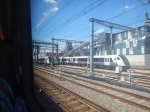














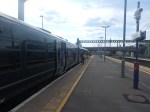


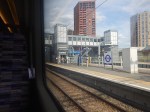
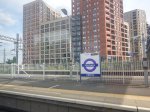
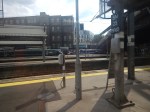
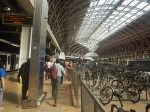

Note.
- I joined the Elizabeth Line at Moorgate station and took a train all the way to Paddington station.
- As a Freedom Pass holder, I use the Elizabeth Line for nothing.
- I changed between the Central and Western sections of the Elizabeth Line at Paddington.
- I also bought my Slough and Windsor & Eton Central ticket at Paddington from a machine, for the princely sum of £2.10. It was with a Senior Railcard.
- There is a lot of building going on along the route.
- The diesel train on the Slough-Windsor & Eton Line was a three-car Class 165 train.
I have some thoughts on how to improve the train service to Windsor.
What Do I Mean By Improving?
I don’t mean direct trains, as that would be impossible for various reasons.
- Platform length at Windsor & Eton Central station would be a problem.
- Flat crossing across the fast lines would slow the expresses.
- To make the running efficient, a flyover would need to be built. The disruption of building it and the cost would be immense.
What is needed, is a system, which means that getting from Central Elizabeth Line stations to Windsor & Eton Central station is as easily as possible.
Windsor Is One Of Our Premier Tourism Destinations
I suspect that on passenger numbers; Bicester Village, Cambridge, Oxford and Windsor are the four most visited tourist sites by rail from London.
I don’t think it’s a good idea to provide some of the services to these destinations, with the exception of Cambridge, with British Rail-era diesel multiple units.
Could A Four-Car Train Be Run On the Slough-Windsor & Eton Line?
I took this picture of the Slough end of the three-car Class 165 train in Windsor & Eton Central station.

It does appear that say a four-car Class 387 train could be fitted into the platform, with perhaps some adjustment to the platform and the track.
Would The Train Be Electric Or Battery-Electric Powered?
Consider.
- The Slough-Windsor & Eton Line is only 2.5 miles long.
- It is single-track.
- Trains take six minutes to do the trip.
- Modern electric trains with better acceleration could probably do the trip in four minutes.
- A battery-electric train will need charging.
This OpenRailMap map shows the electrification at Slough station.
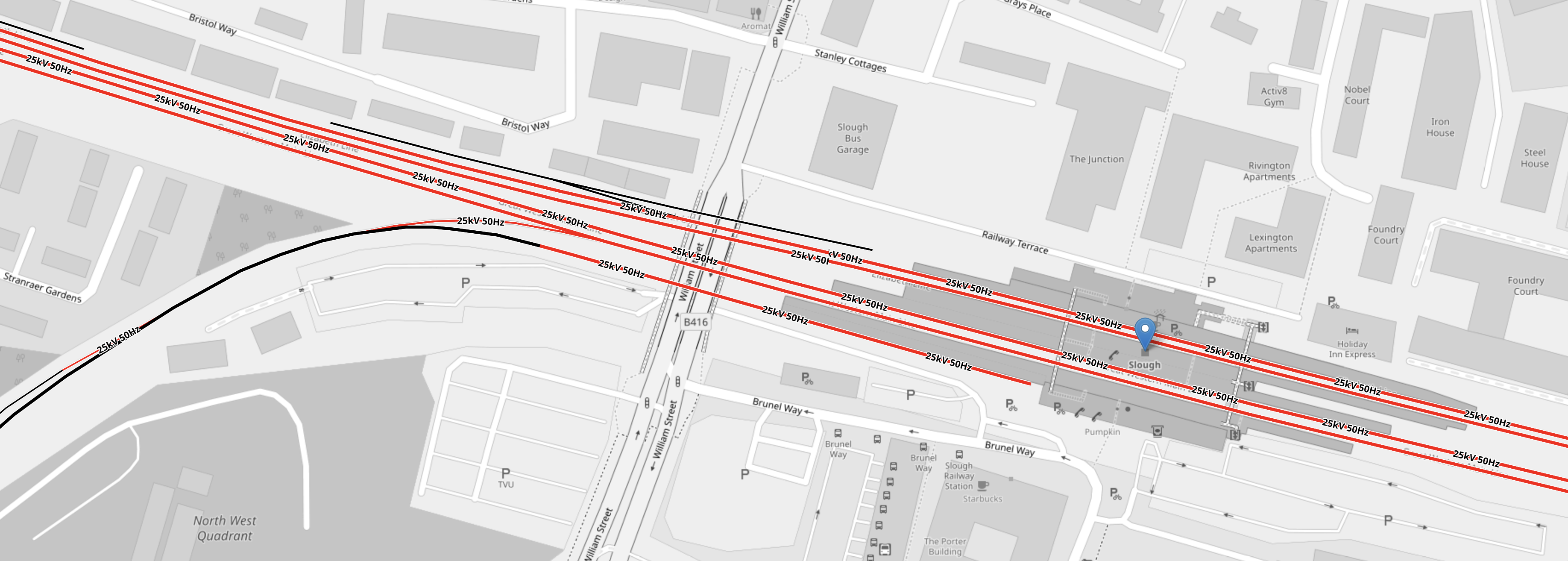
Note.
- 25 KVAC overhead electrification is shown in red.
- The Slough-Windsor & Eton Line leaves the map in the South-West corner of the map and runs into the electrified Bay Platform 1.
- The electrification in Platform 1 could be used to charge a battery-electric train.
- The Slough-Windsor & Eton Line appears to be partially electrified at the Slough end.
I wonder, if the simplest, most-affordable, least risky approach is to electrify the 2.5 miles with 25 KVAC overhead electrification, as it would allow a standard Class 387 train to work the route.
Operation Of The Shuttle
Currently, the Class 165 trains take six minutes between Slough and Windsor & Eton Central stations, which means that with turning the train at each end of the route, where the driver must walk seventy metres or so to change ends only a three trains per hour (tph) schedule is possible.
If I look at some of the station-to-station stops on the Elizabeth Line, I suspect that a well driven electric train could go between Slough and Windsor & Eton Central stations in perhaps four minutes. With a well-marshalled stop at either end of the route in perhaps two minutes, it could be possible to do a round trip in twelve minutes, which would allow a four tph service.
Capacity would go up from nine cars per hour to sixteen. or an over seventy percent increase in capacity.
There are several ways that, this shuttle could operate.
- As now, where the drivers have to be fit to change ends in the time.
- Two drivers are used with one in each cab.
- Drivers walk back on arrival at the terminal and then step-up into the next train. This is standard London Underground practice at stations like Brixton and Walthamstow Central.
- The train is fully-automated and the driver sits in either cab with an override, that allows him to take control, if say protestors or criminals get on the track.
As a Control Engineer, I certainly feel the fourth option is possible.
Intriguingly, I suspect the concept could be proved with two drivers in an existing three-car Class 165 train, to see if four tph are possible.
Ticketing
Ticketing is less of a problem now, than it was before March 28th 2022, as from that date Windsor & Eton Central station is now in the contactless area, so you could touch in with your bank card at any station in the London contactless area and touch out at that station.
It’s all explained on this page on the Great Western Railway web site.
I am a Freedom Pass holder, which gives me the ability to get free travel to and from anywhere on the Elizabeth line for free, so getting to and from Slough for nothing, is no problem, if I use the Elizabeth Line.
But I would need a ticket for the section between Slough and Windsor & Eton Central stations.
Before I got on the Elizabeth Line at Moorgate, I tried to buy an extension ticket between Slough and Windsor & Eton Central stations, from the ticket machines at Moorgate, but it was not possible, so in the end, I made a detour to the ticket office at Paddington and bought the ticket there. But when the Elizabeth Line is fully connected, there will have to be a rethink, as Freedom Pass holders from say Ilford would want a day out in Windsor.
Perhaps the Slough-Windsor & Eton Central line should become a fixed-fare line, where a bank card would be charged say a pound for each journey.
Note that I only paid £2.10 for a return ticket at Paddington with my Senior Railcard.
A Better Interchange At Slough
Currently, the Off Peak frequency of trains at Slough is as follows.
- Slough and Windsor & Eton Central – 3 tph
- Slough and Paddington – Elizabeth Line – 2 tph
- Slough and Paddington – Great Western Railway – 2 tph – Non-stop
- Slough and Paddington – Great Western Railway – 2 tph – Stopping
In TfL Confirms Details Of Reading Services, I wrote that the Elizabeth Line will have 4 tph to London in the Off Peak, with two extra services in the Peak.
This indicates to me, that the Slough and Windsor & Eton Central service needs four tph.
Possible Regular Services Between West Somerset Railway And Taunton
The title of this post, is the same as that of this article on Rail Advent.
These are the introductory paragraphs.
Hopes are growing that regular scheduled train services will once more operate between the West Somerset Railway (WSR) and the national rail network.
There is an increasing interest in re-opening long-closed stations and lines on the network. To this end, a partnership working group has been set up to look at the prospects of running scheduled trains between WSR’s Bishops Lydeard station and Taunton, which would safeguard the WSR’s long-term future.
The working group comprises representatives of the Heart of South West Local Enterprise Partnership, Great Western Railway, Network Rail, Somerset County Council, and WSR Plc.
Given the success of the reopened Okehampton station, that I wrote about in Success For The Dartmoor Line, where 2,500 passengers a week have used the trains since last November, I wonder if Somerset is aiming to emulate Devon’s success, with the West Somerset Railway.
There are certainly similarities between the two routes.
Connection To The County Town
Both routes connect to the county town.
- The Dartmoor Line connects to Exeter, which is the county town of Devon.
- The West Somerset Railway connects to Taunton, which is the county town of Somerset.
As the county town usually contains important local services like the council offices and the Courts, this is often convenient.
Connection To The Great Western Railway
Both routes could have excellent connections to the Great Western Railway.
- Exeter St. David’s station is a major interchange.
- Taunton station could be a more important interchange.
Note.
- Both stations have connections to Bristol, London and Cornwall.
- The two stations are well-connected to each other.
- Both stations have six platforms, which include some bay platforms for branch line services.
This Google Map shows the less developed Taunton station.
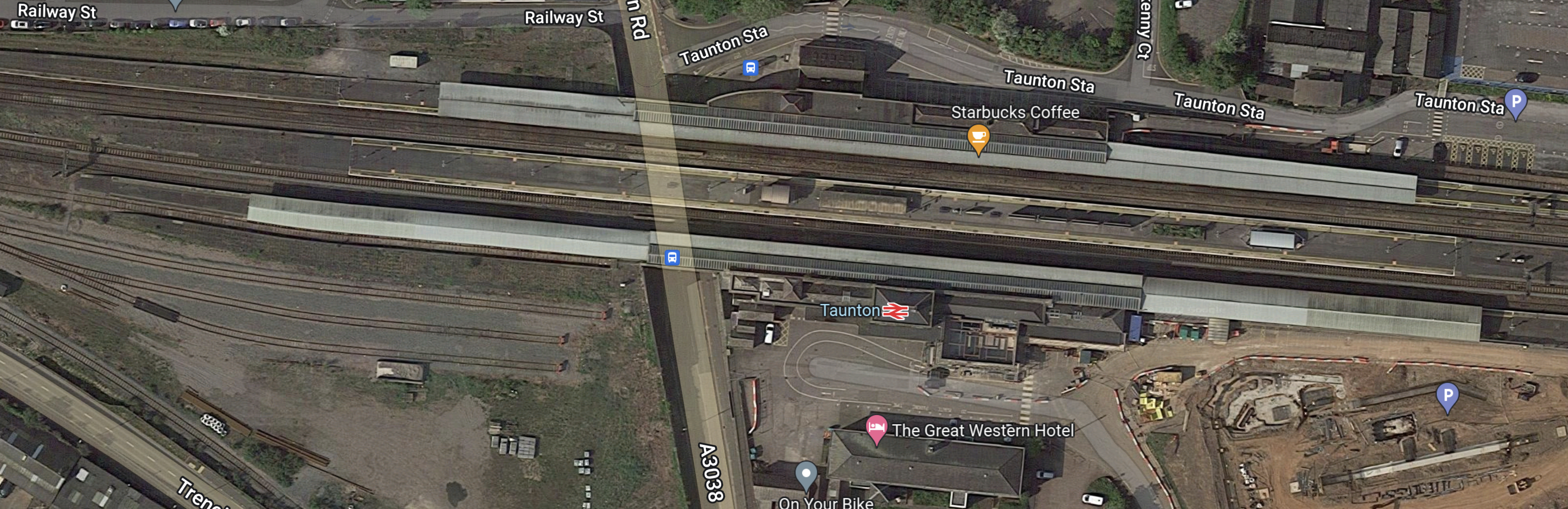
Note that there appears to be lots of space for development of rail and related development.
Both Branches Were/Are In Use Before Development
Before the Dartmoor Line was reopened, the route was in occasional use for both freight and passenger trains. Great Western Railway have in recent years run InterCity125 trains to Okehampton station.
With reopening the line to Okehampton, there was no major viaduct or bridges to rebuild, although Network Rail took the prudent decision to relay the track.
It would appear that the West Somerset Railway has similar use for both freight and passenger trains. How much work will be needed to bring it up to an acceptable standard.
Great Western Railway Are Providing Initial Weekend Services
On the Dartmoor Line services started between Exeter and Okehampton in 2019 and Wikipedia says this about initial services between Taunton and Bishops Lydeard station.
In 2019, the WSR entered into a partnership with the modern Great Western Railway (GWR) to operate Summer Saturday services to Bishops Lydeard from Taunton beginning on 27 July 2019. The introduction of these GWR services will mark the first time the station has been connected to the rest of the national rail network since its initial closure in 1971.
Is history going to repeat itself?
The First Step
This paragraph from the Rail Advent article, indicates the first step to reopening a service between Taunton and Minehead.
The first task will be to look at the simplest and most effective way in which the link between the WSR and the mainline can be improved, signalled, and operated. An outline business plan will then be developed to estimate how much it would cost.
This Google Map shows the link between the West Somerset Railway and the mainline.
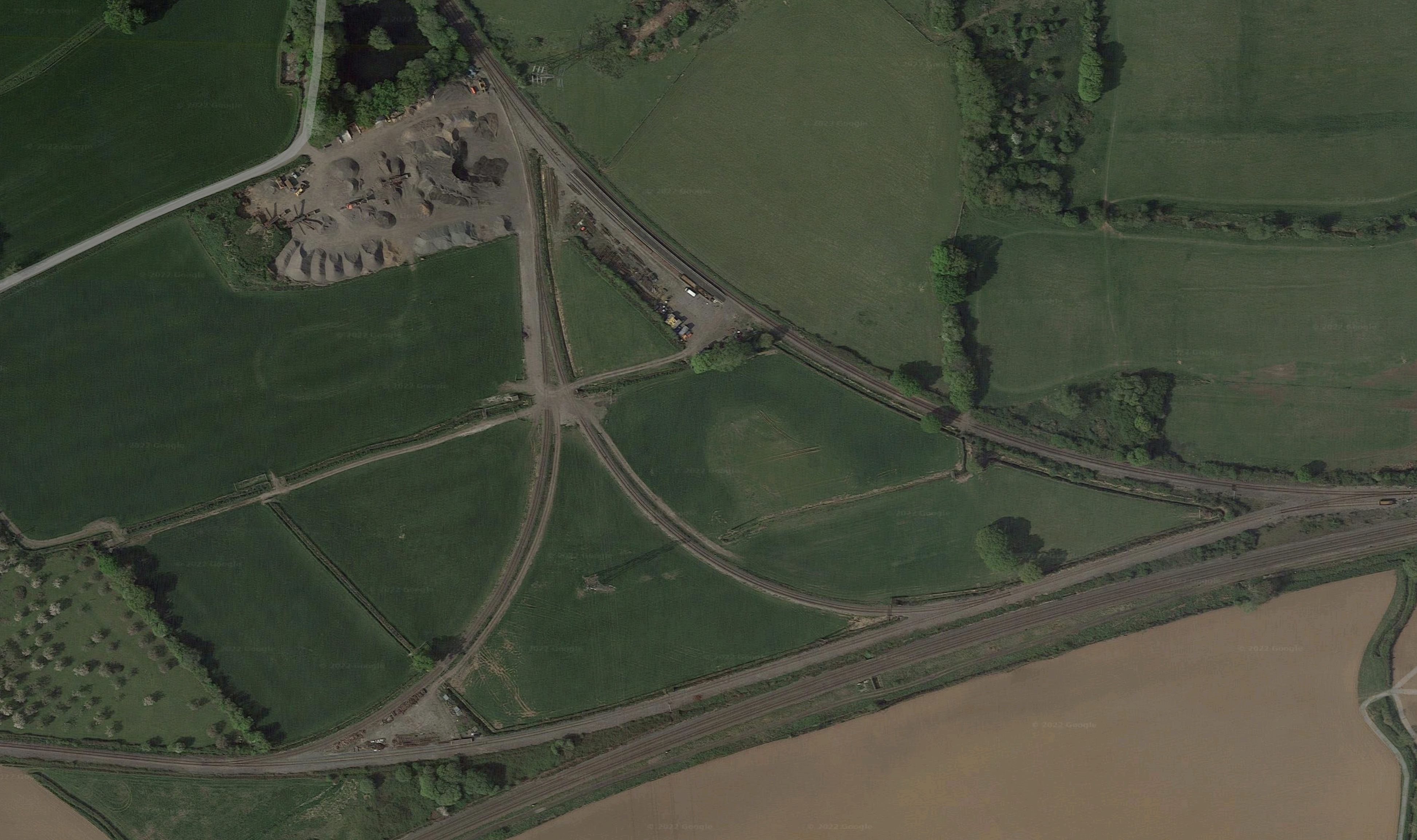
Note.
- The large triangular junction.
- The Bristol-Exeter railway runs East-West across the bottom of the map.
- Minehead is to the North.
- Taunton is to the East.
- A disused line to Barnstaple is to the West.
- The site to the West of the top of the triangular junction is a ballast cleaning site.
It does appear that there could be the space to create an efficient junction linking the two railways.
Initial Regular Services
This was one of the introductory paragraphs.
There is an increasing interest in re-opening long-closed stations and lines on the network. To this end, a partnership working group has been set up to look at the prospects of running scheduled trains between WSR’s Bishops Lydeard station and Taunton, which would safeguard the WSR’s long-term future.
This page on the Railway Touring Company web site is entitled The West Somerset Steam Express.
This paragraph describes the trip.
This series of trains from London Paddington to Minehead features haulage by two steam locomotives in one day.
One steam locomotive will haul our train from London Paddington to the West Somerset Railway at Bishops Lydeard.
The Heritage Railway will then provide a steam locomotive to haul our train to Minehead and back. This provides a truly fascinating day out travelling through beautiful scenery to the Bristol Channel coast.
So it looks like, the initial services on the between Taunton and Bishops Lydeard stations, will duplicate services that are already planned on a very much less frequent basis.
Bishops Lydeard Station
Bishops Lydeard station is the station, where mainline and West Somerset services meet.
This OpenRailwayMap shows the track layout at the station.
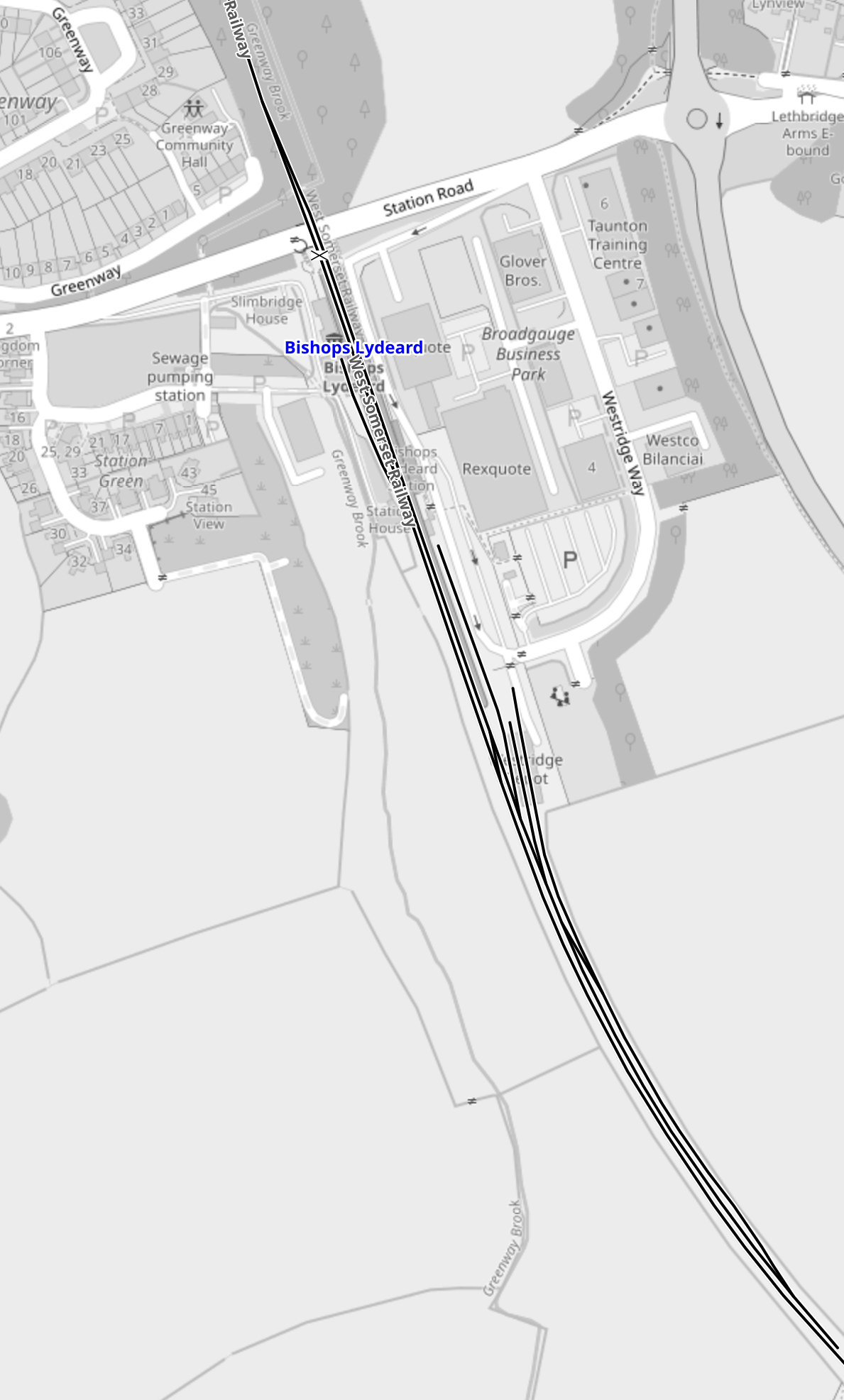
Note.
- The station is the Southern terminus of the West Somerset Railway.
- Track is single to the North and South of the station.
- Bishops Lydeard station has two platforms.
- There is a passing loop.
If the terminal station has a serious problem, it doesn’t appear to have much parking.
So it would appear, that a link to Taunton might improve the finances of the West Somerset Railway, by attracting more visitors.
Onward To Minehead
This OpenRailwayMap shows the last section of the West Somerset Railway to Minehead.
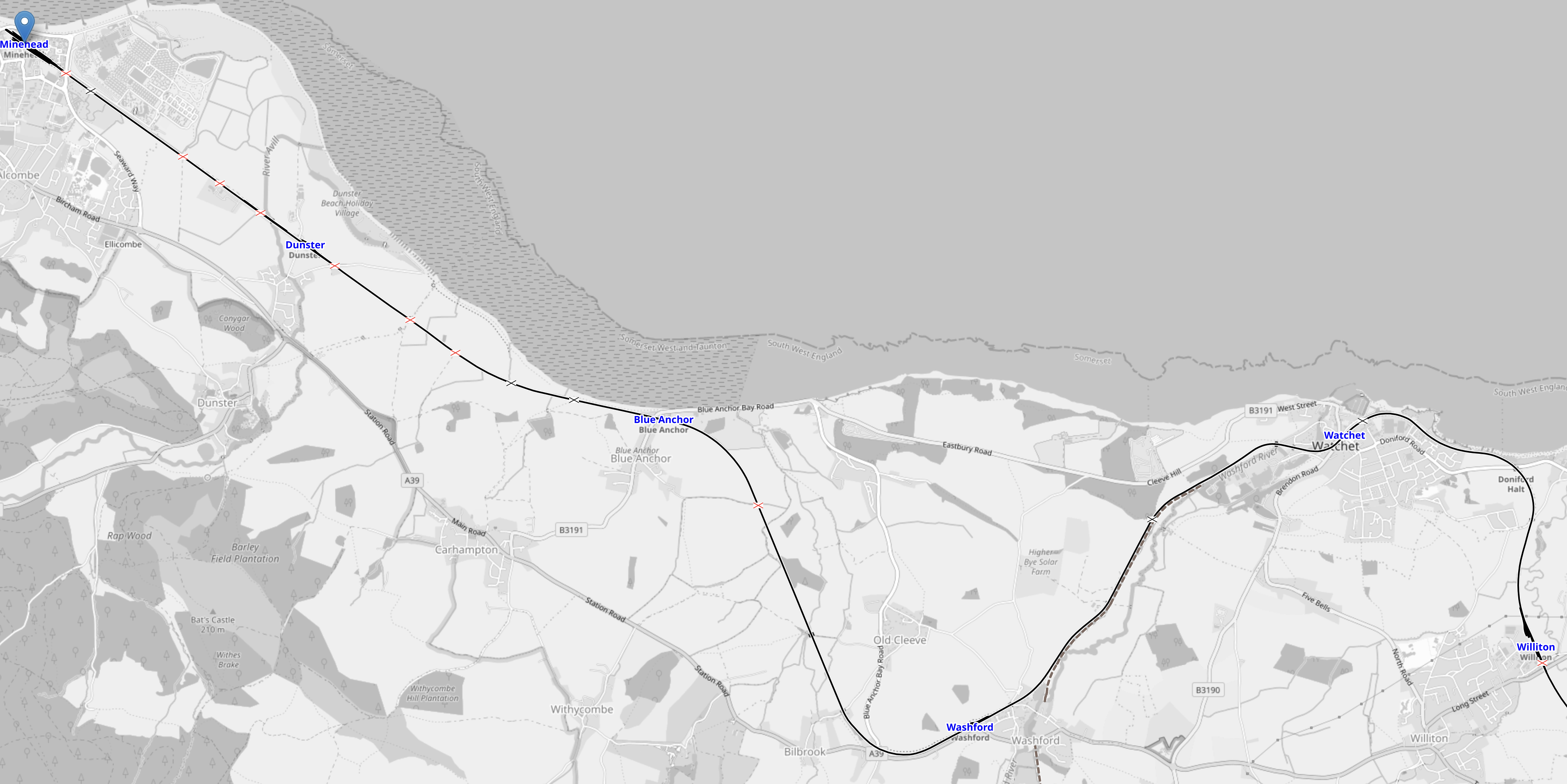
Note.
- Minehead station is in the North West corner of the map.
- Minehead station appears to be a well-equipped station, with two platforms.
- Minehead station even has a turntable for turning locomotives.
- There are four or five stations close to the coast.
The Wikipedia entry for Minehead, says this about the town.
The parish of Minehead has a population of approximately 11,981, making it the most populous town in the western part of the Somerset West and Taunton local government district, which in turn, is the worst area in the country for social mobility.
The West Somerset Railway could become both a useful and a real bucket-and-spade railway. Surely, that could generate revenue and level-up the area.
Financing
If you want something to work well, you must get the finances right.
I have lived in Dalston in London for twelve years now. When I moved here after my wife died and I had had a serious stroke, which left me unable to drive, I relied on an antiquated mainly bendy-bus-based public transport system.
Then along came the Overground and fleets of shiny new buses and Hackney and Dalston in particular was more than levelled up with London’s more salubrious boroughs.
Shopping improved with M & S returning after at least seventy years. There’s even a Pret, which boomed during the pandemic.
Transport for London got the financing for the Overground right and they created a success.
Conclusion
Can the initial working group find a financial model so that the West Somerset Railway can do for West Somerset, what the Overground has done for Dalston and the Dartmoor Line appears to be doing for Devon?
I thoroughly hope so!
TransPennine Express Explores Further Fleet And Capacity Expansion Options
The title of this post, is the same as that of this article on Railway Gazette.
This is the first paragraph.
First TransPennine Express is hopeful that it will be able to issue a call for expressions of interest in the provision of additional bi-mode trains before the end of March. This follows ‘a healthy level of interest’ in its existing call for expressions of interest in the supply of bi-mode locomotives to replace the Class 68s which work with its MkVa coaches.
I wrote about the expressions of interest to replace the Class 68 locomotives with new bi-mode locomotives in Suppliers Sought For New Bi-Mode Locomotives For TransPennine Express And Great Western Railway.
This was my conclusion in the related post.
When I saw First Group’s proposals, I thought that they were over ambitious.
But after doing a few simple calculations, I think they can decarbonise some, but not all of the TransPennine Express services and the Night Riviera.
So do First Group want to complete the decarbonisation of TransPennine Express services?
These are my thoughts.
The Train Fleet Specification
The Railway Gazette article makes these points about the new bi-mode trains.
- The trains could be existing or new bi-modes.
- It would be desirable for the trains to have a long-term electric-only option.
- Options for this would include removing the diesel engines or converting the trains to battery-electric operation.
- Hydrogen is not mentioned.
- A fleet size of twenty-five trains is mentioned.
- The possibility of electric-only trains in the future is mentioned..
- Five-cars, with the ability to lengthen to six- or seven-cars.
- 200 km/h operation.
There is nothing unusual in the specification.
Will They Be Existing Or New Trains?
I doubt that there are any existing 200 km/h bi-modes in the UK, that are not wanted by their current operators.
I am very certain they will be new trains.
Could The Trains Be Hitachi Class 802 Trains?
The trains sound very much like Hitachi Class 802 trains, that are in service with TransPennine Express, Great Western Railway and Hull Trains, all of whom are First Group companies.
- Long-term, the diesel engines can be removed or replaced with batteries.
- The battery option is under development and should be on test this year.
- The trains can be lengthened to as long as twelve cars, so six- and seven-car trains would be possible.
Hitachi will obviously show interest in this possible order.
Will These Trains Replace the Class 185 Trains?
Consider.
- TransPennine Express have 51 three-car Class 185 trains.
- This is a total of 153 cars.
- On some routes they work singly and on others they work in pairs.
- A three-car Class 185 train has 167 Standard Class and 15 First Class seats or 60.7 seats per car.
- A pair of Class 185 trains have 334 Standard Class and 30 First Class seats.
- A five-car TransPennine Express Class 802 train has 318 Standard Class and 24 First Class seats or 68.4 seats per car.
- It would appear that a Class 802 train is not that far short of the capacity of a pair of Class 185 trains.
- Some of the TransPennine services are very crowded.
I suspect that twenty-five five-car trains be able to handle the the workload of the Class 185 trains.
If a small amount of extra capacity were needed, some of the new trains could be six-cars.
In this section, I have assumed the new trains will be Class 802 trains, but any train manufacturer pitching for this order would adjust the capacity to the needs of TransPennine Express.
The Railway Gazette article says this.
TPE continues to explore opportunities for new services in the north of England, and the move could also feed into government plans for the removal of older and more costly to operate diesel trains elsewhere on the network, should any rolling stock become surplus to requirements at TPE.
So where could the Class 185 trains be used in the future?
Recently, MTU Hybrid PowerPacks have replaced the transmission on a Class 168 train, which reduces carbon emissions and fuel consumption and makes the train quieter and more passenger-friendly, as it doesn’t use diesel in stations.
The Class 185 trains are only fifteen years old and I suspect that MTU have designed the Hybrid PowerPack, so that it can replace the Cummins engine in trains like these.
The conversion could be done as a rolling program, so that any future operator would start with diesel and go hybrid a train at a time.
There has been speculation, that the trains may end up on the East West Railway and I wrote about this in East West Railway Company To Start Second Phase Of Rolling Stock Procurement.
But the East West Railway may prefer to use zero-carbon trains on a route, where there is electrification in places on the route.
Alternatively, South Western Railway run 10 two-car Class 158 trains and 30 three-car Class 159 trains between London Waterloo and Exeter.
- South Western Railway is another First Group company.
- The Class 185 trains could provide a capacity increase.
- The Class 185 trains are 100 mph trains, whereas the Class 158/159 trains are only capable of 90 mph.
The London Waterloo and Exeter Route could be electrified in the future and I am pretty sure, that the Class 185 trains with a hybrid transmission could be a good stand-in until this happens.
Other Train Manufacturers
I believe that Hitachi are in pole position for this order, just because they are an established supplier to both TransPennine Express and First Group.
But twenty-five five-car trains would be a very worthwhile order, so I suspect that companies like Alstom, CAF, Siemens, Stadler and Talgo will also express interest.
Conclusion
Buying extra bi-mode trains will take TransPennine Express further along the route to full decarbonisation.
Battery Train And Fast Charger To Be Tested In London
The title of this post is the same as that of this article on Railway Gazette.
This is the first paragraph.
Great Western Railway has signed an agreement to test Vivarail’s Class 230 battery multiple-unit and fast charging technology under real-world conditions on the 4 km non-electrified branch between West Ealing and Greenford in West London.
As an engineer, who started designing control systems for rolling mills in the mid-1960s and went on to get a Degree in Control and Electrical Engineering from Liverpool University, before working for ICI applying computers to a variety of problems, I can’t look at a railway line like the Greenford Branch without wanting to automate it.
I had one amateurish attempt in An Automated Shuttle Train On The Greenford Branch Line. I was trying to get four trains per hour (tph) on the branch and I don’t think that is possible, with the Class 230 trains.
Now we know the train we are dealing with, I could plan an automated system, that would drive the train.
- Each journey on the branch takes around 11-12 minutes.
- Two tph would take between 44 and 48 minutes shuttling between the two stations in an hour.
- The article states that recharging takes ten minutes.
- If the train charged the batteries once per hour, that would leave between two and six minutes for the other three stops.
- Any freight train using the branch seems to take about six minutes, so they could sneak through, when the shuttle is having a fast charge.
- I would also use a similar system to that originally used on the Victoria Line. After the driver has closed the doors and ascertained that there were no problems, they would press a button to move the train to the next station and then automatically open the doors.
From this rough calculation to run a two tph service, I suspect that the train needs to be able to go between West Ealing and Greenford stations in ten minutes. Assuming one ten minute Fast Charge per hour, this would give three minutes and twenty seconds to turn the train, at the three terminal station stops.
I certainly feel, that an automatic shuttle would be possible.
The Future Of The Class 387 And Class 379 Trains
This post is to try to get some logic into everybody’s comments on UK’s First 100mph Battery-Diesel Hybrid Train Enters Passenger Service, which are about the Class 379 trains.
Here are my thoughts about the current situation.
Class 379 Trains
I regularly use Hackney Downs and Liverpool Street stations.
A few months ago, you would see Class 379 trains on services to Cambridge and Hertford North.
At the present time, you rarely see them, as these services now seem to be run by new Class 720 trains, with the Stansted services being run by Class 745 trains.
There are also articles like this one on Rail Technology Magazine, which is entitled Greater Anglia’s New Rolling Stock Helps To Drive Record Autumn Results.
These are the first three paragraphs.
Greater Anglia’s new rolling stock has helped drive the operators record-beating autumn performance results over the challenging autumn months.
During autumn 2021 Greater Anglia recorded an overall punctuality score of 94.48% from 19th September 2021 – 8th January 2022.
This was the best autumn performance ever recorded by the train company.
It would appear that Greater Anglia are pleased with their new stock, which surely means that the thirty Class 379 trains can be moved on, stored or converted to battery-electric operation.
c2c’s Class 387 Trains
c2c has six Class 387 trains, which are similar to the Class 379 trains.
Currently, because of cracks in Class 800 trains, three of them are on loan to GWR.
But in the next year or so, these six trains will be moved on or stored as c2c have ordered twelve Class 720 trains to replace the Class 387 trains.
Southern’s Class 387 Trains
Southern has twenty-seven Class 387 trains for the Gatwick Express, of which three are used by Great Northern, who are a sister company of Southern, and six are on loan to GWR
Great Northern’s Class 387 Trains
Great Northern has twenty-nine Class 387 trains of its own and three on loan from Southern.
These trains are used mainly on Cambridge, Ely and Kings Lynn services out of King’s Cross.
Great Western Railway (GWR)’s Class 387 Trains
Great Western Railway has forty-five Class 387 trains of its own, three on loan from c2c and six on loan from Southern.
The Battery-Electric Class 379 Train
I rode this prototype train in 2015.

An Outwardly Normal Class 379 Train
I think it is reasonable to assume, that as battery technology has improved in the seven years since I rode this train, that converting Class 379 trains to battery-electric operation would not be a challenging project.
Creating A Battery-Electric Class 387 Train
If the Class 387 train is as internally similar to the Class 379 train as it outwardly looks, I couldn’t believe that converting them to battery-electric operation would be that difficult.
Conclusion
I feel the way to proceed is to create a small fleet of both battery-electric Class 379 and Class 387 trains and assess their performance, reliability and customer acceptance.
SWR Says Farewell To ‘456’s
The title of this post, is the same as a section heading in the February 2022 Edition of Modern Railways.
South Western Railways are reducing services because of the pandemic and they are retiring their Class 456 trains, which have been returned to their leasing company; Porterbrook.
- The Class 456 trains are thirty-years old.
- They are two-car third-rail electric trains.
- They have an operating speed of 75 mph.
- They are due to be replaced by new Class 701 trains.
According to the Modern Railways article, they have been put in store by Porterbrook.
But they are not trains in bad condition, as these pictures show.
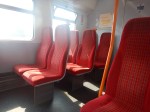
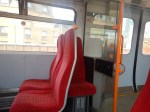
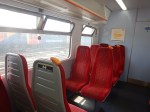
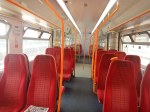
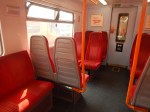
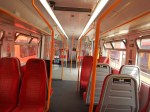
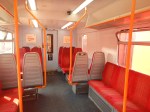
The trains had a high-class refurbishment in 2014.
In Special Train Offers A Strong Case For Reopening Fawley Line, I discussed the reopening of the Fawley Line.
This is an extract from that post about the rolling stock to use on the line.
South Western Railway’s Innovative Train Plan
This is another quote from the original Rail Magazine article.
However, SWR’s Mark Hopwood favours a much bolder plan. “We’d have to take a decision, once we knew the line was going ahead. But my personal belief is that we should be looking for a modern environmentally-friendly train that can use third-rail electricity between Southampton and Totton and maybe operate on batteries down the branch line.”
Pressed on whether that would mean Vivarail-converted former-London Underground stock, Hopwood adds. “It could be. Or it could be a conversion of our own Class 456, which will be replaced by new rolling stock very shortly. But I don’t think this is the time to use old diesels.
Note.
- Mark Hopwood is now Managing Director of Great Western Railway.
- Great Western Railway and South Western Railway are both First Group companies.
- There are twenty-four Class 456 trains.
I wonder, if the plan that Mark Hopwood hinted at a couple of years ago, is being carried out.
Two dozen, two-car zero-carbon battery-electric trains would do nicely for some of the routes of GWR and SWR.
Converting Class 456 Trains Into Two-Car Battery Electric Trains discusses this possible conversion in detail.
 The Anonymous Widower