The World’s First Bi-Mode Hydrogen-Electric Train
This news page on the University of Birmingham web site is entitled HydroFLEX Secures Funding For Hydrogen-Powered Train Design.
The page is mainly about the new funding from Innovate UK, that I wrote about in First Of A Kind Funding Awarded For 25 Rail Innovation Projects, but it also includes this significant paragraph.
As well as being the UK’s first hydrogen-powered train, HydroFLEX is also the world’s first bi-mode electric hydrogen train. It will be undergoing mainline testing on the UK railway in the next few weeks.
One of my disappointments in the design of the Alstom Coradia iLint, is that, it is designed as a hydrogen-power only train, where it could surely have had a pantograph fitted, for more efficient working.
Consider.
- I suspect many hydrogen-powered trains will only be doing short distances, where electrification is not available, so daily distances under hydrogen power could be quite short.
- In the UK, a smaller hydrogen tank would certainly ease the design problems caused by a large fuel tank.
- There have been improvements in hydrogen storage in recent years.
The funding award to the project talks about raft production, so are the engineers, aiming to design a hydrogen power-pack on rafts, that could be fitted underneath the large fleets of retired electric multiple units, that are owned by Porterbrook.
Now that would be a game changer.
- Porterbrook have thirty-seven Class 350 trains, that will be replaced in the next few years by new trains. The electric trains are less than a dozen years old and Porterbrook have been talking about fitting batteries to these trains and creating a battery/FLEX train. Would making these trains bi-mode hydrogen-electric trains be better?
- Birmingham wants to open up new rail routes in the city on lines without electrification. What would be better than a hydrogen powered train, designed in the city’s premier university?
- Routes from Birmingham to Burton-on-Trent, Hereford, Leicester, Shrewsbury, Stratford-on-Avon and Worcester would be prime candidates for the deployment of a fleet of bi-mode hydrogen-electric trains.
- Birmingham have already asked ITM Power to build a hydrogen filling station in the city for hydrogen buses.
A Trading Update From ITM Power
ITM Power issued a Press Release entitled Trading Update, this morning.
It is a document, that is a must-read about the future of hydrogen.
There are some interesting statements on various topics.
The Future Of Hydrogen Production
The Press Release says this.
Alongside the predicted growth trajectory for electrolysis, the cost outlook for green hydrogen is also positive. The Hydrogen Council expects green hydrogen to become cost competitive with grey hydrogen by 2025 assuming a €50 per ton CO2 price. An 80GW electrolyser target for Europe by 2030 has been proposed, where electrolysers feed into a hydrogen transmission network that interconnects the renewable energy resources of the North Sea, Morocco and Ukraine with the demand centres of Europe. Further afield, Australia is actively pursuing opportunities to export green hydrogen and has estimated that 69 per cent of the 2025 global market for hydrogen will lie in its four target markets of China, Japan, Korea and Singapore.
Note.
- Green hydrogen is produced by a zero-carbon process like electrolysis using renewable electricity.
- Grey hydrogen is produced by a process that releases carbon-dioxide like steam reforming of methane.
It looks like green hydrogen will be the future.
Governments And Green Hydrogen
The Press Release says this.
Governments are increasingly recognising the role of green hydrogen as a decarbonisation tool. The U.K. government has introduced an overarching net zero target and placed an early focus on decarbonising industrial clusters that will lead to progressively larger deployments of electrolysers. In the Netherlands, the Dutch government has recently presented its green hydrogen vision for achieving a sustainable energy system that is reliable, clean and affordable. A total of three European governments have now stated explicit electrolyser targets for 2030: Germany 5GW, Holland 3-4GW and Portugal 2GW.
It looks like a lot of electrolysers will be built.
The Germans And Hydrogen
The Press Release says this.
The German government announced in its stimulus package of 3 June 2020 that it will present a national hydrogen strategy in the short term. Accordingly, a programme for the development of hydrogen production plants will be developed to demonstrate industrial-scale production of up to 5GW total output in Germany, operational by 2030. For the period up to 2035, but until 2040 at the latest, an additional 5 GW will be added if possible. To implement all these measures, the German government will invest €7bn.
Not only is hydrogen zero-carbon, it also means they will buy less of Putin’s gas.
Conclusion
Hydrogen has a very long term future.
UK’s Largest Solar Park Cleve Hill Granted Development Consent
The title of this post, is the same as that of this article on Solar Power Portal.
These are the two introductory paragraphs.
Cleve Hill Solar Park, set to be the largest in the UK, has been granted development consent by the energy secretary.
The colossal 350MW project will include 880,000 panels along with battery storage, and sit just one mile northeast of Faversham, in Kent, situated close to the village of Graveney.
Other points from the article.
- Cleeve Hill Solar Park is a £450million project.
- It is the first solar project to be considered a Nationally Significant Infrastructure Project.
- It is being developed as a joint venture between Hive Energy and Wirsol.
- It is due to be operational by 2022.
- To complete the project 700 MWh of energy storage will be added later.
The article also contains this quote from Solar Trade Associations chief executive Chris Hewett.
Solar has a significant role to play in boosting the economy in the wake of the coronavirus crisis. With the right policies we can expect to see an 8GW pipeline of solar projects unlocked and rapidly deployed, swiftly creating a wealth of skilled jobs and setting us on the path towards a green recovery.
8 GW of intermittent energy will need a lot of storage.
As Cleeve Hill’s developers are planning to provide 700 MWh of storage for 700 MW of solar panels, it would appear that 8 GW of solar panels could need up to 16 GWh of energy storage.
As our largest energy storage system is the pumped storage Electric Mountain in Snowdonia with a capacity of 9.1 GWh and most of the large solar developments are towards the South of England, the UK needs to develop a lot more energy storage, where the solar is generated and much of the energy is used.
I can see the following environmentally-friendly developments prospering.
- Highview Power‘s CRYOBattery, which uses liquid air to store energy. Systems have a small footprint and up to a GWh could be possible.
- Electrothermal energy storage like this system from Siemens.
- Using electrolysers from companies like ITM Power to convert excess energy into hydrogen for transport, steelmaking and injecting into the gas main.
- Zinc8‘s zinc-air battery could be the outsider, that comes from nowhere.
Developers could opt for conservative decision of lithium-ion batteries, but I don’t like the environmental profile and these batteries should be reserved for portable and mobile applications.
Floatovoltaics
One concept, I came across whilst writing was floatovoltaics.
The best article about the subject was this one on Renewable Energy World, which is entitled Running Out of Precious Land? Floating Solar PV Systems May Be a Solution.
A French company call Ciel et Terre International seem to be leading the development.
Their web site has this video.
Perhaps, some floatovoltaics, should be installed on the large reservoirs in the South of England.
- The Renewable Energy World article says that panels over water can be more efficient due to the cooling effect of the water.
- Would they cut evaporative losses by acting as sunshades?
- As the French are great pecheurs, I suspect that they have the answers if anglers should object.
This Google Map shows the reservoirs to the West of Heathrow.
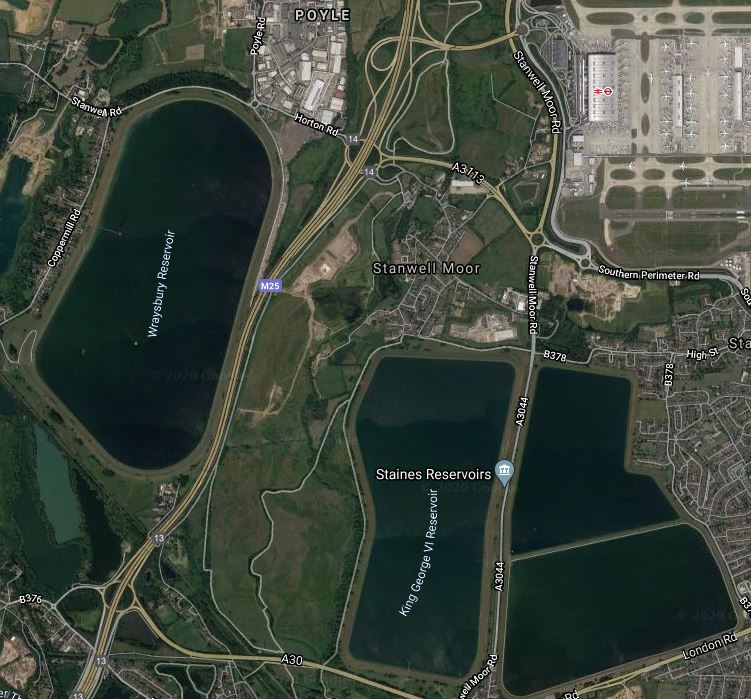
Note.
- Wraysbury Reservoir has an area of two square kilometres.
- King George VI Reservoir has an area of one-and-a-half square kilometres.
- Using the size and capacity of Owl’s Hatch Solar Farm, it appears that around 65 MW of solar panels can be assembled in a square kilometre.
- All these reservoirs are Sites of Special Scientific Interest because of all the bird life.
- Heathrow is not an airport, that is immune to bird-strikes.
Could floatovoltaics be used to guide birds away from the flightpaths?
Incidentally, I remember a report from Tomorrow’s World, probably from the 1960s, about a porous concrete that had been invented.
- One of the uses would have been to fill reservoirs.
- The capacity of the reservoir would only have been marginally reduced, as the water would be in the voids in the concrete like water in a sponge.
- Soil would be placed at the surface and the land used for growing crops.
I wonder what happened to that idea from fifty years ago!
Joint Venture With Linde AG And £38M Strategic Investment
The title of this post, is the same as that as this Press Release from ITM Power.
This is the first paragraph.
ITM Power plc is pleased to announce its intention to raise at least £52.0 million (before expenses) through (i) a strategic investment of £38.0 million at 40 pence per share by Linde UK Holdings No. 2 Limited, a member of the Linde AG group (Linde) (the Share Subscription); and (ii) a conditional placing of £14.0 million at 40 pence per share (the Firm Placed Shares) with certain existing and new institutional investors (the Firm Placing). The Group has also entered into a 50/50 joint venture with Linde (the Joint Venture) which will focus on delivering green hydrogen to large scale industrial projects, principally those with an installed electrolyser capacity of 10 Megawatts (“MW”) and above.
There is all the usual financial stuff and these sentences.
The net proceeds of the fundraising will be used principally to enhance the manufacturing capabilities of the Group, particularly for the development and production of large scale 5MW electrolysers, to facilitate product standardisation and manufacturing cost reduction.
The Joint Venture will focus on delivering green hydrogen to large scale industrial projects (generally being opportunities with installed electrolyser capacities of 10 Megawatts and above)
As ITM Power are constructing the largest electrolyser factory in the world, at Bessemer park in Sheffield, it appears to me that ITM Power are going for the larger scale hydrogen market.
Recently, I wrote these three posts.
- Funding Award to Supply An 8MW Electrolyser
- Surplus Electricity From Wind Farms To Make Hydrogen For Cars And Buses
- H2OzBus Project: Deploying Hydrogen Fuel Cell Bus Fleets For Public Transport Across Australia
News stories generated about the company or the production of hydrogen seem to require large electrolysers in excess of 5 MW.
It looks like ITM Power are setting themselves up to tap this market substantially.
How Much Hydrogen Would A 5 MW Electrolyser Create In A Day?
I found the key to the answer to this question on this page of the Clean Energy Partnership web site.
To produce hydrogen by electrolysis directly at the filling station, the CEP currently requires about 55 kWh/kg H2 of electricity at an assumed rate of efficiency of > 60 percent.
To produce 1 kg of hydrogen, nine times the amount of water is necessary, i.e. nine litres.
I will use that figure in the calculation.
- A 5MW electrolyser will consume 120 MWh in twenty-four hours.
- This amount of electricity will produce 2,182 Kg or 2.182 tonnes of hydrogen.
- It will also consume 19.64 tonnes of water.
In Surplus Electricity From Wind Farms To Make Hydrogen For Cars And Buses, I described how Jo Bamford and his company; Ryze Hydrogen, have applied for planning permission to build the UK’s largest electrolyser at Herne Bay in Kent.
- It will produce ten tonnes of hydrogen a day.
- The hydrogen will be sent by road to London to power buses.
So could the electrolyser be a 25 MW unit built of five 5 MW modular electrolysers?
Linde and their UK subsidiary; BOC, must have a lot of knowledge in transporting tonnes of hydrogen by road. I can remember seeing BOC’s trucks behind ICI’s Castner-Kellner works in the 1970s, where they collected hydrogen to see to other companies.
H2OzBus Project: Deploying Hydrogen Fuel Cell Bus Fleets For Public Transport Across Australia
The title of the this post, is the same as that of this Press Release from ITM Power.
This is the introductory paragraph.
ITM Power, the energy storage and clean fuel company, is pleased to announce the formation of the H2OzBus Project (“the Project”) and the signing of a memorandum of understanding with strategic partners (“the Consortium”). The Consortium comprises Transit Systems, part of the SeaLink Travel Group, Ballard Power Systems, BOC Limited, Palisade Investment Partners and ITM Power. The Consortium partners have signed a memorandum of understanding as a further step in evaluating and demonstrating the concept of hydrogen fuel cell electric buses for use in public bus transport in Australia.
Some further points from the Press Release.
- Initially, a hundred buses will be deployed.
- The buses appear to be being built in Australia.
- Ten locations are being considered for the buses.
It looks to be a very sensible project.
Surplus Electricity From Wind Farms To Make Hydrogen For Cars And Buses
The title of this post, is the same as that as this article in The Times.
This is the introductory paragraph.
Surplus power from wind farms will be used to run a network of giant electrolysers to make hydrogen for vehicles, under plans drawn up by a green energy company.
The following are points from the article.
- The electrolysers will be installed by Ryze Hydrogen.
- Ryze have submitted plans to build the UK’s largest electrolyser at Herne Bay in Kent.
- It will produce ten tonnes of hydrogen a day.
- The hydrogen will be sent by road to London to power buses.
- More electrolysers could be built in Aberdeen, Northern Ireland, Runcorn, South Wales and other places.
- It looks like the electrolysers will be built by ITM Power in the world’s largest electrolyser factory in Rotherham.
- Keele University is replacing 20% of the natural gas in its gas network with hydrogen to heat buildings. I wrote about this in HyDeploy.
Note.
- The owner of Ryze is Jo Bamford, who also owns Wrightbus. I wrote about his plans in JCB Heir And Wrightbus Owner Jo Bamford: ‘We Can Sell Our Hydrogen Bus Around The World’.
- Jo Bamford also has a plan for Ireland, which I wrote about in Wrightbus Boss Eyes All-Island Green Transport Plan. He could build the Northern Ireland electrolyser conveniently for the border.
- Jo Bamford is the son of Lord Bamford; the chairman of JCB.
- According to Wikipedia, JCB made a £4.9m strategic investment in ITM Power in 2015. The early bird catches the worm?
- ITM Power recently had an order for an 8MW electrolyser, which I wrote about in Funding Award to Supply An 8MW Electrolyser.
It all seems to fit together like a large zero-carbon jigsaw.
I do have some questions.
How Much Electricity Is Needed To Produce Ten Tonnes Of Hydrogen?
I found an answer to this question on this page of the Clean Energy Partnership web site.
To produce hydrogen by electrolysis directly at the filling station, the CEP currently requires about 55 kWh/kg H2 of electricity at an assumed rate of efficiency of > 60 percent.
To produce 1 kg of hydrogen, nine times the amount of water is necessary, i.e. nine litres.
Scaling up means that to produce ten tonnes of hydrogen will require 550 MWh and ninety tonnes of water. For comparison an Olympic swimming pool holds 2,500 tonnes of water, based on the fact that a cubic metre of water weighs a tonne and contains a thousand litres.
Is It Safe To Move Hydrogen In Trucks Around The UK?
I used to work as an instrument engineer in ICI’s hydrogen factory at Runcorn around 1970.
That plant electrolysed brine using the Castner-Kellner process to produce sodium hydroxide, chlorine and hydrogen. The first two products were used as feedstock to make various chemical products and the hydrogen was taken away by Air Products and BOC, in specially-designed trucks.
It can be said, that we have been moving hydrogen safely on the roads of the UK for at least fifty years and probably longer.
As an aside, I think, ICI found the hydrogen a bit of a problem, as in those days it didn’t have that many uses.
Are Ryze Building A Network Of Electrolysers To Serve The Whole Of The UK?
The five electrolysers named in The Times article, are in Ireland, North-West England, Scotland, South-East England and South Wales.
- All electrolysers would be sited near to large offshore wind farms, except for Northern Ireland, where the wind power is onshore.
- All areas of the British Isles would be close to an electrolyser for hydrogen delivery, except the South West and the North East of England and the Midlands.
- The Midlands is to be served by a planned ITM Power electrolyser at Tyldesley.
- The North East of England has a hydrogen supply from INEOS on Teesside.
- The South West of England could probably support another electrolyser. But there is not the same amount of nearby wind power.
Ryze with a little help from their friends, could make sure that every bus depot in the UK has a reliable source of green hydrogen.
The Electrolyser At Herne Bay
This Google Map shows the Herne Bay and the surrounding area on the North Kent coast.
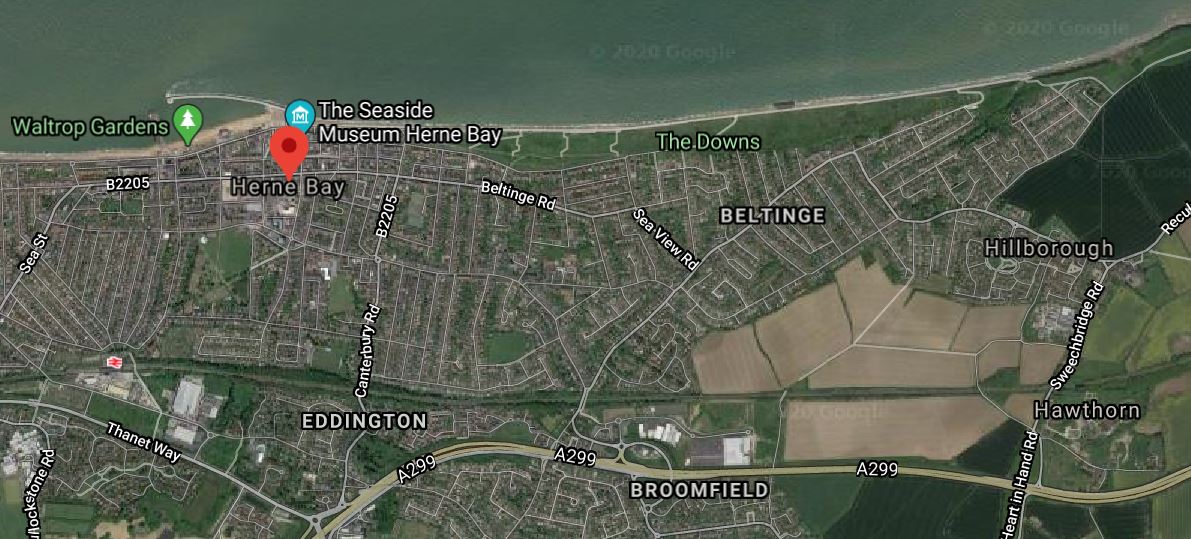
What is not shown is all the wind farms to the North of the town in the Thames Estuary. These include.
- Gunfleet Sands – 172 MW
- Kentish Flats – 139 MW
- London Array – 630 MW
- Thanet – 300 MW
That is a total of 1241 MW, so working for twenty-four hours with a capacity factor of 30% would create almost 9 GWh of electricity.
- A small fraction of this 9 GWh of renewable electricity would provide enough to run the electrolyser at full power.
- The smallest wind farm; Kentish Flats will produce 139 x 24 x 0.3 = 1000 MWh on an average day.
- Just 23 MWh of electricity per hour is needed to create the ten tonnes of hydrogen.
Where are these wind farms connected to the National Grid?
- If just one connection is close to Herne Bay, then co-location must be desirable.
- If there is no connection, only 23 MW would be needed from the National Grid.
Reading the Wikipedia entry for Herne Bay, it appears to be an improving town.
- It has both a fast rail and a High Speed One connection to and from London.
- There is a dual-carriageway road connection to the motorway network.
- The town would probably welcome the jobs, that the development would create.
Herne Bay seems to be a good place to build the first electrolyser.
The Electrolyser At Aberdeen
I don’t know the Aberdeen area well, although the oil industry in the area has been good for my financial well-being.
There must be a good reason for building an electrolyser in the area.
- Aberdeen have experience of hydrogen buses.
- There are some large wind farms; both onshore and offshore close by.
- Is there a convenient site, that once had a coal-fired power station, but still has good electrical connections?
According to the Wikipedia entry for Wind Power In Scotland, the country had 8423 MW of installed wind power in December 2018 and has the aim of using only renewable energy by 2020.
Searching the Internet, I found the Peterhead power station.
The power station is gas-fired.
The power station has changed technology over the years.
There was a plan to fuel the power station with hydrogen produced from methane, where the carbon dioxide would have been captured and stored in the Miller field.
This Google Map shows the power station, to the South of Peterhead.
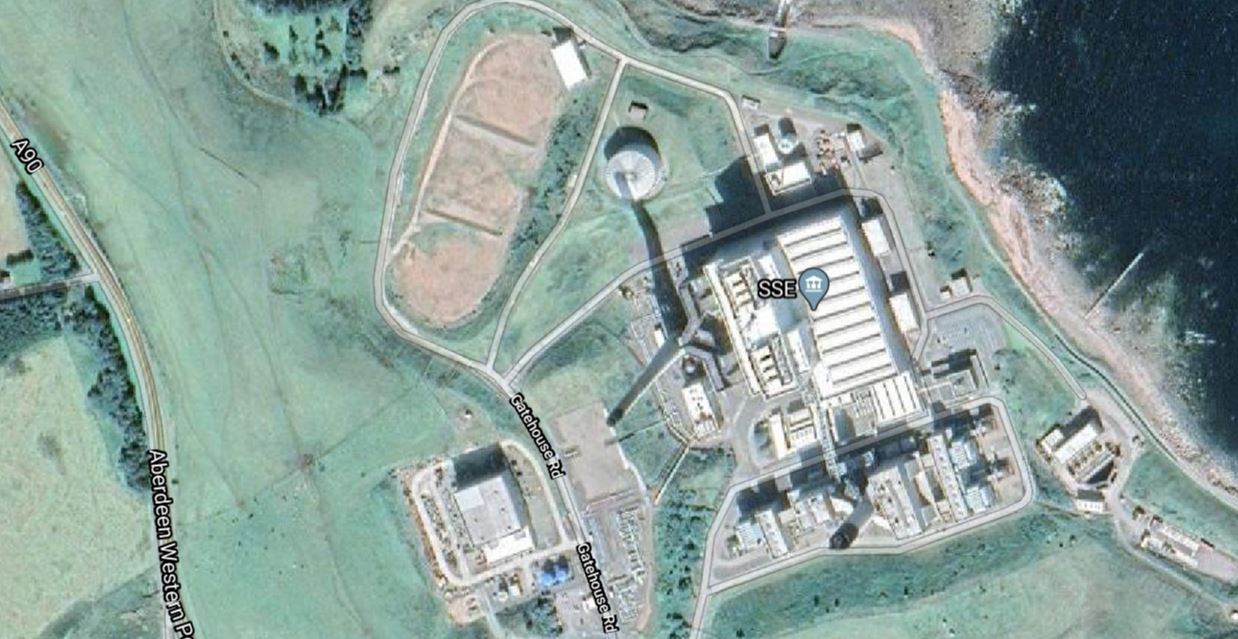
Note, that the power station is close to the A90 road, which forms the Aberdeen Western Peripheral Route, that goes past Aberdeen to the South of Scotland.
Could this power station be the site of the Aberdeen electrolyser?
- It looks to have good road connections.
- It obviously has good electrical connections.
- Peterhead would probably welcome the employment.
As you can see from the map, the power station is owned by SSE plc, who generate about a third of their energy from renewables.
And then there is Hywind Scotland, which is the world’s first commercial floating wind farm.
- This is a 30 MW wind farm.
- It comprises five 6MW floating wind turbines.
- It is situated eighteen miles off Peterhead.
- In the first two years of operation it had a capacity factor of 50 %, according to Wikipedia.
On an average day, Hywind Scotland will generate 360 MWh. This is 65 % of the 550 MWh of energy needed to produce ten tonnes of hydrogen.
Are there undisclosed plans to create a fleet of floating wind turbines, out to sea from Peterhead, which would be ideal for both Scotland’s electricity and hydrogen supplies?
It should also be noted, that in the UK and I suspect other developed countries, if someone needs a large amount of electricity for a commercial purpose, like an aluminium smelter or a steelworks, electricity companies, whether state or privately-owned, have always been keen to oblige.
I suspect that everything could be coming together in Peterhead.
The Electrolyser In Northern Ireland
The Wrightbus factory, owned by Jo Bamford builds its buses at Ballymena.
- Ballymena is 28 miles North of Belfast.
- Dublin is 130 miles to the South.
I can see the mother of all arguments happening, as to whether the electrolyser is North or South of the border.
If you look at the Wikipedia entry entitled Electricity Sector In Ireland, this is the opening paragraph.
The electricity sectors of the Republic of Ireland and Northern Ireland are integrated and supply 2.5 million customers from a combination of coal, peat, natural gas, wind and hydropower.
The grid runs as a synchronous electrical grid and in terms of interconnections has undersea DC-only connection to the UK National Grid, alongside plans in the advanced stage for a higher power, planned Celtic Interconnector to France.
It looks like Jo Bamford will only have to deal with one entity, no matter, which side of the border, the electrolyser is situated.
This would surely make it easier for his All-Ireland Green transport plan, which I wrote about in Wrightbus Boss Eyes All-Island Green Transport Plan.
My feeling is that he’ll get less grief, if the electrolyser was just on the North side of the border with a good road connection to the South. As there is a dual carriage-way road, all the way between Belfast and Dublin, this could probably be arranged.
This Google Map shows where the main dual-carriageway crosses the border.
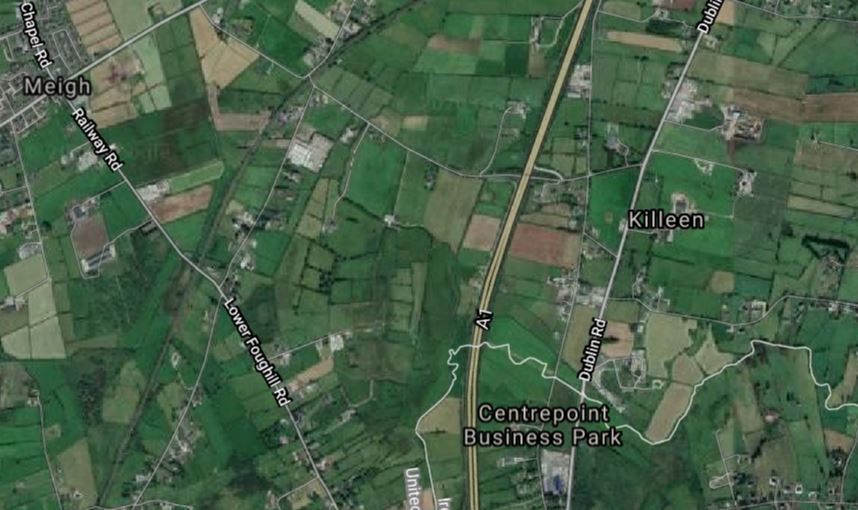
Note.
- The border is shown as a white line to the North of the Centrepoint Business Park.
- The railway line between Dublin and Belfast can be seen to the West of the main cross-border road.
I certainly think, that a solution can be found to fuel all those Irish hydrogen buses, that Jo Bamford has proposed.
The Electrolyser At Runcorn
If Runcorn already has a good source of hydrogen at the former ICI factory, that is now owned by INEOS, why build an electrolyser at Runcorn?
There are several reasons.
- Runcorn is involved in the hydrogen plans for North-West England, that I wrote about in A Hydrogen Mobility Roadmap For North-West England.
- Runcorn can connect into the North West’s proposed hydrogen network.
- Runcorn is close to the zero-carbon wind energy of Liverpool Bay.
- INEOS can pool their zero-carbon hydrogen into that produced by Ryze.
- Will INEOS with all their hydrogen experience in the area, host the electrolyser?
- Runcorn is convenient for the large cities of Liverpool and Manchester.
- Runcorn has good access to the motorway network for the Midland of England and North Wales.
- There must be the possibility of building a rail terminal to deliver hydrogen.
Runcorn would also connect the interests of Jim Ratcliffe and the Bamfords.
The Electrolyser In South Wales
South Wales has an extensive public transport network.
- The South Wales Main Line runs between the Severn Tunnel and Swansea and the West via Newport and Cardiff.
- The Cardiff Valley Lines are being transformed into a modern South Wales Metro, which will make use of electric and battery technology.
- There are a lot of buses, running around in South Wales.
The buses and possibly some of the trains must be candidates for hydrogen power.
Transport for Wales Rail Services have ordered 77 Class 197 diesel trains from CAF, who have a factory at Newport.
Given CAF’s record on innovation and the Welsh Government’s stance on the environment, I wouldn’t be surprised to find out that these trains could be converted to zero-carbon trains. I’m sure Ryze would be pleased to provide green hydrogen for Welsh trains.
I think there are two possible sites for a large electrolyser in South Wales.
The first is the site of the former Aberthaw power stations, which are shown in this Google Map.
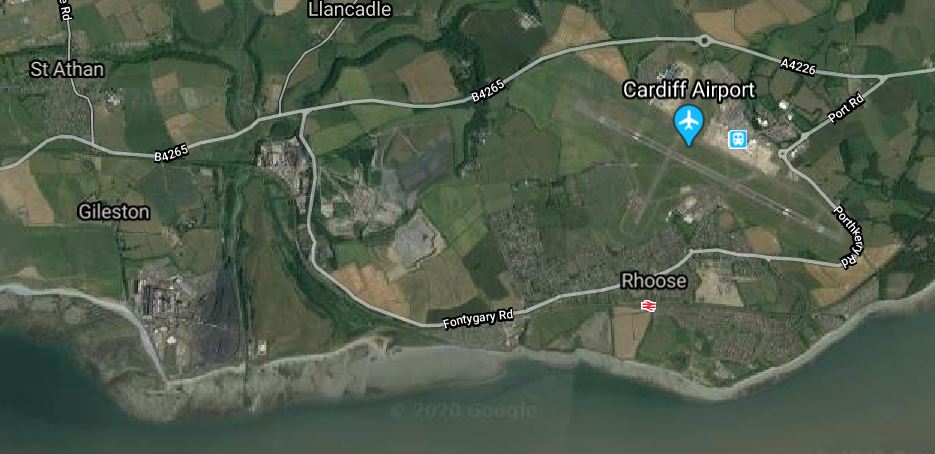
Note.
- Aberthaw power stations were South of Gileston.
- The complex stopped generating power at the end of March this year.
- The site has rail access.
- Road access would need to be improved.
- The power station must have had a good very connection to the National Grid.
- The site is near to Cardiff Airport, who might want to go zero-carbon for all their ground vehicles.
The second possible site, is on the site of the former Llanwern steel works, which is shown in this Google Map.
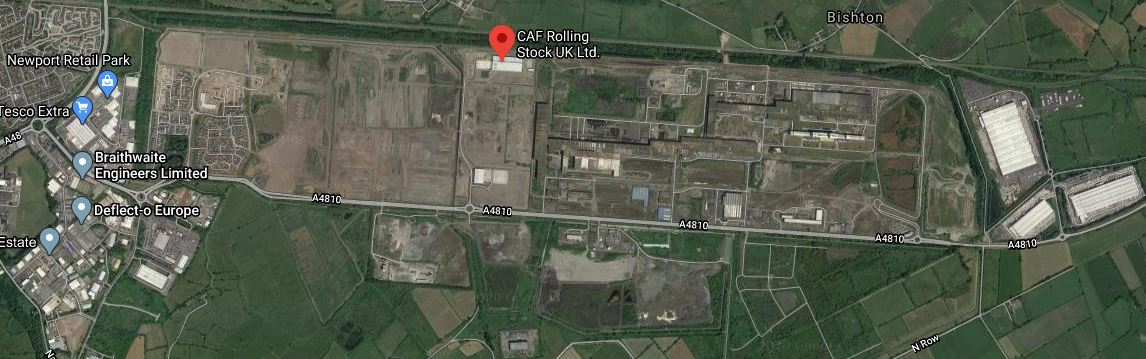
Note.
- It is a very large site, which probably has a very good connection to the National Grid.
- The CAF rolling stock factory is marked by a red arrow.
- CAF could start building and/or selling hydrogen-powered trains in the UK, at some date in the future.
- The site has rail and road access.
- The site is fifteen miles to the East of Cardiff.
- The site is thirty miles to the West of Bristol.
If it was my decision, I’d put the electrolyser on the Llanwern site.
Will The Electrolysers Need A Battery To Cover On Days Without Wind?
I can envisage a system, where several trailer-tankers are filled at once in a continuous process. Once filled, they would be disconnected and replaced by an empty one. It would act like a automatic bottling plant for beer, but with much bigger bottles.
The filled trailer-tankers would be energy stores, whilst they awaited being taken to the customers.
What Infrastructure Will Be Needed At Bus Depots?
The infrastructure is minimal and would be a tank and the means of filling the buses.
I also wonder, if trucks with a proven design of hydrogen trailer-tanker were to be used, these could be filled up at the electrolyser and the trailer-tankers would then be taken to the bus depots, where they would be plugged into the hydrogen delivery system for the buses.
- Each delivery would be a drop-off and connection of a full trailer-tanker of hydrogen and a return with the empty trailer-tanker to the electrolyser.
- The trailer-tankers could be fitted with a hydrogen vehicle-filling connection, so that bus operators could trial a small fleet of hydrogen buses or other vehicles, without putting in any infrastructure, other than safe parking for the trailer-tankers. But then most bus depots have lots of secure parking for large buses.
- This would surely be faster and more efficient, as the delivery driver wouldn’t have to wait, whilst the hydrogen is transferred.
- Deliveries could be arranged during the night.
I would also use a fleet of quiet, emission-free zero-carbon hydrogen-powered trucks. Do what I say and do what I do!
Why Not Generate The Hydrogen At The Depot?
At Pau, ITM Power have installed a hydrogen generator for the hydrogen-powered buses.
So why not do this all over the UK?
- A large bus depot could need a very large amount of electricity in a congested part of a city, where the electricity supply may be dodgy.
- It could also be safer, as venting the oxygen produced as a by-product of electrolysis, in an uncontrolled environment can be dangerous. But generated in a large electrolyser, it could be captured and used for another purpose or safely vented to the atmosphere. This section in Wikipedia, gives a brief outline of the applications of oxygen.
- I truck-based delivery system, is ideal for trials of hydrogen-powered buses, taxis, delivery vans, trucks and local authority vehicles, as no infrastructure is needed.
I suspect that, it might be more affordable and convenient to use centralised production of the hydrogen.
Conclusion
Jo Bamford has developed a well-thought out plan.
New Hydrogen Refuelling Company To Drive A Greater Adoption Of Fuel-Cell Cars
The title of this post is the same as that of this article in the Telegraph.
This is the introductory paragraph.
Hydrogen delivery and fuel-cell power took a step forward this week with the announcement of a new hydrogen-gas refuelling company. ITM Motive will run its parent company ITM Power’s existing eight filling stations with plans for more. Time will tell how much of a step it is, but the creation of this new renewable refuelling subsidiary should have enough credentials to vastly improve the prospects for fuel-cell cars, trucks, trains and buses in the UK.
Does this move, explain the rise in the share price?
Orders For Alstom Breeze Trains Still Expected
It is almost a year since I wrote Breeze Hydrogen Multiple-Unit Order Expected Soon, but no order has so far been placed.
But some things have happened or are happening.
- The two pre-production Alstom Coradia iLint trains seem to be running without trouble in Germany.
- The Northern Franchise is now run by the Government and called Northern Trains.
- Greater Anglia‘s Class 720 trains are finally being delivered.
- This should release Class 321 trains for conversion to hydrogen power.
At present, Greater Anglia appear to have 102 Class 321 trains in service, all of which could be converted to Alstom Breeze trains.
Although it should be noted that thirty trains have been upgraded to a Renatus specification, as cover, if there are any problems during Greater Anglia’s fleet changeover.
The Conversion Process
The 102 Class 321 trains will release the same number of each of the following coaches.
- DTCO – Driving Trailer Composite Open
- TSO – Trailer Standard Open
- PMSO – Pantograph Motor Standard Open
- DTSO – Driving Trailer Standard Open
Each three-car Breeze will need two Driver Trailer cars and a Pantograph Motor car to be converted.
Driver Trailer Cars
Consider.
- Most two- and three-car diesel multiple units in the UK, don’t have First Class seats.
- Many new trains like those of Greater Anglia and South West Trains don’t have First Class seats.
- Seating in these cars will be very much reduced by the fitting of a large hydrogen tank.
I wouldn’t be surprised to see both types of Driver Trailer cars converted into identical cars.
Pantograph Motor Car
The Pantograph Motor car will be seriously modified, with these systems and components installed.
- A new AC traction system.
- Batteries fed by the fuel cells,
- Regenerative braking
All will be controlled by a sophisticated energy management system.
- Will regenerative braking be able to charge the batteries?
- Will the pantograph be retained, so that on electrified lines, the trains can use the electrification?
- Will the fitting of third-rail shoes be considered?
- Will the train retain the 100 mph capability of the Class 321 train?
The train could be a real 100 mph efficient go-anywhere train.
New Interiors
New Class 321 Renatus-style interiors will be fitted.
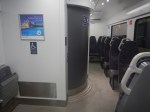



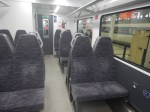


The Class 321 Renatus is a high-class interior for a suburban train.
- There are both fully-accessible and standard toilets.
- There are power sockets and wi-fi.
- Passenger information displays are fitted.
I suspect tables could be fitted, if the operator required them.
Northern Trains And The Alstom Breeze
The three-car Alstom Breeze is expected to have a similar capacity to a two-car diesel multiple unit.
Northern Trains Current And Future Trains
At present Northern have the following two-car diesel multiple units in service, according to Wikipedia.
- 7 x Class 155 trains
- 47 x Class 156 trains
- 45 x Class 158 trains
In addition, there are eight three-car Class 158 trains, which gives a total of 107 trains, that could be suitable for replacement by Alstom Breeze trains.
If these were the only trains available, Northern would have to keep some old diesel multiple units in service for longer.
But there are other trains expected to enter service, in the coming months.
- 7 x new two-car Class 195 trains
- 5 x new three-car Class 195 trains
- 3 x refurbished two-car Class 150 trains
- 8 x rebuilt four-car bi-mode Class 769 trains
Northern should just about scrape through, especially as COVID-19 has reduced services.
I would think, that Northern could absorb quite a lot of Alstom Breeze trains.
Deployment On Teesside
In Fuelling The Change On Teesside Rails, I talked about using the trains on Teesside.
- Services would be centred on Darlington and Middlesbrough.
- There is a supply of hydrogen nearby.
- Bishop Auckland, Newcastle, Nunthorpe, Redcar and Whitby could be served.
- The 1000 km range could be useful.
- The trains could even be a tourist attraction for the area.
In Northern’s Hydrogen Plans, I wrote about progress on these plans, which included applying for planning permission for the depot at Lackenby.
Deployment Around Widnes
In A Hydrogen Mobility Roadmap For North-West England, I wrote using the trains around Widnes.
- Services could be centred around Alstom’s Widnes factory.
- Hydrogen could be supplied by pipeline from Runcorn.
- Chester, Liverpool and Manchester could be served.
- Some routes might need more capacity.
Could Alstom introduce a couple of pre-production trains on a route past Widnes, in a similar way, that they have introduced the Coradia iLint train in Germany?
This approach seems to have helped a successful introduction into service of the trains.
Increasing Capacity
I do think that these trains will need extra capacity on some routes, like perhaps Liverpool and Manchester via Widnes and Warrington.
The solution would surely be to add one of the spare Trailer cars to bring the trains up to four cars and increase the passenger capacity by perhaps fifty percent.
Northern Routes Currently Run By Two-Car Diesels
Wikipedia lists these services as run by two-car-diesels in Classes 150, 155, 156 and 158.
- Barrow-in-Furness and Carlisle
- Barrow-in-Furness and Lancaster
- Blackburn and Rochdale
- Blackburn and Wigan Wallgate
- Blackpool North and York
- Clitheroe and Rochdale
- Hexham and Nunthorpe *
- Hull and Scarborough
- Hull and York
- Huddersfield and Castleford
- Huddersfield and Leeds
- Huddersfield and Sheffield
- Lancaster and Morecambe/Heysham Port
- Leeds and Carlisle
- Leeds and Chester
- Leeds and Goole
- Leeds and Knottingley
- Leeds and Lincoln
- Leeds and Manchester Victoria
- Leeds and Morecambe
- Leeds and Nottingham
- Leeds and Selby
- Leeds and Sheffield
- Leeds and Wigan Wallgate
- Leeds and York
- Liverpool Lime Street and Manchester Oxford Road *
- Manchester Piccadilly and Buxton
- Manchester Piccadilly and Chester
- Manchester Piccadilly and New Mills Central
- Manchester Piccadilly and Rose Hill Marple
- Manchester Piccadilly and Sheffield
- Manchester Victoria and Kirkby
- Manchester Victoria and Southport
- Manchester Victoria and Stalybridge
- Middlesbrough and Whitby *
- Newcastle and Carlisle
- Newcastle and Chathill
- Newcastle and Morpeth
- Oxenholme Lake District and Windermere
- Preston and Blackpool South
- Preston and Colne
- Preston and Ormskirk
- Saltburn and Bishop Auckland/Darlington *
- Sheffield and Adwick
- Sheffield and Bridlington
- Sheffield and Gainsborough Central
- Sheffield and Hull
- Southport and Alderley Edge
Those marked with an * could be served by hydrogen trains from Laverton and Widnes.
Positioning Hydrogen Trains
Trains often have to be positioned from and to the depot at the beginning and end of a day’s work.
On my list of services, there is an hourly shuttle service between Oxenholme Lake District and Windermere stations.
Suppose this service was to be run by an Alstom Breeze based at Widnes.
- The train could be fuelled with hydrogen at Widnes, early in the day.
- The train could position to Oxenholme Lake District along the West Coast Main Line, using the electrification, after joining it a few miles from the depot.
- Each round trip to Windermere is 20 miles or 32 kilometres.
- An Alstom Breeze train has a range of 1000 kilometres on hydrogen, so it could do thirty round trips without refuelling.
- At the end of the day, the train would return to the depot using the electrification.
I would expect, that the long range of hydrogen trains could make them easier to diagram or schedule, than battery ones.
They might also be able to work some distance away from the depot, if they could use an electrified route for positioning.
So if we look at Widnes, these are approximate distances to stations where hydrogen services might run.
- Liverpool Lime Street – 12 miles
- Manchester Airport – 33 miles
- Manchester Oxford Road – 22 miles
- Preston – 33 miles
- Warrington Central – 6 miles
- Wigan North Western – 18 miles
Some of the routes to these stations are partially electrified, so the trains could position using the electrification.
Consider these routes.
- Preston and Blackpool South – 20 miles
- Preston and Colne – 19 miles
- Preston and Ormskirk – 20 miles
A hydrogen train could position from Widnes and perhaps do fifteen trips before needing a refuel.
I will also look at distances from Lackenby, where the Teesside Depot will be built, as I wrote in Northern’s Hydrogen Plans.
- Darlington – 23 miles
- Newcastle via East Coast Main Line – 59 miles
- Newcastle via Durham Coast Line – 54 miles
- York via Northallerton and East Coast Main Line – 56 miles
I suspect quite a few services could be run from Lackenby depot, if the electrified East Coast Main Line was used to position the trains.
Possible Future Stages
If the trains are successful, I can see that Northern Trains will want to introduce more hydrogen trains.
As the Government controls this franchise, does this make more zero-carbon trains more or less likely?
More Trains
There are only so many Class 321 trains to convert, but after Alstom complete their takeover of Bombardier, I believe that a hydrogen-powered Aventra could become a reality.
I wrote about my ideas for this in I Design A Hydrogen Aventra.
So in the long term, if more hydrogen trains are needed, it shouldn’t be a problem.
More Depots
More depots will be needed and I would expect others like Lackenby will be added in strategic locations.
- Given the service pattern, Blackburn, Leeds and Sheffield must be possibilities.
- Hydrogen will probably be generated in the depots using electrolysers.
In the future could we see depots for hydrogen trains shared between bordering franchises?
- A depot at Carlisle could be shared between Northern and Scotrail
- A depot at Chester could be shared between Northern and Trains for Wales
- A depot at Exeter could be shared between Great Western and South West Railways
ITM Power in Rotherham have the technology to generate the hydrogen, which could also be used to fuel the local buses and other vehicles.
Conclusion
From pubished reports, it looks to me, that Northern have been thinking hard how they can deploy a substantial fleet of Alstom Breeze trains, by using depots at Widnes and Lackenby, where the trains can be refuelled overnight.
I am also fairly sure that Alstom will design the Breeze, so that trains can position themselves along the West and East Coast Main Lines, using the 25 KVAC electrification.
Funding Award to Supply An 8MW Electrolyser
The title of this post, is the same as that of this Press Release from ITM Power.
This is the main body of the Press Release.
ITM Power, the energy storage and clean fuel company, is pleased to announce it has signed an agreement to supply an 8MW electrolyser in the UK. The agreement, including associated project costs, has a total value of £10m and funding will fall across FY2021 and FY2022. Further details will be announced in due course.
I bet they’re pleased!
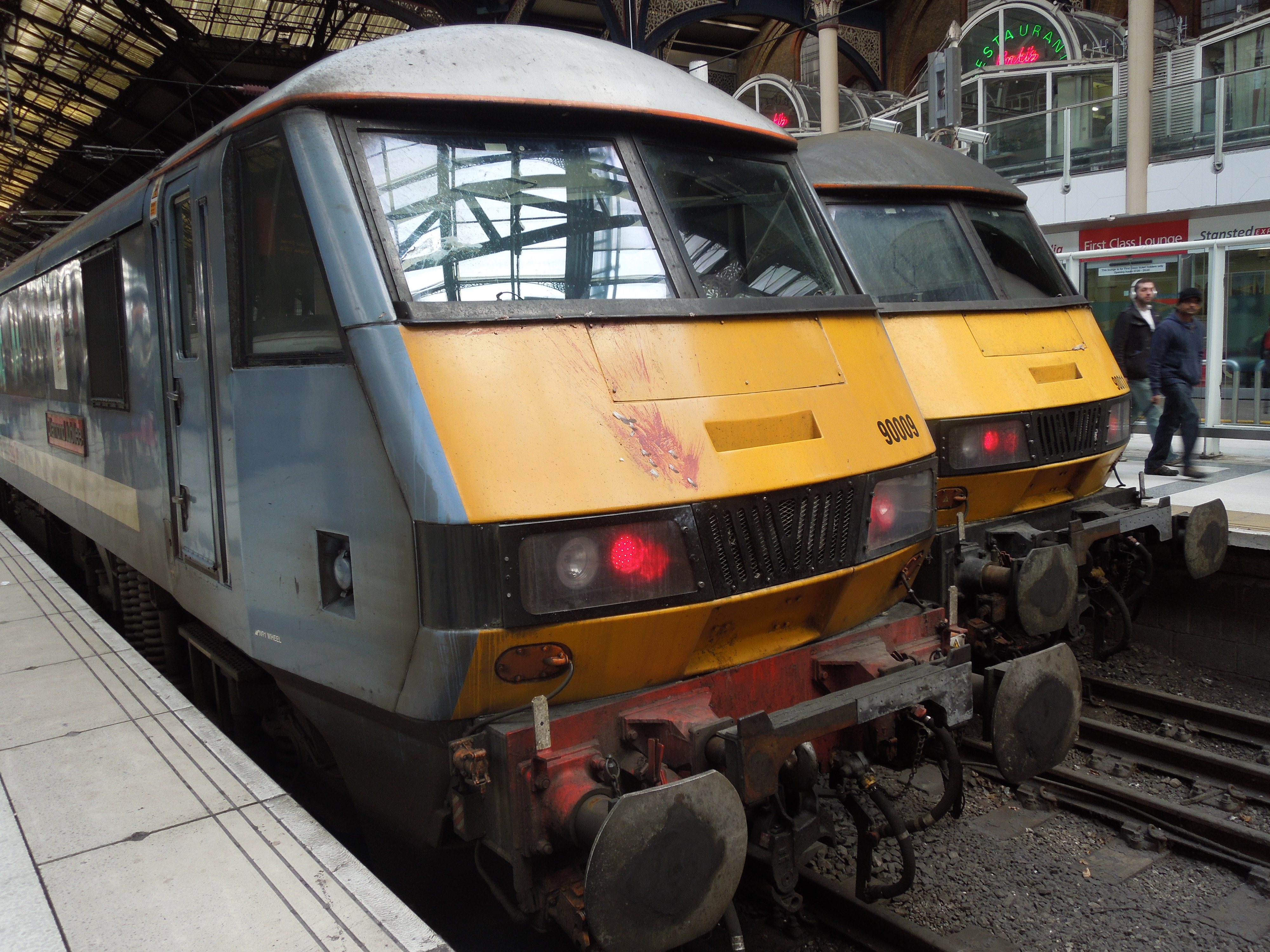
To get a hold on what 8 MW looks like, these Class 90 locomotive each have a power output of just under 4 MW and are capable of hauling an eight-coach express train at 110 mph.
Working at full rate, the electrolyser will be able in a year to convert 70 GWh of electricity into hydrogen.
Why Would You Want An 8MW Electrolyser?
These are a few ideas.
Green Hydrogen For Humberside
This is a project described in this ITM Power Press Release.
This is the first three paragraphs.
ITM Power, the energy storage and clean fuel company, is pleased to announce that it has won, with partner Element Energy, a first stage deployment project in the UK Government’s Industrial Strategy Challenge Fund competition “Decarbonisation of Industrial Clusters” to assess the feasibility and scope of deploying green hydrogen with some major industrial partners in Humberside.
“Green Hydrogen for Humberside” will lead to the production of renewable hydrogen at the Gigawatt (GW) scale distributed to a mix of industrial energy users in Immingham, Humberside. Decarbonisation of this cluster is critical in reaching the UK’s legally binding 2050 net zero emission targets. Humberside, the UK’s largest cluster by industrial emissions, (12.4Mt of CO2 per year), contributes £18bn to the national economy each year and has access to a large renewable resource from offshore wind in the North Sea.
The project will work with customers in the region to establish the feasibility of switching to renewable hydrogen and justify a number of 100MW deployments of electrolysers. The project will cost the supply of hydrogen to these end users. This includes the electricity supply to the electrolyser, the hydrogen production facility, hydrogen distribution across the Humber and conversion of existing processes to use renewable hydrogen.
The study talks about a number of 100 MW deployments of electrolysers.
Will the 8MW electrolyser be a demonstrator for this project?
To Convert Surplus Renewable Energy Into Hydrogen Which Is Injected Into The Gas Grid
The Wikipedia entry for ITM Power has a section entitled Energy Storage Power To Gas. This is the first paragraph.
Power-to-Gas is a methodology of introducing such hydrogen to the natural gas network, essentially converting renewable electrical power to a clean gas that can be more conveniently stored using existing assets. There are two main Power-to-Gas mechanisms. The first involves metering pressurised hydrogen into the gas network directly. The second involves combining hydrogen with carbon dioxide via a methanation process to produce synthetic natural gas prior to introduction to the grid.
The electrolyser could be used to convert a lot of electricity into zero-carbon hydrogen for use in the UK gas network.
Improving The Resilience Of The UK Gas Network
This article on the BBC is entitled Major Power Failure Affects Homes And Transport and it describes a major power failure, when two generators failed in August 2019.
Could the 8MW electrolyser be part of the solution to make the UK power network more robust, if parts of the network fail?
To Create Feedstock For An Oil Refinery Or Petro-Chemical Plant
Hydrogen can be used as a feedstock for an oil refinery or petro-chemical plant.
This ITM Power Press Release, describes such a project, where wind power from the North Sea is used to create hydrogen for Phillips 66 Limited’s Humber Refinery.
As Part Of An Experimental Steel-Making Plant
This is pure speculation on my part, but steel-making creates lot of carbon-dioxide.
I do believe that using hydrogen to make steel is possible and ITM Power are based in the steel-city of Sheffield.
On the other hand look at the HYBRIT web site.
This is the introductory paragraph.
In 2016, SSAB, LKAB and Vattenfall joined forces to create HYBRIT – an initiative that endeavors to revolutionize steel-making. HYBRIT aims to replace coking coal, traditionally needed for ore-based steel making, with hydrogen. The result will be the world’s first fossil-free steel-making technology, with virtually no carbon footprint.
During 2018, work started on the construction of a pilot plant for fossil-free steel production in Luleå, Sweden. The goal is to have a solution for fossil-free steel by 2035. If successful, HYBRIT means that together we can reduce Sweden’s CO2 emissions by 10% and Finland’s by 7%.
This page on their web site is entitled Steel Making Today And Tomorrow. This image compares traditional blast furnace steelmaking with HYBRIT.
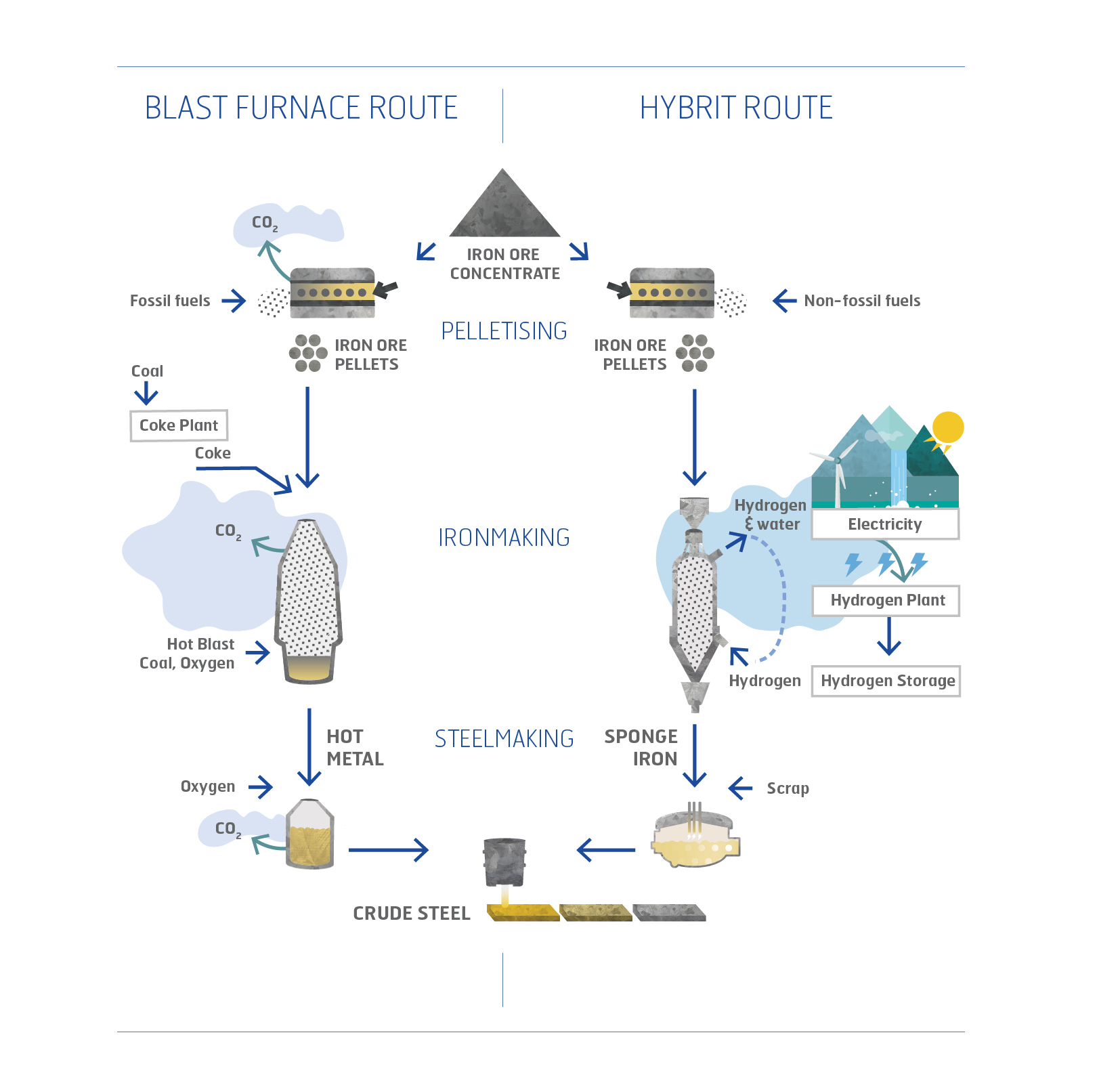
Note that at the heart of the process is the production of hydrogen from renewable electricity. This process will need a large electrolyser.
Could someone be doing something similar in Sheffield or more likely, Scunthorpe?
- British Steel may be owned by the Chinese, but it has a record of innovation.
- We will need a lot of long steel products, like railway rails and girders, in which British Steel specialise.
- In a few years, Humberside will have enough renewable electricity from North Sea wind to create an electro-magnetic gun to fire space capsules at Mars.
I will be watching out for hydrogen steelmaking.
Is Jim Ratcliffe Up To Something?
Jim Ratcliffe is a very rich man and the chairman and CEO of INEOS, which has a turnover of $83billion.
Consider.
- INEOS must know about hydrogen.
- I read some years ago, how they were using waste hydrogen to generate electricity on Teesside.
- I have a feeling that they have backed a hydrogen fuel-cell company.
- They own the hydrogen factory in Runcorn, where I worked in 1970.
- They have extensive interests in the North West, North East and Scotland.
- The company probably has an enormous carbon-footprint, that they’d probably like to reduce, by perhaps using hydrogen instead of natural gas as a feedstock for some processes, like production of ammonia.
But above all the cost of an 8MW electrolyser would be small change and probably cost a lot less, than running the cycling team.
The Fallback
It could of course be used to produce a large amount of hydrogen to power buses, cars and trains.
To Revive Economy, Think Infrastructure
The title of this post is the same as that of this article on CommonWealth.
This is the sub-title.
It worked in the Great Recession and it can work now.
The author is talking about Massachusetts in 2008, but I’m sure it would work in the UK and other countries in 2020.
Projects I would bring forward in the UK.
- Build lots of wind farms, both onshore and offshore.
- Build energy storage. I would go for Highview Power.
- Use wind energy to generate hydrogen for industrial processes. ITM Power in Rotherham, have the technology.
- Build a refuelling network for hydrogen-powered cars, buses, trucks and other vehicles.
- Add new rail stations to the network, where needed.
- Update all possible rail, tram, light rail and Underground stations so they are step-free.
- Build the electrified Huddersfield and Leeds upgrade to the TransPennine Route.
- Expand the Blackpool Tram, the Edinburgh Tram, the Manchester Metrolink, Merseyrail, the Nottingham Express Transit, the Sheffield Supertram, the Tyne and Wear Metro and the West Midlands Metro.
- Extend the Docklands Light Railway West to Charing Cross, Euston, St. Pancras and Victoria.
I would setup a construction pipeline, so all areas of the country got a share of the new infrastructure.
We must be bold.
 The Anonymous Widower